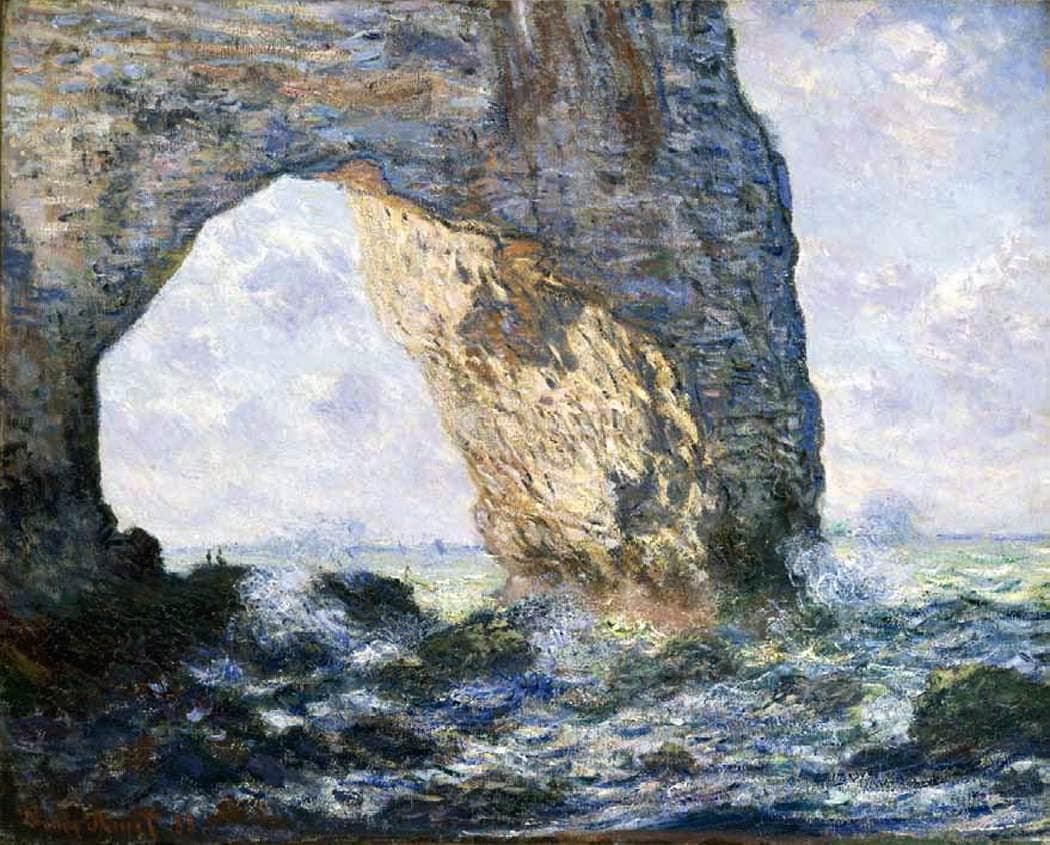
Place
Monet at Étretat and on the Normandy Coast: His Seascapes, 1858–1897
Chalk arches, shingle beaches, fishing boats and storms: the coast where Monet grew up, learned to paint outdoors and kept coming back.
Monet's paintings of Étretat and the Normandy coast span his whole early and middle career, from a first landscape near Le Havre in 1858 to cliff views at Pourville in 1897. Étretat, with its great rock arches, the Porte d'Aval and the Manneporte, and its needle, the Aiguille, was his most painted stretch of coast: he worked there in the winter of 1868–69 and again in 1883, 1884, 1885 and 1886. Around it lie the other places of his seascapes: Le Havre and Sainte-Adresse, where he grew up; Honfleur and Trouville across the Seine estuary; and Fécamp, Pourville, Varengeville and Dieppe further east.
Monet's seascapes are now in museums worldwide, from the Musée Marmottan Monet (home of Impression, Sunrise) and the Musée d'Orsay to the Metropolitan Museum, the Art Institute of Chicago, the Clark Art Institute and the National Gallery in London.
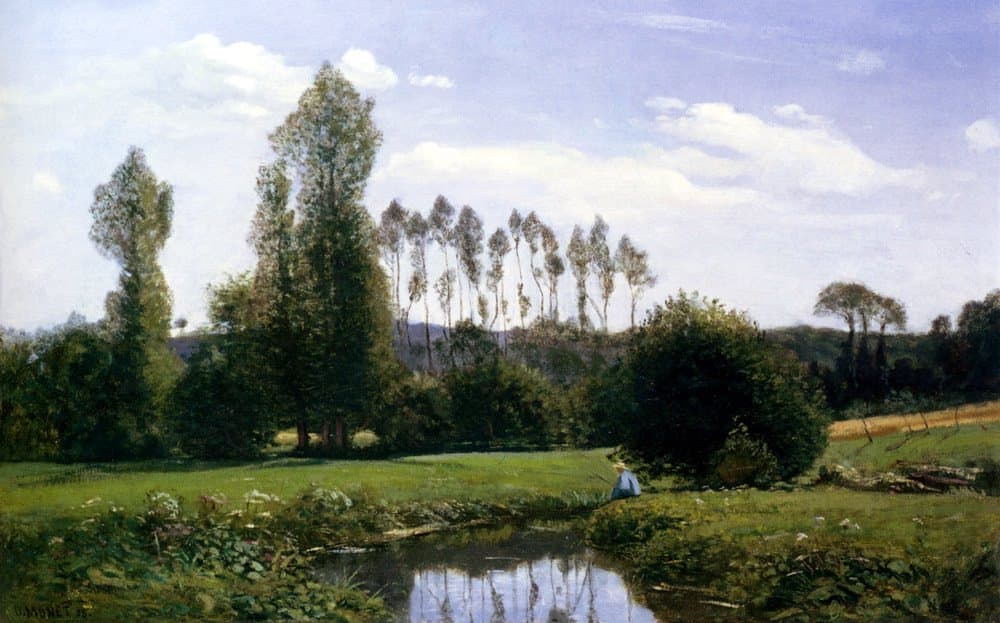
View at Rouelles, Le Havre
Claude Monet · 1858
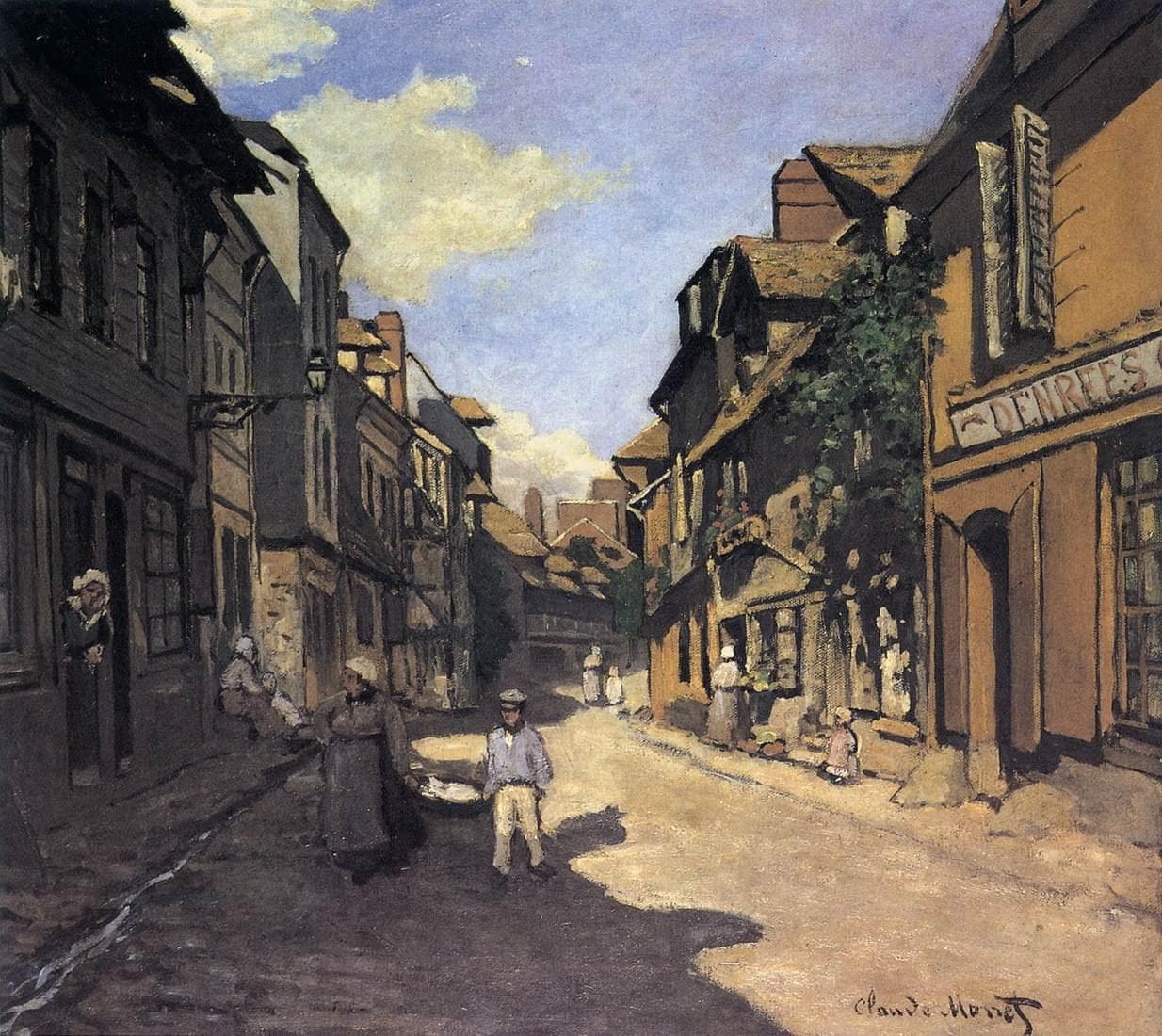
Rue de la Bavolle, Honfleur
Claude Monet · 1864
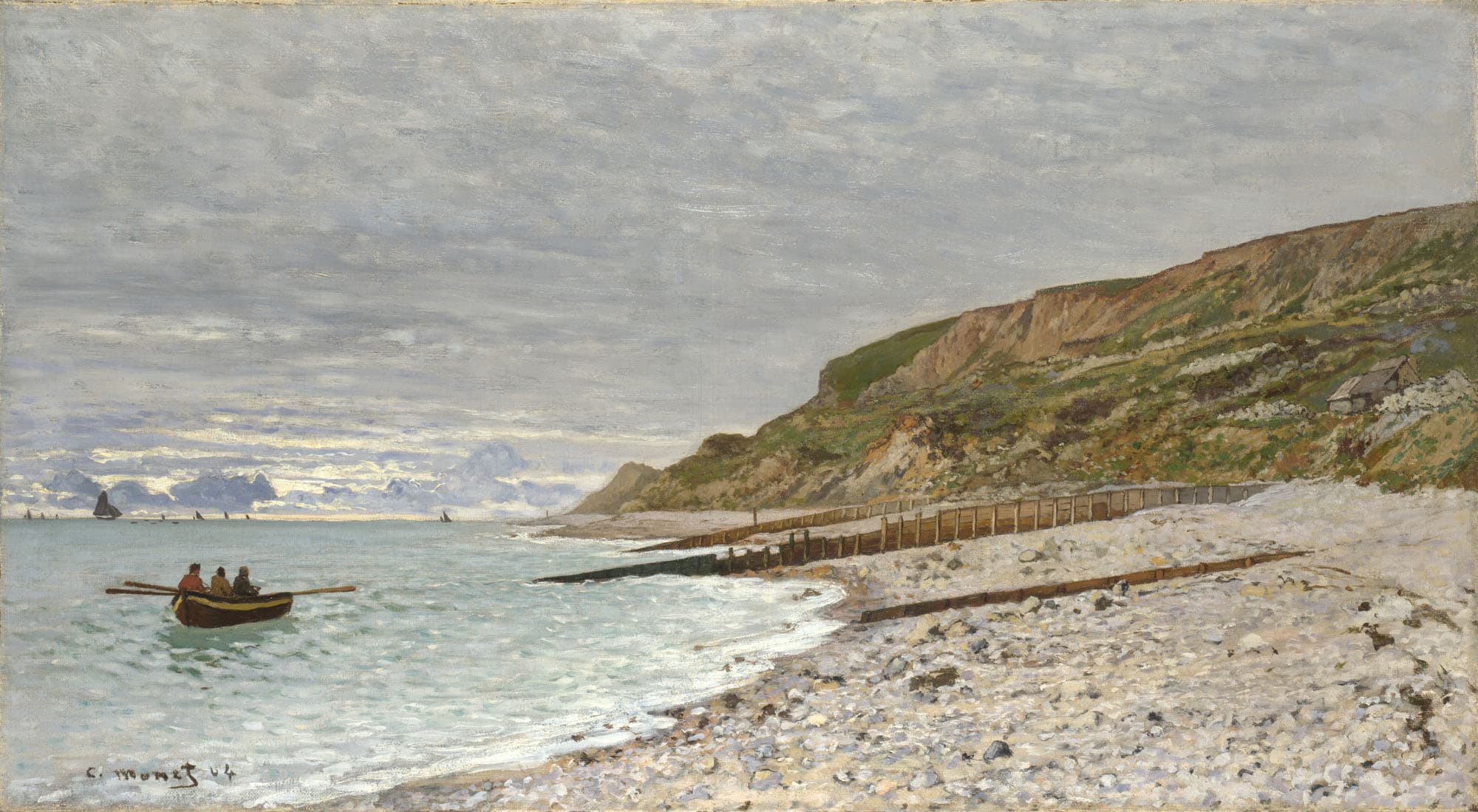
La Pointe de la Hève, Sainte-Adresse
Claude Monet · 1864
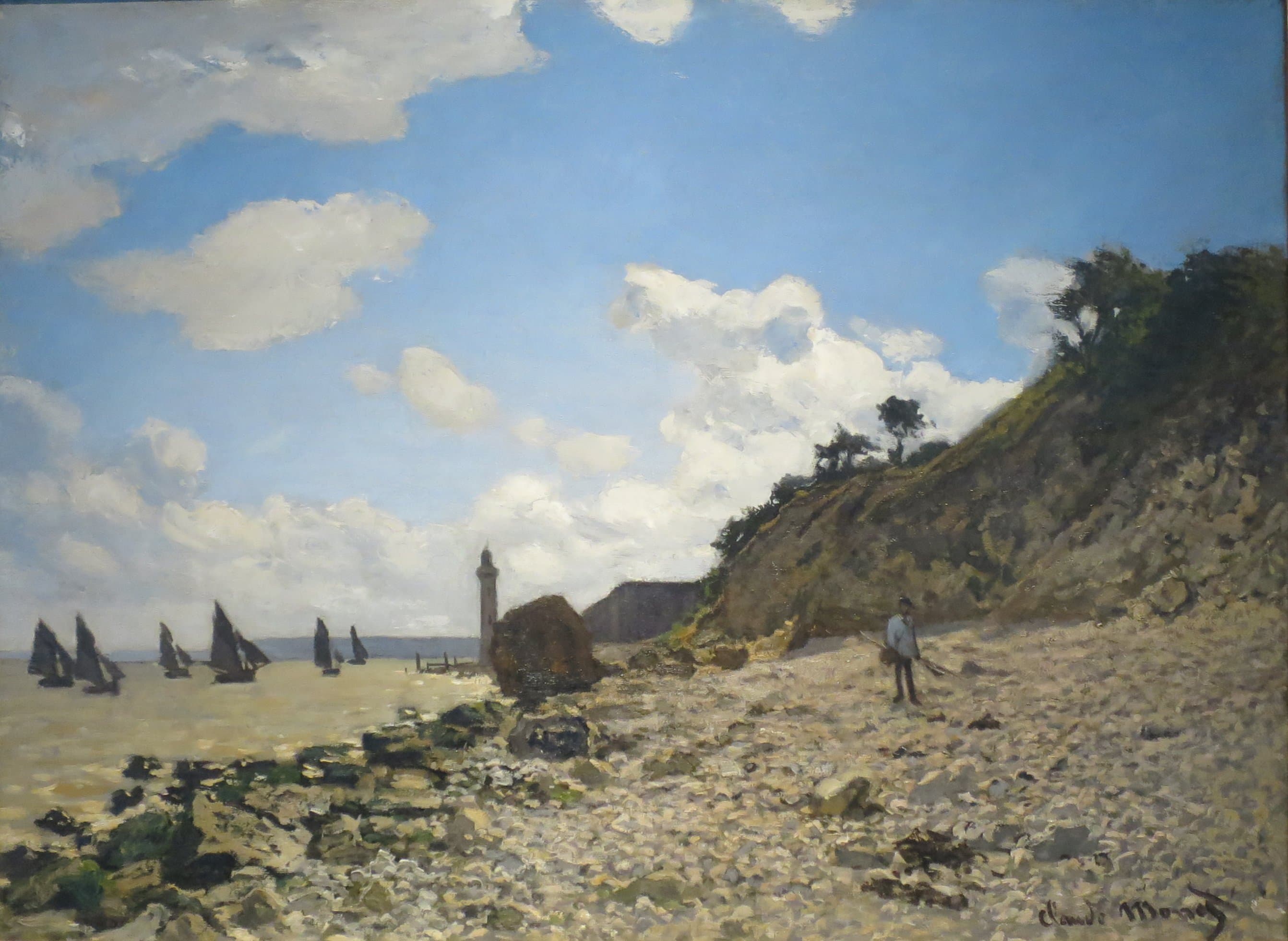
The Beach at Honfleur
Claude Monet · 1864–66
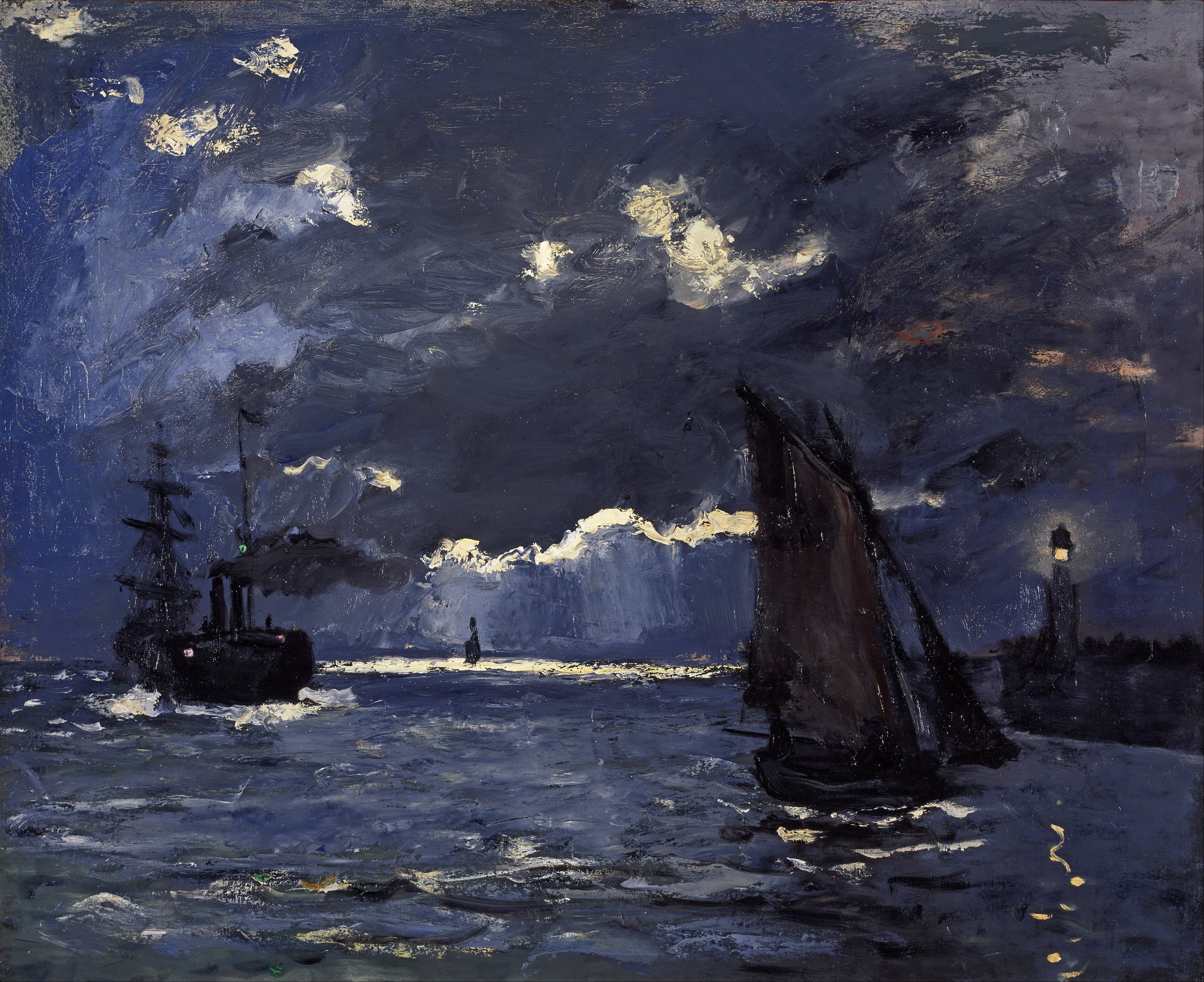
A Seascape, Shipping by Moonlight
Claude Monet · c. 1864
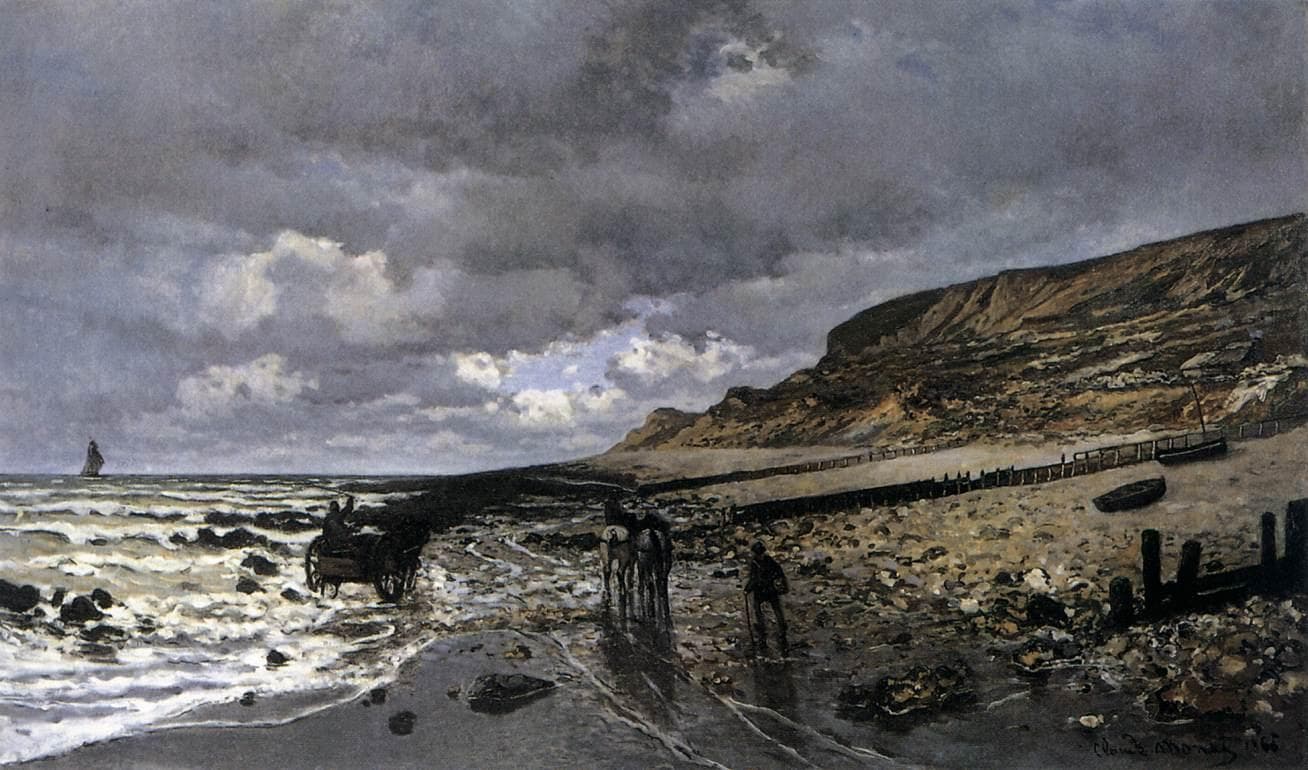
La Pointe de la Hève at Low Tide
Claude Monet · 1865
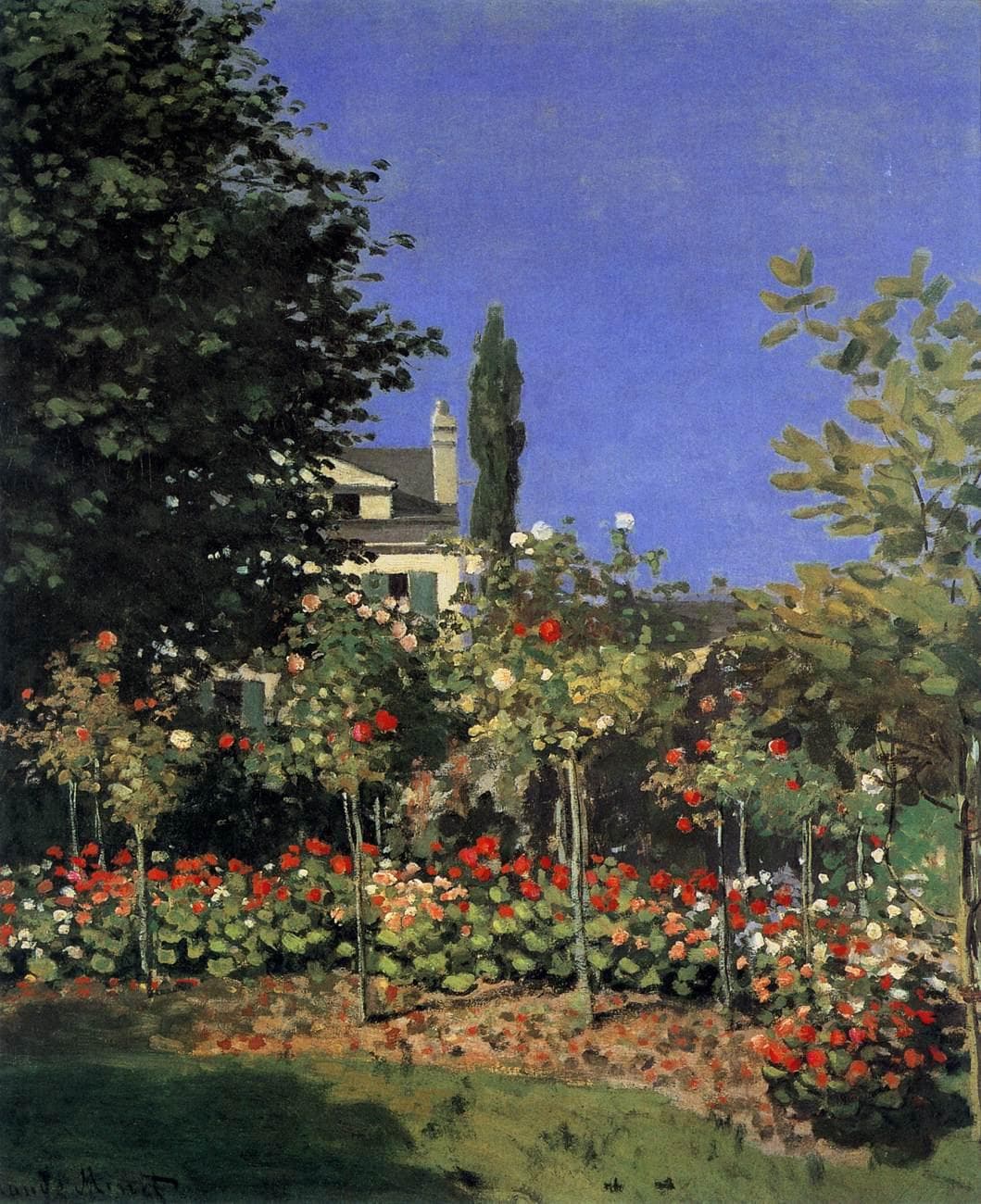
Garden in Bloom at Sainte-Adresse
Claude Monet · c. 1866
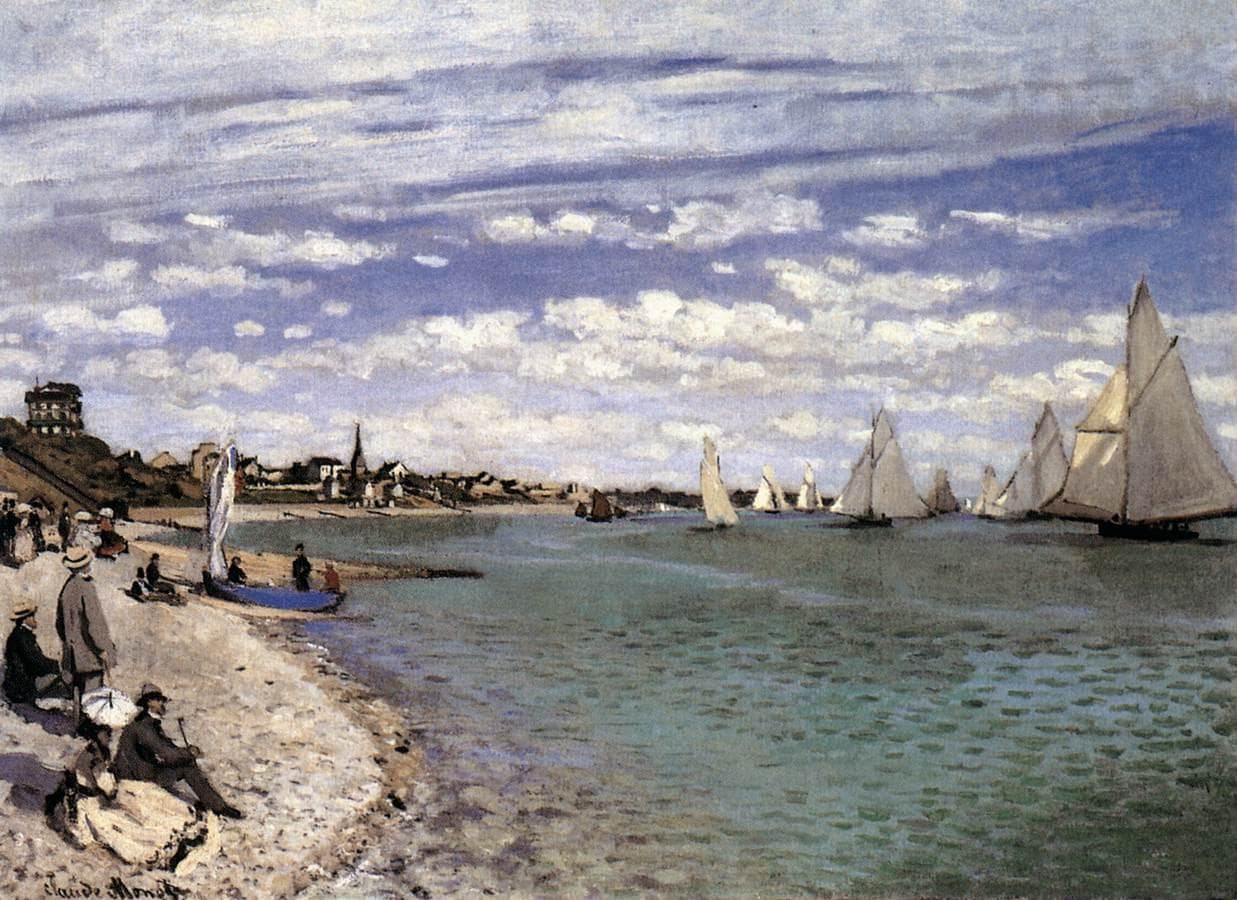
Regatta at Sainte-Adresse
Claude Monet · 1867
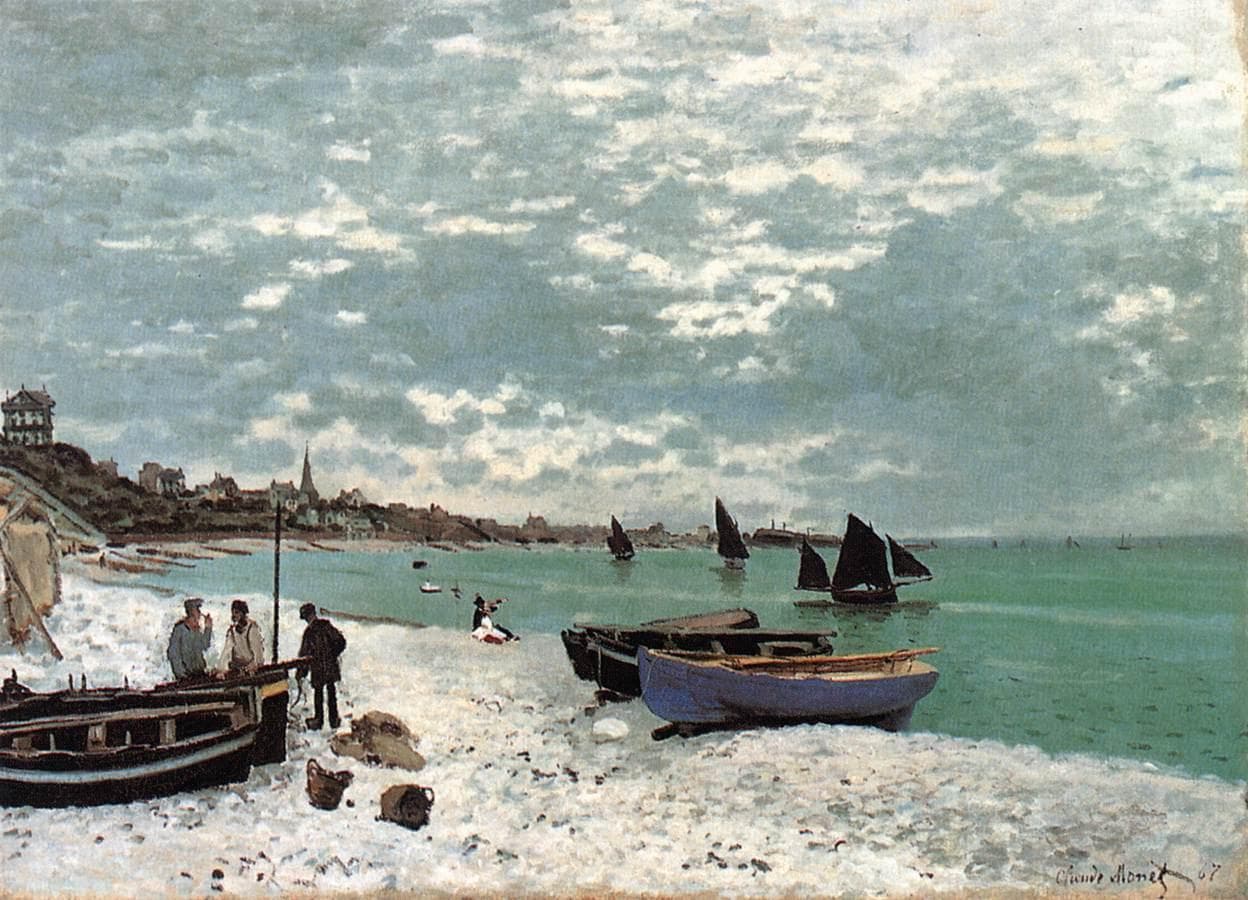
The Beach at Sainte-Adresse
Claude Monet · 1867
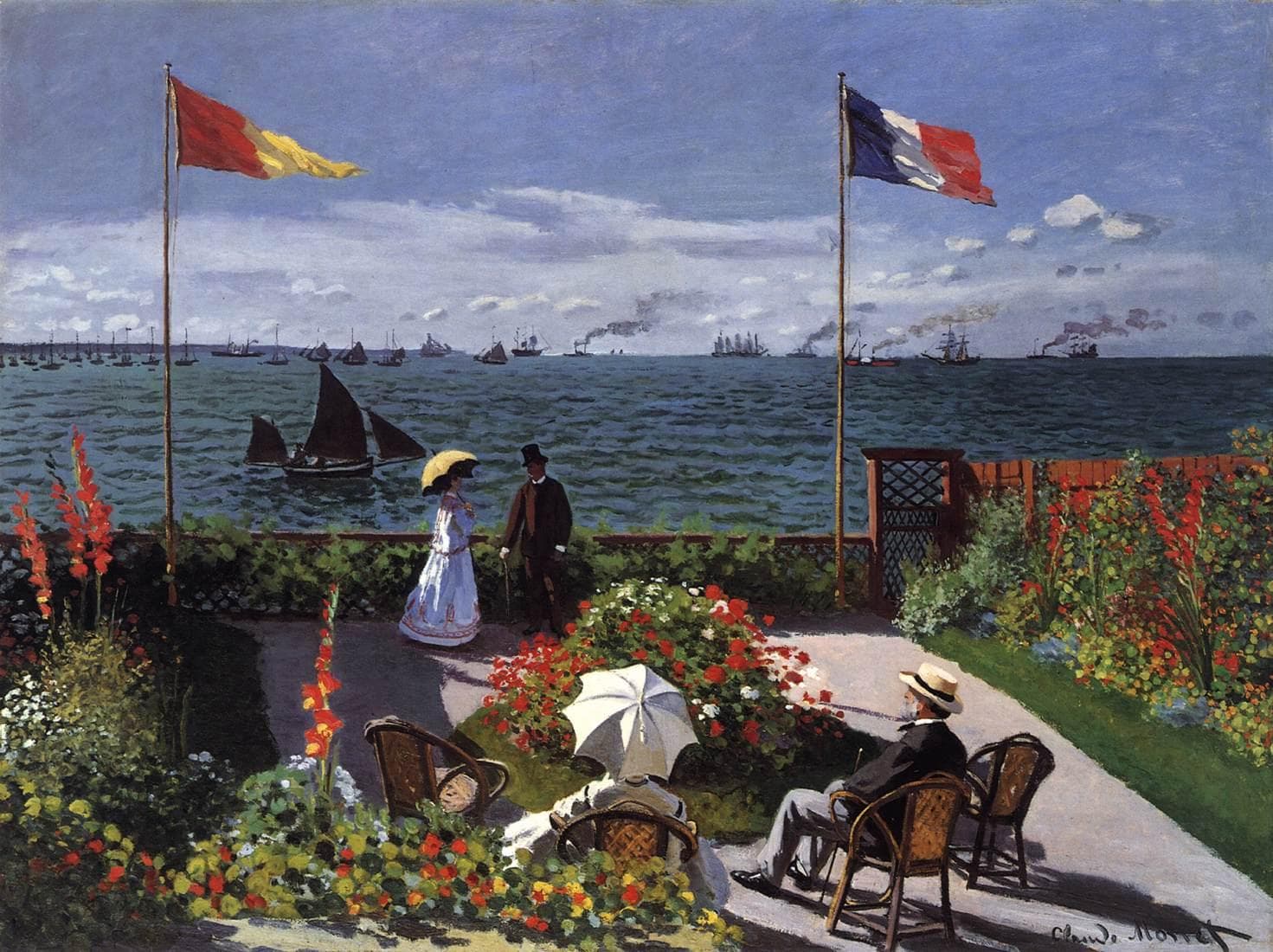
Garden at Sainte-Adresse
Claude Monet · 1867
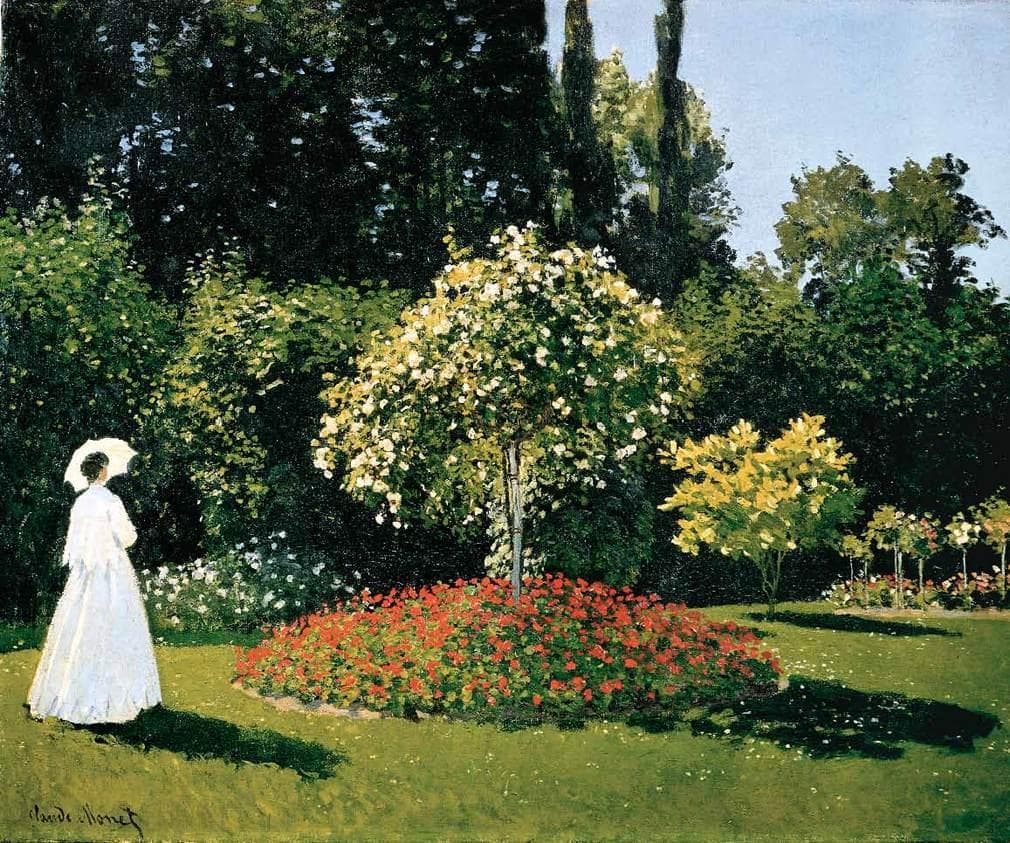
Woman in the Garden
Claude Monet · 1867
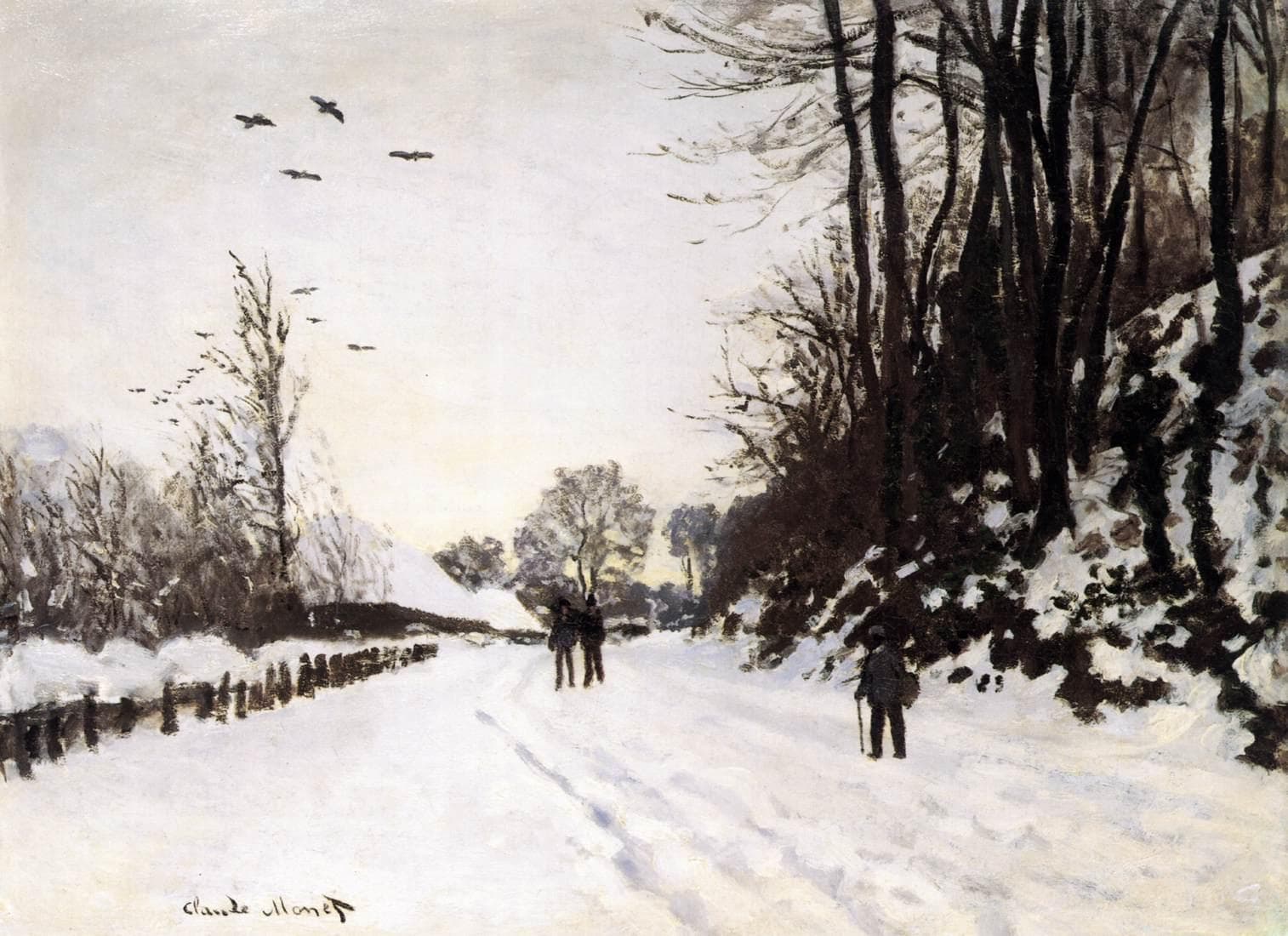
Road by Saint-Siméon Farm in Winter
Claude Monet · 1867
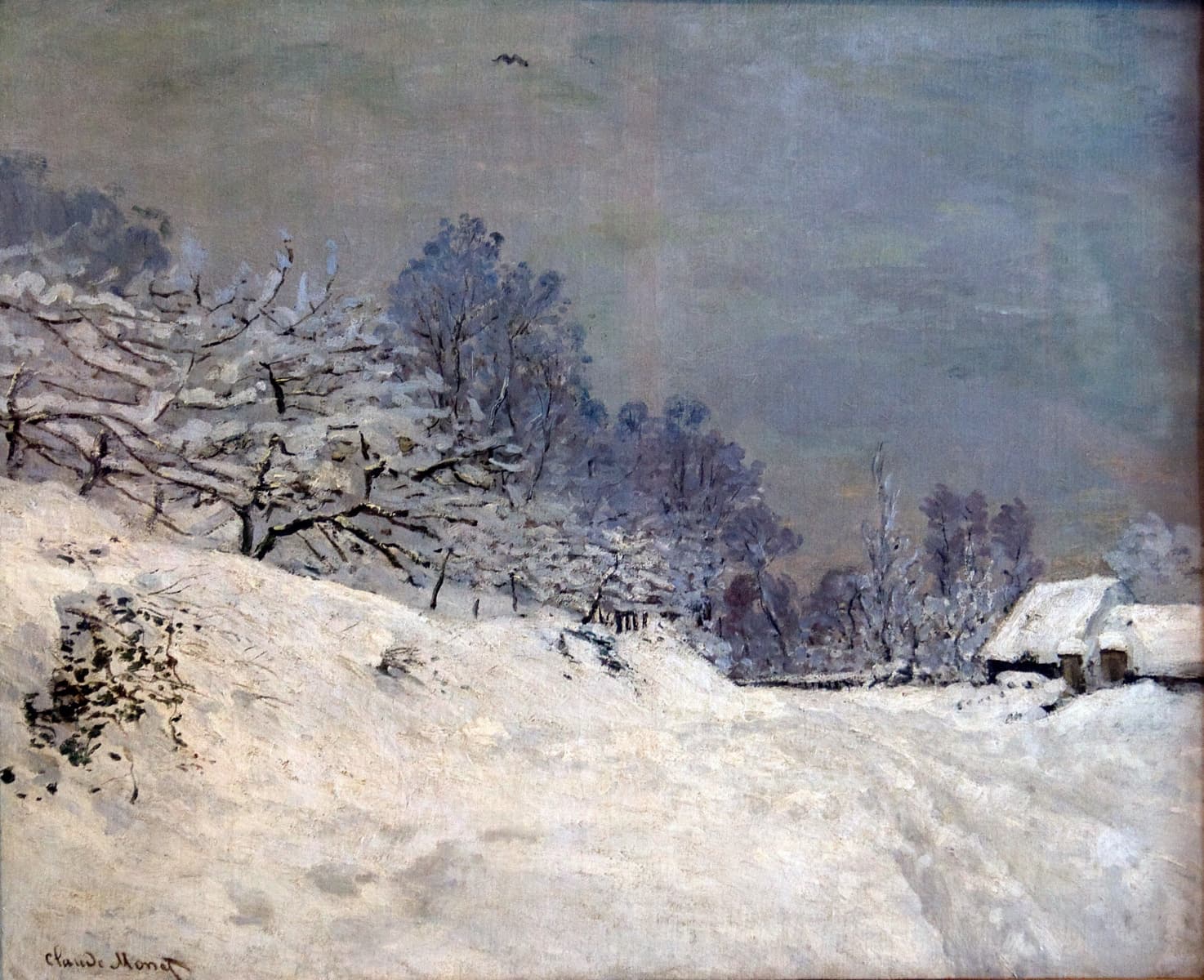
The Road in Front of Saint-Siméon Farm in Winter
Claude Monet · 1867
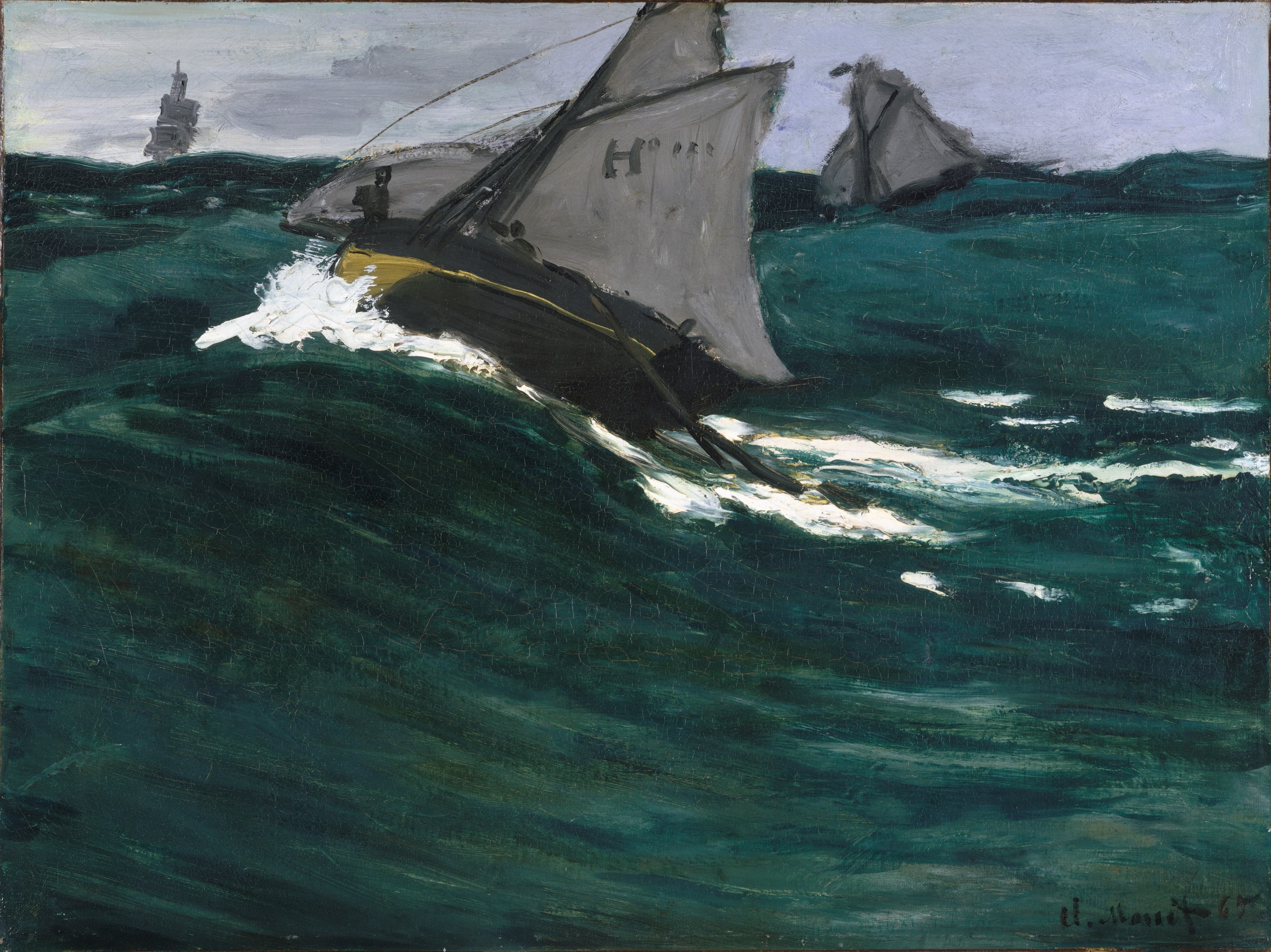
The Green Wave
Claude Monet · c. 1866–67
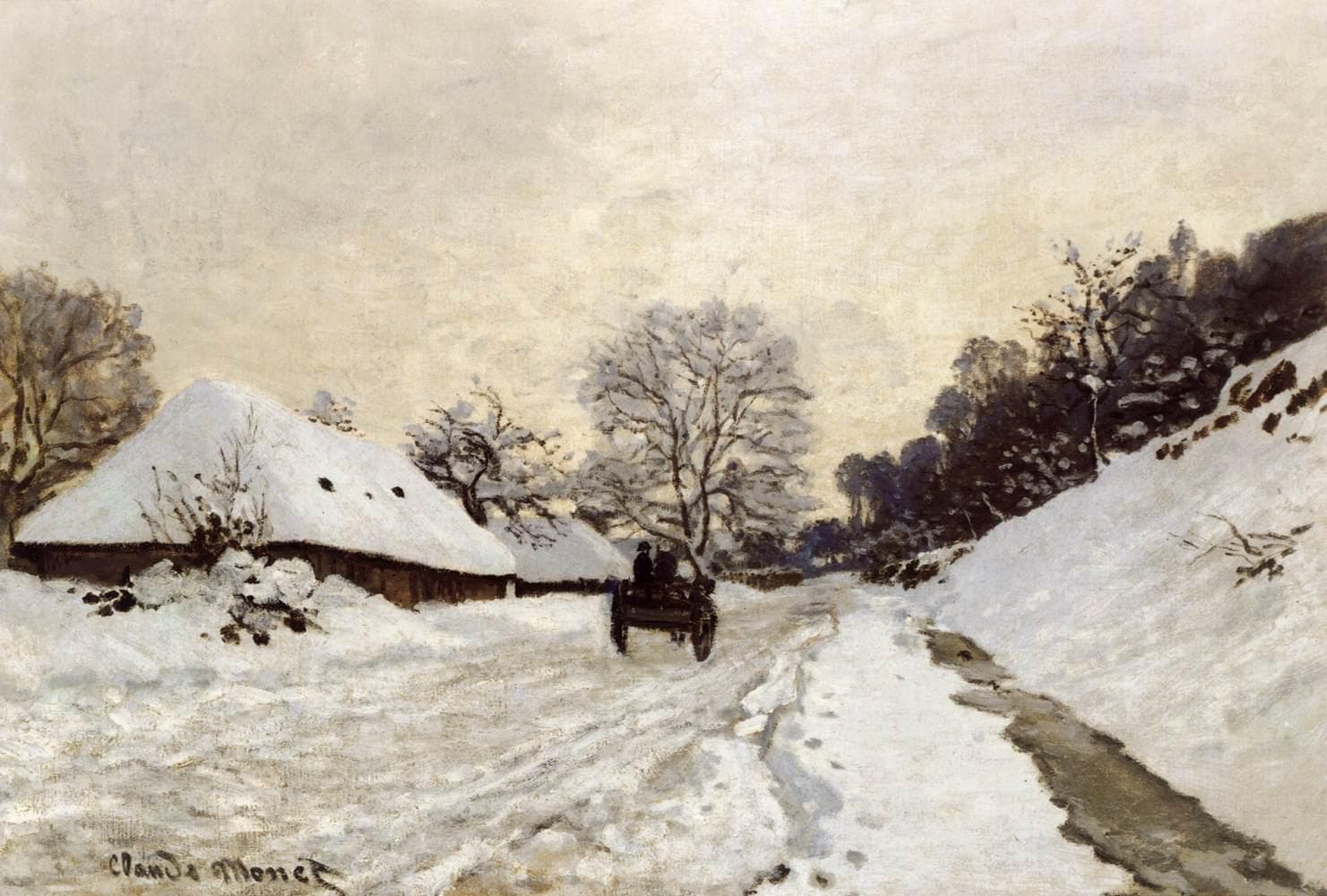
A Cart on the Snowy Road at Honfleur
Claude Monet · c. 1867
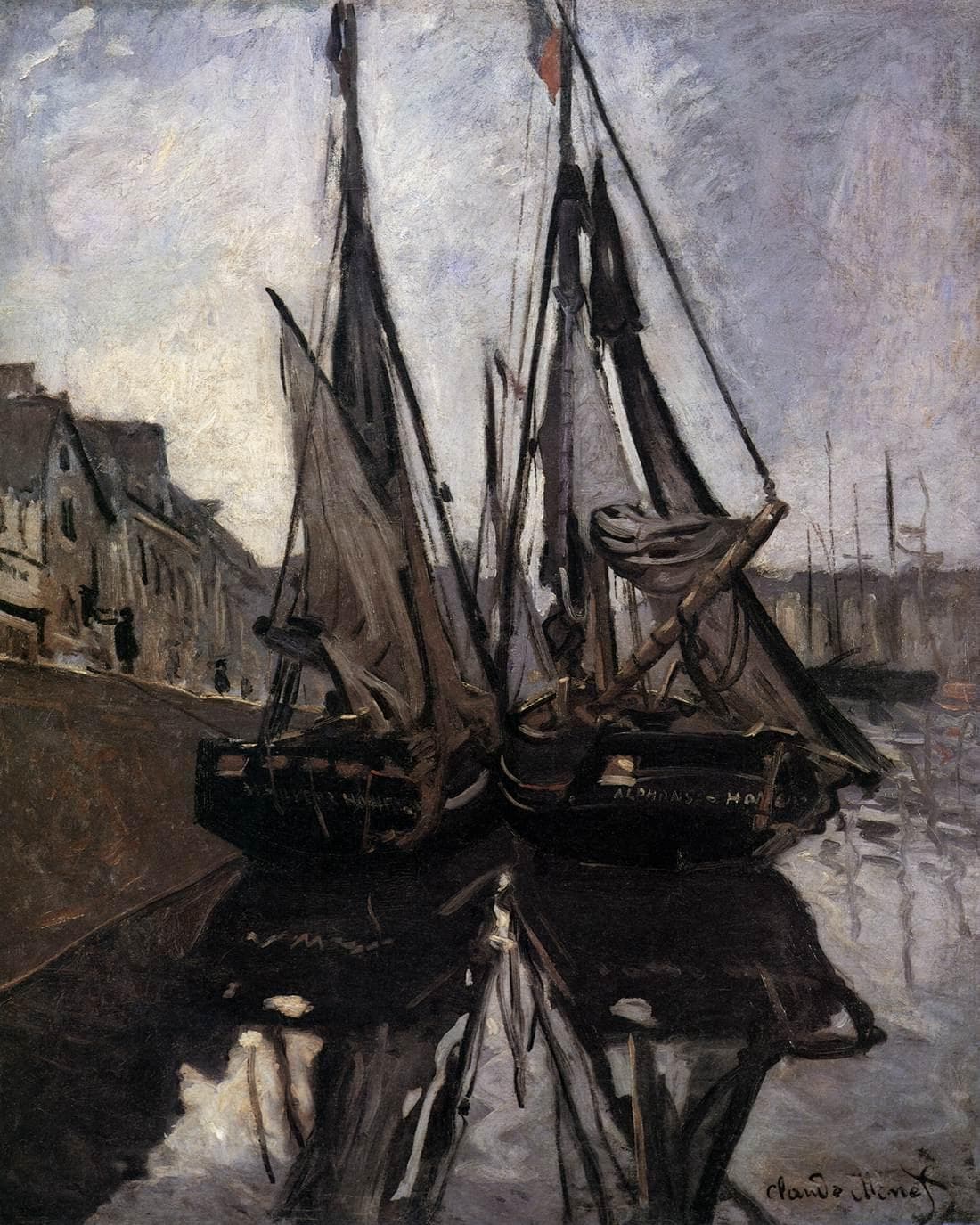
Fishing Boats at Honfleur
Claude Monet · c. 1868
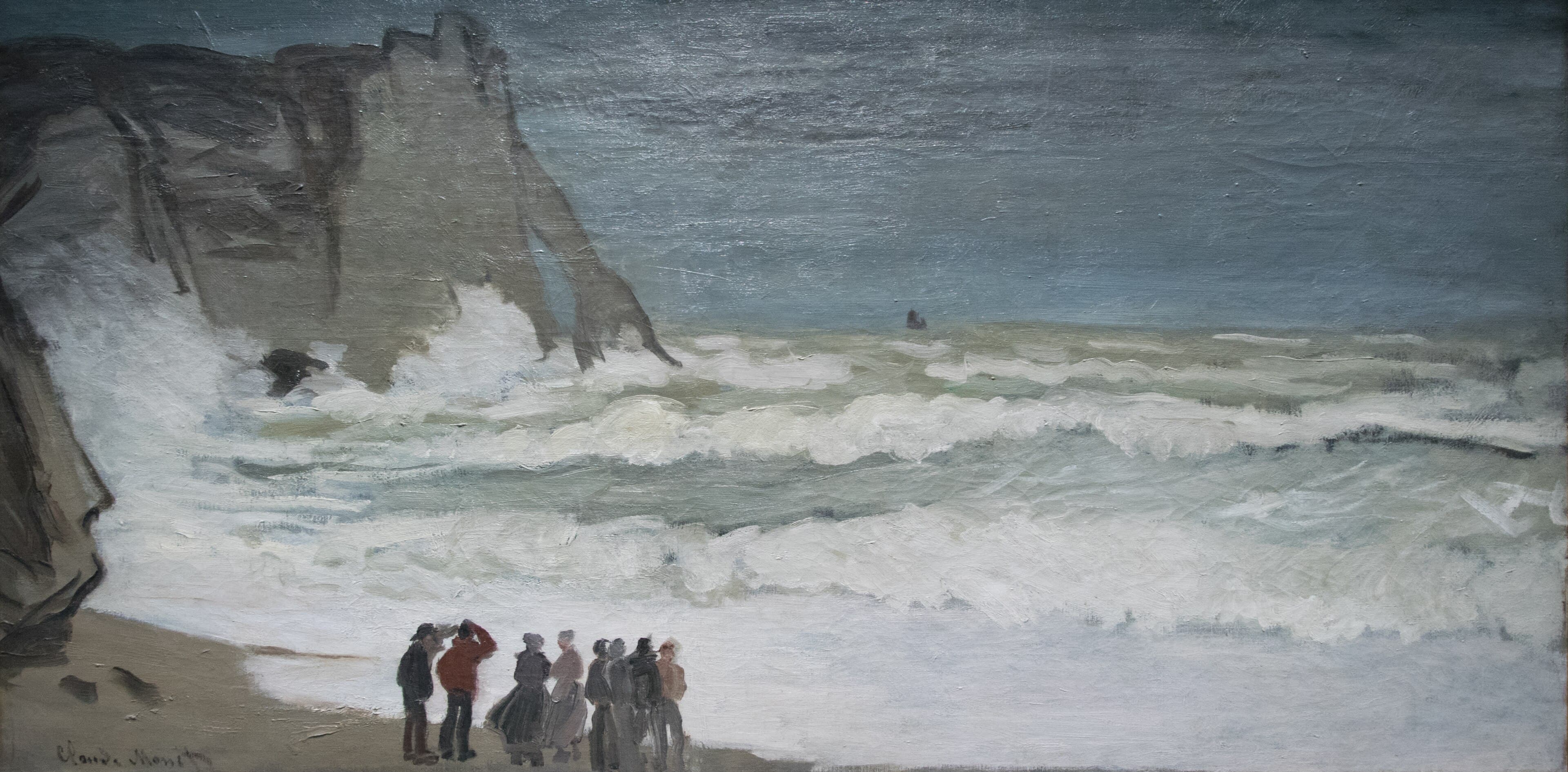
Heavy Sea at Étretat
Claude Monet · c. 1868–69
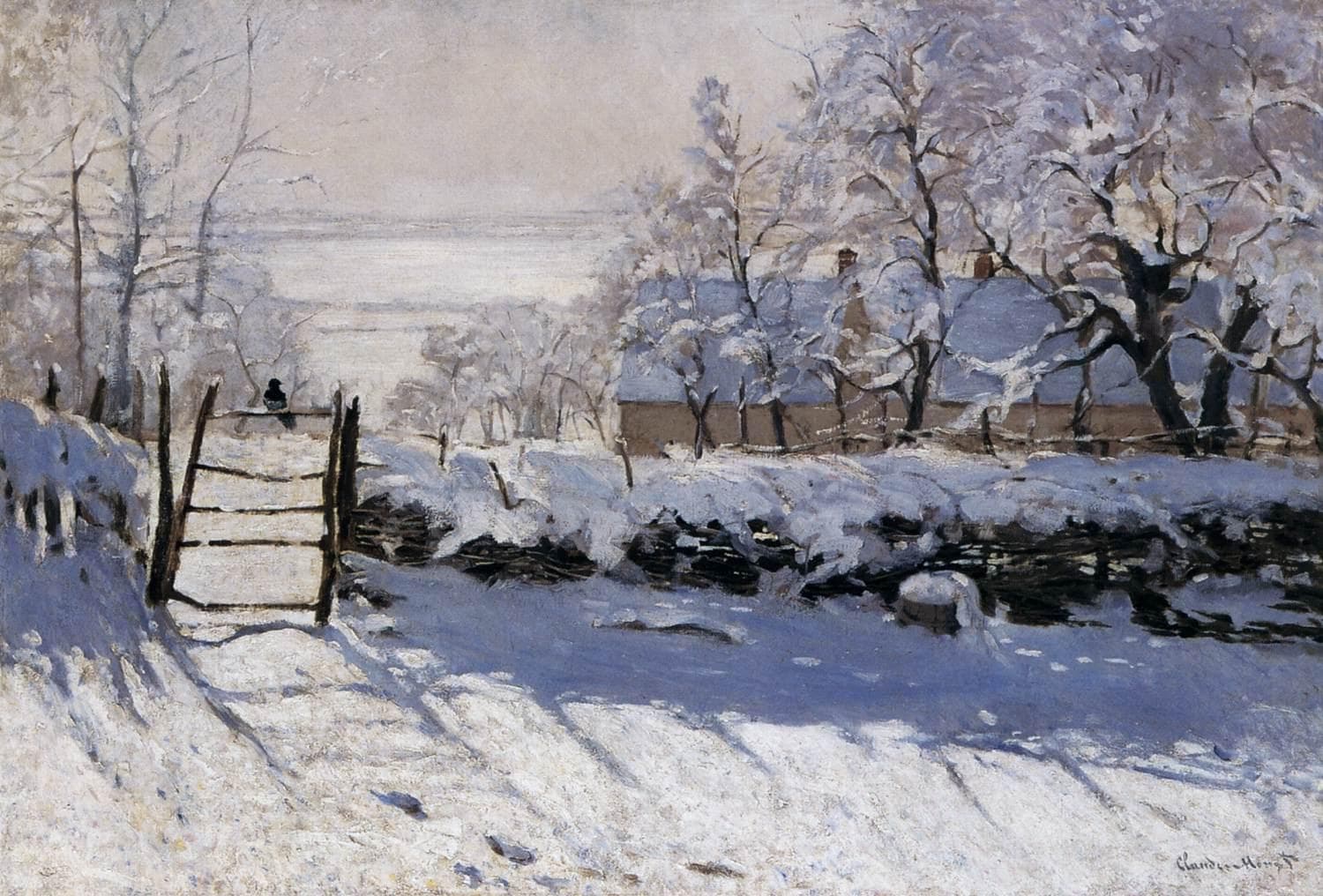
The Magpie
Claude Monet · 1868–69
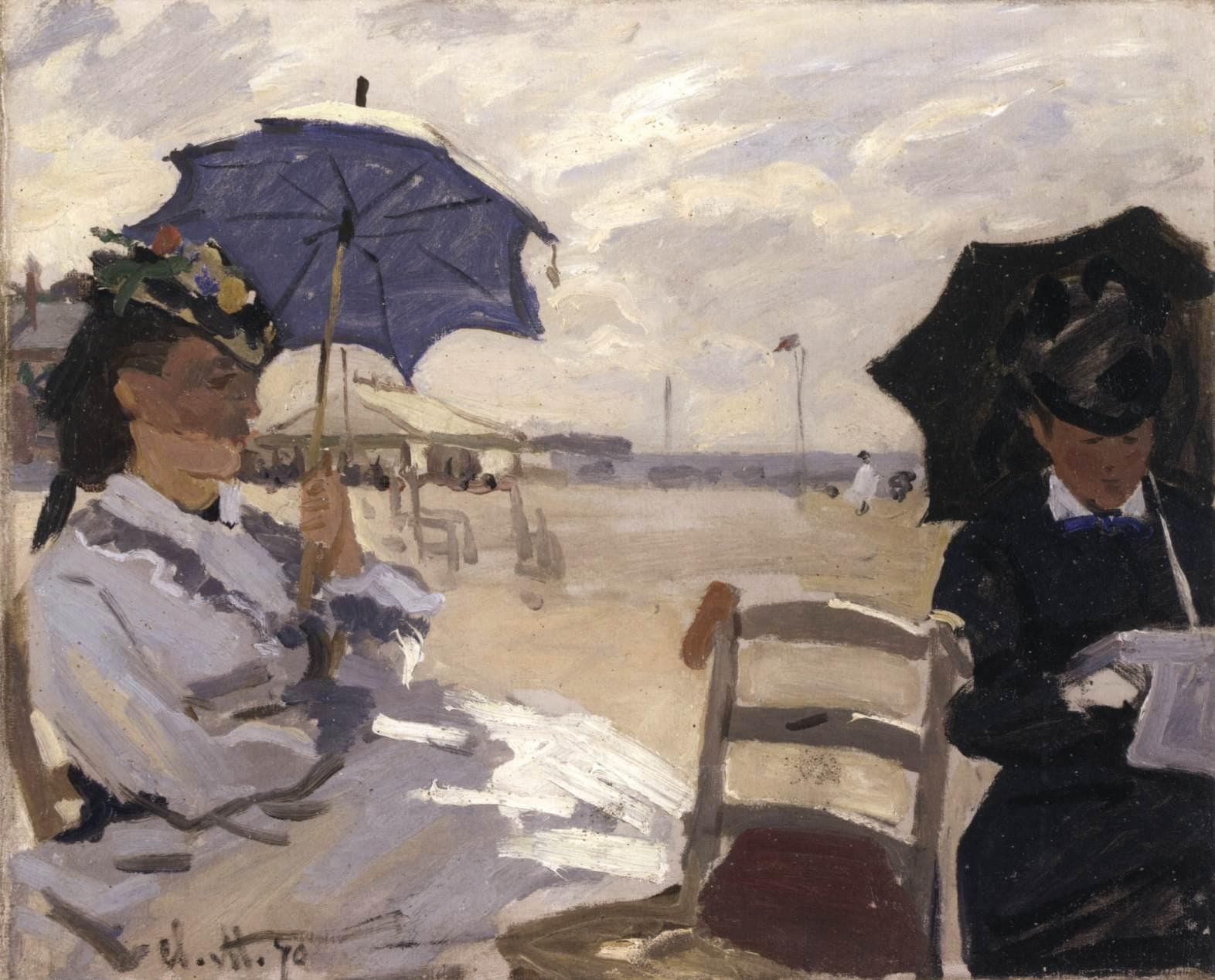
The Beach at Trouville
Claude Monet · 1870
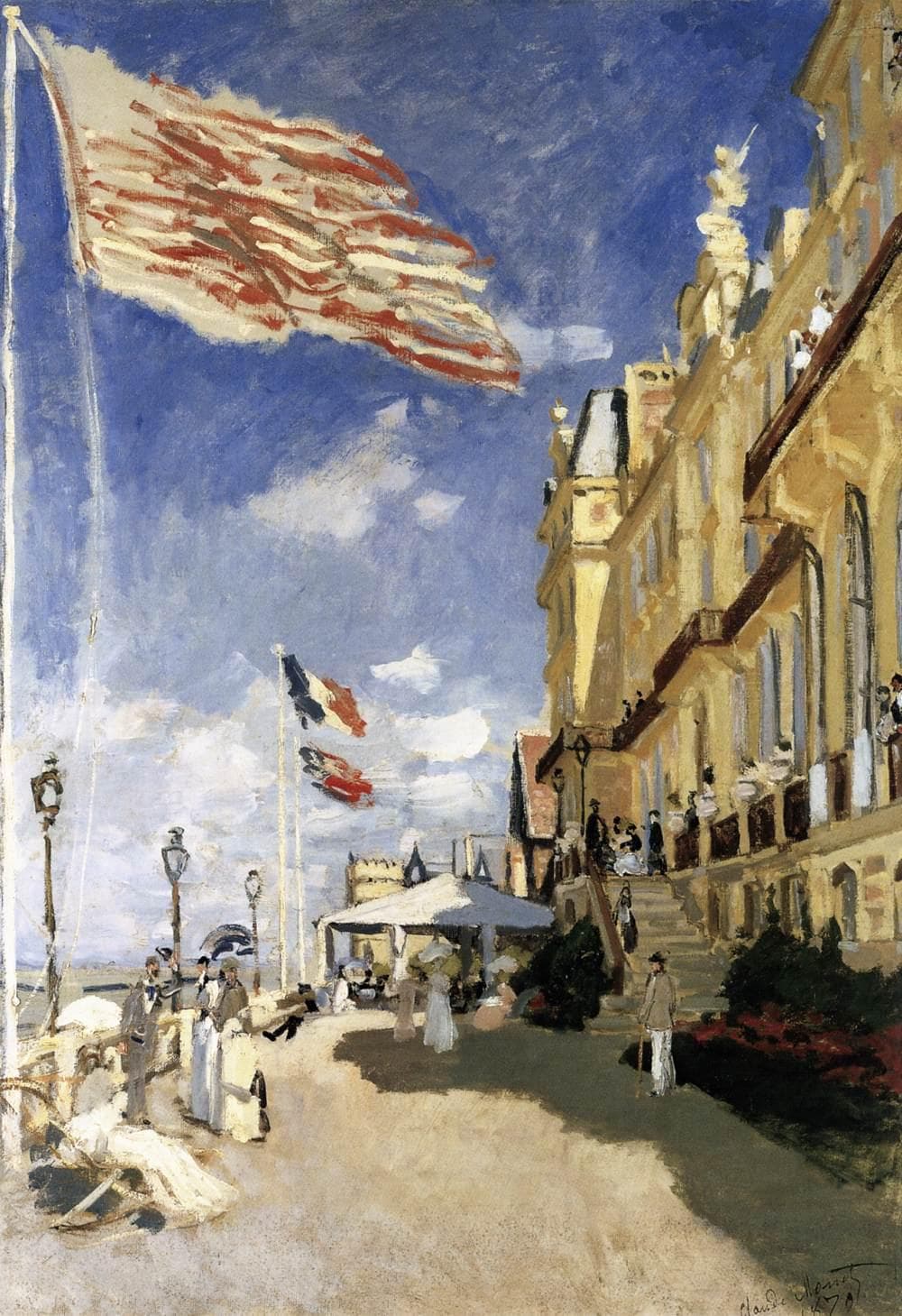
The Hôtel des Roches Noires, Trouville
Claude Monet · 1870
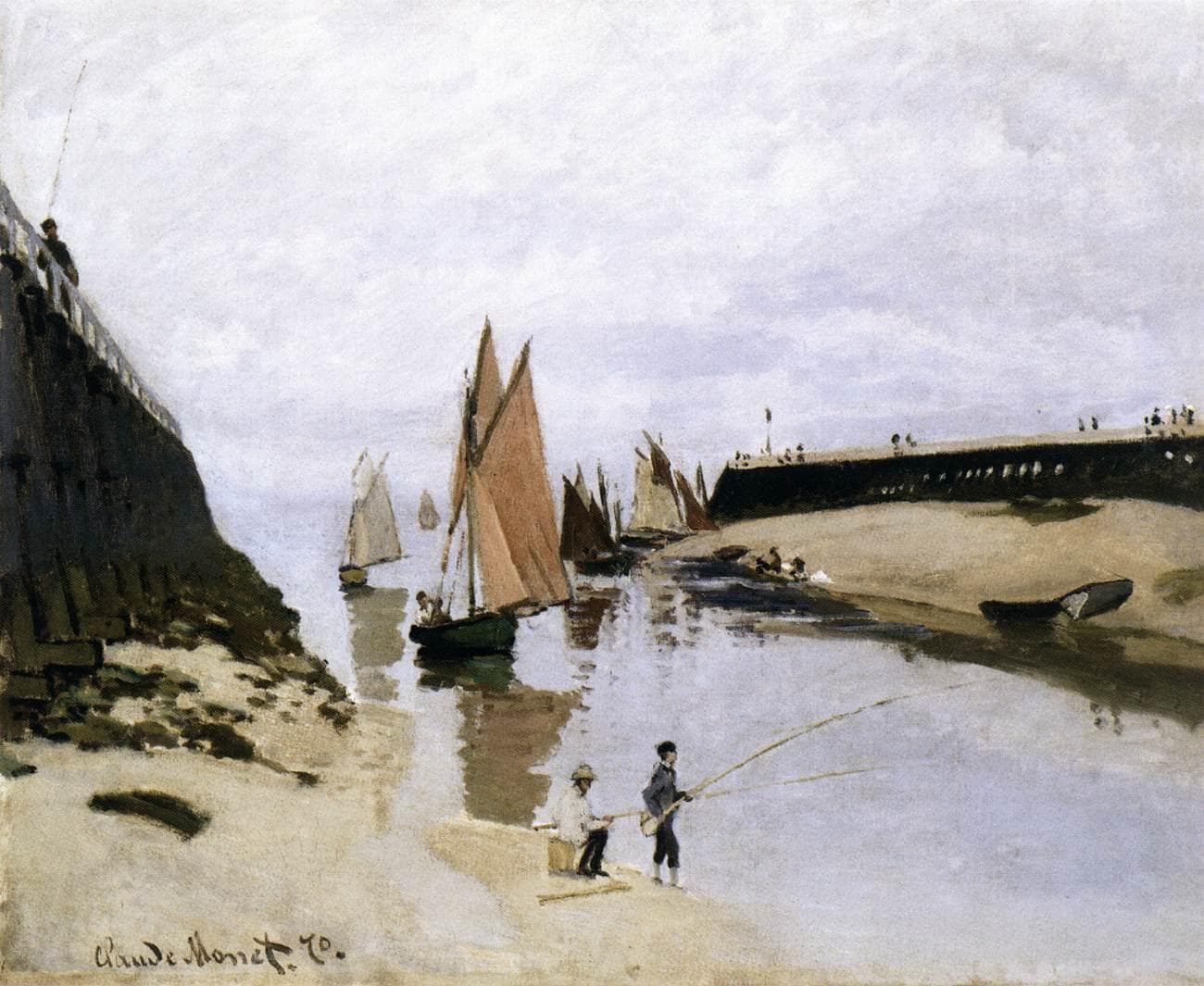
Landing Stage at Trouville, Low Tide
Claude Monet · 1870
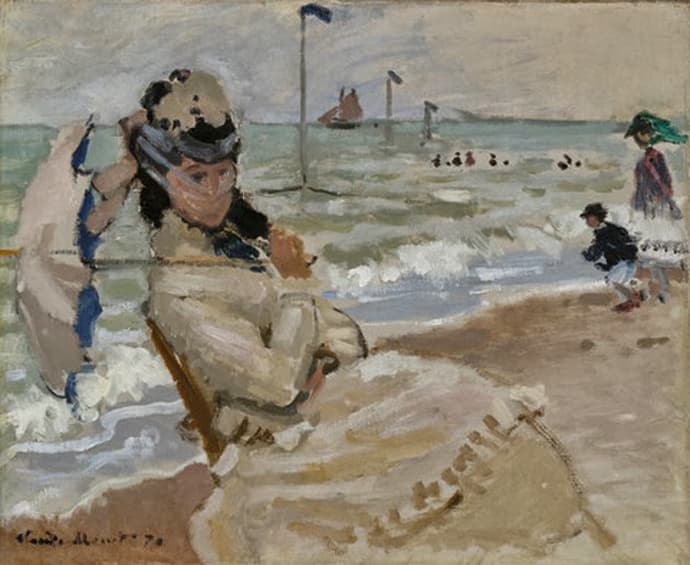
Camille on the Beach at Trouville
Claude Monet · 1870
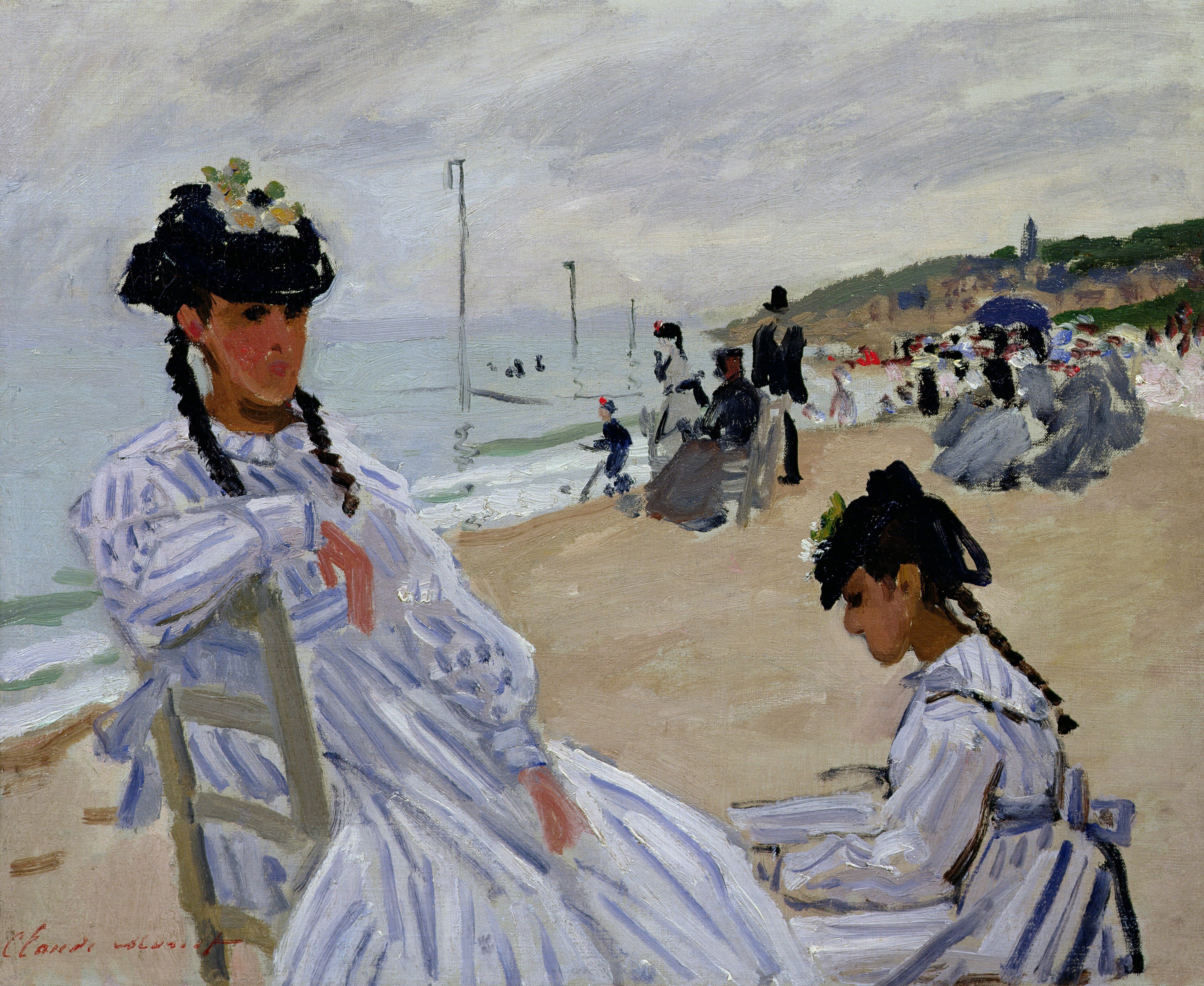
On the Beach at Trouville
Claude Monet · 1870
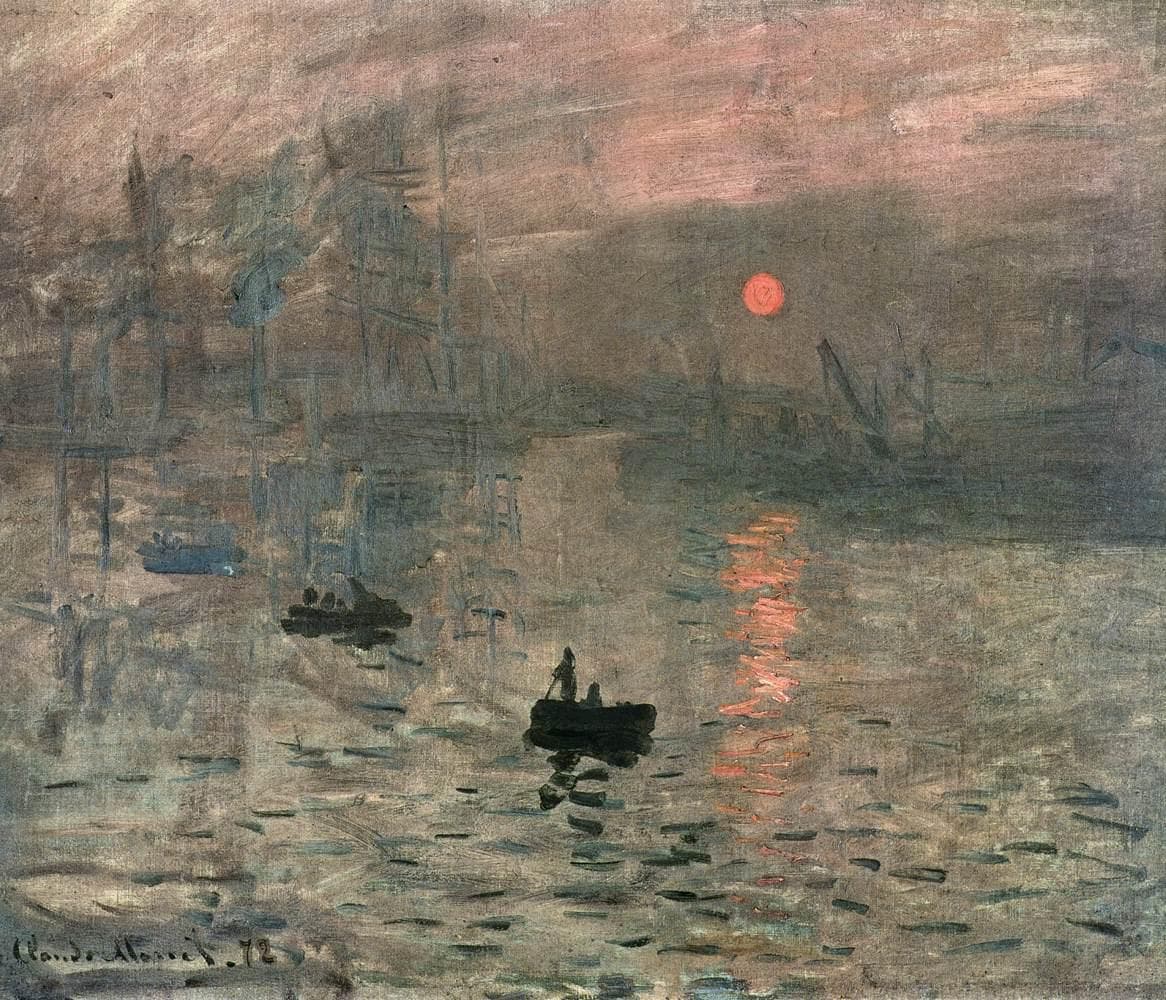
Impression, Sunrise
Claude Monet · 1872
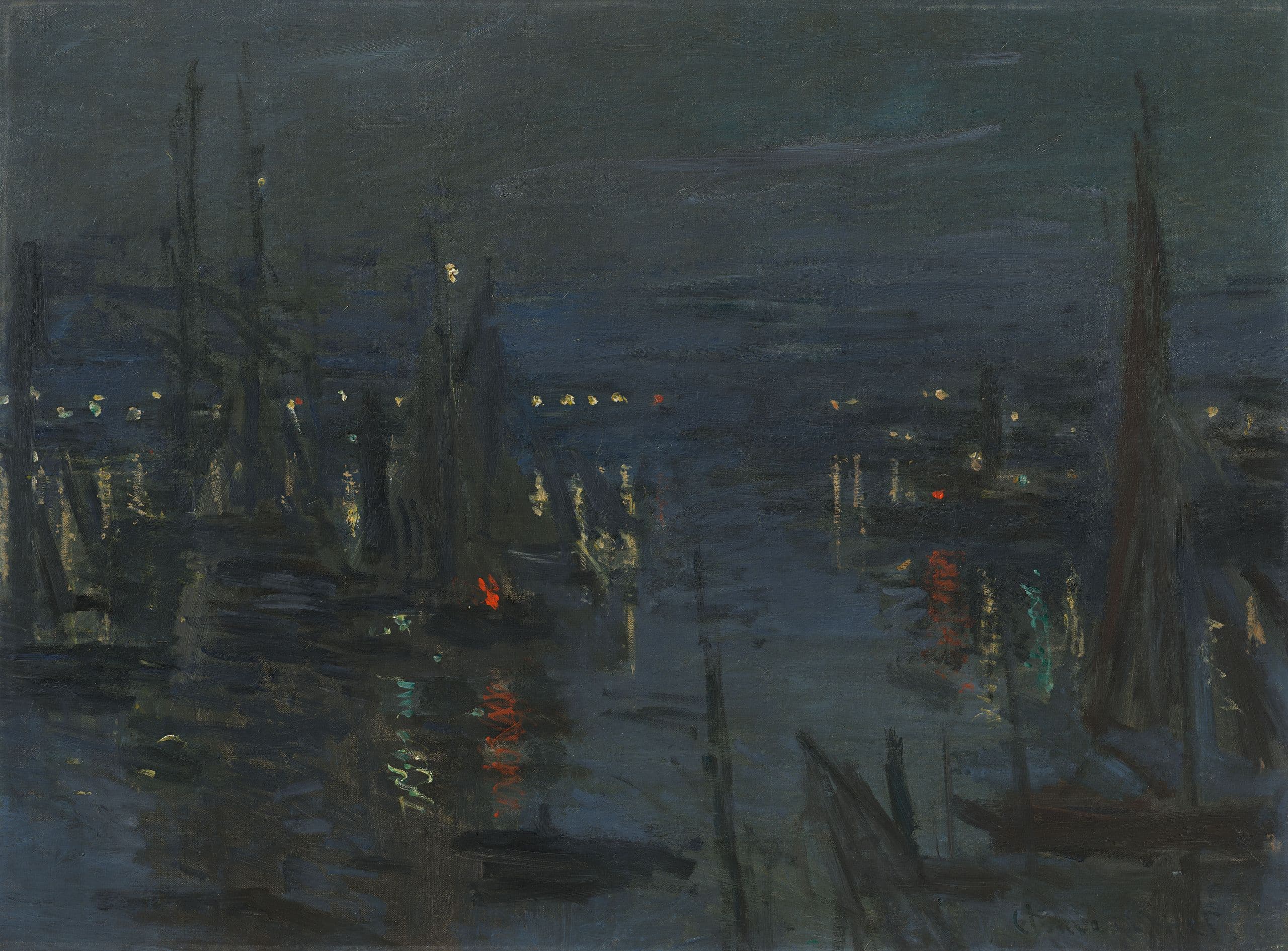
The Port of Le Havre, Night Effect
Claude Monet · 1872
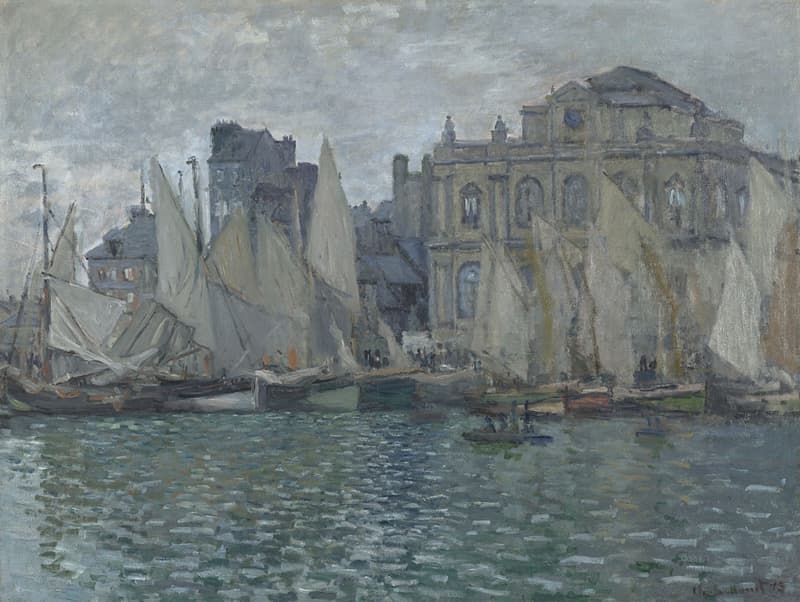
The Museum at Le Havre
Claude Monet · 1873
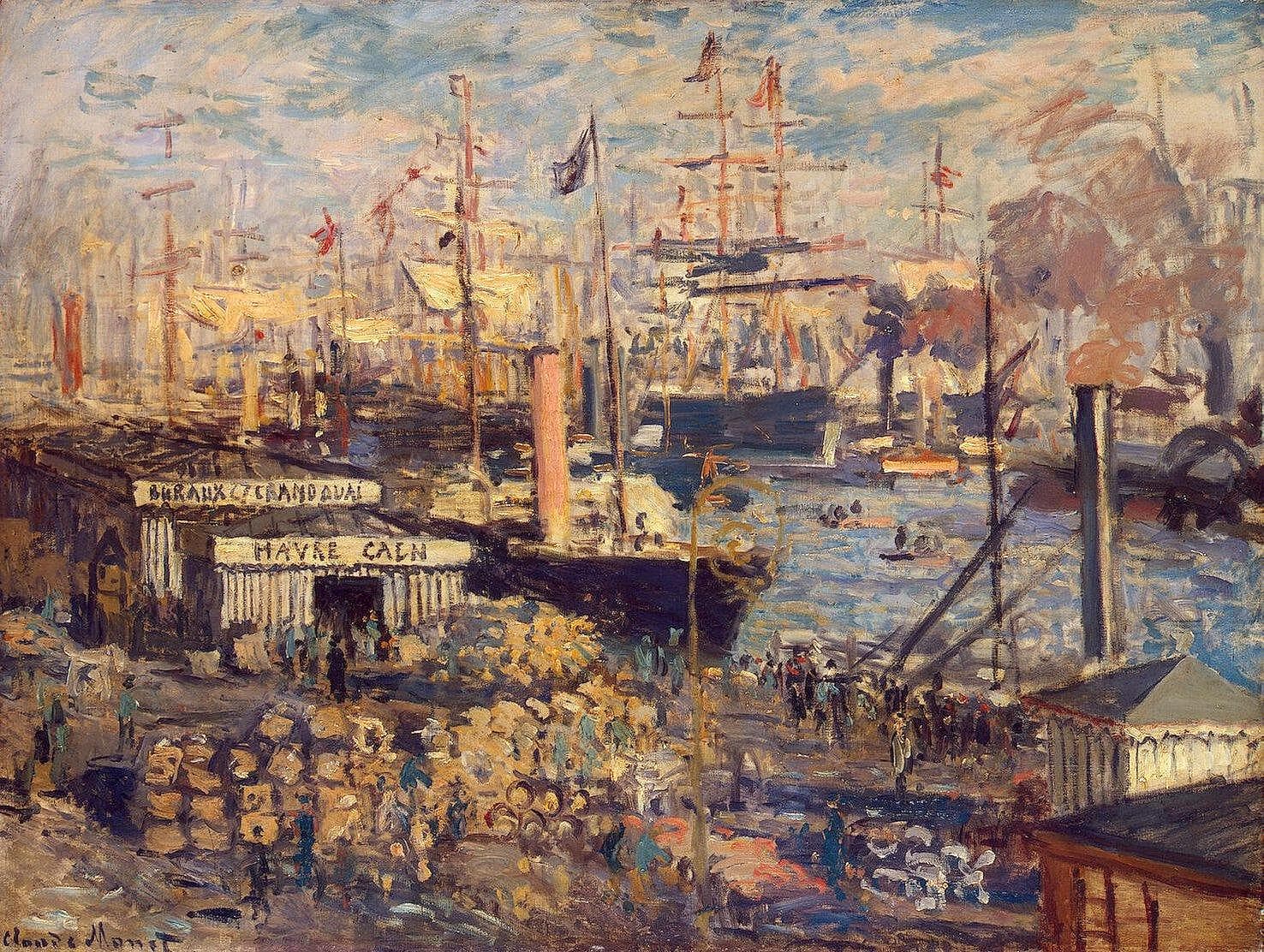
The Grand Quai at Le Havre
Claude Monet · 1874
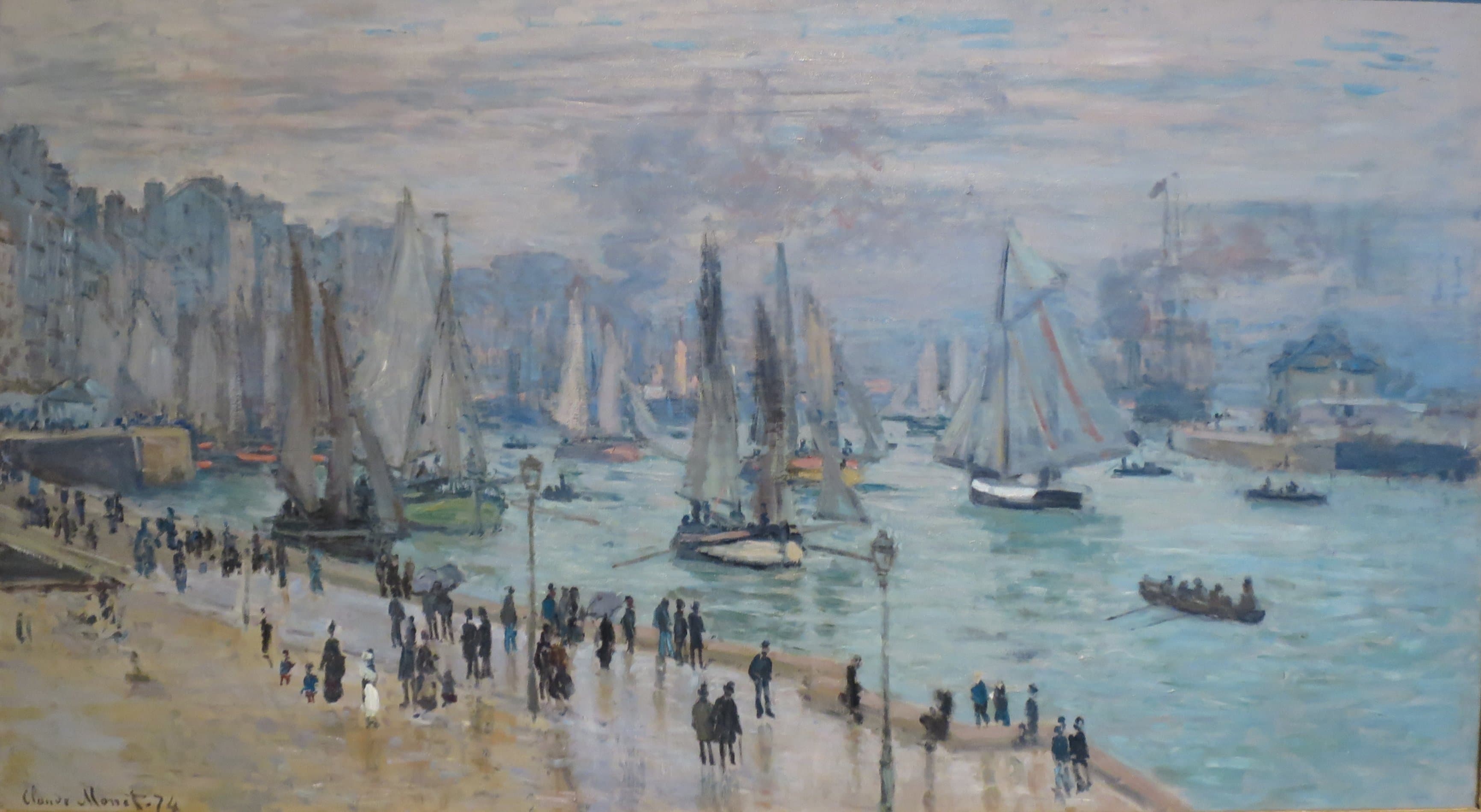
Fishing Boats Leaving the Harbor, Le Havre
Claude Monet · 1874
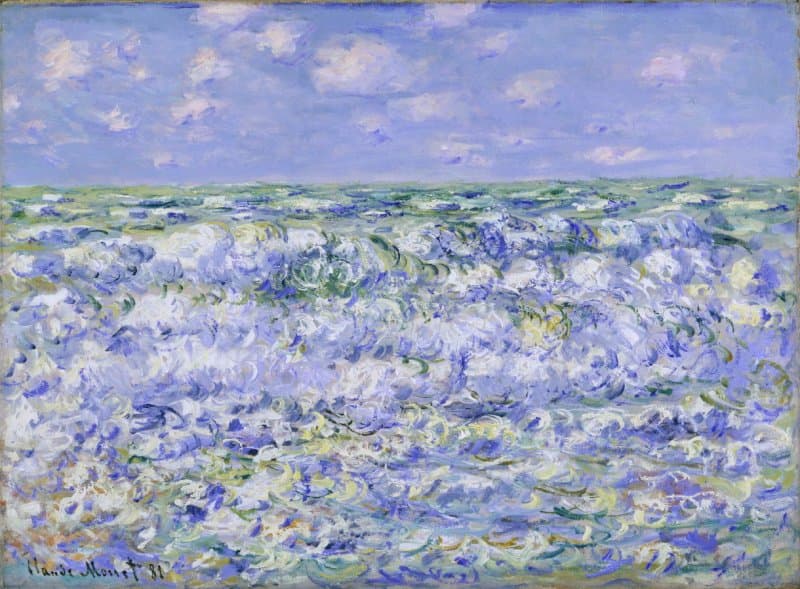
Waves Breaking
Claude Monet · 1881
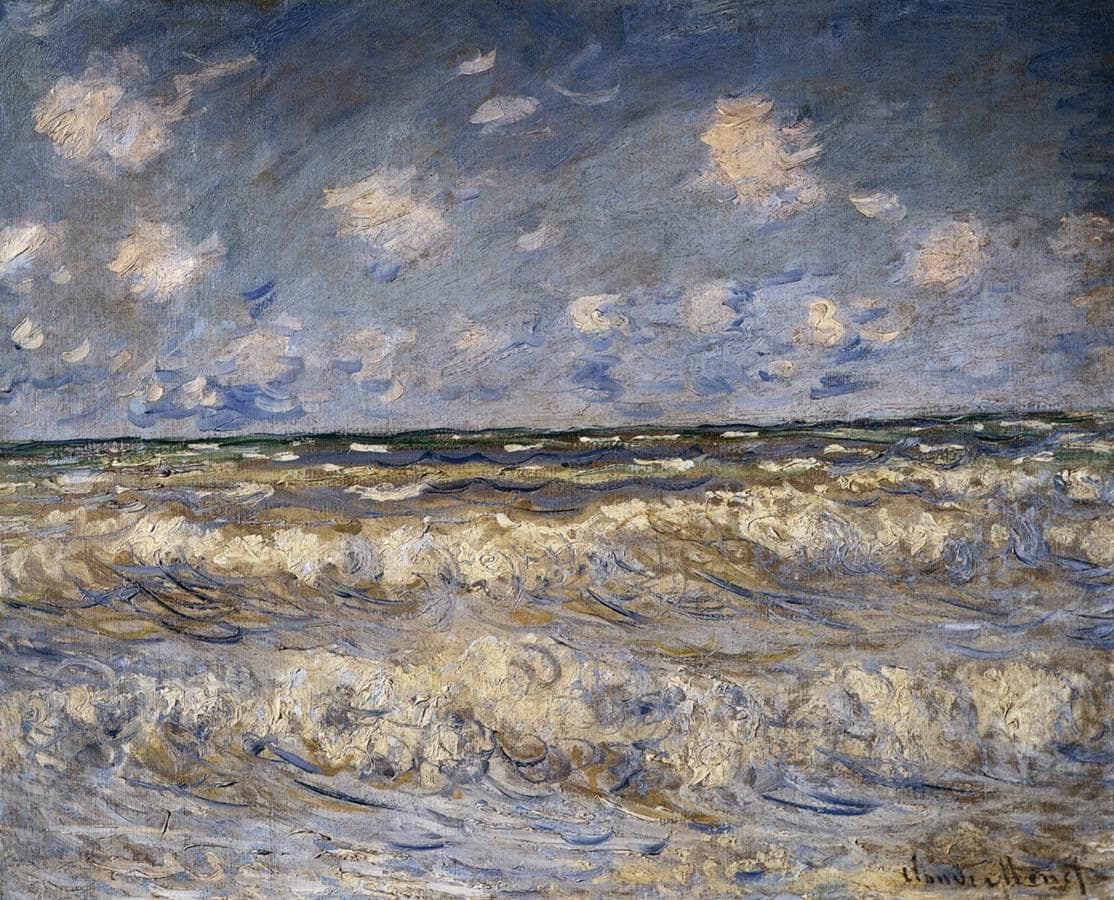
Stormy Sea
Claude Monet · c. 1881–84
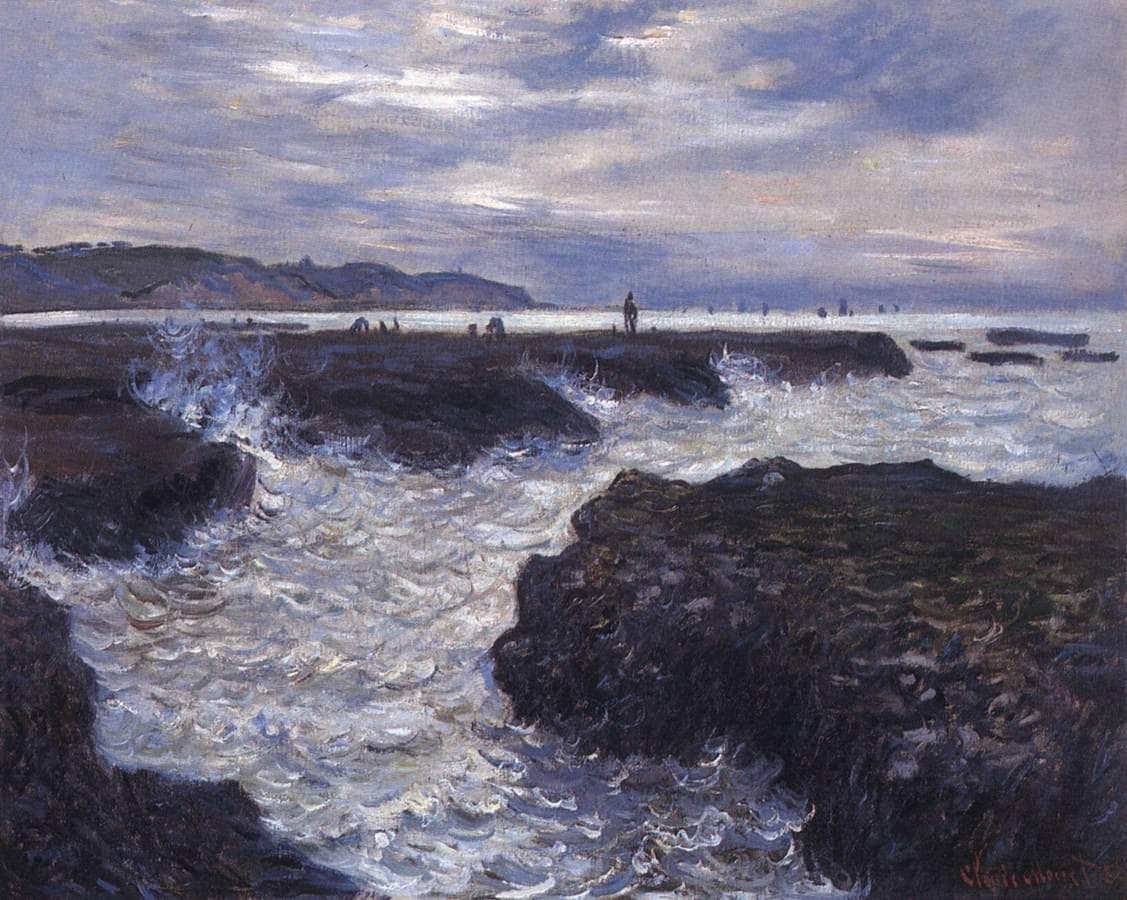
The Rocks at Pourville, Low Tide
Claude Monet · 1882
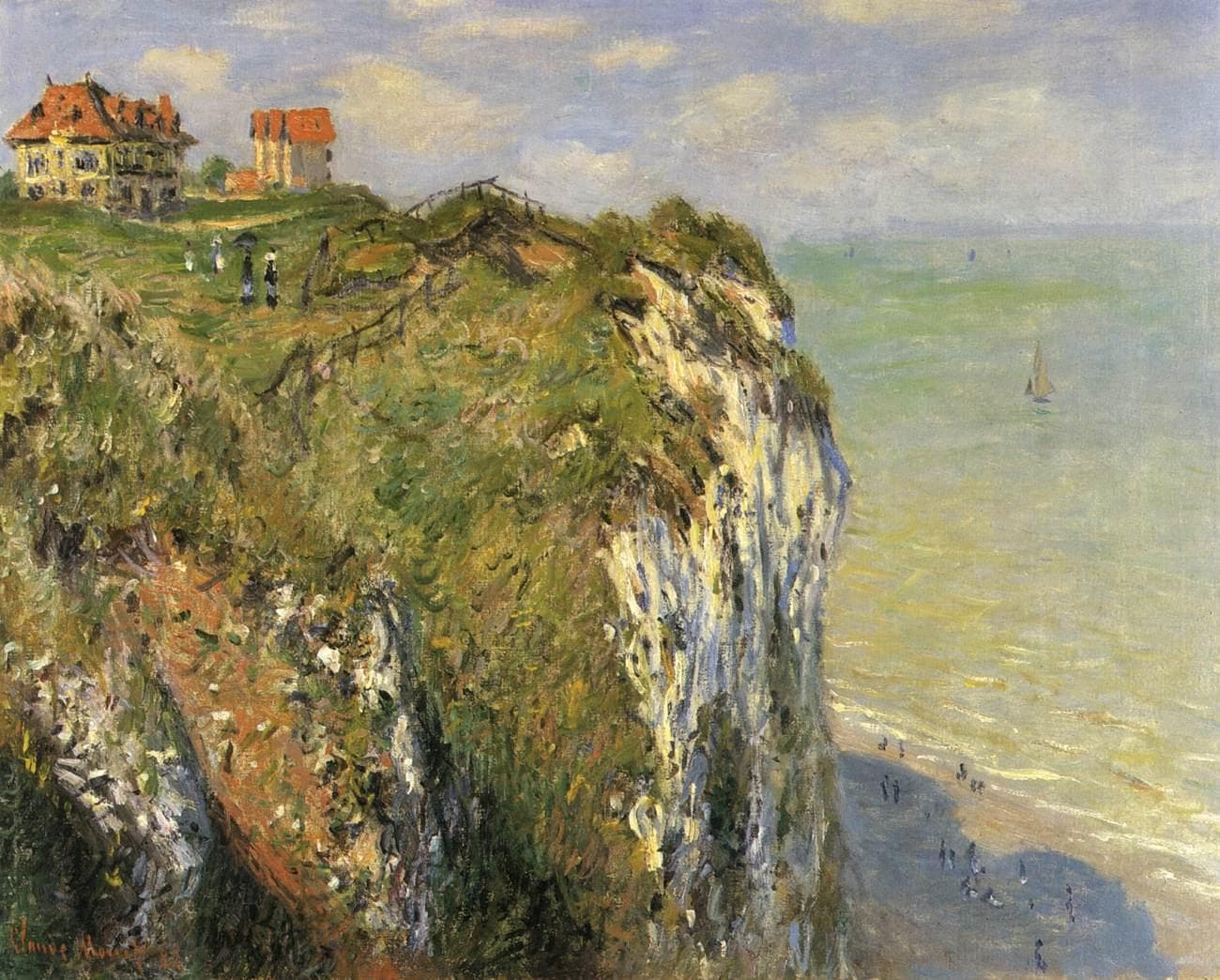
Cliffs near Dieppe
Claude Monet · 1882
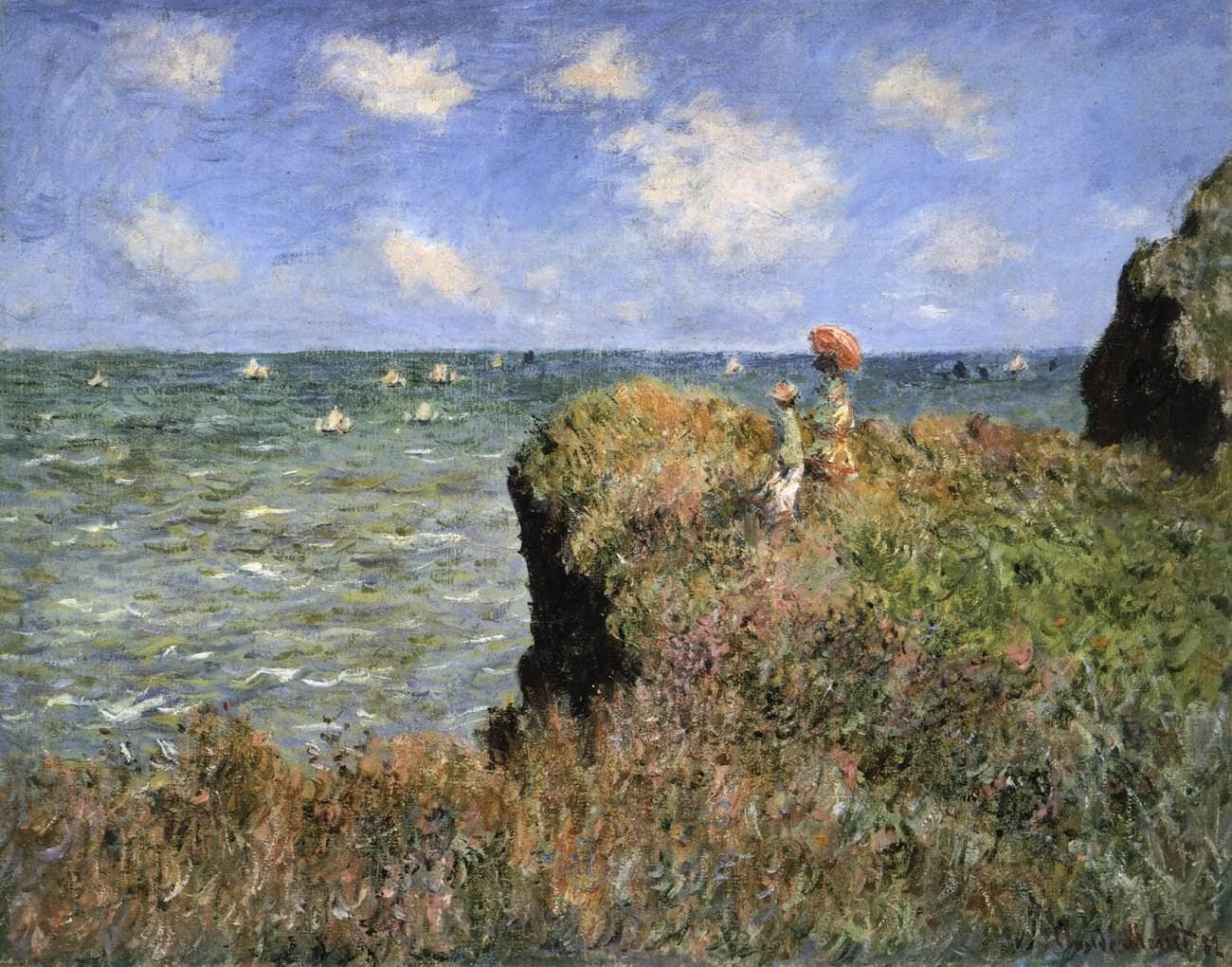
Cliff Walk at Pourville
Claude Monet · 1882

Beach in Pourville
Claude Monet · 1882
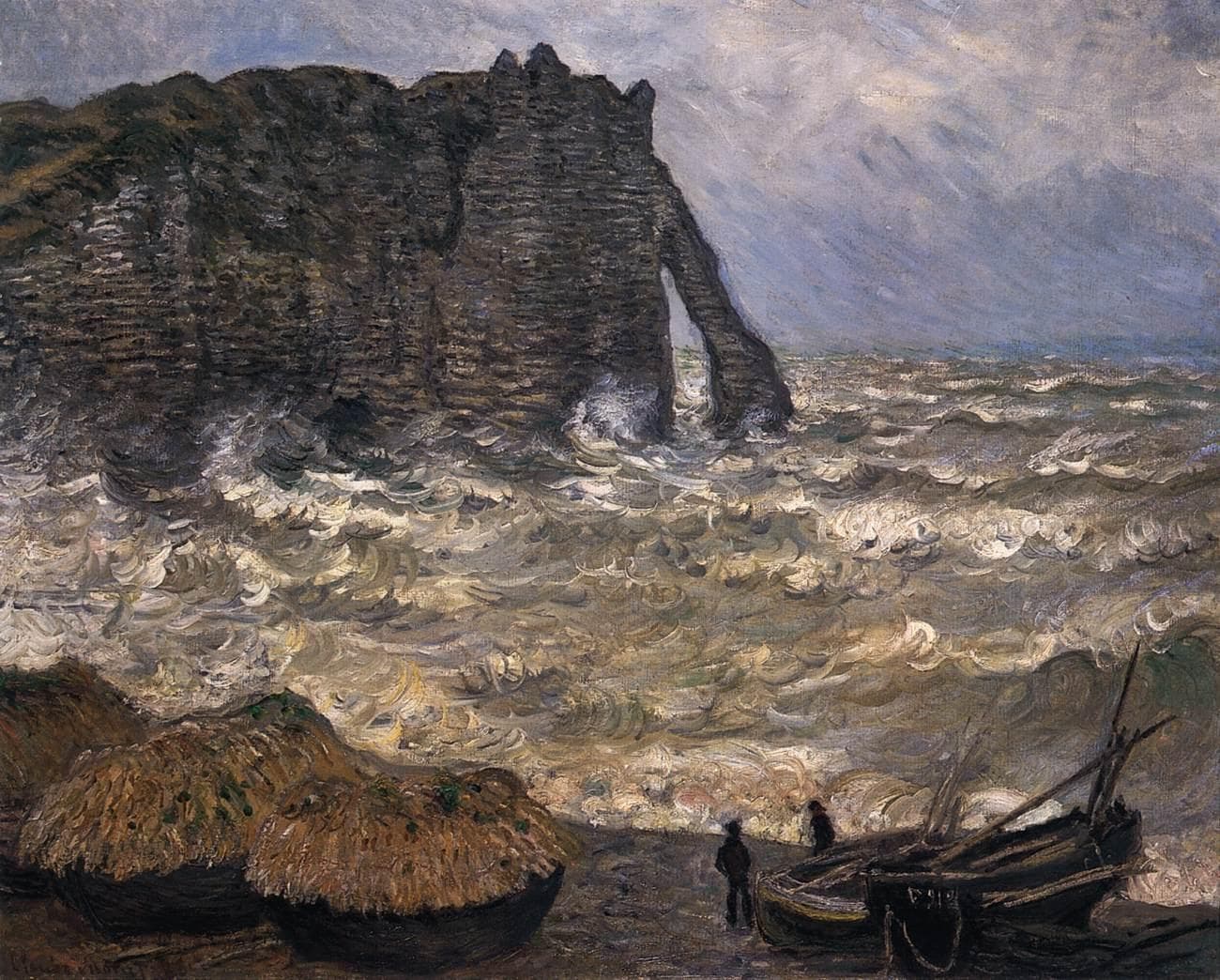
Rough Sea at Étretat
Claude Monet · 1883
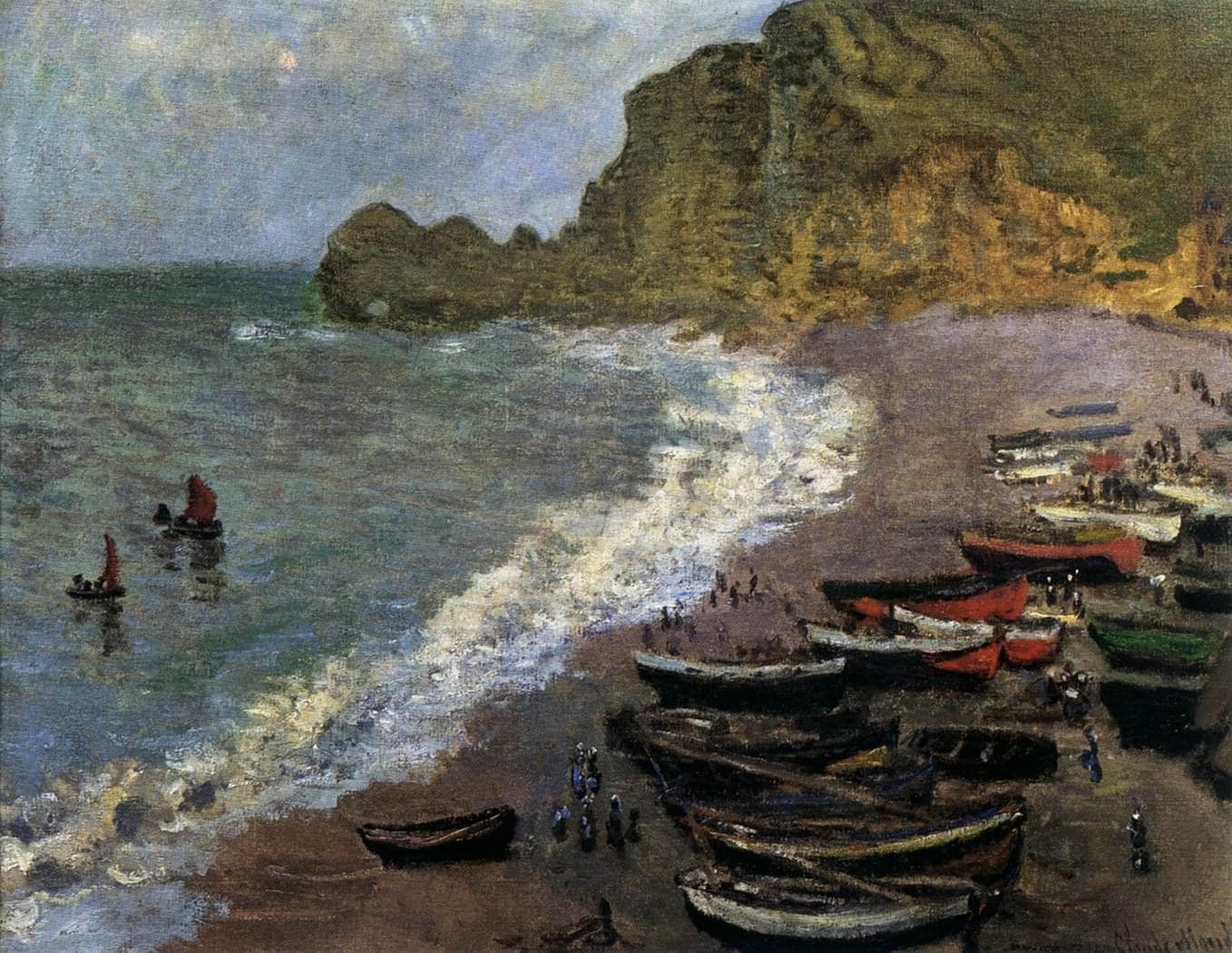
The Beach at Étretat
Claude Monet · 1883
The Manneporte (Étretat)
Claude Monet · 1883
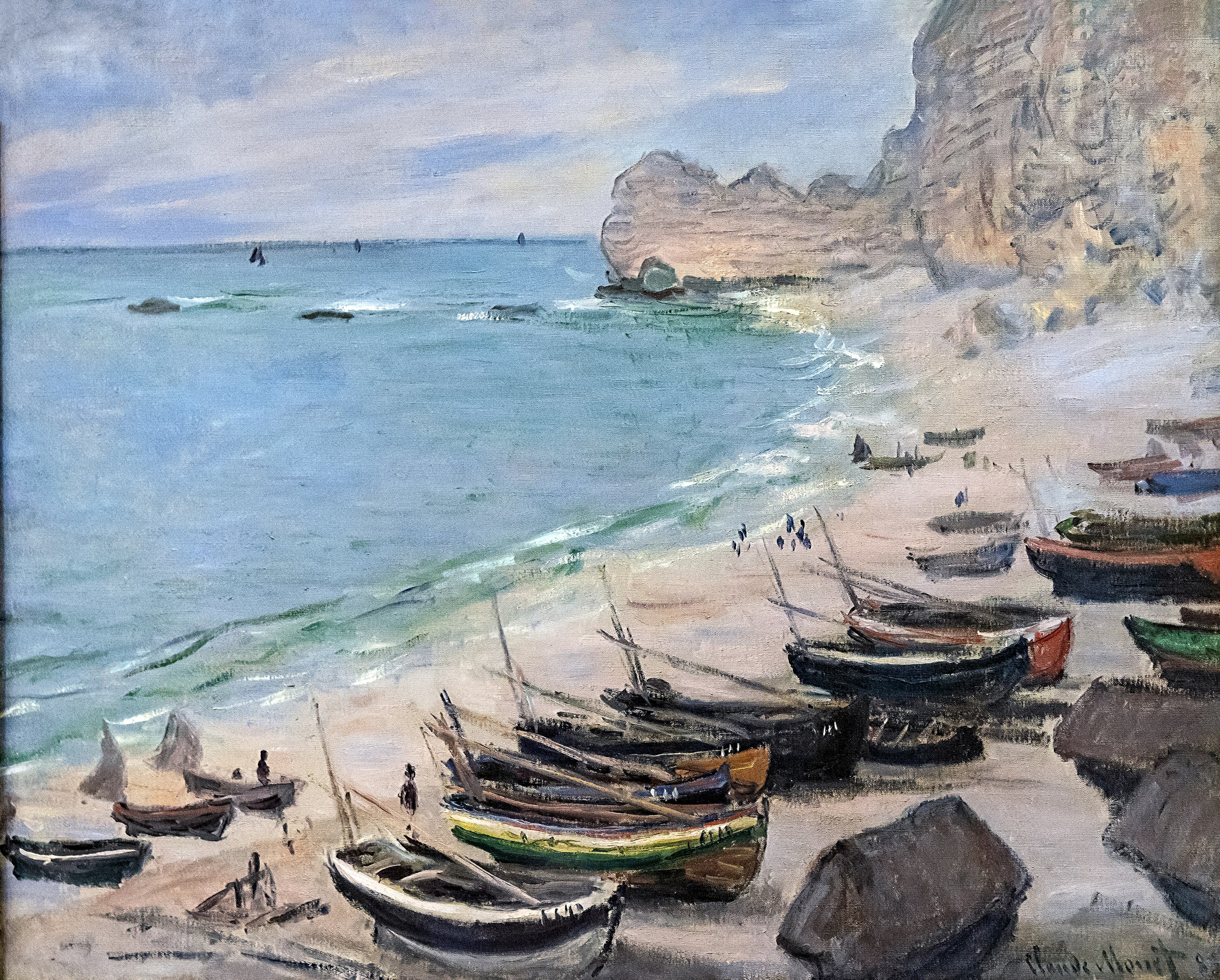
Boats on the Beach at Étretat (1883)
Claude Monet · 1883
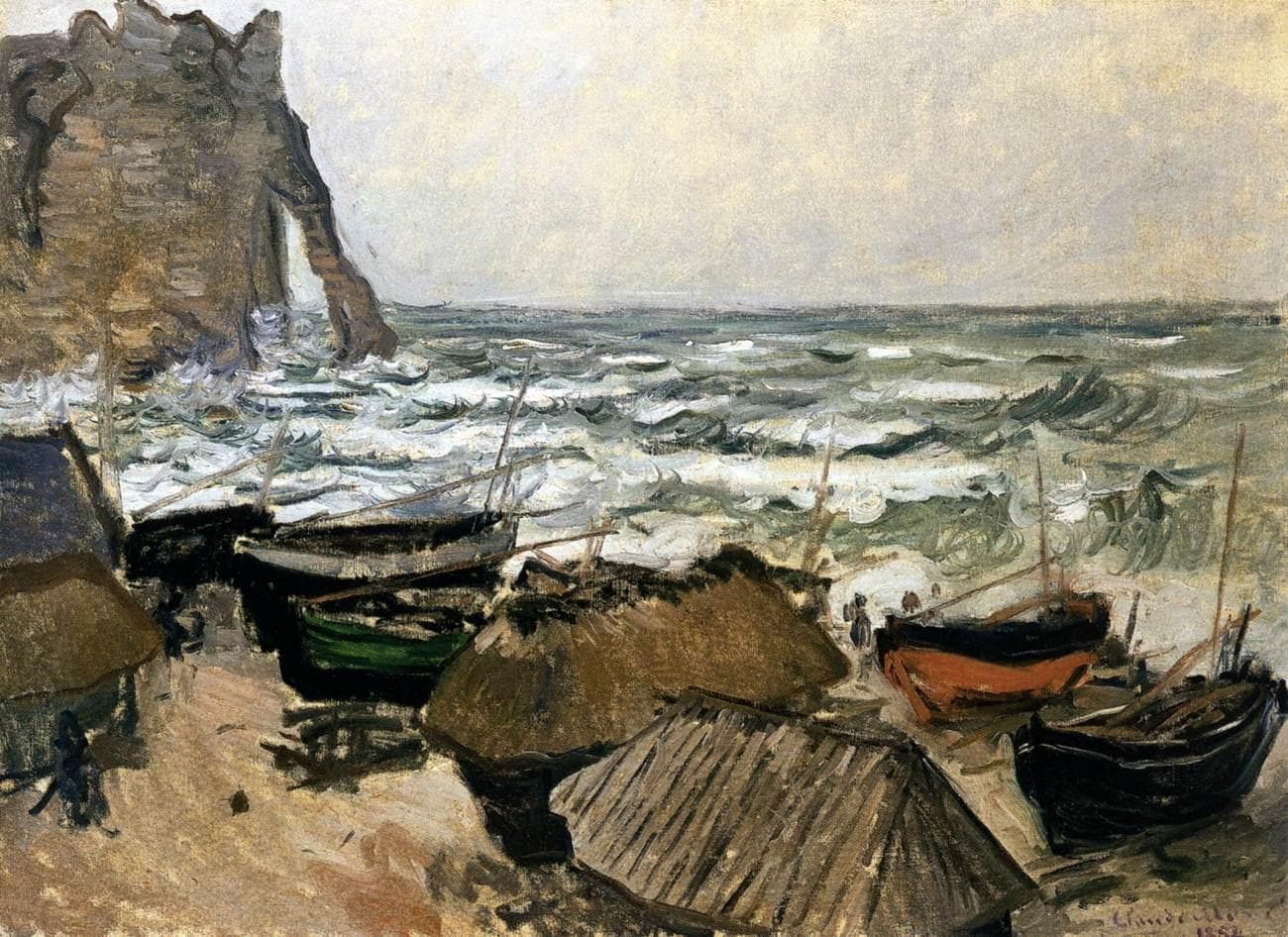
Fishing Boats and the Porte d'Aval
Claude Monet · 1884
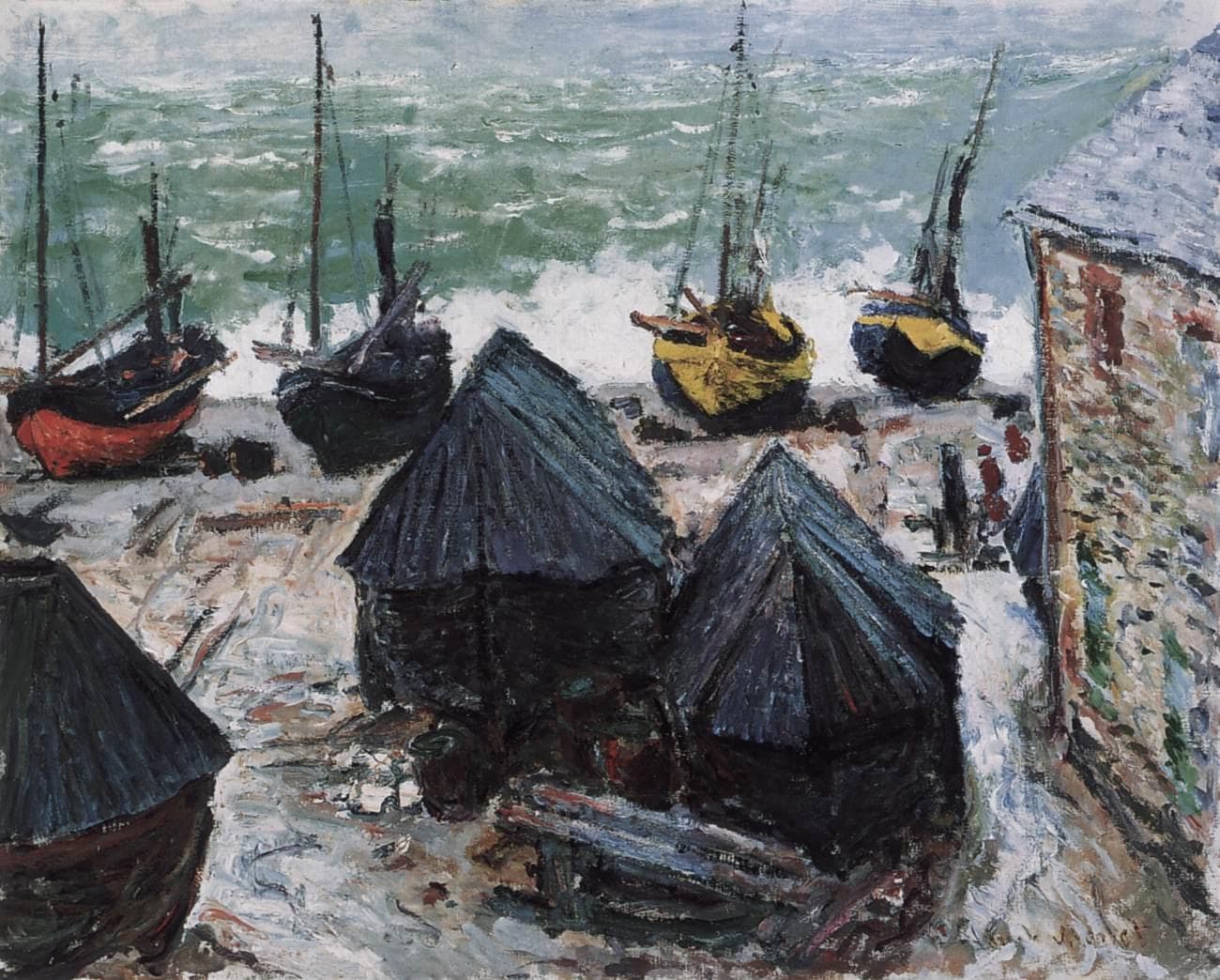
Boats on the Beach at Étretat
Claude Monet · 1885
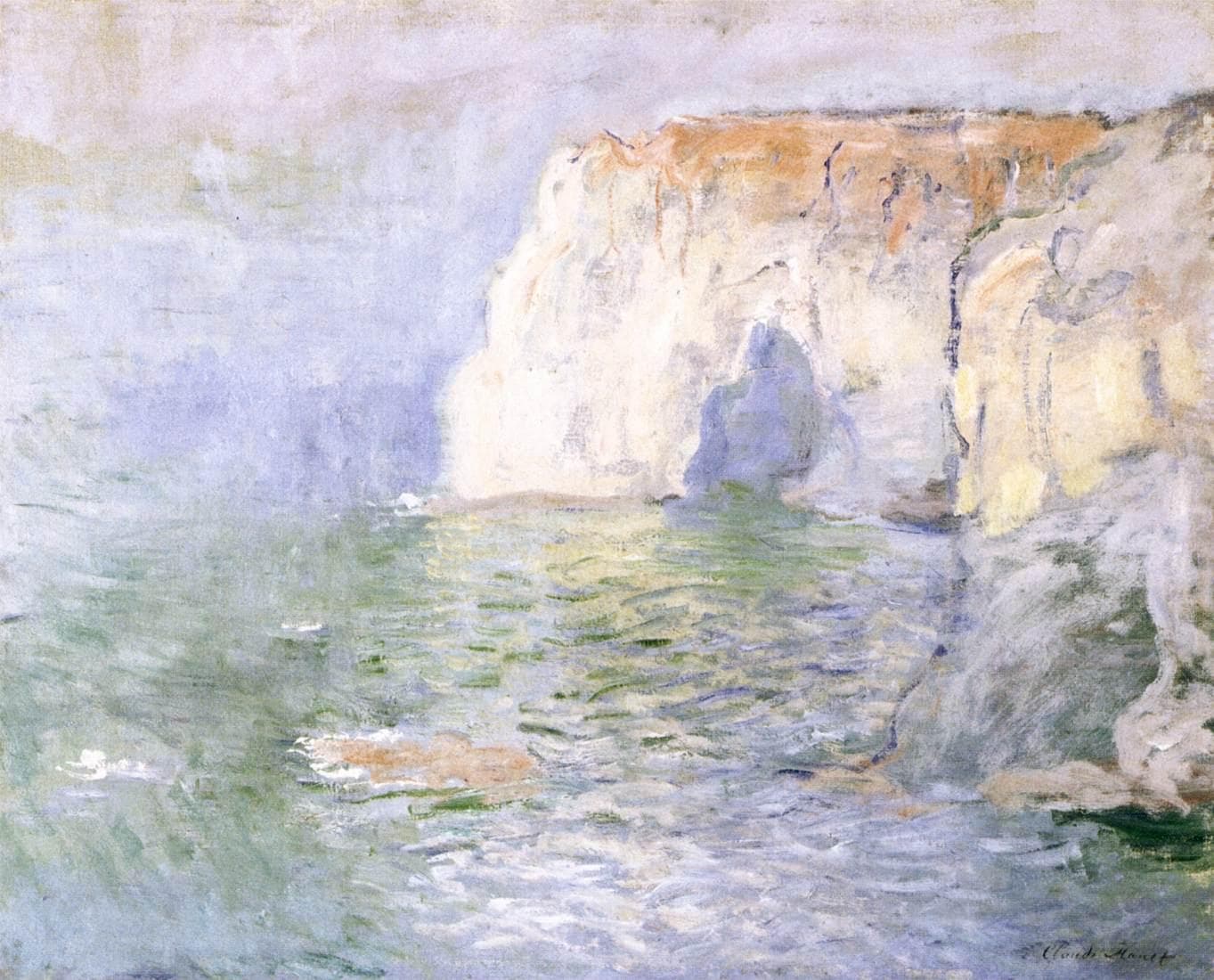
Étretat, the Manneporte, Reflections on the Water
Claude Monet · c. 1885
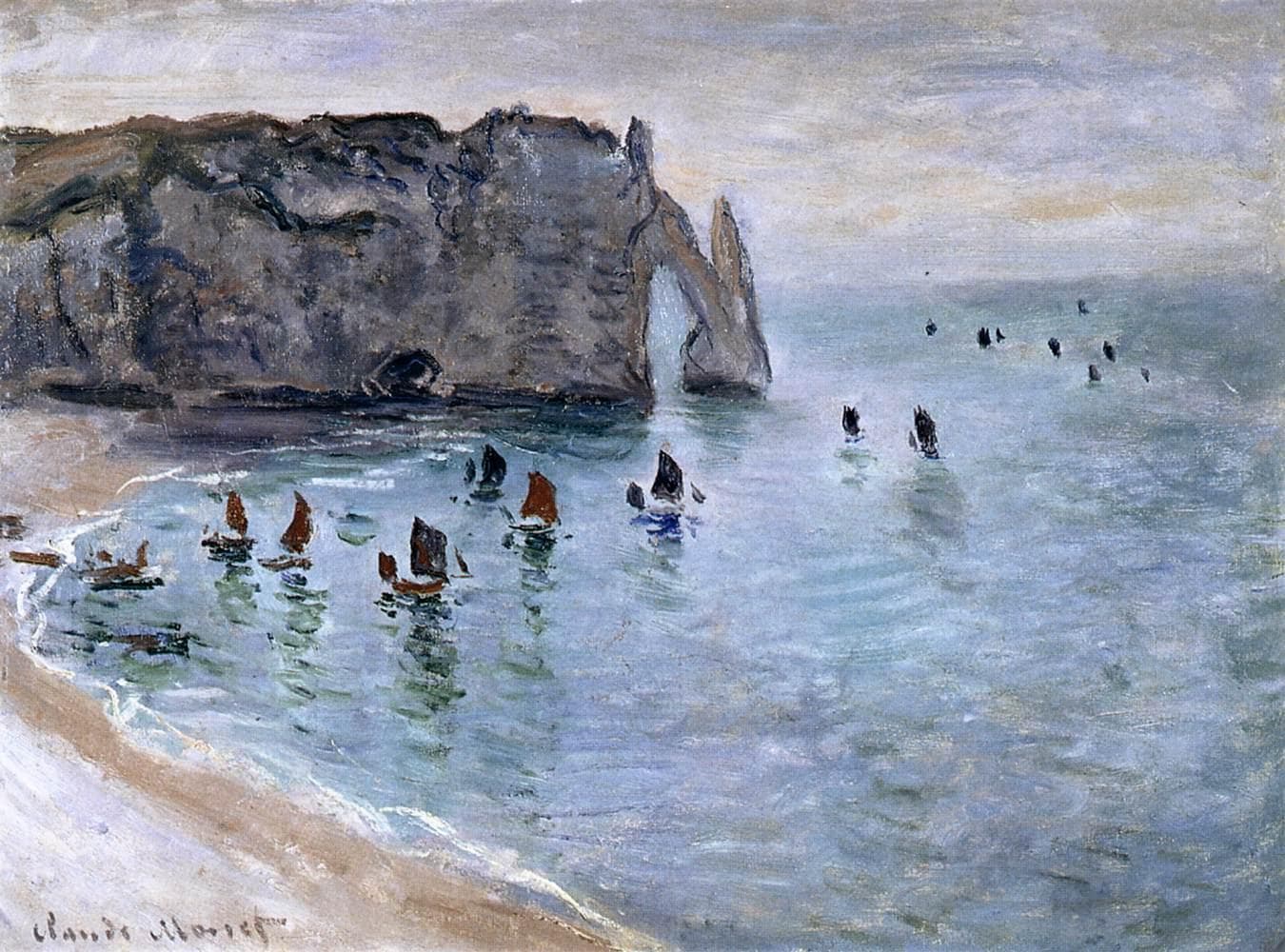
Étretat, the Porte d'Aval: Fishing Boats Leaving the Harbor
Claude Monet · 1885
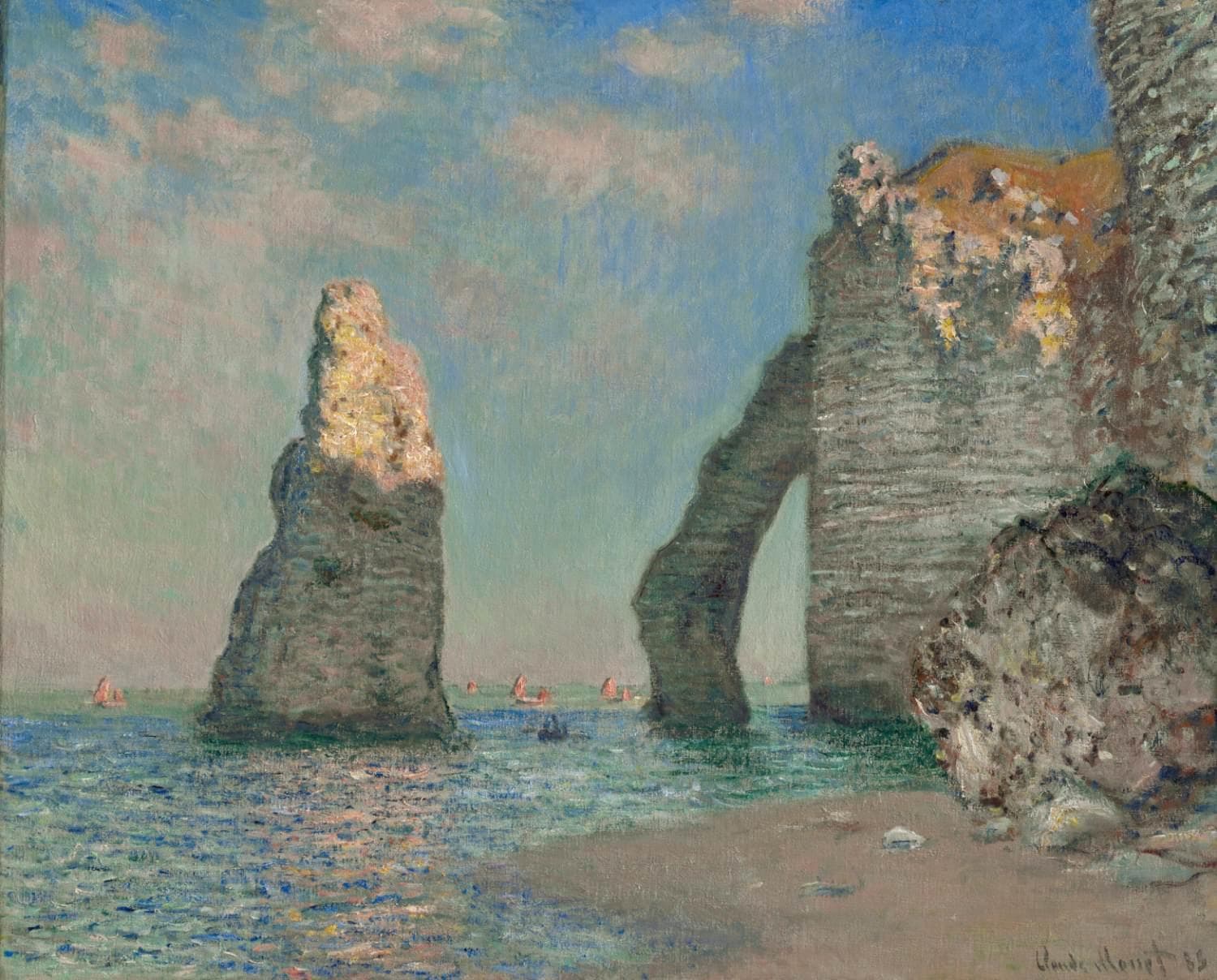
The Cliffs at Étretat
Claude Monet · 1885
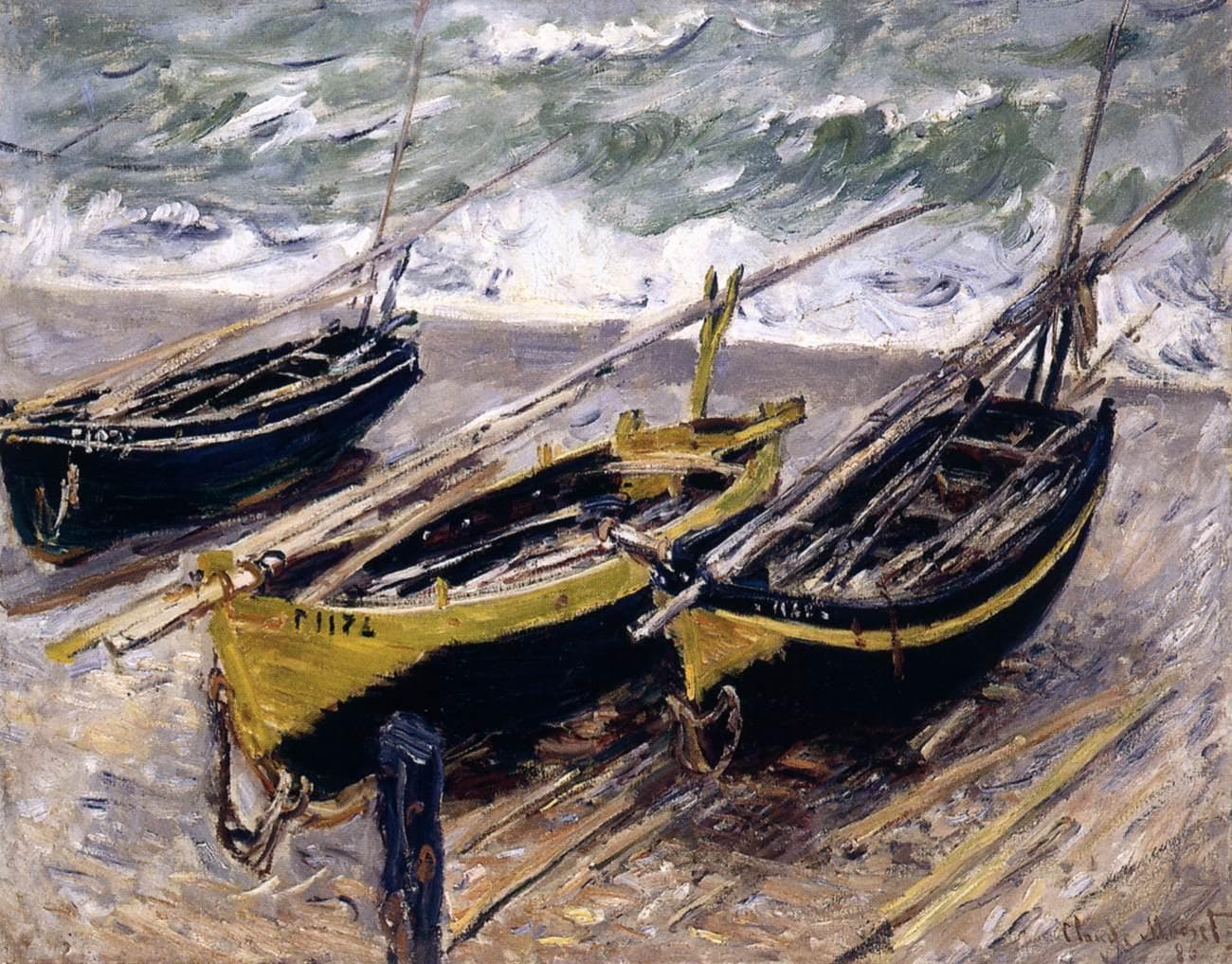
Three Fishing Boats
Claude Monet · 1885
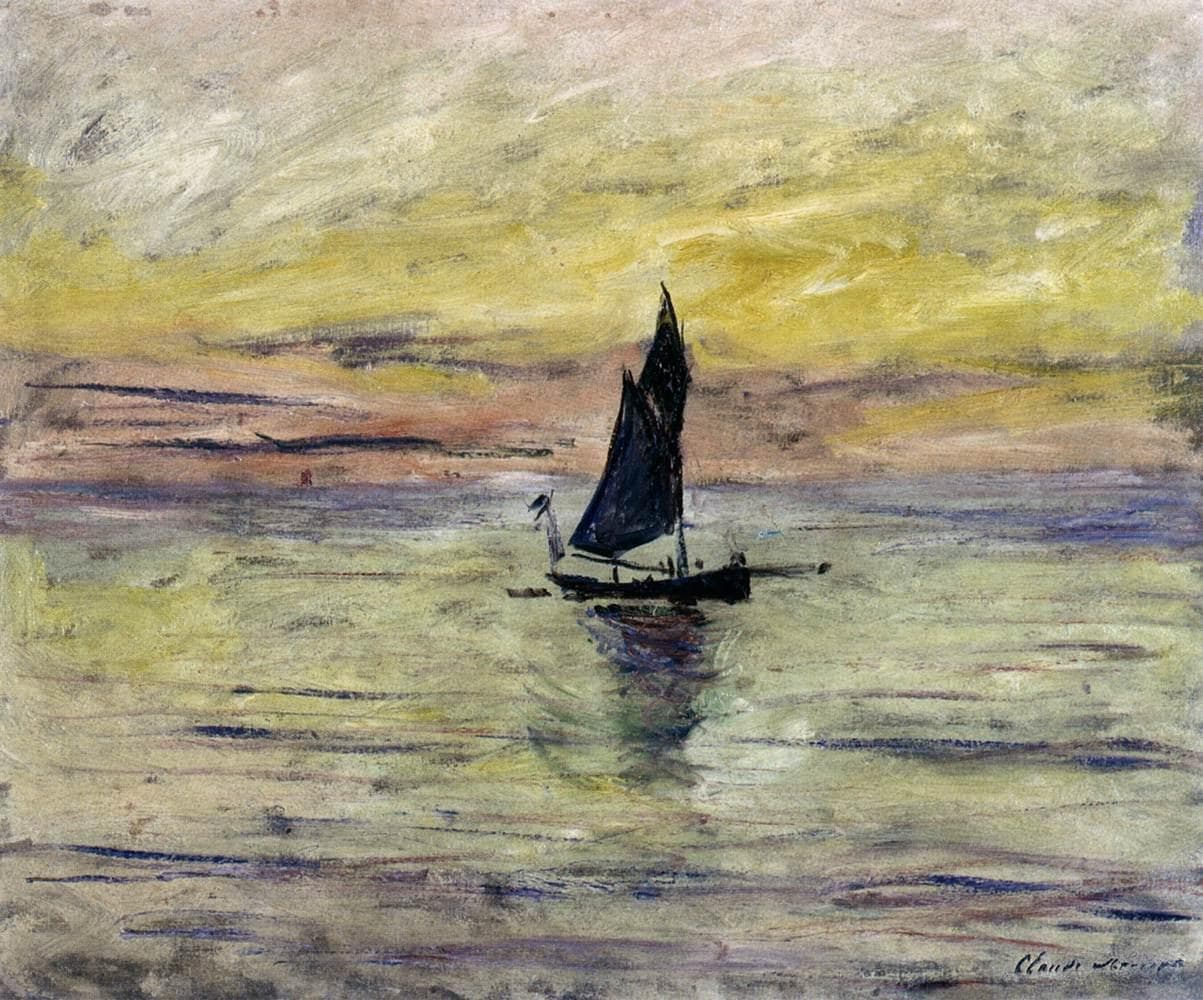
Sailboat, Evening Effect
Claude Monet · 1885
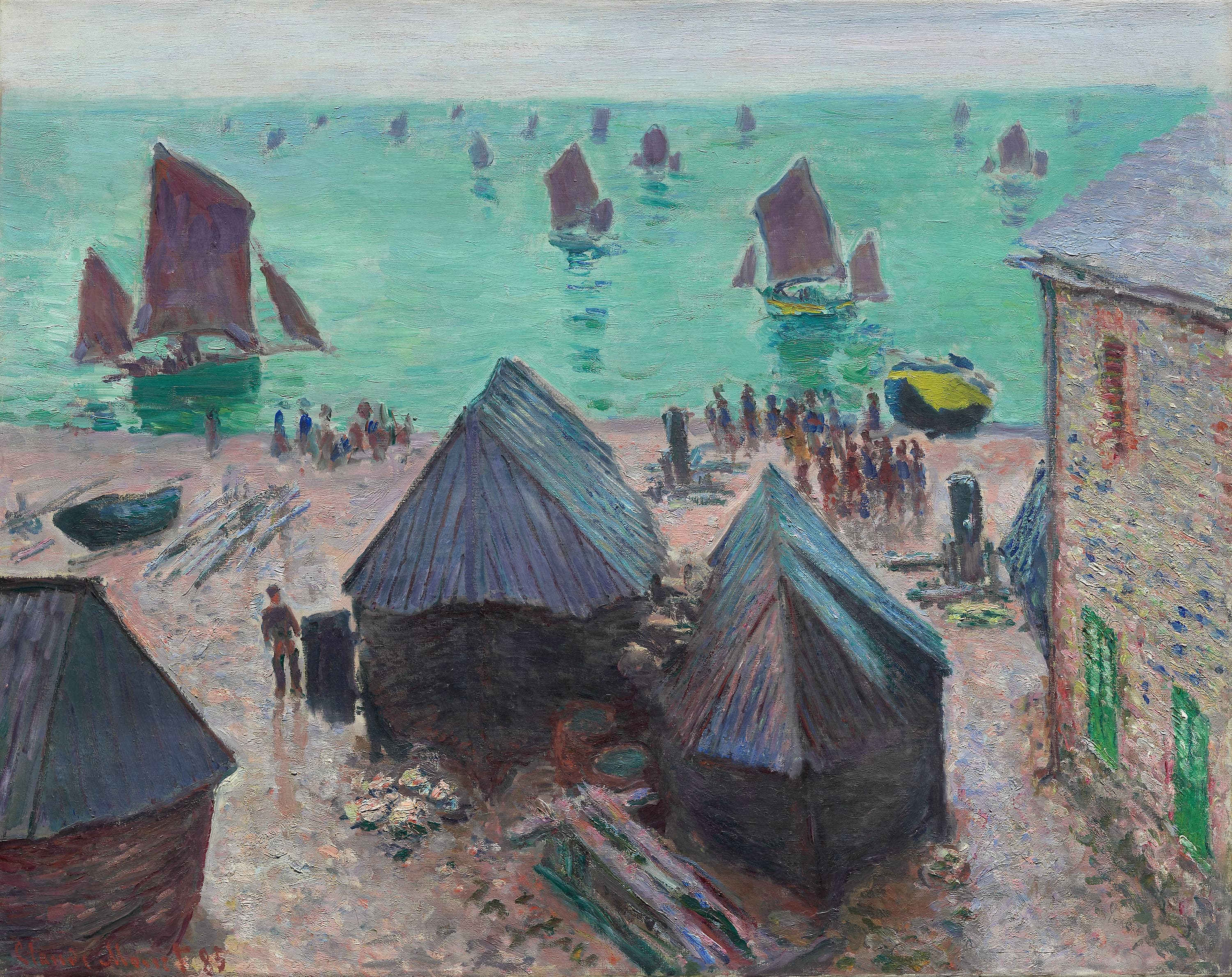
The Departure of the Boats, Étretat
Claude Monet · 1885
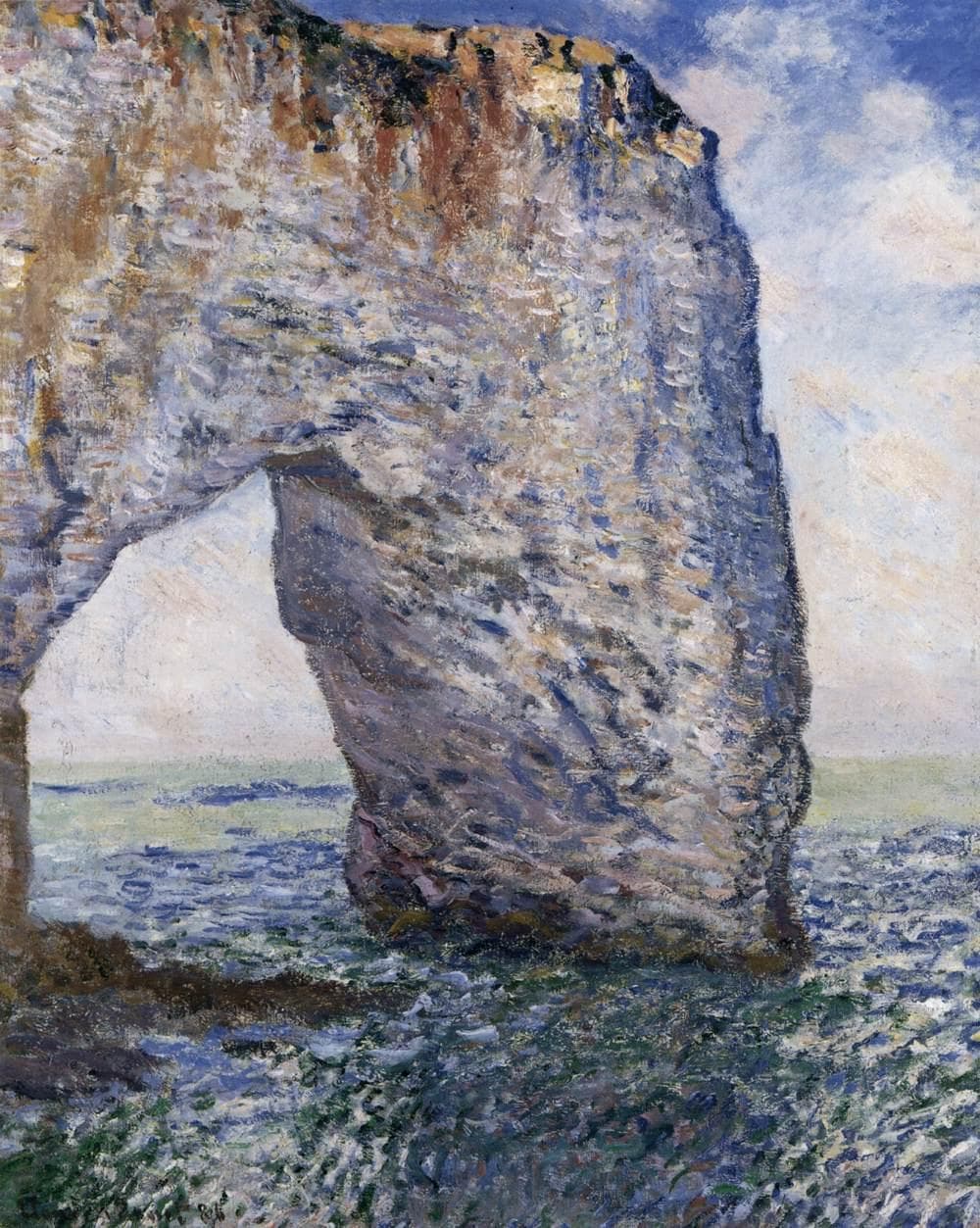
The Manneporte near Étretat
Claude Monet · 1886
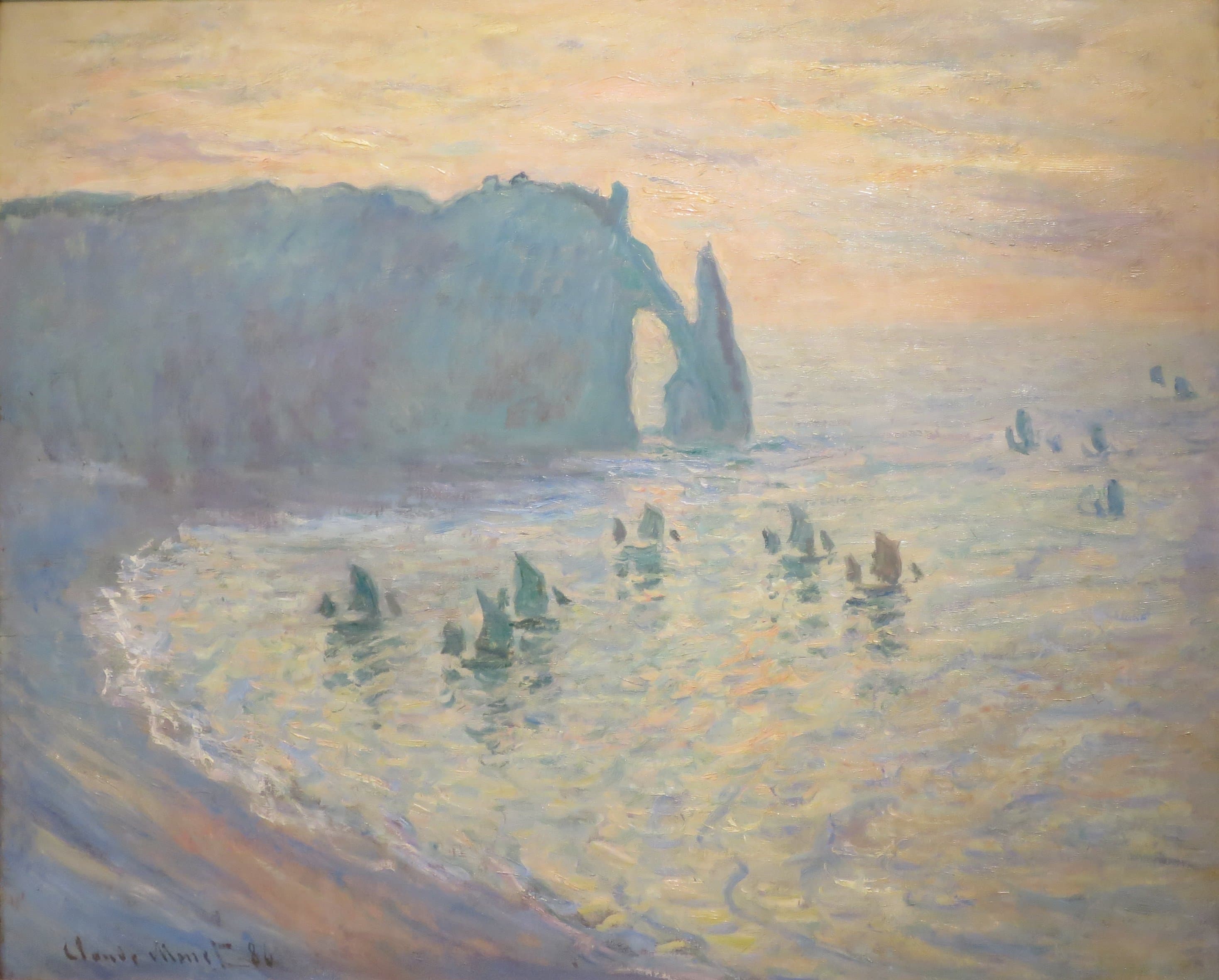
The Cliffs at Étretat
Claude Monet · 1886
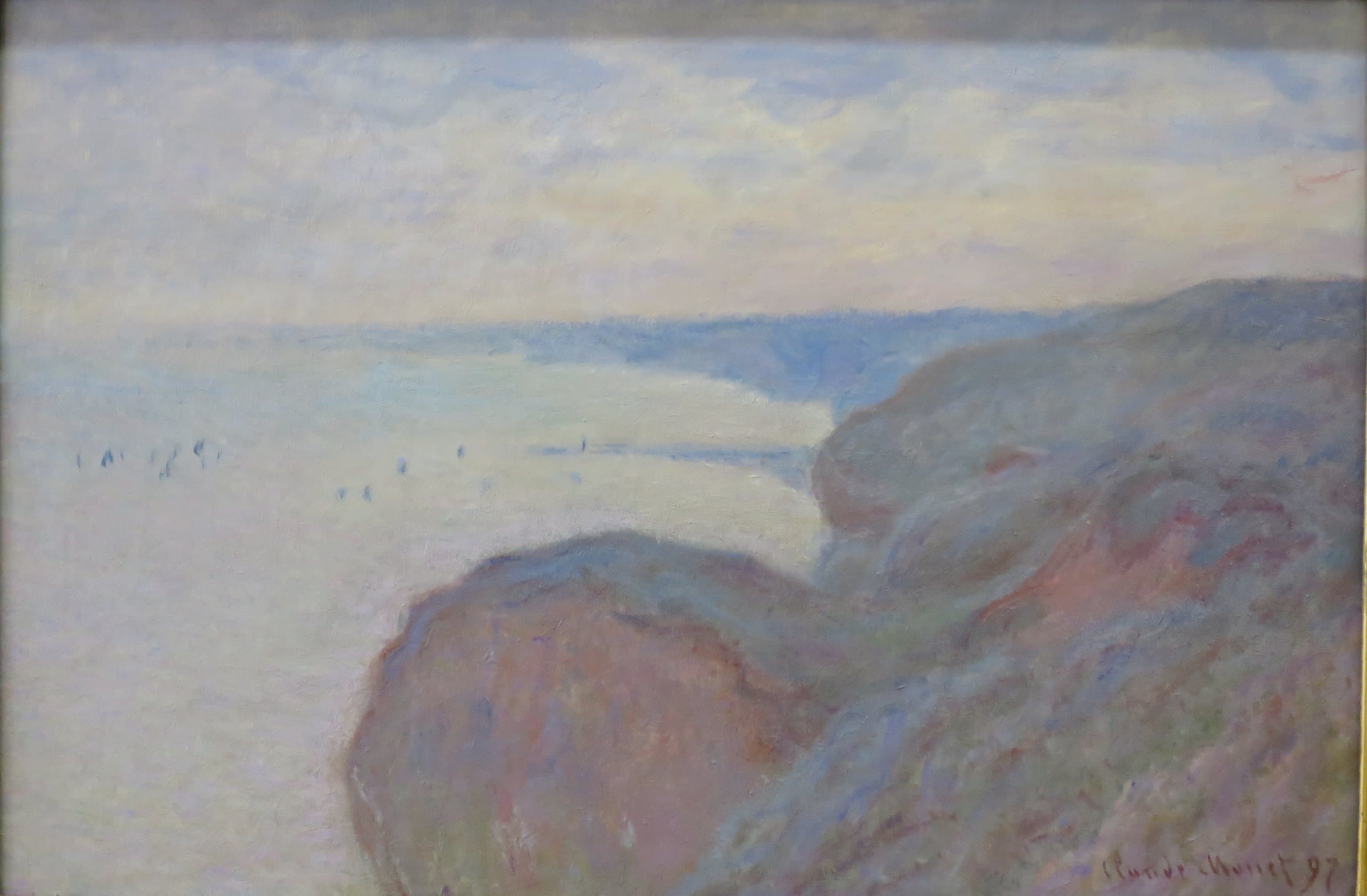
Steep Cliffs near Dieppe
Claude Monet · 1897
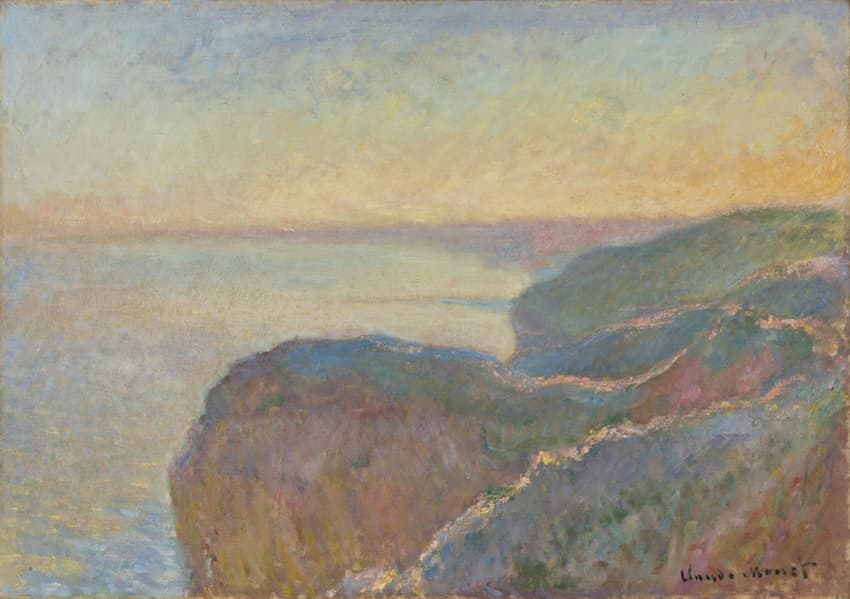
Sur la falaise de Dieppe
Claude Monet · 1897
Le Havre and Sainte-Adresse: where Monet learned to paint
Monet was born in Paris in 1840, but his family moved to Le Havre when he was about five, and he grew up at the mouth of the Seine, looking at the sea. As a teenager he sold caricatures in a stationer's shop, where he met the landscape painter Eugène Boudin. Boudin persuaded him to paint out of doors, directly from the sky and the shore, and Monet later said that this was the moment he became a painter. One of his earliest surviving landscapes, View at Rouelles (1858), was painted under Boudin's influence in the countryside near Le Havre.
In the 1860s he returned every summer. At Sainte-Adresse, the resort on the cliffs just north of Le Havre where his aunt had a house, he painted the bright, crisp pictures of 1867: Garden at Sainte-Adresse with its flags snapping above the sea, Regatta at Sainte-Adresse and The Beach at Sainte-Adresse. Earlier, La Pointe de la Hève at Low Tide had been one of the two seascapes with which he made his Salon debut in 1865.
Le Havre itself gave him Impression, Sunrise (1872), the orange sun over the harbor that named Impressionism, and harbor views such as The Port of Le Havre, Night Effect and The Museum at Le Havre.
Honfleur and Trouville
Across the estuary, the old port of Honfleur was a meeting place for painters. In 1864 Monet stayed at the Saint-Siméon farm inn on the hill above it, working beside Boudin and the Dutch painter Johan Barthold Jongkind. He painted the port, the streets (Rue de la Bavolle), and in winter the road past the farm under snow (Road by Saint-Siméon Farm in Winter, A Cart on the Snowy Road at Honfleur).
In the summer of 1870, just after his marriage to Camille Doncieux, Monet took her and their son Jean to Trouville, the fashionable resort on the far side of Honfleur. The small, quick pictures of that summer, The Beach at Trouville in London, with grains of sand still caught in the paint, and The Hôtel des Roches Noires at the Orsay, are among the freshest he ever made. The Franco-Prussian War broke out that July, and by autumn he had left for London.
Étretat, 1868–69
Étretat is a fishing village between Le Havre and Fécamp, enclosed by white chalk cliffs that the sea has carved into arches. To the west of the beach stands the Porte d'Aval, with the needle of the Aiguille beside it, and beyond it the even larger Manneporte. To the east is the Porte d'Amont. Courbet, Delacroix and many others had painted it before Monet.
Monet first worked there in the winter of 1868–69, living with Camille and Jean. The best-known picture of that stay is not a seascape but a snow scene, The Magpie, painted inland near the village. Heavy Sea at Étretat (1868) shows the beach in rough weather.
Back to the coast in the 1880s
After the death of Camille in 1879 and his move from Vétheuil, Monet went back to the Normandy coast again and again, now alone, for weeks at a time, chiefly in autumn and winter. He wanted motifs that were difficult and dramatic: cliffs, storms, the sea at its wildest.
- Fécamp, 1881: stormy seas and waves, as in Waves Breaking and Stormy Sea.
- Pourville and Varengeville, 1882: grassy cliffs above a pale sea, with villas, a customs officer's cottage and a little church on the clifftop. Cliff Walk at Pourville shows two women in the wind; The Rocks at Pourville the reefs at low tide; Cliffs near Dieppe the long line of the coast.
- Étretat, 1883–86: Monet's longest campaign, discussed below.
How Monet painted Étretat
On his returns to Étretat, in 1883 and above all in the autumn of 1885, Monet painted the arches from every angle and in every weather. He walked out along the beach at low tide to find viewpoints, climbed the cliffs, and painted from the shingle, often with several canvases carried by a local porter. In November 1885 he was so absorbed that a wave swept him off his feet and soaked him and his canvas; he wrote to Alice Hoschedé that he could have drowned.
The writer Guy de Maupassant, who grew up nearby, watched him that autumn and described the scene in an article of 1886: Monet followed by children carrying canvases, waiting for the sun and the cloud, then seizing an effect in a few strokes before moving to the next canvas.
The pictures range from calm to violent. The Manneporte (1883) at the Met sets the colossal arch against a calm sea; The Manneporte, Reflections on the Water makes it glow above green water; the tall Manneporte near Étretat of 1886 crops it in an upright format. The Cliffs at Étretat at the Clark shows the Aiguille and the Porte d'Aval in late light. Rough Sea at Étretat and the beach pictures, such as The Beach at Étretat and Boats on the Beach, add the fishing boats drawn up on the shingle and the thatched huts made from old hulls.
These Étretat campaigns are a step toward the series of the 1890s. Monet painted the same arch, from the same spot, at different hours and in different seas, and he finished many canvases later in the studio at Giverny.
Pourville again, 1896–97
Monet's last coastal campaign came in the winters of 1896 and 1897, when he returned to Pourville and Varengeville. The new pictures, such as Steep Cliffs near Dieppe and On the Cliff at Dieppe, are softer and more unified in color, painted in series alongside the Mornings on the Seine.
Where to see Monet's Normandy seascapes
Impression, Sunrise is at the Musée Marmottan Monet in Paris, and the Orsay has The Magpie, The Beach at Étretat, the Trouville hotel and others. In the United States the Met has the Manneporte pictures, the Garden and Regatta at Sainte-Adresse; the Art Institute of Chicago has the Sainte-Adresse beach, Cliff Walk at Pourville and Étretat boat pictures; the Clark has The Cliffs at Étretat. In Normandy, the MuMa in Le Havre and the Musée des Beaux-Arts in Rouen hold Monets, and the cliffs themselves are unchanged: you can stand on the beach at Étretat and see the Porte d'Aval and the Manneporte as Monet did.
For other museums, see Where to See Monet's Paintings; for the painter's life, Claude Monet.
Questions & answers
How many times did Monet paint Étretat?
Monet painted Étretat dozens of times, in the winter of 1868–69 and in campaigns in 1883, 1884, 1885 and 1886, producing dozens of canvases in the 1880s alone. His favorite motifs were the Porte d'Aval with its needle, the Manneporte arch, and the fishing boats on the beach.
Where is Étretat?
Étretat is a seaside village on the Alabaster Coast of Normandy, France, about 30 kilometers north of Le Havre. It is famous for its white chalk cliffs and natural arches, the Porte d'Aval, the Porte d'Amont and the Manneporte, and the Aiguille needle rock.
Where can I see Monet's paintings of Étretat?
Examples are in the Metropolitan Museum in New York (The Manneporte), the Clark Art Institute (The Cliffs at Étretat), the Art Institute of Chicago, the Musée d'Orsay in Paris, the Musée des Beaux-Arts de Lyon and Dijon, the Pushkin Museum in Moscow and the Wallraf-Richartz-Museum in Cologne.
Why did Monet paint the Normandy coast?
He grew up in Le Havre and learned to paint outdoors there with Eugène Boudin. In the 1880s he returned to the coast for its dramatic motifs, cliffs, arches and storms, which tested his ability to capture fast-changing light, weather and sea.
Was Impression, Sunrise painted in Normandy?
Yes. Impression, Sunrise (1872) shows the port of Le Havre at dawn, painted from a window overlooking the harbor. It is now in the Musée Marmottan Monet in Paris and gave the Impressionist movement its name in 1874.