Impressionism
Boats on the Beach at Étretat
Claude Monet, 1885
Boats on the Beach at Étretat is an 1885 painting by Claude Monet of fishing boats and thatched boat-sheds on the shingle at Étretat, Normandy, with a rough sea behind. It is in the Art Institute of Chicago.
- Artist
- Claude Monet
- Date
- 1885
- Medium
- Oil on canvas
- Dimensions
- 66 × 82.3 cm
- Collection
- Art Institute of Chicago, Chicago, United States
- Movement
- Impressionism
- Catalogue
- Wildenstein 1024
Painted at Étretat and the Normandy CoastMore at Monet at the Art Institute of Chicago
Boats on the Beach at Étretat is one of the pictures Claude Monet painted during his long autumn stay at Étretat on the Normandy coast in 1885. The canvas, 66 by 82.3 centimeters (Wildenstein 1024), is in the Art Institute of Chicago, and it has a documented birthday: on 24 November 1885 Monet wrote to Alice Hoschedé that he had spent the afternoon in his room, working on his "caloges" in the rain.
What you are looking at
Monet looks down from a window onto the steep shingle beach. Across the foreground stand three or four strange dark shapes with pitched roofs. They are caloges: old fishing boats, too worn to sail, turned upside down and roofed with tarred planks or thatch to serve as sheds for nets and gear. In the 1880s they were a feature of Étretat's beach and they fascinated visiting painters.
Behind them, working boats are hauled up above the tideline: a dark hull with a red bottom at the left, a black boat beside it, and, in the middle distance, two boats with bright yellow hulls. Their bare masts tilt in every direction against the sky. Beyond, the sea is high and churning, painted in thick strokes of bottle green and dirty white, and the spray seems almost to reach the boats. At the right edge a stone house with a gray slate roof closes the composition, its wall streaked with ochre, pink and red.
How it was painted
The handling is rough and fast, the work of a painter who had to catch a scene through rain-streaked glass. Monet drags his brush across the roofs of the caloges in long, dry strokes, so they read like rough planking, and dashes the pebbles in with flecks of lilac, blue and cream. The wet surfaces of the beach and roofs are made of mixed pastel blues, pinks and greens, and the bright hulls give the dark structures their scale.
The high viewpoint flattens the space and piles the shapes up the canvas, from the dark sheds at the bottom to the white surf near the top. The palette is darker than his sunny Mediterranean pictures of the previous year, such as Bordighera, and the mood is closer to a working harbor than to a resort.
A pair from the hotel window
The Art Institute owns this picture's partner, The Departure of the Boats, Étretat. Both were painted from the window of Monet's room at the Hôtel Blanquet when bad weather kept him indoors, and they share a palette, a subject and a vantage point. In the same letter of 24 November he described trying "always through the window" to paint the boats leaving. One picture shows the fleet at rest, the other the same fleet putting to sea. Weather that drove other painters indoors became, for Monet, another condition to record. The rain explains the picture's look: the colors are soaked and lowered, edges are soft, and the surf beyond the boats is a blur of white rather than a drawn wave.
Monet at Étretat
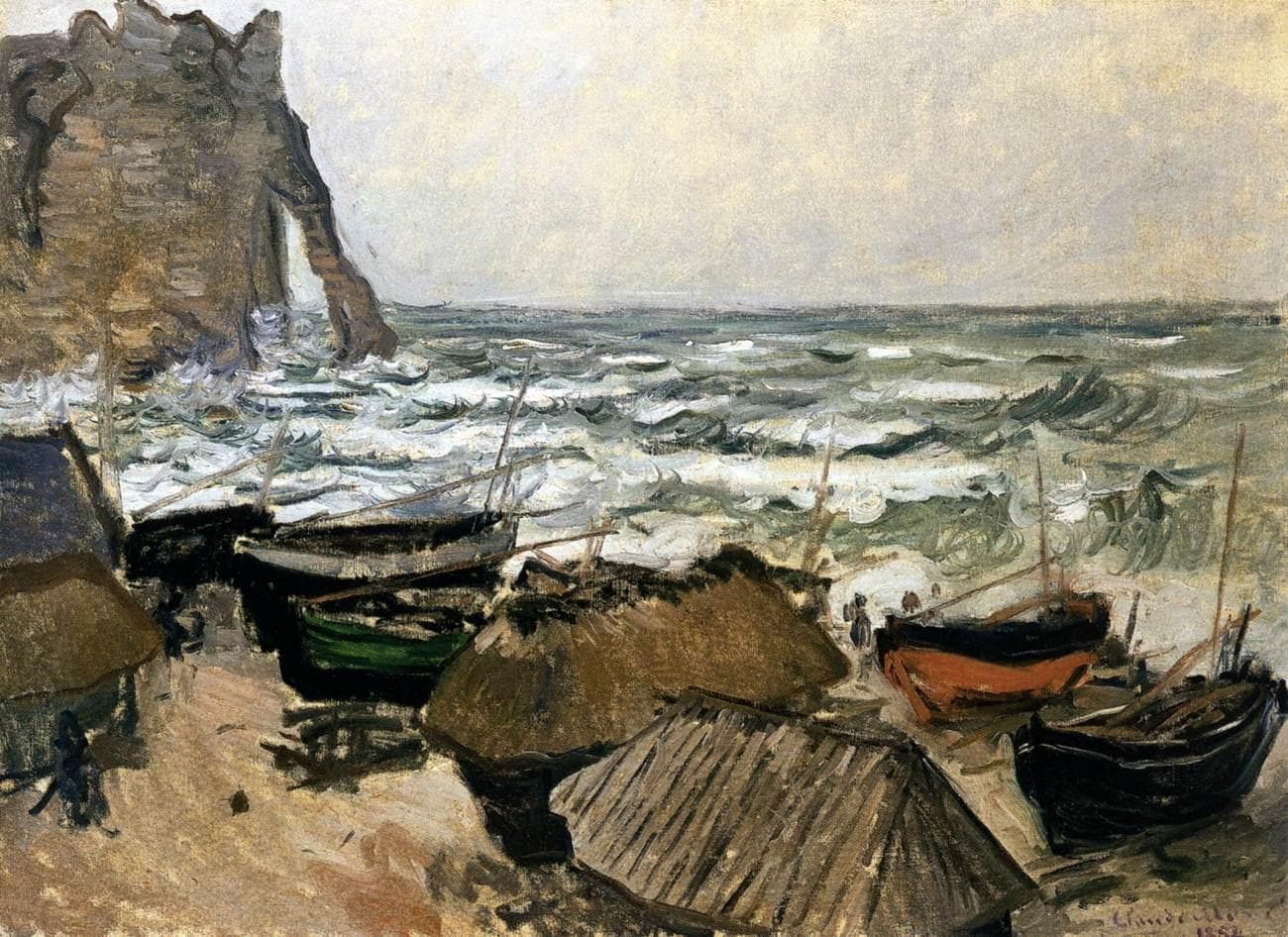
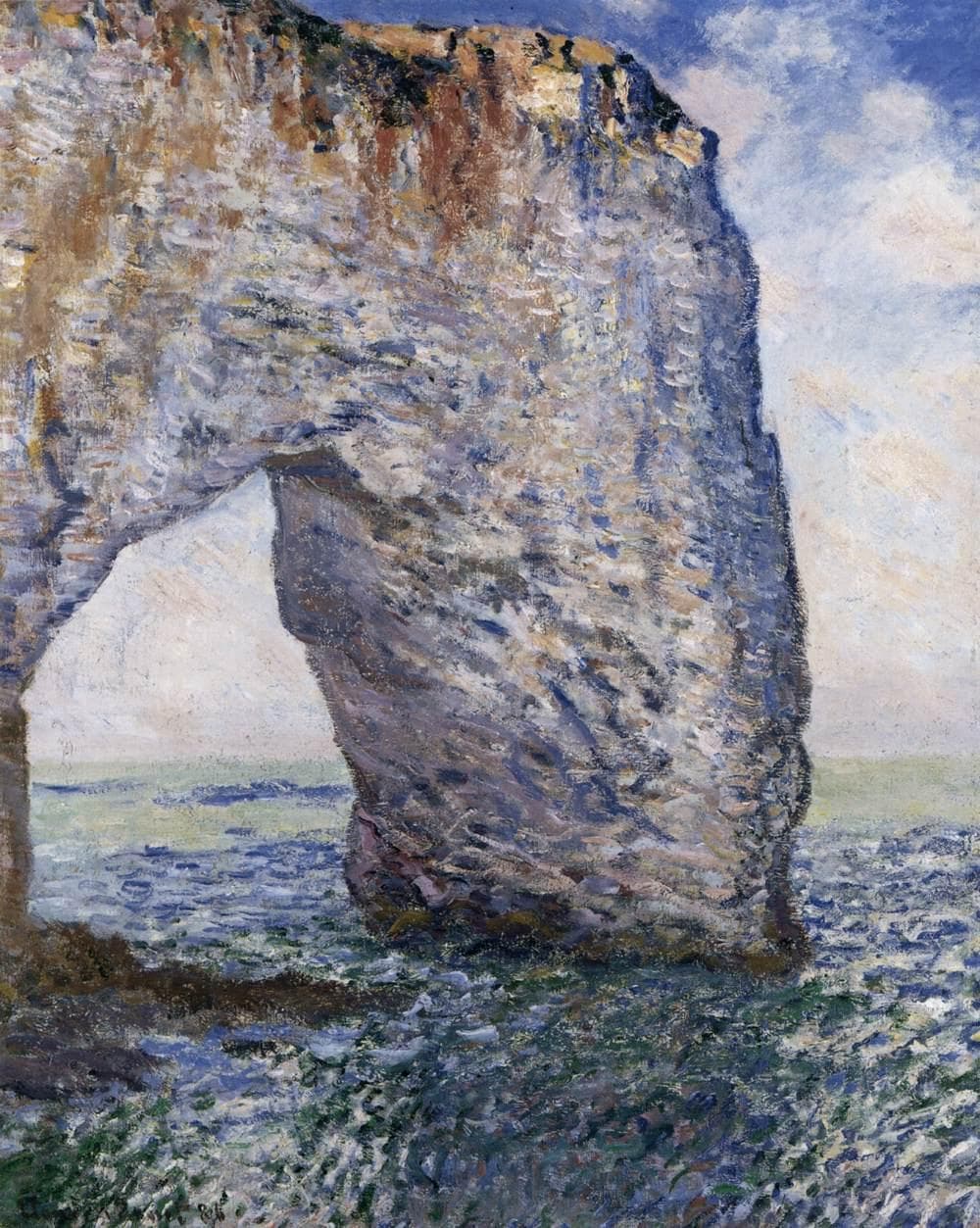
Monet returned to Étretat several times between 1883 and 1886. In October 1885 the opera singer Jean-Baptiste Faure, a major collector of his work, lent him a house in the village, and he stayed until December, painting the fishing fleet, the beach and the cliffs in all weathers. The arches of the Manneporte and the Porte d'Aval appear in many canvases of these years, as in Étretat, the Porte d'Aval: Fishing Boats Leaving the Harbor. Here he turns his back on the famous rock formations and paints the fishermen's beach instead; an earlier, larger treatment of the same caloges is Fishing Boats and the Porte d'Aval in Cologne. Our hub on Étretat and the Normandy coast gathers the whole campaign.
Where to see it
The painting is in the Art Institute of Chicago, which received it in 1947 with the Charles H. and Mary F. S. Worcester Collection. It hangs near the museum's other Normandy coast pictures, among them Cliff Walk at Pourville. More on Claude Monet.
Questions & answers
Where is Monet's Boats on the Beach at Étretat?
The 1885 painting is in the Art Institute of Chicago, which received it in 1947 with the Charles H. and Mary F. S. Worcester Collection. The museum also owns its pair, The Departure of the Boats, Étretat, painted from the same hotel window.
When and where was Boats on the Beach at Étretat painted?
Monet painted it at Étretat on the Normandy coast in November 1885. A letter to Alice Hoschedé dated 24 November describes him working in his room at the Hôtel Blanquet on his 'caloges' in the rain, looking out of the window at the beach.
What are the hut-like shapes on the beach?
They are caloges, old fishing boats that were no longer seaworthy, turned upside down and roofed over. Étretat's fishermen used them as sheds for storing nets, sails and tackle. Their odd silhouettes appear in paintings by Monet and other artists who worked on the beach in the 1880s.
Did Monet paint other views of the boats at Étretat?
Yes. The Departure of the Boats, Étretat, also in Chicago, shows the same fleet putting to sea. Fishing Boats and the Porte d'Aval of 1884, in Cologne, shows boats and caloges below the great arch, and Étretat, the Porte d'Aval: Fishing Boats Leaving the Harbor is in Dijon.
More by the artist
Claude Monet

Bridge over a Pond of Water Lilies
Claude Monet · 1899

Woman with a Parasol – Madame Monet and Her Son
Claude Monet · 1875

Sunset in Venice
Claude Monet · 1908–12

La Grenouillère
Claude Monet · 1869

Beach in Pourville
Claude Monet · 1882

Springtime
Claude Monet · 1872

Boating on the River Epte
Claude Monet · 1890

The Seine at Asnières (Hermitage)
Claude Monet · 1873
Also painted in 1885
The same year
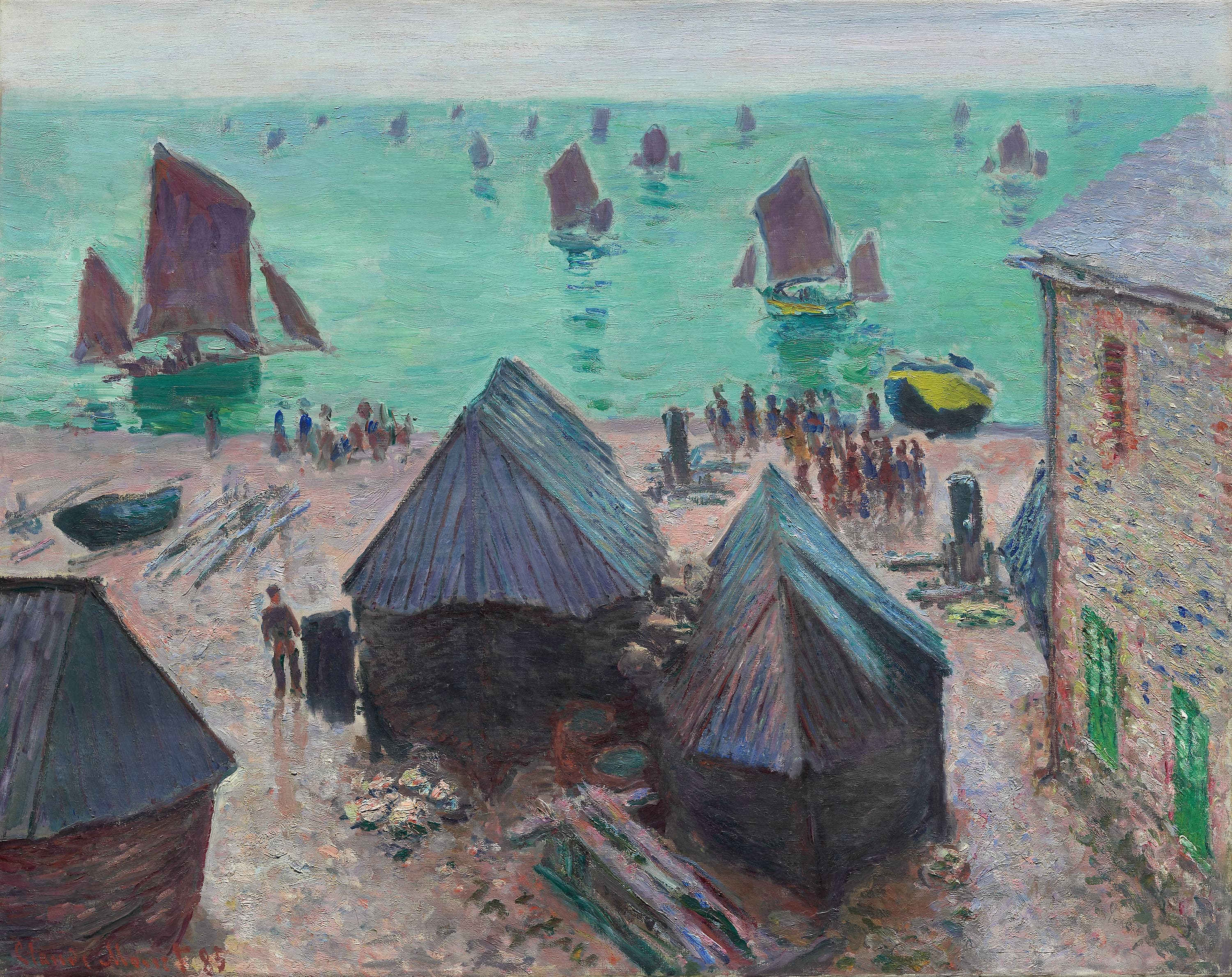
The Departure of the Boats, Étretat
Claude Monet · 1885
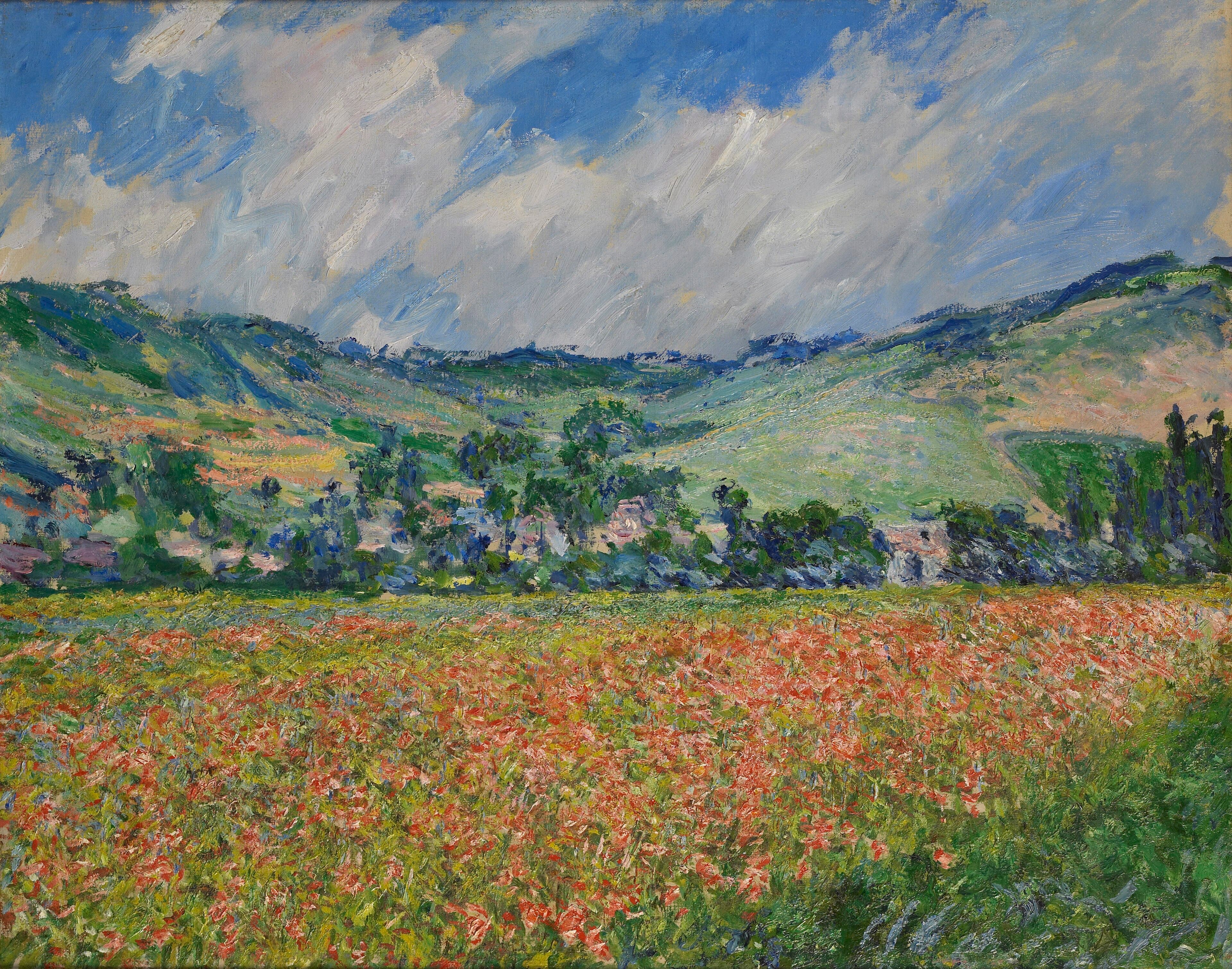
Poppy Field, Around Giverny
Claude Monet · 1885
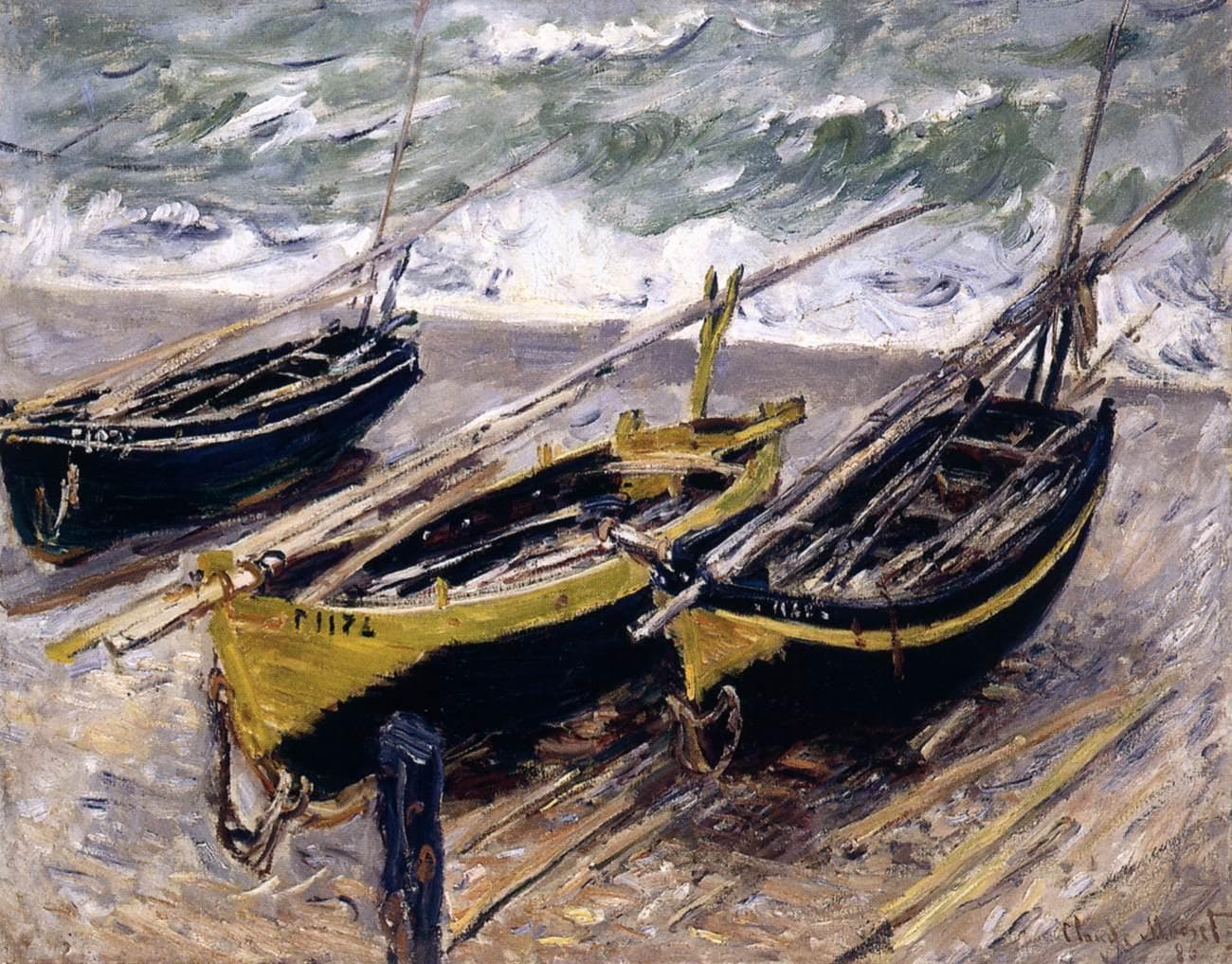
Three Fishing Boats
Claude Monet · 1885
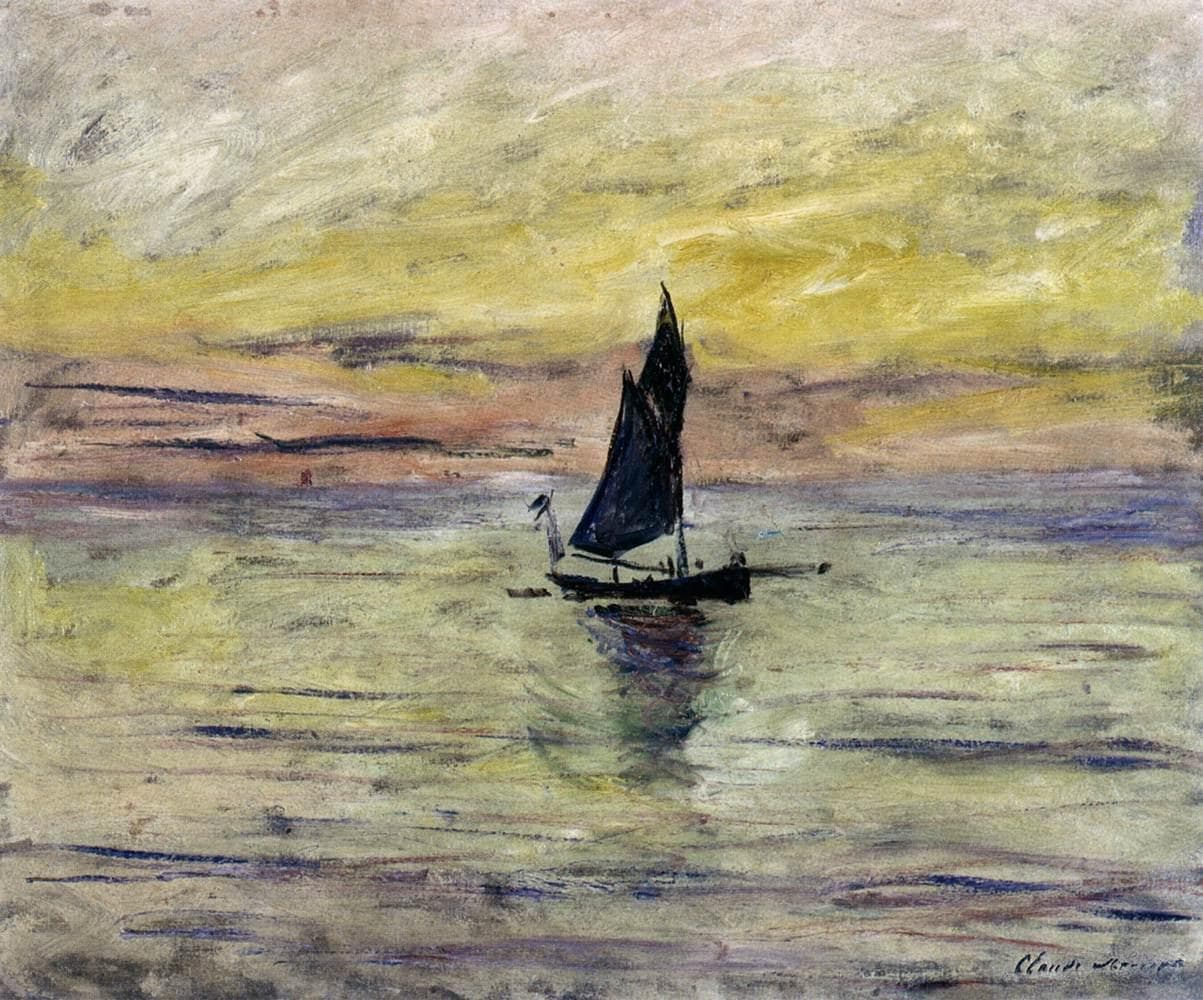
Sailboat, Evening Effect
Claude Monet · 1885
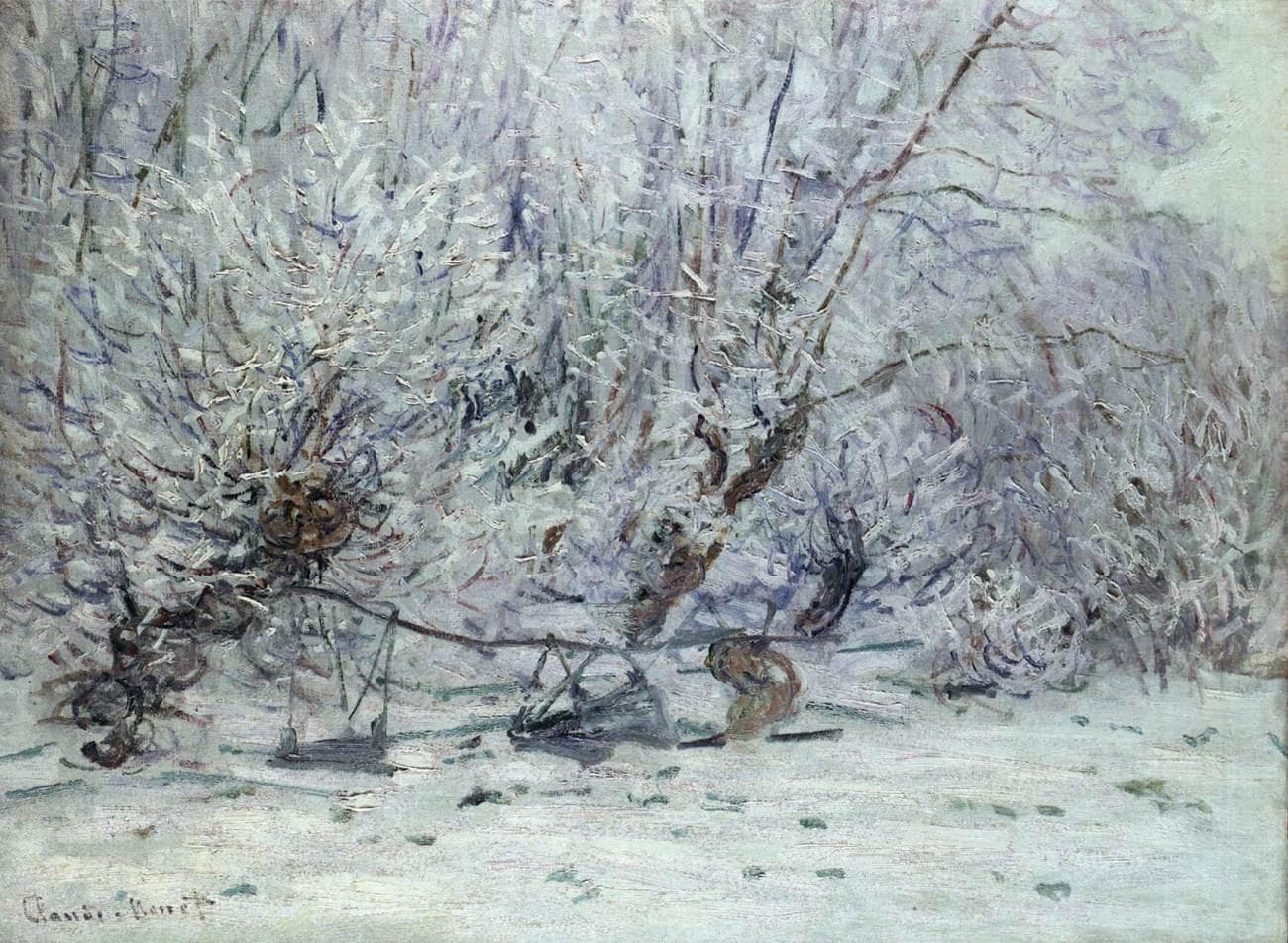
Frost
Claude Monet · 1885
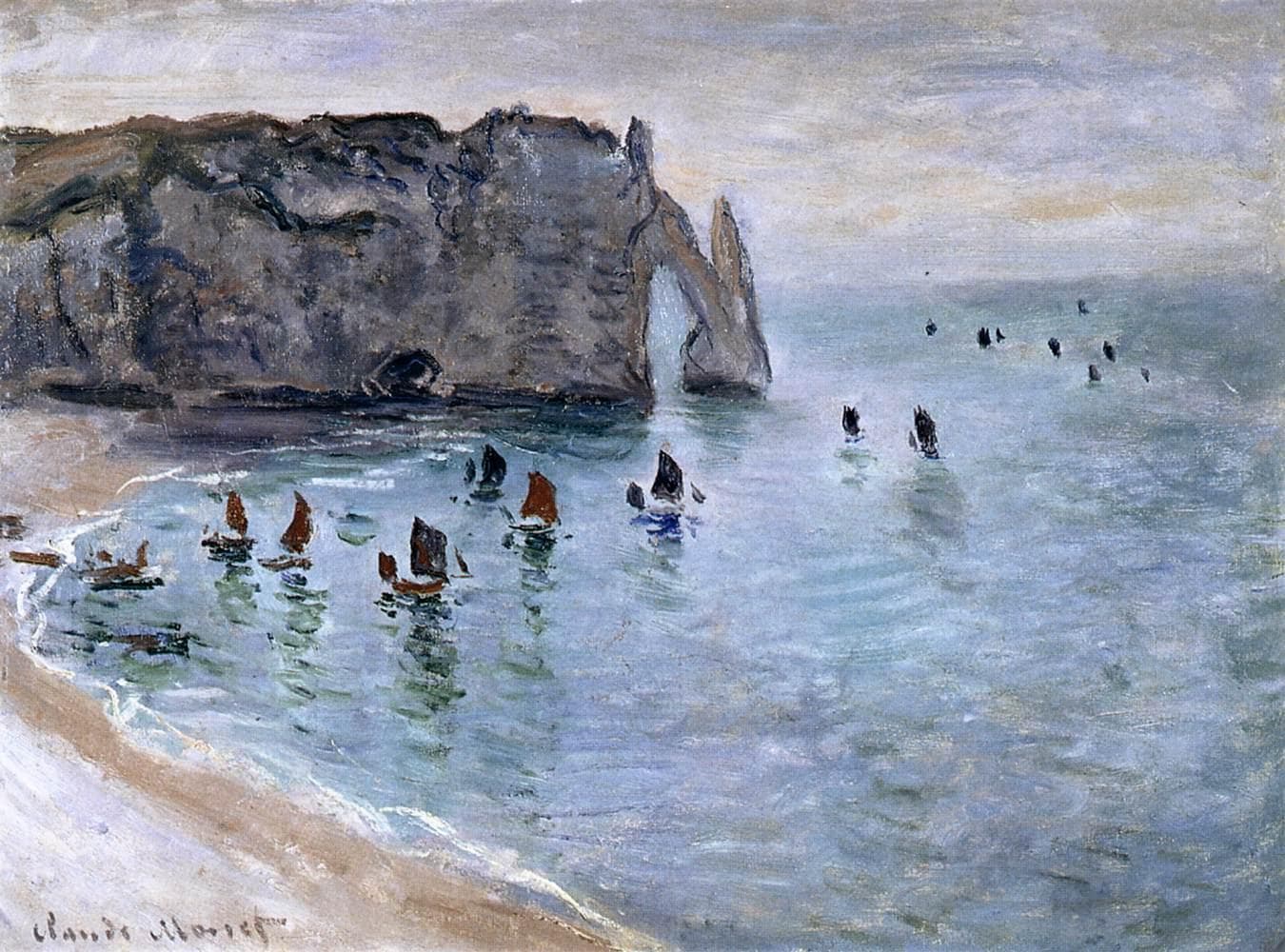
Étretat, the Porte d'Aval: Fishing Boats Leaving the Harbor
Claude Monet · 1885
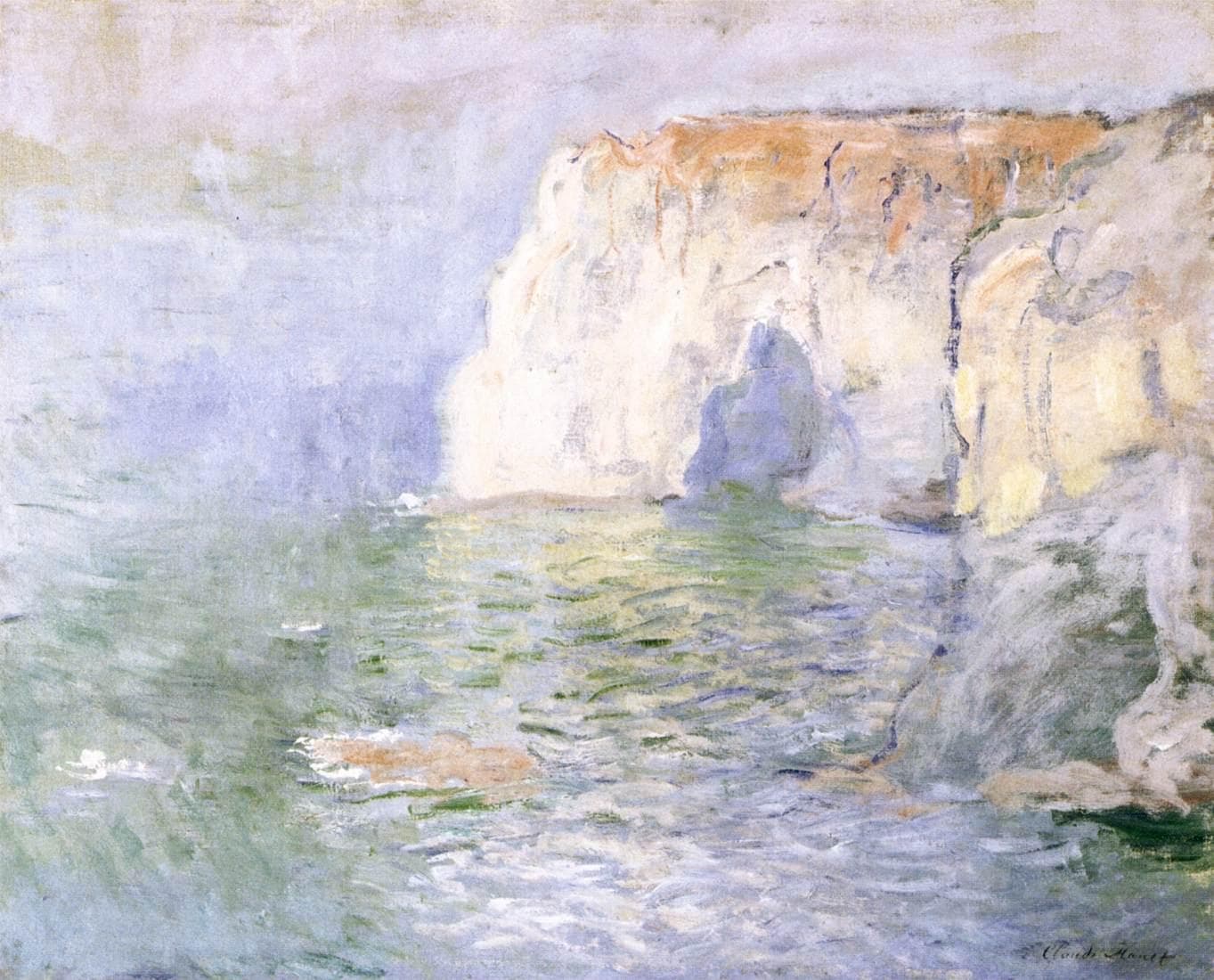
Étretat, the Manneporte, Reflections on the Water
Claude Monet · c. 1885
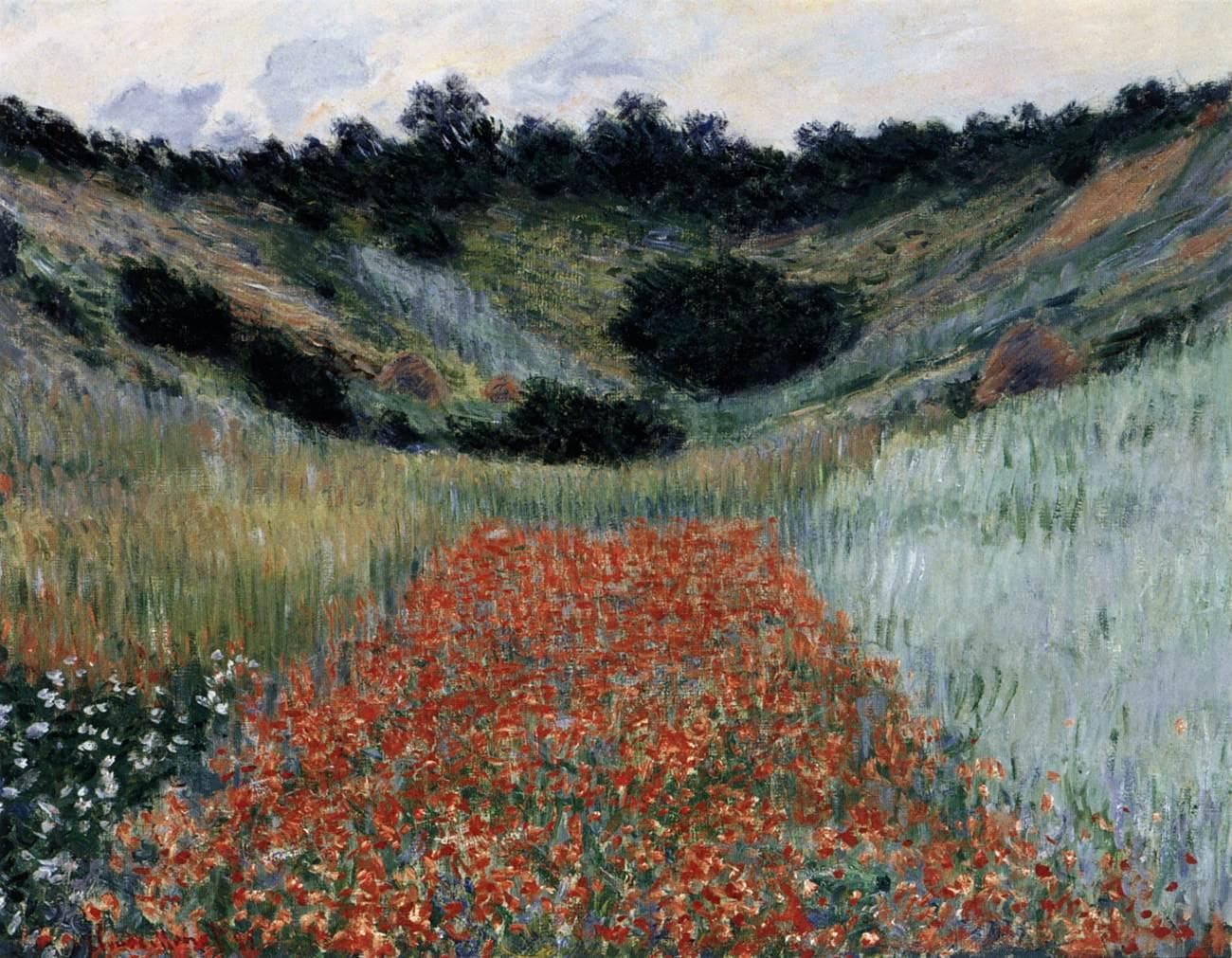
Poppy Field in a Hollow near Giverny
Claude Monet · 1885
Kindred works
You may also study
The Departure of the Boats, Étretat
Claude Monet · 1885
Fishing Boats and the Porte d'Aval
Claude Monet · 1884
Étretat, the Porte d'Aval: Fishing Boats Leaving the Harbor
Claude Monet · 1885
The Beach at Étretat
Claude Monet · 1883
Rough Sea at Étretat
Claude Monet · 1883
The Manneporte near Étretat
Claude Monet · 1886

Ophelia
John Everett Millais · 1851–52

The Great Wave off Kanagawa
Katsushika Hokusai · c. 1830–32