Impressionism
Cliffs near Dieppe
Claude Monet, 1882
Cliffs near Dieppe is an 1882 painting by Claude Monet of a grassy chalk cliff with two villas on top above a pale sea and beach on the Normandy coast. It is in the Kunsthaus Zürich.
- Artist
- Claude Monet
- Date
- 1882
- Medium
- Oil on canvas
- Dimensions
- 66 × 82 cm
- Collection
- Kunsthaus Zürich, Zurich, Switzerland
- Movement
- Impressionism
- Catalogue
- Wildenstein 759
Painted at Étretat and the Normandy Coast
Cliffs near Dieppe (La Falaise à Dieppe) was painted by Claude Monet in 1882, the year he spent long working stays on the Normandy coast at Pourville and Varengeville, just west of the port of Dieppe. The canvas, 66 by 82 centimeters and number 759 in Wildenstein's catalogue, is in the Kunsthaus Zürich in Switzerland.
What you are looking at
Monet stands on the clifftop and looks along the edge toward the sea. A massive shoulder of chalk cliff, covered in rough grass and scrub, fills the left two-thirds of the picture and drops sheer at the right, where its white face is streaked with ochre, gray, blue and pink. A tumbledown fence runs along the brink. At the top left, on the skyline, two villas with red-tiled roofs stand near the edge, and a few tiny walkers in dark clothes stroll along the grassy path toward them.
To the right the sea opens out far below, pale green near the shore and fading to milky blue at the horizon. A single sailing boat sits out on the water, with others no more than specks in the haze. At the foot of the cliff a strip of beach in blue shadow is dotted with minuscule figures, so small they are only flicks of the brush, which is how Monet conveys the height. He signed the canvas at lower left.
How it was painted
The grassy slope is built from a dense mesh of short, multidirectional strokes of green, olive, rust and lilac, so the surface seems to move like wind in the grass. In the lower left, a patch of reddish earth breaks through, painted in warm, hatched strokes. The cliff face is handled with longer, vertical drags of paint, the white laid on thickly and catching the light, with blue and violet in the clefts. Against this rough texture the sea is smooth and almost weightless, laid in with thin horizontal strokes that let the pale ground glow through.
The contrast between the heavy land mass and the airy sea is the real subject. Monet sets the edge of the cliff almost on the diagonal of the canvas, so the picture is divided between solid and void, and the eye keeps sliding from one to the other. The villas and walkers at the top are a reminder that this coast was already a resort; Monet includes them, but at a scale that makes them look like toys perched on the edge of a geological mass.
Monet on the Normandy cliffs, 1882
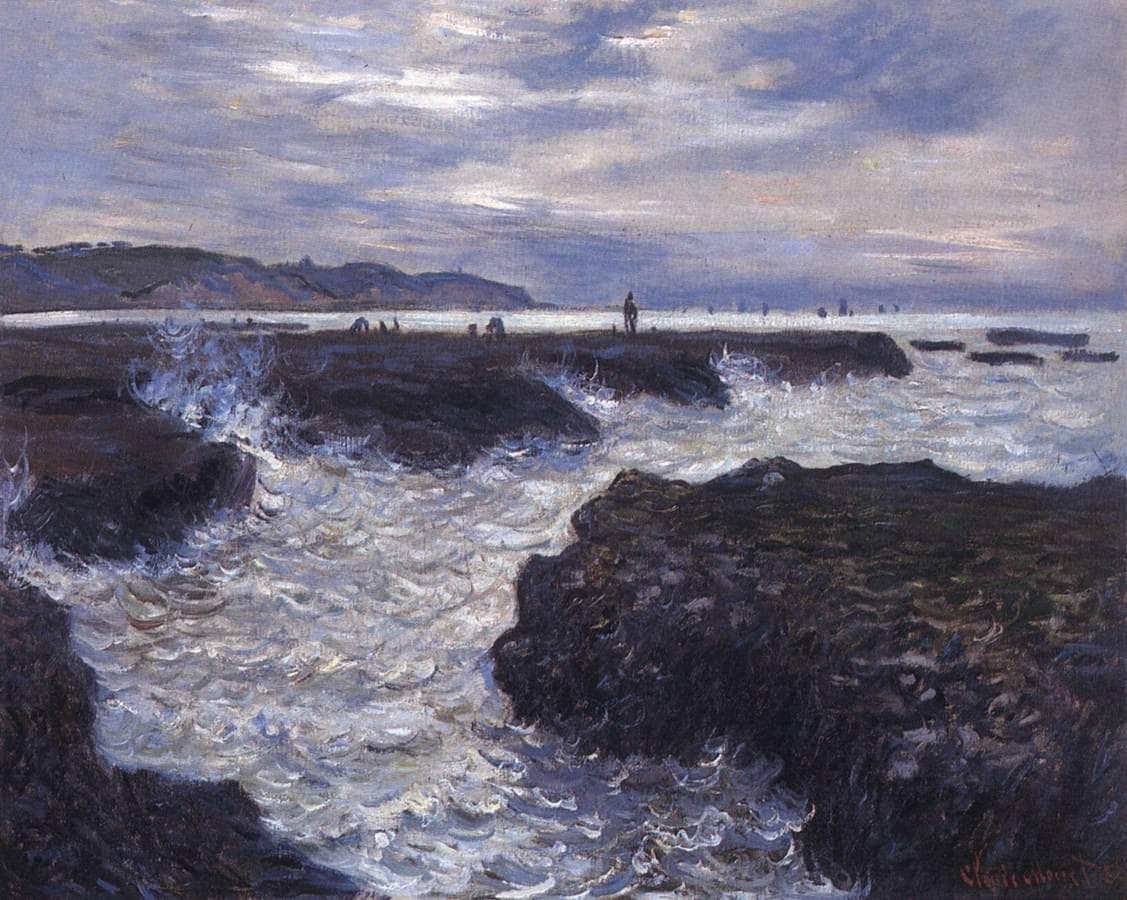
After the death of Camille in 1879 and difficult years at Vétheuil, Monet went to Dieppe in February 1882. He found the town too urban and moved a few kilometers west to the fishing village of Pourville, where he stayed until mid-April, returning in June with Alice Hoschedé and the children for the summer. Over the year he painted the customs officer's cottage at Varengeville, the beaches and rocks at Pourville and the clifftop paths again and again. Its neighbor in the catalogue, W758, is the Art Institute of Chicago's Cliff Walk at Pourville; other works of the year include Rocks near Pourville at Ebb Tide and Beach in Pourville.
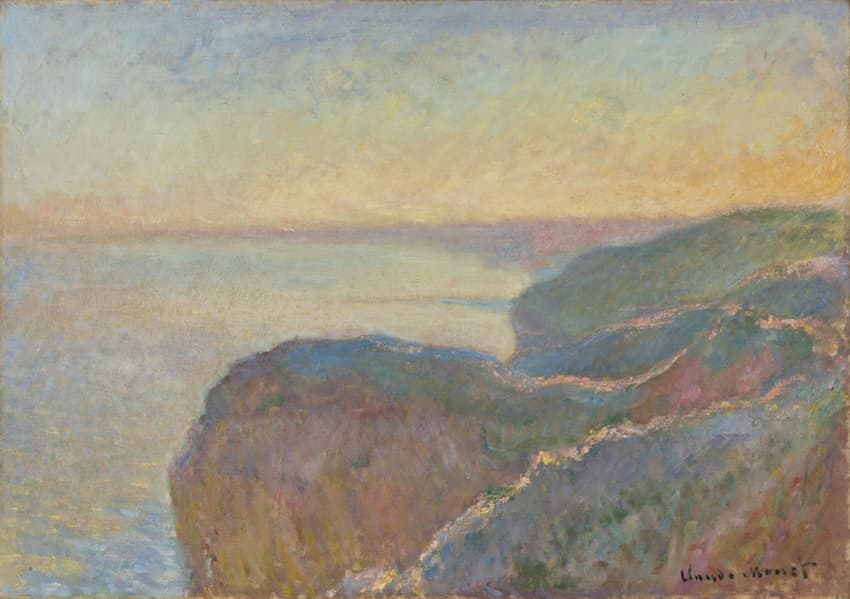
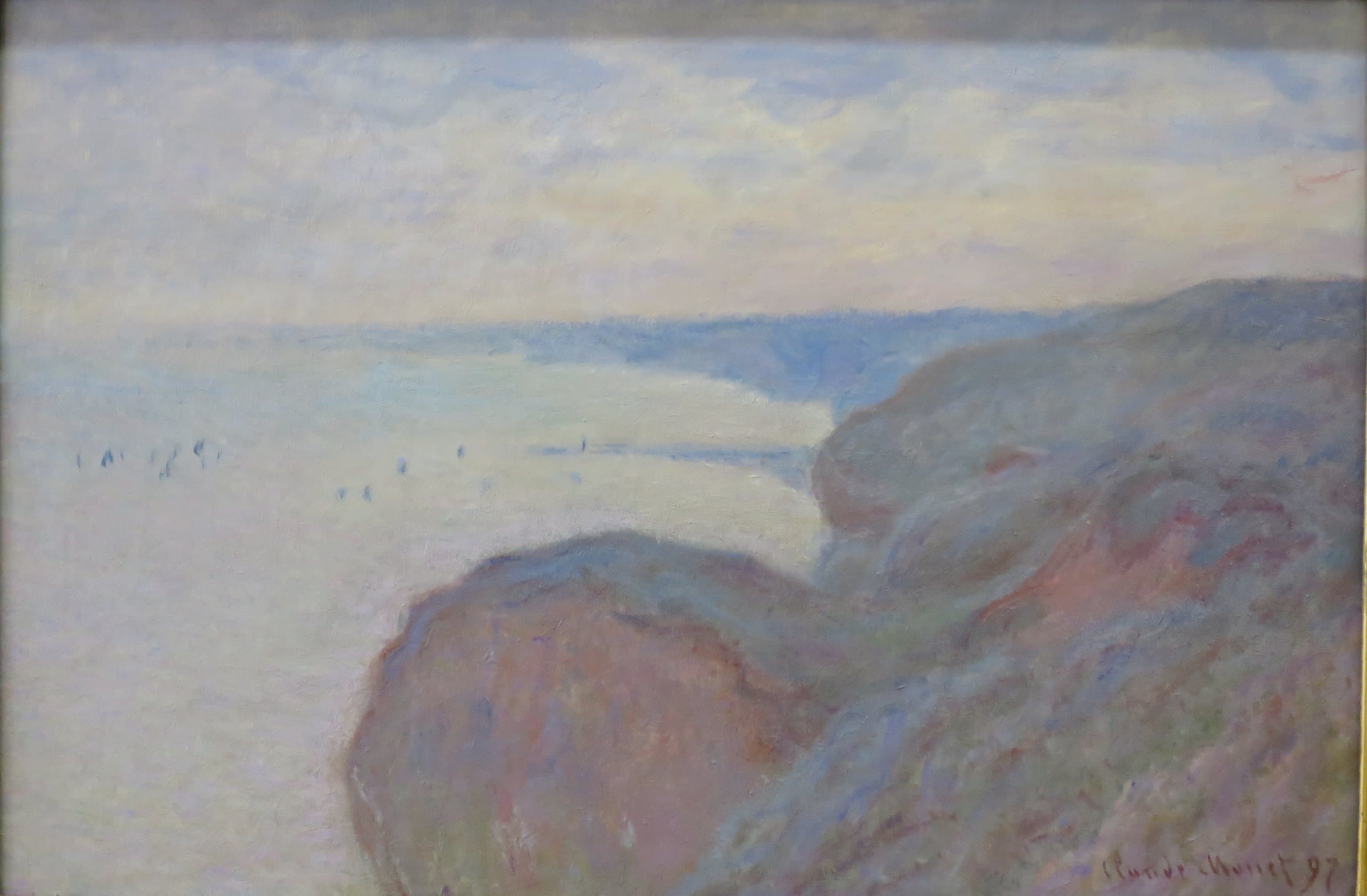
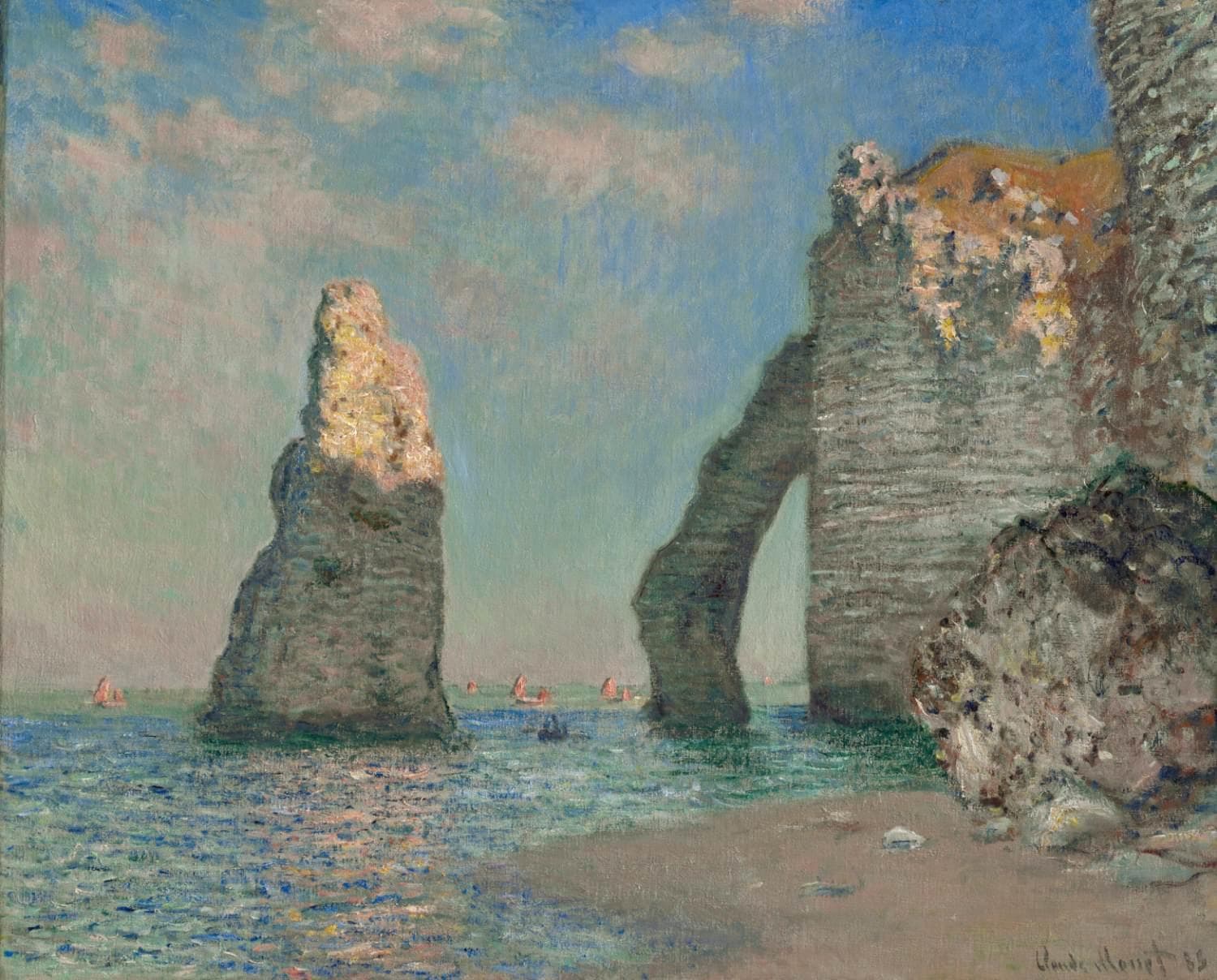
Three years later he would take the same approach to the arches at Étretat, as in The Cliffs at Étretat, and in 1897 he came back to paint the cliffs near Dieppe again, in softer, mistier pictures such as On the Cliff at Dieppe. Our hub on Étretat and the Normandy coast follows all of these campaigns.
Ownership and where to see it
The painting belonged early on to the opera singer Jean-Baptiste Faure, one of Monet's most important collectors, and passed through the dealer Paul Durand-Ruel and the Berlin collector Hugo Moses before the Vereinigung Zürcher Kunstfreunde, a society of Zürich art lovers, acquired it for the Kunsthaus in 1932. The Kunsthaus Zürich holds a strong group of Monets, including late water lily panels. For other collections, see where to see Monet's paintings. More on Claude Monet.
Questions & answers
Where is Monet's Cliffs near Dieppe?
This 1882 view of a grassy cliff with two villas, titled La Falaise à Dieppe, is in the Kunsthaus Zürich in Switzerland. It was acquired in 1932 by the Vereinigung Zürcher Kunstfreunde. Monet painted many clifftop views around Dieppe, Pourville and Varengeville that year, now spread among museums.
When and where was Cliffs near Dieppe painted?
Monet painted it in 1882 on the chalk cliffs west of Dieppe on the Normandy coast. He spent February to April at Pourville, a fishing village a few kilometers from the town, and returned for the summer with Alice Hoschedé and the children.
What does Cliffs near Dieppe show?
A massive grassy chalk cliff drops sheer to a narrow beach on the right, with two red-roofed villas and a few walkers on top and a fence along the edge. Below, a pale green sea with a single sailboat stretches to a hazy horizon, and tiny figures dot the beach.
Did Monet paint the cliffs near Dieppe more than once?
Yes. In 1882 he painted dozens of views of the cliffs, beaches and paths around Pourville and Varengeville, including Cliff Walk at Pourville in Chicago. He returned in 1896 and 1897 to paint the cliffs near Dieppe again, in paler, misty light.
More by the artist
Claude Monet

Bridge over a Pond of Water Lilies
Claude Monet · 1899

Woman with a Parasol – Madame Monet and Her Son
Claude Monet · 1875

Sunset in Venice
Claude Monet · 1908–12

La Grenouillère
Claude Monet · 1869

Beach in Pourville
Claude Monet · 1882

Springtime
Claude Monet · 1872

Boating on the River Epte
Claude Monet · 1890

The Seine at Asnières (Hermitage)
Claude Monet · 1873
Also painted in 1882
The same year
Kindred works
You may also study
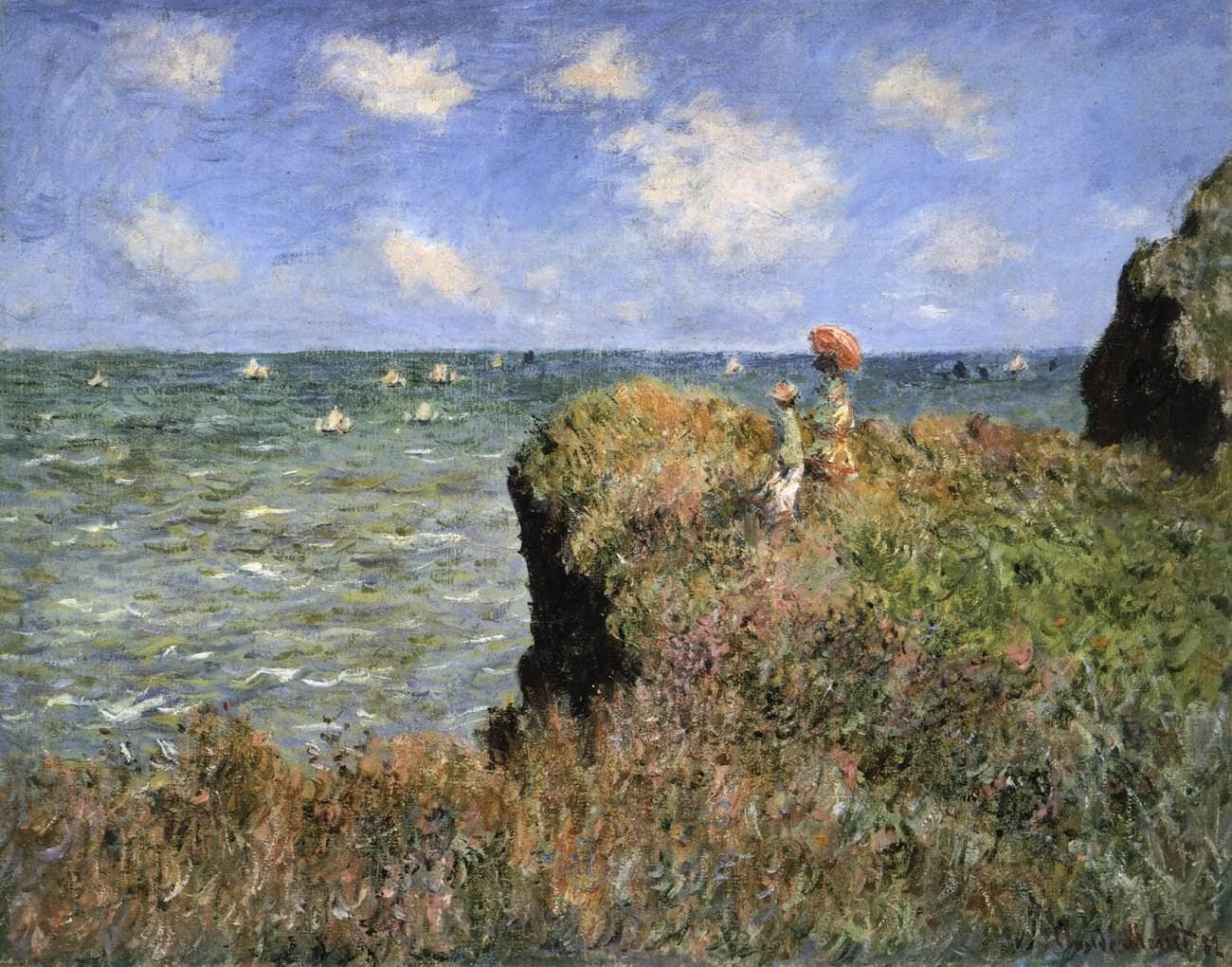
Cliff Walk at Pourville
Claude Monet · 1882
The Rocks at Pourville, Low Tide
Claude Monet · 1882
Sur la falaise de Dieppe
Claude Monet · 1897
Steep Cliffs near Dieppe
Claude Monet · 1897
The Cliffs at Étretat
Claude Monet · 1885

The Scream
Edvard Munch · 1893

Ophelia
John Everett Millais · 1851–52

The Great Wave off Kanagawa
Katsushika Hokusai · c. 1830–32