Theme
Fallen Angel Paintings: Lucifer and the Rebel Angels in Art
From medieval battles in heaven to Cabanel's weeping Lucifer and Stuck's glowing eyes: how artists turned the first rebel into a tragic hero.
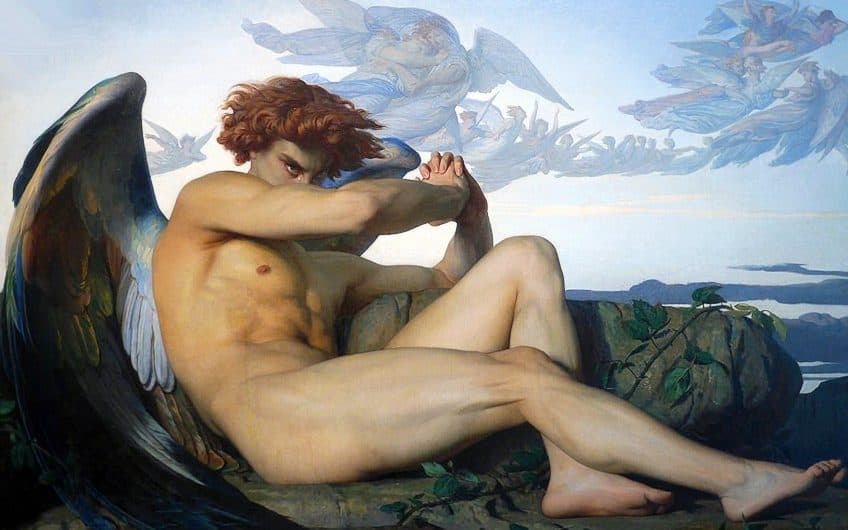
A fallen angel painting depicts one of the angels cast out of heaven for rebelling against God, most often Lucifer, the "morning star" who became Satan. The subject runs from medieval manuscripts and Pieter Bruegel's swarming Fall of the Rebel Angels (1562) to two of the most famous images of the nineteenth century: Alexandre Cabanel's Fallen Angel (1847), in which a beautiful, resentful Lucifer hides his face, and Franz von Stuck's Lucifer (1890), crouched in darkness with glowing eyes.
Over those centuries the fallen angel changed character completely. Early artists painted a defeated monster, tumbling into hell in a rain of grotesque bodies. After John Milton's Paradise Lost (1667), and especially in the Romantic era, artists began to paint him as a tragic hero: proud, wounded, almost sympathetic. This page traces that transformation, explains the stories behind the images, and introduces the paintings and sculptures in the collection below.
Fallen Angel
Alexandre Cabanel · 1847
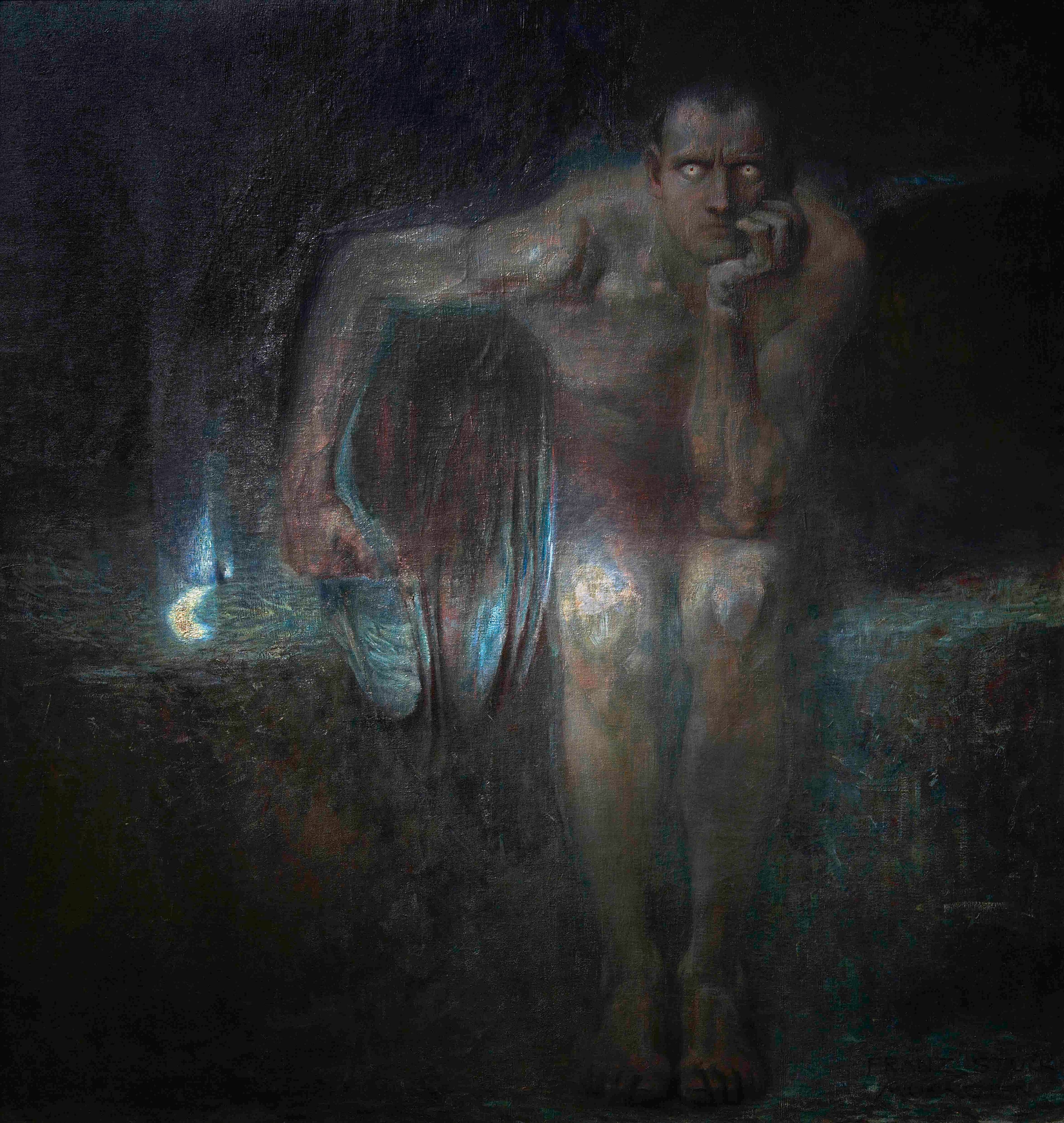
Lucifer
Franz von Stuck · 1890
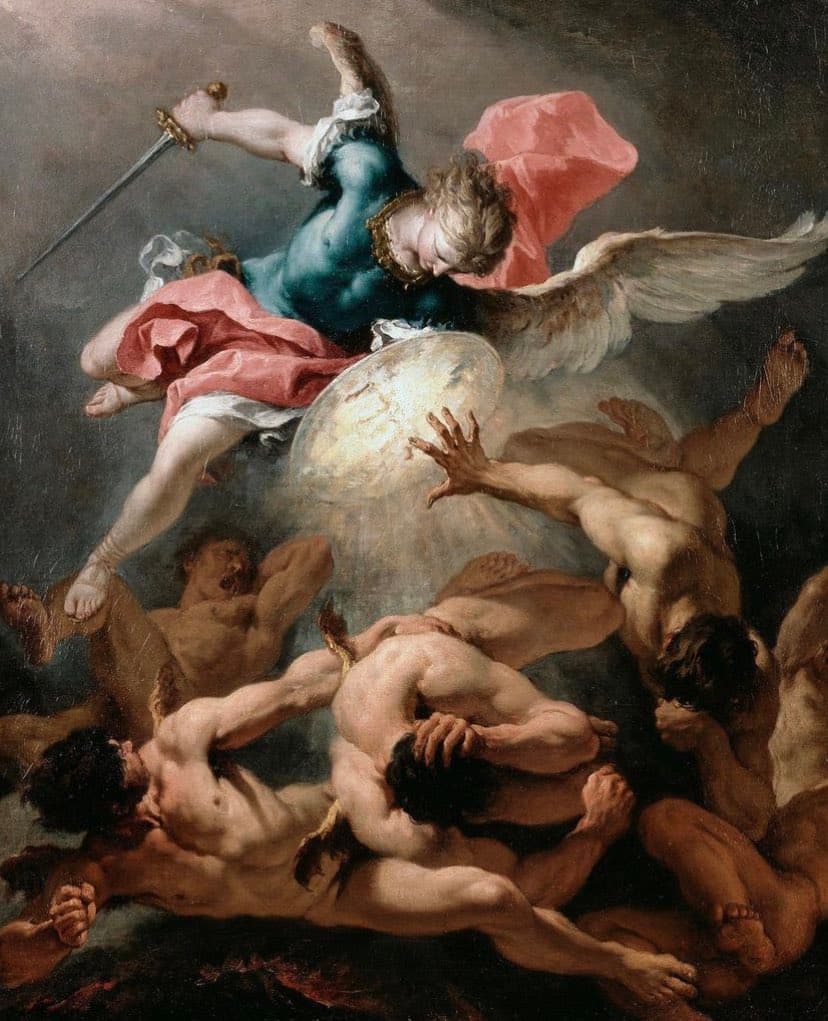
The Fall of the Rebel Angels
Sebastiano Ricci · c. 1720
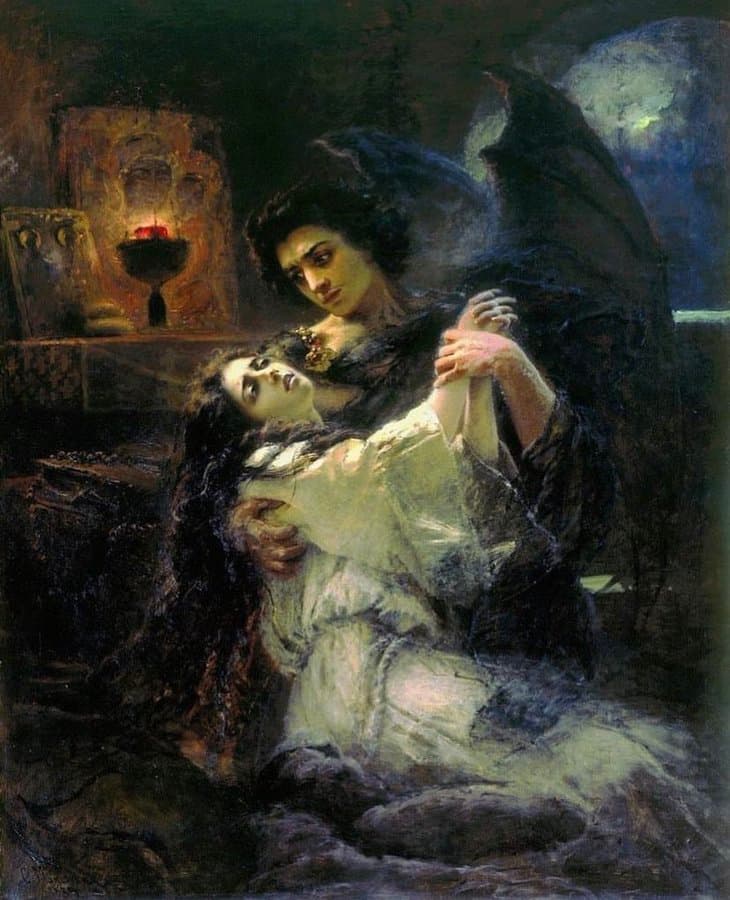
Tamara and Demon
Konstantin Makovsky · 1889
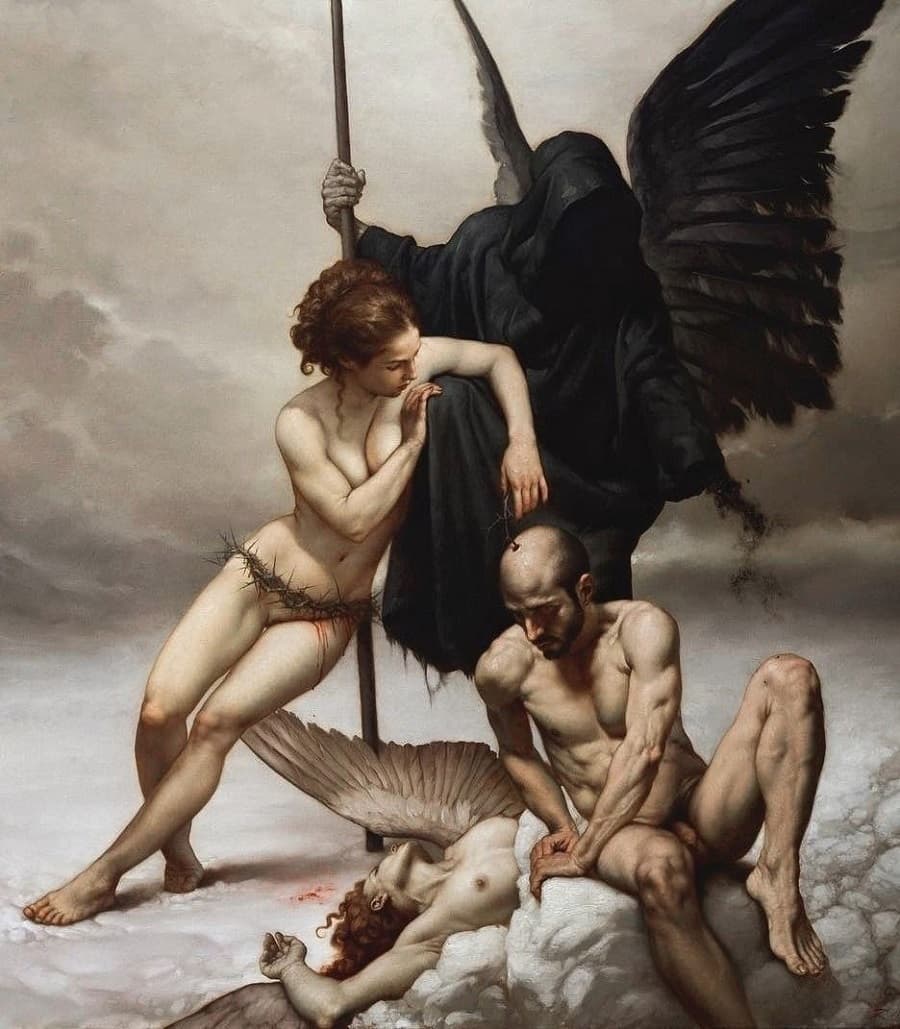
The Angel, the Death, and the Devil
Roberto Ferri · 2018
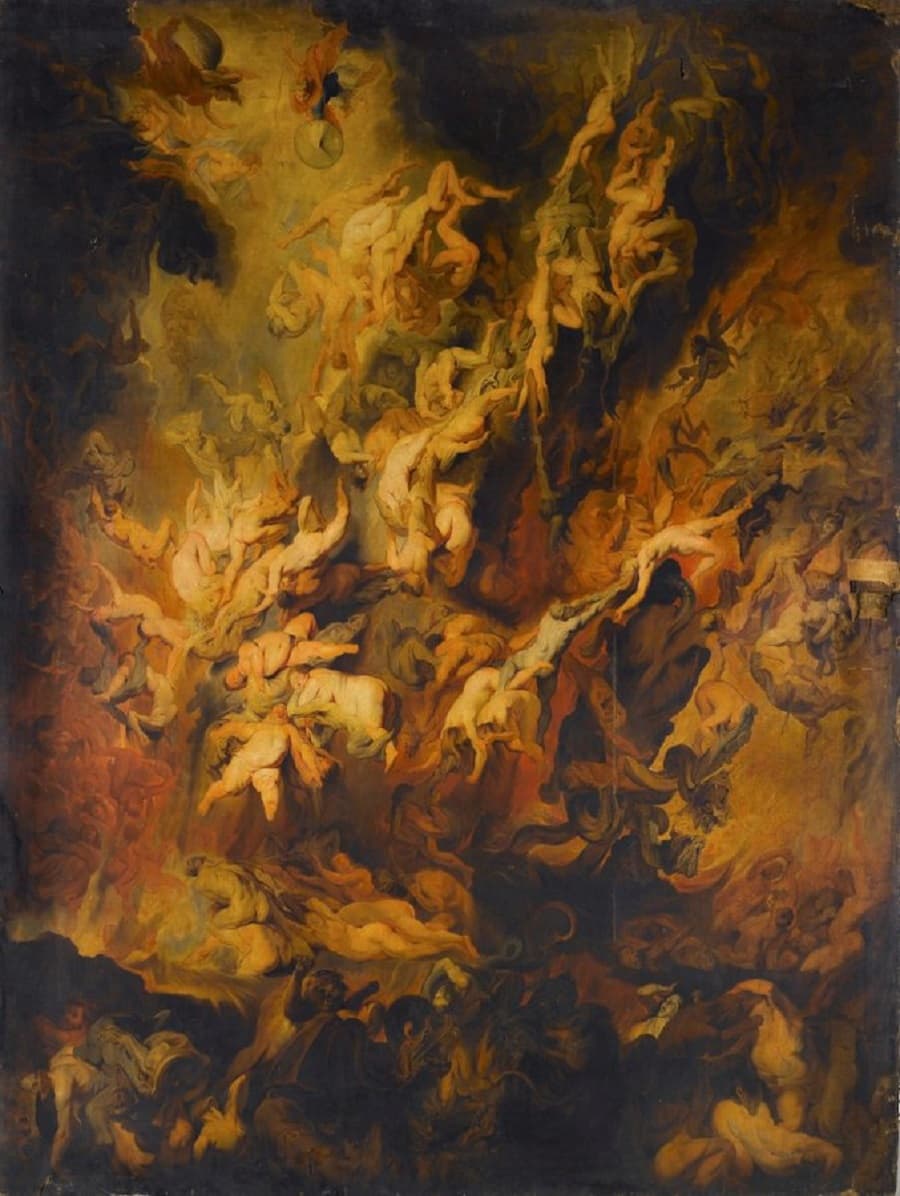
The Fall of the Damned
Guy Head · before 1799
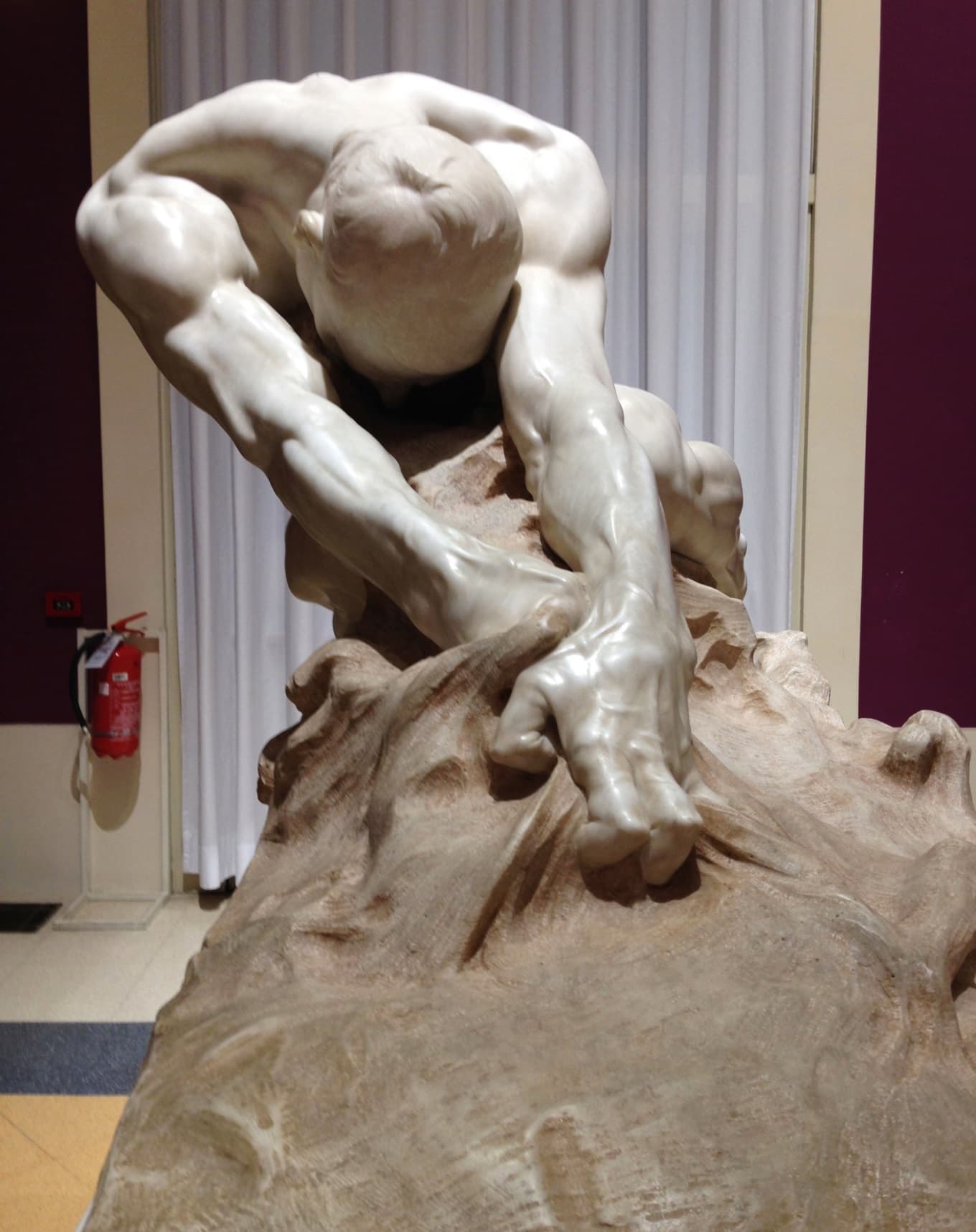
Humanity Against Evil
Gaetano Cellini · 1906–08
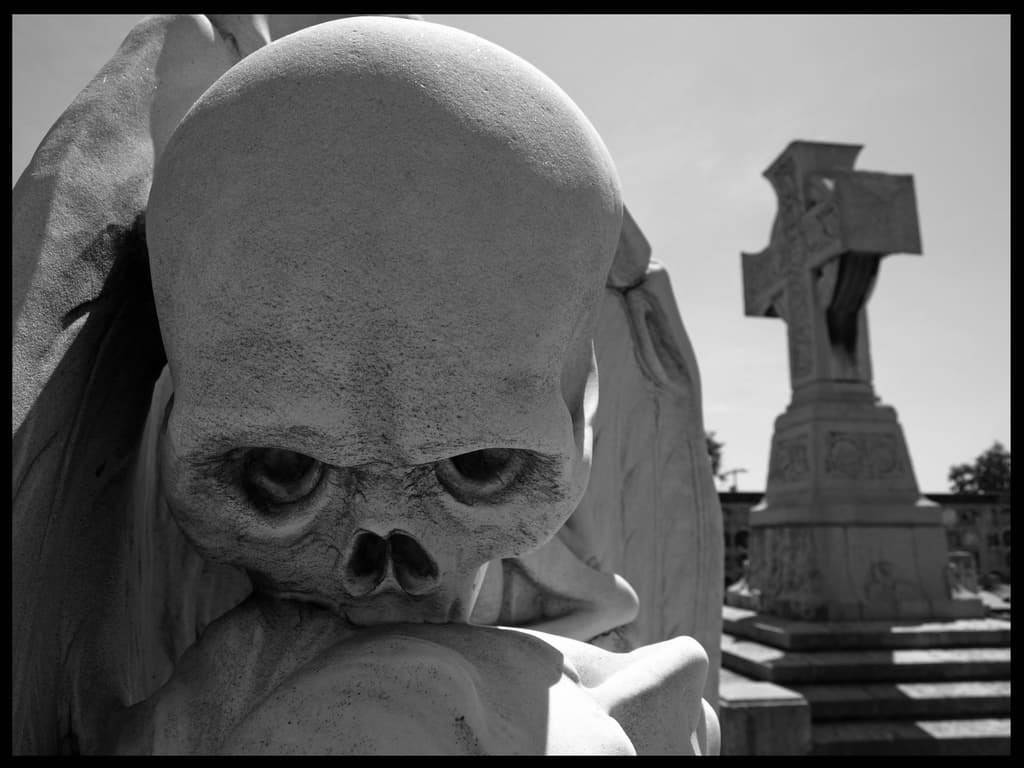
The Kiss of Death (El Petó de la Mort)
Jaume Barba & Joan Fontbernat · 1930
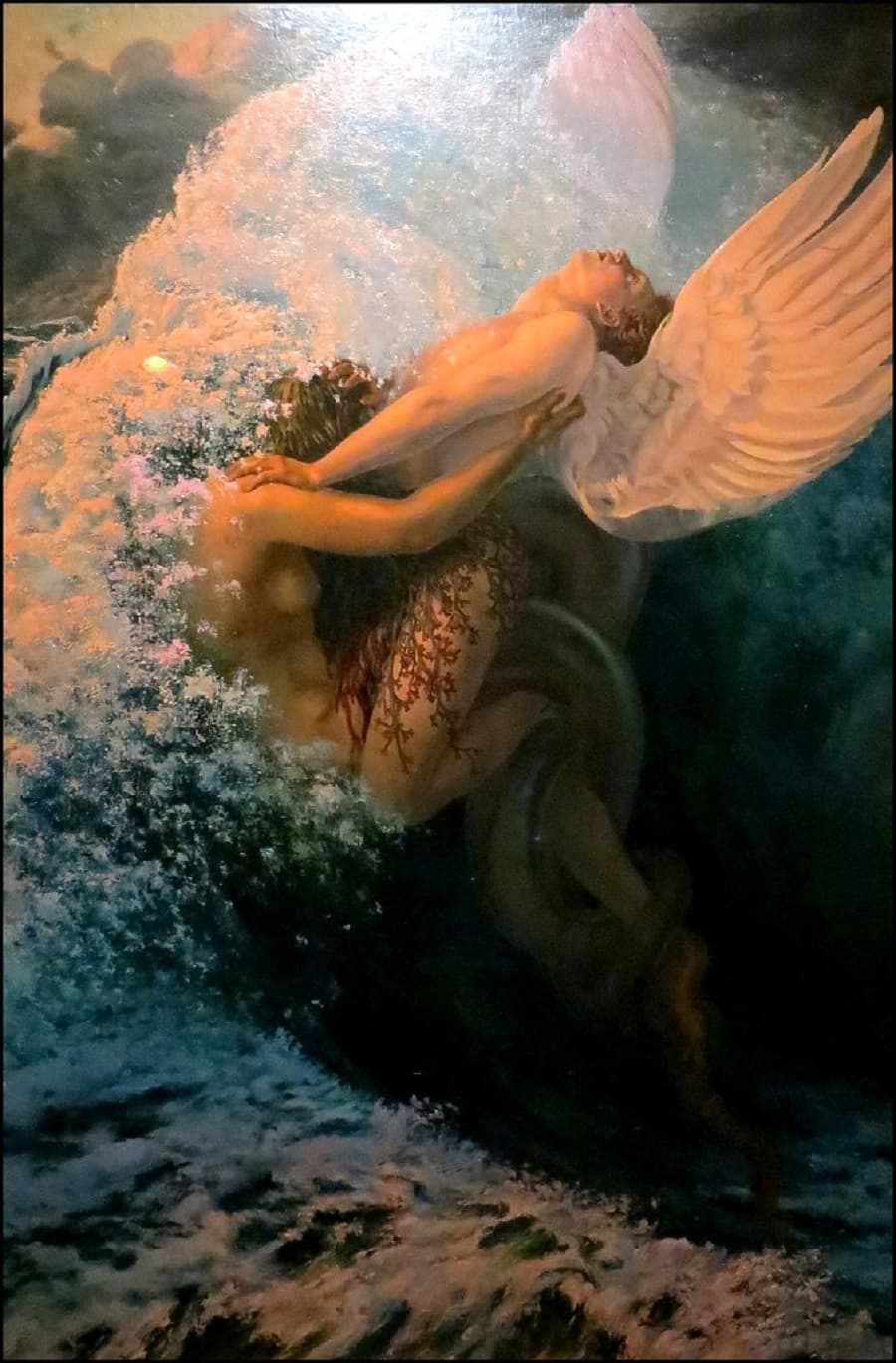
Spleen et Idéal
Carlos Schwabe · 1907
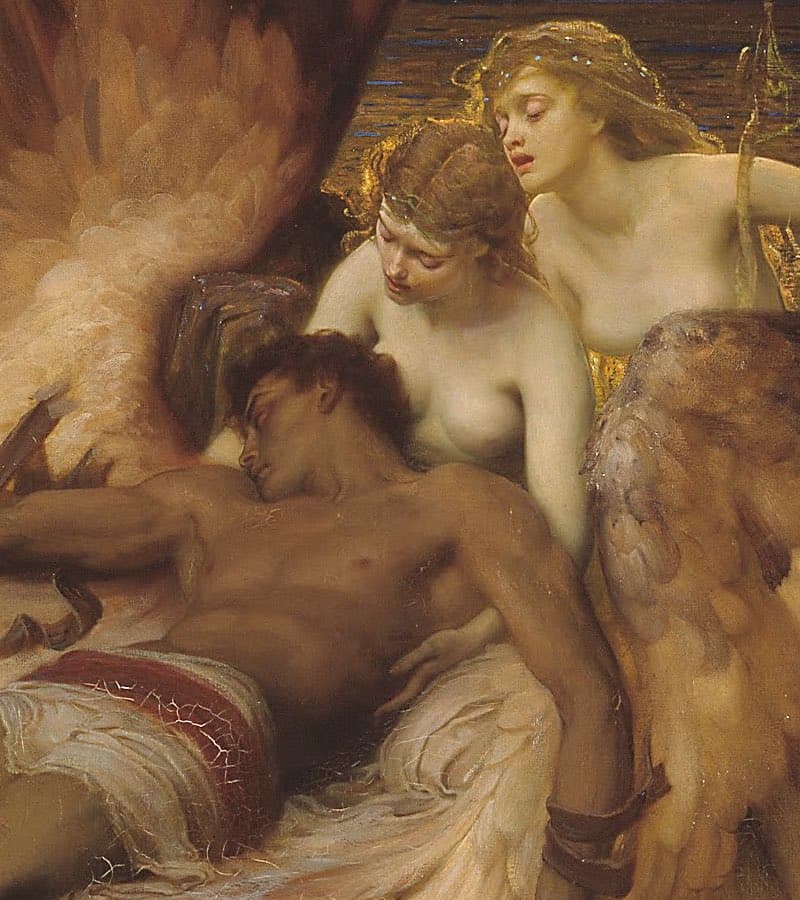
The Lament for Icarus
Herbert James Draper · 1898
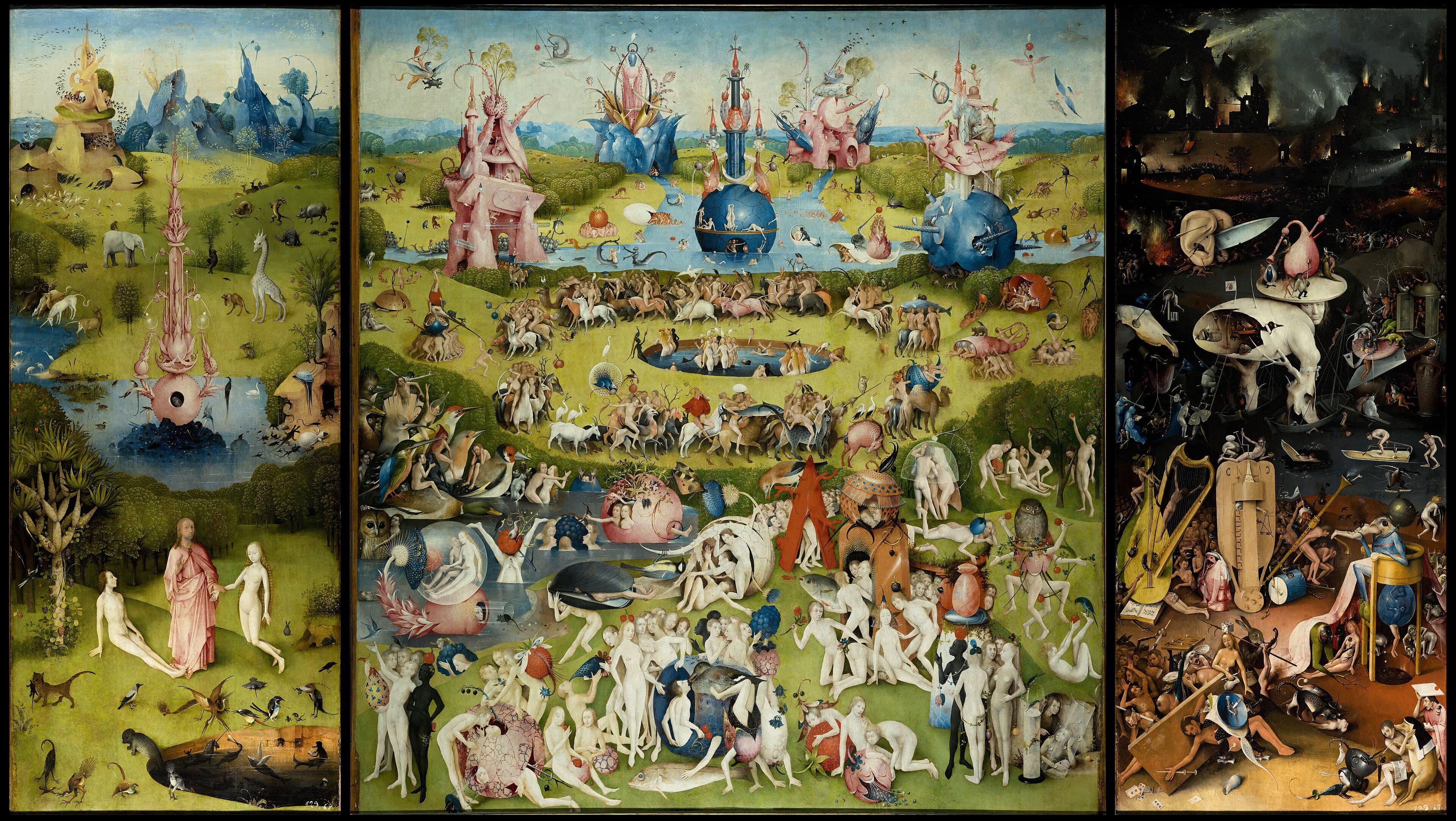
The Garden of Earthly Delights
Hieronymus Bosch · c. 1490–1510
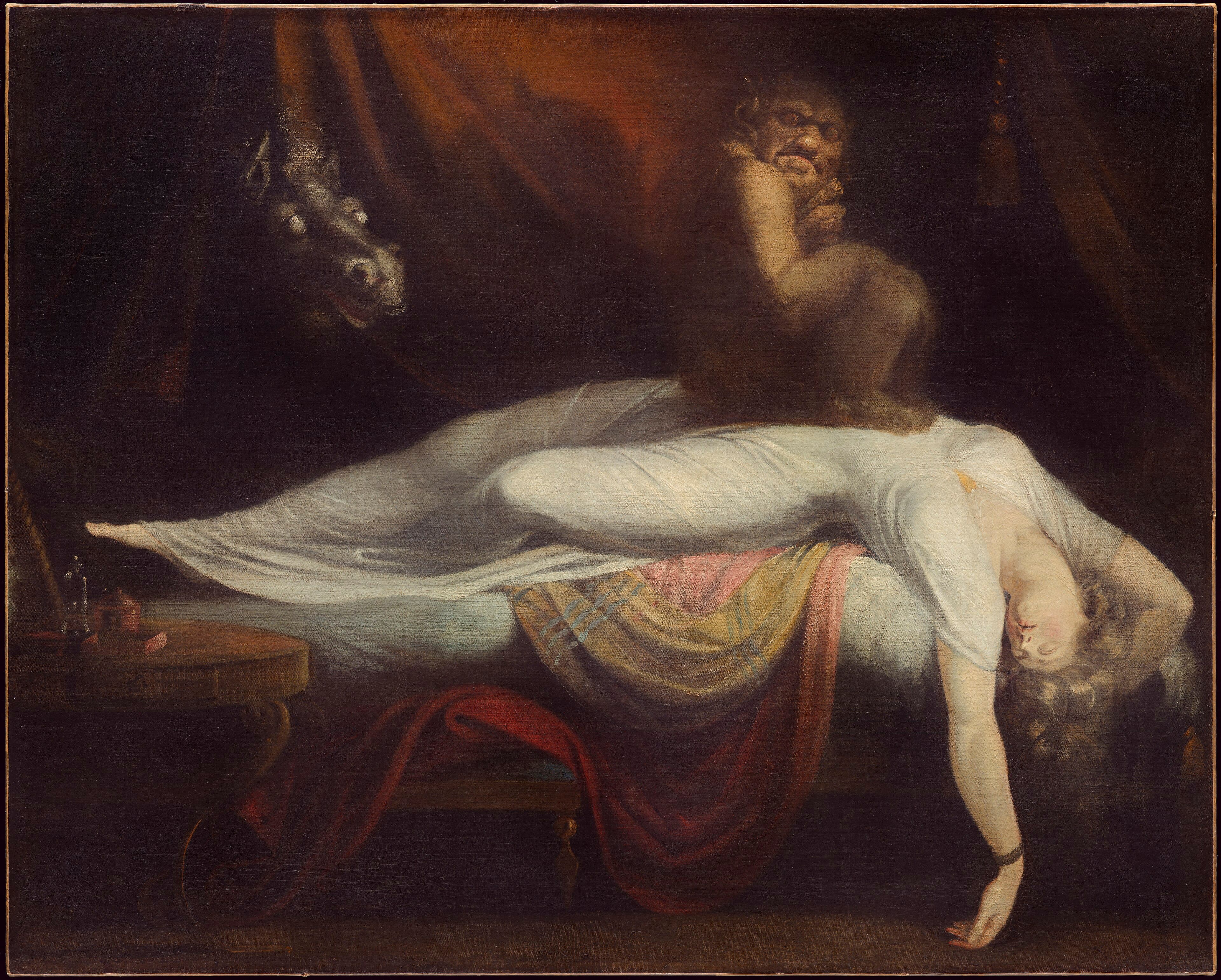
The Nightmare
Henry Fuseli · 1781
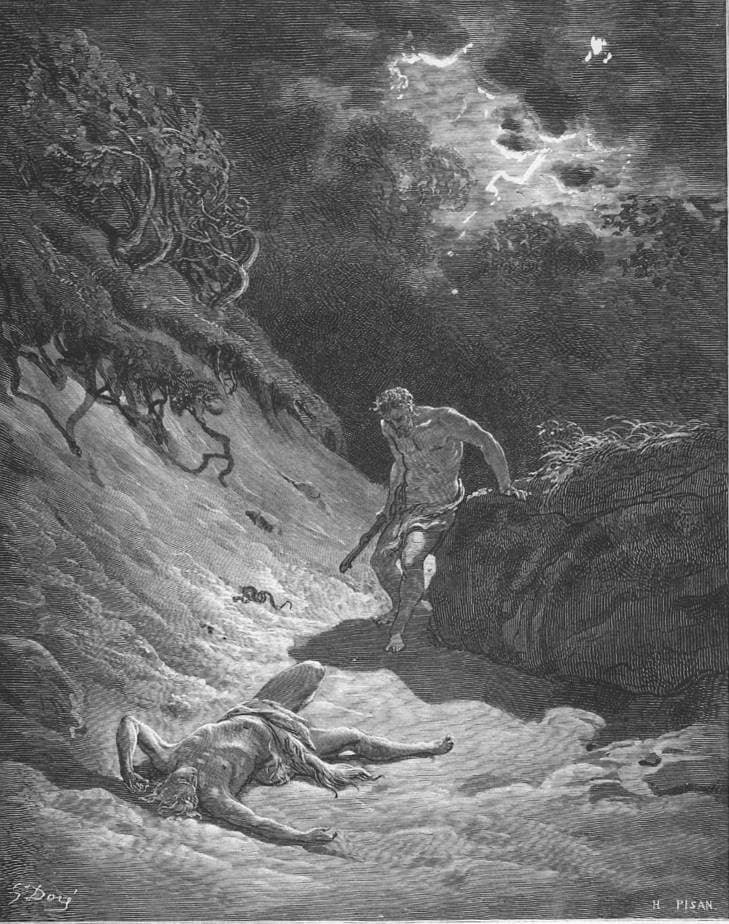
The Death of Abel
Gustave Doré · 1866
The story of the fallen angels
The Bible says surprisingly little about fallen angels, and most of the tradition was assembled from scattered verses. The prophet Isaiah mocks a Babylonian king: "How art thou fallen from heaven, O Lucifer, son of the morning!" (Isaiah 14:12, in the King James translation).
The Latin lucifer, "light-bearer," was the name for the morning star, the planet Venus, and early Christian writers read the verse as a description of Satan's fall. The Book of Revelation describes a war in heaven in which the archangel Michael and his angels defeat "the great dragon" and cast him and his followers down to earth (Revelation 12:7–9). In the Gospel of Luke, Christ says, "I beheld Satan as lightning fall from heaven."
Other strands came from outside the canon. The ancient Jewish Book of Enoch tells of the Watchers, angels who descended to earth, took human wives and taught forbidden arts. Medieval theologians debated the cause of Lucifer's fall and usually settled on pride: he wished to be equal to God.
Medieval and Renaissance images: the battle in heaven
For most of Christian history the fall was painted as a battle, with Michael as hero. In the Très Riches Heures of the Duke of Berry (c. 1411–16), illuminated by the Limbourg brothers, rebel angels fall from the heavenly choir like a shower of golden sparks into a burning lake. In the sixteenth century the subject exploded in Antwerp: Frans Floris's Fall of the Rebel Angels (1554) and Pieter Bruegel the Elder's version of 1562, both now in Belgium, fill the canvas with a tangle of hybrid creatures, part fish, part insect, part armor, as Michael strikes them down. The rebels grow more monstrous the further they fall.
The Baroque fall
Seventeenth- and eighteenth-century painters turned the fall into a spectacular vertical drama, perfect for ceilings and altarpieces. Rubens's Fall of the Damned (c. 1620, Alte Pinakothek, Munich) shows a cascade of naked bodies pouring down into darkness. Guido Reni's Saint Michael (1635) in Santa Maria della Concezione in Rome treads calmly on the devil's head, a figure of elegance rather than effort. Sebastiano Ricci's The Fall of the Rebel Angels (c. 1720) belongs to this tradition, with Michael high above a tumbling diagonal of bodies, rendered in the light, airy palette of late Baroque Venice.
Milton and the birth of the tragic Lucifer
The decisive change came from poetry. John Milton's Paradise Lost (1667) opens not in heaven but in hell, with Satan and his followers lying stunned on a lake of fire. Milton gave Satan the best speeches in the poem, including the defiant line "Better to reign in Hell, than serve in Heaven." A century later the Romantic poet William Blake wrote that Milton was "of the Devil's party without knowing it," and Percy Bysshe Shelley called Satan morally superior to the God who punished him.
Artists followed the poets. Blake illustrated Paradise Lost several times, and in 1866 Gustave Doré published fifty engravings for the poem, which became the most popular images of Milton's Satan ever made: a winged figure alone on a crag, or plunging through clouds toward the abyss. The fallen angel was no longer a monster. He was beautiful, defeated and alone, and viewers were invited to feel for him.
Cabanel's Fallen Angel
That shift reaches its high point in Fallen Angel by Alexandre Cabanel (1847, Musée Fabre, Montpellier). Cabanel painted it as a student at the French Academy in Rome, an annual work sent back to Paris to show his progress. Lucifer reclines naked against a rock, his great dark wings folded behind him, his arms crossed over the lower half of his face.
Above, a band of angels sweeps through a bright sky, oblivious. All the feeling is in his eyes, red-rimmed and glaring with wounded pride, and in a single tear running down his cheek. It is a portrait of resentment rather than evil, and it has become one of the most shared images of the nineteenth century online.
Stuck's Lucifer and the Symbolist demon
By the 1890s Symbolist painters had turned the fallen angel into an emblem of modern alienation. Franz von Stuck's Lucifer (1890, National Gallery, Sofia) shows the angel crouched in a dark, rocky space, chin resting on his fist, dark wings behind him, staring directly out at the viewer with luminous eyes. The pose recalls Michelangelo's and Dürer's figures of melancholy, and the effect is unsettling: we are being watched.
In Russia, Mikhail Lermontov's poem The Demon (1829–39), about a fallen spirit who falls in love with the Georgian princess Tamara, inspired a series of works. Mikhail Vrubel's Demon Seated (1890, Tretyakov Gallery) shows a brooding youth in a crystalline landscape of fractured color; Konstantin Makovsky's Tamara and the Demon shows the winged spirit at the moment he approaches her. In Finland, Hugo Simberg's The Wounded Angel (1903, Ateneum) shows two boys carrying a blindfolded angel with a bandaged wing, an image of fragility rather than rebellion that is often grouped with fallen angels today.
Sculpture: the fallen angel in stone
Ricardo Bellver's El Ángel Caído (1877), cast in bronze and installed as a fountain in Madrid's Retiro Park in the 1880s, is one of the very few public monuments to Lucifer anywhere: he writhes backward in the moment of falling, a serpent coiling around his body, his face turned up in anguish. The theme of good and evil locked in struggle also runs through Gaetano Cellini's marble Humanity Against Evil, modeled in plaster in 1906 and carved in 1908.
Contemporary fallen angels
The subject has never been more popular than now. The Italian painter Roberto Ferri, born in 1978, paints muscular, wounded angels and demons in a technique modeled on Caravaggio and the academic masters; The Angel, the Death and the Devil stages a struggle among the three figures of its title. Fallen angels appear constantly in tattoo art, fantasy illustration, album covers and the visual language of dark academia, where Cabanel's tear and Stuck's stare have become instantly recognizable.
How to read a fallen angel painting
- Wings may be feathered like a bird's or, in medieval and Northern art, leathery and bat-like, a sign of corruption.
- Direction of movement tells the story: downward diagonals for the fall, a seated or crouched pose for the aftermath.
- Michael, usually in armor with a sword or spear, marks the subject as the war in heaven.
- Light and darkness often divide the composition, with heaven above in light and the fallen sinking into shadow.
- The face is where Romantic and later artists put their meaning: rage, grief, pride or longing.
Fallen angels, demons and other falls
Artists rarely kept the categories neat. A fallen angel, strictly speaking, is a former angel; a demon is any evil spirit, and medieval art gave demons horns, tails and animal faces precisely to show what the rebels had become. The Romantic and Symbolist tradition reversed that logic, keeping the fallen angel beautiful so that his loss would feel greater. Painters also borrowed the visual language of the fall for pagan subjects. Herbert James Draper's Lament for Icarus (1898), with the dead boy's great wings spread on the rocks, is not a Christian picture at all, yet it is read today in the same key: brilliance, overreach and a body that has fallen from the sky.
Where to see fallen angel art
Cabanel's Fallen Angel is in Montpellier and Stuck's Lucifer in Sofia. Bruegel's Fall of the Rebel Angels hangs in the Royal Museums of Fine Arts in Brussels, Floris's in the Royal Museum of Fine Arts Antwerp, and Rubens's Fall of the Damned in Munich's Alte Pinakothek. Vrubel's demons are in Moscow's Tretyakov Gallery, and Bellver's bronze stands in Madrid's Retiro Park, free to visit at any hour.
For the wider world of winged figures, good and evil, see our angels and demons in art collection.
Questions & answers
What is the most famous fallen angel painting?
Alexandre Cabanel's Fallen Angel (1847), in the Musée Fabre in Montpellier, France, is the most famous fallen angel painting today. It shows Lucifer reclining against a rock, his arms hiding the lower half of his face, his eyes glaring with resentment and a single tear on his cheek, while angels fly past above.
Who painted The Fallen Angel?
The best-known Fallen Angel was painted by the French academic artist Alexandre Cabanel in 1847, while he was a student at the French Academy in Rome. Cabanel later became one of the most successful painters of the Second Empire, famous for his Birth of Venus, bought by Napoleon III in 1863.
Where is the Fallen Angel painting by Cabanel?
Cabanel's Fallen Angel is in the Musée Fabre in Montpellier, in the south of France, the painter's hometown. The museum, founded in 1828, holds one of the most important collections of European painting in France outside Paris, and Cabanel's picture is among its most visited works.
What does a fallen angel symbolize in art?
A fallen angel symbolizes pride, rebellion and the loss of grace. In medieval and Baroque art it usually stands for defeated evil, punished by the archangel Michael. From the Romantic era onward, influenced by Milton's Paradise Lost, it increasingly symbolizes tragic defiance, alienation and beauty corrupted by pride.
Who is the fallen angel in the Bible?
Christian tradition identifies the chief fallen angel as Lucifer, later called Satan, who rebelled against God out of pride and was cast out of heaven with his followers. The idea draws on Isaiah 14:12, Revelation 12:7–9 and Luke 10:18, as interpreted by early Christian writers.