Impressionism
Cliff Walk at Pourville
Claude Monet, 1882
Cliff Walk at Pourville is an 1882 painting by Claude Monet of two women on a windy grassy clifftop above a sea full of sailing boats, near Dieppe in Normandy. It is in the Art Institute of Chicago.
- Artist
- Claude Monet
- Date
- 1882
- Medium
- Oil on canvas
- Dimensions
- 66.5 × 82.3 cm
- Collection
- Art Institute of Chicago, Chicago, United States
- Movement
- Impressionism
- Catalogue
- Wildenstein 758
Painted at Étretat and the Normandy CoastMore at Monet at the Art Institute of Chicago
Claude Monet's Cliff Walk at Pourville was painted in 1882 at Pourville, a small seaside village just west of Dieppe on the Normandy coast. The canvas, 66.5 by 82.3 centimeters and number 758 in Wildenstein's catalogue, is in the Art Institute of Chicago, which received it in 1933 with the Mr. and Mrs. Lewis Larned Coburn Memorial Collection.
What you are looking at
Two young women stand on the grassy brow of a cliff, small against a huge expanse of sea and sky. One holds an orange-red parasol tilted into the wind; the other, in a straw hat and a pale dress, stands a step ahead of her at the edge. They are so lightly painted that their dresses almost merge with the grass, but the parasol catches the eye at once, the hottest color in the picture.
The ground rises from the lower edge as a hummock of grass and scrub, painted in a restless tangle of green, ochre, pink and violet strokes that seem to bend in the wind. Just left of center, a block of cliff juts out over the sea, its face in dark shadow. At the right edge a darker rocky headland closes the view. Beyond the women the sea stretches to a high horizon, a choppy surface of turquoise, jade and dark green flecked with white, dotted with a whole fleet of small white sailing boats. Above, white clouds tumble across a bright blue sky. The signature and date are at lower right.
How it was painted
Everything here is about wind. The grass strokes go in every direction, the clouds are dragged across the sky in curling strokes, and the sea is broken into short, jittery dashes of color. Monet paints the women almost transparently, with the same strokes and colors as the grass around them, so they become part of the weather rather than portraits.
This was a problem Monet set himself deliberately: how to put figures into a landscape without breaking the unity of the painted surface. His answer is texture and color. Grass, dresses and parasol are all made of the same restless touches, and the warm pinks and oranges of the figures reappear in the grass at their feet. The high viewpoint, with the edge of the cliff dropping out of sight, adds a sense of vertigo. Notice too how many boats there are: a scattered fleet of white sails runs right across the horizon band, each one a single dab of paint. They multiply the sense of distance and movement, and they tell us this is a fair, breezy day on a working coast.
Pourville, 1882
In February 1882 Monet went to Normandy to paint, partly as a retreat. Camille had died three years earlier, he was living with Alice Hoschedé and her children, France was in recession, and divisions within the Impressionist group were sharp; he left his contribution to the seventh Impressionist exhibition that spring to his dealer, Paul Durand-Ruel. Finding Dieppe too urban, he settled at Pourville and stayed until mid-April. In June Alice and the children joined him, and the two young women here are probably Marthe and Blanche, the eldest Hoschedé daughters.
Over the year he produced close to a hundred canvases on this stretch of coast: beaches, cliffs, the customs officer's cottage at Varengeville and the church on the cliff. Its catalogue neighbor is the Kunsthaus Zürich's Cliffs near Dieppe; other works include Rocks near Pourville at Ebb Tide and Beach in Pourville. Our hub on Étretat and the Normandy coast follows his whole career on the Channel.
Monet had painted women on a windy height before, and he would again: compare the figure with the parasol in Woman with a Parasol of 1875 and Woman with a Parasol, Facing Left of 1886.
Where to see it
The painting hangs in the Art Institute of Chicago, usually in the Impressionist galleries alongside Bordighera and The Beach at Sainte-Adresse. More on Claude Monet.
Questions & answers
Where is Monet's Cliff Walk at Pourville?
The painting is in the Art Institute of Chicago, which received it in 1933 with the Mr. and Mrs. Lewis Larned Coburn Memorial Collection. The museum holds one of the largest groups of Monet paintings in the world, including several other Normandy coast views of the 1880s.
When and where was Cliff Walk at Pourville painted?
Monet painted it in 1882 at Pourville-sur-Mer, a small seaside village about four kilometers west of Dieppe, set in a gap in the chalk cliffs. He stayed there from February to April and again in the summer with Alice Hoschedé and the children.
Who are the women in Cliff Walk at Pourville?
According to the Art Institute of Chicago, they are probably Marthe and Blanche Hoschedé, the eldest daughters of Alice Hoschedé, who joined Monet at Pourville in June 1882. He paints them so loosely that they work as part of the landscape rather than as portraits.
What does Cliff Walk at Pourville show?
Two young women, one with a red parasol, stand on a windswept grassy clifftop above a choppy turquoise sea dotted with small sailboats, under a blue sky with white clouds. A dark rocky headland closes the view at the right.
More by the artist
Claude Monet

Bridge over a Pond of Water Lilies
Claude Monet · 1899

Woman with a Parasol – Madame Monet and Her Son
Claude Monet · 1875

Sunset in Venice
Claude Monet · 1908–12

La Grenouillère
Claude Monet · 1869

Beach in Pourville
Claude Monet · 1882

Springtime
Claude Monet · 1872

Boating on the River Epte
Claude Monet · 1890

The Seine at Asnières (Hermitage)
Claude Monet · 1873
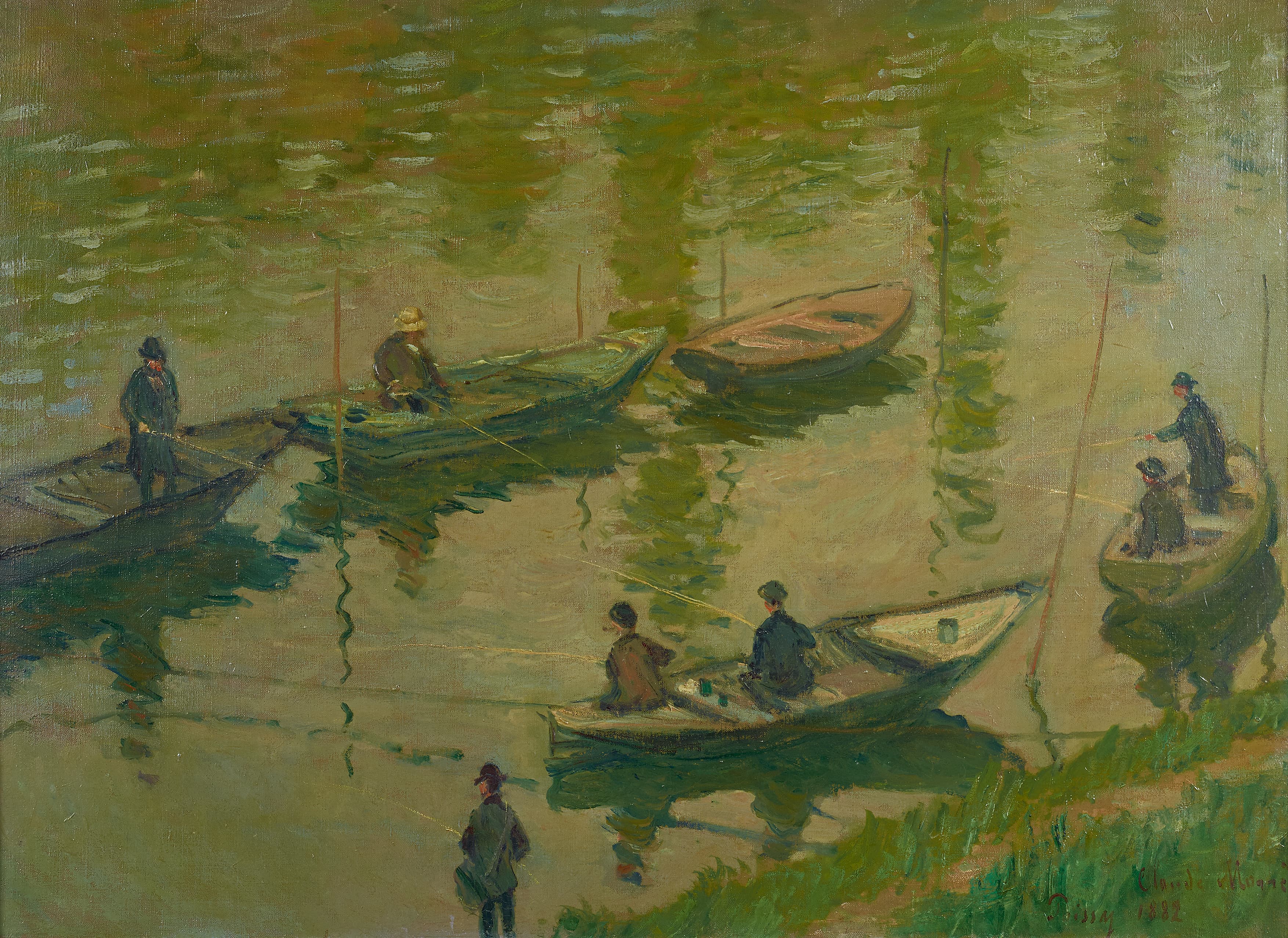
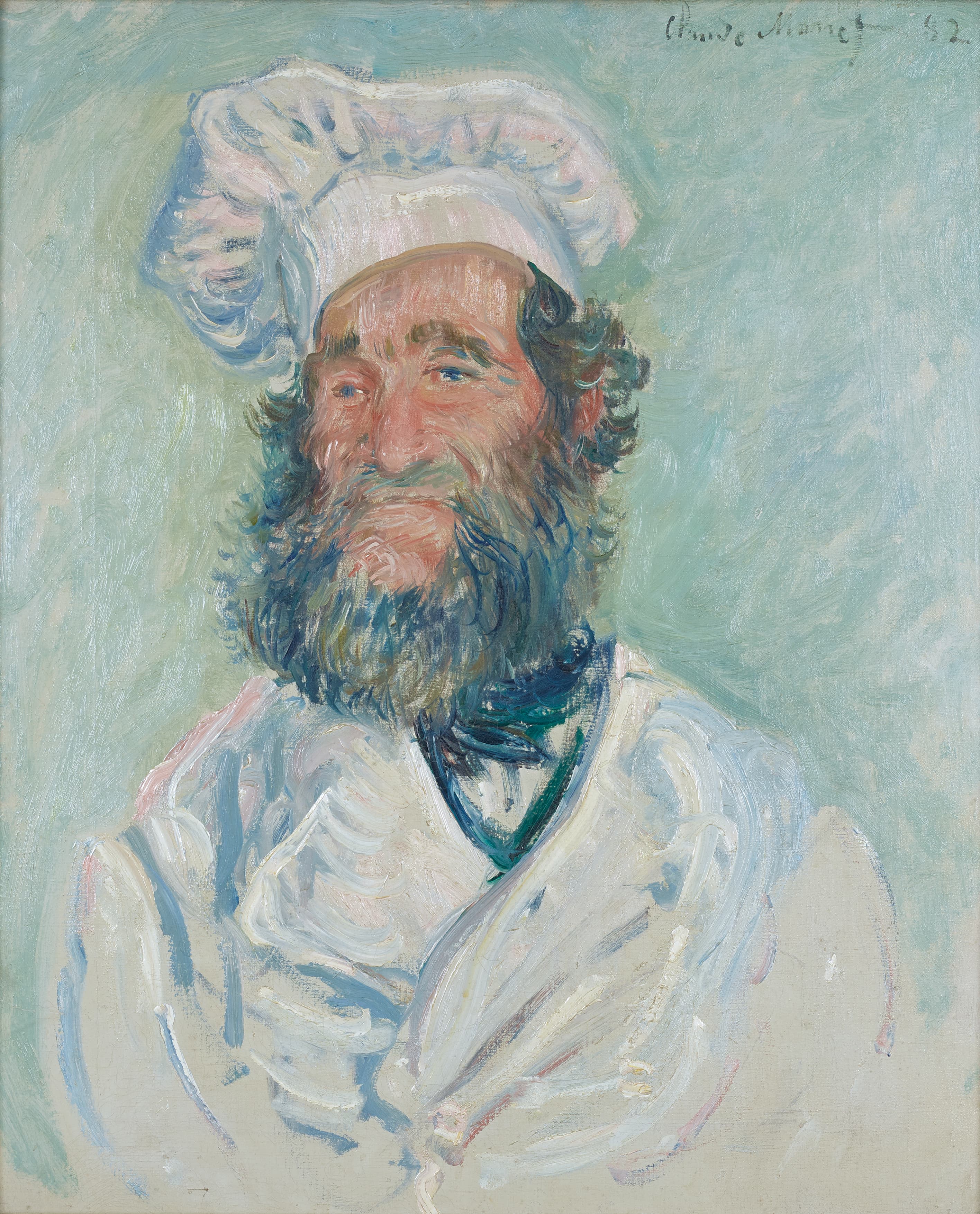
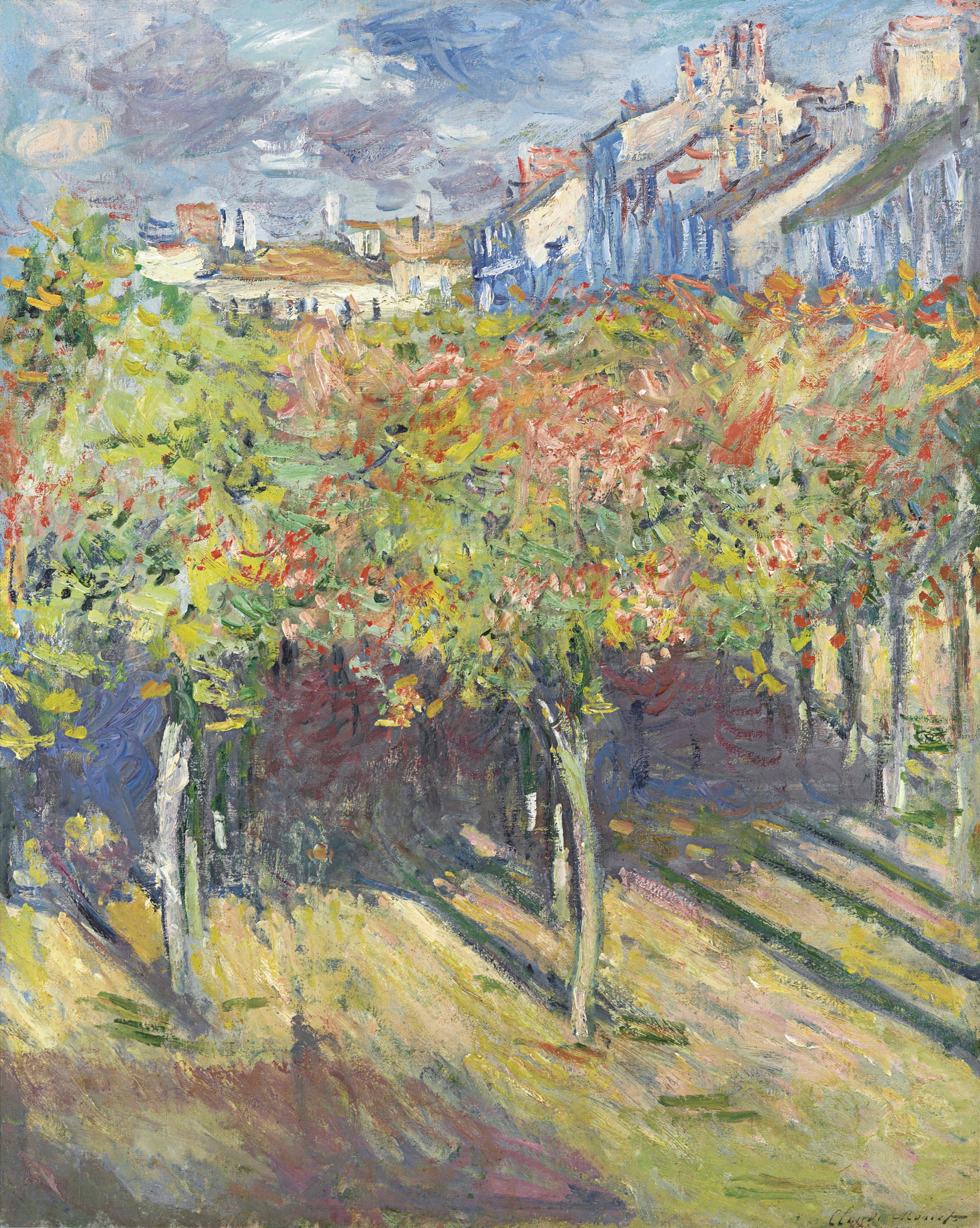
Also painted in 1882
The same year
Kindred works
You may also study
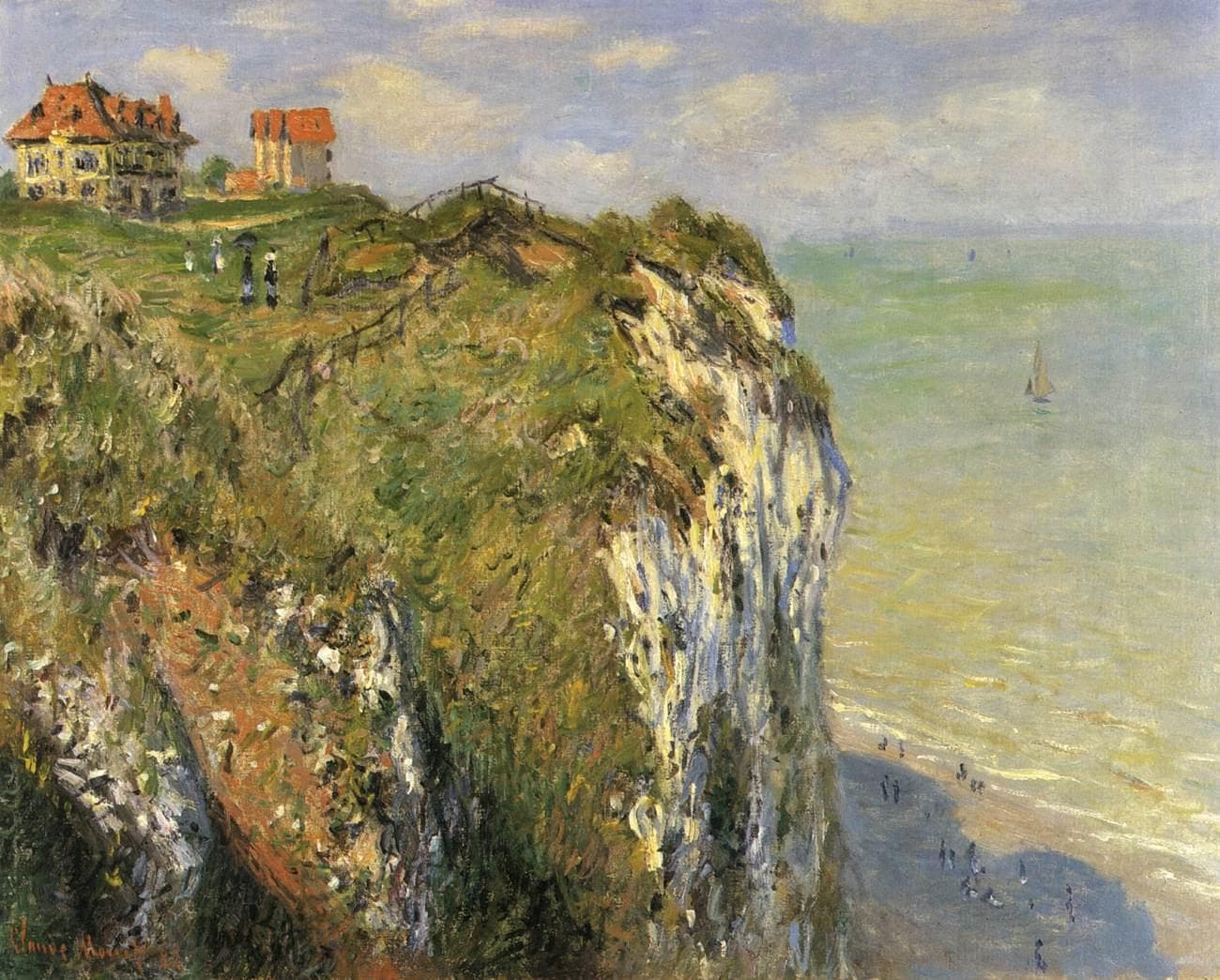
Cliffs near Dieppe
Claude Monet · 1882
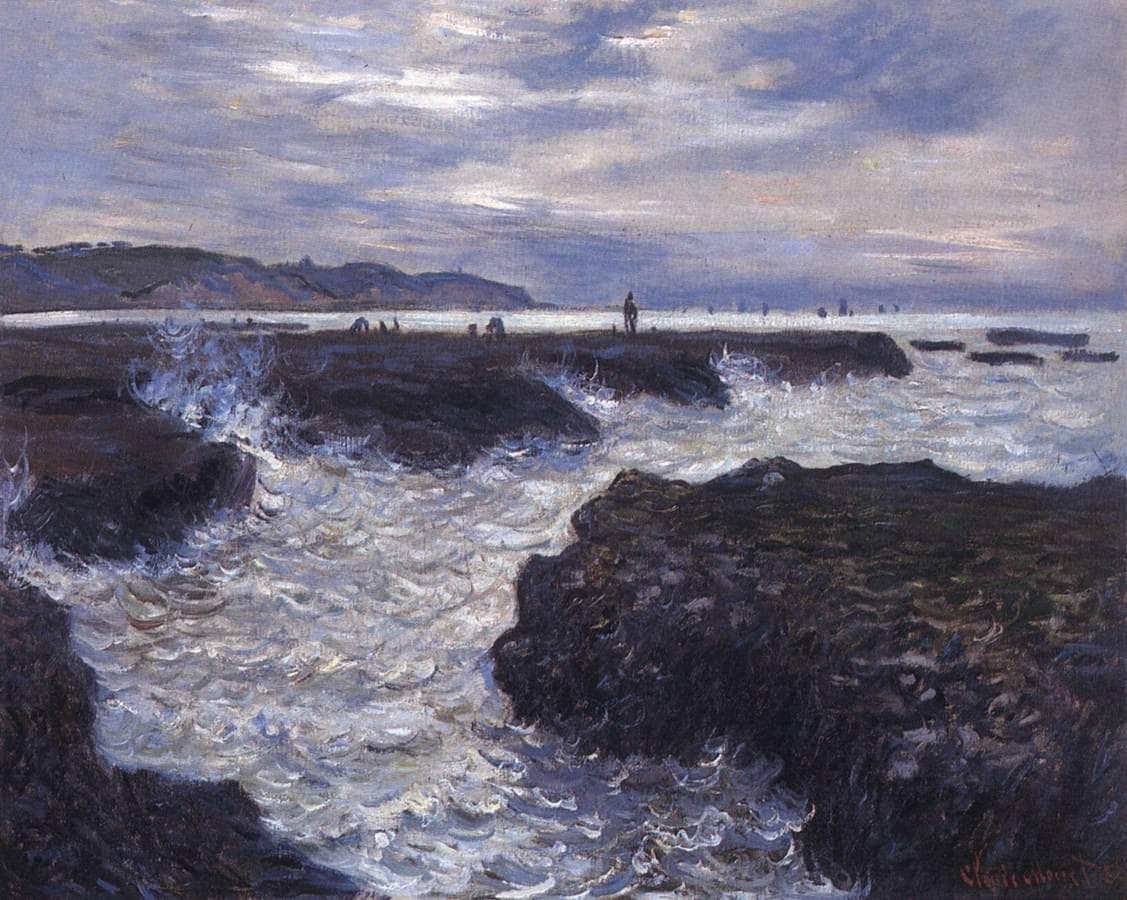
The Rocks at Pourville, Low Tide
Claude Monet · 1882
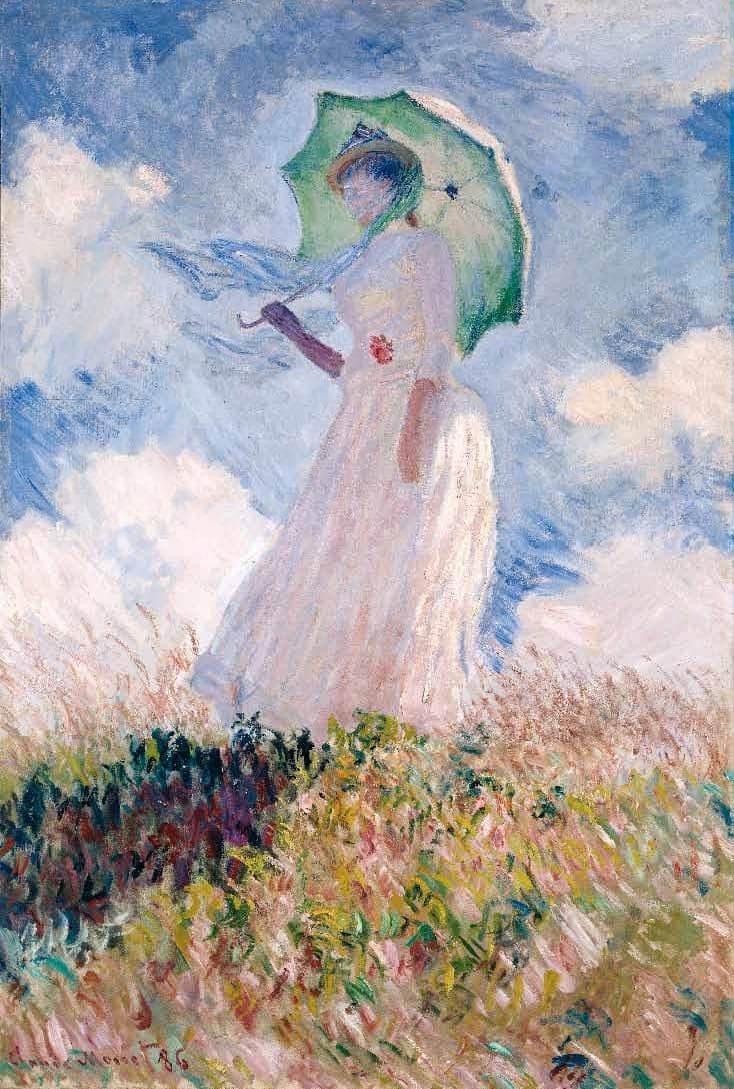
Woman with a Parasol, Facing Left
Claude Monet · 1886

Venus de Milo
Alexandros of Antioch · c. 150–125 BC

The Scream
Edvard Munch · 1893

Ophelia
John Everett Millais · 1851–52

The Great Wave off Kanagawa
Katsushika Hokusai · c. 1830–32
Las Meninas
Diego Velázquez · 1656