Image: State Hermitage Museum, Saint Petersburg · Public domain · via Wikimedia Commons
Impressionism
The Grand Quai at Le Havre
Claude Monet, 1874
The Grand Quai at Le Havre is an 1874 painting by Claude Monet of the busy main quay of his hometown port, crowded with sailing ships, steamers, bales of cargo and dockworkers. From the Otto Krebs collection, it is in the State Hermitage Museum.
- Artist
- Claude Monet
- Date
- 1874
- Medium
- Oil on canvas
- Dimensions
- 61 × 78 cm
- Collection
- State Hermitage Museum, Saint Petersburg, Russia
- Movement
- Impressionism
- Catalogue
- Wildenstein 295
Painted at Étretat and the Normandy Coast
The Grand Quai at Le Havre, also listed as Embankment in Le Havre, is a crowded harbor scene Claude Monet painted in his home port in 1874. Masts and funnels bristle across the top of the canvas, a paddle steamer and a cross-Channel boat lie at the quay, and the foreground is a jumble of cargo bales, barrels and tiny figures at work. The painting has a rough, unfinished look. It belonged to the German collector Otto Krebs and has been on view at the State Hermitage Museum in Saint Petersburg since 1995.
What you're looking at
Monet looks down on the quay from a raised position, so the scene spreads out below. On the left stand two long wooden sheds with striped awnings and painted signboards: one reads Bureaux du Grand Quai and the other Havre Caen, the office of the steamer service across the Seine estuary to Caen. In front of them a large black-hulled steamer with a pink-orange funnel is moored, and the quay below is heaped with pale bales and sacks, painted as a mass of quick cream and ocher dabs.
Small figures, dockers and travelers, are scattered across the quay in blue, black and white touches. A tall lamp post curls up in the center. To the right, the harbor opens out into blue water with rowing boats, and beyond it more ships: a big sailing vessel with square rigging, steamers trailing smoke in rust and lilac, the wheel of a paddle boat at far right. The upper half of the picture is a forest of masts and yards, with flags and pennants in red, white and blue. The sky behind is pale and broken by drifting smoke. At lower left is Monet's signature.
Monet's Le Havre
Monet grew up in Le Havre, where his father ran a grocery and ship-supply business, and it was there that Eugène Boudin first persuaded him to paint outdoors. In 1872 he painted the harbor in the series of views that included Impression, Sunrise and The Port of Le Havre, Night Effect.
In the autumn of 1874, a few months after the first Impressionist exhibition, he returned to Le Havre and painted the port again, this time as a working place full of trade and shipping. This is one of four views from that stay; others are in the Los Angeles County Museum of Art, the Philadelphia Museum of Art and a private collection. Compare also Fishing Boats Leaving the Harbor, Le Havre and The Museum at Le Havre for other views of the town. The Channel coast as a whole is covered on Étretat and the Normandy Coast.
How it was painted
The canvas looks unfinished, and it probably is. Large areas, especially at the top, are laid in thin washes of color with the ground showing through. The rigging and masts are quick, wiry lines, and the crowd is suggested with single touches. Where Monet worked longer, in the bales and the sheds, the paint is thick and broken. The effect is close to a drawing in color, and it gives a strong sense of the bustle and noise of a port.
Monet's interest here is in modern commerce, not picturesque harbors. Steamers, signboards and freight take up as much space as sailing ships. The high viewpoint, the cut-off forms at the edges and the dense, all-over activity are close to his Paris street scenes of the same year, such as Boulevard des Capucines.
From Otto Krebs to the Hermitage
The painting belonged to Otto Krebs, a German industrialist whose collection of French Impressionist and Post-Impressionist paintings was kept at his estate in Thuringia. At the end of the Second World War it was taken by the Red Army to the Soviet Union as reparations and hidden for half a century. It was first exhibited at the Hermitage in 1995 and now hangs with the museum's other Monet paintings, which include The Seine at Rouen and Garden at Bordighera from the same source. For other collections, see where to see Monet's paintings.
Questions & answers
Where is Monet's The Grand Quai at Le Havre?
It is in the State Hermitage Museum in Saint Petersburg. It came from the Otto Krebs collection, taken to the Soviet Union after the Second World War, and has been on view since 1995.
When and where was The Grand Quai at Le Havre painted?
Monet painted it in autumn 1874 in Le Havre, the Normandy port where he grew up, a few months after the first Impressionist exhibition.
What does The Grand Quai at Le Havre show?
It shows the main quay of Le Havre's harbor seen from above: sheds with painted signs, a moored steamer, heaps of cargo, small figures of dockworkers, and a mass of masts, funnels and flags across the harbor.
Did Monet paint other views of Le Havre harbor?
Yes. In 1872 he painted the harbor views that include Impression, Sunrise, and in 1874 he painted four views of the port, now in Saint Petersburg, Los Angeles, Philadelphia and a private collection.
More by the artist
Claude Monet

Bridge over a Pond of Water Lilies
Claude Monet · 1899

Woman with a Parasol – Madame Monet and Her Son
Claude Monet · 1875

Sunset in Venice
Claude Monet · 1908–12

La Grenouillère
Claude Monet · 1869

Beach in Pourville
Claude Monet · 1882

Springtime
Claude Monet · 1872

Boating on the River Epte
Claude Monet · 1890

The Seine at Asnières (Hermitage)
Claude Monet · 1873
Also painted in 1874
The same year
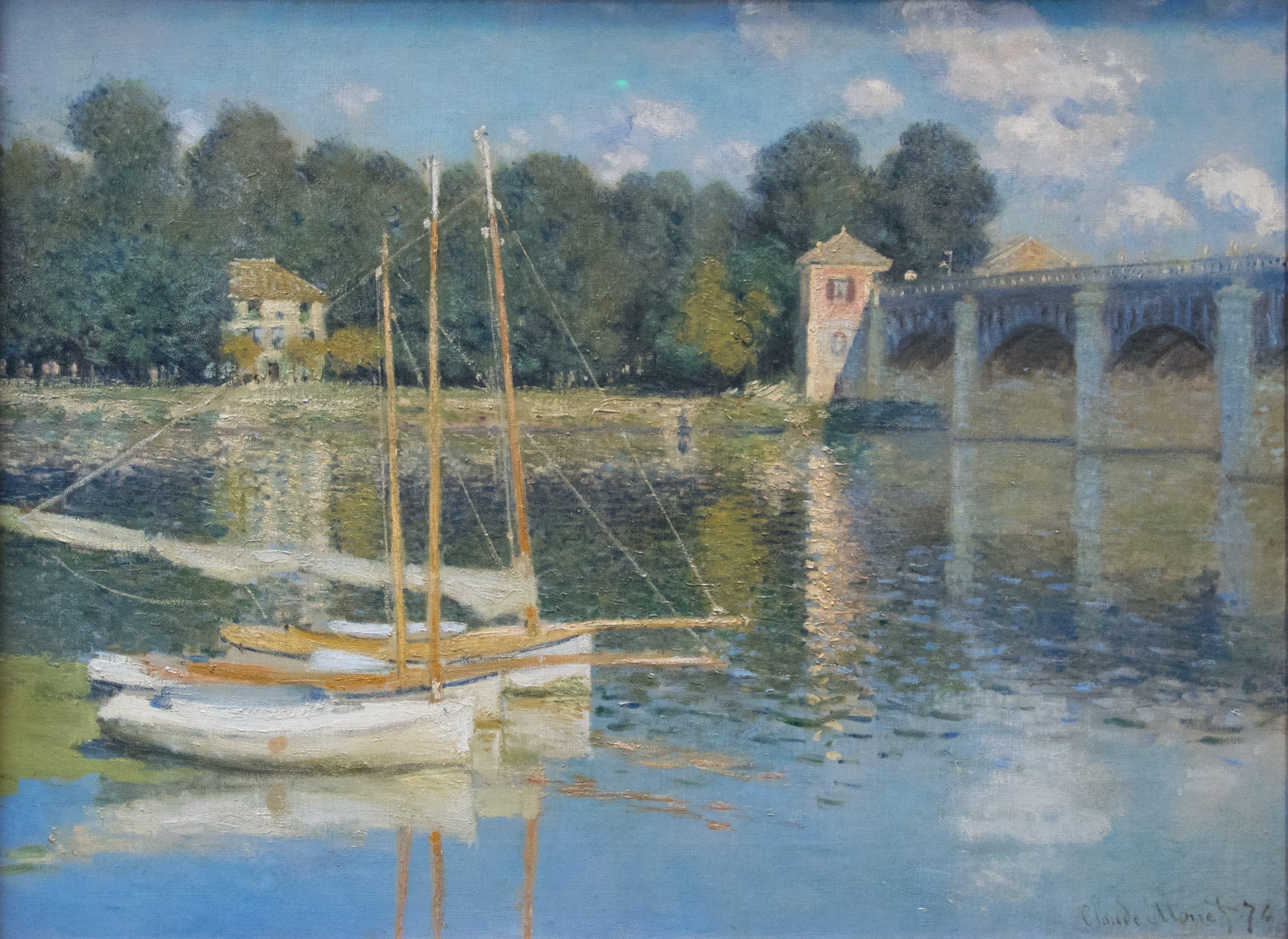
The Argenteuil Bridge
Claude Monet · 1874
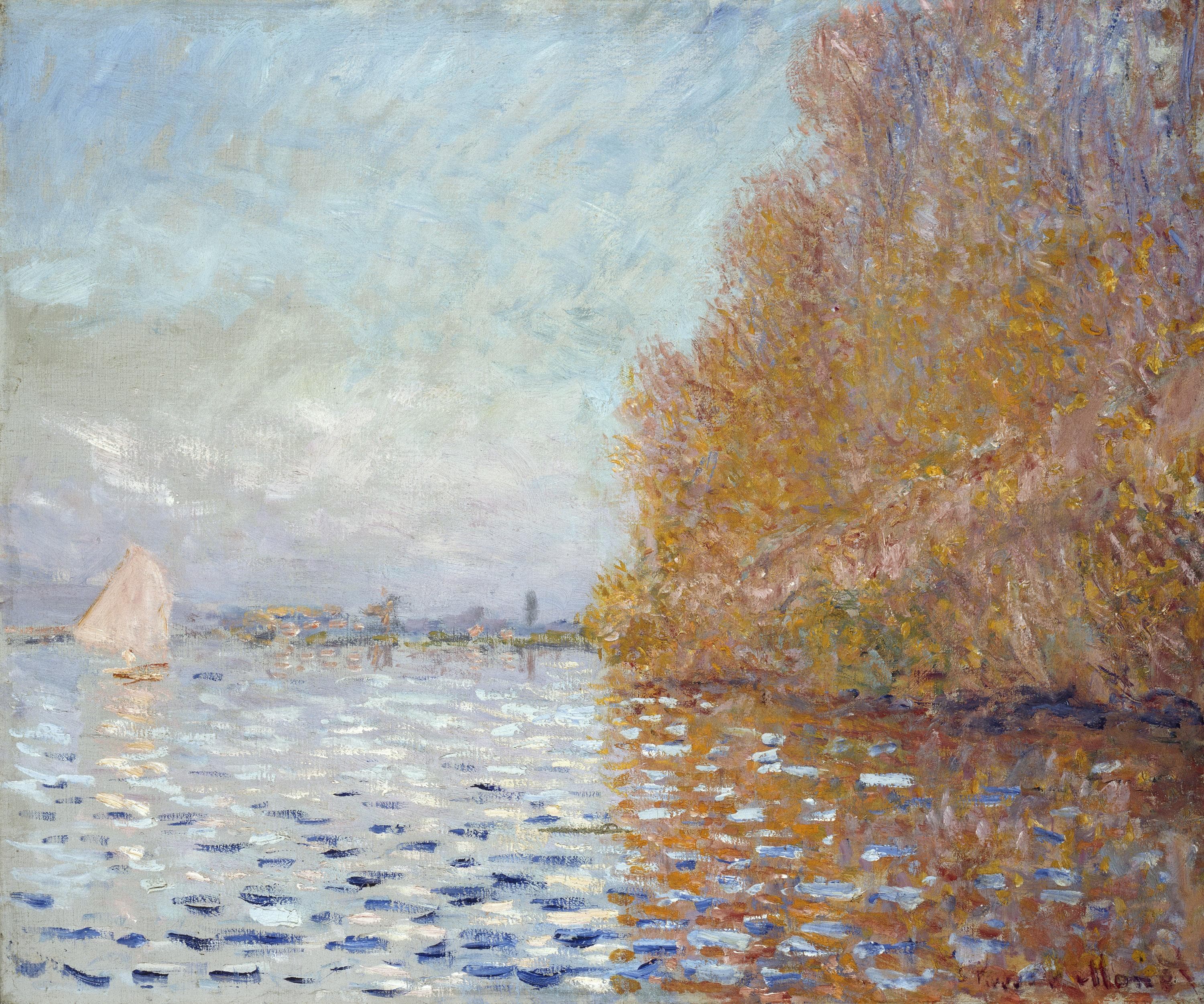
Argenteuil Basin with a Single Sailboat
Claude Monet · 1874
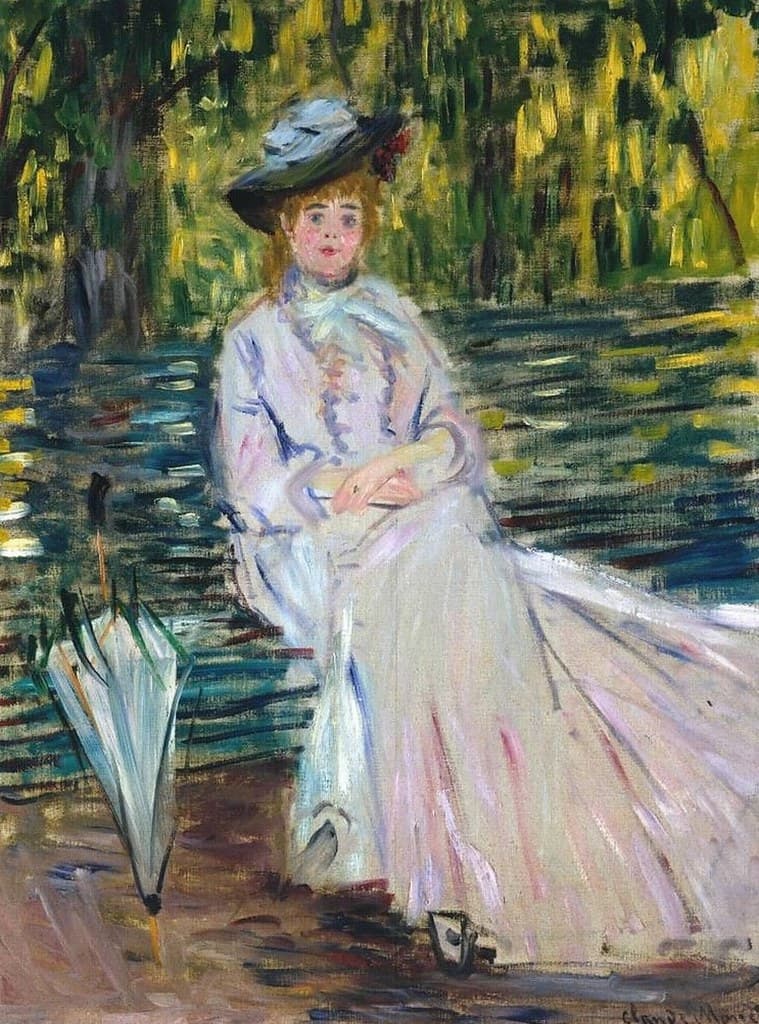
Woman Seated on a Bench
Claude Monet · c. 1874
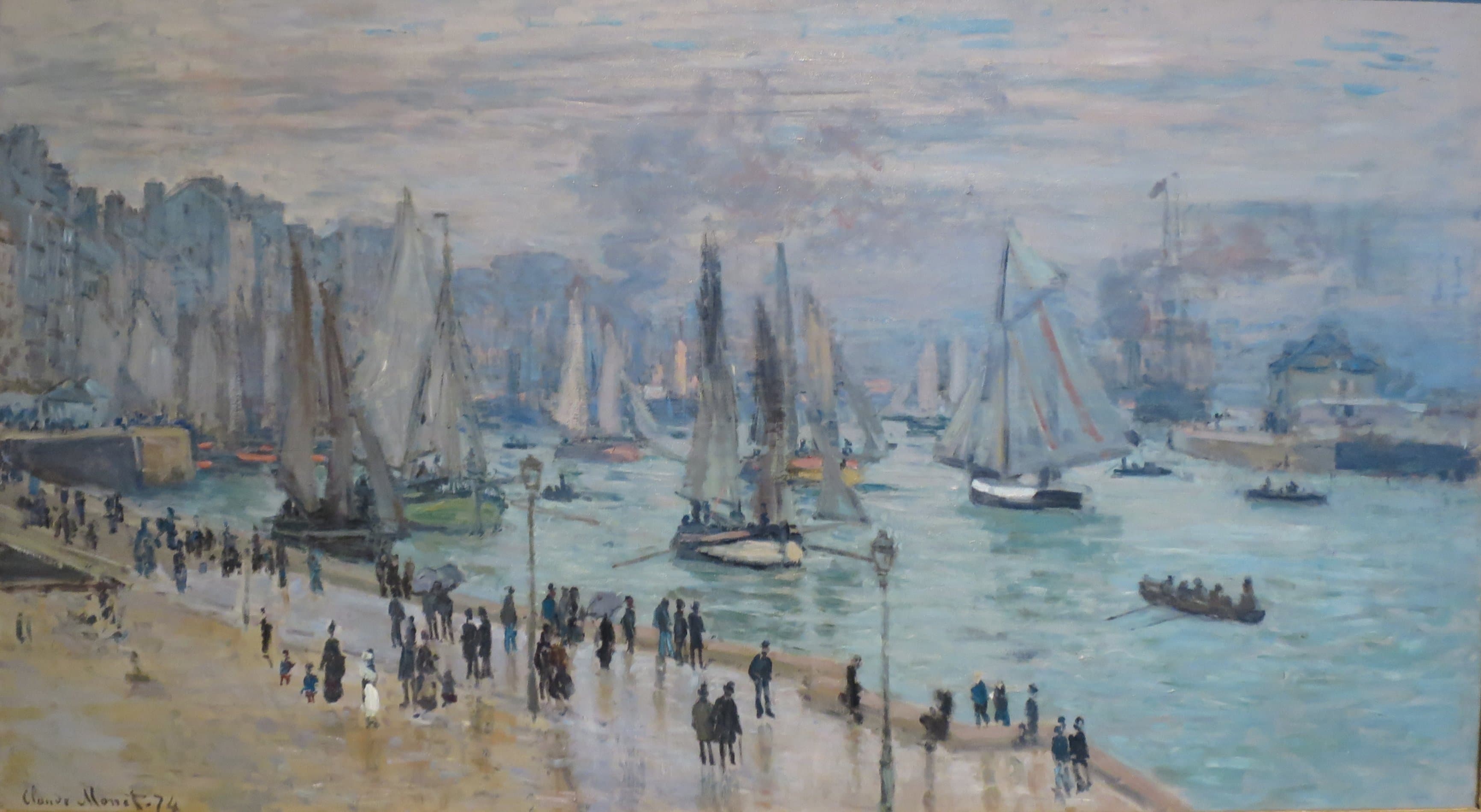
Fishing Boats Leaving the Harbor, Le Havre
Claude Monet · 1874
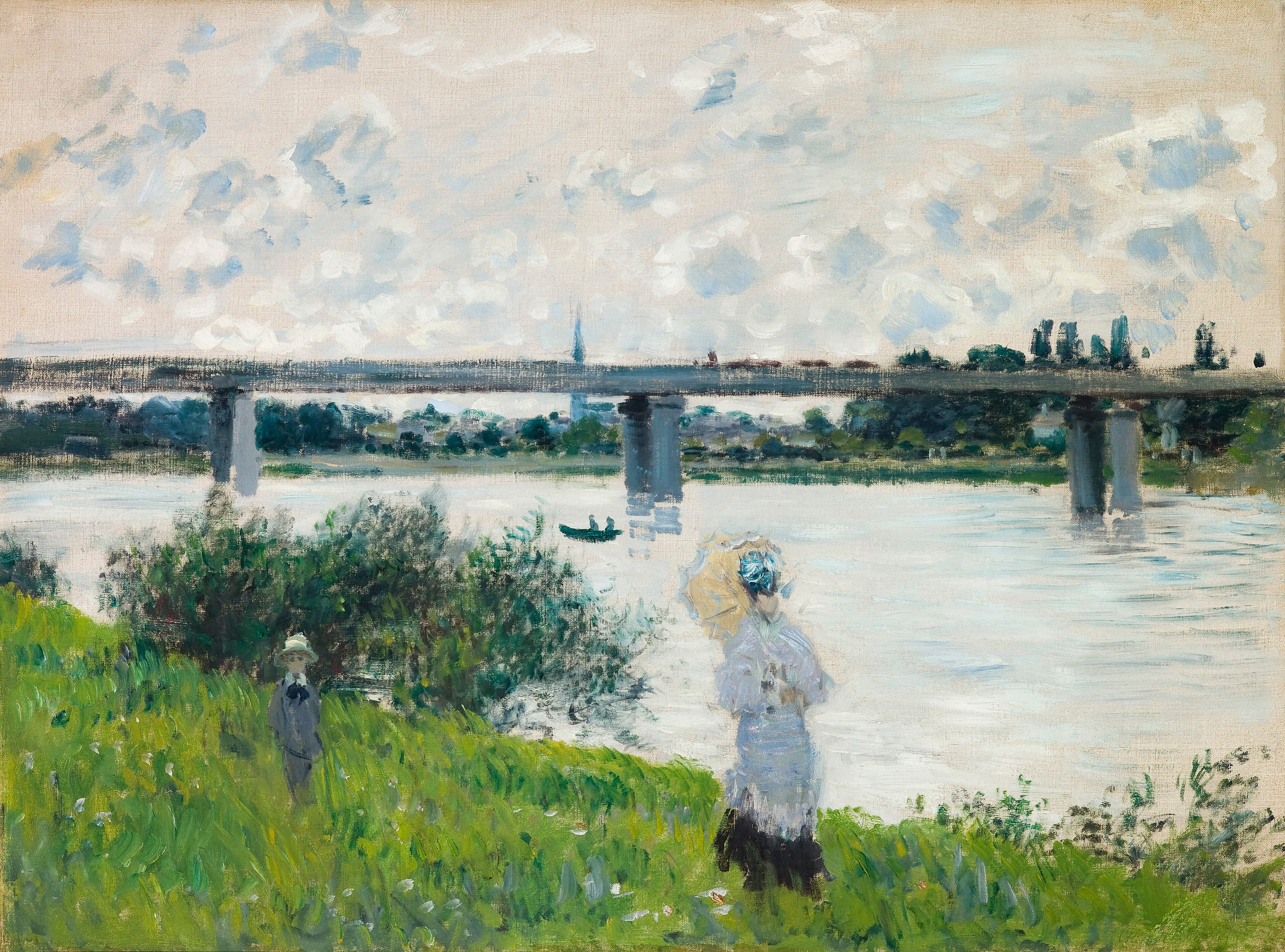
The Promenade with the Railroad Bridge, Argenteuil
Claude Monet · 1874
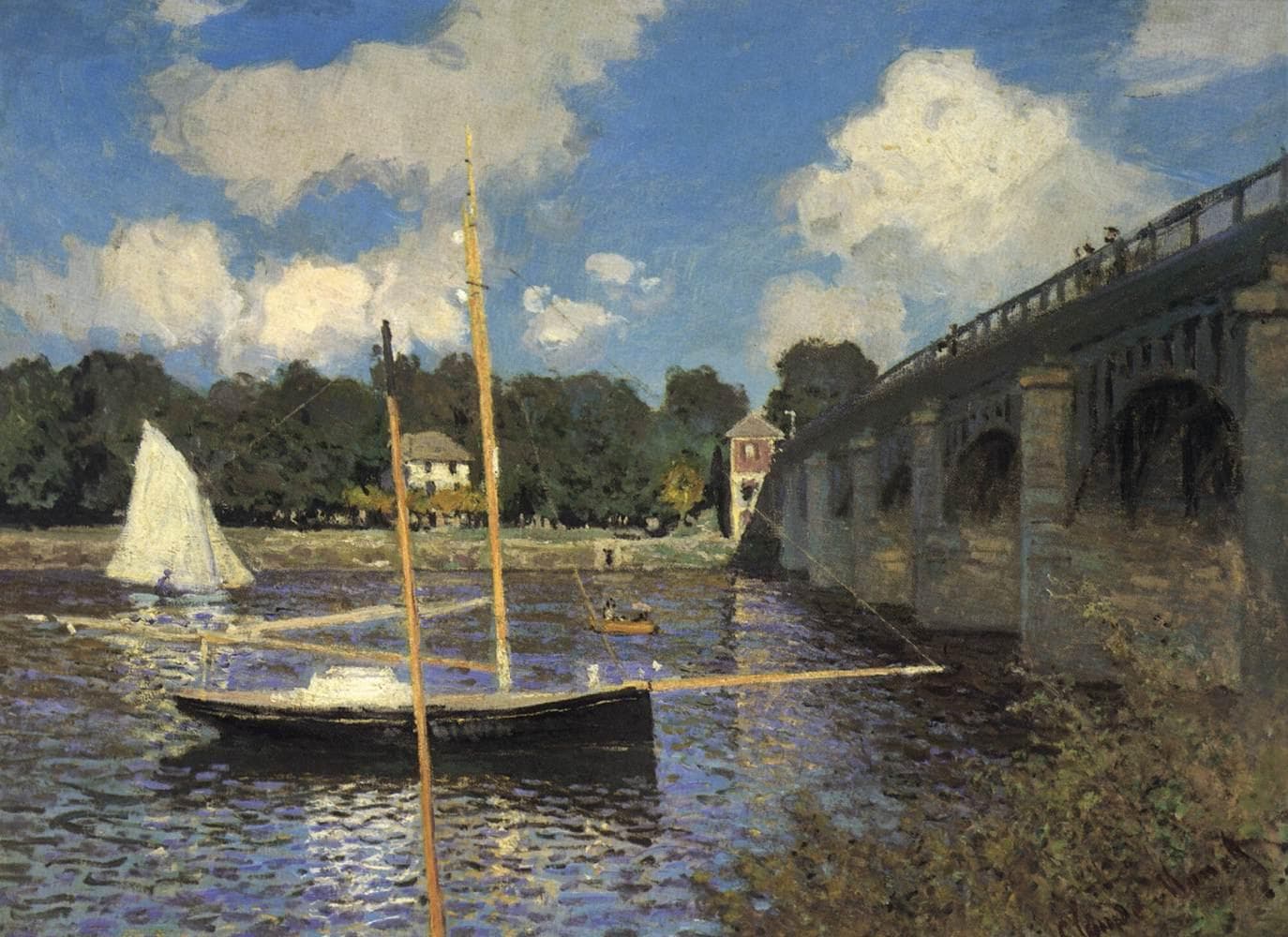
The Bridge at Argenteuil
Claude Monet · 1874
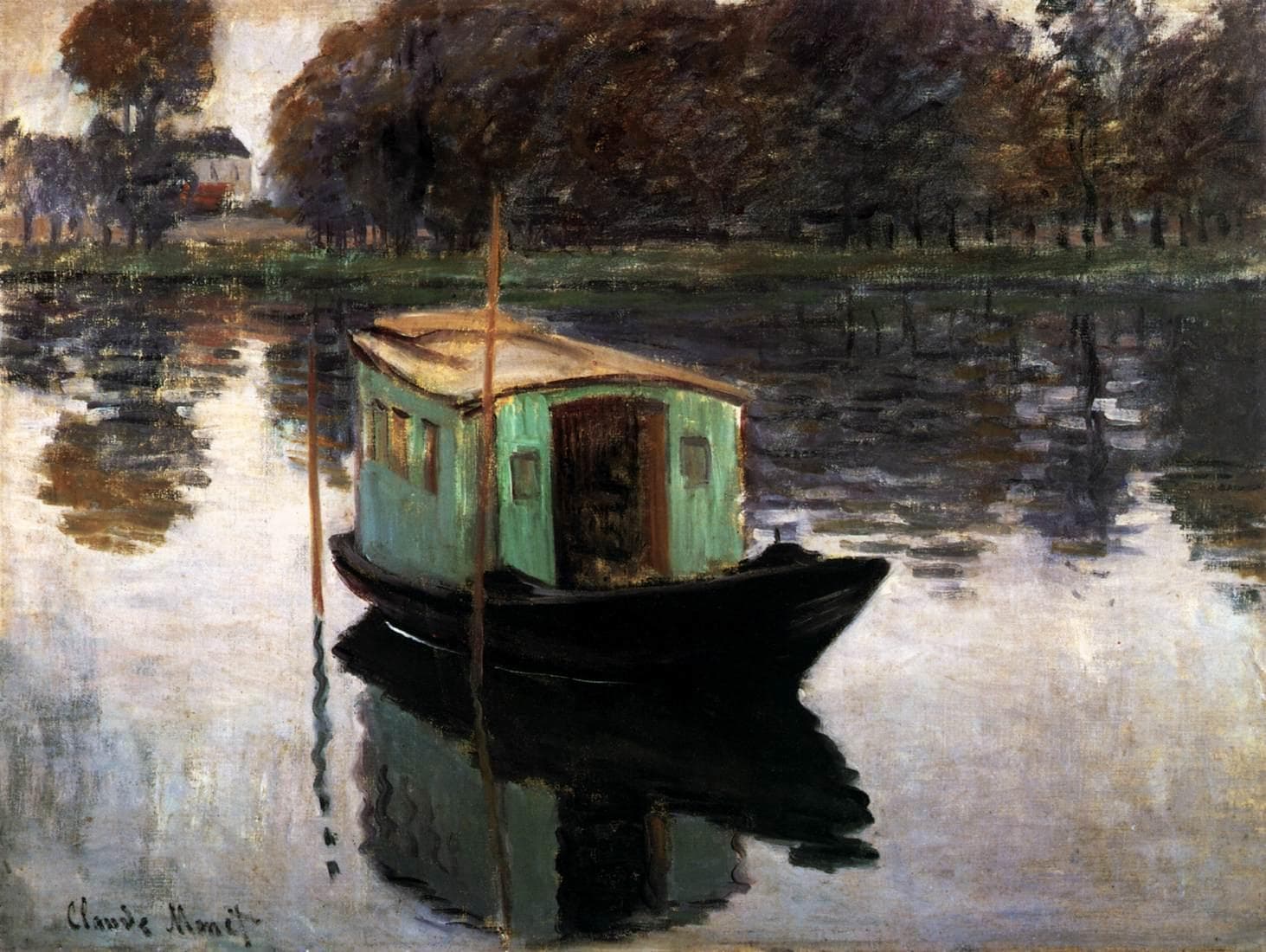
The Studio Boat
Claude Monet · 1874
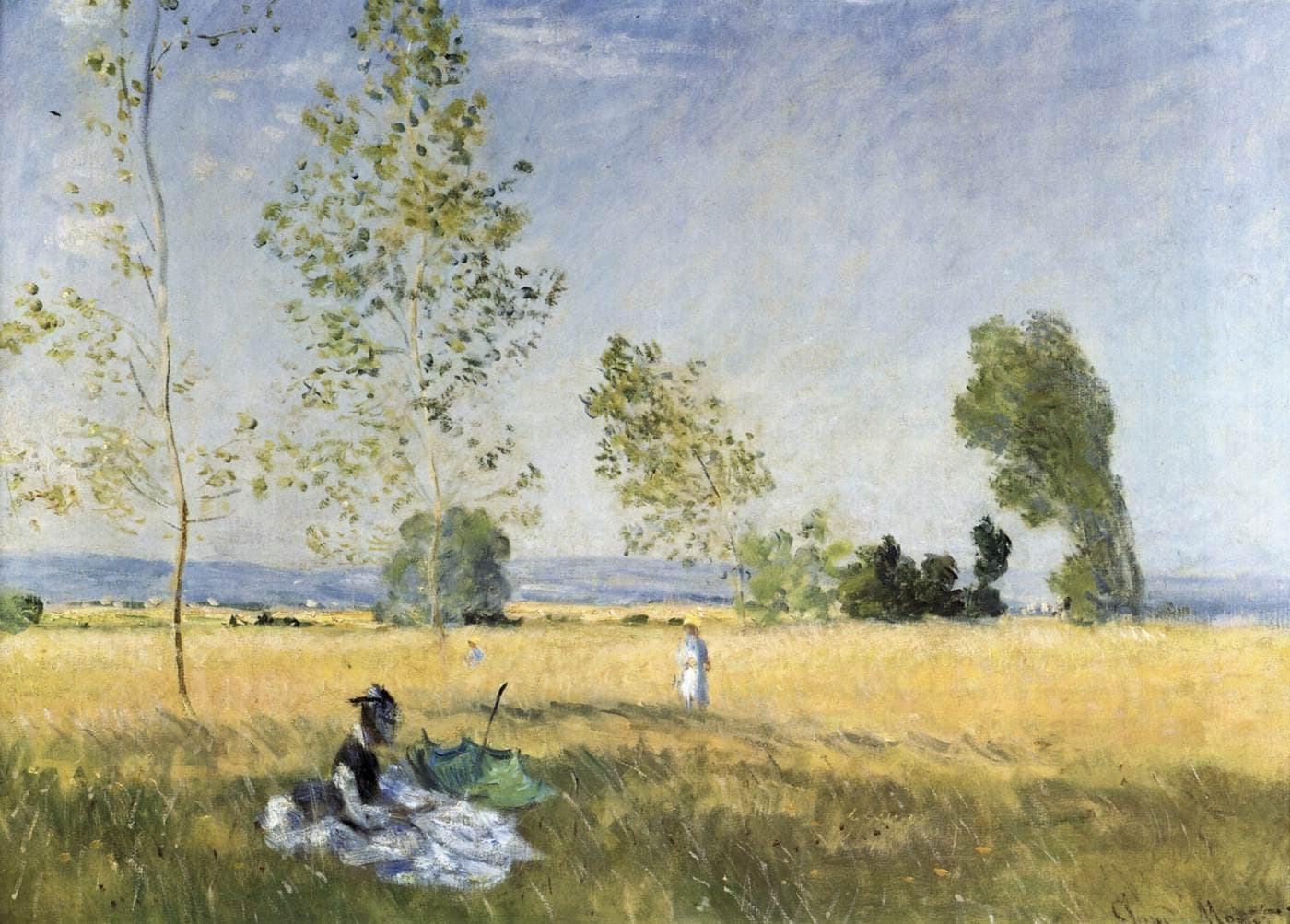
Summer (Meadow at Bezons)
Claude Monet · 1874
Kindred works
You may also study
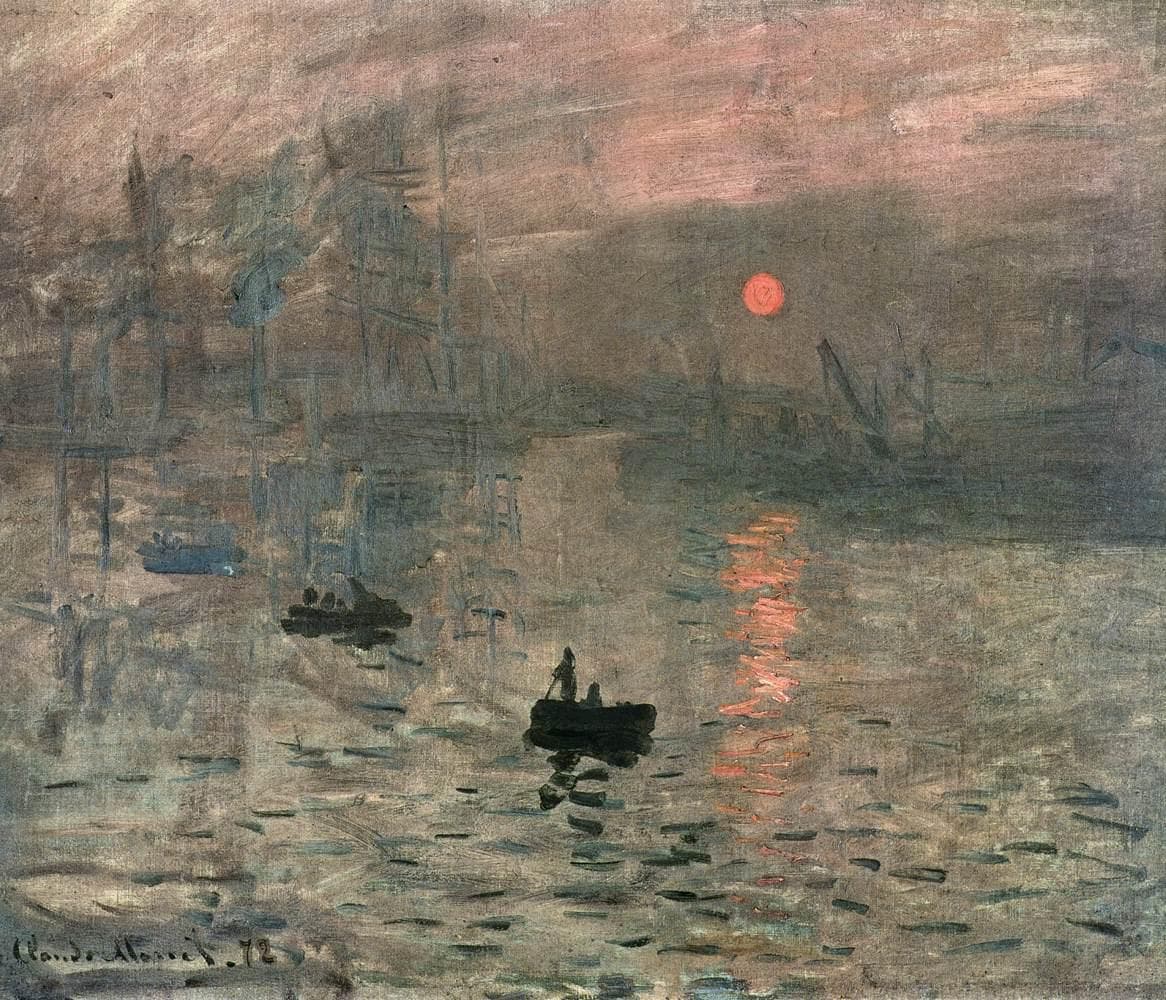
Impression, Sunrise
Claude Monet · 1872
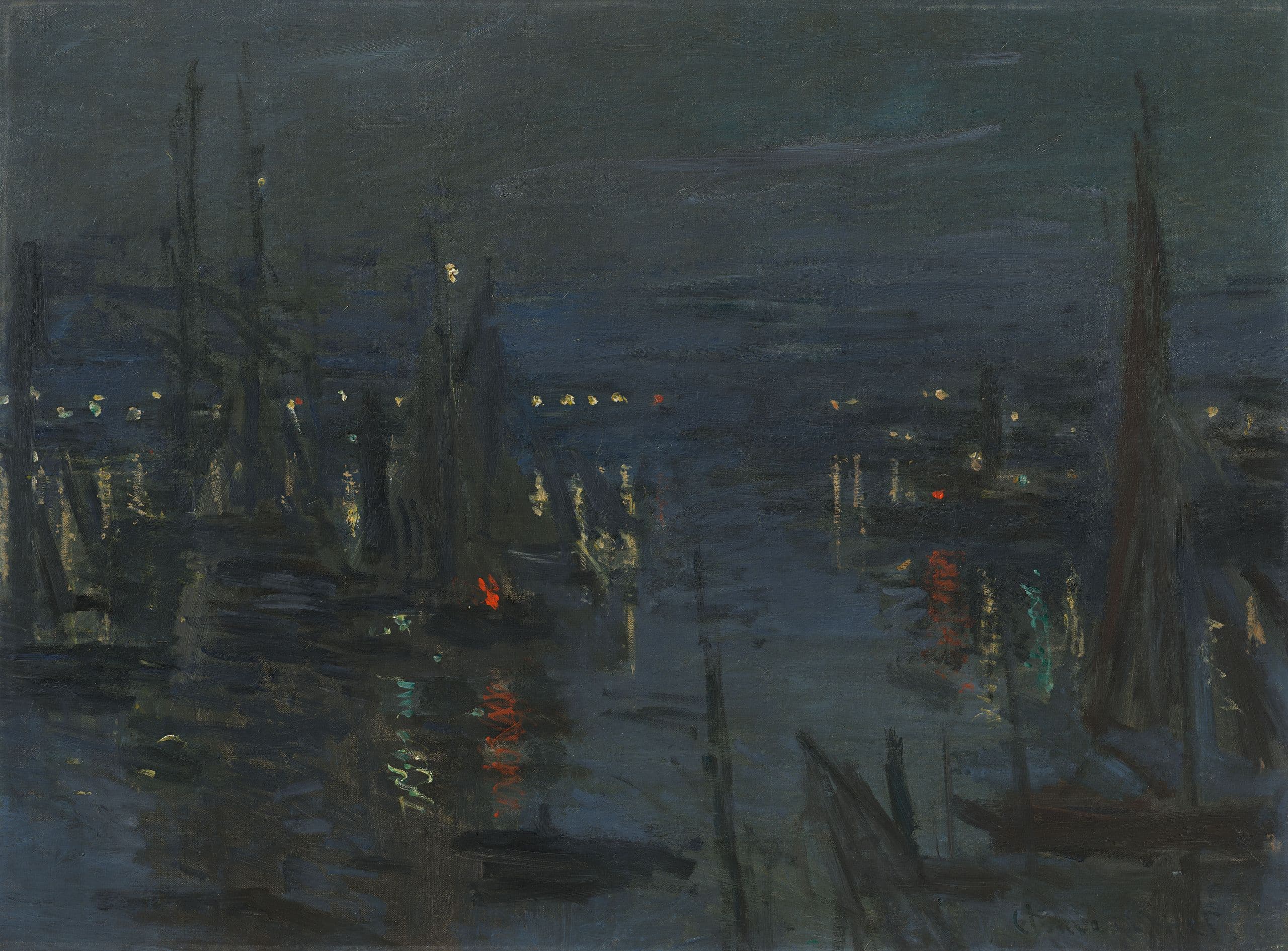
The Port of Le Havre, Night Effect
Claude Monet · 1872
Fishing Boats Leaving the Harbor, Le Havre
Claude Monet · 1874
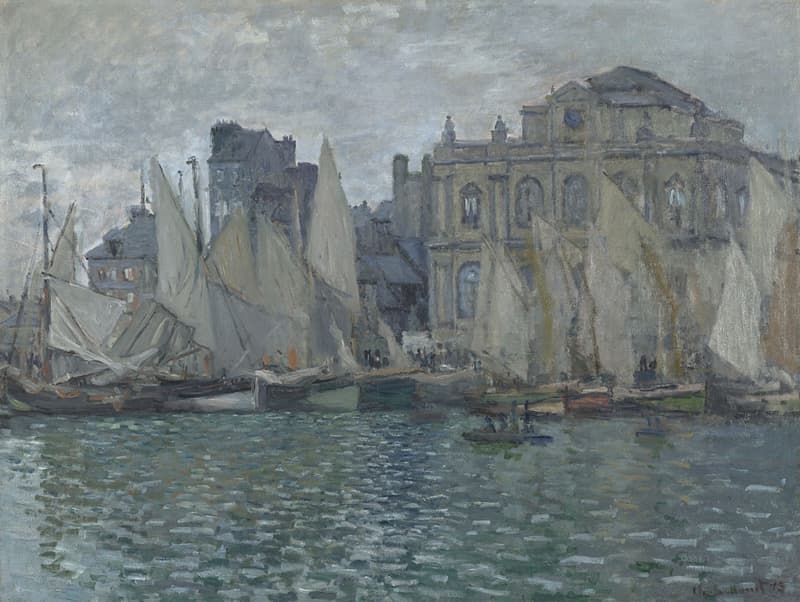
The Museum at Le Havre
Claude Monet · 1873
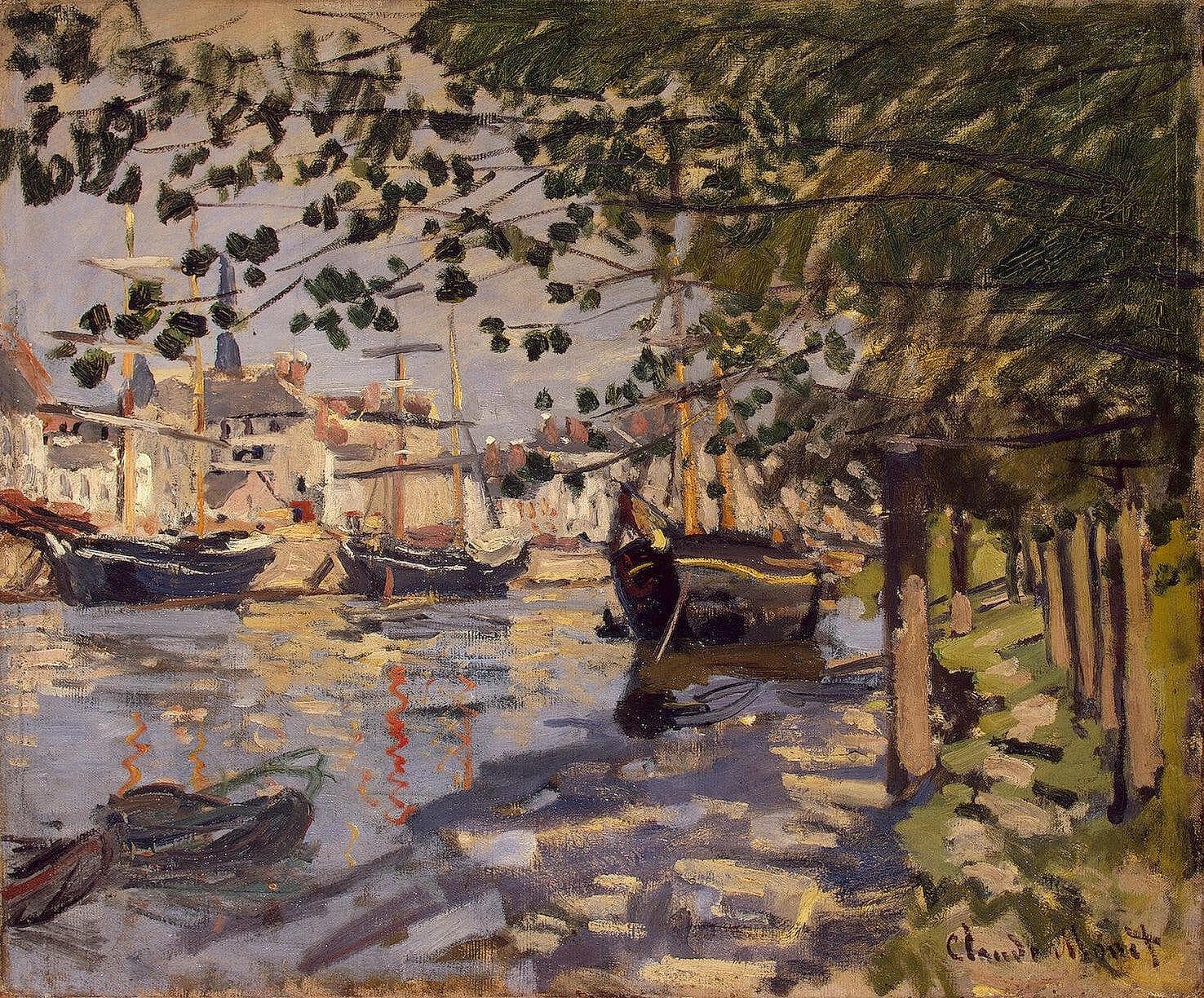
The Seine at Rouen
Claude Monet · 1872

Ophelia
John Everett Millais · 1851–52

The Great Wave off Kanagawa
Katsushika Hokusai · c. 1830–32
The Birth of Venus
Sandro Botticelli · c. 1484–1486