Image: State Hermitage Museum, Saint Petersburg; photograph by a Wikimedia Commons contributor · Public domain · via Wikimedia Commons
Impressionism
Steep Cliffs near Dieppe
Claude Monet, 1897
Steep Cliffs near Dieppe (Falaises près de Dieppe) is an 1897 painting by Claude Monet of the chalk cliffs near Pourville under an overcast evening sky, in pinks and mauves. It is in the State Hermitage Museum, Saint Petersburg.
- Artist
- Claude Monet
- Date
- 1897
- Medium
- Oil on canvas
- Dimensions
- 65 × 100.5 cm
- Collection
- State Hermitage Museum, Saint Petersburg, Russia
- Movement
- Impressionism
- Catalogue
- Wildenstein 1467
Painted at Étretat and the Normandy Coast
What you are looking at
From high on a clifftop we look along the Normandy coast. In the lower right foreground a great rounded mass of cliff, covered in grass and scrub, drops steeply toward the sea; behind it a second headland steps down, and beyond that a long, pale promontory reaches out into the water in the distance. On the left the sea is a wide, flat expanse of milky grey-blue, scattered with a few tiny flecks that may be boats or gulls. The sky is overcast, a soft layer of grey cloud warmed with pink and yellow toward the horizon.
The palette is narrow and delicate: mauve, rose, grey-green and lilac on the cliffs, pearl and blue in the sea and sky. The light is that of a dull late afternoon or evening, when the sun is behind cloud and colors flatten into a single tone.
The detail most people miss is the shape of the composition. The cliffs are pushed into the lower right corner and cut by the frame, and their dark mass is balanced against a huge, almost empty space of sea and sky. It is an arrangement Monet learned from Japanese prints and used throughout his coast paintings.
Where and when it was painted
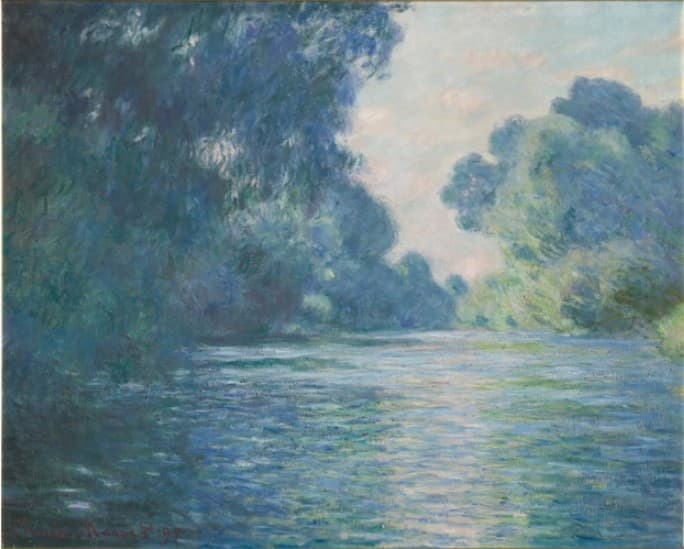
In the winter of 1896–97 Monet returned to the coast west of Dieppe, where he had worked in 1882. He arrived at Pourville in mid-January 1897 and was still there in early April, painting the cliffs and the gorges that cut through them in many states of weather. In early April he wrote to his dealer Paul Durand-Ruel that he was working hard despite bad weather. Like the Mornings on the Seine he painted the same year, the cliff pictures of 1897 return to motifs of his past but treat them more softly, as studies in atmosphere.
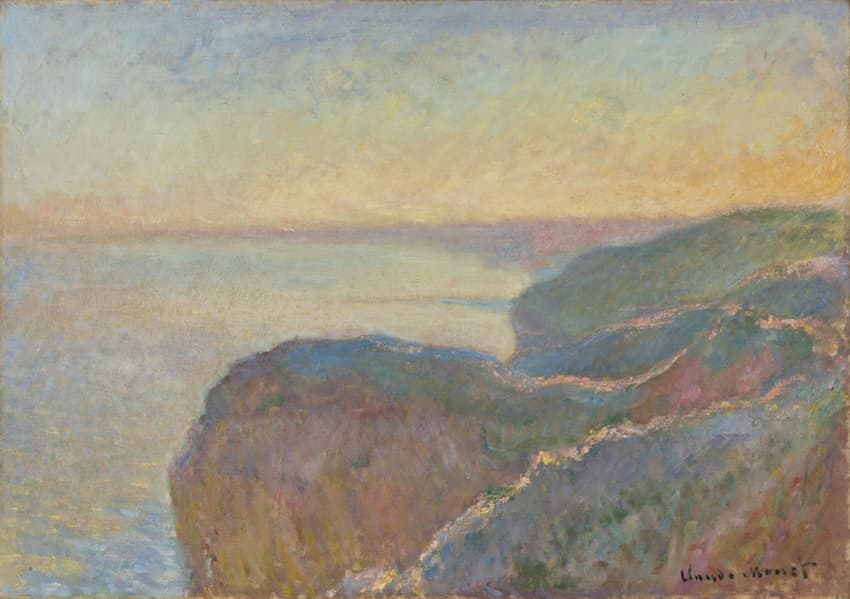
A closely related canvas from the same campaign, Sur la falaise de Dieppe, entered the Musée d'Orsay in 2023. For his first Dieppe and Pourville pictures of 1882, compare Cliffs near Dieppe in Zurich and Cliff Walk at Pourville in Chicago. For the coast as a whole, see Étretat and the Normandy coast.
How it was painted
The canvas is wide, 65 by 100.5 centimeters, a format that stretches the view along the coast. Monet built the cliffs with layers of small, dense strokes in close-valued colors, so that the slope seems covered in a soft pelt of grass. The sea and sky are thinner and smoother, the two almost merging at the horizon. Signed and dated at lower right, the picture has the uniform, enveloping tonality of his work of the later 1890s. A drawing of a similar view is in the Musée Marmottan Monet in Paris.
Compared with the vivid, windy cliffs of 1882, the 1897 pictures are quieter and more decorative. The subject is less the geology of the coast than a single, unified mood of light, and that interest links them directly to the Arm of the Seine near Giverny series painted that summer.
The return to Pourville had a personal side too. Monet had first worked there in 1882 with Alice Hoschedé and the children, and coming back fifteen years later, now an established and prosperous painter, he revisited the same paths and viewpoints. He wrote to Alice almost daily, and his letters track the weather, the light and his frustration with both.
Ownership and where to see it
The painting was exhibited with other Normandy landscapes at the Galerie Georges Petit in Paris in 1898. Durand-Ruel acquired it in 1901 and sold it in 1903 to the Moscow collector Sergei Shchukin. After the revolution his collection passed to the State Museum of New Western Art in Moscow, and in 1948, when that museum was closed, this picture went to the Hermitage (inventory ГЭ-8992). It was lent to the Fondation Louis Vuitton in Paris for the Shchukin exhibition of 2016–17. See where to see Monet's paintings and the Claude Monet page.
Questions & answers
Where is Monet's Steep Cliffs near Dieppe?
It is in the State Hermitage Museum in Saint Petersburg (inventory ГЭ-8992). It came from the collection of Sergei Shchukin by way of the State Museum of New Western Art in Moscow, and reached the Hermitage in 1948. It measures 65 by 100.5 centimeters.
When and where was Steep Cliffs near Dieppe painted?
In 1897, during Monet's stay at Pourville, west of Dieppe on the Normandy coast, from mid-January to at least early April 1897. He had first painted the same cliffs in 1882.
What does Steep Cliffs near Dieppe show?
Grassy chalk cliffs in the lower right foreground dropping to a pale, flat sea, with headlands receding along the coast under an overcast sky tinged with pink. The palette is limited to mauves, roses, greys and blues.
Are there other versions of this view?
Yes. Monet painted the cliffs near Dieppe many times in 1897. A closely related canvas, Sur la falaise de Dieppe, entered the Musée d'Orsay in 2023, and a drawing of a similar view is in the Musée Marmottan Monet.
More by the artist
Claude Monet

Bridge over a Pond of Water Lilies
Claude Monet · 1899

Woman with a Parasol – Madame Monet and Her Son
Claude Monet · 1875

Sunset in Venice
Claude Monet · 1908–12

La Grenouillère
Claude Monet · 1869

Beach in Pourville
Claude Monet · 1882

Springtime
Claude Monet · 1872

Boating on the River Epte
Claude Monet · 1890

The Seine at Asnières (Hermitage)
Claude Monet · 1873
Also painted in 1897
The same year
Kindred works
You may also study
Sur la falaise de Dieppe
Claude Monet · 1897
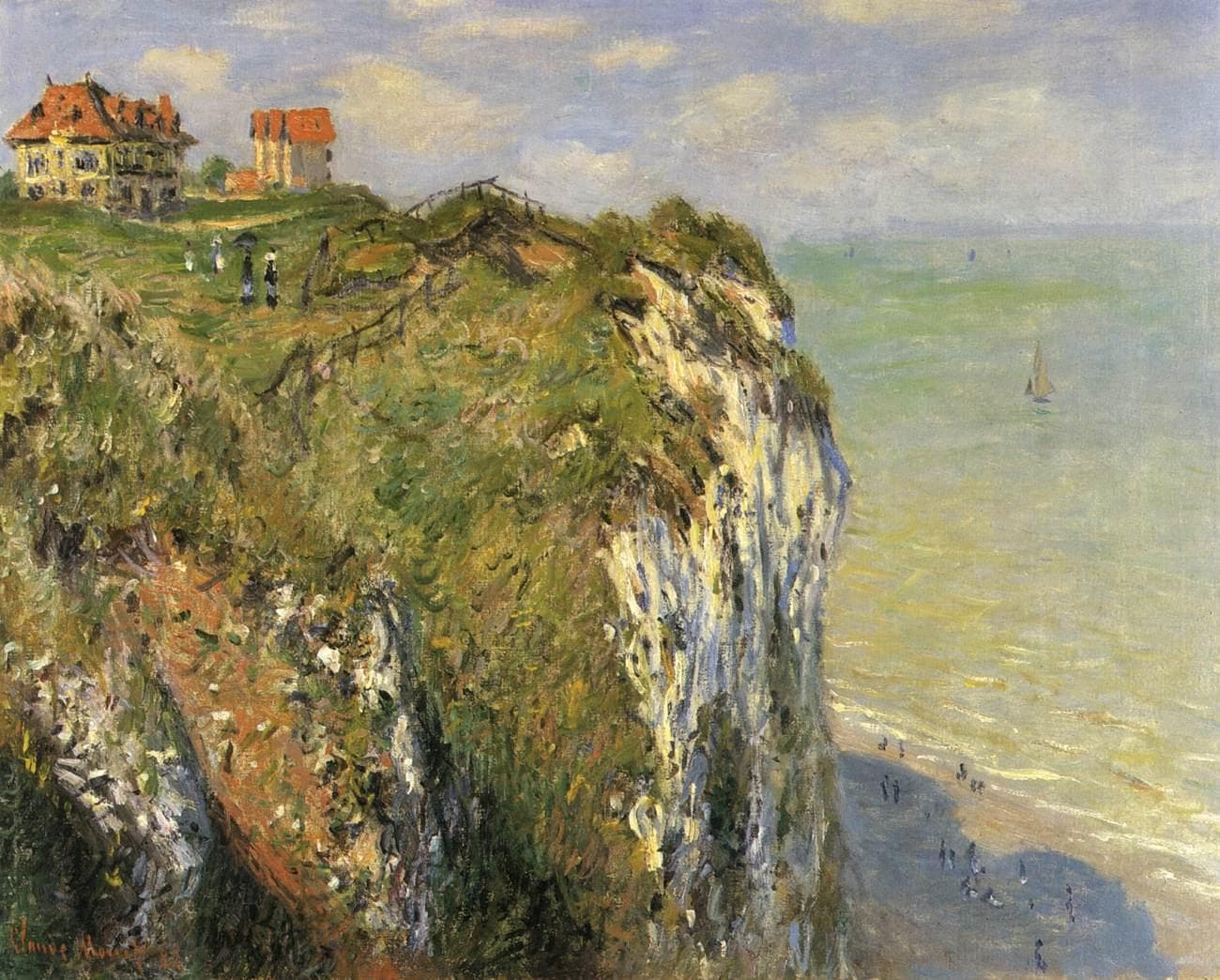
Cliffs near Dieppe
Claude Monet · 1882
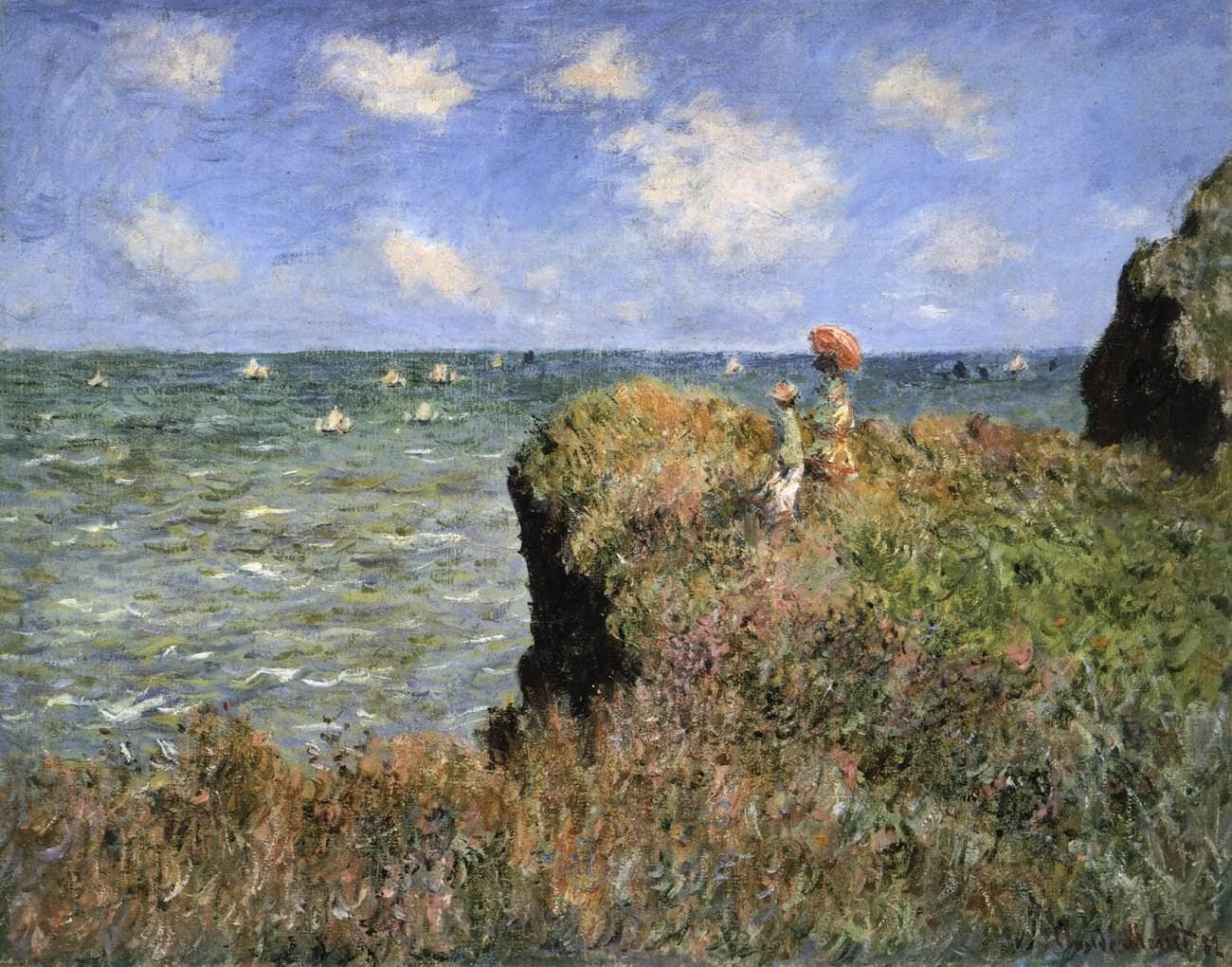
Cliff Walk at Pourville
Claude Monet · 1882
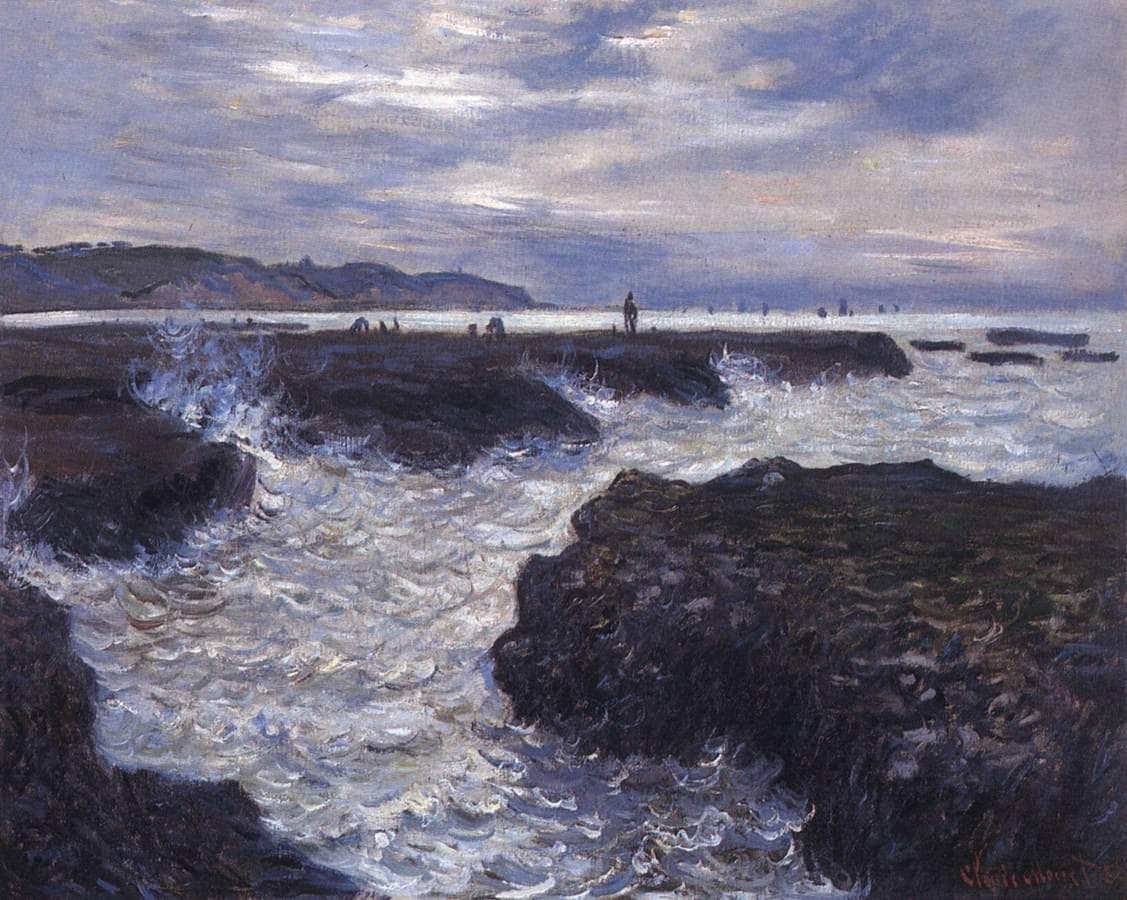
The Rocks at Pourville, Low Tide
Claude Monet · 1882

The Scream
Edvard Munch · 1893

Ophelia
John Everett Millais · 1851–52

The Great Wave off Kanagawa
Katsushika Hokusai · c. 1830–32
The Birth of Venus
Sandro Botticelli · c. 1484–1486