Image: Musée d'Orsay, Paris · Public domain · via Wikimedia Commons
Impressionism
Sur la falaise de Dieppe
Claude Monet, 1897
Sur la falaise de Dieppe (On the Cliff at Dieppe) is an 1897 painting by Claude Monet of the chalk cliffs near Dieppe above a sea glowing in low golden light. Long in private hands, it entered the Musée d'Orsay, Paris, in 2023.
- Artist
- Claude Monet
- Date
- 1897
- Medium
- Oil on canvas
- Dimensions
- 65 × 92 cm
- Collection
- Musée d'Orsay, Paris, France
- Movement
- Impressionism
Painted at Étretat and the Normandy Coast
What you are looking at
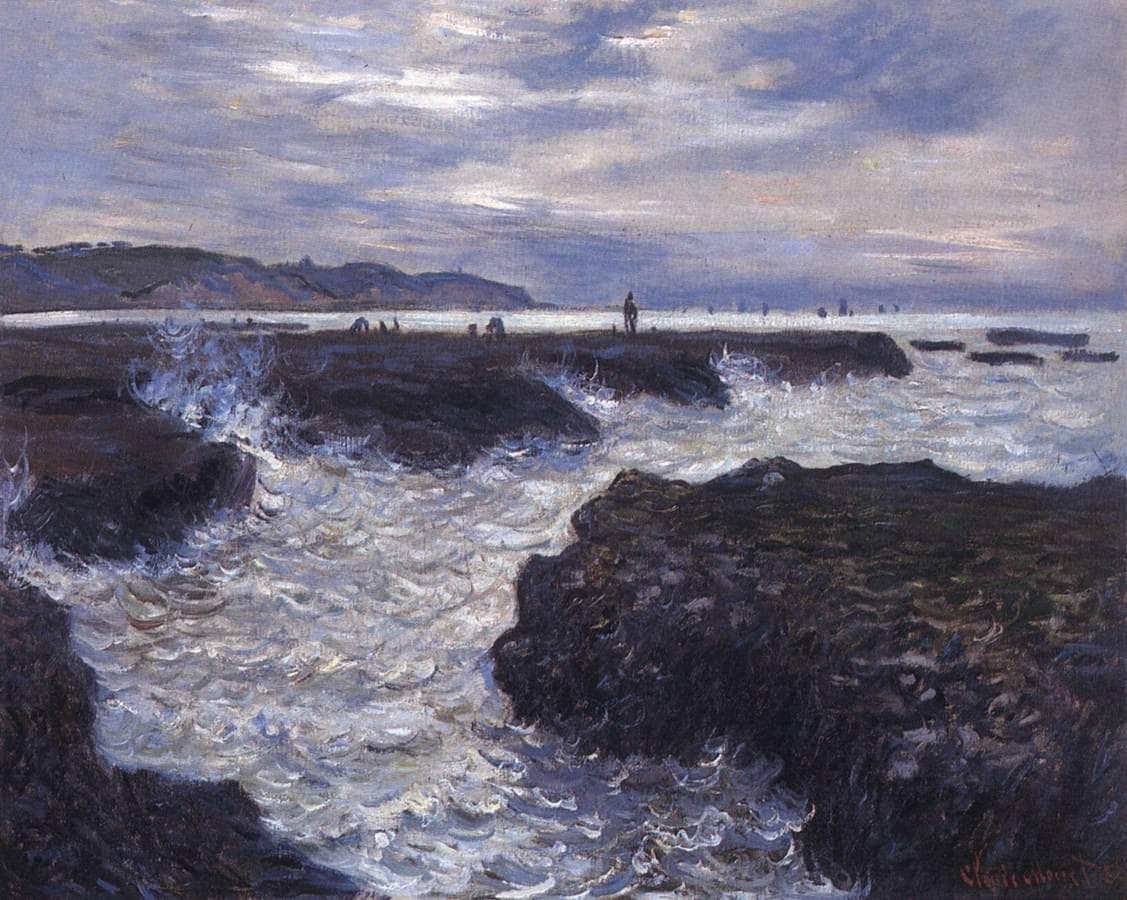
We stand high on the cliffs and look west along the coast. In the lower right corner a great rounded headland, covered in grass, drops steeply out of the picture; behind it a second shoulder of cliff steps down, and beyond it the coastline reaches out in a long, low promontory toward the horizon. On the left, below us, the sea spreads out wide and calm, catching the light of a low sun in a broad path of pale yellow and lilac. The sky is a warm haze of cream, peach and pink, with a few soft streaks of cloud.
The light is the whole subject. The edges of the cliffs, where they turn toward the sun, are touched with thin lines of gold and orange, as if the grass were lit from behind. The shaded faces are green, violet and blue. The far headland is almost the same color as the sky.
The detail that rewards close looking is the line of light running along the top of the near cliff. It is a few dragged strokes of orange laid over the green, and it is what turns a mass of grass into a ridge catching the evening sun.
There is no figure, boat or building in sight. Monet, who in 1882 often put a customs cottage, a walker or a sail into his Pourville views, now leaves the coast empty, so nothing distracts from the slow change of light over cliff and water.
Where and when it was painted
In January 1897 Monet went back to Pourville, the small resort just west of Dieppe on the Normandy coast where he had worked in 1882, and stayed until the spring. He painted the cliffs, the gorges and the sea again and again, in grey weather, in fog and in sunshine. Like the dawn pictures of the Seine he made at Giverny the following summer, such as Arm of the Seine near Giverny, the 1897 coast pictures turn away from drama toward a single unified tone of light.
This canvas is closely related to Steep Cliffs near Dieppe in the Hermitage, which shows almost the same view under an overcast sky. Placed side by side, the two pictures show what changing light does to a fixed motif, the principle of Monet's series. For his first Pourville pictures of 1882, compare Cliffs near Dieppe in Zurich and Cliff Walk at Pourville. For the whole coast, see Étretat and the Normandy coast.
How it was painted
The canvas is 65 by 92 centimeters, a standard horizontal size. Monet laid in the sea and sky in thin, closely related tints and built up the cliffs in many small, dense strokes, giving them a soft, furry texture against the smooth water. The composition, with the dark mass of cliff pushed into one corner and a vast empty field of sea, recalls the Japanese prints of coastlines by Hiroshige and Hokusai that Monet collected and hung in his house at Giverny.
The palette is high-keyed and narrow, nearly all yellows, pinks, lilacs and greens, with no true dark anywhere. That tonal unity is typical of Monet's work around 1897 and looks forward to the London pictures he would begin in 1899, where fog and sun dissolve the city into a single color.
Ownership and where to see it
The painting was in private collections for more than a century. It entered the Musée d'Orsay in 2023 (inventory RF MO P 2023 1), one of the museum's most recent Monet acquisitions, and is one of very few pictures from the 1897 Pourville campaign in a French public collection. In the Orsay it joins earlier coast pictures such as The Beach at Étretat and The Rocks of Belle-Île, which makes it easy to trace how Monet's view of the sea softened over fifteen years. See Monet at the Musée d'Orsay and the Claude Monet page.
Questions & answers
Where is Monet's Sur la falaise de Dieppe?
It is in the Musée d'Orsay in Paris (inventory RF MO P 2023 1). After more than a century in private collections, it entered the museum in 2023. The canvas measures 65 by 92 centimeters.
When and where did Monet paint Sur la falaise de Dieppe?
In 1897, during a stay at Pourville, just west of Dieppe on the Normandy coast, from January into the spring. He had first painted the same cliffs in 1882.
What does Sur la falaise de Dieppe show?
Grassy chalk cliffs in the lower right foreground, rimmed with golden light, above a calm sea that reflects a low sun in pale yellow and lilac, with headlands receding into a warm, hazy sky.
Is there another version of this view?
Yes. Steep Cliffs near Dieppe, in the Hermitage in Saint Petersburg, shows almost the same view in 1897 under an overcast sky. Monet painted many views of these cliffs that year.
More by the artist
Claude Monet

Bridge over a Pond of Water Lilies
Claude Monet · 1899

Woman with a Parasol – Madame Monet and Her Son
Claude Monet · 1875

Sunset in Venice
Claude Monet · 1908–12

La Grenouillère
Claude Monet · 1869

Beach in Pourville
Claude Monet · 1882

Springtime
Claude Monet · 1872

Boating on the River Epte
Claude Monet · 1890

The Seine at Asnières (Hermitage)
Claude Monet · 1873
Also painted in 1897
The same year


Kindred works
You may also study
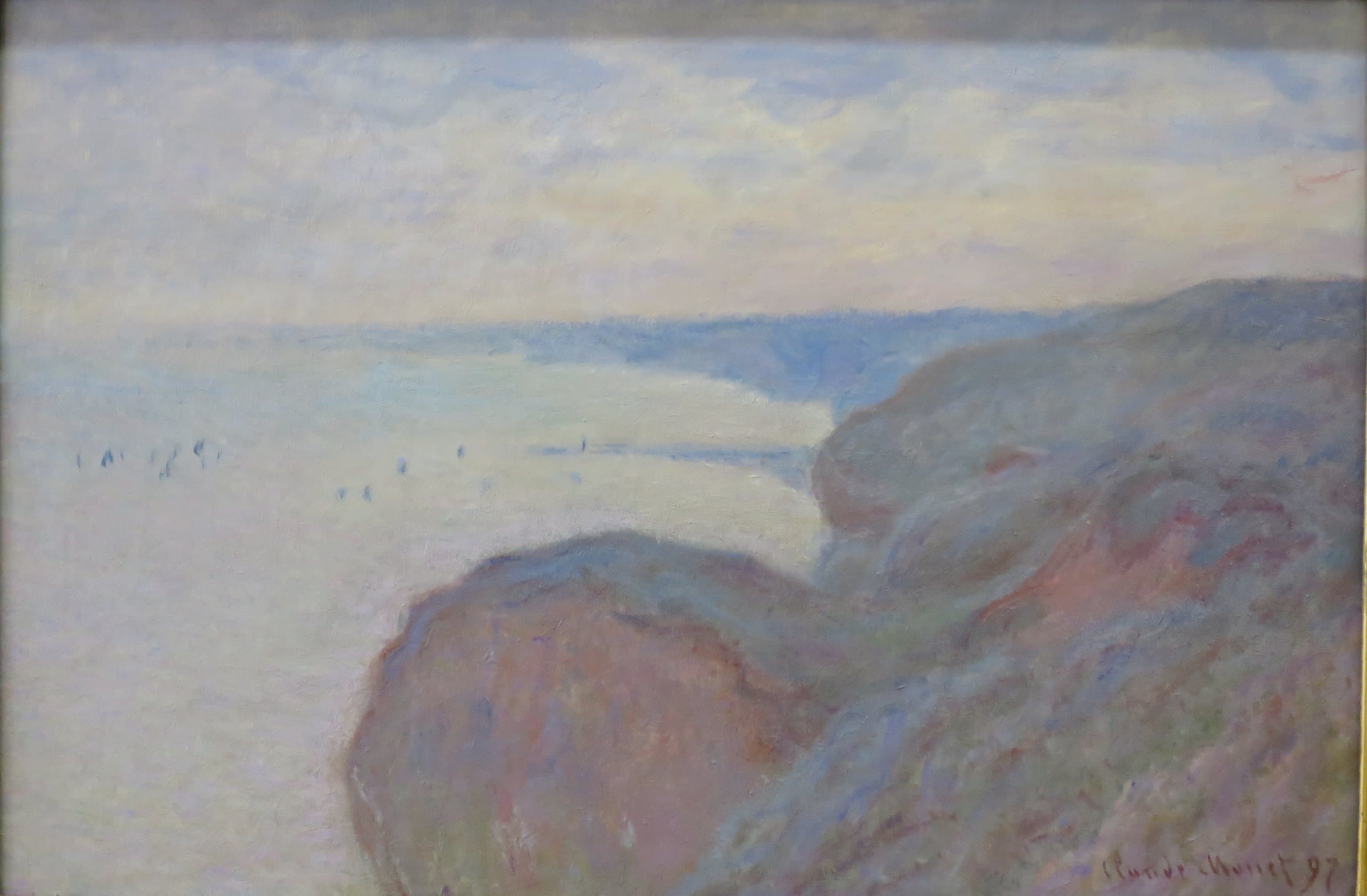
Steep Cliffs near Dieppe
Claude Monet · 1897
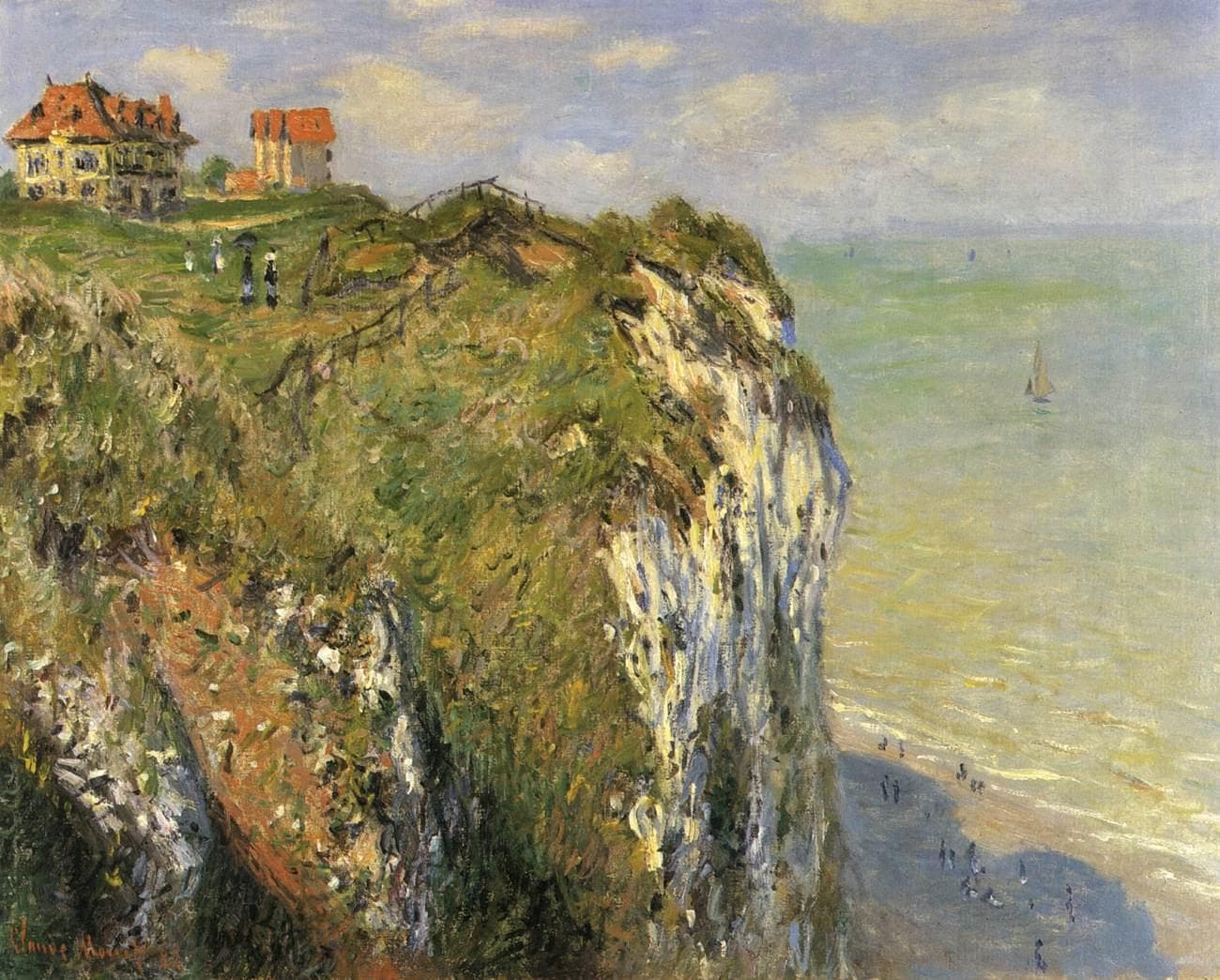
Cliffs near Dieppe
Claude Monet · 1882
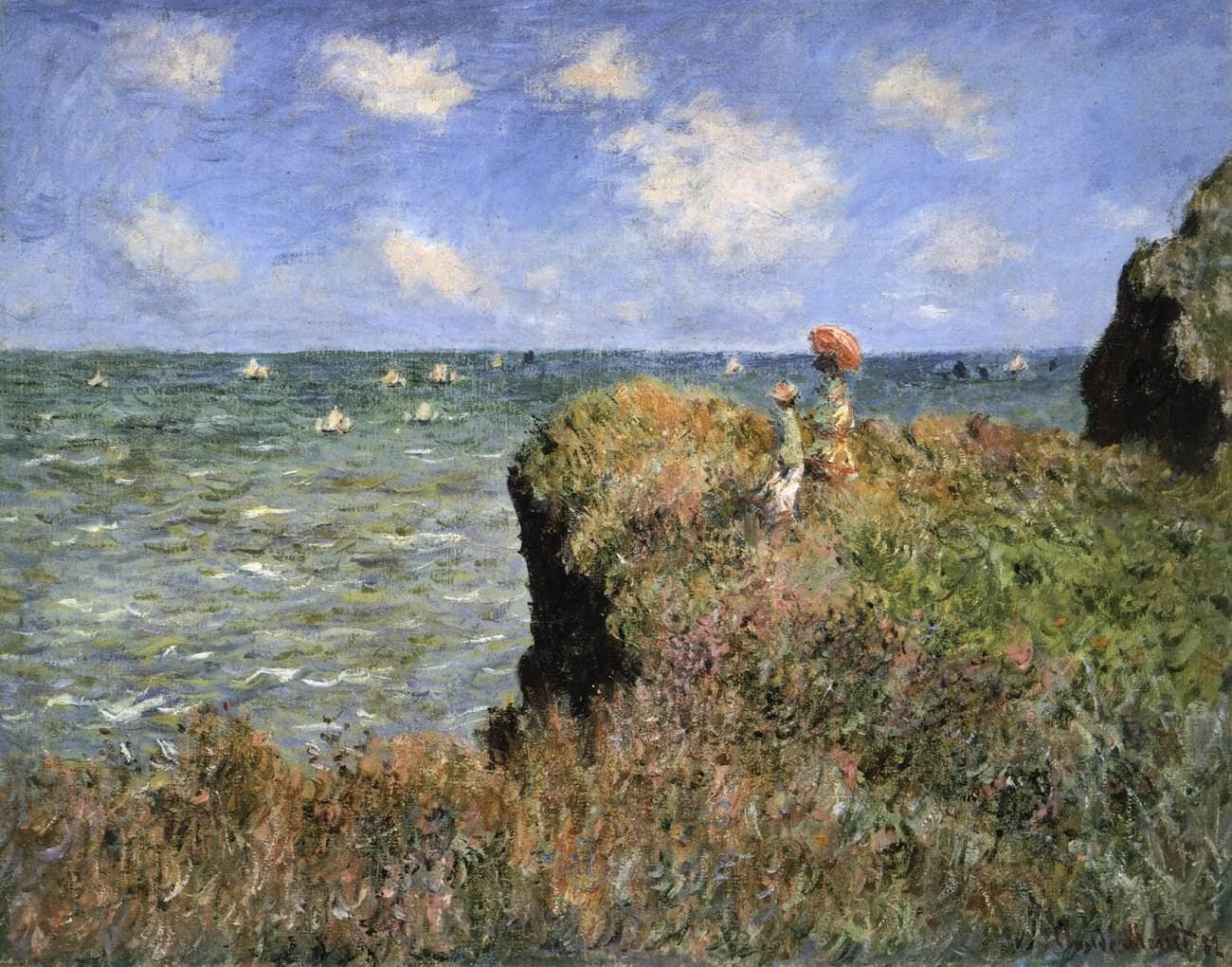
Cliff Walk at Pourville
Claude Monet · 1882
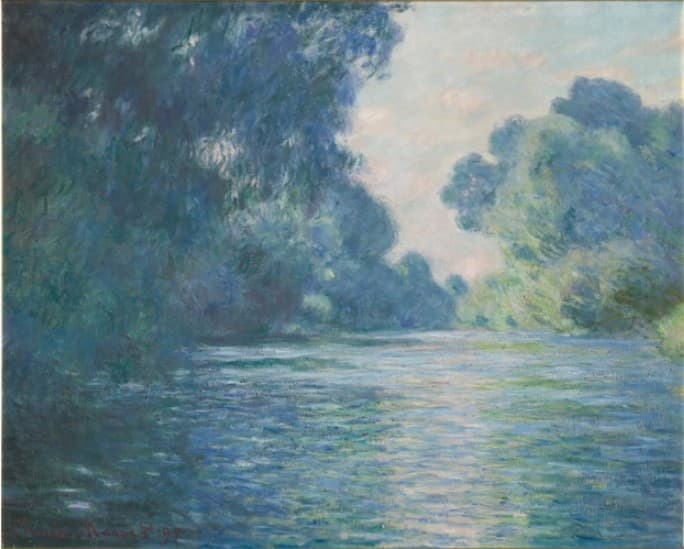
Arm of the Seine near Giverny
Claude Monet · 1897
The Rocks at Pourville, Low Tide
Claude Monet · 1882

The Scream
Edvard Munch · 1893

Ophelia
John Everett Millais · 1851–52

The Great Wave off Kanagawa
Katsushika Hokusai · c. 1830–32