Impressionism
Three Fishing Boats
Claude Monet, 1885
Three Fishing Boats is a painting by Claude Monet of 1885–86 showing three heavy wooden fishing boats hauled up on the shingle at Étretat, with a rough sea behind. It is in the Museum of Fine Arts, Budapest.
- Artist
- Claude Monet
- Date
- 1885
- Medium
- Oil on canvas
- Dimensions
- 73 × 92.5 cm
- Collection
- Museum of Fine Arts, Budapest, Budapest, Hungary
- Movement
- Impressionism
- Catalogue
- Wildenstein 1029
Painted at Étretat and the Normandy Coast
What you are looking at
Three big wooden fishing boats lie on the beach, hauled up out of the surf and propped at an angle on the stones. They fill the canvas almost edge to edge. The middle one is bright yellow-green with a black hull and a registration number painted on its bow; the others are black with yellow trim.
Long oars and spars lie across them and spill onto the shingle, and their masts lean out of the top of the picture. A dark post stands in the foreground, and rope trails from the bows. Behind them, a gray-green sea heaves up in curling waves edged with white foam.
We are standing very close, looking down at the boats as if we had just walked along the beach and stopped beside them. The light is flat and gray, the light of a windy autumn day.
Étretat, 1885
Étretat, a fishing village on the Normandy coast famous for its arches of white chalk, drew Claude Monet repeatedly in the 1880s. He spent the autumn of 1885 there, staying into December, painting the cliffs, the beach and the boats in all weathers. The local fishing boats, broad and heavy, were winched up the shingle when the sea was rough, and Monet painted them many times, in groups of two, three or more. The village and the rest of the coast are covered on our Étretat and the Normandy Coast page.
This canvas is catalogued by Wildenstein as W.1029 and is dated 1885 or 1886 in different sources. A close relative, Fishing Boats at Étretat (W.1028), with the same boats seen from a slightly different angle, is in the Seattle Art Museum.
How it was painted
What makes this picture unusual is how close Monet comes. He crops the boats on both sides and from above, so they fill the frame like figures in a group portrait. The hulls are drawn with long, confident strokes that follow their curves: the lip of a gunwale, the swell of a bow, the line of a keel resting on stones. Inside them, a jumble of oars, nets and gear is painted in quick strokes of brown and gray.
Notice the yellow. It appears on the middle boat, along the edge of the right-hand boat, on the trim of the far left one, and in long streaks on the beach where light catches the wet pebbles, so the color itself seems to hold the three together. Against it, the sea is cool and agitated, painted in swirling, choppy strokes of green, gray and white that tell us why the boats are out of the water.
The registration lettering on the bows, an F followed by a number, is the kind of detail most viewers miss. F was the mark of the Fécamp maritime district, which took in Étretat, and the numbers remind us that these are not props but the tools of a living fishery.
The Étretat boats and how this version differs
Monet painted the boats of Étretat from many distances. In Boats on the Beach at Étretat they line the shingle beneath the cliffs; in The Departure of the Boats, Étretat they put out to sea under sail. Here the cliffs, the sky and the horizon are all gone. The boats become almost still-life objects, monumental and slightly comic, their bows nosing together like animals.
This close, cropped design, with the motif filling the canvas, links the picture to the series of the following decade. Compare also the lone silhouette of Sailboat, Evening Effect, probably painted on the same stay, where a single boat floats in a field of color.
Where to see it
The painting is in the Museum of Fine Arts (Szépművészeti Múzeum), Budapest, inventory 436.B. Budapest's French holdings are smaller than those of Paris or the American museums, but this is one of their best-loved Impressionist canvases. For other collections with Monet's coastal pictures, see Where to See Monet's Paintings.
Questions & answers
Where is Monet's Three Fishing Boats?
It is in the Museum of Fine Arts (Szépművészeti Múzeum) in Budapest, Hungary (inventory 436.B). The canvas measures about 73 by 92.5 centimeters and is listed in the Wildenstein catalogue raisonné as W.1029. A related painting of the same boats is in the Seattle Art Museum.
Where and when was Three Fishing Boats painted?
On the shingle beach at Étretat on the Normandy coast, where Monet worked from October to December 1885. Sources date the canvas 1885 or 1886, since he may have finished some pictures from that stay in his studio at Giverny afterward.
What does the painting show?
Three heavy wooden fishing boats, yellow-green and black, hauled up on the stones and cropped close by the frame, with oars and spars piled across them and a rough gray-green sea behind. The boats were winched up the beach when the weather turned, exactly the conditions shown in the waves.
Did Monet paint other versions of the Étretat boats?
Yes, many. The closest is Fishing Boats at Étretat in the Seattle Art Museum, showing the same group. Others show boats drawn up below the cliffs or leaving the harbor under sail, in Chicago and elsewhere. This Budapest canvas is the most tightly cropped of them.
More by the artist
Claude Monet

Bridge over a Pond of Water Lilies
Claude Monet · 1899

Woman with a Parasol – Madame Monet and Her Son
Claude Monet · 1875

Sunset in Venice
Claude Monet · 1908–12

La Grenouillère
Claude Monet · 1869

Beach in Pourville
Claude Monet · 1882

Springtime
Claude Monet · 1872

Boating on the River Epte
Claude Monet · 1890

The Seine at Asnières (Hermitage)
Claude Monet · 1873
Also painted in 1885
The same year
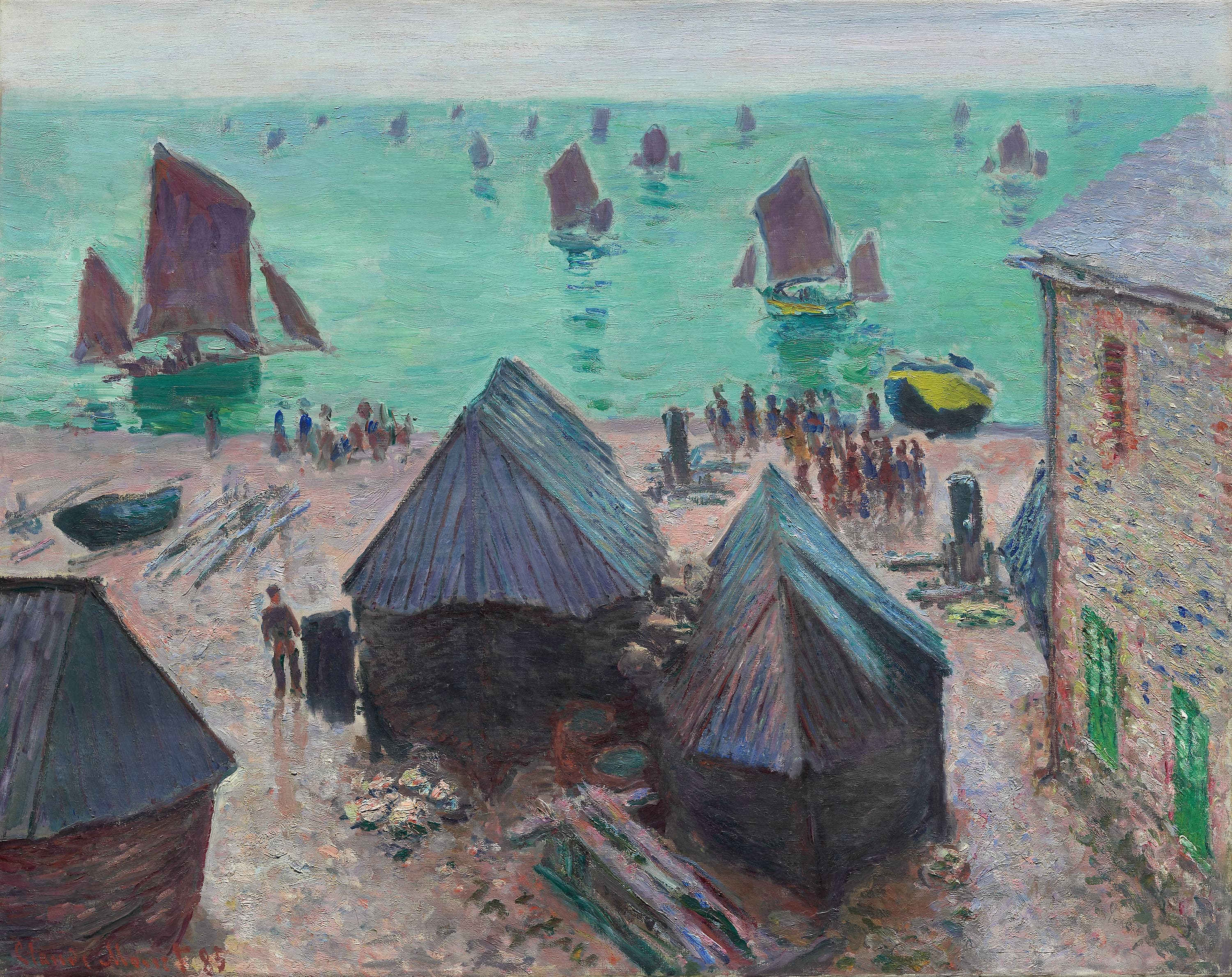
The Departure of the Boats, Étretat
Claude Monet · 1885
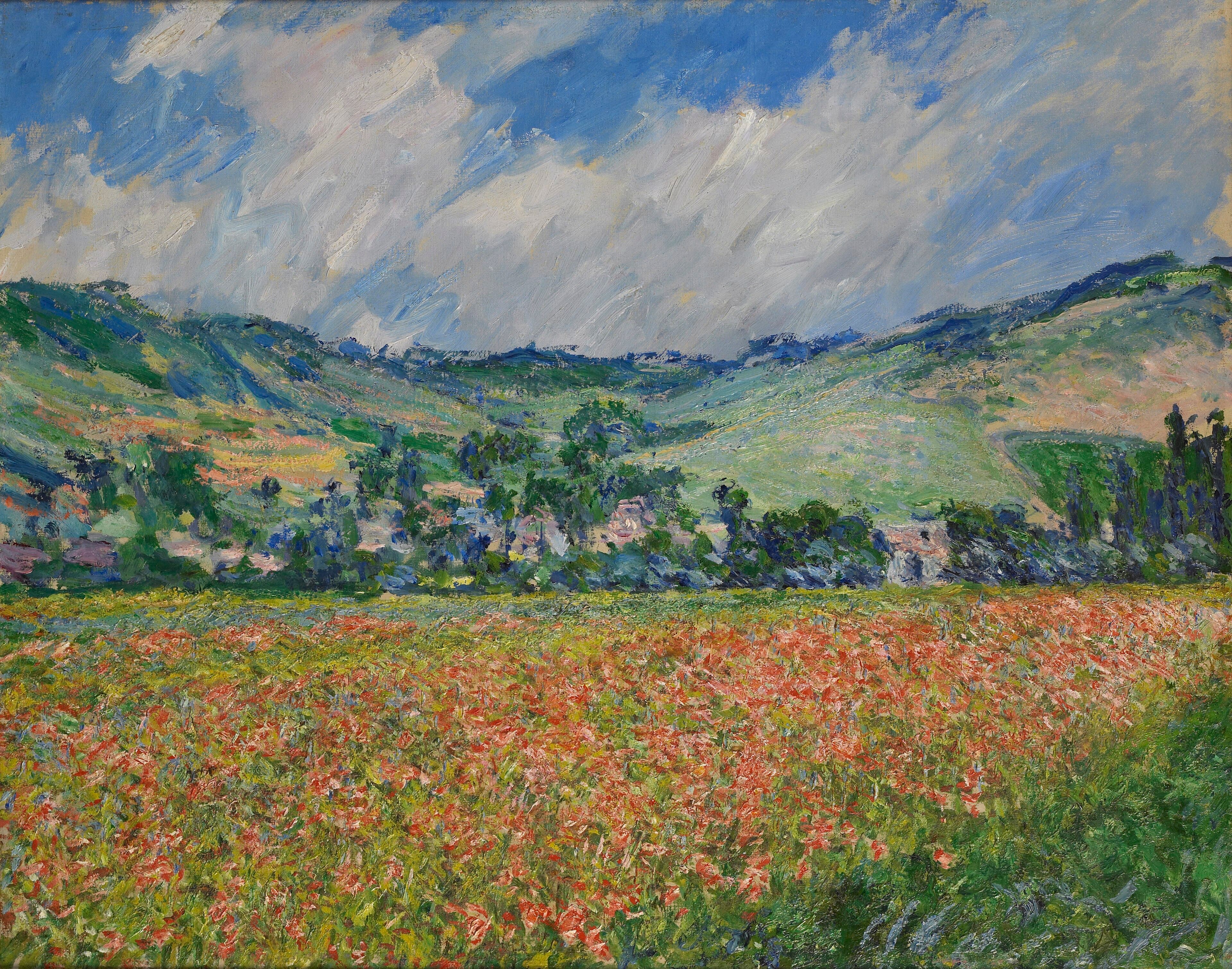
Poppy Field, Around Giverny
Claude Monet · 1885
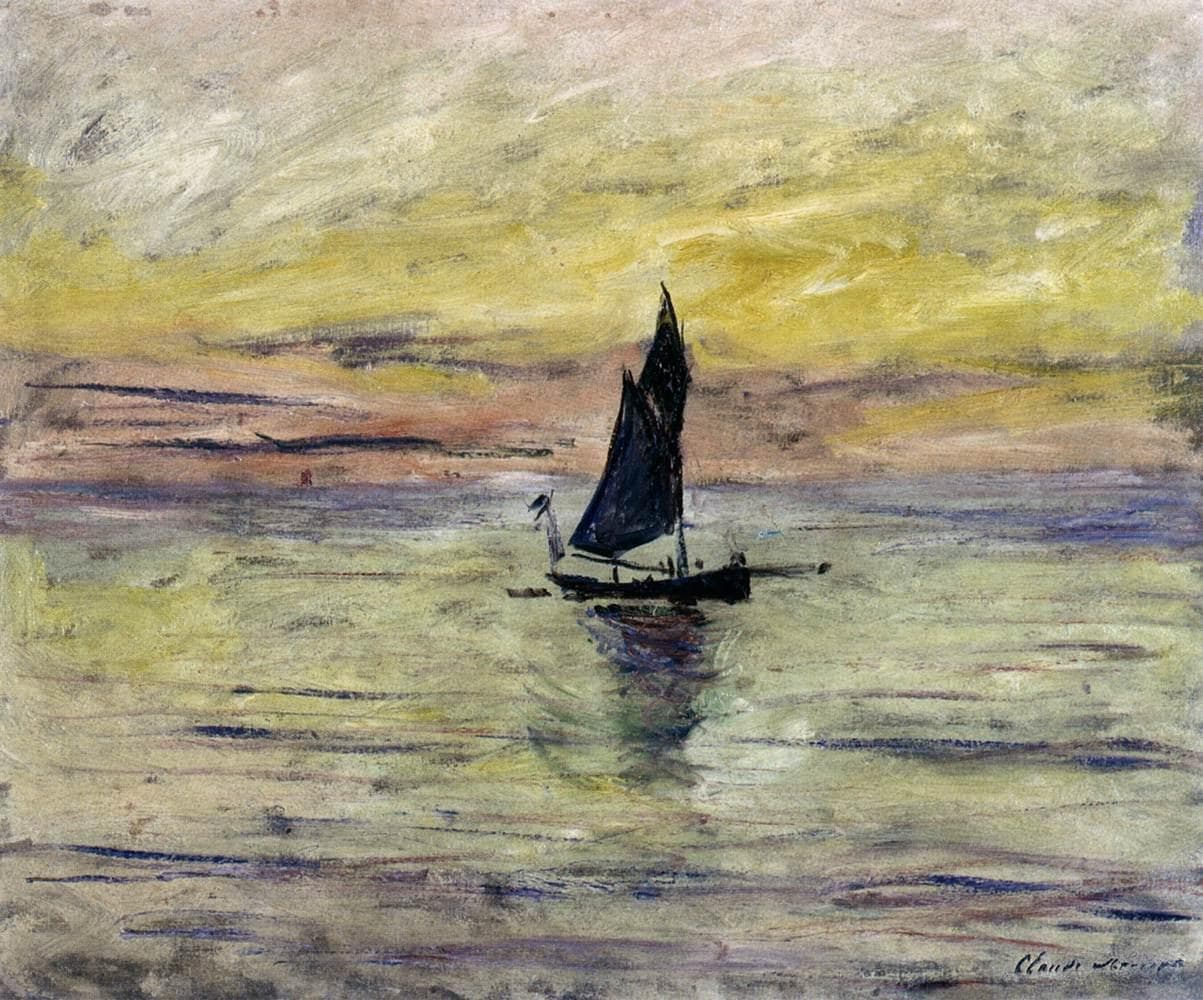
Sailboat, Evening Effect
Claude Monet · 1885
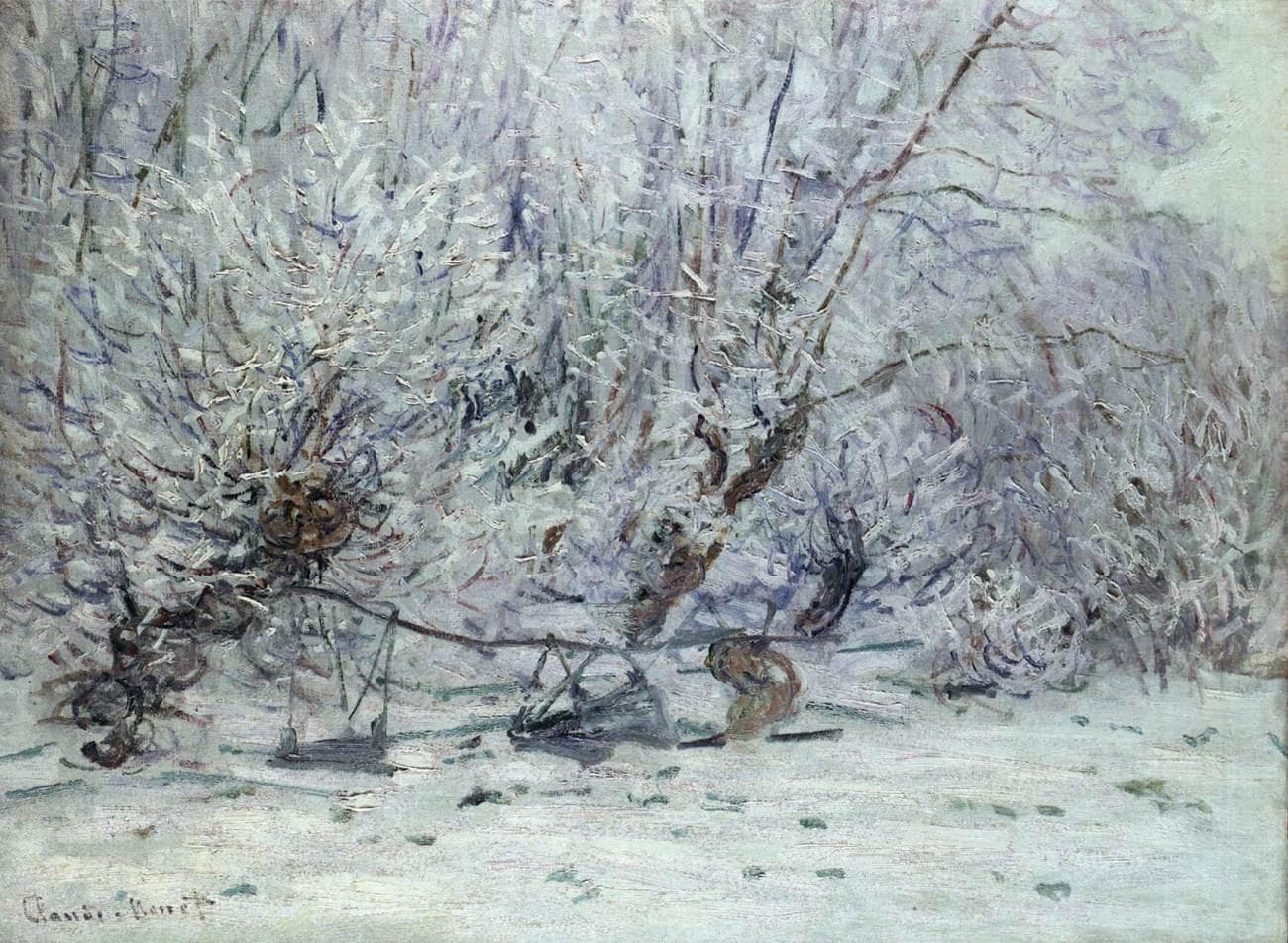
Frost
Claude Monet · 1885
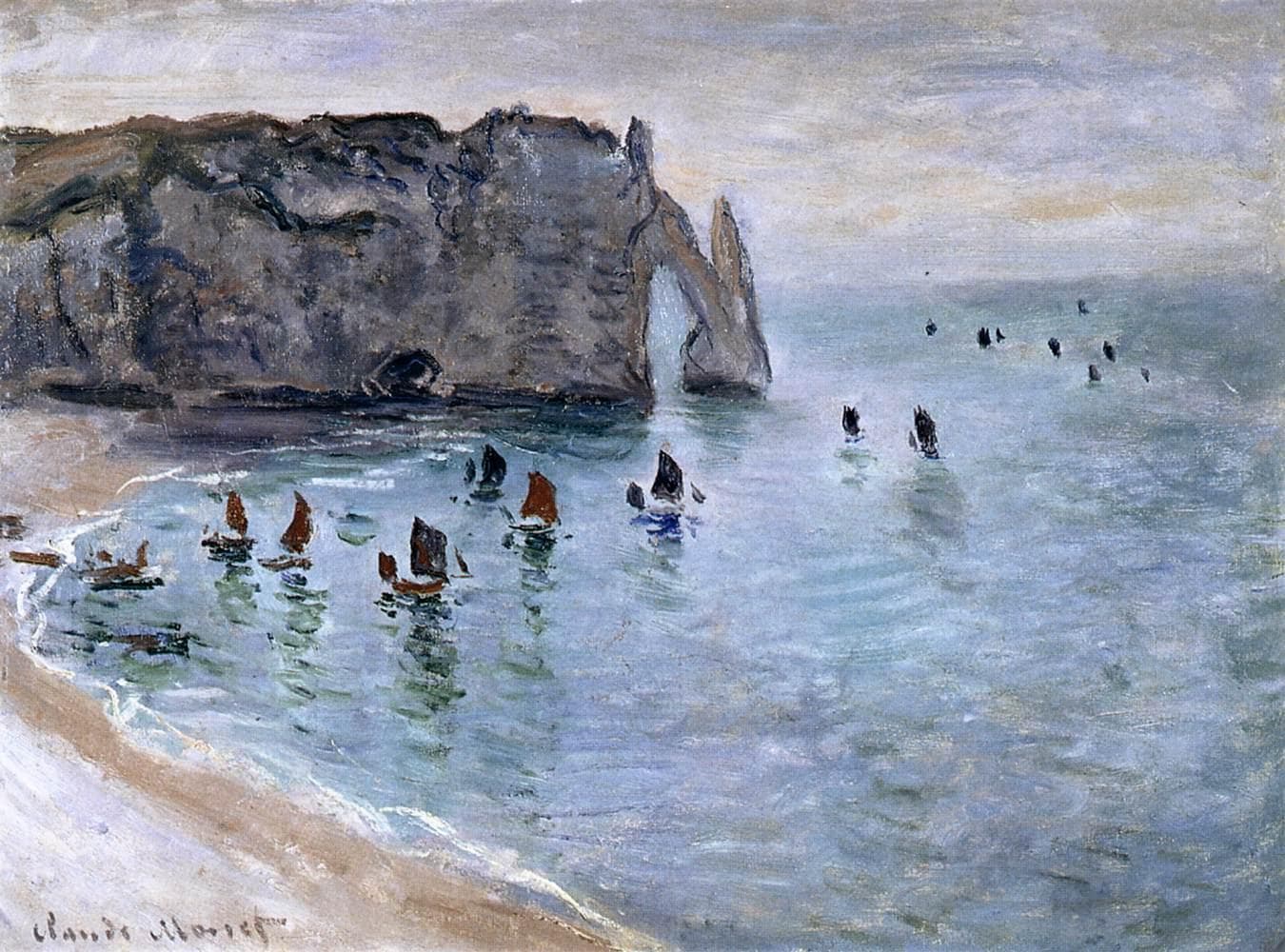
Étretat, the Porte d'Aval: Fishing Boats Leaving the Harbor
Claude Monet · 1885
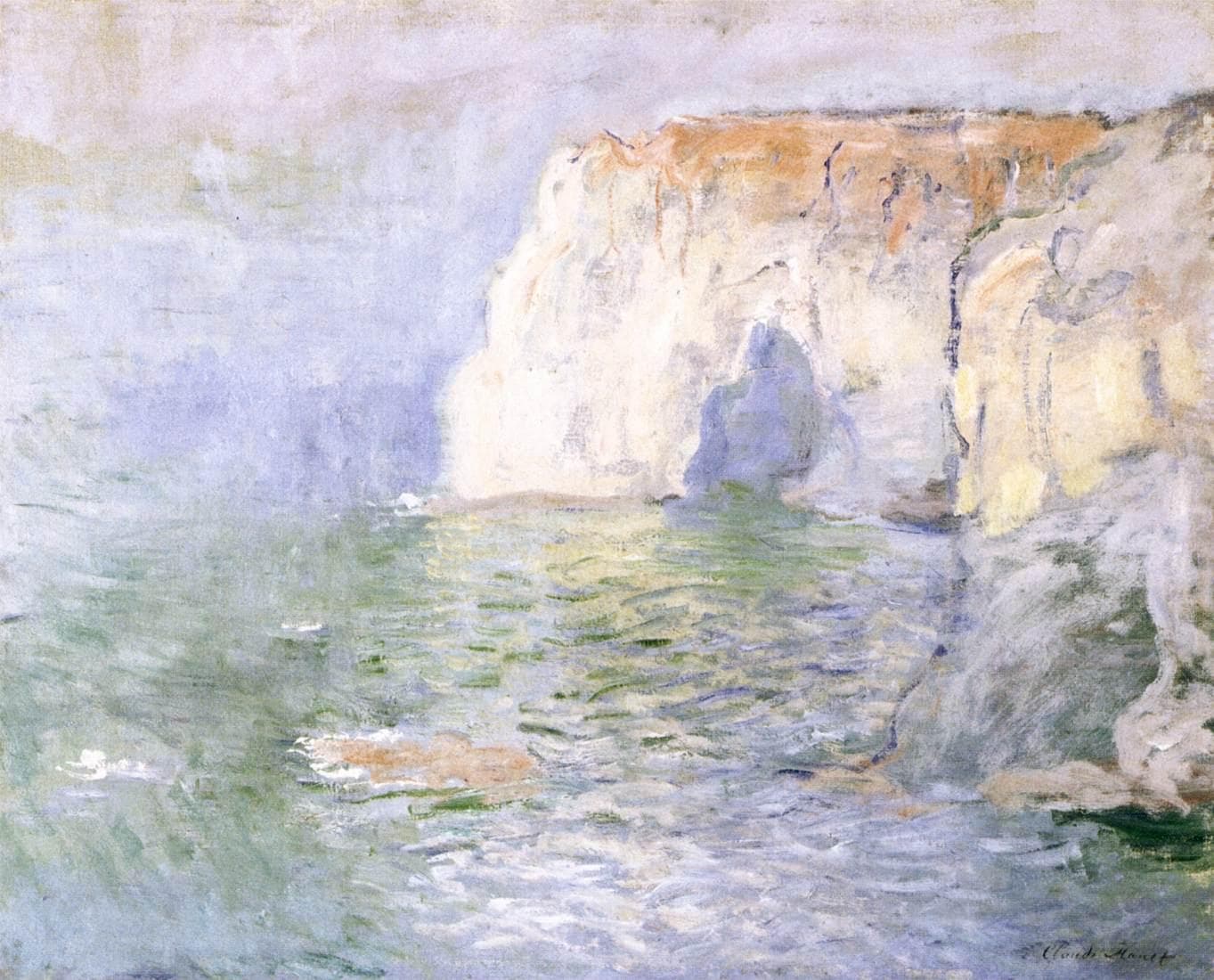
Étretat, the Manneporte, Reflections on the Water
Claude Monet · c. 1885
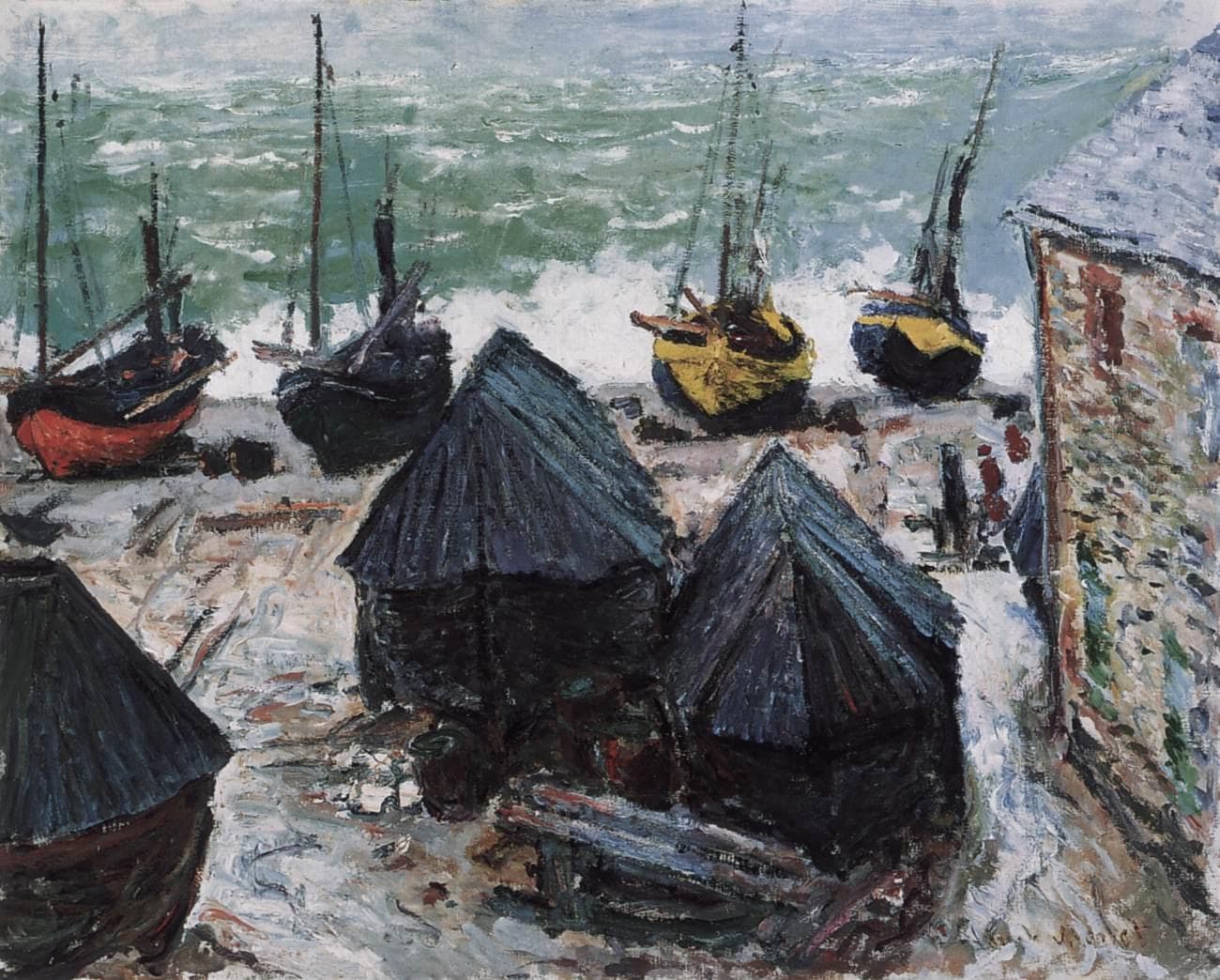
Boats on the Beach at Étretat
Claude Monet · 1885
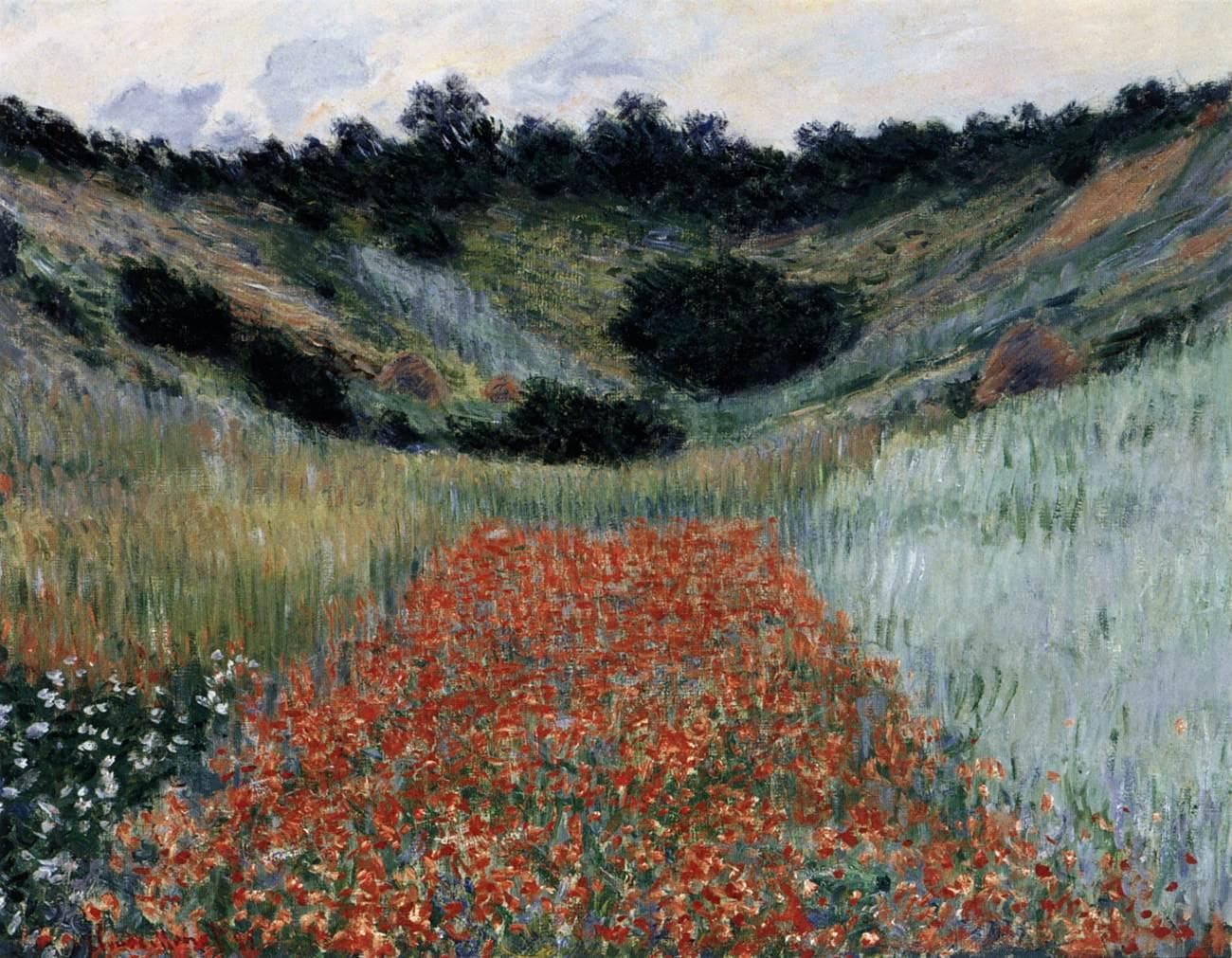
Poppy Field in a Hollow near Giverny
Claude Monet · 1885
Kindred works
You may also study
Boats on the Beach at Étretat
Claude Monet · 1885
The Departure of the Boats, Étretat
Claude Monet · 1885
Étretat, the Porte d'Aval: Fishing Boats Leaving the Harbor
Claude Monet · 1885
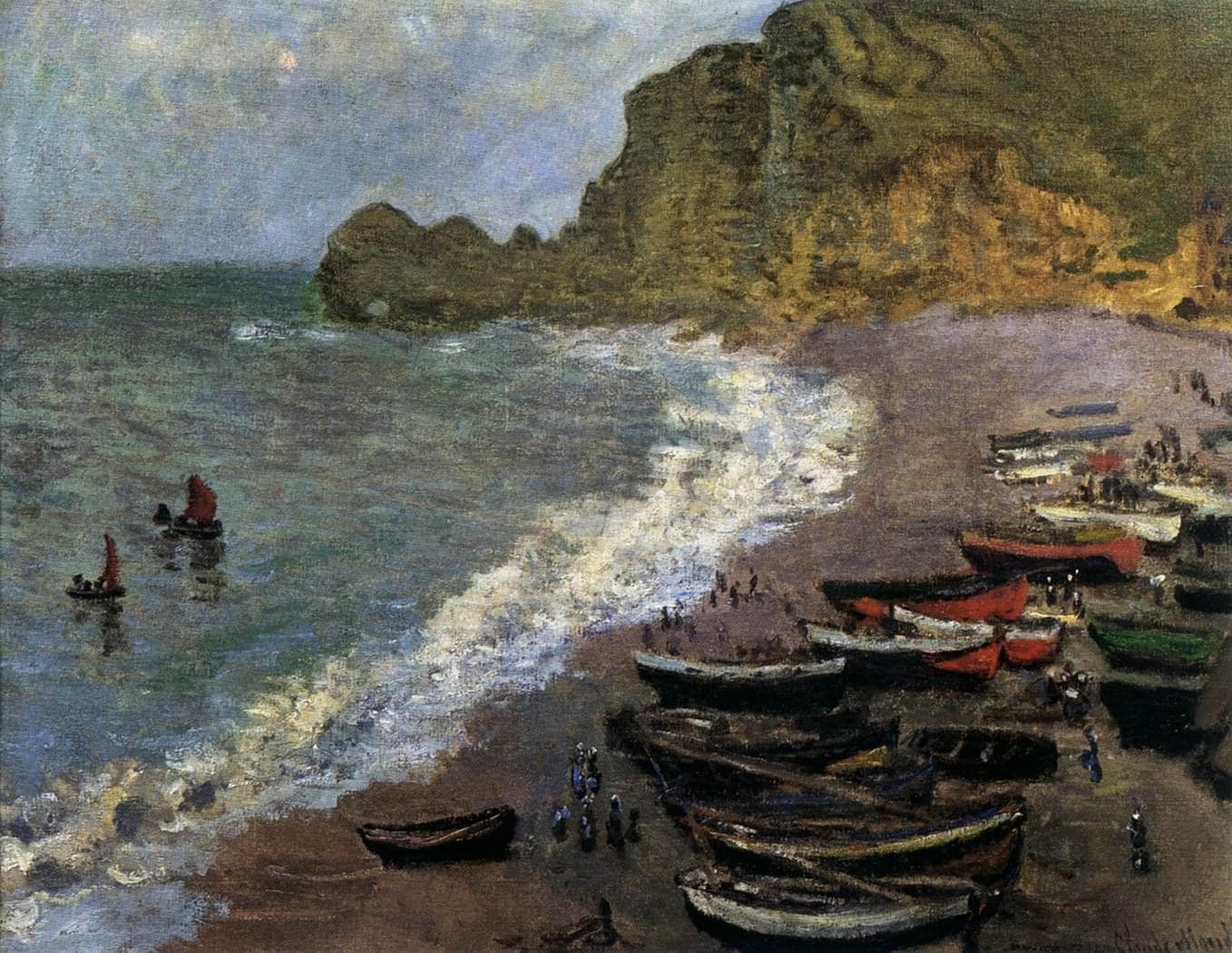
The Beach at Étretat
Claude Monet · 1883
Sailboat, Evening Effect
Claude Monet · 1885

Ophelia
John Everett Millais · 1851–52

The Great Wave off Kanagawa
Katsushika Hokusai · c. 1830–32
The Birth of Venus
Sandro Botticelli · c. 1484–1486