Image: Pushkin State Museum of Fine Arts, Moscow; via Wikimedia Commons · Public domain · via Wikimedia Commons
Impressionism
The Cliffs at Étretat
Claude Monet, 1886
The Cliffs at Étretat is a painting by Claude Monet, dated 1886, of the Porte d'Aval arch and the Needle at Étretat in hazy evening light, with fishing boats in the bay. It is in the Pushkin Museum, Moscow.
- Artist
- Claude Monet
- Date
- 1886
- Medium
- Oil on canvas
- Dimensions
- 66 × 81 cm
- Collection
- Pushkin State Museum of Fine Arts, Moscow, Russia
- Movement
- Impressionism
- Catalogue
- Wildenstein 1046
Painted at Étretat and the Normandy Coast
What you are looking at
A long chalk cliff runs in from the left edge and ends in a great natural arch standing in the sea, with a slender pointed rock, the Needle, rising just beyond it. The cliff is painted in soft blues and grays, almost a silhouette against a sky glowing pink, peach and yellow. The light comes from behind the cliff, low on the horizon: it is late afternoon or evening.
Below, the sea is calm and luminous, a shimmering surface of pale yellow, lilac and blue strokes. A small fleet of fishing boats with dark sails is scattered across the bay, more of them in a line toward the right horizon. In the lower left, the curving edge of the beach sweeps around in a band of violet shadow, edged by a thin line of white foam where the water meets the shingle. Monet signed and dated it at lower left, "Claude Monet 86."
Where and when it was painted
Monet worked at Étretat on the Normandy coast in several campaigns between 1883 and 1886, staying for weeks at a time and painting the cliffs and arches in every light. His longest stay was in the autumn of 1885, from October into December, and this canvas probably began then, before being finished and dated in 1886.
The view is from the beach of Étretat looking west toward the Porte d'Aval, the most famous of the three arches, and the Aiguille (Needle), a rock spire some seventy meters high. Courbet and Delacroix had painted these cliffs before him, and Étretat was already a well-known resort. Monet painted the same motif from many positions and at many hours, in an early form of the serial method he would later perfect. See Étretat and the Normandy coast for the whole group.
How it was painted
The picture is about light against the light. With the sun low behind the cliff, the rock loses its detail and becomes a single cool shape, blue in shadow, with only its edges catching a little warmth. The sea, by contrast, reflects the bright sky and is painted in short, broken strokes of warm and cool color laid side by side, so that it shimmers.
Monet keeps the forms simple: the long horizontal of the cliff, the arch and the vertical of the Needle, the curve of the beach in the foreground. The boats are a few dark dabs each, their sails little triangles, placed in a rhythm across the water. The beach in the foreground is painted in broad, sweeping violet strokes that lead the eye into the bay. The palette is pastel throughout, with no true dark: even the shadows are blue and lilac. It is one of the softest and most atmospheric of the Étretat pictures.
The gap between the start of work in 1885 and the date of 1886 matters. Monet's letters from Étretat complain constantly of changing tides and weather that forced him to abandon canvases and begin again. Many were finished later in the studio at Giverny, where he could adjust the harmony of the whole without the motif in front of him. The unified, glowing color of this picture suggests that kind of reworking.
The Étretat paintings
Monet painted the Porte d'Aval from the beach many times, often with the fishing fleet setting out, as in Étretat, the Porte d'Aval: Fishing Boats Leaving the Harbour in Dijon and The Departure of the Boats, Étretat in Chicago. The neighboring arch of the Manneporte appears in The Manneporte near Étretat at the Met, and the earlier Clark Art Institute canvas is published here as The Cliffs at Étretat (1885). The Moscow picture stands out for its evening color and its stillness.
Ownership
The painting is in the Pushkin State Museum of Fine Arts in Moscow (Ж-3308). Like most of the Pushkin's Impressionists, it came from the great Moscow collections of French painting formed before the 1917 Revolution and later nationalized.
Where to see it
The Cliffs at Étretat is in the Pushkin State Museum of Fine Arts in Moscow, where the nineteenth- and twentieth-century European paintings are shown in the Gallery of European and American Art. For other museums, see where to see Monet's paintings.
Questions & answers
Where is this Cliffs at Étretat by Monet?
It is in the Pushkin State Museum of Fine Arts in Moscow, inventory Ж-3308. Monet painted many views of the Étretat cliffs; other versions are in the Clark Art Institute, the Met, the Art Institute of Chicago and the Musée d'Orsay.
When and where was it painted?
Monet worked at Étretat on the Normandy coast between 1883 and 1886. This canvas is dated 1886 and was probably begun during his long stay in the autumn of 1885, looking west from the beach toward the Porte d'Aval.
What does The Cliffs at Étretat show?
The Porte d'Aval, a natural chalk arch, and the Needle rock beside it, silhouetted against a pink and yellow evening sky, with fishing boats on a calm, shimmering sea and the curve of the beach in the foreground.
How many Étretat paintings did Monet make?
About fifty canvases of Étretat's cliffs, arches and beach, mostly in the campaigns of 1883 to 1886. They show the same motifs from different places and at different times of day.
More by the artist
Claude Monet

Bridge over a Pond of Water Lilies
Claude Monet · 1899

Woman with a Parasol – Madame Monet and Her Son
Claude Monet · 1875

Sunset in Venice
Claude Monet · 1908–12

La Grenouillère
Claude Monet · 1869

Beach in Pourville
Claude Monet · 1882

Springtime
Claude Monet · 1872

Boating on the River Epte
Claude Monet · 1890

The Seine at Asnières (Hermitage)
Claude Monet · 1873
Also painted in 1886
The same year
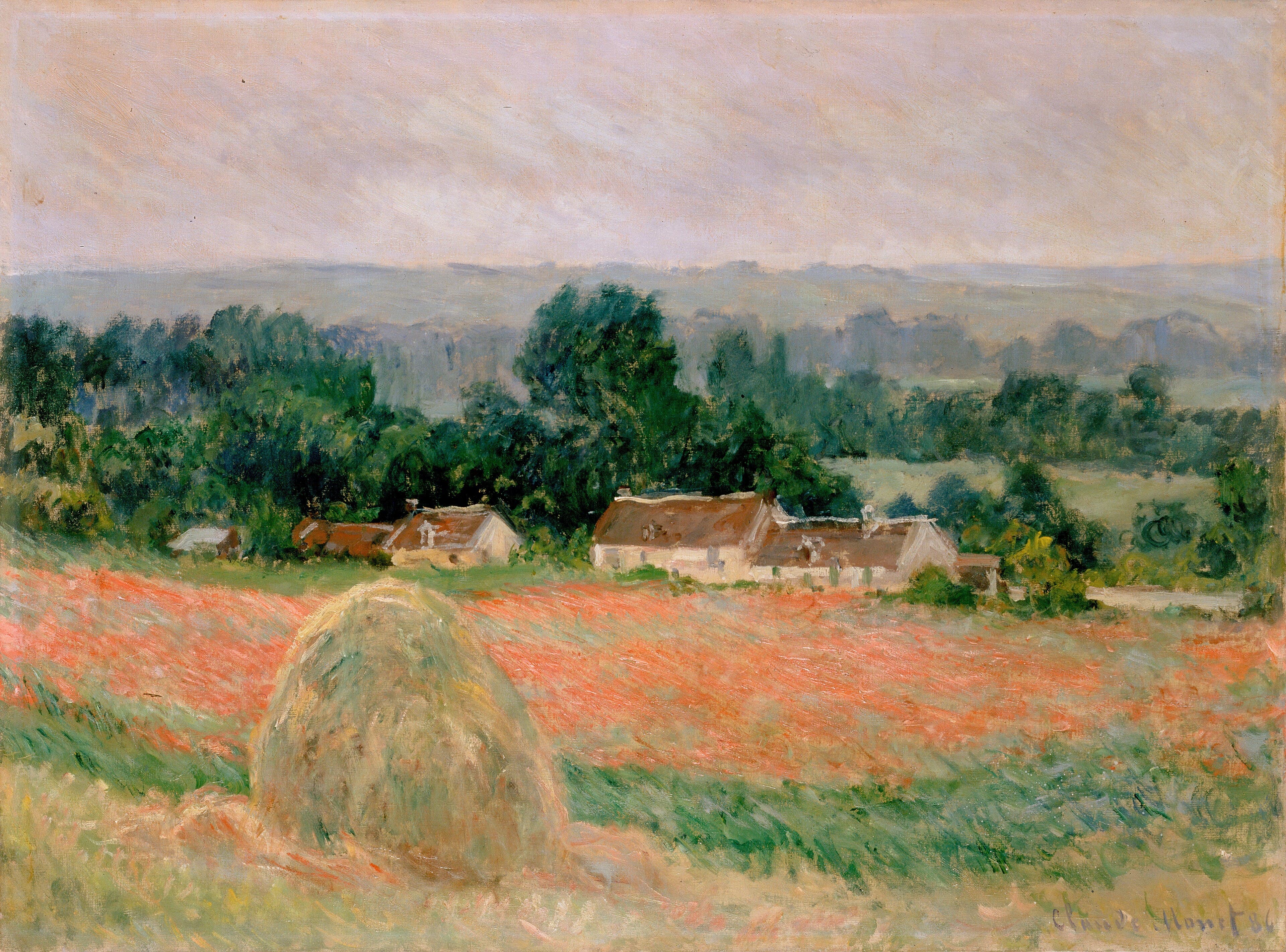
Haystack at Giverny
Claude Monet · 1886
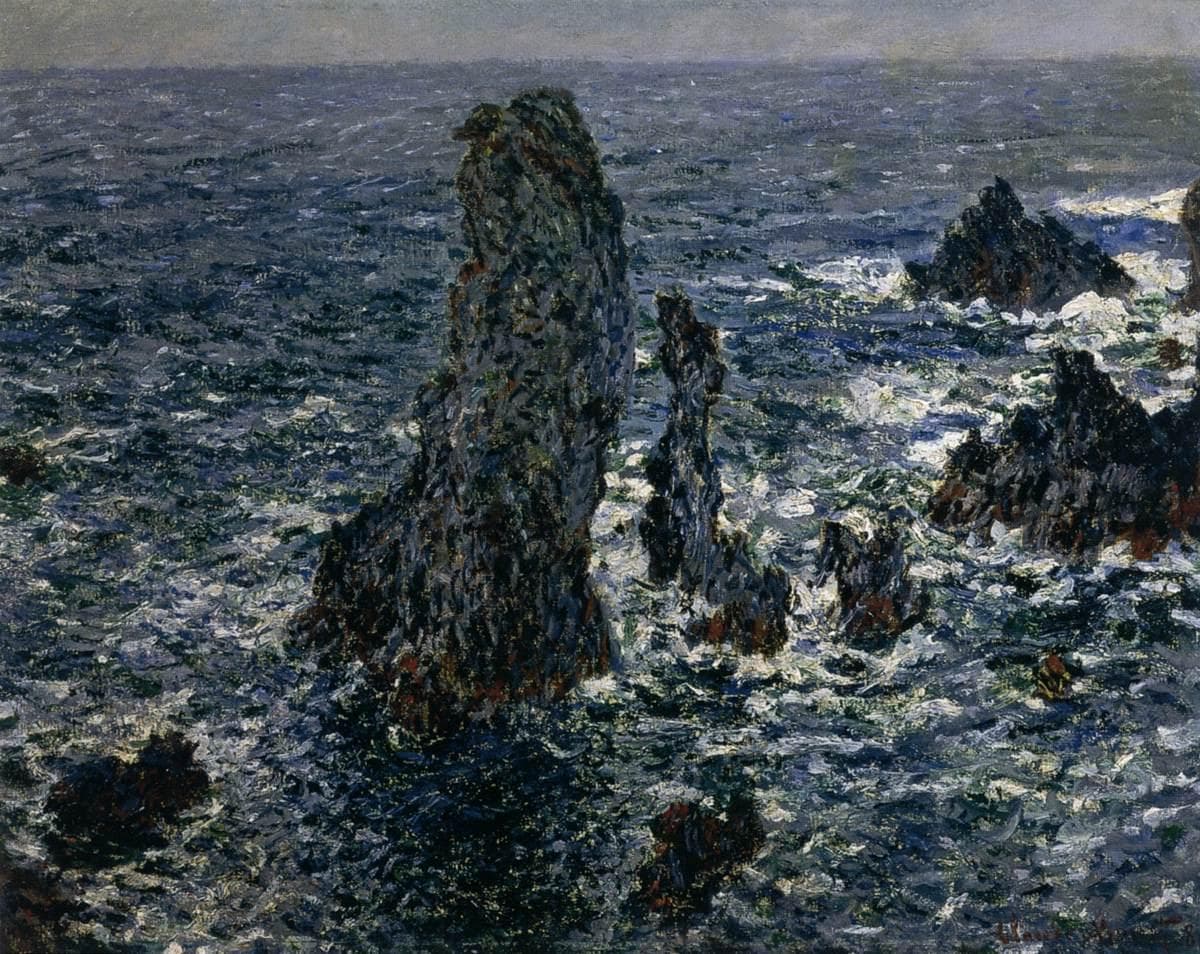
The Pyramides at Port-Coton, Rough Sea
Claude Monet · 1886
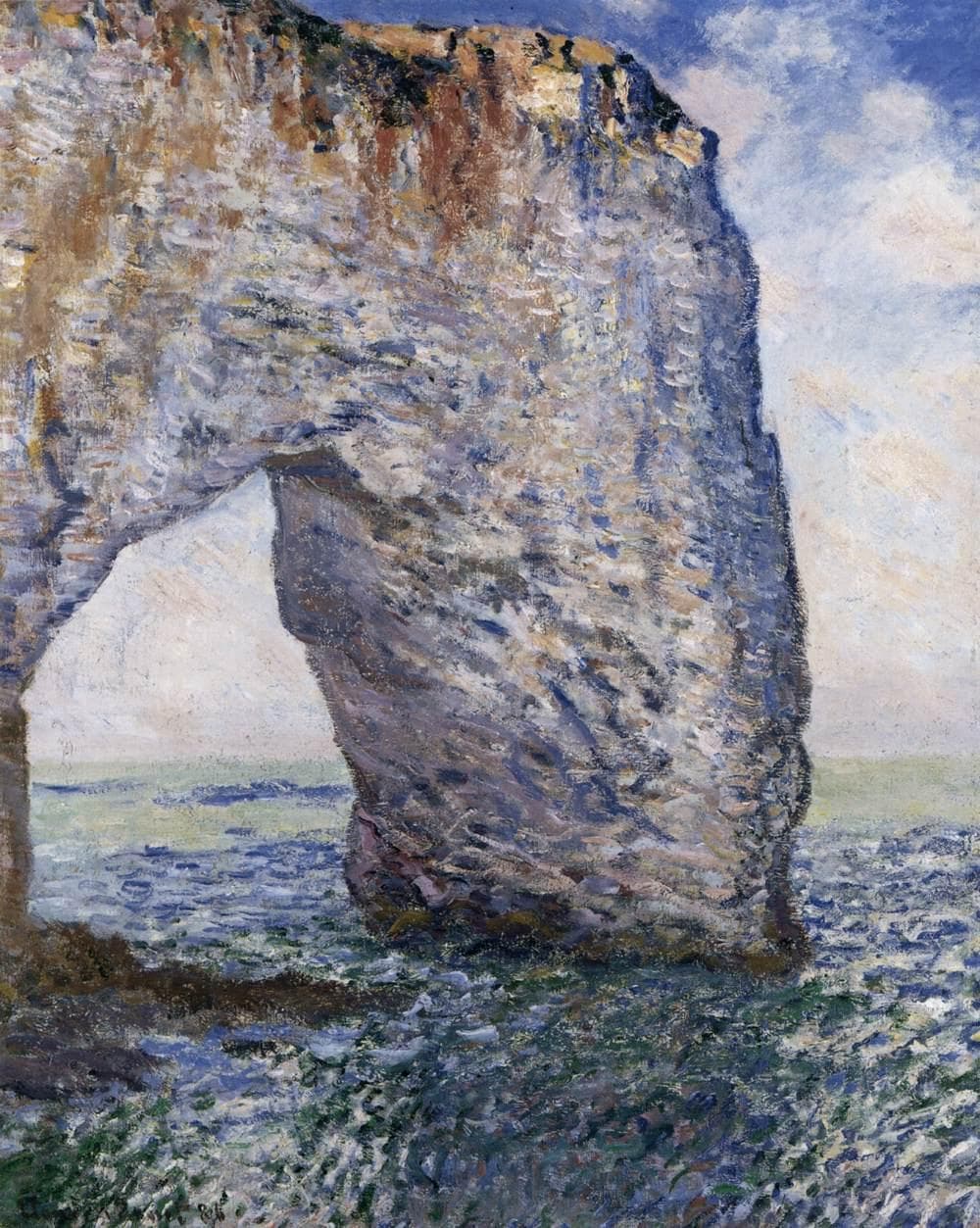
The Manneporte near Étretat
Claude Monet · 1886
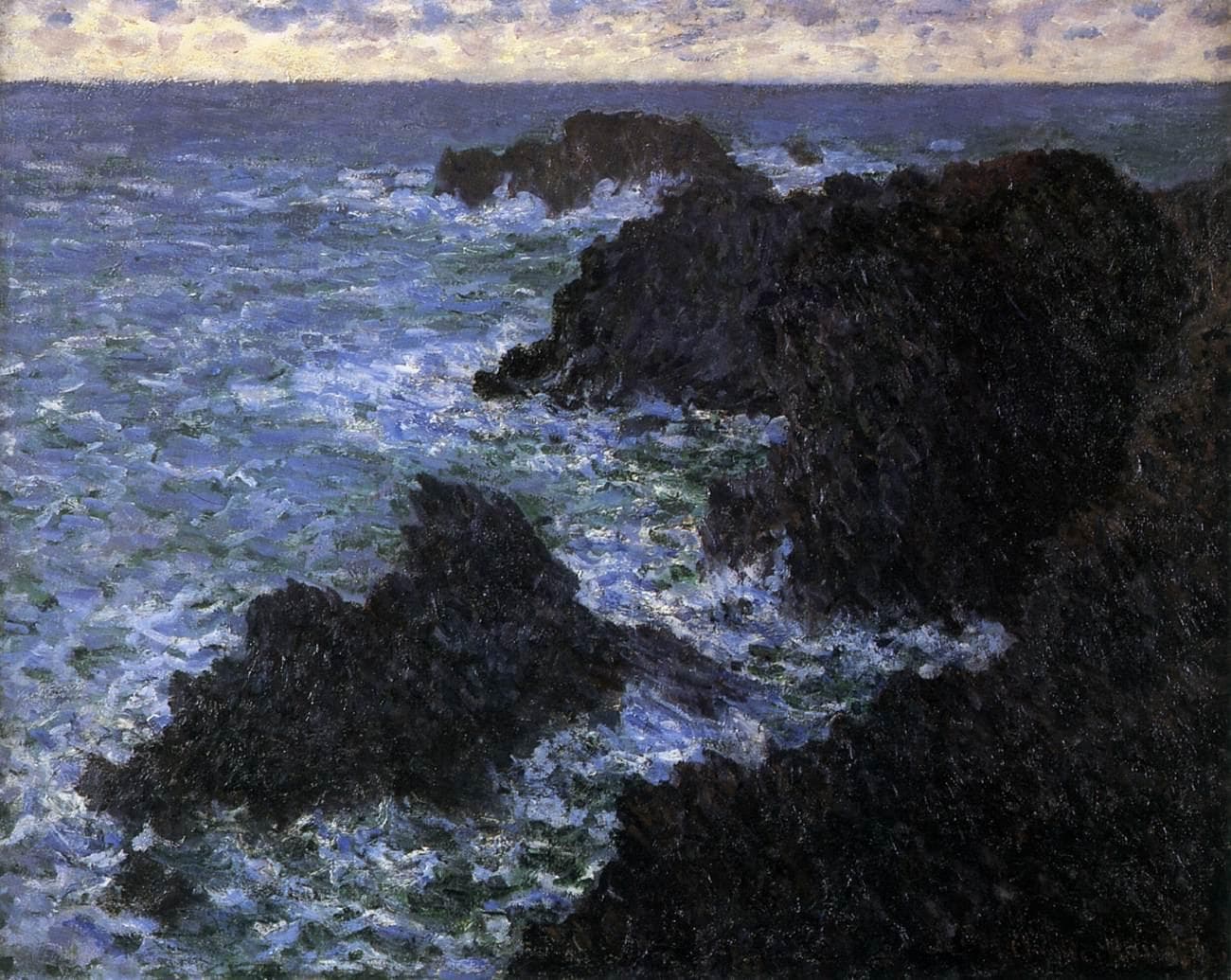
The Rocks of Belle-Île, the Wild Coast
Claude Monet · 1886
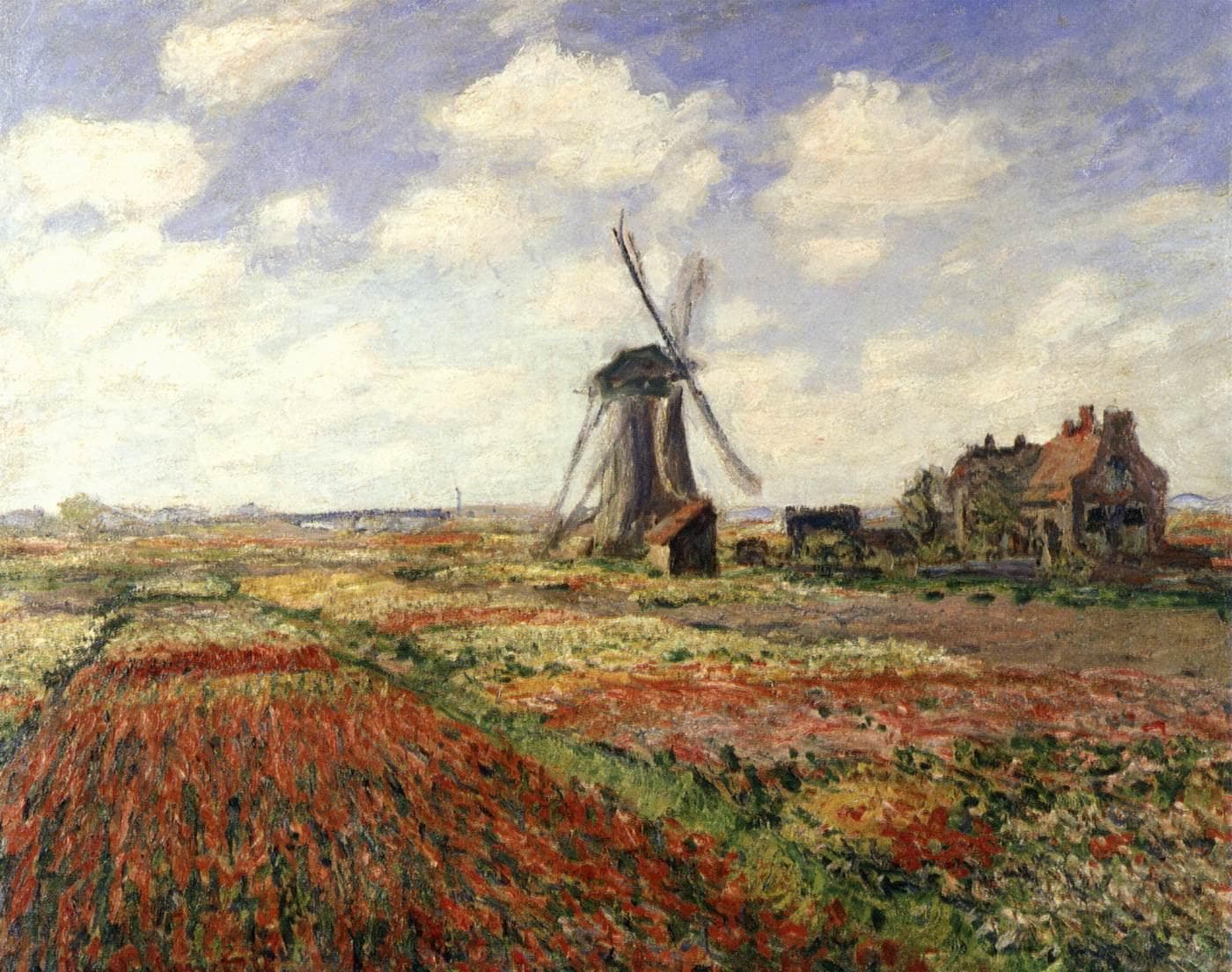
Tulip Fields in Holland
Claude Monet · 1886
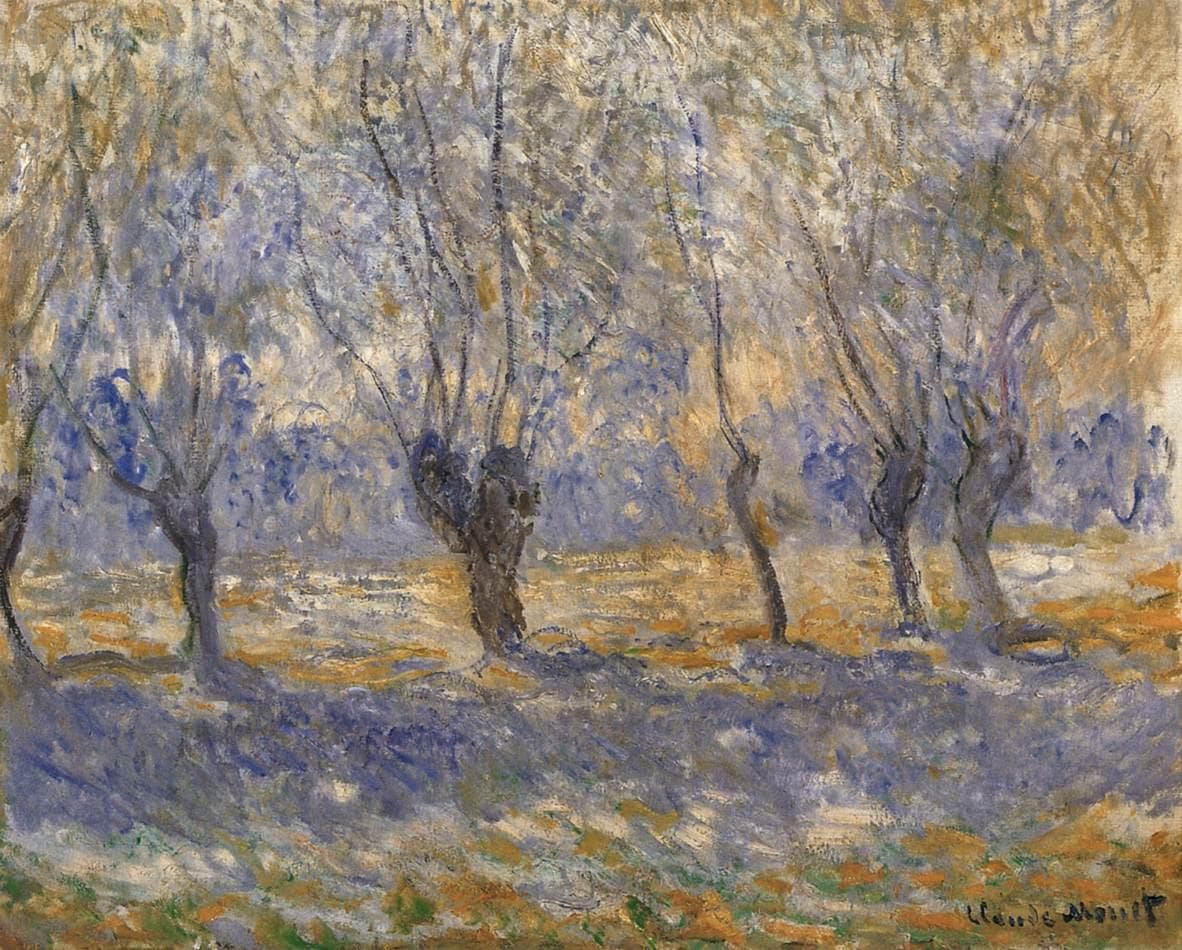
Willows at Giverny
Claude Monet · 1886
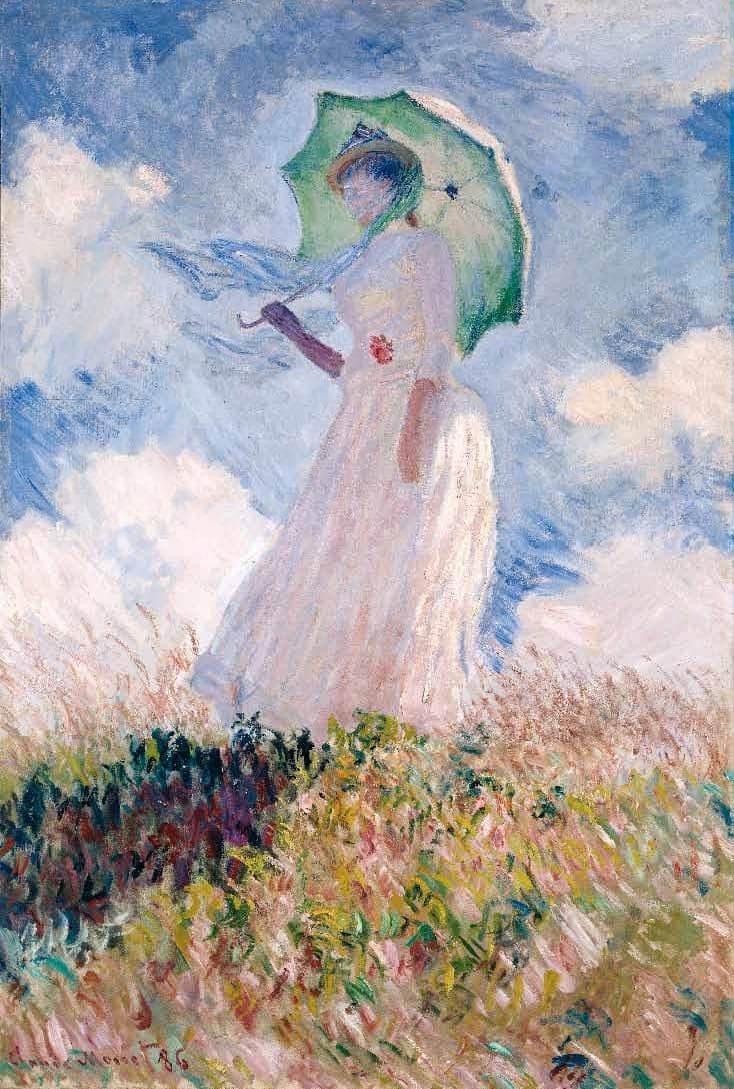
Woman with a Parasol, Facing Left
Claude Monet · 1886
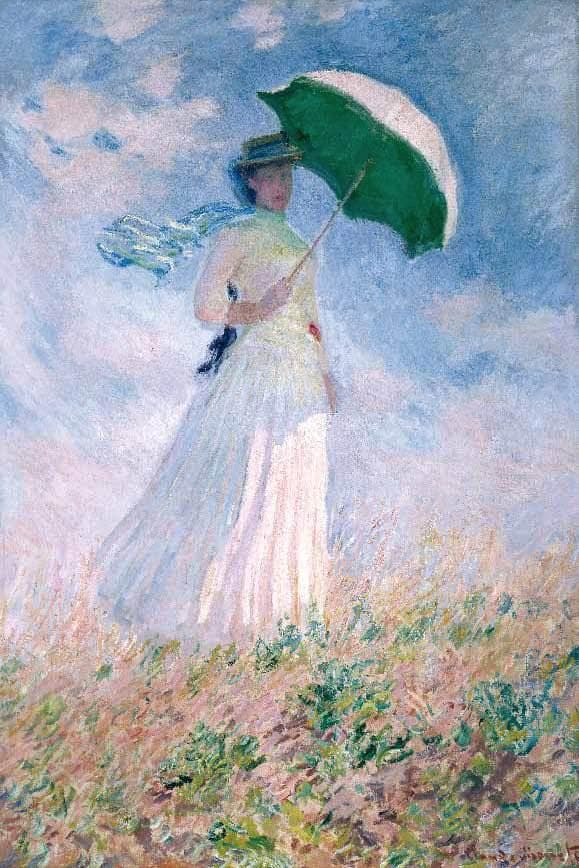
Woman with a Parasol, Facing Right
Claude Monet · 1886
Kindred works
You may also study
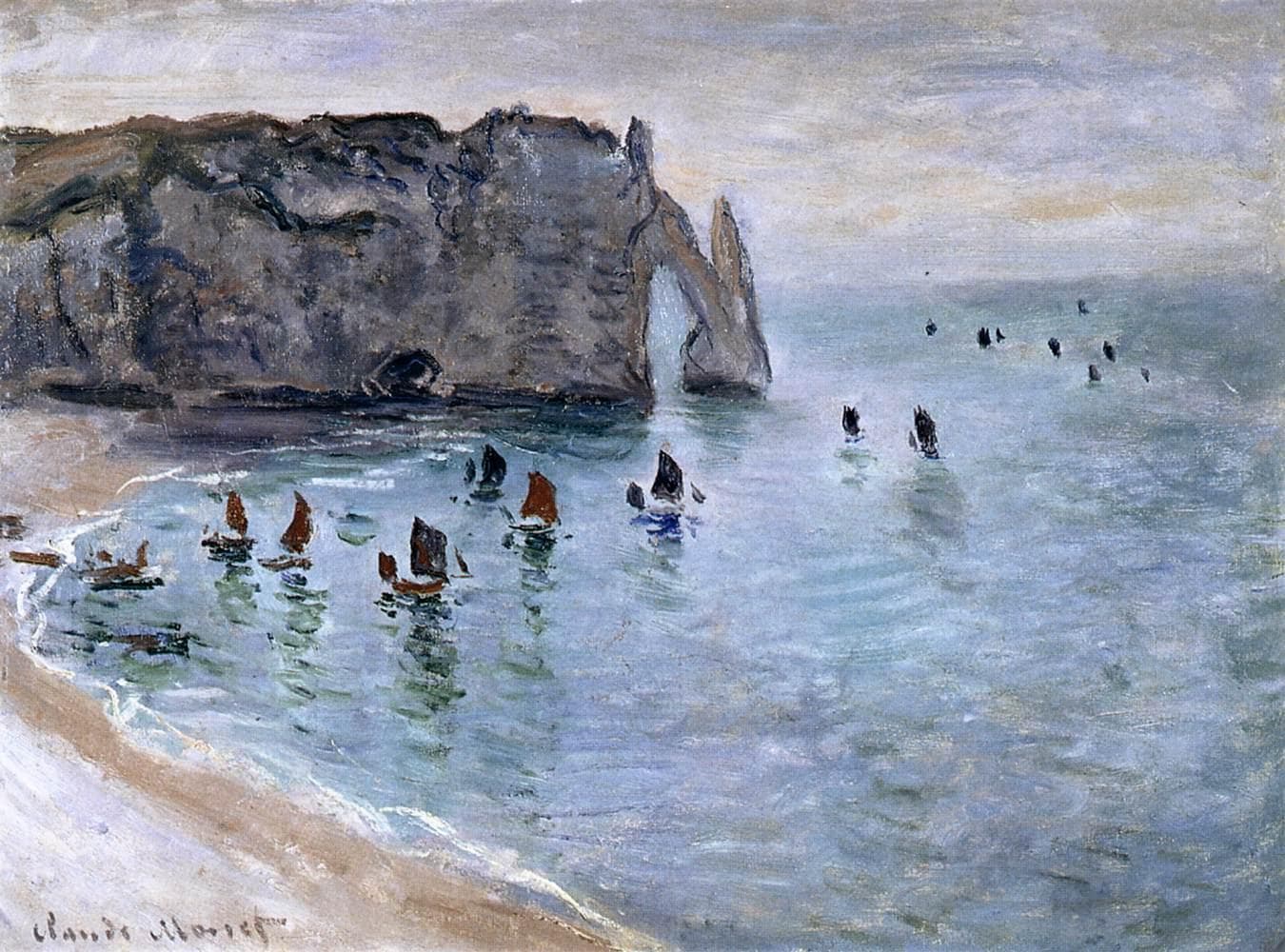
Étretat, the Porte d'Aval: Fishing Boats Leaving the Harbor
Claude Monet · 1885
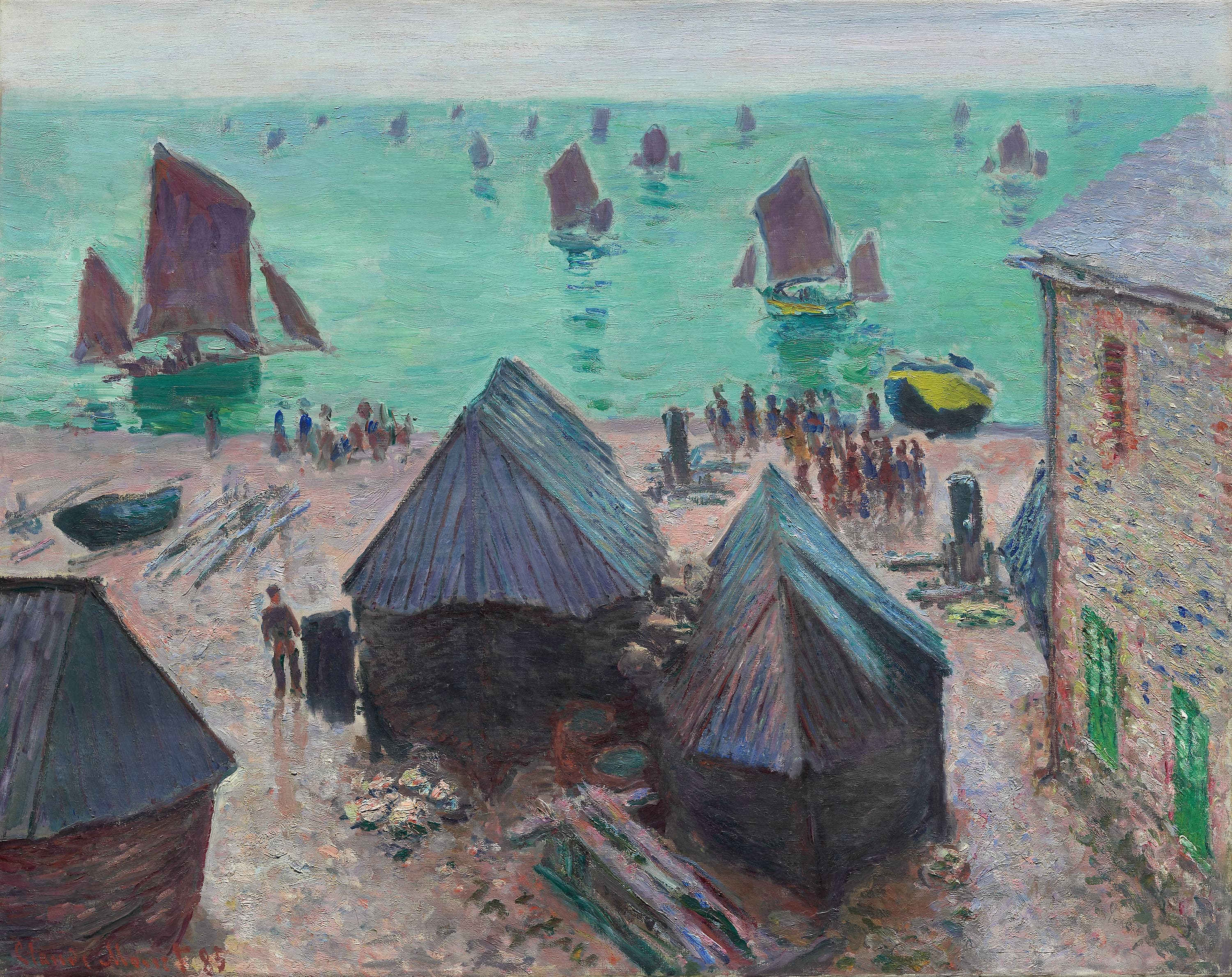
The Departure of the Boats, Étretat
Claude Monet · 1885
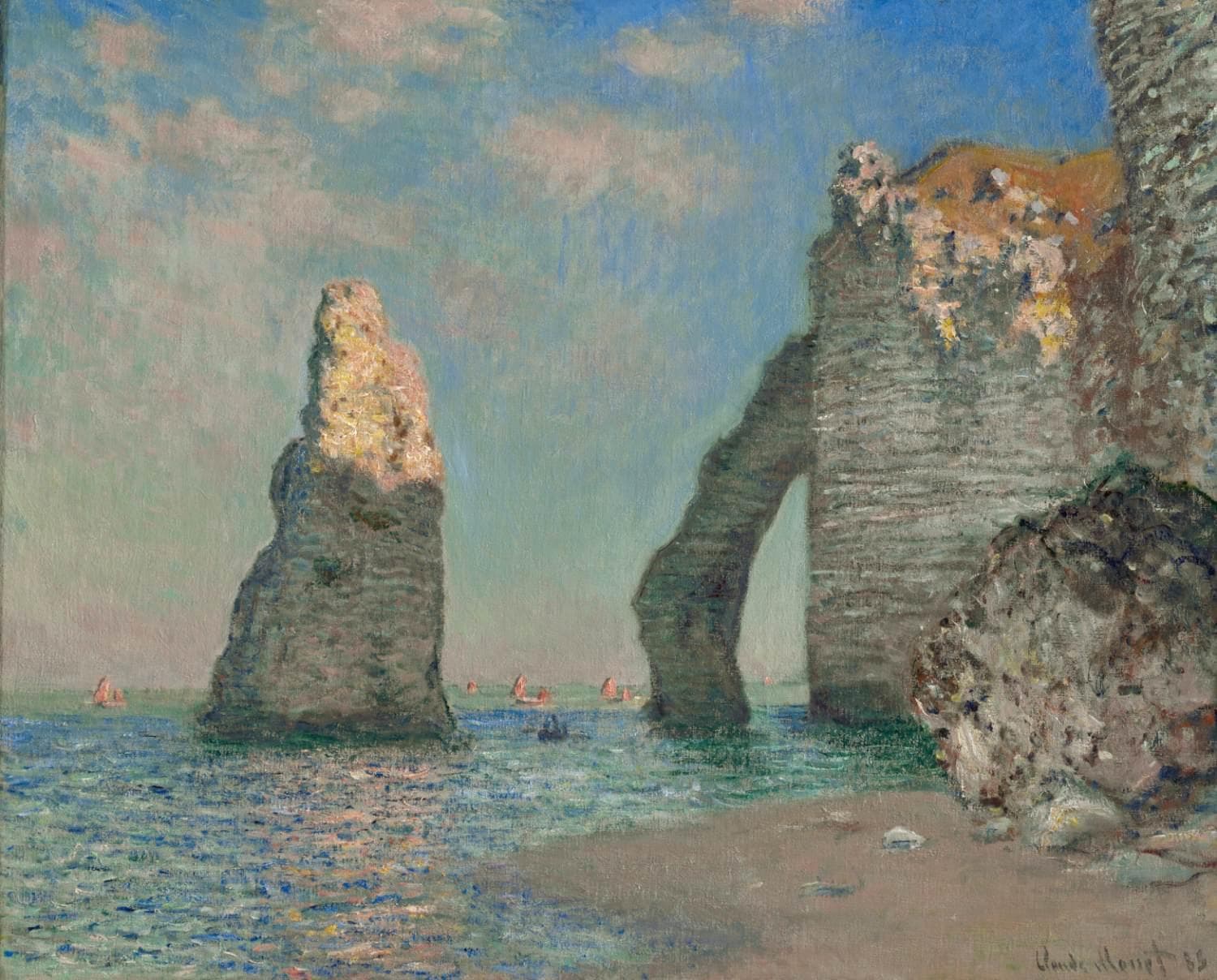
The Cliffs at Étretat
Claude Monet · 1885
The Manneporte near Étretat
Claude Monet · 1886
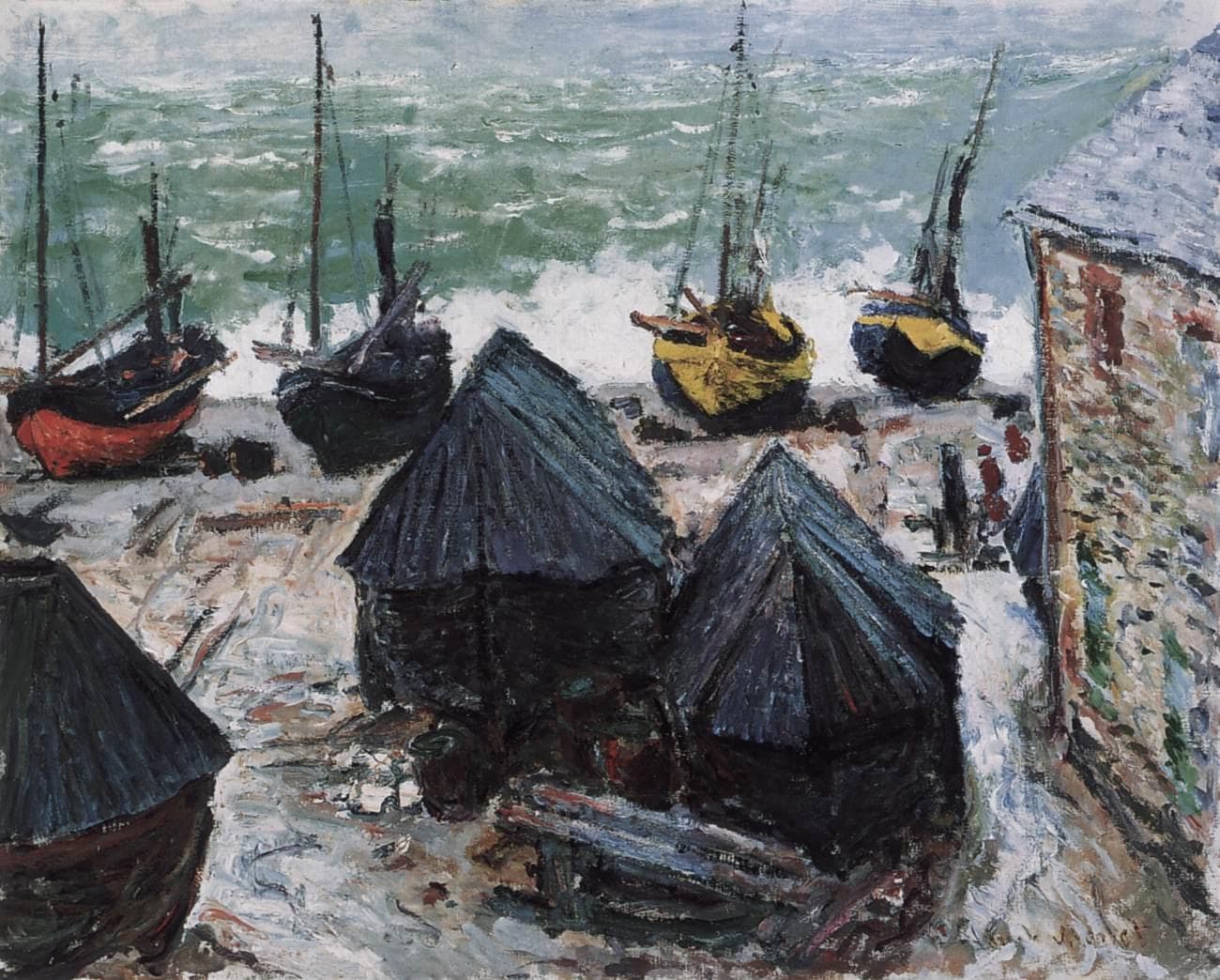
Boats on the Beach at Étretat
Claude Monet · 1885

The Scream
Edvard Munch · 1893

Ophelia
John Everett Millais · 1851–52

The Great Wave off Kanagawa
Katsushika Hokusai · c. 1830–32