Realism
Fishing Boats at Honfleur
Claude Monet, c. 1868
Fishing Boats at Honfleur is an early painting by Claude Monet, around 1868, of two moored sailing boats and their dark reflections in the harbor at Honfleur, Normandy. It is in the Calouste Gulbenkian Museum, Lisbon.
- Artist
- Claude Monet
- Date
- c. 1868
- Medium
- Oil on canvas
- Dimensions
- 100 × 80 cm
- Collection
- Calouste Gulbenkian Museum, Lisbon, Portugal
- Movement
- Realism
- Catalogue
- Wildenstein 116
Painted at Étretat and the Normandy Coast
Fishing Boats at Honfleur is an early harbor scene by Claude Monet, catalogued by Wildenstein as number 116 and dated around 1868. The tall canvas, about 100 by 80 centimeters, is in the Calouste Gulbenkian Museum in Lisbon, the collection formed by the Armenian oil magnate Calouste Gulbenkian.
What you are looking at
Two wooden fishing boats lie side by side in the harbor basin, their dark hulls nearly touching, with names lettered in white along their sterns. Their masts climb out of the top of the canvas, rigged with furled and half-lowered sails of gray, brown and dirty white that hang in heavy folds, and a long boom slants across the right-hand boat. A small red pennant flies at the top of the left mast.
To the left a stone quay and a row of tall old harbor houses recede into the distance, their facades pale against a gray-lilac sky. To the right more masts and the far side of the basin fade into haze. The lower third of the picture is water, and here Monet does something striking. The boats' reflections fall straight down in long, dark, wavering shapes, almost black, broken by ripples of gray and white light. They are as large and as carefully worked as the boats themselves, so the picture reads as two images, one upright and one upside down. The signature is at lower right. Nobody is on board; the boats rest between tides, and the picture has the stillness of an empty harbor early in the day.
How it was painted
The palette is restrained, built on blacks, browns and grays, much closer to Édouard Manet than to the bright Impressionism of the following decade. Monet uses black freely here, something he would later avoid. The handling is broad and assured: the sails and hulls laid in as flat masses, the rigging drawn with a few quick dark lines, the sky scrubbed in with lilac and gray. The vertical format, unusual for a harbor scene, emphasizes the height of the masts and the depth of their reflections.
Look at the water. Monet paints the reflections with long vertical strokes and then cuts across them with short horizontal flicks of light paint, the same device he would refine at La Grenouillère in 1869 and at Argenteuil in the 1870s. It is one of the earliest places in his work where the surface of water becomes the real subject of a picture.
Honfleur and the young Monet
Honfleur, across the Seine estuary from Le Havre, was Monet's home ground as a young painter. He worked there with Eugène Boudin and Johan Barthold Jongkind in the mid-1860s, painting its quays, streets and the countryside around the Saint-Siméon farm. His snow scene A Cart on the Snowy Road at Honfleur, the street view Rue de la Bavolle, Honfleur and The Beach at Honfleur belong to the same years. Around 1868–69 he made a group of boat pictures in this dark key, among them The Boats in Bremen.
A few years later he would paint a far brighter harbor, at Le Havre, in Impression, Sunrise, where the boats are dark silhouettes against an orange sun. Seen together, the two pictures show how much changed in Monet's handling of light and color in four years. Here the boats are solid, heavy objects with names and rigging; there they have become marks on a surface of colored light. Both, though, are about the same thing: boats, water and the reflections that join them. Our hub on Étretat and the Normandy coast covers Honfleur, Le Havre and Sainte-Adresse.
Where to see it
The painting is in the Calouste Gulbenkian Museum in Lisbon, alongside other works by Monet in its French collection. Gulbenkian, who lived in Paris for much of his life, bought French nineteenth-century painting in depth, and his collection opened to the public in Lisbon in 1969. For other collections, see where to see Monet's paintings. More on Claude Monet.
Questions & answers
Where is Monet's Fishing Boats at Honfleur?
This large vertical harbor scene, about 100 by 80 centimeters, is in the Calouste Gulbenkian Museum in Lisbon, Portugal. The museum was founded on the private collection of Calouste Gulbenkian, who bought French nineteenth-century painting in depth, including several works by Monet.
When did Monet paint Fishing Boats at Honfleur?
It is catalogued by Wildenstein as number 116 and dated to around 1868. In those years Monet often worked on the Normandy coast around Honfleur, Le Havre, Étretat and Fécamp, before developing the light, broken style of Impressionism in the early 1870s.
What does Fishing Boats at Honfleur show?
Two dark wooden fishing boats with tall masts and half-lowered sails lie side by side in Honfleur's harbor, a quay and old houses on the left. Their reflections fall in long, almost black shapes into the water, taking up the whole lower third of the canvas.
Why are the colors so dark?
In the late 1860s Monet still used black and earth colors freely, influenced by Gustave Courbet and Édouard Manet. The heavy blacks of the hulls and reflections contrast with his later practice: by the mid-1870s he had largely banished black from his palette in favor of colored shadows.
More by the artist
Claude Monet

Bridge over a Pond of Water Lilies
Claude Monet · 1899

Woman with a Parasol – Madame Monet and Her Son
Claude Monet · 1875

Sunset in Venice
Claude Monet · 1908–12

La Grenouillère
Claude Monet · 1869

Beach in Pourville
Claude Monet · 1882

Springtime
Claude Monet · 1872

Boating on the River Epte
Claude Monet · 1890

The Seine at Asnières (Hermitage)
Claude Monet · 1873
Also painted in 1868
The same year
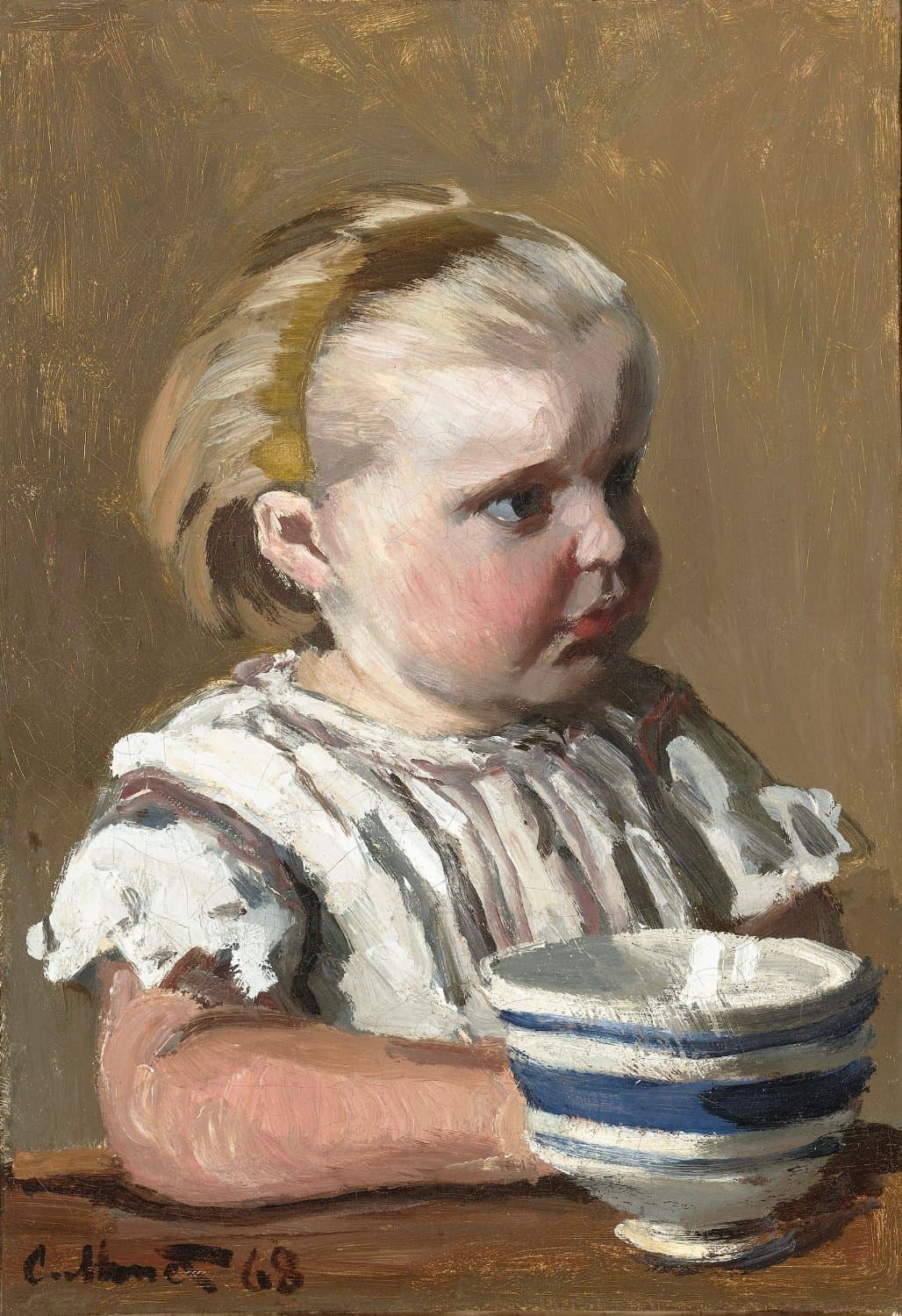
L'Enfant à la tasse (Portrait of Jean Monet)
Claude Monet · 1868
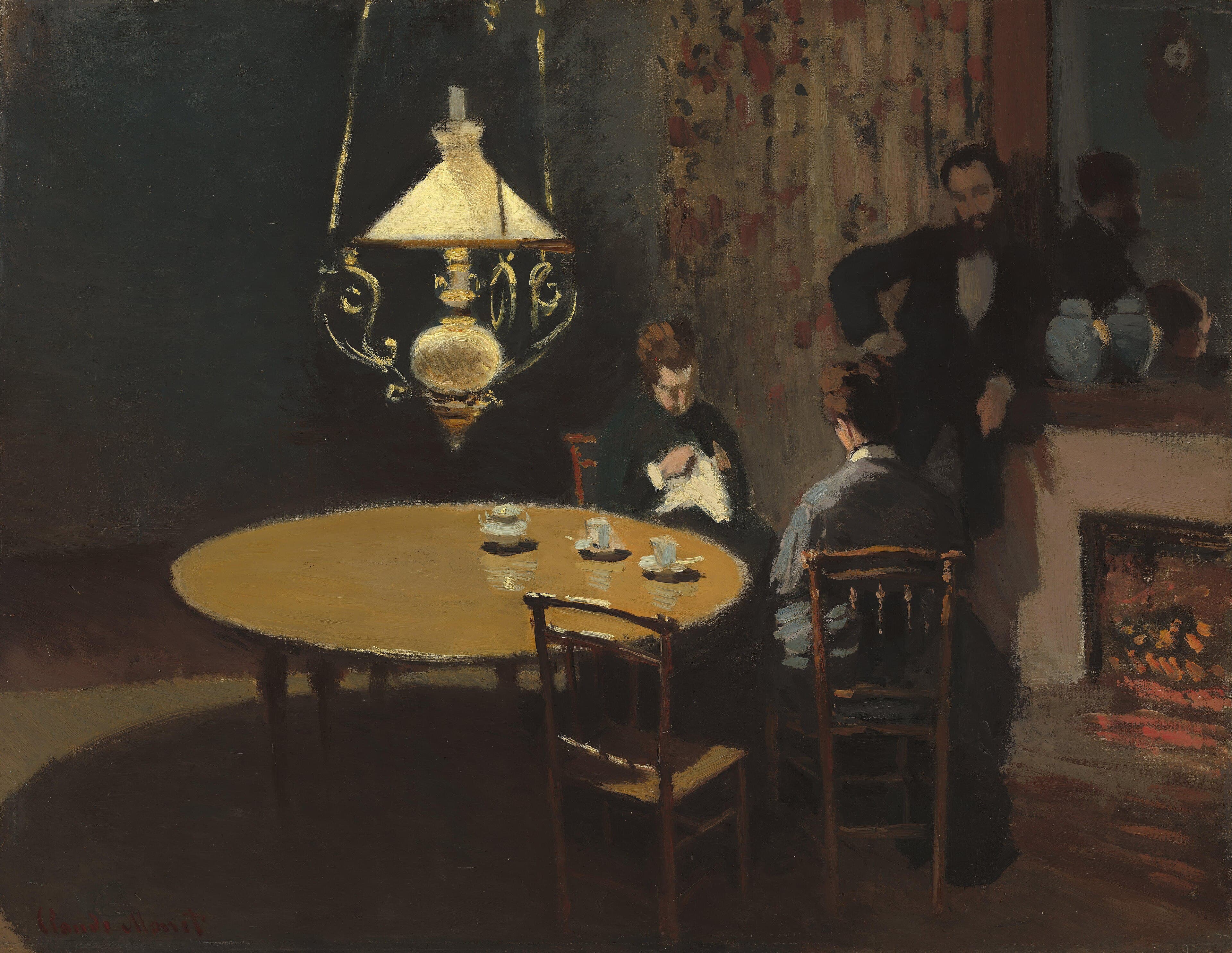
Interior, after Dinner
Claude Monet · 1868–69
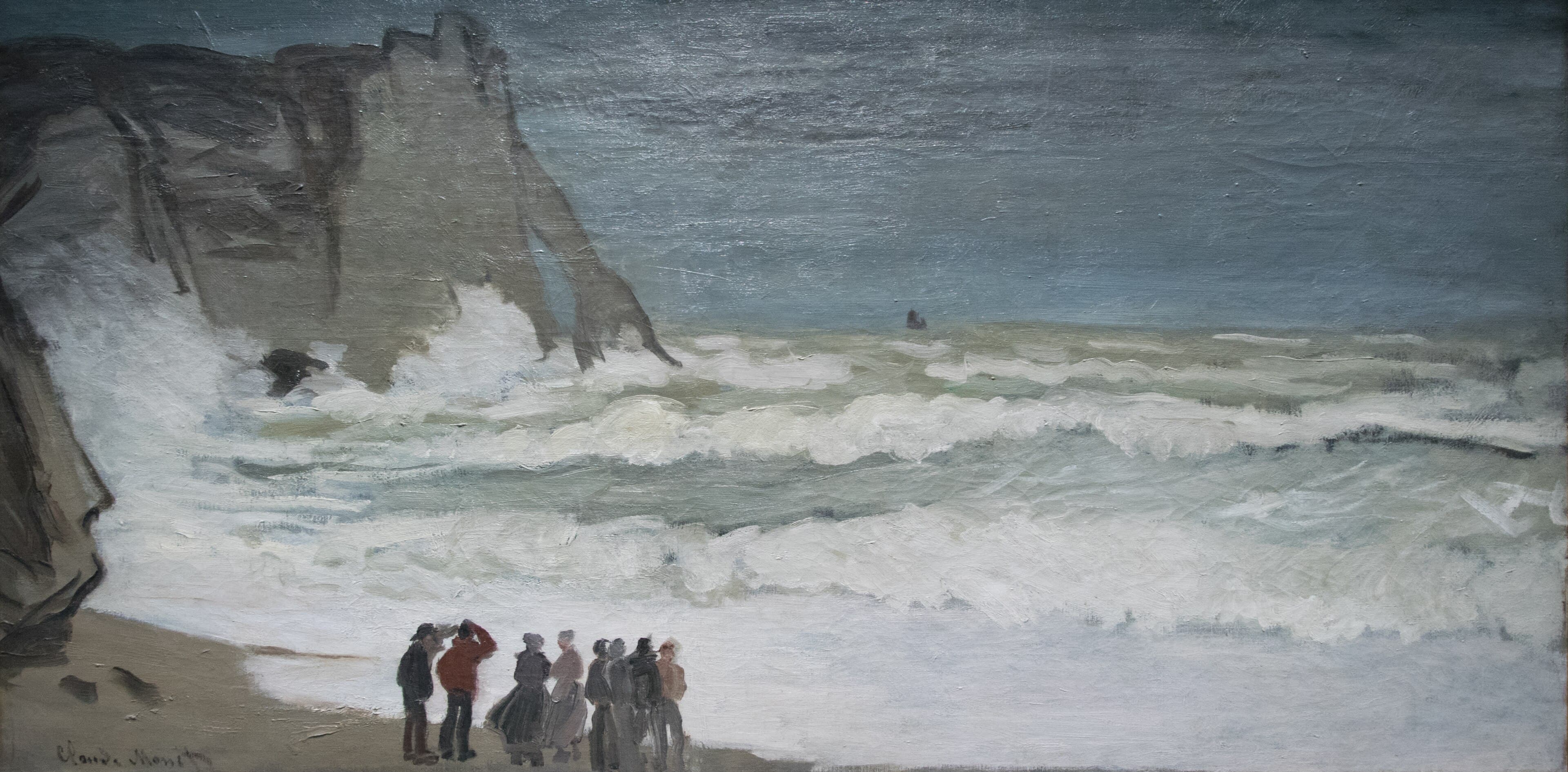
Heavy Sea at Étretat
Claude Monet · c. 1868–69
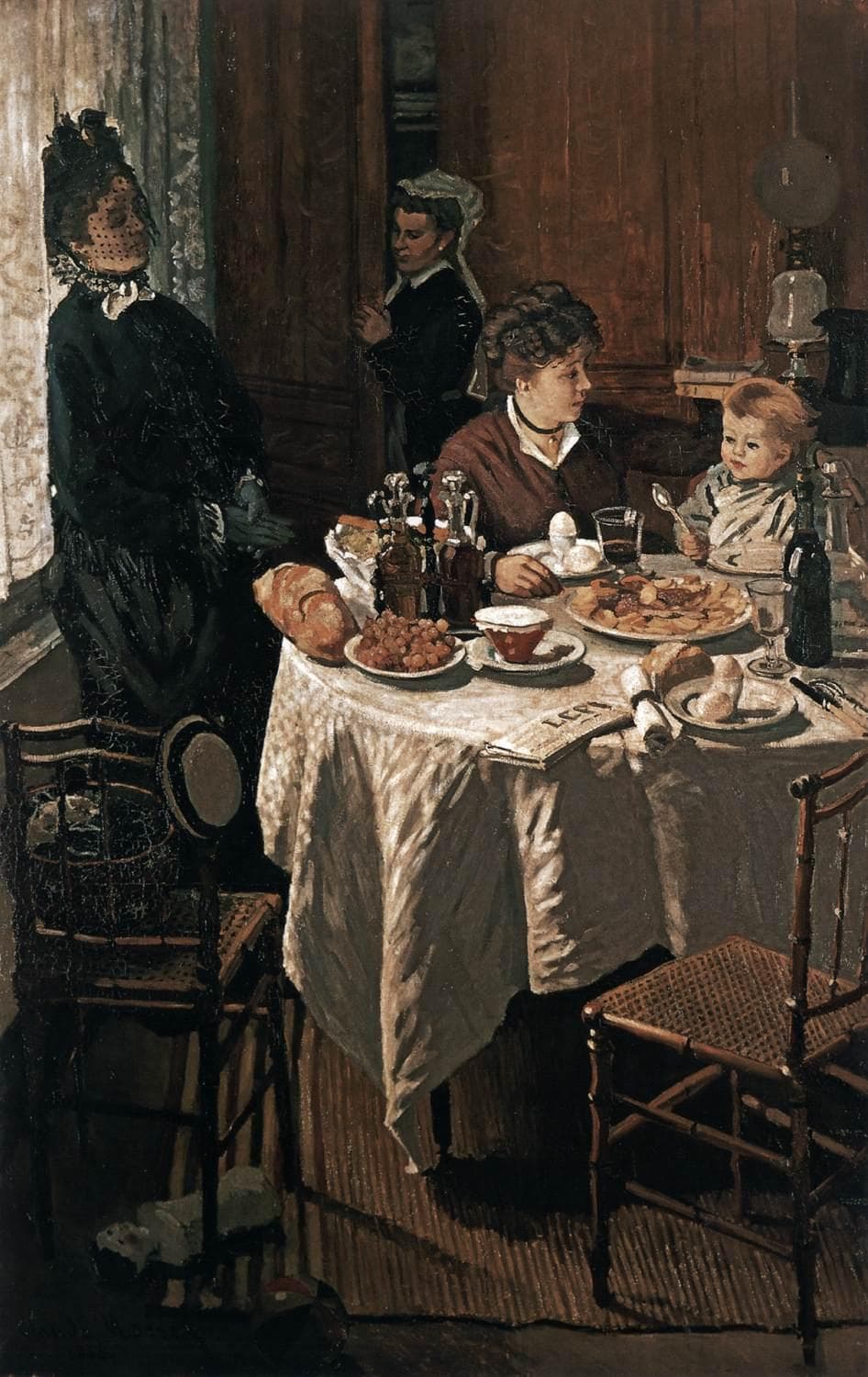
The Lunch
Claude Monet · 1868
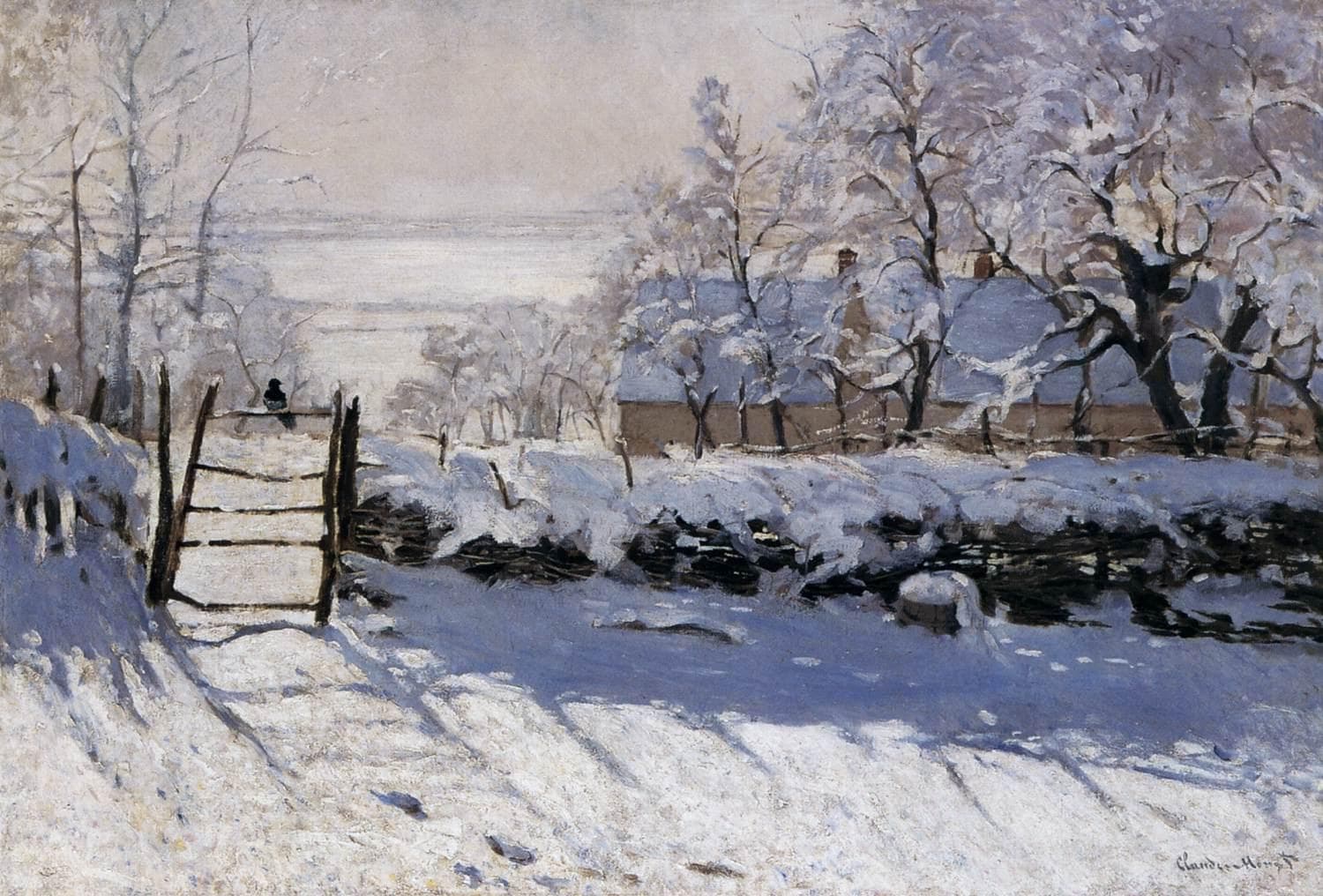
The Magpie
Claude Monet · 1868–69
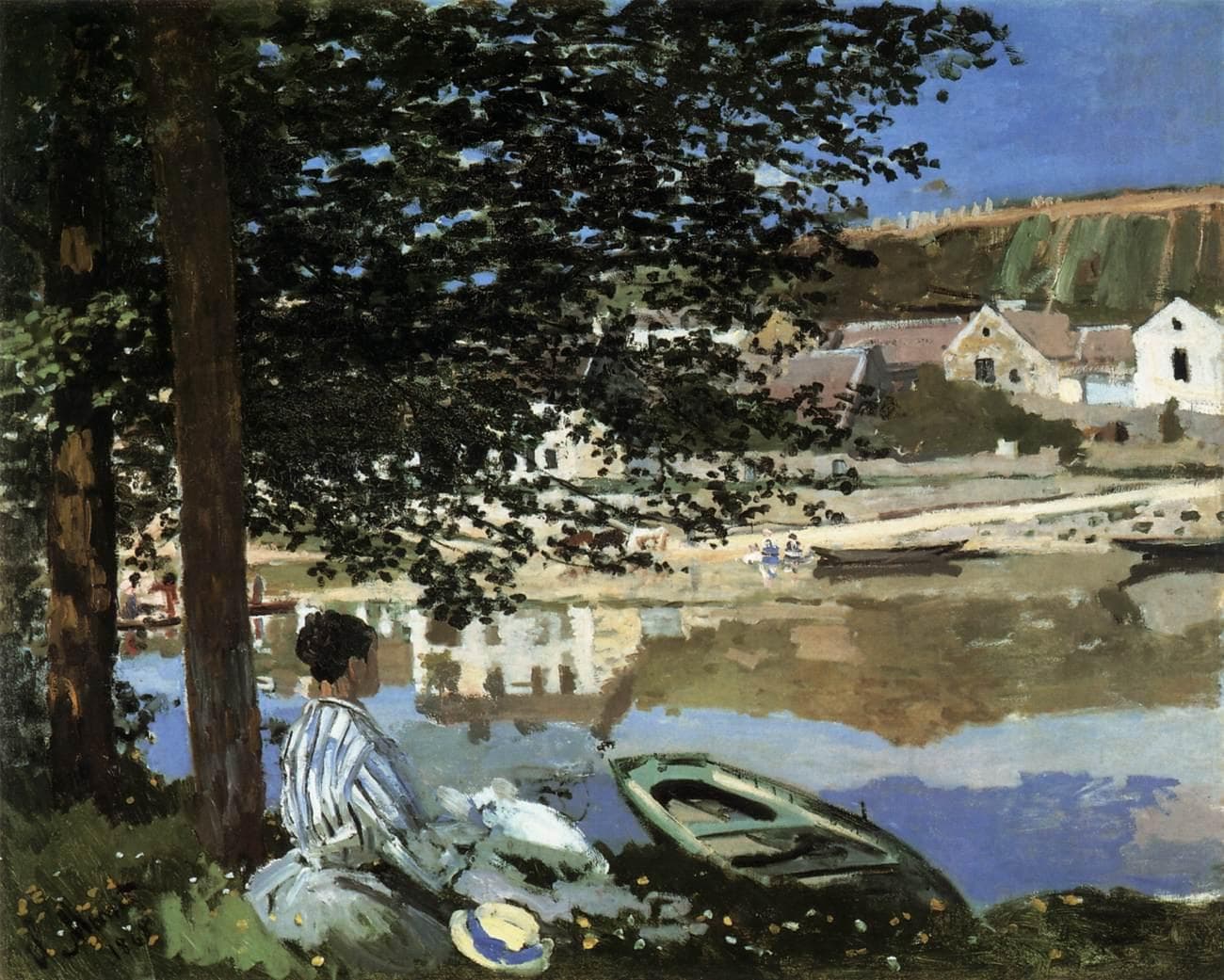
On the Bank of the Seine, Bennecourt
Claude Monet · 1868
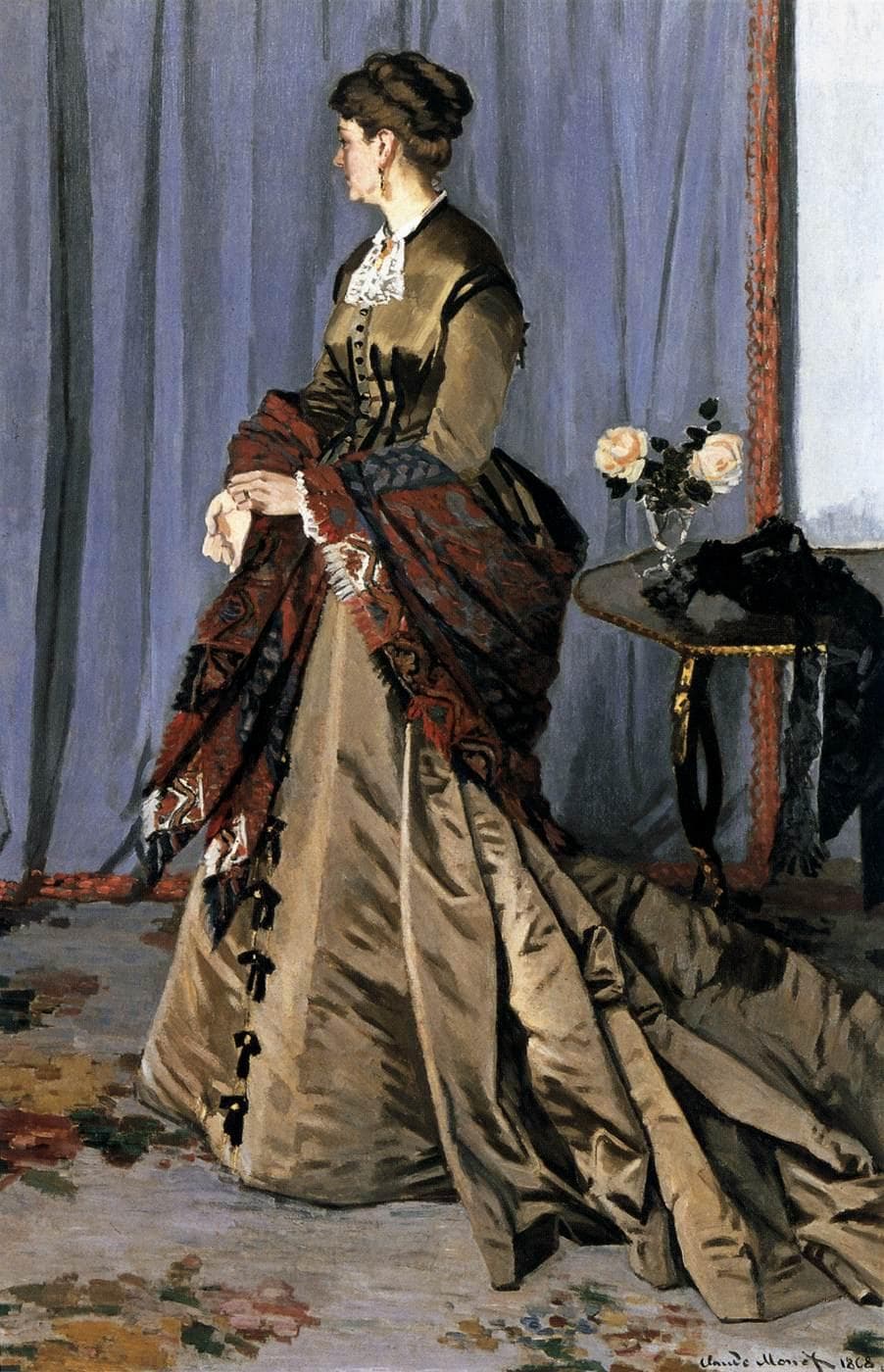
Madame Louis Joachim Gaudibert
Claude Monet · 1868
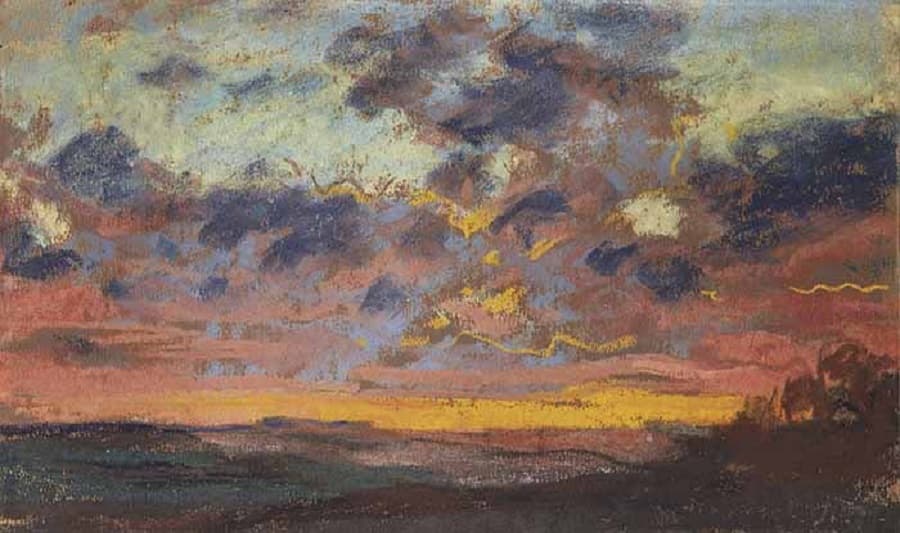
Sunset (Coucher de soleil)
Claude Monet · c. 1868
Kindred works
You may also study
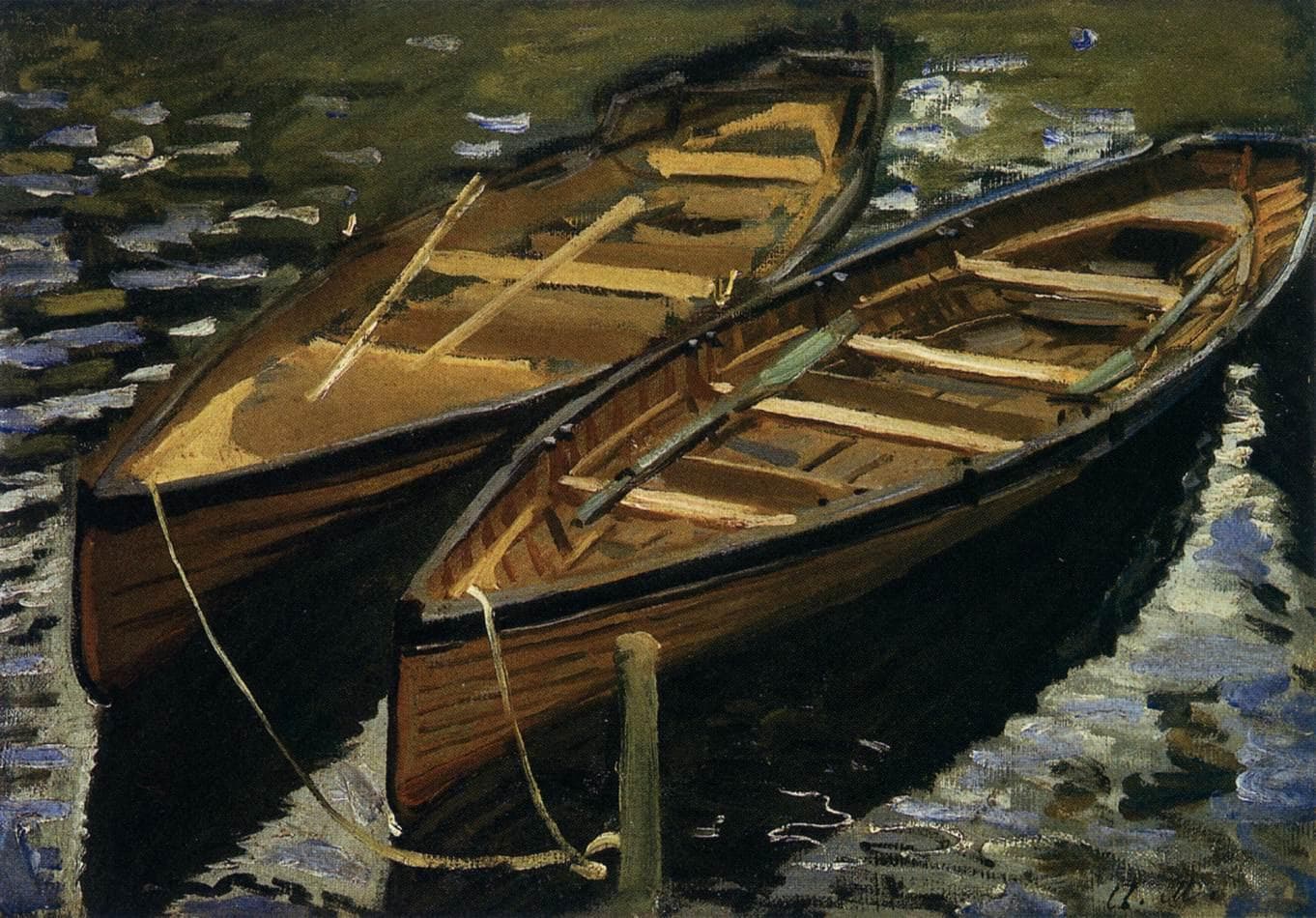
The Boats
Claude Monet · 1869
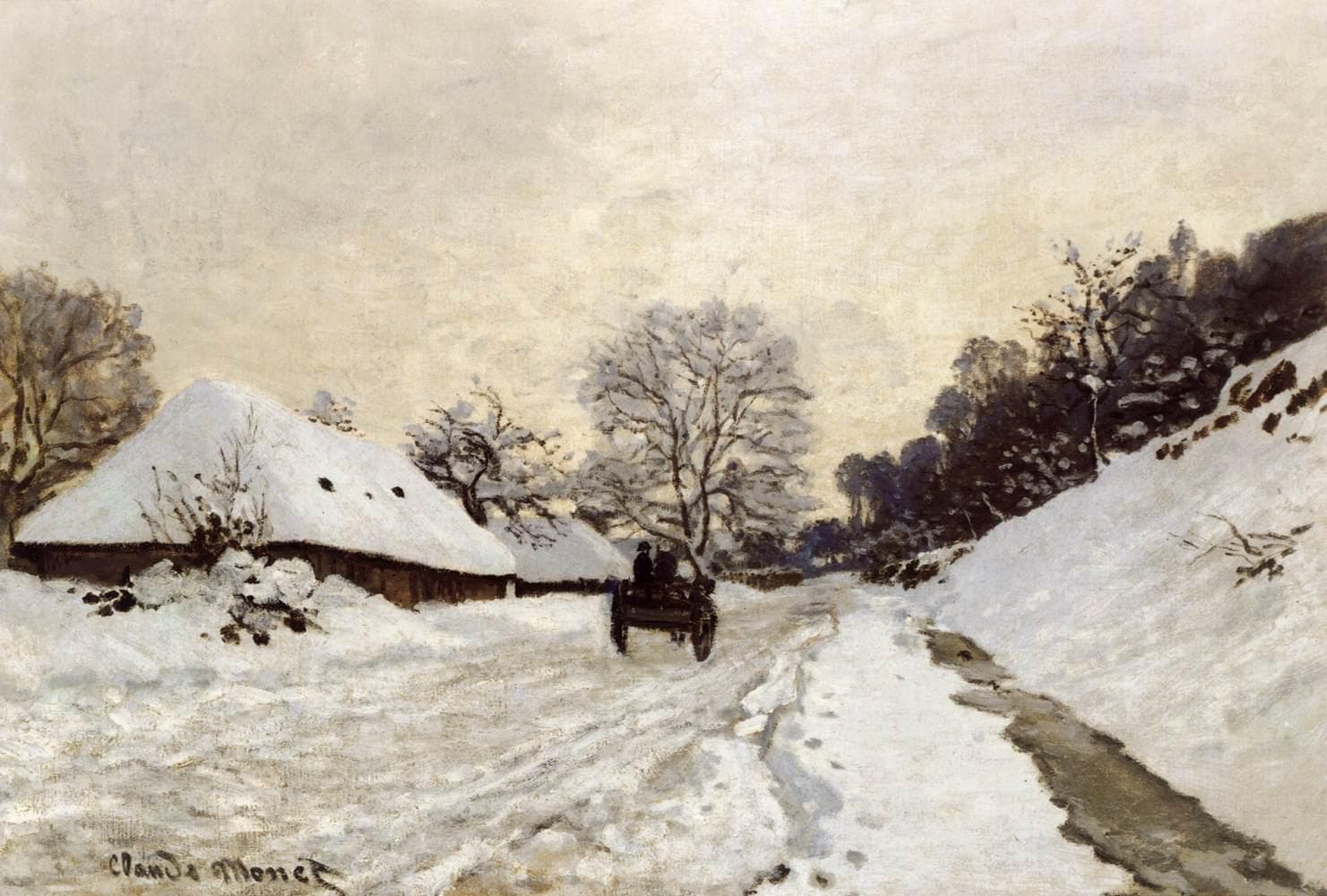
A Cart on the Snowy Road at Honfleur
Claude Monet · c. 1867
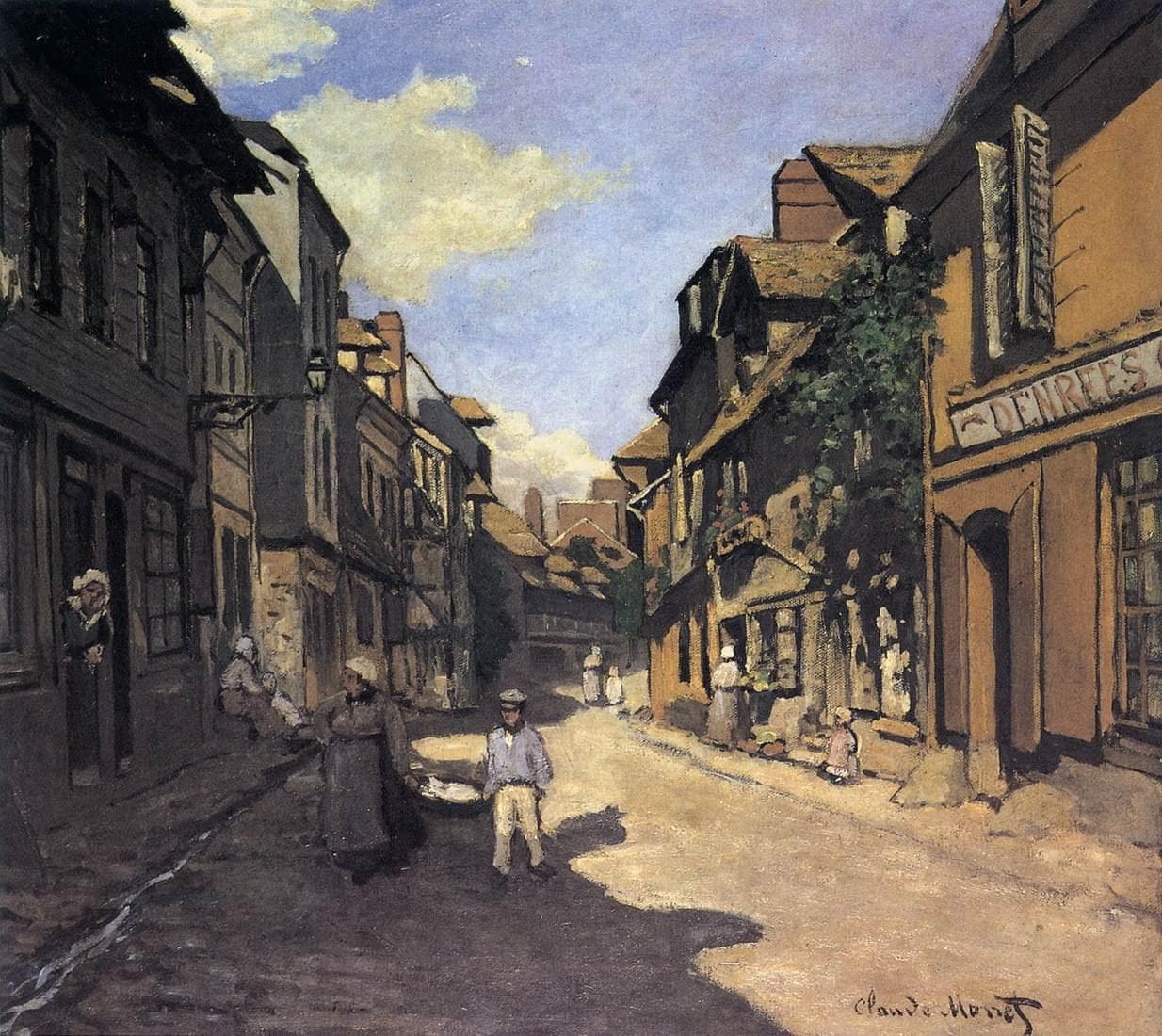
Rue de la Bavolle, Honfleur
Claude Monet · 1864
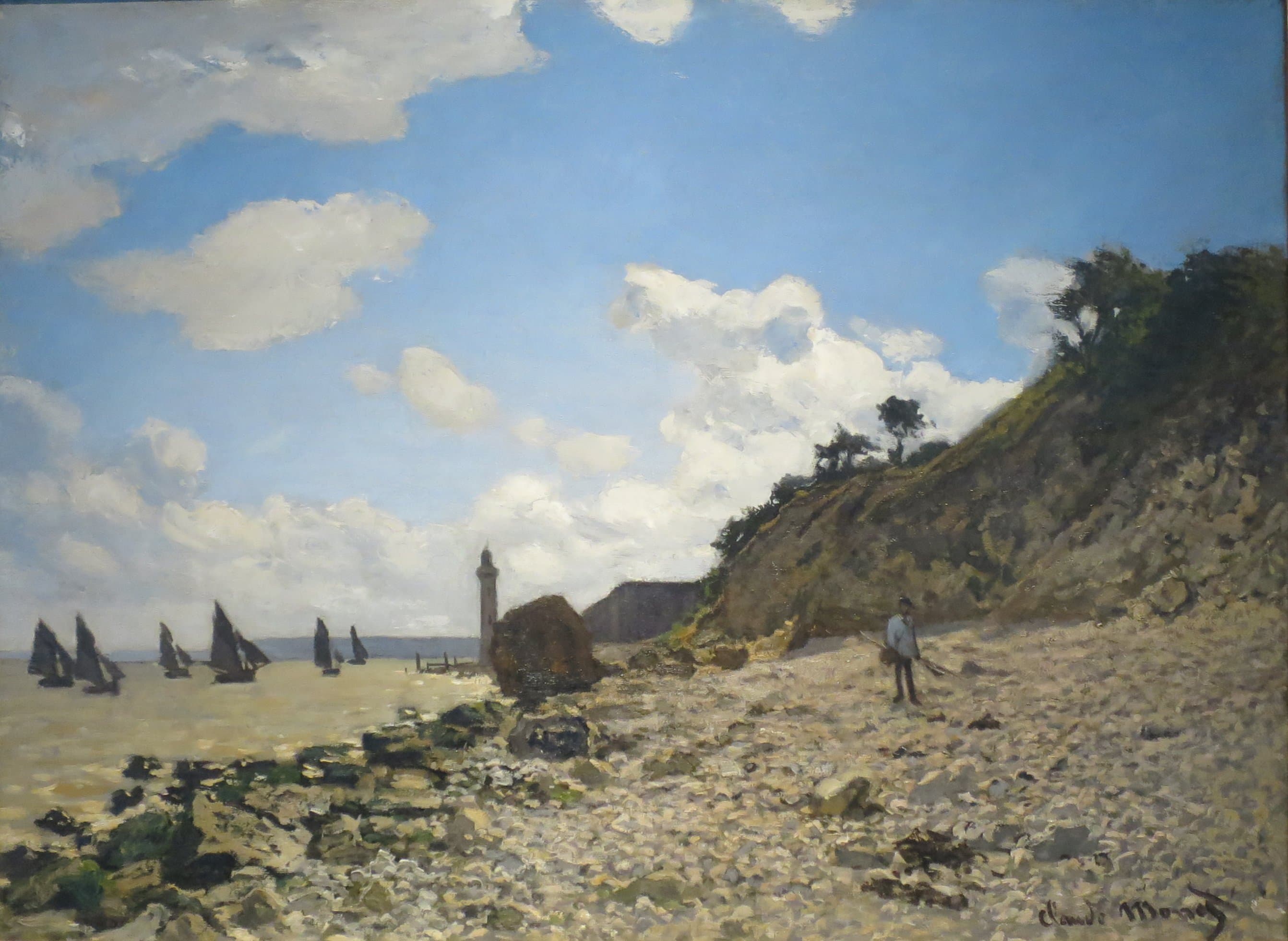
The Beach at Honfleur
Claude Monet · 1864–66
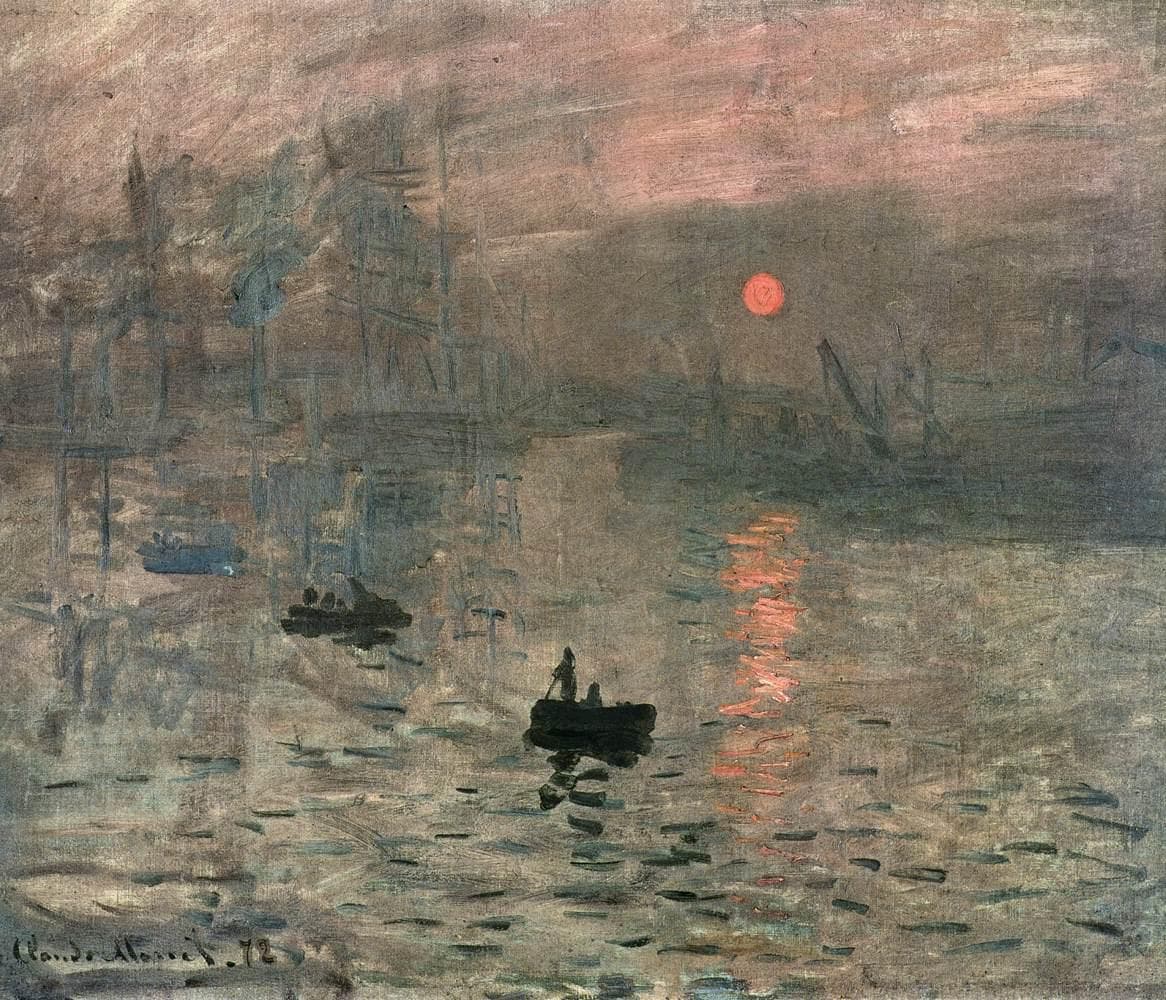
Impression, Sunrise
Claude Monet · 1872

Ophelia
John Everett Millais · 1851–52

The Great Wave off Kanagawa
Katsushika Hokusai · c. 1830–32
The Birth of Venus
Sandro Botticelli · c. 1484–1486