Image: Museum Barberini, Potsdam (Hasso Plattner Collection) · Public domain · via Wikimedia Commons
Impressionism
The Port of Le Havre, Night Effect
Claude Monet, 1872
The Port of Le Havre, Night Effect is an 1872 painting by Claude Monet of the harbor of Le Havre after dark, its masts and hulls lost in blue-black shadow and pricked by red, green and yellow lights. It is in the Hasso Plattner Collection at the Museum Barberini, Potsdam.
- Artist
- Claude Monet
- Date
- 1872
- Medium
- Oil on canvas
- Dimensions
- 60 × 81 cm
- Collection
- Museum Barberini, Potsdam, Germany
- Movement
- Impressionism
- Catalogue
- Wildenstein 264
Painted at Étretat and the Normandy Coast
The Port of Le Havre, Night Effect (Le Port du Havre, effet de nuit) is a night view of the harbor at Le Havre that Claude Monet painted in 1872, during the same visit to his hometown that produced Impression, Sunrise. Dark masts and hulls stand in deep blue water, lit only by the lamps of the port and their reflections. The painting belongs to the Hasso Plattner Collection at the Museum Barberini in Potsdam, which catalogues it as Wildenstein 264.
What you are looking at
At first glance the canvas is almost uniformly dark: a deep blue-green that runs from the water up into the night sky with hardly a break. Slowly shapes appear. On the left, tall masts and rigging rise out of the darkness, crowded together, with the dim hulls of ships below. On the right, close to us, a single large mast and a dark sail lean across the picture, and in the lower right the bow of a boat noses into view.
Across the middle runs a line of lights, the lamps along the far quays, painted as small dots of white and pale yellow. Below each one, on the water, hangs a broken vertical reflection, a short column of dashes in yellow, white or pale green. Two or three lights are red, and their reflections burn like small flames in the dark water near the center. A greenish glow at lower left suggests another lamp, out of sight. The sky is a slightly lighter blue than the water, with faint streaks of cloud. There is no moon.
Where and when it was painted
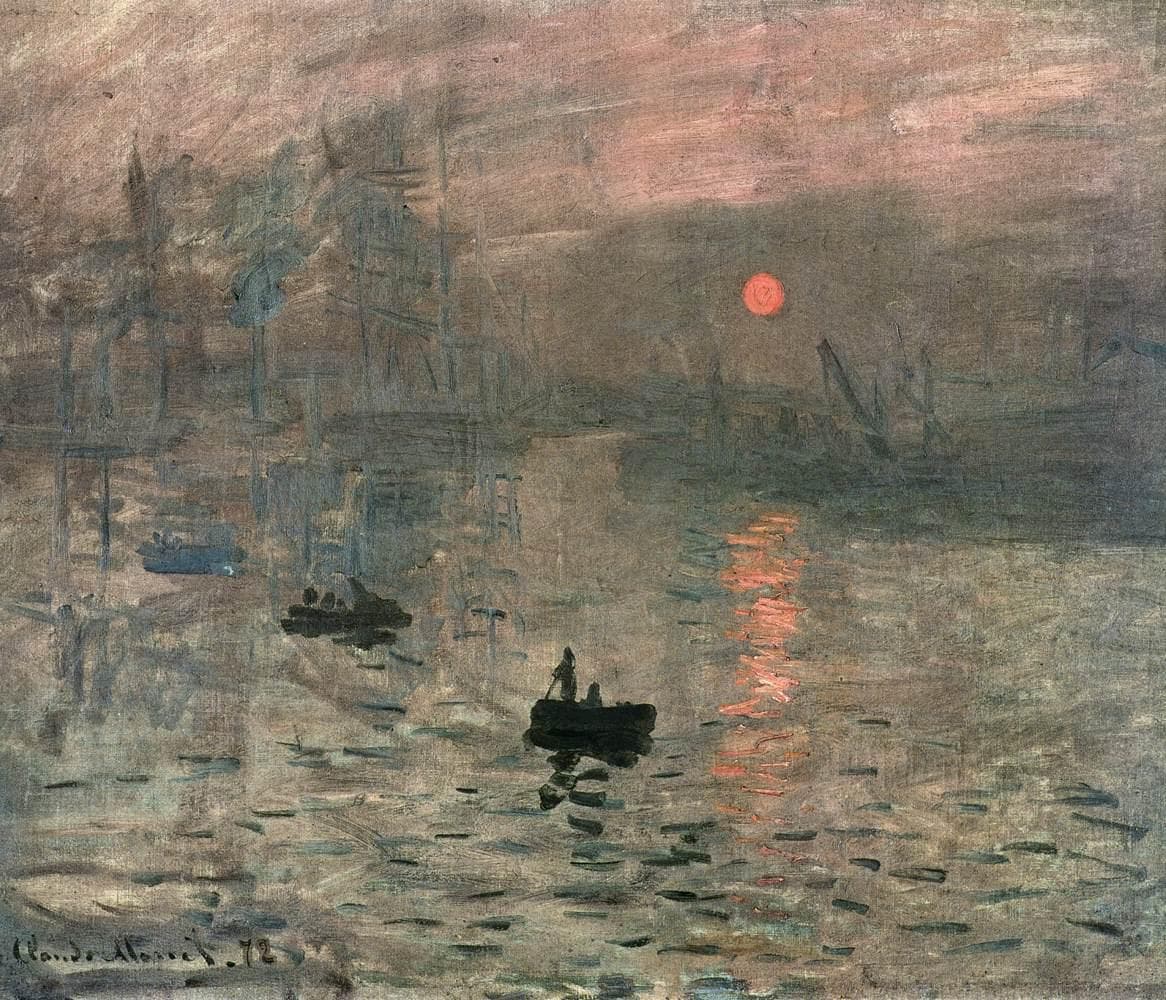
In 1872 Monet returned to Le Havre, the port at the mouth of the Seine where he had grown up, and painted a group of harbor views from a window overlooking the outer port. The most famous of them, Impression, Sunrise, shows the same harbor at dawn, in orange and blue. The Museum Barberini describes this night view as a pendant to that picture, and states that it was shown at the first Impressionist exhibition in Paris in 1874, where Impression, Sunrise gave the movement its name. Le Havre and the rest of the coast are covered on our Normandy coast hub.
How it was painted
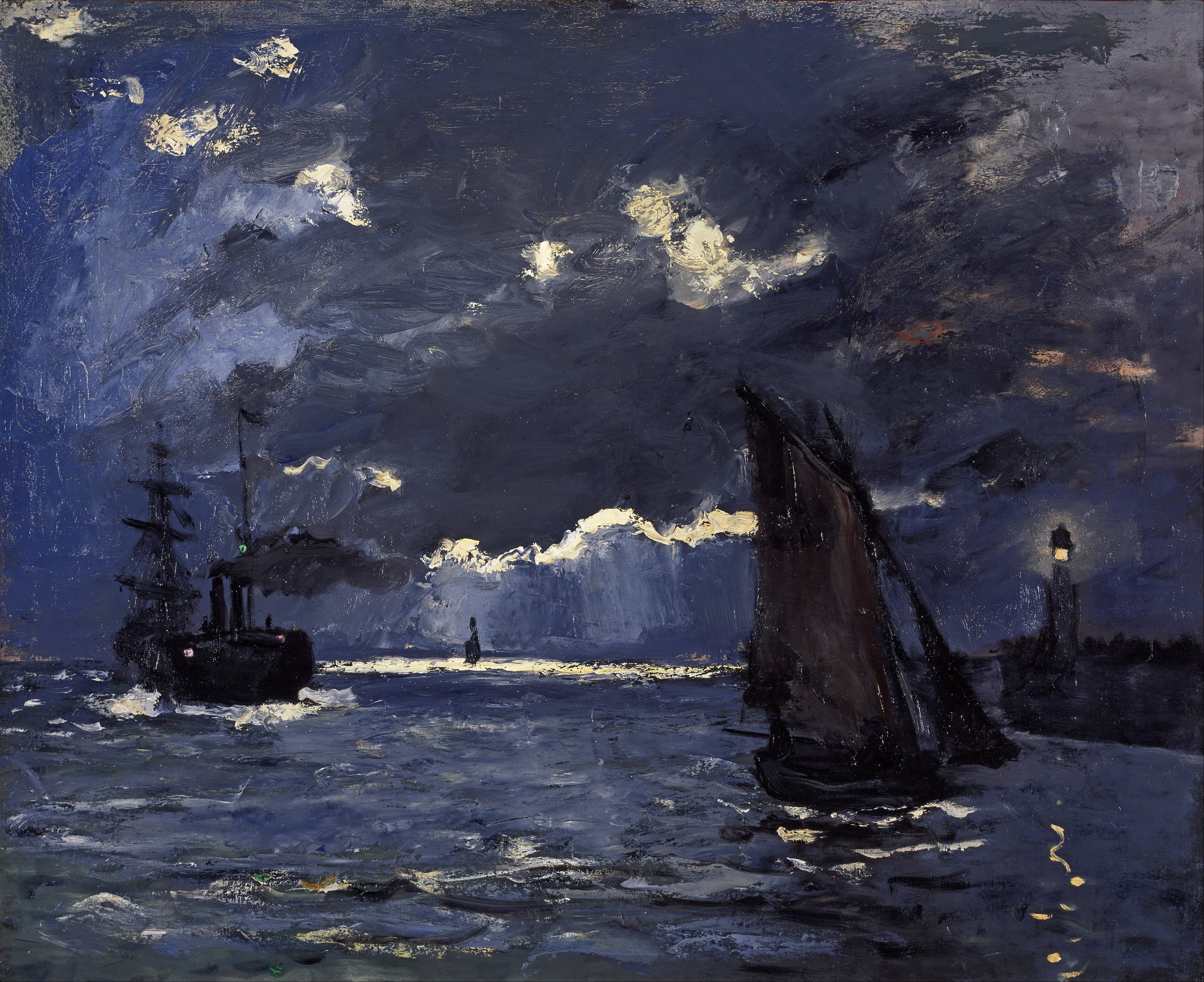
The picture is painted thinly and quickly, with the dark ground doing much of the work. Monet laid in the blue-black of sky and water in broad, fluid strokes, then drew the masts with a few dark lines and placed the lights and reflections on top in small, separate touches of pure color. The effect depends on contrast: a few bright points against a field of dark. It is the same principle he used at dawn in Impression, Sunrise, with its single orange sun, applied to the much harder problem of painting by artificial light. He had tried a night harbor before, as a young man at Honfleur, in A Seascape, Shipping by Moonlight, but there the light came from the moon; here it comes from the gas lamps of a modern industrial port.
The Le Havre harbor pictures
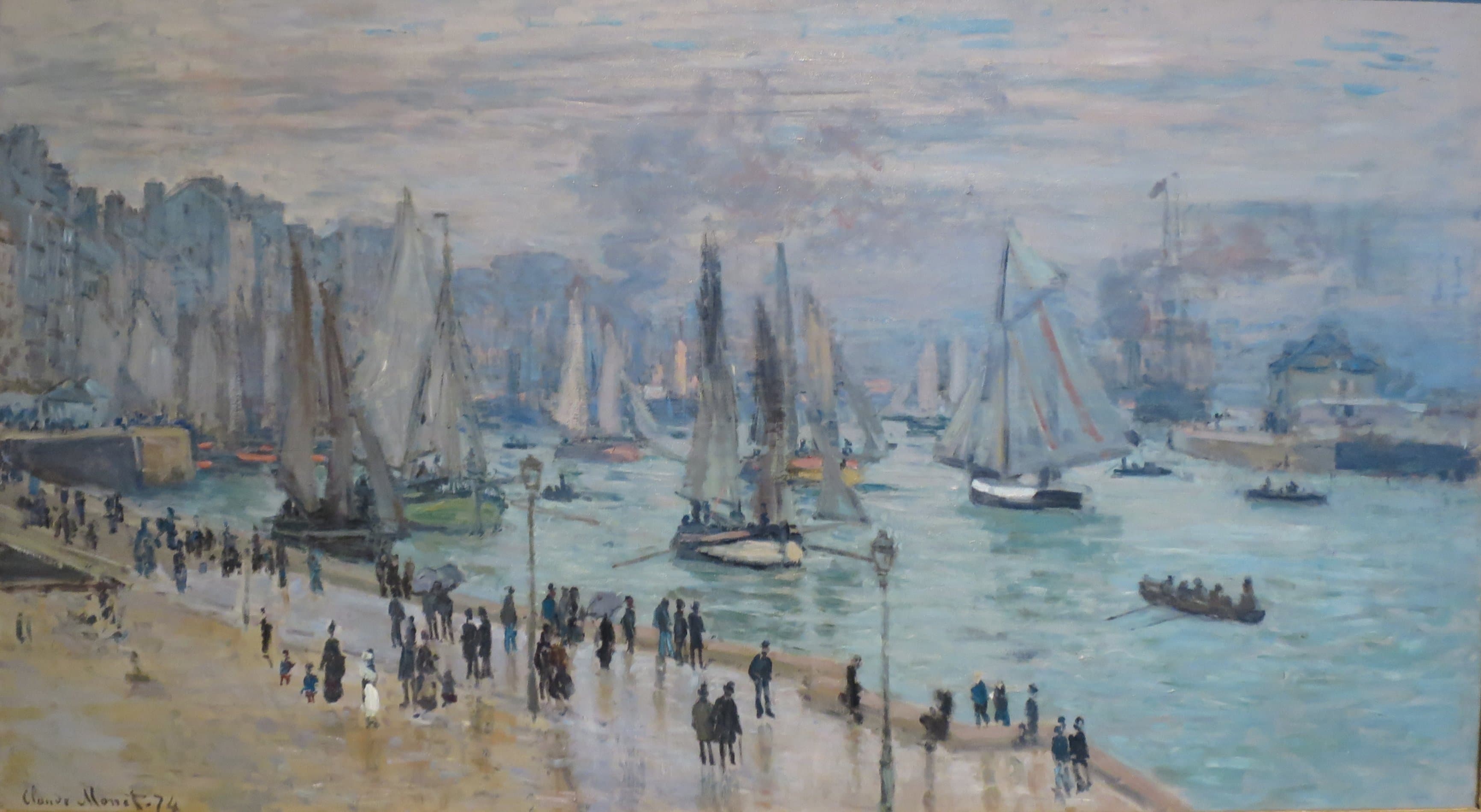
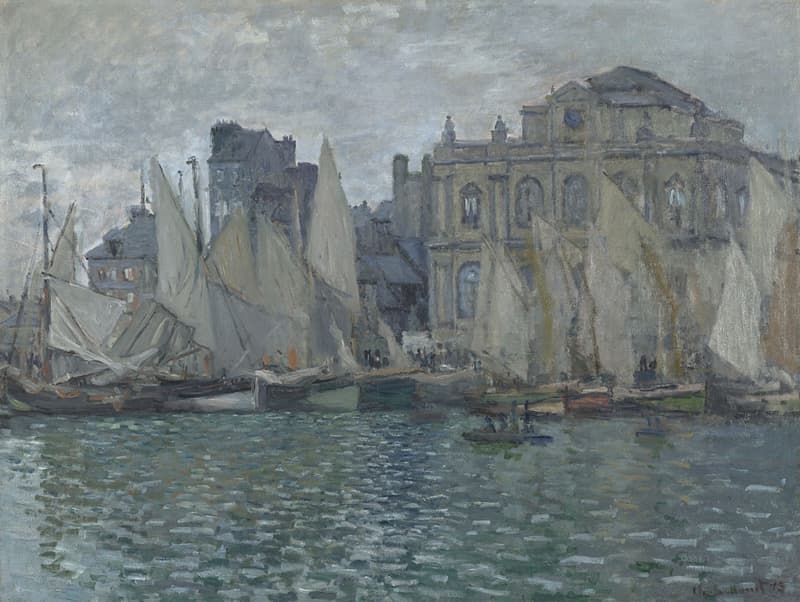
The 1872 harbor views include Impression, Sunrise and other paintings of ships and docks, and Monet returned in 1874 for Fishing Boats Leaving the Harbor, Le Havre and Embankment in Le Havre. In 1873 he painted the harbor seen from the museum in The Museum at Le Havre, now in London. Compared with all of these, the night effect is the most daring: an almost dark picture, held together by a handful of lights.
Where to see it
The painting is part of the Hasso Plattner Collection, one of the largest private collections of Impressionist painting, shown at the Museum Barberini in Potsdam, near Berlin. Like other works from the collection it is sometimes lent elsewhere, so check the museum's online collection for its current location. The Barberini also shows Monet's Venice canvas Le Palais Ducal. For other collections, see where to see Monet's paintings.
Questions & answers
Where is Monet's The Port of Le Havre, Night Effect?
It belongs to the Hasso Plattner Collection and is shown at the Museum Barberini in Potsdam, near Berlin. Works from the collection are sometimes lent to other museums, so check the Barberini's online collection for its current location before visiting.
When was it painted?
In 1872, when Monet visited his hometown of Le Havre and painted a group of harbor views, including Impression, Sunrise. The Museum Barberini describes this night scene as that picture's pendant and says it was shown at the first Impressionist exhibition in 1874.
What does The Port of Le Havre, Night Effect show?
The harbor at Le Havre after dark: masts, sails and hulls in deep blue-black shadow, with a line of lamps along the quays reflected in the water as broken columns of yellow, white and red light.
How is it related to Impression, Sunrise?
Both show the harbor at Le Havre in 1872 from a similar viewpoint, one at dawn with an orange sun and one at night with lamplight. Both rely on a few bright touches of color against a darker field, and both were reportedly shown in the 1874 exhibition.
More by the artist
Claude Monet

Bridge over a Pond of Water Lilies
Claude Monet · 1899

Woman with a Parasol – Madame Monet and Her Son
Claude Monet · 1875

Sunset in Venice
Claude Monet · 1908–12

La Grenouillère
Claude Monet · 1869

Beach in Pourville
Claude Monet · 1882

Springtime
Claude Monet · 1872

Boating on the River Epte
Claude Monet · 1890

The Seine at Asnières (Hermitage)
Claude Monet · 1873
Also painted in 1872
The same year
The Seine at Rouen
Claude Monet · 1872
The Tea Service
Claude Monet · 1872
Carrières-Saint-Denis
Claude Monet · 1872
The Petit Bras of the Seine at Argenteuil
Claude Monet · 1872
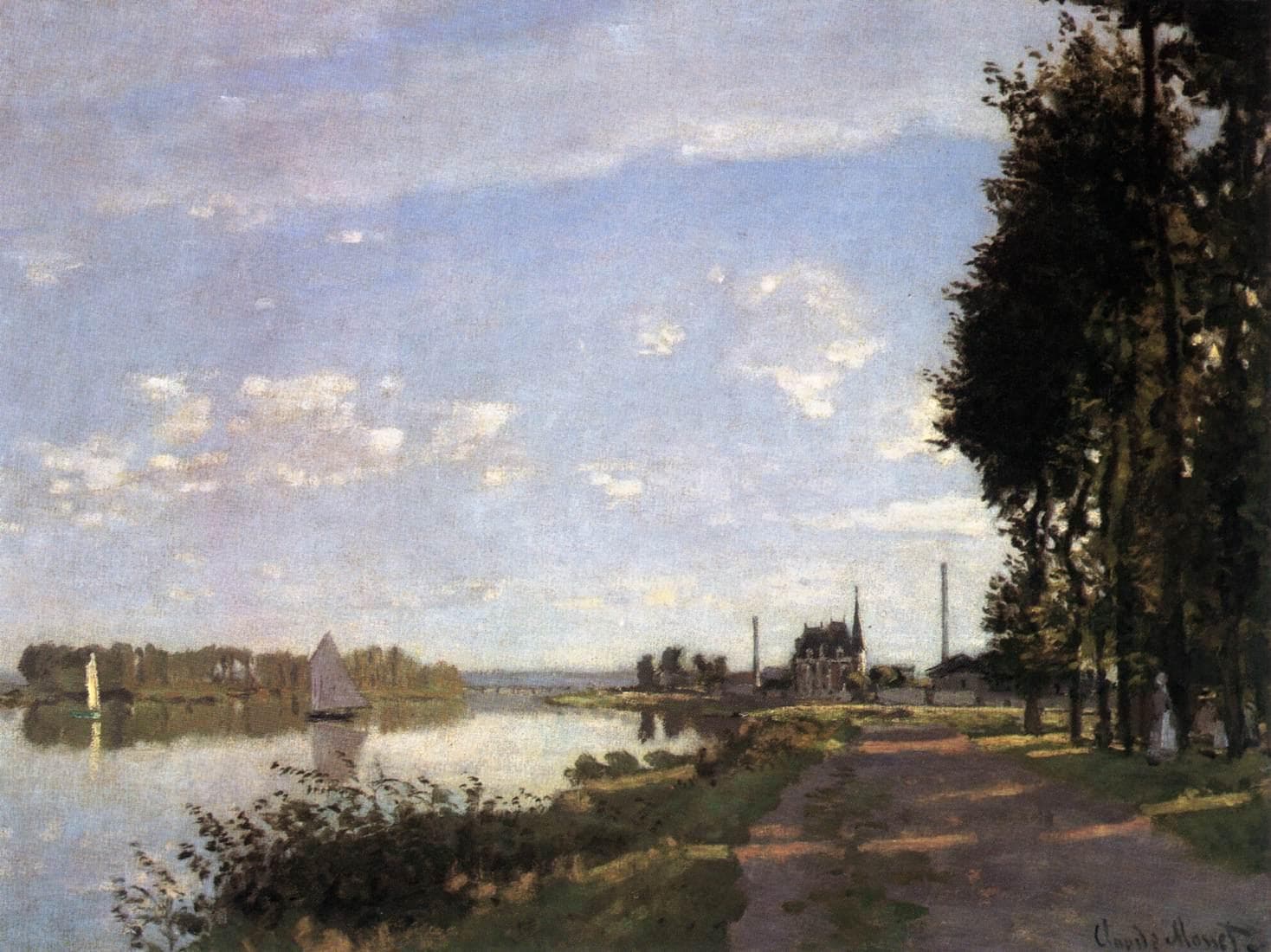
Riverside Path at Argenteuil
Claude Monet · c. 1872
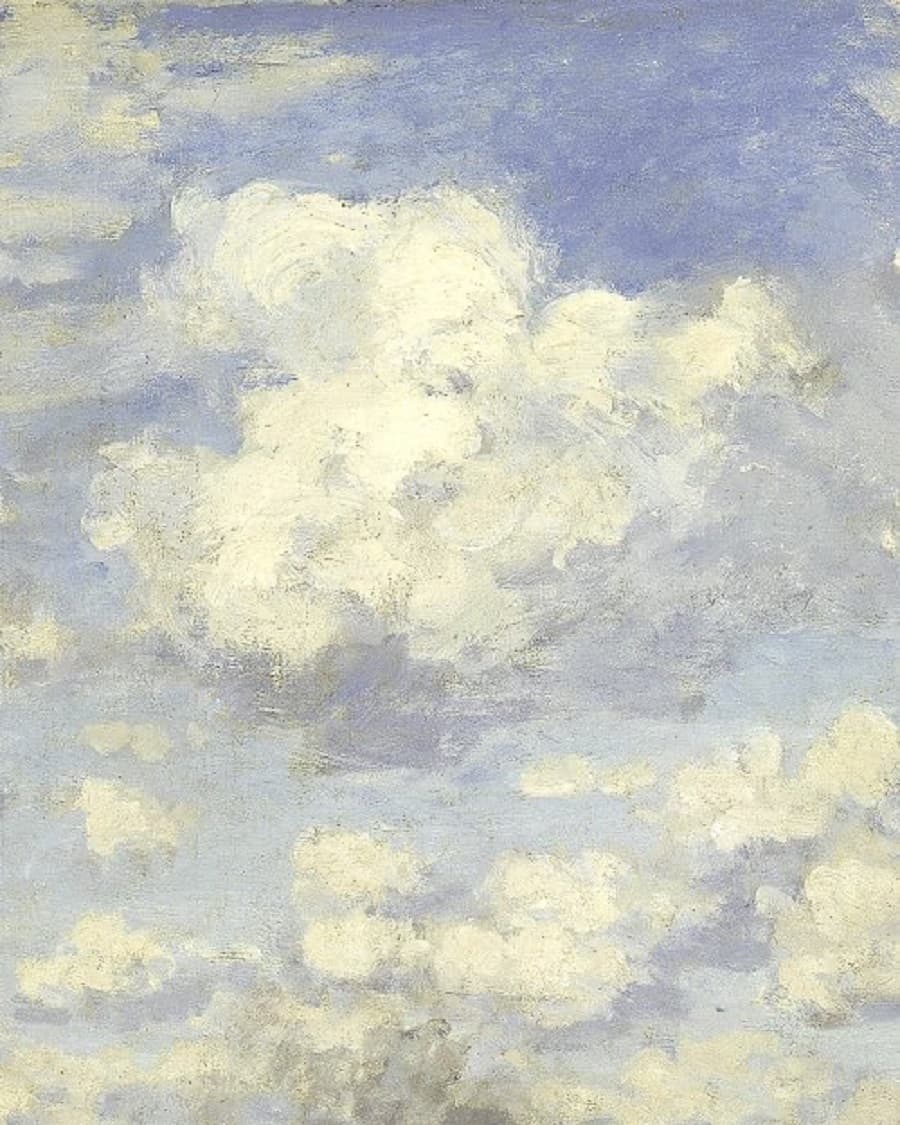
The Basin at Argenteuil
Claude Monet · 1872
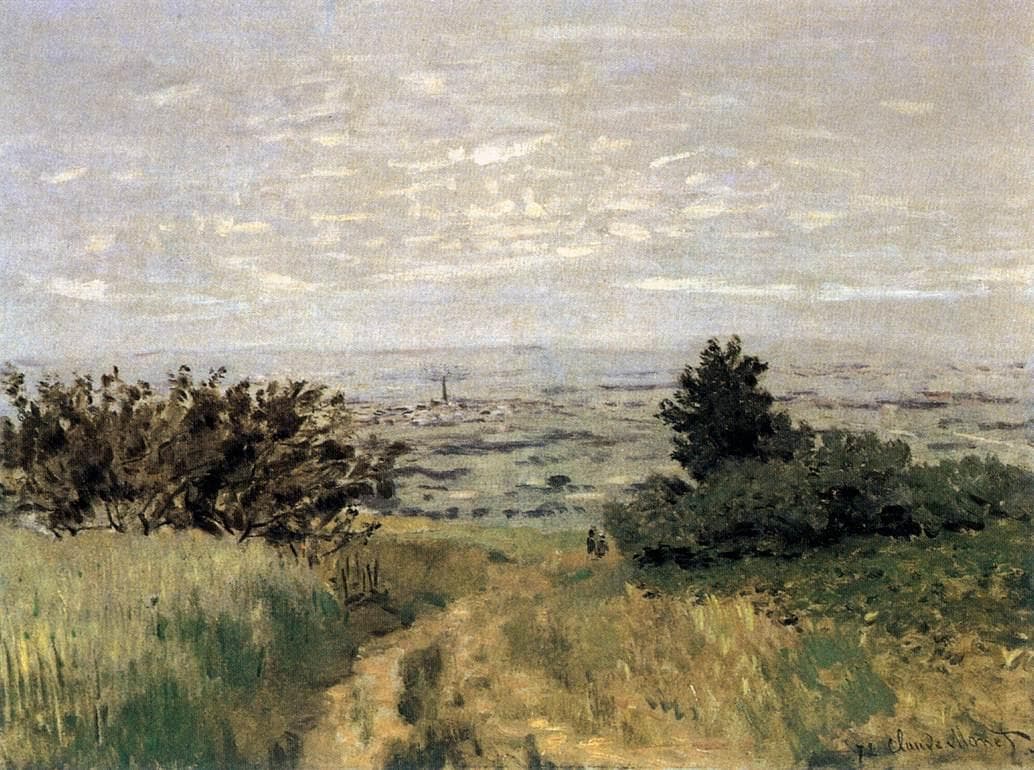
The Plain of Sannois at Argenteuil
Claude Monet · 1872
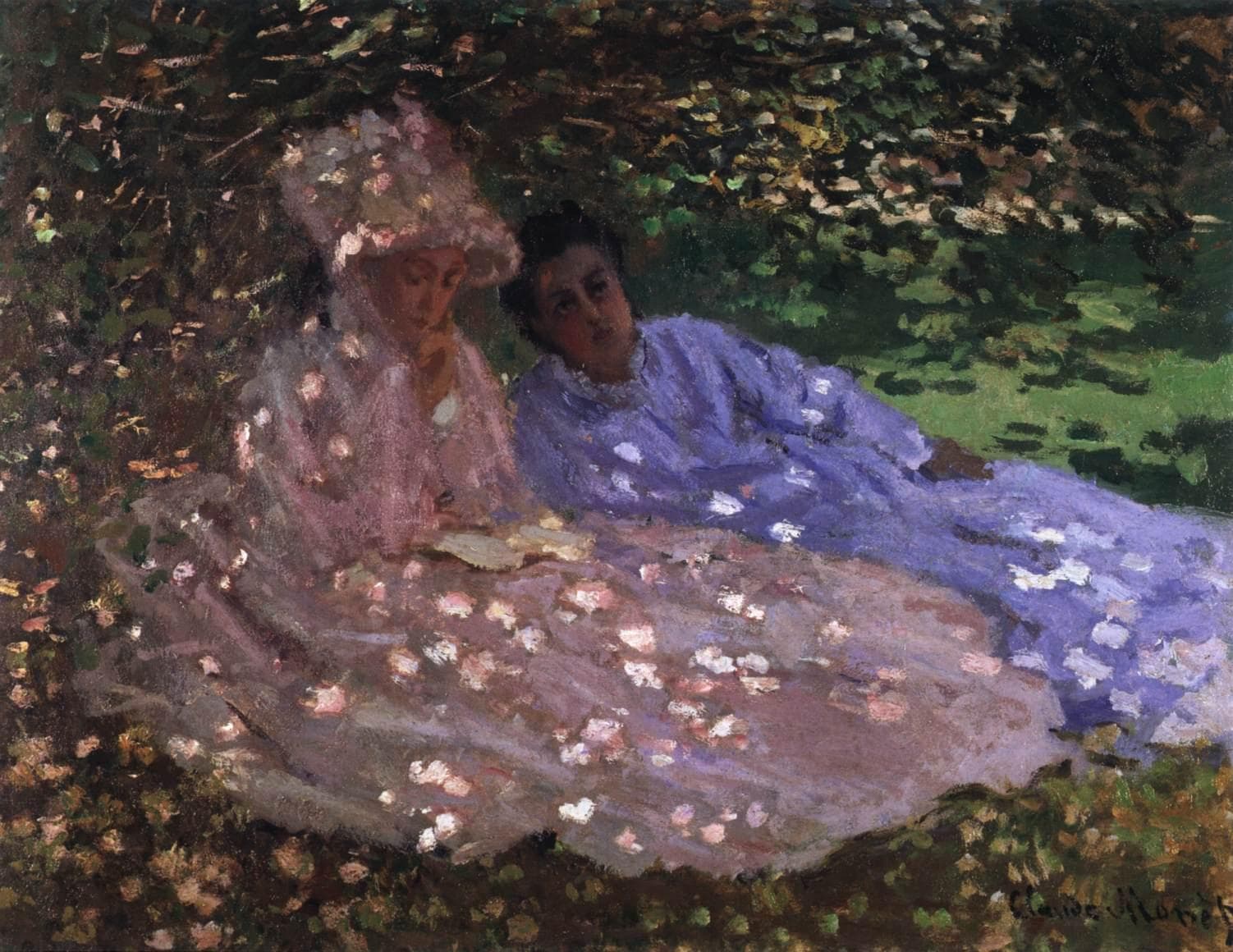
Madame Monet and a Friend in the Garden
Claude Monet · c. 1872
Kindred works
You may also study
Impression, Sunrise
Claude Monet · 1872
A Seascape, Shipping by Moonlight
Claude Monet · c. 1864
Fishing Boats Leaving the Harbor, Le Havre
Claude Monet · 1874
The Museum at Le Havre
Claude Monet · 1873
The Grand Quai at Le Havre
Claude Monet · 1874

Nymphs Dancing to Pan's Flute
Joseph Tomanek

The Scream
Edvard Munch · 1893

Ophelia
John Everett Millais · 1851–52