Collection
Famous Sculptures: The Statues Everyone Should Know
From Michelangelo's David to Canova's kiss, the most famous sculptures and statues in the world, and what to look for when you stand in front of them.
The most famous sculptures in the world include Michelangelo's David in Florence, Rodin's The Thinker in Paris, the Venus de Milo and the Winged Victory of Samothrace in the Louvre, Michelangelo's Pietà in St. Peter's Basilica and Bernini's Apollo and Daphne in Rome. Most of the famous statues people search for were carved in marble in one of three great periods: ancient Greece and its Hellenistic successors, the Italian Renaissance and Baroque, and the Neoclassical and modern age that followed.
This list concentrates on European sculpture in the round, ordered roughly by fame. Below it, a short guide explains why these works became famous, how marble was made to look like skin, lace or a veil, and where to see each one.
01
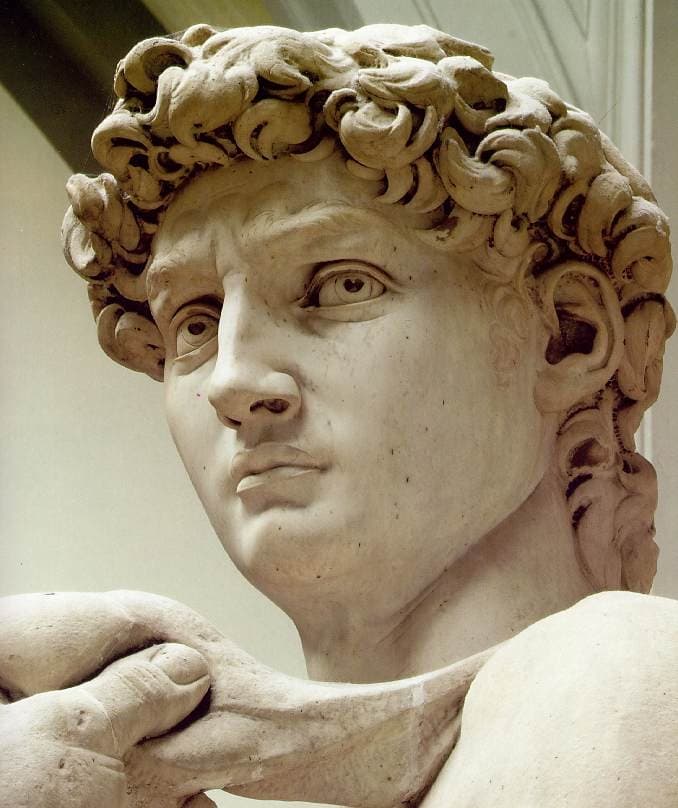
Statue of David
Michelangelo · 1501–04
The Statue of David is a marble sculpture by Michelangelo, carved in Florence between 1501 and 1504, showing the biblical hero before his fight with Goliath. Over five meters tall, it stands in the Galleria dell'Accademia, Florence.
02

The Thinker
Auguste Rodin · Modeled 1880–82; enlarged 1902–03; this cast 1904
The Thinker (Le Penseur) is Auguste Rodin's bronze of a nude man seated on a rock, chin on hand, lost in thought. Conceived in 1880 for The Gates of Hell, it was enlarged in 1902–03; the first monumental cast stands in the garden of the Musée Rodin, Paris.
03

Venus de Milo
Alexandros of Antioch · c. 150–125 BC
The Venus de Milo is an ancient Greek marble statue of a goddess, almost certainly Aphrodite, carved around 150–125 BC and probably the work of Alexandros of Antioch. Found on the island of Milos in 1820 without its arms, it has been in the Louvre in Paris since 1821.
04
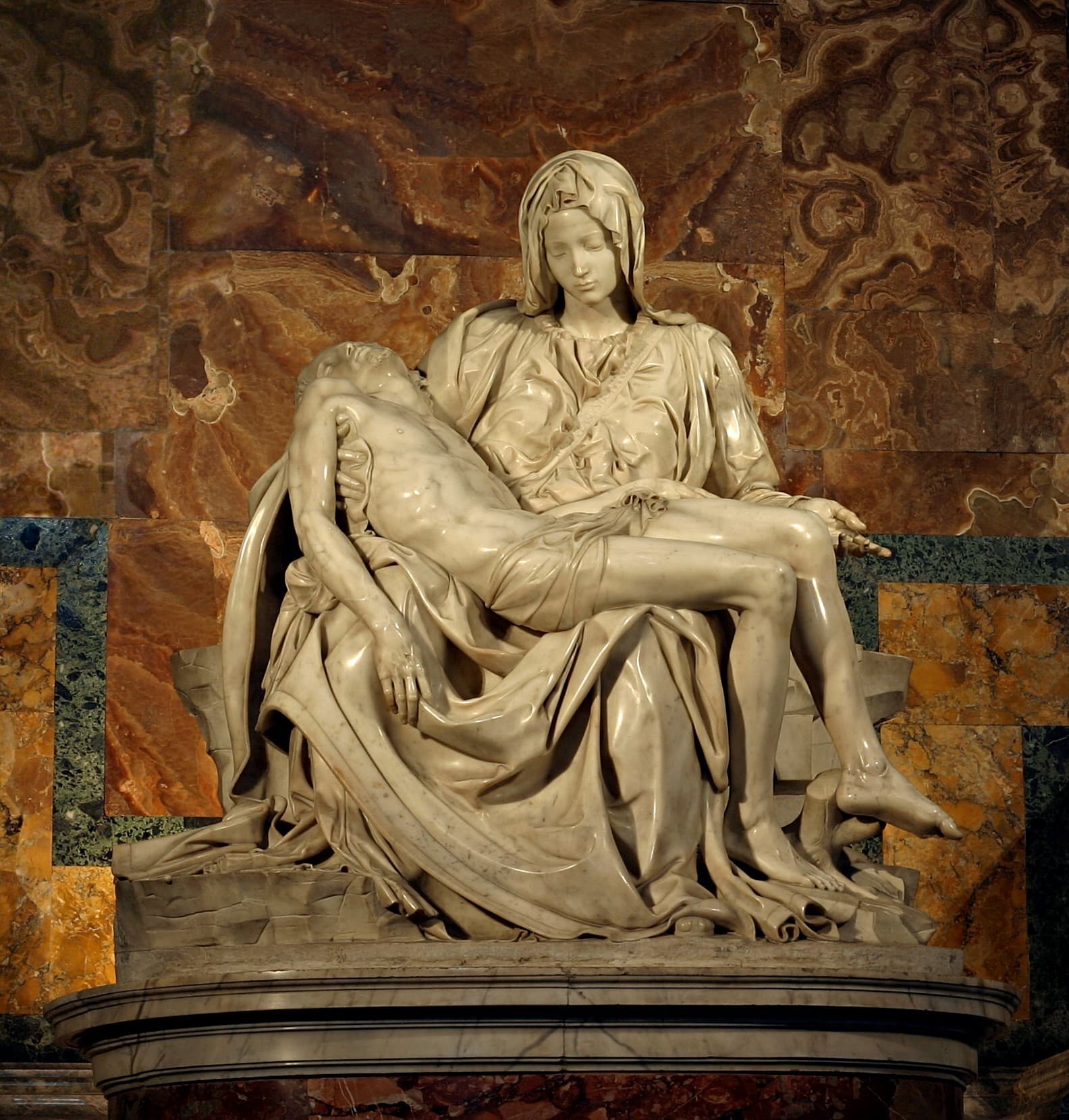
Pietà
Michelangelo · 1498–1499
The Pietà, Michelangelo's marble of the Virgin Mary holding the dead Christ across her lap, was carved in 1498–1499 when he was in his early twenties. It is his only signed work and stands in St. Peter's Basilica in Vatican City.
05
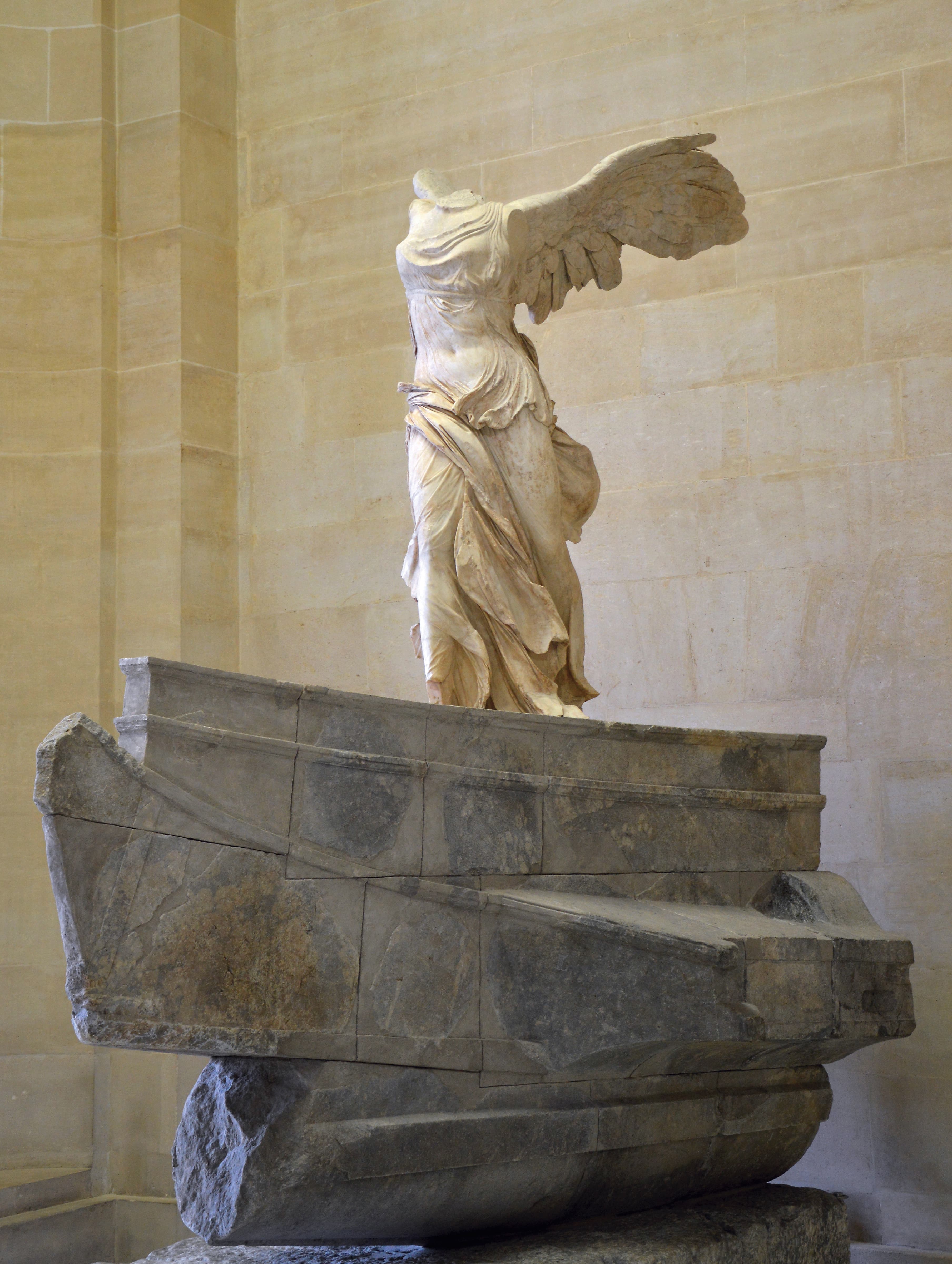
Winged Victory of Samothrace
Artist Unknown · c. 200–190 BC
The Winged Victory of Samothrace is a Hellenistic marble statue of Nike, the Greek goddess of victory, landing on the prow of a warship, carved around 200–190 BC. Found on Samothrace in 1863, it stands at the top of the Daru staircase in the Louvre.
06
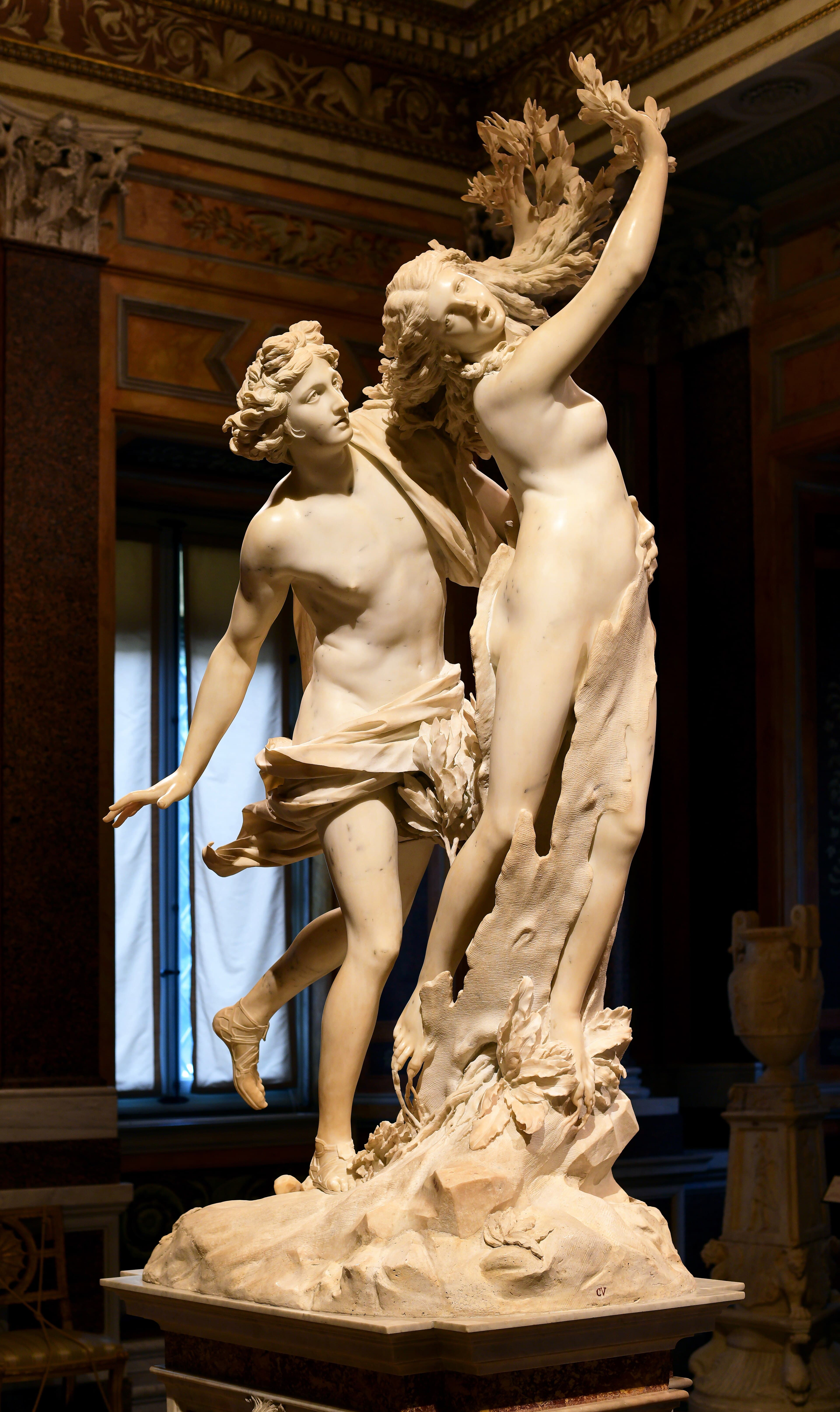
Apollo and Daphne
Gian Lorenzo Bernini · 1622–1625
Apollo and Daphne is a life-size marble sculpture by Gian Lorenzo Bernini, carved in 1622–1625, showing the nymph Daphne turning into a laurel tree as the god Apollo catches her. It is in the Galleria Borghese in Rome.
07
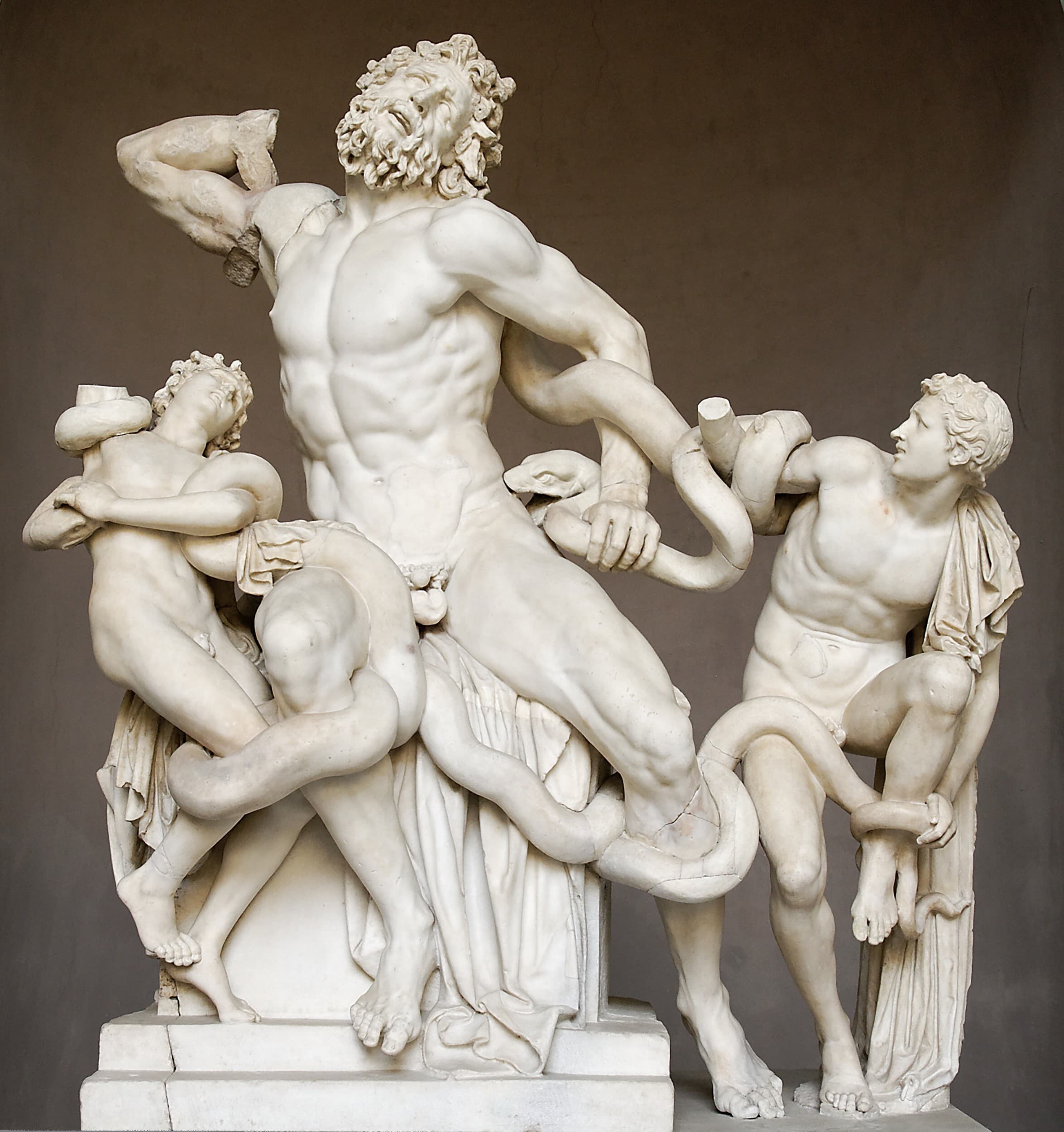
Laocoön and His Sons
Agesander of Rhodes & Athenodoros of Rhodes & Polydorus of Rhodes · c. 200 BC – AD 70 (date debated); excavated 1506
Laocoön and His Sons, often simply called the Laocoon, is the ancient marble group of the Trojan priest and his two sons crushed by sea serpents, attributed by Pliny to Agesander, Athenodoros and Polydorus of Rhodes. Dug up in Rome in 1506, it is in the Vatican Museums.
08
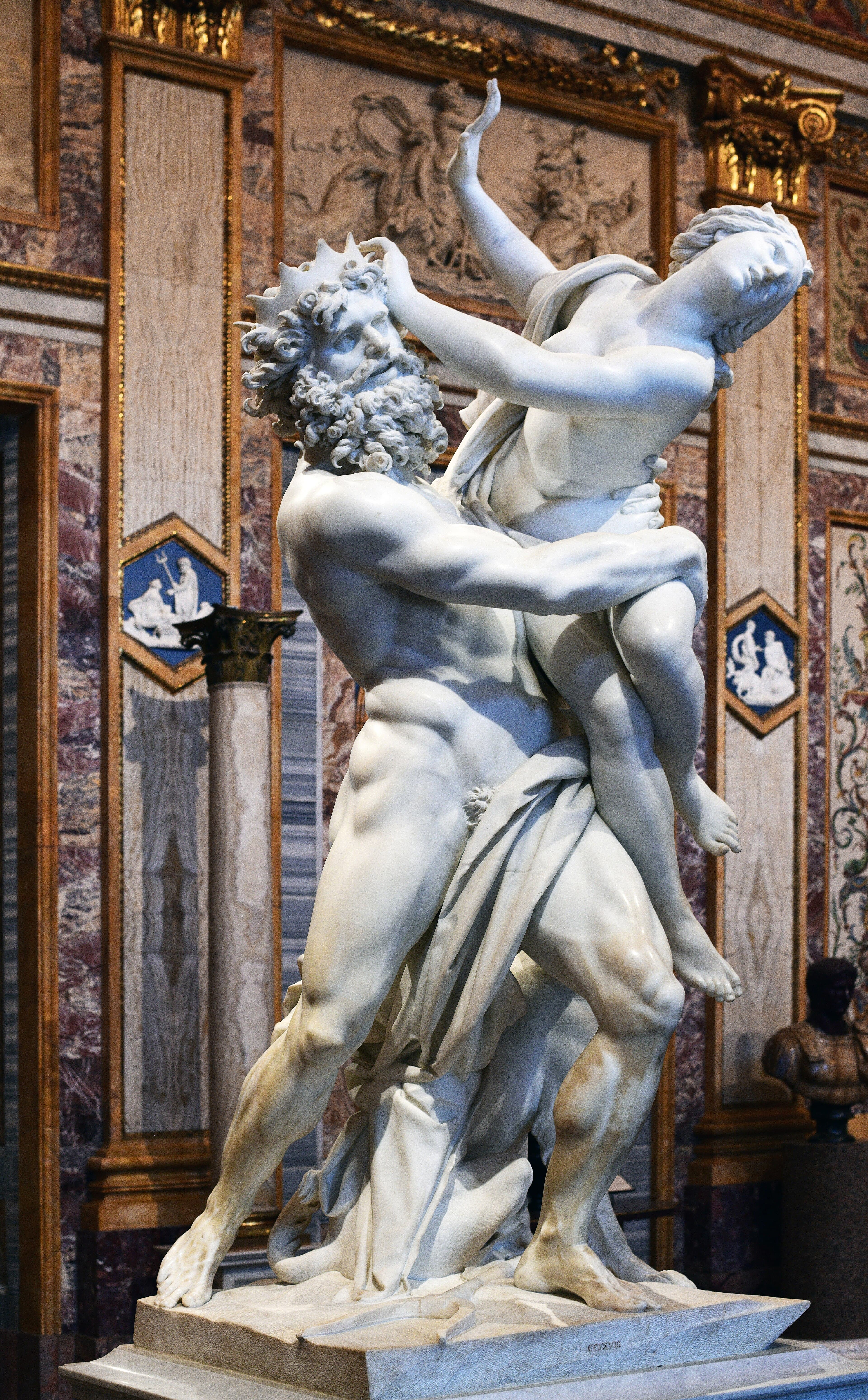
The Rape of Proserpina
Gian Lorenzo Bernini · 1621–1622
The Rape of Proserpina is a marble group by Gian Lorenzo Bernini, carved in 1621–1622 when he was 23, showing Pluto, god of the underworld, seizing Proserpina. It is in the Galleria Borghese in Rome; the title means abduction.
09
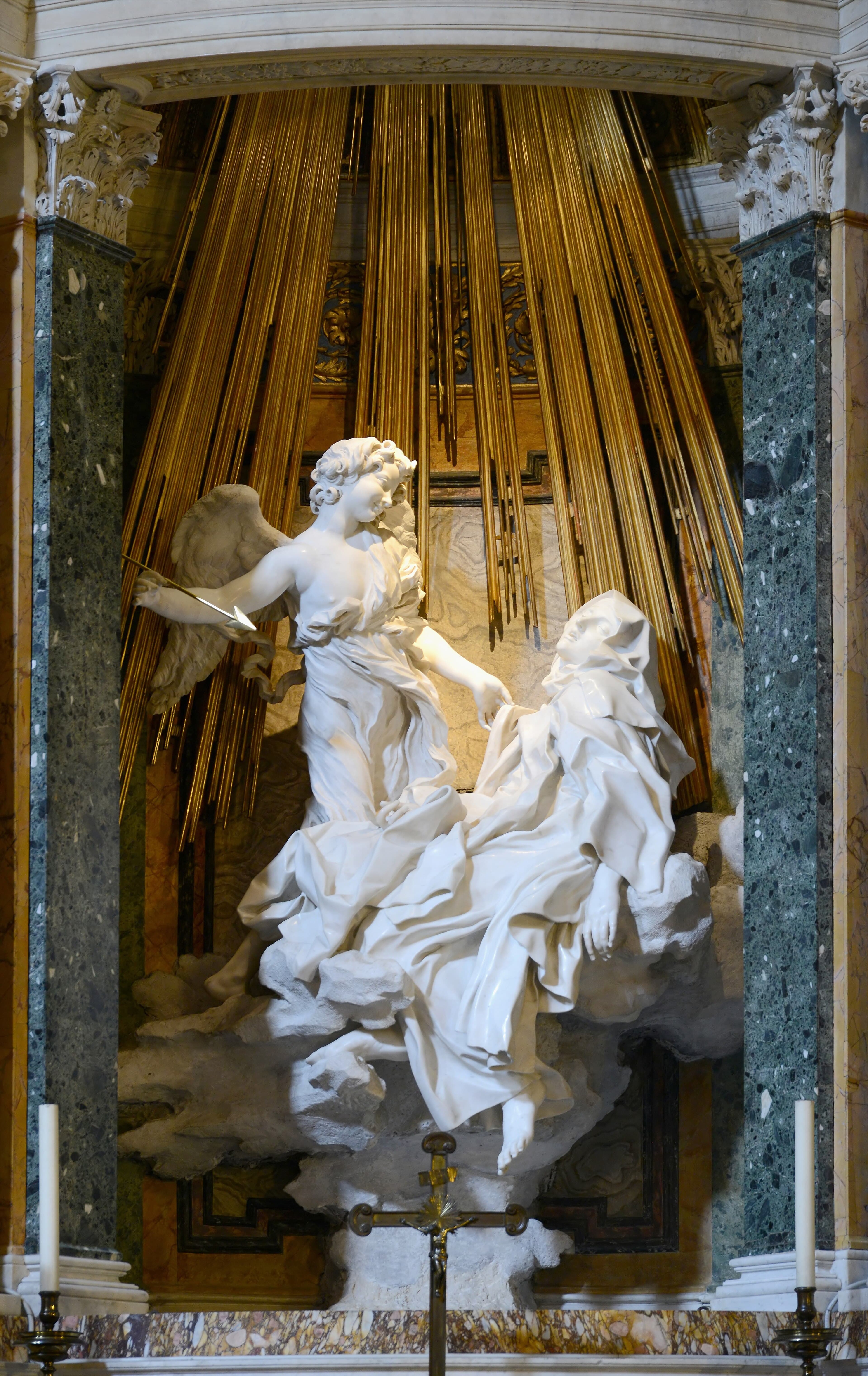
Ecstasy of Saint Teresa
Gian Lorenzo Bernini · 1647–1652
The Ecstasy of Saint Teresa is Gian Lorenzo Bernini's marble altarpiece of the Spanish mystic pierced by an angel's arrow, carved in 1647–1652 for the Cornaro Chapel. It is still in place in Santa Maria della Vittoria in Rome.
10
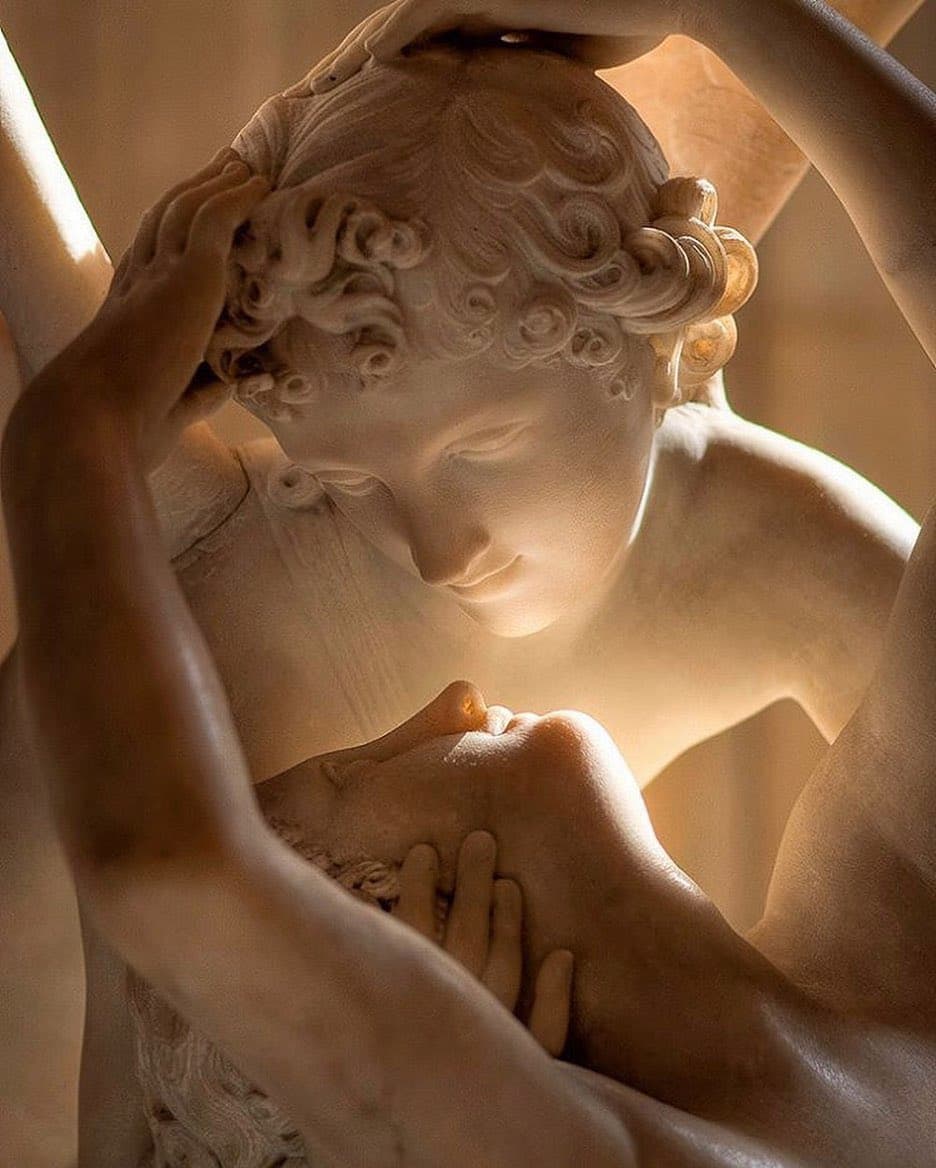
Psyche Revived by Cupid's Kiss
Antonio Canova · 1787–1793
Psyche Revived by Cupid's Kiss is a marble group by Antonio Canova, carved 1787–1793, showing Cupid lifting the unconscious Psyche to wake her with a kiss. The first version is in the Louvre, Paris; a second is in the Hermitage.
11
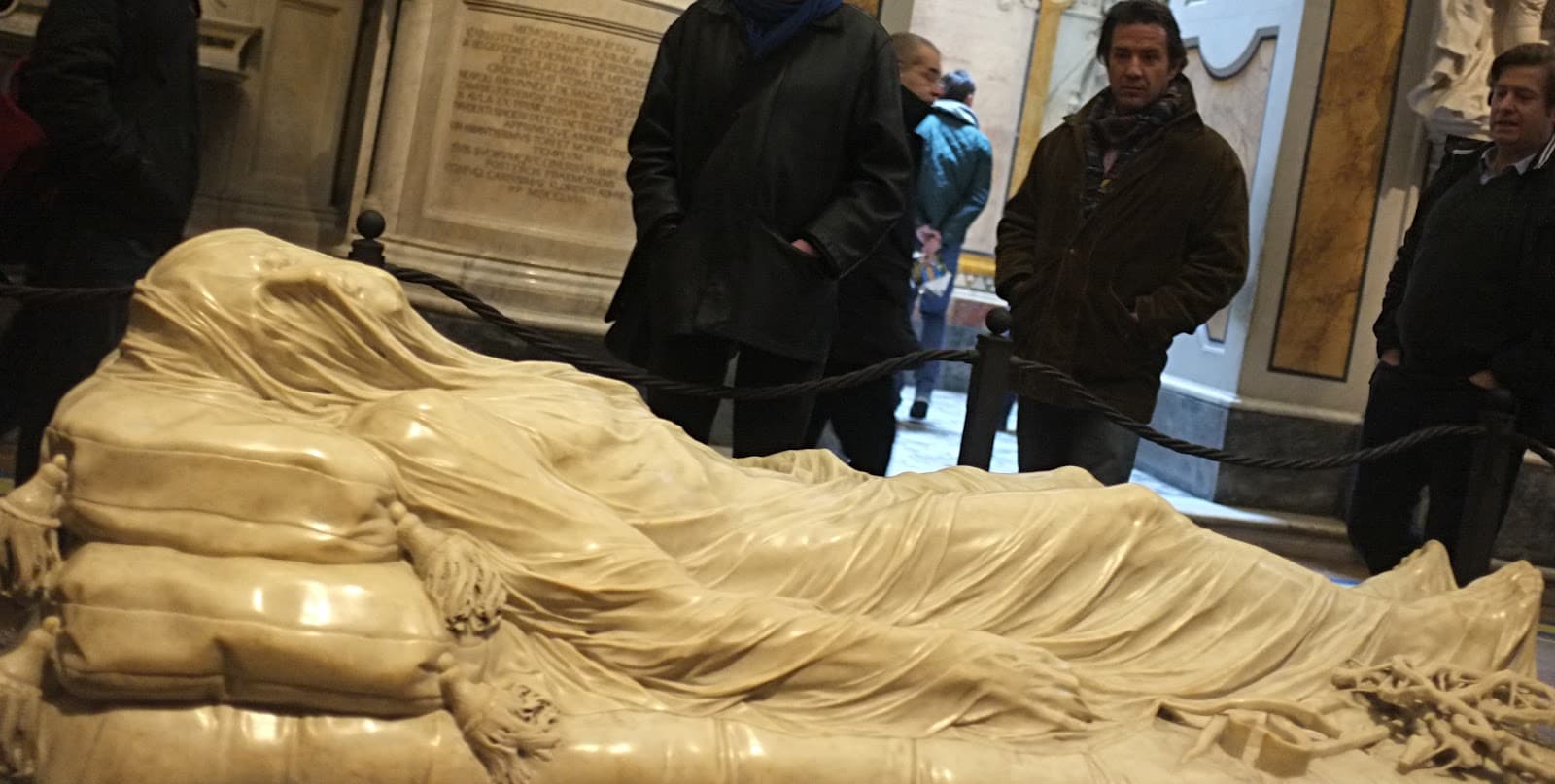
Veiled Christ
Giuseppe Sanmartino · 1753
The Veiled Christ (Cristo velato) is Giuseppe Sanmartino's 1753 marble of the dead Christ lying on a mattress under a shroud so thin it seems transparent. Carved from a single block, it lies at the center of the Cappella Sansevero in Naples.
12
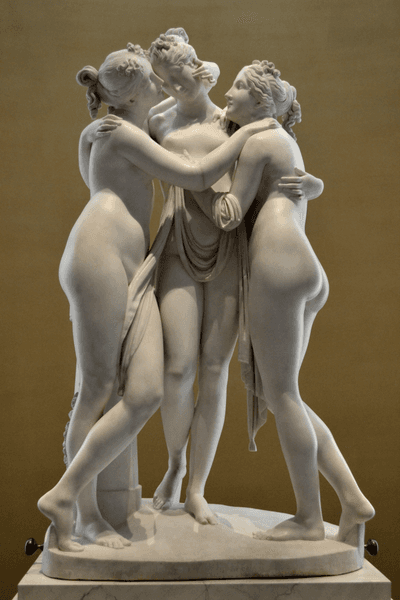
The Three Graces
Antonio Canova · 1814–17
The Three Graces is a marble group by Antonio Canova of Zeus's daughters in an embrace. This 1814–17 version, made for the Duke of Bedford, is jointly owned by the V&A and National Galleries of Scotland; the first is in the Hermitage.
13
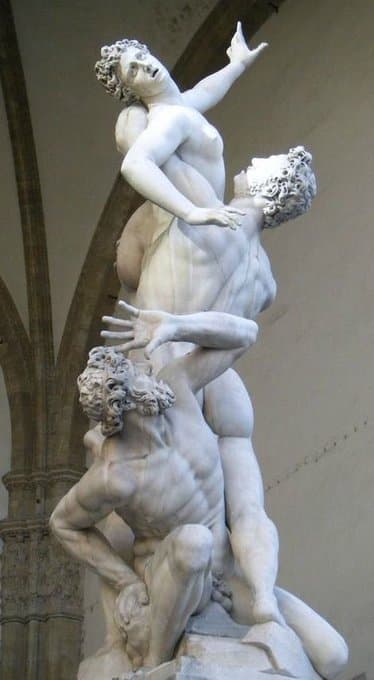
Abduction of a Sabine Woman
Giambologna · 1579–83
Abduction of a Sabine Woman is a marble group by Giambologna, carved 1579–83 from a single block, showing a young man lifting a woman over a crouching older man. It stands in the Loggia dei Lanzi, Florence.
14
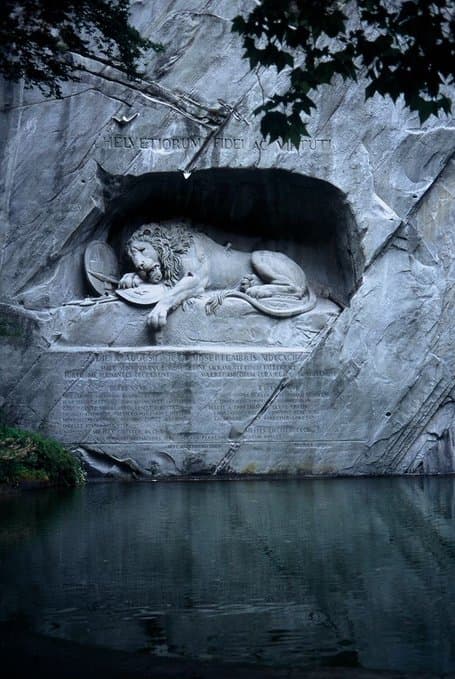
The Lion of Lucerne
Bertel Thorvaldsen & Lukas Ahorn · 1820–21
The Lion of Lucerne is a dying lion carved into a sandstone cliff in Lucerne, Switzerland, in 1820–21 to designs by Bertel Thorvaldsen. It commemorates the Swiss Guards killed at the Tuileries in Paris in 1792.
15
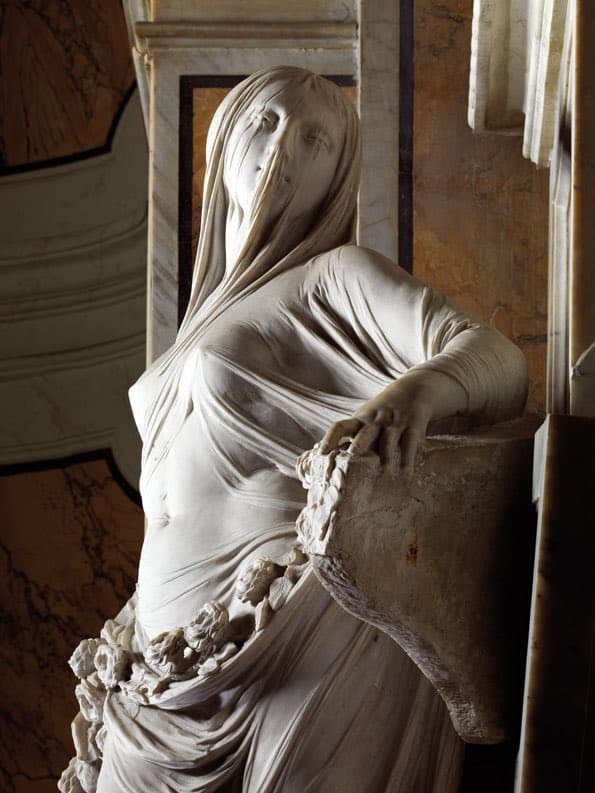
Modesty (La Pudicizia)
Antonio Corradini · 1752
La Pudicizia (Modesty) is Antonio Corradini's veiled marble woman in the Cappella Sansevero, Naples, completed in 1752 as a memorial to the mother of Prince Raimondo di Sangro. The thin veil seems transparent over her body.
16
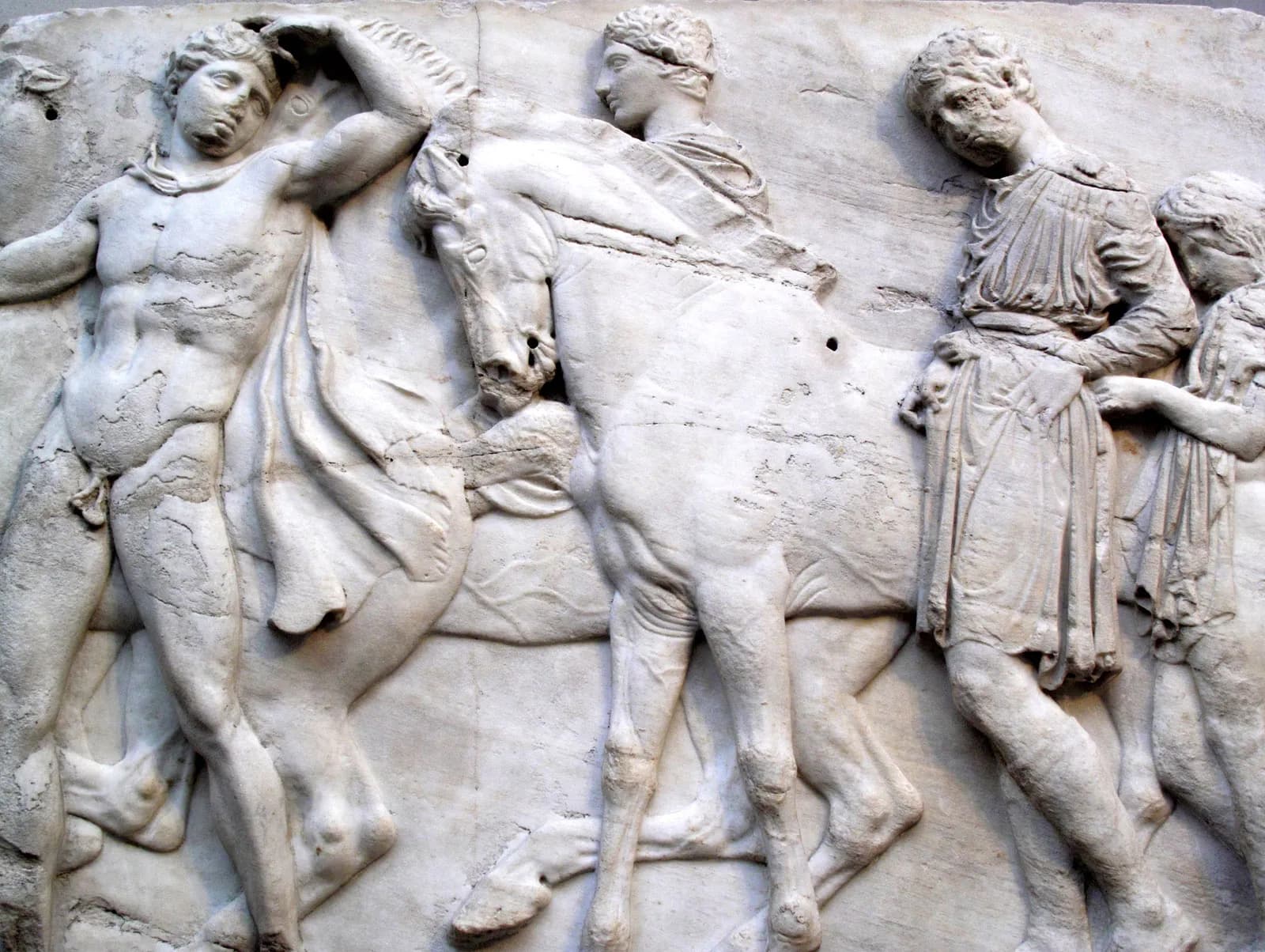
Parthenon Frieze
Phidias · c. 443–437 BC
The Parthenon Frieze is a marble relief band, about 160 meters long, carved c. 443–437 BC for the Parthenon in Athens under the direction of Phidias. Most of it is now divided between the British Museum in London and the Acropolis Museum in Athens.
17
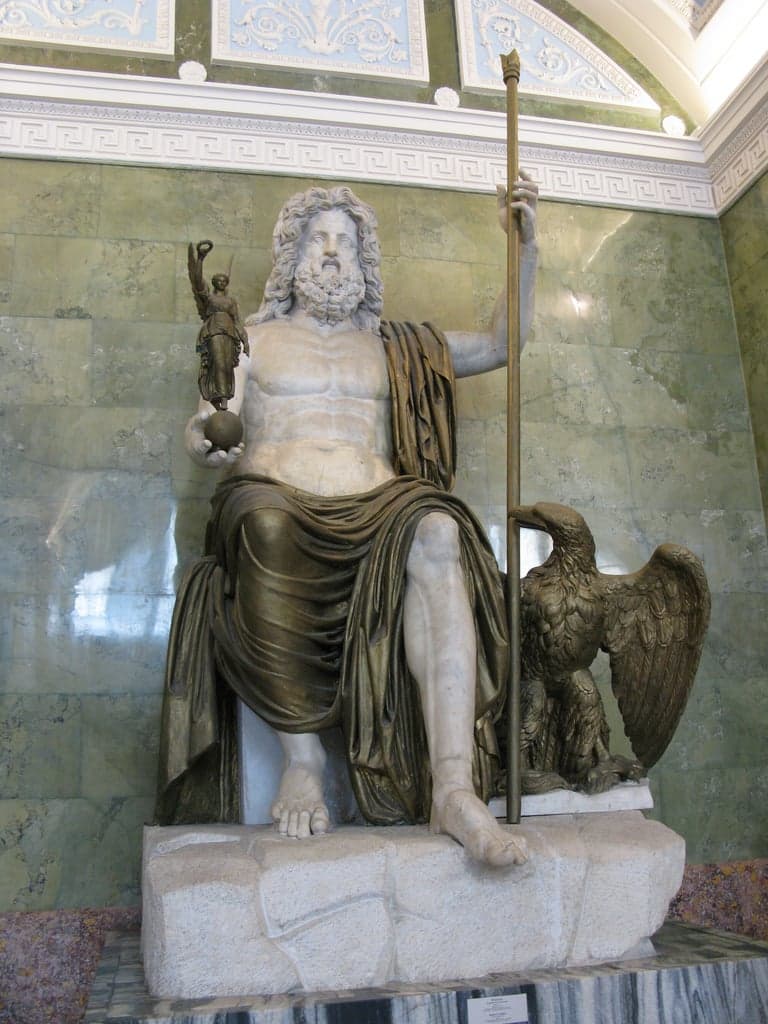
Seated Zeus (Statue of Jupiter, Hermitage)
Artist Unknown & Phidias · Late 1st century AD (after Phidias's Zeus, c. 435 BC)
This colossal seated Jupiter in the Hermitage, 3.47 m high, is a Roman statue of the late 1st century AD modeled on Phidias's lost gold-and-ivory Statue of Zeus at Olympia, one of the Seven Wonders of the ancient world.
18
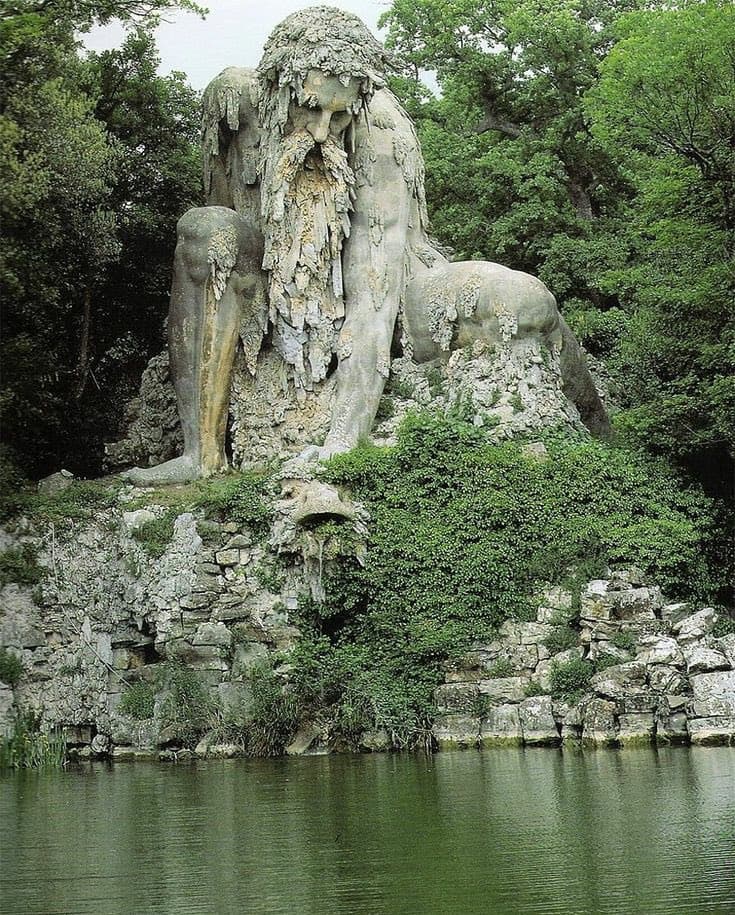
Apennine Colossus
Giambologna · c. 1579–80
The Apennine Colossus is a giant crouching figure of the Apennine mountains made by Giambologna around 1579–80 for the Medici garden at Pratolino. About 11 meters tall, it still stands in the park of Villa Demidoff near Florence.
19
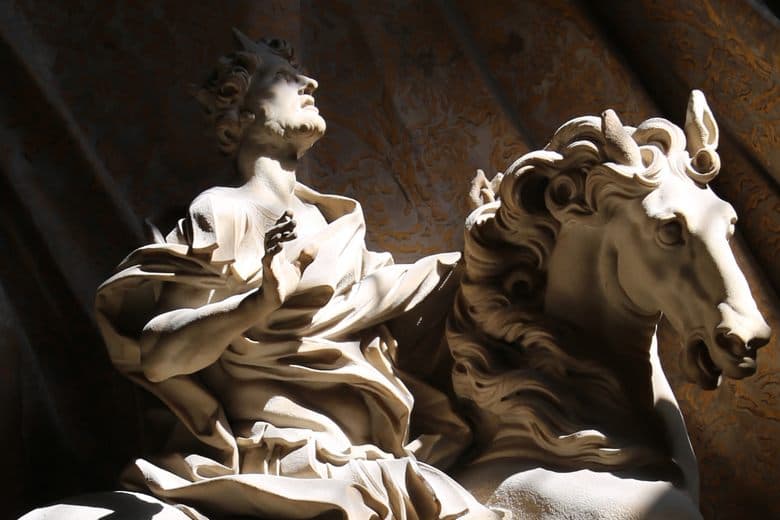
The Vision of Constantine
Gian Lorenzo Bernini · 1654–70
The Vision of Constantine is Gian Lorenzo Bernini's marble equestrian statue of Emperor Constantine seeing the cross in the sky, begun in 1654 and unveiled in 1670 at the foot of the Scala Regia in the Vatican.
20
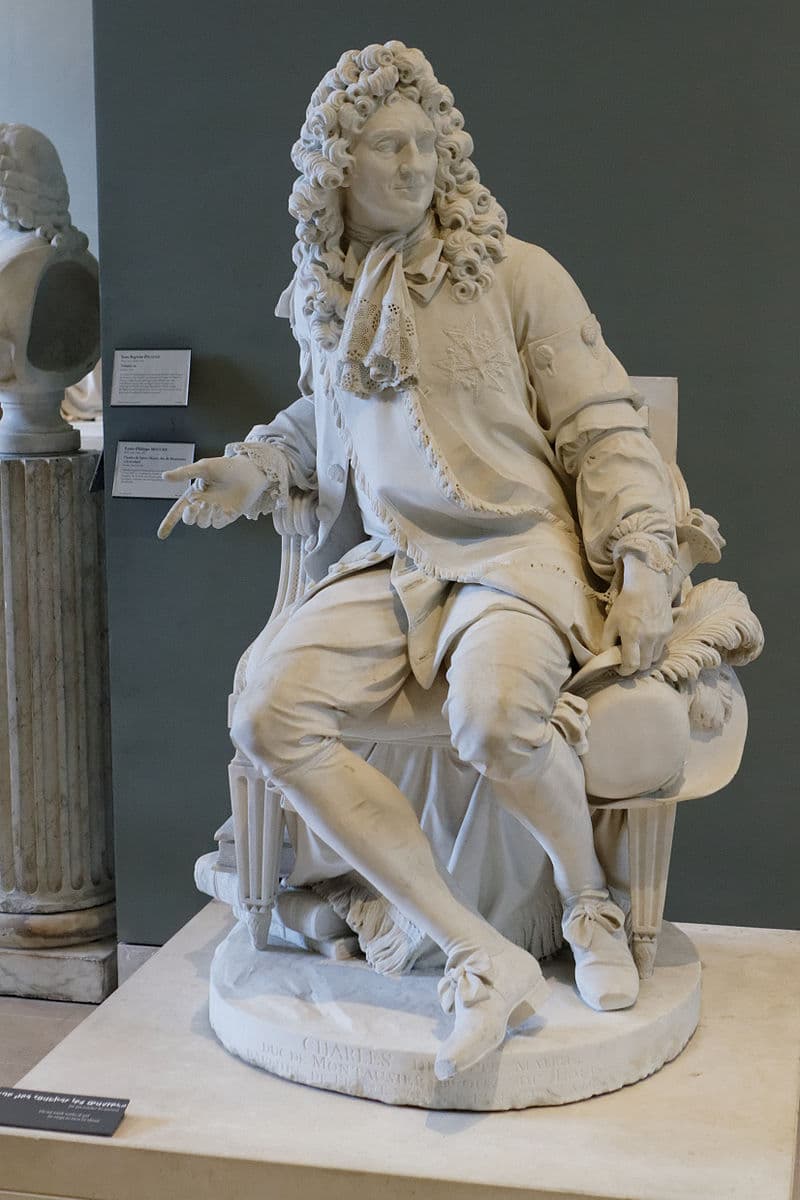
Charles de Sainte-Maure, Duke of Montausier
Louis-Philippe Mouchy · 1781–89
This marble statue of Charles de Sainte-Maure, duc de Montausier, was carved by Louis-Philippe Mouchy for Louis XVI's "Grands Hommes" series, commissioned in 1781 and shown at the Salon of 1789. It is in the Louvre, Paris.
21
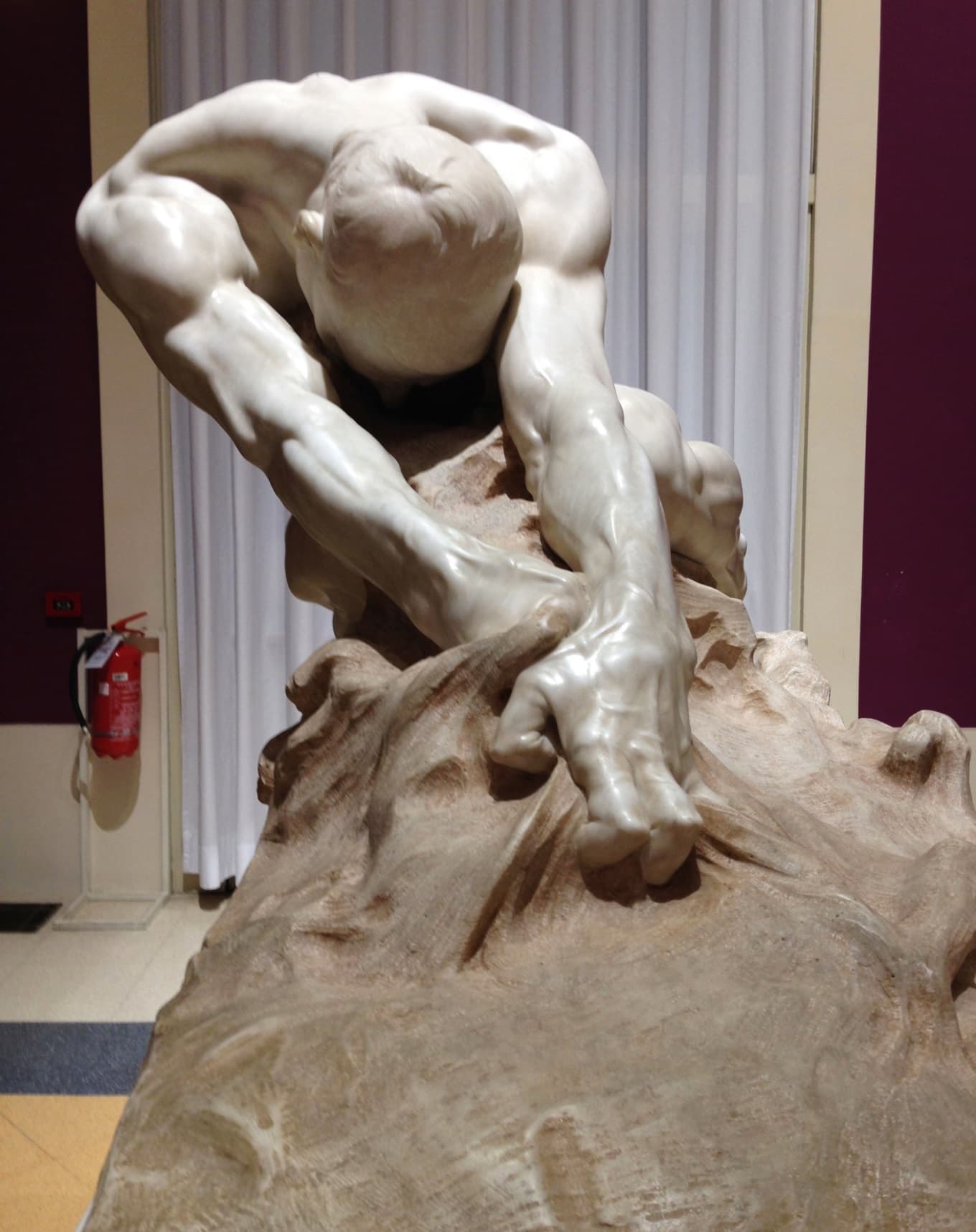
Humanity Against Evil
Gaetano Cellini · 1906–08
Humanity Against Evil (L'umanità contro il male) is a marble sculpture by the Italian sculptor Gaetano Cellini, modeled around 1906 and carved by 1908. A muscular nude man crouches over a rough mass of stone, gripping it with clawed hands as if wrestling it down.
22
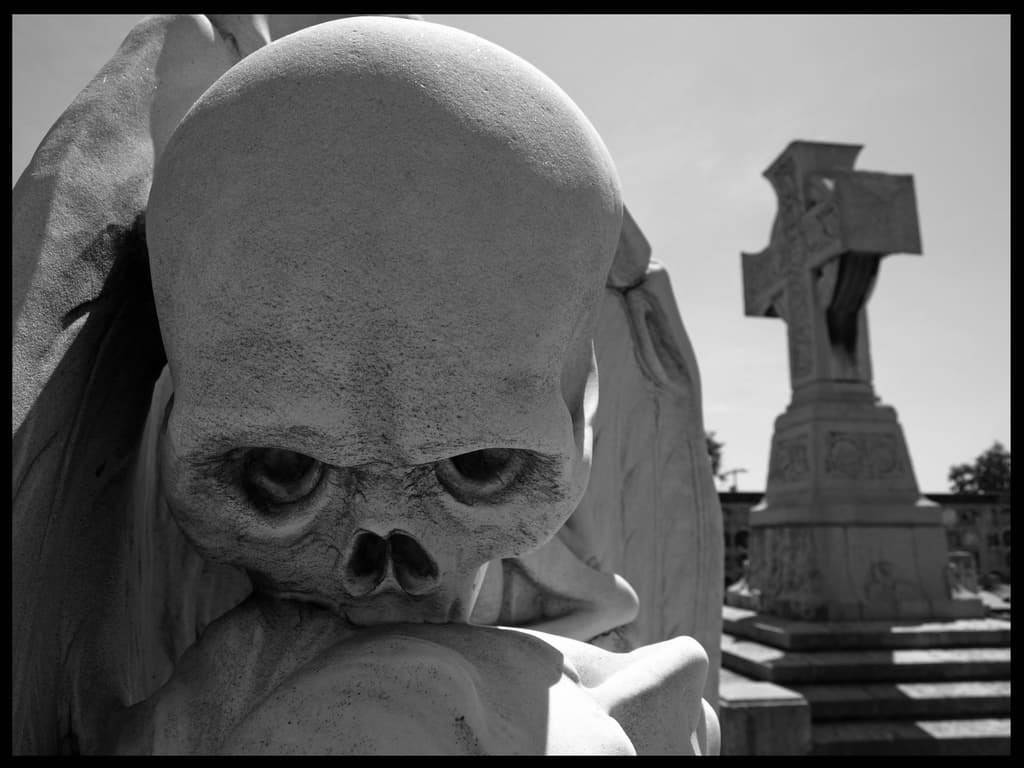
The Kiss of Death (El Petó de la Mort)
Jaume Barba & Joan Fontbernat · 1930
El Petó de la Mort (The Kiss of Death) is a 1930 marble funerary sculpture in Barcelona's Poblenou Cemetery, usually attributed to Jaume Barba. A winged skeleton kisses the forehead of a dying young man above the grave of the Llaudet family.
23
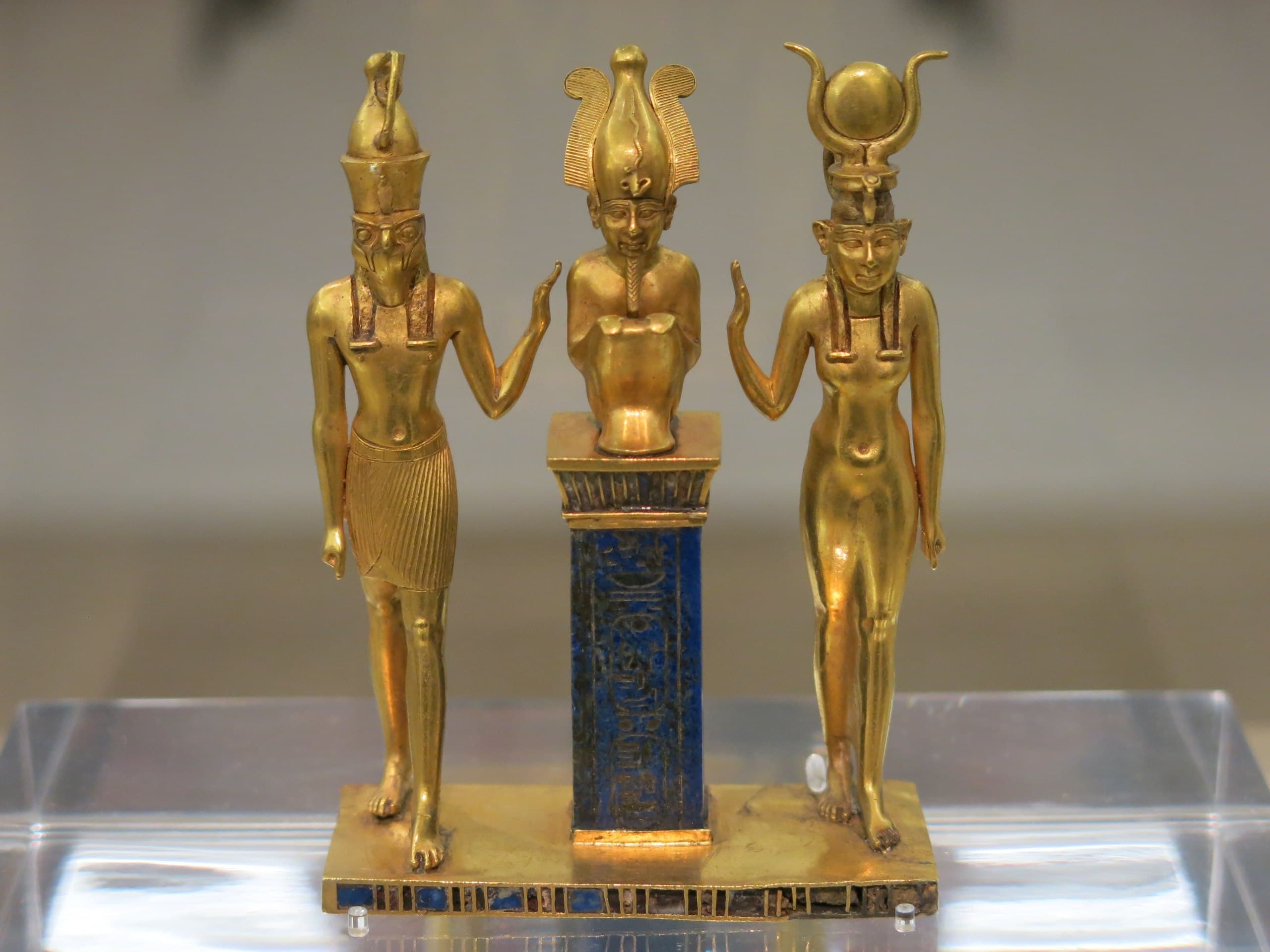
Triad of Osorkon II: Osiris, Isis and Horus
Artist Unknown · c. 874–850 BC (reign of Osorkon II)
The Triad of Osorkon II is a tiny Egyptian jewel of gold and lapis lazuli, about 9 cm high, made for Pharaoh Osorkon II (22nd Dynasty, 9th century BC). It shows Osiris on a pillar between Horus and Isis. It is in the Louvre, Paris.
24
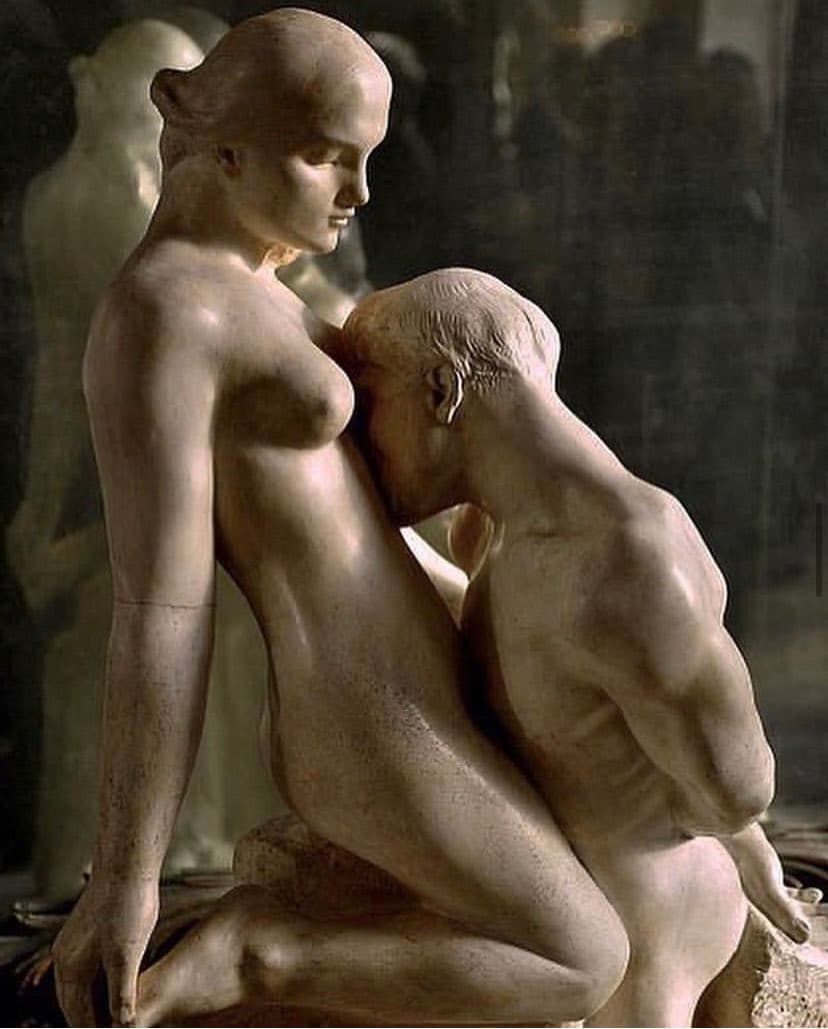
The Eternal Idol
Auguste Rodin · c. 1889 (first marble 1893)
The Eternal Idol (L'Éternelle Idole) is a sculpture by Auguste Rodin, conceived around 1889: a kneeling man kisses a woman's body, his arms held behind his back. The first marble (1893) is at the Harvard Art Museums; a plaster belongs to the Musée Rodin.
25
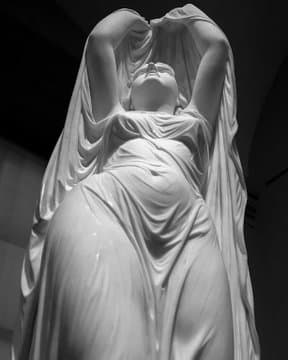
Undine Rising from the Waters
Chauncey Bradley Ives · 1880
Undine Rising from the Waters is a marble statue by the American sculptor Chauncey Bradley Ives, carved in Rome and dated 1880 by its owner, the Yale University Art Gallery. It shows the water spirit Undine lifting a wet veil as she rises from a well, famous for its illusion of transparent drapery.
26
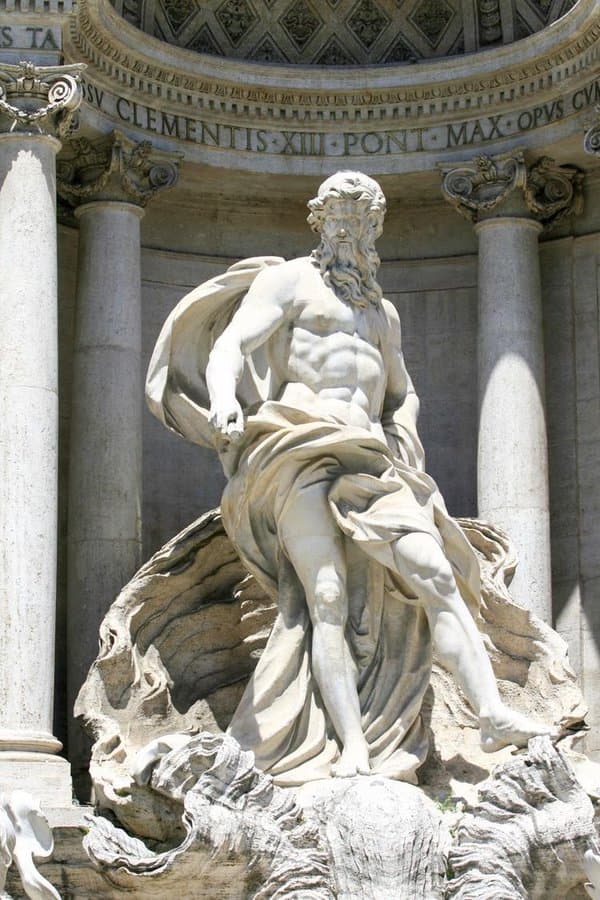
Oceanus, Trevi Fountain
Pietro Bracci & Nicola Salvi & Giuseppe Pannini · 1732–62
The central statue of the Trevi Fountain in Rome is Oceanus, carved by Pietro Bracci and installed in 1762. The fountain was designed by Nicola Salvi, begun in 1732 and completed after his death by Giuseppe Pannini; it is the largest Baroque fountain in the city.
How we chose these sculptures
Fame in sculpture is unusually concentrated. A handful of statues are recognized by people who could not name a single sculptor, and most of them share three things: a single, memorable pose; a story or meaning everyone can grasp in a second; and a setting, a museum gallery, a church or a city square, that turned them into a place of pilgrimage. The list puts those icons first, then the works that sculptors and art historians admire most, then the less obvious masterpieces that reward a detour.
The Renaissance giants
Michelangelo's David (1501–04) is probably the most famous sculpture ever made. Carved from a tall, narrow block of Carrara marble that earlier sculptors, among them Agostino di Duccio, had started and abandoned, it stands 5.17 meters high. Michelangelo shows David before the fight, not after: the brow is knotted, the left hand holds the sling over his shoulder, and the oversized right hand hangs ready. The statue stood outside the Palazzo Vecchio as a symbol of the Florentine Republic until 1873, when it was moved into the Galleria dell'Accademia; a copy now takes its place in the square.
Michelangelo's Pietà (1498–99) in St. Peter's Basilica is the other pole of his early career, carved when he was in his early twenties. Mary is shown young and calm, with the body of Christ across her lap; it is the only work Michelangelo signed, his name cut into the strap across her chest. Since a hammer attack in 1972 it has been seen through glass.
Antiquity: the statues that taught the Renaissance
The Venus de Milo and the Winged Victory of Samothrace, both in the Louvre, are the two most famous ancient Greek statues, and both are Hellenistic, made in the second century BC. The Laocoön group, dug up in a Roman vineyard in 1506 with Michelangelo reportedly among the first to see it, showed Renaissance sculptors how marble could carry extreme pain and movement. The full story of these works is in our guide to Greek statues.
Baroque marble that moves
Gian Lorenzo Bernini made marble do things no one thought possible. In Apollo and Daphne (1622–25, Galleria Borghese), the nymph turns into a laurel tree as the god catches her: bark climbs her legs, and leaves sprout from her fingers, carved so thin that light passes through their edges. In The Rape of Proserpina (1621–22), also in the Borghese, Pluto's fingers press into Proserpina's thigh as if into flesh. Bernini was in his early twenties when he carved both. The Ecstasy of Saint Teresa (1647–52) in Santa Maria della Vittoria in Rome goes further, combining sculpture, colored marble, hidden light and architecture into a single theatrical scene.
The impossible veils of Naples
Eighteenth-century Naples produced a group of virtuoso works in the Cappella Sansevero that still draw crowds. Giuseppe Sanmartino's Veiled Christ (1753) shows the dead Christ under a thin shroud so convincingly carved that a legend grew, false but persistent, that the prince of Sansevero had turned real cloth to stone by alchemy. Antonio Corradini's Modesty (La Pudicizia, 1752), a woman entirely wrapped in a transparent veil, belongs to the same chapel and the same game of revealing by concealing.
Neoclassicism and the nineteenth century
Antonio Canova returned sculpture to the cool ideal of antiquity, but with a tenderness the ancients rarely show. Psyche Revived by Cupid's Kiss (1787–93, Louvre) is built from two crossing diagonals, Cupid's wings and Psyche's raised arms, which frame the empty space where their lips almost meet. Canova finished his marble surfaces with pumice and wax so that they glowed under candlelight, and he liked to show his finished works to visitors by candlelight, when the surfaces seemed to move.
In Lucerne, the Lion of Lucerne (1820–21), designed by Bertel Thorvaldsen and carved into a sandstone cliff by Lukas Ahorn, commemorates the Swiss Guards killed defending the Tuileries in 1792. Mark Twain called it the most mournful and moving piece of stone in the world.
Rodin and the modern statue
Auguste Rodin's The Thinker began around 1880 as a small figure seated at the top of The Gates of Hell, his doorway inspired by Dante's Inferno; it originally represented the poet contemplating his creation. Enlarged in 1904 and cast many times, it became a universal image of thought. The best-known cast sits in the garden of the Musée Rodin in Paris. Rodin's unfinished surfaces, rough marble left around polished bodies, and his fragments of hands and torsos opened the way to twentieth-century sculpture.
Famous statues beyond this list
Some of the world's most famous statues are monuments rather than gallery sculpture and fall outside the catalogue: the Statue of Liberty (1886) in New York, Christ the Redeemer (1931) above Rio de Janeiro, the moai of Rapa Nui, the Great Sphinx of Giza, the bust of Nefertiti in Berlin and the Terracotta Army of the first Qin emperor. They belong to the same story of how a carved or cast figure can stand for a city, a nation or a faith.
Other works in the list reward a closer look than their fame suggests. Giambologna's Abduction of a Sabine Woman (1579–83) in the Loggia dei Lanzi in Florence spirals three bodies upward from a single block, and has no single main view. His Apennine Colossus (c. 1580) at Pratolino, outside Florence, is a giant crouching over a pool, built of stone, brick and rubble, so large that it holds rooms inside. And Louis-Philippe Mouchy's statue of the Duke of Montausier (1781) is famous for a single detail: a marble lace handkerchief at his side.
How to look at a sculpture
Walk around it. Most of the works here were designed to be seen from more than one side, and Bernini in particular plotted a sequence of views as you move. Look at the surface finish: the difference between polished skin, rasped hair and rough-chiseled rock is deliberate. And look at the base, where many sculptors signed, dated or left the marks of their tools.
Questions & answers
What is the most famous sculpture in the world?
Michelangelo's David (1501–04), in the Galleria dell'Accademia in Florence, is usually named the most famous sculpture in the world. The Venus de Milo, Rodin's The Thinker, Michelangelo's Pietà and the Statue of Liberty are its closest rivals.
What are the most famous Greek statues?
The Venus de Milo and the Winged Victory of Samothrace in the Louvre, the Laocoön group in the Vatican, the Discobolus (known from Roman copies), the Riace bronzes in Reggio Calabria and the Parthenon sculptures in London and Athens are the best known.
Where is The Thinker statue?
There are many authorized bronze casts of Rodin's The Thinker around the world. The most famous stands in the garden of the Musée Rodin in Paris. Others are at the Rodin Museum in Philadelphia, outside the Detroit Institute of Arts and in museums from Tokyo to Buenos Aires.
Who is the most famous sculptor?
Michelangelo is generally considered the most famous sculptor, followed by Gian Lorenzo Bernini, Auguste Rodin, Donatello and Antonio Canova. Among ancient sculptors, Phidias, Praxiteles and Polykleitos were the great names, although few of their originals survive.
How did sculptors make marble look like fabric?
They carved the stone extremely thin, undercut deep folds with drills, and polished the high points while leaving the hollows matte, so light and shadow imitate the transparency of cloth. Sanmartino's Veiled Christ and Corradini's Modesty in Naples are the famous examples.