Theme
Memento Mori Art: Skulls, Vanitas and the Art of Remembering Death
Skulls on desks, guttering candles, jeweled skeletons and a smear across Holbein's floor: how artists for two thousand years have reminded us that we will die.
Memento mori art is any work made to remind the viewer of death, from Latin words meaning "remember that you must die." Its most familiar emblem is the human skull, which is why memento mori and skull art are so closely linked: a skull on a scholar's desk, beside a saint at prayer or at the feet of two ambassadors in Holbein's famous double portrait. Around it gather the hourglass, the snuffed candle, the wilting flower and the soap bubble.
The idea is ancient, but it reached its most elaborate form in the seventeenth-century Dutch vanitas still life, whose name comes from the biblical line "vanity of vanities, all is vanity." Far from being morbid, most memento mori art carries a practical message: since life is short, live it well. This page explains the history of the theme, how to read its symbols, its great masterpieces from the Renaissance to Damien Hirst, and where to see them. The works collected below include jeweled catacomb saints, skull paintings and memorial sculpture.
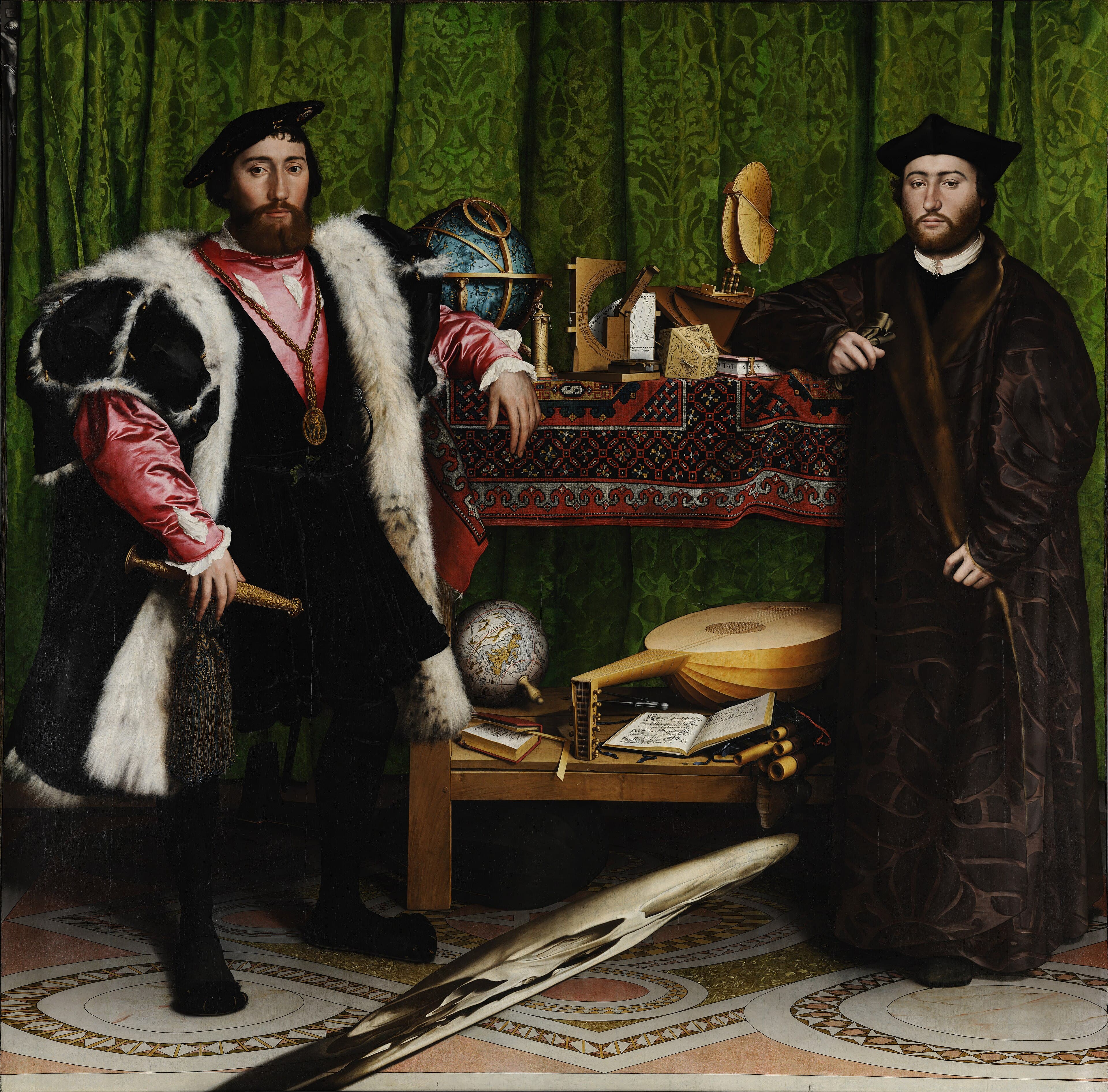
The Ambassadors
Hans Holbein the Younger · 1533
Head of a Skeleton with a Burning Cigarette
Vincent van Gogh · 1886
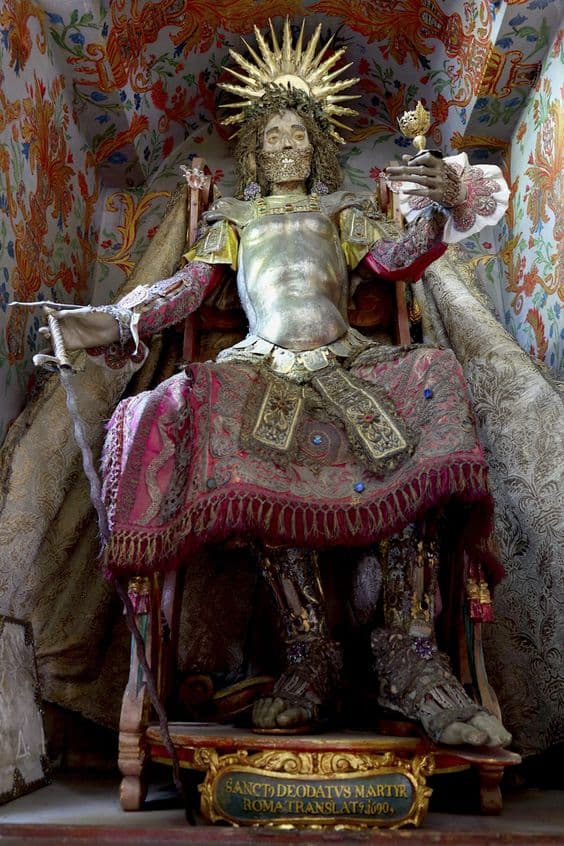
Bejeweled Skeleton of Saint Deodatus
Artist Unknown & Paul Koudounaris · Translated from Rome 1690
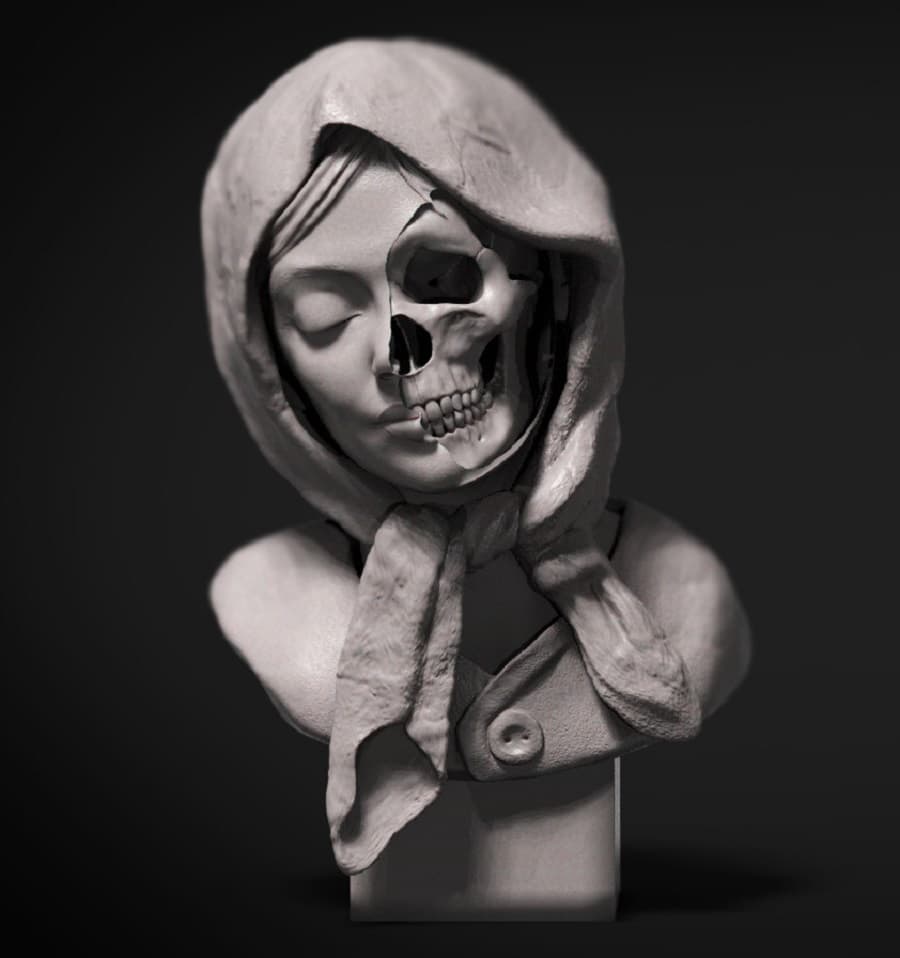
Vanitas Sculpture (Hooded Bust with Skull)
Various Artists or Collaborations
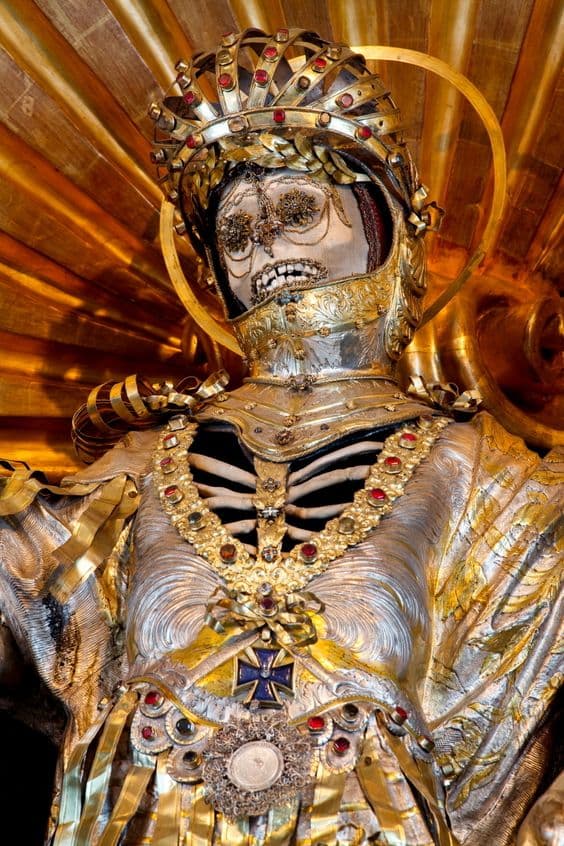
Bejeweled Skeleton of Saint Maximus
Paul Koudounaris · Late 17th century (relics acquired 1677)
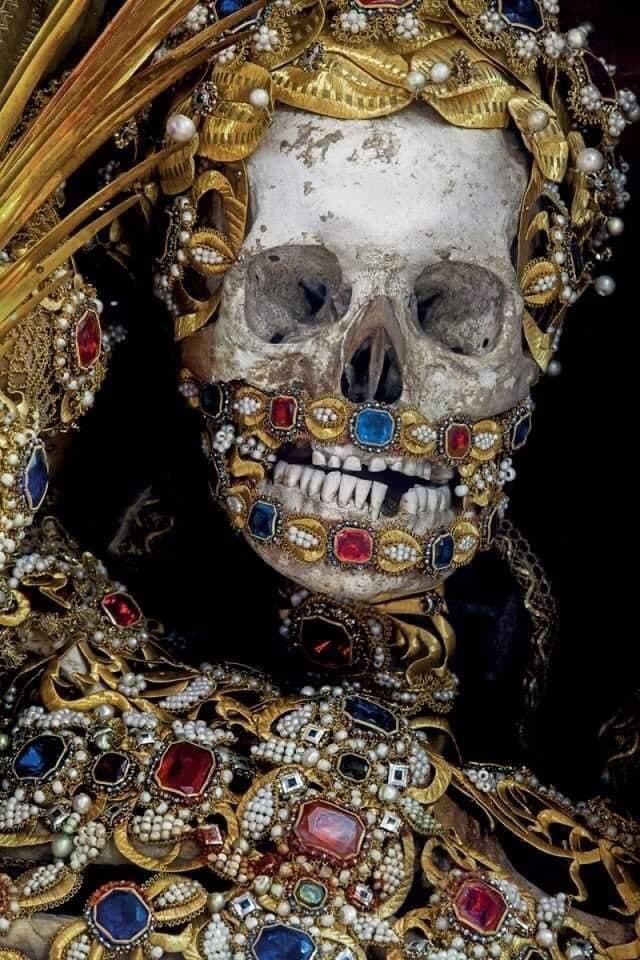
Bejeweled Skeleton of Saint Albertus
Paul Koudounaris · Arrived 1723; decoration 18th century
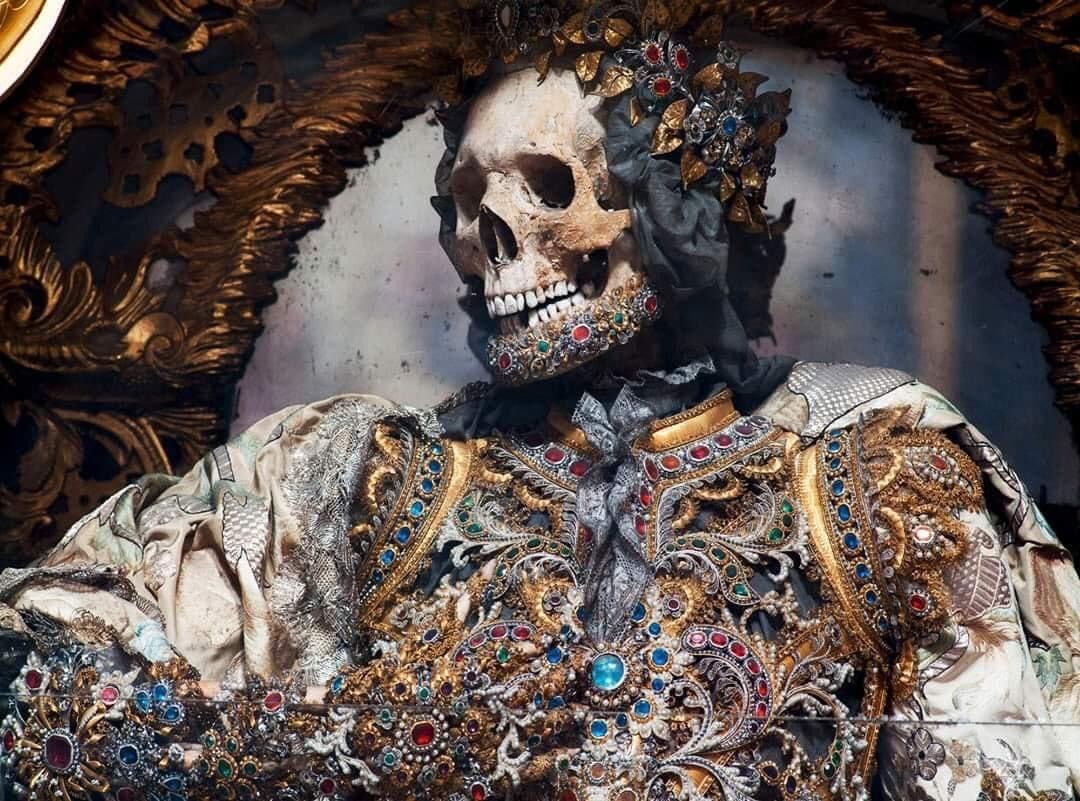
Bejeweled Skeleton of Saint Gratian
Adalbart Eder & Paul Koudounaris · 18th century (decoration); photographed by Paul Koudounaris, published 2013
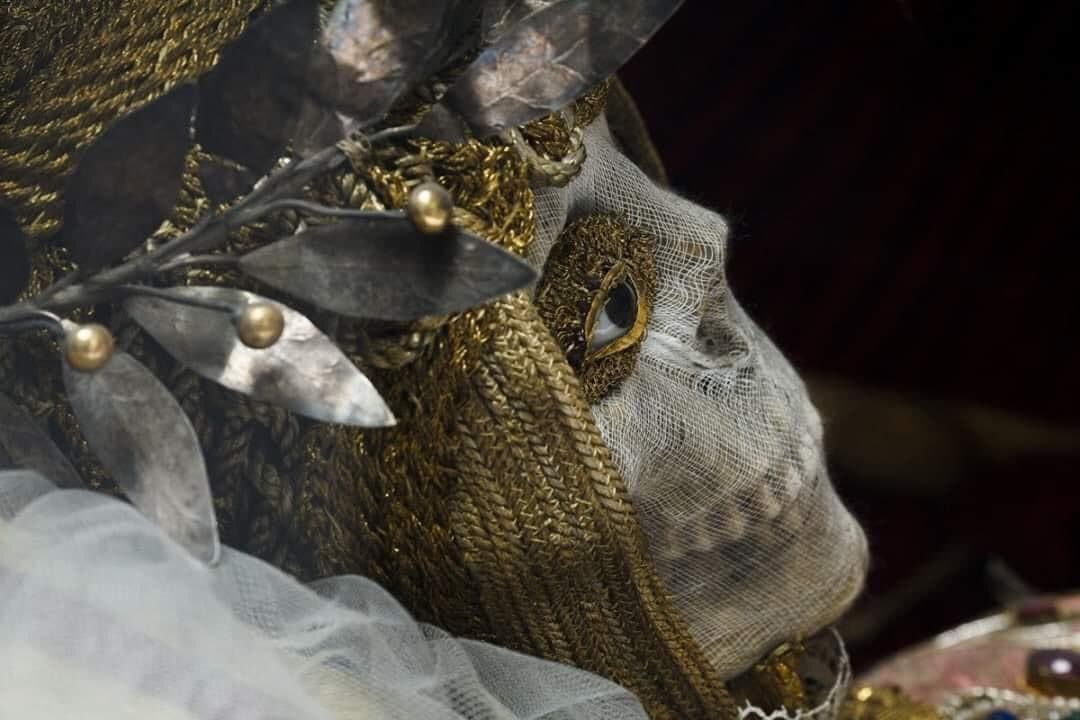
Bejeweled Skeleton of Saint Munditia
St. Peter's Church & Paul Koudounaris · 1675–77
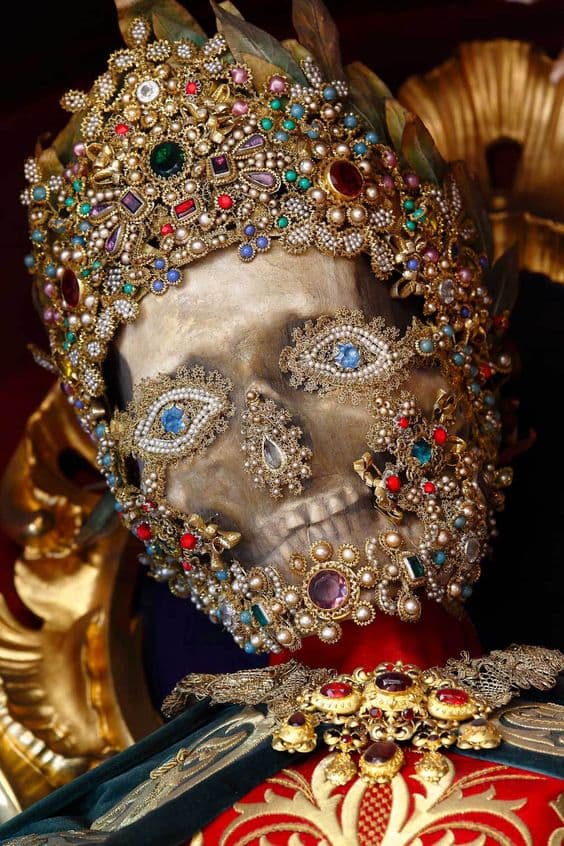
Bejeweled Skeleton of Saint Felix
Paul Koudounaris & Eastern Orthodox Church & St. Peter's Church
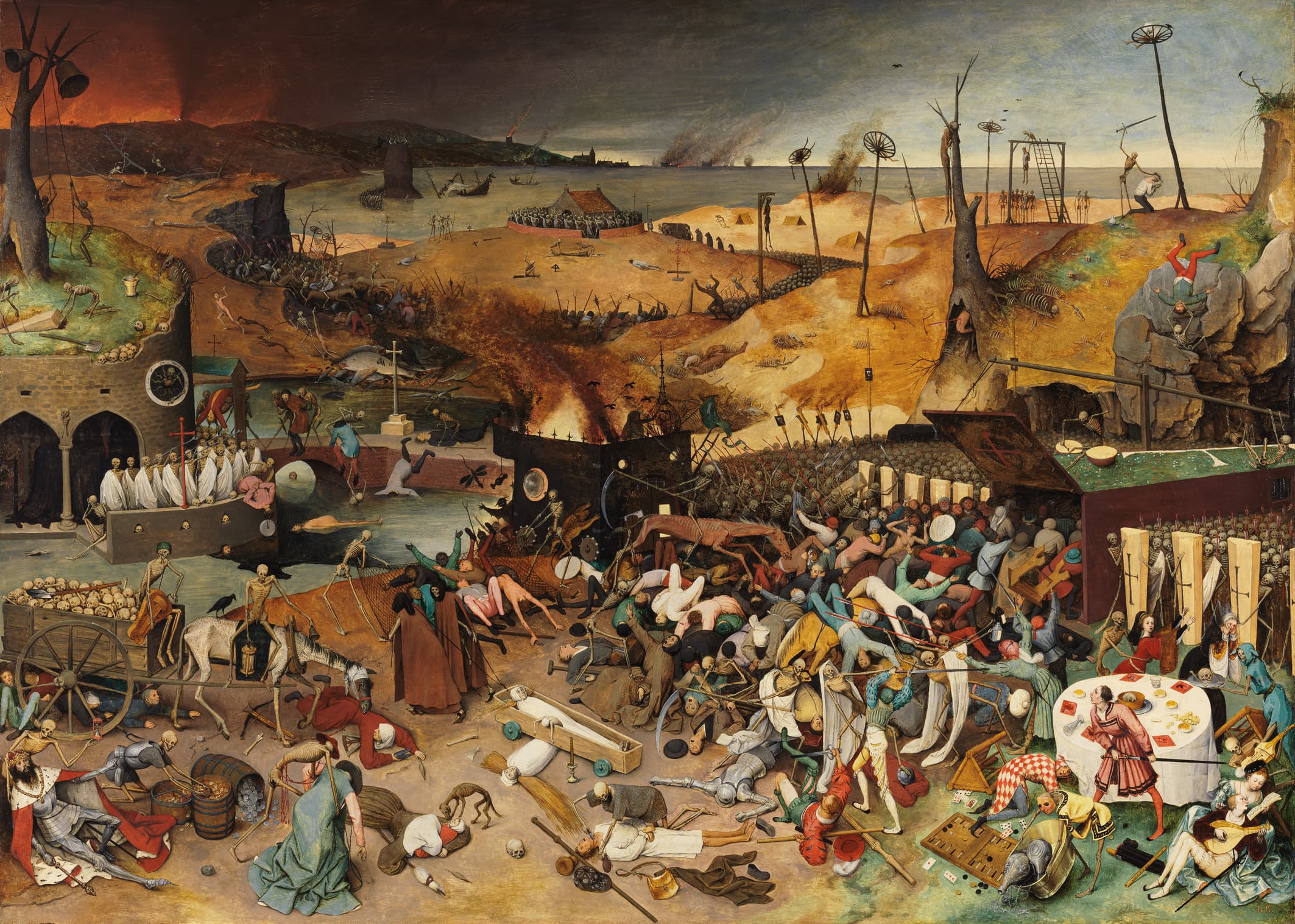
The Triumph of Death
Pieter Bruegel the Elder · c. 1562
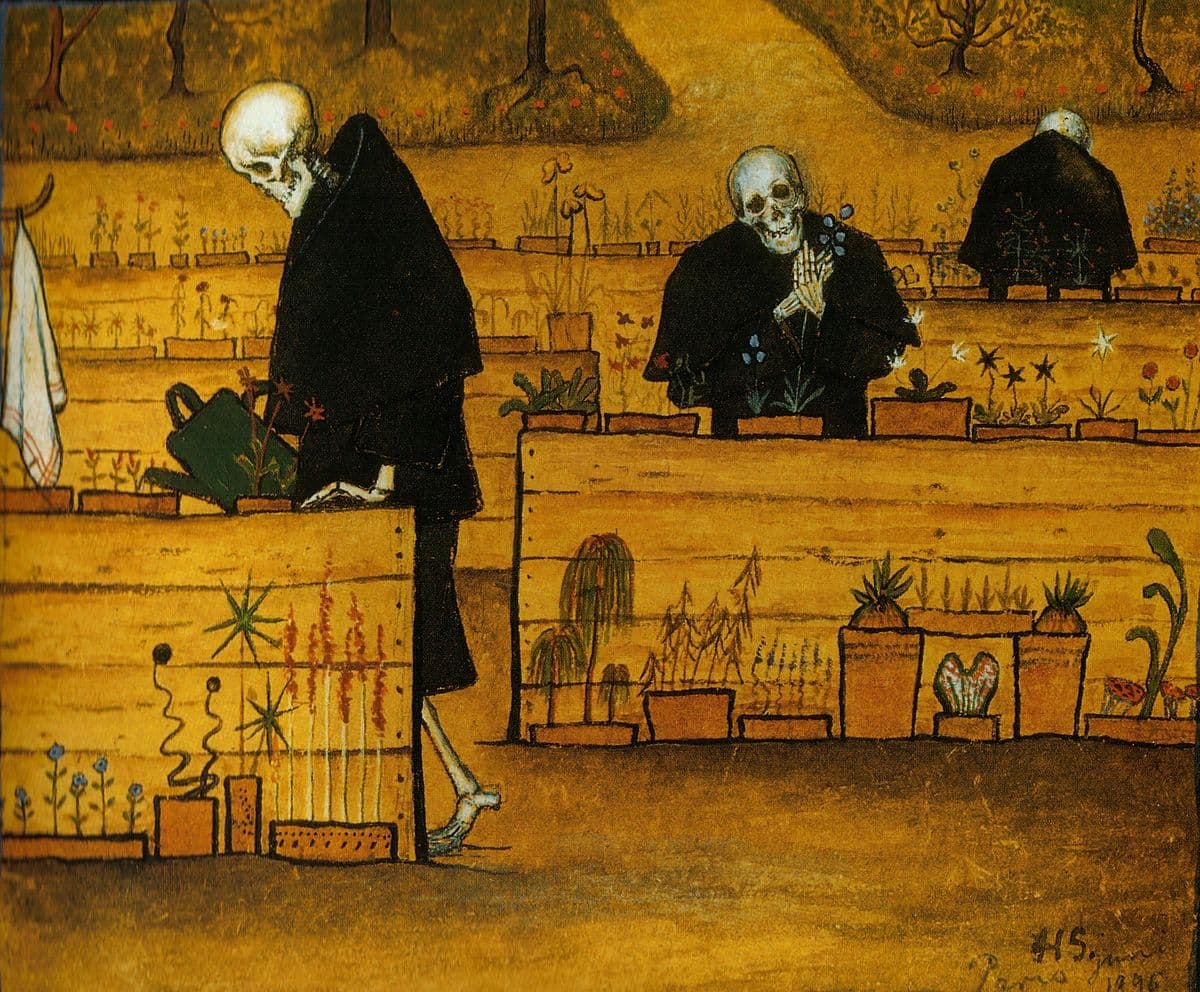
The Garden of Death
Hugo Simberg · 1896
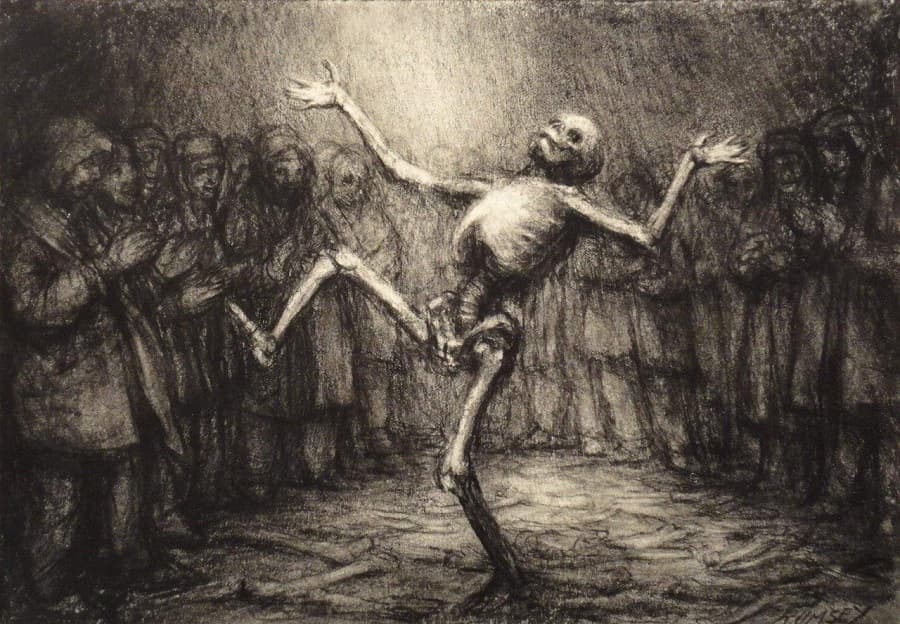
The Danse Macabre Series
Paul Rumsey
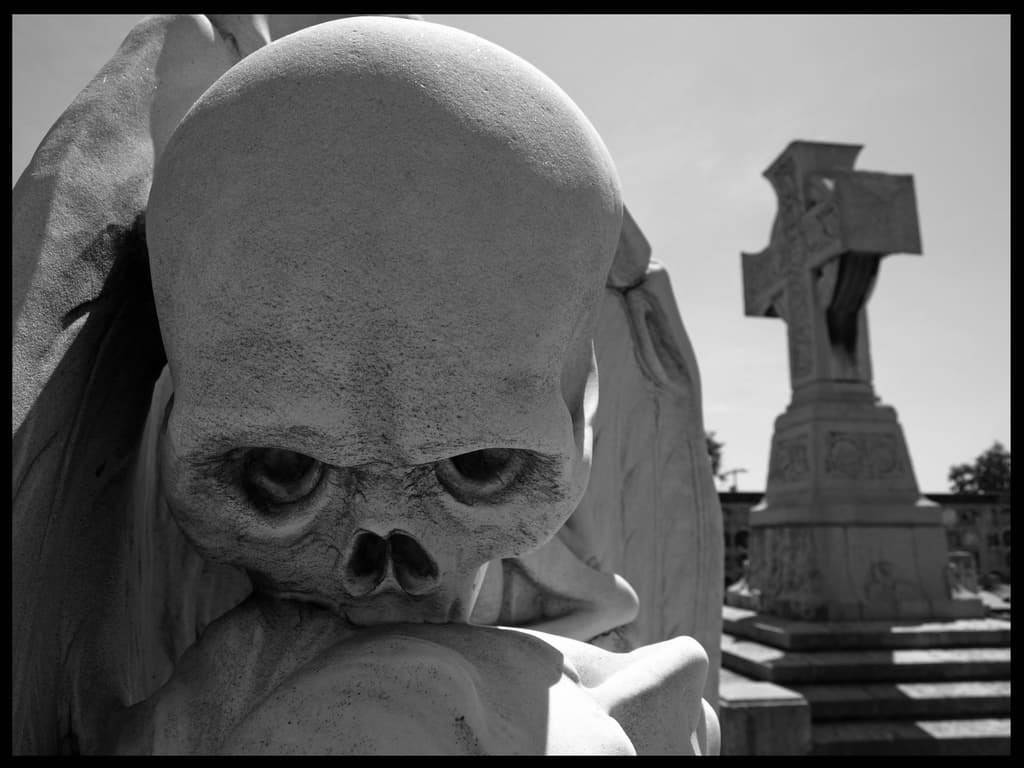
The Kiss of Death (El Petó de la Mort)
Jaume Barba & Joan Fontbernat · 1930
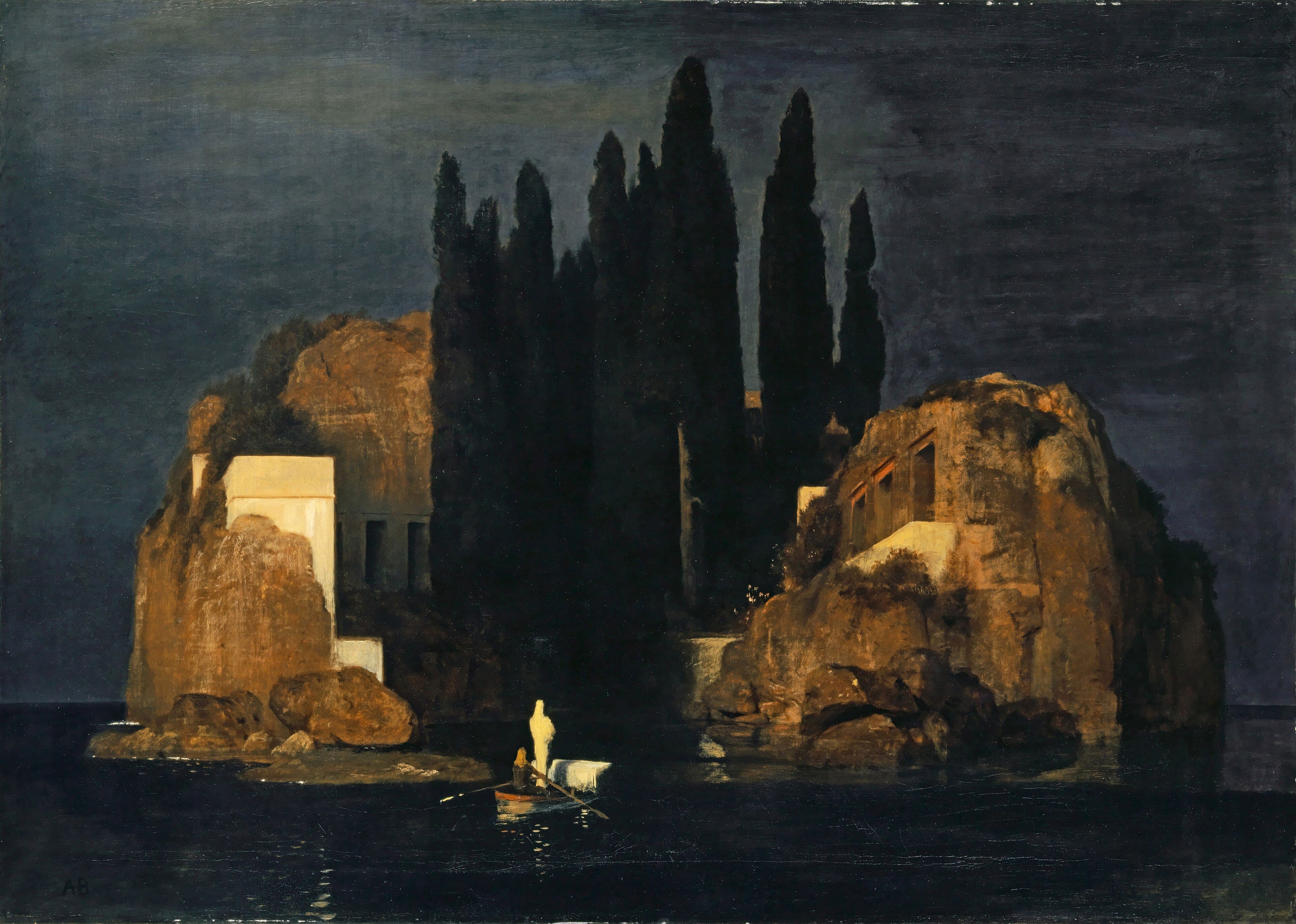
Isle of the Dead
Arnold Böcklin · 1880 (first version); five versions 1880–86
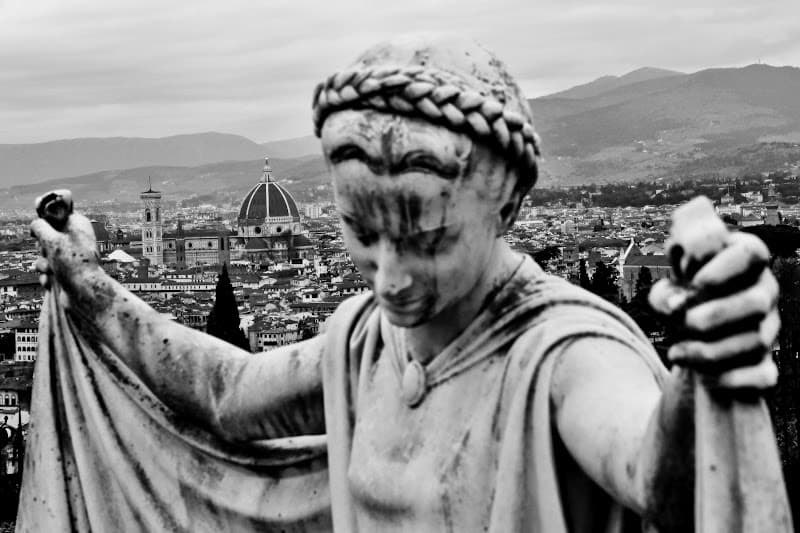
Tombstone of Silvia Marini nei De Rogati
Artist Unknown · After 1947
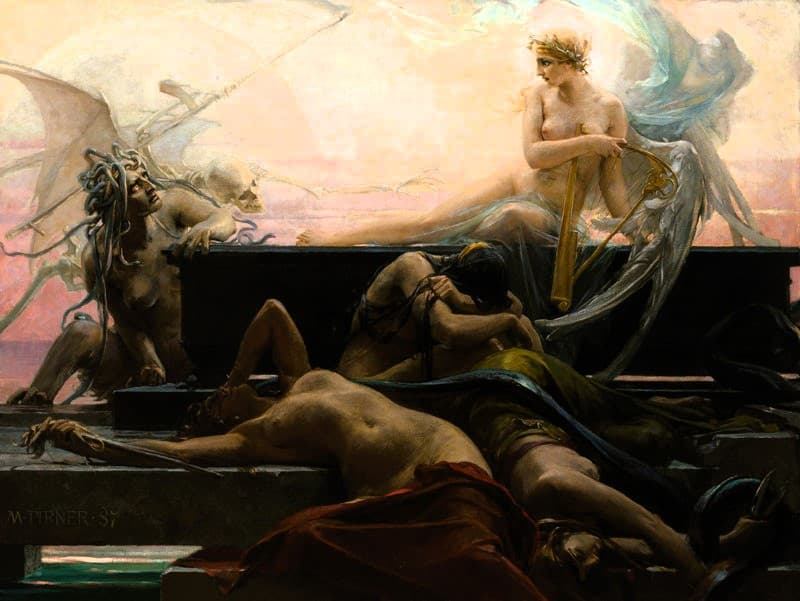
Finis (The End of All Things)
Maximilian Pirner · 1887
What does memento mori mean?
Memento mori is Latin for "remember that you must die" (literally, "remember to die"). The phrase belongs to a long tradition of thought in which meditating on death is not a source of despair but a discipline. The Stoic philosophers made it central: Seneca urged his readers to live each day as if it were their last, and the emperor Marcus Aurelius reminded himself in his private notebook that he would soon be ashes. A later tradition, recorded by the Christian writer Tertullian around AD 200, claims that a Roman general riding in triumph was accompanied by a voice warning him to look behind him and remember that he was only a man. The story's details are uncertain, but it has become the classic image of the idea.
Christianity gave the theme new urgency. Since the soul would face judgment, every Christian should prepare constantly for death, and images that recalled it were spiritual tools.
Medieval and Renaissance memento mori
In the Middle Ages, reminders of death were everywhere: in sermons, in the cemetery, in the Dance of Death painted on church walls (see our danse macabre collection) and on tombs. From the late fourteenth century, some wealthy patrons commissioned "cadaver tombs" or transi, in which the effigy of the deceased in fine robes lies above a sculpture of his own rotting corpse.
Renaissance painters kept the skull in view. In Masaccio's Holy Trinity fresco in Santa Maria Novella, Florence (c. 1427), a painted skeleton lies on a tomb beneath the Crucifixion, with an inscription in Italian: "I was once what you are, and what I am you will also be." Saints associated with penance, such as Jerome and Mary Magdalene, were routinely painted with a skull as a companion for meditation. Georges de La Tour's Magdalenes of the 1630s and 1640s rest their hands on a skull in the light of a single candle, an image that has become a touchstone of the dark academia aesthetic.
Holbein's hidden skull
The most ingenious memento mori in Western art is in Hans Holbein the Younger's The Ambassadors (1533, National Gallery, London). Two young Frenchmen, Jean de Dinteville and Georges de Selve, stand beside a table loaded with the instruments of learning: globes, a sundial, a quadrant, a lute and a hymnbook. Across the floor in front of them stretches a strange gray diagonal shape. Seen from the front, it is meaningless.
Seen from the right side, close to the wall, it resolves into a perfectly drawn skull. The technique is called anamorphosis. A broken lute string and a small crucifix half hidden behind the green curtain at upper left complete the message: all this knowledge, wealth and harmony is temporary, and only faith endures.
The vanitas still life
In the Dutch Republic of the early seventeenth century, especially in the university city of Leiden, painters developed the vanitas, a still life composed of objects that symbolize the brevity of life and the emptiness of earthly pleasure. The name comes from the opening of the Book of Ecclesiastes in the Latin Bible: Vanitas vanitatum, omnia vanitas ("Vanity of vanities, all is vanity"). Harmen Steenwyck's An Allegory of the Vanities of Human Life (c. 1640, National Gallery, London) is a textbook example: a skull lies on a table among books, a Japanese sword, a shell, musical instruments, a stone jar and an extinguished lamp, lit by a shaft of light that seems to come from heaven. Pieter Claesz, Willem Claesz Heda and Maria van Oosterwijck, one of the few women to specialize in the genre, all painted vanitas still lifes.
How to read memento mori and vanitas symbols
- Skull: death itself, the most direct reminder.
- Hourglass, clock or watch: time running out.
- Candle, especially snuffed or guttering: a life burning down or suddenly ended.
- Wilting flowers and overripe fruit: beauty and youth fading. Flowers with insects or a drop of decay hint at corruption.
- Soap bubbles: the fragility of life. The Latin phrase homo bulla, "man is a bubble," was proverbial.
- Books and scientific instruments: the limits of human knowledge.
- Musical instruments: pleasures that last only as long as their sound.
- Coins, jewels and fine goods: wealth you cannot take with you.
- Overturned glasses and empty shells: emptiness and loss.
- Ears of wheat, ivy or laurel: sometimes a counter-symbol of resurrection and eternal life.
Skull portraits and the melancholy scholar
From the 1500s to the 1700s, sitters frequently posed with a skull. Frans Hals's Young Man Holding a Skull (c. 1626–28, National Gallery, London) is sometimes read as Hamlet, though the play's famous graveyard scene with Yorick's skull is only one source among many. Monks and saints contemplate skulls in the paintings of Francisco de Zurbarán, and Philippe de Champaigne's austere Vanitas (c. 1671) reduces the theme to three objects: a tulip, a skull and an hourglass.
Bones made sacred: the catacomb saints
One of the most astonishing forms of memento mori is not a painting at all. After the rediscovery of Rome's catacombs in 1578, skeletons believed to be early Christian martyrs were sent north to Catholic churches in Germany, Austria and Switzerland, where nuns and lay brothers dressed them in silks, gold thread and jewels. These "catacomb saints," such as Saint Deodatus, were meant to inspire devotion and the hope of resurrection, but to modern eyes they are among the most powerful skull art ever made. The photographer and historian Paul Koudounaris documented them in his book Heavenly Bodies (2013); see our catacomb saints collection.
Ossuaries carried the idea into architecture. The Sedlec Ossuary near Kutná Hora in the Czech Republic is decorated with the bones of tens of thousands of people, arranged in 1870 by the woodcarver František Rint into a chandelier and a coat of arms. In Rome, the Capuchin Crypt beneath Santa Maria della Concezione displays the bones of friars arranged in patterns, with a sign that echoes Masaccio: "What you are now, we once were; what we are now, you shall be."
Modern and contemporary skull art
The skull never left art. Paul Cézanne painted skulls repeatedly in his last years, including Pyramid of Skulls (c. 1901). Vincent van Gogh's Head of a Skeleton with a Burning Cigarette (1885–86, Van Gogh Museum) was a student joke about the academic exercise of drawing bones, but the image has become an icon of gallows humor. In Mexico, José Guadalupe Posada's prints of dancing calaveras, especially the elegant skeleton later called La Catrina (c. 1910), turned the skull into a symbol of national culture and the Day of the Dead. Andy Warhol painted a series of Skulls in 1976, and Damien Hirst's For the Love of God (2007), a platinum cast of an eighteenth-century human skull set with 8,601 diamonds, pushed vanitas to its extreme: a meditation on death that is also one of the most expensive contemporary artworks ever made.
Memento mori also lived on in jewelry: Georgian and Victorian mourning rings, lockets with hair of the dead, and skull rings, which remain popular today. Small sculptures, like the vanitas sculpture in our collection, continue the old tradition of keeping a skull within reach.
Why memento mori art still speaks to us
Memento mori art endures because its message is useful. In a culture that hides death away, a skull on a shelf is a small act of honesty. The Stoics, the Dutch still-life painters and the creators of today's skull art all ask the same question: knowing that time is limited, how will you spend it?
Where to see memento mori art
The National Gallery in London has The Ambassadors, Steenwyck's vanitas and Hals's young man with a skull. The Rijksmuseum and the Mauritshuis hold many Dutch vanitas paintings, and the Stedelijk Museum De Lakenhal in Leiden shows the work of the city's vanitas painters. For bones themselves, the Sedlec Ossuary, the Capuchin Crypt in Rome and the jeweled skeletons in churches across Bavaria and Switzerland are unforgettable.
Questions & answers
What does memento mori mean in art?
Memento mori is Latin for remember that you must die. In art, it refers to any work, or any detail within a work, designed to remind the viewer of mortality. The most common symbol is the skull, often joined by hourglasses, candles and wilting flowers, encouraging viewers to live wisely and prepare for death.
What is the difference between memento mori and vanitas?
Memento mori is the broad idea of remembering death and appears in many forms, from tombs to portraits. Vanitas is a specific type of still-life painting, popular in the seventeenth-century Netherlands, that uses symbolic objects such as skulls, candles and luxury goods to show the emptiness of earthly pleasures and possessions.
Why do skulls appear in so many paintings?
The skull is the clearest possible symbol of death, recognizable in every culture. Painters used it to remind viewers of mortality and the need for spiritual preparation, to signal penance in images of saints such as Jerome and Mary Magdalene, and to show the limits of human learning, wealth and beauty.
What is the most famous memento mori painting?
Hans Holbein the Younger's The Ambassadors (1533) in the National Gallery, London, is the most famous memento mori painting. A distorted skull stretches across the floor and only becomes clear when viewed from the side. Harmen Steenwyck's Allegory of the Vanities of Human Life is a classic vanitas.
What are common memento mori symbols?
Common memento mori symbols include skulls and skeletons, hourglasses and clocks, snuffed or burning candles, wilting flowers, rotting fruit, soap bubbles, books, musical instruments, coins and jewels. Each points to the passing of time, the fragility of life or the worthlessness of earthly goods in the face of death.