Image: Los Angeles County Museum of Art; photograph by a Commons contributor · Public domain · via Wikimedia Commons
Impressionism
The Beach at Honfleur
Claude Monet, 1864–66
The Beach at Honfleur is a painting by Claude Monet, dated 1864–66 by LACMA, of a stony shore below a wooded bluff near Honfleur, with sailboats and a slender lighthouse under a bright summer sky. It is in the Los Angeles County Museum of Art.
- Artist
- Claude Monet
- Date
- 1864–66
- Medium
- Oil on canvas
- Dimensions
- 59.7 × 81.3 cm
- Collection
- Los Angeles County Museum of Art, Los Angeles, United States
- Movement
- Impressionism
- Catalogue
- Wildenstein 41
Painted at Étretat and the Normandy Coast
The Beach at Honfleur is a bright coastal landscape by the young Claude Monet, painted on the shore of the Seine estuary near Honfleur in Normandy. The Los Angeles County Museum of Art, which received it in 1964 as a gift of Mrs. Reese Hale Taylor, dates it 1864–66. It shows a wide, stony beach below a grassy bluff, with fishing boats at sea and a big summer sky.
What you are looking at
The sky takes up more than half the canvas: a clear, warm blue filled with heaped white cumulus clouds, painted in thick, creamy strokes and shaded underneath with gray. The light is high and strong, coming from the left, and everything below is sharp and dry.
The beach runs diagonally from the lower left into the distance, a broad expanse of pebbles and shingle in grays, ochres and pinks, with darker green patches of weed and rock along the waterline. On the right a steep bluff, covered in scrubby grass and topped with a few trees, rises toward the upper right corner. In the middle distance a large dark boulder sits on the beach, and beyond it a slender pale tower, a lighthouse or beacon, stands against the sea, with a low headland behind. At left, on the flat, pale water, a fleet of dark-sailed fishing boats leans in the breeze. The only figure is a man in a white shirt and dark trousers, standing on the beach at right with a long tool or net over his shoulder; he gives the scale of the place. The signature is at lower right.
The composition is simple and strong: a diagonal of beach and bluff on the right, a flat plane of water on the left, and the two meeting at the lighthouse in the middle distance. The dark boulder anchors the center. Nothing dramatic is happening, and that is the point. The young Monet is already content to make a picture out of weather, distance and the color of stones.
Where and when it was painted
Honfleur lies on the south bank of the Seine estuary, opposite Le Havre, where Monet grew up. He spent long stretches there in 1864 and again in the mid-1860s, painting the harbor, the town and the coast with Eugène Boudin and Johan Barthold Jongkind. The two older painters encouraged him to work directly from nature and to make the sky the real subject of a seascape, and this picture follows their lesson. The coast west of Honfleur, with its cliffs and shingle beaches, is covered on our Normandy coast hub.
How it was painted
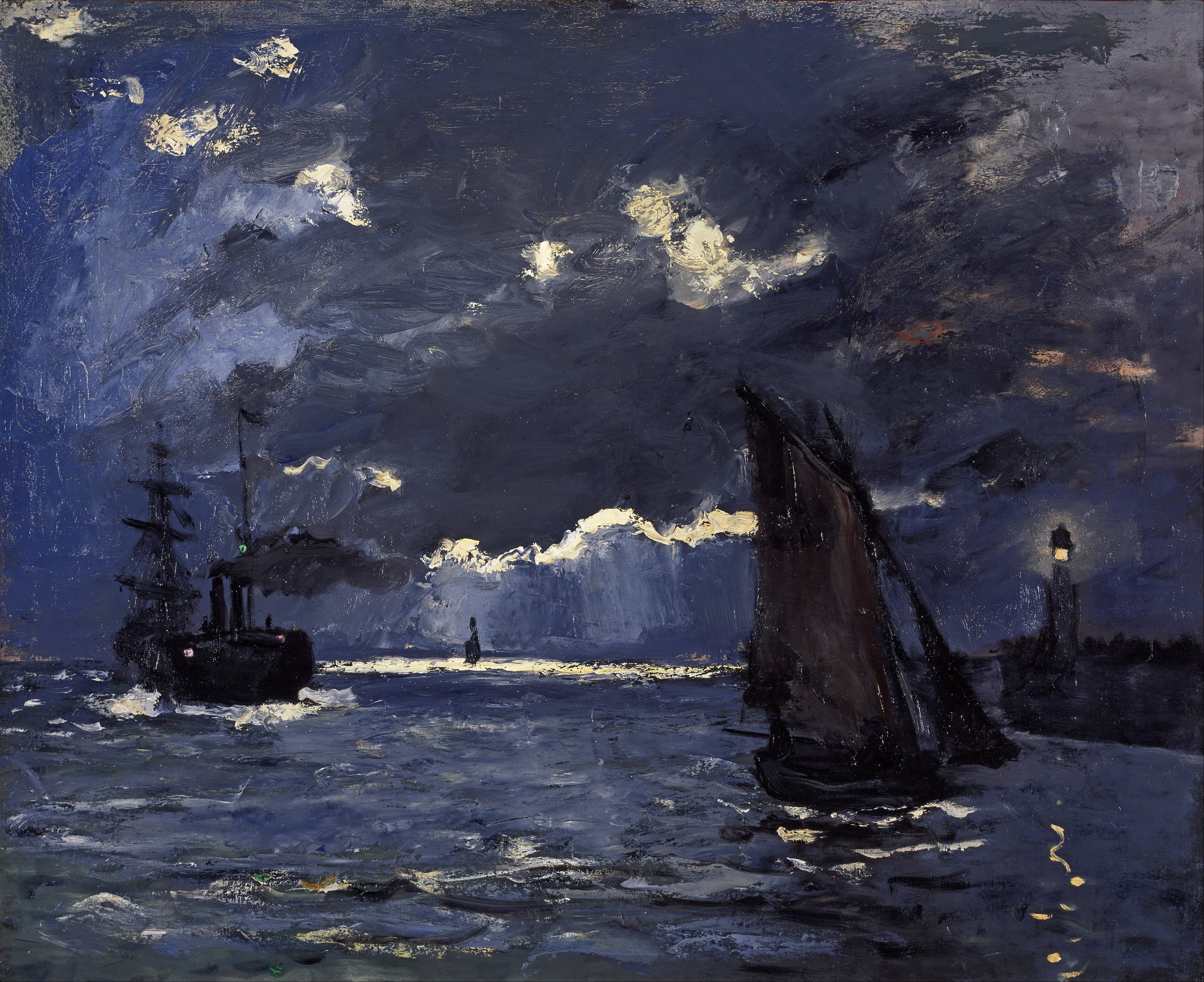
This is a carefully built outdoor picture. The clouds are modeled with real weight, and the beach is described stone by stone in the foreground, in short dabs of paint that loosen as they recede. The bluff is painted in broad, dragged strokes of olive and yellow-green with brown underneath. Monet keeps the palette light and the shadows short, which places the scene around midday. Compared with his moody night harbor of the same years, A Seascape, Shipping by Moonlight, it shows the other side of his early coastal painting: a clear, even daylight that he would make his own.
Related views
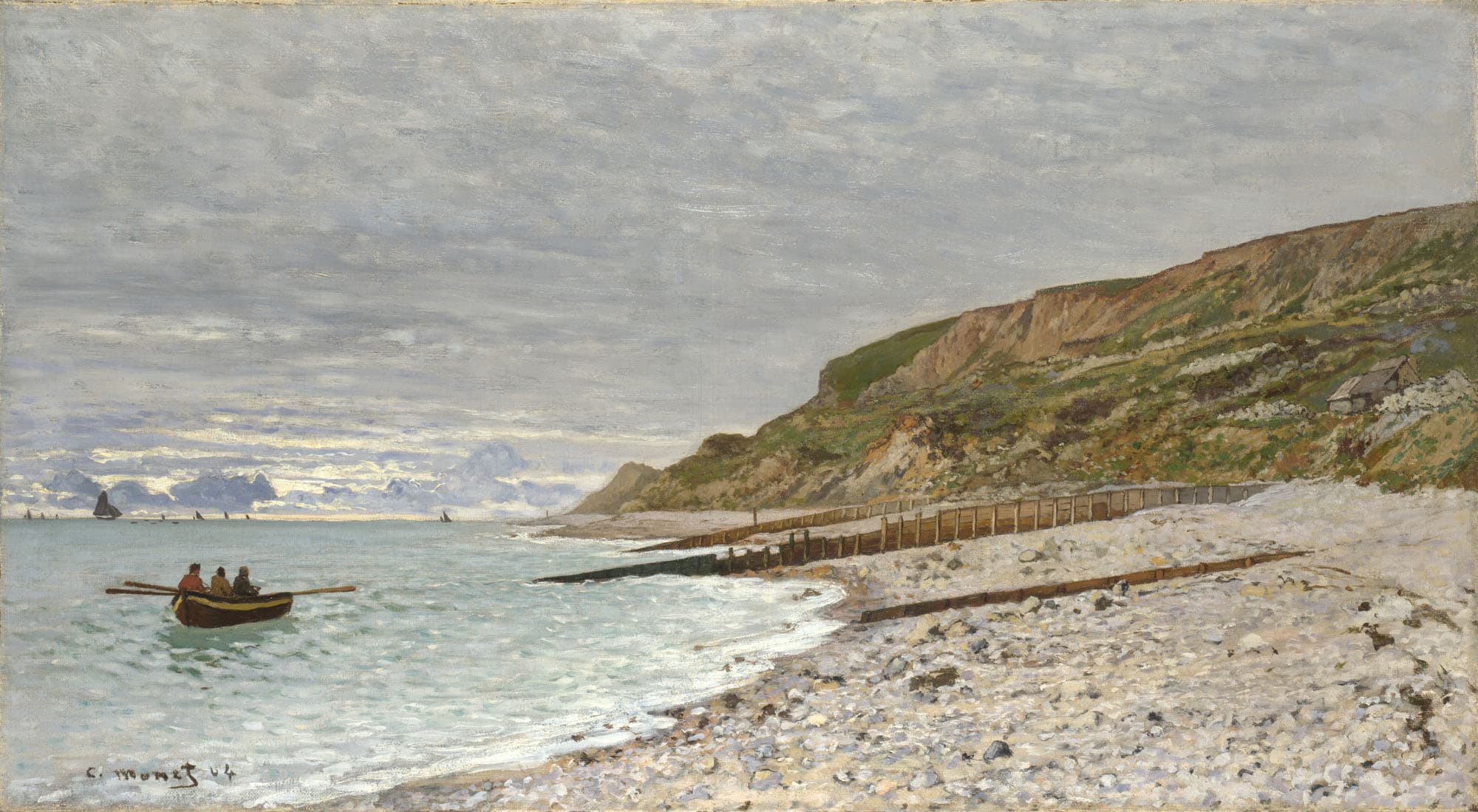
Monet painted the shore around Honfleur and the Seine estuary repeatedly in the 1860s. La Pointe de la Hève, Sainte-Adresse of 1864, now in the National Gallery, London, shows a similar beach and bluff on the opposite bank. In Honfleur itself he painted Rue de la Bavolle and the road near the Saint-Siméon farm in Walk. A few years later, at Sainte-Adresse, his beaches fill with fashionable visitors, as in Regatta at Sainte-Adresse; here the beach still belongs to fishermen.
Where to see it
The painting is in the Los Angeles County Museum of Art (accession 64.4). It is not always on view, so check LACMA's collection site before visiting. For other public collections with early Monets, see where to see Monet's paintings.
Questions & answers
Where is Monet's The Beach at Honfleur?
It is in the Los Angeles County Museum of Art (LACMA), which received it in 1964 as a gift of Mrs. Reese Hale Taylor. It is not always on display, so check LACMA's online collection for its current status before visiting.
When was The Beach at Honfleur painted?
LACMA dates it 1864–66. Monet painted it on the coast near Honfleur in Normandy, where he worked in those summers alongside Eugène Boudin and Johan Barthold Jongkind, his two early mentors in painting outdoors.
What does The Beach at Honfleur show?
A wide shingle beach below a grassy bluff on a sunny day, with heaped white clouds, a fleet of dark-sailed fishing boats at left, a slender lighthouse tower in the distance and a single fisherman standing on the stones at right.
How big is The Beach at Honfleur?
The canvas measures 59.7 × 81.3 cm (23½ × 32 in.), according to LACMA. That is a standard mid-size landscape format of the kind Monet often carried outdoors in the 1860s.
More by the artist
Claude Monet

Bridge over a Pond of Water Lilies
Claude Monet · 1899

Woman with a Parasol – Madame Monet and Her Son
Claude Monet · 1875

Sunset in Venice
Claude Monet · 1908–12

La Grenouillère
Claude Monet · 1869

Beach in Pourville
Claude Monet · 1882

Springtime
Claude Monet · 1872

Boating on the River Epte
Claude Monet · 1890

The Seine at Asnières (Hermitage)
Claude Monet · 1873
Also painted in 1864
The same year
Kindred works
You may also study
La Pointe de la Hève, Sainte-Adresse
Claude Monet · 1864
A Seascape, Shipping by Moonlight
Claude Monet · c. 1864
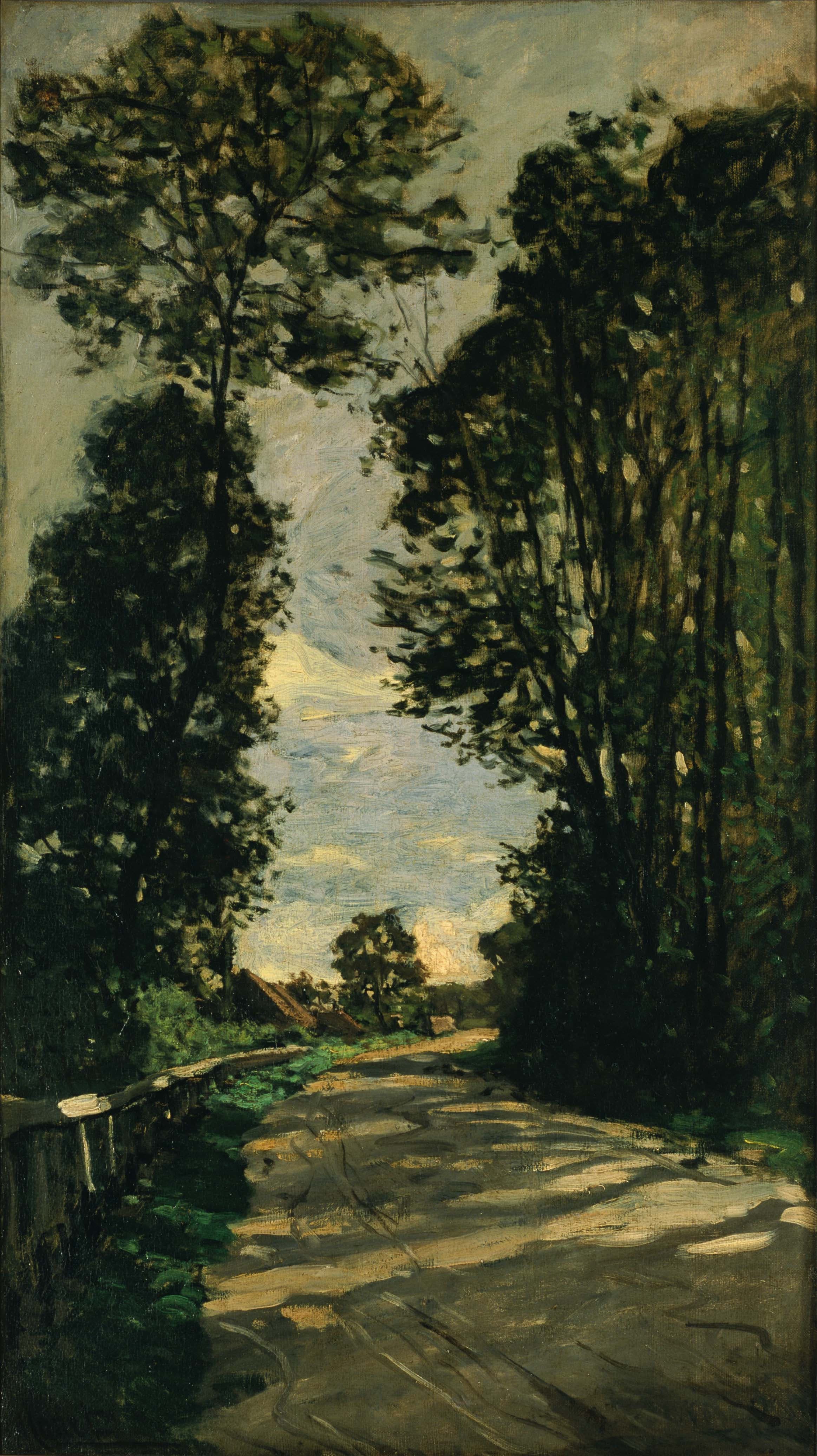
Walk (Road by the Saint-Siméon Farm)
Claude Monet · 1864
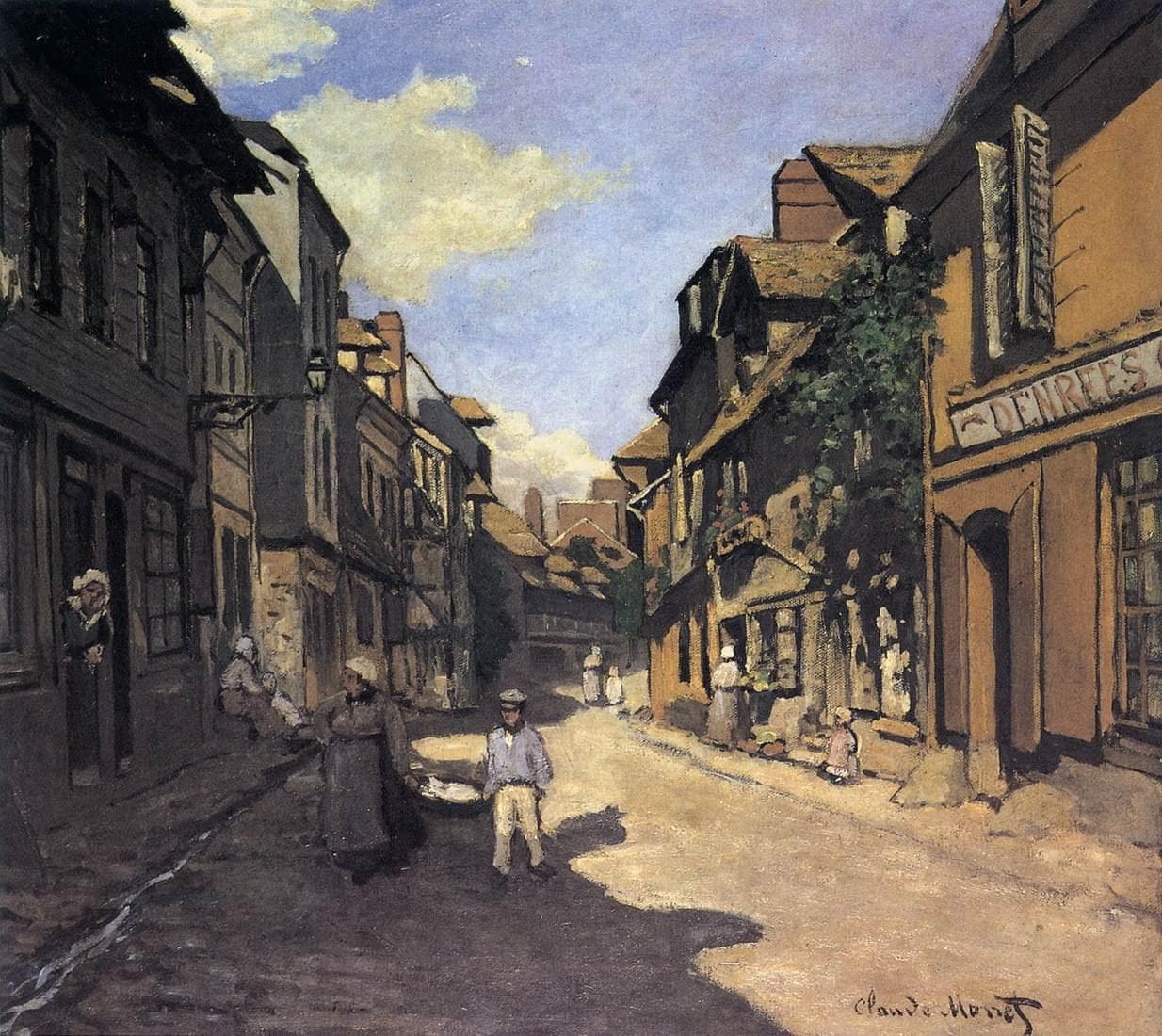
Rue de la Bavolle, Honfleur
Claude Monet · 1864
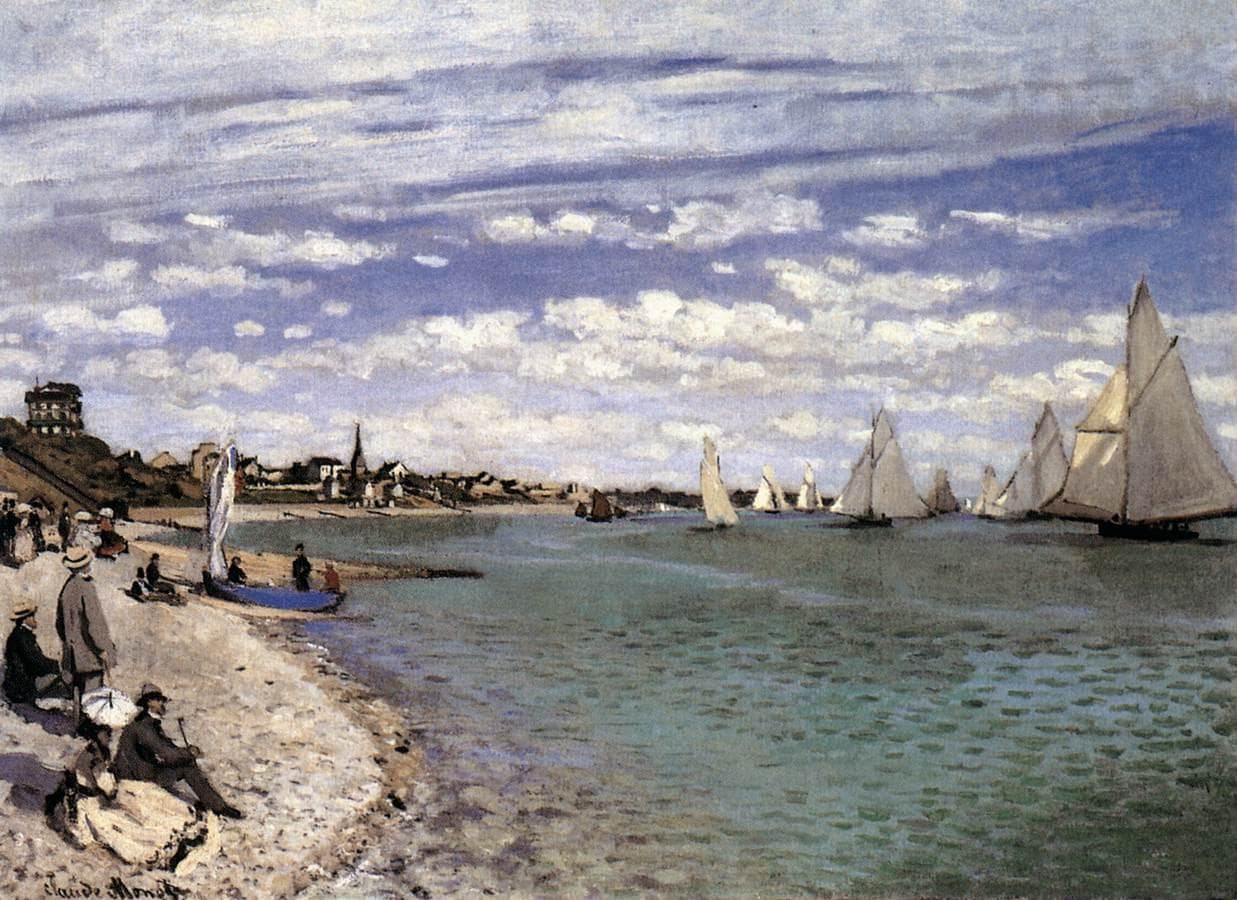
Regatta at Sainte-Adresse
Claude Monet · 1867

The Scream
Edvard Munch · 1893

Ophelia
John Everett Millais · 1851–52

The Great Wave off Kanagawa
Katsushika Hokusai · c. 1830–32