Collection
Famous Paintings: 40 Masterpieces Everyone Should Know
Five centuries of the pictures the world keeps coming back to, from Leonardo's smile to Pollock's skein of paint, and why each one earned its place.
The most famous paintings in the world are a short list most people could half-recite: Leonardo's Mona Lisa in the Louvre, Van Gogh's The Starry Night in New York, Botticelli's The Birth of Venus in Florence, Rembrandt's The Night Watch in Amsterdam. This page gathers forty of them, ordered roughly by how widely they are known, and explains what each one changed.
Fame in painting is not an accident. A picture becomes famous because it solved a problem other painters had been circling, because a crowd once fought over it, because it was stolen, or because it caught something about its century so exactly that later centuries borrowed it to describe themselves. Below the list you will find the story that connects them: a walk from the Renaissance to Abstract Expressionism, a guide to where the originals hang, and short answers to the questions people ask most about famous artworks.
01
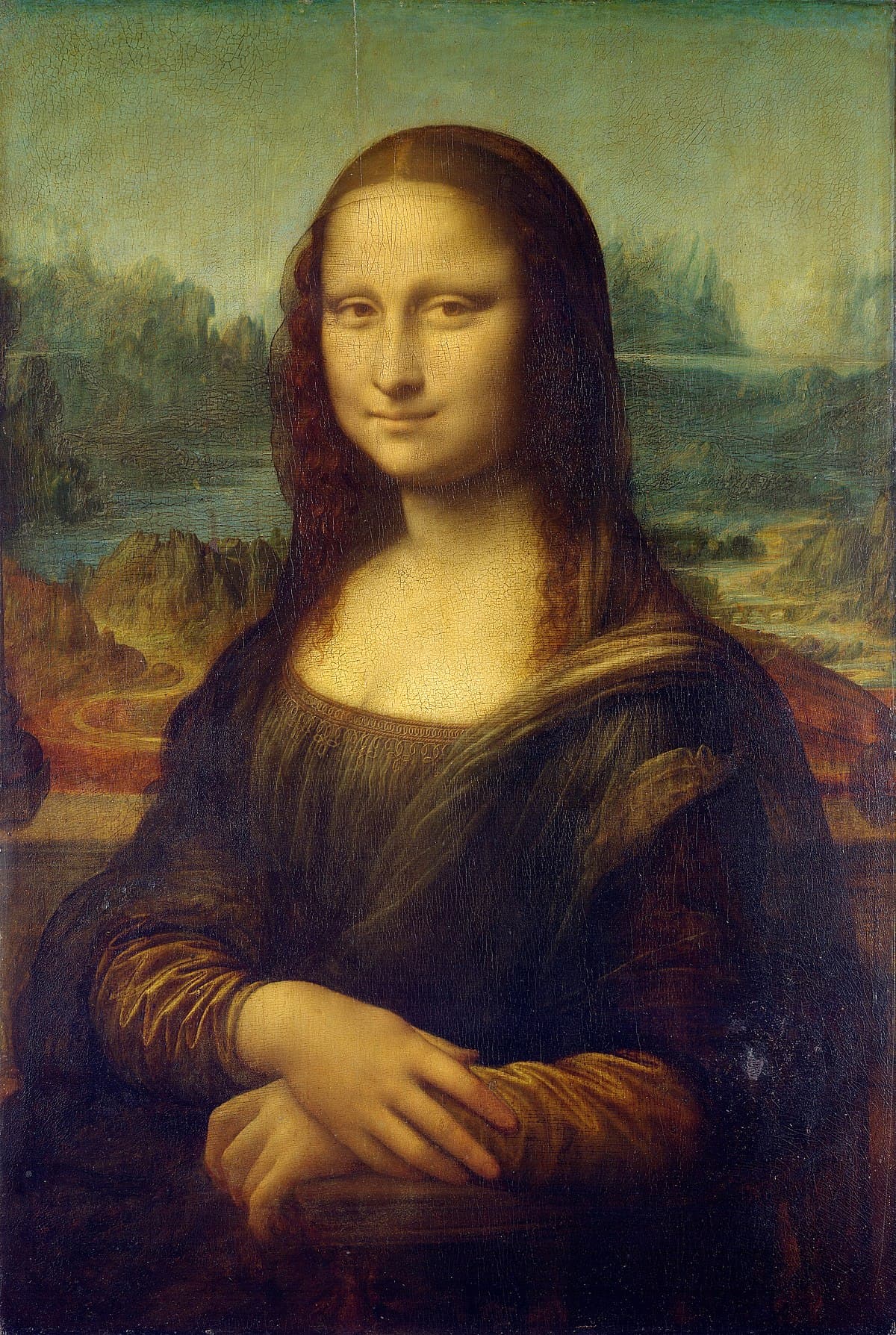
Mona Lisa
Leonardo da Vinci · c. 1503–1519
The Mona Lisa is Leonardo da Vinci's portrait of the Florentine Lisa Gherardini, begun around 1503 and worked on for years afterward. Painted in oil on a poplar panel, it hangs in the Louvre, Paris, the most famous painting in the world.
02
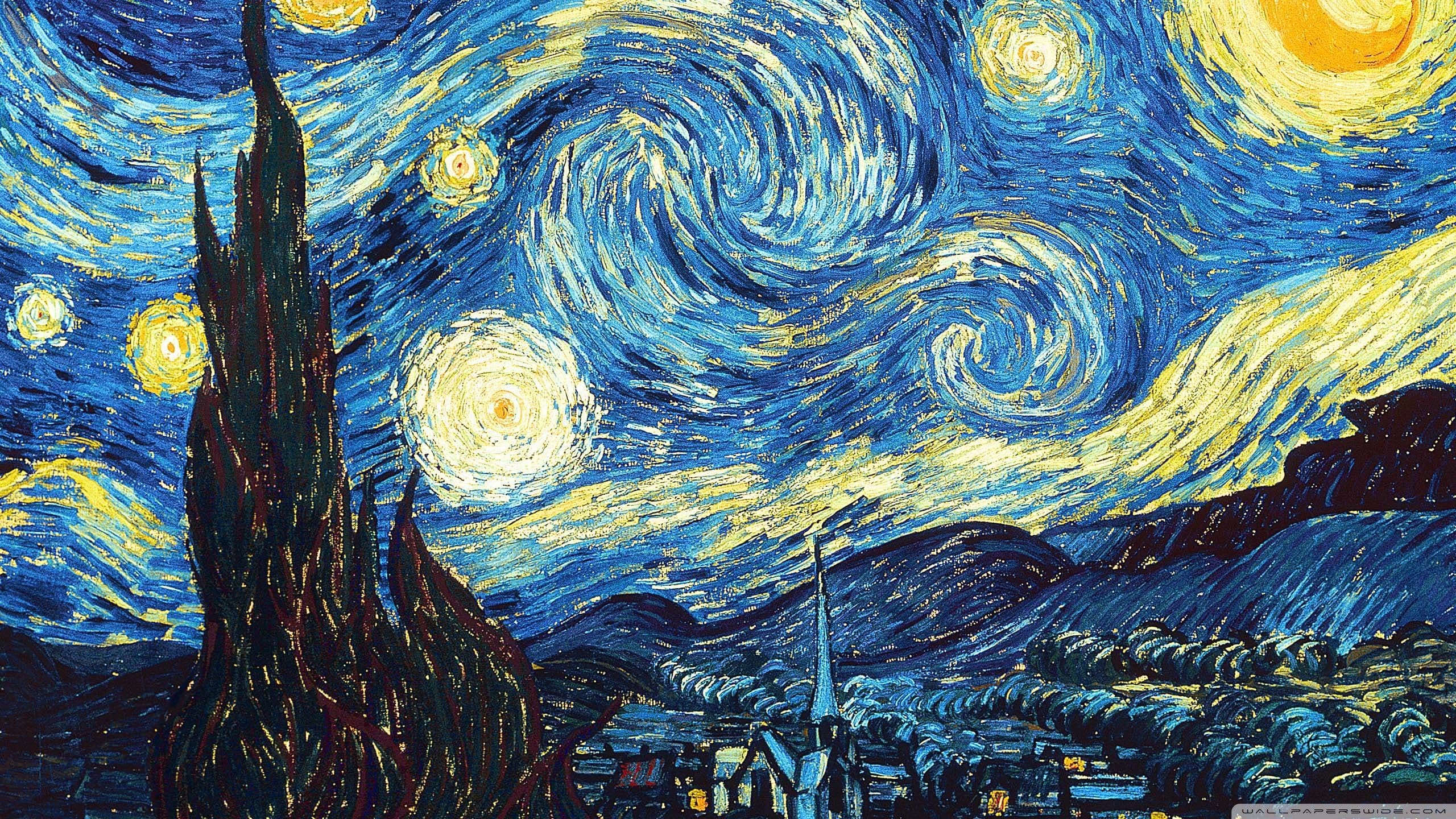
The Starry Night (van Gogh)
Vincent van Gogh · 1889
The Starry Night is a painting by Vincent van Gogh, made in June 1889 at the asylum in Saint-Rémy-de-Provence: a swirling night sky over a village and a flame-like cypress. It is in the Museum of Modern Art, New York.
03
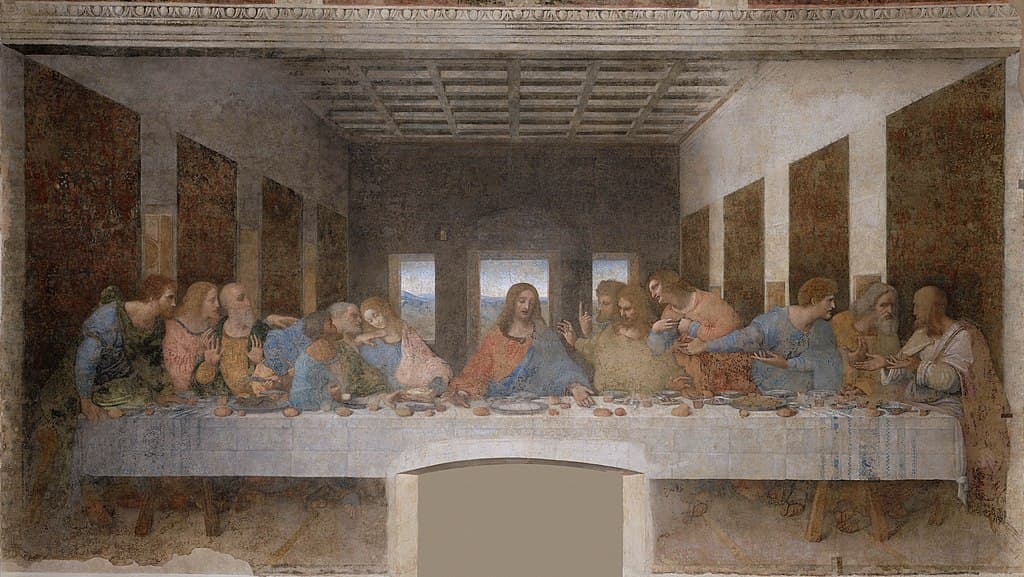
The Last Supper
Leonardo da Vinci · c. 1495–98
The Last Supper is Leonardo da Vinci's wall painting of Christ and the twelve apostles at the moment he announces one will betray him, painted c. 1495–98 in the refectory of Santa Maria delle Grazie, Milan, where it remains.
04
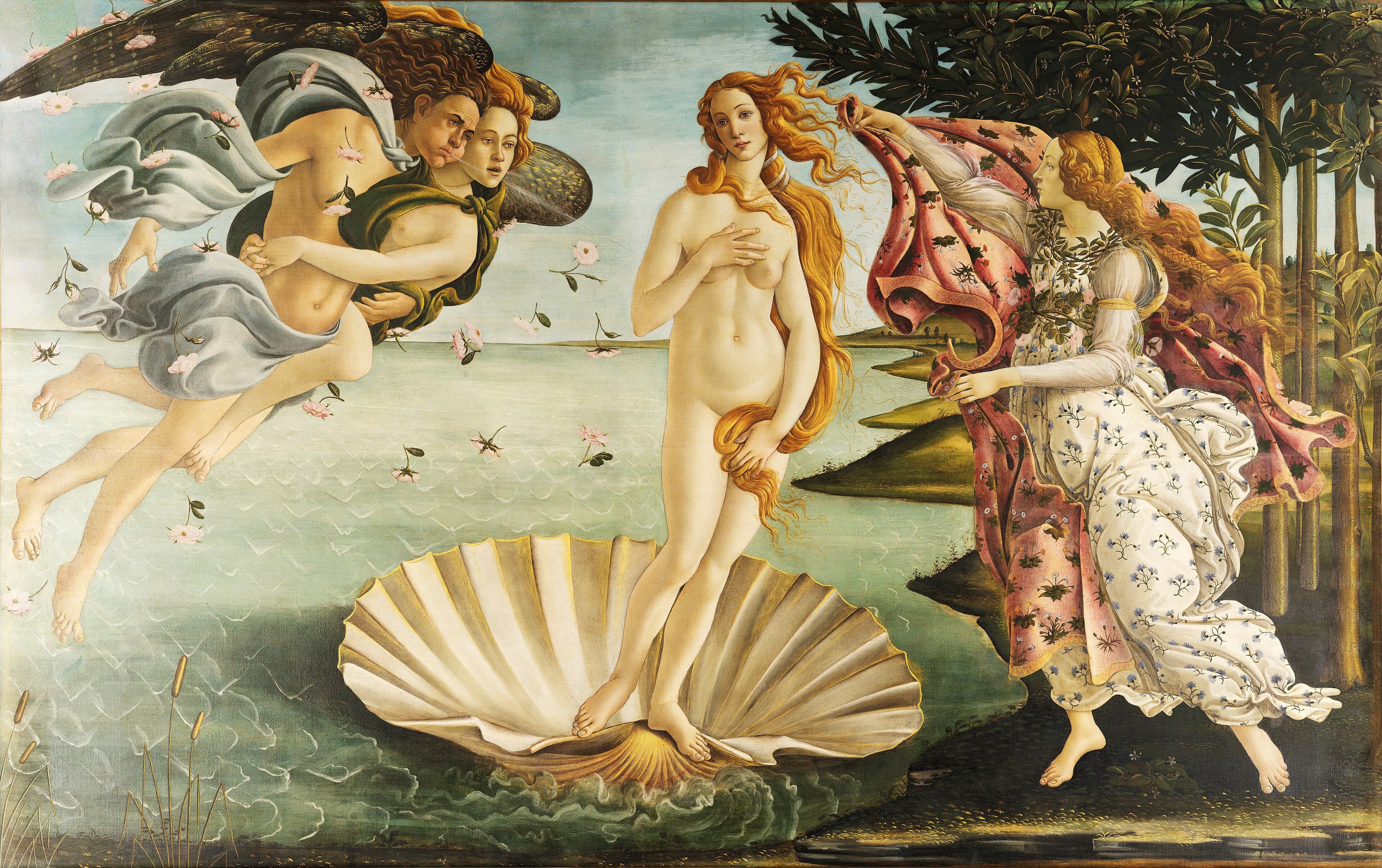
The Birth of Venus
Sandro Botticelli · c. 1484–1486
The Birth of Venus is Sandro Botticelli's painting of the goddess Venus arriving on a scallop shell, blown ashore by the winds, made in Florence around 1484–1486. It hangs in the Uffizi Gallery in Florence.
05
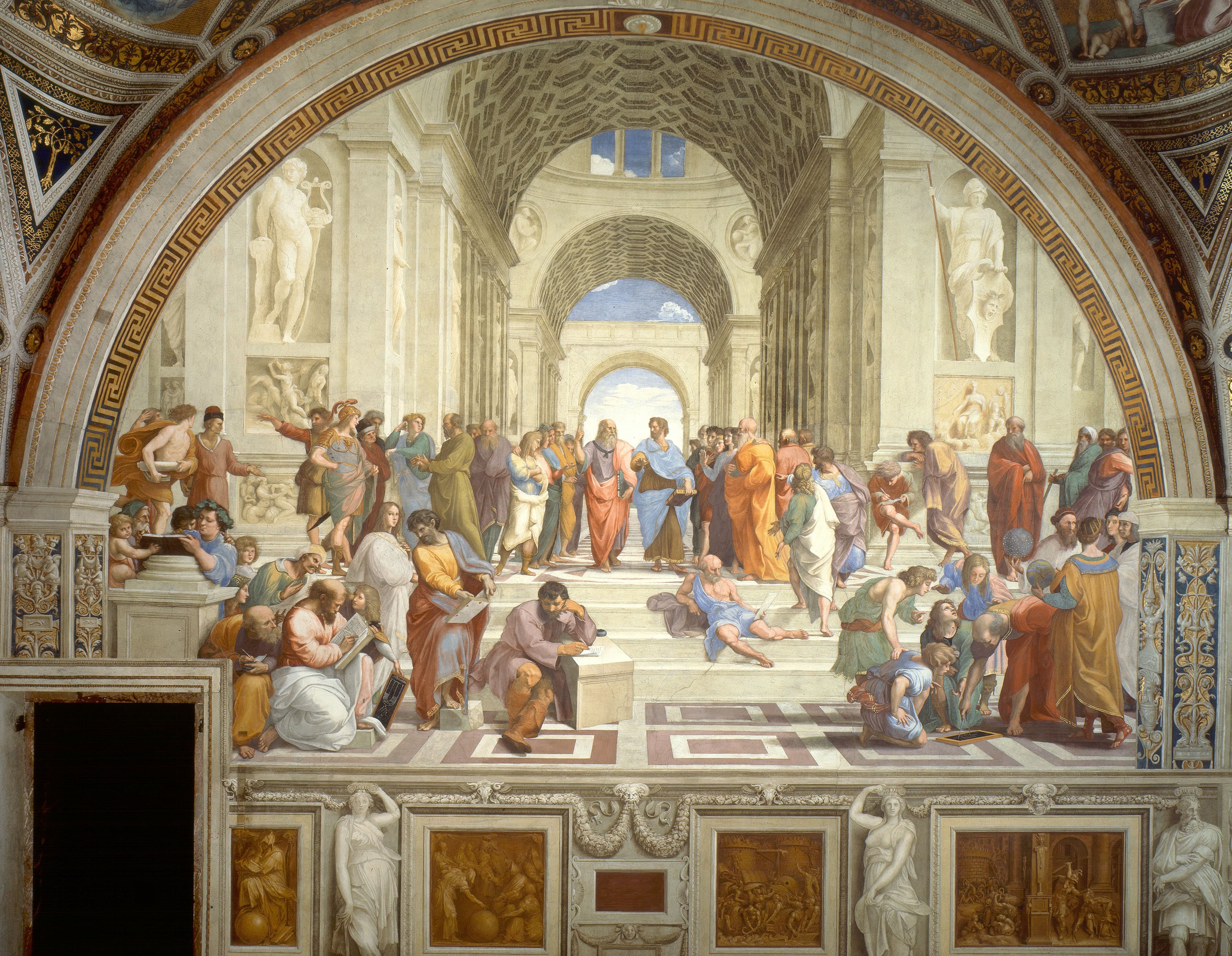
The School of Athens
Raphael · 1509–1511
The School of Athens is a fresco painted by Raphael in 1509–1511 for the Stanza della Segnatura in the Vatican, showing Plato, Aristotle and the great thinkers of antiquity in a vast classical hall. It is still in place in the Vatican Museums.
06
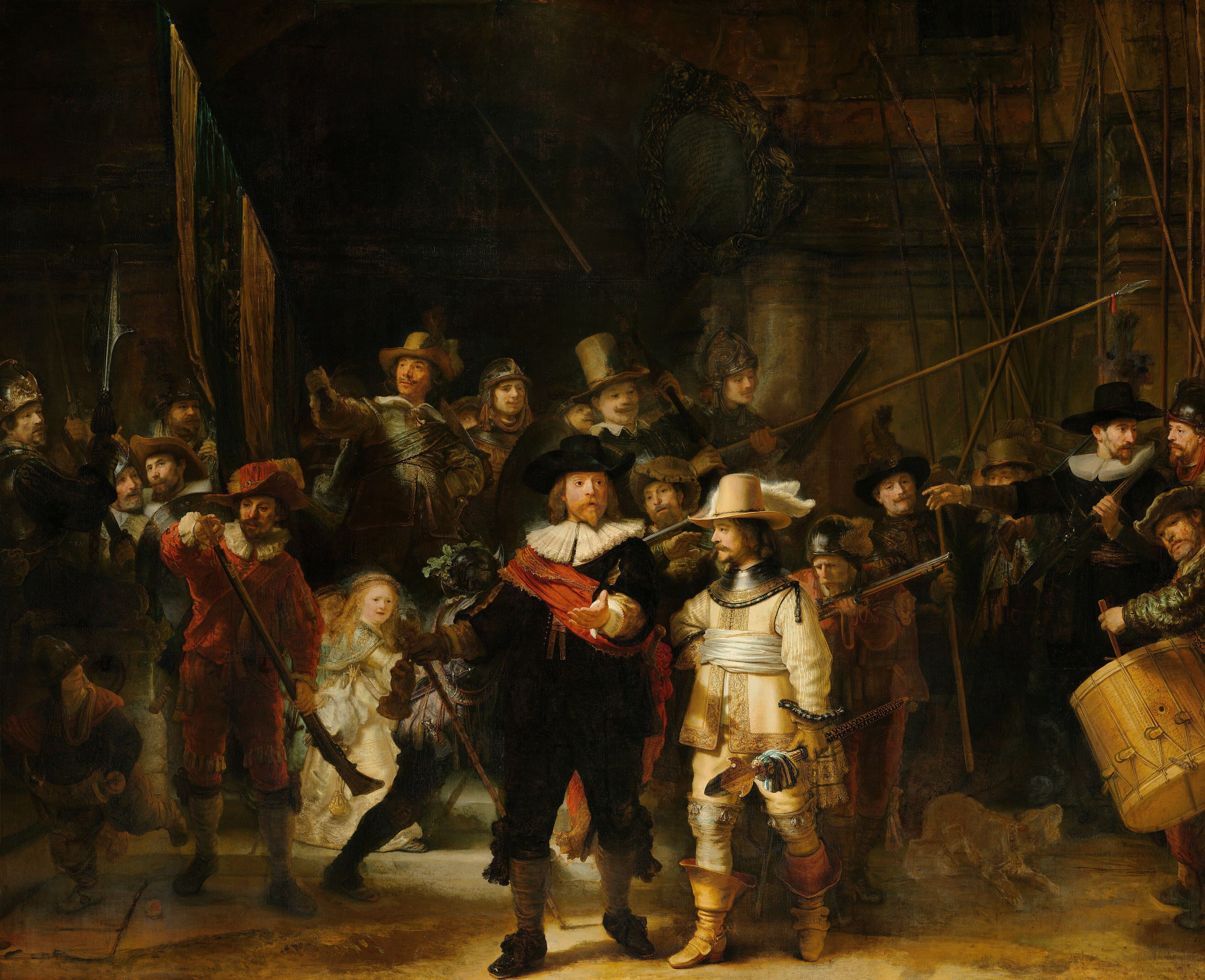
The Night Watch
Rembrandt · 1642
The Night Watch is Rembrandt's 1642 group portrait of an Amsterdam civic militia company led by Captain Frans Banninck Cocq, famous for its drama, movement and light. It hangs in the Rijksmuseum in Amsterdam.
07
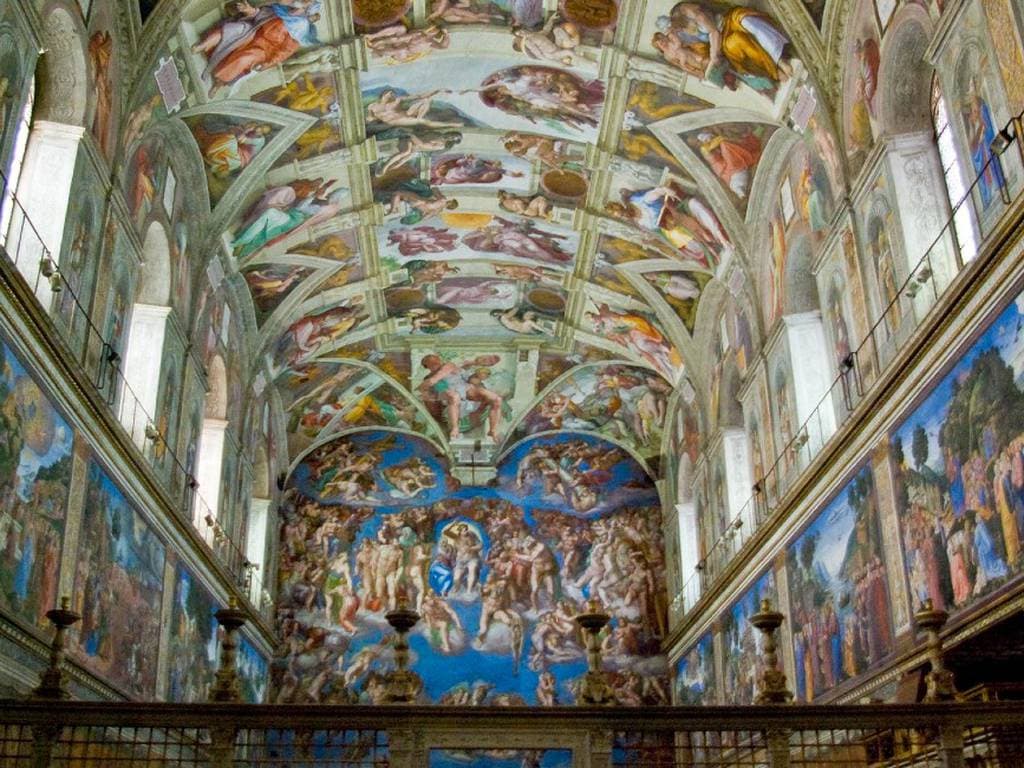
Sistine Chapel ceiling
Michelangelo · 1508–12
The Sistine Chapel ceiling is the fresco cycle Michelangelo painted for Pope Julius II between 1508 and 1512, with nine scenes from Genesis, including The Creation of Adam, surrounded by prophets, sibyls and nude youths. It is in the Sistine Chapel in the Vatican.
08
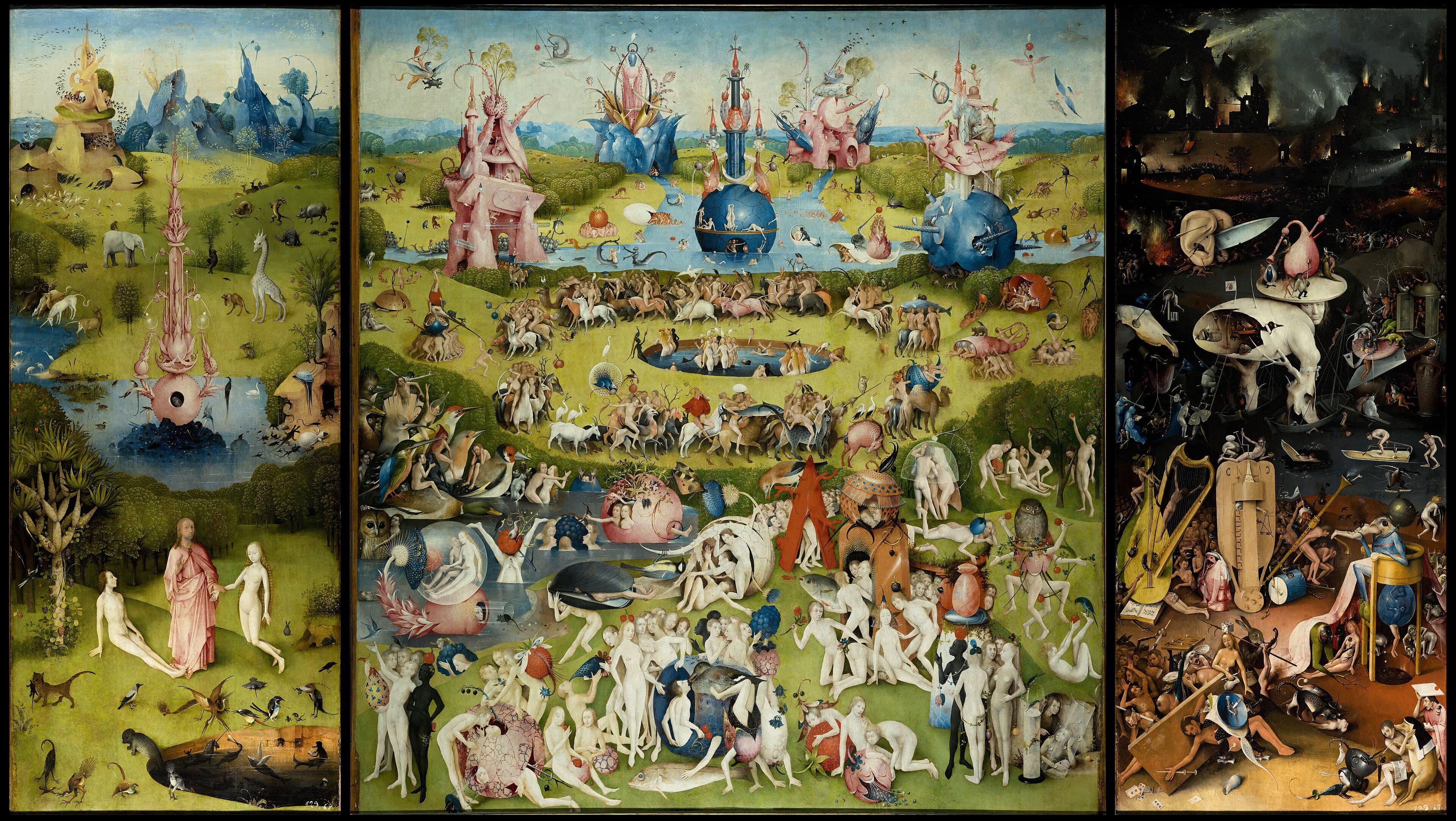
The Garden of Earthly Delights
Hieronymus Bosch · c. 1490–1510
The Garden of Earthly Delights is a triptych painted by Hieronymus Bosch around 1490–1510, moving from Eden through a garden of naked pleasure-seekers to a nightmarish hell. It is in the Museo del Prado, Madrid.
09
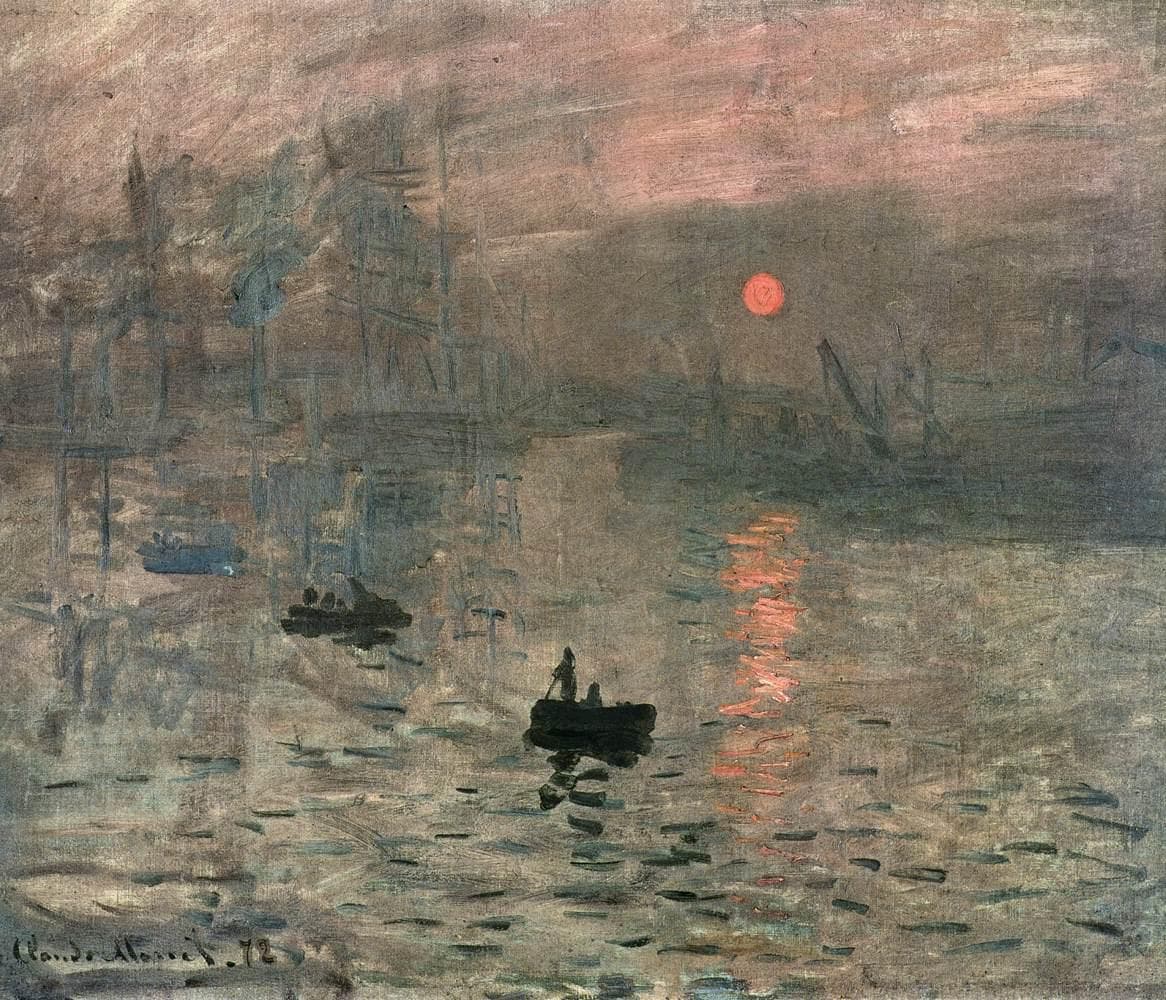
Impression, Sunrise
Claude Monet · 1872
Impression, Sunrise is Claude Monet's 1872 view of the port of Le Havre at dawn, an orange sun over blue-gray haze. Its title gave Impressionism its name in 1874. It hangs in the Musée Marmottan Monet in Paris.
10
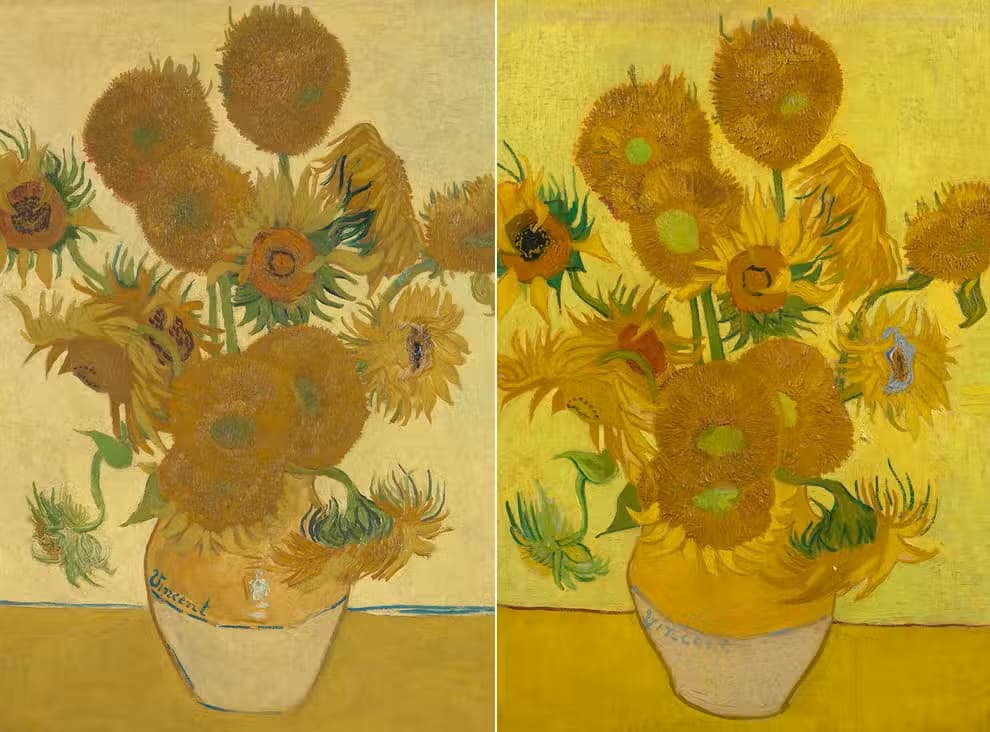
Sunflowers
Vincent van Gogh · 1888–89
Sunflowers is a series of still lifes of sunflowers in a vase painted by Vincent van Gogh in Arles in 1888–89. The best-known version, from August 1888, is in the National Gallery, London; a January 1889 repetition is in the Van Gogh Museum, Amsterdam.
11
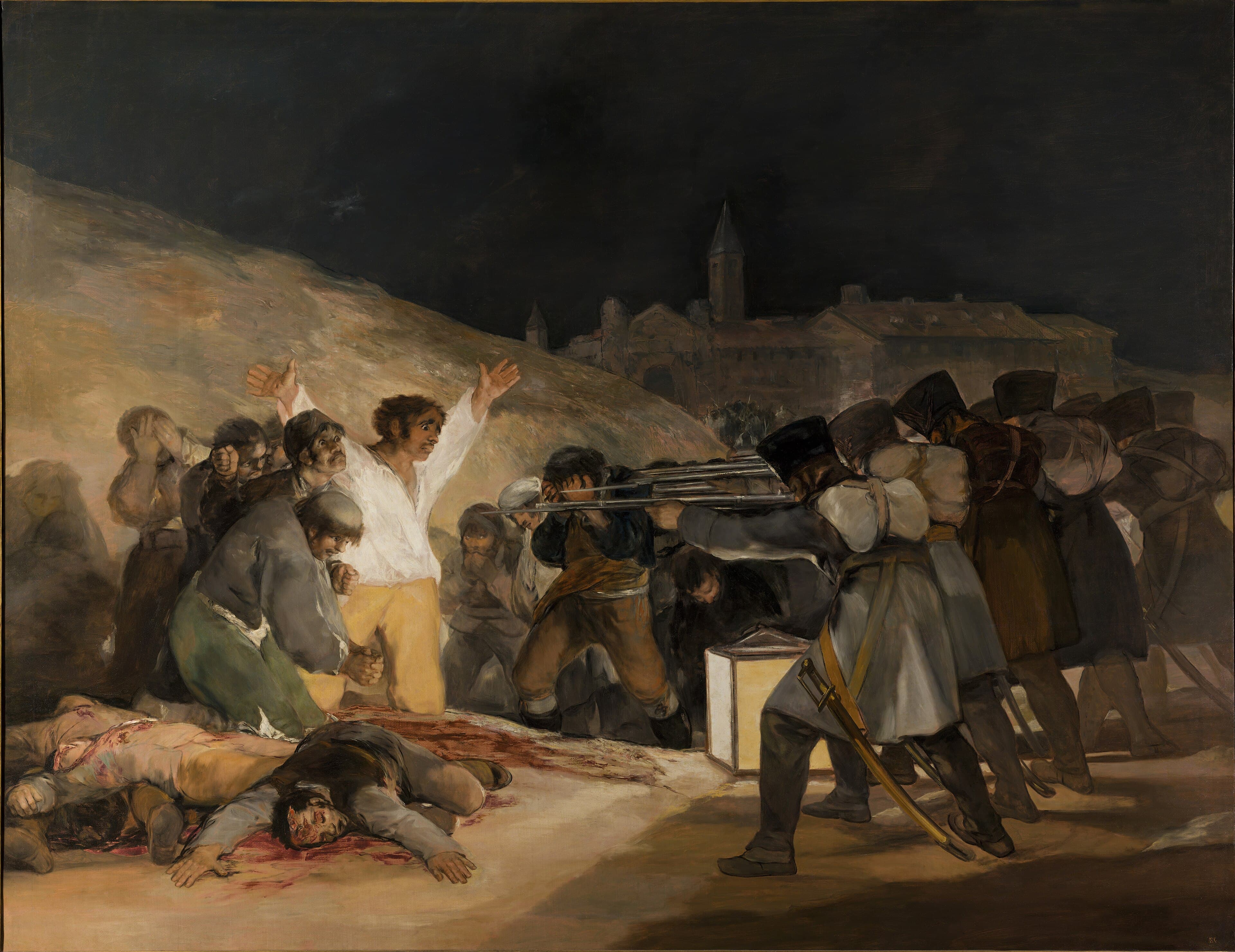
The Third of May 1808
Francisco Goya · 1814
The Third of May 1808 is Francisco Goya's 1814 painting of Spanish civilians being shot by a French firing squad the morning after the Madrid uprising against Napoleon's troops. It hangs in the Museo del Prado in Madrid.
12
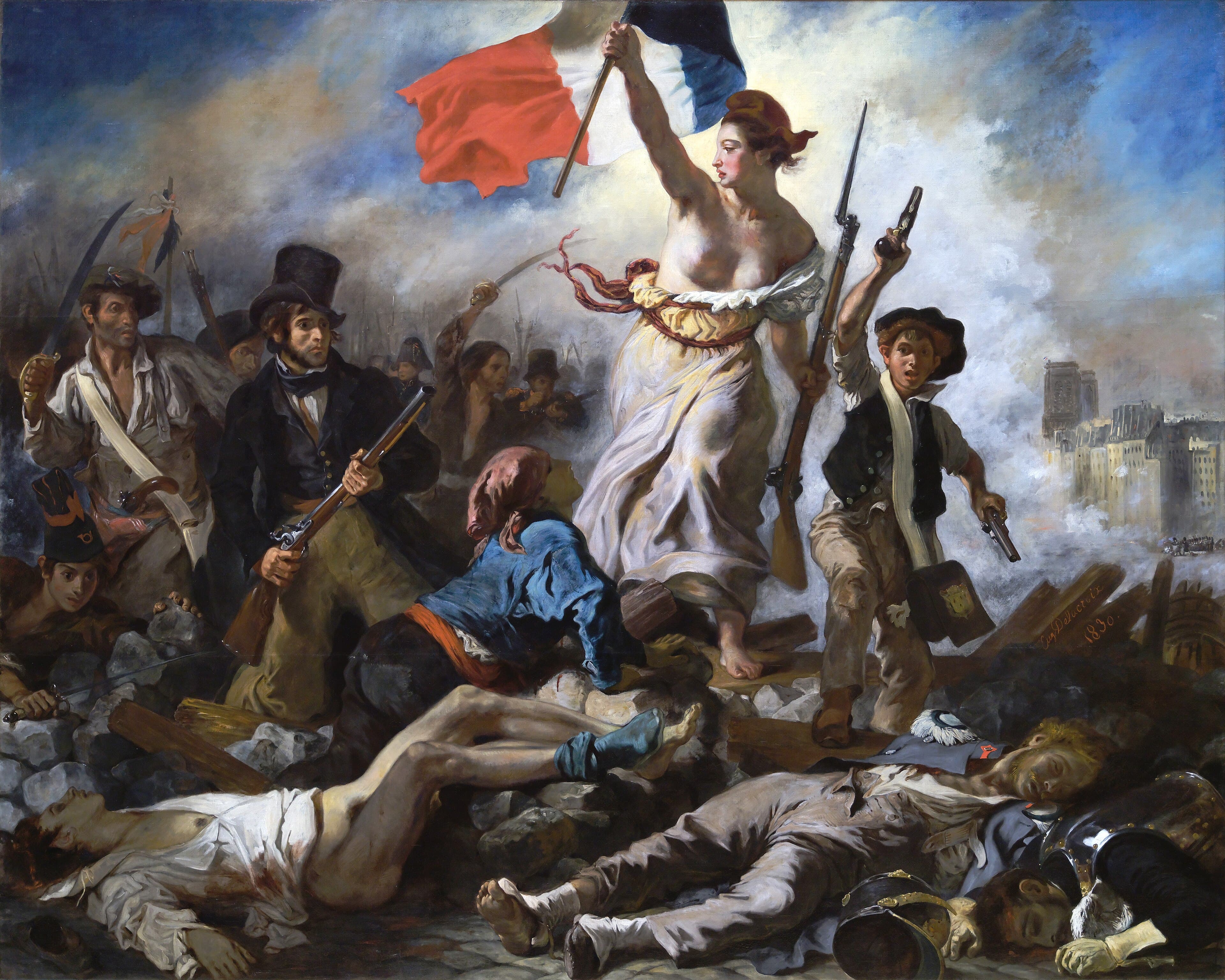
Liberty Leading the People
Eugène Delacroix · 1830
Liberty Leading the People is Eugène Delacroix's 1830 painting of the July Revolution in Paris, with Liberty as a bare-breasted woman raising the tricolor over a barricade. It hangs in the Louvre in Paris.
13
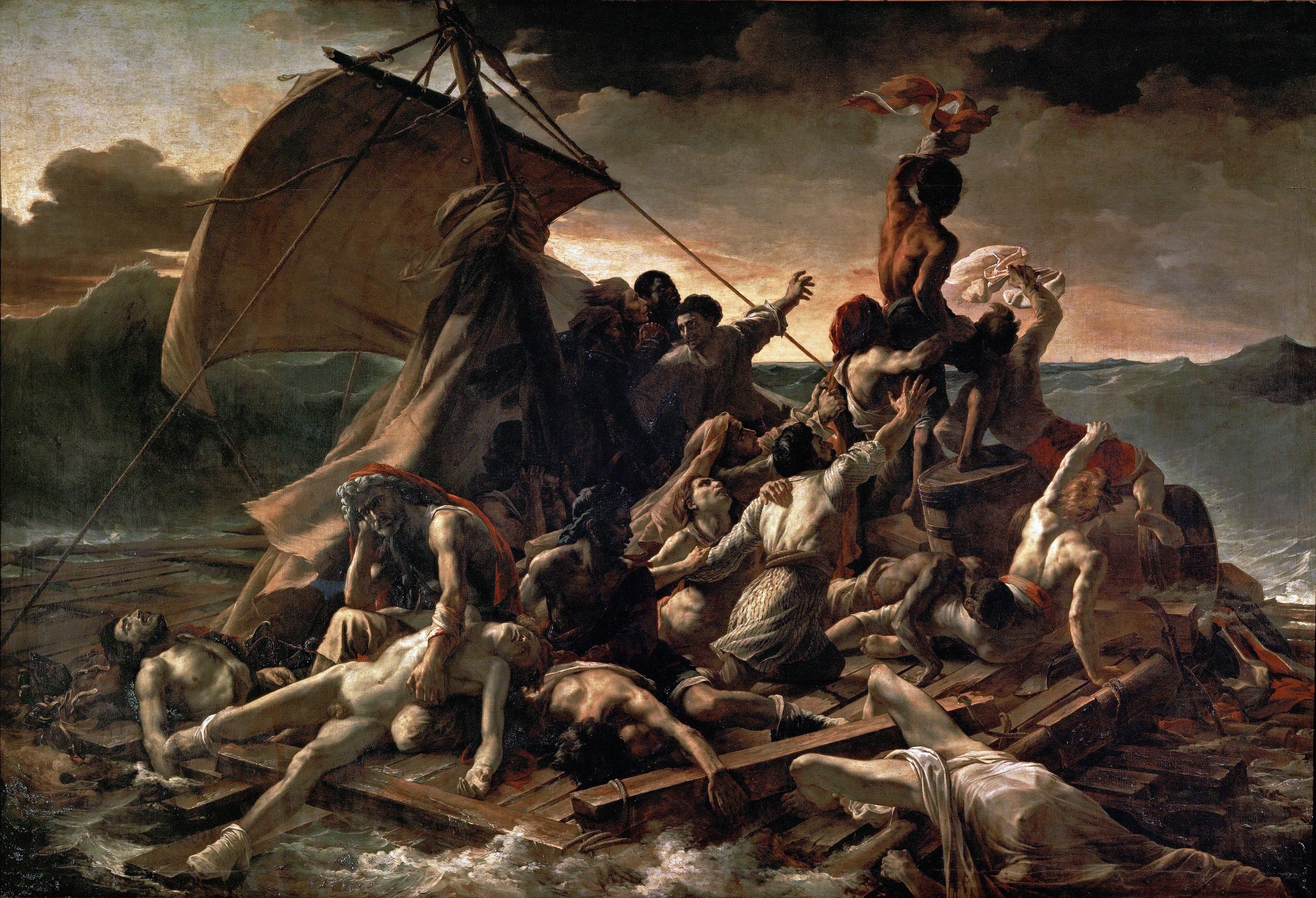
The Raft of the Medusa
Théodore Géricault · 1818–1819
The Raft of the Medusa is Théodore Géricault's 1818–19 painting of survivors of the French frigate Méduse, adrift on a makeshift raft and signaling a distant ship. The vast canvas hangs in the Louvre in Paris.
14
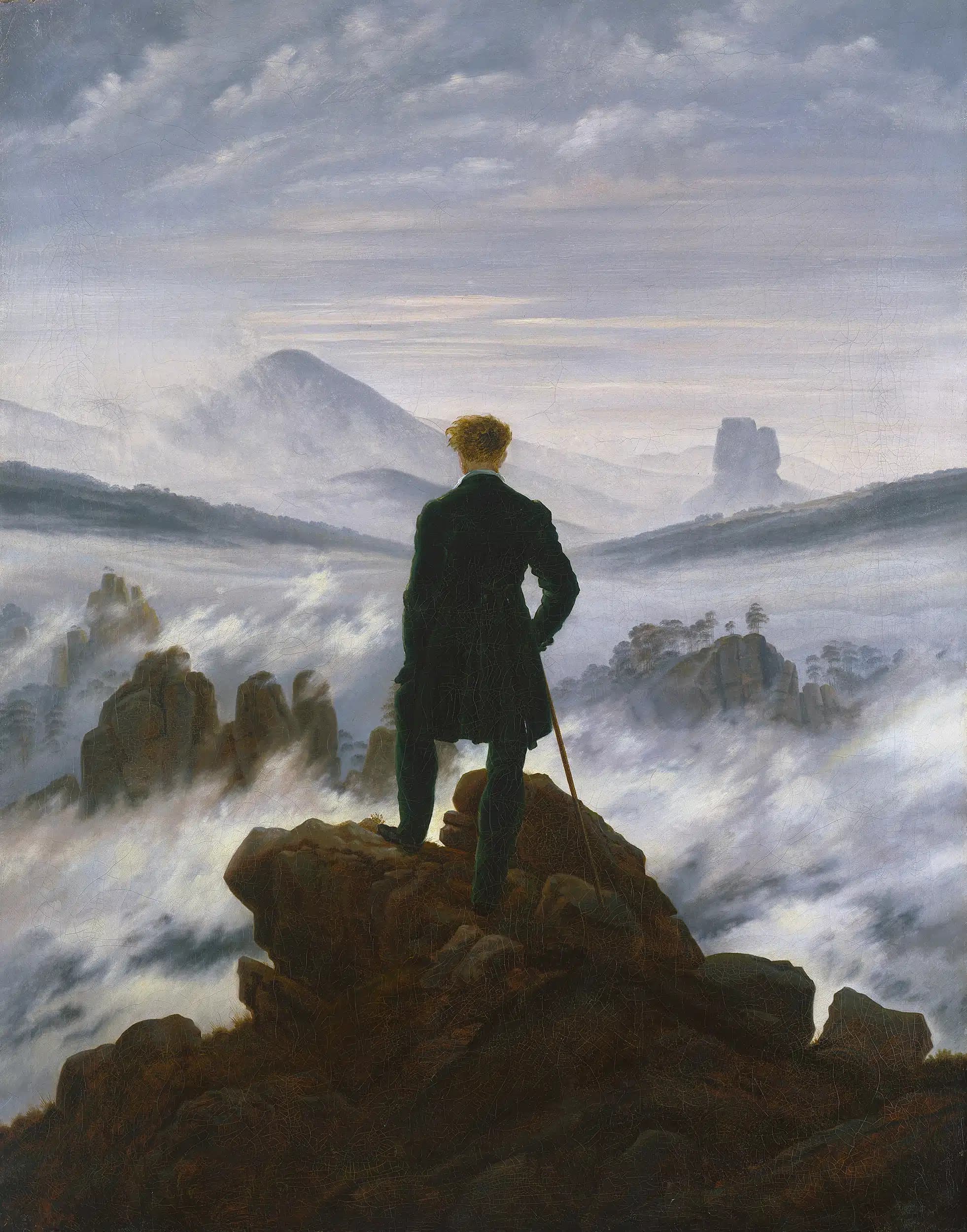
Wanderer above the Sea of Fog
Caspar David Friedrich · c. 1817
Wanderer above the Sea of Fog is a painting by Caspar David Friedrich, made around 1817, of a man seen from behind on a rocky summit gazing over a landscape of fog. It is in the Hamburger Kunsthalle in Hamburg.
15

Ophelia
John Everett Millais · 1851–52
The Ophelia painting by John Everett Millais (1851–52) shows Shakespeare's Ophelia floating in a stream moments before she drowns. Modeled by Elizabeth Siddal, it hangs in Tate Britain in London.
16

Saturn Devouring His Son
Francisco Goya · c. 1819–1823
Saturn Devouring His Son is one of Francisco Goya's Black Paintings, painted directly onto a wall of his house outside Madrid around 1819–1823. Transferred to canvas, it now hangs in the Museo del Prado.
17
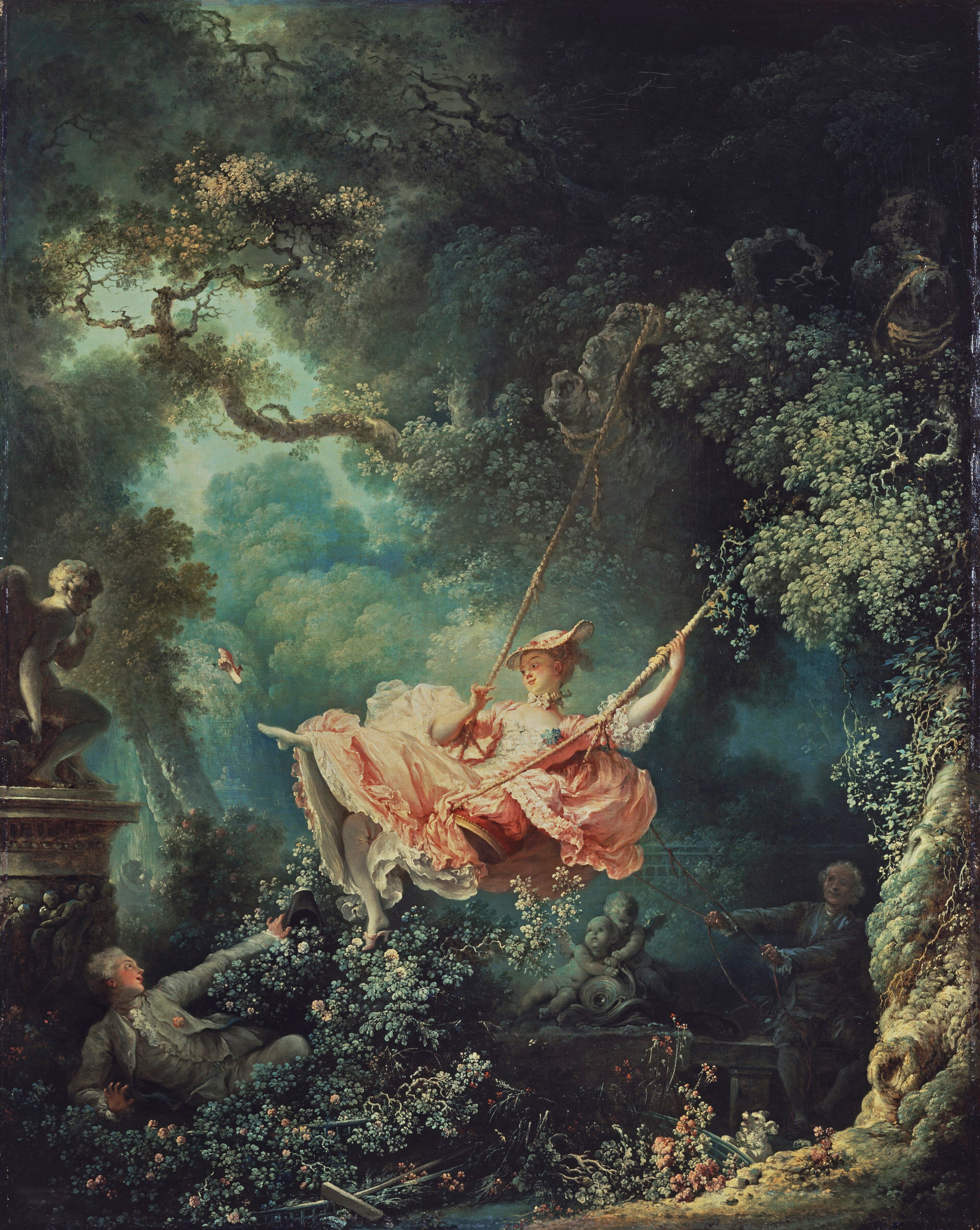
The Swing
Jean-Honoré Fragonard · c. 1767
The Swing painting by Jean-Honoré Fragonard (c. 1767) shows a young woman in pink soaring on a swing while a hidden lover gazes up her skirts. The Rococo masterpiece hangs in the Wallace Collection in London.
18
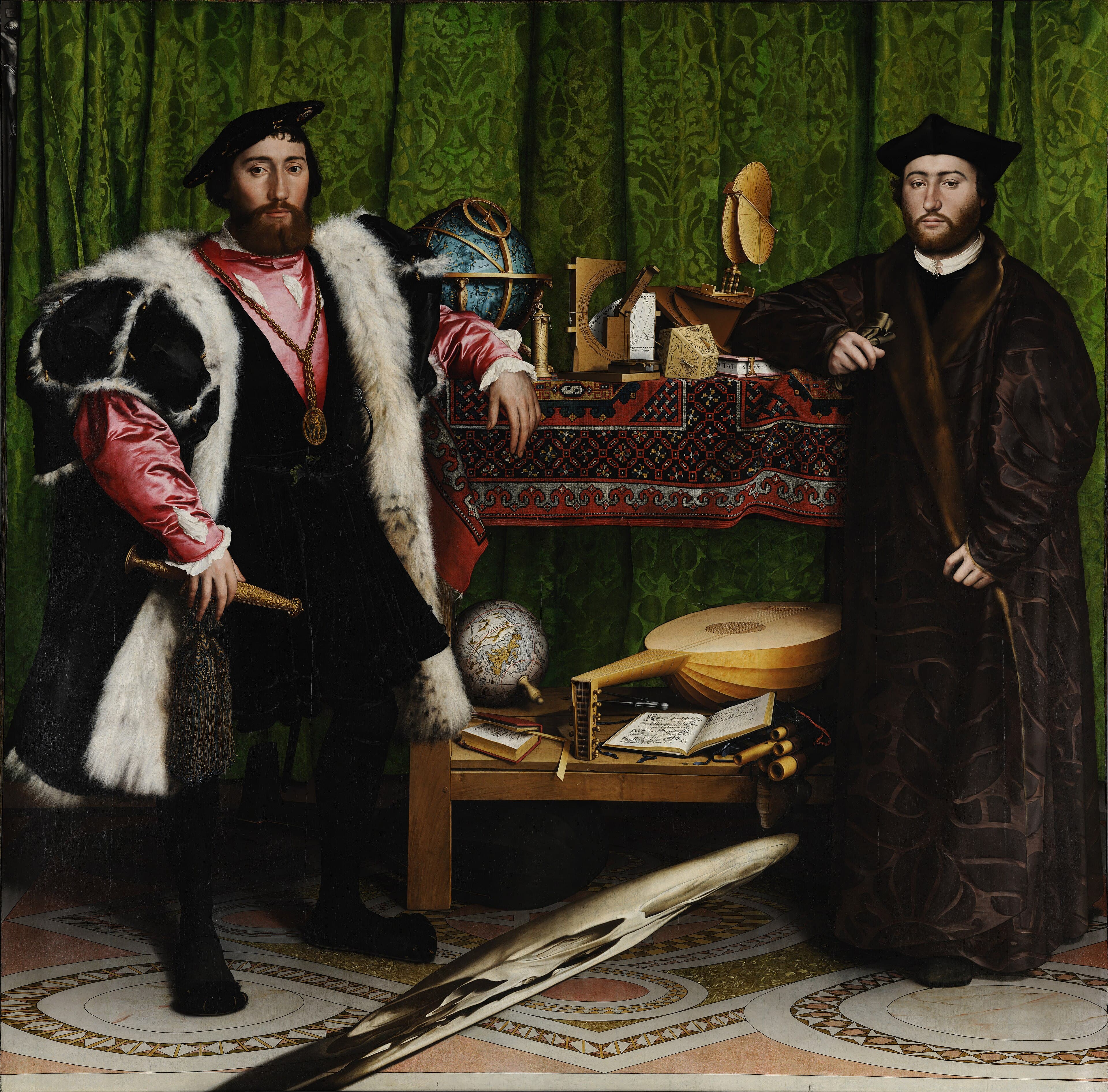
The Ambassadors
Hans Holbein the Younger · 1533
The Ambassadors painting is Hans Holbein the Younger's 1533 double portrait of two French envoys in London, surrounded by scientific instruments and crossed by a famous distorted skull. It hangs in the National Gallery, London.
19
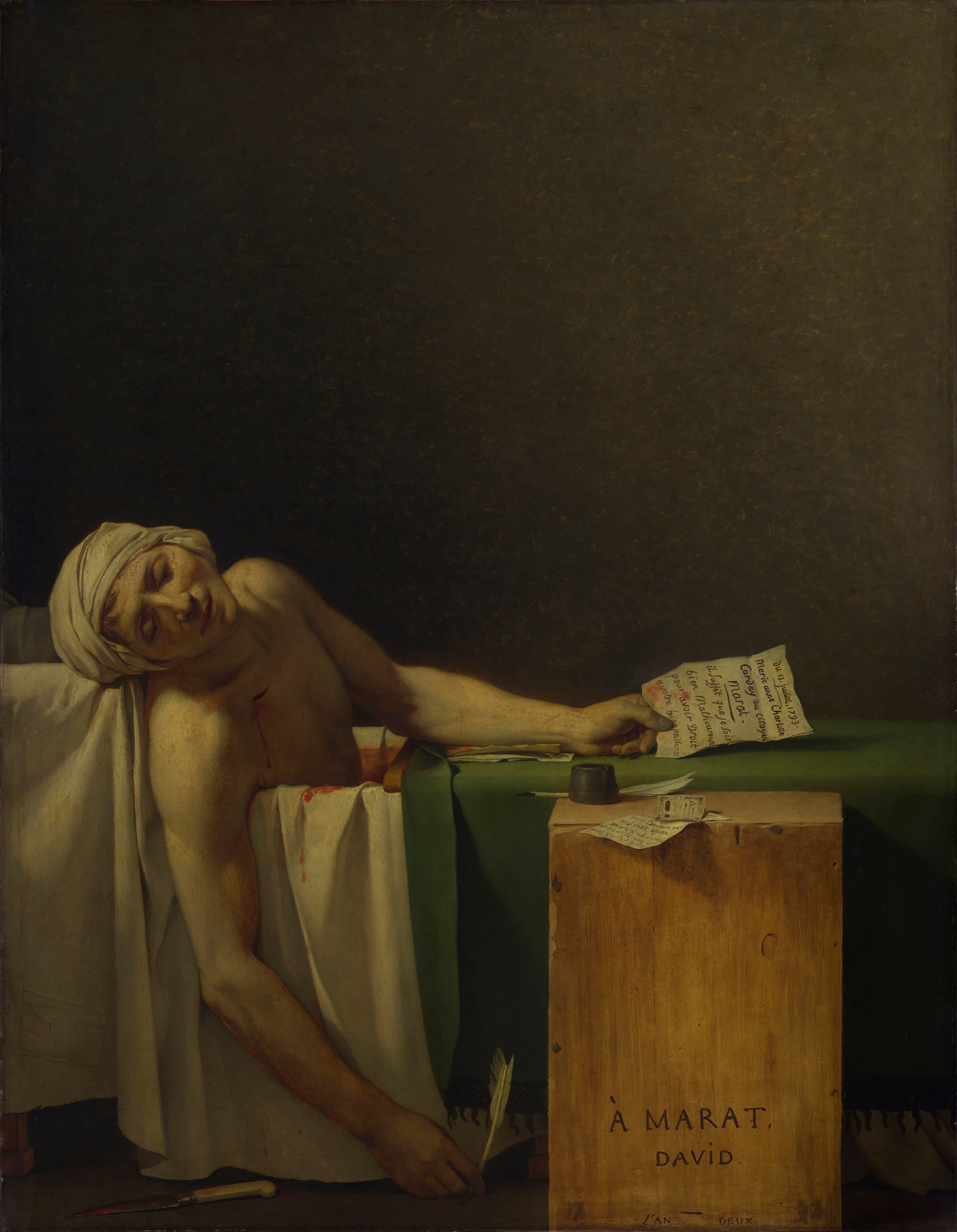
The Death of Marat
Jacques-Louis David · 1793
The Death of Marat is Jacques-Louis David's 1793 painting of the murdered revolutionary journalist Jean-Paul Marat, slumped in his bath after Charlotte Corday stabbed him. It hangs in the Royal Museums of Fine Arts of Belgium in Brussels.
20
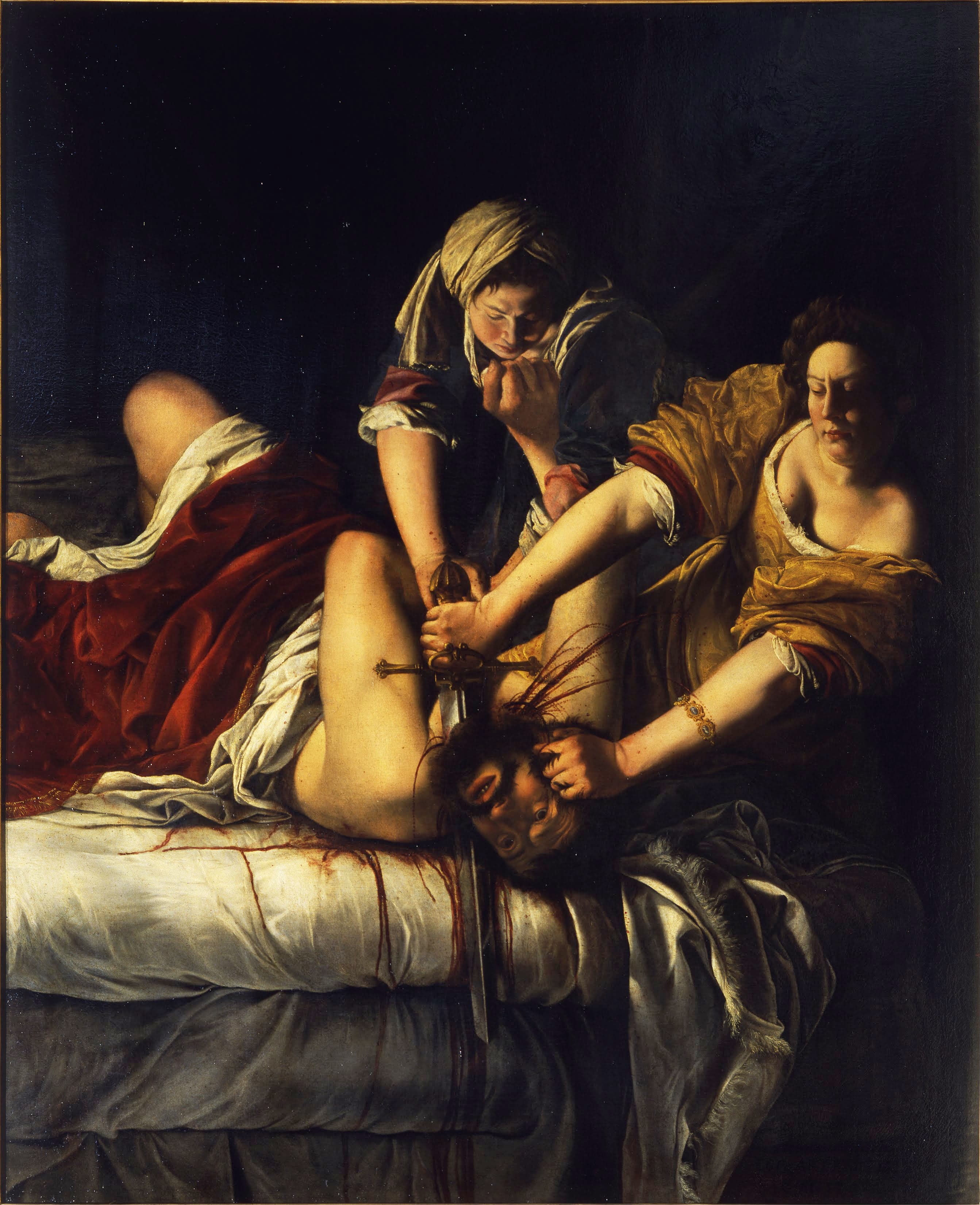
Judith Slaying Holofernes
Artemisia Gentileschi · c. 1620
Judith Beheading Holofernes (Judith Slaying Holofernes) is Artemisia Gentileschi's painting of about 1620, showing the biblical widow and her maid holding down the Assyrian general as Judith saws through his neck. This version is in the Uffizi, Florence; an earlier one is in Naples.
21
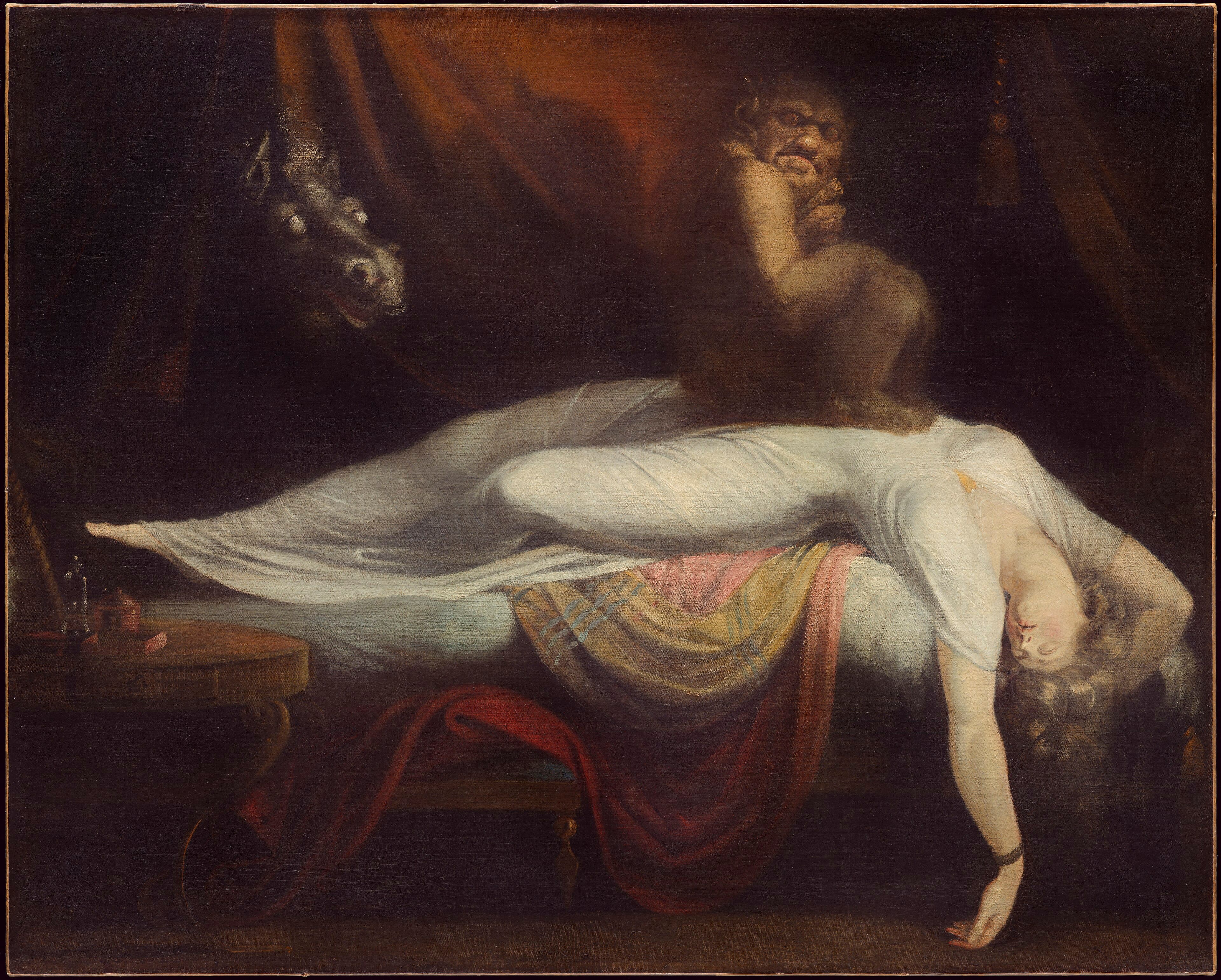
The Nightmare
Henry Fuseli · 1781
The Nightmare painting is Henry Fuseli's 1781 oil of a sleeping woman with a demon crouched on her chest and a wild-eyed horse peering through the curtains. It caused a sensation in London in 1782 and now hangs in the Detroit Institute of Arts.
22
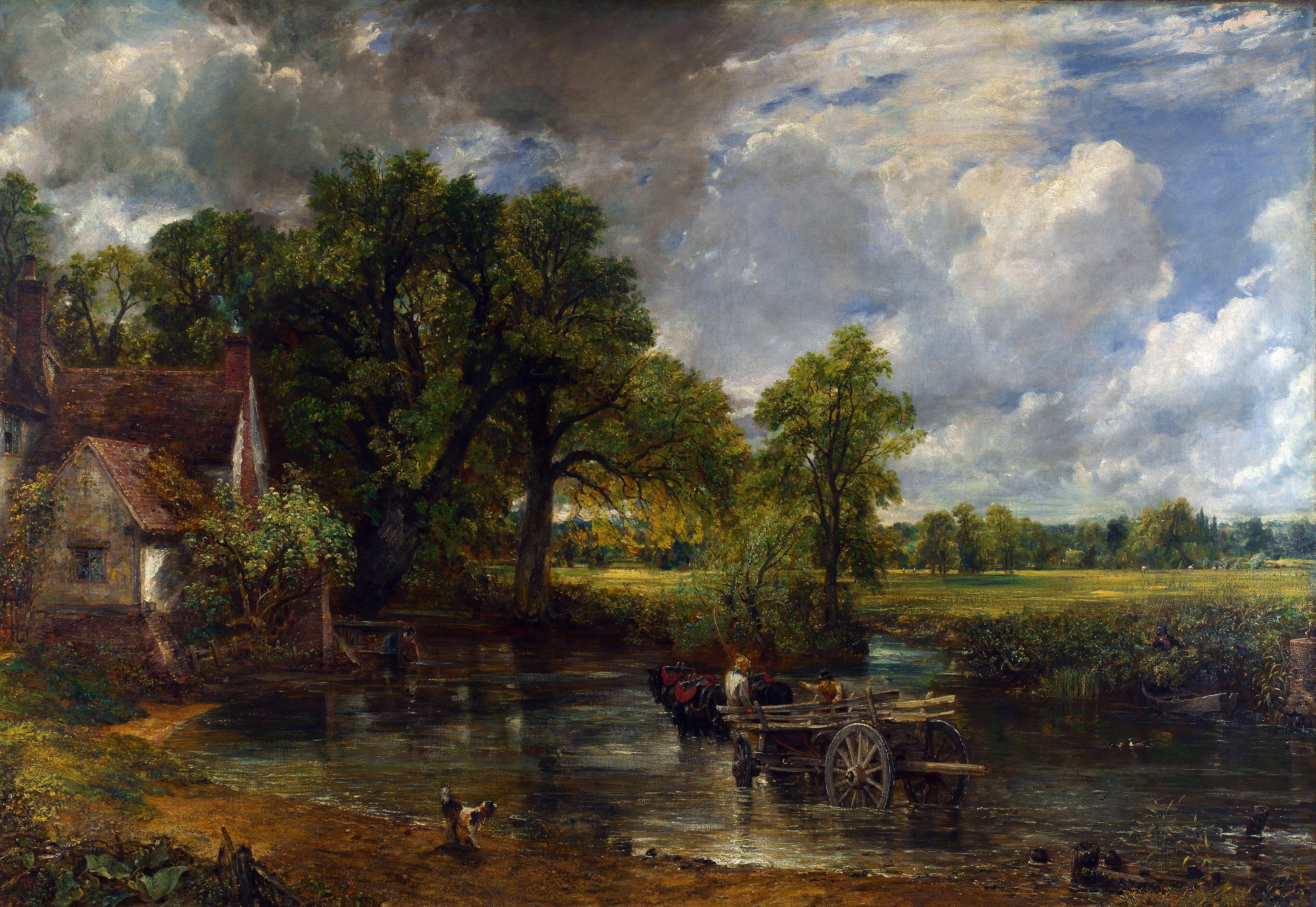
The Hay Wain
John Constable · 1821
The Hay Wain is John Constable's 1821 painting of a horse-drawn hay cart crossing the River Stour beside a cottage at Flatford in Suffolk, under a summer sky of moving clouds. It hangs in the National Gallery, London, and is one of the best-known English landscapes.
23
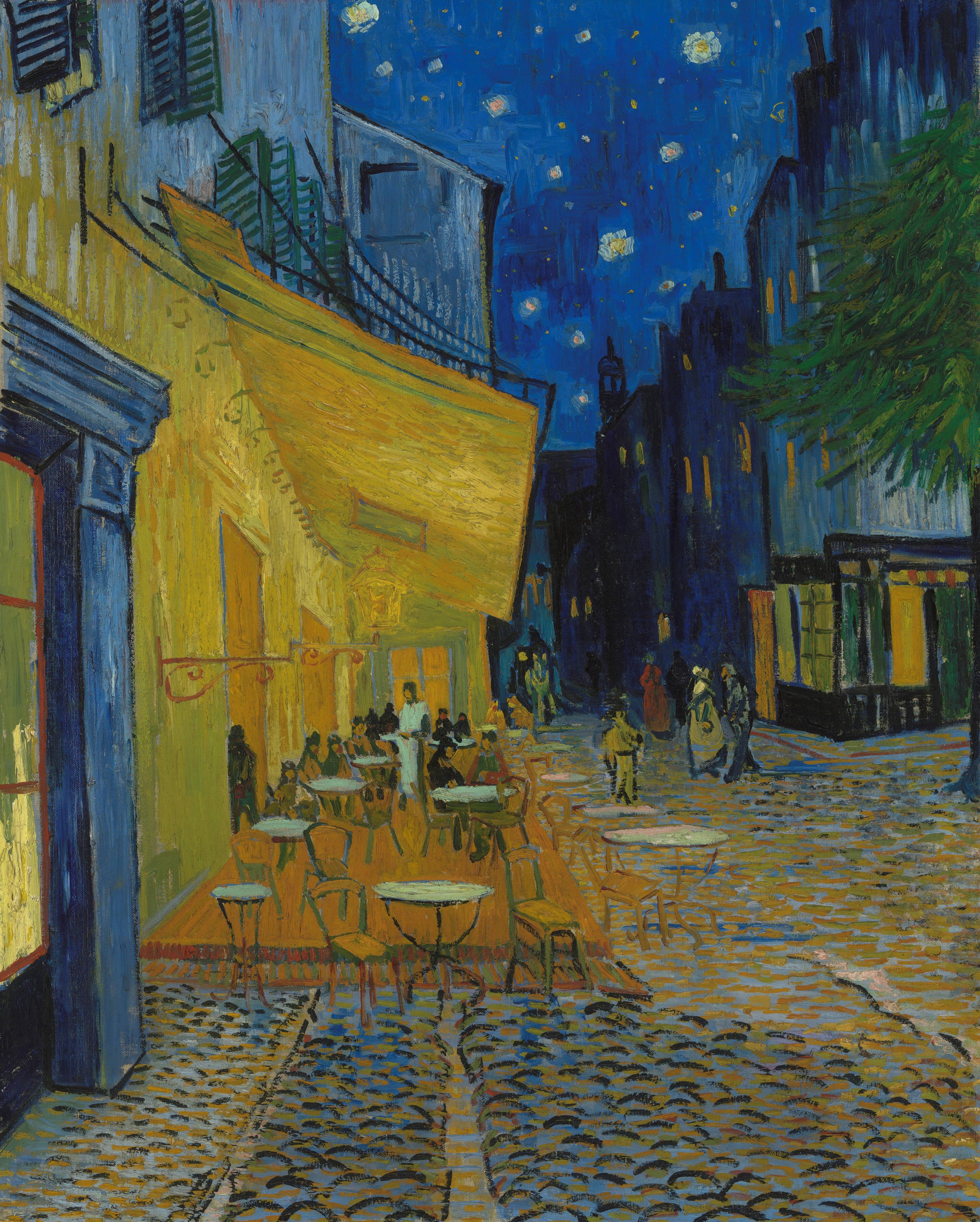
Café Terrace at Night
Vincent van Gogh · September 1888
Café Terrace at Night is Vincent van Gogh's September 1888 painting of a gaslit café on the Place du Forum in Arles under a starry sky, his first canvas with stars. It is in the Kröller-Müller Museum in Otterlo, the Netherlands.
24

Woman with a Parasol – Madame Monet and Her Son
Claude Monet · 1875
Woman with a Parasol – Madame Monet and Her Son is an 1875 painting by Claude Monet of his wife Camille and their son Jean on a windy hillside at Argenteuil. It is in the National Gallery of Art, Washington, D.C.
25
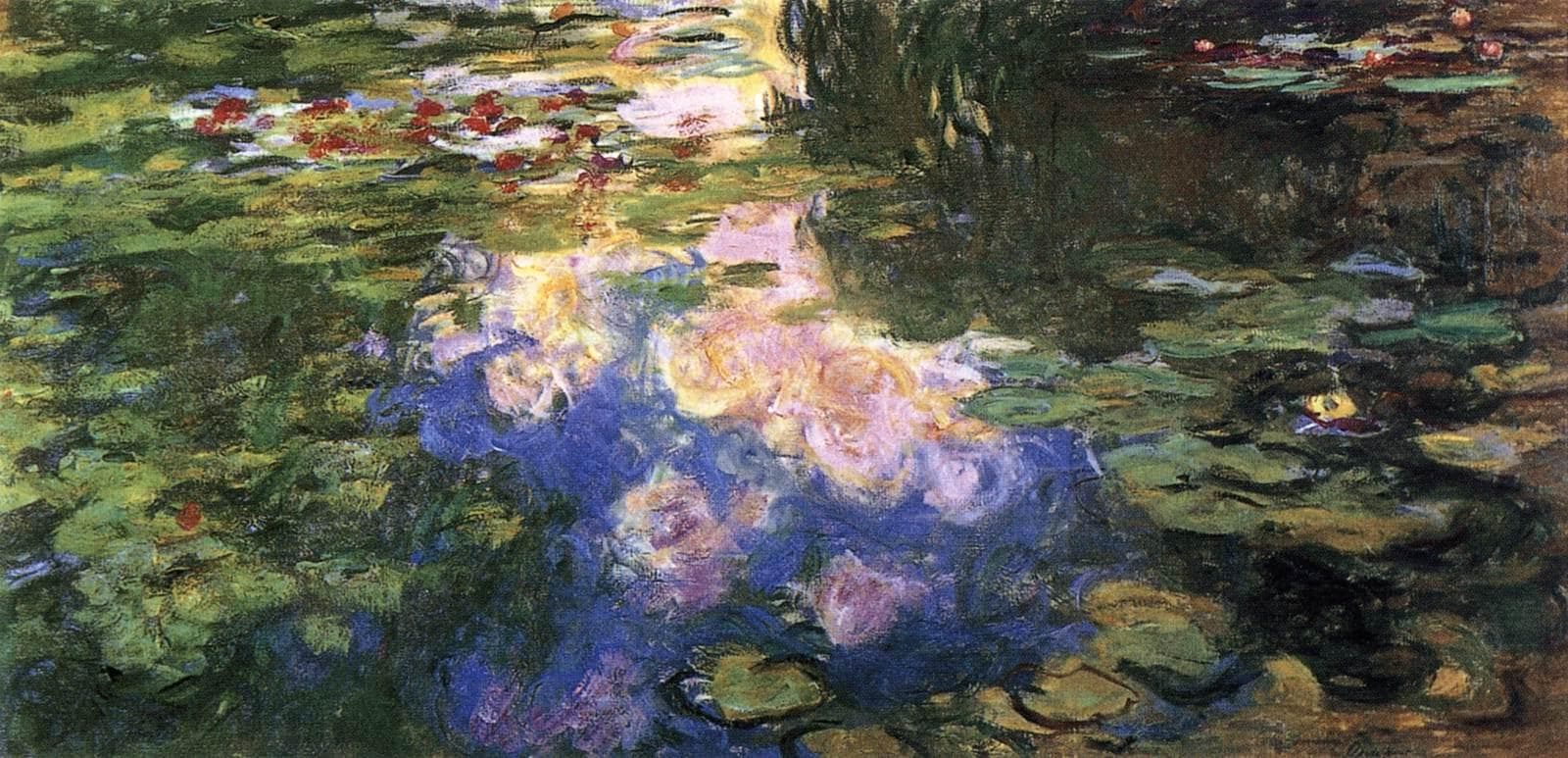
Water-Lily Pond (Le Bassin aux nymphéas), 1917–19
Claude Monet · 1917–19
This Water Lilies is Le Bassin aux nymphéas of 1917–19 by Claude Monet, a wide canvas of red lilies and blue sky reflected in his Giverny pond. It is privately owned and sold at Sotheby's New York in 2021.
26
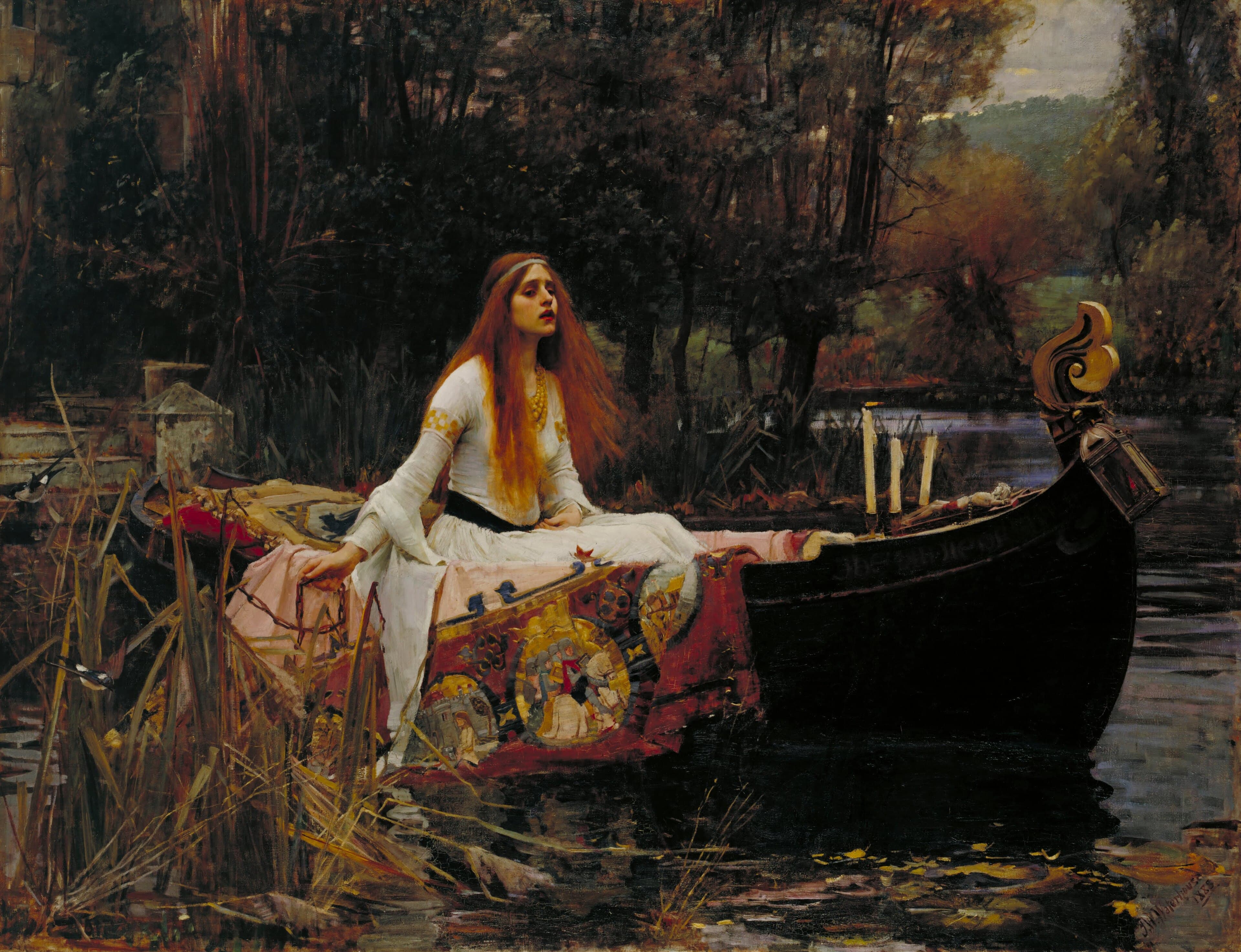
The Lady of Shalott
John William Waterhouse · 1888
The Lady of Shalott is John William Waterhouse's 1888 painting of Tennyson's doomed heroine drifting downriver toward Camelot in a boat, a woven cloth trailing in the water. It is in Tate Britain, London, and is one of the most loved Victorian paintings.
27
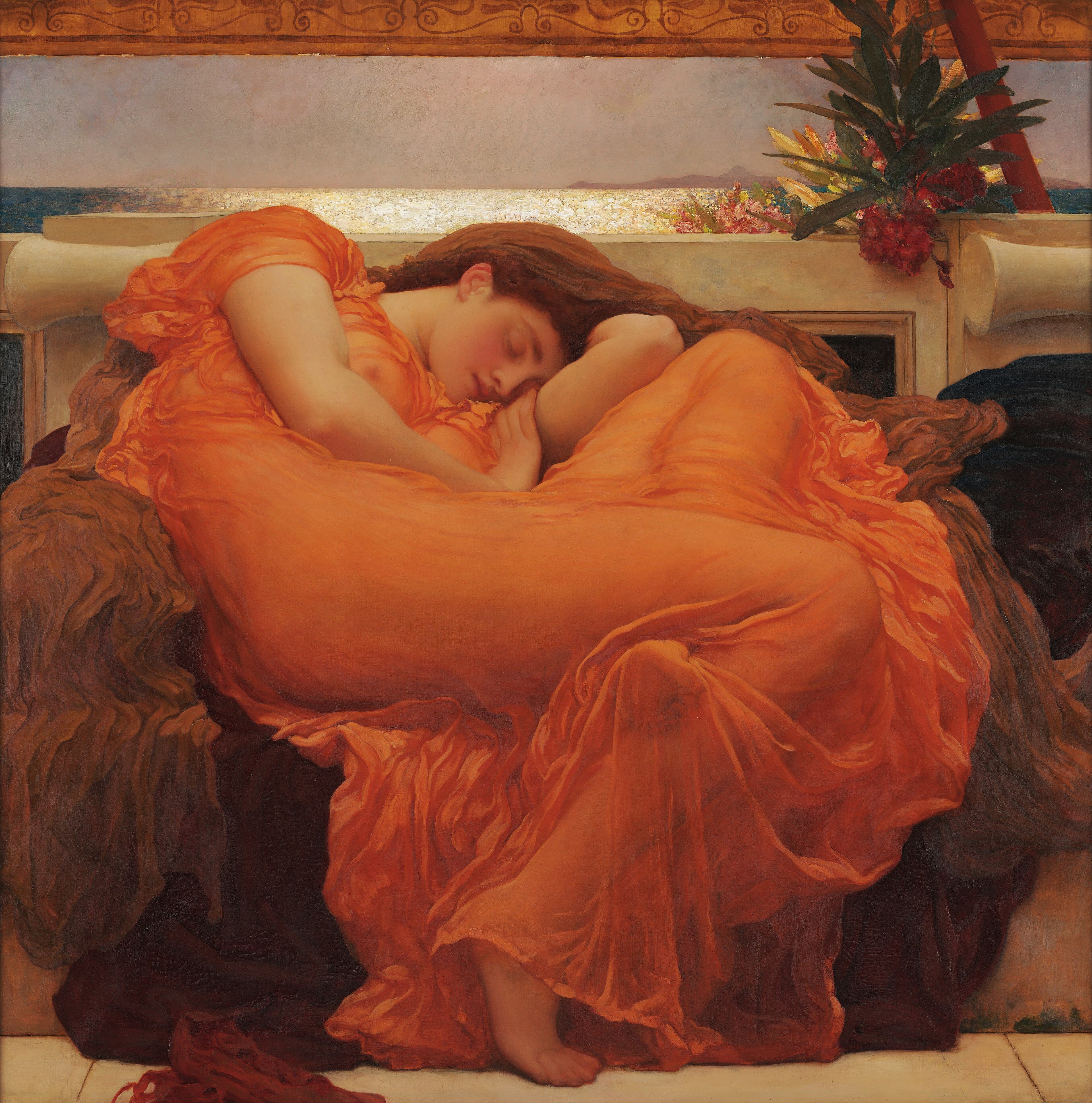
Flaming June
Frederic Leighton · 1895
Flaming June is Frederic Leighton's 1895 painting of a woman asleep in a sheer orange dress on a marble terrace above a glittering sea. It belongs to the Museo de Arte de Ponce in Puerto Rico and is the most famous image of Victorian Aestheticism.
28
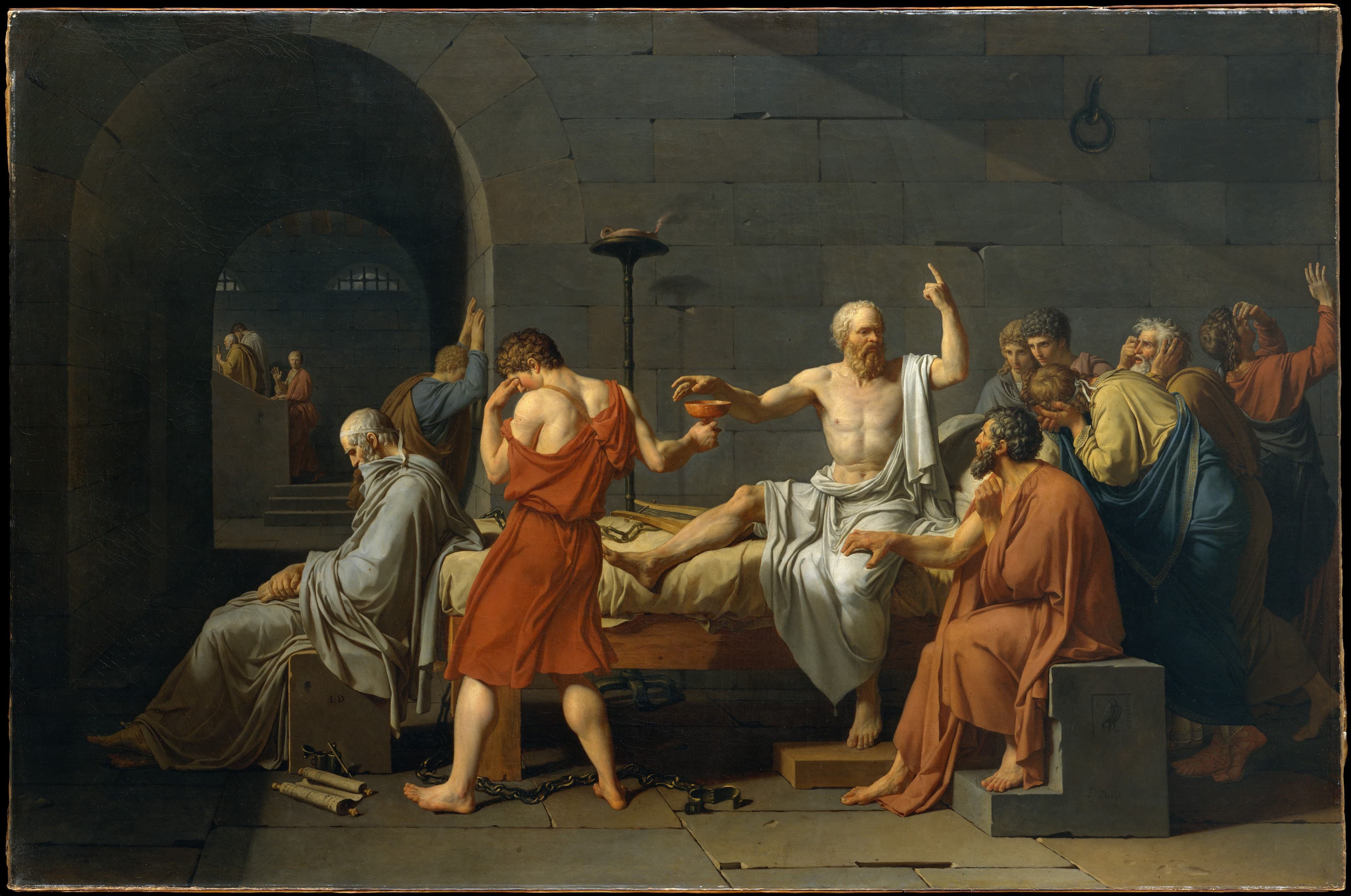
The Death of Socrates
Jacques-Louis David · 1787
The Death of Socrates is Jacques-Louis David's 1787 painting of the Athenian philosopher calmly reaching for the cup of hemlock while still teaching his grieving followers. It is the great Neoclassical image of dying for one's principles and hangs in the Metropolitan Museum of Art, New York.
29
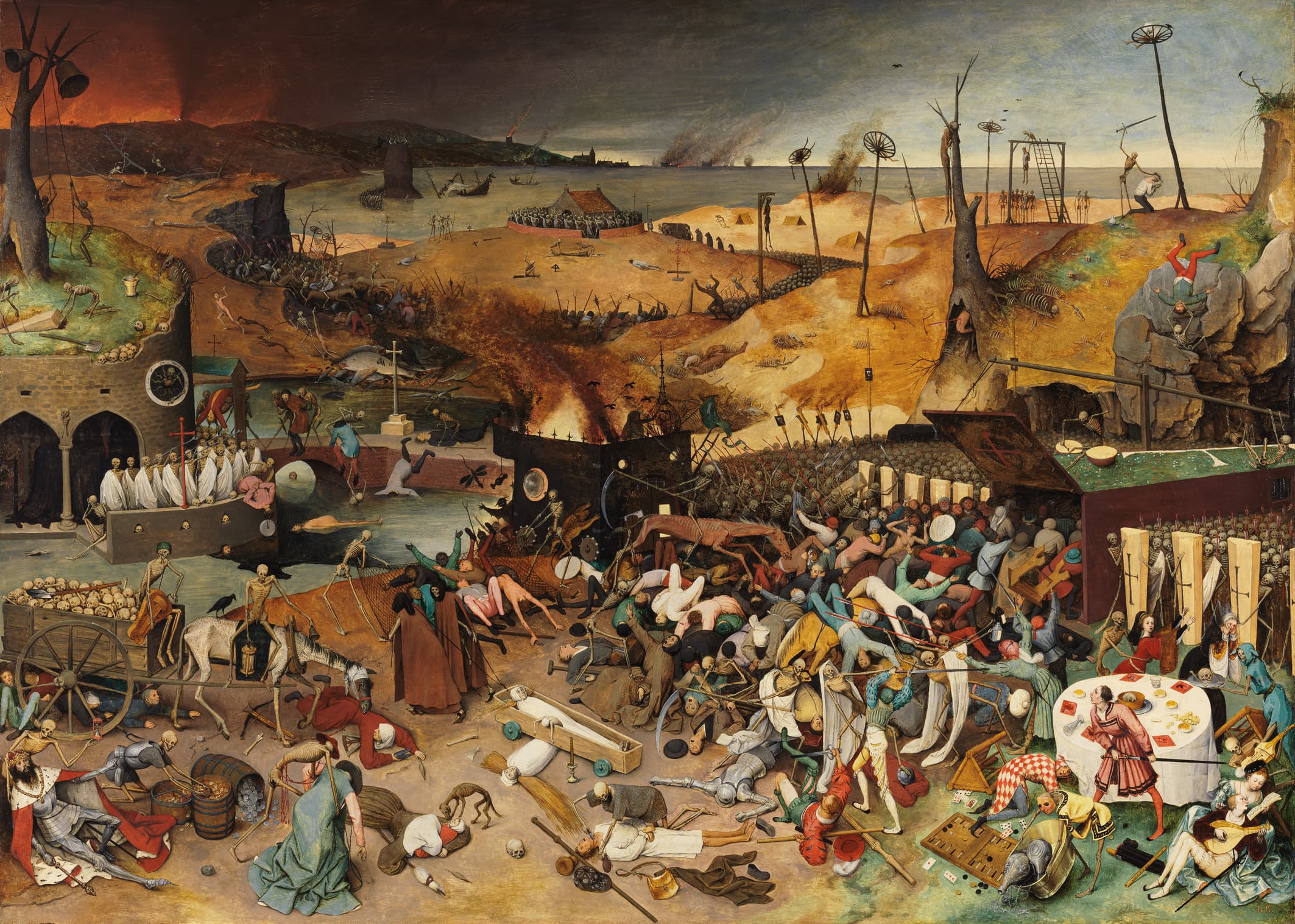
The Triumph of Death
Pieter Bruegel the Elder · c. 1562
The Triumph of Death is Pieter Bruegel the Elder's panel painting of about 1562, in which an army of skeletons sweeps across a burning landscape and spares no one, king or peasant. It hangs in the Museo del Prado in Madrid.
30
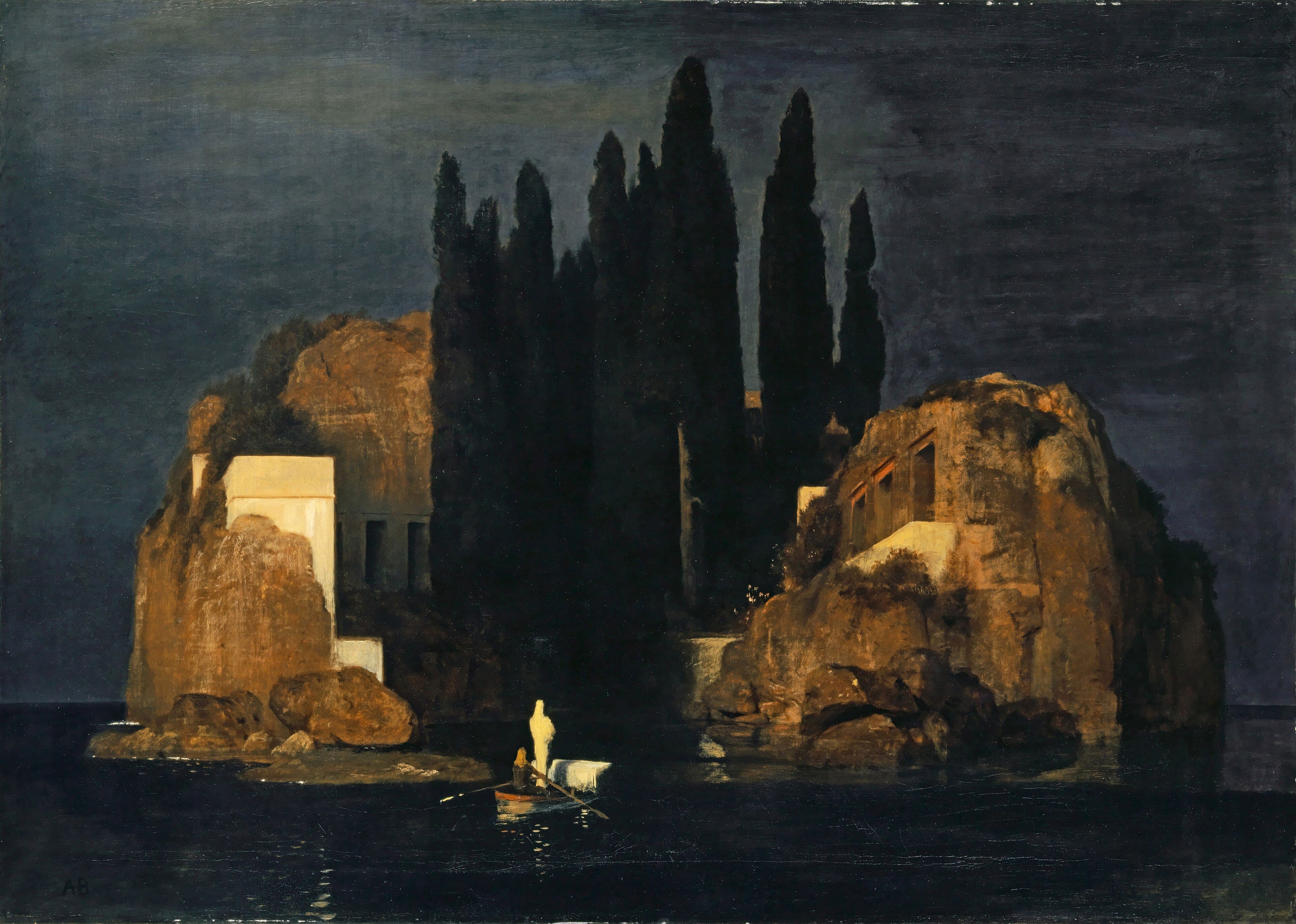
Isle of the Dead
Arnold Böcklin · 1880 (first version); five versions 1880–86
The Island of the Dead (Die Toteninsel) is Arnold Böcklin's Symbolist painting of a rowboat carrying a white-shrouded figure and a coffin toward a rocky, cypress-filled island. He painted five versions between 1880 and 1886; the first is in the Kunstmuseum Basel.
31
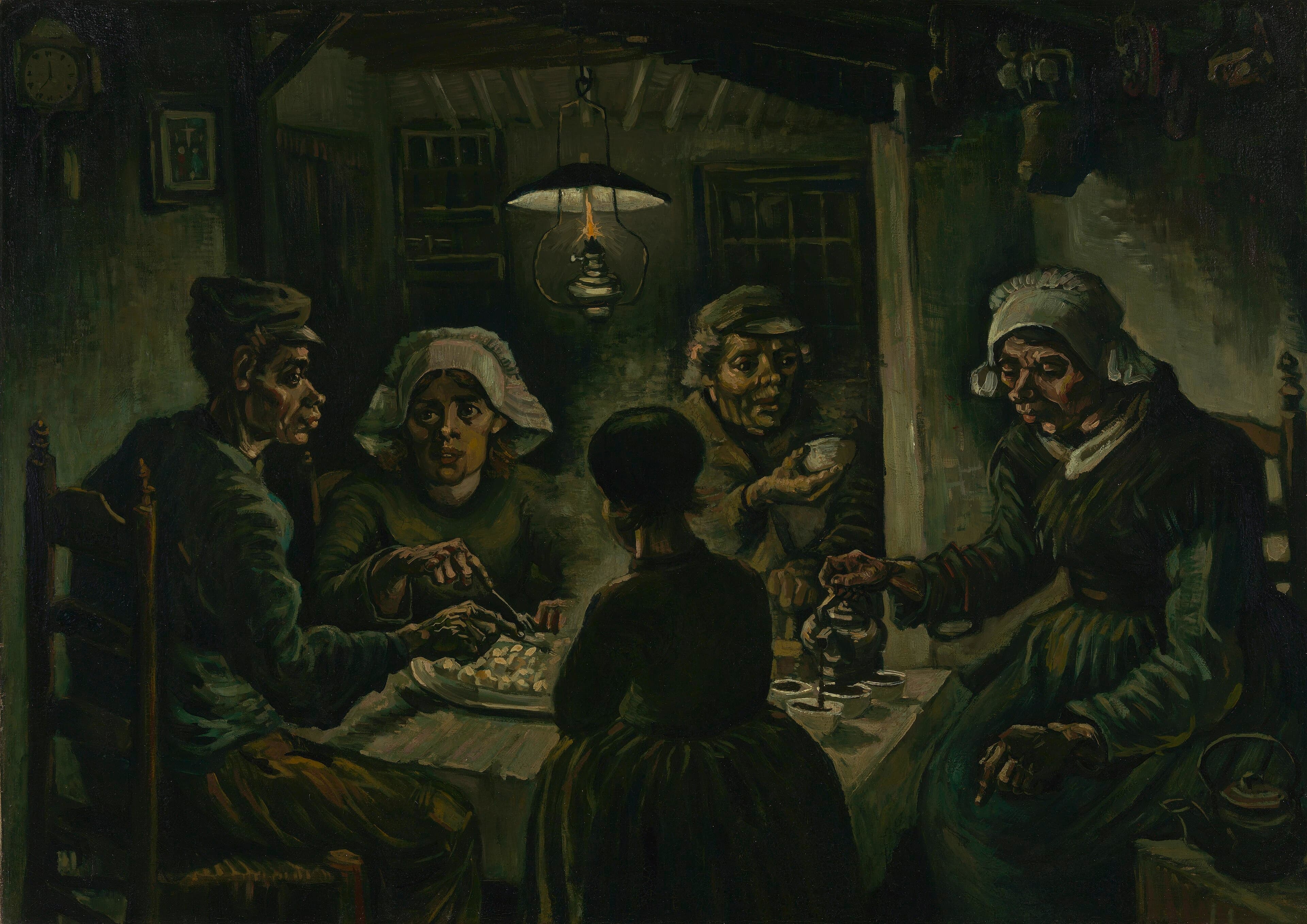
The Potato Eaters
Vincent van Gogh · April–May 1885
The Potato Eaters is Vincent van Gogh's 1885 painting of a peasant family sharing a meal of potatoes by lamplight in Nuenen, the Netherlands, his first ambitious figure composition. It is in the Van Gogh Museum in Amsterdam.
32
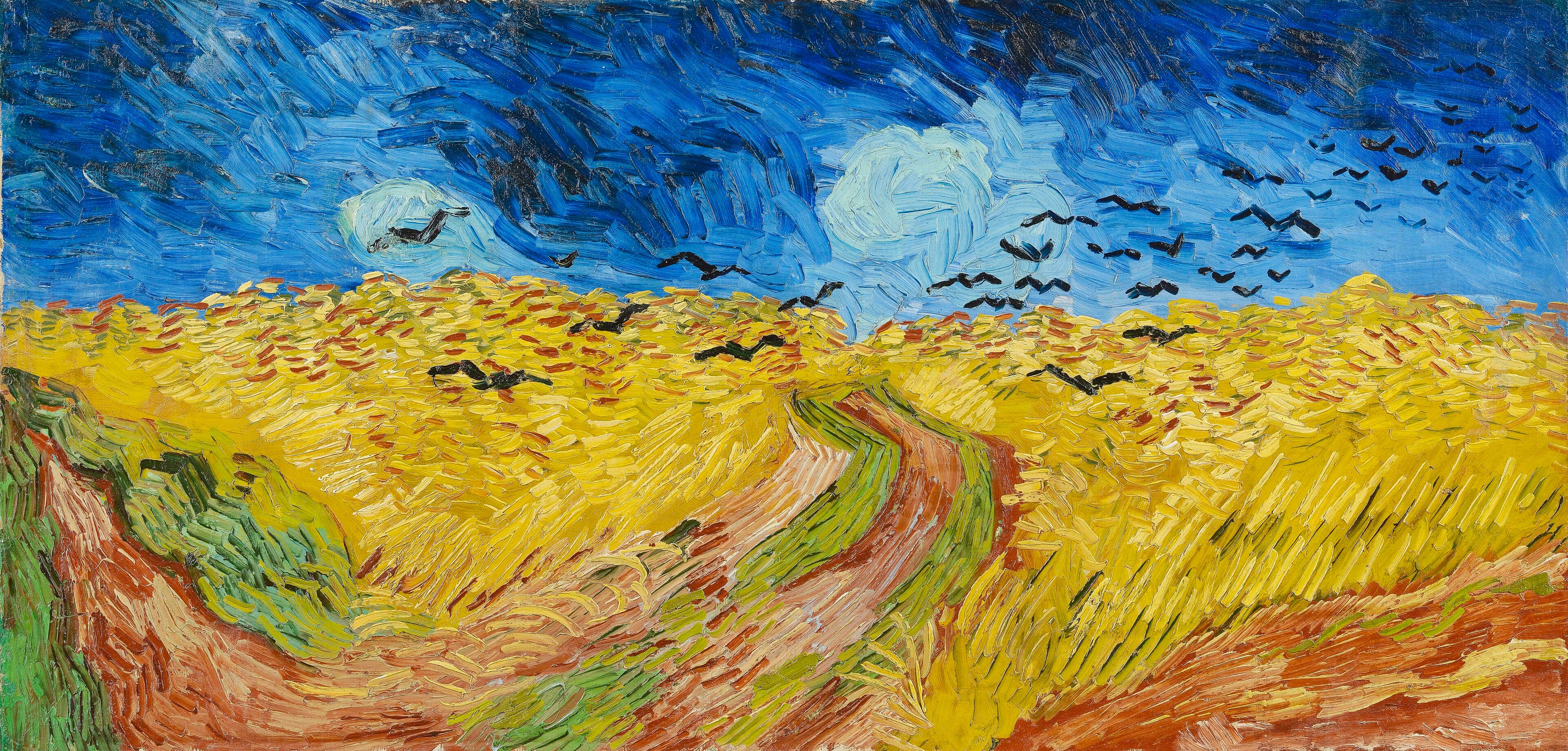
Wheatfield with Crows
Vincent van Gogh · July 1890
Wheatfield with Crows is a painting by Vincent van Gogh made in July 1890 at Auvers-sur-Oise, weeks before his death, showing a stormy sky and black crows over a golden wheat field. It is in the Van Gogh Museum in Amsterdam.
33
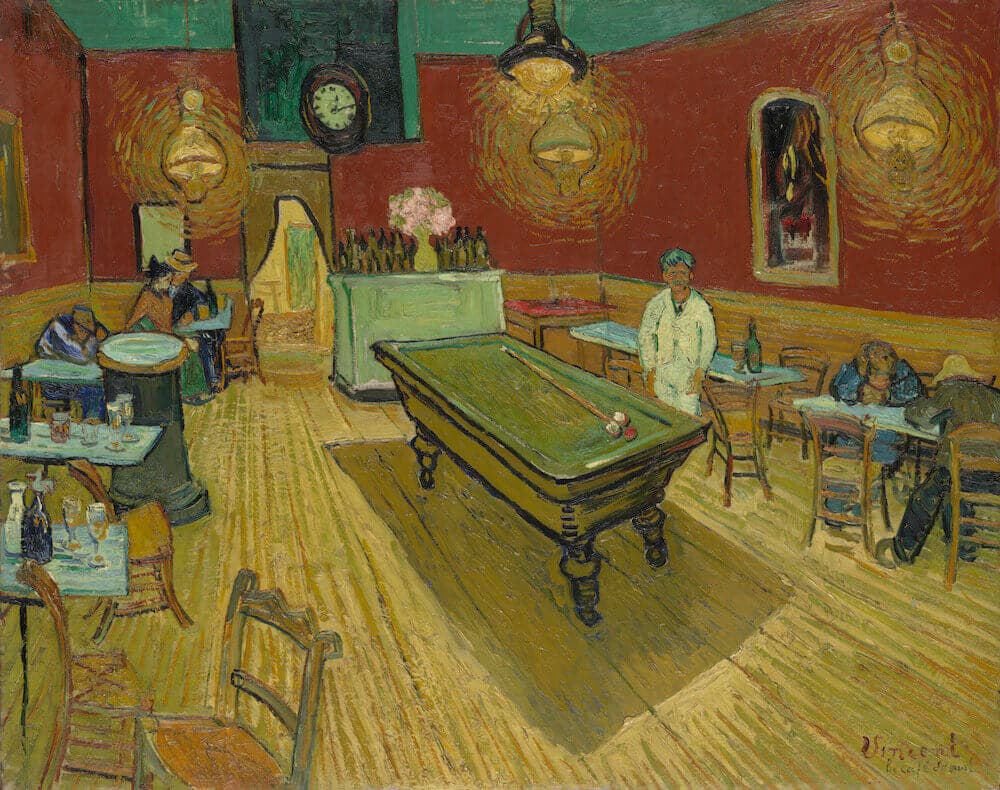
The Night Café
Vincent van Gogh · 1888
The Night Café (Le Café de nuit) is a September 1888 painting by Vincent van Gogh of an all-night café in Arles, its red walls and green ceiling lit by gas lamps. It is in the Yale University Art Gallery, New Haven.
34
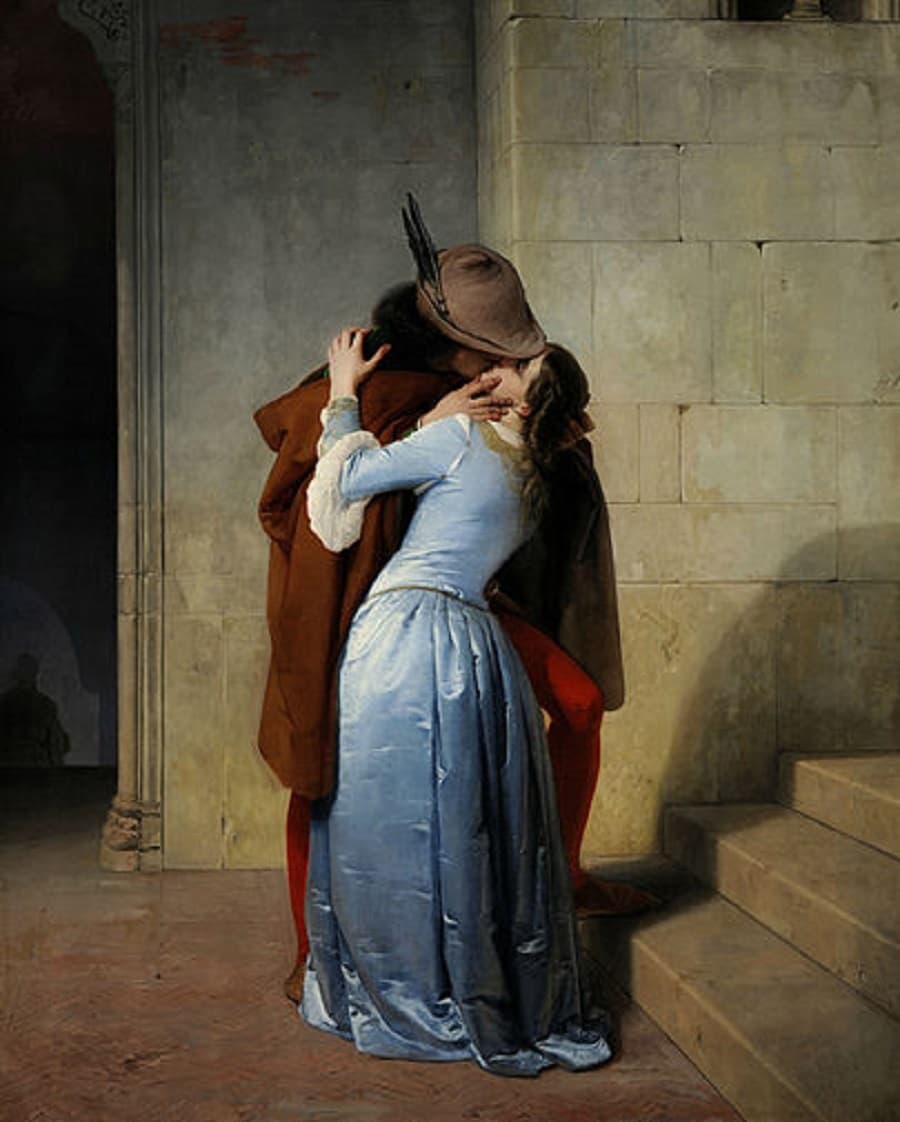
The Kiss
Francesco Hayez · 1859
The Kiss (Il bacio) is an 1859 oil painting by the Italian Romantic Francesco Hayez, showing a young couple in medieval dress locked in an embrace at the foot of a stone staircase. It hangs in the Pinacoteca di Brera in Milan.
35
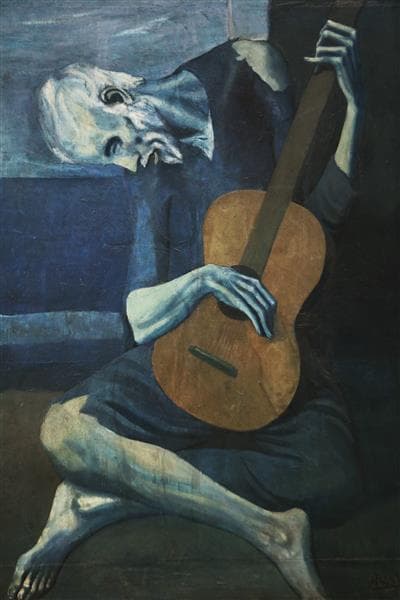
The Old Guitarist
Pablo Picasso · 1903–04
The Old Guitarist is Pablo Picasso's Blue Period painting of a blind, emaciated street musician hunched over his guitar, made in Barcelona in late 1903 to early 1904. It is in the Art Institute of Chicago.
36
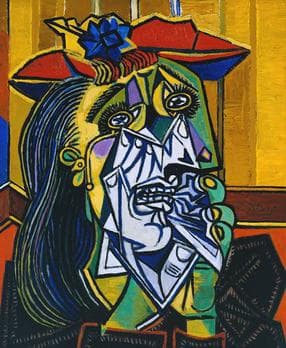
The Weeping Woman
Pablo Picasso · 1937
The Weeping Woman is a 1937 painting by Pablo Picasso of a woman in a red hat crying into a handkerchief, modeled on the photographer Dora Maar and made in the aftermath of Guernica. It is in the Tate, London.
37
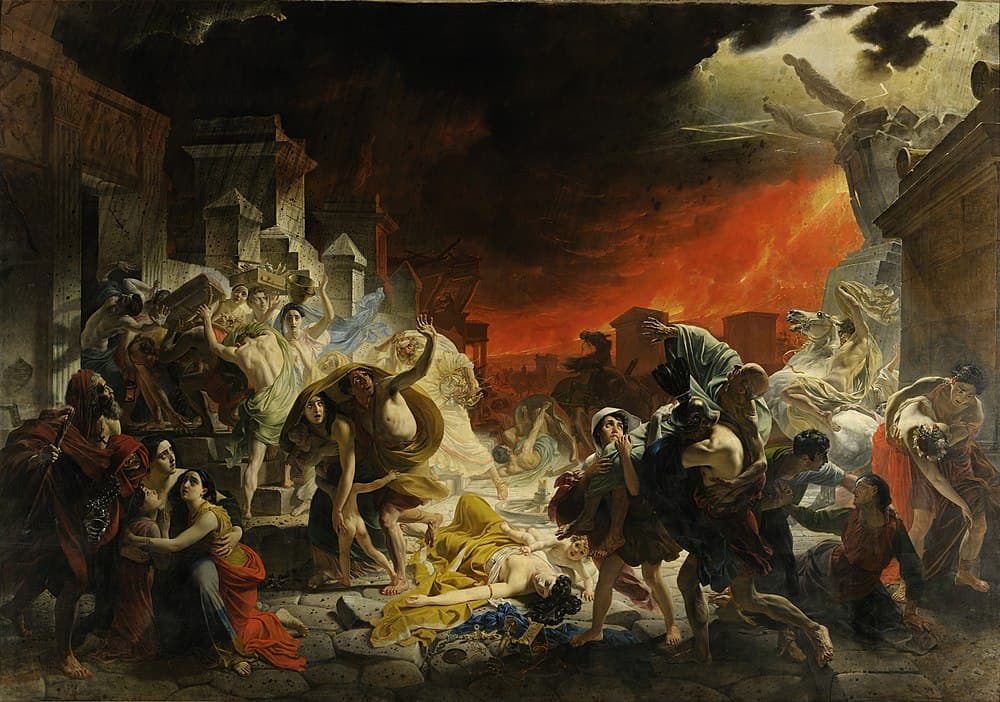
The Last Day of Pompeii
Karl Bryullov · 1830–33
The Last Day of Pompeii is a huge history painting by Karl Bryullov, made in Rome in 1830–33, showing the inhabitants of Pompeii fleeing the eruption of Vesuvius in AD 79. It is in the State Russian Museum, Saint Petersburg.
38
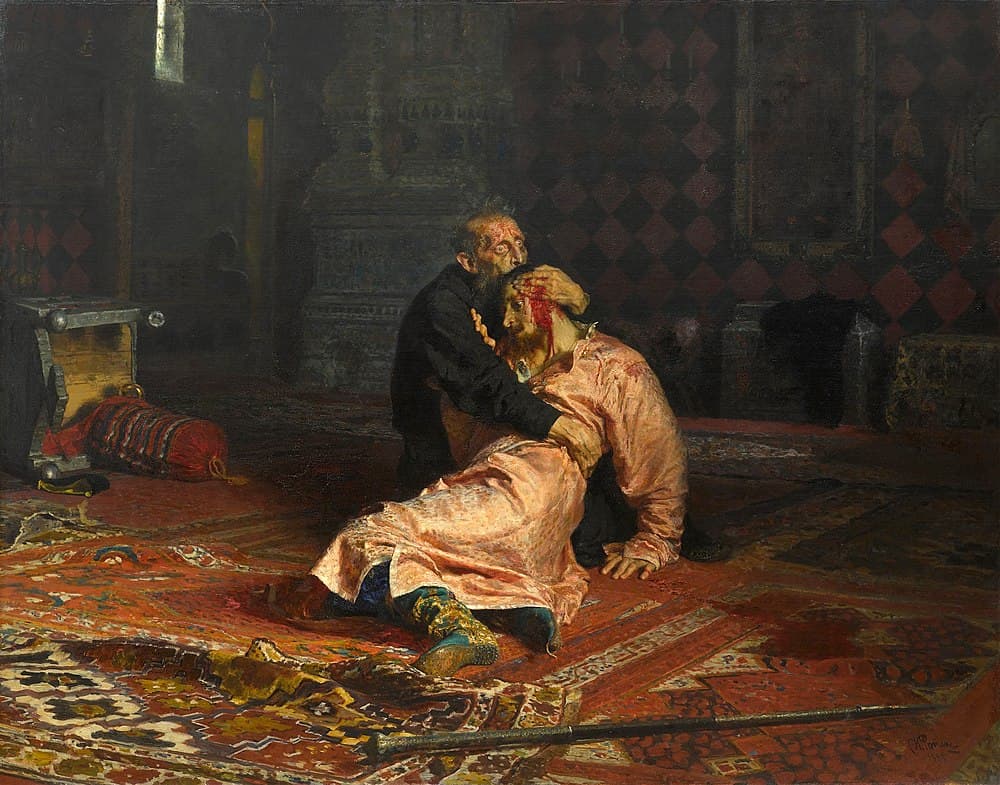
Ivan the Terrible and His Son Ivan
Ilya Repin · 1883–85
Ivan the Terrible and His Son Ivan is an 1883–85 painting by Ilya Repin in the Tretyakov Gallery, Moscow. It shows Tsar Ivan IV clutching his dying son and heir moments after striking him with his staff in November 1581.
39
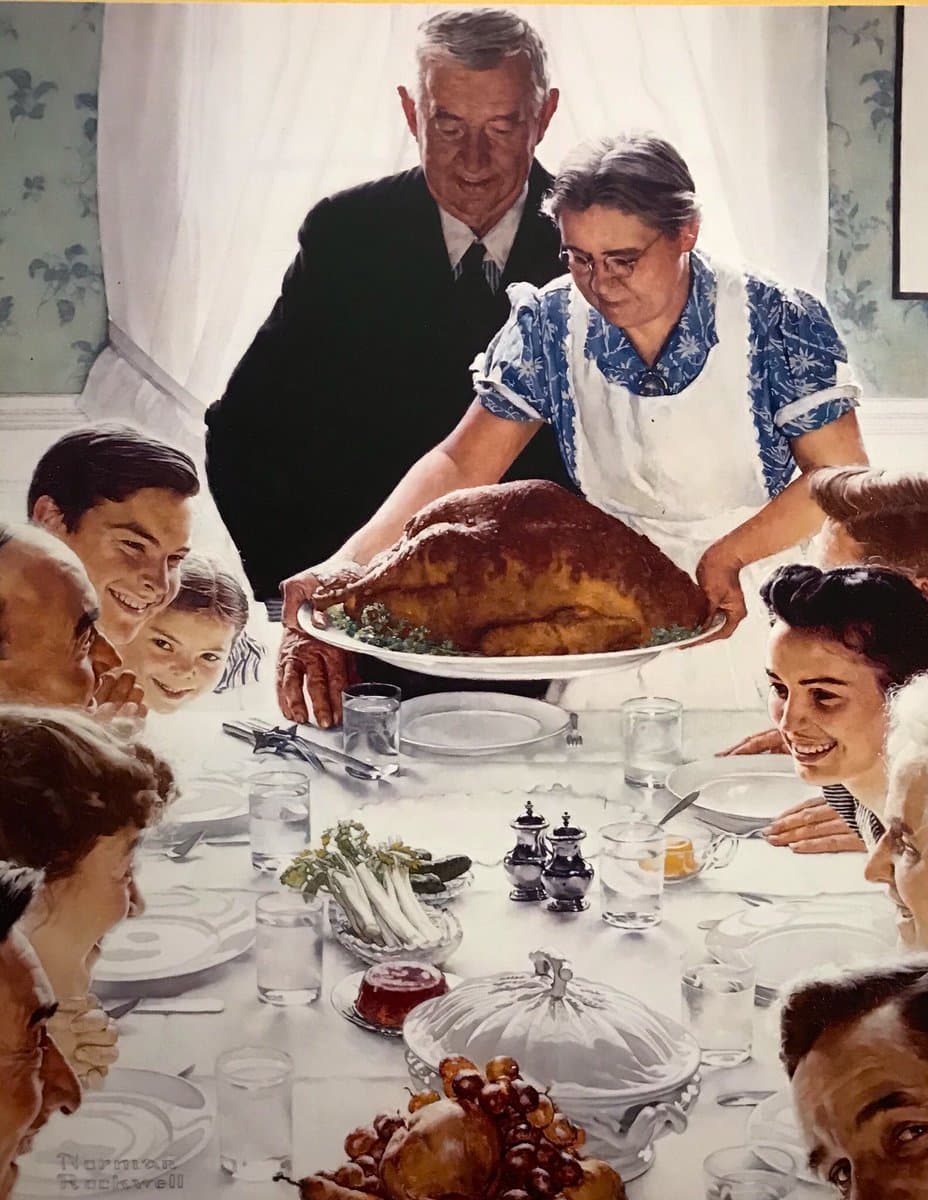
Freedom from Want
Norman Rockwell · 1943
Freedom from Want is Norman Rockwell's 1943 painting of an American family gathered at a table as a grandmother sets down a Thanksgiving turkey, the third of his Four Freedoms series. It is in the Norman Rockwell Museum, Stockbridge, Massachusetts.
40
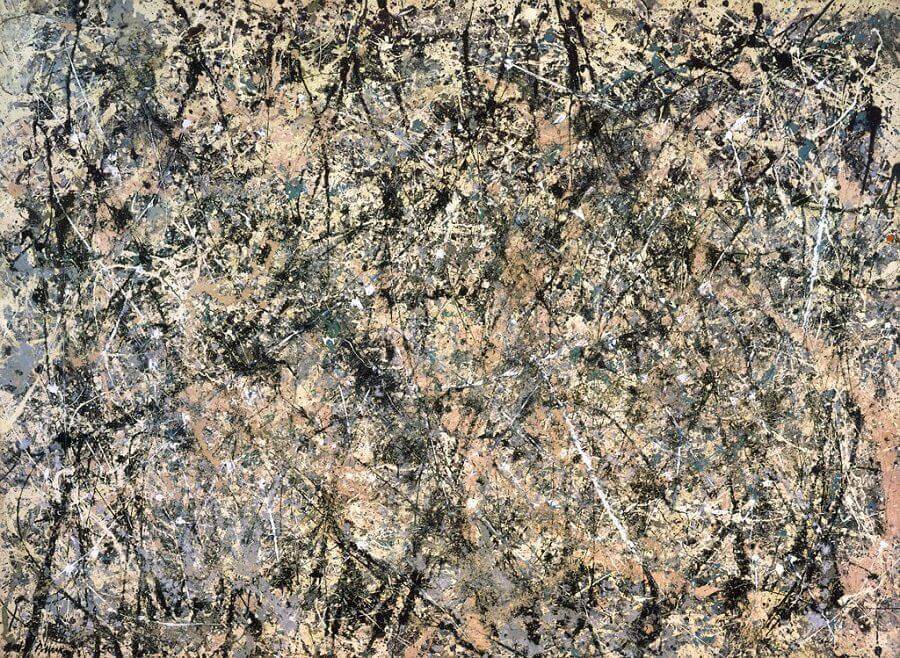
Number 1, 1950 (Lavender Mist)
Jackson Pollock · 1950
Number 1, 1950 (Lavender Mist) is one of Jackson Pollock's great poured paintings, made in summer 1950 in his barn studio on Long Island. Nearly three meters wide, it is in the National Gallery of Art, Washington.
How we chose these forty paintings
Any list of famous paintings is an argument, so here are the rules we used. A work had to be recognized far beyond art history, by people who have never set foot in its museum. It had to have changed what painting could do, or what people thought painting was for. And we kept one eye on range: altarpieces and portraits, history paintings and landscapes, a ceiling, a garden, a café at night.
We have left out sculpture (it has its own page, famous sculptures) and kept to works whose originals can be located and visited. Where two painters made versions of the same subject, we chose the one people actually mean when they say the title.
The Renaissance: painting learns to see
The list opens in Italy around 1480, when painters were working out how to make a flat wall behave like a window. Botticelli's Birth of Venus (c. 1484–86, Uffizi) still floats in an older, linear world: Venus stands on her shell with impossible sloping shoulders, more pattern than anatomy. Barely twenty years later, Leonardo was dissolving edges altogether. In the Mona Lisa (begun c. 1503) the corners of the mouth and eyes sit in soft shadow, a technique Italians called sfumato, "gone up in smoke," which is why the expression seems to shift as you look.
The Last Supper (c. 1495–98) shows the same mind working at the scale of a wall: every line of the ceiling converges on Christ's head, so the room itself points to him. Raphael's School of Athens and Michelangelo's Sistine Chapel ceiling were painted within a few hundred yards of each other in the Vatican between 1508 and 1512, and between them they set the standard European artists measured themselves against for four hundred years. North of the Alps, Bosch's Garden of Earthly Delights and Holbein's Ambassadors, with its stretched skull that snaps into focus only from the side, prove that the Renaissance was never only Italian. For more, see our guide to Renaissance paintings.
Baroque light and the drama of the moment
In the seventeenth century painters stopped arranging calm, ideal worlds and started staging the instant of greatest tension. Artemisia Gentileschi's Judith Slaying Holofernes shows the sword already in the neck, the blood running in thin lines across the sheet. Rembrandt's Night Watch (1642) turns a civic group portrait, normally a row of stiff faces, into a company stepping out of shadow into raking light. Look for the small girl in gold near the center, lit as brightly as the captain: she carries the claws of a chicken at her belt, the emblem of the militia company. The same century's love of darkness and spotlight runs through our Baroque art collection.
Revolution, ruin and the Romantic sky
Fragonard's The Swing (1767) is the last breath of Rococo frivolity: a pink silk skirt, a flying slipper, a lover hidden in the roses. Within a generation that world was gone. David's Death of Marat (1793) is a revolutionary martyr painted like a deposed Christ, and Goya's Third of May 1808 (1814) invents the modern image of the anonymous firing squad. Géricault's Raft of the Medusa and Delacroix's Liberty Leading the People made the Paris Salon into a front line of politics.
Romanticism also turned inward. Friedrich's Wanderer above the Sea of Fog gives us a man seen only from behind, so that the viewer stands in his boots. Goya's Saturn Devouring His Son, painted directly onto the walls of his house and never meant for the public, may be the most private famous painting ever made.
The nineteenth century: from Ophelia to the open air
Victorian Britain contributed two of the most reproduced pictures on this list. Millais's Ophelia (1851–52, Tate Britain) was painted outdoors on the banks of the Hogsmill River in Surrey, with the model, Elizabeth Siddal, posed later in a bath in his London studio. Waterhouse's The Lady of Shalott (1888) and Leighton's Flaming June (1895) carried that literary, jewel-colored manner to the end of the century.
Meanwhile in France, Monet's Impression, Sunrise (1872) handed a mocking critic the name of a movement. Impressionism, Post-Impressionism and Van Gogh's ten feverish years followed in quick succession: The Potato Eaters in 1885, Sunflowers and Café Terrace at Night in 1888, The Starry Night in 1889, painted from memory and imagination in the asylum at Saint-Rémy, and Wheatfield with Crows in the summer of 1890, weeks before his death.
The twentieth century: breaking the picture open
The last stretch of the list moves fast. Picasso's Old Guitarist (1903–04) belongs to his Blue Period, all elongated limbs and cold ultramarine; his Weeping Woman (1937) breaks a face into shards in the year of Guernica. Norman Rockwell's Freedom from Want (1943) became the definitive American image of the family meal, and Pollock's Number 1 (Lavender Mist) (1950) did away with the subject altogether, recording only the movement of the painter's arm.
What makes a painting famous?
Look across the forty and patterns appear. Some works became famous through a single event: the Mona Lisa was a respected Louvre picture until Vincenzo Peruggia walked out with it in August 1911, and the two years of newspaper coverage that followed made it a global celebrity. Others were famous from their unveiling because they caused a scandal at the Salon. Many were spread by print. Engravings carried Raphael across Europe in the 1500s; color reproduction and postcards did the same for Van Gogh, who sold very little in his lifetime.
A final ingredient is simplicity of silhouette. The swirl of the Starry Night sky, the triangle of bodies on Géricault's raft, the profile of Friedrich's wanderer: each can be recognized from a thumbnail. Pictures that survive being reduced to an icon tend to be the ones that end up on mugs, which is not the same as being great, but in these cases the two happen to coincide.
How to look at a famous painting
Fame is a barrier as much as a door. When you stand in front of something you have seen a thousand times, the reproduction in your head gets in the way. Three habits help.
First, check the size: The Night Watch is nearly four by four and a half meters, while the Mona Lisa is only 77 by 53 centimeters, smaller than most people expect. Second, look at the edges rather than the center, where painters often hide their best passages. Third, find one detail you had never noticed, such as the reflection in a glass or a signature on a wall, and let that be your way in.
Where to see the world's most famous paintings
The originals are concentrated in a handful of cities. Paris holds the Mona Lisa, Liberty Leading the People and The Raft of the Medusa at the Louvre, with Impression, Sunrise at the Musée Marmottan Monet. Madrid's Prado has Saturn, The Third of May, The Garden of Earthly Delights and Bruegel's Triumph of Death.
London's National Gallery has The Ambassadors, The Hay Wain and a Sunflowers; Tate Britain has Ophelia and The Lady of Shalott. Amsterdam pairs the Rijksmuseum's Night Watch with the Van Gogh Museum. In America, MoMA has The Starry Night, the Metropolitan Museum has The Death of Socrates, and the National Gallery of Art in Washington has Lavender Mist and Monet's Woman with a Parasol.
Questions & answers
What is the most famous painting in the world?
Leonardo da Vinci's Mona Lisa, painted from about 1503 and now in the Louvre in Paris, is generally agreed to be the most famous painting in the world. Its fame grew from Leonardo's soft sfumato modeling, centuries of praise, and above all its theft from the Louvre in 1911, which made it front-page news for two years until its recovery in 1913.
What are the top 10 most famous paintings?
Most lists agree on the core: the Mona Lisa, The Last Supper, The Starry Night, The Birth of Venus, The School of Athens, the Sistine Chapel ceiling, The Night Watch, The Garden of Earthly Delights, Van Gogh's Sunflowers and Goya's The Third of May 1808. The exact order is a matter of taste; the names barely change.
Where can I see the most famous paintings in person?
Start with the Louvre in Paris, the Prado in Madrid, the Uffizi in Florence, the Vatican Museums, the National Gallery in London, the Rijksmuseum and Van Gogh Museum in Amsterdam, and MoMA and the Metropolitan Museum in New York. Together these hold more than half of the paintings on this list.
Who painted the most famous paintings?
Leonardo da Vinci, Michelangelo, Raphael, Rembrandt, Vincent van Gogh, Claude Monet, Francisco Goya and Pablo Picasso appear on almost every list of famous paintings. Van Gogh is unusual among them: he sold very little during his life, and his fame came almost entirely after his death in 1890.
What is the most expensive painting ever sold?
Salvator Mundi, attributed to Leonardo da Vinci, sold at Christie's New York in November 2017 for $450.3 million, the highest price ever paid for a painting at auction. Its attribution is still debated by scholars, and its current whereabouts have not been publicly confirmed.