Image: National Museum in Poznań (photograph via claudemonetgallery.org) · Public domain · via Wikimedia Commons
Impressionism
Beach in Pourville
Claude Monet, 1882
Beach in Pourville is an 1882 seascape by Claude Monet looking down from the cliffs onto the curving beach at Pourville, near Dieppe. Stolen in 2000 and recovered in 2010, it is in the National Museum in Poznań, Poland's only Monet.
- Artist
- Claude Monet
- Date
- 1882
- Medium
- Oil on canvas
- Dimensions
- 60 × 73 cm
- Collection
- National Museum in Poznań, Poznań, Poland
- Movement
- Impressionism
- Catalogue
- Wildenstein 807
Painted at Étretat and the Normandy Coast
Beach in Pourville is a view Claude Monet painted from the clifftop above Pourville, a small resort just west of Dieppe on the Normandy coast, in 1882. The beach sweeps away from us in a long pale curve, the sea a milky green, and far off a headland of white chalk closes the bay. The canvas belongs to the National Museum in Poznań. It is the only painting by Monet in a Polish public collection and was missing for almost a decade after a theft in 2000.
What you're looking at
Monet stands high up, at the edge of a cliff whose dark, rusty face fills the lower right corner. From there the eye drops onto a crescent of sand, pinkish and violet in color, edged by a thin wavering line of surf. The beach runs up and away to the right, toward a scatter of small buildings and a patch of red that may be roofs or bathing tents. Beyond, a green plateau rises to a fortress-like stack of chalk, the next headland along the coast. Past it the coastline fades into a blue haze on the horizon.
The sea takes the whole left half. Monet paints it in thin, light greens and turquoise with short horizontal flicks for the swell, and a few loops of white for the wavelets running onto the sand. In the shallows he lets the color go almost transparent, so that a pale shape under the water reads as a rock seen through it. The sky is a lively mix of cream clouds and blue, brushed in curling strokes. A long violet shadow thrown across the sand at the bottom right suggests a low sun; the French title adds soleil couchant, at sunset.
Pourville, 1882
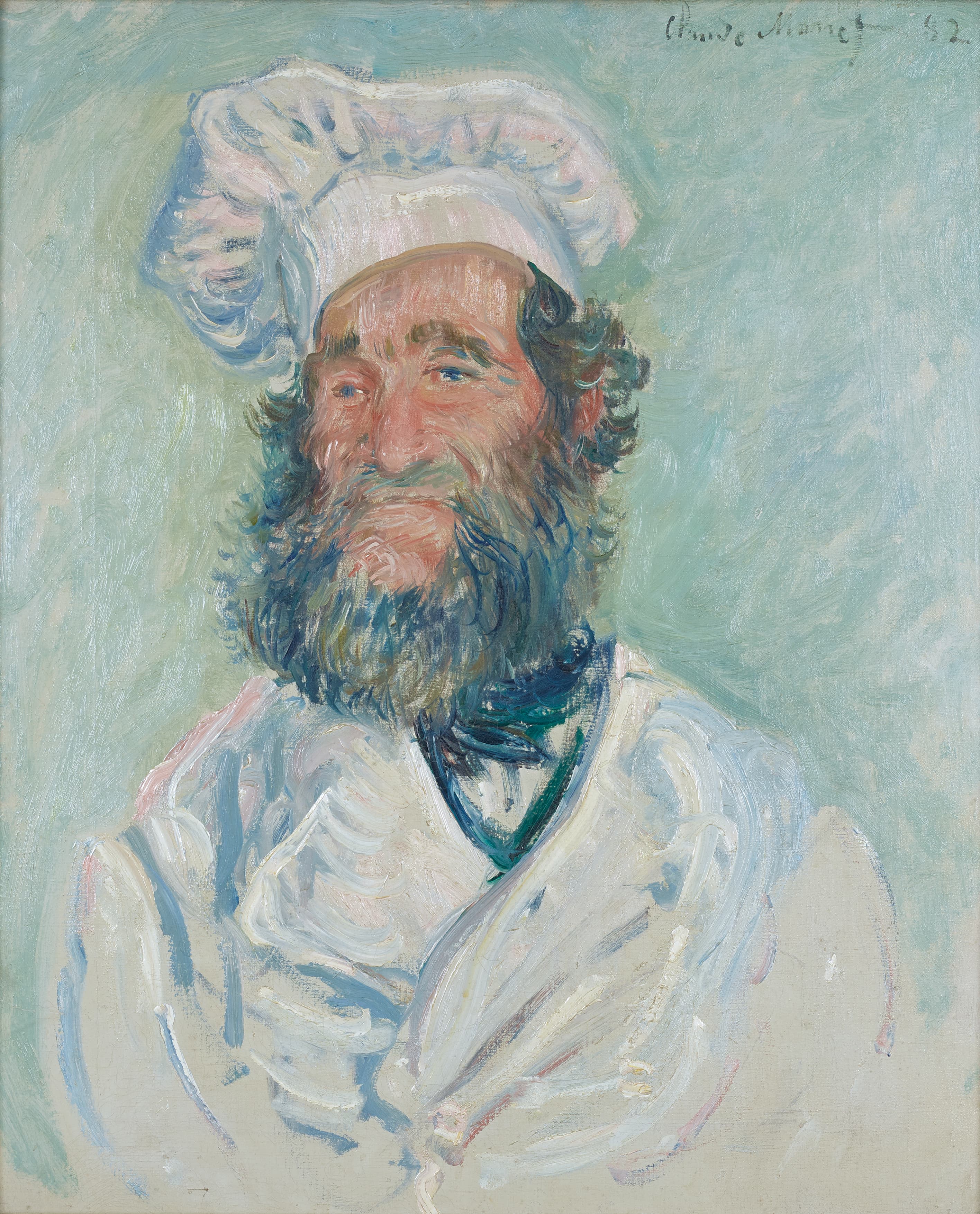
Monet's finances were precarious at the start of 1882. His dealer Paul Durand-Ruel had been shaken by the crash of the Union Générale bank. Monet had just moved to Poissy with Alice Hoschedé and their combined children, and he disliked the place. In February he went to Dieppe to find motifs, did not like it either, and settled instead a few kilometers away in Pourville, at a small hotel run by Paul Graff, whose portrait he painted (see Portrait of Père Paul). He came back with the family in the summer. The two stays produced close to a hundred canvases of cliffs, beach, church and sea.
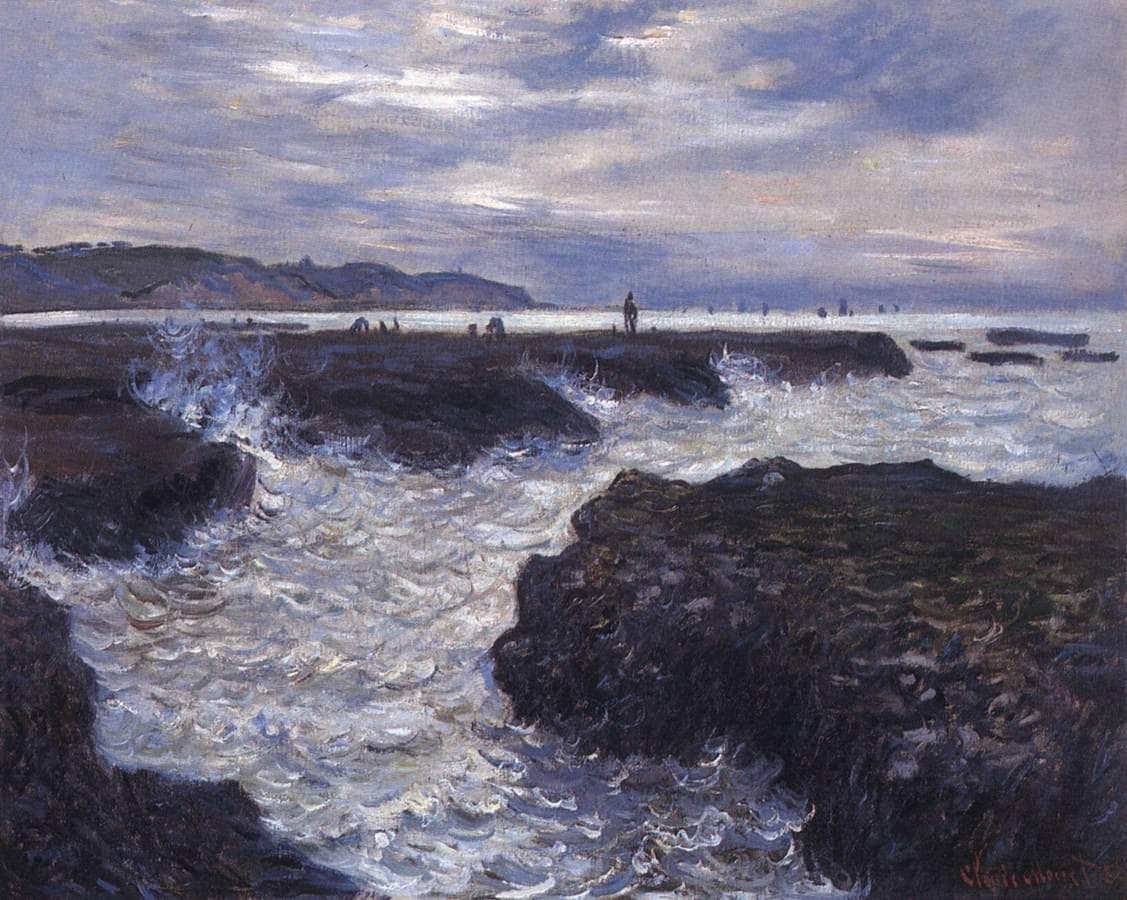
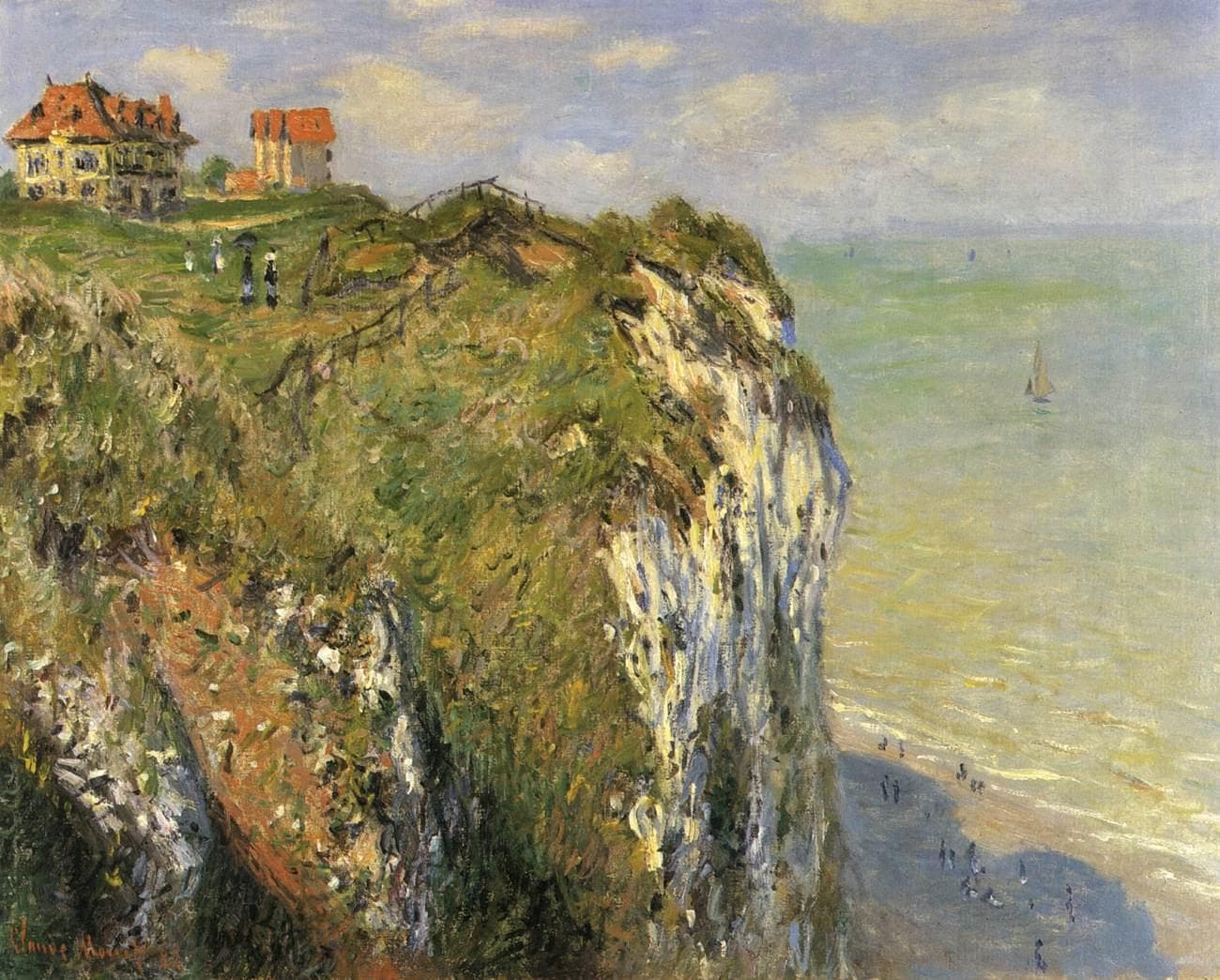
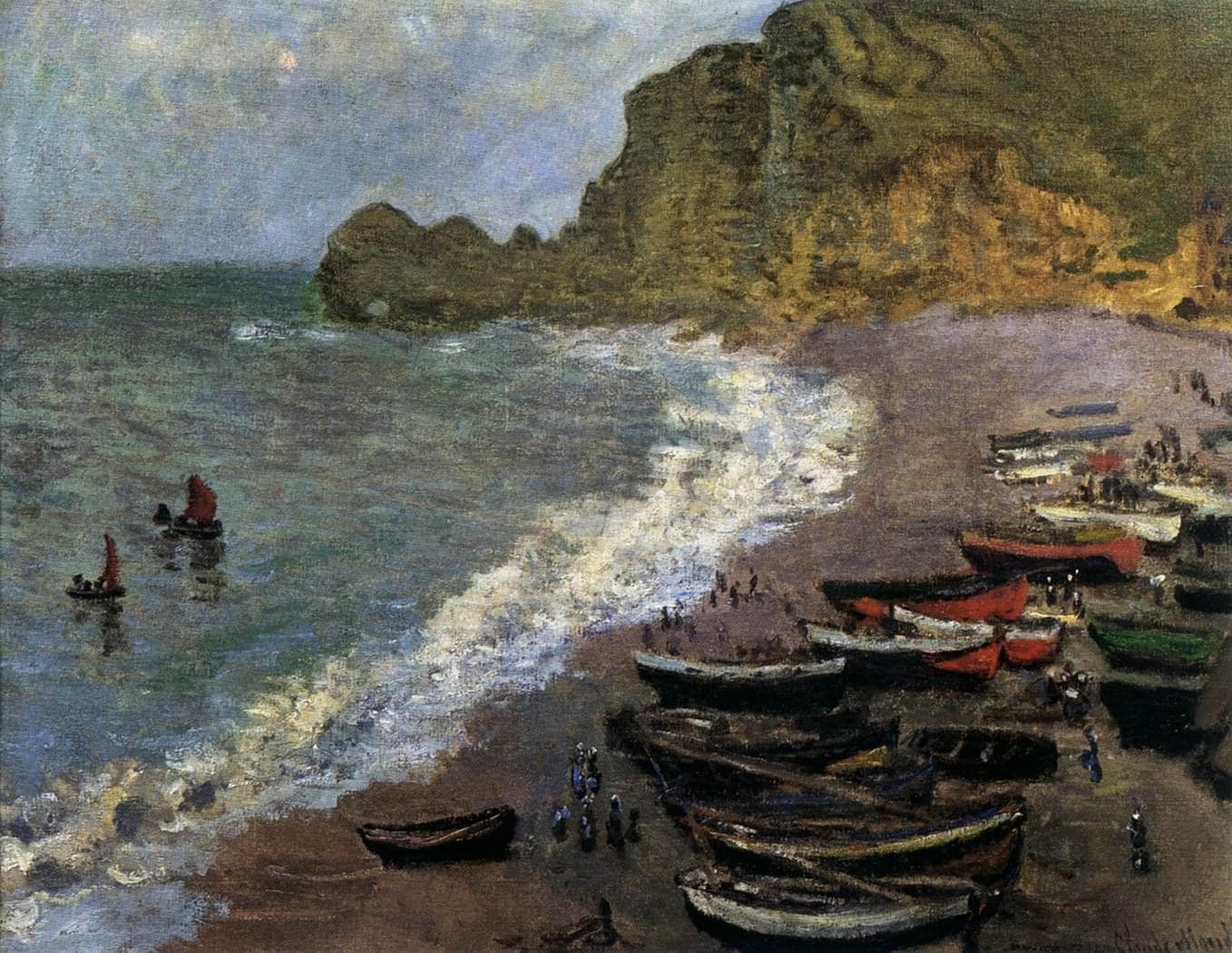
Siblings from the same months include Cliff Walk at Pourville, The Rocks at Pourville, Low Tide and Cliffs near Dieppe. The wider stretch of coast he painted from Étretat to Dieppe is mapped on Étretat and the Normandy Coast.
How it was painted
The picture is a mid-size canvas, 60 by 73 centimeters, painted outdoors. Monet keeps the paint thin in the sea and sky and lets the weave of the canvas show. He loads it more thickly on the clouds and the cliff edge. The steep, high viewpoint with no horizon to anchor the foreground is typical of his 1880s coastal work. It owes something to Japanese prints, which he collected, and gives the beach its swooping, almost aerial curve.
Theft and recovery
The painting was shown in Berlin by Paul Cassirer in 1905 and bought in 1906 for the museum in Poznań. In 1945 it was taken to the Soviet Union and returned to Poznań in 1956. In September 2000 a man posing as an art student cut it out of its frame and left a copy painted on cardboard in its place. The swap went unnoticed for several days. Police traced the thief through fingerprints years later, and the canvas was recovered in January 2010. After conservation, it went back on display; damage from the cutting remains near the signature.
Where to see it
Beach in Pourville hangs in the National Museum in Poznań, in western Poland. It is a long way from the main Monet collections in Paris, but it offers a good sense of what Monet was doing on the Channel coast in the early 1880s. For other places to see his work, see where to see Monet's paintings.
Questions & answers
Where is Monet's Beach in Pourville?
It is in the National Museum in Poznań, Poland, which acquired it in 1906. It is the only painting by Monet in a Polish public collection.
When and where was Beach in Pourville painted?
Monet painted it in 1882 at Pourville, a seaside village near Dieppe in Normandy, where he stayed twice that year. He looked down from a clifftop along the curving beach toward the next chalk headland.
Was Beach in Pourville stolen?
Yes. In September 2000 a man cut the canvas from its frame in the Poznań museum and replaced it with a copy on cardboard. The thief was identified through fingerprints, and the painting was recovered in January 2010 and returned to display after restoration.
Did Monet paint other views of Pourville?
Yes, many. His two stays in 1882 produced close to a hundred canvases of the beach, cliffs and sea around Pourville and Varengeville, including Cliff Walk at Pourville in Chicago.
More by the artist
Claude Monet

Bridge over a Pond of Water Lilies
Claude Monet · 1899

Woman with a Parasol – Madame Monet and Her Son
Claude Monet · 1875

Sunset in Venice
Claude Monet · 1908–12

La Grenouillère
Claude Monet · 1869

Springtime
Claude Monet · 1872

Boating on the River Epte
Claude Monet · 1890

The Seine at Asnières (Hermitage)
Claude Monet · 1873
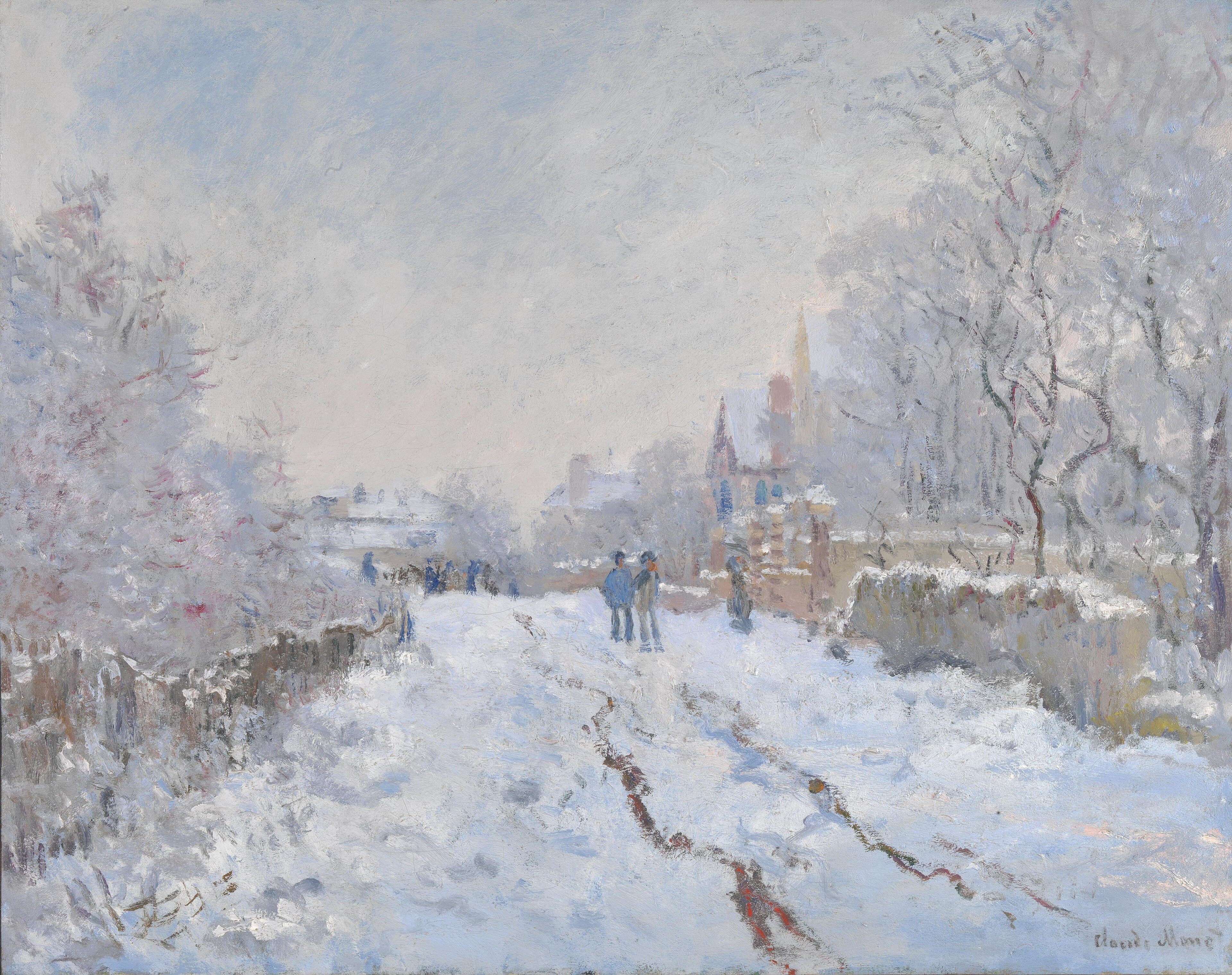
Snow Scene at Argenteuil
Claude Monet · 1875
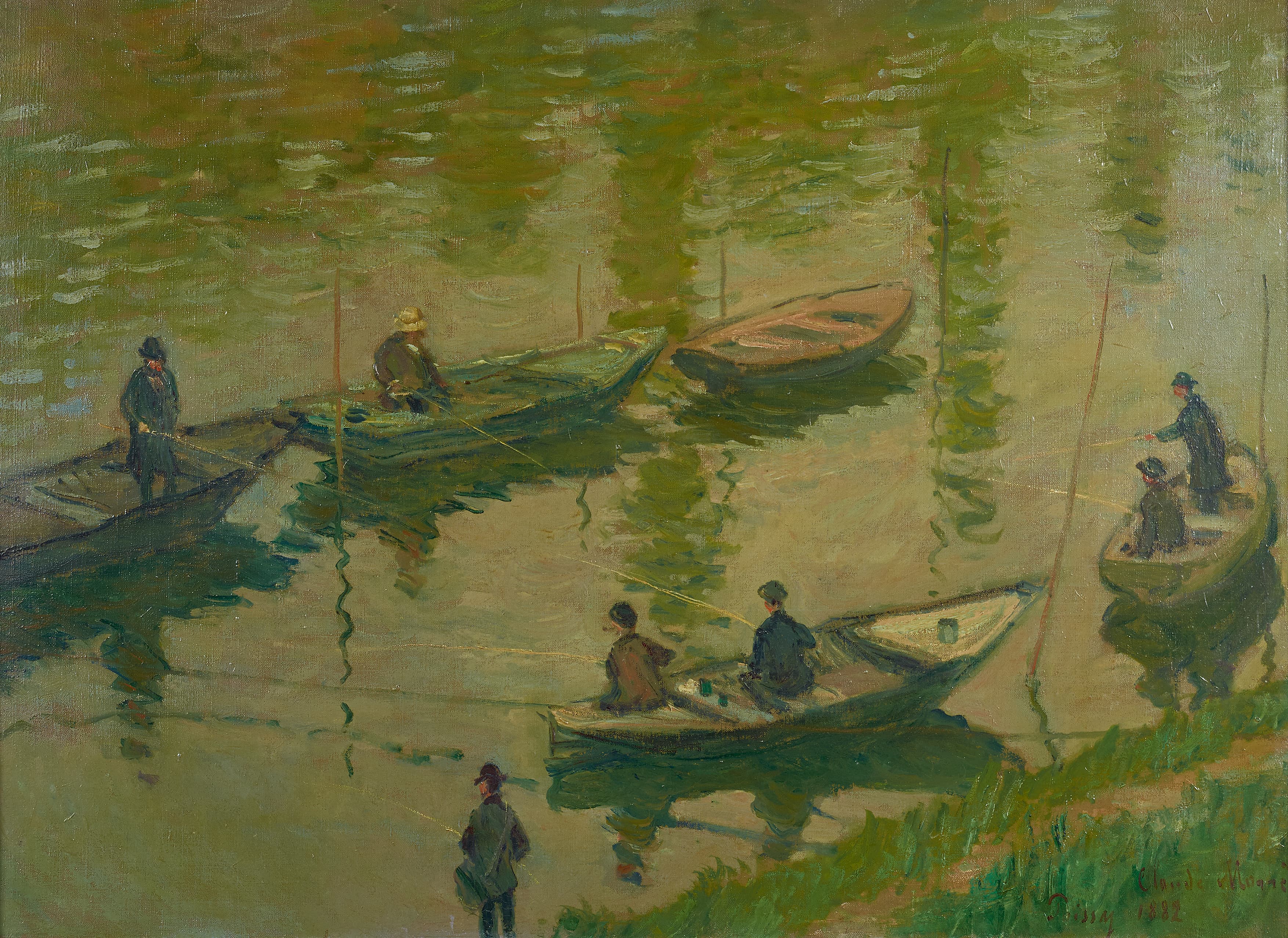
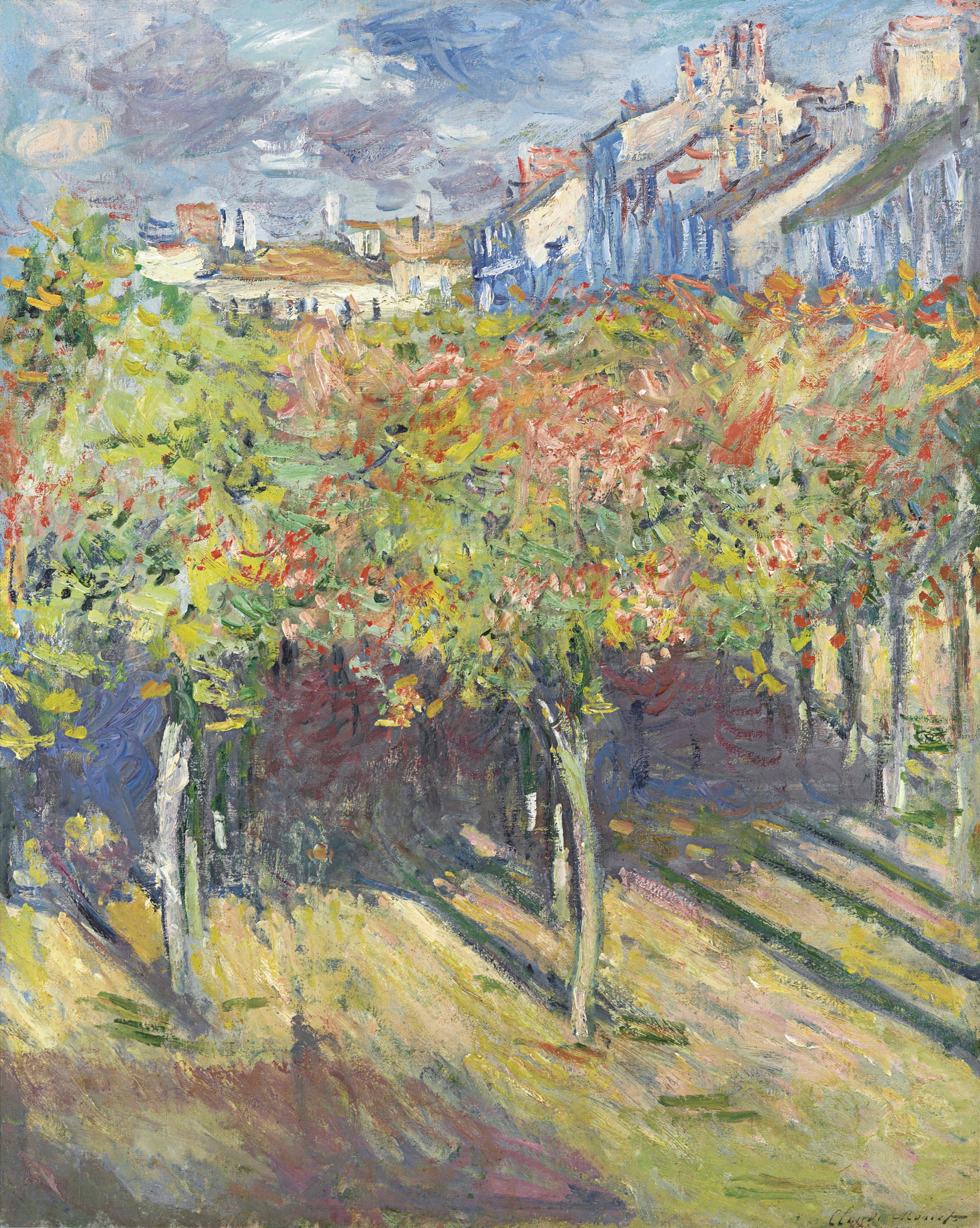
Also painted in 1882
The same year
Kindred works
You may also study
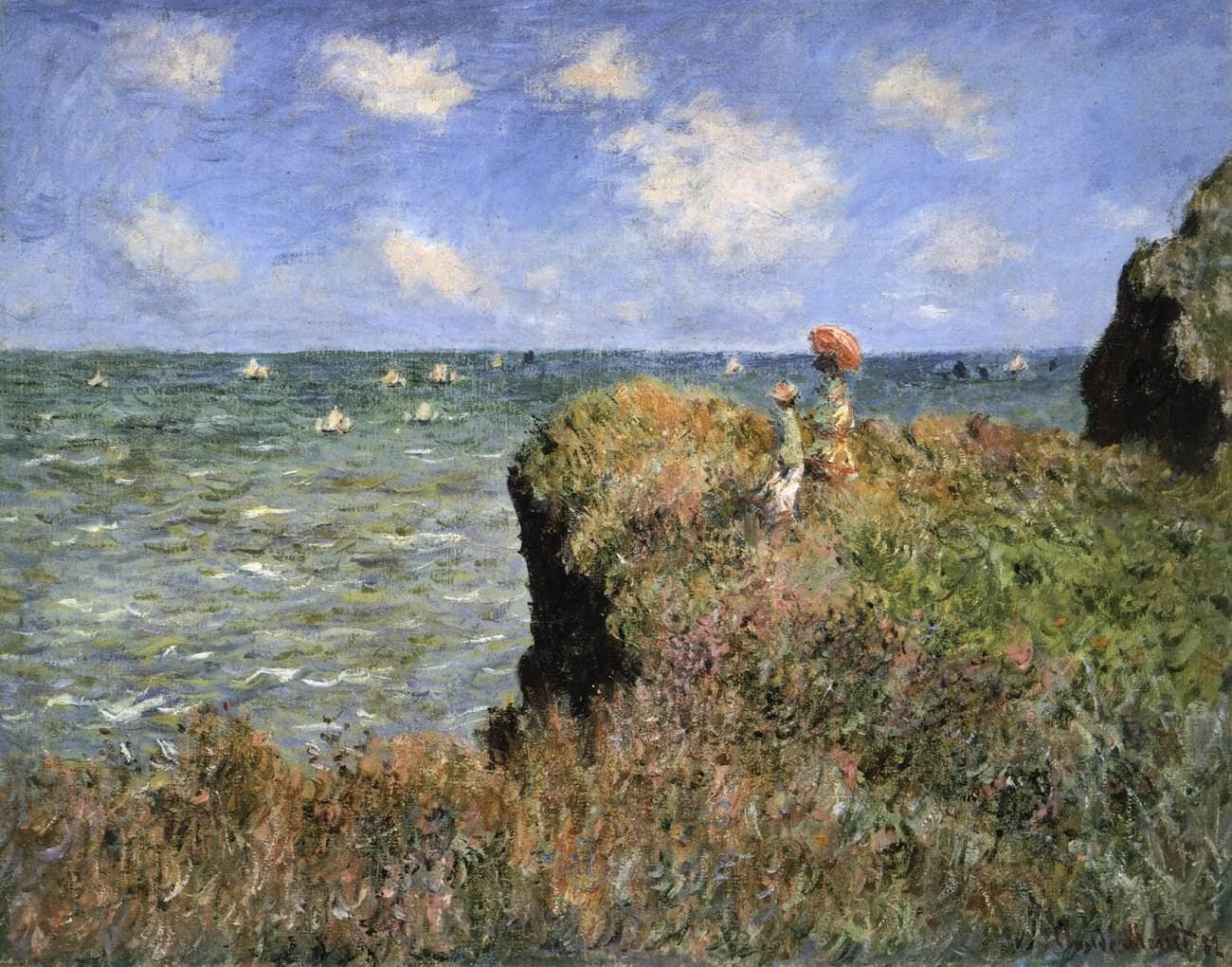
Cliff Walk at Pourville
Claude Monet · 1882
The Rocks at Pourville, Low Tide
Claude Monet · 1882
Cliffs near Dieppe
Claude Monet · 1882
Portrait of Père Paul
Claude Monet · 1882
The Beach at Étretat
Claude Monet · 1883

The Scream
Edvard Munch · 1893

Ophelia
John Everett Millais · 1851–52

The Great Wave off Kanagawa
Katsushika Hokusai · c. 1830–32