Image: Art Institute of Chicago, Potter Palmer Collection (CC0) · Public domain · via Wikimedia Commons
Impressionism
The Departure of the Boats, Étretat
Claude Monet, 1885
The Departure of the Boats, Étretat is an 1885 painting by Claude Monet of fishing boats setting out under red sails, seen from his hotel window above the beach at Étretat on a rainy autumn day. It is in the Art Institute of Chicago.
- Artist
- Claude Monet
- Date
- 1885
- Medium
- Oil on canvas
- Dimensions
- 73.5 × 93.5 cm
- Collection
- Art Institute of Chicago, Chicago, United States
- Movement
- Impressionism
- Catalogue
- Wildenstein 1025
Painted at Étretat and the Normandy CoastMore at Monet at the Art Institute of Chicago
What you are looking at
We look down on a beach from a height. In the foreground stand three or four caloges, the hulls of old fishing boats turned upside down, roofed with tarred planks and used by the fishermen as sheds, their dark bulk shining in violet and blue. Around them lie timbers, nets and gear. On the right the stone wall of a house with green shutters closes the view. Beyond the sheds the shingle runs down to a crowd of small figures at the water's edge, and on the sea a whole fleet of fishing boats is putting out, their red-brown sails standing up against water of an unreal emerald green, the farthest only small dark triangles on the horizon.
The figures are split into two groups. On the left, women in fashionable dark dresses stand watching; on the right, a denser group of local fishermen and their families works at the boats. One boat at the water's edge, with a yellow hull, is still being launched.
The detail most people miss is how wet everything is. The beach is pink and lilac rather than sand-colored, the roofs of the caloges glisten, and the sea is that luminous green because it is raining.
Where and when it was painted
Monet spent the autumn of 1885 at Étretat, the fishing village and resort on the Normandy coast with its famous chalk arches, staying at the Hôtel Blanquet on the beach. He came deliberately after the tourist season. When bad weather kept him from working outdoors, he painted from the window of his room. On 24 November 1885, in one of his daily letters to Alice Hoschedé, he described working in his room on his caloges in the rain, and then attempting, still through the window, a picture of the boats departing.
The first was Boats on the Beach at Étretat; the second was this canvas. Both are now in Chicago, and they form a pair with the same palette, subject and viewpoint. Because Monet arrived out of season, the Art Institute notes it is unclear whether he actually saw the fashionable women at left or added them as a foil to the fishermen at right.
How it was painted
The canvas is 73.5 by 93.5 centimeters, signed and dated "Claude Monet 85" at lower left. Monet combines pastel blues, pinks, purples and greens to render wet surfaces, and he paints the crowd with quick, gestural strokes that are little more than dashes of dark paint. The sails are blocked in with one or two strokes each. The high viewpoint flattens the composition into overlapping planes, sheds, beach and sea, which has reminded many viewers of Japanese prints.
The window also changed what Monet could paint. Working outdoors on the beach he usually chose a single motif, a cliff or an arch, and waited for the light. From a room above the shingle he could take in a whole social scene, with the town's fishermen, its visitors and its weather at once, and paint it in the time it took the fleet to leave. The picture is closer to his crowded views of the 1870s than to the empty cliffs he painted the same autumn.
That autumn Monet also painted the fleet from the beach, as in Étretat, the Porte d'Aval: Fishing Boats Leaving the Harbor in Dijon, and the cliffs and arches, as in The Cliffs at Étretat. Compare his first Étretat boats of 1883, seen at beach level in clear winter light, in Boats on the Beach at Étretat (1883). For the whole coast, see Étretat and the Normandy coast.
Ownership and where to see it
Monet kept the painting until 21 December 1892, when he sold it to Paul Durand-Ruel for 6,000 francs; the dealer recorded it as Caloges d'Étretat and sold it the same day to the Chicago businessman Potter Palmer. Potter and Bertha Honoré Palmer formed one of the earliest great American collections of Monet. Their family gave the painting to the Art Institute in 1922 (1922.428). It hangs in the Impressionist galleries, recently in Gallery 240. See Monet at the Art Institute of Chicago and the Claude Monet page.
Questions & answers
Where is The Departure of the Boats, Étretat?
It is in the Art Institute of Chicago (1922.428), part of the Potter Palmer Collection given by the Palmer family in 1922. It is usually on view in the museum's Impressionist galleries. The canvas measures 73.5 by 93.5 centimeters.
When and where did Monet paint The Departure of the Boats?
In November 1885 at Étretat on the Normandy coast. Kept indoors by rain, he painted it from the window of his room at the Hôtel Blanquet, describing it in a letter to Alice Hoschedé on 24 November 1885.
What are the huts in the foreground?
They are caloges: old fishing boats turned upside down and roofed with tarred planks, used by Étretat's fishermen as storage sheds. Monet painted them in the companion picture, Boats on the Beach at Étretat, also in Chicago.
Is there a companion painting?
Yes. Boats on the Beach at Étretat, painted the same day from the same window, shares its palette, subject and viewpoint. Both belong to the Art Institute of Chicago.
More by the artist
Claude Monet

Bridge over a Pond of Water Lilies
Claude Monet · 1899

Woman with a Parasol – Madame Monet and Her Son
Claude Monet · 1875

Sunset in Venice
Claude Monet · 1908–12

La Grenouillère
Claude Monet · 1869

Beach in Pourville
Claude Monet · 1882

Springtime
Claude Monet · 1872

Boating on the River Epte
Claude Monet · 1890

The Seine at Asnières (Hermitage)
Claude Monet · 1873
Also painted in 1885
The same year
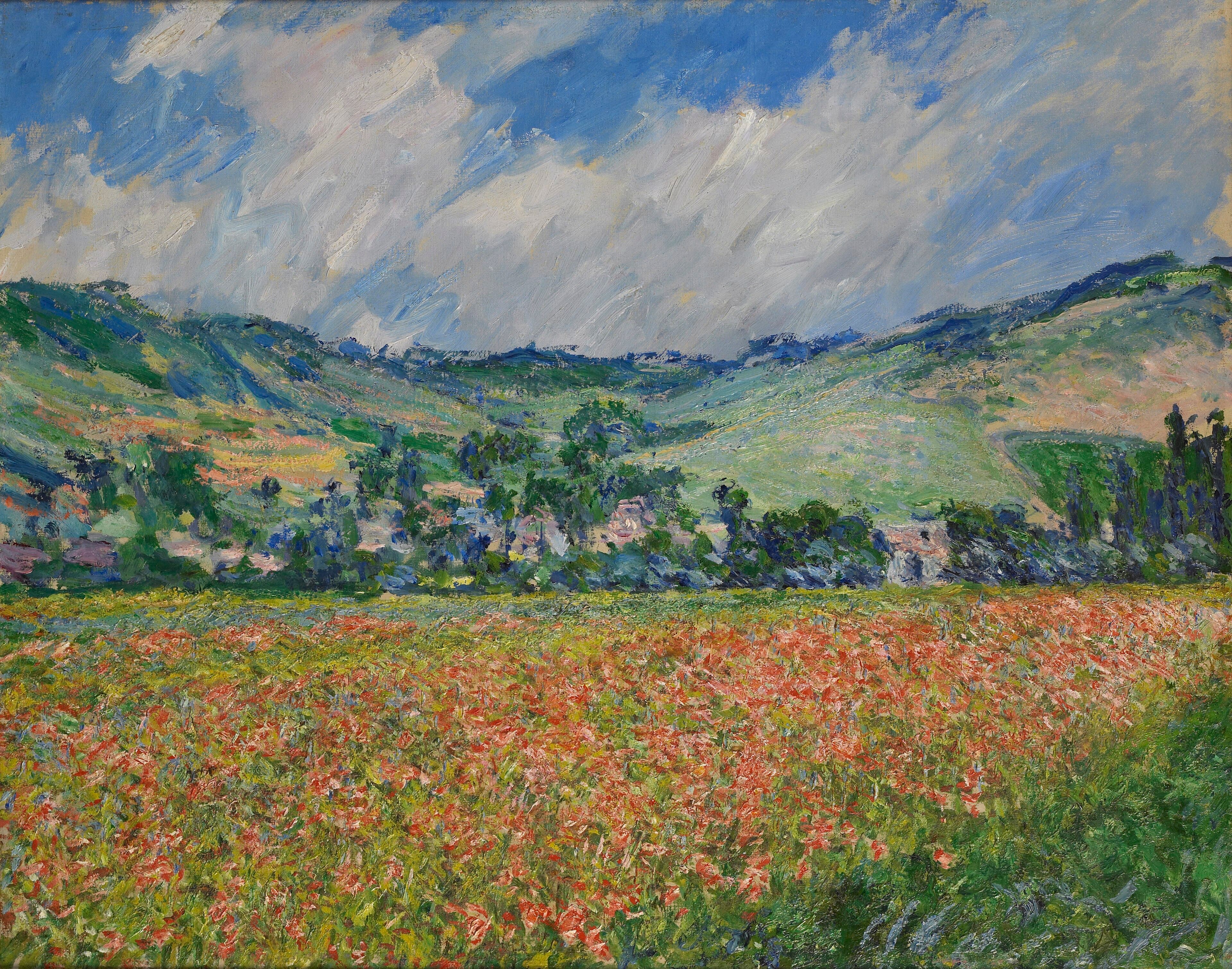
Poppy Field, Around Giverny
Claude Monet · 1885
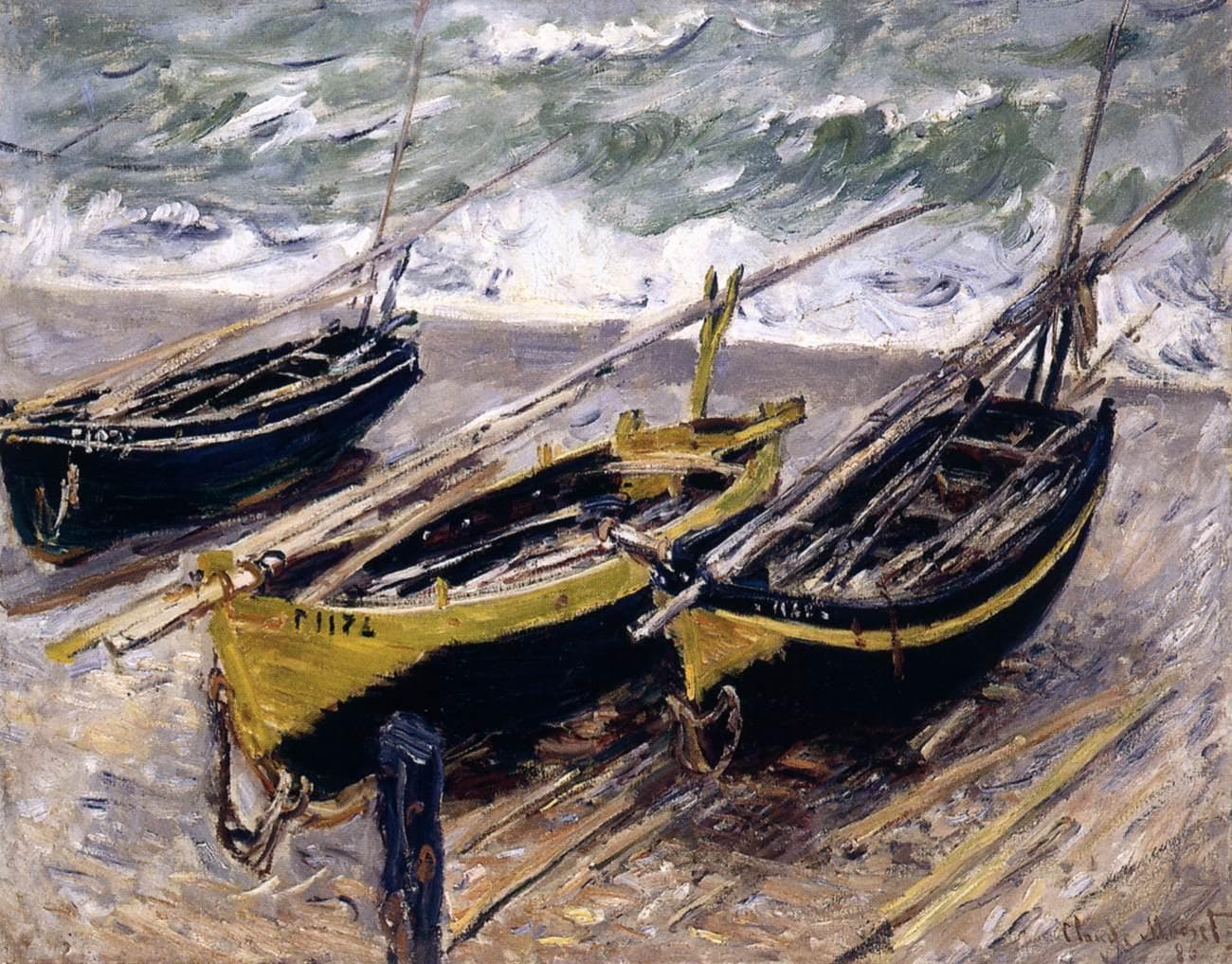
Three Fishing Boats
Claude Monet · 1885
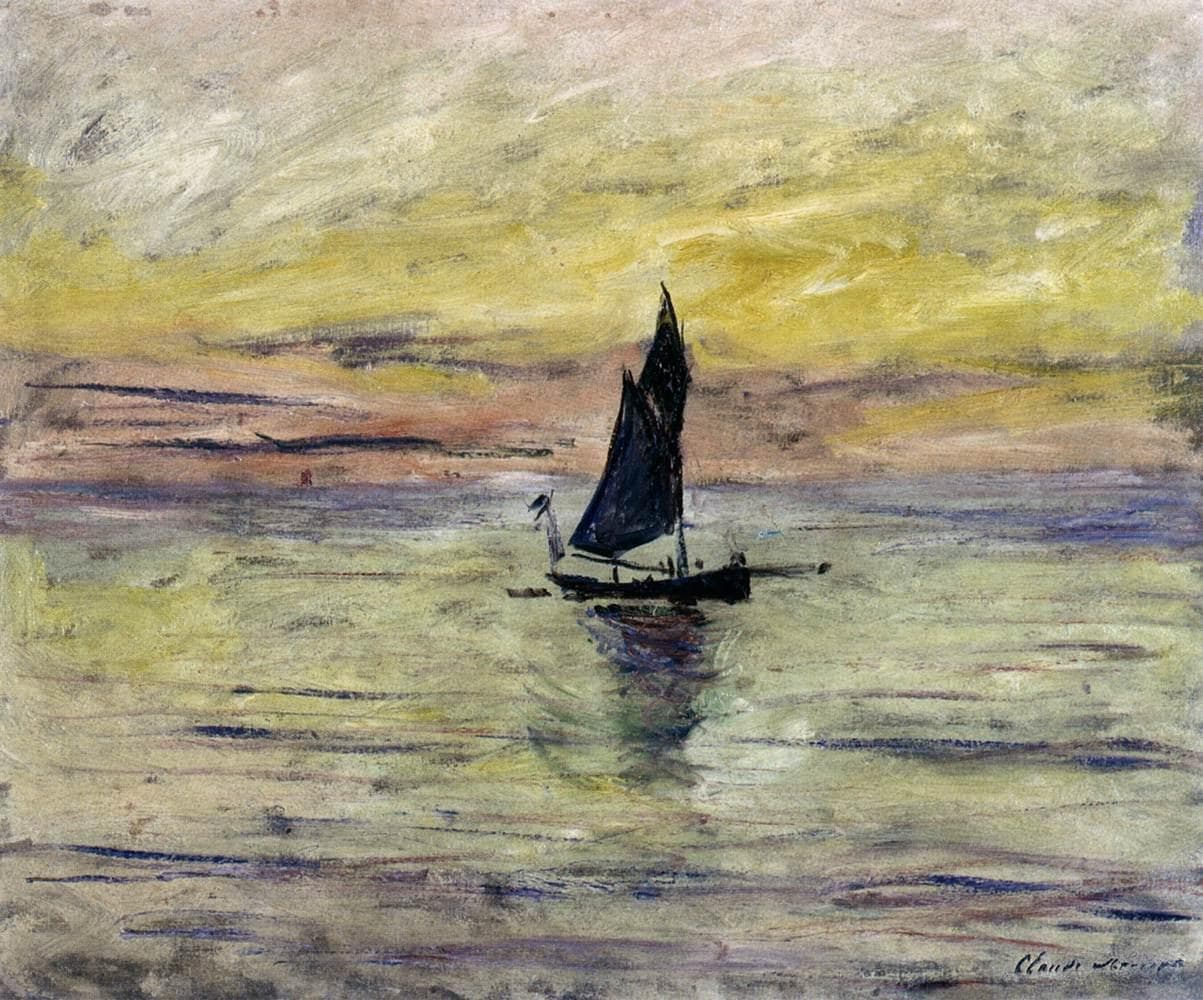
Sailboat, Evening Effect
Claude Monet · 1885
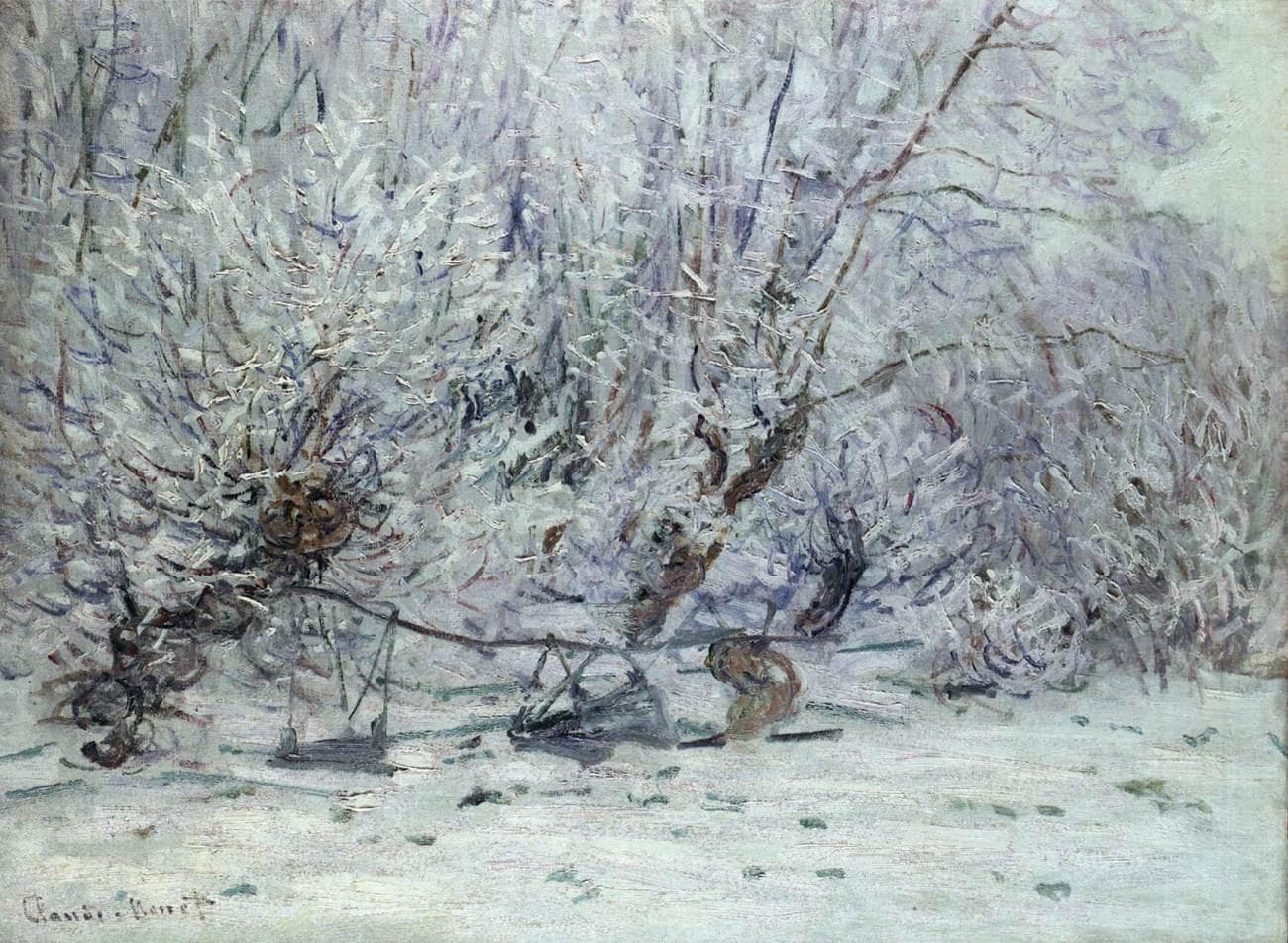
Frost
Claude Monet · 1885
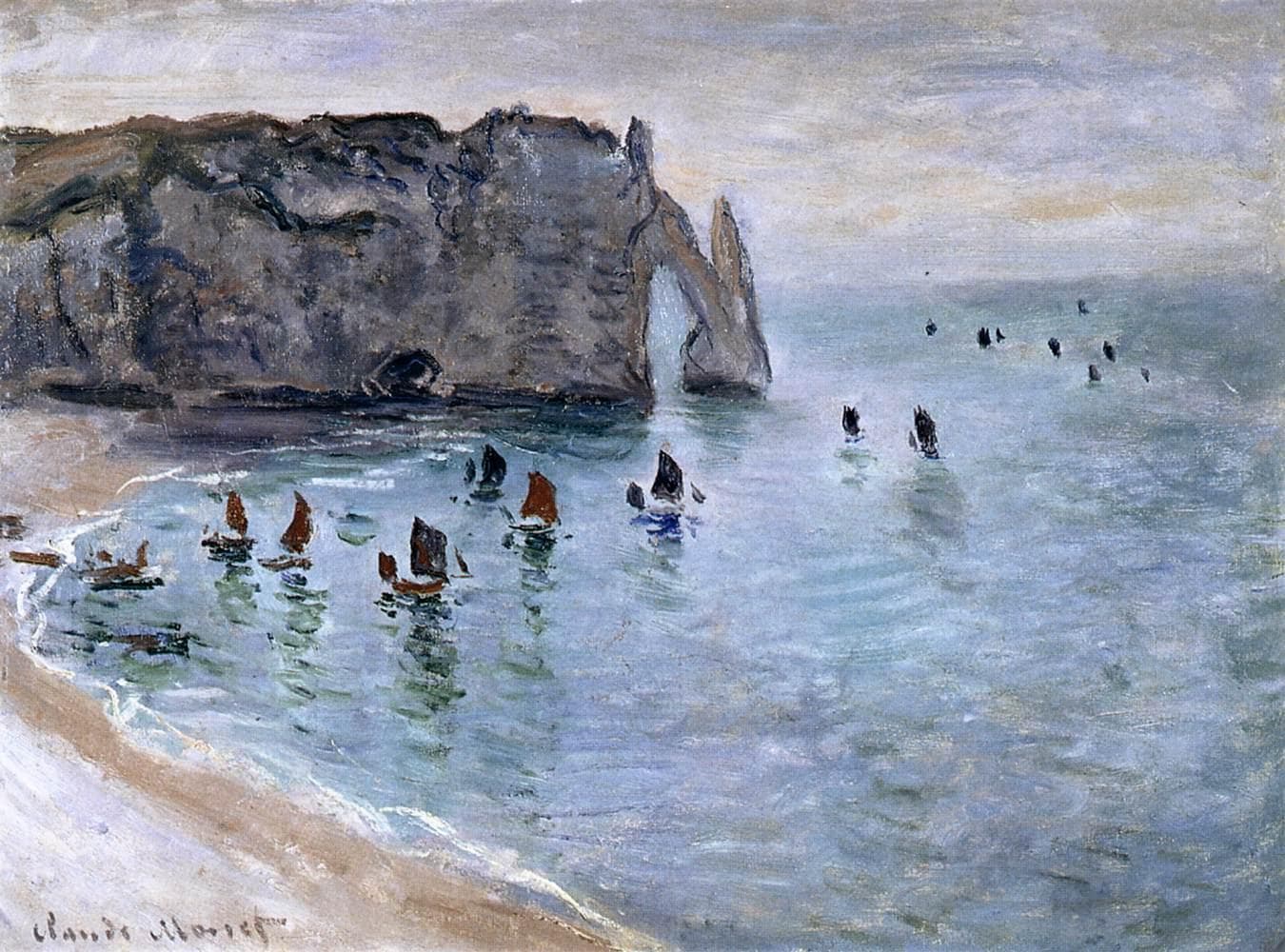
Étretat, the Porte d'Aval: Fishing Boats Leaving the Harbor
Claude Monet · 1885
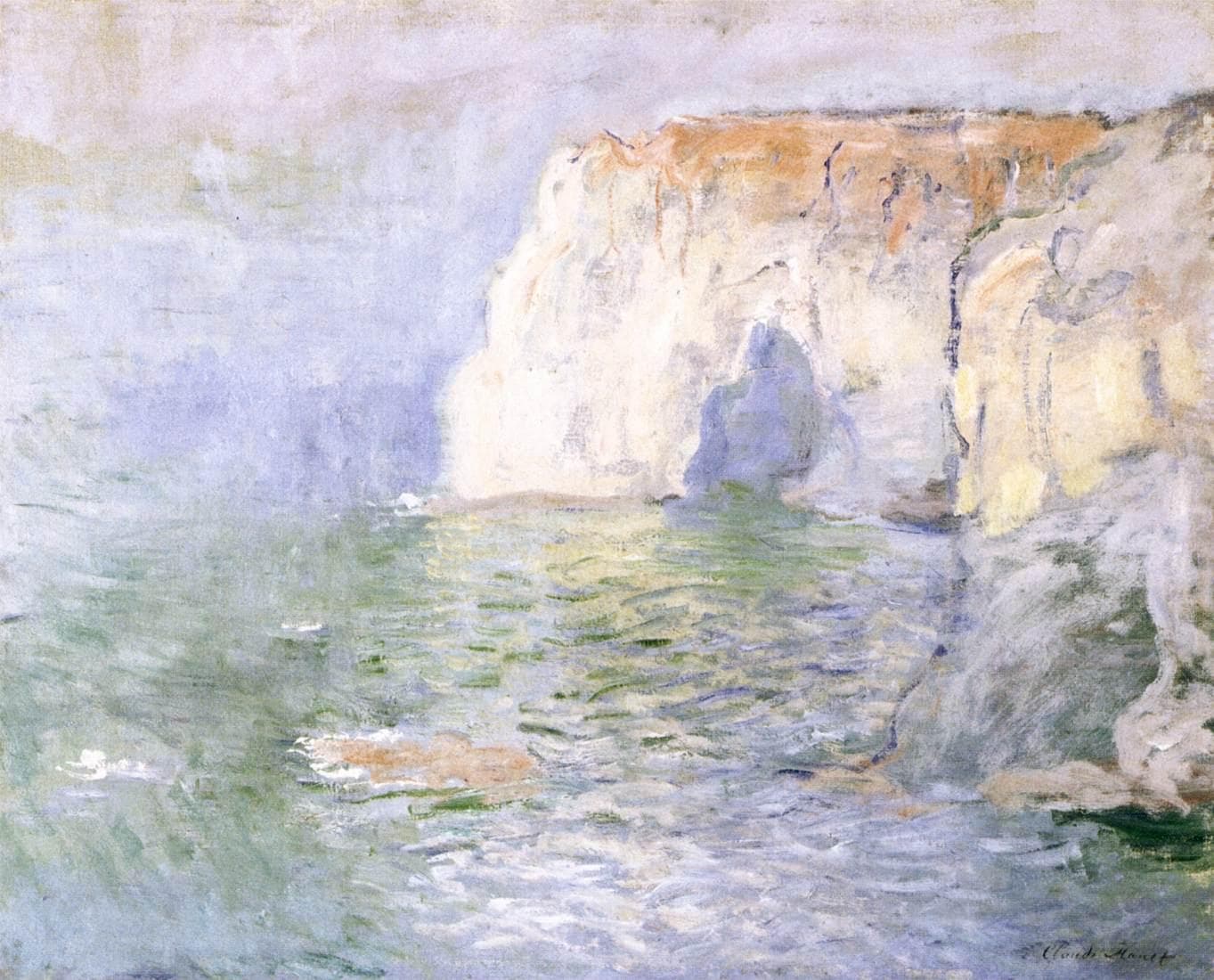
Étretat, the Manneporte, Reflections on the Water
Claude Monet · c. 1885
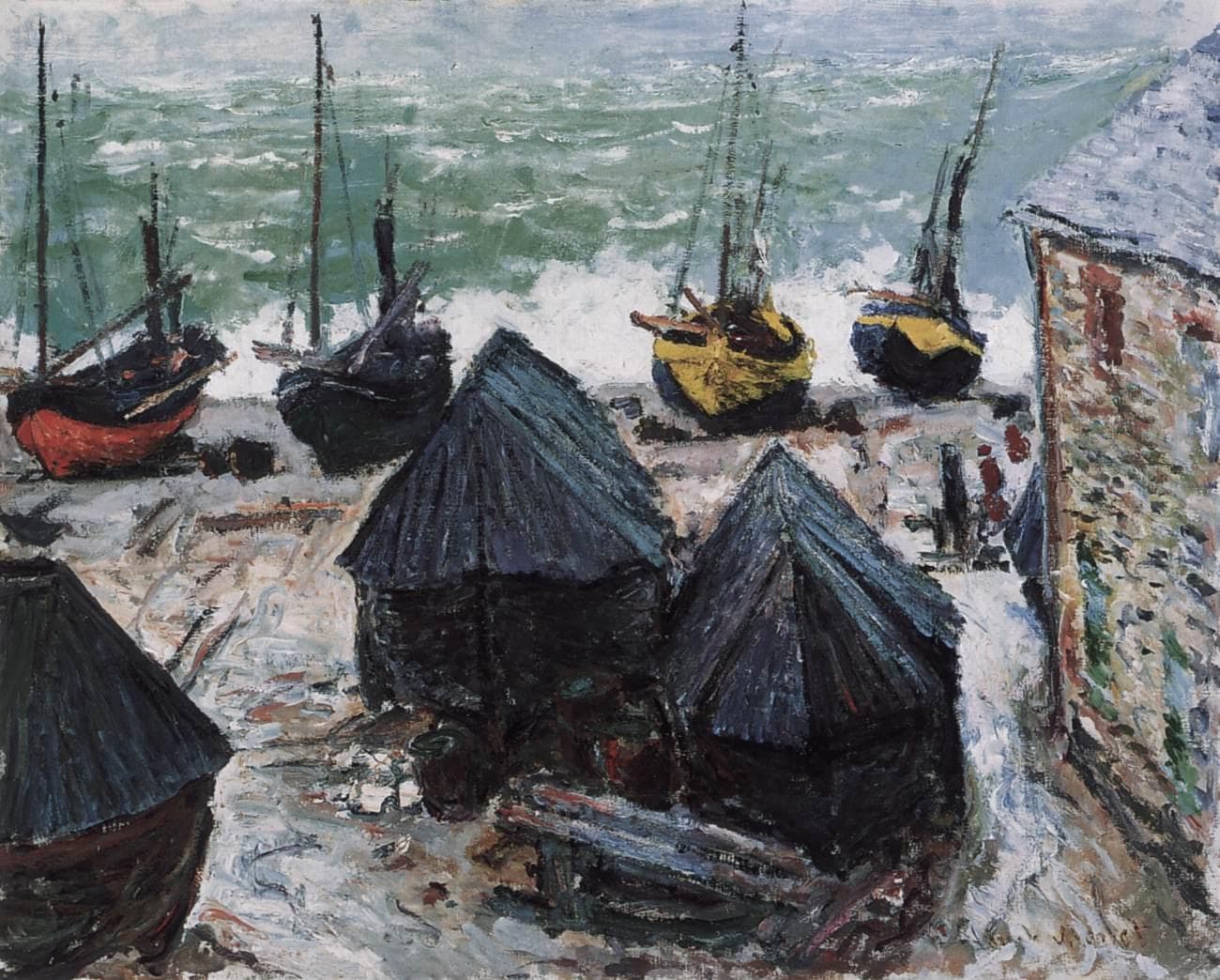
Boats on the Beach at Étretat
Claude Monet · 1885
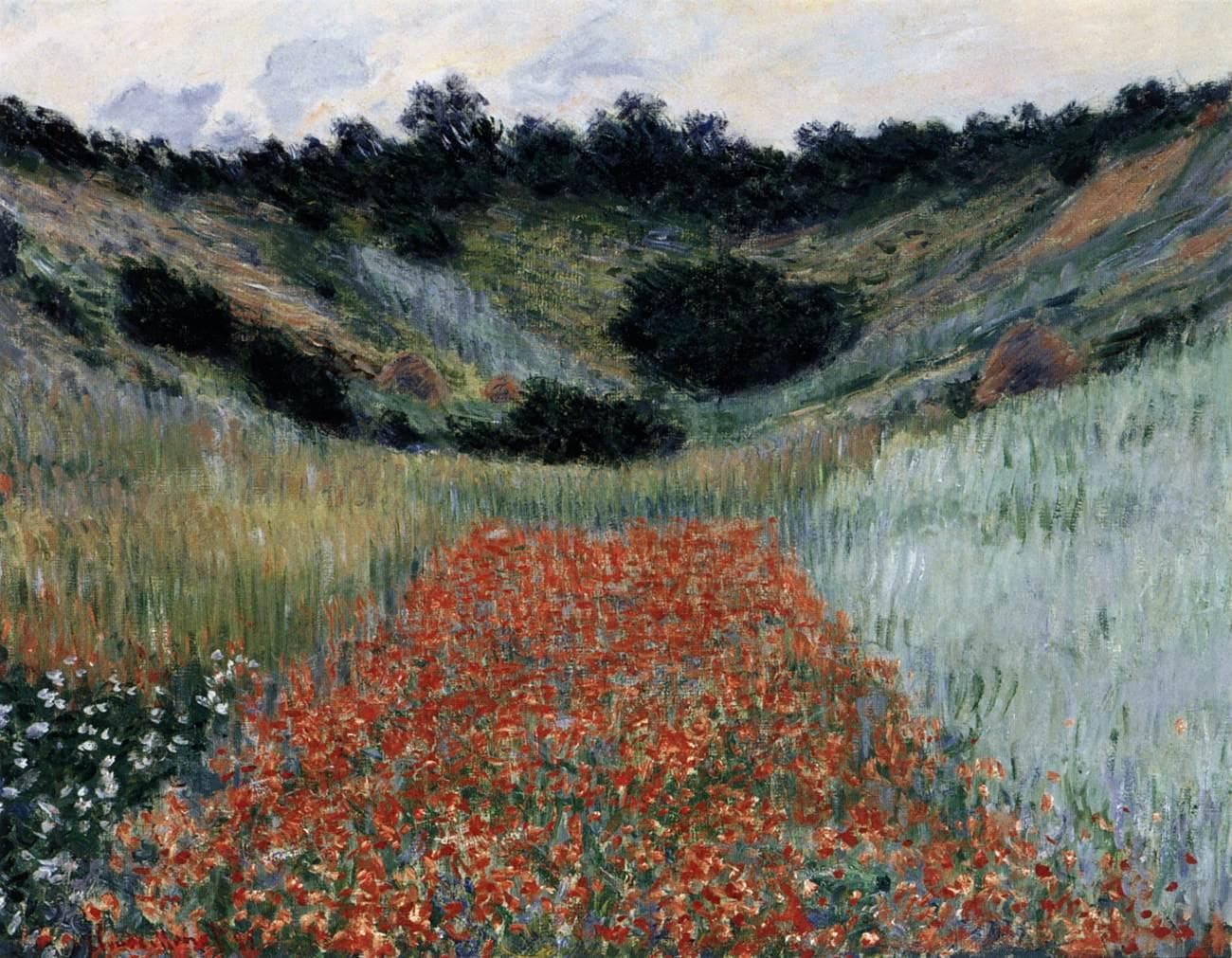
Poppy Field in a Hollow near Giverny
Claude Monet · 1885
Kindred works
You may also study
Boats on the Beach at Étretat
Claude Monet · 1885
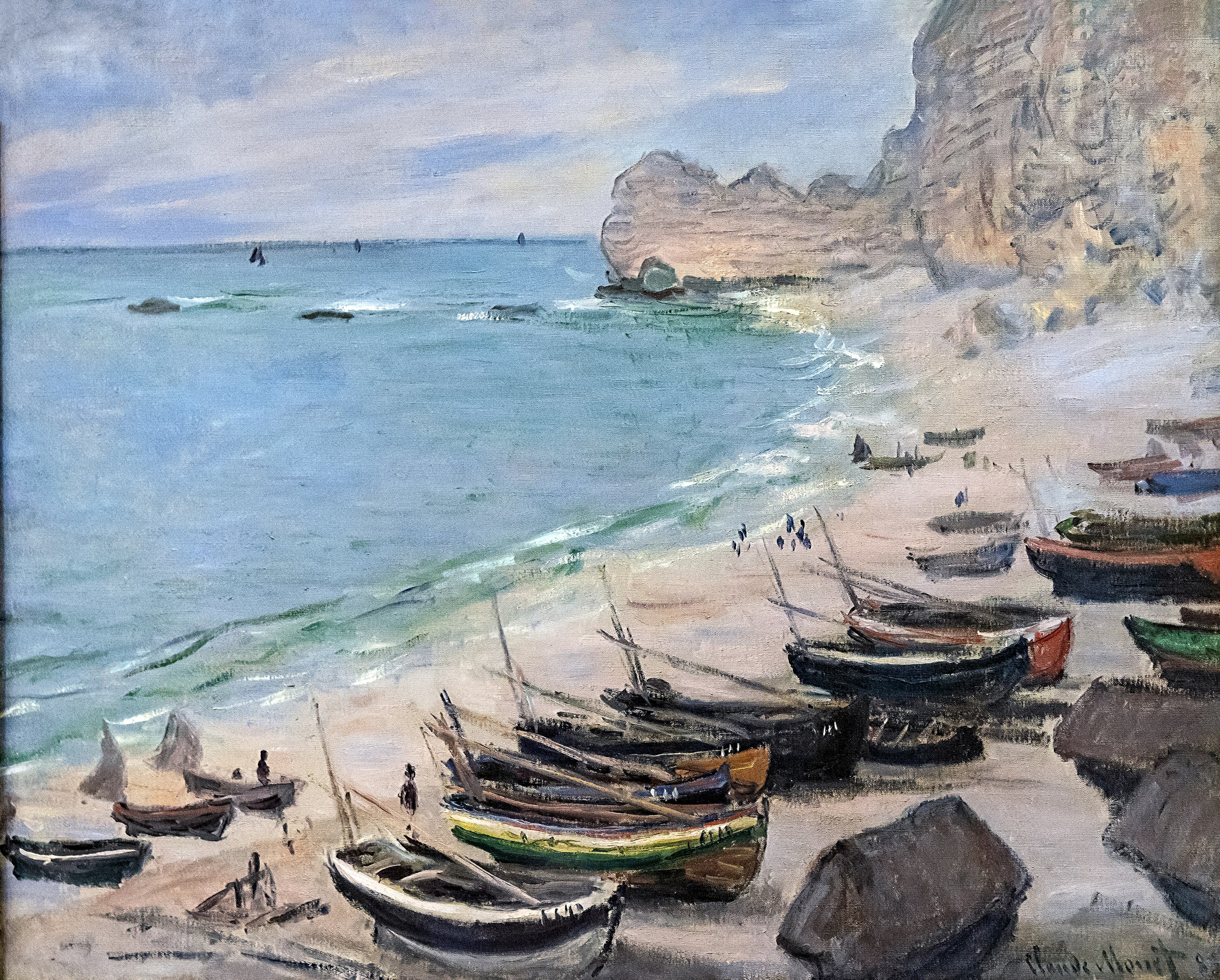
Boats on the Beach at Étretat (1883)
Claude Monet · 1883
Étretat, the Porte d'Aval: Fishing Boats Leaving the Harbor
Claude Monet · 1885
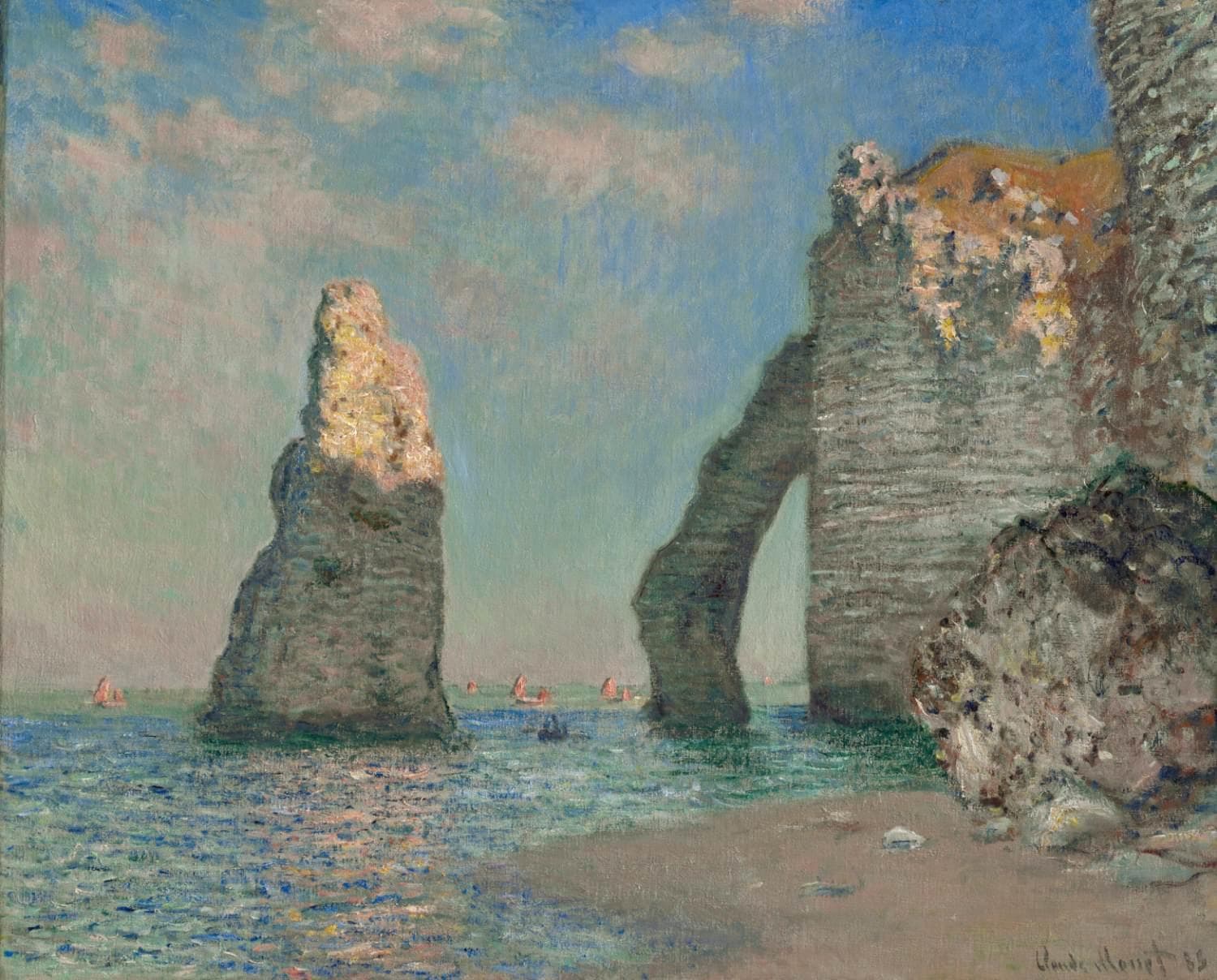
The Cliffs at Étretat
Claude Monet · 1885
Three Fishing Boats
Claude Monet · 1885

Ophelia
John Everett Millais · 1851–52

The Great Wave off Kanagawa
Katsushika Hokusai · c. 1830–32
The Birth of Venus
Sandro Botticelli · c. 1484–1486