Image: The National Gallery, London; via Wikimedia Commons · Public domain · via Wikimedia Commons
Realism
La Pointe de la Hève, Sainte-Adresse
Claude Monet, 1864
La Pointe de la Hève, Sainte-Adresse is an 1864 seascape by Claude Monet of the pebble beach and cliffs of Sainte-Adresse near Le Havre under a gray sky. It is in the National Gallery, London.
- Artist
- Claude Monet
- Date
- 1864
- Medium
- Oil on canvas
- Dimensions
- 41 × 73 cm
- Collection
- National Gallery, London, United Kingdom
- Movement
- Realism
- Catalogue
- Wildenstein 39
Painted at Étretat and the Normandy Coast
What you are looking at
A long pebble beach curves from the lower right into the distance, where it meets a line of grassy cliffs. The cliffs rise on the right, brown and green, with a small building perched on top. Wooden groynes, low fences built to hold the shingle, run down the beach into the water. The sea on the left is pale gray-green and calm, with small waves breaking in a thin white line along the shore.
In the water at left, a rowing boat with three men in it pulls away from the beach, its oars out. Far off on the horizon, a few sailing boats are just visible. The sky takes up more than half the picture: a heavy, overcast mass of gray and white cloud, with a band of brighter light low over the sea. Monet signed and dated the picture at lower left, "C. Monet 64."
Where and when it was painted
Sainte-Adresse is a seaside village just north of Le Havre, where Monet grew up and where his family had a house. The Pointe de la Hève is the headland at the mouth of the Seine estuary, with a lighthouse on its cliffs. In 1864 Monet spent the summer and autumn on the Normandy coast, at Honfleur and Sainte-Adresse, painting with Eugène Boudin and the Dutch painter Johan Barthold Jongkind.
This canvas is a study for, or a first version of, the larger La Pointe de la Hève at Low Tide, now in the Kimbell Art Museum, which Monet sent to the Paris Salon of 1865. It was one of his two pictures accepted that year, his Salon debut, and it was well received. See Étretat and the Normandy coast for the whole group.
How it was painted
The composition is built on a long diagonal: the line of the beach and cliffs sweeps from the lower right toward the left horizon, while the groynes cut across it. The sea and sky open out on the left, giving the picture its sense of space.
The handling shows what Monet learned from Boudin and Jongkind. The sky is painted with broad, quick strokes that capture the weight and movement of the clouds. The beach is built from many small dabs of gray, brown, ochre and white, suggesting the pebbles without drawing them. The sea is laid in with smooth, horizontal strokes, broken by white for the breaking waves. The colors are restrained, a range of grays, greens and browns, but they are carefully observed, and the band of light on the horizon gives the picture its mood.
The careful rendering of the beach, the textures of the clouds and the sense of a particular day and weather show Monet already working toward painting what he saw on the spot. A detail many viewers miss: the boat's oars catch the light as small white strokes, the brightest notes on the left side of the canvas.
Compared with the Kimbell canvas, this version is smaller and more direct, with the figures and boats placed slightly differently and the handling looser. It shows Monet testing the composition and the effect of weather before committing to the larger picture for the Salon, a practice he would soon abandon in favor of working on the final canvas outdoors.
Related works
Monet painted the Normandy coast throughout the mid-1860s. Compare The Beach at Honfleur (1864), Seascape, Shipping by Moonlight (1864) and, a few years later, the brighter, more modern The Beach at Sainte-Adresse (1867), painted on the same stretch of coast.
Ownership
The National Gallery acquired the painting in 1996 (NG6565). It is one of the earliest Monets in a British public collection.
Where to see it
La Pointe de la Hève, Sainte-Adresse is in the National Gallery, London. For other museums, see where to see Monet's paintings.
Questions & answers
Where is Monet's La Pointe de la Hève, Sainte-Adresse?
It is in the National Gallery, London, which acquired it in 1996 (NG6565). A larger related version, La Pointe de la Hève at Low Tide, is in the Kimbell Art Museum in Fort Worth, Texas.
When and where was it painted?
Monet painted it in 1864 at Sainte-Adresse, the seaside village just north of Le Havre where his family lived. The Pointe de la Hève is the headland at the mouth of the Seine estuary.
What does the painting show?
A long pebble beach with wooden groynes curving toward grassy cliffs, a rowing boat with three men on a calm sea, and a heavy gray sky. It is signed and dated 'C. Monet 64' at lower left.
Is it related to Monet's first Salon painting?
Yes. It is a smaller version of the composition Monet developed into La Pointe de la Hève at Low Tide, one of the two paintings he showed at the Paris Salon of 1865, his first acceptance there.
More by the artist
Claude Monet

Bridge over a Pond of Water Lilies
Claude Monet · 1899

Woman with a Parasol – Madame Monet and Her Son
Claude Monet · 1875

Sunset in Venice
Claude Monet · 1908–12

La Grenouillère
Claude Monet · 1869

Beach in Pourville
Claude Monet · 1882

Springtime
Claude Monet · 1872

Boating on the River Epte
Claude Monet · 1890

The Seine at Asnières (Hermitage)
Claude Monet · 1873
Also painted in 1864
The same year

Kindred works
You may also study
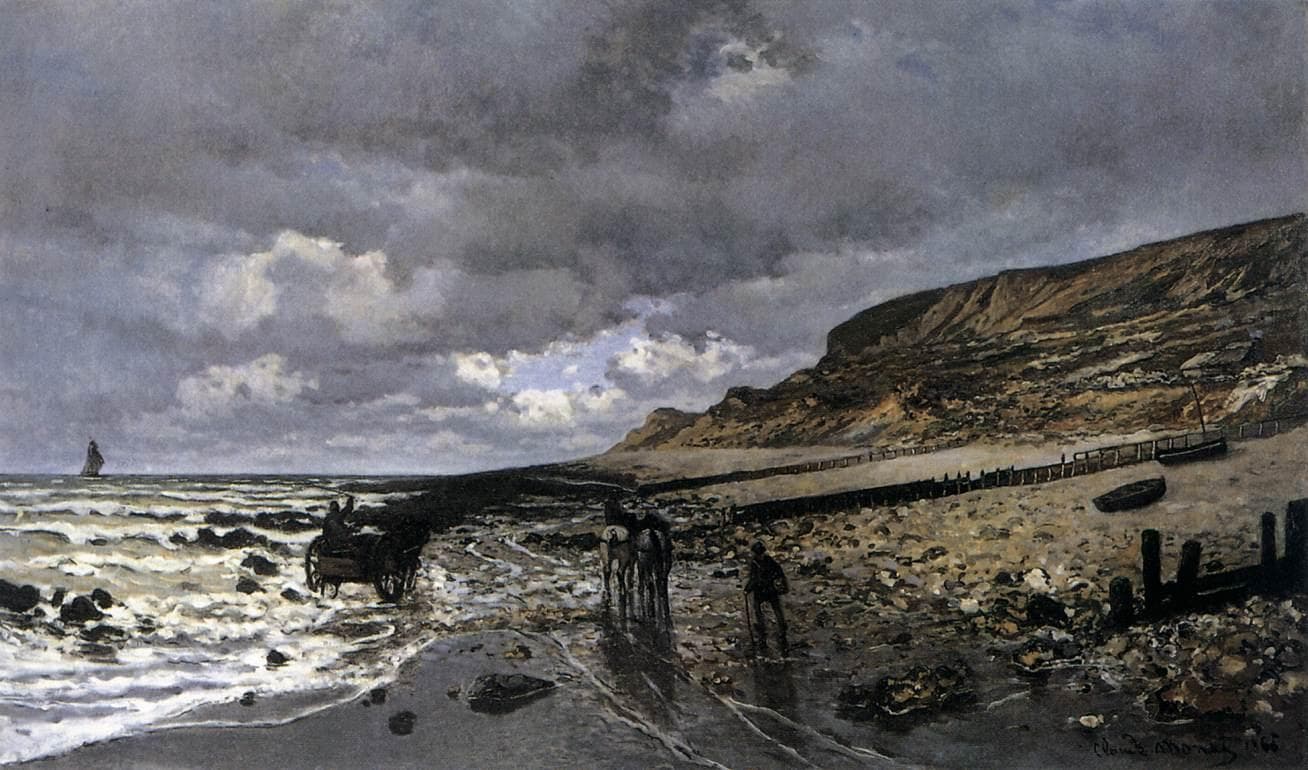
La Pointe de la Hève at Low Tide
Claude Monet · 1865
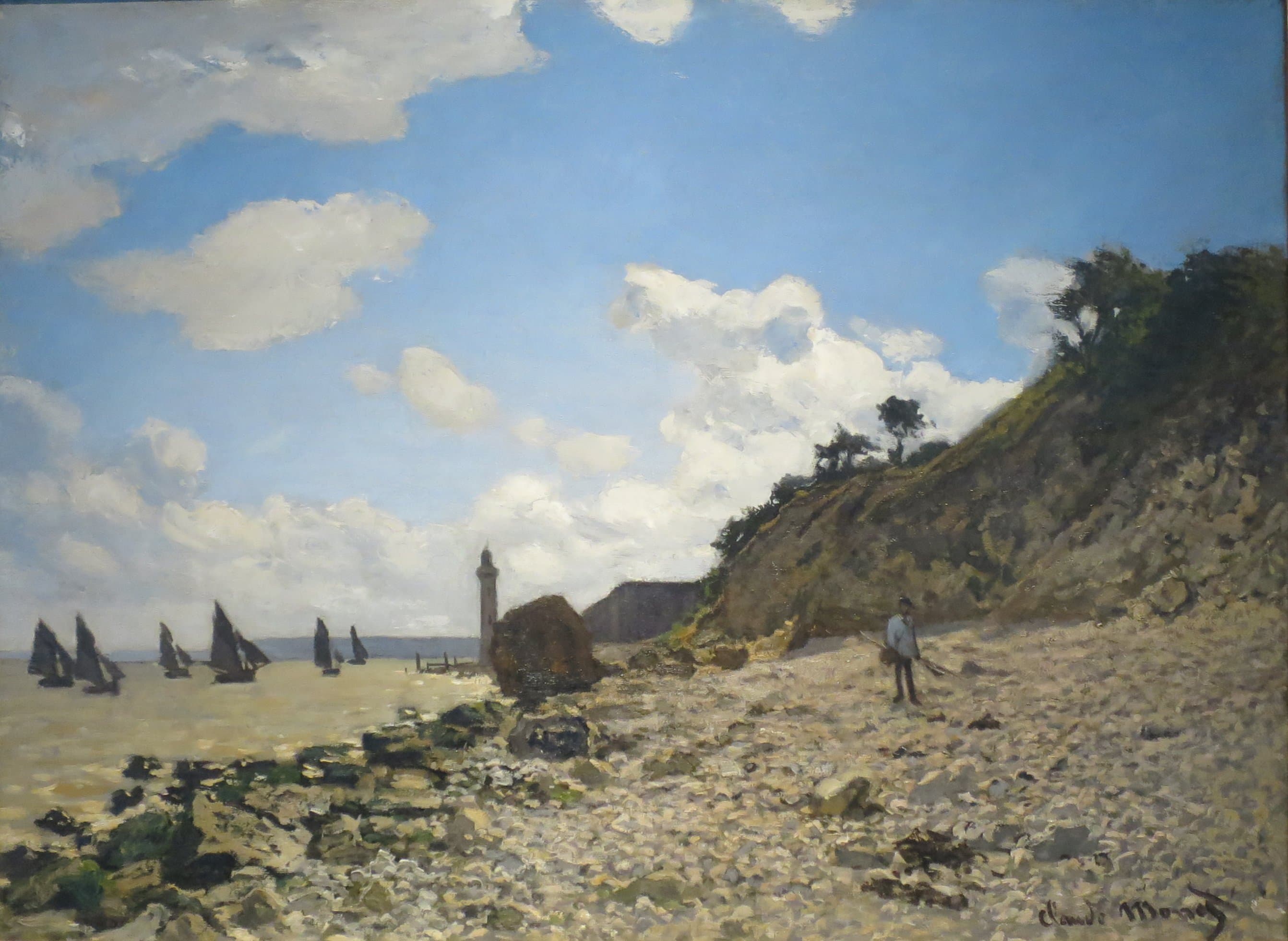
The Beach at Honfleur
Claude Monet · 1864–66
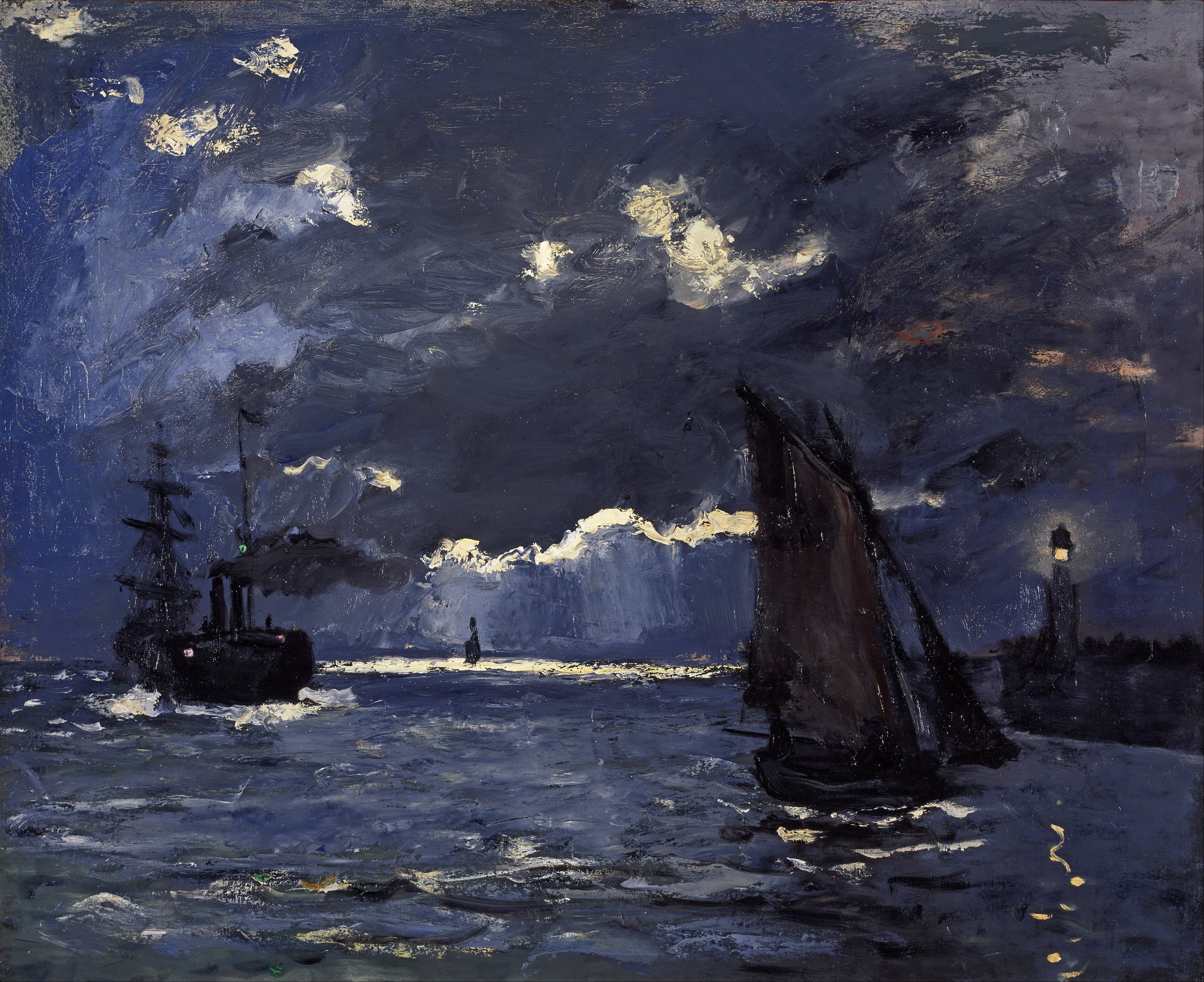
A Seascape, Shipping by Moonlight
Claude Monet · c. 1864
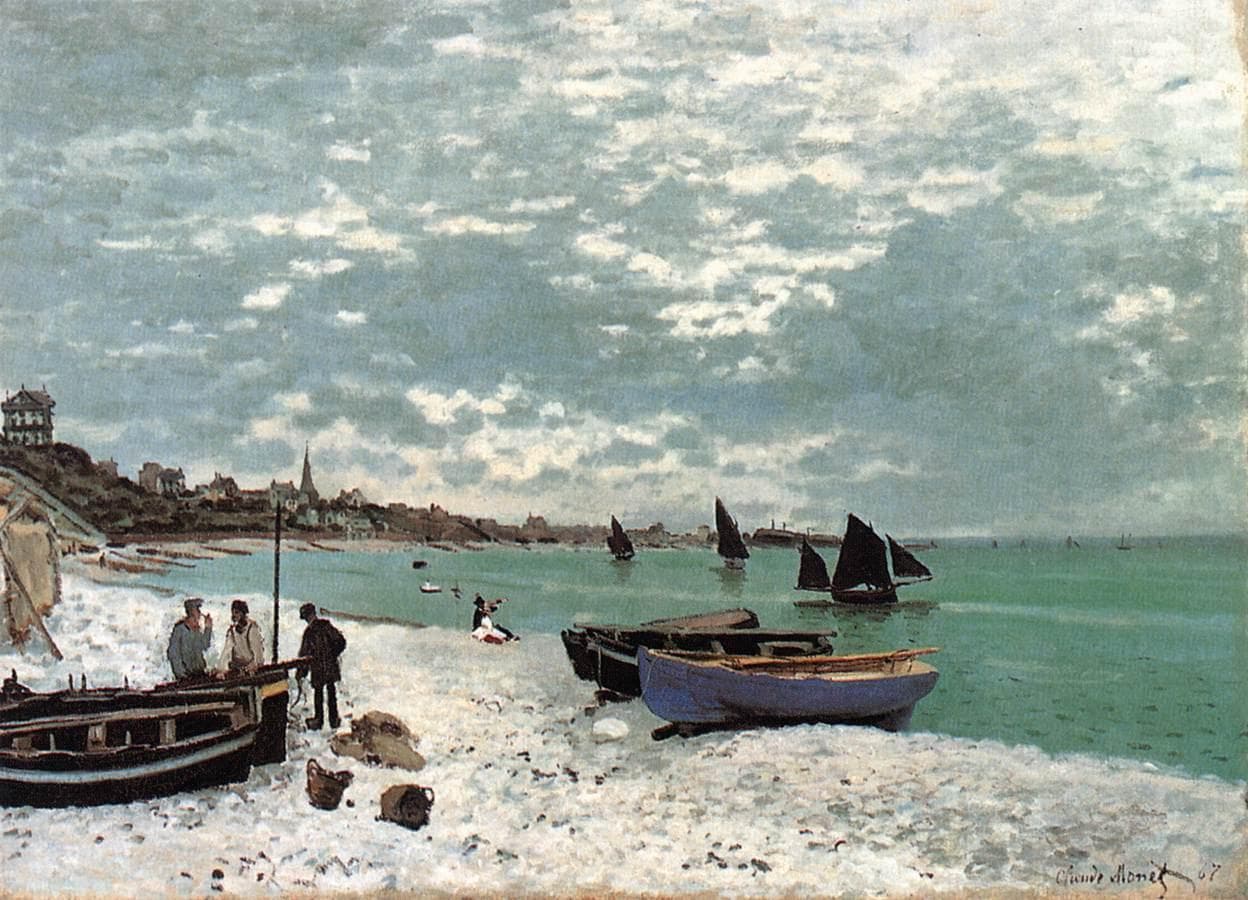
The Beach at Sainte-Adresse
Claude Monet · 1867
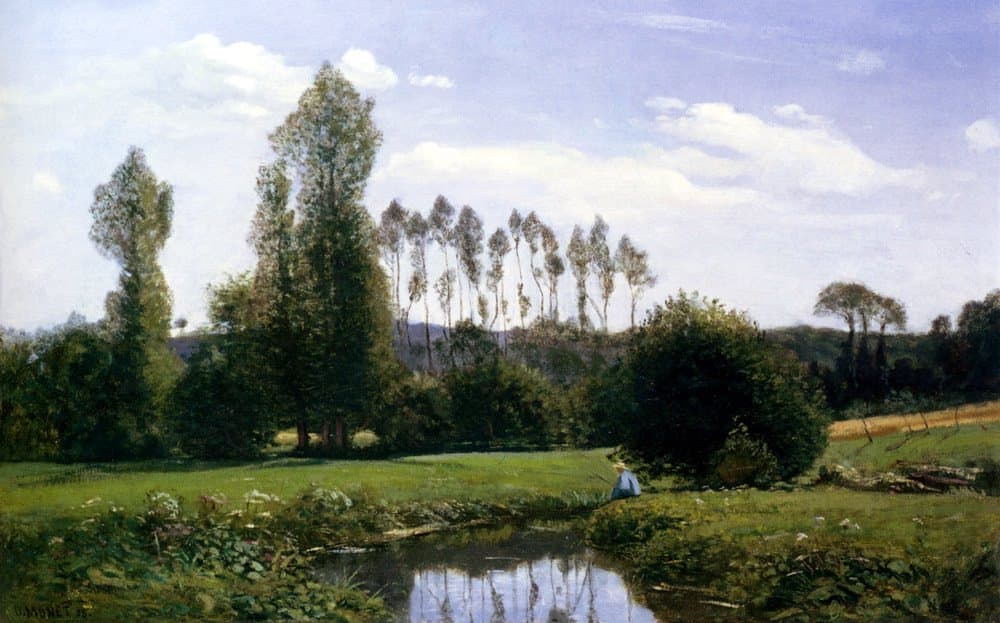
View at Rouelles, Le Havre
Claude Monet · 1858

The Scream
Edvard Munch · 1893

Ophelia
John Everett Millais · 1851–52

The Great Wave off Kanagawa
Katsushika Hokusai · c. 1830–32