Impressionism
Landing Stage at Trouville, Low Tide
Claude Monet, 1870
Landing Stage at Trouville, Low Tide is an 1870 painting by Claude Monet of the wooden jetties at the mouth of the Touques in Normandy, with the sea drawn far back. Painted on his honeymoon summer, it is in the Museum of Fine Arts, Budapest.
- Artist
- Claude Monet
- Date
- 1870
- Medium
- Oil on canvas
- Dimensions
- 54 × 65.7 cm
- Collection
- Museum of Fine Arts (Szépművészeti Múzeum), Budapest, Hungary
- Movement
- Impressionism
- Catalogue
- Wildenstein 154
Painted at Étretat and the Normandy Coast
What you are looking at
Two jetties frame the mouth of a harbor at low tide. On the left a tall dark wall with a railing rises out of the sand, a single figure leaning over it; on the right a long low jetty runs out toward the sea, dotted with tiny strollers. Between them the channel has shrunk to a pale, silvery stream, and fishing boats with brown and white sails wait in it or slip out toward open water. On the sand in the foreground two young anglers, one in a straw hat, cast long rods into the shallows. A rowing boat lies stranded on the right. Above, an overcast sky fills more than half the canvas.
This is Claude Monet's view of the jetties at Trouville, the Normandy seaside resort at the mouth of the river Touques, painted in the summer of 1870. The Museum of Fine Arts in Budapest, the Szépművészeti Múzeum, owns it and catalogues it as Breakwater at Trouville, Low Tide; it measures 54 by 65.7 centimeters. You will also find it under titles such as Landing Stage at Trouville or The Jetties of Trouville at Low Tide.
Looking closely
The composition is a funnel: the dark mass of the left jetty and the long line of the right one converge on the channel, drawing the eye out past the sails to the sea. Against the horizontals of sand, water and the right-hand jetty, Monet sets a rhythm of verticals, the masts and the upright figures of the anglers, which give the picture its pulse. It is a spare, almost graphic arrangement for a painter often associated with lush color.
Look at the wet sand. Monet paints it as a reflective surface, picking up the light of the sky in pale streaks, broken by darker strokes where the mud is exposed. The channel mirrors the sails above it in long wavering reflections. The effect is of a landscape that is neither land nor sea, caught in the hours between tides.
The palette is cool and restrained: greys, buffs, muted blues and the warm brown of weathered wood. There is none of the bright holiday color of Monet's other Trouville pictures. The anglers in the foreground are boys, not fashionable visitors, painted with a few strokes each; the signature and date, "Claude Monet 70," sit just beside them at lower left.
Monet's summer at Trouville
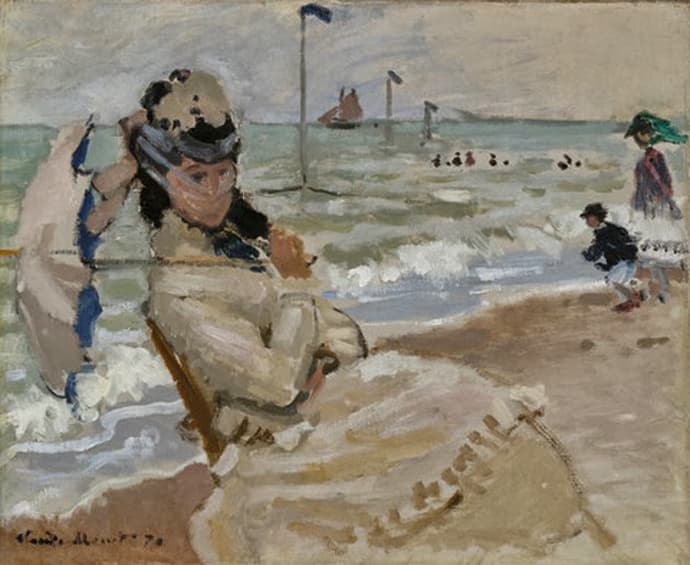
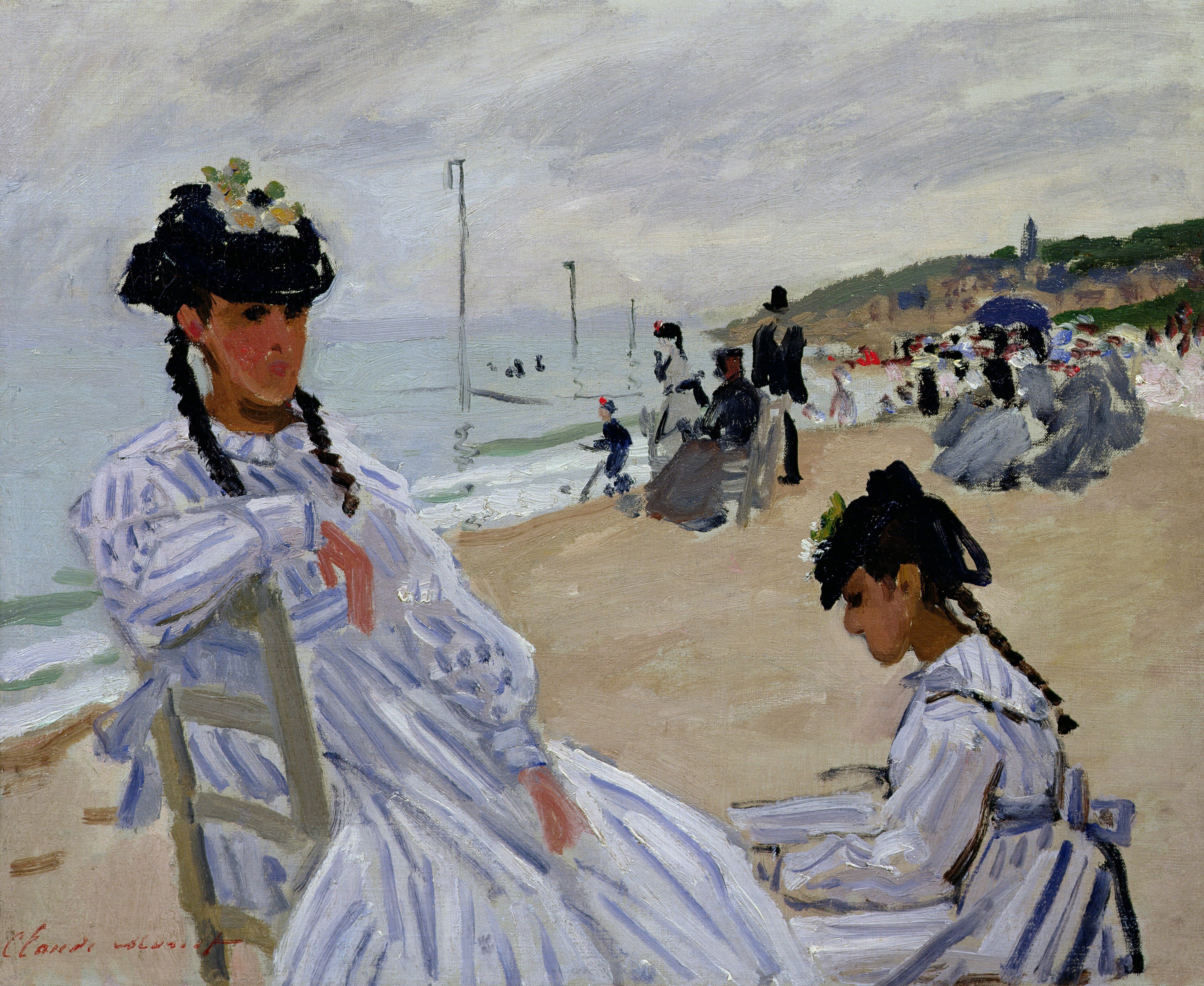
Monet married Camille Doncieux in Paris on 28 June 1870, and the couple, with their young son Jean, spent the summer at Trouville. Eugène Boudin, Monet's first teacher, was there too, and both painters worked on the beach and along the harbor. Monet's Trouville canvases are some of the freshest of his early career: Camille in white on the sand, as in The Beach at Trouville; the flags and terraces of the grand hotel in Hôtel des Roches Noires in Trouville.
This painting is the quiet opposite of those. Where the hotel picture is about holiday crowds and wind-blown flags, the low-tide view turns its back on the resort. As the Budapest museum's catalogue points out, it leaves out the beach crowds altogether; the only people are the anglers and the distant figures on the jetty.
The summer ended abruptly. France declared war on Prussia in July 1870, and by the autumn, with the French army collapsing, Monet left for London, partly to avoid being called up. He would not return to France until late 1871, when he settled at Argenteuil.
How it was painted
Many of the Trouville pictures were painted quickly in the open air, and some still carry grains of sand embedded in the paint, a sign of work done on the spot. This canvas shares their speed: the posts are single strokes, the figures abbreviated, the sky laid in broadly. It is closer to a sketch than to a finished Salon picture, and that was the point. In 1870 the Salon had accepted Monet only intermittently, and works like this were made for himself, for friends and for the few dealers and collectors who were beginning to value directness over finish. Within two years, through the dealer Paul Durand-Ruel, whom Monet met in London that winter, there would be a market for exactly this kind of picture.
The low-tide motif was one he returned to throughout his life, from La Pointe de la Hève at Low Tide in the 1860s to the Rocks near Pourville at Ebb Tide of the 1880s. He was fascinated by the way the coast changed shape twice a day, and by the reflective light of wet sand.
Meaning
There is no hidden symbolism in the picture, but there is an attitude. A conventional marine painter of the time would have shown ships, storms or a picturesque harbor. Monet paints the in-between state of a working estuary, with the tide out and the structures left high and dry. It is an image of ordinary time, and its interest lies in light and surface. That attention to transient conditions is the core of what would soon be called Impressionism.
Where to see it
The painting is in the Museum of Fine Arts (Szépművészeti Múzeum) in Budapest, which holds one of the most important collections of French nineteenth-century painting in Central Europe. Check the museum's website for current display. For more of Monet's Normandy coast, see our guide to famous Monet paintings.
Questions & answers
Where is Monet's Landing Stage at Trouville, Low Tide?
It is in the Museum of Fine Arts (Szépművészeti Múzeum) in Budapest, which catalogues it as Breakwater at Trouville, Low Tide. The canvas measures 54 by 65.7 centimeters and dates from the summer of 1870.
When did Monet paint at Trouville?
Monet spent the summer of 1870 at Trouville with his new wife Camille and their son Jean, after their wedding in Paris on 28 June. Eugène Boudin was there too. The Franco-Prussian War soon ended the stay, and Monet left for London that autumn.
What does the painting show?
It shows the harbor mouth of the river Touques with the tide out: a tall jetty on the left, a long low one on the right, and sailing boats in the narrowed channel between them. Two boys fish from the sand in the foreground. The beach crowds of Monet's other Trouville scenes are absent.
Is it the same as Monet's Beach at Trouville?
No. The Beach at Trouville, in London's National Gallery, shows Camille and a companion seated on the sand. This painting shows the harbor jetties at low tide. Both were painted in the same summer of 1870.
More by the artist
Claude Monet

Bridge over a Pond of Water Lilies
Claude Monet · 1899

Woman with a Parasol – Madame Monet and Her Son
Claude Monet · 1875

Sunset in Venice
Claude Monet · 1908–12

La Grenouillère
Claude Monet · 1869

Beach in Pourville
Claude Monet · 1882

Springtime
Claude Monet · 1872

Boating on the River Epte
Claude Monet · 1890

The Seine at Asnières (Hermitage)
Claude Monet · 1873
Also painted in 1870
The same year
Kindred works
You may also study
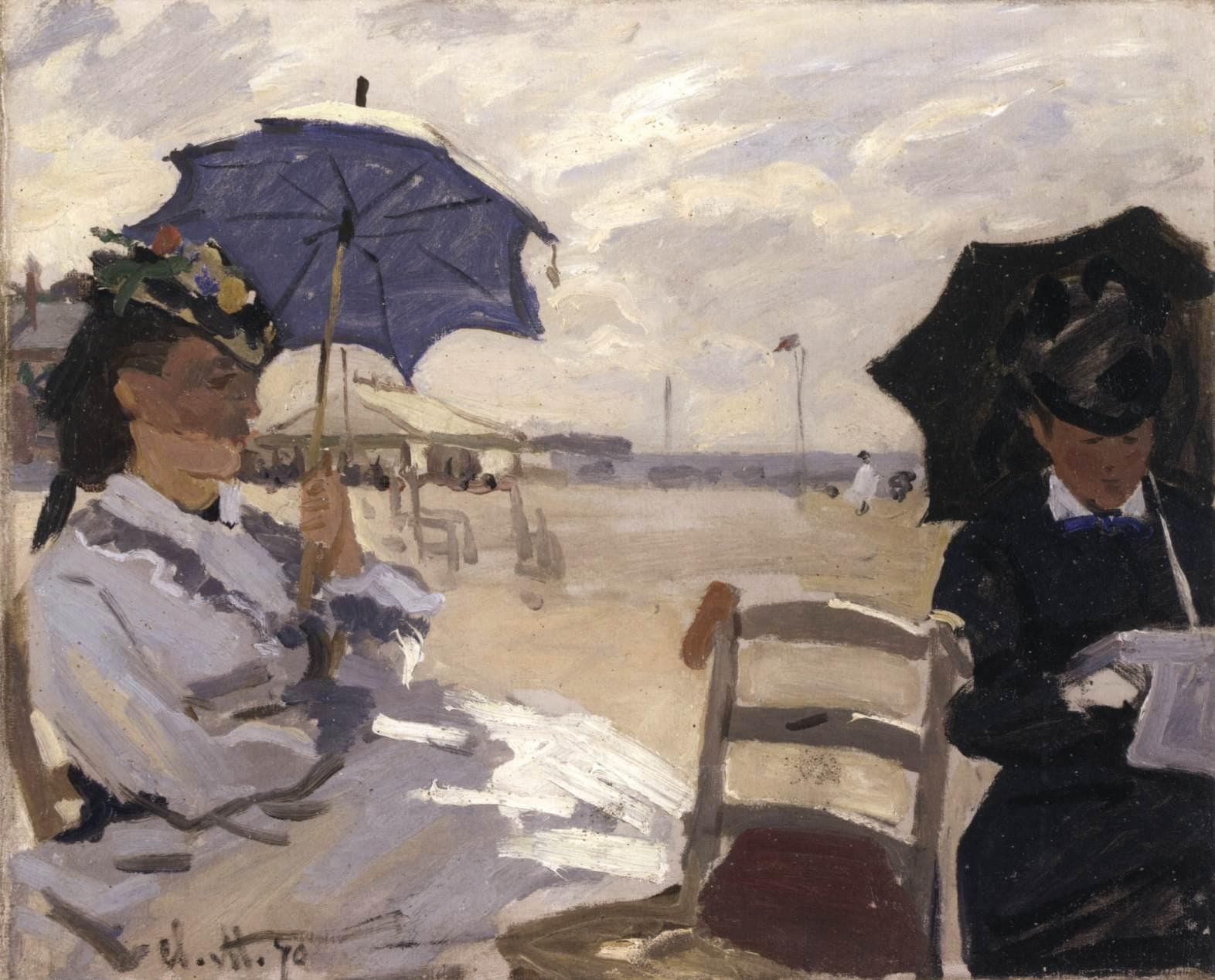
The Beach at Trouville
Claude Monet · 1870
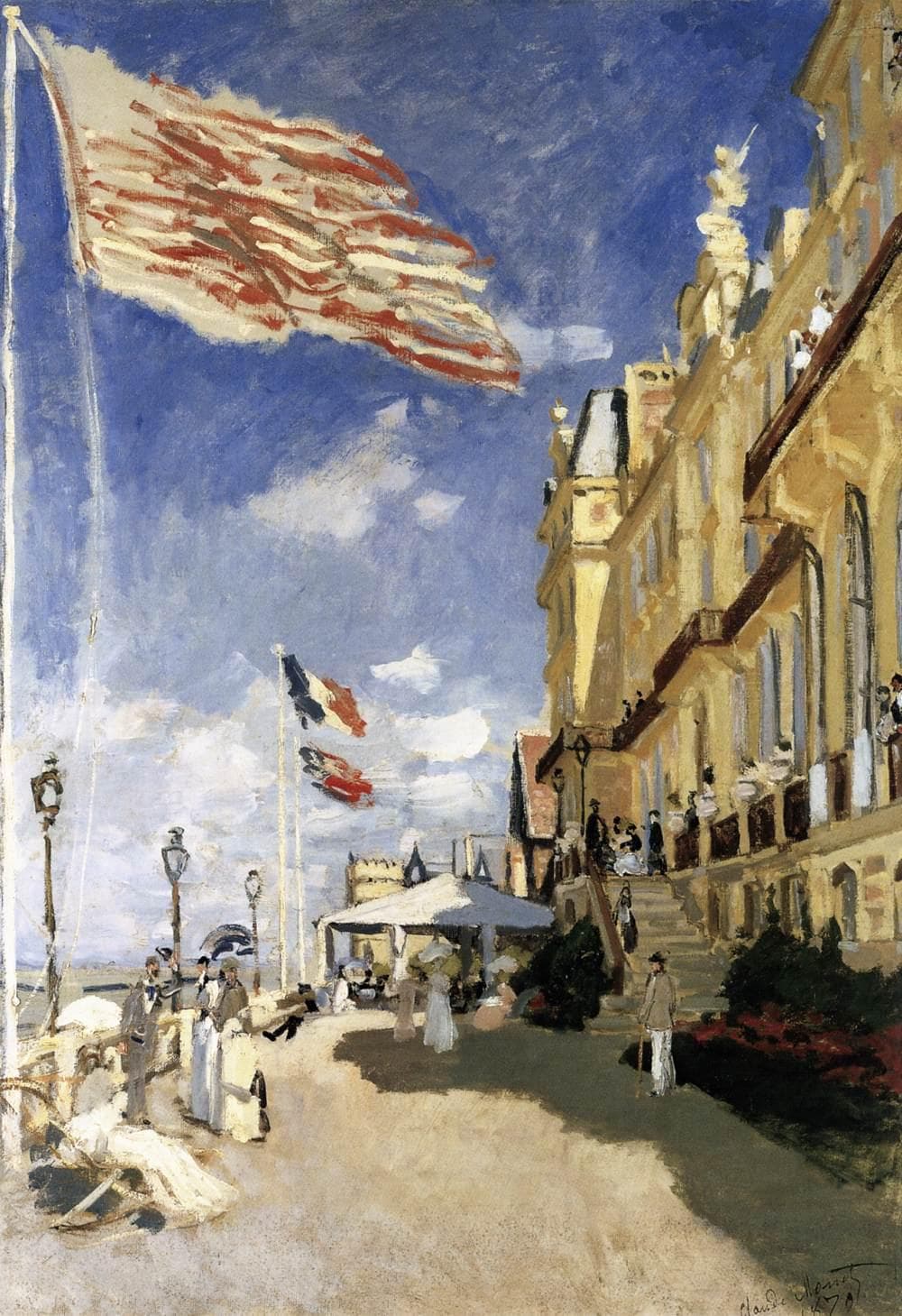
The Hôtel des Roches Noires, Trouville
Claude Monet · 1870
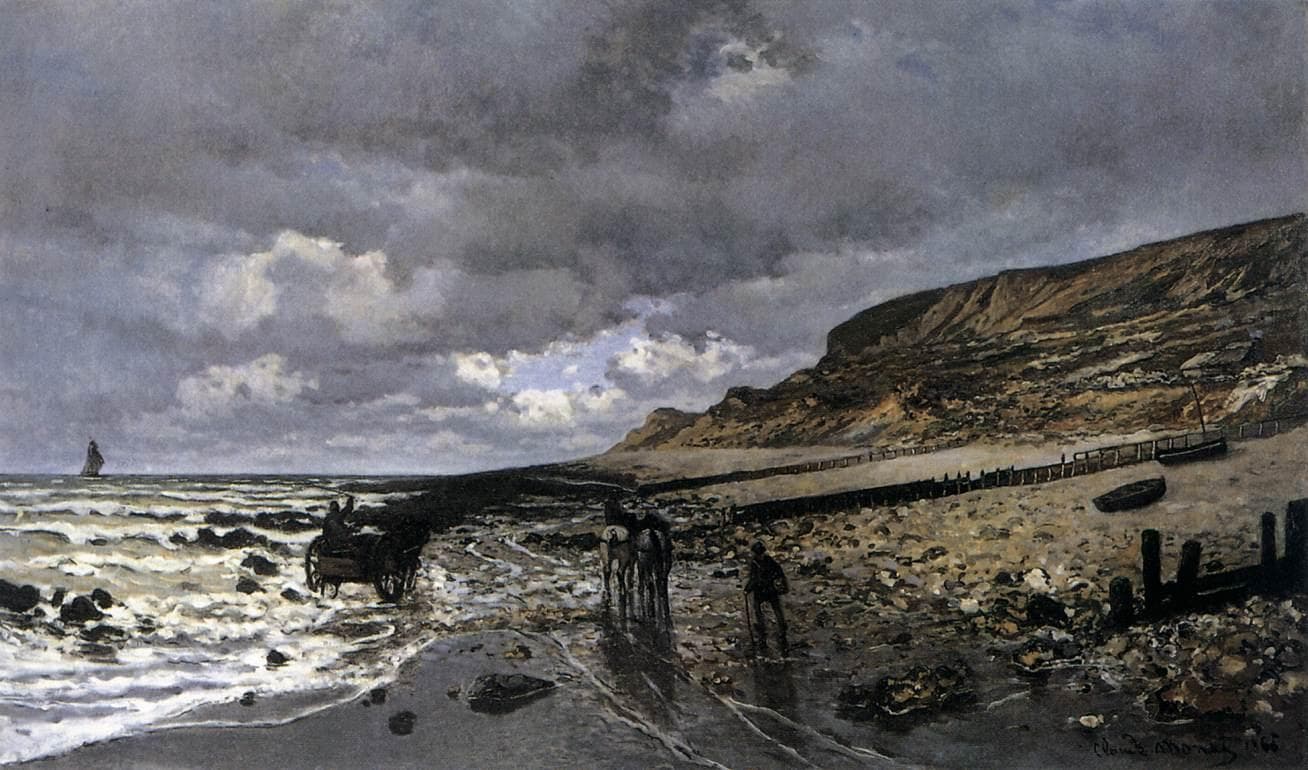
La Pointe de la Hève at Low Tide
Claude Monet · 1865
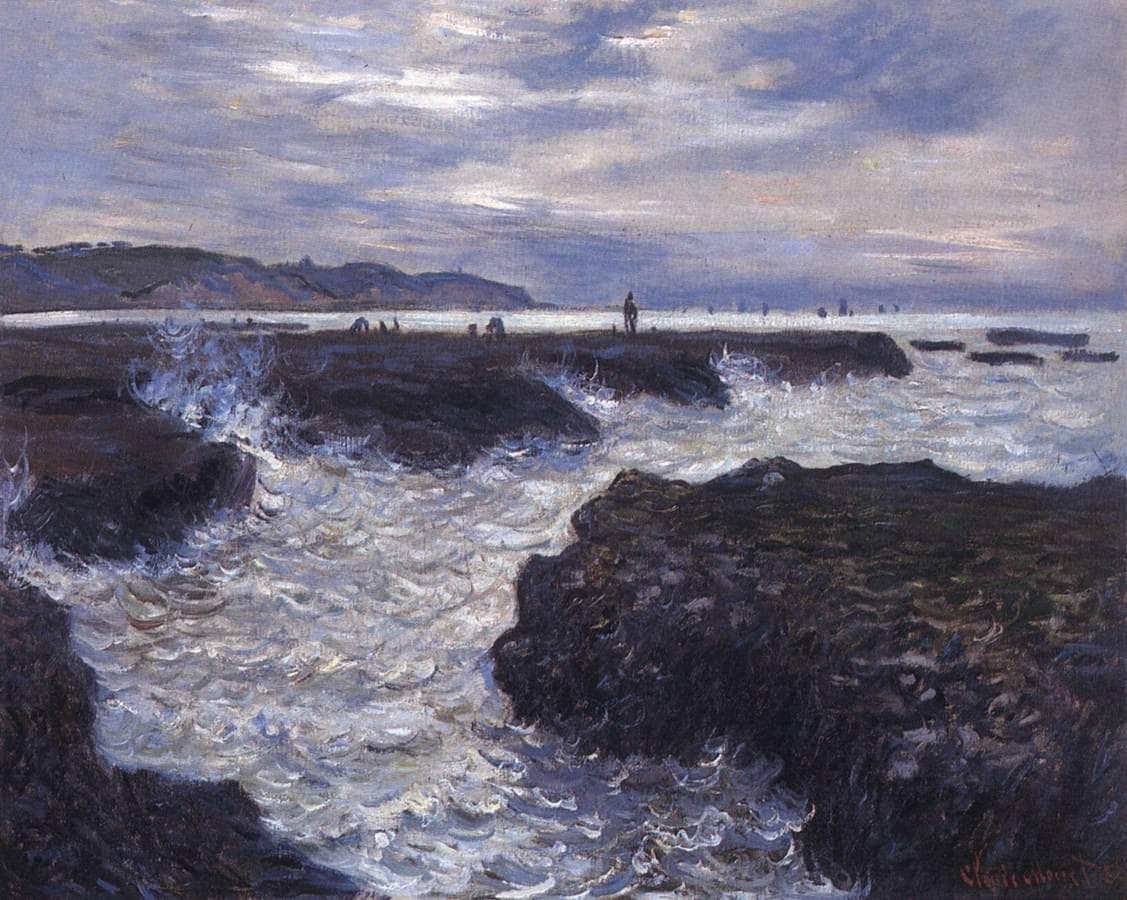
The Rocks at Pourville, Low Tide
Claude Monet · 1882
Fishing Boats at Honfleur
Claude Monet · c. 1868

The Scream
Edvard Munch · 1893

Ophelia
John Everett Millais · 1851–52

The Great Wave off Kanagawa
Katsushika Hokusai · c. 1830–32