Impressionism
Impression, Sunrise
Claude Monet, 1872
Impression, Sunrise is Claude Monet's 1872 view of the port of Le Havre at dawn, an orange sun over blue-gray haze. Its title gave Impressionism its name in 1874. It hangs in the Musée Marmottan Monet in Paris.
- Artist
- Claude Monet
- Date
- 1872
- Medium
- Oil on canvas
- Dimensions
- 50 × 65 cm
- Collection
- Musée Marmottan Monet, Paris, France
- Movement
- Impressionism
- Catalogue
- Wildenstein W 263
Painted at Étretat and the Normandy CoastMore at Musée Marmottan Monet
Impression, Sunrise (Impression, soleil levant) is the painting that gave Impressionism its name. Claude Monet painted it in 1872 from a hotel window overlooking the port of Le Havre, and it now hangs in the Musée Marmottan Monet in Paris. The canvas is small, 50 by 65 centimeters, and the museum believes it was painted in a few hours.
What does Impression, Sunrise show?
We look southeast across the outer harbor of Le Havre at first light. Water and sky are nearly the same substance: a smoky blue-gray, warmed toward the top by streaks of salmon pink where the dawn is coming through. The far side of the port is a ghost. Masts and rigging stand at the left, a tall chimney sends a plume of blue smoke into the air, and at the right the angled arms of cranes rise over a quay that, according to the Marmottan, was then under construction.
Low in the sky sits a small, flat disc of orange. Below it, the reflection breaks into a ladder of short horizontal dabs that run down the water toward us. In the foreground three boats float on the swell. The nearest is a dark silhouette with a standing oarsman and a seated passenger, the second is a blur of a few figures, and the third, at far left, is so faint it is almost a blue smudge. These are the ferrymen who rowed people across the harbor.
The water around the boats is built from loose, curling strokes of blue, green and violet laid over a thin gray ground that shows through in many places. Nothing is drawn. The masts are single drags of a brush, and the chimney smoke is a twist of paint that has not quite been blended into the sky.
The detail that makes the picture work is one most viewers never notice. The Harvard neurobiologist Margaret Livingstone pointed out that the orange sun has almost exactly the same luminance as the gray sky around it. In a black-and-white photograph it nearly disappears. Our eyes register it by hue alone, not by brightness, which is why it seems to pulse and flicker when you look straight at it.
Where and when was it painted?
Le Havre was the town where Monet grew up, and he returned there often in the early 1870s. The Marmottan places this canvas during a stay around November 1872 at the Hôtel de l'Amirauté, on the quay, with the painter working from the window of his room. The view takes in the quai au Bois at left and the quai Courbe at right, with the central gap marking the lock that let transatlantic steamers into the inner basin.
In 2014 the astrophysicist Donald Olson and his colleagues compared the sun's position, tide tables and weather records and proposed a precise moment: 13 November 1872, at about 7:35 in the morning. That is a hypothesis, not a document, but it fits the museum's reading of the scene. The signature at lower left reads "Claude Monet," and the museum notes that the date "72" was added later, which is one reason the dating was argued over for decades.
Monet painted the same harbor at night in The Port of Le Havre, Night Effect, and returned in 1874 for views such as Fishing Boats Leaving the Harbor, Le Havre. More of his home coast is gathered on our Normandy coast page.
How was it painted?
This is a sketch in the strict sense, and Monet knew it. The paint is thin and fast, with the canvas texture visible through the sky. According to the Marmottan, the ferry boats, the bright sun and its reflection were added at the end, as the final accents over a picture that was already mostly a field of tone. That order of work explains why the boats sit on the surface so crisply while the port behind them dissolves.
The palette is tiny: lead white, a few blues, a little green, and the orange and pink of the sunrise. Monet keeps the warm color in two places only, the sky and the reflection, so that the eye travels up and down that single orange path.
How did Impression, Sunrise give Impressionism its name?
In April 1874 Monet and his friends, including Renoir, Pissarro, Degas, Sisley and Morisot, held an independent exhibition in the former studios of the photographer Nadar on the boulevard des Capucines. Monet also showed Boulevard des Capucines, painted from those same rooms. Asked for a catalogue title, he decided this canvas could not pass as a proper "view of Le Havre" and called it Impression; in an interview of 1898 he recalled simply telling the cataloguer, "Put Impression."
The word was already studio slang for a quick record of atmosphere. On 25 April 1874 the critic Louis Leroy turned it into a joke in the satirical paper Le Charivari, under the headline "The Exhibition of the Impressionists." A few days later the sympathetic critic Jules-Antoine Castagnary used the same word with approval, and the name stuck to the whole group and later to the movement.
Who owned it, and where is it now?
The department-store magnate Ernest Hoschedé bought the painting soon after the exhibition. After his bankruptcy it was sold in 1878 to the Romanian-born physician and collector Georges de Bellio, a friend and patron of Monet. It passed to his daughter Victorine and her husband Eugène Donop de Monchy, who gave it to the Musée Marmottan in 1940.
On 27 October 1985 armed robbers walked into the museum during opening hours and took Impression, Sunrise with eight other works. The paintings were recovered in Corsica in December 1990, and the picture went back on the wall. Today it is the centerpiece of the Marmottan's Monet collection, the largest in the world, hung near the late Giverny canvases that show how far he traveled from this small harbor at dawn.
Questions & answers
Where is Impression, Sunrise today?
It hangs in the Musée Marmottan Monet in Paris, inventory number 4014. Eugène and Victorine Donop de Monchy, the daughter and son-in-law of the collector Georges de Bellio, gave it to the museum in 1940. It was stolen in an armed robbery in 1985 and recovered in Corsica in 1990, and it is now the museum's best-known picture.
When and where did Monet paint Impression, Sunrise?
He painted it at Le Havre, the Normandy port where he grew up, from a window of the Hôtel de l'Amirauté overlooking the outer harbor. The museum dates it to around November 1872. Astronomers led by Donald Olson proposed in 2014 that it shows the morning of 13 November 1872, at about 7:35, though that remains a hypothesis.
What does Impression, Sunrise mean?
It is less a view of a place than a record of a moment of light: dawn fog over an industrial harbor, with a small orange sun and ferry boats. Monet titled it Impression because he felt it was too sketchy to call a view of Le Havre. The critic Louis Leroy mocked the word in 1874, and it became the name of Impressionism.
Did Monet paint other versions of Impression, Sunrise?
There is no second version of this exact picture, but Monet painted the port of Le Havre several times in 1872 to 1874, including The Port of Le Havre, Night Effect, a dark night view of the same harbor, and Fishing Boats Leaving the Harbor of 1874. Impression, Sunrise is the only one of them shown under the title Impression.
More by the artist
Claude Monet

Bridge over a Pond of Water Lilies
Claude Monet · 1899

Woman with a Parasol – Madame Monet and Her Son
Claude Monet · 1875

Sunset in Venice
Claude Monet · 1908–12

La Grenouillère
Claude Monet · 1869

Beach in Pourville
Claude Monet · 1882

Springtime
Claude Monet · 1872

Boating on the River Epte
Claude Monet · 1890

The Seine at Asnières (Hermitage)
Claude Monet · 1873
Also painted in 1872
The same year
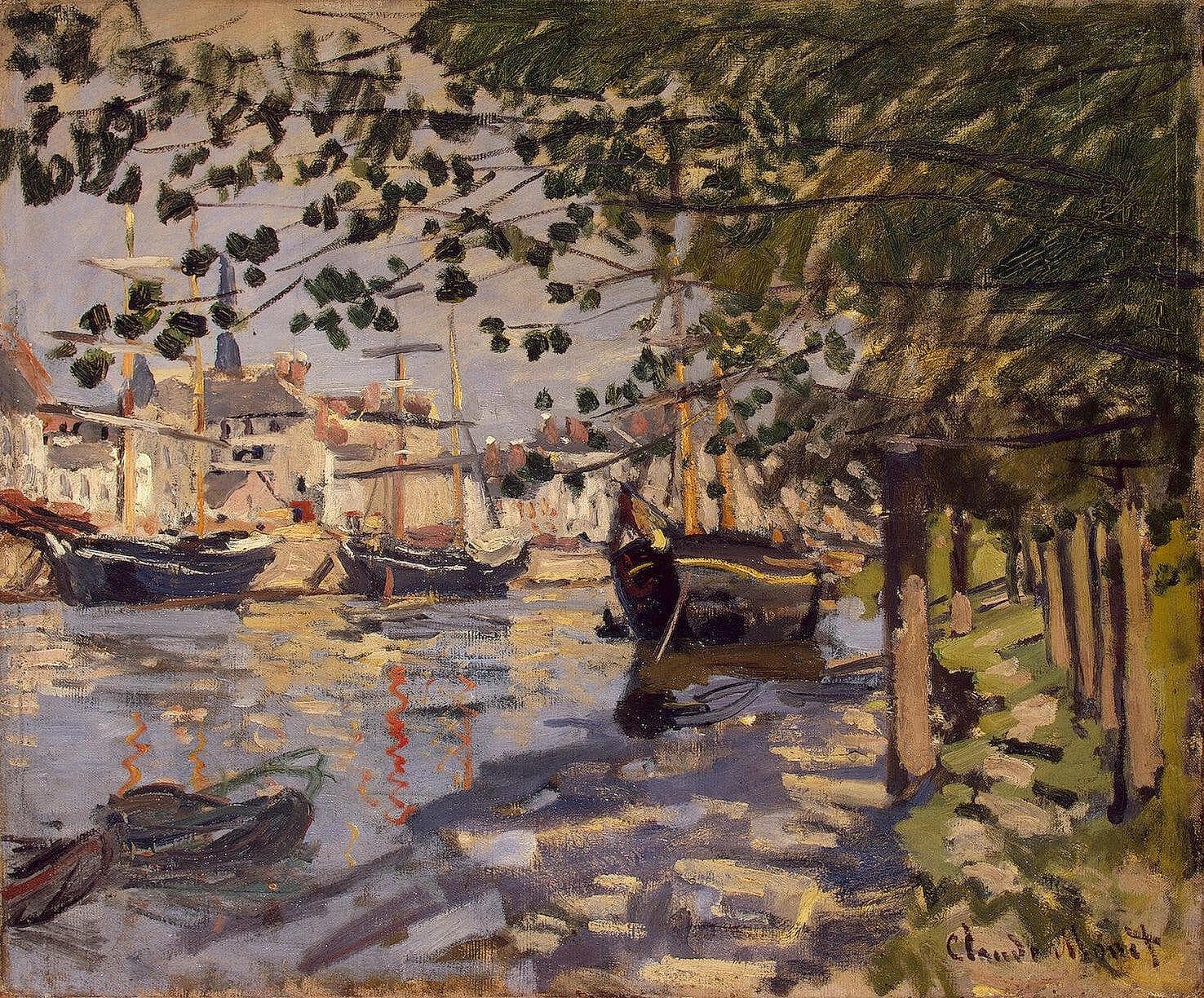
The Seine at Rouen
Claude Monet · 1872
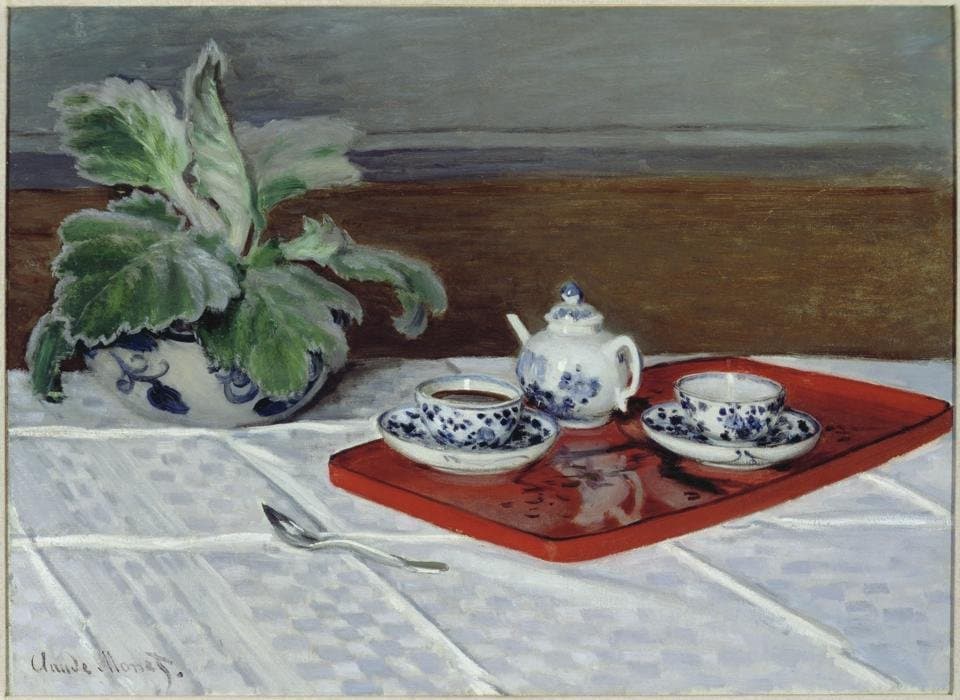
The Tea Service
Claude Monet · 1872
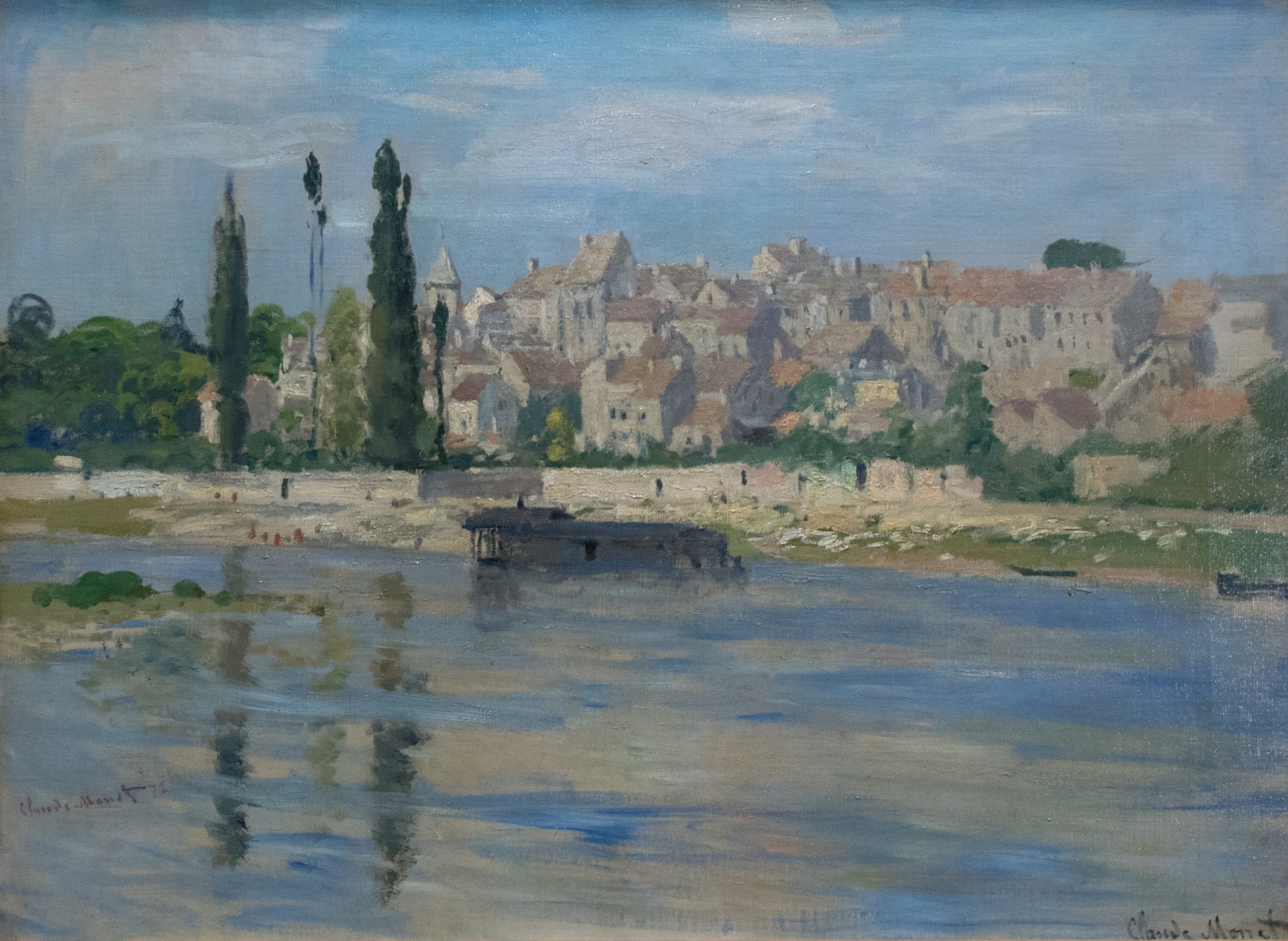
Carrières-Saint-Denis
Claude Monet · 1872
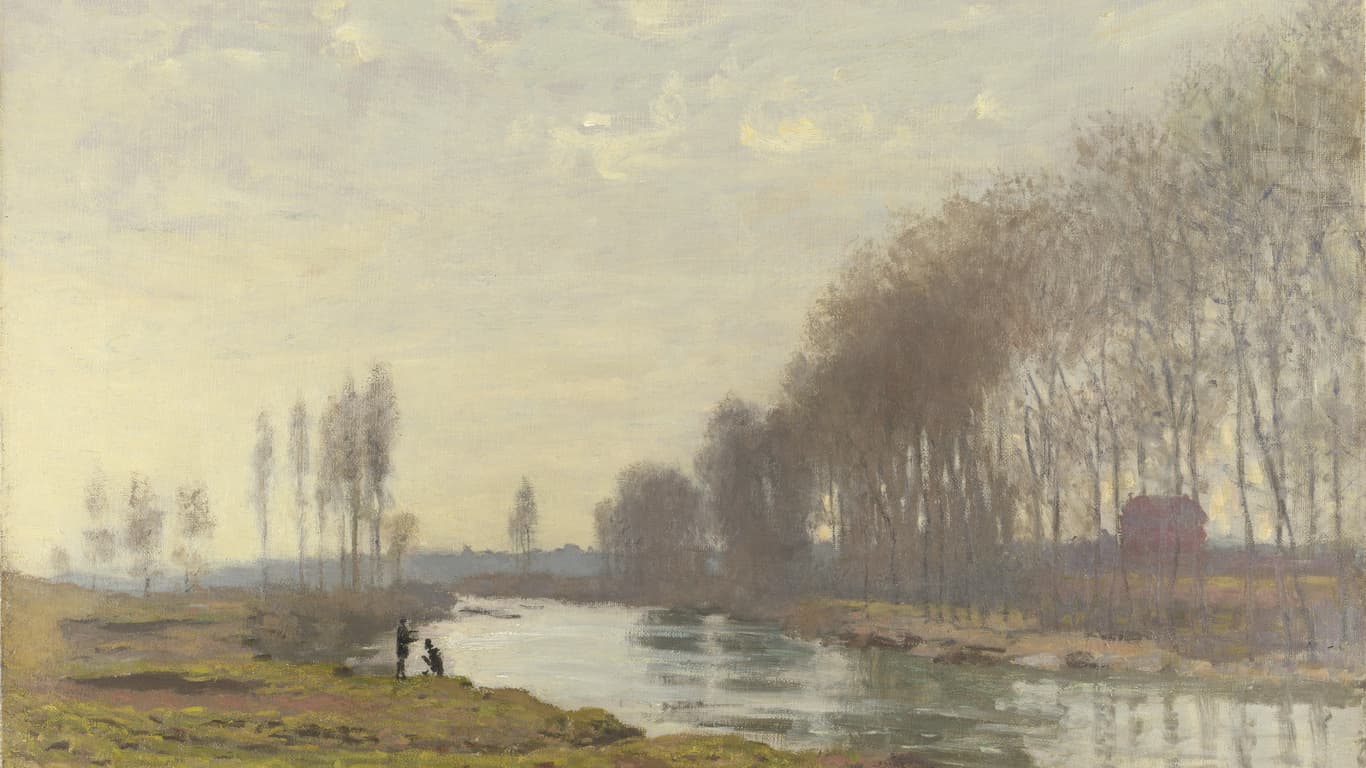
The Petit Bras of the Seine at Argenteuil
Claude Monet · 1872
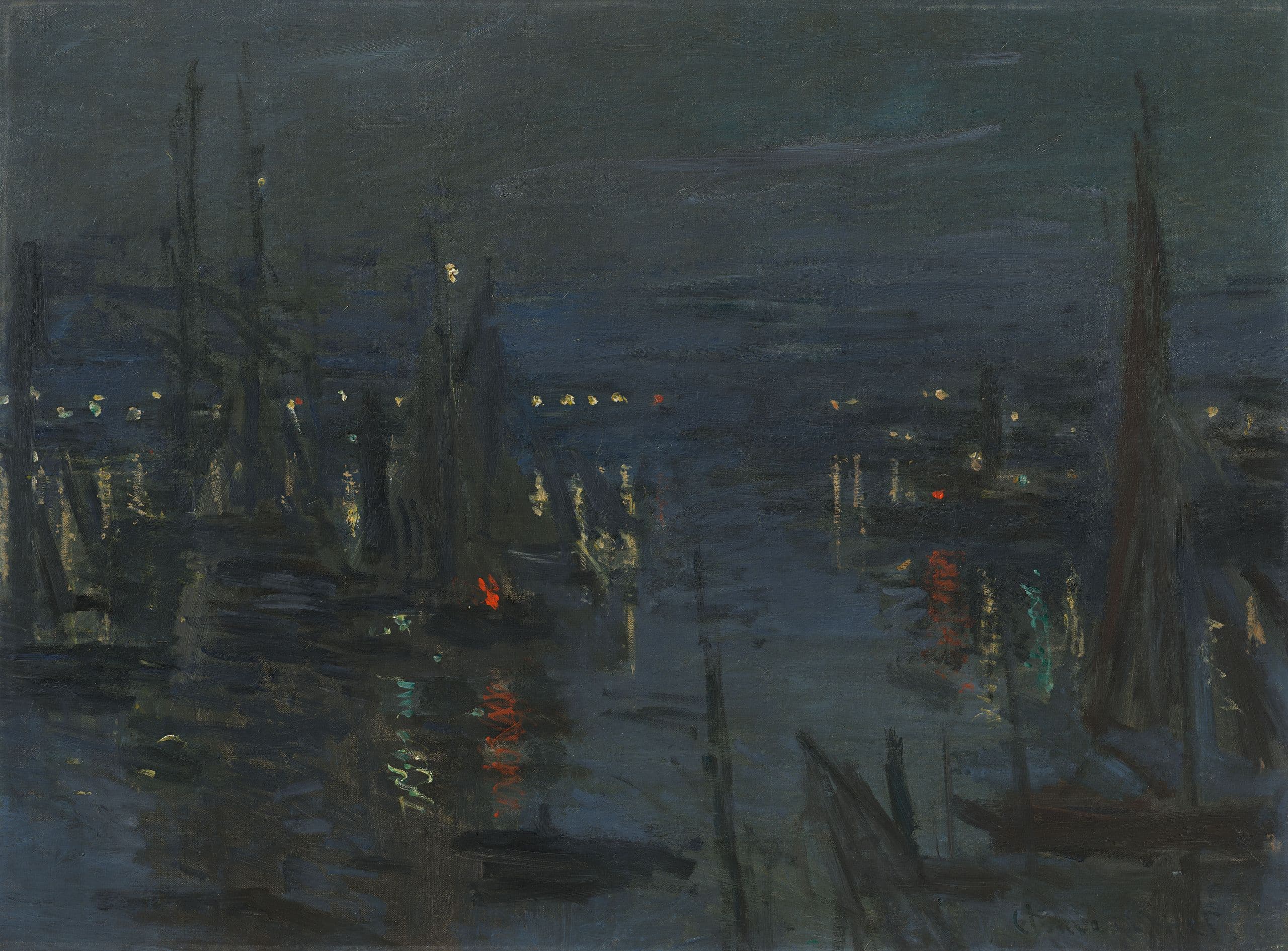
The Port of Le Havre, Night Effect
Claude Monet · 1872
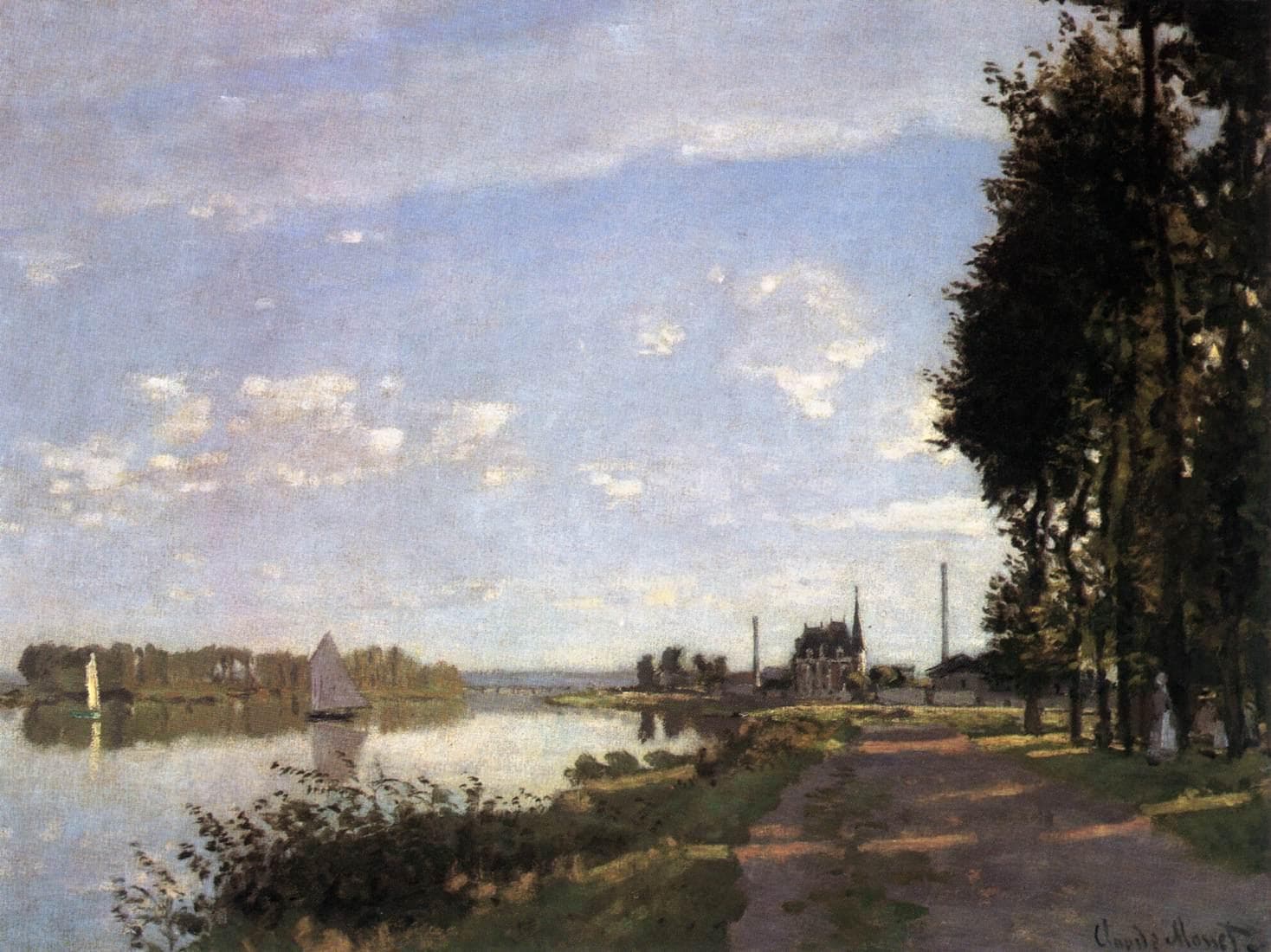
Riverside Path at Argenteuil
Claude Monet · c. 1872
The Basin at Argenteuil
Claude Monet · 1872
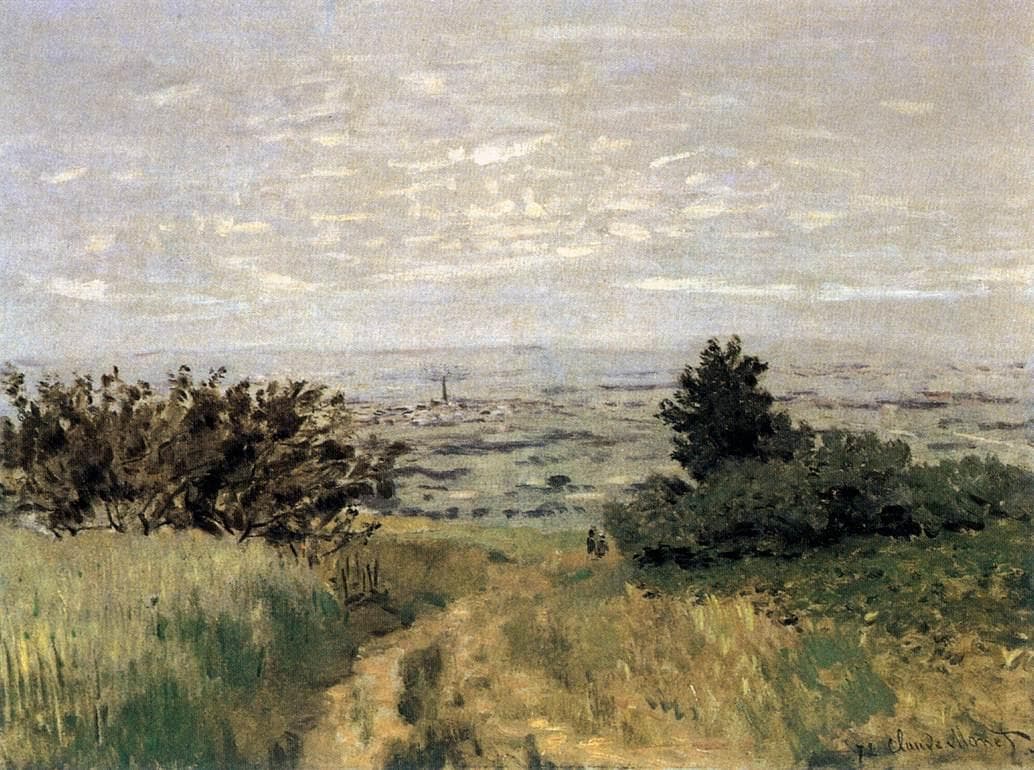
The Plain of Sannois at Argenteuil
Claude Monet · 1872
Kindred works
You may also study
The Port of Le Havre, Night Effect
Claude Monet · 1872
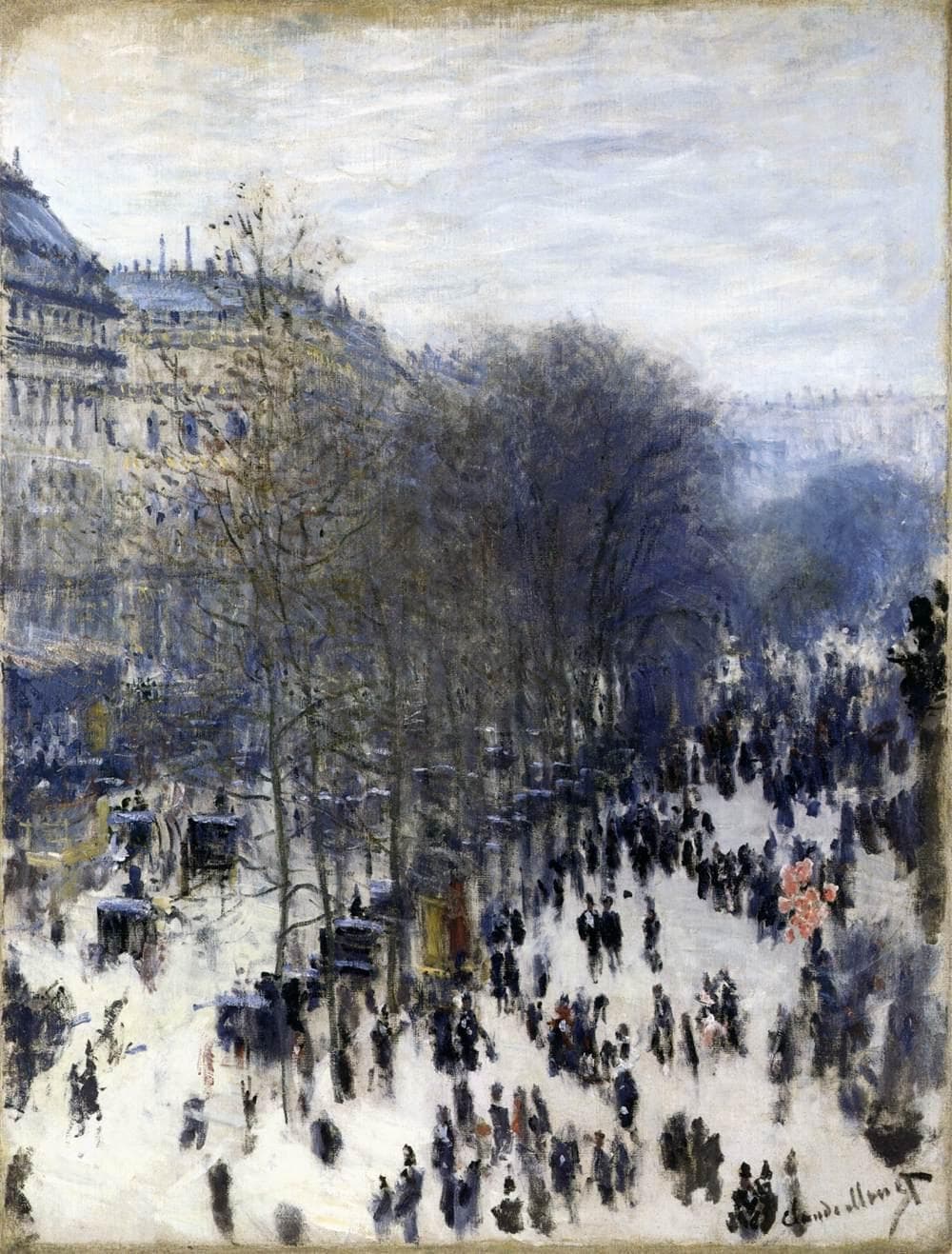
Boulevard des Capucines
Claude Monet · 1873–74
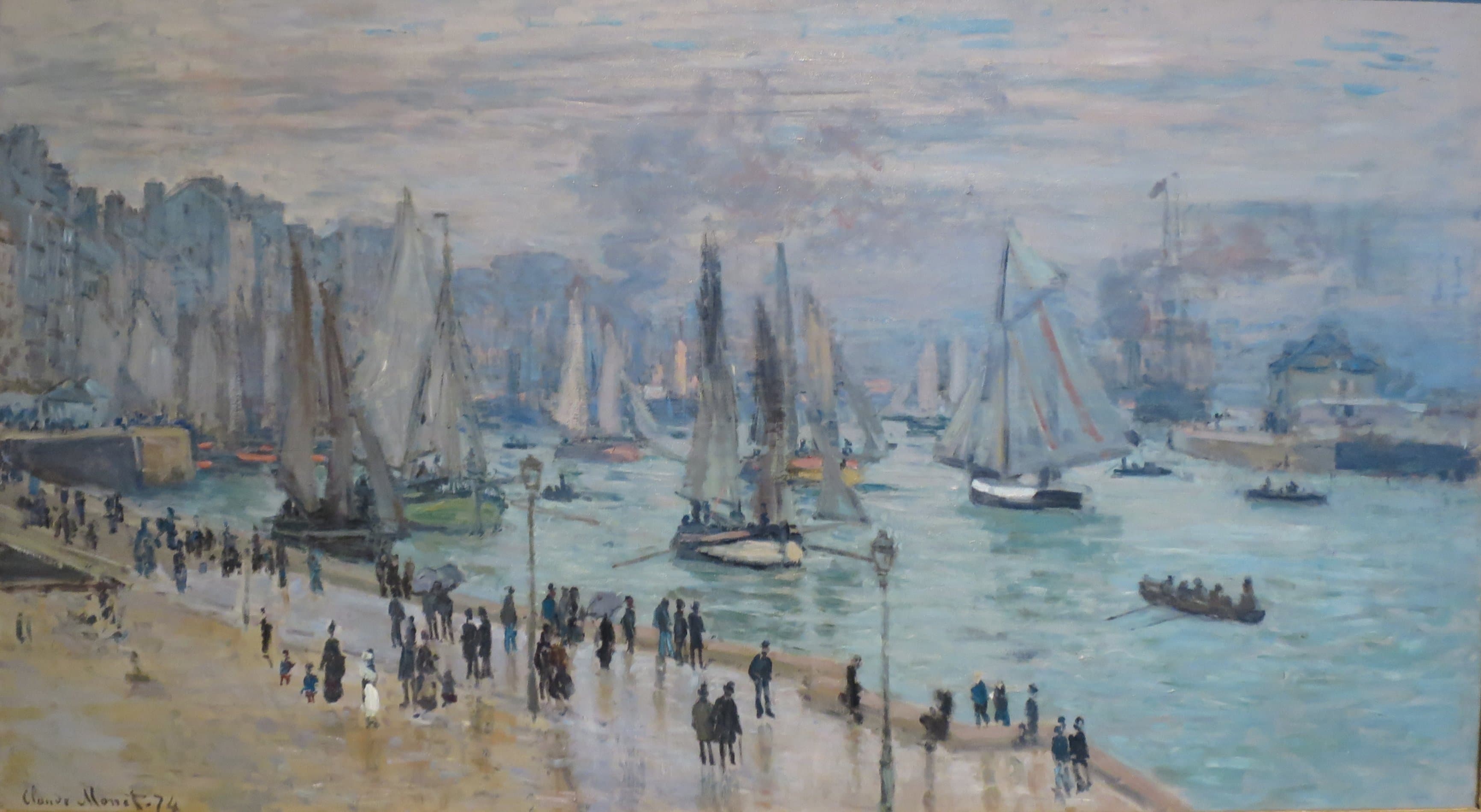
Fishing Boats Leaving the Harbor, Le Havre
Claude Monet · 1874
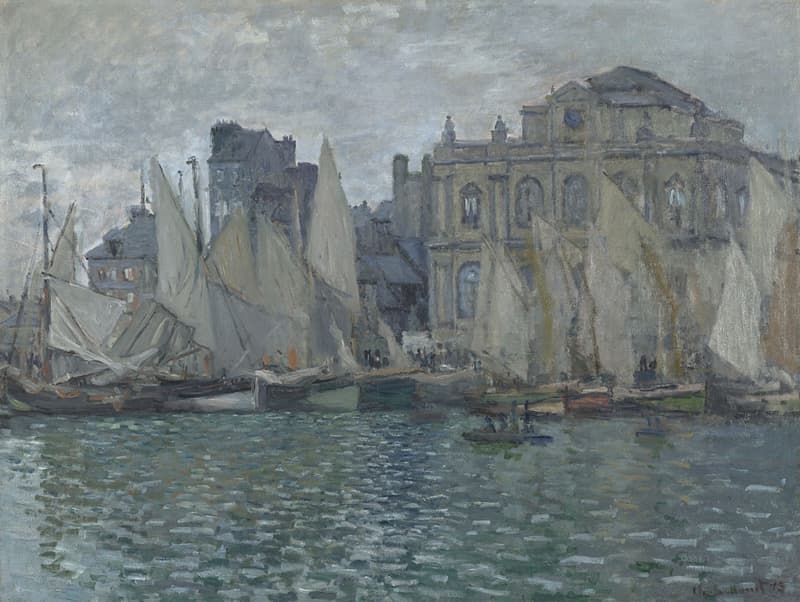
The Museum at Le Havre
Claude Monet · 1873

Ophelia
John Everett Millais · 1851–52

The Great Wave off Kanagawa
Katsushika Hokusai · c. 1830–32
The Birth of Venus
Sandro Botticelli · c. 1484–1486
Liberty Leading the People
Eugène Delacroix · 1830