Impressionism
The Cliffs at Étretat
Claude Monet, 1885
The Cliffs at Étretat (Les Falaises à Étretat) is an 1885 painting by Claude Monet of the Aiguille needle and the Porte d'Aval arch glowing in low sun on the Normandy coast. It is in the Clark Art Institute, Williamstown, Massachusetts.
- Artist
- Claude Monet
- Date
- 1885
- Medium
- Oil on canvas
- Dimensions
- 65 × 81.1 cm
- Collection
- Clark Art Institute, Williamstown, Massachusetts, United States
- Movement
- Impressionism
- Catalogue
- Wildenstein 1034
Painted at Étretat and the Normandy Coast
What you are looking at
Two great forms of chalk rise from a calm sea. On the left stands the Aiguille, the "needle," a free-standing pinnacle of rock, its top lit gold and pink, its base in cool green-grey shadow. On the right, the cliff of the Porte d'Aval curves down into the water in a huge arch, a buttress of stone with daylight showing through it. Closer to us, at far right, a heavy fallen boulder streaked with ochre and lilac sits on the beach, and a strip of warm, pinkish sand runs along the bottom edge.
Between the rocks the sea is pale green-blue, shot with light, and on the horizon a scatter of small boats with red sails crosses the water, with one dark rowing boat closer in. The sky is soft blue with drifting pink clouds. Monet signed and dated the canvas "Claude Monet 85" at lower right.
Claude Monet painted the view in 1885 at Étretat on the Normandy coast. The canvas measures 65 by 81.1 centimeters, is number 1034 in Wildenstein's catalogue, and belongs to the Clark Art Institute in Williamstown, Massachusetts.
Where and when
Étretat, north of Le Havre, sits in a bay between two chalk headlands. The western one, the Falaise d'Aval, ends in the arch of the Porte d'Aval with the Aiguille, some fifty meters high, standing in the sea beside it. Monet had painted here in 1868–69 and in February 1883. In October 1885 he came back and stayed until mid-December, lodging in a house lent by the baritone and collector Jean-Baptiste Faure. See Étretat and the Normandy Coast.
It was his longest campaign on this coast, and he painted the arches and the needle from every angle he could reach, sometimes at real risk. In late November a wave caught him on the beach below the Manneporte, swept him off his feet and carried away his easel and paints. The writer Guy de Maupassant, who had a house at Étretat, described Monet at work that autumn, followed by children carrying five or six canvases, waiting for the light and switching from one to another as it changed.
How it was painted
The sunlight is low and comes from the left, catching only the tops of the rocks. Look at the Aiguille: its shadowed lower part is painted in cool greys and greens, its lit summit in warm pinks and yellows laid thickly, and the line between them is the line of the sun. Monet uses the same split on the arch and the cliff face, where the lit crest is a crust of orange and cream above walls of horizontal grey-green strokes that follow the chalk's flint bands.
The sea is made of short horizontal strokes of blue, green, lilac and white, set close together and getting finer toward the horizon; nothing is blended. The boats are dots of red, and their presence tells us how big the rocks are. The pink of the sand echoes the pink of the lit rock, so warm color frames the cool sea on both sides.
The motif and its siblings
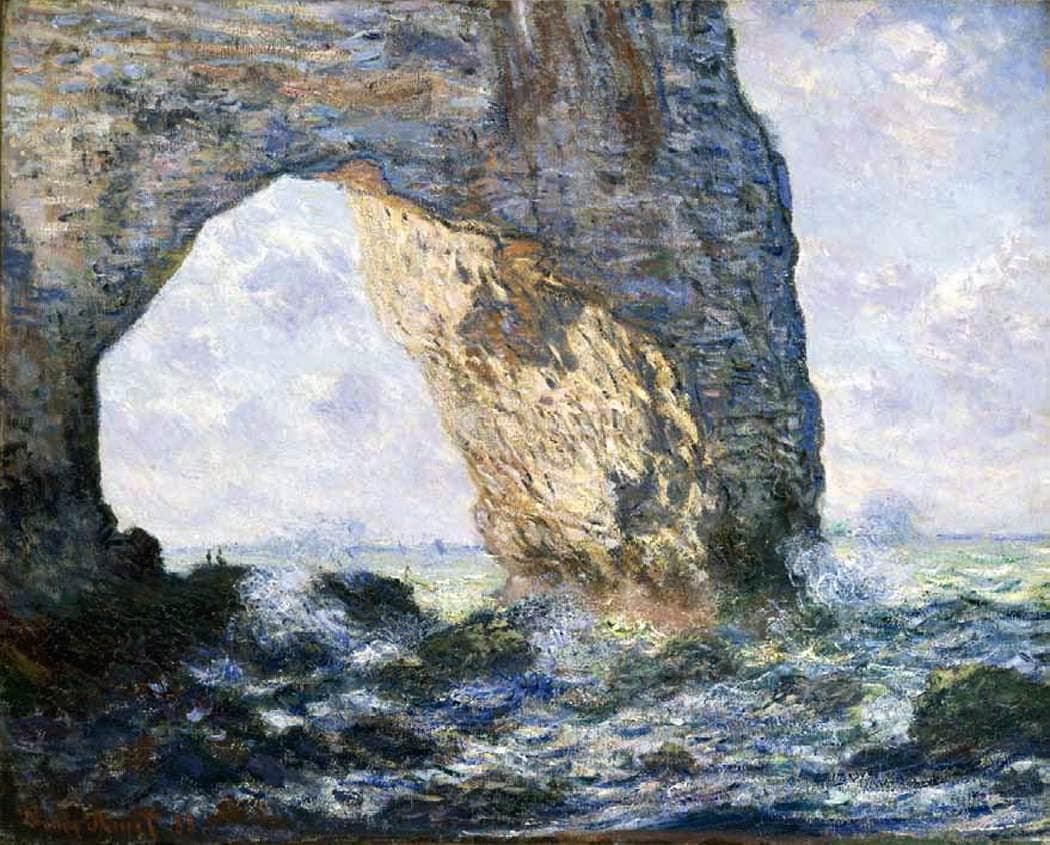
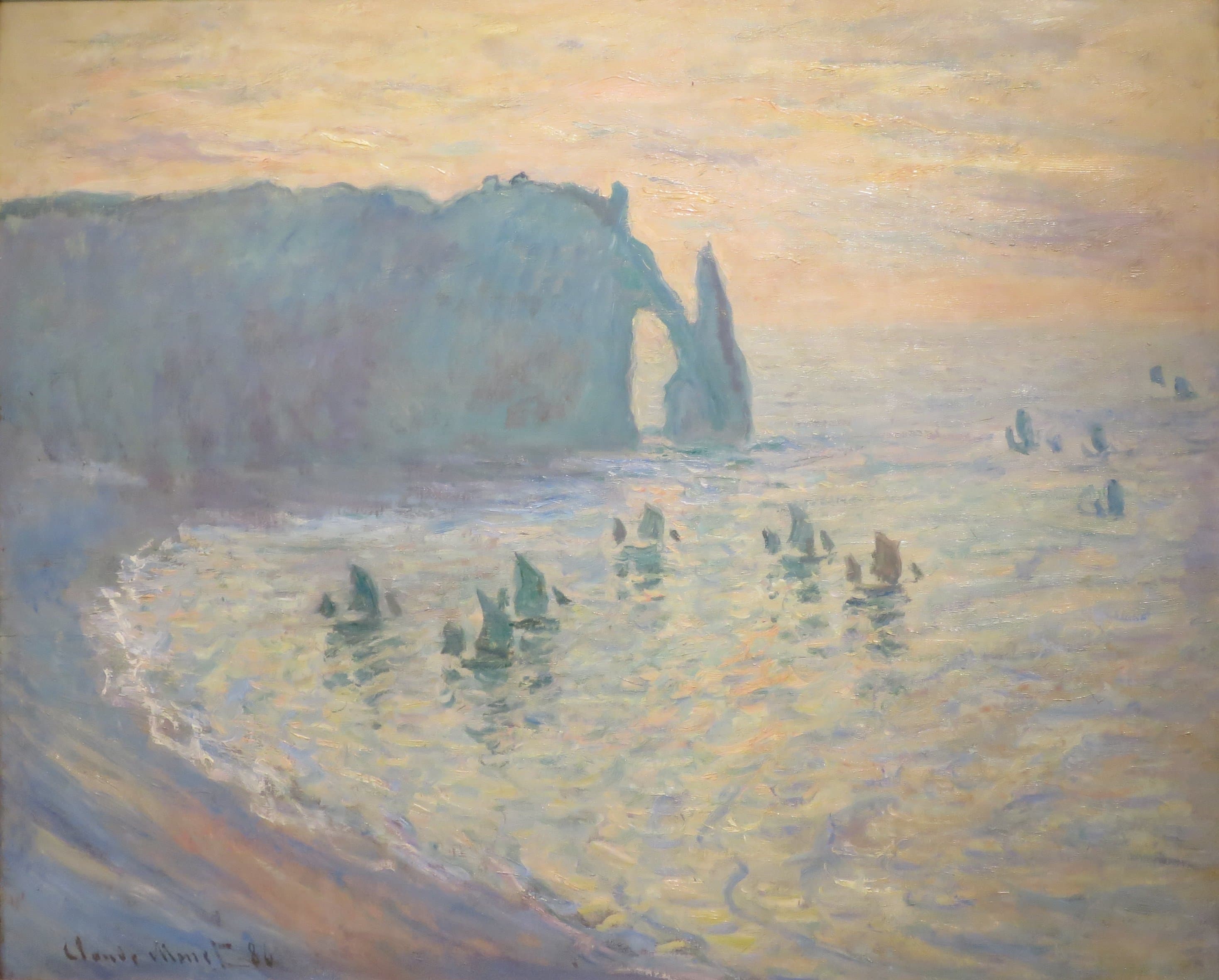
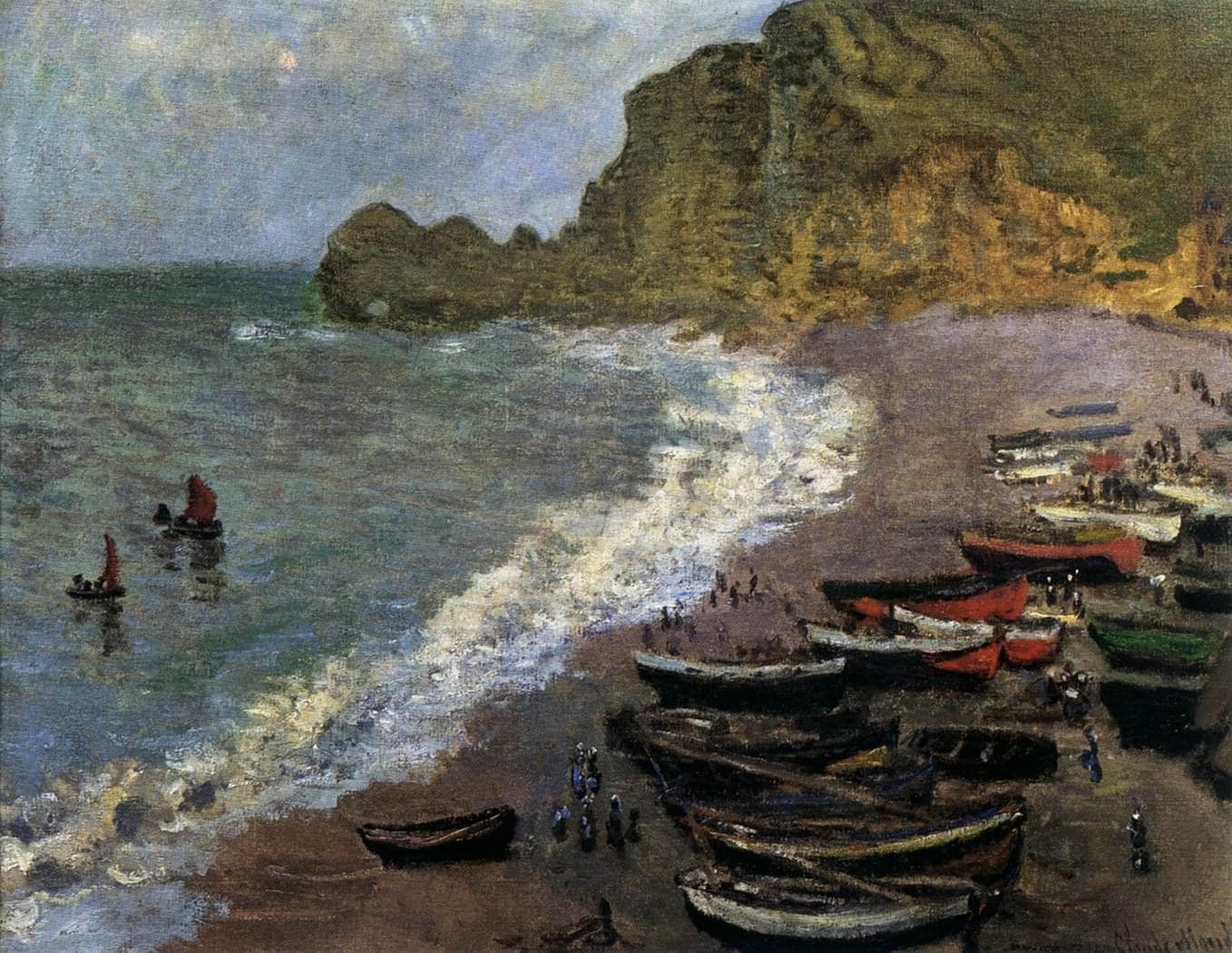
The Porte d'Aval and the Aiguille were Étretat's most famous sight, painted before Monet by Delacroix, Courbet and Boudin. Monet painted them in many lights in 1885: compare Étretat, La Porte d'Aval: Fishing Boats Leaving the Harbour in Dijon and The Departure of the Boats, Étretat in Chicago, and the next year's The Cliffs at Étretat in Moscow. Just west of this view lies the even larger arch of the Manneporte, in The Manneporte and La Manneporte, Reflections on the Sea. The working beach on the other side of the bay appears in The Beach at Étretat.
Where to see it
The painting is in the Clark Art Institute, Williamstown, founded on the collection of Sterling and Francine Clark, which is rich in French nineteenth-century painting. For museums worldwide, see where to see Monet's paintings, and for the artist, Claude Monet.
Questions & answers
Where is Monet's The Cliffs at Étretat?
This 1885 canvas is in the Clark Art Institute in Williamstown, Massachusetts. It measures 65 by 81.1 centimeters and is catalogued by Wildenstein as number 1034. Another Cliffs at Étretat, of 1886, is in the Pushkin Museum, Moscow.
When did Monet paint The Cliffs at Étretat?
In the autumn of 1885, during a stay at Étretat from October to mid-December, in a house lent by the singer and collector Jean-Baptiste Faure. The canvas is signed and dated '85 at lower right.
What are the rocks in Monet's Cliffs at Étretat?
On the left is the Aiguille (the 'needle'), a free-standing chalk pinnacle in the sea; on the right is the Porte d'Aval, a natural arch at the end of the western cliff. A fallen boulder lies on the beach in the right foreground.
How many paintings of the Étretat cliffs did Monet make?
Dozens. In 1883, and above all in 1885–86, he painted the Porte d'Aval, the Aiguille, the Manneporte and the Amont cliff in many weathers and times of day, a forerunner of his later series.
More by the artist
Claude Monet

Bridge over a Pond of Water Lilies
Claude Monet · 1899

Woman with a Parasol – Madame Monet and Her Son
Claude Monet · 1875

Sunset in Venice
Claude Monet · 1908–12

La Grenouillère
Claude Monet · 1869

Beach in Pourville
Claude Monet · 1882

Springtime
Claude Monet · 1872

Boating on the River Epte
Claude Monet · 1890

The Seine at Asnières (Hermitage)
Claude Monet · 1873
Also painted in 1885
The same year
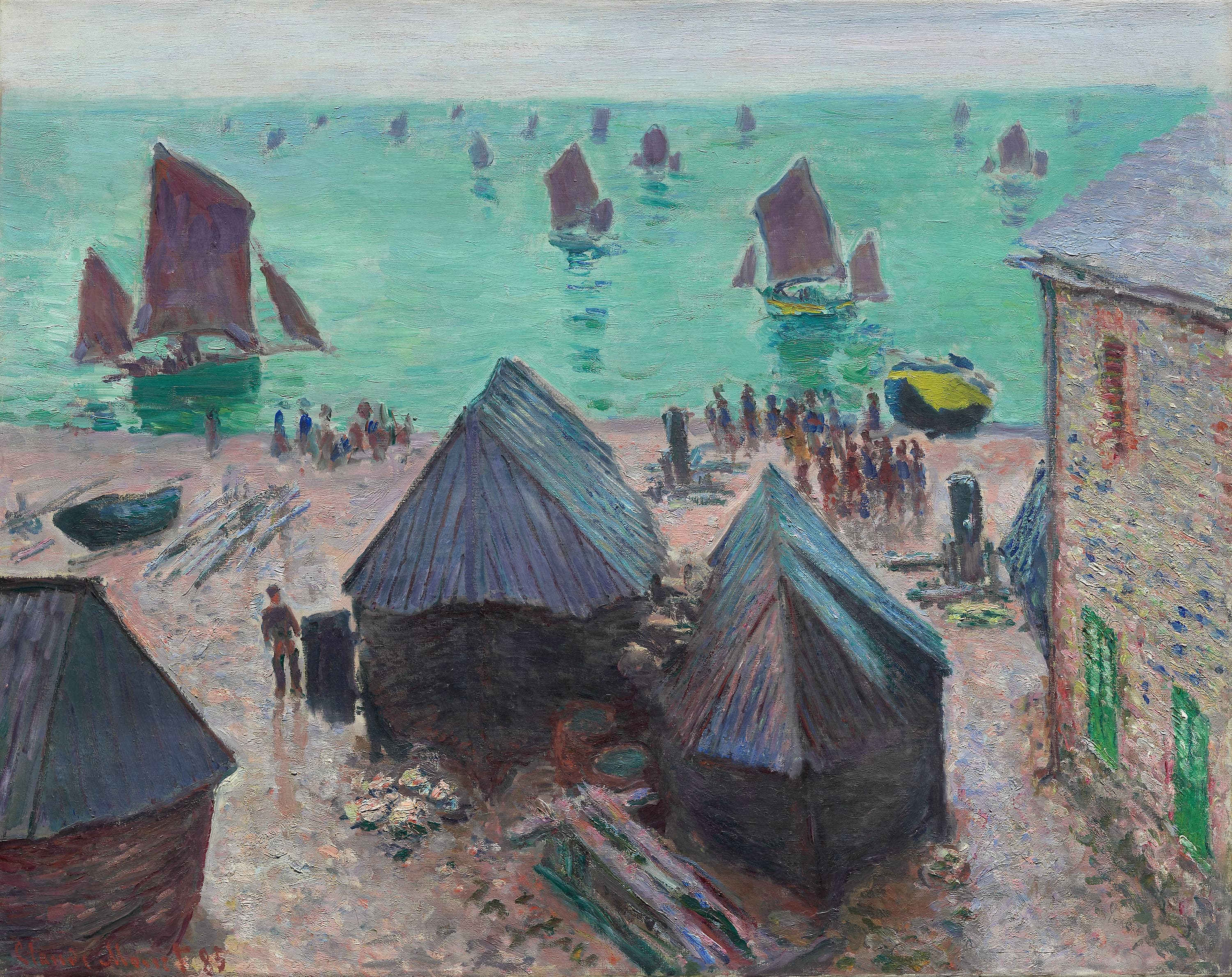
The Departure of the Boats, Étretat
Claude Monet · 1885
Poppy Field, Around Giverny
Claude Monet · 1885
Three Fishing Boats
Claude Monet · 1885
Sailboat, Evening Effect
Claude Monet · 1885
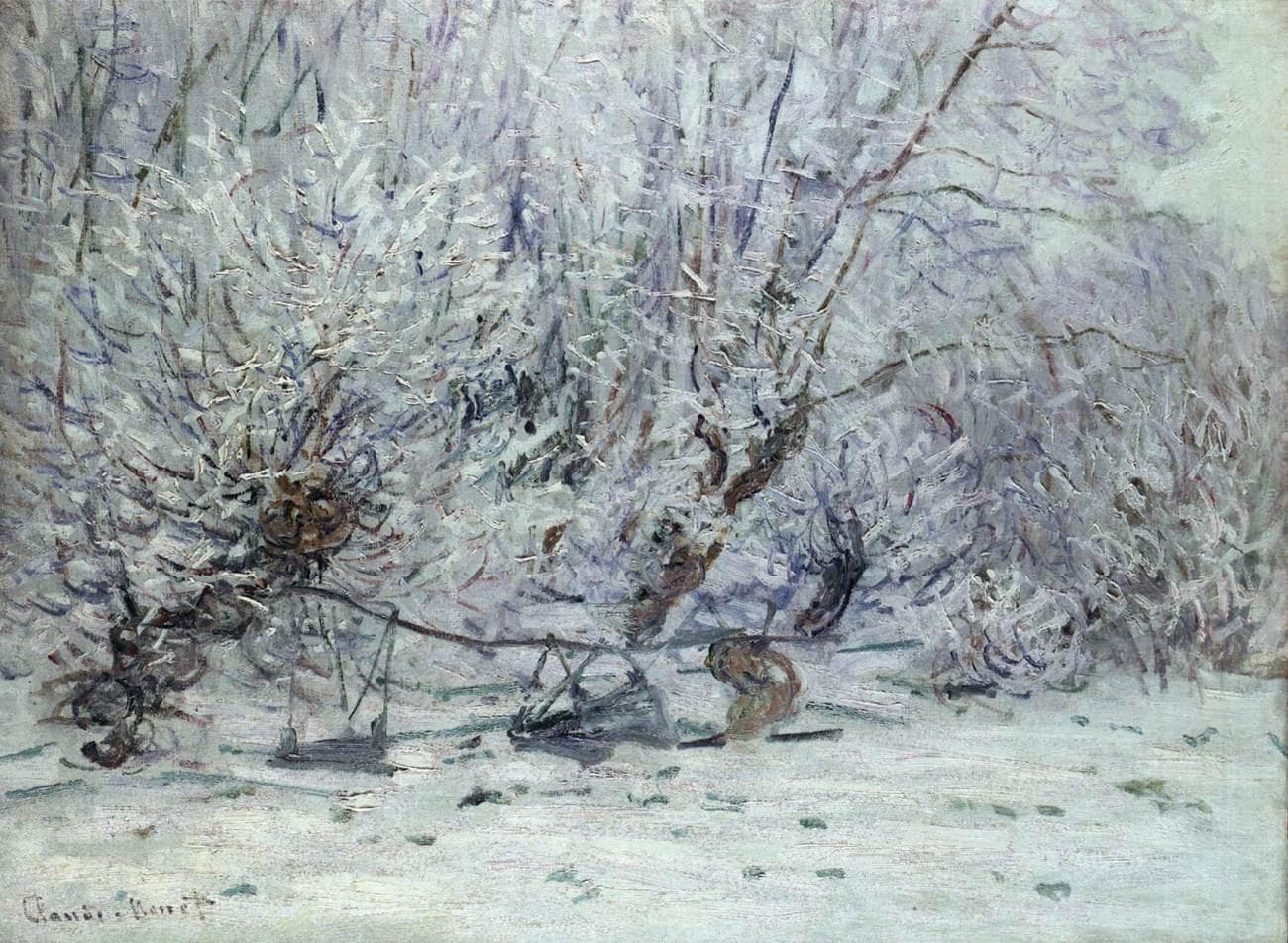
Frost
Claude Monet · 1885
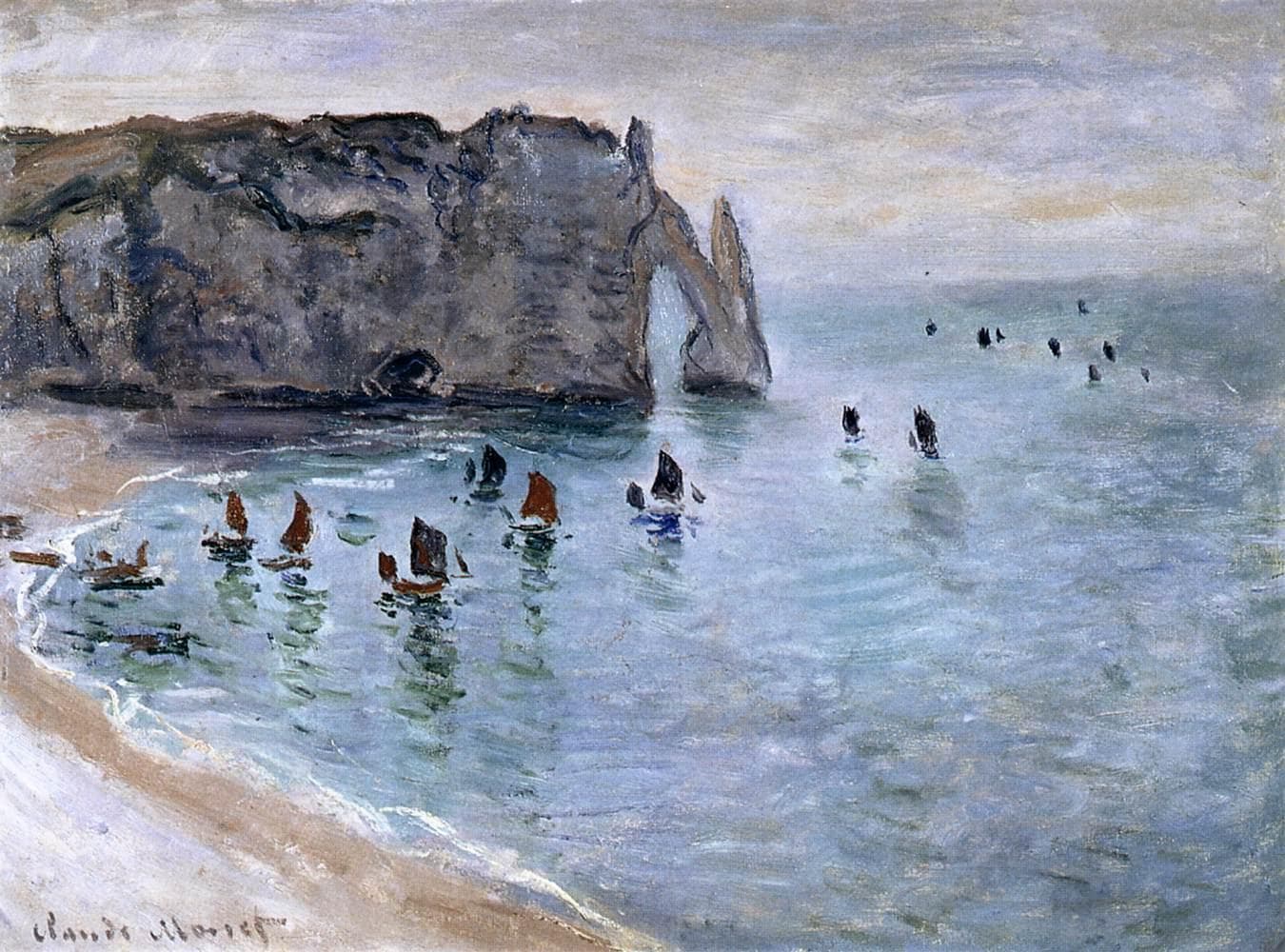
Étretat, the Porte d'Aval: Fishing Boats Leaving the Harbor
Claude Monet · 1885
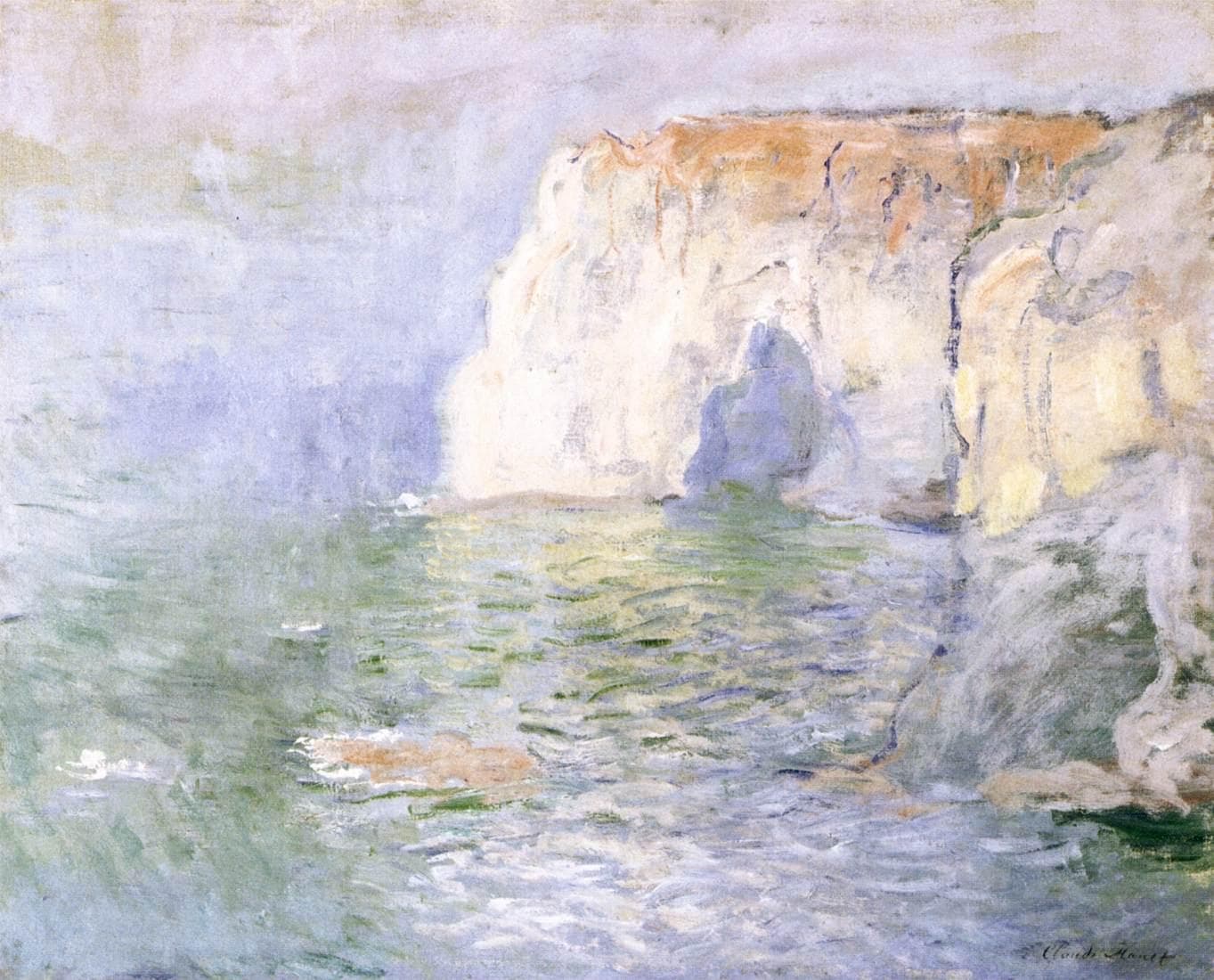
Étretat, the Manneporte, Reflections on the Water
Claude Monet · c. 1885
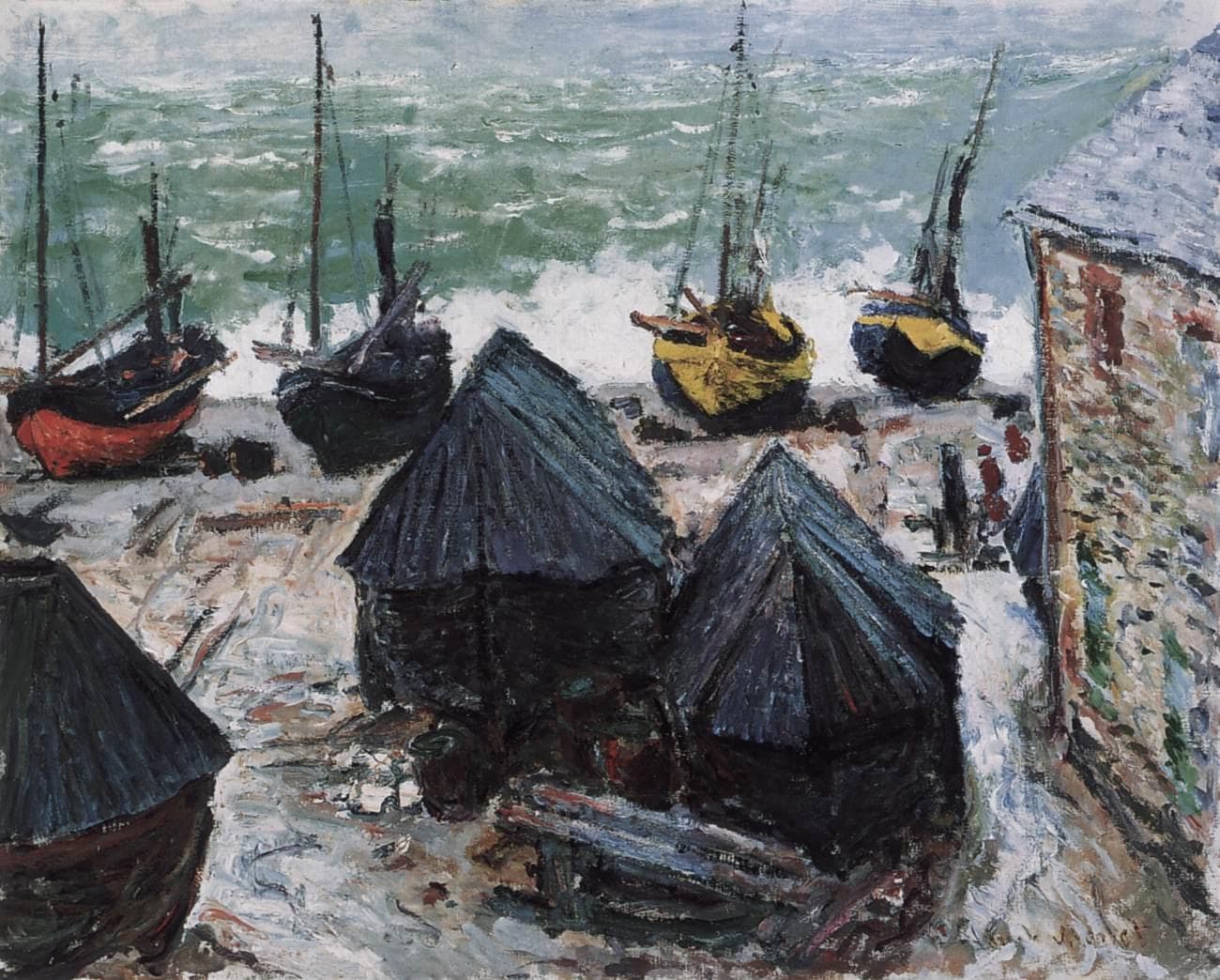
Boats on the Beach at Étretat
Claude Monet · 1885
Kindred works
You may also study
The Manneporte (Étretat)
Claude Monet · 1883
Étretat, the Porte d'Aval: Fishing Boats Leaving the Harbor
Claude Monet · 1885
The Departure of the Boats, Étretat
Claude Monet · 1885
The Cliffs at Étretat
Claude Monet · 1886
The Beach at Étretat
Claude Monet · 1883

The Scream
Edvard Munch · 1893

Ophelia
John Everett Millais · 1851–52

The Great Wave off Kanagawa
Katsushika Hokusai · c. 1830–32