Image: Fine Arts Museums of San Francisco, Legion of Honor; via Wikimedia Commons · CC BY-SA 4.0 · via Wikimedia Commons
Impressionism
Waves Breaking
Claude Monet, 1881
Waves Breaking is an 1881 seascape by Claude Monet in which rough, whitecapped sea fills almost the whole canvas under a narrow strip of blue sky. It is in the Legion of Honor, Fine Arts Museums of San Francisco.
- Artist
- Claude Monet
- Date
- 1881
- Medium
- Oil on canvas
- Dimensions
- 60.3 × 81.3 cm
- Collection
- Legion of Honor, Fine Arts Museums of San Francisco, San Francisco, United States
- Movement
- Impressionism
- Catalogue
- Wildenstein 661
Painted at Étretat and the Normandy Coast
What you are looking at
There is no beach, no cliff, no boat: only sea and sky. A thin band of blue sky with small white clouds runs across the top fifth of the canvas. Below it, the horizon is a sharp line of deep green-blue, and from there to the bottom edge the whole picture is breaking water. Row upon row of waves rolls toward us, their crests painted as thick, curling strokes of white, their troughs in blue, violet, turquoise and pale green.
The waves get larger and the strokes looser as they come closer, so that near the bottom of the canvas the paint becomes a churning mass of white and lilac loops. There is a sense of wind and noise. Monet signed and dated it at lower left, "Claude Monet 81," in red.
Where and when it was painted
In the early 1880s Monet returned to the Normandy coast where he had grown up, and for most of the decade he spent months each year painting the cliffs and sea. In 1881 he worked at Fécamp in the spring and at Trouville and Sainte-Adresse later in the year. This canvas was probably painted on one of these campaigns. As so often in his seascapes, he stood facing straight out to sea, without a foreground to anchor the view.
The picture belongs to the long group of Normandy coast paintings that runs from the 1860s to the Étretat and Belle-Île pictures of 1883–86. It is one of the purest of them, stripped of everything but water and weather.
How it was painted
The approach owes a debt to Gustave Courbet, whose paintings of waves seen head-on from the shore, made at Étretat in 1869–70, showed how a seascape could be all sea. Monet had admired them. But where Courbet built his waves as solid, heavy masses of paint, Monet breaks the water into a field of separate, rhythmic strokes, each one following the curl of a crest.
The color is lighter and more varied than in Courbet. The shadows of the waves are blue and violet, not gray-green; the foam is white touched with pink and pale yellow. Monet lays the strokes over a pale ground, and in places the ground shows through, adding to the brightness. The horizon is kept high, which tilts the sea up toward us and makes it fill the picture.
Look closely at the bottom third and you can see how fast Monet worked. The strokes are long and looping, laid wet into wet, and some are dragged so that the colors beneath show through. It is a record of a few hours' work in front of a rough sea.
The absence of any human sign is deliberate. Earlier Normandy seascapes by Monet were full of boats, piers and holidaymakers. Here the sea is shown for itself, and the viewer is placed where a painter would stand at the edge of the surf, with nothing between eye and water. The strip of calm blue sky, with its small, neat clouds, makes the turbulence below look all the more restless.
Related works
Rough seas recur in Monet's work of these years: Stormy Sea in Ottawa, Rough Sea at Étretat in Lyon, and much earlier The Green Wave of 1867 at the Met, which shows a fishing boat in heavy swell. The fully abstract-looking sea of Waves Breaking points toward the Belle-Île pictures of 1886, such as The Rocks of Belle-Île.
Ownership
The painting was given to the Fine Arts Museums of San Francisco in 1970 by Prentis Cobb Hale (accession 1970.10). It belongs to the European collection shown at the Legion of Honor in Lincoln Park.
Where to see it
Waves Breaking is in the collection of the Fine Arts Museums of San Francisco at the Legion of Honor. It is not always on view; check the museum's website before visiting. For other museums, see where to see Monet's paintings.
Questions & answers
Where is Monet's Waves Breaking?
It is in the Fine Arts Museums of San Francisco, at the Legion of Honor (accession 1970.10), a gift of Prentis Cobb Hale in 1970. It is not always on display, so check before visiting.
When and where was Waves Breaking painted?
It is signed and dated 1881. Monet spent much of that year on the Normandy coast, at Fécamp in the spring and later at Trouville and Sainte-Adresse, and the painting was probably made on one of these campaigns.
What does Waves Breaking show?
Only the sea and sky: rows of whitecapped waves rolling toward the viewer below a narrow strip of blue sky, with no shore, boat or figure.
Was Monet influenced by Courbet's waves?
Yes. Courbet's head-on paintings of waves made at Étretat around 1869–70 showed how a picture could be made of the sea alone. Monet adopted the idea but used lighter colors and broken, rhythmic strokes.
More by the artist
Claude Monet

Bridge over a Pond of Water Lilies
Claude Monet · 1899

Woman with a Parasol – Madame Monet and Her Son
Claude Monet · 1875

Sunset in Venice
Claude Monet · 1908–12

La Grenouillère
Claude Monet · 1869

Beach in Pourville
Claude Monet · 1882

Springtime
Claude Monet · 1872

Boating on the River Epte
Claude Monet · 1890

The Seine at Asnières (Hermitage)
Claude Monet · 1873
Also painted in 1881
The same year
Kindred works
You may also study
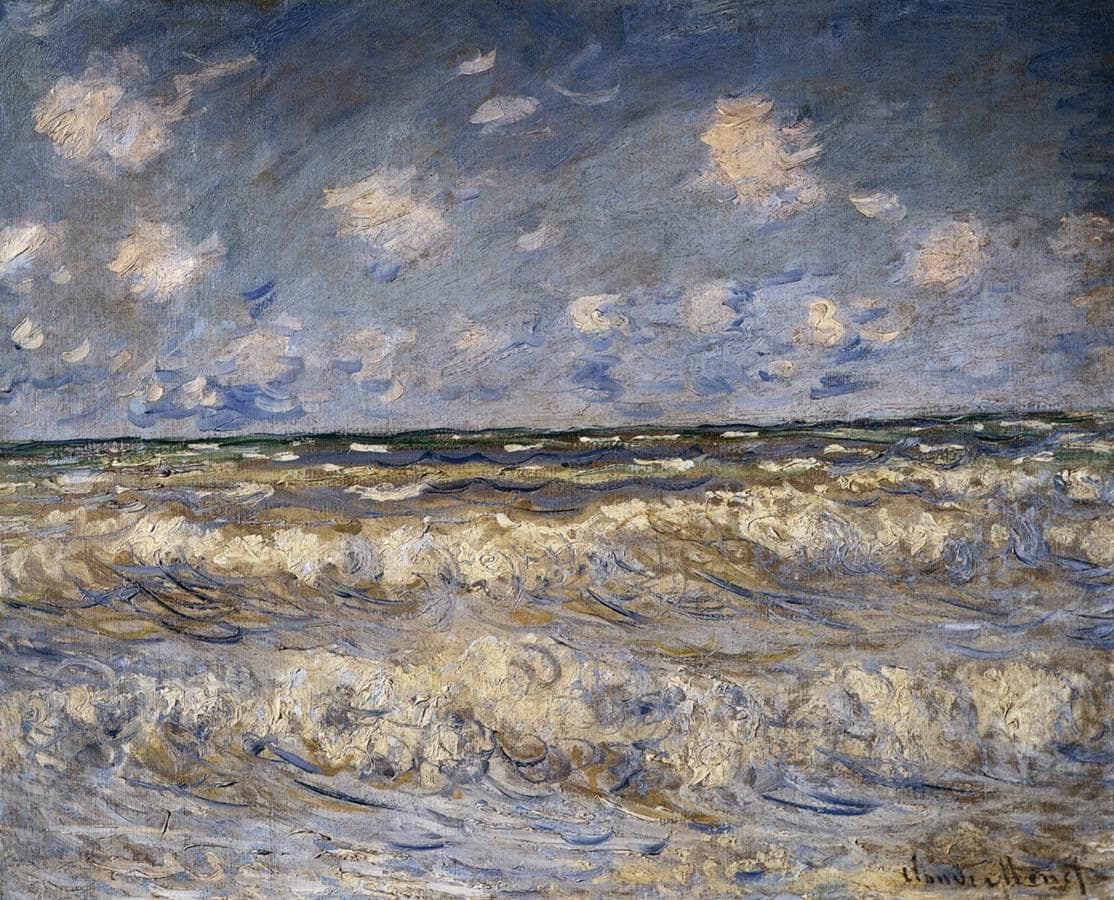
Stormy Sea
Claude Monet · c. 1881–84
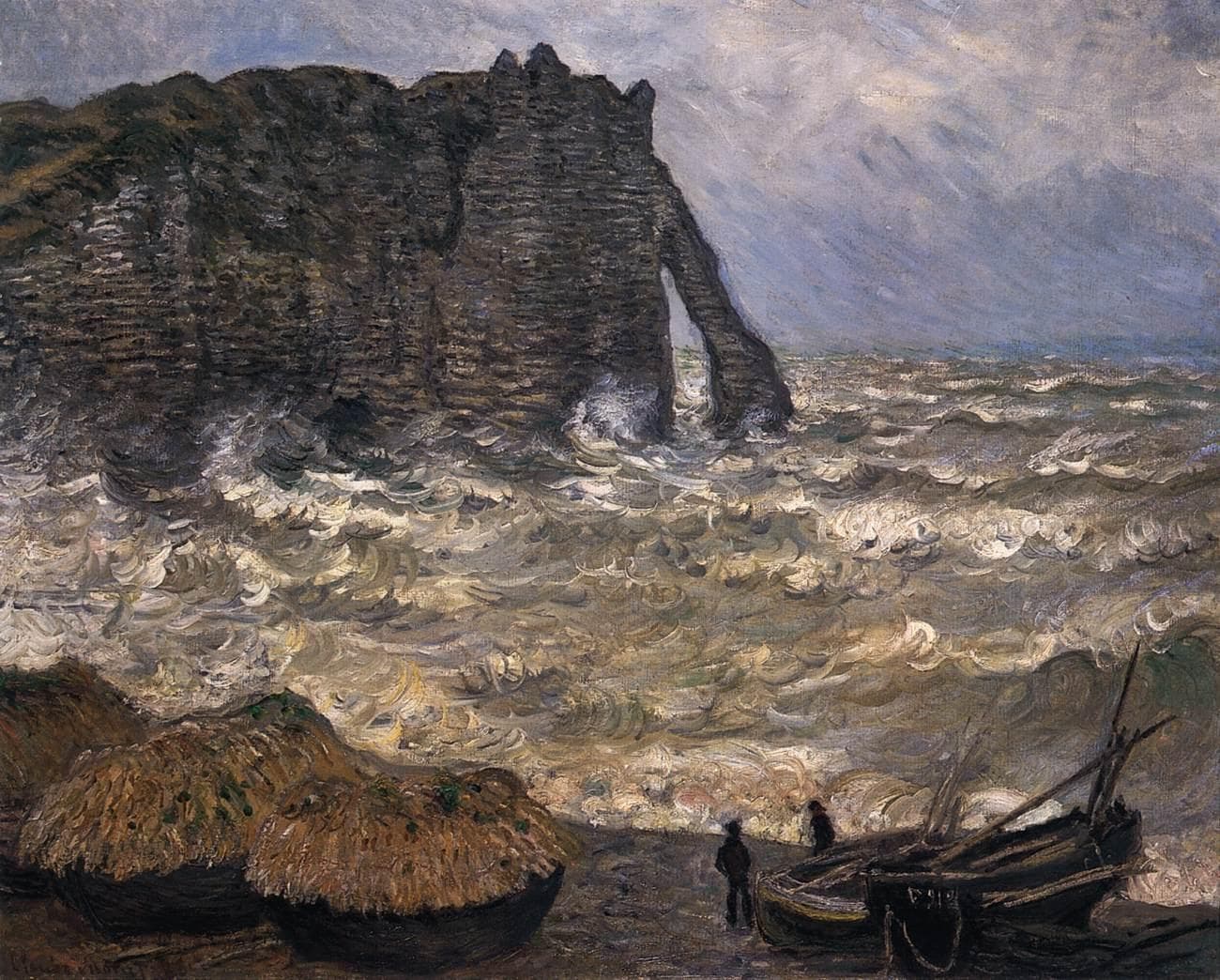
Rough Sea at Étretat
Claude Monet · 1883
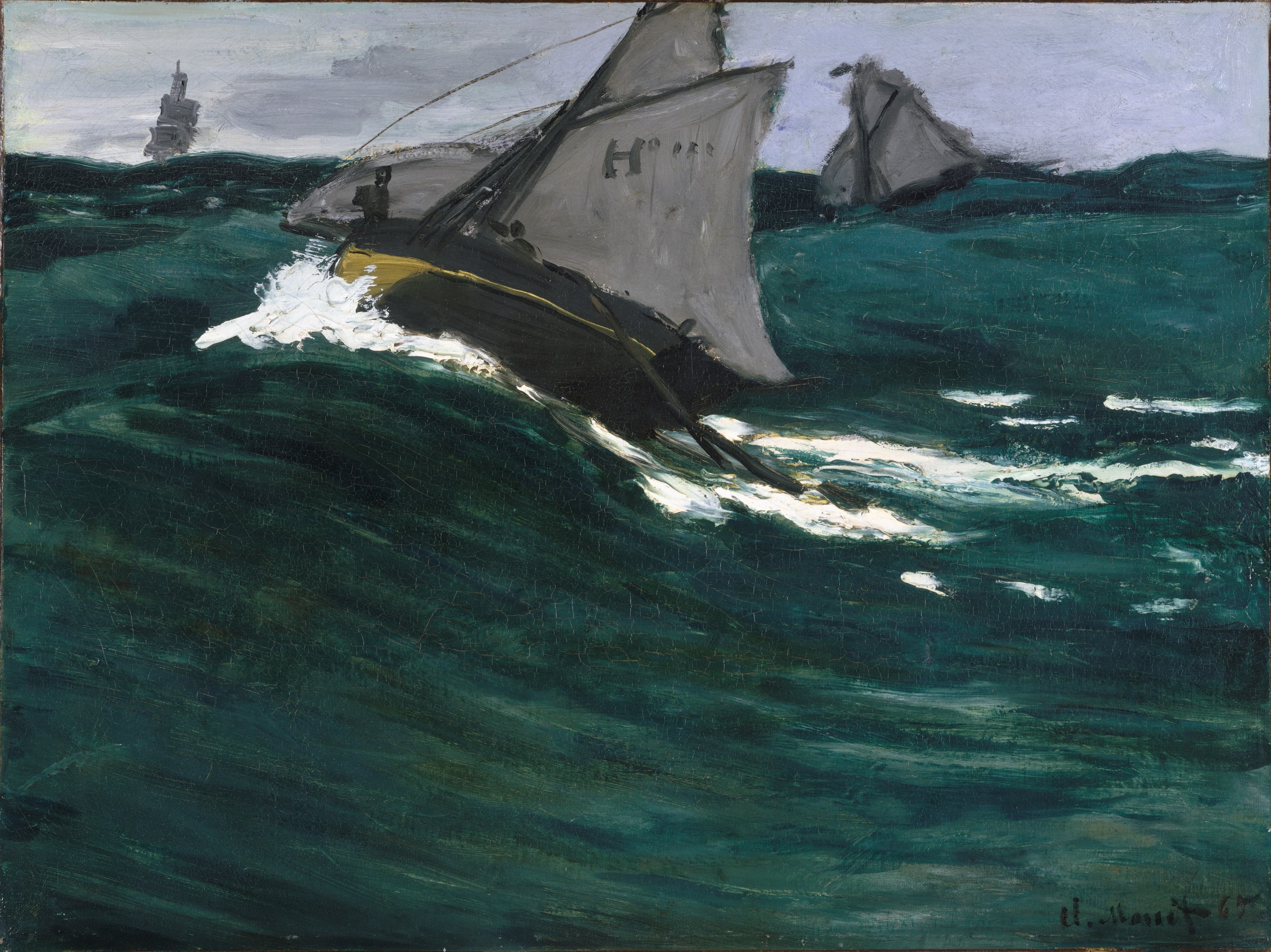
The Green Wave
Claude Monet · c. 1866–67
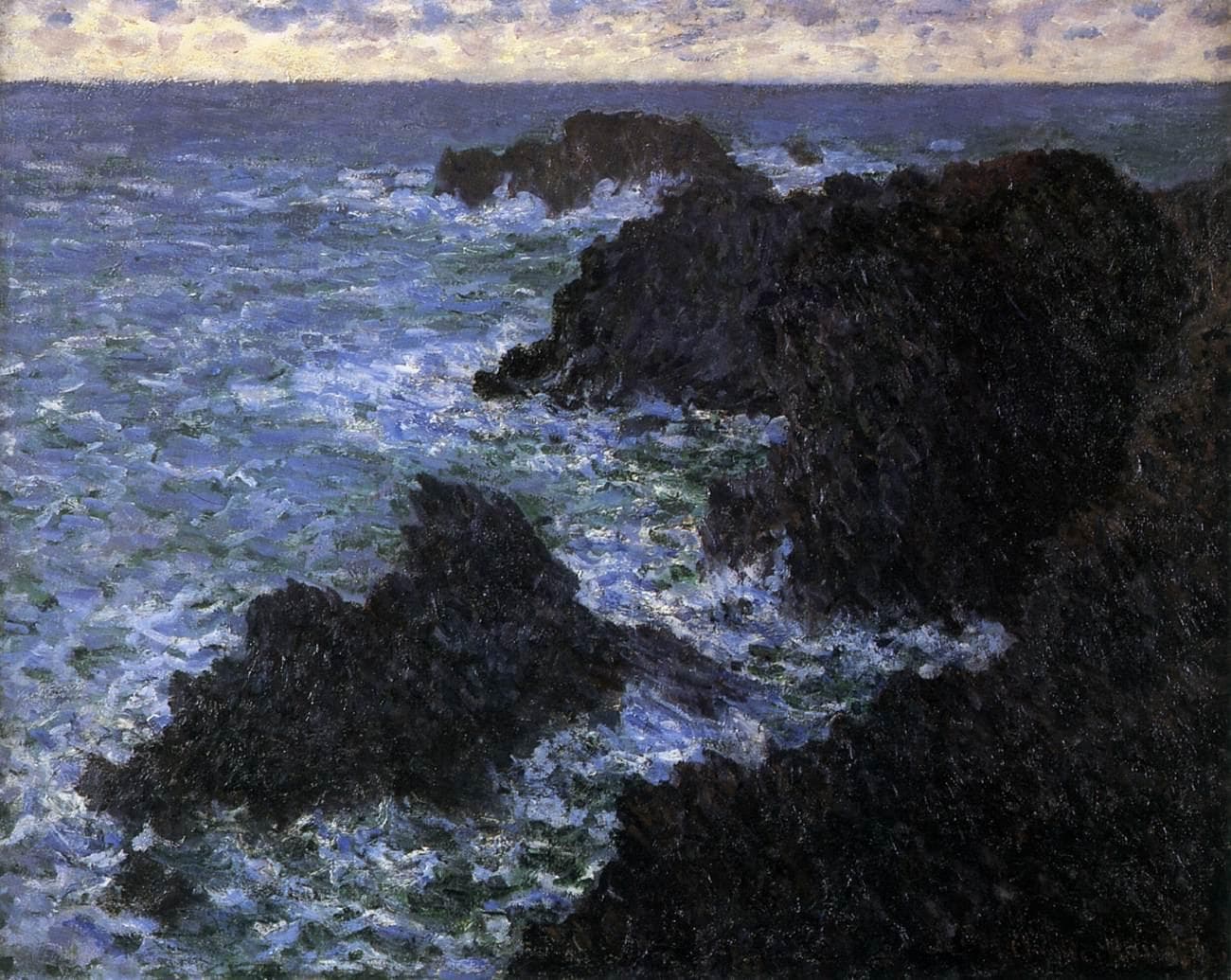
The Rocks of Belle-Île, the Wild Coast
Claude Monet · 1886
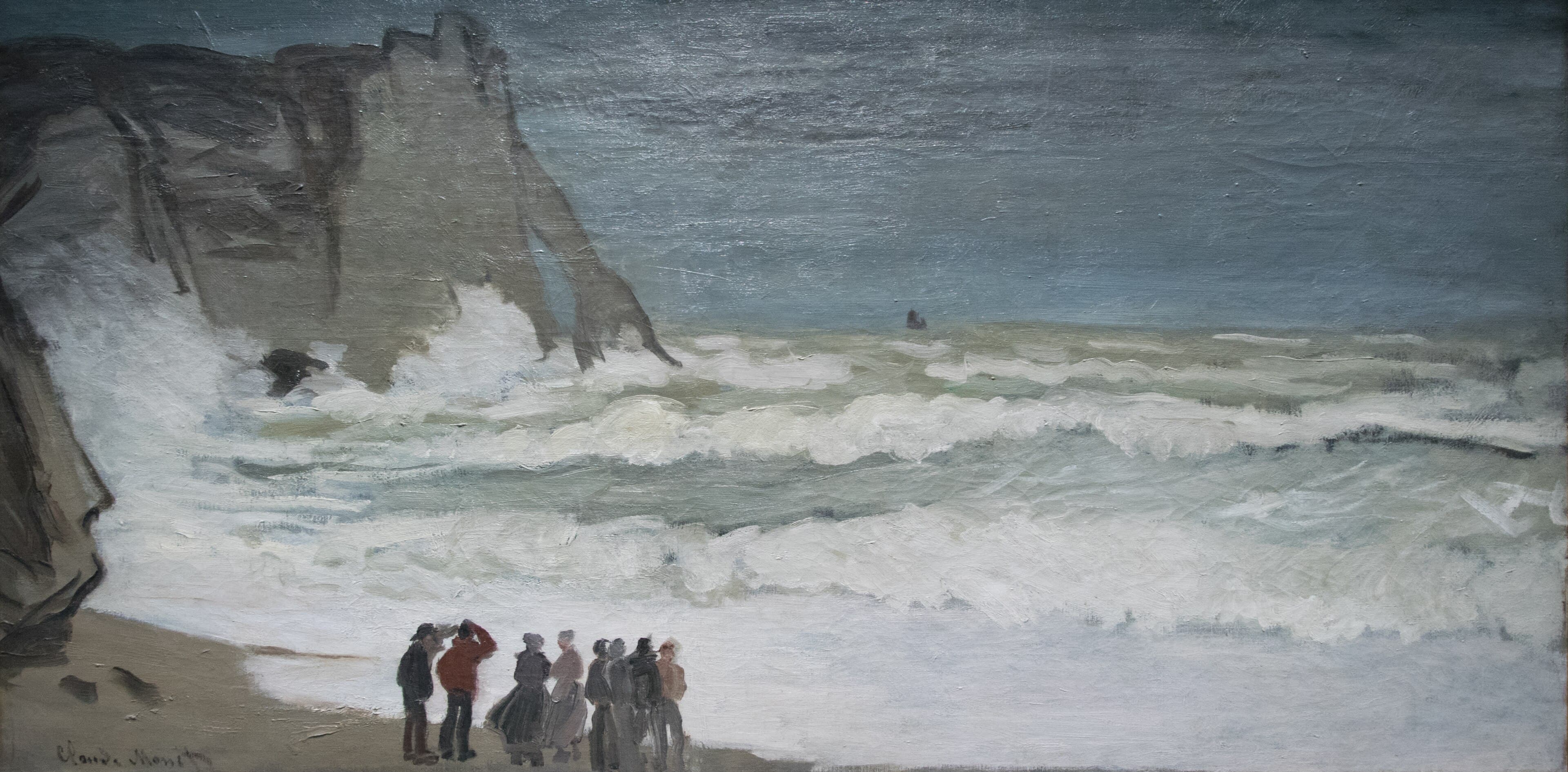
Heavy Sea at Étretat
Claude Monet · c. 1868–69

Ophelia
John Everett Millais · 1851–52

The Great Wave off Kanagawa
Katsushika Hokusai · c. 1830–32
The Birth of Venus
Sandro Botticelli · c. 1484–1486