Realism
La Pointe de la Hève at Low Tide
Claude Monet, 1865
La Pointe de la Hève at Low Tide is the stormy Normandy beach scene that Claude Monet, aged 24, showed at the Paris Salon of 1865, his debut there. It is in the Kimbell Art Museum, Fort Worth, Texas.
- Artist
- Claude Monet
- Date
- 1865
- Medium
- Oil on canvas
- Dimensions
- 90.2 × 150.5 cm
- Collection
- Kimbell Art Museum, Fort Worth, United States
- Movement
- Realism
- Catalogue
- Wildenstein W 52
Painted at Étretat and the Normandy Coast
La Pointe de la Hève at Low Tide is the large Normandy beach scene with which Claude Monet, aged 24, made his debut at the Paris Salon in 1865. The canvas, 90.2 by 150.5 centimeters and signed and dated 1865 at lower right, shows the shore at Sainte-Adresse, just north of Le Havre, under a heavy sky. It is in the Kimbell Art Museum in Fort Worth, Texas, and is number 52 in Wildenstein's catalogue.
What does La Pointe de la Hève at Low Tide show?
We stand on a wet beach at low tide, looking along the shore toward the headland of La Hève, which rises at right as a long, crumbling cliff of ochre, tan and gray-green, its face streaked where the soil has slipped. The beach narrows toward the foot of the cliff, and a line of wooden groynes, the low fences built to hold the shingle in place, runs from the right edge toward the sea. A rowing boat lies upturned on the stones, and a tall pole leans against the cliff.
The foreground is the finest passage. The sand is so wet that it mirrors the sky, a broad sheet of gray-violet broken by a few dark rocks, the curving lines of water draining back toward the sea, and the reflections of the figures. To the right the beach turns to shingle, painted as hundreds of small pale and dark touches, with stumps of old posts sticking up.
The life of the beach is all work, not leisure. At left a two-wheeled cart, driven by a seated man, stands in the shallow surf, probably gathering seaweed or sand. At center two pale horses wait with a figure partly hidden behind them, and a man in dark clothes walks toward us with a stick. Far out at the left, a single sailing boat leans on the horizon.
More than half the canvas is sky. Monet paints a stormy, moving cover of dark slate-gray cloud, opening low down into heaps of white cumulus and a band of pale blue, with a brighter break near the top. The sea at left churns in white and gray-green, its breaking waves laid in with thick, pale paint.
Where and when was it painted?
Monet grew up in Le Havre, and the beaches at Sainte-Adresse were the landscape of his youth. In the summer of 1864 he worked along this coast and at Honfleur, across the Seine estuary, making studies outdoors. One of them, La Pointe de la Hève, Sainte-Adresse, now in the National Gallery in London, shows the same groynes and headland on a smaller scale and is generally regarded as the study for this picture. Monet then worked up the large version in Paris that winter for the Salon jury.
He sent two seascapes to the Salon of 1865, this one and The Mouth of the Seine at Honfleur, now in the Norton Simon Museum, Pasadena. Both were accepted and well reviewed; critics noted their boldness and their truth to nature. It was a promising start, and it encouraged Monet to attempt a far more ambitious Salon picture the next year, the huge Luncheon on the Grass, which he never finished.
How was it painted?
This is a studio picture made from outdoor studies, as Salon practice expected, and it shows the painters Monet had learned from. Eugène Boudin, who first took the teenage Monet to paint outdoors around Le Havre, gave him the low horizon, the big sky and the small working figures. The Dutch painter Johan Barthold Jongkind, whom Monet met on this coast in 1862, taught him to look at wet reflections and to keep a sky moving. The dark, earthy palette and the thick, solid handling of the cliff owe something to Gustave Courbet.
The composition is built on a long diagonal: cliff, groynes and the edge of the shingle all slide from upper right toward the sea at left, where the open horizon releases the eye. The figures sit on the hinge between land and water. Monet's handling is still blended and tonal in the sky, but in the pebbles and the white surf you can see the short, separate touches that would later take over his whole surface.
How it fits Monet's coast pictures
The painting stands at the start of a lifetime of work on the Normandy coast. Two summers later, painting in the same town, he lightened his palette and moved to the bright, flat light of The Beach at Sainte-Adresse and Regatta at Sainte-Adresse. Set beside those, this picture shows a young painter already absorbed by weather and wet light but still working in the earth tones of Realist landscape.
Where is La Pointe de la Hève at Low Tide today?
The painting is in the Kimbell Art Museum in Fort Worth, Texas, which acquired it in 1968 (AP 1968.07). It hangs with the museum's European paintings when not on loan. For other museums with Monet's work, see where to see Monet's paintings, and for his life as a whole, Claude Monet.
Questions & answers
Where is Monet's La Pointe de la Hève at Low Tide?
It is in the Kimbell Art Museum in Fort Worth, Texas, which acquired it in 1968 (AP 1968.07). The large canvas, 90.2 by 150.5 centimeters, shows a beach near Le Havre at low tide under a stormy sky. Its smaller 1864 study is in the National Gallery, London.
When and where was La Pointe de la Hève painted?
Monet made studies on the beach at Sainte-Adresse, just north of Le Havre, in the summer of 1864, then painted this large version in his Paris studio for the Salon of 1865, where it was his first accepted picture alongside The Mouth of the Seine at Honfleur. It is dated 1865.
What does La Pointe de la Hève at Low Tide show?
It shows a wet beach at low tide looking toward the cliffs of the Hève headland, with wooden groynes, a cart in the surf, two horses, a walking man and a distant sail. More than half the canvas is a heavy, moving sky, and the wet sand mirrors it.
Did Monet paint other versions of La Pointe de la Hève?
Yes. The National Gallery in London has La Pointe de la Hève, Sainte-Adresse (1864), a smaller outdoor study of the same groynes and headland, generally seen as preparation for this Salon picture. Monet returned to the Sainte-Adresse shore in 1867 with brighter, flatter pictures such as The Beach at Sainte-Adresse.
More by the artist
Claude Monet

Bridge over a Pond of Water Lilies
Claude Monet · 1899

Woman with a Parasol – Madame Monet and Her Son
Claude Monet · 1875

Sunset in Venice
Claude Monet · 1908–12

La Grenouillère
Claude Monet · 1869

Beach in Pourville
Claude Monet · 1882

Springtime
Claude Monet · 1872

Boating on the River Epte
Claude Monet · 1890

The Seine at Asnières (Hermitage)
Claude Monet · 1873
Also painted in 1865
The same year
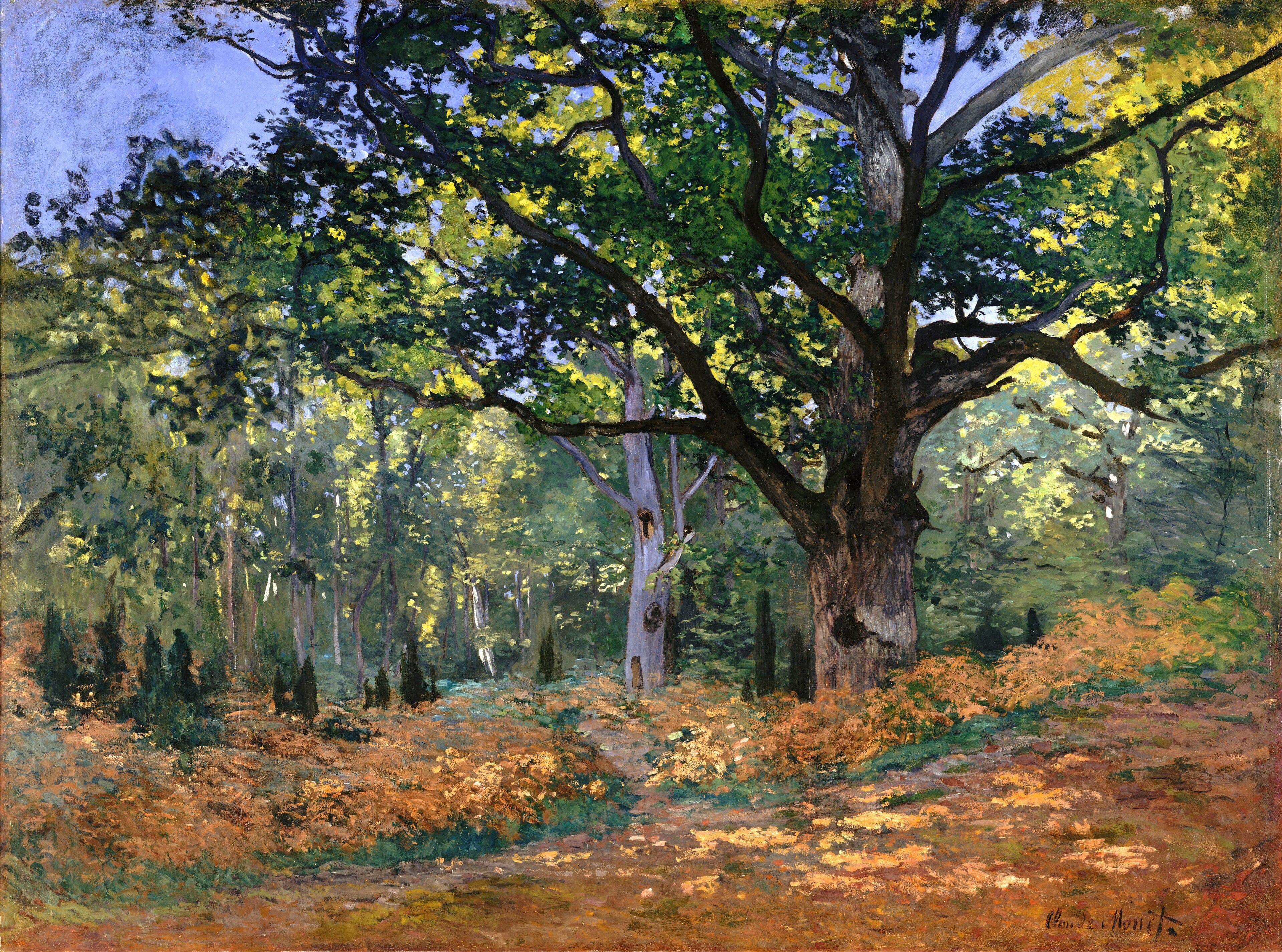
The Bodmer Oak, Fontainebleau Forest
Claude Monet · 1865
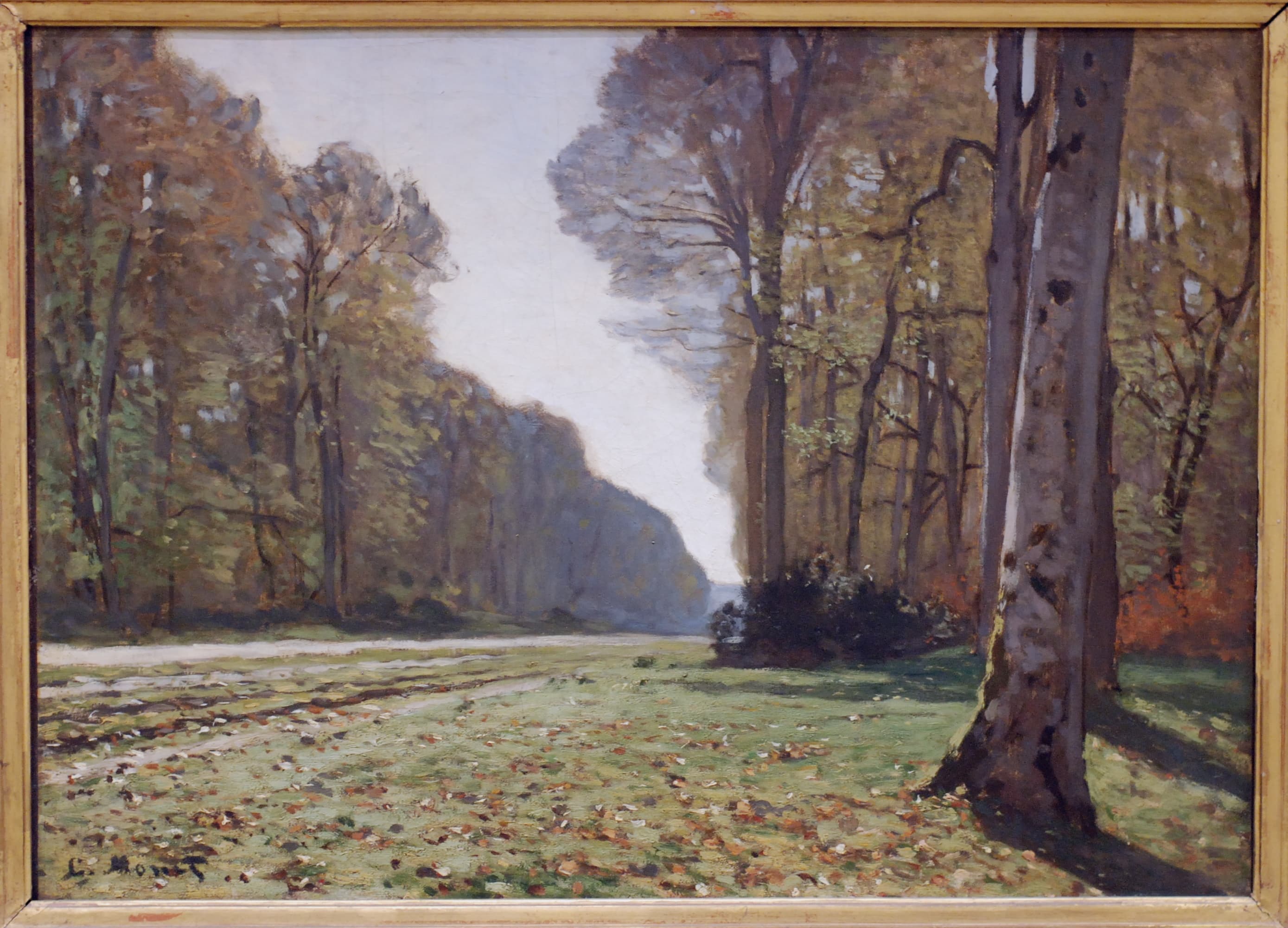
Le Pavé de Chailly
Claude Monet · c. 1865
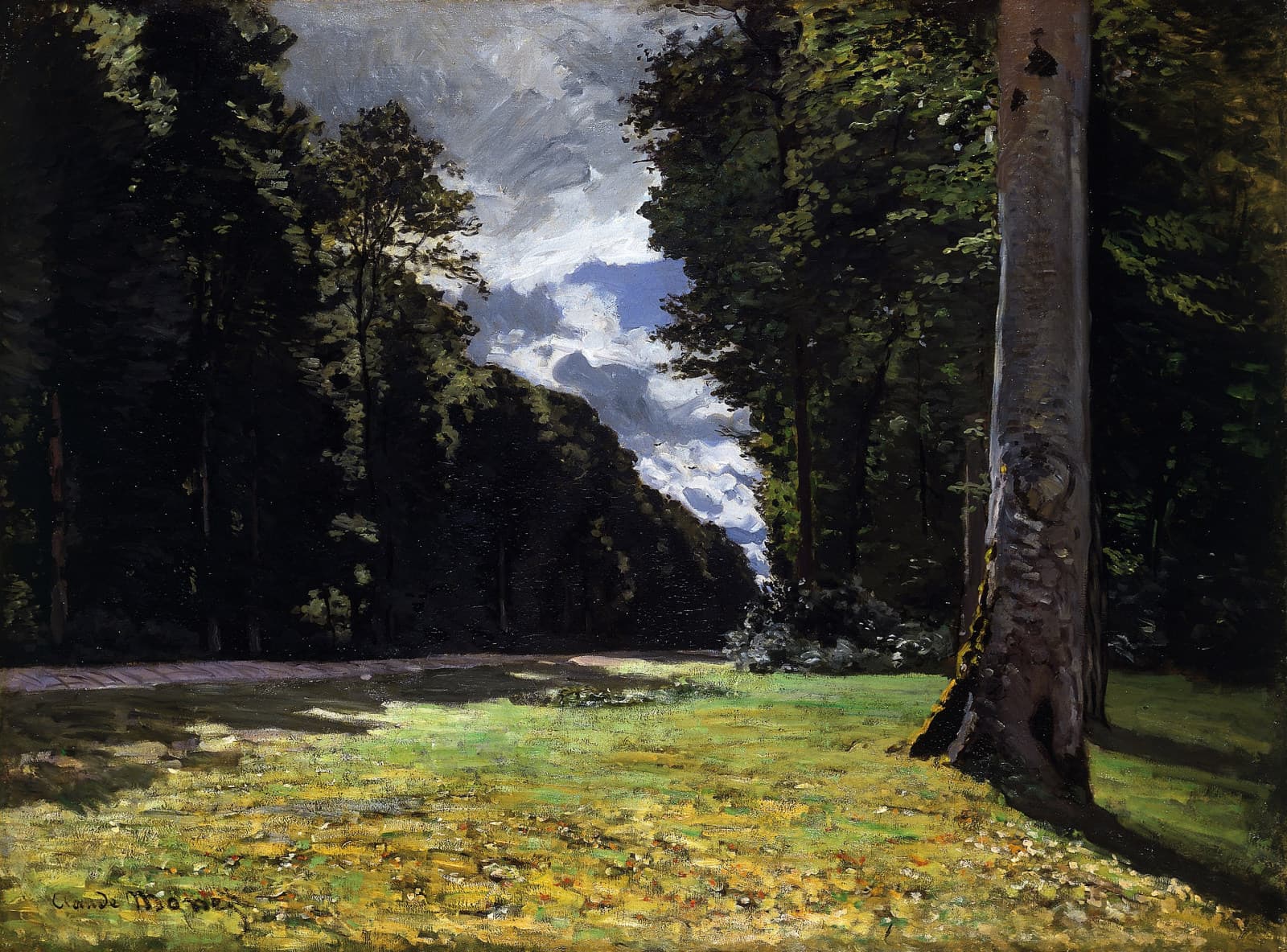
The Pavé de Chailly in the Forest of Fontainebleau
Claude Monet · 1865
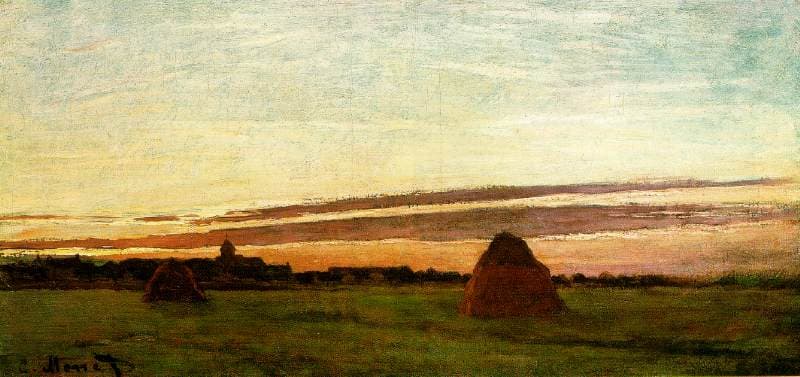
Haystacks at Chailly at Sunrise
Claude Monet · 1865
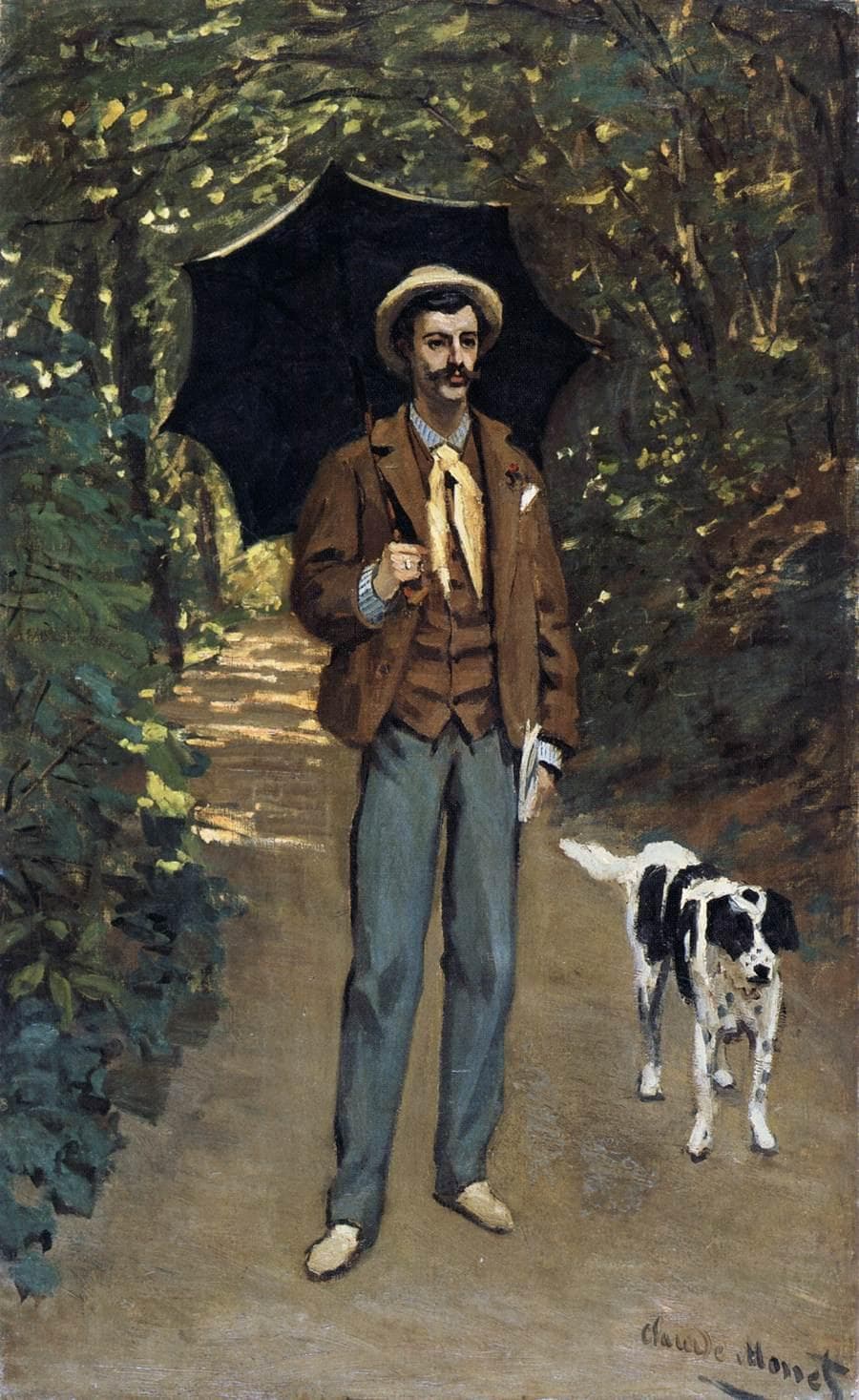
Man with a Parasol (Portrait of Victor Jacquemont)
Claude Monet · 1865–67
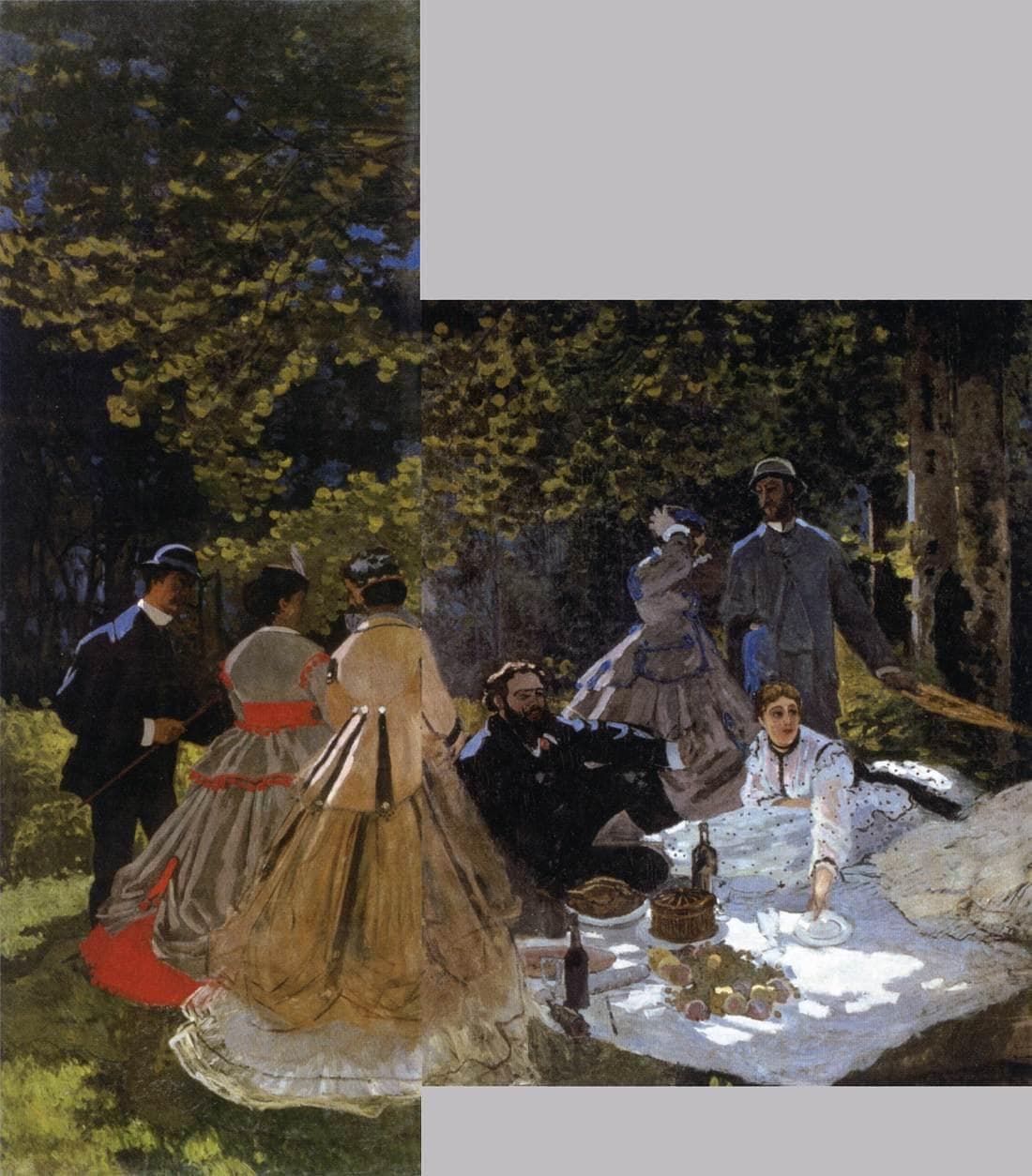
Le Déjeuner sur l'Herbe (two surviving fragments)
Claude Monet · 1865–66
Picnic (detail)
Claude Monet · 1865–66
Setting Sun (Nightfall)
Claude Monet · c. 1865
Kindred works
You may also study
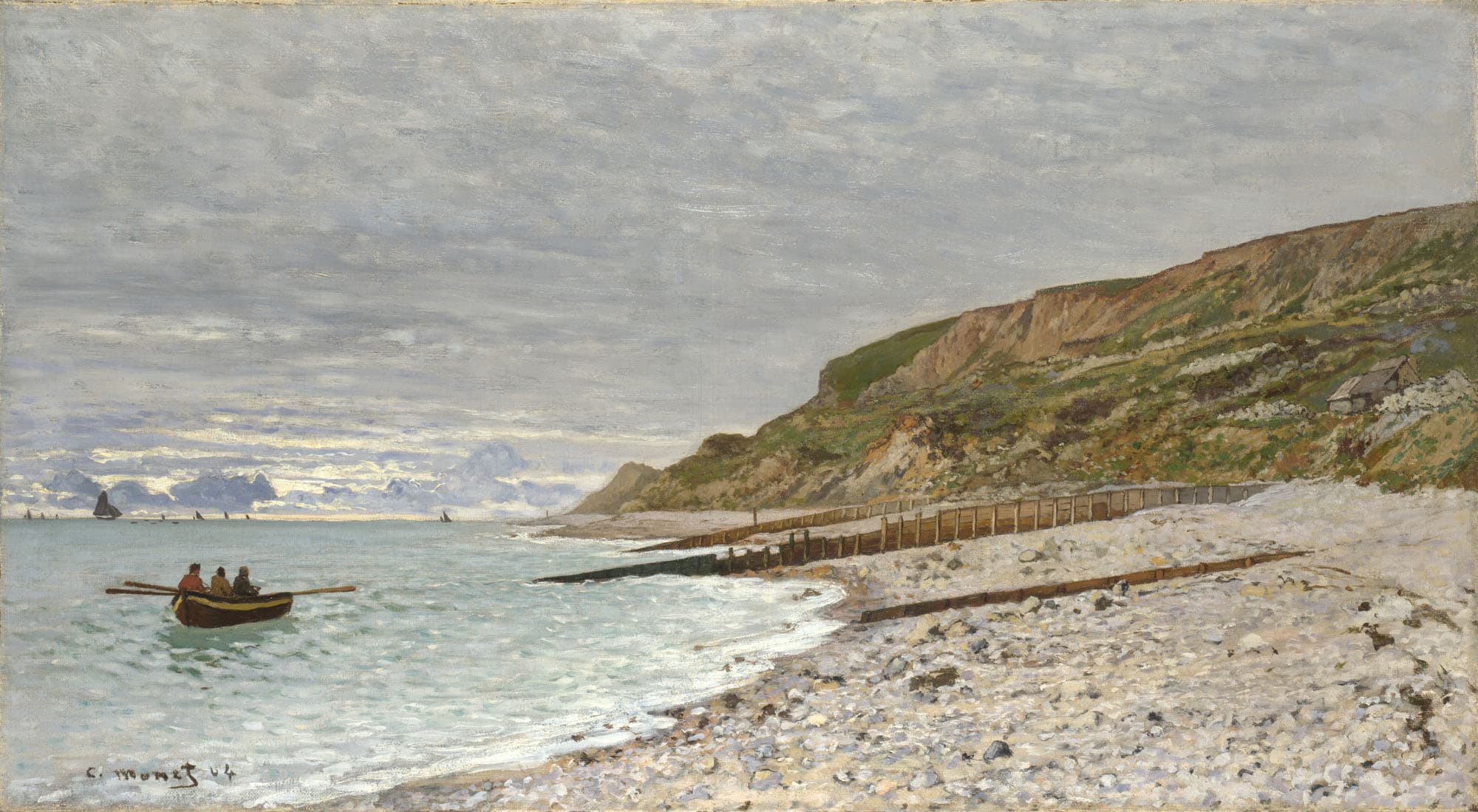
La Pointe de la Hève, Sainte-Adresse
Claude Monet · 1864
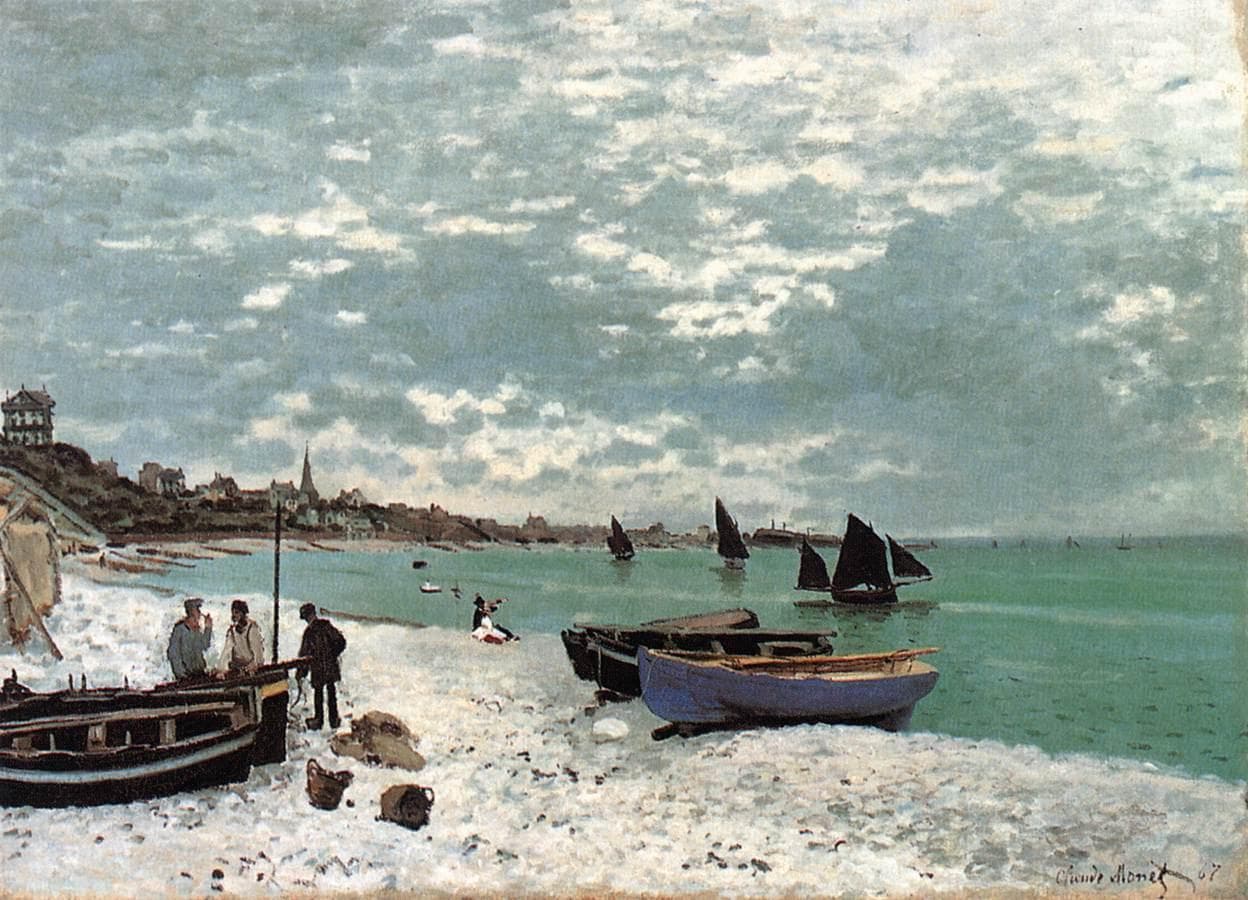
The Beach at Sainte-Adresse
Claude Monet · 1867
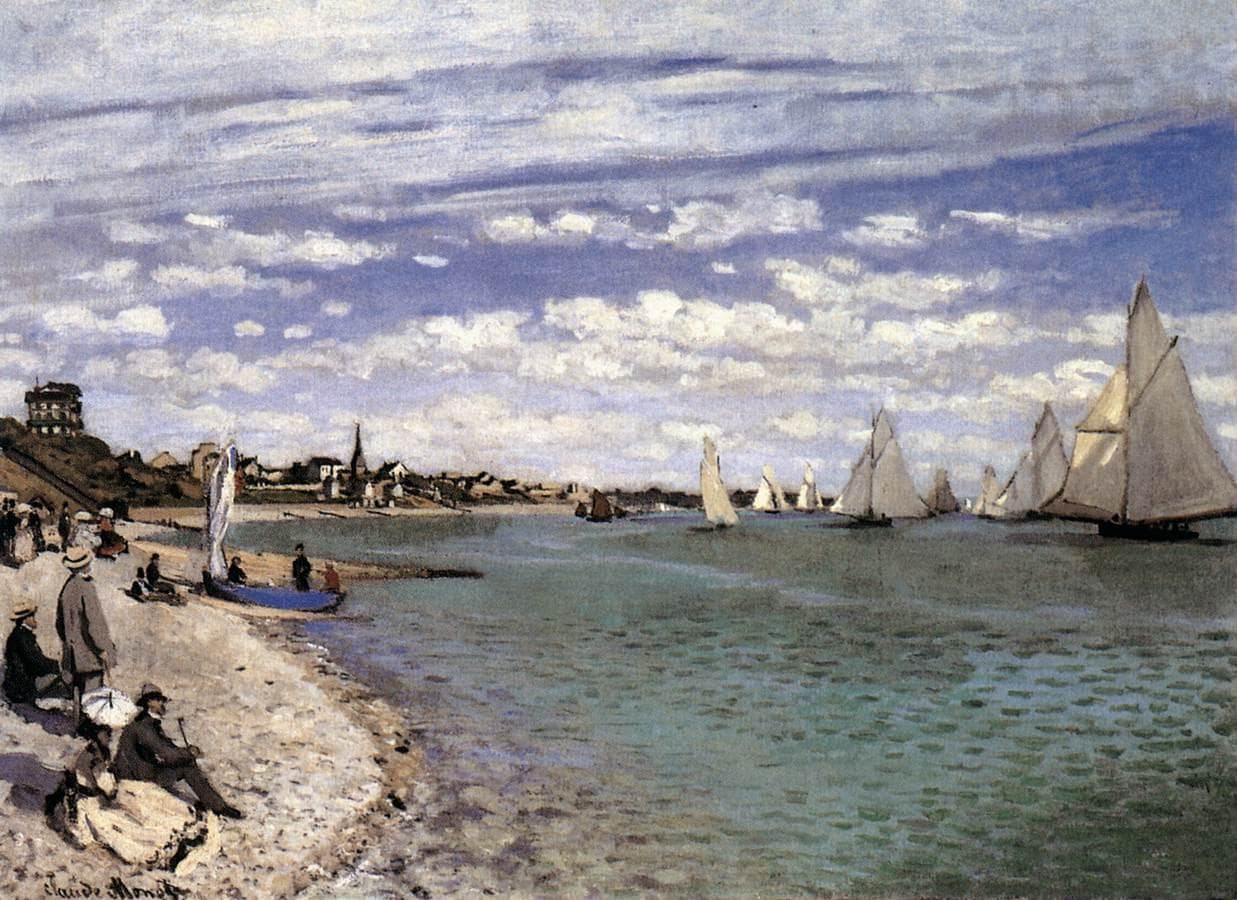
Regatta at Sainte-Adresse
Claude Monet · 1867
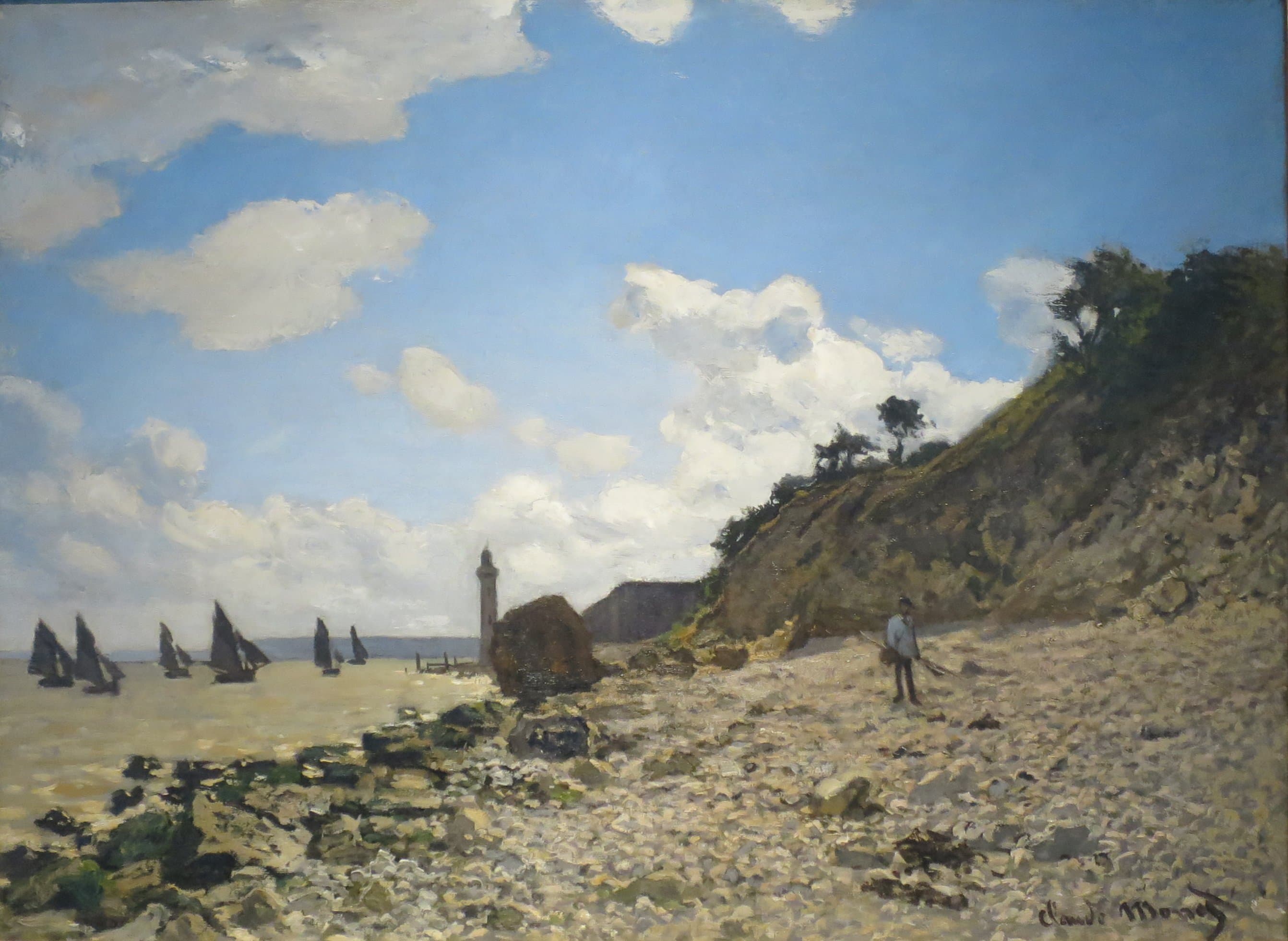
The Beach at Honfleur
Claude Monet · 1864–66
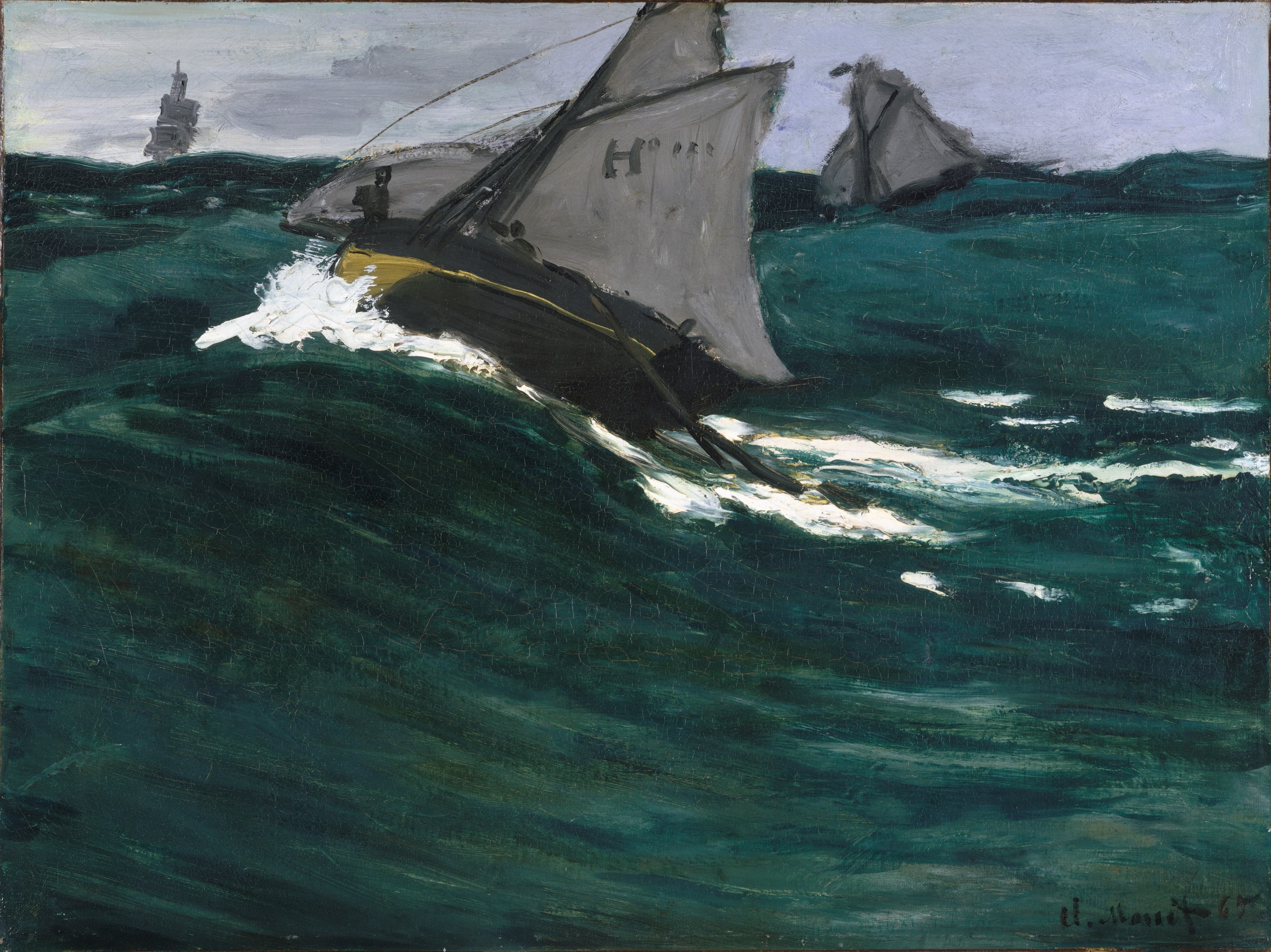
The Green Wave
Claude Monet · c. 1866–67
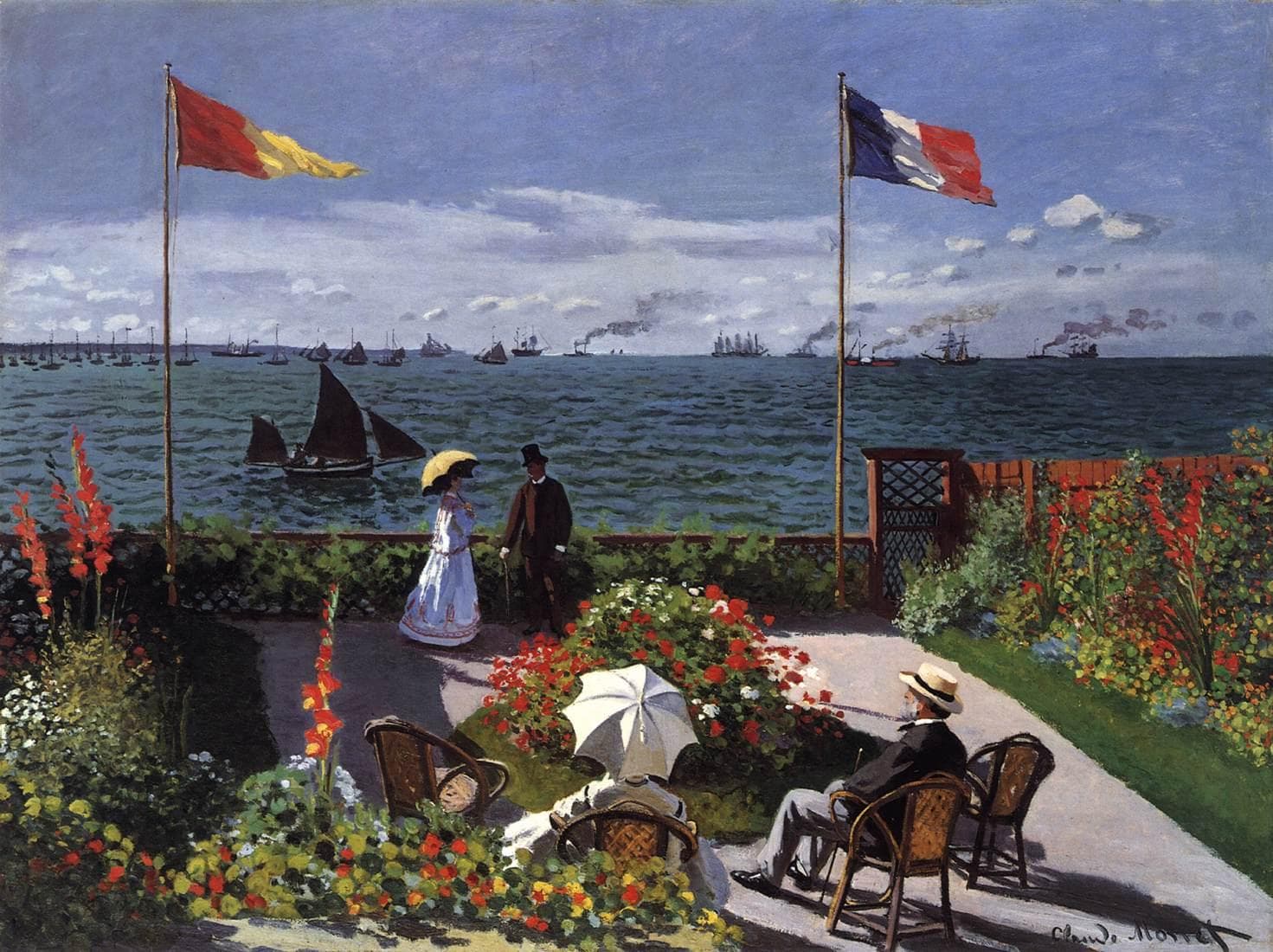
Garden at Sainte-Adresse
Claude Monet · 1867

The Scream
Edvard Munch · 1893

Ophelia
John Everett Millais · 1851–52