Impressionism
The Manneporte (Étretat)
Claude Monet, 1883
The Manneporte (Étretat) is an 1883 painting by Claude Monet of the colossal rock arch west of Étretat, seen from below with surf breaking at its foot. It is in the Metropolitan Museum of Art, New York.
- Artist
- Claude Monet
- Date
- 1883
- Medium
- Oil on canvas
- Dimensions
- 65.4 × 81.3 cm
- Collection
- Metropolitan Museum of Art, New York, United States
- Movement
- Impressionism
- Catalogue
- Wildenstein 832
Painted at Étretat and the Normandy CoastMore at Monet at the Met
What you are looking at
A gigantic arch of rock fills almost the whole canvas. Its outer edge rises from the lower left, curves over the top of the picture and plunges down again at the right, so we see the sky and sea through the opening as if through a window. The rock is painted in grey, ochre, lilac and green, and sunlight catches the inner face of the right-hand pillar in a long sweep of gold and cream, while the outer face, toward us, is in cool blue-grey shadow.
At its foot the sea breaks in white surf over dark, weed-covered rocks, spray rising at the right where a wave hits the base of the arch. Through and beyond the opening, far out, the horizon is a thin line under a sky of drifting white and lilac cloud. On a rock ledge at the left edge of the opening, two tiny dark marks read as figures, the only clue to the arch's size. Monet signed and dated the canvas at lower left.
This is the Manneporte, the largest of the natural arches in the cliffs around Étretat on the Normandy coast. Claude Monet painted it in 1883. The canvas measures 65.4 by 81.3 centimeters, is number 832 in Wildenstein's catalogue, and is in the Metropolitan Museum of Art, New York.
Where and when
Étretat lies between two chalk headlands north of Le Havre. The Manneporte is on the western side, beyond the Porte d'Aval and the Aiguille, and is hard to reach from the town beach. Its name is traditionally derived from magna porta, "great gate," and the arch is big enough for a boat to pass through. To paint it from this low angle Monet had to go down to the rocks at low tide and work against the incoming sea.
He knew Étretat from earlier stays, but in late January and February 1883 he came for his first concentrated painting campaign there, about three weeks in winter weather. He needed new work for a one-man show at Durand-Ruel's gallery that March, and the Manneporte was among his boldest new subjects. He returned in the autumn of 1885 and briefly in 1886, painting the arch several more times. See Étretat and the Normandy Coast.
How it was painted
Unlike earlier painters of the arches, who usually showed them from the beach as picturesque sights, Monet goes up close and cuts the rock off at the edges, so the arch becomes almost overwhelming. There is no foreground beach and no comfortable place for the viewer to stand.
The brushwork changes with the material. On the rock, Monet uses short, layered strokes that follow the bands of chalk and flint, so the stone seems built up in strata. In the sea the strokes are curved and broken, thick white where the waves break, dark blue-green in the hollows. The sky through the arch is painted more thinly, in soft blues and creams.
Notice the light. The contrast between the shaded outer face and the sunlit inner face gives the rock its mass, and it makes the bright view through the opening feel far away. The tiny marks at the left are easy to miss, yet once read as people they change everything about the scale.
The motif and its siblings
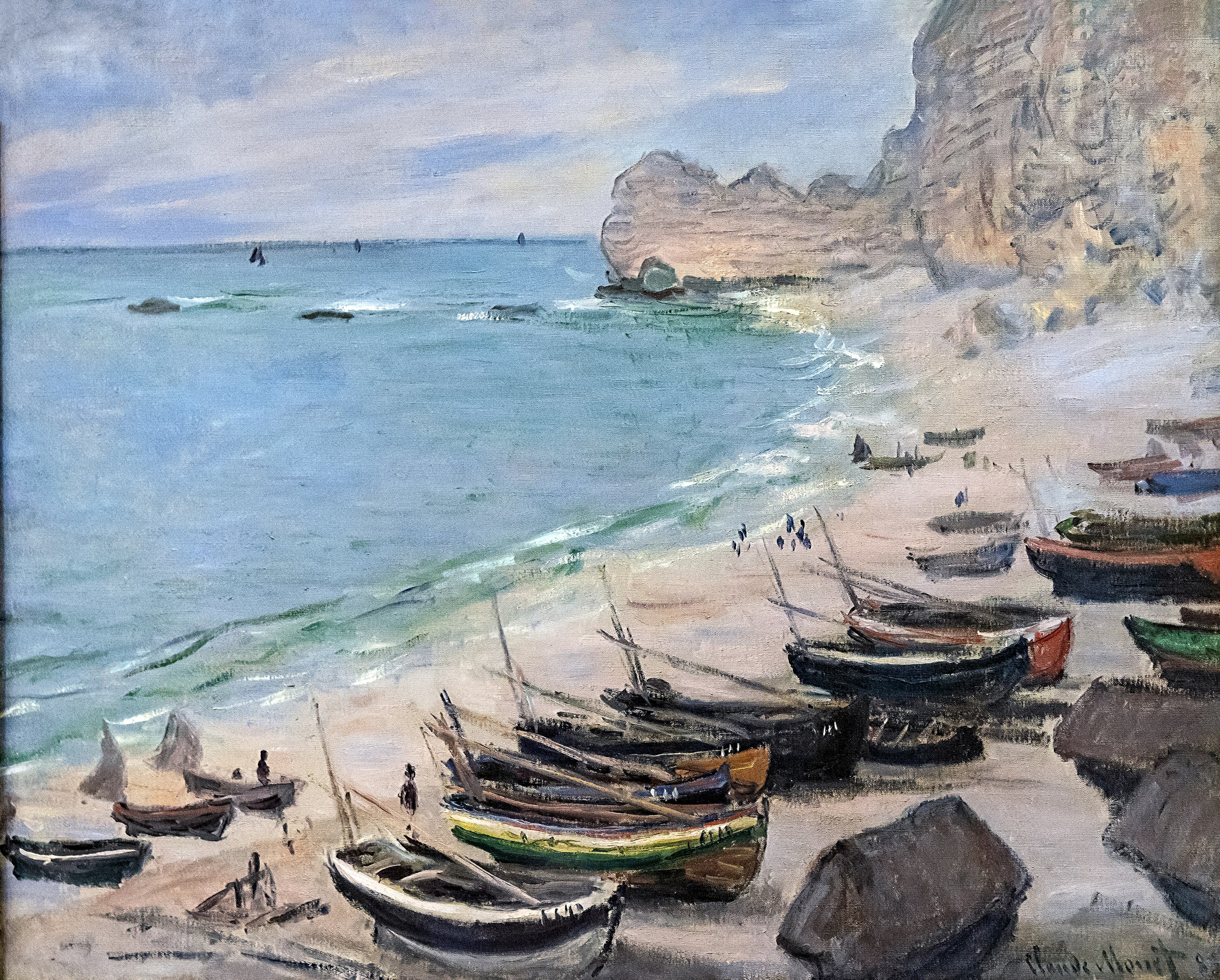
The Manneporte became one of Monet's recurring Étretat subjects. The Metropolitan Museum also owns a later, upright view of the same arch, La Manneporte near Étretat of 1886, and the Musée d'Orsay has La Manneporte, Reflections on the Sea, painted from a ledge as the tide came in. From the same 1883 campaign come Rough Sea at Étretat and The Beach at Étretat; from 1885, the Porte d'Aval and Aiguille in The Cliffs at Étretat.
Where to see it
The painting is in the Metropolitan Museum of Art, New York, which received it in 1951 with the bequest of William Church Osborn: see Monet at the Met. For the artist, see Claude Monet.
Questions & answers
Where is Monet's The Manneporte?
This 1883 version is in the Metropolitan Museum of Art, New York, which also owns a later upright view of the arch from 1886. The 1883 canvas measures 65.4 by 81.3 centimeters and is catalogued by Wildenstein as number 832.
When and where was The Manneporte painted?
In February 1883 at Étretat on the Normandy coast, during a three-week winter campaign before Monet's one-man show at Durand-Ruel's gallery in Paris. He painted the arch from the rocks below at low tide.
What is the Manneporte?
The Manneporte is the largest natural arch in the chalk cliffs at Étretat, west of the Porte d'Aval. Its name is traditionally explained as coming from the Latin magna porta, 'great gate.' It can only be reached safely at low tide.
How many times did Monet paint the Manneporte?
Several times: in 1883, and again in 1885 and 1886, from different angles and tides. Versions are in the Metropolitan Museum and the Musée d'Orsay, among other collections.
More by the artist
Claude Monet

Bridge over a Pond of Water Lilies
Claude Monet · 1899

Woman with a Parasol – Madame Monet and Her Son
Claude Monet · 1875

Sunset in Venice
Claude Monet · 1908–12

La Grenouillère
Claude Monet · 1869

Beach in Pourville
Claude Monet · 1882

Springtime
Claude Monet · 1872

Boating on the River Epte
Claude Monet · 1890

The Seine at Asnières (Hermitage)
Claude Monet · 1873
Also painted in 1883
The same year
Kindred works
You may also study
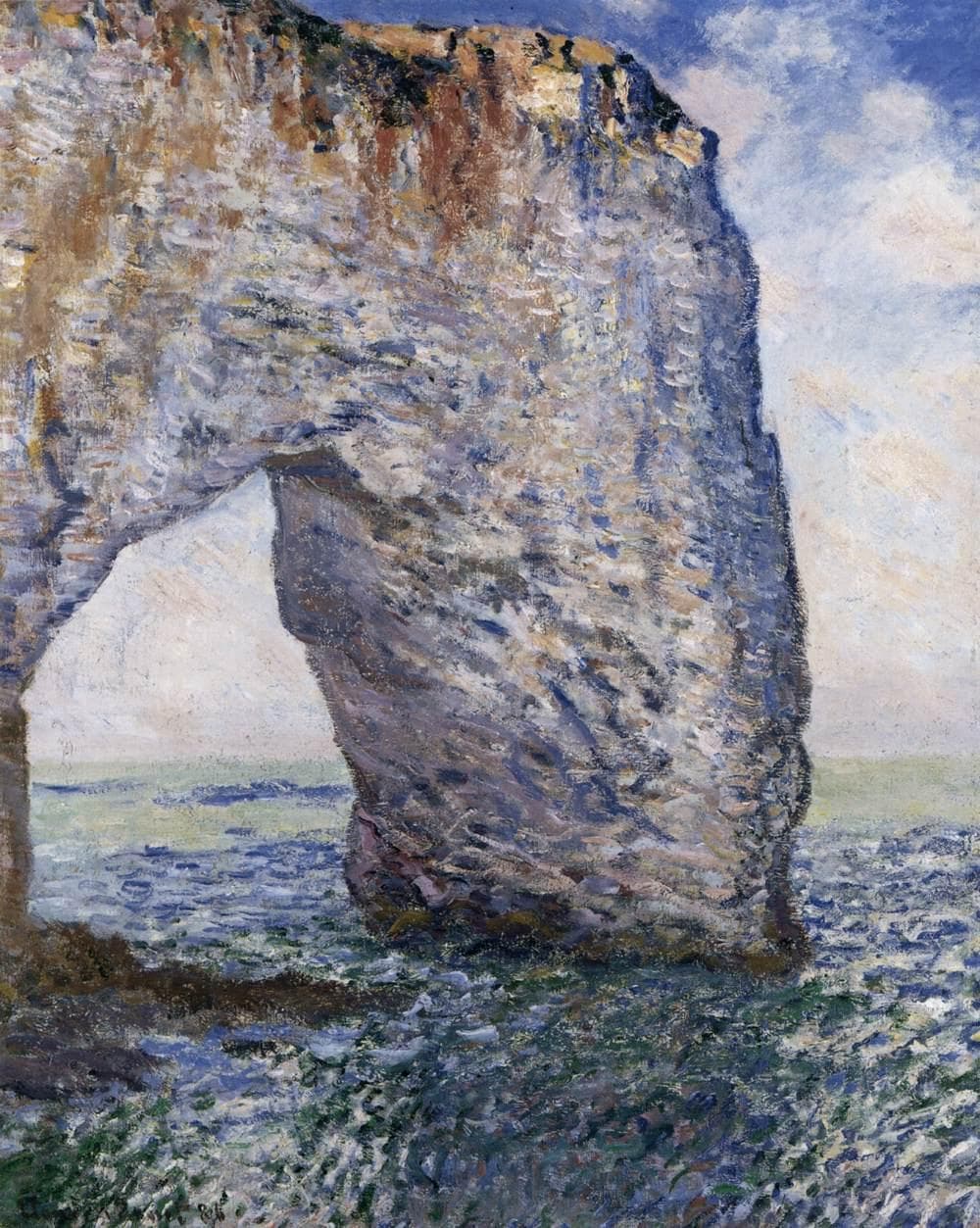
The Manneporte near Étretat
Claude Monet · 1886
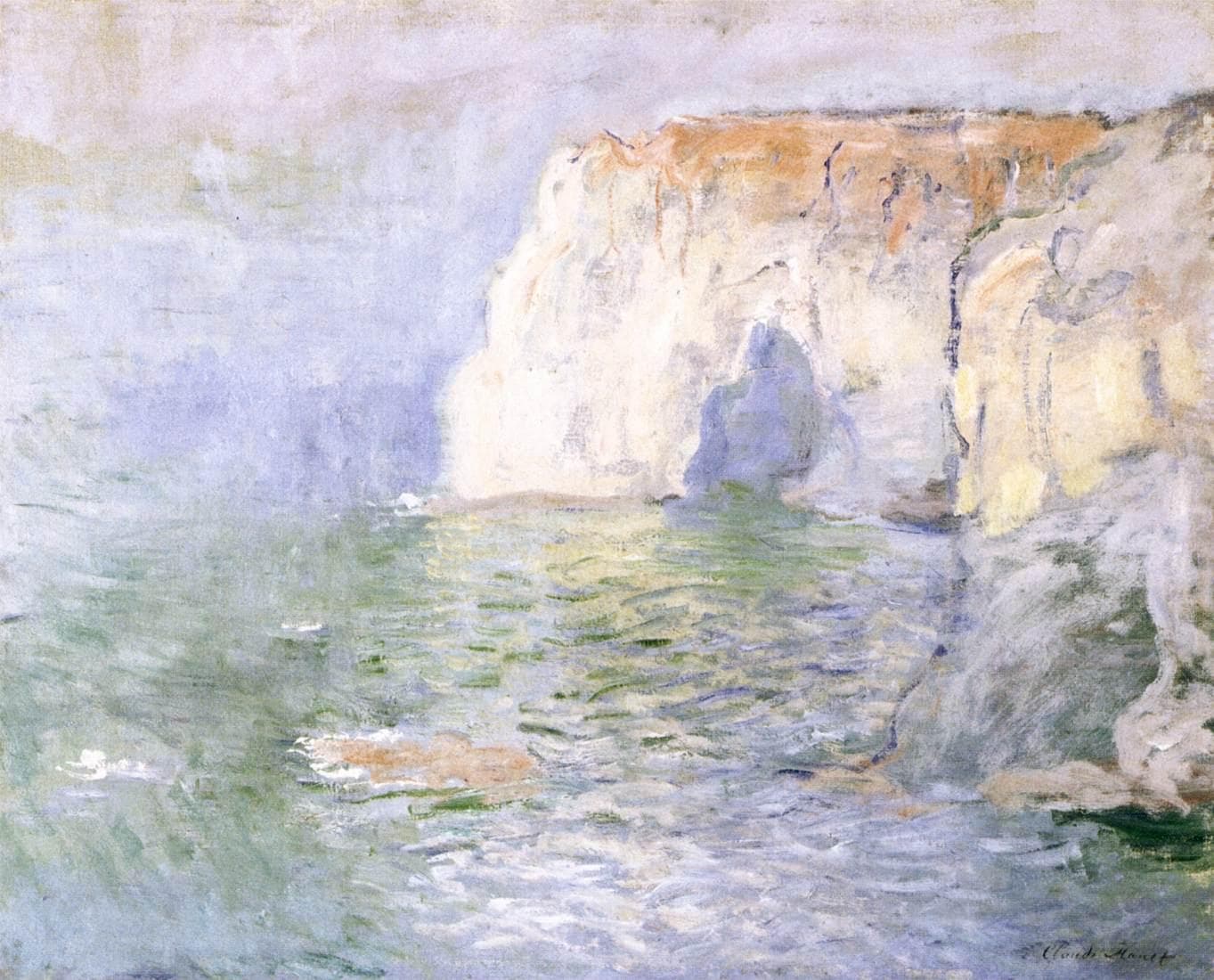
Étretat, the Manneporte, Reflections on the Water
Claude Monet · c. 1885
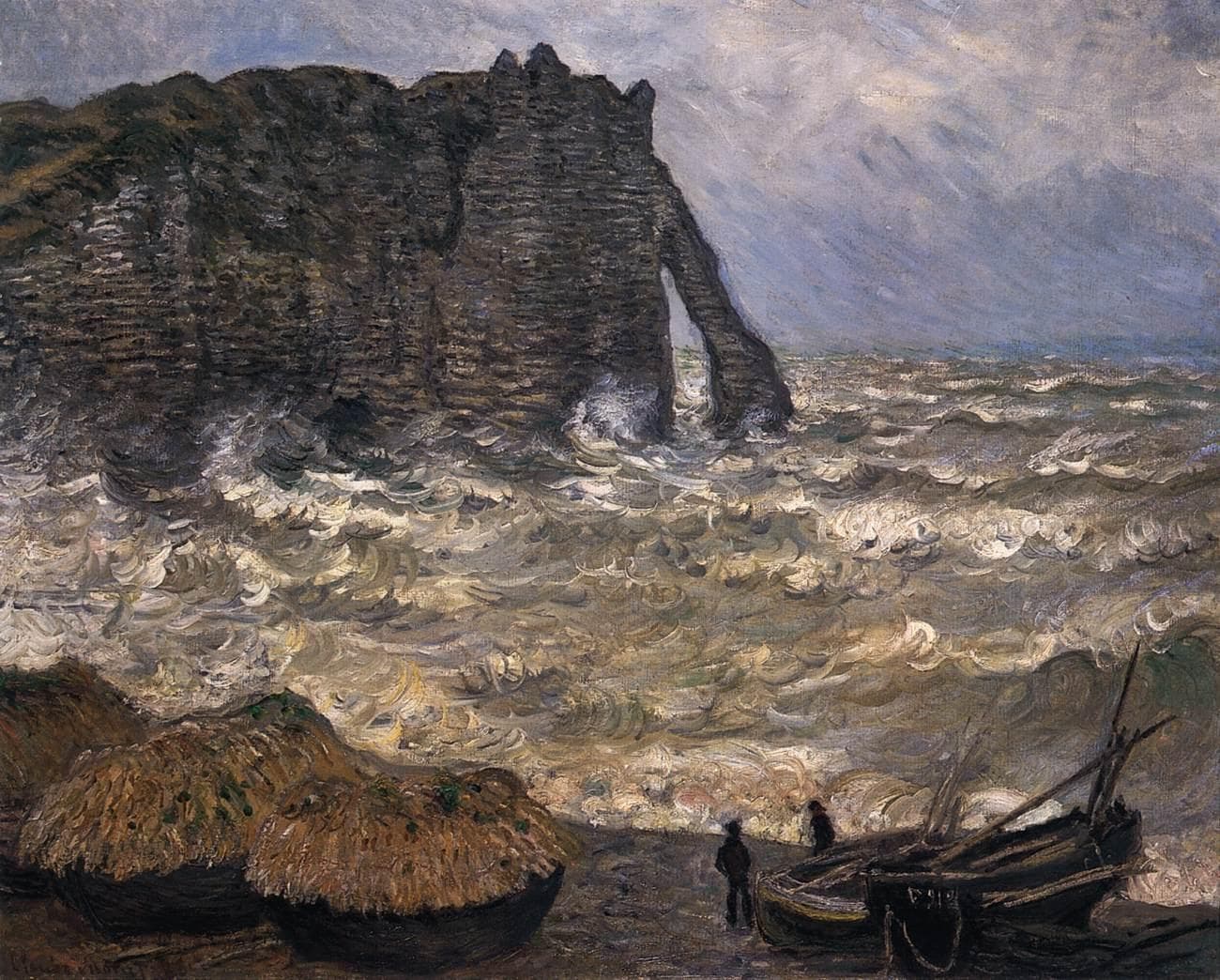
Rough Sea at Étretat
Claude Monet · 1883
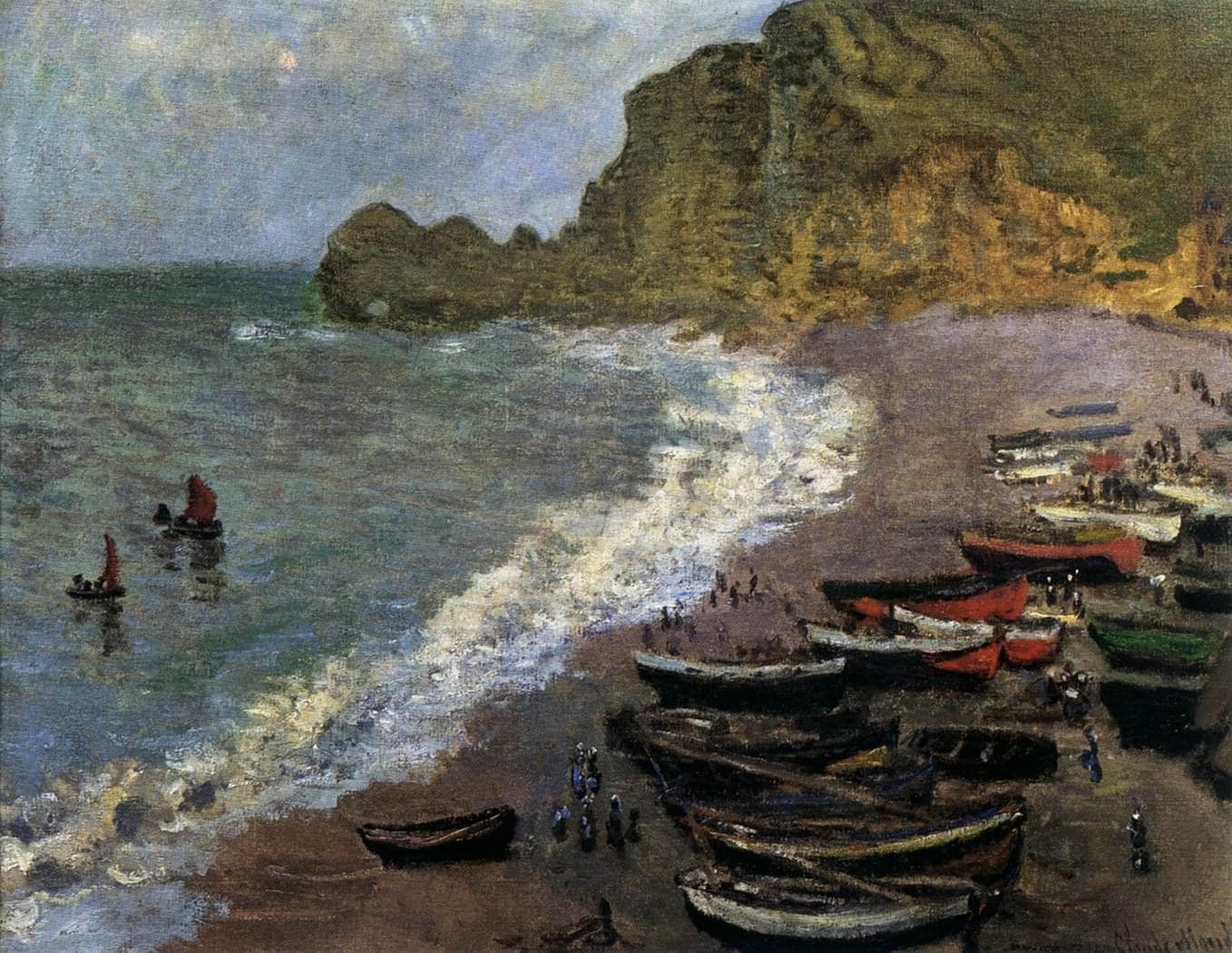
The Beach at Étretat
Claude Monet · 1883
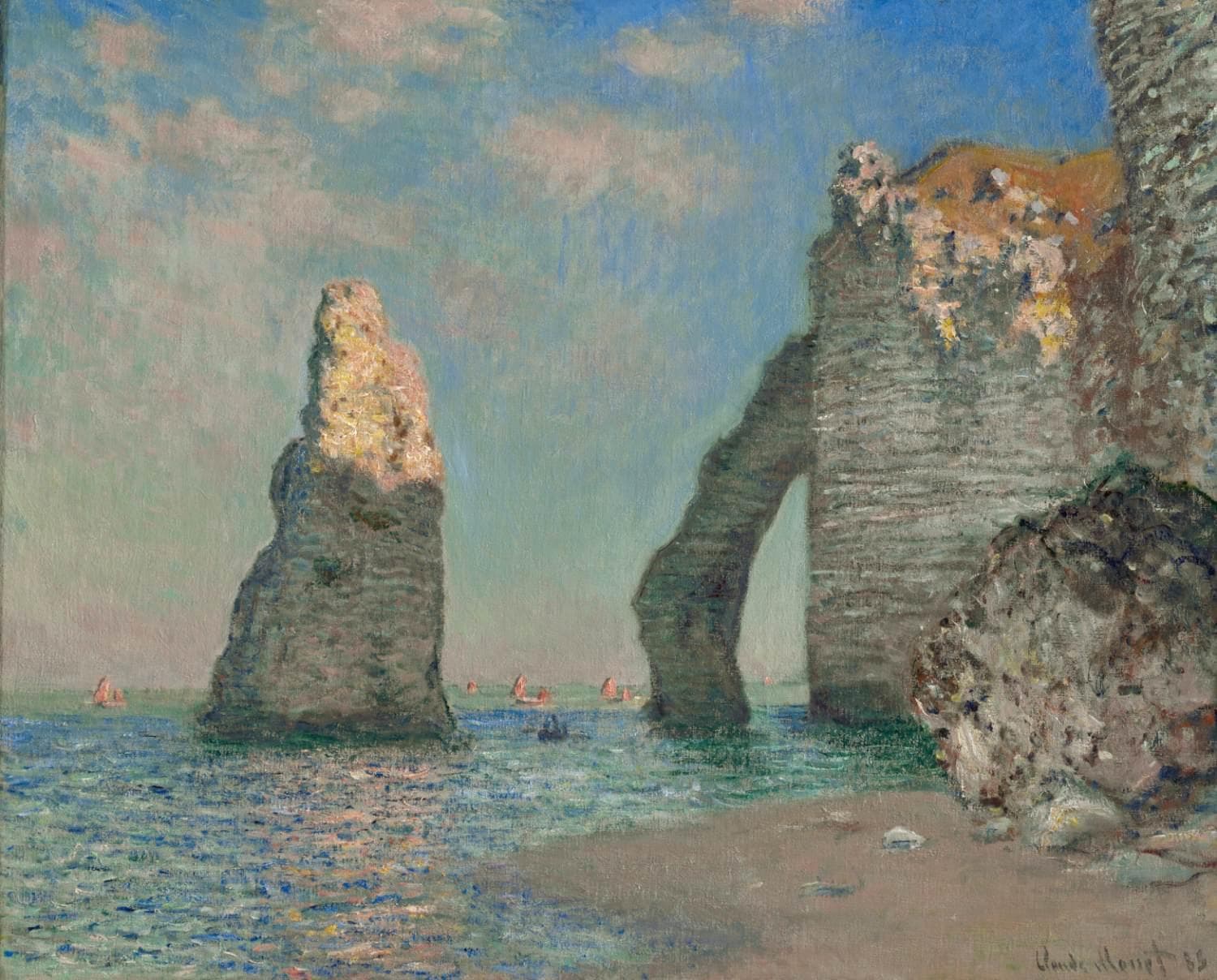
The Cliffs at Étretat
Claude Monet · 1885

The Scream
Edvard Munch · 1893

Ophelia
John Everett Millais · 1851–52

The Great Wave off Kanagawa
Katsushika Hokusai · c. 1830–32