Impressionism
The Rocks at Pourville, Low Tide
Claude Monet, 1882
The Rocks at Pourville, Low Tide is an 1882 oil by Claude Monet showing dark reefs and breaking surf on the Normandy coast under a silvery evening sky. It belongs to the Memorial Art Gallery of the University of Rochester, New York.
- Artist
- Claude Monet
- Date
- 1882
- Medium
- Oil on canvas
- Dimensions
- 64.3 × 78.7 cm
- Collection
- Memorial Art Gallery, University of Rochester, Rochester, New York, United States
- Movement
- Impressionism
- Catalogue
- Wildenstein 767
Painted at Étretat and the Normandy Coast
What you are looking at
The tide is out, and the sea floor has become a landscape of dark, weed-covered rock. A great slab of it fills the lower right corner, almost black, its surface built from short, dense strokes of brown, olive and violet. On the left, more ledges run back in a broken line toward the horizon, and between them the returning sea pours in, churning into white foam. Small human figures stand out on the far rocks, tiny dark verticals against the light: people gathering shellfish at low tide, as the inhabitants of the Normandy coast still do. Beyond them a headland of cliffs runs out from the left, and on the far horizon a row of sails is just visible.
The sky takes up nearly half of the canvas and sets the mood. It is a low, streaked sky of gray-violet cloud, broken by bars of silver light that spill down onto the water. Monet paints the sea in the foreground not as blue but as a skein of curling white and pale lilac strokes, each one a little hook of paint, so that the water seems to boil around the rocks. The contrast between the heavy, opaque reef and the bright, restless water is the subject of the picture.
Look at the lower right, where Monet signed the canvas in red on the dark rock. And notice how high the horizon sits on the left compared with the right: the composition tilts, pulling the eye along the receding line of reefs to the distant figures.
How Monet painted it
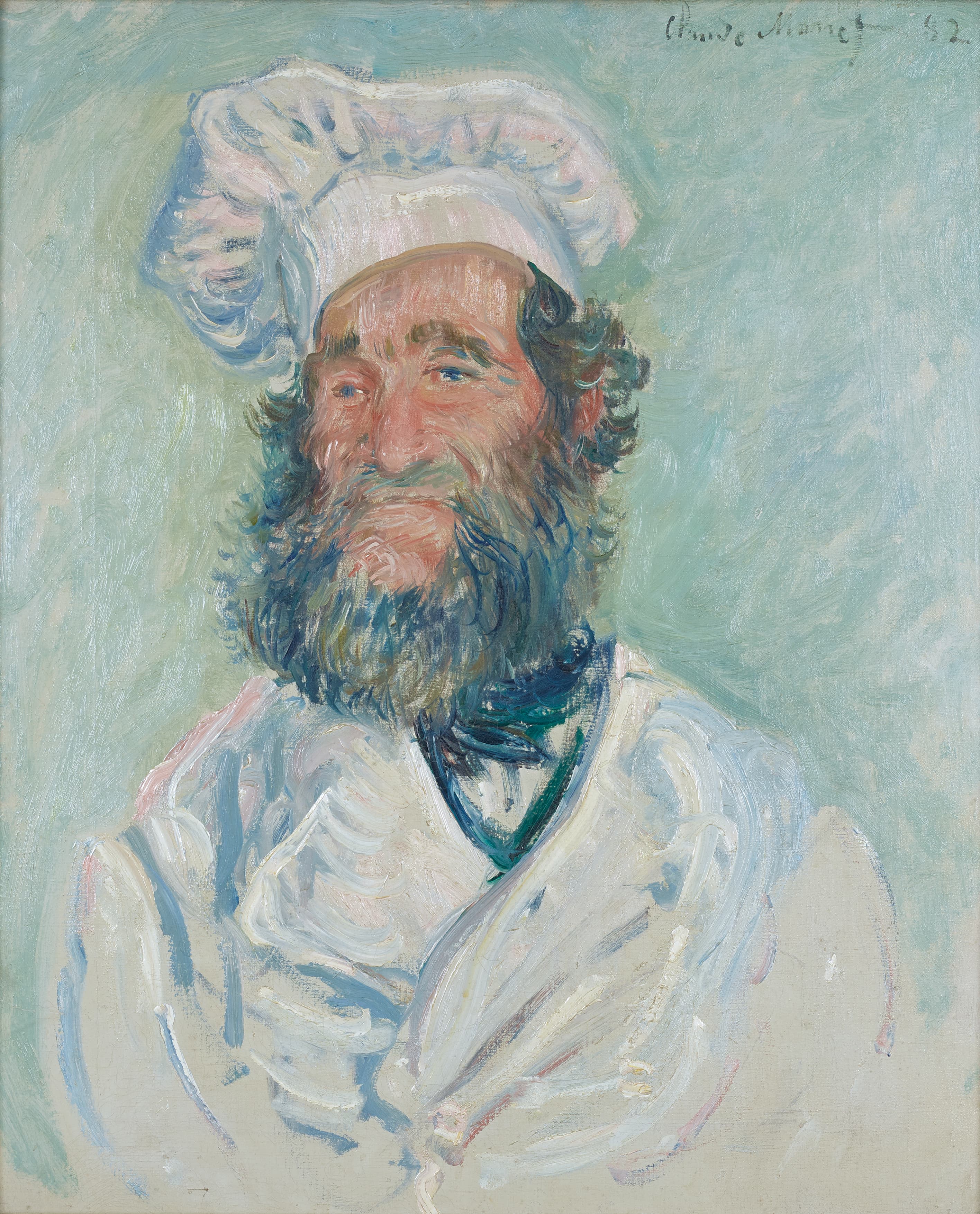
In February 1882 Monet went to the Normandy coast, first to Dieppe and then to the small village of Pourville just to the west, where he found lodgings at the inn and restaurant of Paul Graff, known locally as Père Paul, whose portrait he also painted, along with one of Graff's wife and a still life of her famous galette. He was delighted by the place and returned for a long stay that summer, bringing Alice Hoschedé and the children. Over the spring and summer he painted dozens of canvases of the beach, the cliffs, the customs officer's cottage on the clifftop and the rocks exposed at low tide. The Memorial Art Gallery notes that as he explored the beach and the rocks, Monet found a startling diversity of viewpoints, and that his method was shifting from completing a picture outdoors in one go toward many concentrated studies made on the spot and worked up later.
This canvas shows that method in action. The rocks are built up in thick layers, while the sky is laid on more thinly, with long dragged strokes. Low tide gave Monet a viewpoint few earlier painters had used: standing out on the reef among the pools, looking along the shore rather than out to sea.
Context
Pourville belongs to the run of coastal campaigns that dominated Monet's work in the 1880s: Fécamp and Dieppe in 1881–82, Étretat in 1883–86, Bordighera in 1884, and Belle-Île in 1886. After the difficult Vétheuil years, these trips gave him new motifs that his dealer Paul Durand-Ruel could sell, and they pushed him toward bolder, more physical paint handling. Related pictures from the same summer include Clifftop Walk at Pourville and Cliffs near Dieppe.
Seen next to his paintings from the same weeks, the Rochester picture is one of the darkest and most dramatic. Other Pourville canvases show the beach under bright sun, with sails and blue water; here the light is low and silvery, perhaps late in the day, and the rocks are almost black. Monet often painted the same stretch of shore under different conditions, an early sign of the serial method that would govern his work in the 1890s.
Meaning
Monet left no program for the picture, but it is easy to see what drew him. Low tide reveals a world that is neither land nor sea, and its look changes by the minute as the water returns. For a painter obsessed with transient effects, it was an ideal motif. The tiny figures also give scale and a quiet human note: the people of the coast going about their work, dwarfed by rock and weather. Scholars have linked such scenes to Monet's admiration for the seascapes of Gustave Courbet and for Japanese prints, whose high horizons and cropped forms he echoes here.
Provenance and where to see it
Emily Sibley Watson (Mrs. James Sibley Watson) of Rochester bought the painting from Durand-Ruel in May 1905 and gave it in 1939 to the Memorial Art Gallery, which she had founded in 1913 (accession 1939.22). It remains one of the highlights of the gallery's French collection and was lent to the 2019 exhibition Monet: The Truth of Nature. For more Monet seas, see Stormy Sea and famous Monet paintings.
Questions & answers
Where is The Rocks at Pourville, Low Tide?
It is in the Memorial Art Gallery of the University of Rochester in Rochester, New York. Emily Sibley Watson, the gallery's founder, bought it from the dealer Durand-Ruel in 1905 and gave it to the gallery in 1939.
Where is Pourville?
Pourville-sur-Mer is a small seaside village on the Normandy coast, just west of Dieppe in northern France. Monet stayed there in the spring and summer of 1882 and painted the beach, cliffs and rocks many times.
What are the people doing on the rocks?
At low tide the people of the Normandy coast went out onto the exposed reefs to gather shellfish and shrimp, a practice that continues today. Monet includes them as tiny dark figures to give the scene scale.
More by the artist
Claude Monet

Bridge over a Pond of Water Lilies
Claude Monet · 1899

Woman with a Parasol – Madame Monet and Her Son
Claude Monet · 1875

Sunset in Venice
Claude Monet · 1908–12

La Grenouillère
Claude Monet · 1869

Beach in Pourville
Claude Monet · 1882

Springtime
Claude Monet · 1872

Boating on the River Epte
Claude Monet · 1890

The Seine at Asnières (Hermitage)
Claude Monet · 1873
Also painted in 1882
The same year
Kindred works
You may also study
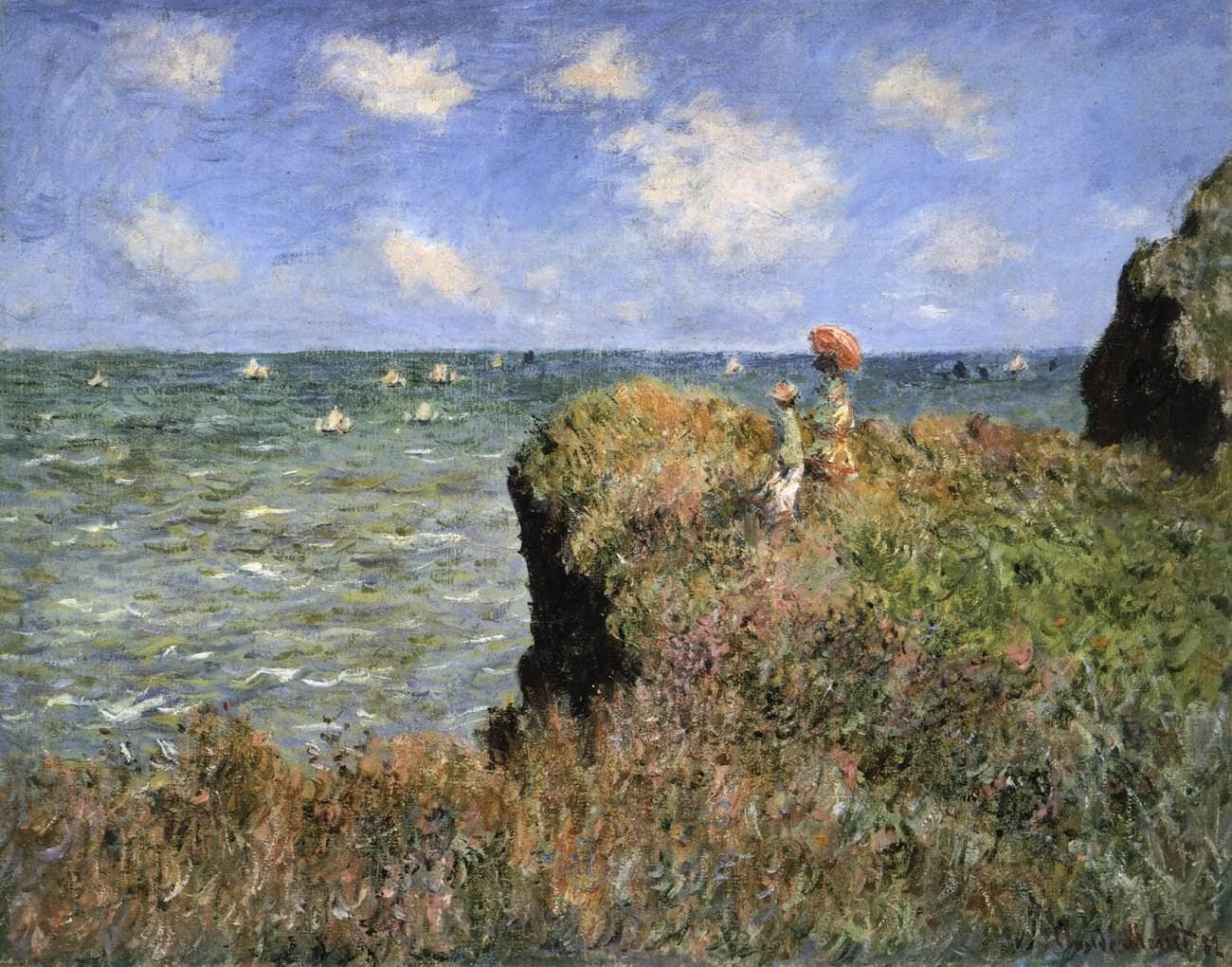
Cliff Walk at Pourville
Claude Monet · 1882
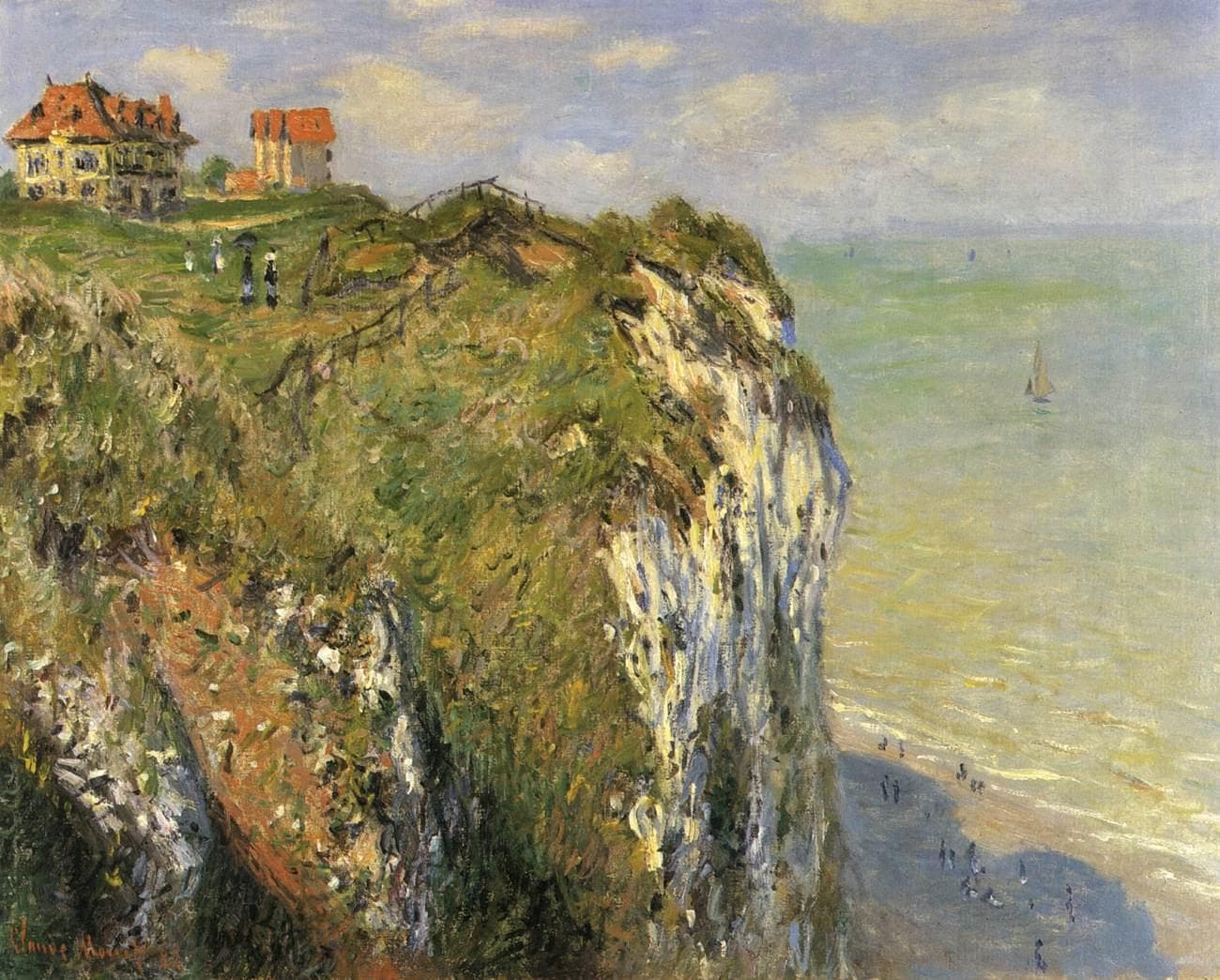
Cliffs near Dieppe
Claude Monet · 1882
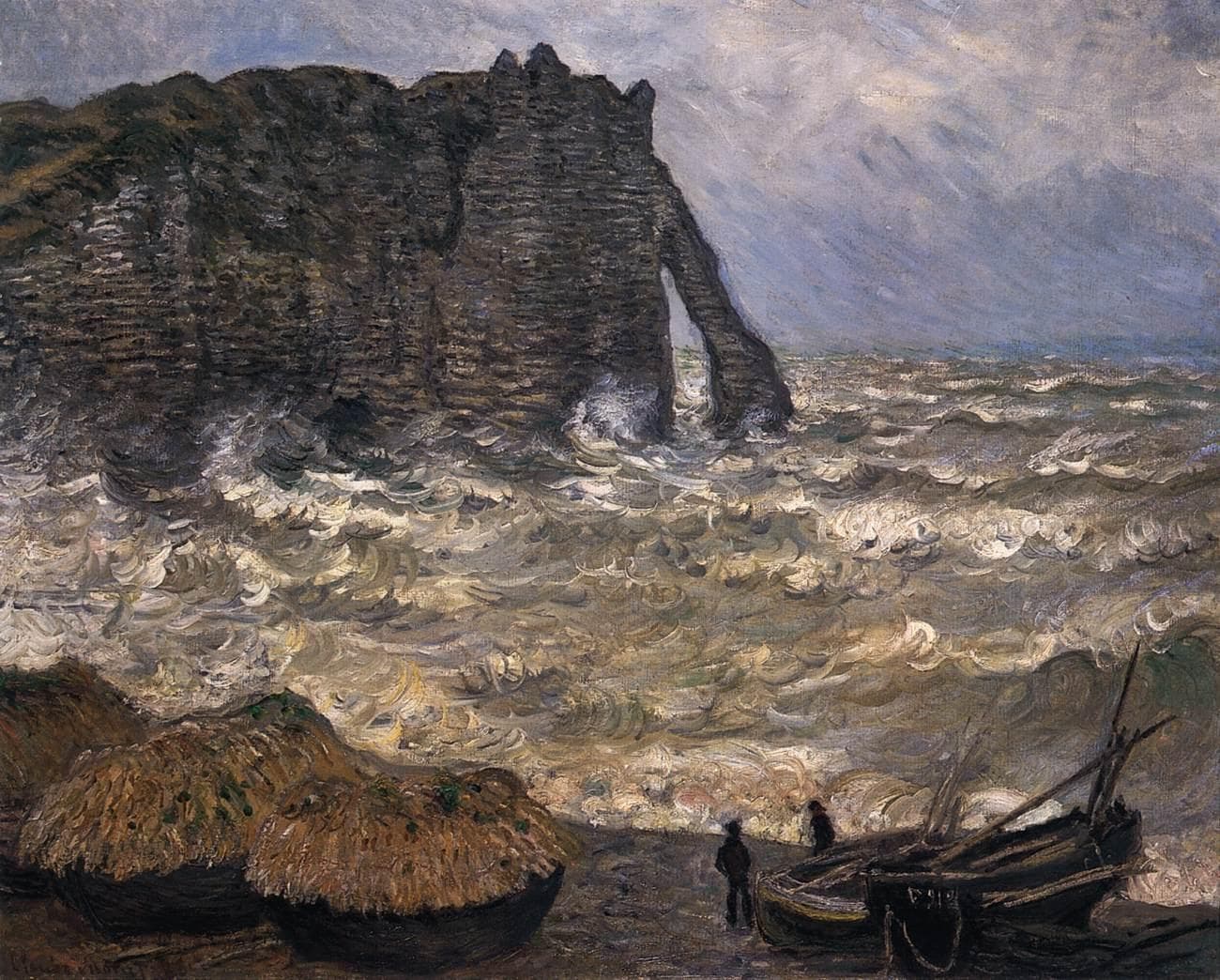
Rough Sea at Étretat
Claude Monet · 1883
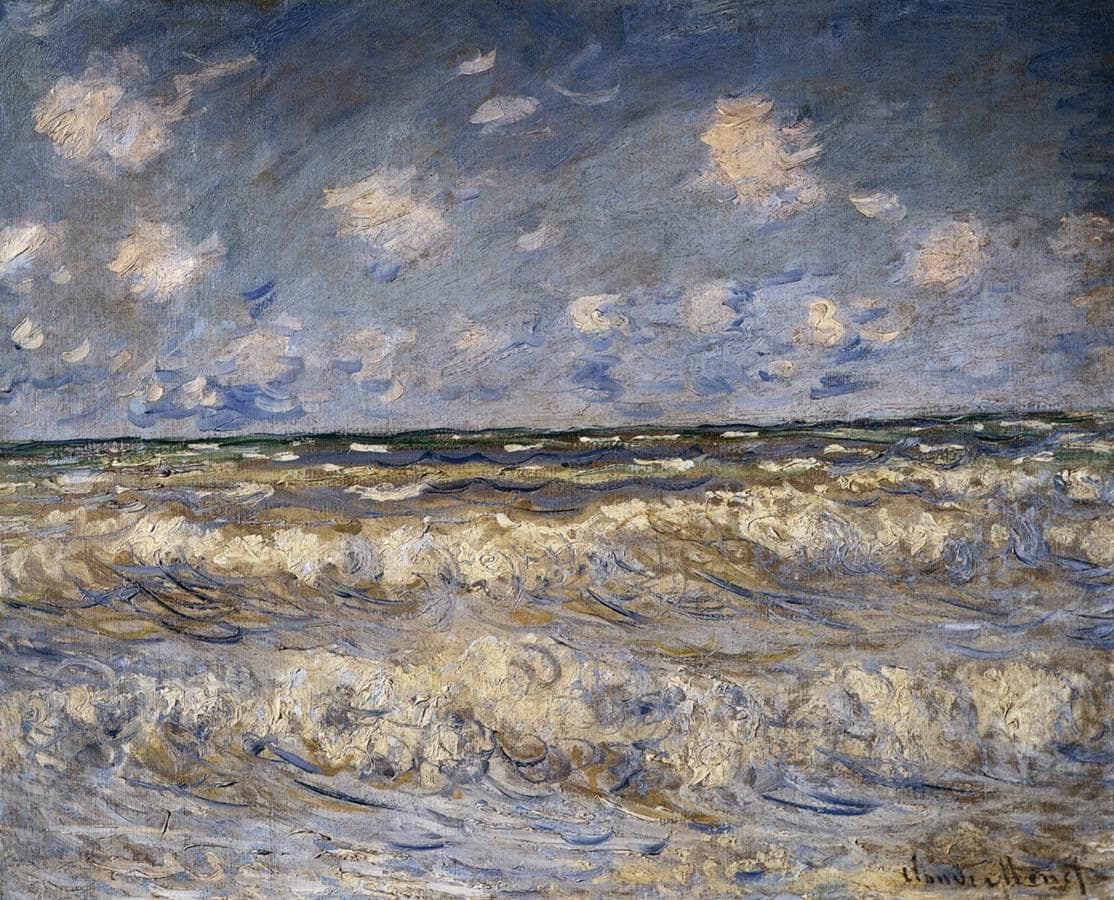
Stormy Sea
Claude Monet · c. 1881–84
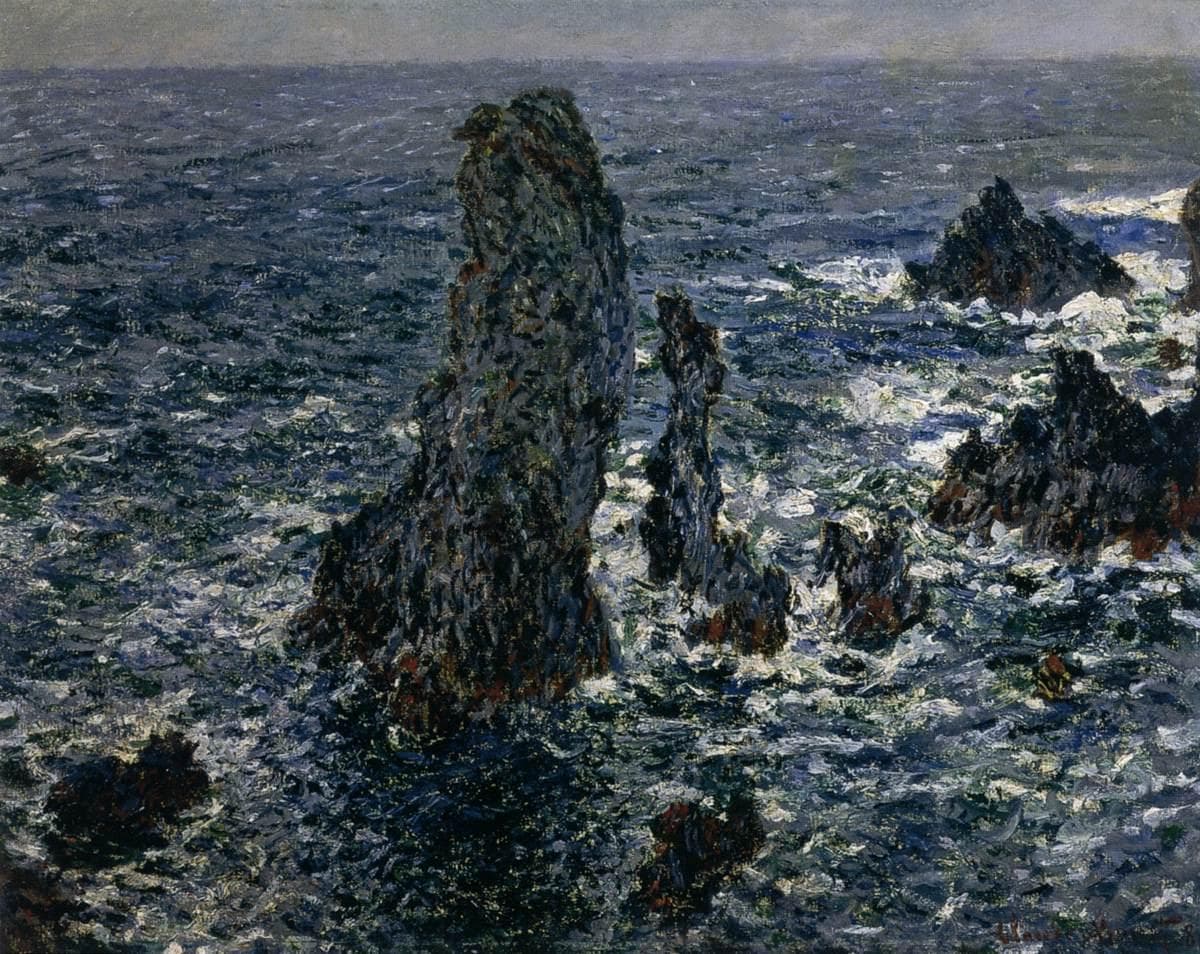
The Pyramides at Port-Coton, Rough Sea
Claude Monet · 1886

The Scream
Edvard Munch · 1893

Ophelia
John Everett Millais · 1851–52

The Great Wave off Kanagawa
Katsushika Hokusai · c. 1830–32