Impressionism
Sailboat, Evening Effect
Claude Monet, 1885
Sailboat, Evening Effect (Le Voilier, effet du soir) is an 1885 painting by Claude Monet of a single fishing boat silhouetted on a yellow-green evening sea. It is in the Musée Marmottan Monet, Paris.
- Artist
- Claude Monet
- Date
- 1885
- Medium
- Oil on canvas
- Dimensions
- 54 × 65 cm
- Collection
- Musée Marmottan Monet, Paris, France
- Movement
- Impressionism
- Catalogue
- Wildenstein 1027
Painted at Étretat and the Normandy CoastMore at Musée Marmottan Monet
What you are looking at
A single sailboat sits in the middle of a calm sea, its dark sails, one large and one small, standing up like a black triangle against a sky of yellow and pale green. Its hull is a low dark shape; a small spar or second mast leans out at the bow. Its reflection drops straight down beneath it in a wavering column of blue-black and violet. Above, the sky is laid in with broad, sweeping strokes of yellow, cream and gray, with a band of rust and violet cloud along the horizon. Below, the sea repeats the sky's colors in long horizontal bands, broken by dark lines of swell.
The boat is the only object in the picture. Everything else is color and light, and the moment is the brief one just after sunset, when the sky turns from gold to green.
Étretat, 1885
Claude Monet spent the autumn of 1885 at Étretat on the Normandy coast, staying into December and painting the cliffs, the beach and the fishing boats in all conditions. This canvas, catalogued by Wildenstein as W.1027, belongs to that stay; its neighbor in the catalogue, Three Fishing Boats (W.1029), shows the same boats hauled up on the shingle. It is a rapid, informal work, probably painted in a single session as the light changed. The coast is covered on Étretat and the Normandy Coast.
That autumn Monet stayed in a house lent by the singer Jean-Baptiste Faure, and he worked so close to the water that he was once knocked over by a wave while painting below the cliffs. The sea pictures from the stay range from storms to almost motionless evenings like this one.
How it was painted
The painting is about the minutes after sunset, when the sky goes yellow-green and the sea reflects it. Monet works in long, loose strokes with a broad brush, dragging the paint so that the canvas texture shows. Look at the horizon: a line of rust-red and violet cloud separates the yellow sky from the yellow-green sea, and it is the only warm color in the picture.
The sail is painted in two strokes of blue-black, one wide and one narrow, and the reflection below it is made of short, stacked horizontal dabs that break up as they descend. Notice the dark lines across the sea in the foreground, deep violet against yellow: they represent the troughs of the swell, and they are spaced wider as they come toward us, which gives the flat surface depth.
The sky at the top is the loosest passage of all, swirls of cream and gray brushed wet into wet so that the strokes merge. The signature sits at lower right, in dark paint, almost the same color as the sail. The canvas is a modest 54 by 65 centimeters, a size Monet could carry down to the beach and finish before the light failed.
The evening seas and how this one differs
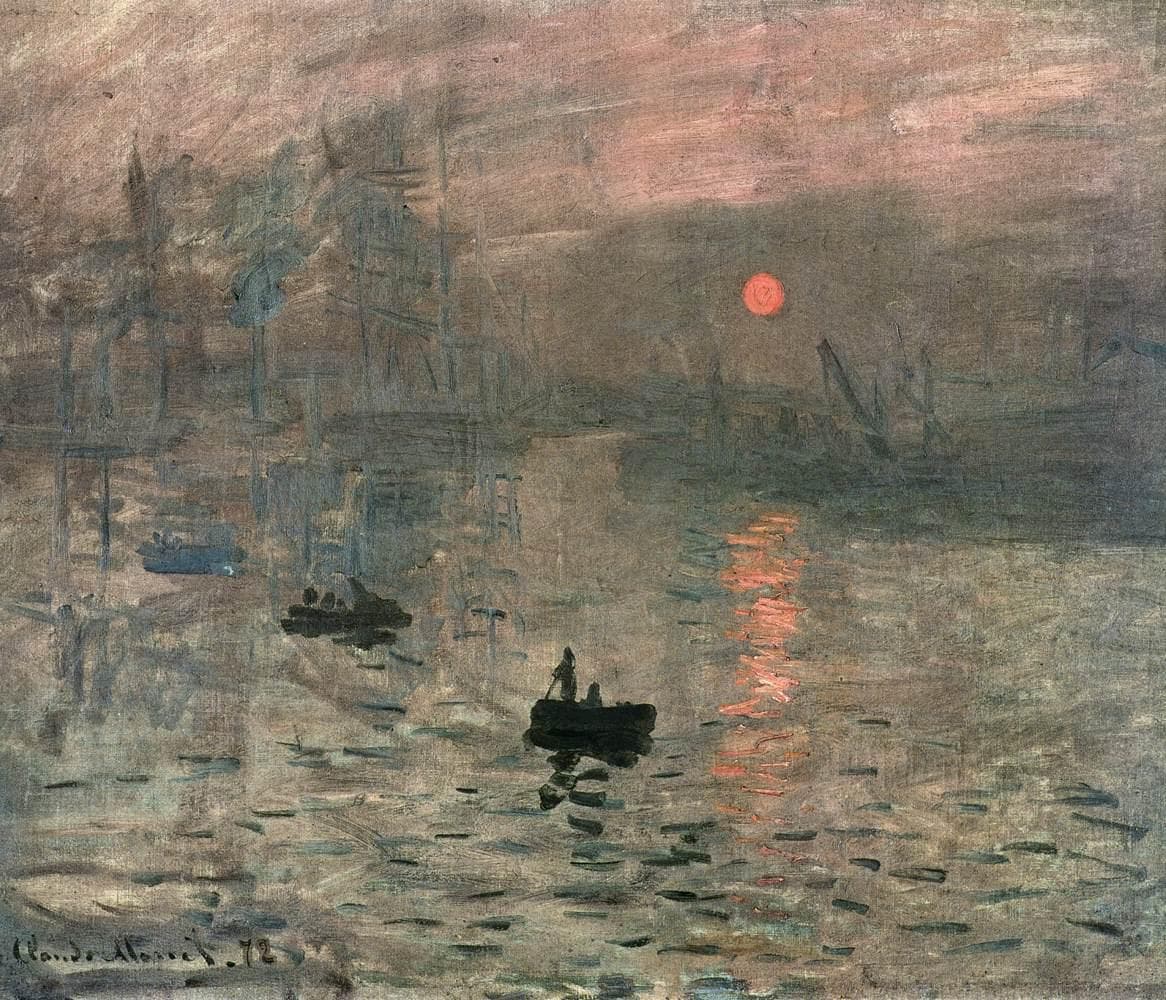
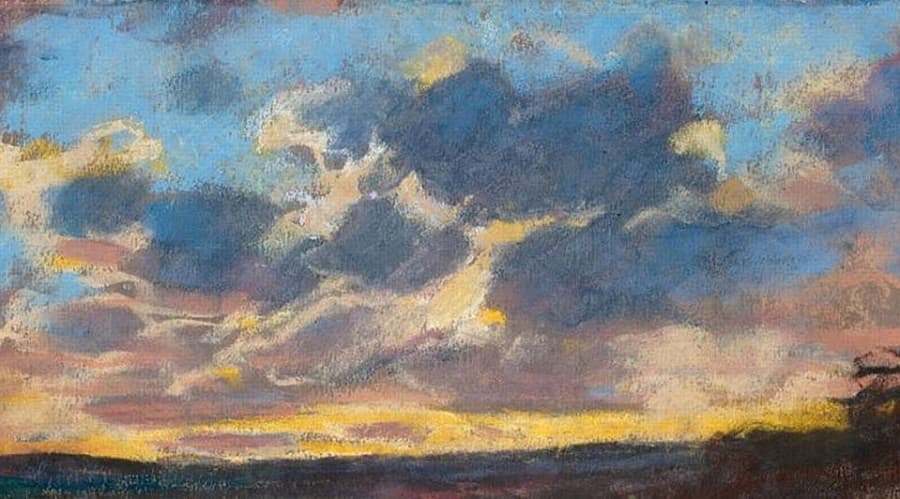
Monet painted boats on glowing water all his life. The obvious comparison is Impression, Sunrise of 1872, also in the Marmottan, where small dark boats float on an orange-lit harbor at dawn. Here the boat is larger, alone and centered, and the color is not orange and blue but yellow, green and violet. Compare also Setting Sun (Nightfall) and the busy beach of Boats on the Beach at Étretat, painted in the same months.
This picture's single motif, centered and stripped of context, looks ahead to the way Monet would isolate one subject in the series of the 1890s. It also shows how freely he painted when no buyer was in view: like many Marmottan pictures, it stayed in the family.
Where to see it
The painting is in the Musée Marmottan Monet, Paris (inventory 5171), which holds the largest collection of Monet's work in the world, much of it bequeathed by his son Michel. Its holdings are described on Musée Marmottan Monet.
Questions & answers
Where is Monet's Sailboat, Evening Effect?
It is in the Musée Marmottan Monet in Paris (inventory 5171), which holds the largest collection of Monet's paintings in the world. The canvas measures 54 by 65 centimeters and is listed in the Wildenstein catalogue raisonné as W.1027, dated 1885.
Where was Sailboat, Evening Effect painted?
It is associated with Monet's stay at Étretat on the Normandy coast in the autumn of 1885, when he painted the cliffs, beach and fishing boats in all weather. It shows a single boat on the open sea just after sunset.
What does the painting show?
One dark sailboat silhouetted on a calm sea under a yellow-green evening sky, with a band of rust and violet cloud on the horizon and the boat's reflection dropping straight down in the water. Everything else is color laid in broad, rapid strokes.
How does it compare with Impression, Sunrise?
Both show a small dark boat on water that reflects a glowing sky, painted rapidly in broad strokes, and both are in the Musée Marmottan Monet. Impression, Sunrise (1872) shows Le Havre harbor at dawn with an orange sun; this 1885 picture shows the open sea at dusk in yellow and green.
More by the artist
Claude Monet

Bridge over a Pond of Water Lilies
Claude Monet · 1899

Woman with a Parasol – Madame Monet and Her Son
Claude Monet · 1875

Sunset in Venice
Claude Monet · 1908–12

La Grenouillère
Claude Monet · 1869

Beach in Pourville
Claude Monet · 1882

Springtime
Claude Monet · 1872

Boating on the River Epte
Claude Monet · 1890

The Seine at Asnières (Hermitage)
Claude Monet · 1873
Also painted in 1885
The same year
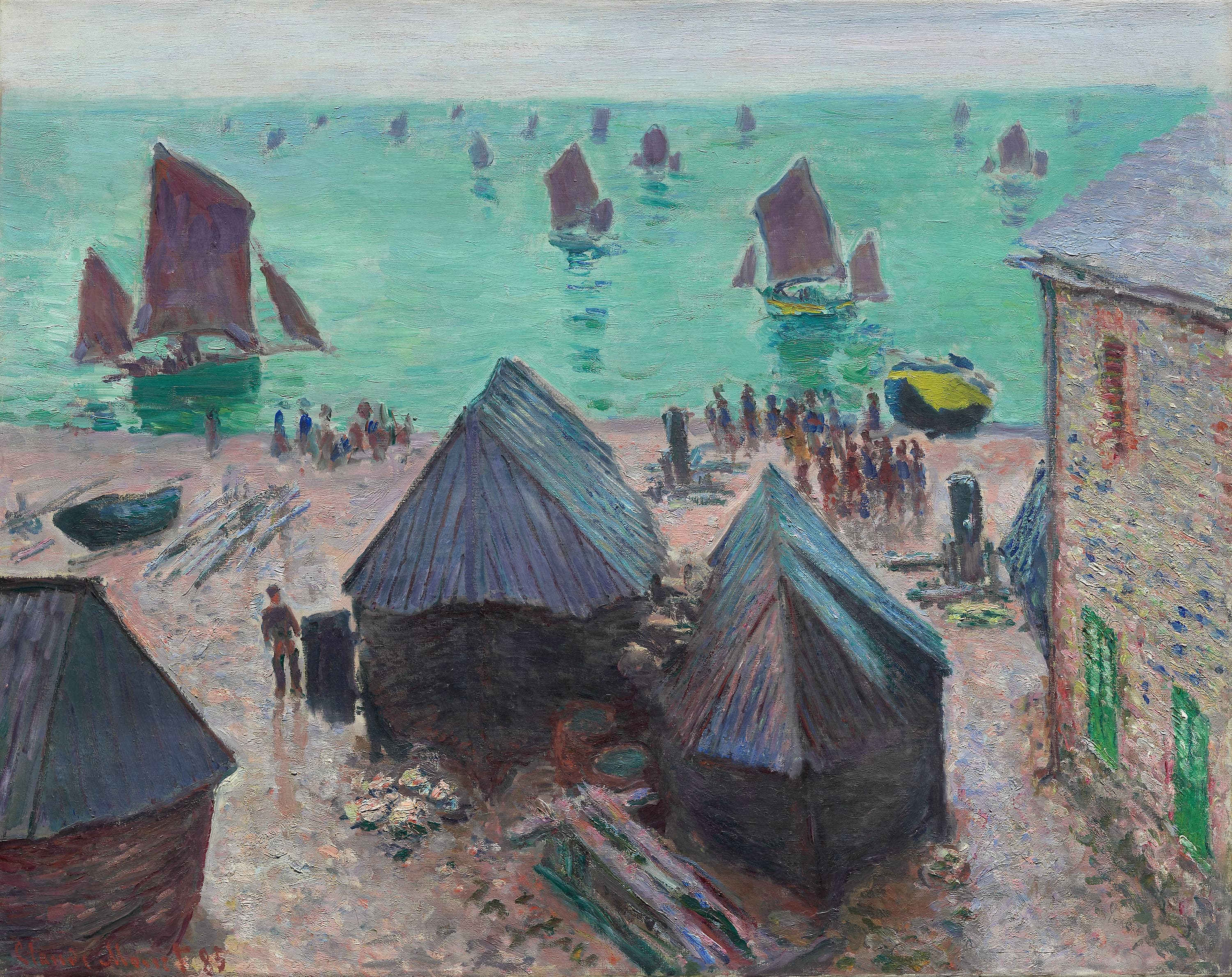
The Departure of the Boats, Étretat
Claude Monet · 1885
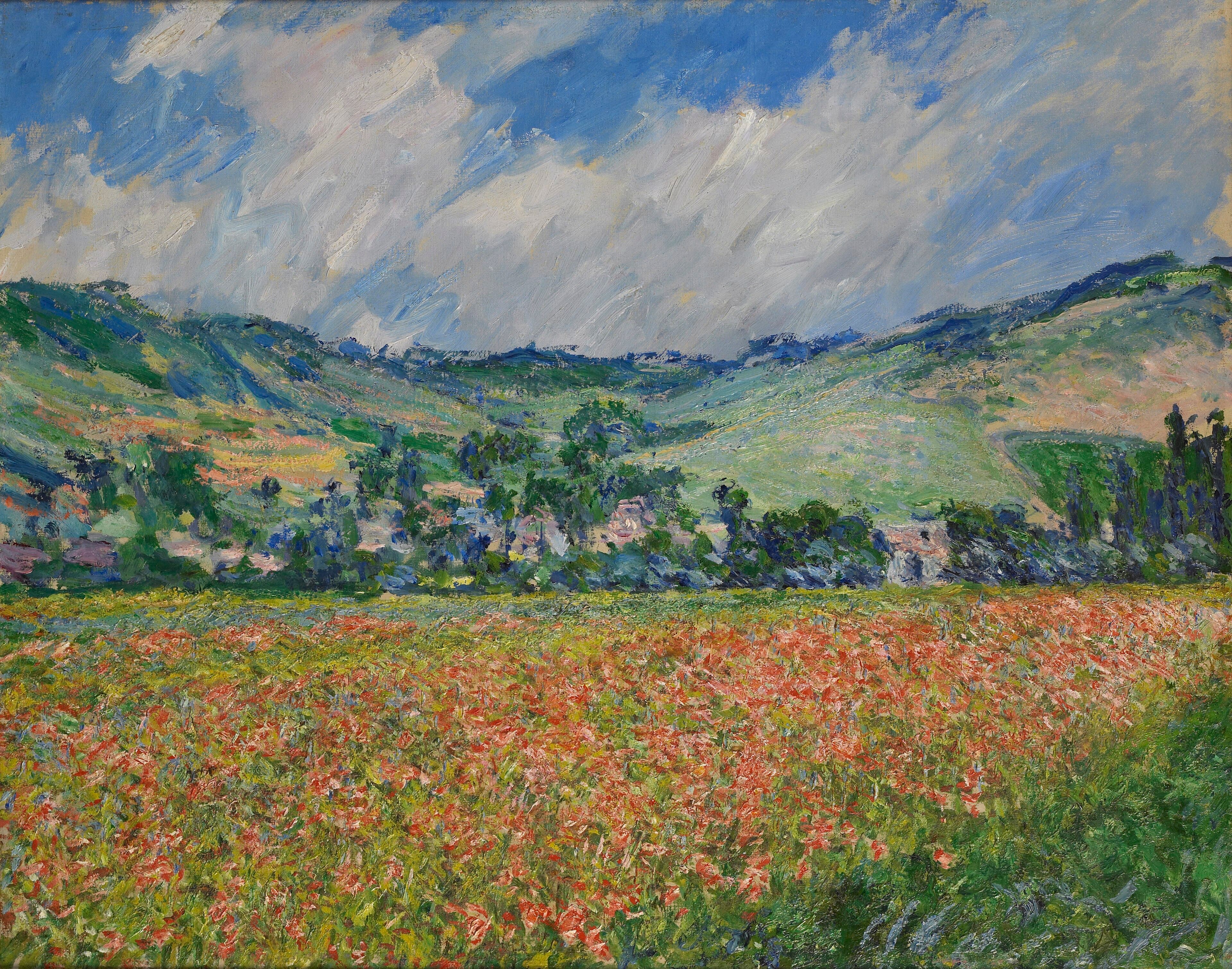
Poppy Field, Around Giverny
Claude Monet · 1885
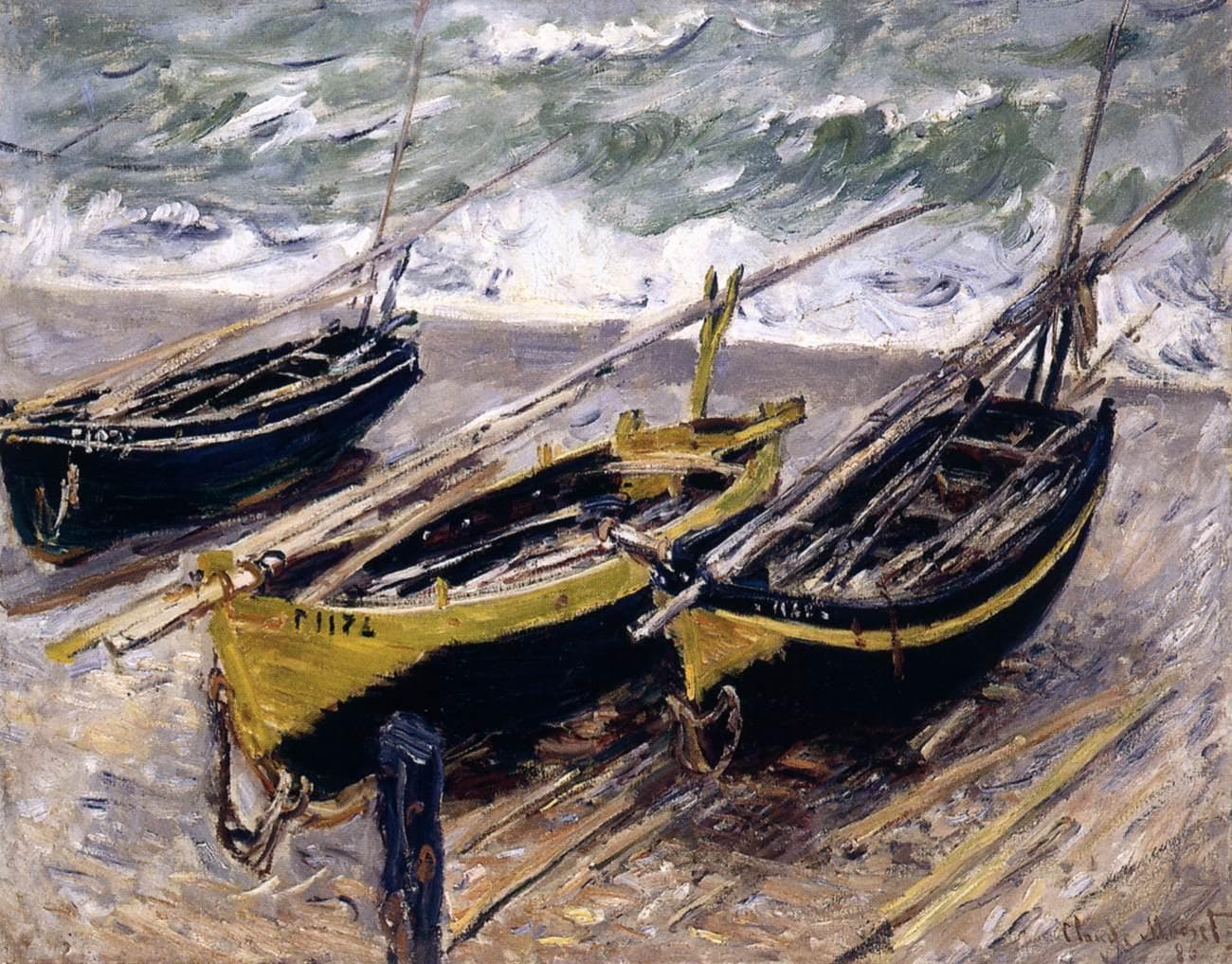
Three Fishing Boats
Claude Monet · 1885
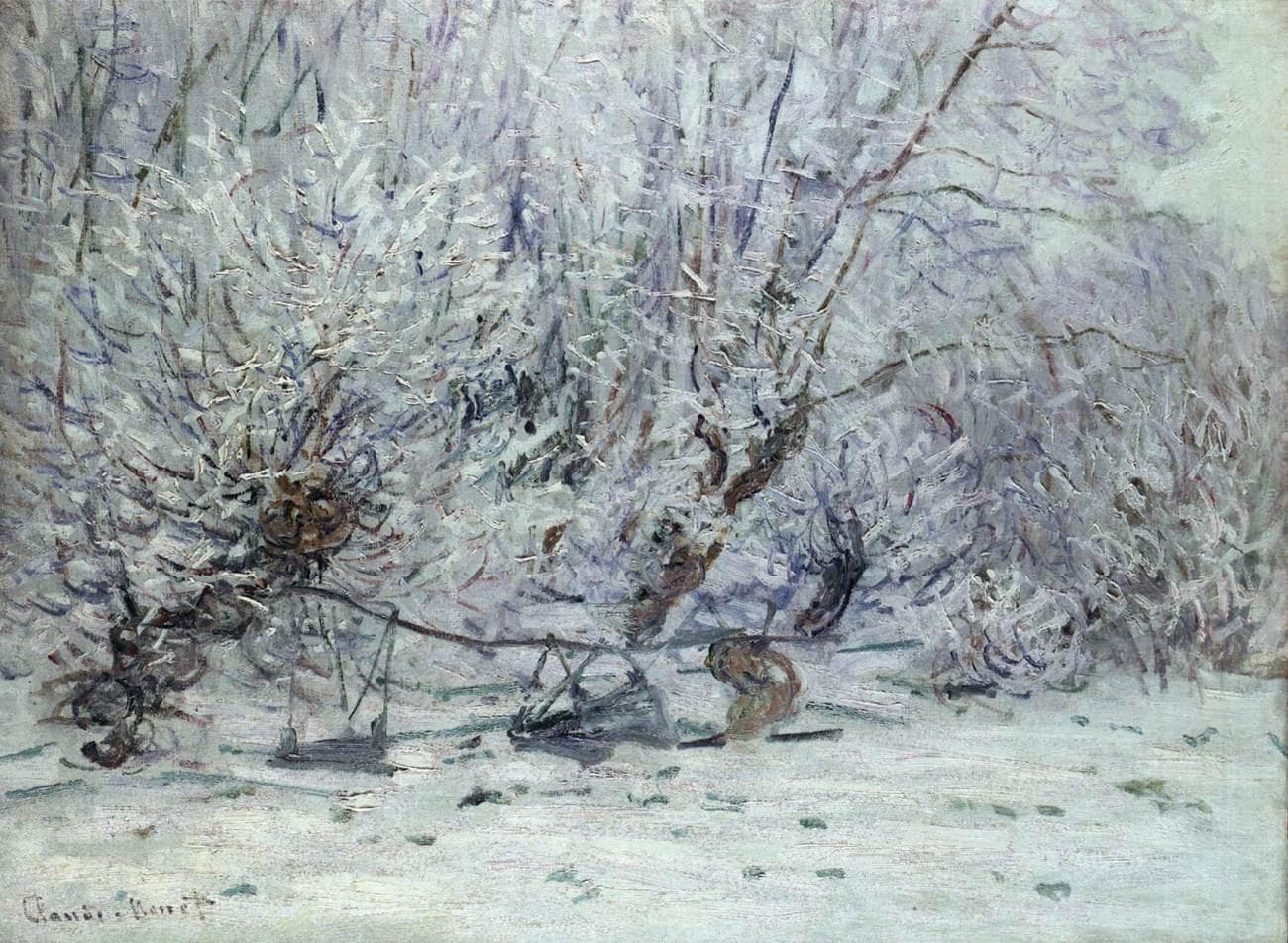
Frost
Claude Monet · 1885
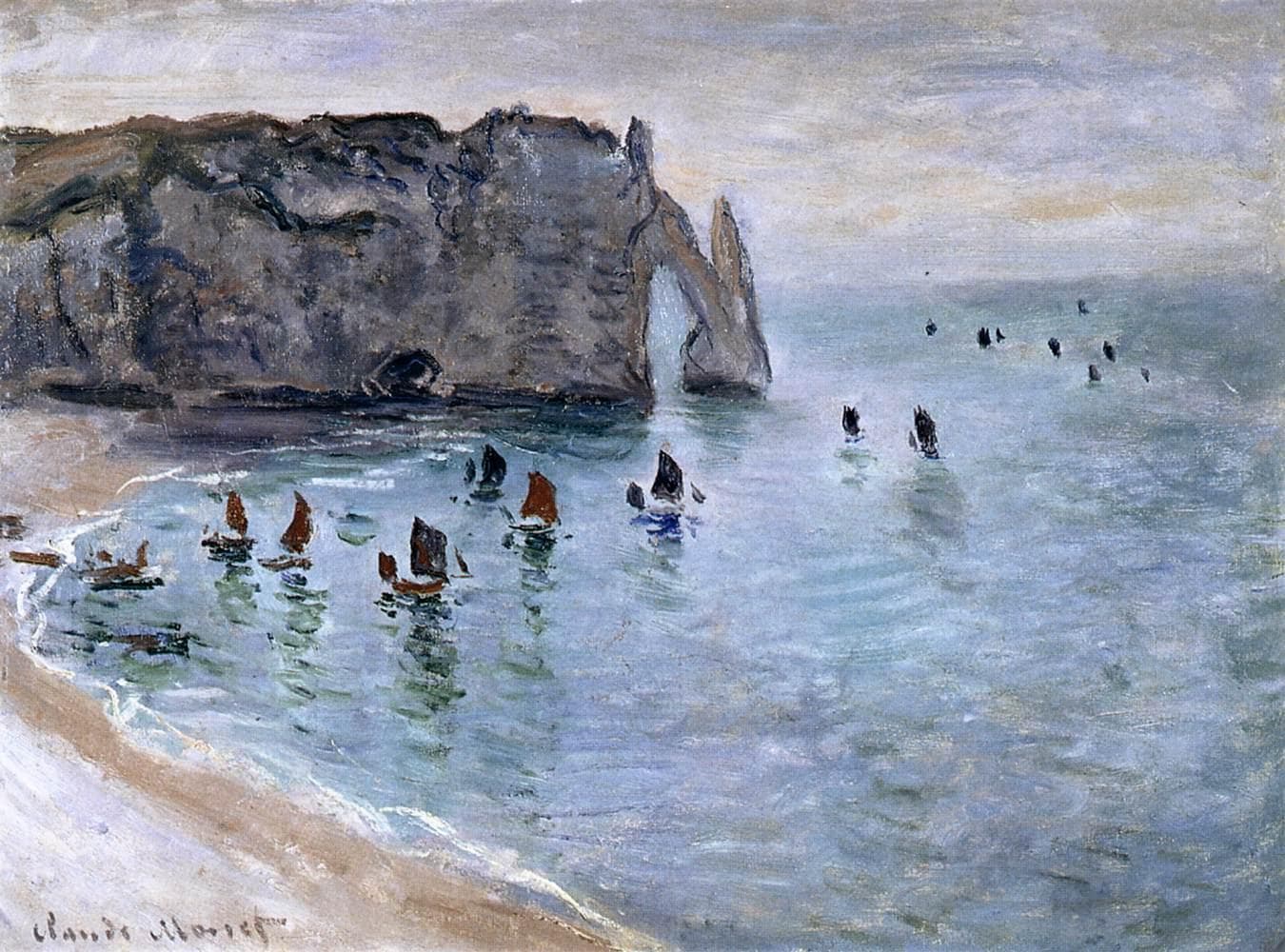
Étretat, the Porte d'Aval: Fishing Boats Leaving the Harbor
Claude Monet · 1885
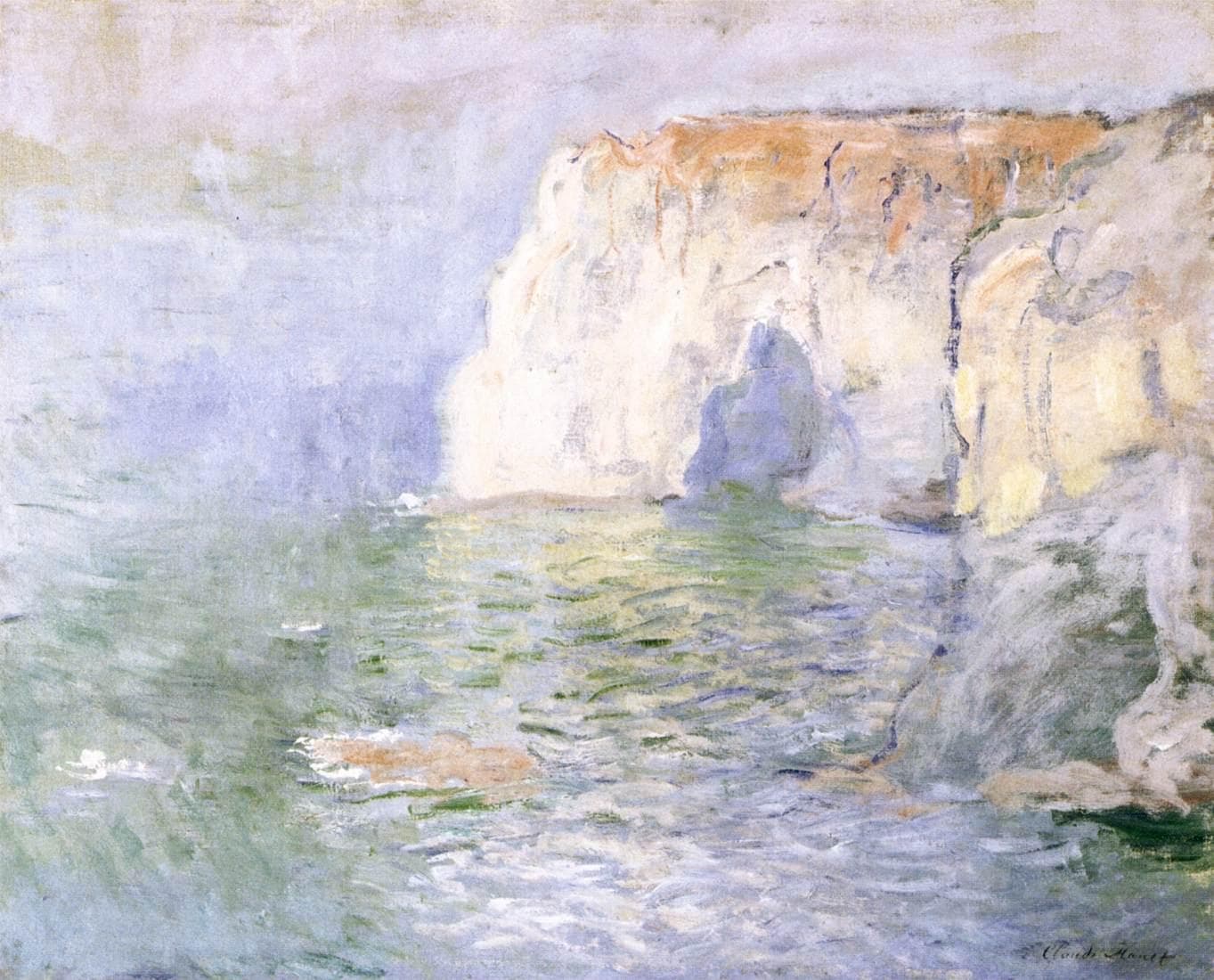
Étretat, the Manneporte, Reflections on the Water
Claude Monet · c. 1885
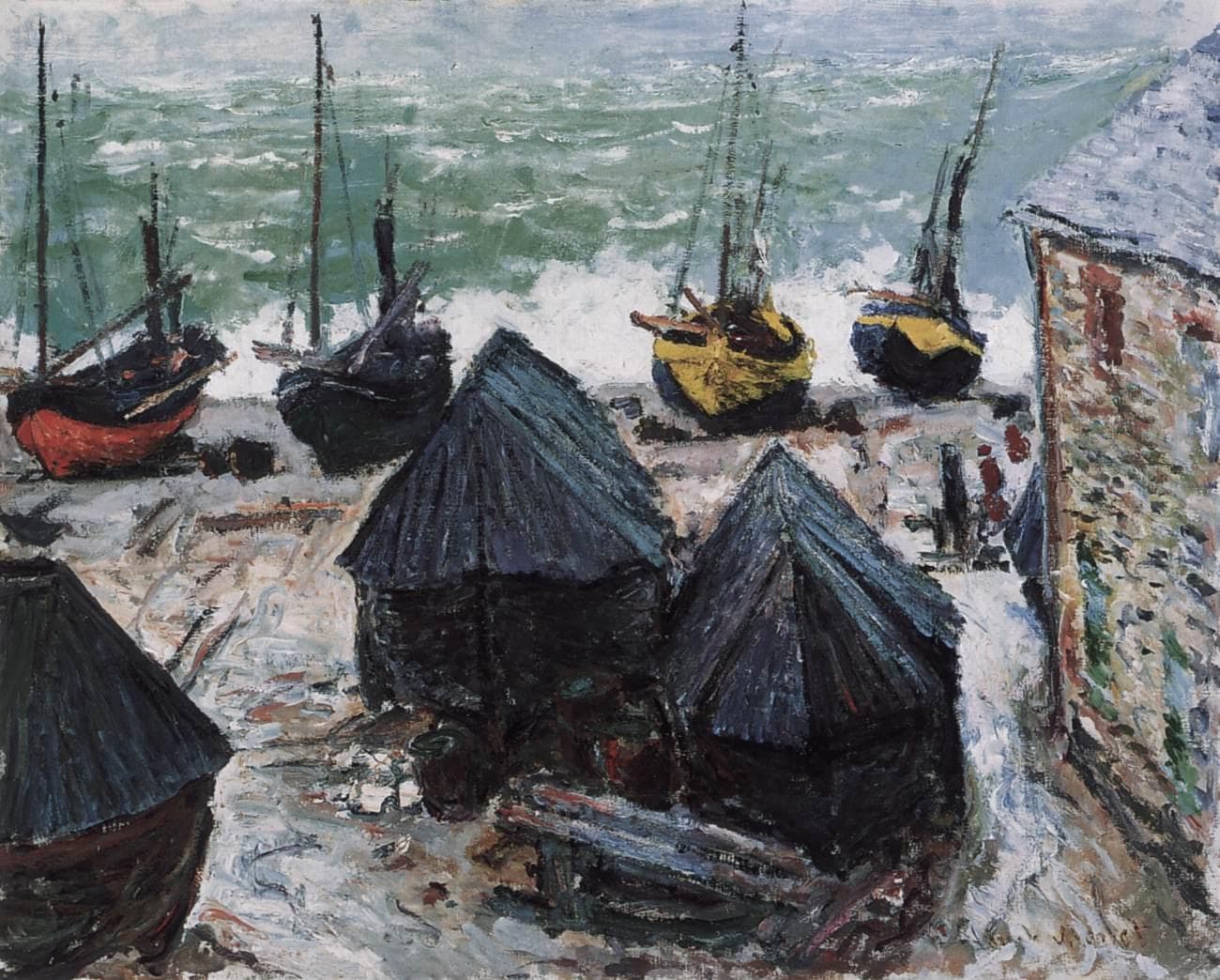
Boats on the Beach at Étretat
Claude Monet · 1885
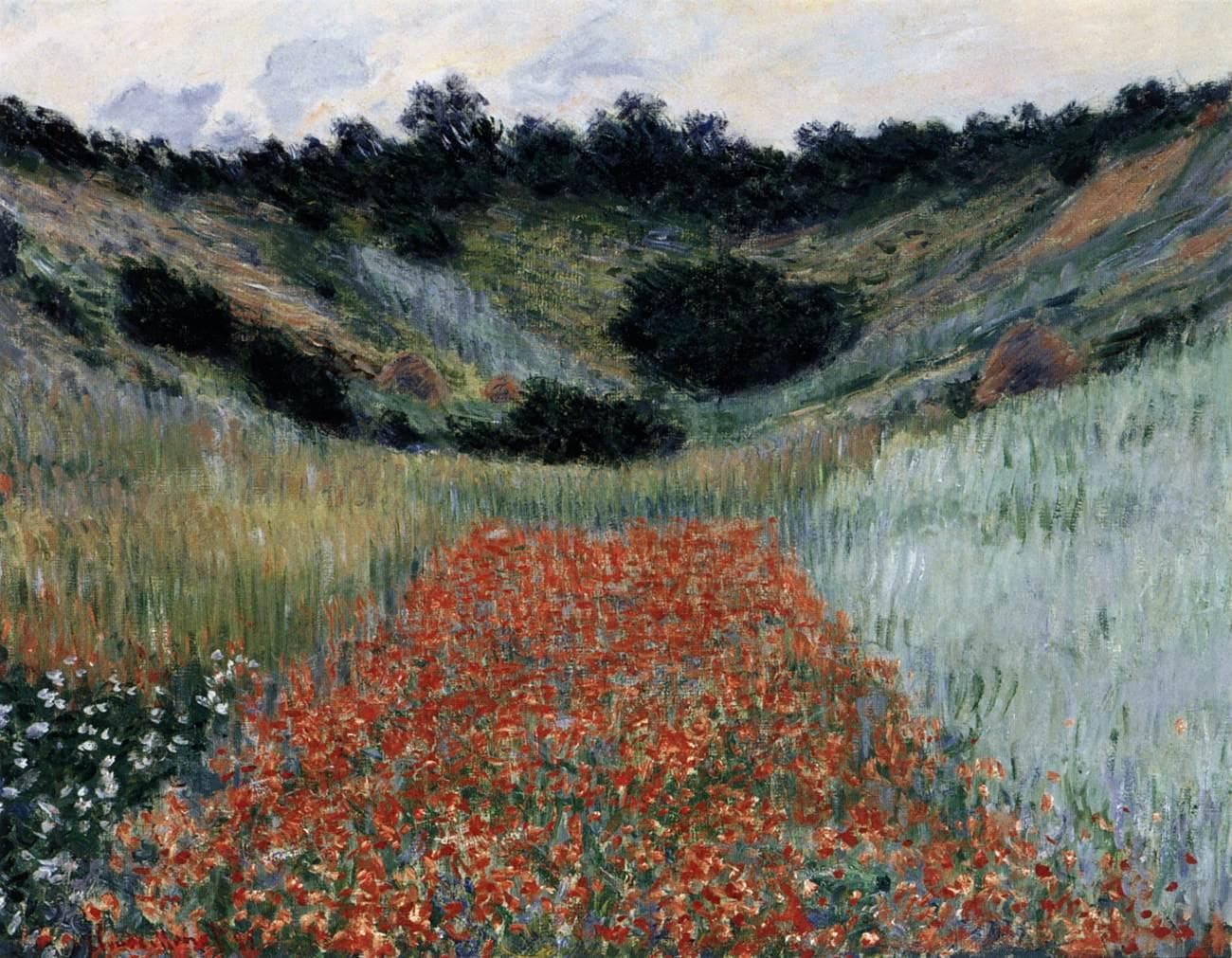
Poppy Field in a Hollow near Giverny
Claude Monet · 1885
Kindred works
You may also study
Impression, Sunrise
Claude Monet · 1872
Setting Sun (Nightfall)
Claude Monet · c. 1865
Three Fishing Boats
Claude Monet · 1885
Boats on the Beach at Étretat
Claude Monet · 1885
The Beach at Étretat
Claude Monet · 1883

Nymphs Dancing to Pan's Flute
Joseph Tomanek

The Scream
Edvard Munch · 1893

Ophelia
John Everett Millais · 1851–52