Impressionism (early)
Rue de la Bavolle, Honfleur
Claude Monet, 1864
Rue de la Bavolle, Honfleur is an 1864 painting by the young Claude Monet of a sunny street in the old Normandy port, its timber-framed houses half in deep shadow. This version, 58 × 63 cm (Wildenstein 34), is in the Kunsthalle Mannheim, Germany.
- Artist
- Claude Monet
- Date
- 1864
- Medium
- Oil on canvas
- Dimensions
- 58 × 63 cm
- Collection
- Kunsthalle Mannheim, Mannheim, Germany
- Movement
- Impressionism (early)
- Catalogue
- Wildenstein 34
Painted at Étretat and the Normandy Coast
What you are looking at
A cobbled street climbs gently away from us between tall old houses. The left side is in deep shade, a dark run of timbered and slate-hung façades with jutting upper stories, a lamp bracket and a woman in a white cap standing in a doorway. The right side catches full afternoon sun: a buttery stucco house with tall green-grey shutters and a painted shop sign reading "DENRÉES C…", the start of denrées coloniales, the old French name for a grocer selling coffee, sugar and spices. Beyond it a brown timbered house is wrapped in a climbing vine, and further up the street small figures cluster by the shop doors and sit on the steps.
In the middle of the road a woman in a long dark skirt and a boy in a white shirt and cap carry a large shallow basket between them, casting short, sharp shadows on the sunlit ground. A pale blue sky with soft white clouds opens above the roofs, and at the far end of the street a jumble of gables and chimneys closes the view.
The picture is built on a single bold idea: a diagonal edge of shadow that cuts the street in two. Monet paints the shade in cool browns, slate and grey, and the sun in creams and ochers, with almost no transition, and lets that contrast do the work of drawing. Look at the gutter running down the left side of the street: a thin streak of light on wet stone, the one bright line in the shadowed half.
Honfleur, 1864
The Rue de la Bavolle is one of the old streets of Honfleur, the harbor town on the Seine estuary opposite Le Havre, where Monet grew up. Honfleur belongs to the stretch of coast covered in our Normandy coast hub. In the summer and autumn of 1864 Monet stayed in and around the town, painting with Eugène Boudin and the Dutch landscapist Johan Barthold Jongkind and lodging at the Saint-Siméon farm above it. He was 23 and still largely unknown, though he would make his Salon debut the following year with two seascapes.
He painted this street twice. A second version, similar in size and composition, is in the Museum of Fine Arts, Boston. The Mannheim picture, signed "Claude Monet" at lower right, has the crisper shadow and the more developed figures.
How it was painted
The canvas is almost square, 58 by 63 centimeters, an unusual shape for Monet that suits the deep, narrow street. The paint is applied in broad, flat areas with a loaded brush: whole façades are a single tone, modulated only by a few darker strokes for windows and beams. The figures are economical silhouettes. This flat, blocky handling owes something to Gustave Courbet and to Édouard Manet's recent work, and it is quite different from the broken touch Monet would develop by the end of the decade.
Honfleur in Monet's early work
The same year and the years that followed produced other Honfleur pictures: harbor views like Fishing Boats in Honfleur, the beach in The Beach at Honfleur, and the winter roads of 1867 in A Cart on the Snowy Road at Honfleur and Road by Saint-Siméon Farm in Winter. Together they show Claude Monet learning his trade on home ground.
Meaning and style
Nothing much happens in the picture, and that is its point. Monet records an ordinary street at a particular hour, with people going about their errands, the way a photographer of the period might. The bold division of light and shade, and the insistence on the effect of sunlight over the description of buildings, already point toward the concerns of the 1870s.
Where to see it
This version is in the Kunsthalle Mannheim in Germany, one of several German museums that collected French Impressionism early. For other museums, see where to see Monet's paintings.
Questions & answers
Where is Monet's Rue de la Bavolle, Honfleur?
This version is in the Kunsthalle Mannheim in Germany. It was painted in 1864, measures 58 by 63 centimeters and is catalogued as Wildenstein 34. Monet painted a second, similar view of the street, which is now in the Museum of Fine Arts, Boston.
When did Monet paint Rue de la Bavolle?
In 1864, when he spent the summer and autumn painting in and around Honfleur with Eugène Boudin and Johan Barthold Jongkind. He was 23, a year before his debut at the Paris Salon.
Where is the Rue de la Bavolle?
It is a street in the old center of Honfleur, a harbor town in Normandy on the Seine estuary, opposite Le Havre. The street still exists and is lined with old timber-framed and stone houses like those in the painting.
Is Rue de la Bavolle an Impressionist painting?
It predates the first Impressionist exhibition by ten years, so it is usually called early or pre-Impressionist. Its flat, broad handling owes much to Courbet and Manet, but its bold division of the street into sun and shadow and its everyday subject point toward the style Monet developed in the 1870s.
More by the artist
Claude Monet

Bridge over a Pond of Water Lilies
Claude Monet · 1899

Woman with a Parasol – Madame Monet and Her Son
Claude Monet · 1875

Sunset in Venice
Claude Monet · 1908–12

La Grenouillère
Claude Monet · 1869

Beach in Pourville
Claude Monet · 1882

Springtime
Claude Monet · 1872

Boating on the River Epte
Claude Monet · 1890

The Seine at Asnières (Hermitage)
Claude Monet · 1873
Also painted in 1864
The same year
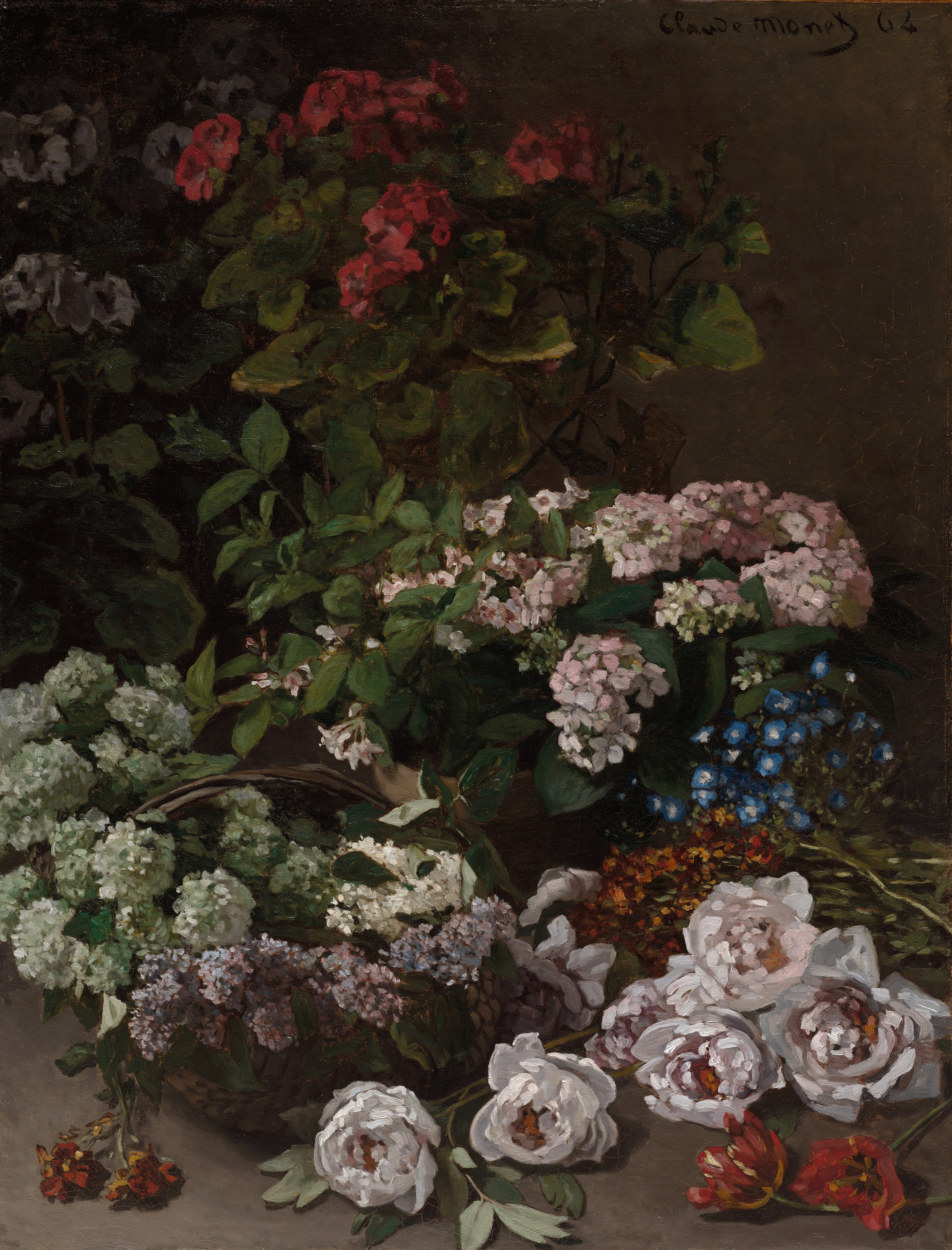
Kindred works
You may also study
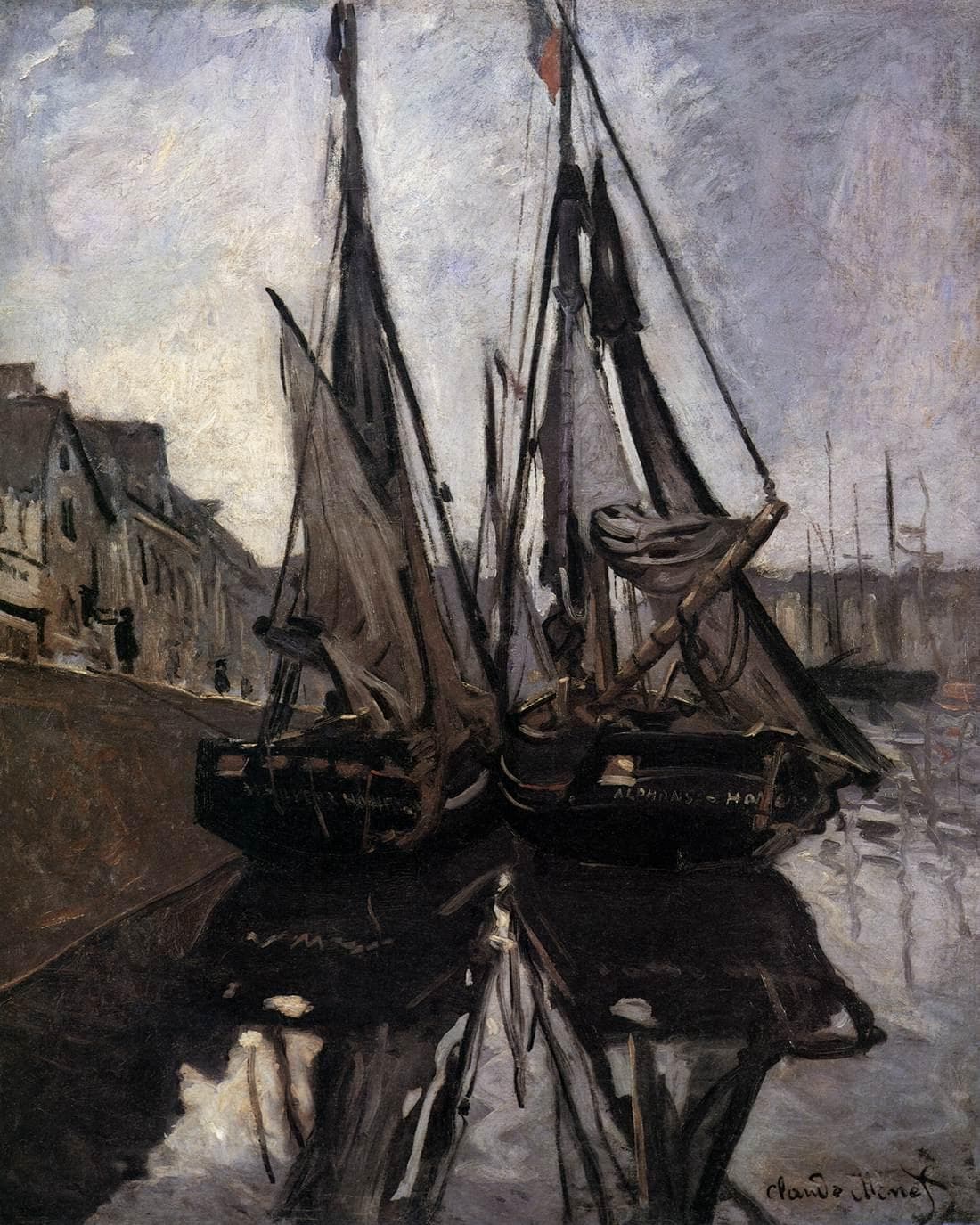
Fishing Boats at Honfleur
Claude Monet · c. 1868
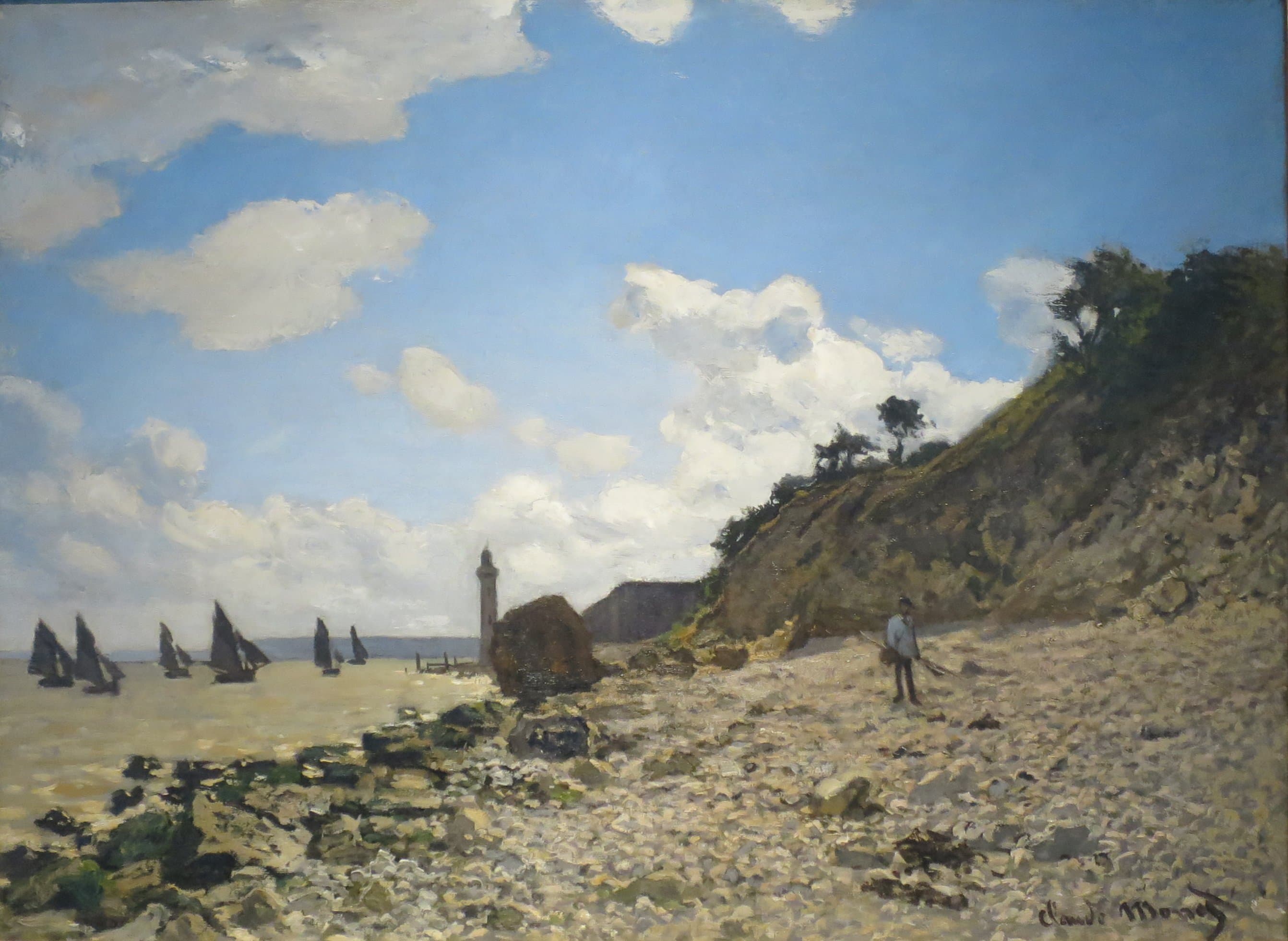
The Beach at Honfleur
Claude Monet · 1864–66
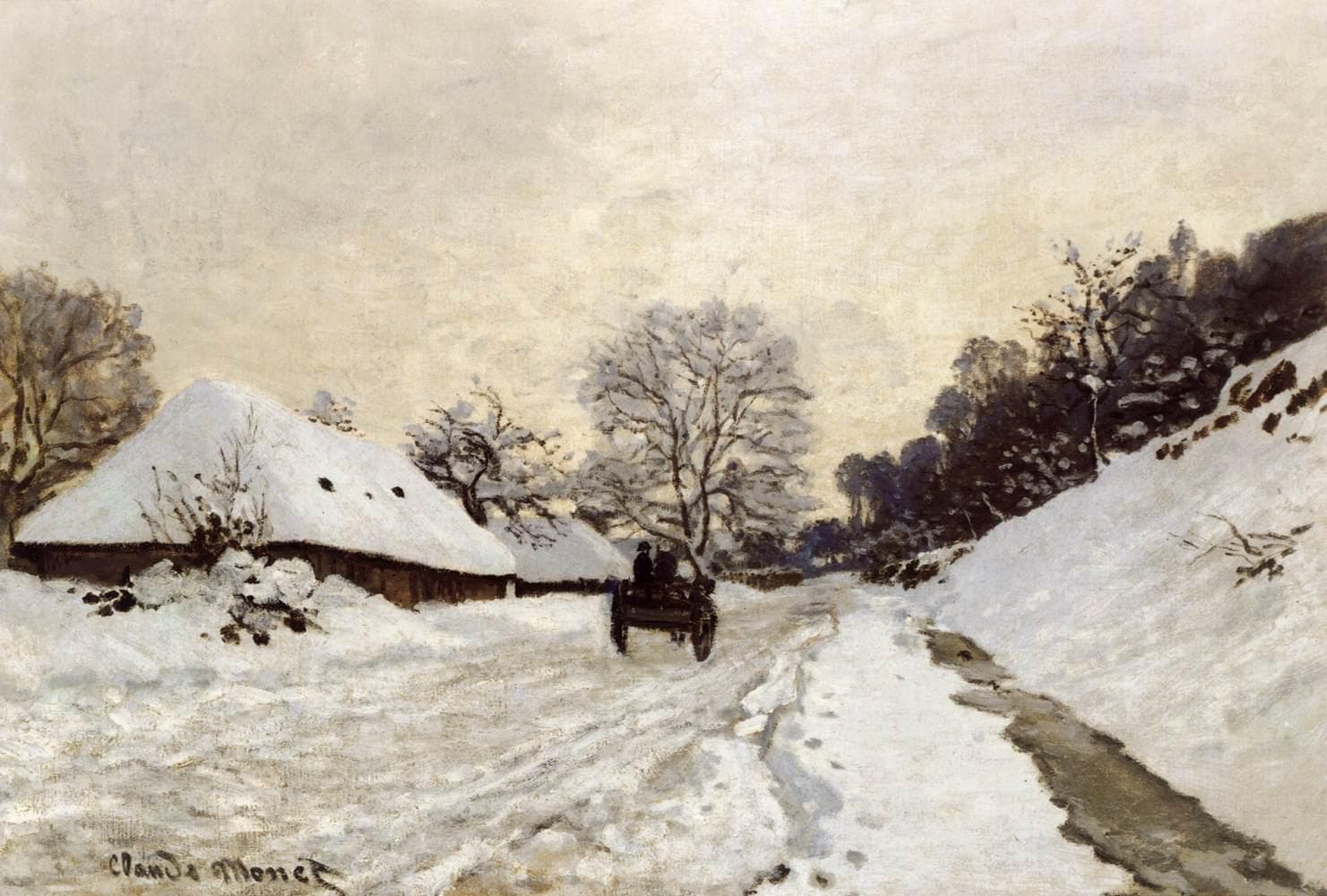
A Cart on the Snowy Road at Honfleur
Claude Monet · c. 1867
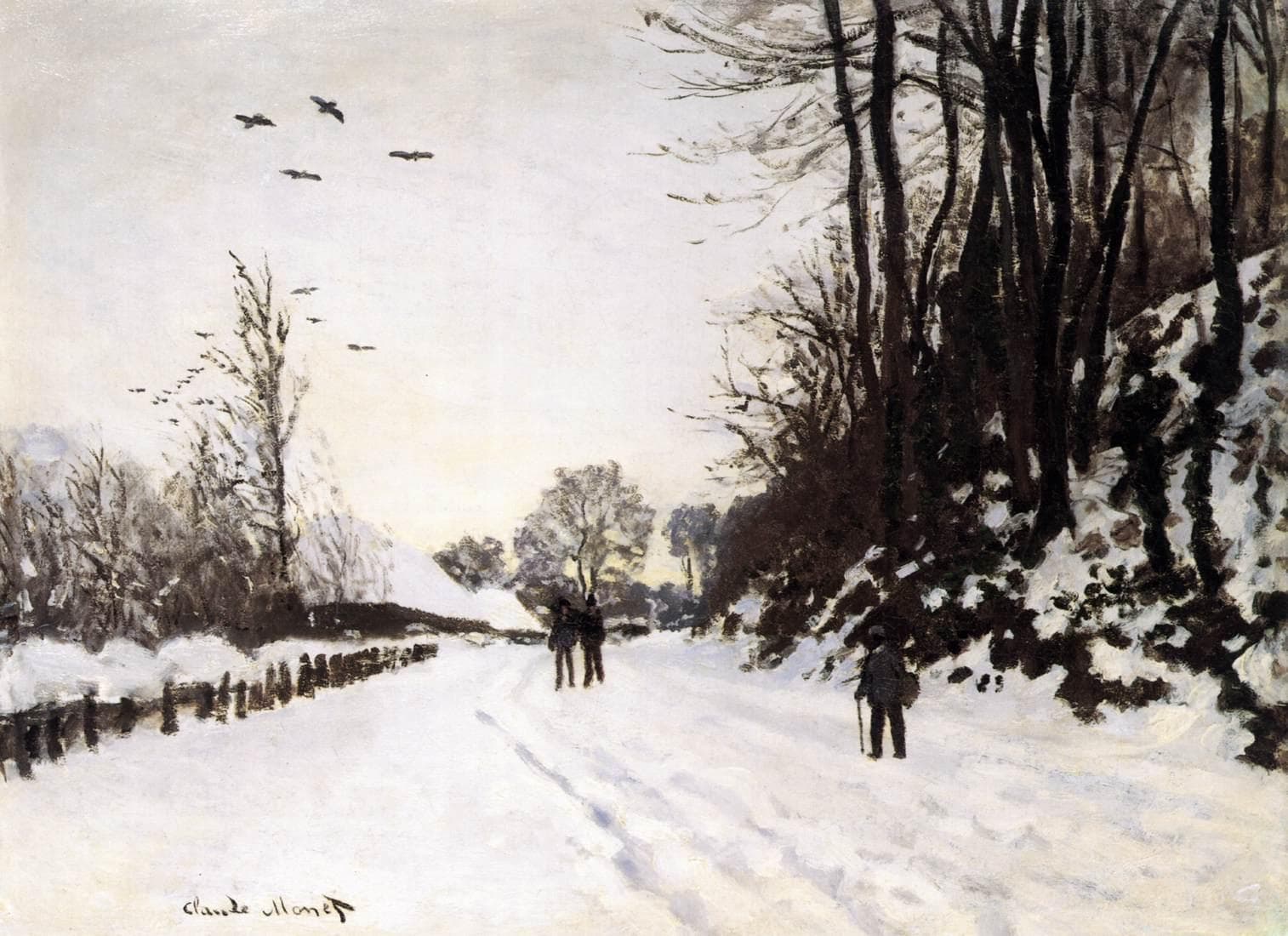
Road by Saint-Siméon Farm in Winter
Claude Monet · 1867
Farmyard in Normandy
Claude Monet · c. 1863
The School of Athens
Raphael · 1509–1511
Liberty Leading the People
Eugène Delacroix · 1830
The Night Watch
Rembrandt · 1642