Image: Musée d'Orsay, Paris; photograph by a Commons contributor · Public domain · via Wikimedia Commons
Impressionism
Heavy Sea at Étretat
Claude Monet, c. 1868–69
Heavy Sea at Étretat (Grosse mer à Étretat) is a painting by Claude Monet, c. 1868–69, of huge breakers rolling onto the beach at Étretat beneath the Porte d'Aval arch, watched by a huddle of fishermen. It is in the Musée d'Orsay, Paris.
- Artist
- Claude Monet
- Date
- c. 1868–69
- Medium
- Oil on canvas
- Dimensions
- 66.2 × 130.5 cm
- Collection
- Musée d'Orsay, Paris, France
- Movement
- Impressionism
- Catalogue
- Wildenstein 127
Painted at Étretat and the Normandy Coast
Heavy Sea at Étretat (Grosse mer à Étretat) is a wide, gray storm picture Claude Monet painted around 1868–69, during a winter he spent at Étretat on the Normandy coast. Breakers pile onto the beach under the great rock arch of the Porte d'Aval, while a small group of fishermen stands and watches. It is in the Musée d'Orsay in Paris.
What you are looking at
The canvas is twice as wide as it is high, and the sea fills most of it. Line after line of waves rolls in from the right, each one a long band of churned white and gray-green foam, so that the water seems to be moving toward us across the whole width of the picture. Near the shore the surf rises in a thick white wall that breaks against the foot of the cliff.
At upper left the cliff and its arch, the Porte d'Aval, loom in dark grays and browns, partly lost in spray. The sky above is a low, heavy slate gray with a hint of green, painted in broad, smooth strokes that make the weather feel close and cold. A single small sail is visible on the horizon at center, very far away. In the foreground, on a strip of brown wet sand, stands a group of about eight figures in dark clothes, fishermen and their families, one in a red jacket, one holding a hand up to shade his eyes. They are tiny against the sea, and they are looking at it, as we are. The signature is at lower left.
Where and when it was painted
In the autumn and winter of 1868 Monet took Camille and their baby son Jean to Étretat, a fishing village and resort on the chalk coast north of Le Havre. A patron, the Le Havre shipowner Louis-Joachim Gaudibert, was supporting him, and in letters to Frédéric Bazille Monet described his happiness there, painting outside in all weathers. The interior The Lunch, now in Frankfurt, was painted in the same months. Étretat, its arches and its beaches are gathered on our Normandy coast hub.
How it was painted
This is a direct, forceful picture with a restricted palette of grays, greens, browns and white. Monet laid the waves on in long, horizontal strokes of thick paint, dragging white over gray-green while it was still wet so that the foam looks churned. The sky is smoother and flatter, which pushes the action down into the sea. The figures are painted with a few dark touches each, as summary as notes in a sketchbook. The unusual double-square format, very wide and low, makes the sea feel endless and puts the viewer at the same low eye level as the watchers on the beach. There is no sunlight anywhere; the drama is all in the weight of the water.
Étretat, then and later
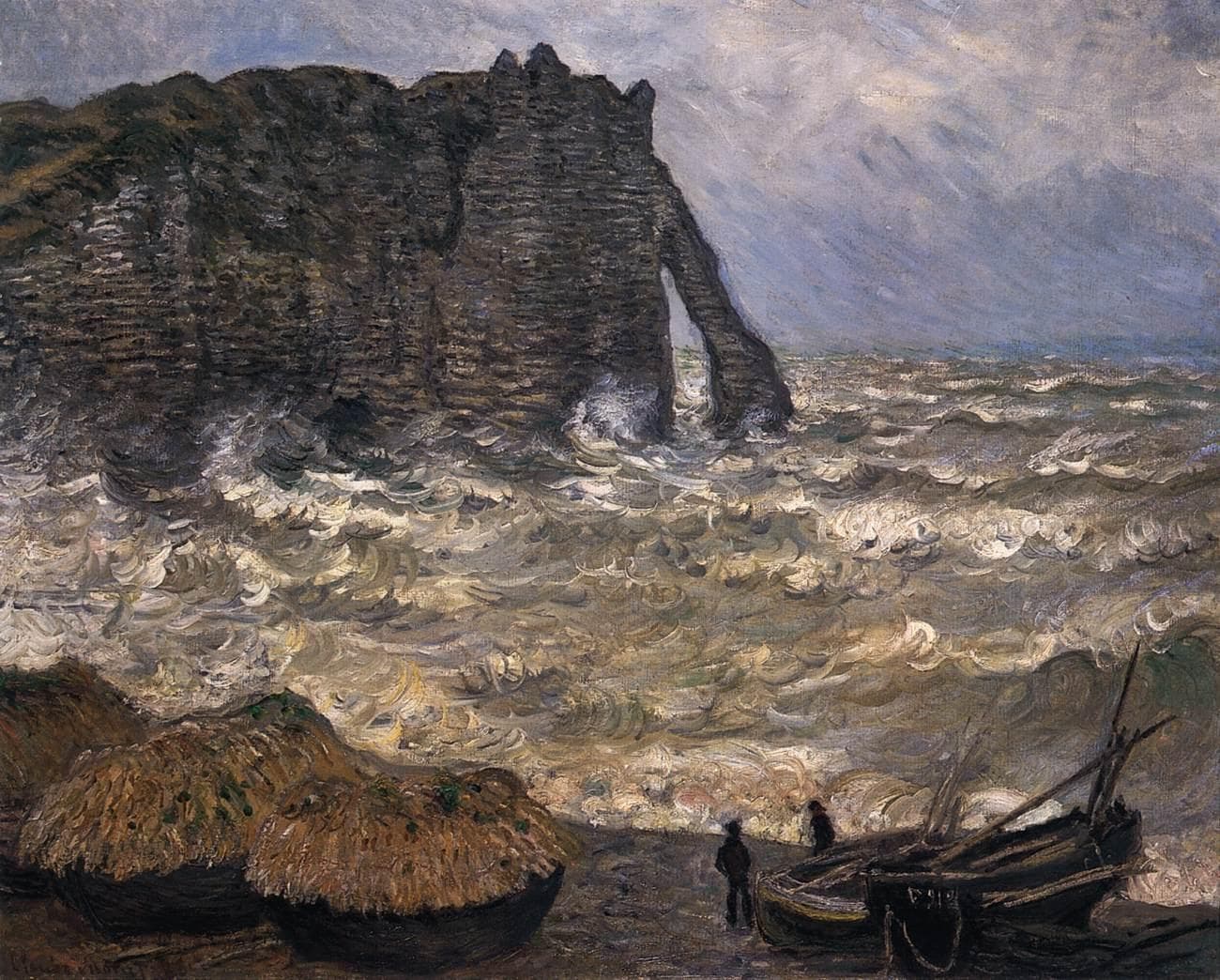
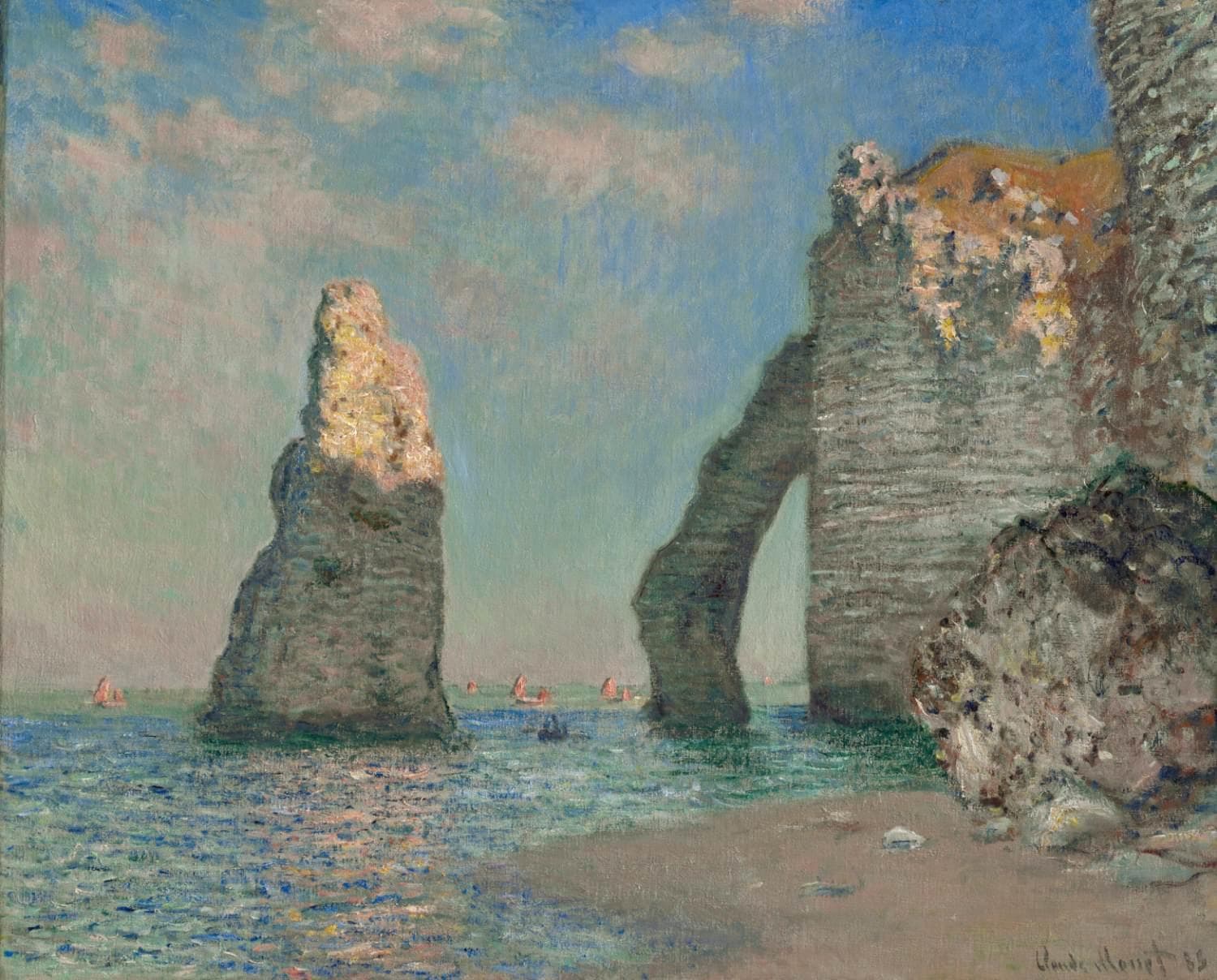
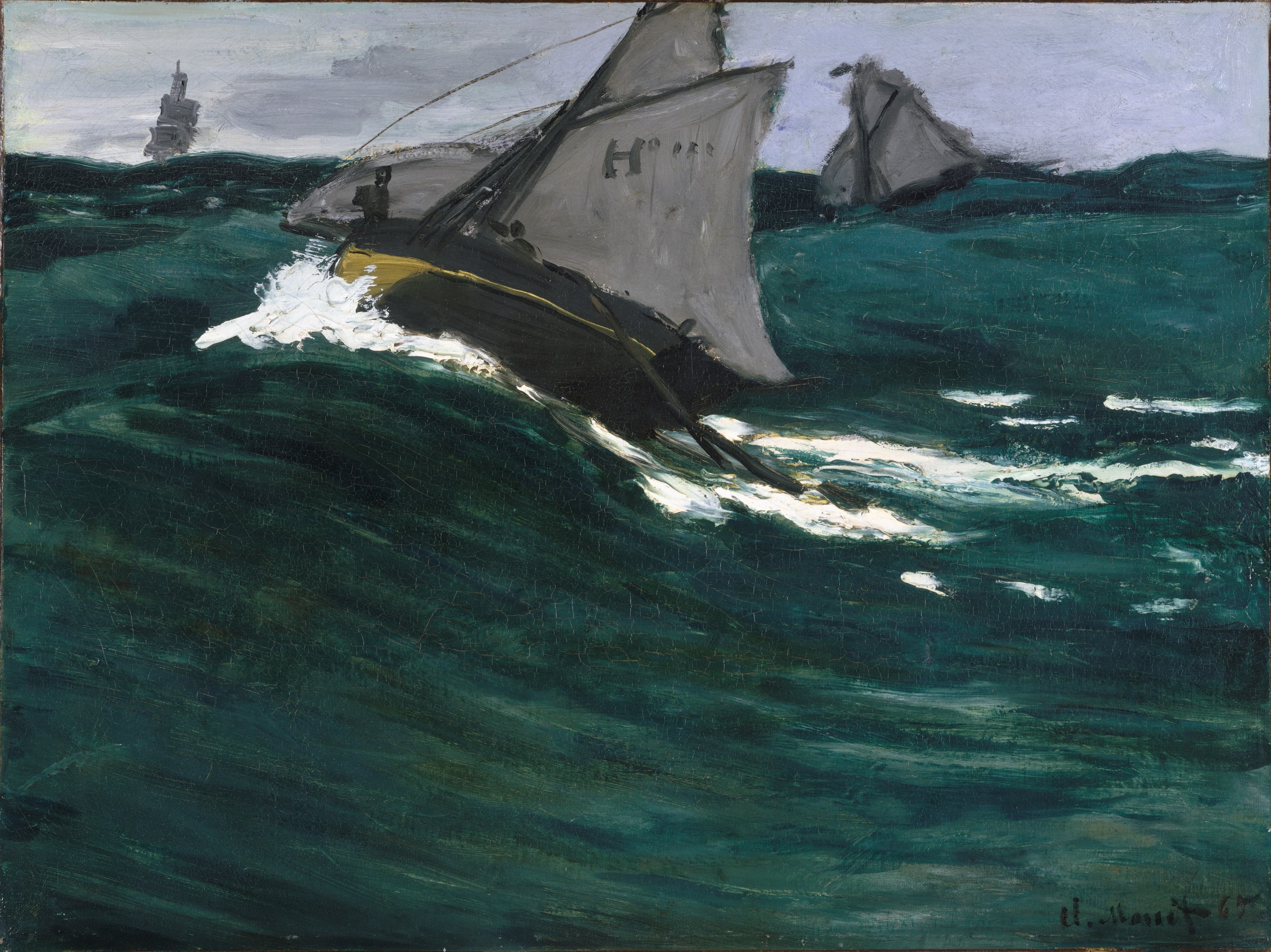
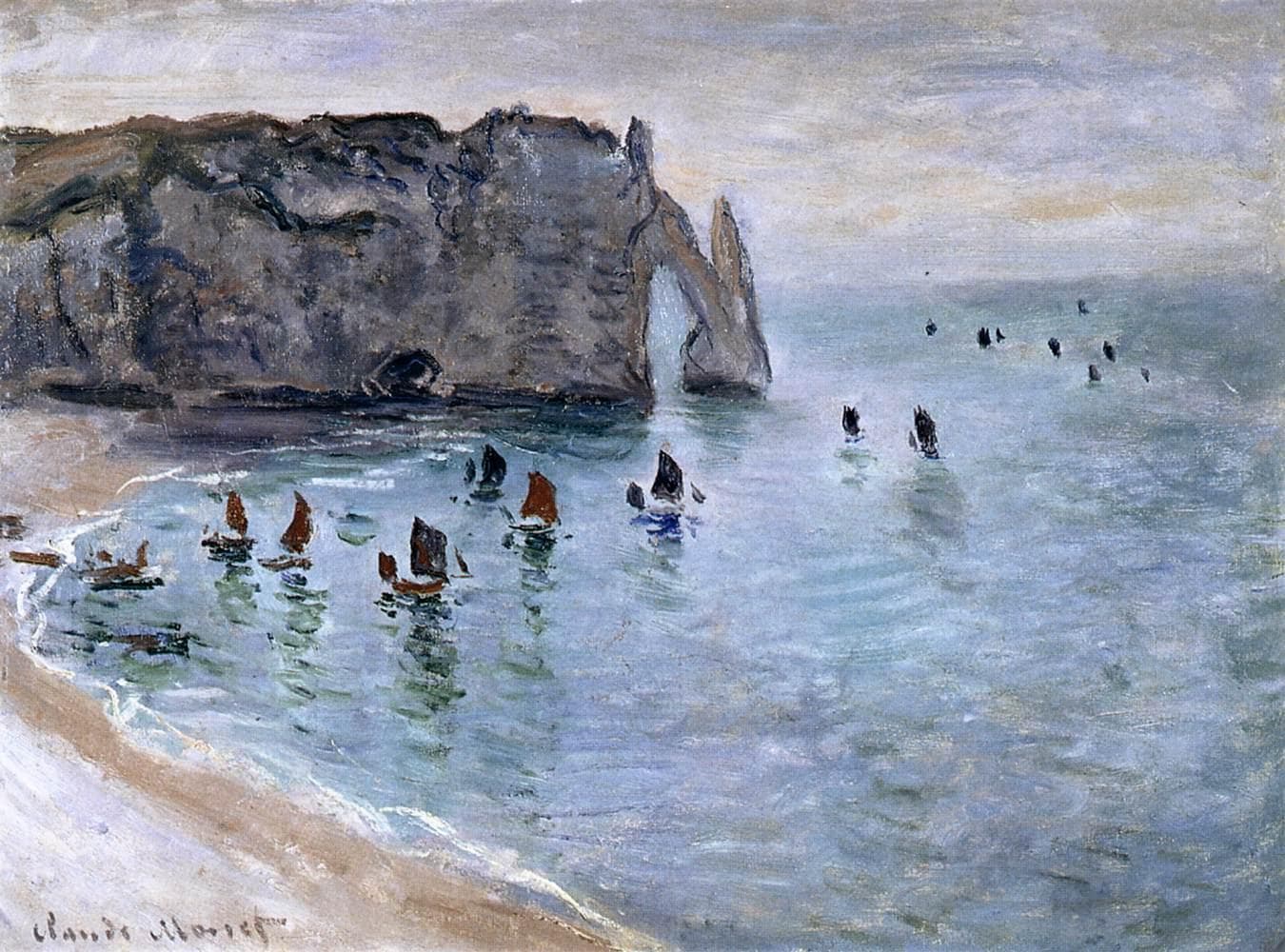
Monet came back to Étretat repeatedly in the 1880s and painted its cliffs and arches in dozens of canvases. Compare this early, somber storm with the bright, high-keyed views of the same coast such as Rough Sea at Étretat of 1883, The Cliffs at Étretat of 1885, and Étretat, the Porte d'Aval: Fishing Boats Leaving the Harbor. In the 1880s the colors are fuller and the brushwork more broken; here, in 1868, the drama comes from tone and mass, closer to Courbet's famous storm seascapes painted at Étretat in 1869–70. The year before, Monet had painted another wall of water in The Green Wave.
Ownership and where to see it
Its recorded owners include the politician and collector Denys Cochin and the painter and collector Étienne Moreau-Nélaton, whose great gift of 19th-century French painting entered the national collections in the early 20th century. It came to the Musée d'Orsay with the Impressionist holdings of the Louvre (inventory RF 1678). See our Monet at the Musée d'Orsay page for the other Monets there.
Questions & answers
Where is Monet's Heavy Sea at Étretat?
It is in the Musée d'Orsay in Paris (inventory RF 1678). It came to the French national collections from the collector Étienne Moreau-Nélaton and is shown with the museum's Impressionist paintings when on view.
When was Heavy Sea at Étretat painted?
Around 1868–69, during the autumn and winter Monet spent at Étretat with Camille and their infant son Jean. He was supported at the time by the Le Havre shipowner Louis-Joachim Gaudibert and painted outdoors in all weathers.
What does Heavy Sea at Étretat show?
Rows of huge, foaming breakers rolling onto the beach under a low gray sky, with the rock arch of the Porte d'Aval at left and a small group of fishermen standing on the sand in the foreground, watching the storm.
Did Monet paint Étretat more than once?
Many times. After this early storm picture he returned in the 1880s, especially 1883–86, and painted more than fifty views of Étretat's cliffs, arches, beach and boats, in a brighter and more broken style.
More by the artist
Claude Monet

Bridge over a Pond of Water Lilies
Claude Monet · 1899

Woman with a Parasol – Madame Monet and Her Son
Claude Monet · 1875

Sunset in Venice
Claude Monet · 1908–12

La Grenouillère
Claude Monet · 1869

Beach in Pourville
Claude Monet · 1882

Springtime
Claude Monet · 1872

Boating on the River Epte
Claude Monet · 1890

The Seine at Asnières (Hermitage)
Claude Monet · 1873
Also painted in 1868
The same year
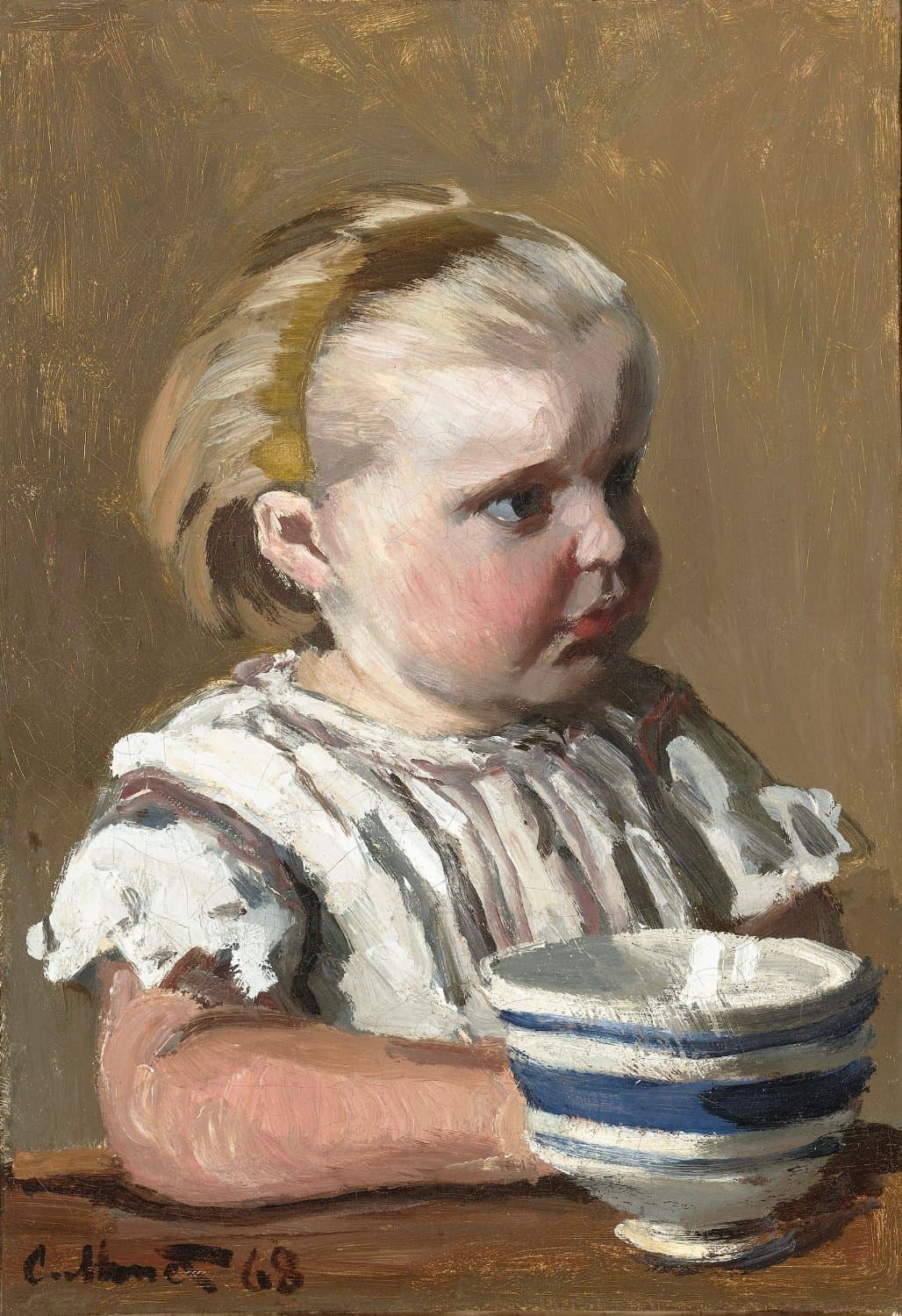
L'Enfant à la tasse (Portrait of Jean Monet)
Claude Monet · 1868
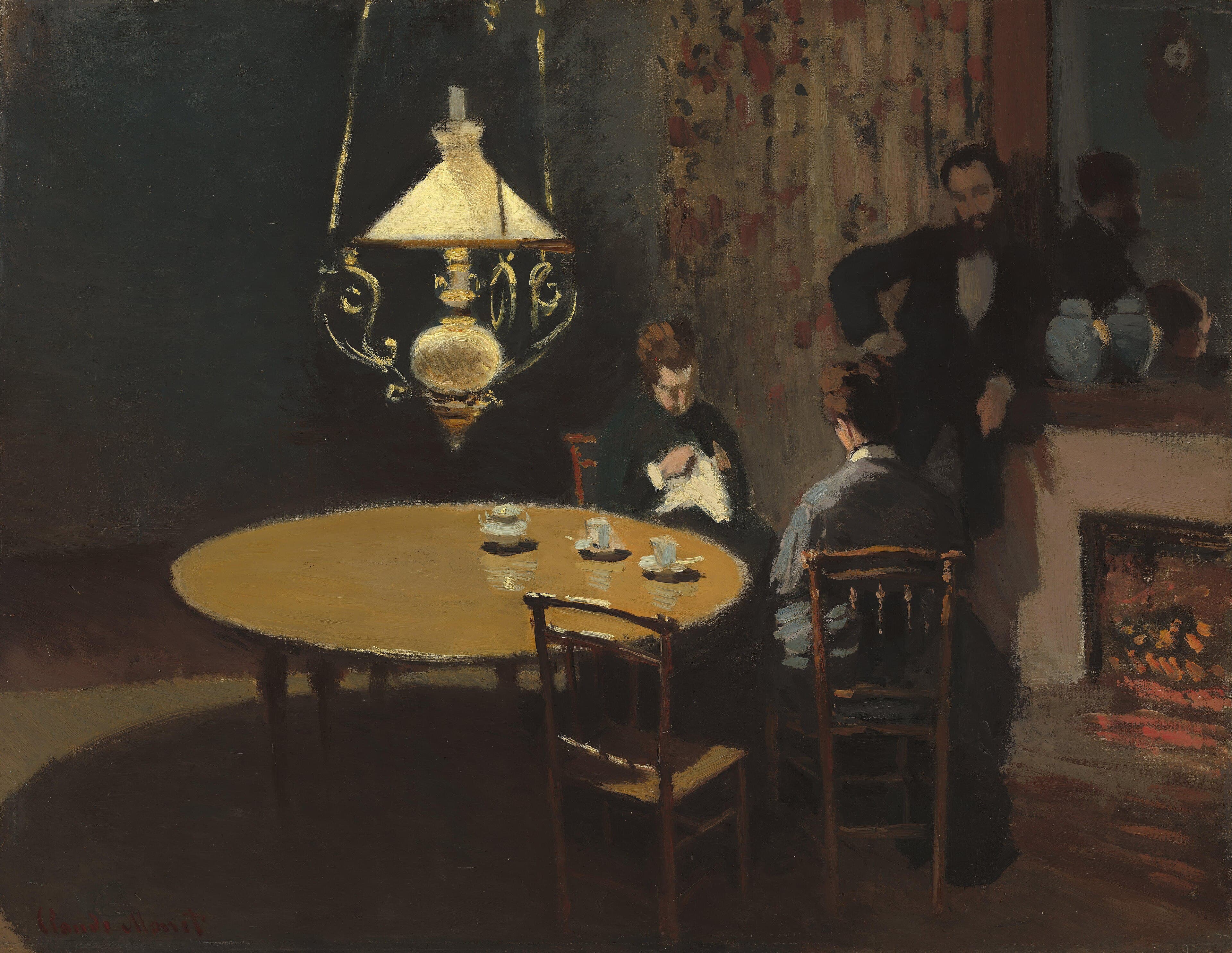
Interior, after Dinner
Claude Monet · 1868–69
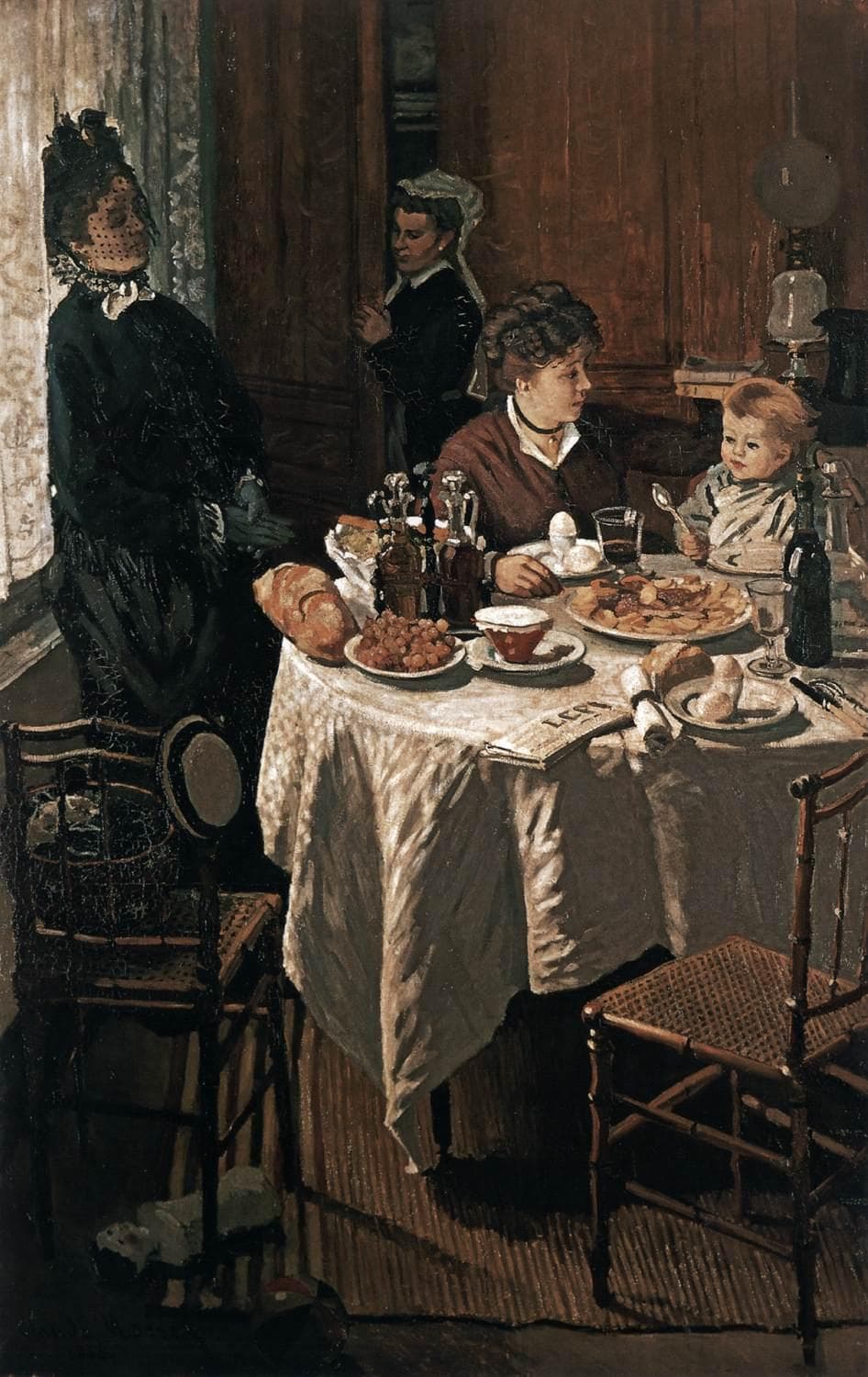
The Lunch
Claude Monet · 1868
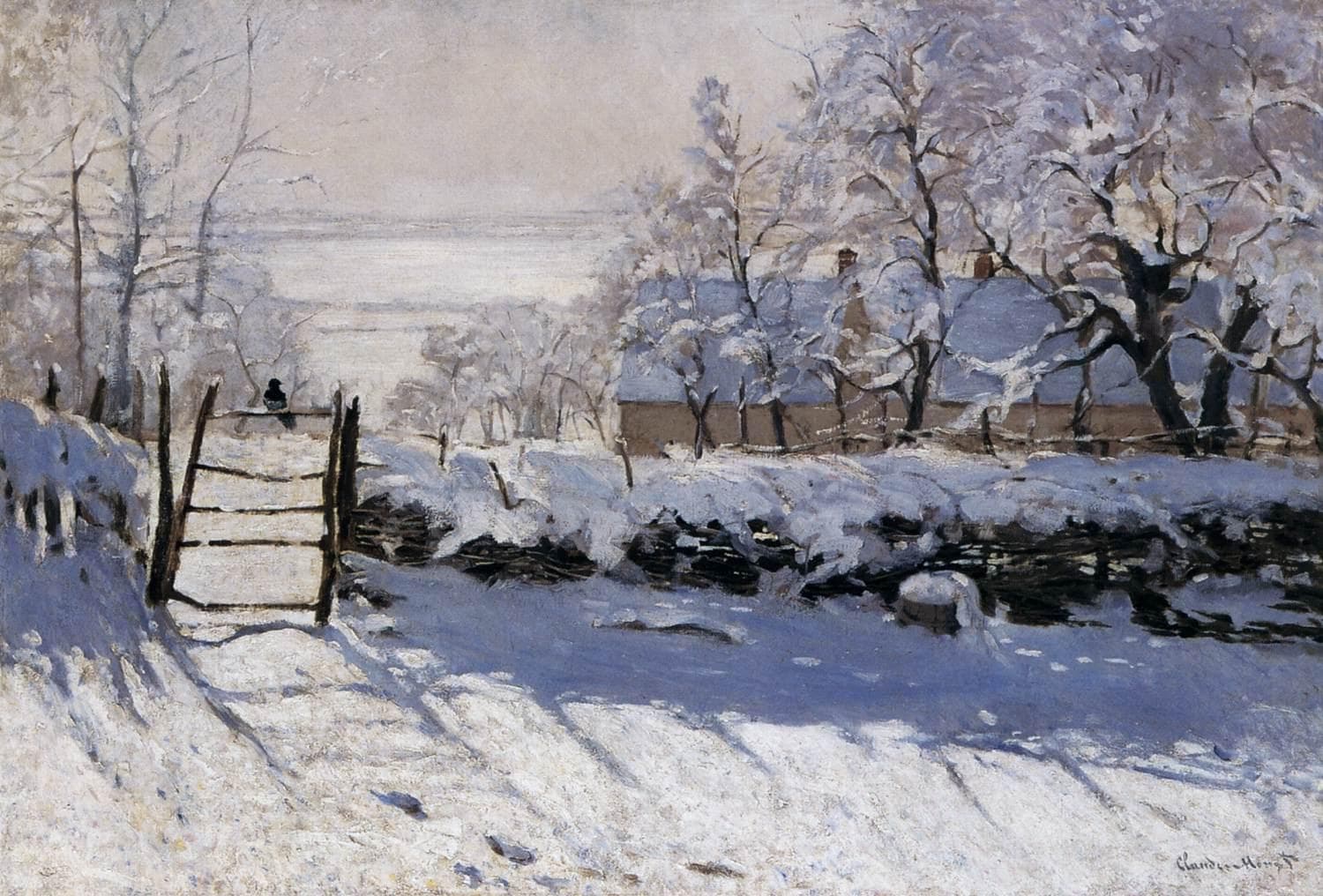
The Magpie
Claude Monet · 1868–69
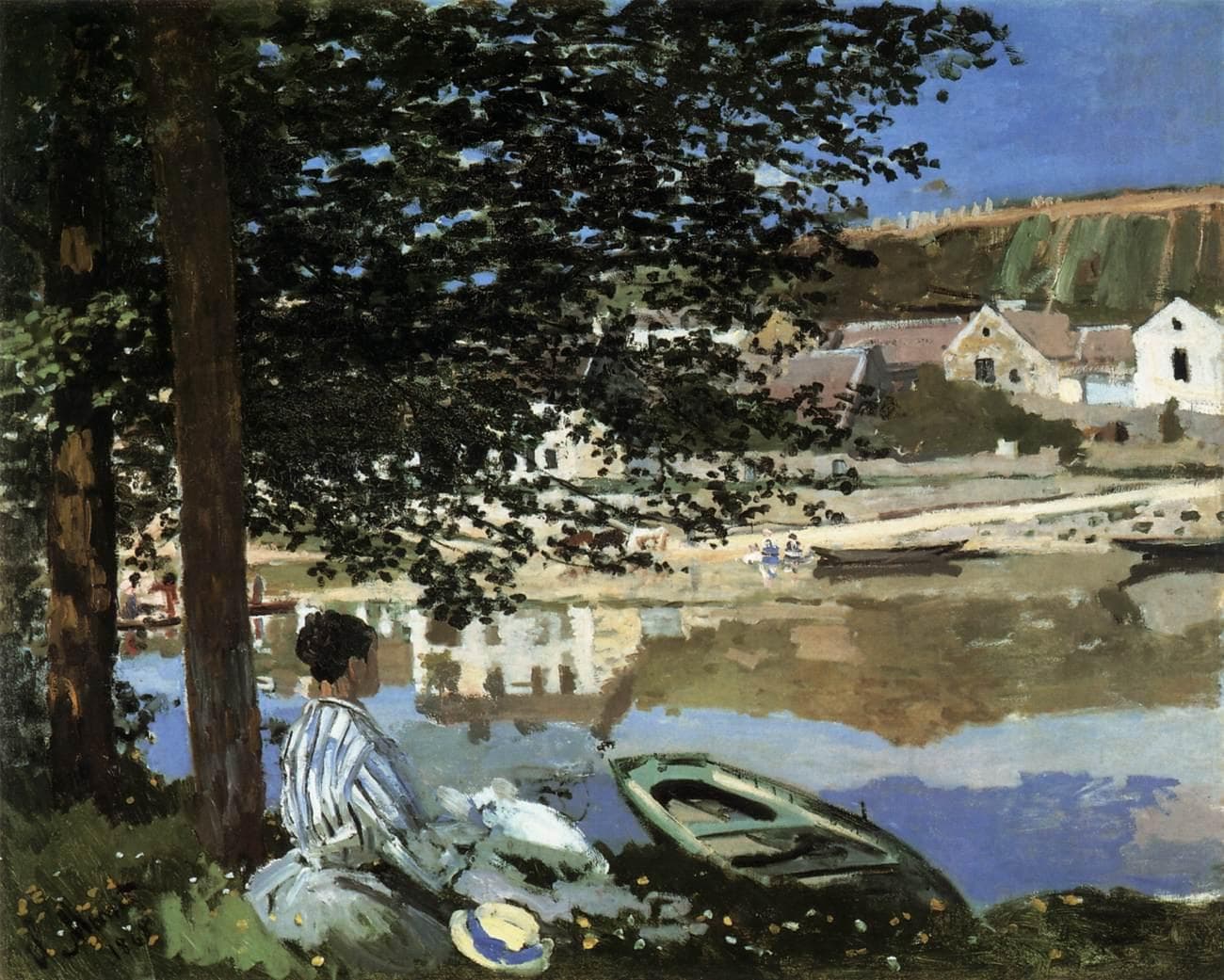
On the Bank of the Seine, Bennecourt
Claude Monet · 1868
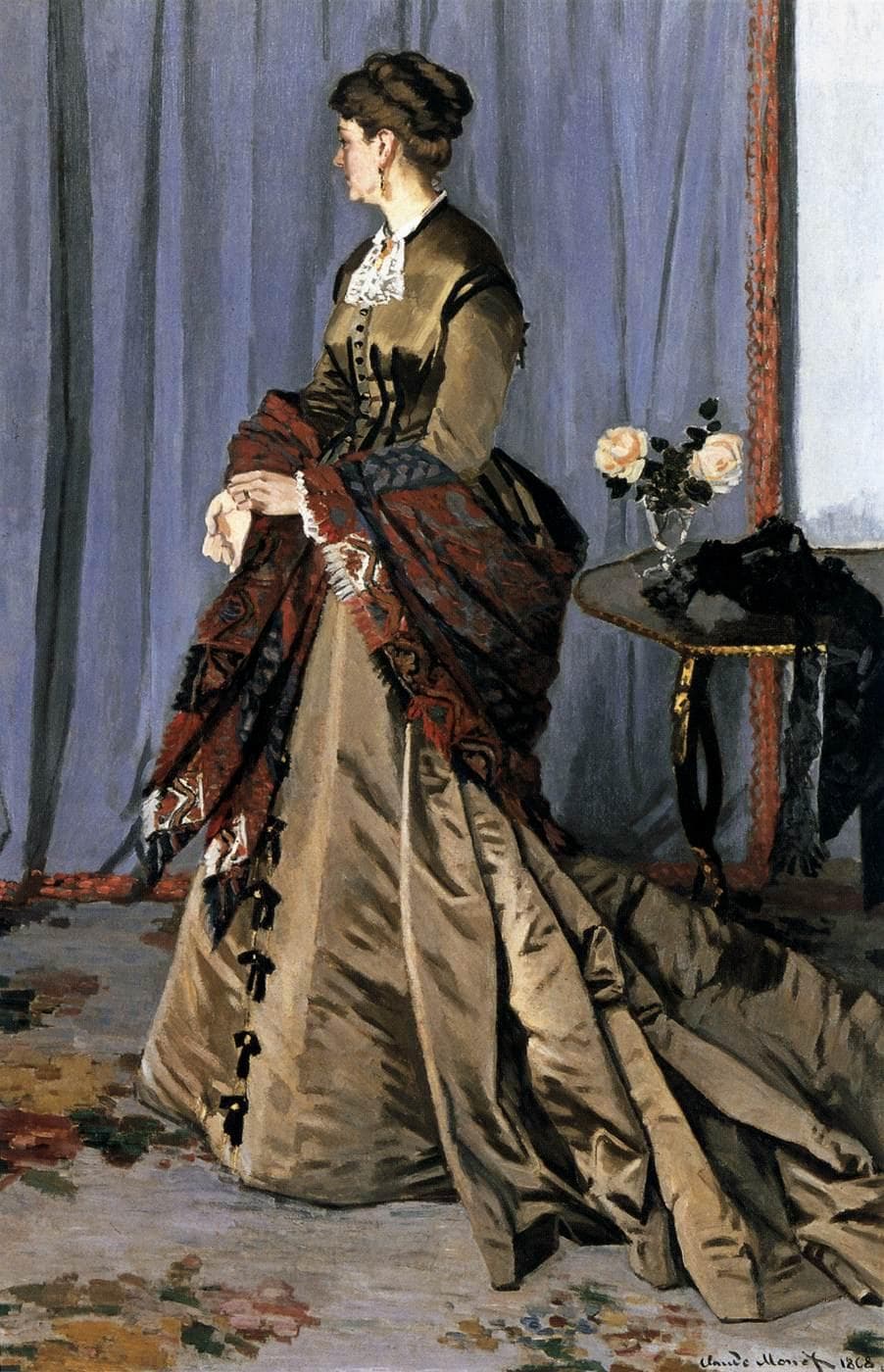
Madame Louis Joachim Gaudibert
Claude Monet · 1868
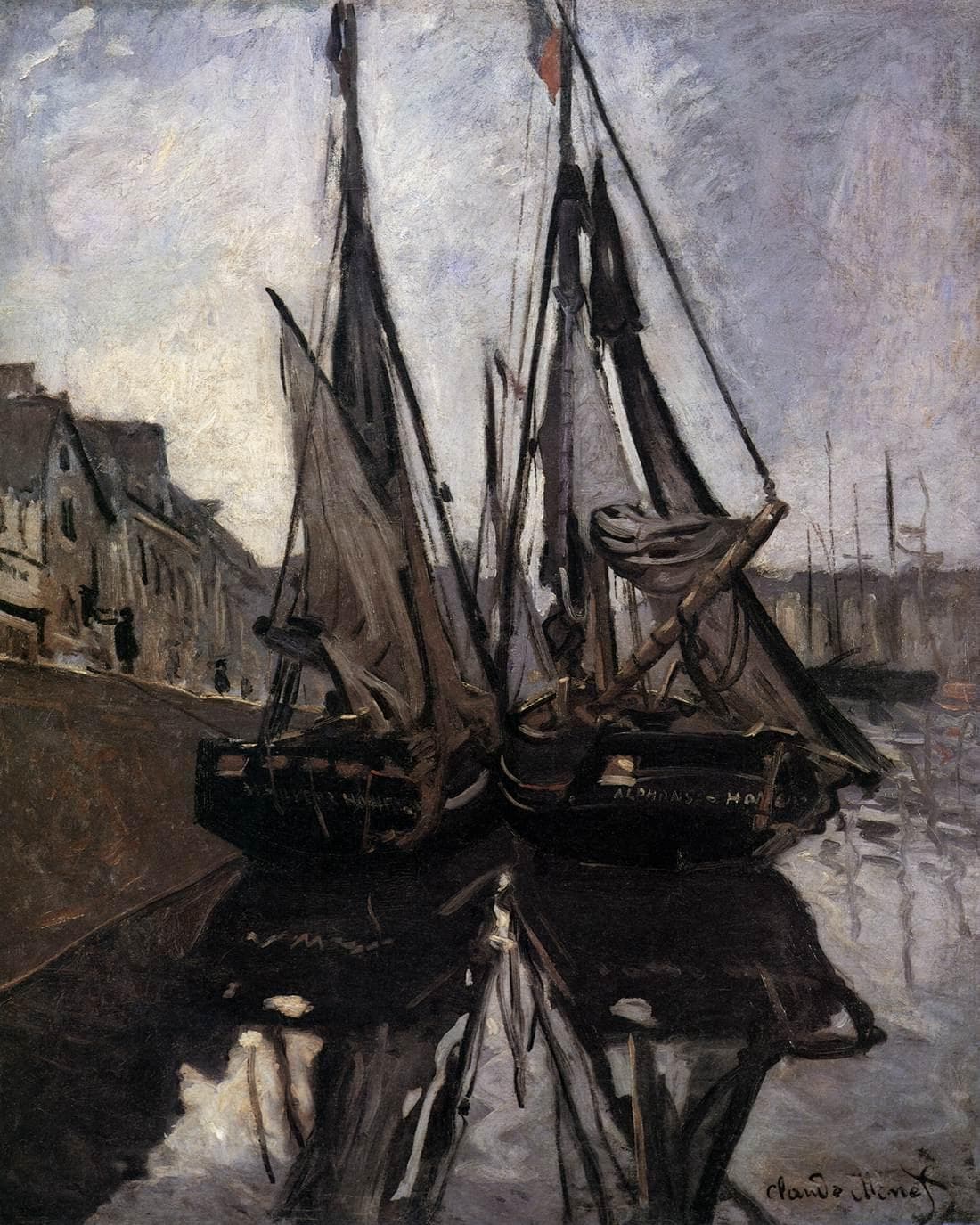
Fishing Boats at Honfleur
Claude Monet · c. 1868
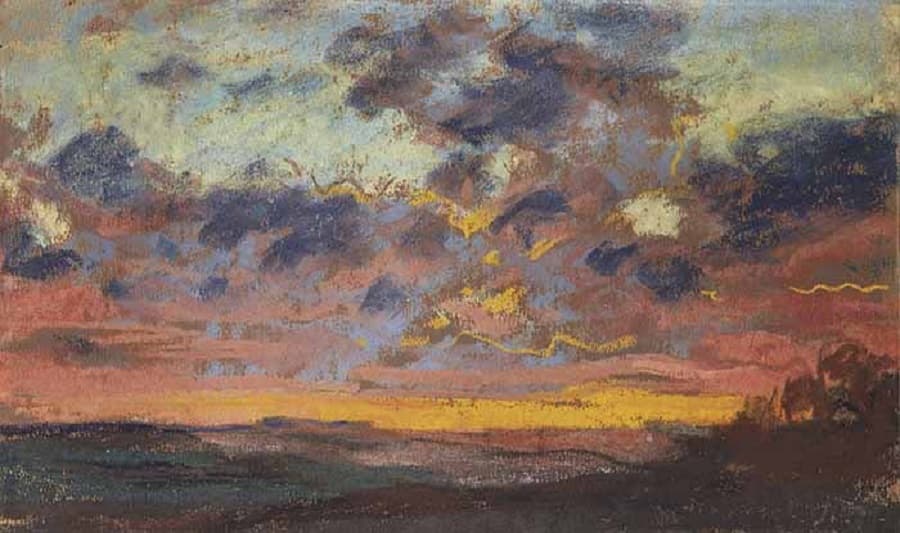
Sunset (Coucher de soleil)
Claude Monet · c. 1868
Kindred works
You may also study
Rough Sea at Étretat
Claude Monet · 1883
The Cliffs at Étretat
Claude Monet · 1885
The Green Wave
Claude Monet · c. 1866–67
The Lunch
Claude Monet · 1868
Étretat, the Porte d'Aval: Fishing Boats Leaving the Harbor
Claude Monet · 1885

The Scream
Edvard Munch · 1893

Ophelia
John Everett Millais · 1851–52

The Great Wave off Kanagawa
Katsushika Hokusai · c. 1830–32