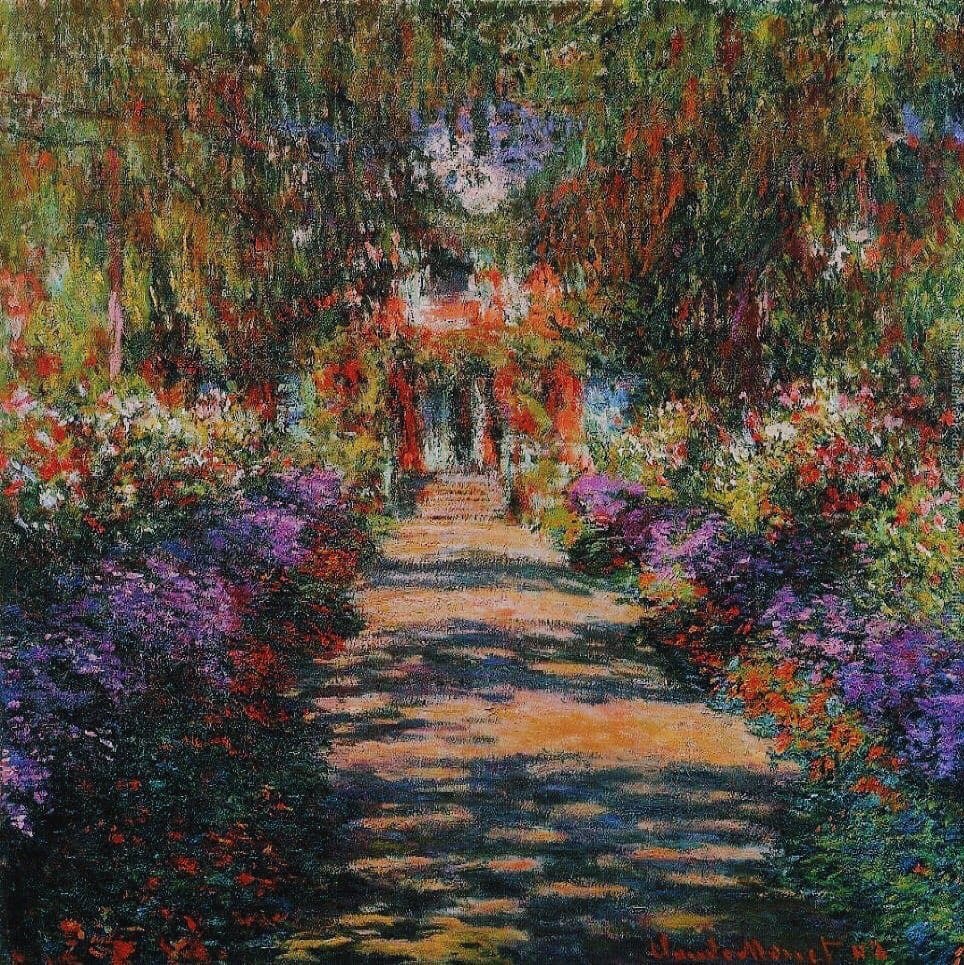
Place
Giverny: Monet's House, Garden and the Paintings He Made There
For 43 years Monet lived in a pink farmhouse in a Normandy village, and made its fields, river and garden the subject of half his life's work.
Giverny is the village in Normandy, about 75 kilometers west of Paris, where Claude Monet lived from 1883 until his death in 1926, and where he made his house and garden into the motif of his greatest paintings. Monet's garden has two parts: the flower garden in front of the house, the Clos Normand, and the water garden with its lily pond and Japanese footbridge across the road. Both, and the pink house with green shutters, are now open to visitors from spring to autumn, run by the Fondation Claude Monet.
This page gathers the pictures Monet painted at Giverny and in the fields and river around it, apart from those on our series pages for the Water Lilies, the Japanese Footbridge, the Haystacks, the Poplars and the Mornings on the Seine.
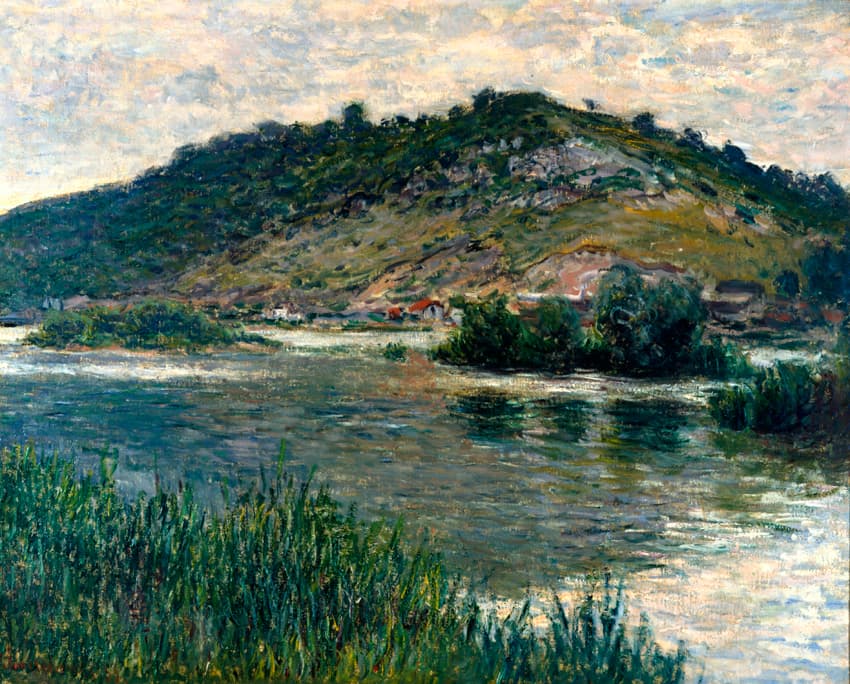
Landscape in Port-Villez
Claude Monet · 1883
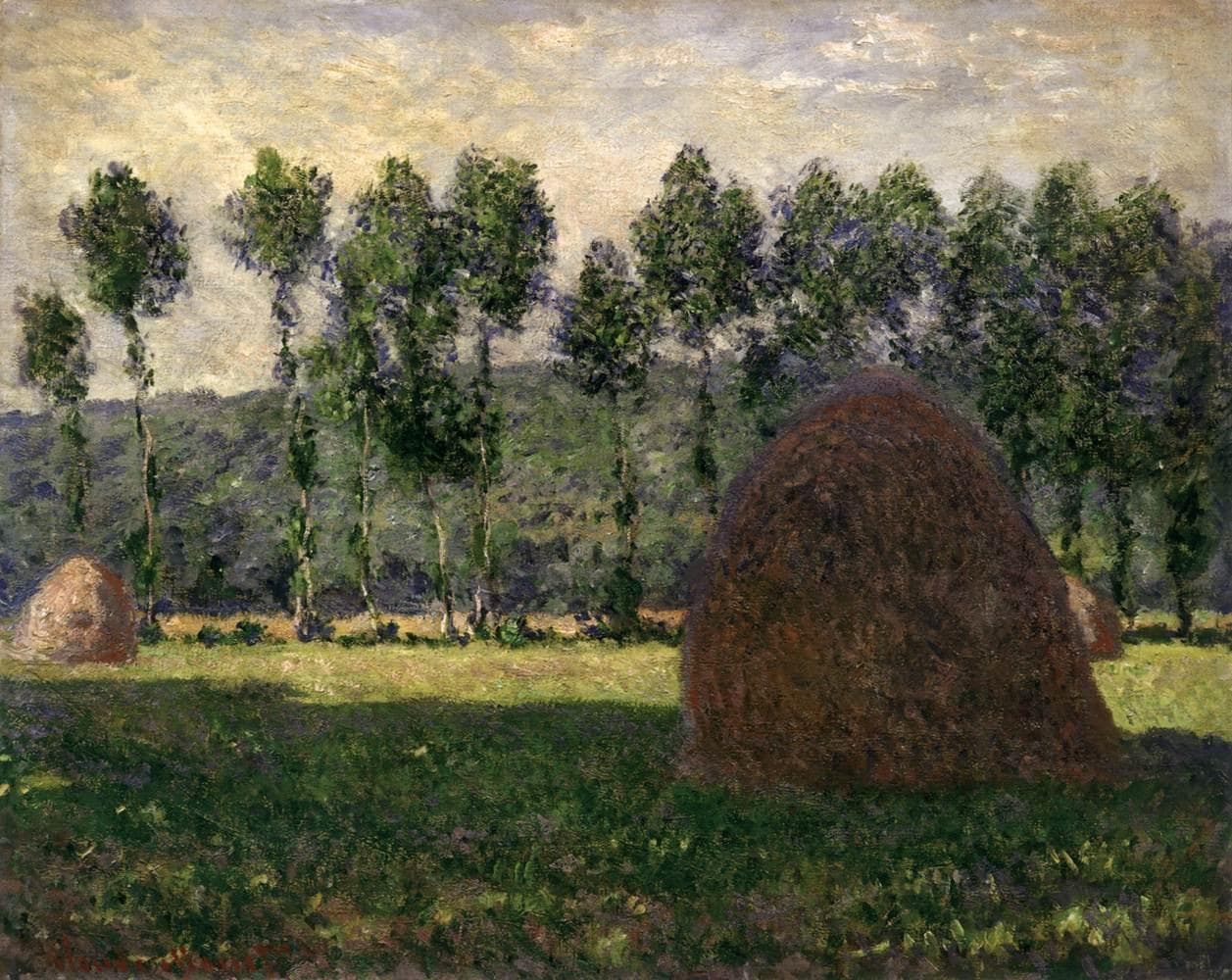
Haystack near Giverny
Claude Monet · 1884–89
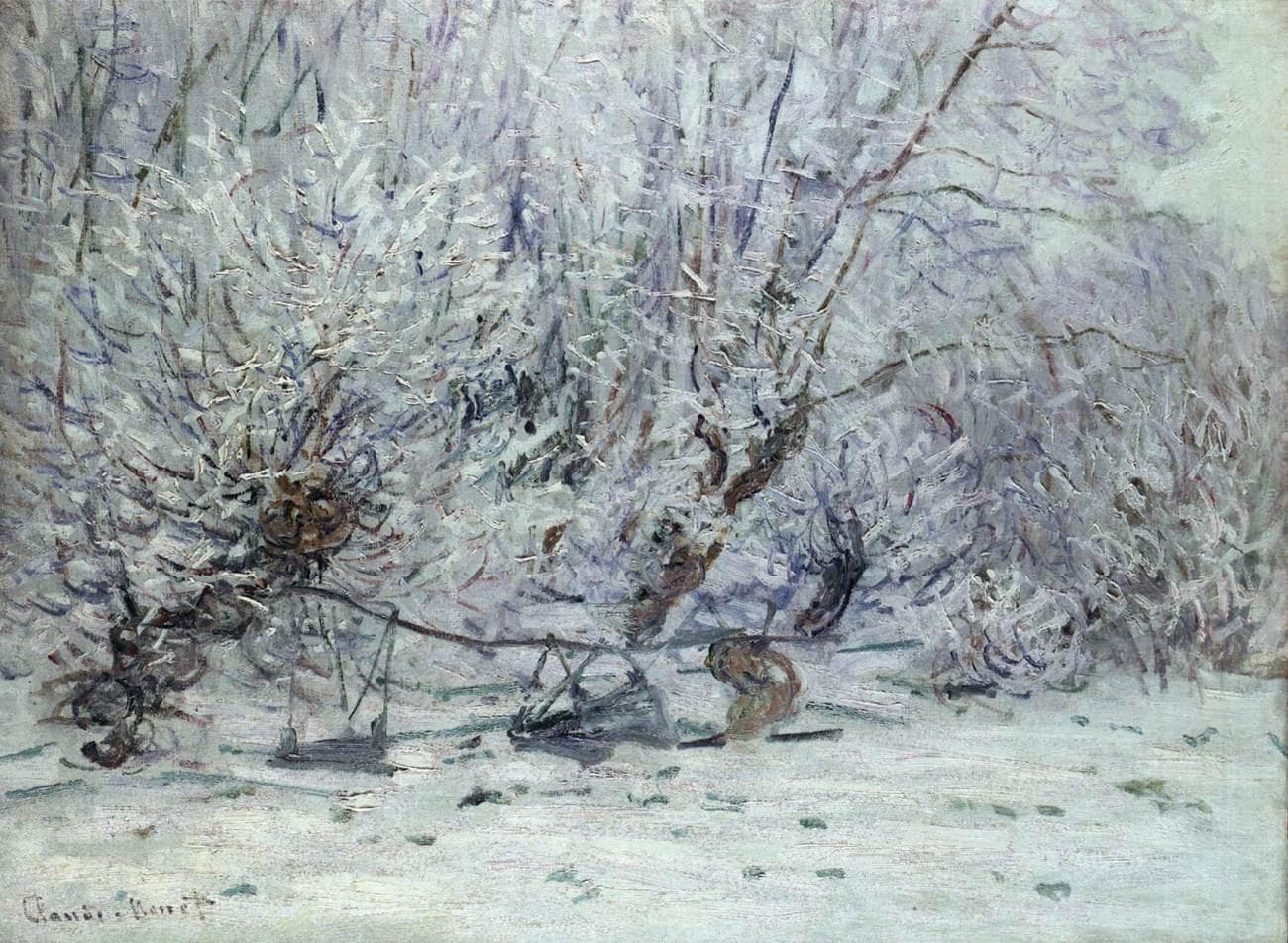
Frost
Claude Monet · 1885
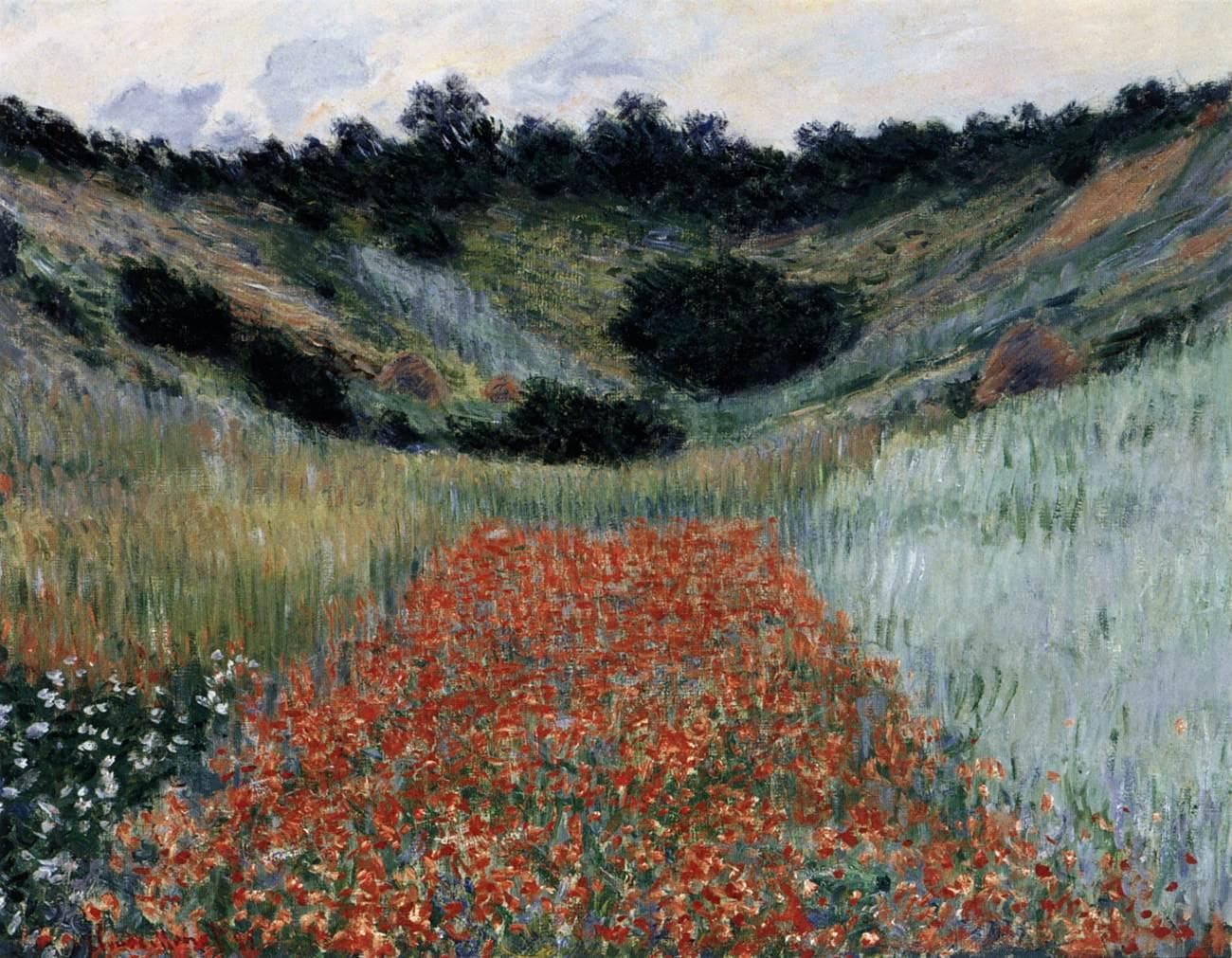
Poppy Field in a Hollow near Giverny
Claude Monet · 1885
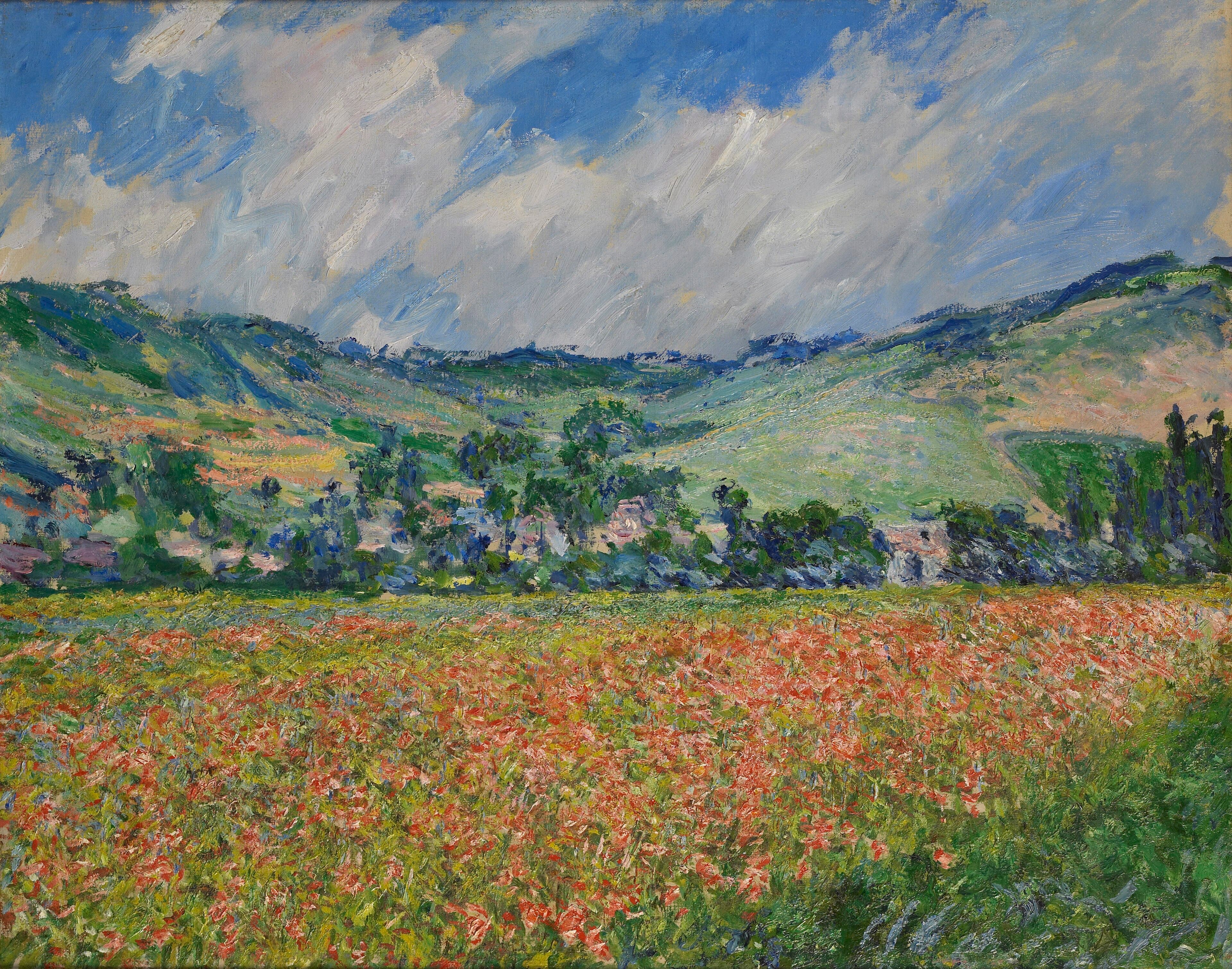
Poppy Field, Around Giverny
Claude Monet · 1885
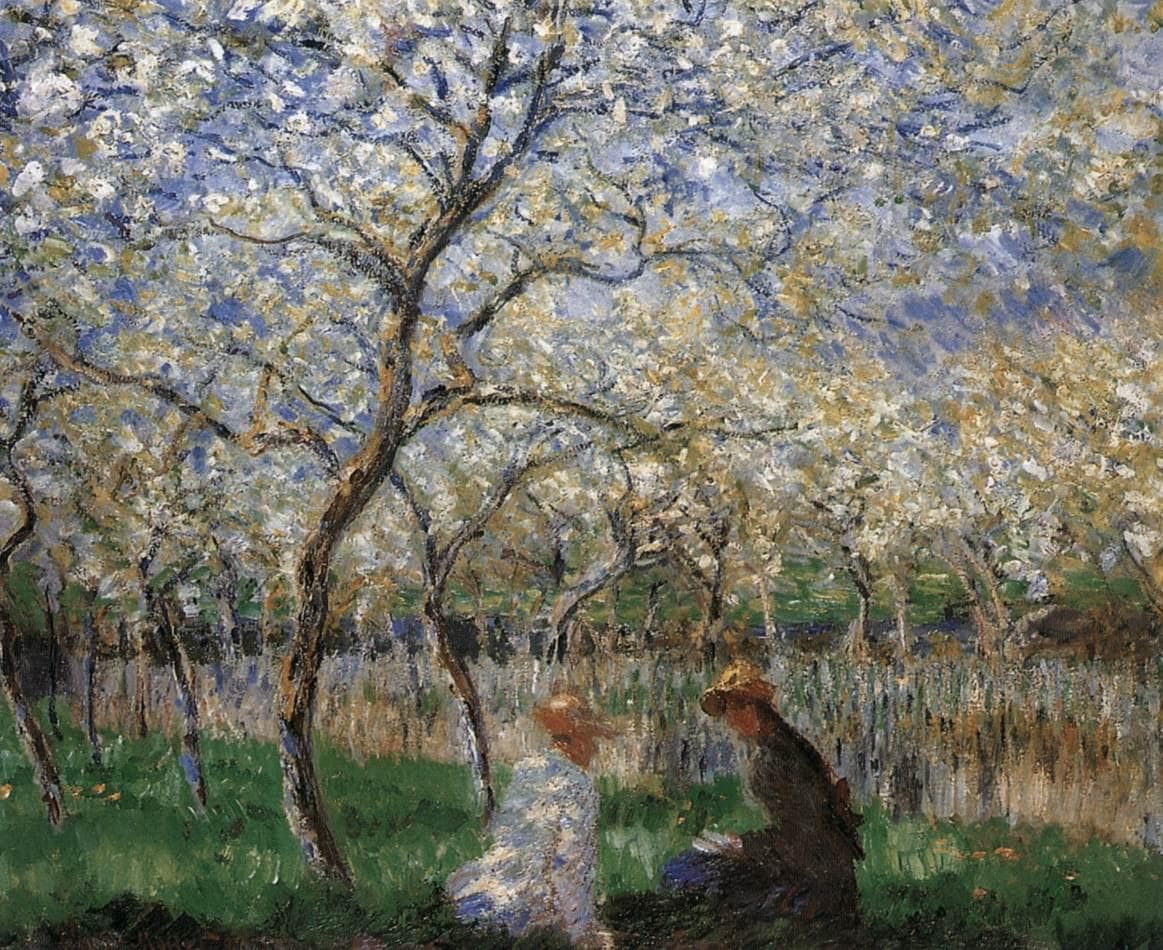
Spring
Claude Monet · 1886
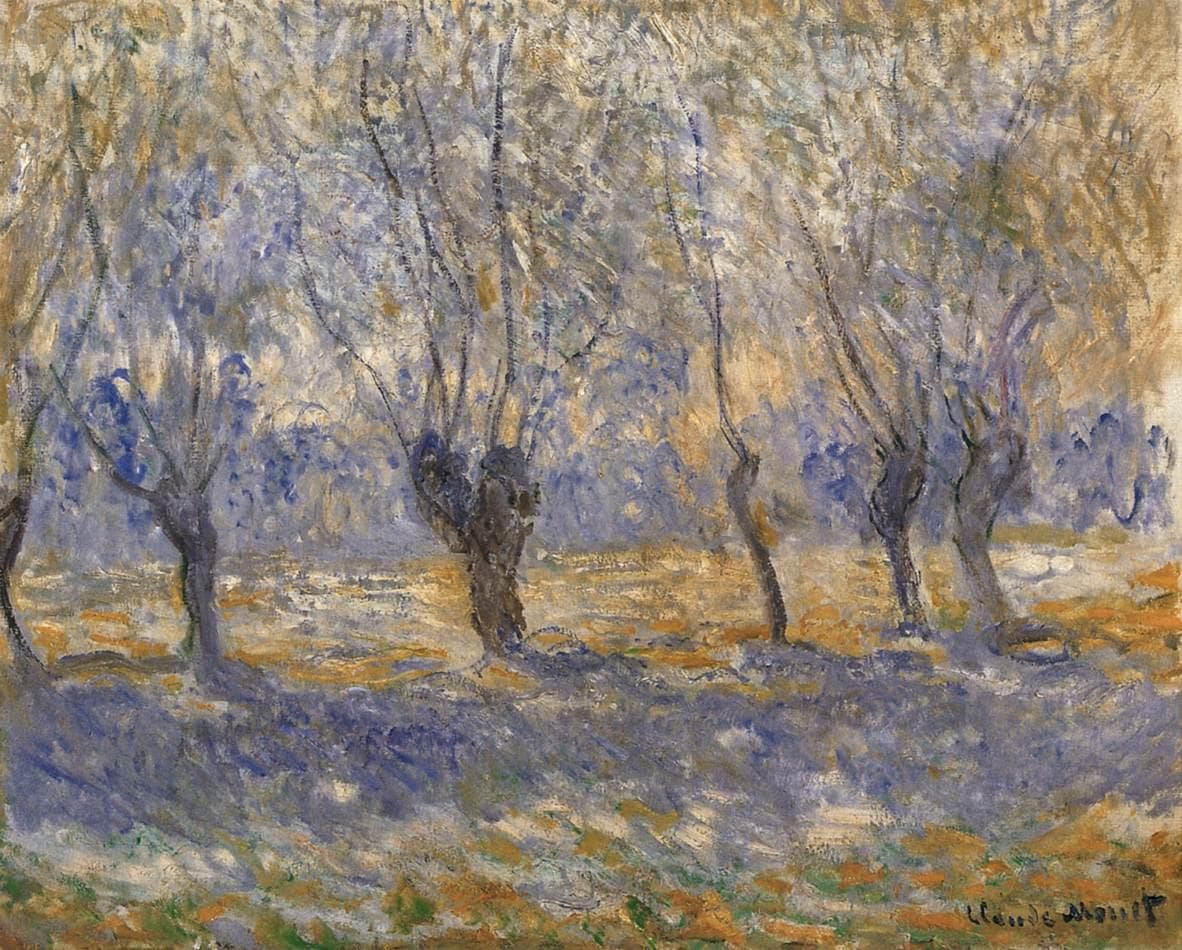
Willows at Giverny
Claude Monet · 1886
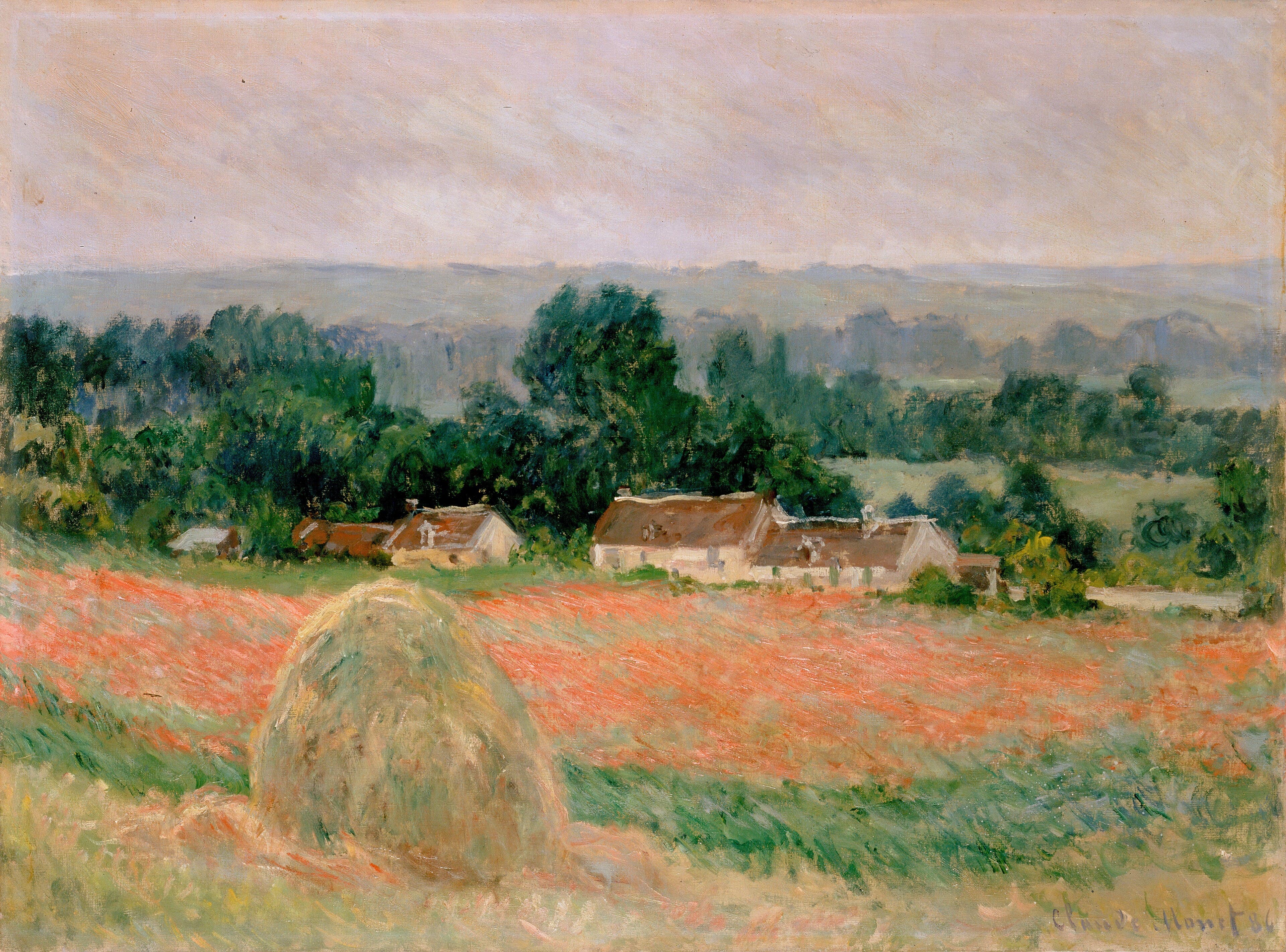
Haystack at Giverny
Claude Monet · 1886
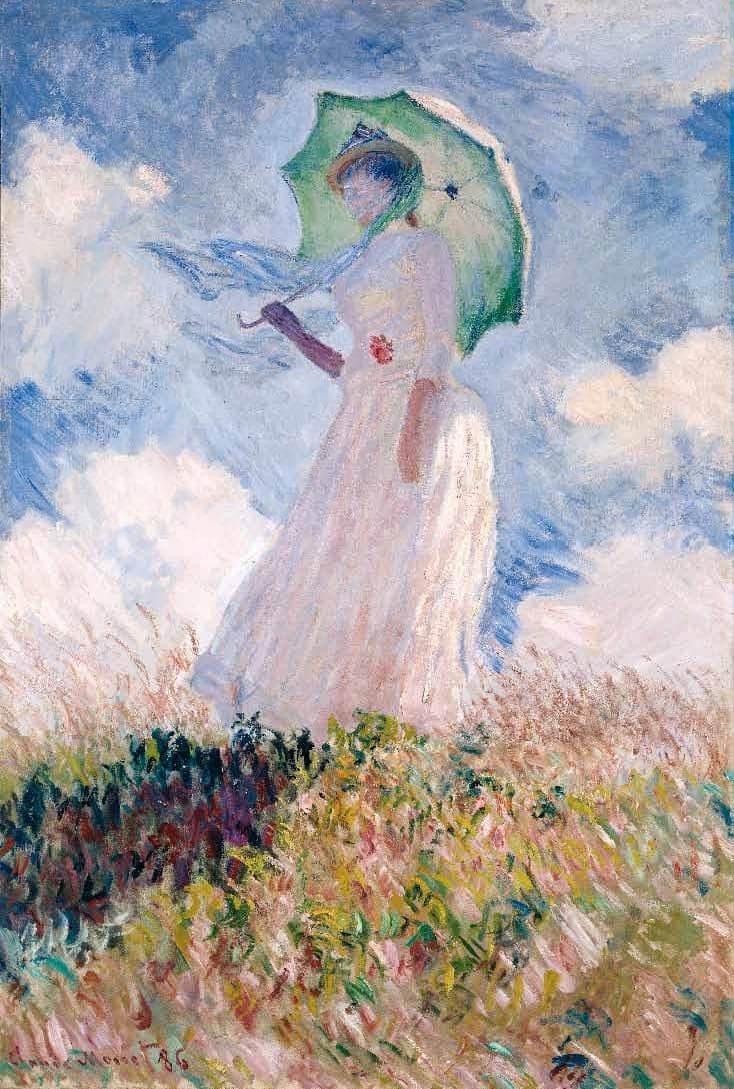
Woman with a Parasol, Facing Left
Claude Monet · 1886
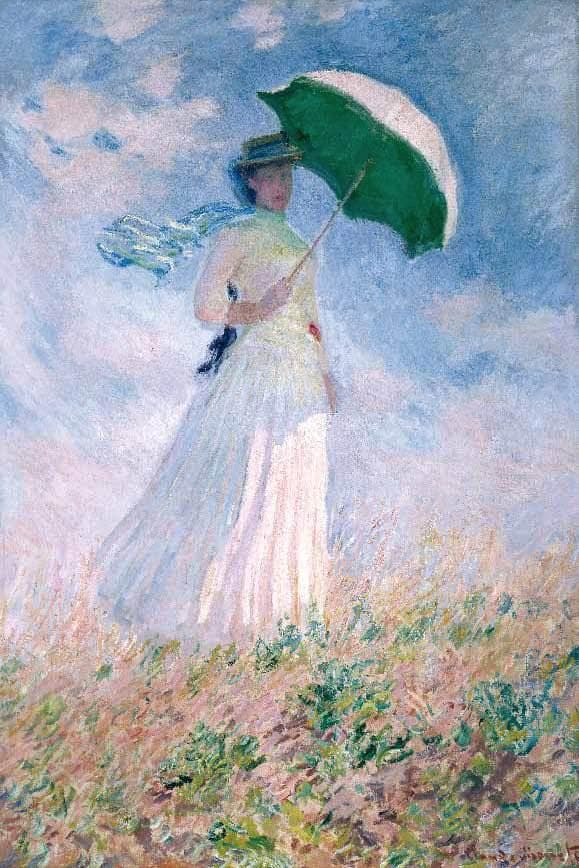
Woman with a Parasol, Facing Right
Claude Monet · 1886
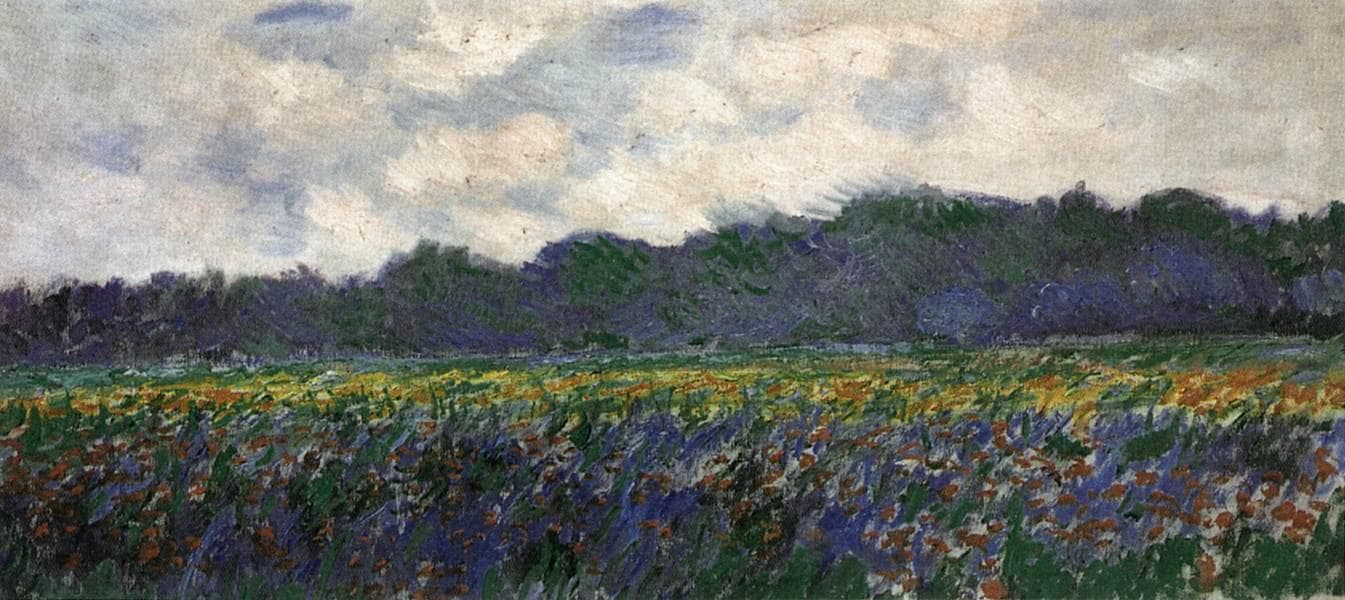
Field of Yellow Irises at Giverny
Claude Monet · 1887
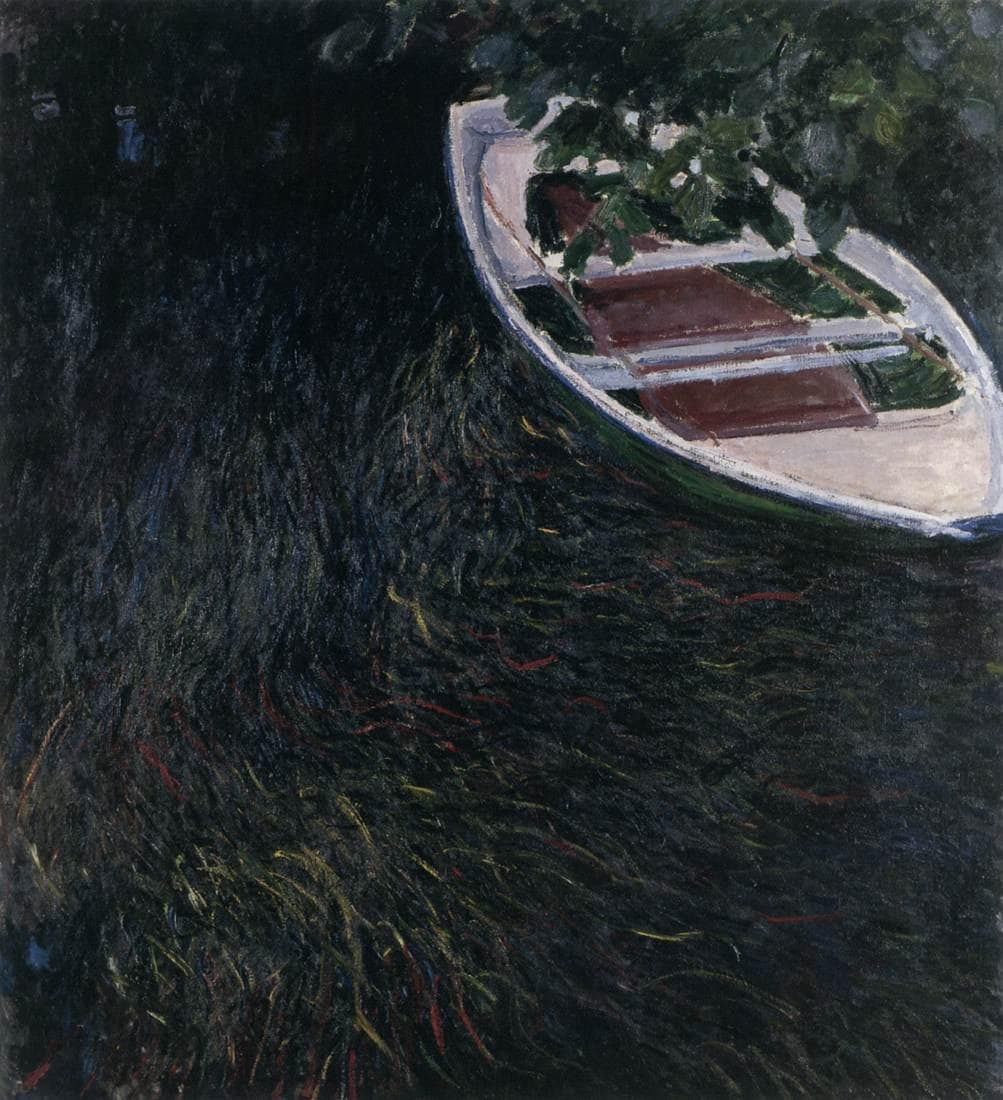
The Barque
Claude Monet · 1887
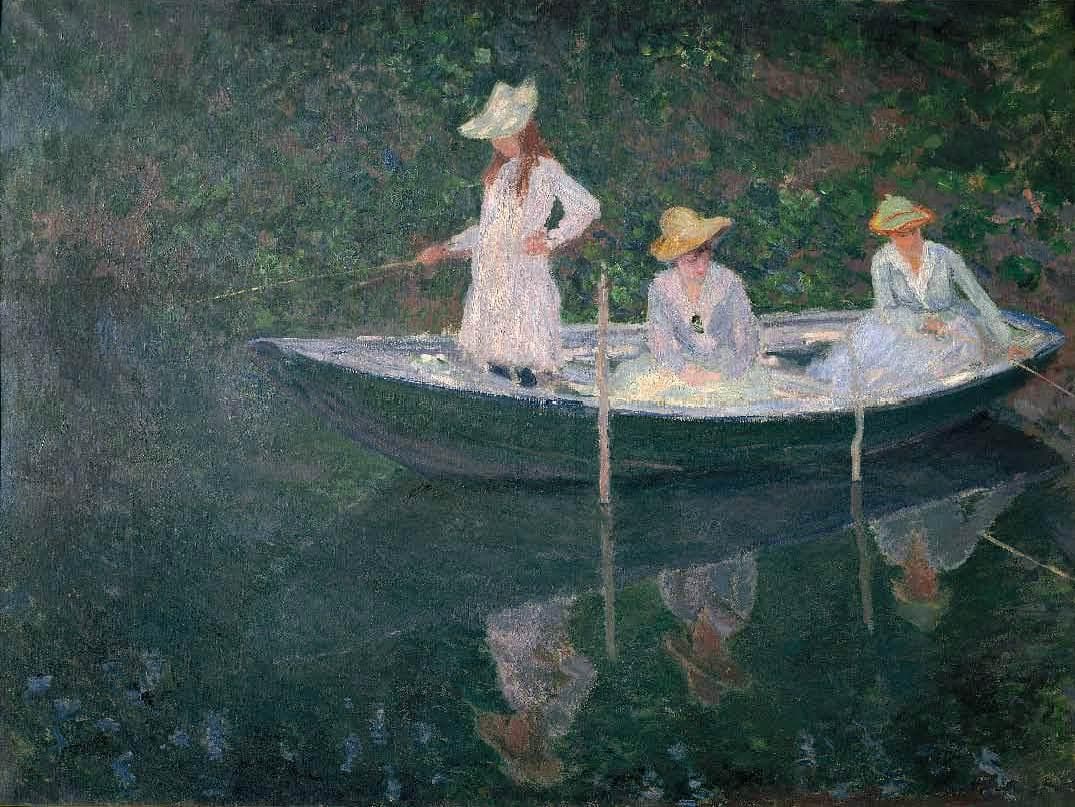
The Boat at Giverny
Claude Monet · c. 1887
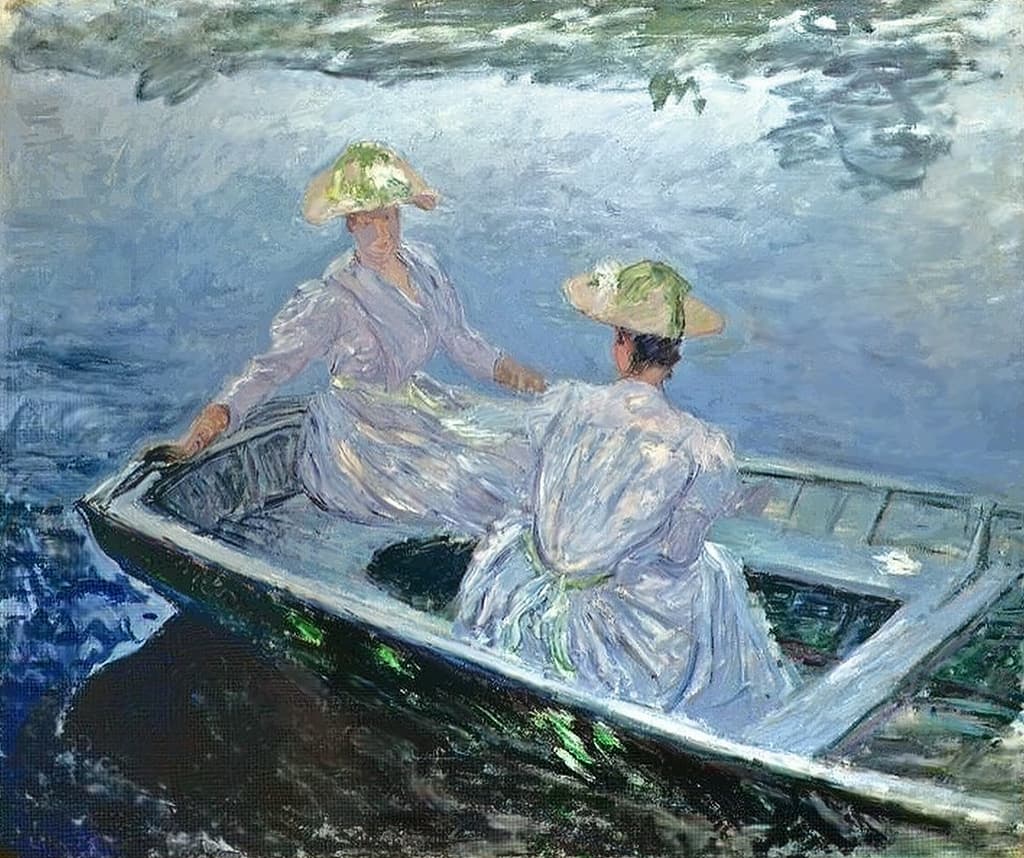
The Blue Boat
Claude Monet · 1887
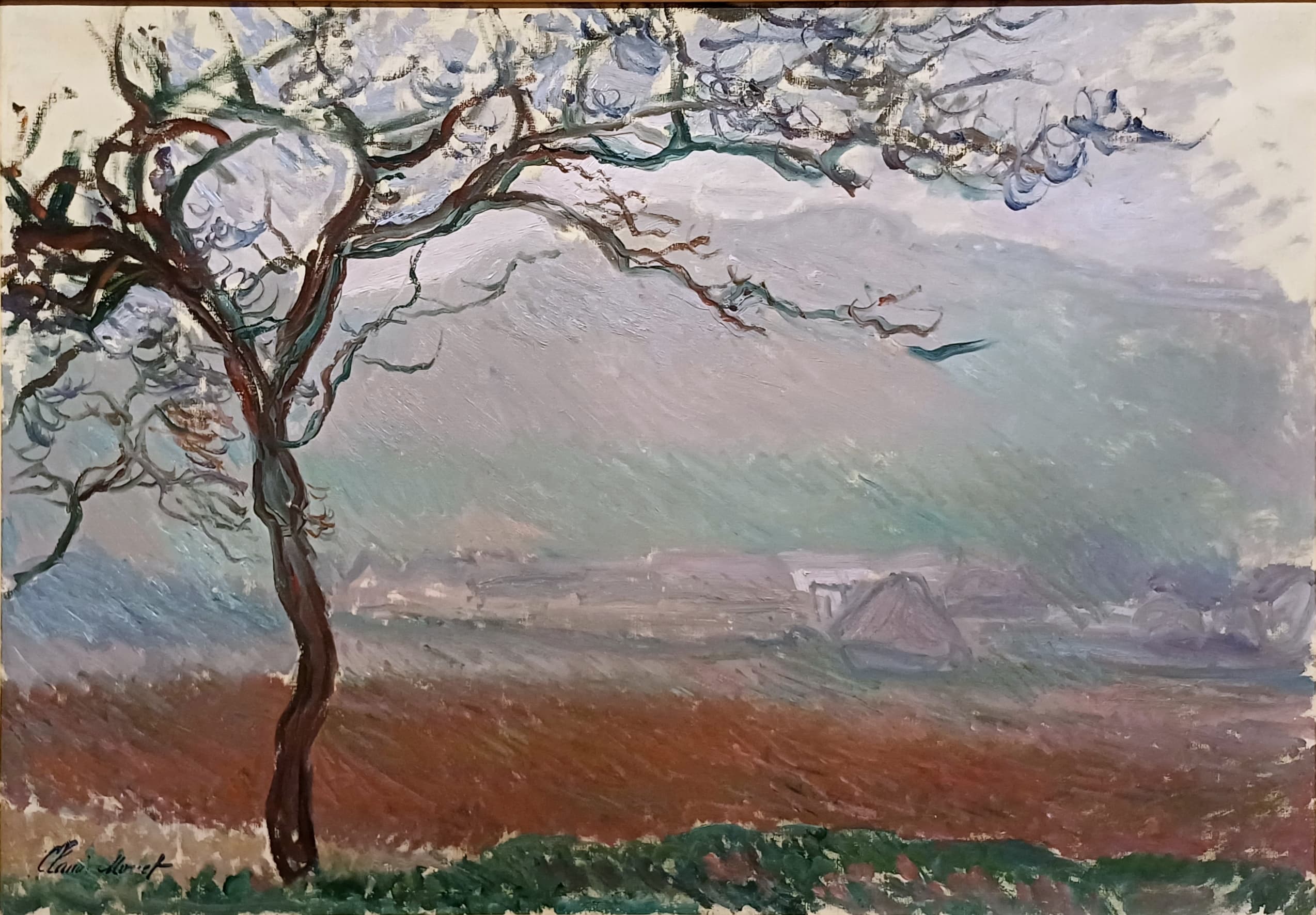
Giverny Landscape
Claude Monet · 1887
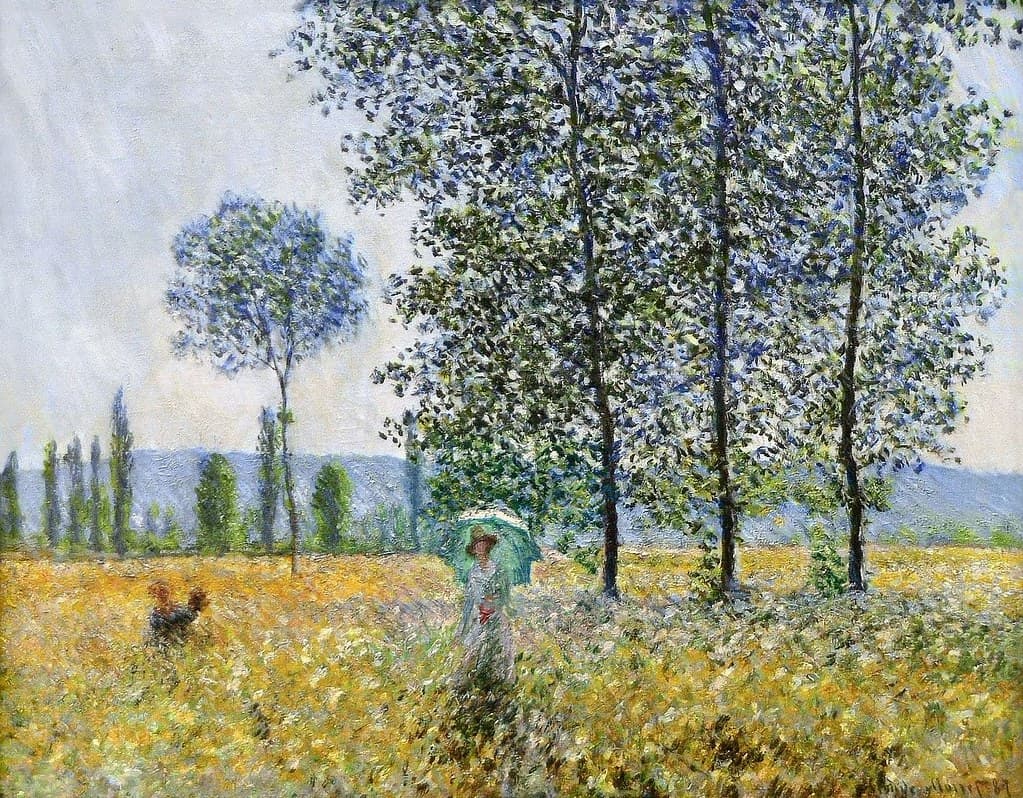
Poplars in the Sun
Claude Monet · 1887
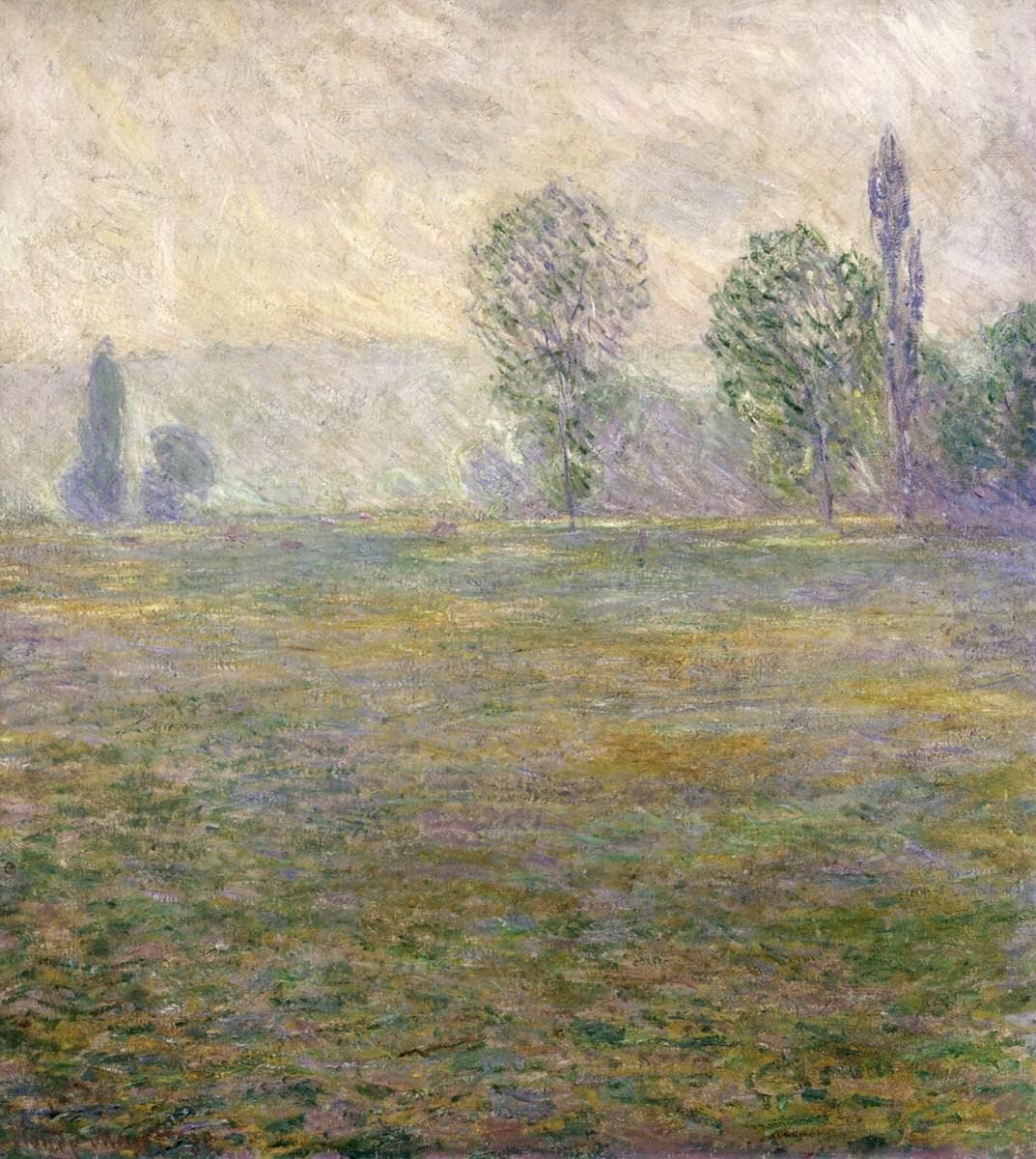
Meadow at Giverny
Claude Monet · 1888

Boating on the River Epte
Claude Monet · 1890
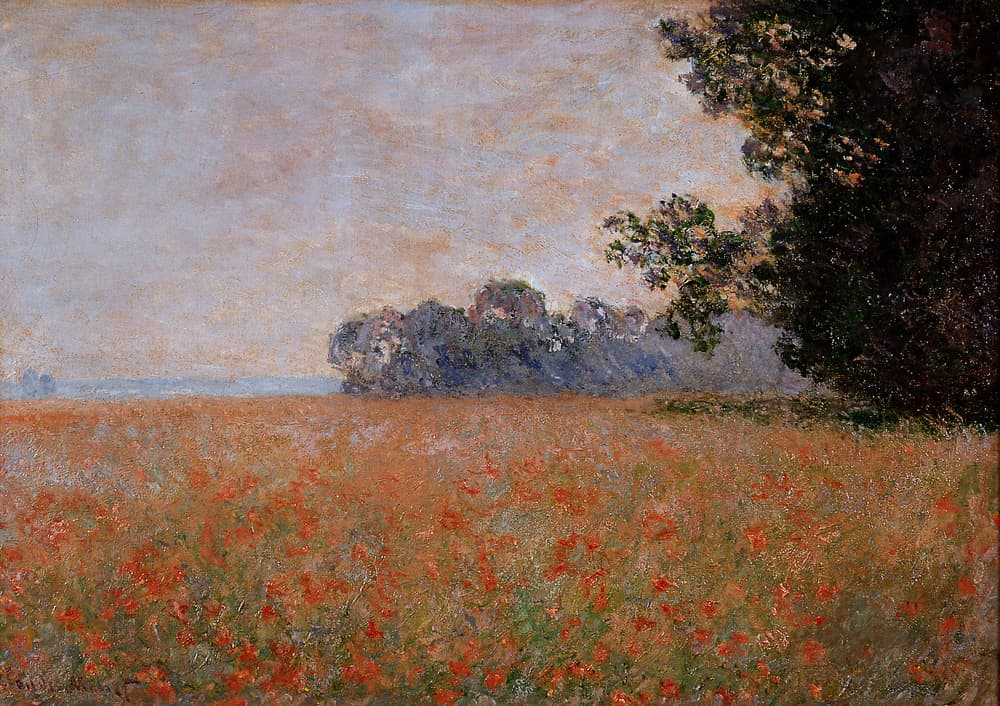
Oat Field with Poppies
Claude Monet · c. 1890
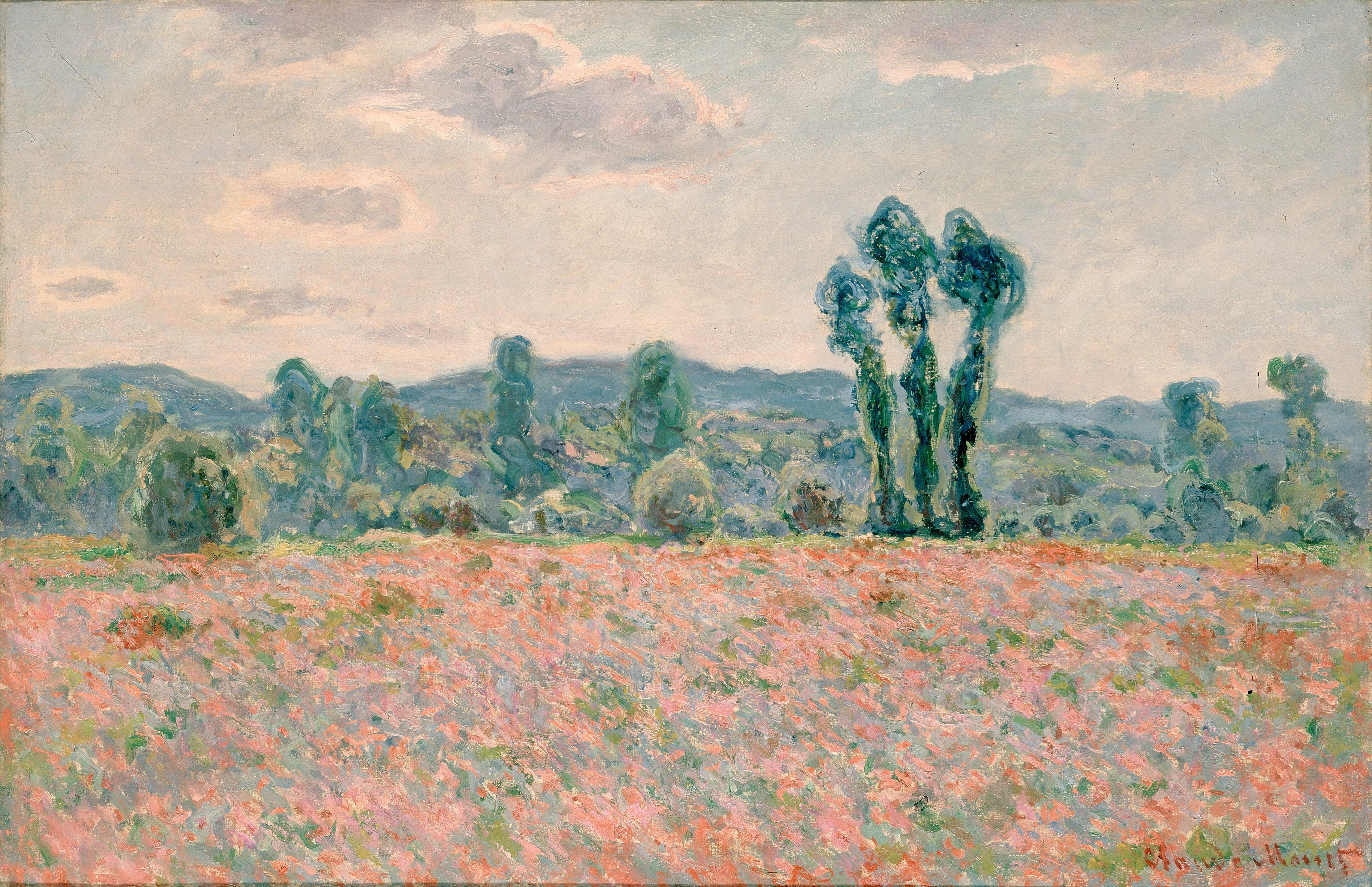
Poppy Field
Claude Monet · c. 1890
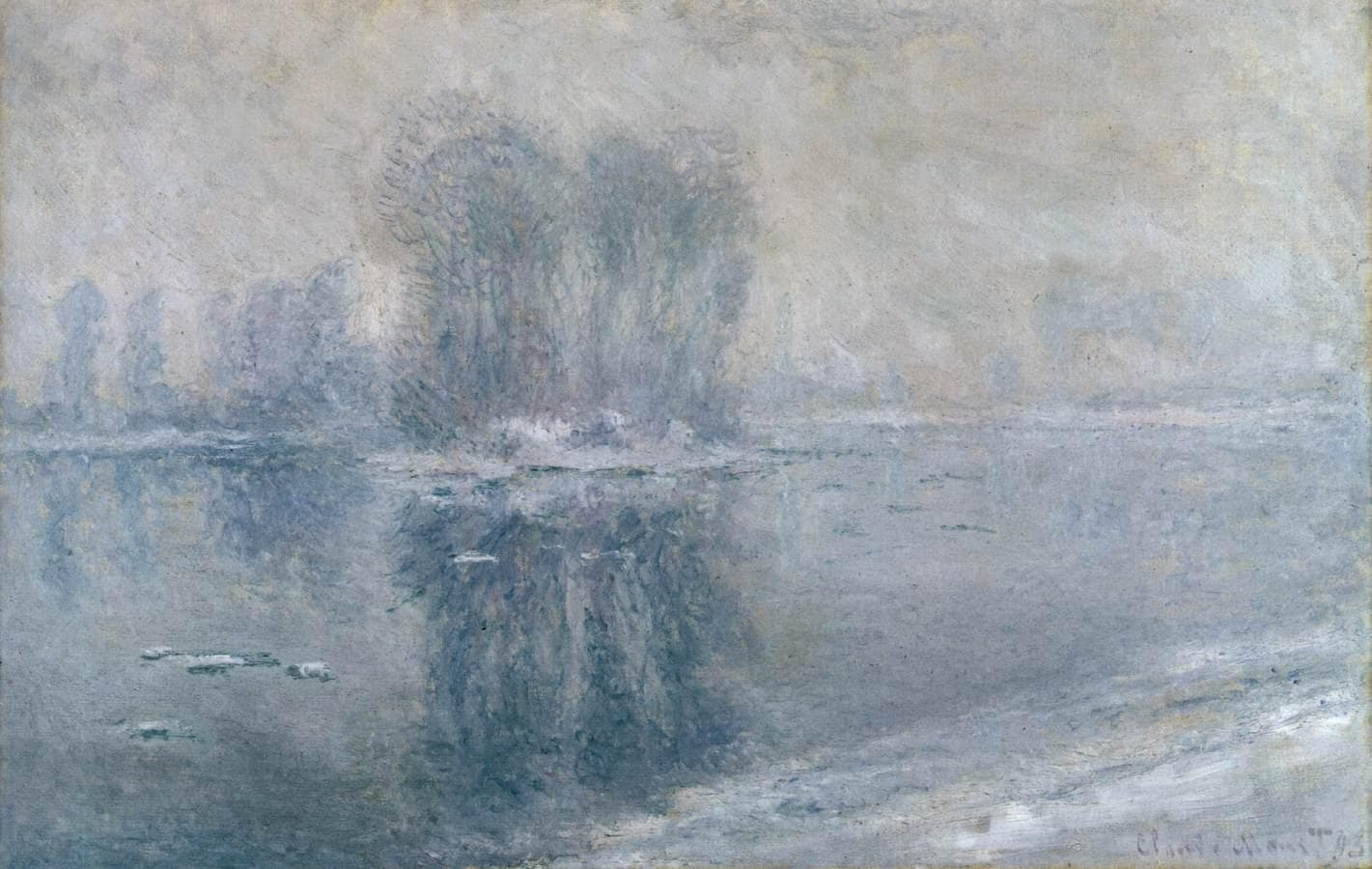
Ice Floes
Claude Monet · 1893
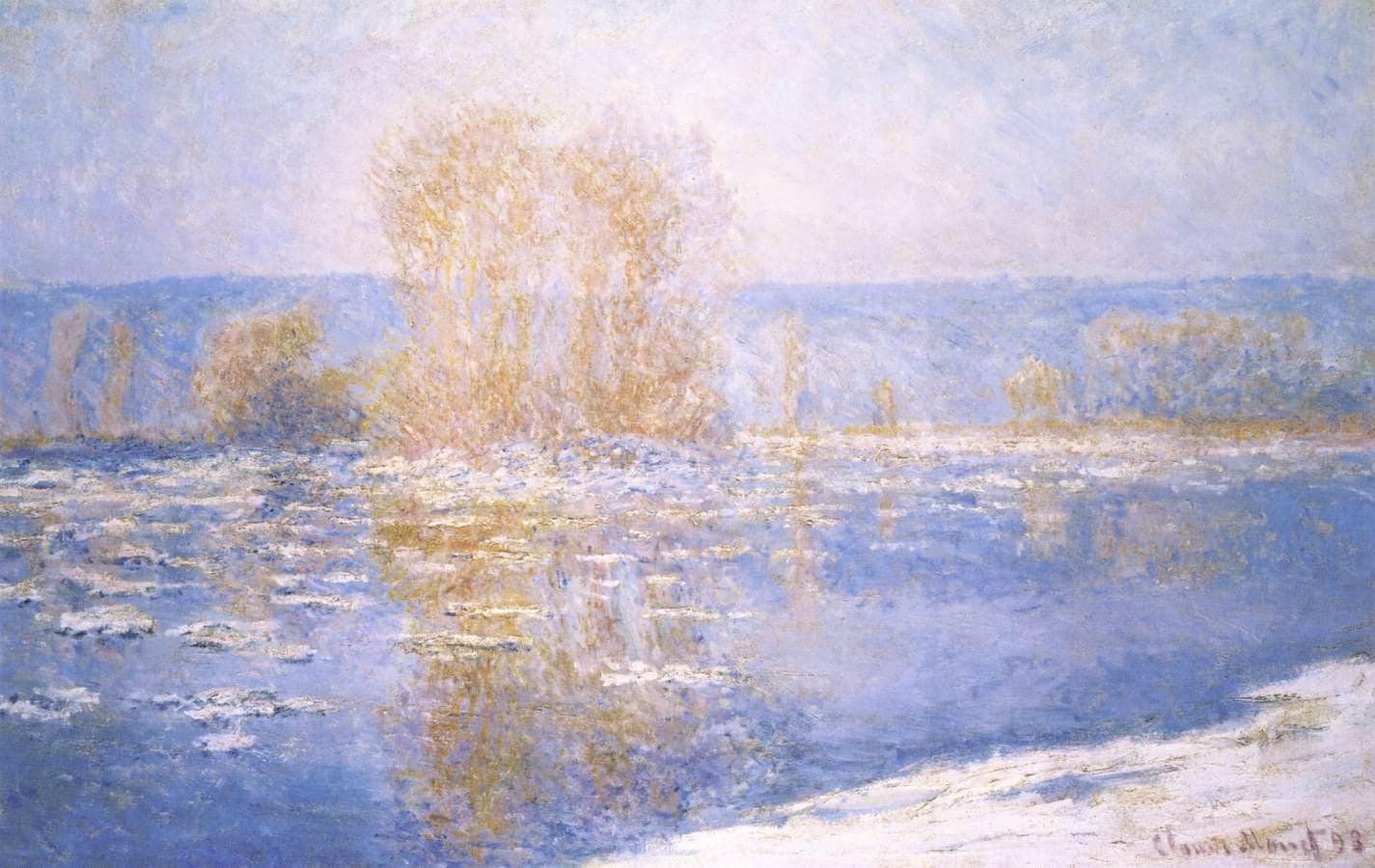
Floating Ice at Bennecourt
Claude Monet · 1893
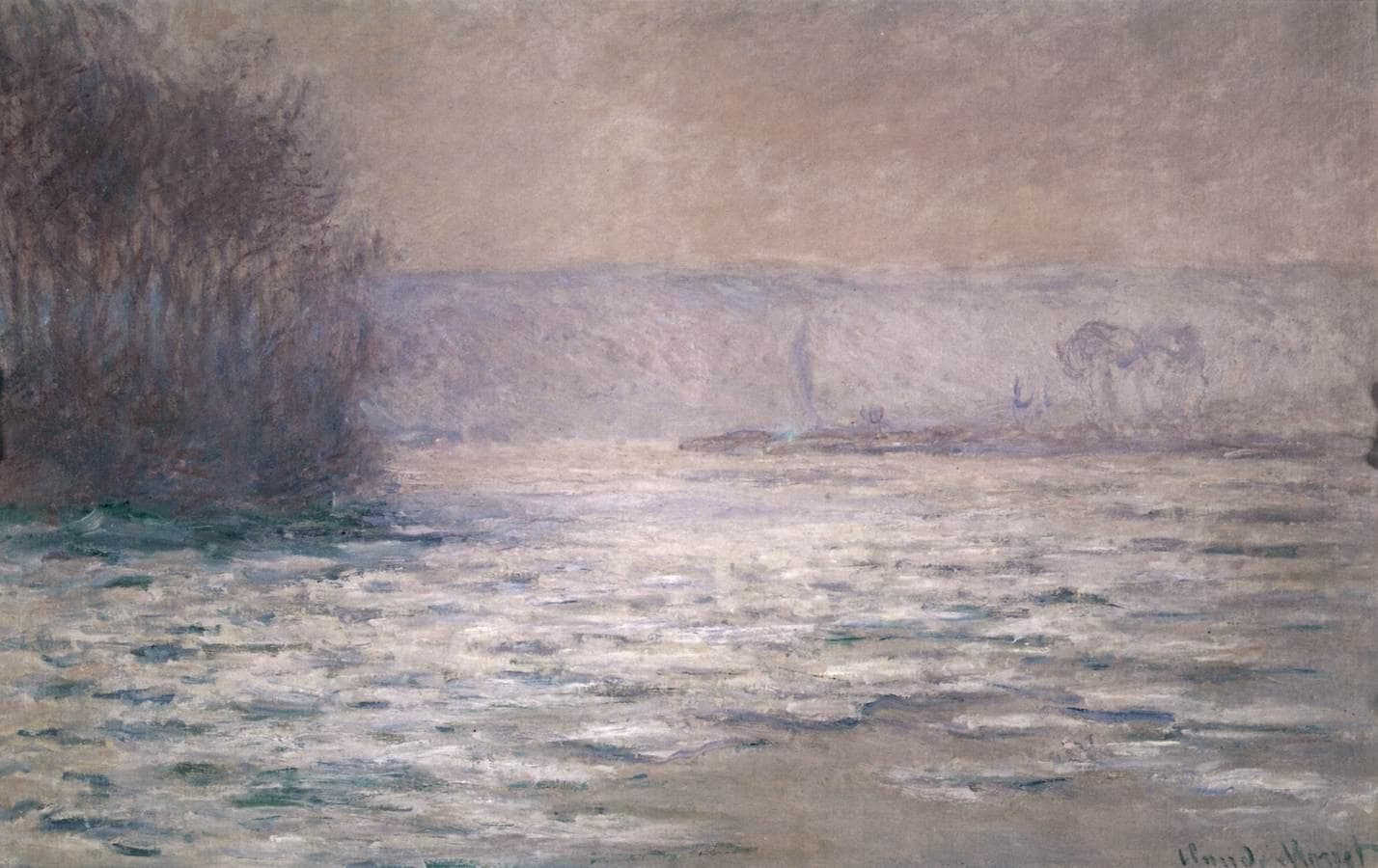
Ice Floes on the Seine near Bennecourt
Claude Monet · 1893
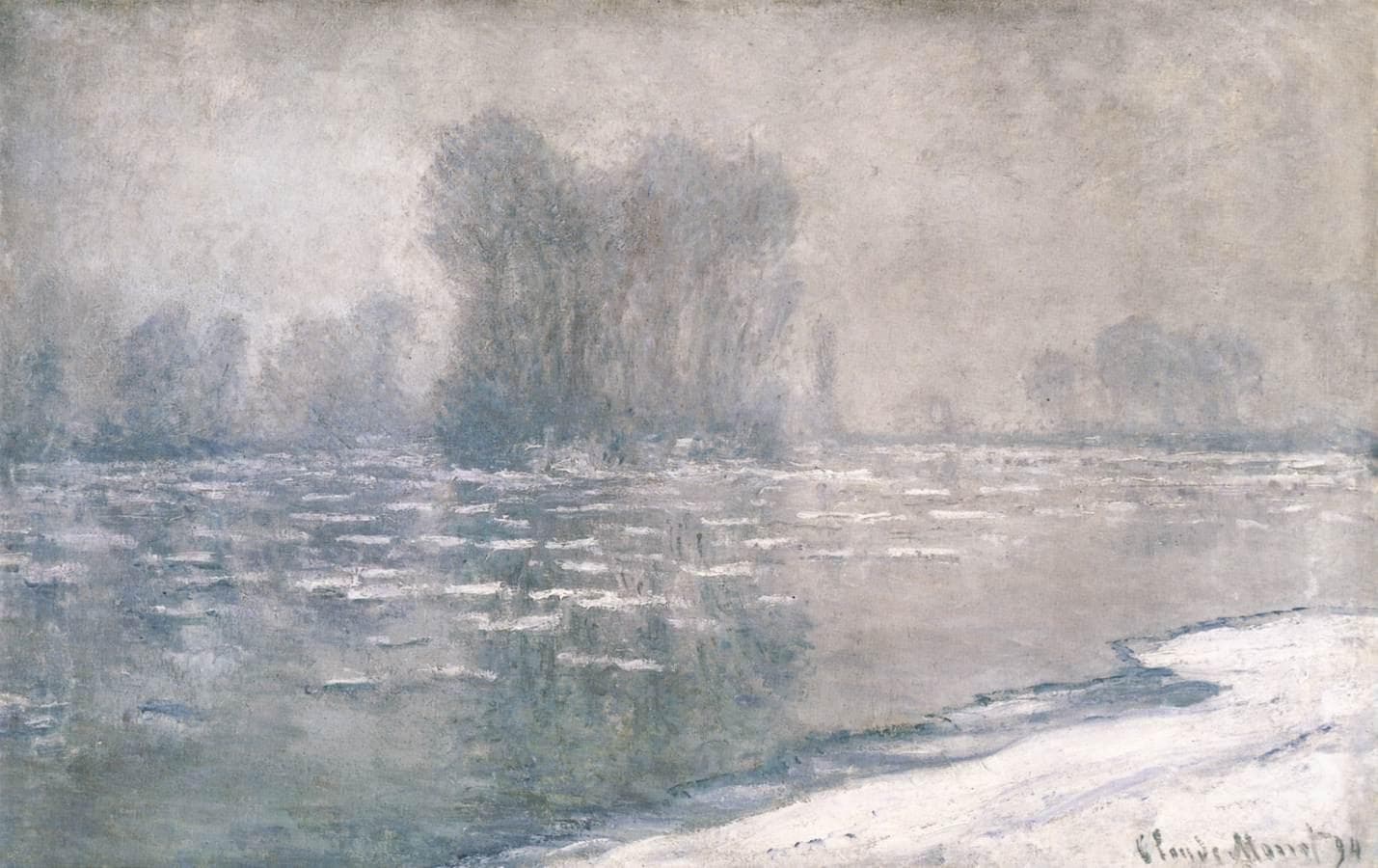
Morning Haze
Claude Monet · 1894
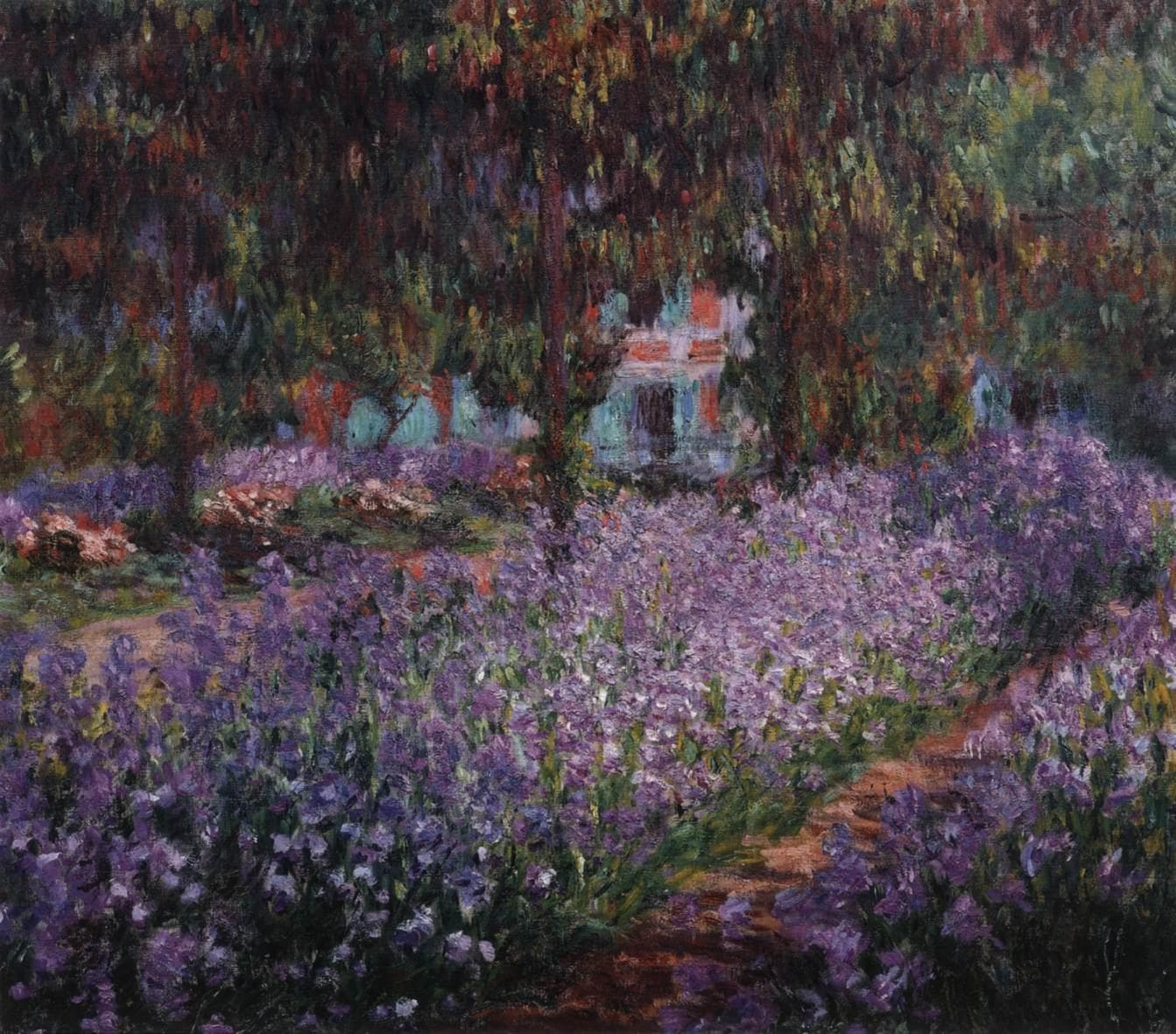
Irises in Monet's Garden at Giverny
Claude Monet · 1900
The Garden Path at Giverny
Claude Monet · 1902
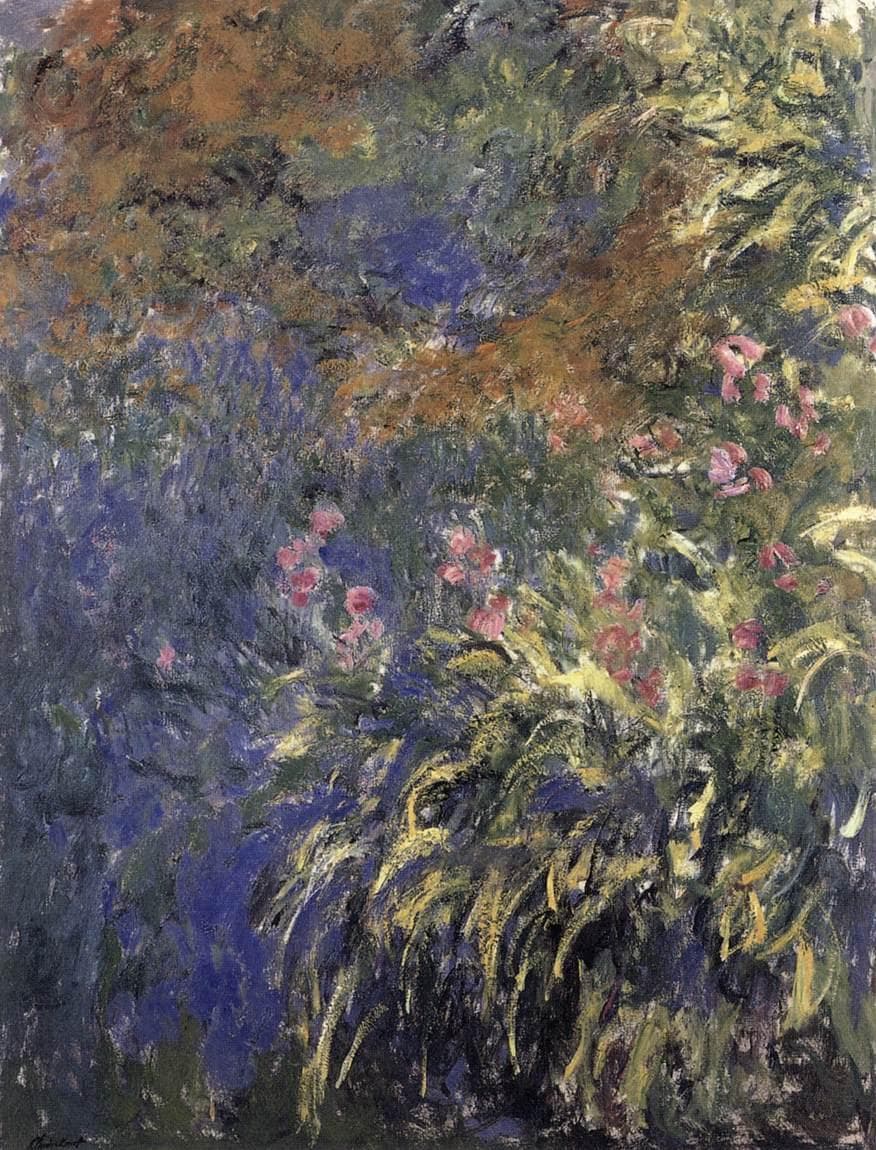
Irises by the Pond
Claude Monet · c. 1914–17
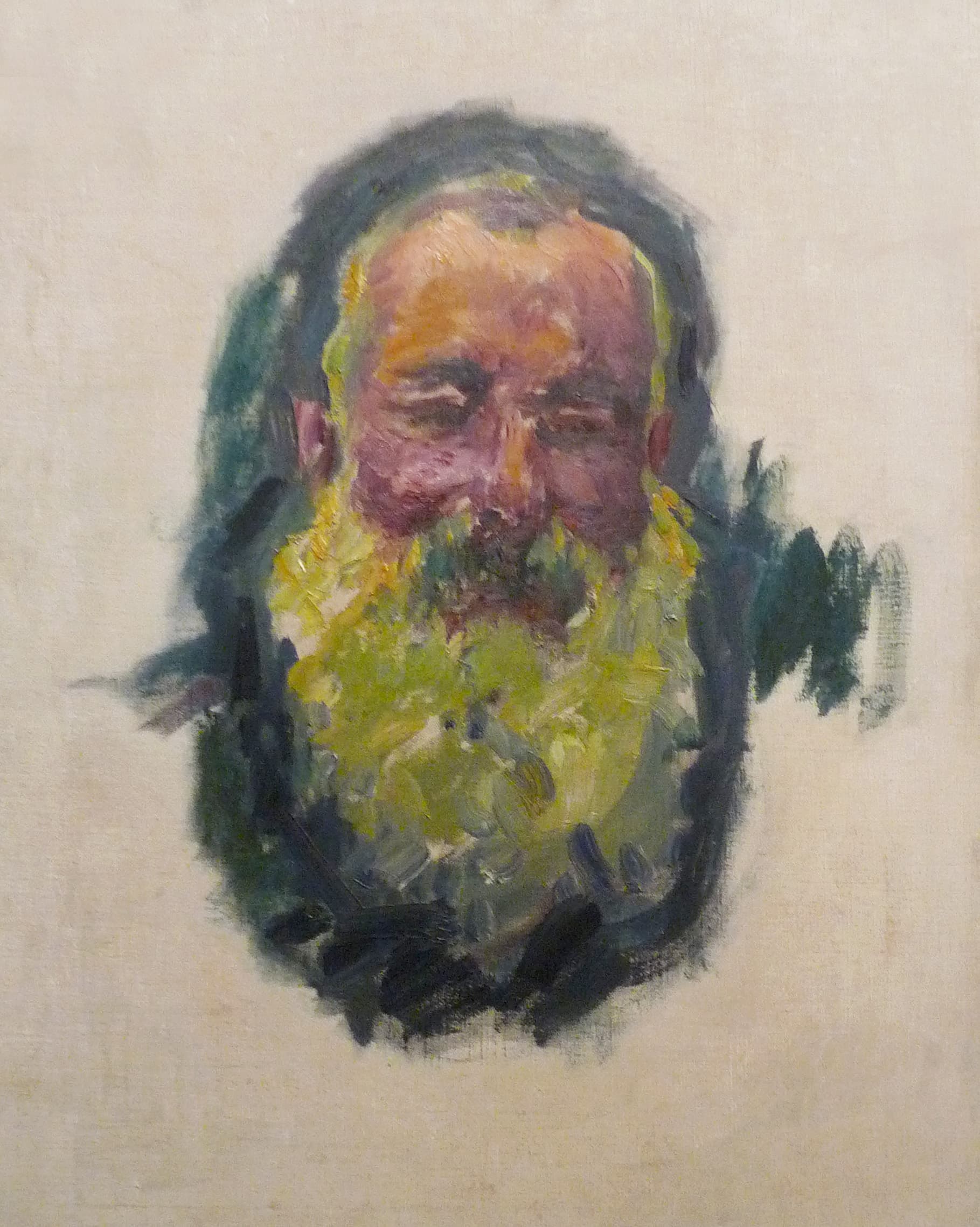
Self-Portrait (1917)
Claude Monet · 1917
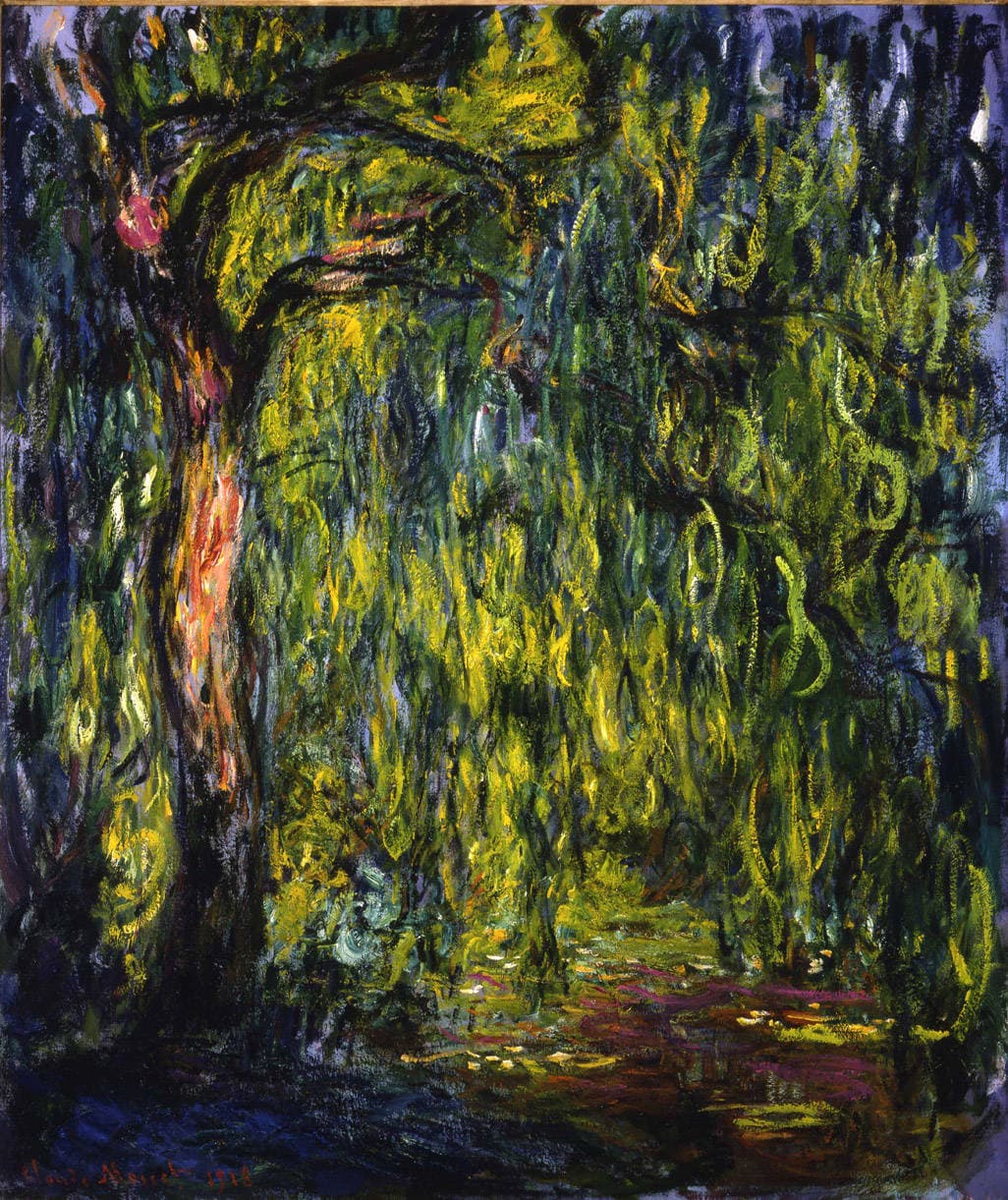
Weeping Willow (Columbus)
Claude Monet · 1918
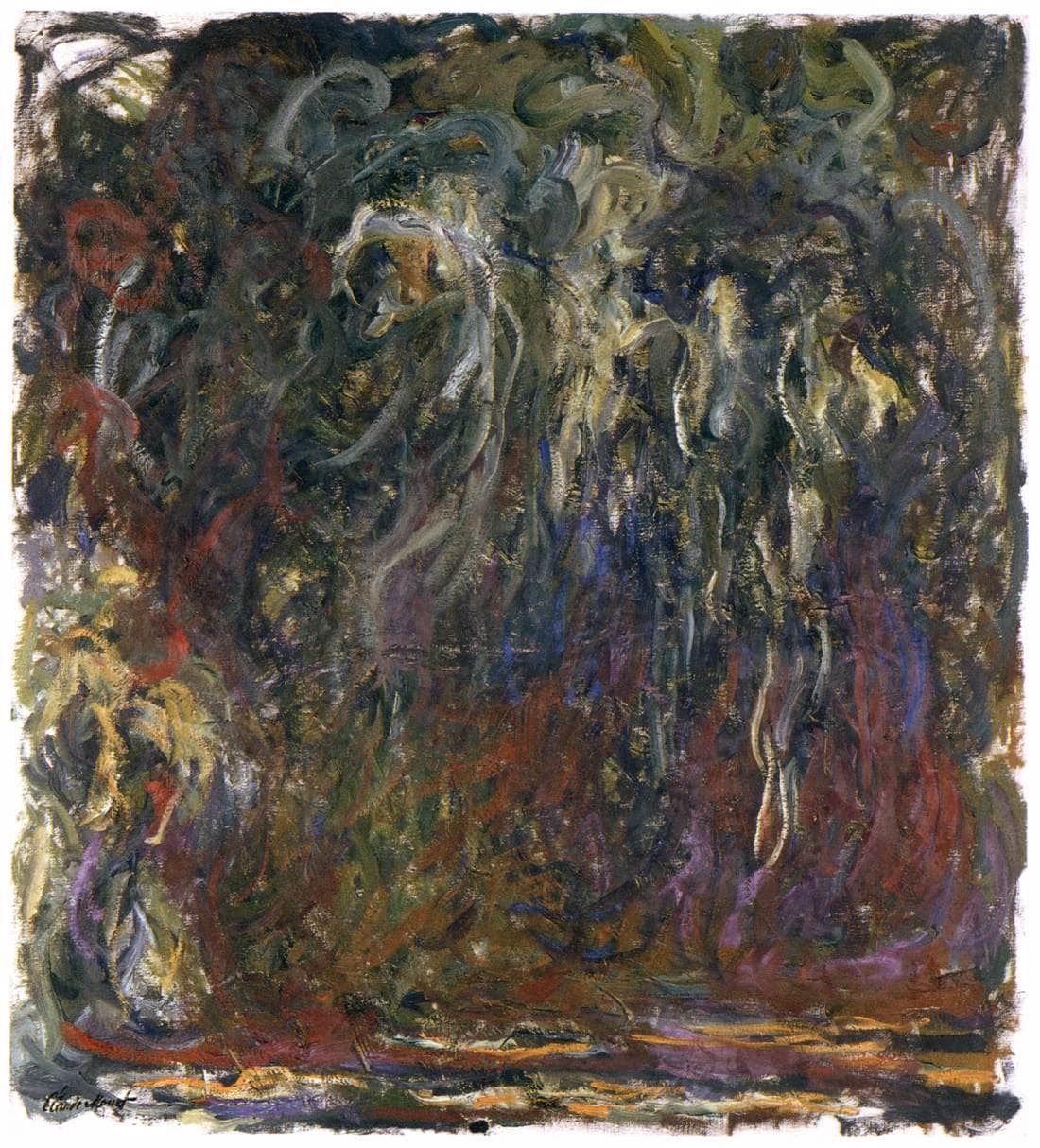
Weeping Willow
Claude Monet · 1920–22
How Monet came to Giverny
In April 1883 Monet, then 42, was looking for a house big enough for an unusual household: his two sons, Jean and Michel, and Alice Hoschedé and her six children, whose family had joined his after her husband's bankruptcy. He is said to have spotted Giverny from the window of a train on the line between Vernon and Gasny. The village sat on the right bank of the Seine where the little river Epte joins it, with meadows, poplars and willows on the flat ground and wooded hills behind.
He rented a long farmhouse known as Le Pressoir, the cider press, on the main road of the village, with a walled orchard running down to the road and the railway line. In 1890, by then selling well, he bought it. He married Alice in 1892, after her husband's death. He lived at Giverny for the rest of his life, and died there on 5 December 1926. He is buried in the village churchyard.
The fields, the river and the meadows, 1883–1890
For his first years at Giverny Monet painted the countryside around the house rather than the house itself. He went out with his canvases and stepchildren into the meadows, the poppy fields and the orchards, and onto the river.
- Fields and meadows: Poppy Field in a Hollow near Giverny (1885), Meadow at Giverny (1888) and Oat Field with Poppies (1890) are summer pictures of open land and big skies.
- Spring and winter: Spring (1886) shows two young women under orchard blossom; Frost (1885) the same countryside under hoarfrost.
- Figures in the open air: the two Women with a Parasol of 1886, painted on an island in the Seine with Suzanne Hoschedé as the model, are Monet's last great figure paintings out of doors.
- On the water: The Boat at Giverny, The Barque and The Blue Boat (all about 1887) show the Hoschedé girls fishing or an empty boat among reflections on the Epte. Seen from above, with no horizon, these river pictures already point toward the water lilies.
In the same years he painted his first wheat stacks in the meadow next to the house, as in Haystacks at Giverny and Haystack at Giverny, and lines of trees like Willows at Giverny and Poplars in the Sun. These motifs became series in 1890–91.
The ice on the Seine, 1893
In the hard winter of 1893 the Seine froze near Giverny and broke up into floes. Monet painted the ice drifting past the wooded banks at Bennecourt, across the river from the village, in a group of pale, misty pictures: Ice Floes at the Met, Floating Ice at Bennecourt and Ice Floes on the Seine near Bennecourt, and the later Morning Haze. They anticipate the soft, close-valued color of the Mornings on the Seine.
Making the garden
Monet's garden was his longest work. In front of the house he replaced the old orchard with the Clos Normand, a flower garden of about a hectare laid out in long rectangular beds, with a central path, the Grande Allée, under iron arches covered with climbing roses. He planted for color and succession: tulips and irises in spring, roses, poppies, peonies and lilies in summer, dahlias, sunflowers and nasturtiums in autumn, the nasturtiums spreading across the path until it all but disappeared. Irises in Monet's Garden (1900) and The Garden Path at Giverny (1902) show the result.
In 1893 he bought land across the road and railway and dug the water garden: a pond fed by a diverted branch of the Epte, planted with water lilies and edged with willows, bamboo and irises, crossed by the footbridge he built by 1895. He enlarged it in 1901. From 1897 to 1926 it was almost his only subject. The Water Lilies and Japanese Footbridge pages follow that work; here, the late pictures of the pond's edges, such as Irises by the Pond and the dark, violent Weeping Willow canvases of 1918–22, painted as the First World War ended, complete the picture.
Monet employed several gardeners, one of them for the pond alone, and spent large sums on plants. Visitors from the 1890s on described the garden as a painting made of flowers.
Life in the house
The house was long and low, which Monet had painted pink, with green shutters and doors. Inside he chose bold colors: a yellow dining room with yellow furniture, a blue-tiled kitchen. On the walls he hung his collection of Japanese woodblock prints, by Hokusai, Hiroshige, Utamaro and others, which is still there. His first studio was in a barn beside the house; later it became a sitting room hung with his own paintings. He built a second studio around 1899 and, in 1915, a huge third studio for the Orangerie panels.
Giverny also became a destination. From the late 1880s American painters, among them Theodore Robinson, John Leslie Breck and later Frederick Frieseke, settled in the village, forming an artists' colony. Monet's friends, including Clemenceau, Cézanne, Rodin, Renoir and the critic Gustave Geffroy, came to lunch. In later years he painted a rare self-portrait (1917) there.
After Monet: the house today
After Monet's death his stepdaughter Blanche Hoschedé-Monet looked after the house until her death in 1947. His son Michel, who inherited it, left it in 1966 to the Académie des Beaux-Arts, together with the studio contents that went to the Musée Marmottan. By then house and garden were badly neglected. A long restoration, led by Gérald Van der Kemp and largely funded by American donors, rebuilt the gardens from photographs and descriptions, and the site reopened in 1980. It is now run by the Fondation Claude Monet.
Visiting Giverny
The house and gardens are open daily from late March or April to the beginning of November. Giverny is about an hour from Paris by train from the Gare Saint-Lazare to Vernon, then a short bus or bike ride. Come early or late to avoid crowds. The Musée des Impressionnismes Giverny, a short walk away, holds exhibitions of Impressionism and the artists' colony.
None of Monet's Giverny paintings hangs in the house, which shows reproductions. To see them, go to the Marmottan, the Orsay and the Orangerie in Paris, and to the museums listed on Where to See Monet's Paintings. For his life, see Claude Monet.
Questions & answers
Where is Giverny?
Giverny is a village in the Eure department of Normandy, France, on the Seine about 75 kilometers west of Paris, close to the town of Vernon. Monet lived there from 1883 until his death in 1926. Trains from Paris Saint-Lazare reach Vernon in under an hour.
Can you visit Monet's house and garden in Giverny?
Yes. The Fondation Claude Monet opens the house, the Clos Normand flower garden and the water garden with the lily pond and Japanese bridge daily from about late March or April to early November. Tickets are best booked in advance in summer.
Are there real Monet paintings in his house at Giverny?
No. The house shows reproductions of his paintings, hung as he hung them, and his own collection of Japanese prints, which is original. Monet's paintings are in museums, above all the Musée Marmottan, the Musée d'Orsay and the Orangerie in Paris.
How long did Monet live in Giverny?
Forty-three years. He moved there in April 1883, rented the house until he bought it in 1890, and died there on 5 December 1926. He is buried in the churchyard of Sainte-Radegonde in the village.
What did Monet paint at Giverny?
Almost everything of his last four decades: the fields and meadows around the village, the river Seine and Epte, the Haystacks and Poplars, the Mornings on the Seine, his flower garden and, from 1897 to 1926, the Water Lilies and the Japanese footbridge of the pond he built.