Impressionism
Garden in Bloom at Sainte-Adresse
Claude Monet, c. 1866
Garden in Bloom at Sainte-Adresse is a small painting of standard roses and red flower beds by Claude Monet, made around 1866 near Le Havre. Held by the Musée d'Orsay as recovered wartime property (MNR 216), it hangs on deposit at the Musée Fabre in Montpellier.
- Artist
- Claude Monet
- Date
- c. 1866
- Medium
- Oil on canvas
- Dimensions
- 64.8 × 53.8 cm
- Collection
- Musée Fabre, Montpellier, France
- Movement
- Impressionism
- Catalogue
- Wildenstein W 69
Painted at Étretat and the Normandy Coast
Garden in Bloom at Sainte-Adresse (Jardin en fleurs, à Sainte-Adresse) is an early garden picture by Claude Monet, painted around 1866 at the seaside suburb of Le Havre where his family spent their summers. The canvas is small, 64.8 by 53.8 centimeters, and is catalogued by Daniel Wildenstein as W 69. It is in the care of the Musée d'Orsay in Paris, which has deposited it since 2006 at the Musée Fabre in Montpellier, where it can be seen today.
What you are looking at
The format is upright, and the picture reads in layers from bottom to top. A strip of lawn in cool shadow runs across the foreground, its edge curving gently. Behind it, a path the color of brick dust leads along a long bed of flowers: low clumps of red, coral and white, possibly geraniums, set among broad green leaves. Above them stand standard roses, each trained on a thin, bare stem with a round head of foliage dotted with red, pink and white blooms, like a row of lollipops. Their pale stakes catch the light as fine vertical lines.
Further back, half hidden by the planting, is a pale house with a gray roof, a tall chimney and green shutters. A single dark cypress rises beside it, the only strong vertical in the upper picture. A big, almost black tree fills the whole left side of the canvas, its foliage edged with sunlit green where it meets the sky. On the right, a young tree with bright, lemony leaves is caught against the blue.
The light is high summer light. The sky is a single dense cobalt with no clouds at all, a little lighter near the horizon. The shadows under the trees are green and violet rather than brown, and the brightest notes in the picture are the scattered dabs of red that run across its middle like a band.
How it was painted
Monet was about twenty-six and still finding his method. Some passages, such as the dark tree at left, are painted broadly and quite thickly, the leaves made of short, flat dabs. Others, especially the flowers, are touched in as separate spots of pure red and white on top of the green. The roses are not described petal by petal; each is a single blob of paint, and distance is conveyed by size and spacing alone. The path is a few horizontal strokes of pink-brown flecked with red, as if petals had fallen on it.
That is already the habit that would define his later work: building a scene out of small units of color seen in daylight rather than drawn outlines. Monet's signature is at lower left, in the shadowed grass.
Sainte-Adresse and Monet's early gardens
Sainte-Adresse, on the cliffs just north of Le Havre, was where Monet's family lived and where he returned in the summers of the mid-1860s. It is part of the coast covered on our Normandy coast hub. The same summers produced his views of the shore, such as The Beach at Sainte-Adresse and Regatta at Sainte-Adresse, and above all Garden at Sainte-Adresse of 1867, where similar flower beds share a terrace with the sea.
In the same years Monet was making his first ambitious figure paintings outdoors, including Women in the Garden, whose flower beds and dark trees closely resemble those here. Garden in Bloom has no figures; it is the garden alone, a study of how sun and color behave in a planted space. Gardens would remain Monet's favorite motif for the next sixty years, from Argenteuil and Vétheuil to Giverny, where he designed his own.
A painting recovered after the war
The picture has an unusual history. It was found in Germany after the Second World War, processed at the Munich Central Collecting Point and returned to France, where in 1950 it was entrusted to the national museums. It is one of the works labeled MNR (Musées Nationaux Récupération), which the French state holds on behalf of owners or heirs who have not yet been identified, rather than owning outright.
It was kept at the Louvre and the Jeu de Paume, assigned to the Musée d'Orsay in 1986, and deposited at the Musée Fabre in 2006. Its inventory number, MNR 216, is the key to its record in France's public database of recovered art. Earlier titles in that record include Vue d'un jardin and Jardin de roses.
Where to see it
The painting hangs at the Musée Fabre in Montpellier, on deposit from the Musée d'Orsay. For the Orsay's own Monets, see Monet at the Musée d'Orsay, and for other collections, where to see Monet's paintings.
Questions & answers
Where is Monet's Garden in Bloom at Sainte-Adresse?
It is on view at the Musée Fabre in Montpellier, in southern France, where the Musée d'Orsay has deposited it since 2006. The Orsay holds it as MNR 216, one of the works recovered in Germany after the Second World War and kept by French national museums until their rightful owners can be identified.
When and where did Monet paint Garden in Bloom?
He painted it around 1866 at Sainte-Adresse, the seaside suburb of Le Havre on the Normandy coast where his family lived and where he spent his summers in the mid-1860s. Monet was about twenty-six and still developing his outdoor method, a year before the larger Garden at Sainte-Adresse.
What flowers are in Garden in Bloom at Sainte-Adresse?
The most distinctive plants are standard roses, trained on tall bare stems with a round crown of leaves and red, pink and white flowers. Below them runs a low bed of red and coral flowers, possibly geraniums. Monet paints each bloom as a single dab of color rather than describing it in detail.
How is it related to Monet's other Sainte-Adresse paintings?
It belongs to the group Monet painted around his family's home in 1866–67, including Garden at Sainte-Adresse at the Met, The Beach at Sainte-Adresse in Chicago and Regatta at Sainte-Adresse. Unlike those, it shows no sea and no people: just the planted garden, the house and the summer light.
More by the artist
Claude Monet

Bridge over a Pond of Water Lilies
Claude Monet · 1899

Woman with a Parasol – Madame Monet and Her Son
Claude Monet · 1875

Sunset in Venice
Claude Monet · 1908–12

La Grenouillère
Claude Monet · 1869

Beach in Pourville
Claude Monet · 1882

Springtime
Claude Monet · 1872

Boating on the River Epte
Claude Monet · 1890

The Seine at Asnières (Hermitage)
Claude Monet · 1873
Also painted in 1866
The same year
Kindred works
You may also study
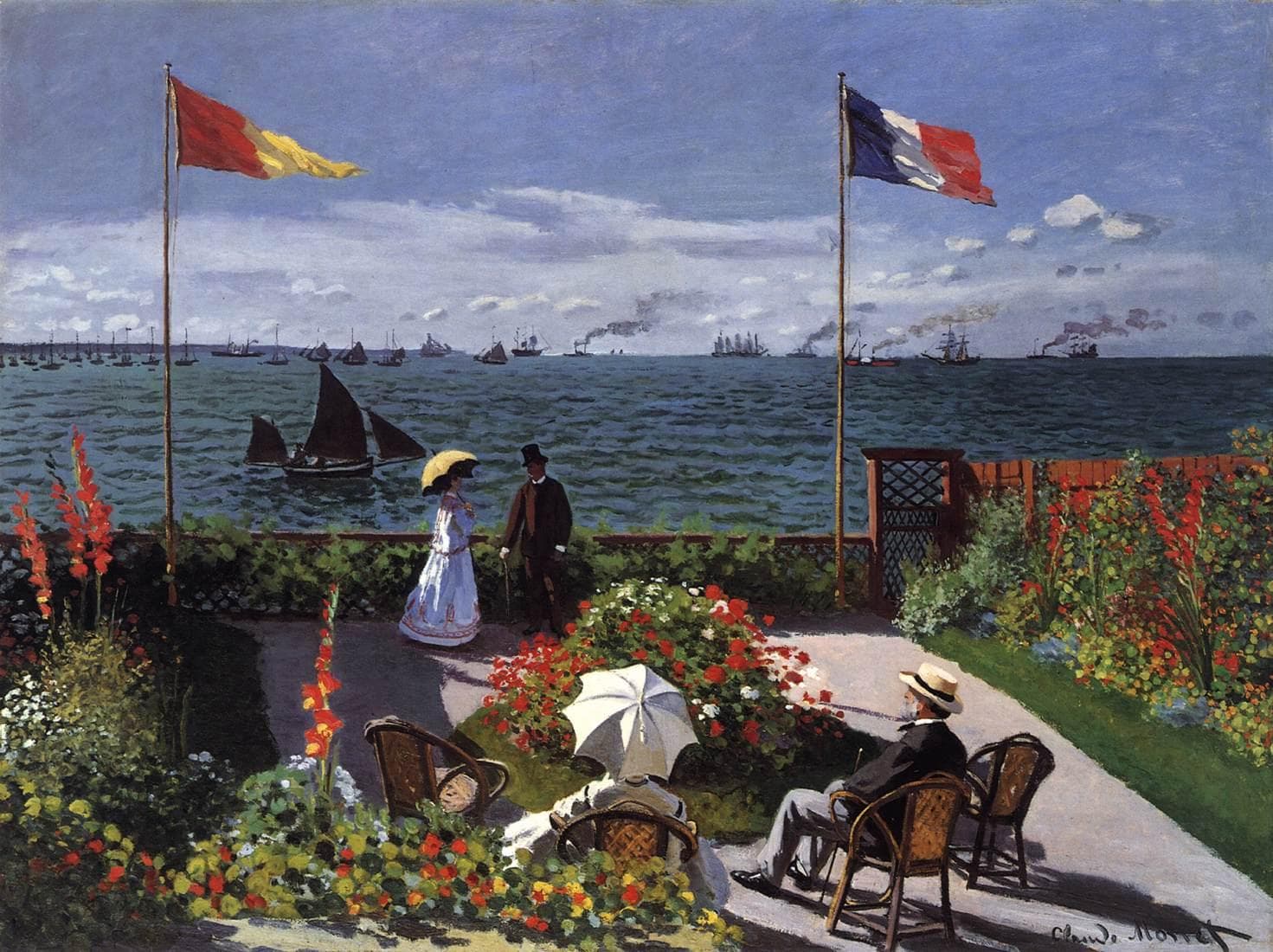
Garden at Sainte-Adresse
Claude Monet · 1867
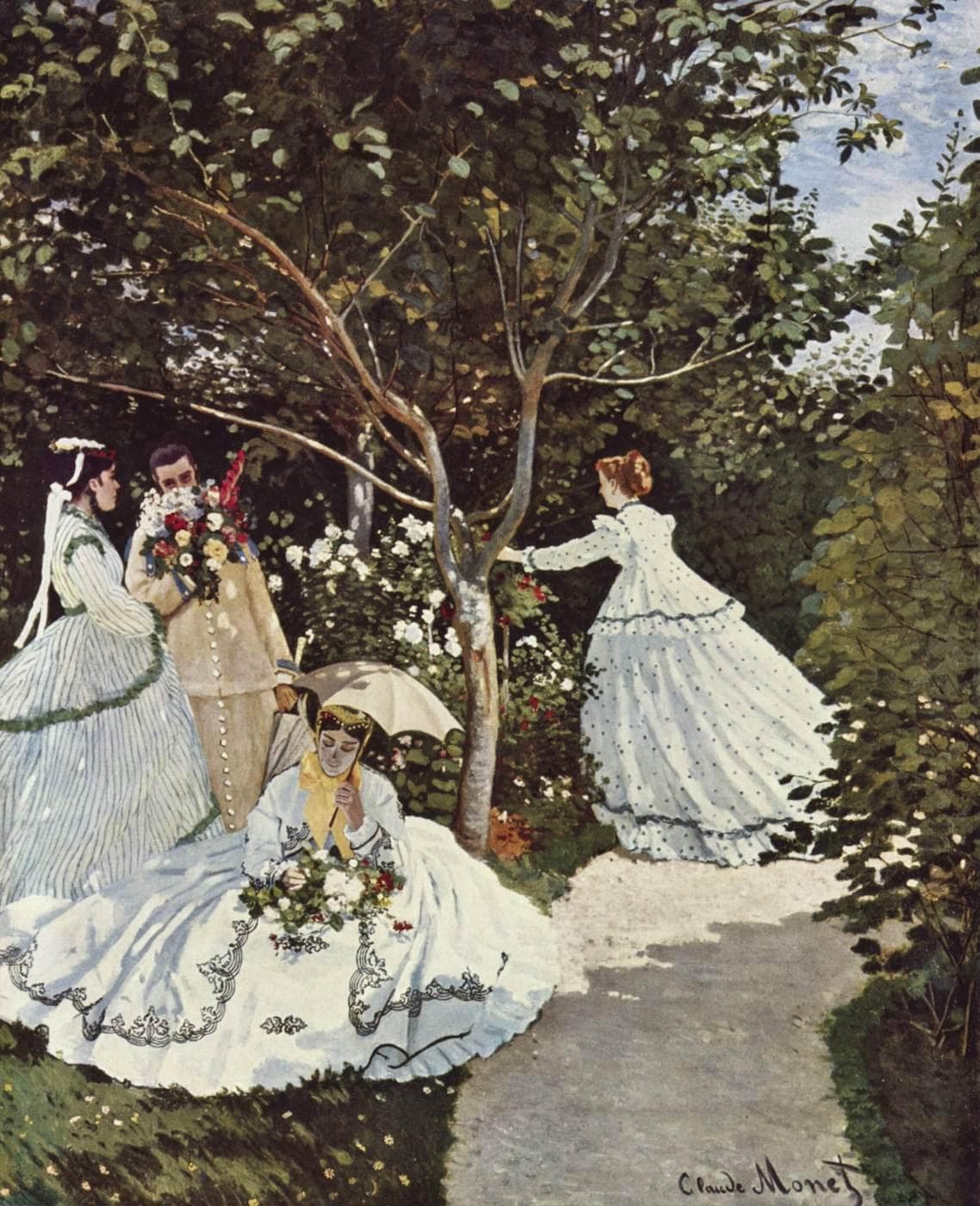
Women in the Garden
Claude Monet · 1866–67
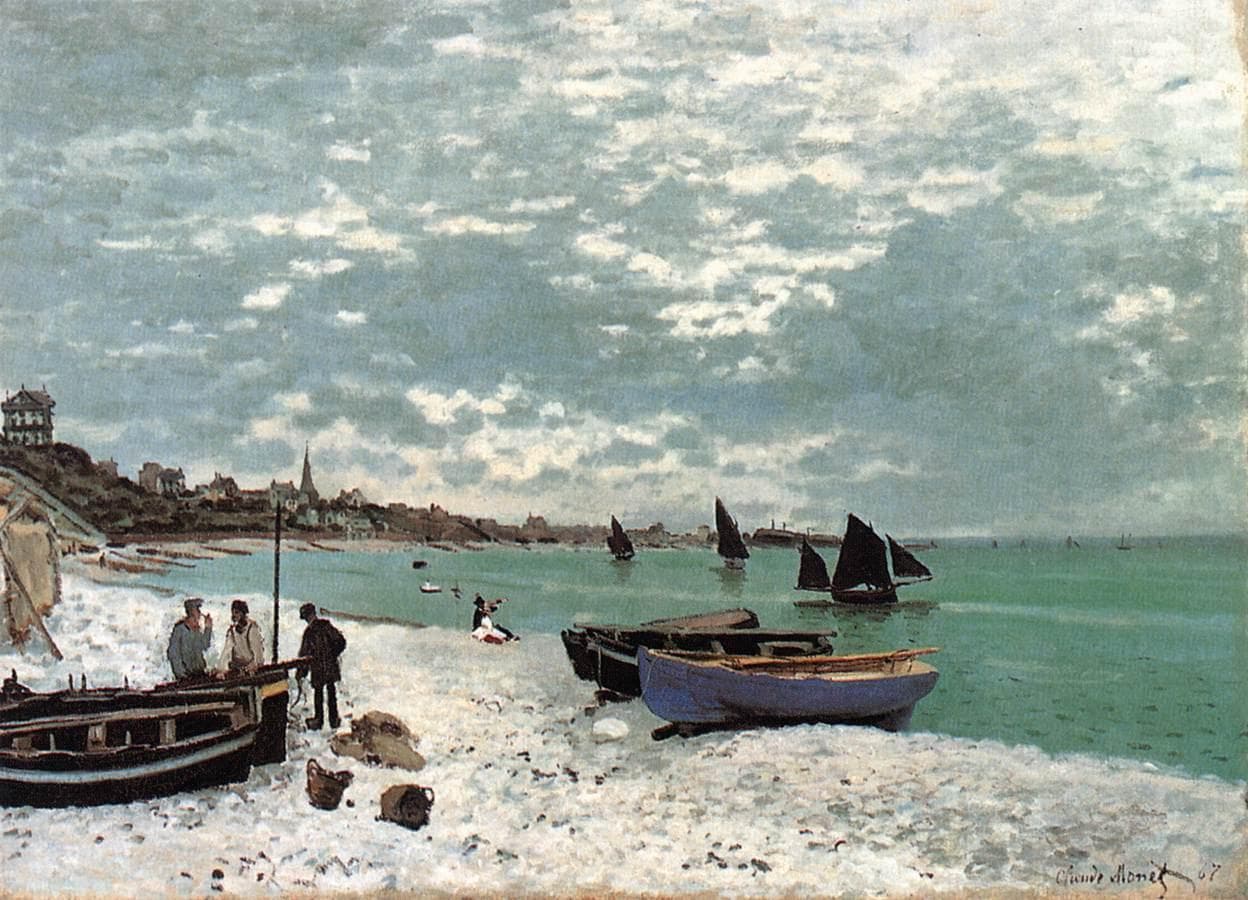
The Beach at Sainte-Adresse
Claude Monet · 1867
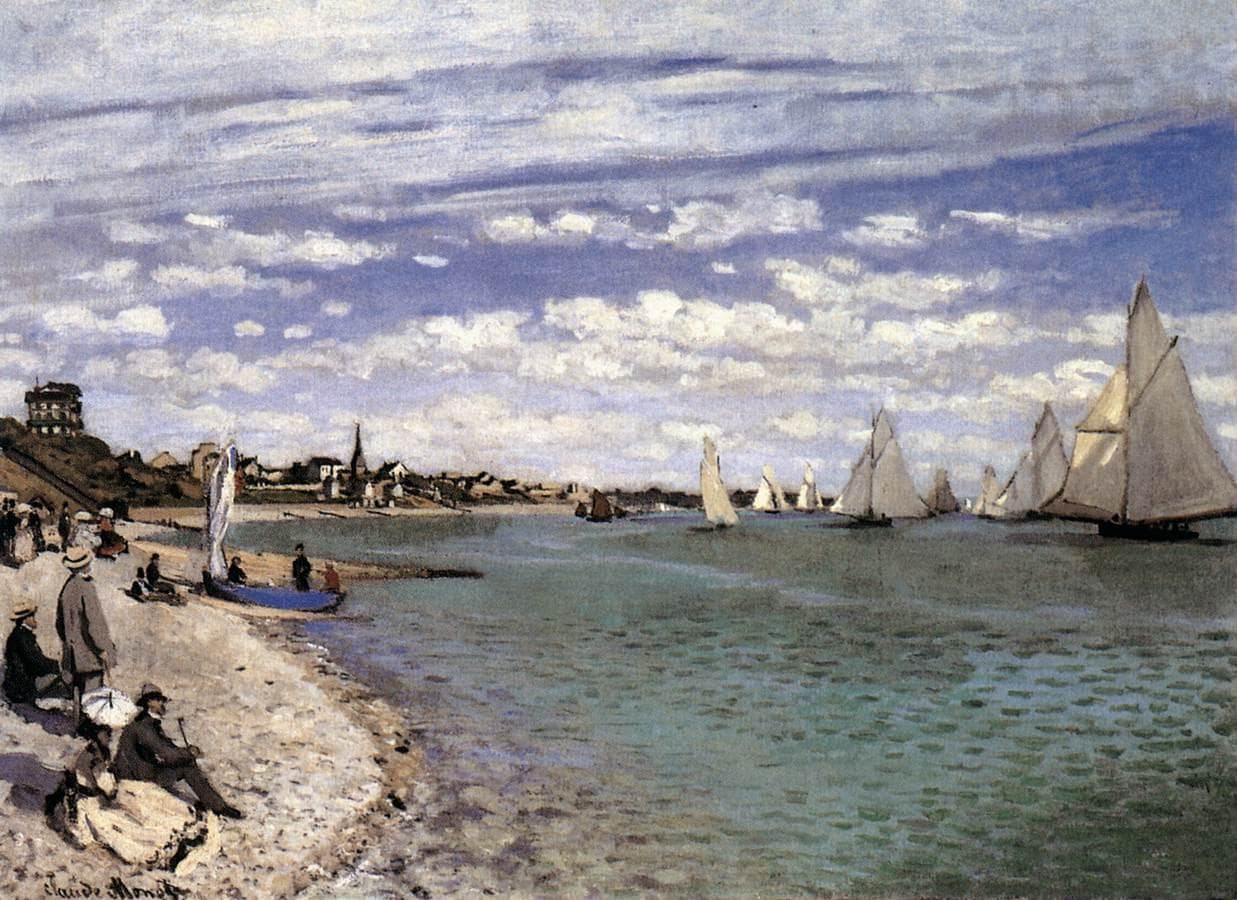
Regatta at Sainte-Adresse
Claude Monet · 1867
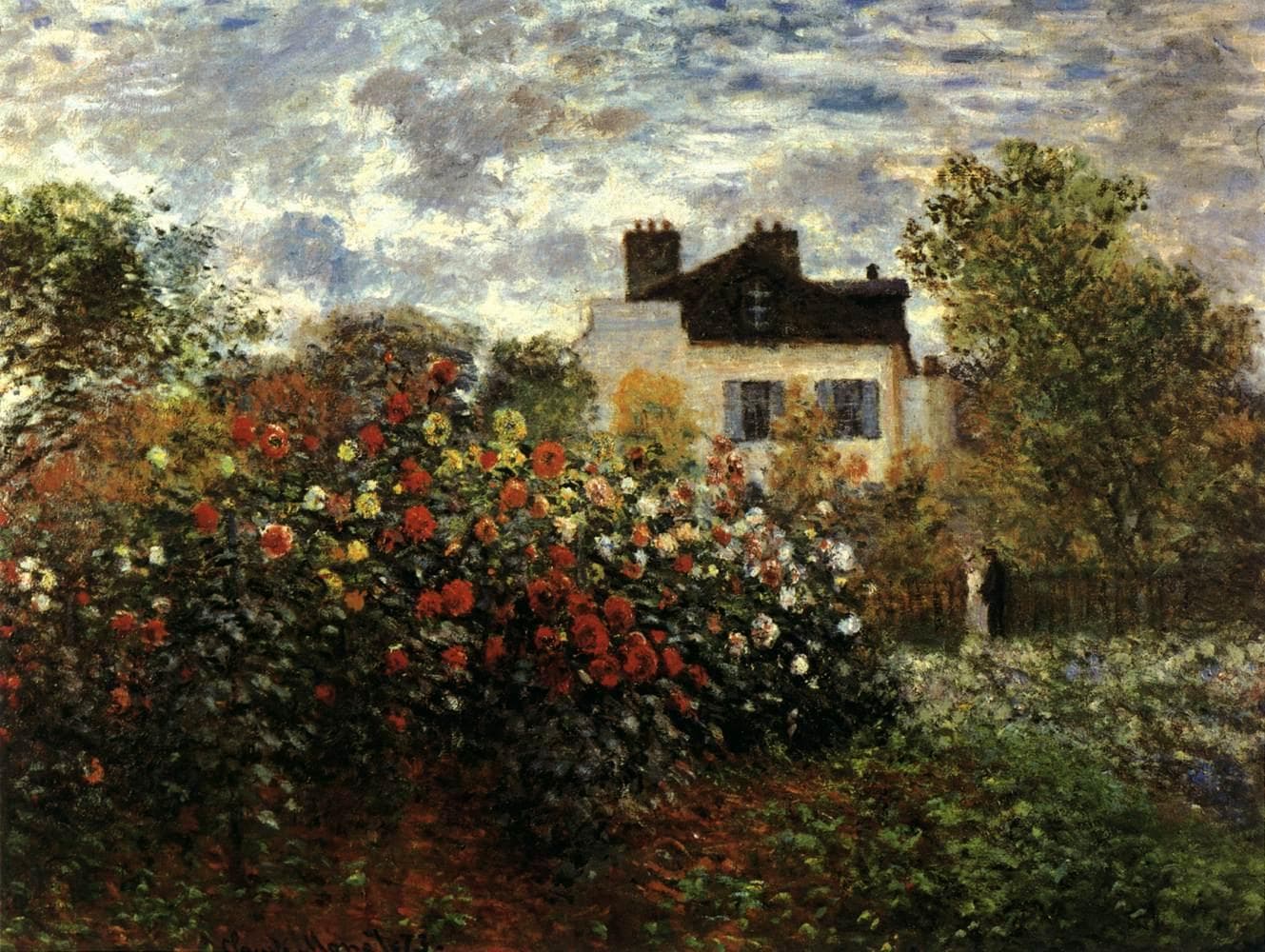
The Artist's Garden in Argenteuil (A Corner of the Garden with Dahlias)
Claude Monet · 1873

The Scream
Edvard Munch · 1893

Ophelia
John Everett Millais · 1851–52

The Great Wave off Kanagawa
Katsushika Hokusai · c. 1830–32