Rough Sea at Étretat
Claude Monet, 1883
Rough Sea at Étretat (Mer agitée à Étretat) is a stormy 1883 seascape by Claude Monet, showing waves crashing beneath the Porte d'Aval arch while fishermen stand by their beached boats. It has been in the Musée des Beaux-Arts de Lyon since 1902.
- Artist
- Claude Monet
- Date
- 1883
- Medium
- Oil on canvas
- Dimensions
- 81.4 × 100.4 cm
- Collection
- Musée des Beaux-Arts de Lyon, Lyon, France
- Movement
- Impressionism
- Catalogue
- Wildenstein 821
Painted at Étretat and the Normandy Coast
- Water & Sea
- Nature & Landscape
What you are looking at
A gale is blowing in from the Channel. Across the middle of the canvas the sea heaves in rows of breaking waves, each crest a curl of cream, ochre and gray paint, and spray bursts white against the foot of the cliffs. Behind, the great dark mass of the cliff runs in from the left and ends in the Porte d'Aval, the arch whose slender leg plunges into the surf like an elephant's trunk drinking from the sea. The sky is a low, rainy gray, streaked with blue-violet, and the whole scene is drained of bright color.
In the foreground, on the shingle of the beach, the human world holds its ground. On the left squat two or three caloges, old fishing boats hauled up for good and roofed with thatch to serve as sheds, a feature of Étretat that Monet painted more than once. On the right a pair of fishing boats lie on their sides with their masts slanting across the sky, and between them stand two fishermen, small dark figures looking out at the water. They are doing what fishermen on that coast did in bad weather: waiting.
The paint handling is among the most energetic of Monet's career to that date. The waves are not described but performed: thick, looping strokes laid down fast, wet into wet, following the motion of the water. Up close the surface is a mass of ridges; from across the room it becomes a sea in motion.
How Monet painted it
Monet arrived at Étretat in late January 1883, the same winter he moved to Giverny, and stayed into February. Bad weather kept him indoors for much of the visit, and according to the Musée des Beaux-Arts de Lyon this view was painted looking out of a hotel room window over the beach, part of a series he made that February. The elevated, sheltered viewpoint explains the composition: we look down on the boats and over the beach to the arch, as if from a first-floor window.
Painting from a window let Monet work through storms that would have made outdoor painting impossible. But he was also a regular on the beach itself, and over three visits between 1883 and 1886 he painted Étretat around eighty times, from the arch-framed views of The Manneporte to calmer scenes such as The Beach at Étretat and Boats on the Beach at Étretat.
Courbet's shadow
Monet knew he was entering contested territory. In 1869 Gustave Courbet had spent the summer at Étretat and painted a famous series of great waves and the Cliff at Étretat after the Storm, now in the Musée d'Orsay. Monet admired Courbet, who had befriended and encouraged him in the 1860s, and the beached boats and storm-tossed sea here inevitably recall his predecessor. The difference is in the paint. Courbet's waves are solid, sculpted with the palette knife; Monet's are broken into flickering strokes of light and color.
The link was made explicit in a recent exhibition. In 2025–26 the Lyon museum and the Städel Museum in Frankfurt organized Étretat, par-delà les falaises (shown in Frankfurt as Monets Küste), in which this painting was shown alongside Courbet's waves.
Meaning
There is drama here, but no shipwreck and no heroics. The fishermen are not in danger; they are simply watching the weather. That restraint is typical of Monet, who preferred to let the sea and light carry the emotion. You can read the picture as a portrait of a working coast at a standstill, or as a record of a painter testing how far his brushwork could go in capturing pure movement. The caloges, roofed boats that will never sail again, add a quiet note of time and age against the energy of the waves.
Reception and legacy
The Étretat pictures of 1883 sold well through Monet's dealer Paul Durand-Ruel, who that spring gave him his first major one-man exhibition in Paris. Stormy seascapes like this one helped establish the public image of Monet as a painter of wind, water and changing weather rather than only of sunny suburbs. Lyon's purchase in 1902, while Monet was still alive and working at Giverny, is a reminder of how far his reputation had come in two decades: from a rejected outsider at the Salon to a painter French museums wanted on their walls.
The canvas also stands at the start of a long line of artists' responses to Étretat. After Monet, painters from Eugène Boudin to Henri Matisse, who worked there in 1920, returned to the same arches, and the cliffs remain one of the most painted coastlines in France.
Where to see it
Rough Sea at Étretat was bought by the Musée des Beaux-Arts de Lyon in 1902. It hangs in the museum's nineteenth-century galleries at the Palais Saint-Pierre in Lyon. For other Monet storms, see Stormy Sea, The Rocks of Belle-Île (Rough Sea) and famous Monet paintings.
Questions & answers
Where is Rough Sea at Étretat by Monet?
It is in the Musée des Beaux-Arts de Lyon, France, which bought it in 1902. It hangs in the museum's nineteenth-century painting galleries at the Palais Saint-Pierre.
What is the arch in Rough Sea at Étretat?
It is the Porte d'Aval, one of three natural chalk arches at Étretat on the Normandy coast. Its slender leg reaching into the sea is often compared to an elephant drinking. The larger Manneporte lies just beyond it.
What are the thatched objects on the beach?
They are caloges, old fishing boats hauled onto the shingle and roofed with thatch to serve as storage sheds for fishermen's gear. They were a distinctive feature of nineteenth-century Étretat.
When did Monet paint Rough Sea at Étretat?
He painted it in February 1883 during a winter stay at Étretat, looking out from a hotel window over the beach, as part of a series of views of the stormy sea and cliffs.
More by the artist
Claude Monet
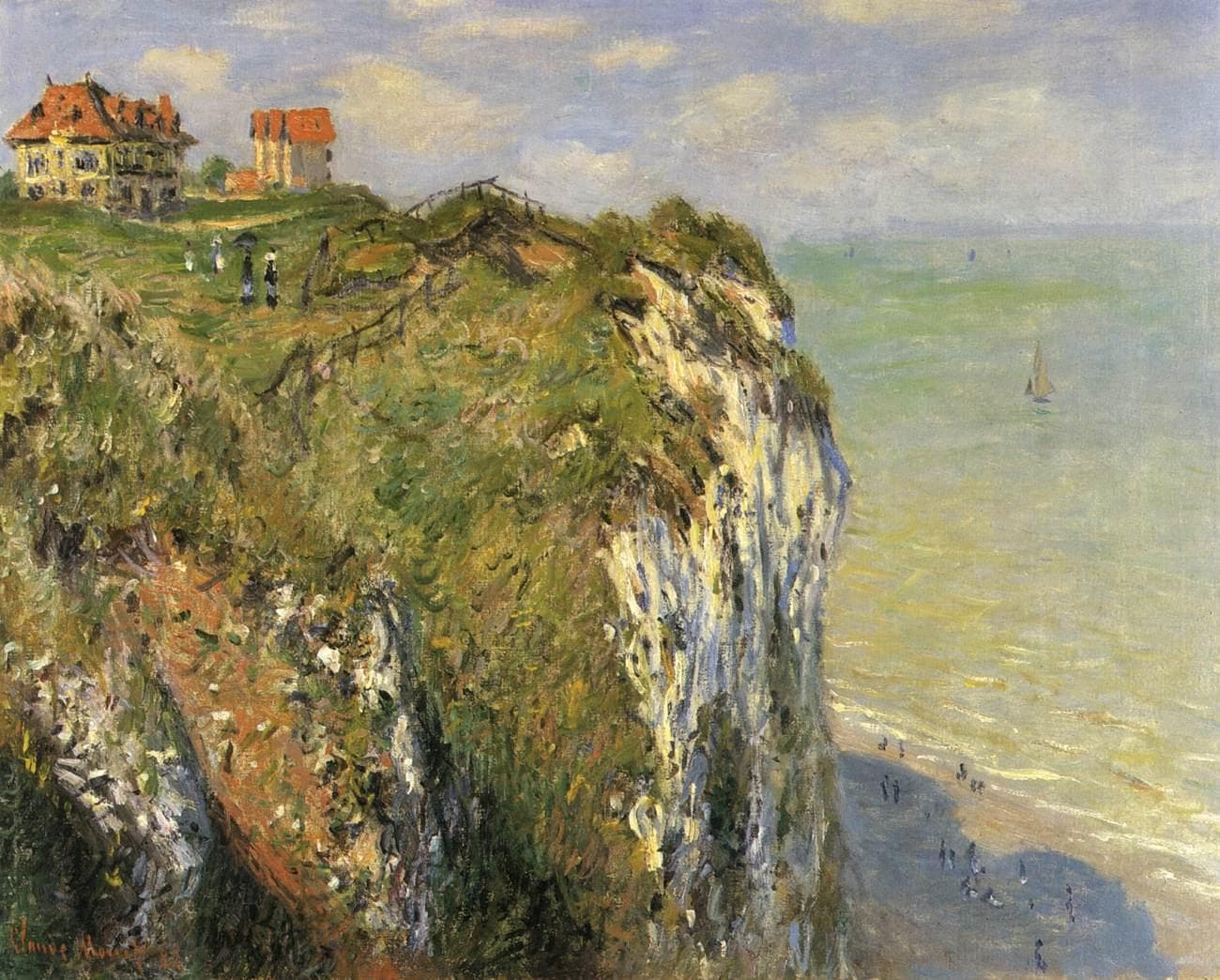
Cliffs near Dieppe
Claude Monet · 1882
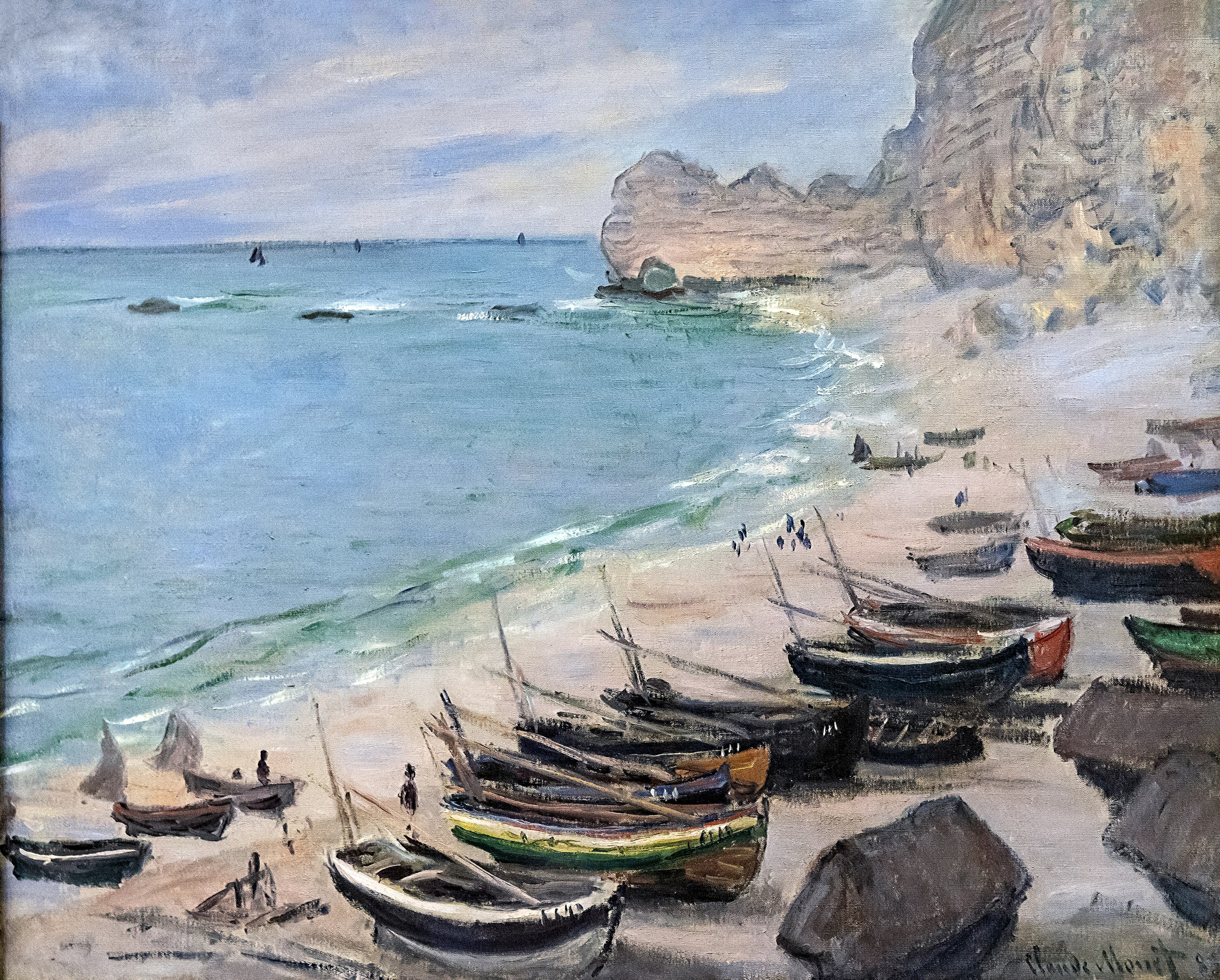
Boats on the Beach at Étretat (1883)
Claude Monet · 1883
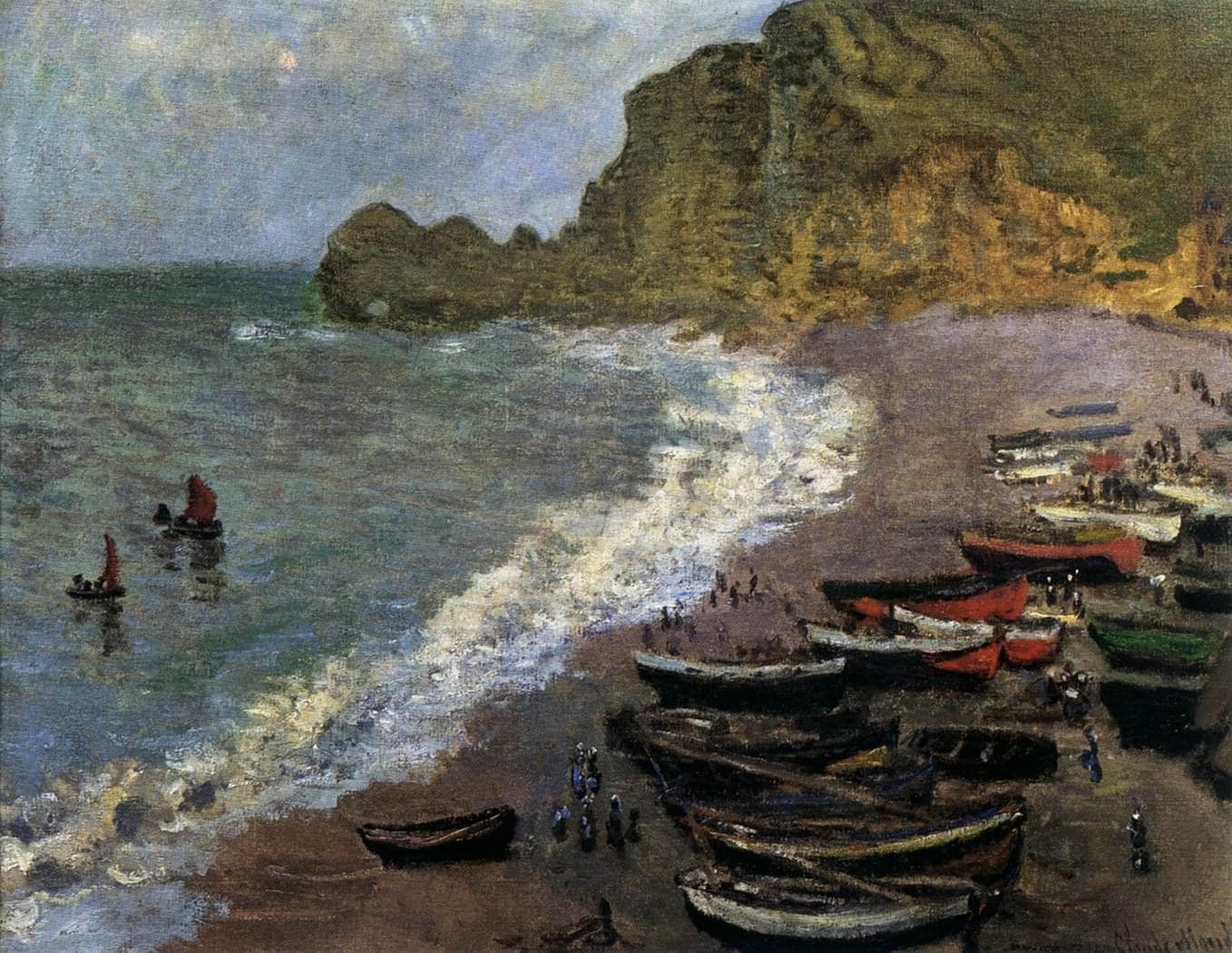
The Beach at Étretat
Claude Monet · 1883
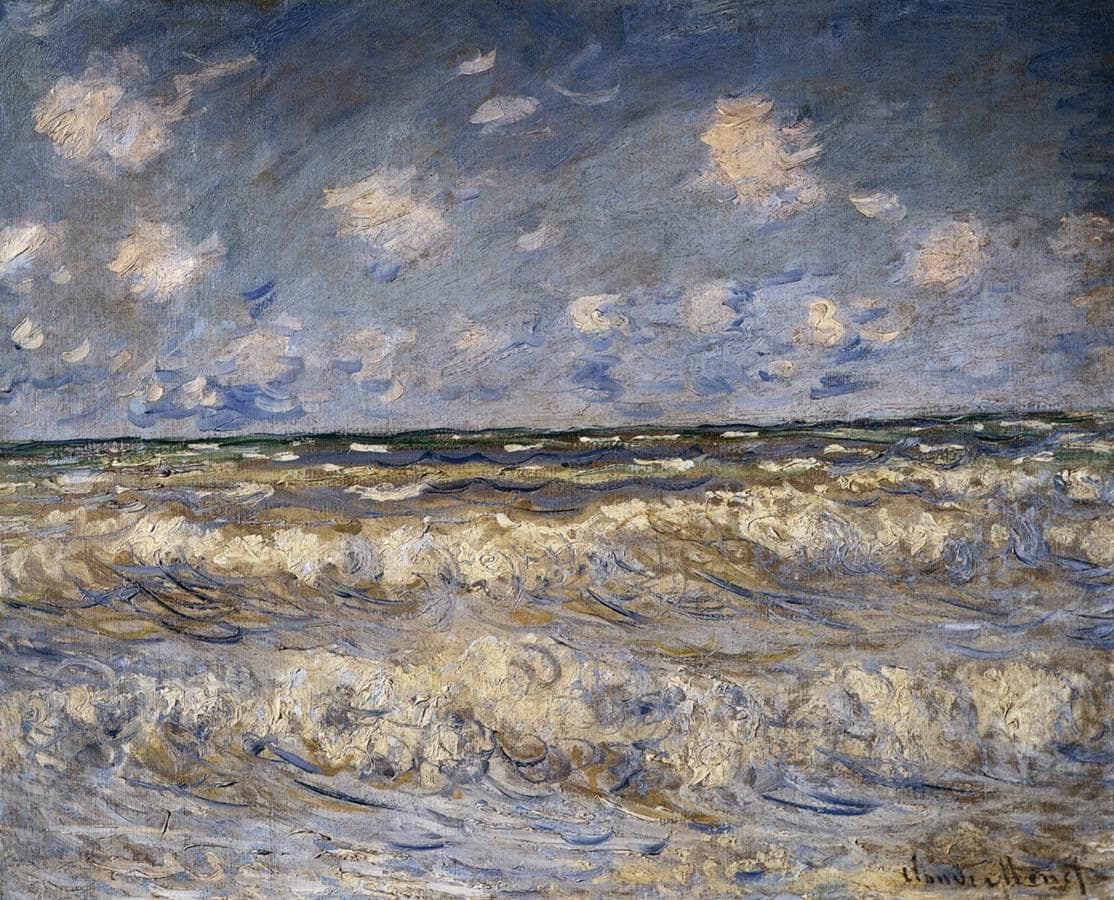
Stormy Sea
Claude Monet · c. 1881–84

Beach in Pourville
Claude Monet · 1882
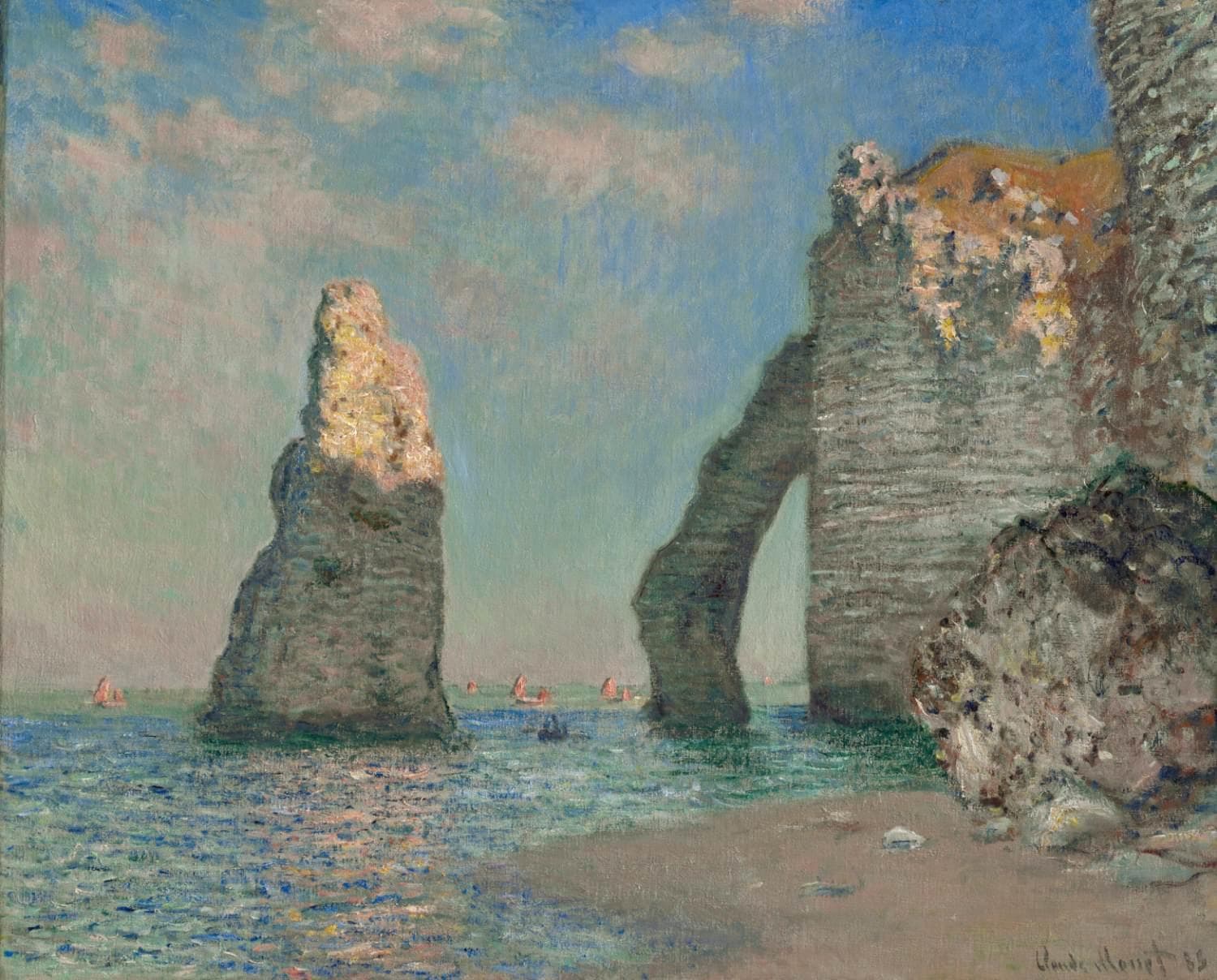
The Cliffs at Étretat
Claude Monet · 1885
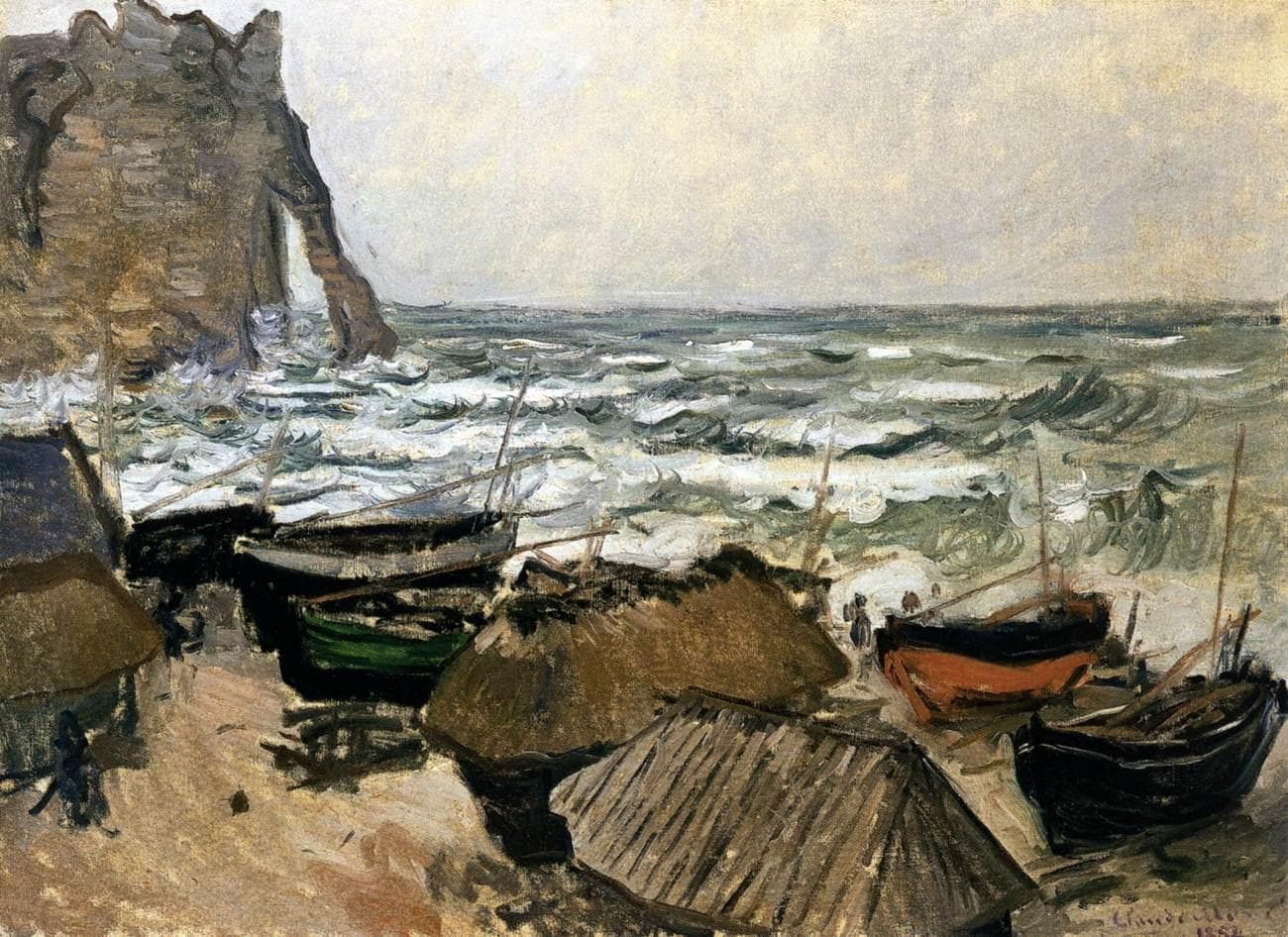
Fishing Boats and the Porte d'Aval
Claude Monet · 1884
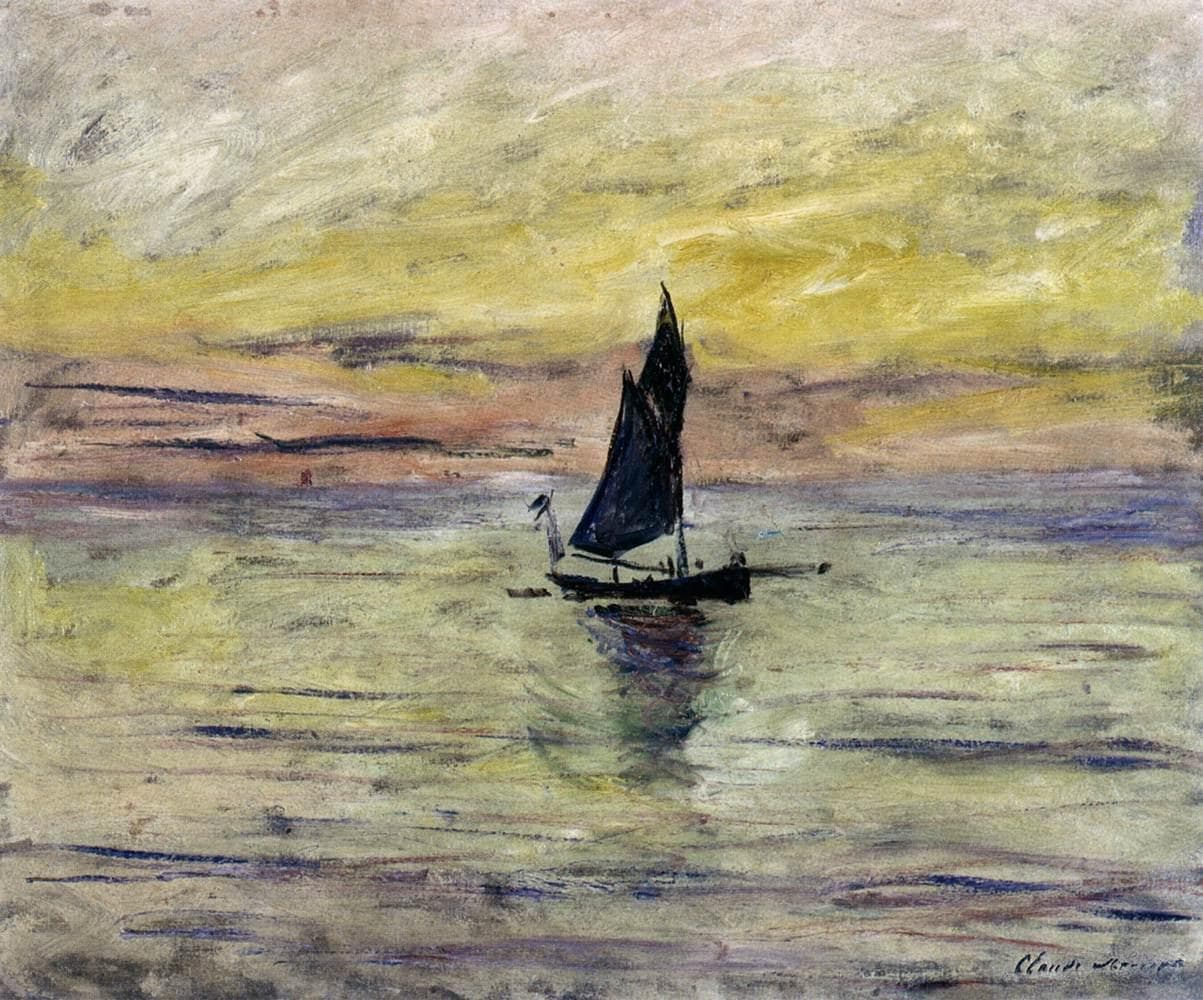
Sailboat, Evening Effect
Claude Monet · 1885
Also painted in 1883
The same year
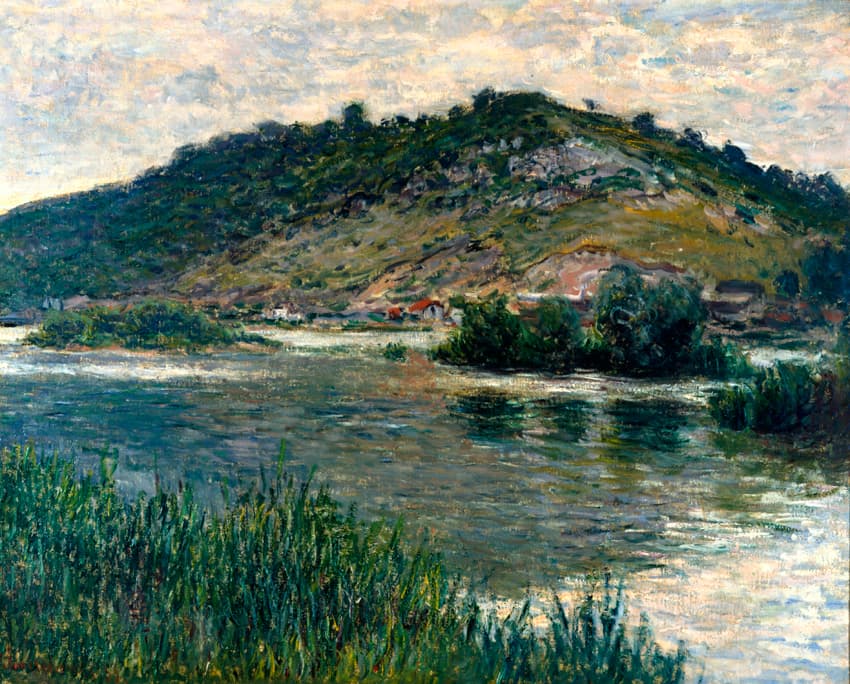
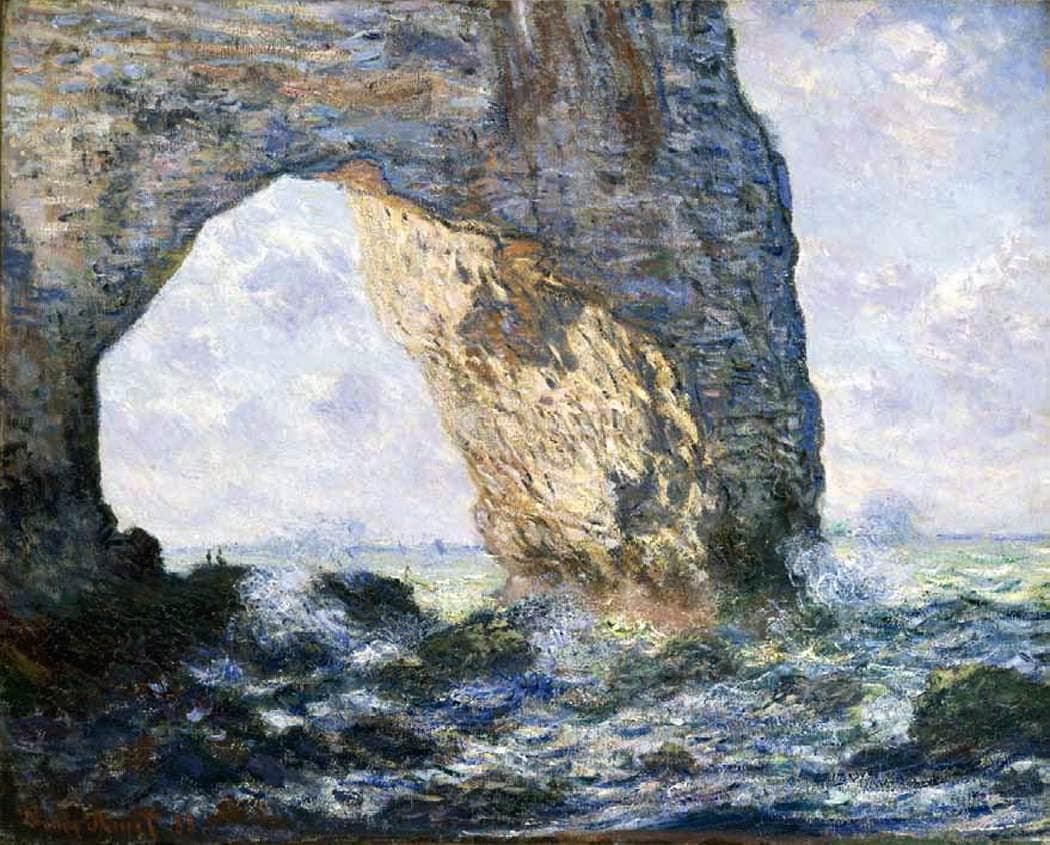
Kindred works
You may also study
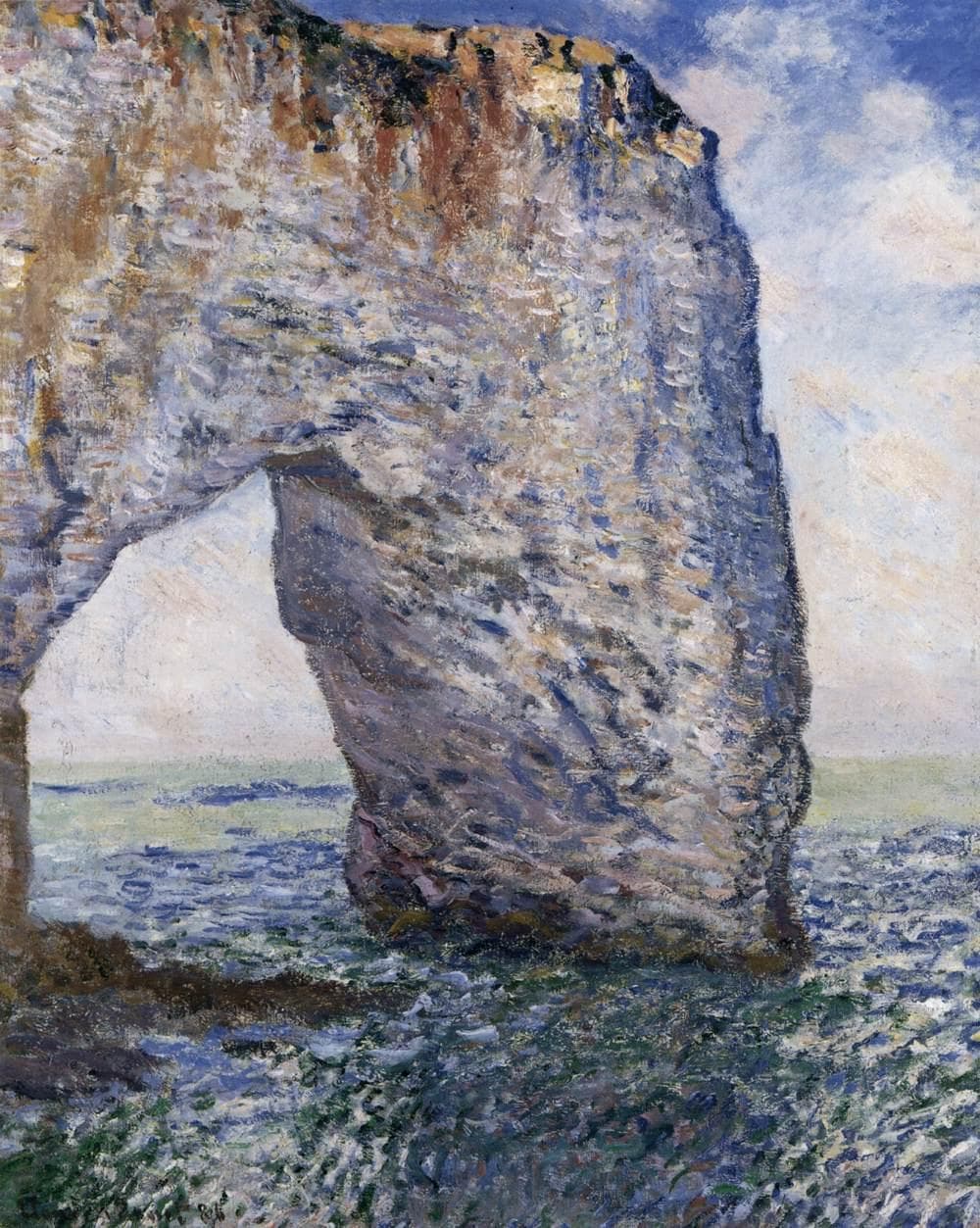
The Manneporte near Étretat
Claude Monet · 1886
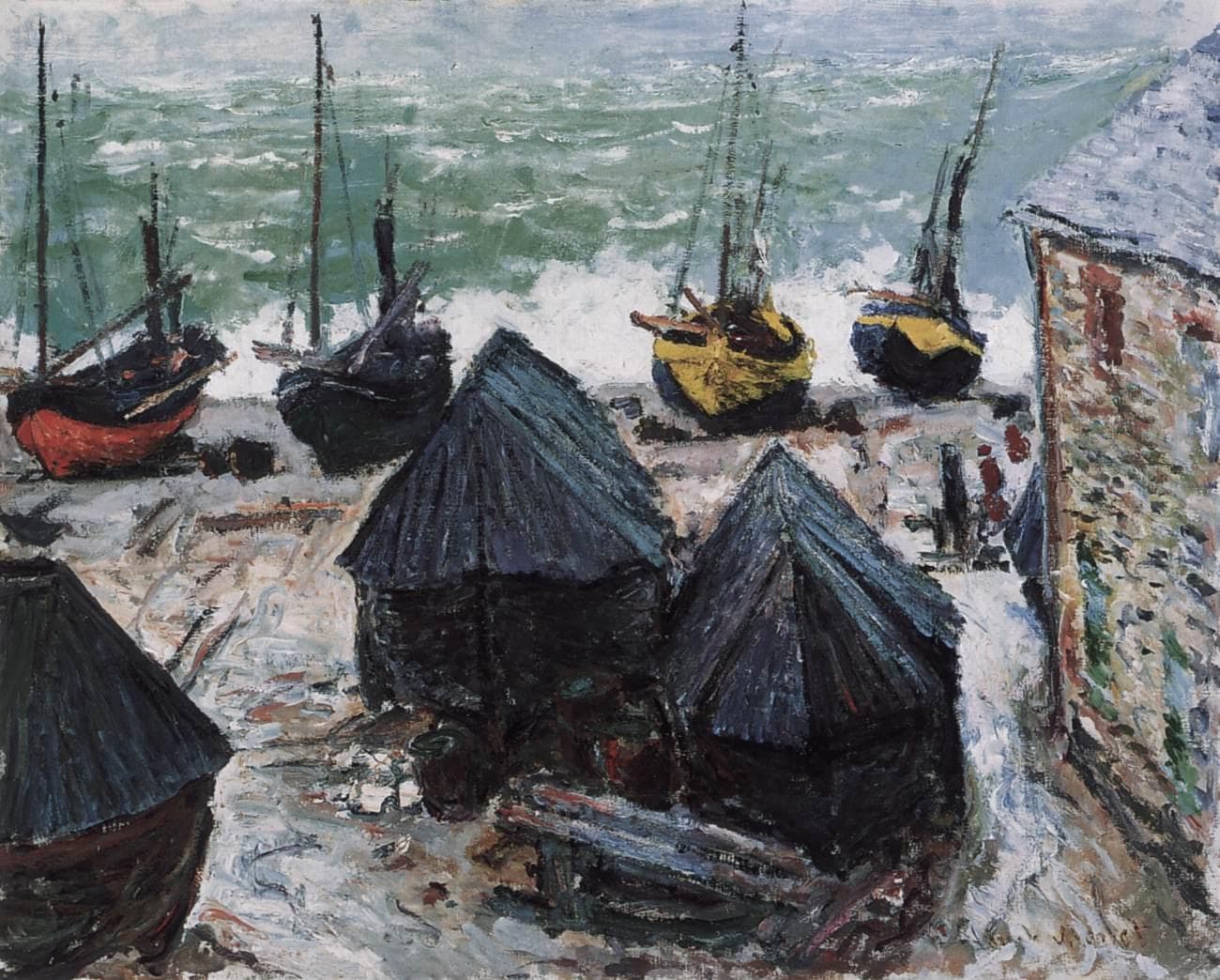
Boats on the Beach at Étretat
Claude Monet · 1885
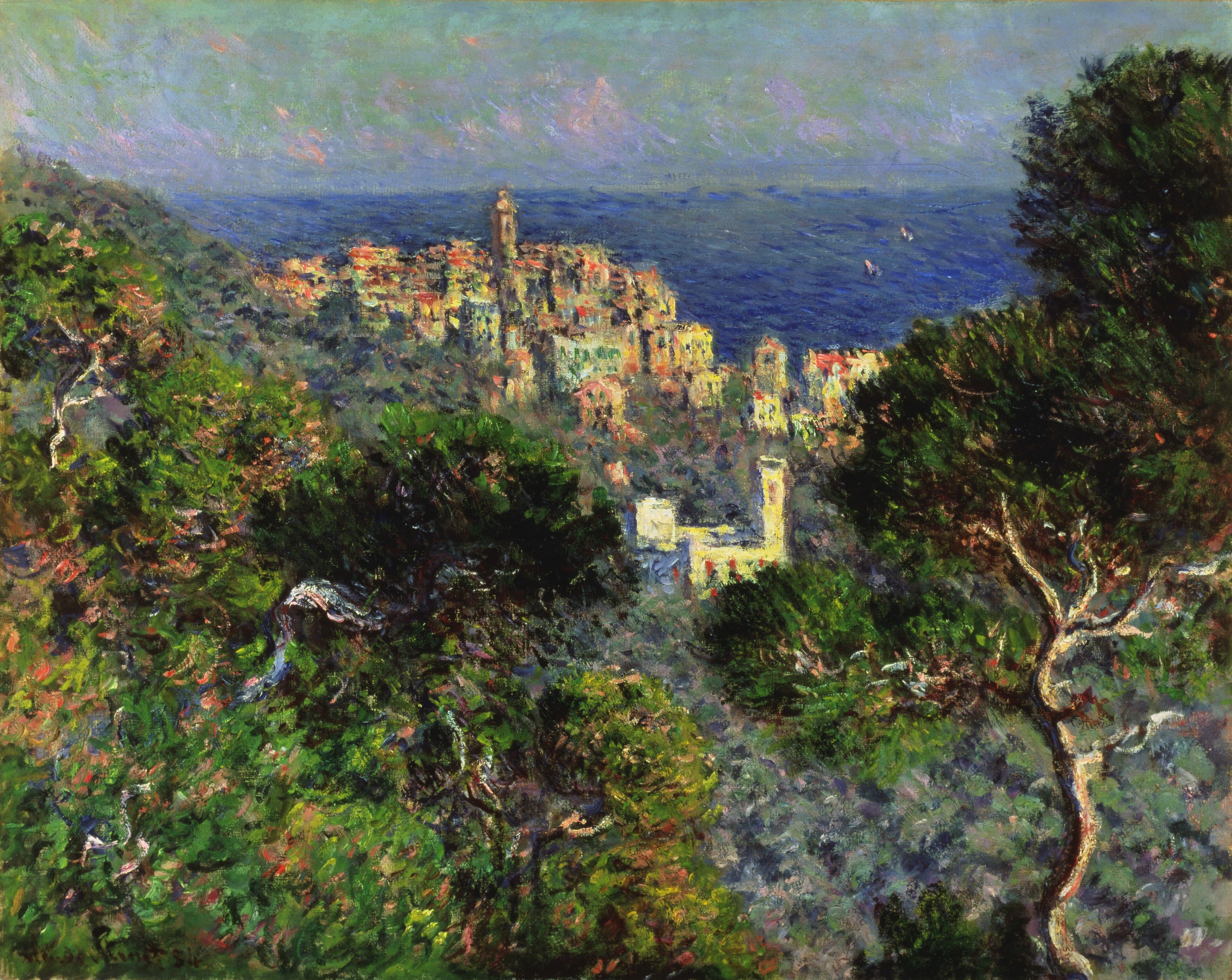
View of Bordighera
Claude Monet · 1884
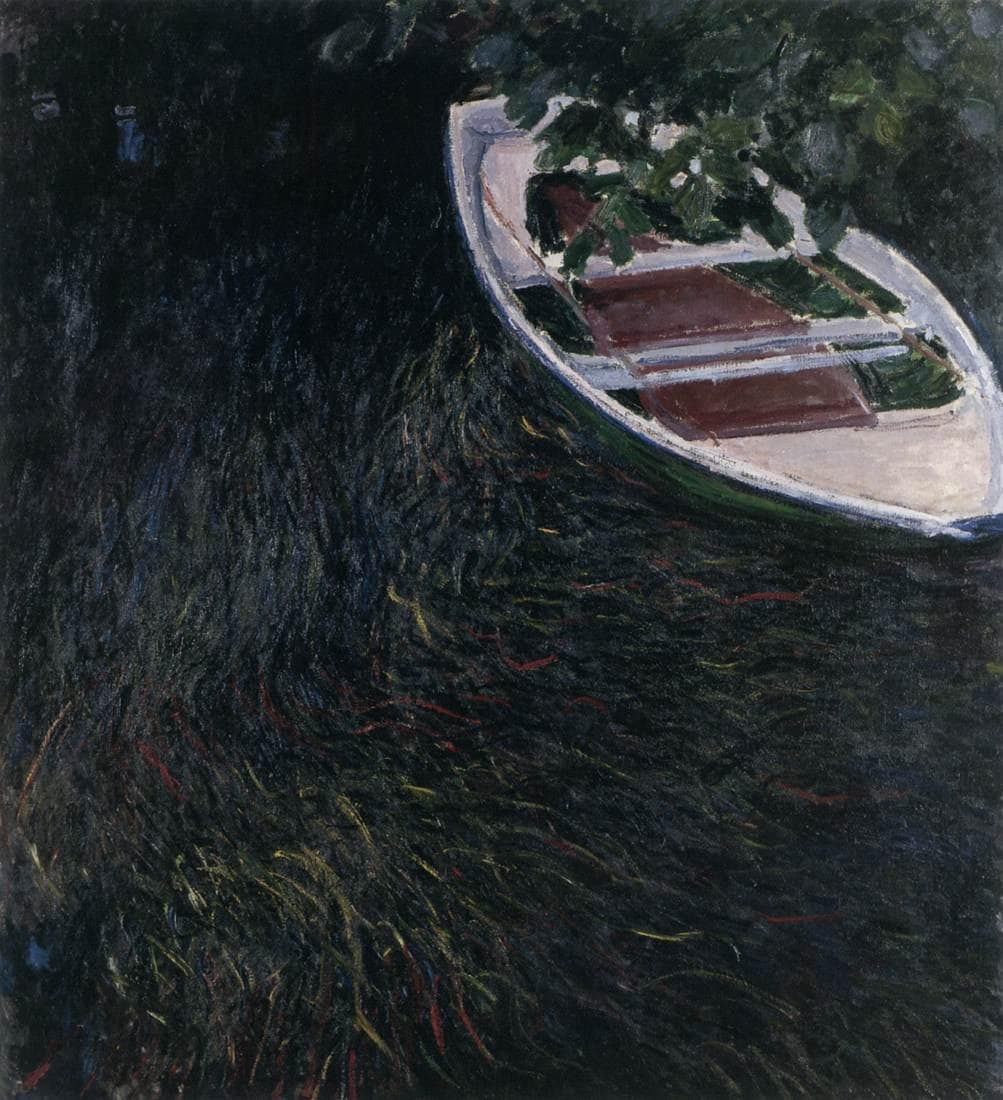
The Barque
Claude Monet · 1887
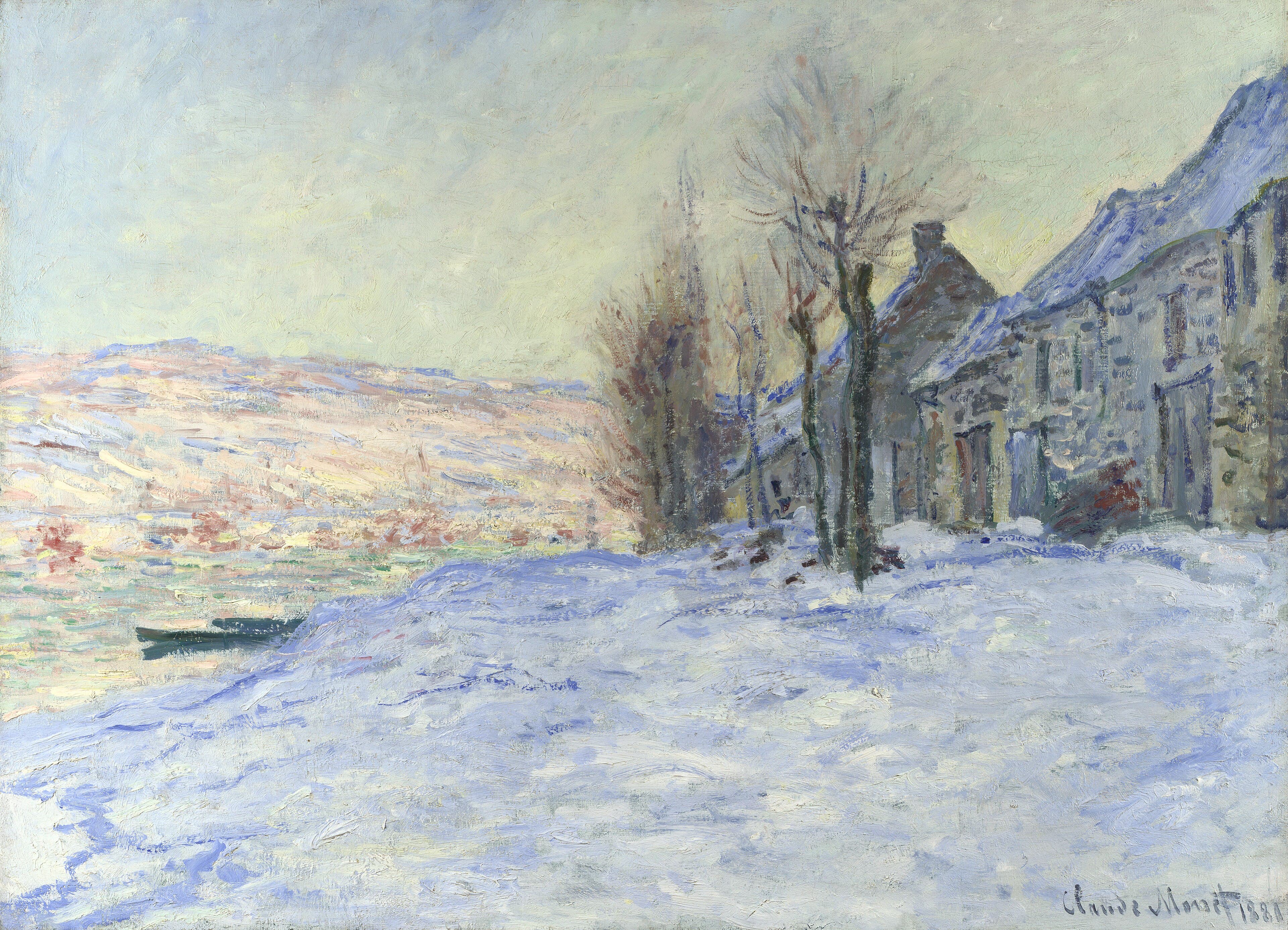
Lavacourt under Snow
Claude Monet · c. 1878–81
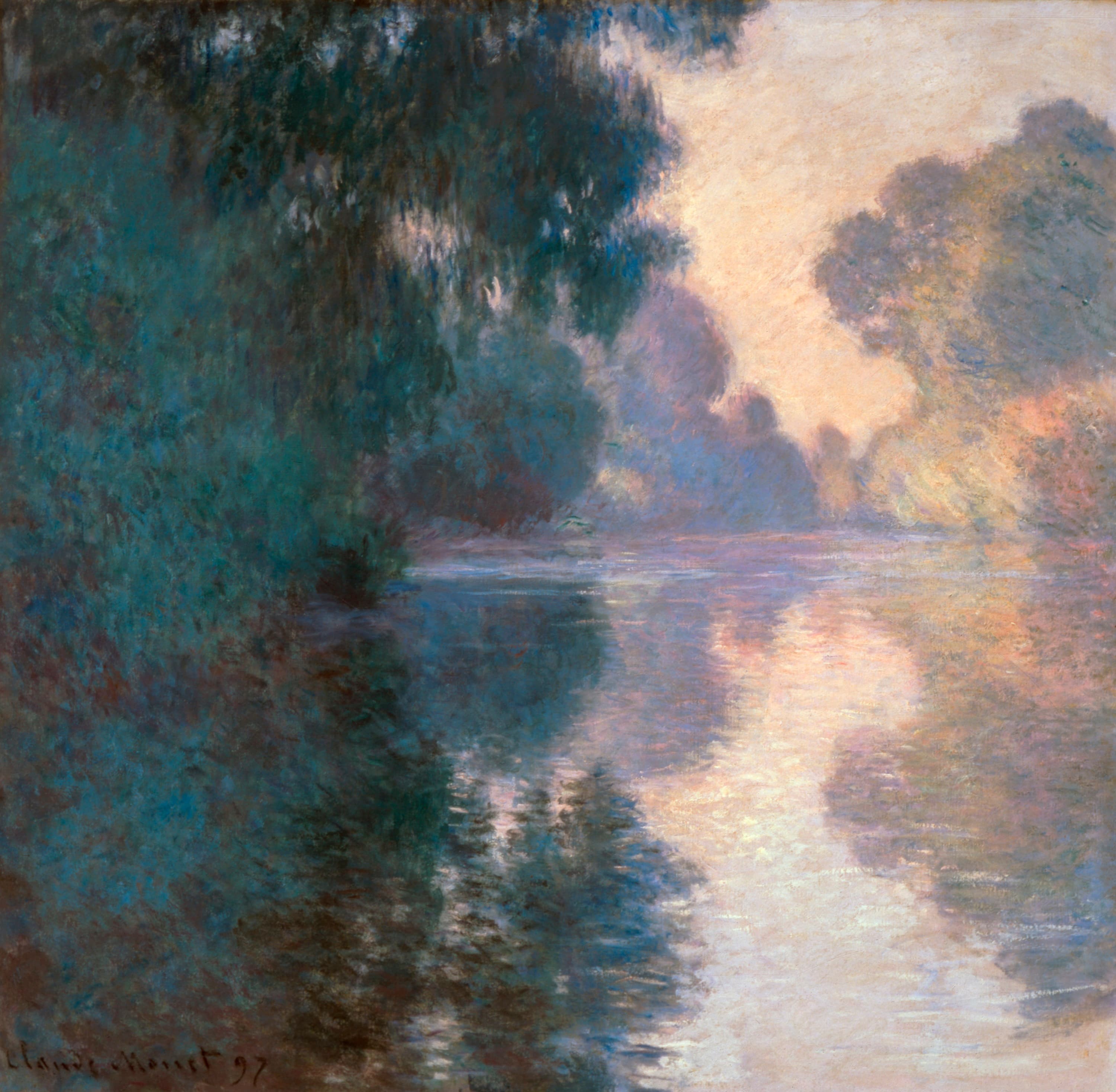
Morning on the Seine, Good Weather
Claude Monet · 1897
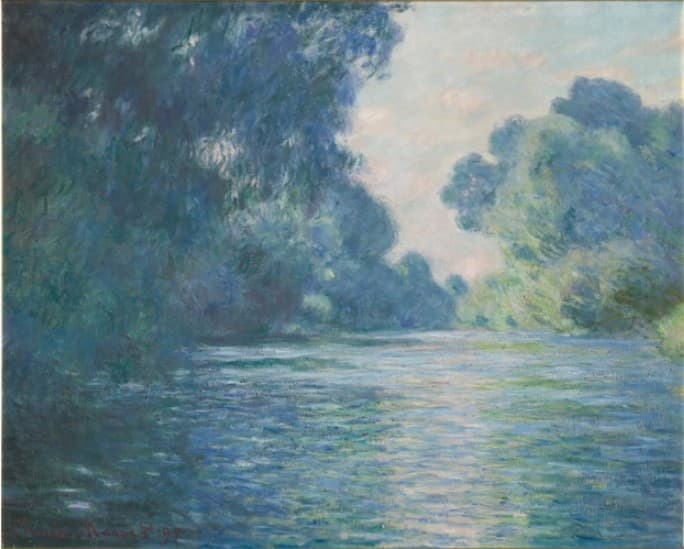
Arm of the Seine near Giverny
Claude Monet · 1897
The Creuse, Sunset
Claude Monet · 1889