Image: National Galleries of Scotland, Edinburgh, via Google Arts & Culture · Public domain · via Wikimedia Commons
Impressionism
A Seascape, Shipping by Moonlight
Claude Monet, c. 1864
A Seascape, Shipping by Moonlight (Marine, effet de nuit) is an early night painting by Claude Monet, c. 1864, of boats off the harbor at Honfleur under a moonlit, clouded sky. It is in the Scottish National Gallery, Edinburgh.
- Artist
- Claude Monet
- Date
- c. 1864
- Medium
- Oil on canvas
- Dimensions
- 60 × 73.8 cm
- Collection
- National Galleries of Scotland, Edinburgh, United Kingdom
- Movement
- Impressionism
- Catalogue
- Wildenstein 71
Painted at Étretat and the Normandy Coast
A Seascape, Shipping by Moonlight (Marine, effet de nuit) is a night scene Claude Monet painted around 1864, when he was 23 and spending the summer and autumn at Honfleur on the Normandy coast. It shows a steamer and sailing boats at the mouth of the harbor under heavy, moonlit clouds. The National Galleries of Scotland acquired it in 1980, and it hangs in the Scottish National Gallery in Edinburgh.
What you are looking at
The picture is almost entirely blue-black, and the light comes in fragments. The moon itself is hidden; we see only its effect, catching the edges of the clouds in ragged patches of white and pale yellow scattered across a dark sky. Low on the horizon, at center, a bright strip of light breaks through and silvers a band of sea, with a tiny sail silhouetted in it.
At left a steamship with tall masts and a funnel pours out a cloud of smoke, its hull dark against the gleaming water. At right, much closer to us, a fishing boat with a big brown-black sail leans into the wind; its shape is cut out against the lighter sea behind. At the far right, on the end of a jetty, stands a lighthouse with its lamp lit, and below it a vertical chain of yellow dashes, the reflection of the light, trembles on the black water. The waves in the foreground are thick, choppy strokes of slate blue, gray and white.
Where and when it was painted
In 1864 Monet was still a student-painter, dividing his time between Paris and the Normandy coast where he had grown up. That summer he stayed at Honfleur with Frédéric Bazille, and worked alongside Eugène Boudin and the Dutch painter Johan Barthold Jongkind, the two older artists who taught him to paint the changing sky and sea directly from nature. Honfleur's harbor, with its jetties and lights facing Le Havre across the Seine estuary, is the setting. Our Normandy coast hub gathers the pictures he made along this shore over the next three decades.
How it was painted
Night scenes were rare among Monet's early works, and this one owes a good deal to Jongkind, who painted moonlit harbors with the same dark, broadly brushed skies. The paint is thick and the handling vigorous. Monet built the sky from heavy, swirling strokes of blue and black, then dragged pale paint over the top for the lit cloud edges. The water is laid in short horizontal touches, and the lighthouse's reflection is a column of separate yellow flicks, a device he would return to eight years later.
It is a studio-finished picture rather than a sketch made outdoors at night, which would have been nearly impossible. But it records a real effect of light observed on the spot, and it shows Monet already thinking about how a single source of light, broken by water, could hold a dark composition together.
Night, smoke and harbors
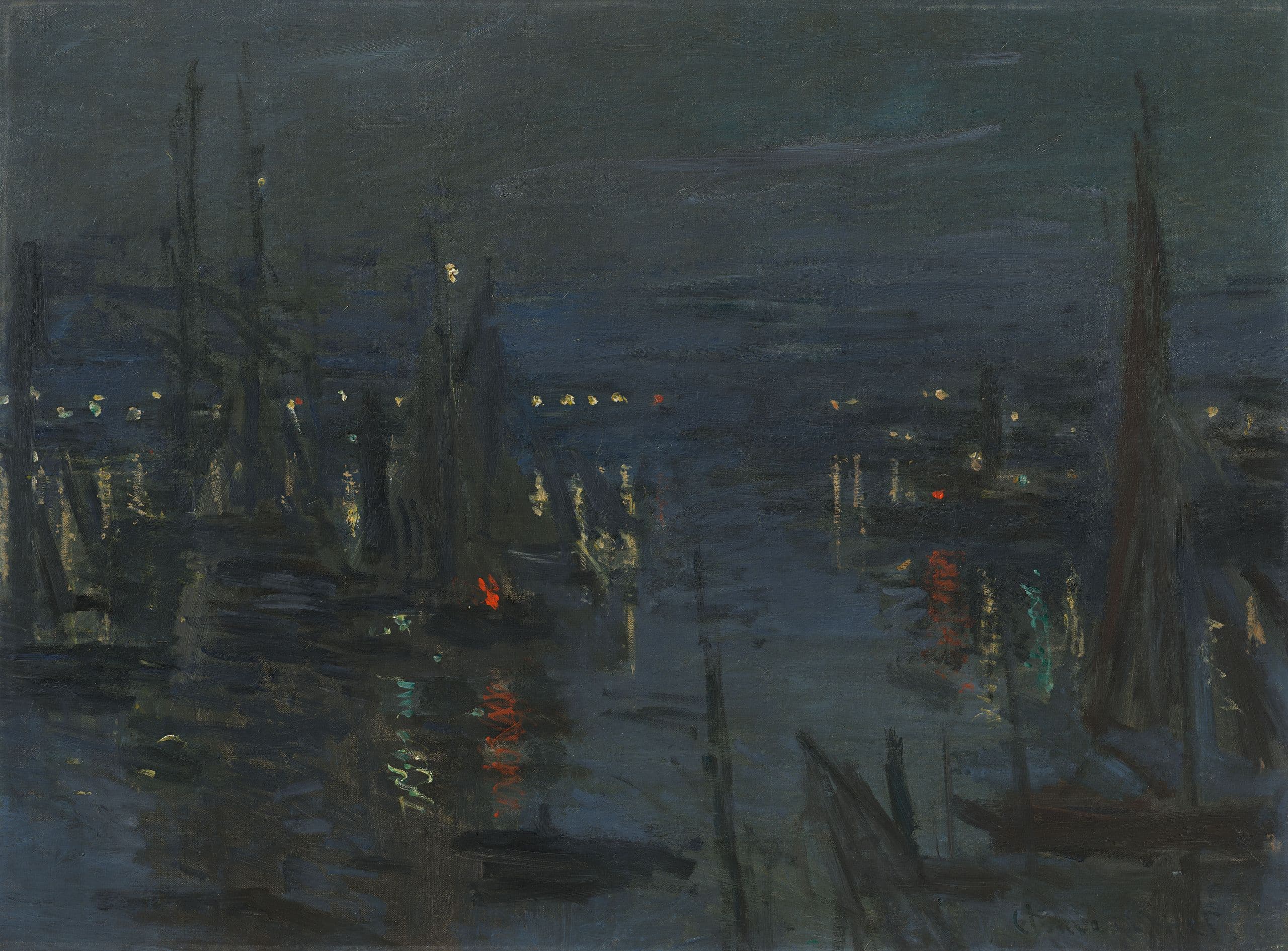
The canvas looks forward in two directions. The yellow reflections on black water reappear in The Port of Le Havre, Night Effect of 1872, and the smoking steamer and harbor mouth return in the most famous picture of his career, Impression, Sunrise, painted at Le Havre the same year. Compare this night scene with Monet's sunlit views of the same coast in 1864, such as The Beach at Honfleur and La Pointe de la Hève, Sainte-Adresse, and you can see the range he was already testing as a young painter.
Where to see it
The painting is in the collection of the National Galleries of Scotland (NG 2399) and is usually shown in the Scottish National Gallery on the Mound in Edinburgh, which also holds Monet's Poplars on the Epte and Haystacks, Snow Effect. For other collections, see where to see Monet's paintings.
Questions & answers
Where is Monet's A Seascape, Shipping by Moonlight?
It is in the collection of the National Galleries of Scotland, which acquired it in 1980, and is normally displayed in the Scottish National Gallery in Edinburgh. The same museum owns two later Monets, Poplars on the Epte and Haystacks, Snow Effect.
When and where was it painted?
Around 1864, when Monet was 23 and spending the summer and autumn at Honfleur on the Normandy coast, working near Eugène Boudin and Johan Barthold Jongkind. The scene shows boats off Honfleur's harbor with a lighthouse on the jetty.
What does the painting show?
A steamer trailing smoke and a sailing boat with a dark sail on a choppy sea at night. The moon is hidden behind clouds, but its light catches their edges and silvers a band of water at the horizon, while a lighthouse throws a trembling yellow reflection across the waves.
Did Monet paint other night scenes?
Only a few. The closest relative is The Port of Le Havre, Night Effect (1872), with its yellow lights on dark water. Later night pictures include Leicester Square by night (1901) and some of the London views at dusk, but darkness was never a common subject for him.
More by the artist
Claude Monet

Bridge over a Pond of Water Lilies
Claude Monet · 1899

Woman with a Parasol – Madame Monet and Her Son
Claude Monet · 1875

Sunset in Venice
Claude Monet · 1908–12

La Grenouillère
Claude Monet · 1869

Beach in Pourville
Claude Monet · 1882

Springtime
Claude Monet · 1872

Boating on the River Epte
Claude Monet · 1890

The Seine at Asnières (Hermitage)
Claude Monet · 1873
Also painted in 1864
The same year
Kindred works
You may also study
The Port of Le Havre, Night Effect
Claude Monet · 1872
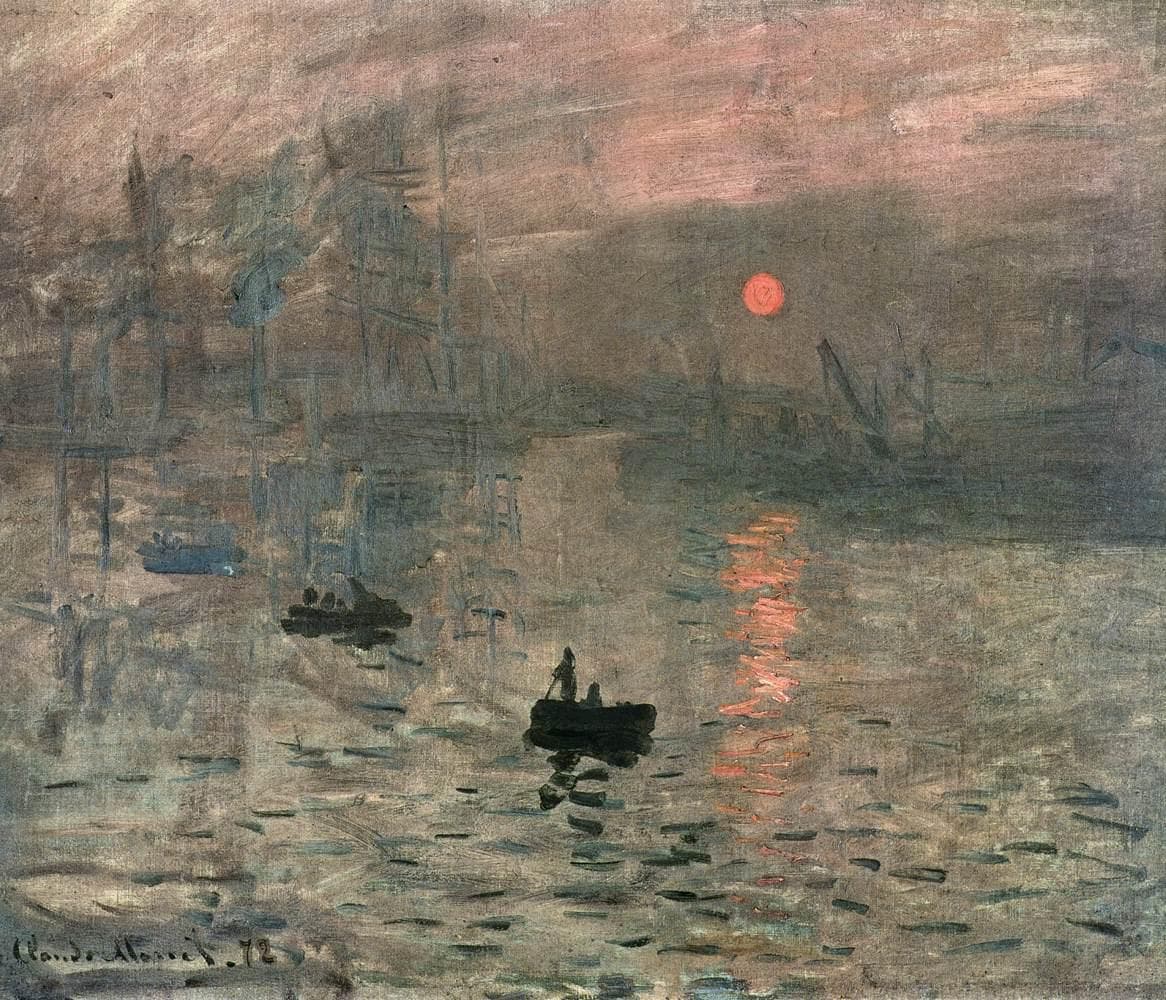
Impression, Sunrise
Claude Monet · 1872
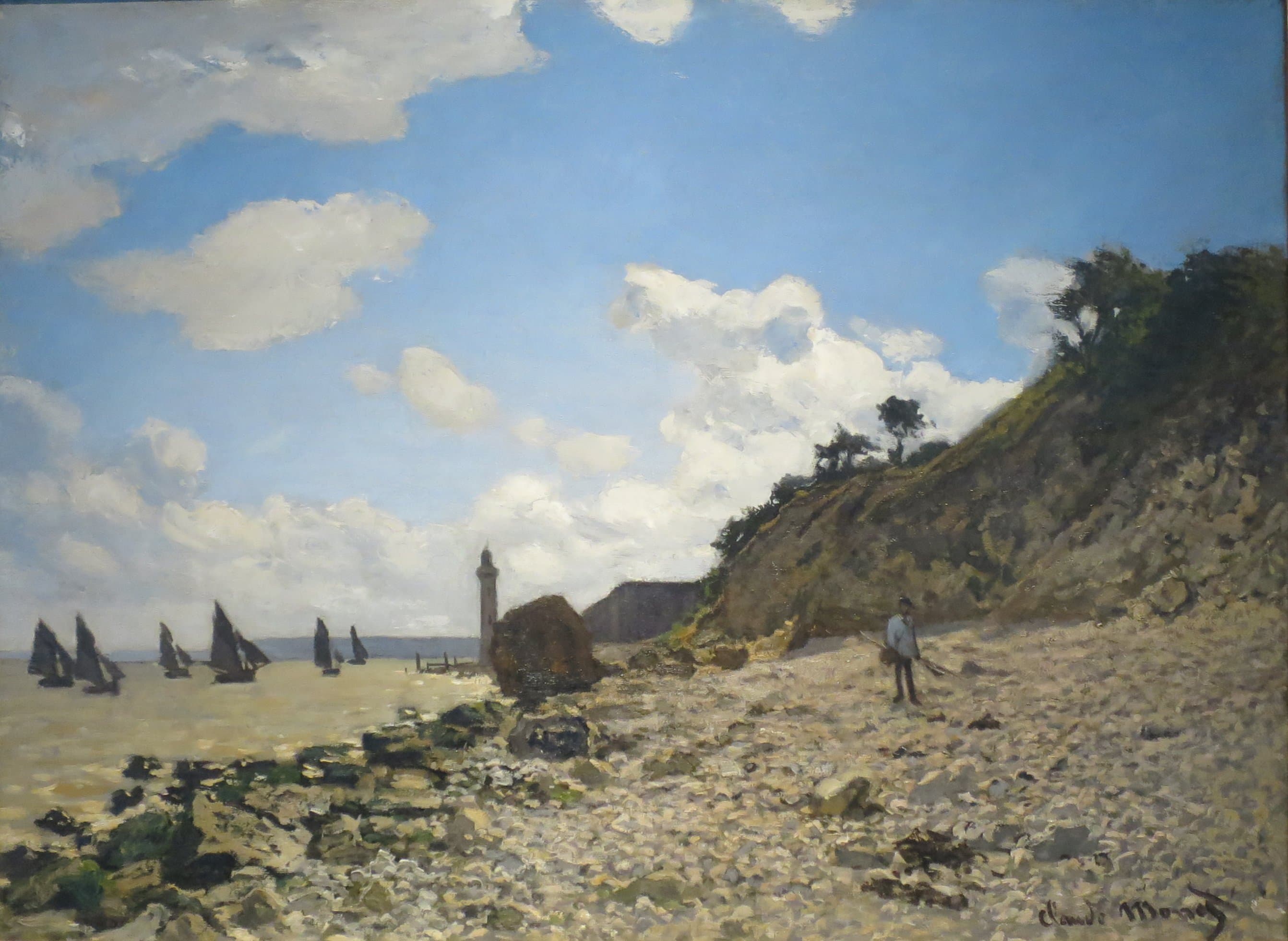
The Beach at Honfleur
Claude Monet · 1864–66
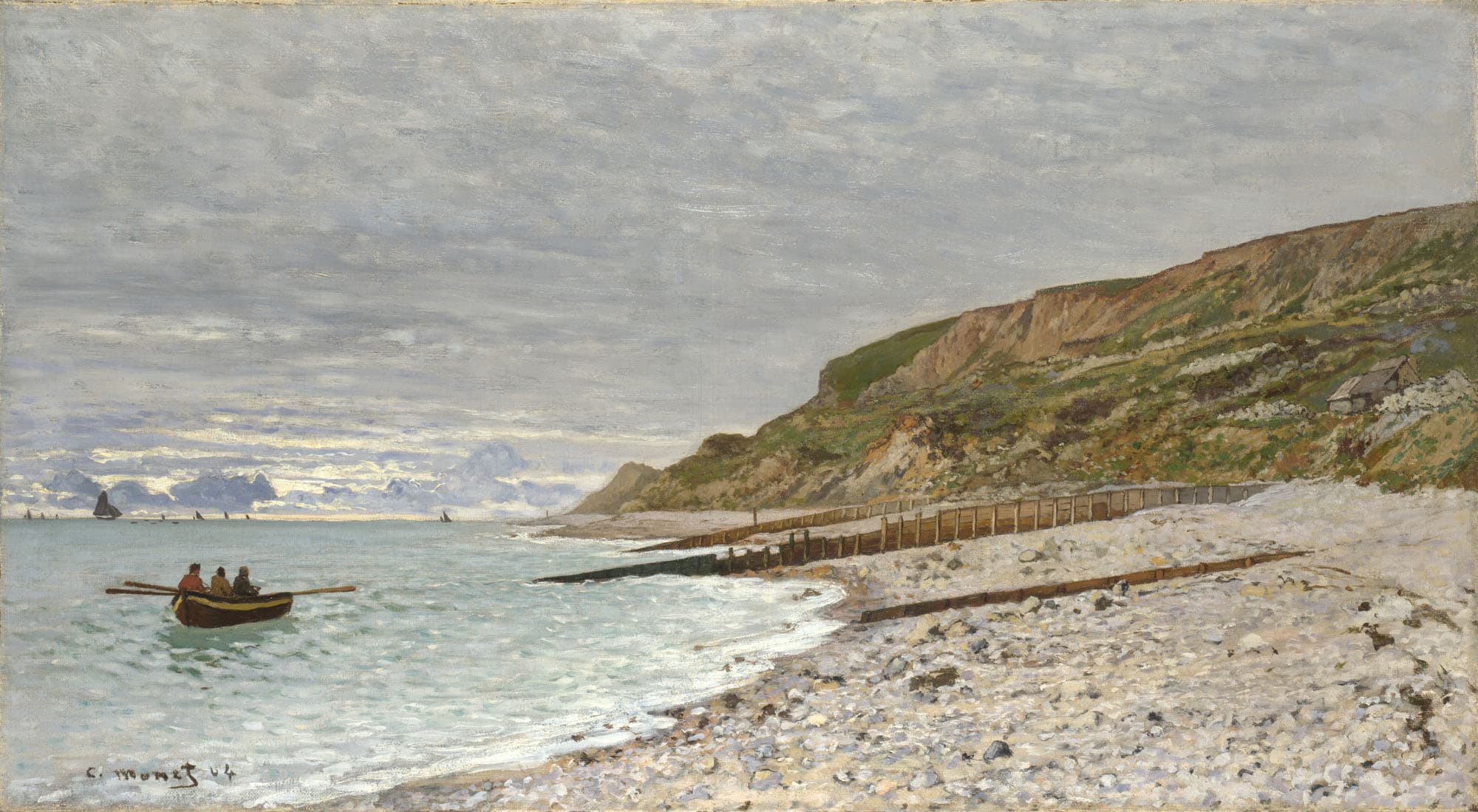
La Pointe de la Hève, Sainte-Adresse
Claude Monet · 1864
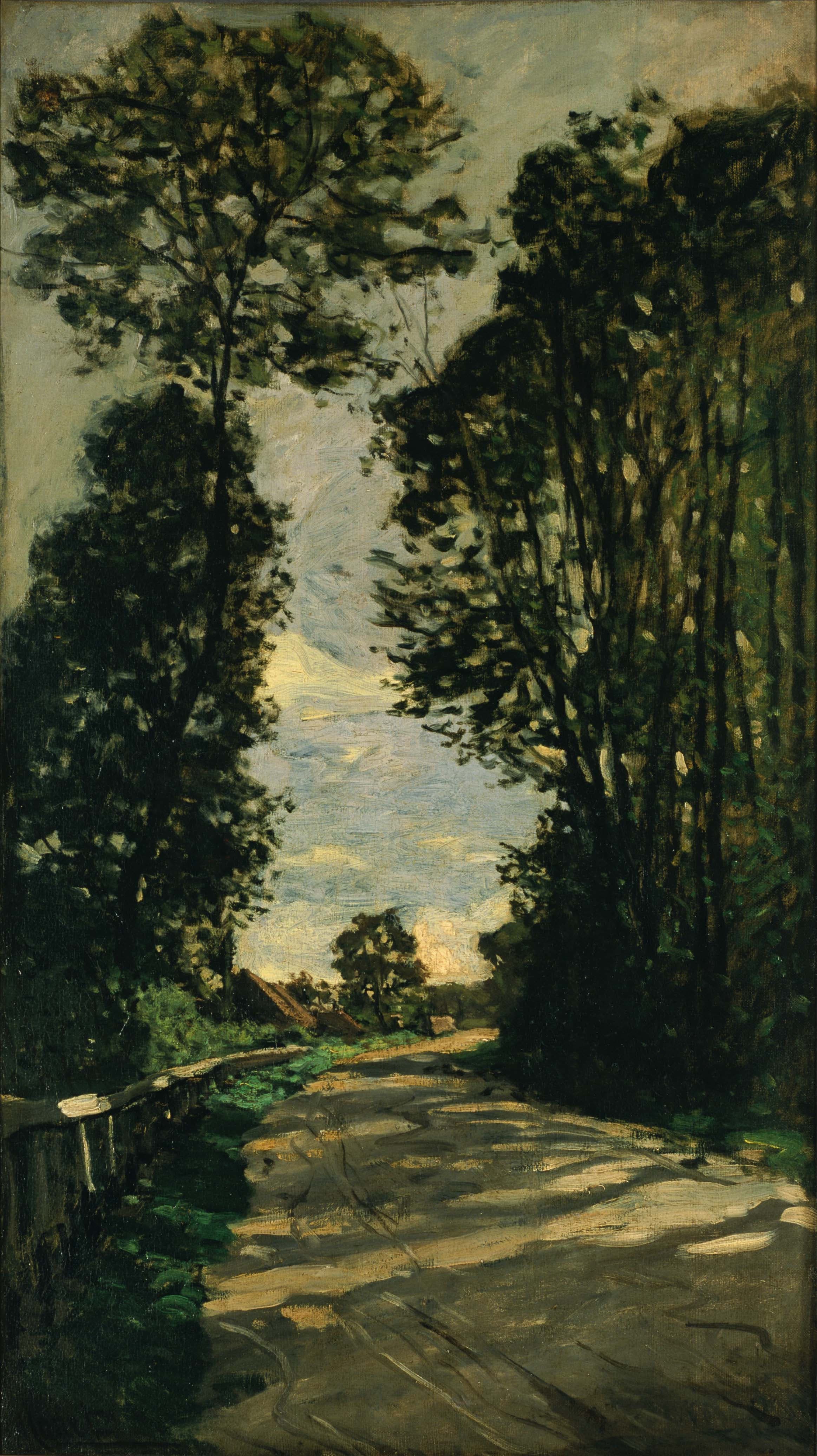
Walk (Road by the Saint-Siméon Farm)
Claude Monet · 1864

Nymphs Dancing to Pan's Flute
Joseph Tomanek

The Scream
Edvard Munch · 1893

Ophelia
John Everett Millais · 1851–52