Impressionism
The Manneporte near Étretat
Claude Monet, 1886
The Manneporte near Étretat is an 1886 oil painting by Claude Monet of the great rock arch on the Normandy coast, seen in a tall, upright format. It belongs to The Metropolitan Museum of Art in New York.
- Artist
- Claude Monet
- Date
- 1886
- Medium
- Oil on canvas
- Dimensions
- 81.3 × 65.4 cm
- Collection
- The Metropolitan Museum of Art, New York, United States
- Movement
- Impressionism
- Catalogue
- Wildenstein 1052
Painted at Étretat and the Normandy CoastMore at Monet at the Met
What you are looking at
A great block of chalk cliff fills the upper two-thirds of the canvas and steps down into the sea on the right as a massive, leaning pillar. Between that pillar and the cliff wall on the left opens the arch itself, through which you see a pale band of sea and a soft, cream-white sky. That opening is the Manneporte, the largest of the three natural arches at Étretat, and Monet has come so close to it that the rock reads less as a landmark than as a living mass of stone. Below, the sea spreads across the whole lower third in short, broken strokes of blue, violet and green, foaming white where it meets the foot of the rock. The painting measures 81.3 × 65.4 cm and is signed and dated 1886 at lower left; it has been at The Metropolitan Museum of Art since the bequest of Lillie P. Bliss in 1931.
What surprises most viewers is the color of the rock. Very little of it is white. The cliff is built from lilac, gray-blue, ochre and rose, with rusty orange and dark green along the grassy crest where the sun catches the top. The shadowed inner face of the pillar turns a deeper violet. The sky on the right is broken by drifting white and blue cloud, while the sky seen through the arch is calmer and paler, so the opening reads as a quiet window inside a busy surface.
The vertical format matters. Most of Monet's Étretat pictures are horizontal, built on the long line of the horizon. Here he turns the canvas upright, so the eye climbs the cliff and then drops through the arch to the water, a movement closer to a Japanese print than to a conventional seascape. Monet owned many such prints, and the cropped, looming forms of Hokusai and Hiroshige are often cited as a model for compositions like this one.
How Monet painted it
Monet painted the Manneporte from this angle six times, twice on each of three visits to the Normandy coast, in 1883, 1885 and 1886, according to the Met. The earlier, horizontal version of 1883, also at the Met, is catalogued here as The Manneporte (Étretat); comparing the two shows how far he had moved in three years, from an even, descriptive light toward a denser, more worked surface.
Getting to this viewpoint was not simple. The Manneporte can be reached on foot only at low tide, and Monet's letters from Étretat describe him racing the sea with his easel and canvases. In 1885 he was caught by a wave that swept away his gear and soaked him; he came away lucky. The writer Guy de Maupassant, who watched him at work, published an account in 1886 of Monet going out "followed by children carrying his canvases," moving from one canvas to the next as the light changed. That habit, keeping several pictures going and switching as the sun moved, is the method he would later turn into the great series of haystacks and cathedrals.
The paint itself is laid on in dense, crossing strokes, with no single passage left thin. Up close you can see that the cliff was reworked many times, which suggests that, as so often with Monet, a picture begun on the beach was finished in the studio.
The story behind the motif
Étretat was already famous before Monet arrived. Its arches, the Porte d'Aval, the Porte d'Amont and the Manneporte, had drawn Eugène Delacroix and, most importantly, Gustave Courbet, whose stormy waves and cliffs of 1869–70 Monet knew well. To paint Étretat in the 1880s was to compete with that tradition. Monet's answer was to move closer, to crop harder and to drop the narrative of fishermen and boats that his predecessors had included.
The 1880s were also a period of financial pressure and reinvention for him. After the death of his first wife, Camille, in 1879 and the move to Giverny in 1883, Monet traveled almost restlessly to coasts: Pourville, Étretat, Bordighera, Belle-Île. The Manneporte pictures belong to this campaign, in which the hard, unchanging forms of rock became a test bed for painting changing light.
Meaning: the rock as a subject in itself
Monet left no statement about what the arch meant to him, and it is safer not to load the picture with symbolism. Critics of the period, and later scholars, read these cliff paintings in two main ways. One reading stresses the sublime, the sense of scale and danger that Romantic painters found in nature, here felt as a cliff almost pressing on the viewer. The other, closer to Monet's own words in his letters, sees the motif as a pretext: a fixed structure against which shifting weather, water and light can be measured.
Both readings meet in the arch itself. The opening is a frame within the frame, and what it frames is calm water and pale sky. You can see the painting as a picture about looking: the heavy, worked mass of the rock around a quiet, luminous gap.
Reception and legacy
The picture went from Monet to his dealer Paul Durand-Ruel and passed through the Chicago collection of Potter Palmer before entering the New York collection of Cornelius Newton Bliss and then his daughter Lillie P. Bliss, a founder of the Museum of Modern Art. Its arrival at the Met in 1931 gave New York one of the strongest of Monet's coastal pictures, and the Met's pairing of it with the 1883 version remains one of the clearest places to study how a single motif changed in his hands.
The Étretat campaign as a whole fed directly into Monet's later series. For related views, see Étretat, La Manneporte, Reflections on the Sea, The Cliffs at Étretat and the storm scene Rough Sea at Étretat, or browse famous Monet paintings.
Where to see it
The painting is in the European paintings galleries of The Metropolitan Museum of Art, Fifth Avenue, New York (listed in Gallery 819 at the time of writing; gallery hangs change, so check the Met's online record before a visit).
Questions & answers
Where is The Manneporte near Étretat by Monet?
The 1886 upright version is in The Metropolitan Museum of Art in New York, a bequest of Lillie P. Bliss in 1931. The Met also owns an earlier, horizontal view of the same arch painted in 1883, so both can often be seen in the same museum.
What is the Manneporte?
The Manneporte is the largest of three natural chalk arches in the cliffs at Étretat on the Normandy coast of France. Its name is usually explained as 'great gate.' It can be reached from the beach only at low tide, which made it a risky place for Monet to work.
How many times did Monet paint the Manneporte?
According to the Met, Monet painted the arch from this angle six times, twice on each of his visits to Étretat in 1883, 1885 and 1886. He painted other views of the Manneporte and the nearby Porte d'Aval as well.
Why is the painting vertical?
Turning the canvas upright lets the cliff loom over the viewer and leads the eye down through the arch to the bright sea beyond. The steep cropping recalls Japanese woodblock prints, which Monet collected, though he left no statement explaining the choice.
When was The Manneporte near Étretat painted?
It is signed and dated 1886 at lower left. Some reproductions mistakenly give 1883, which is the date of the Met's other, horizontal Manneporte.
More by the artist
Claude Monet

Bridge over a Pond of Water Lilies
Claude Monet · 1899

Woman with a Parasol – Madame Monet and Her Son
Claude Monet · 1875

Sunset in Venice
Claude Monet · 1908–12

La Grenouillère
Claude Monet · 1869

Beach in Pourville
Claude Monet · 1882

Springtime
Claude Monet · 1872

Boating on the River Epte
Claude Monet · 1890

The Seine at Asnières (Hermitage)
Claude Monet · 1873
Also painted in 1886
The same year
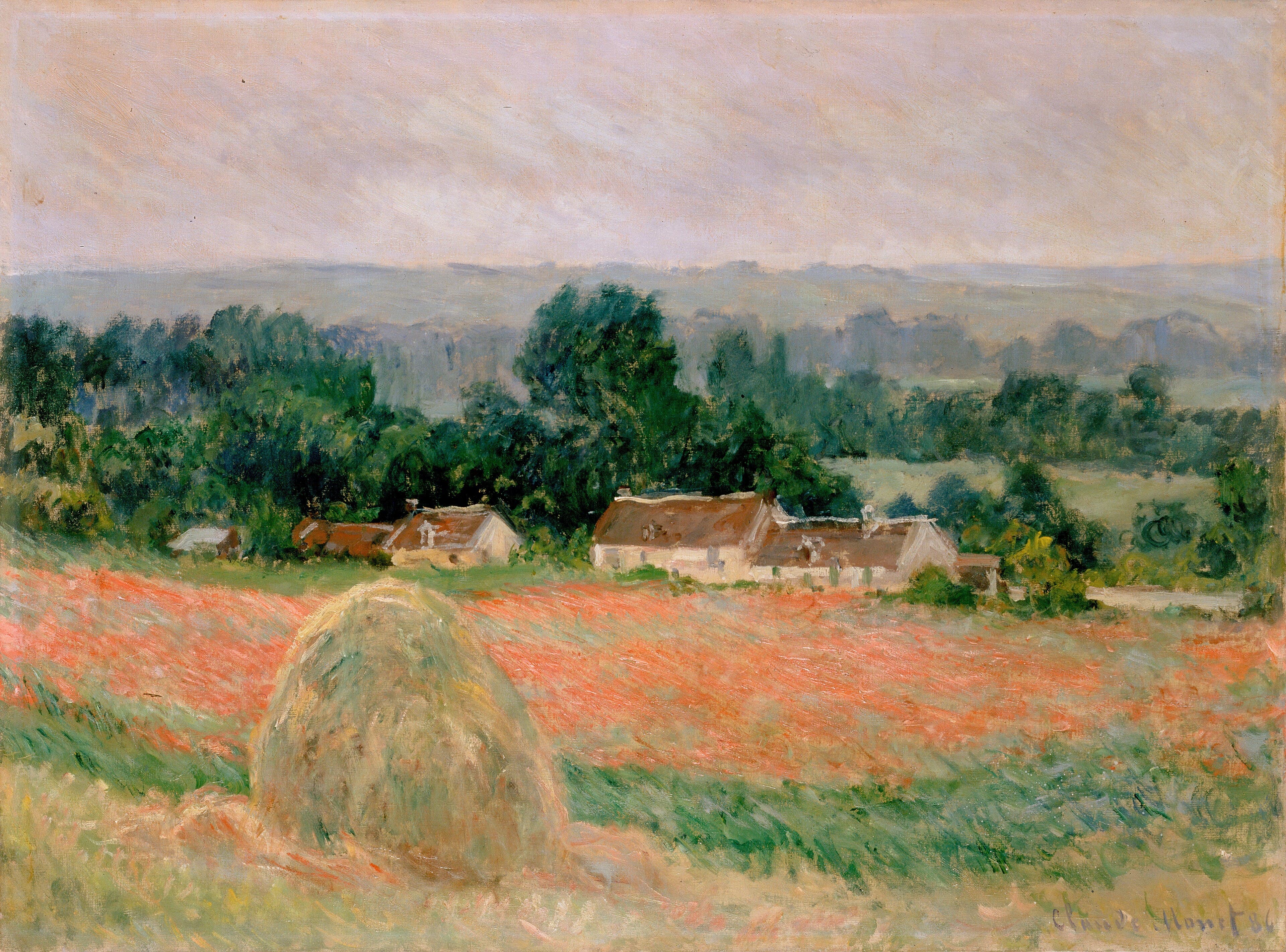
Haystack at Giverny
Claude Monet · 1886
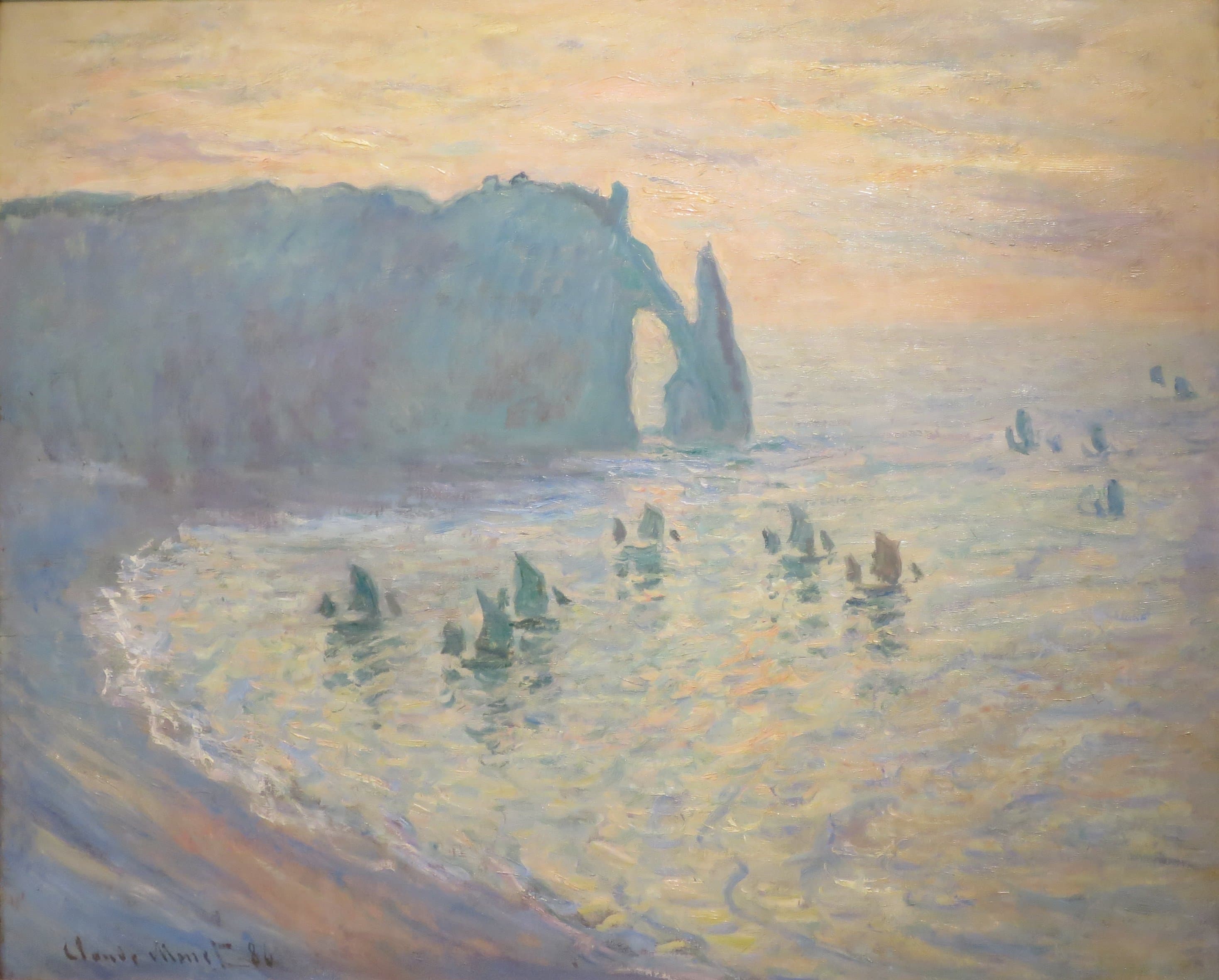
The Cliffs at Étretat
Claude Monet · 1886
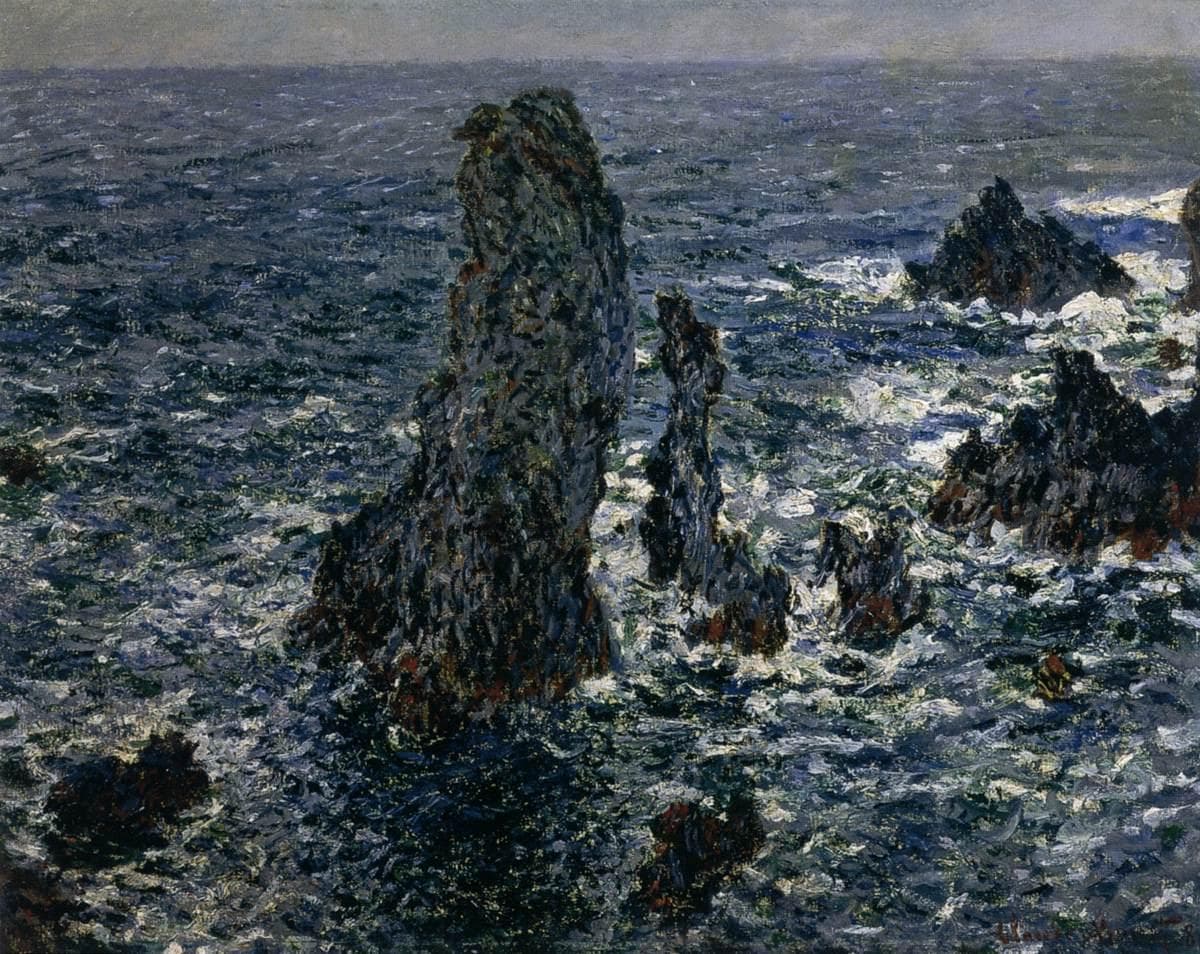
The Pyramides at Port-Coton, Rough Sea
Claude Monet · 1886
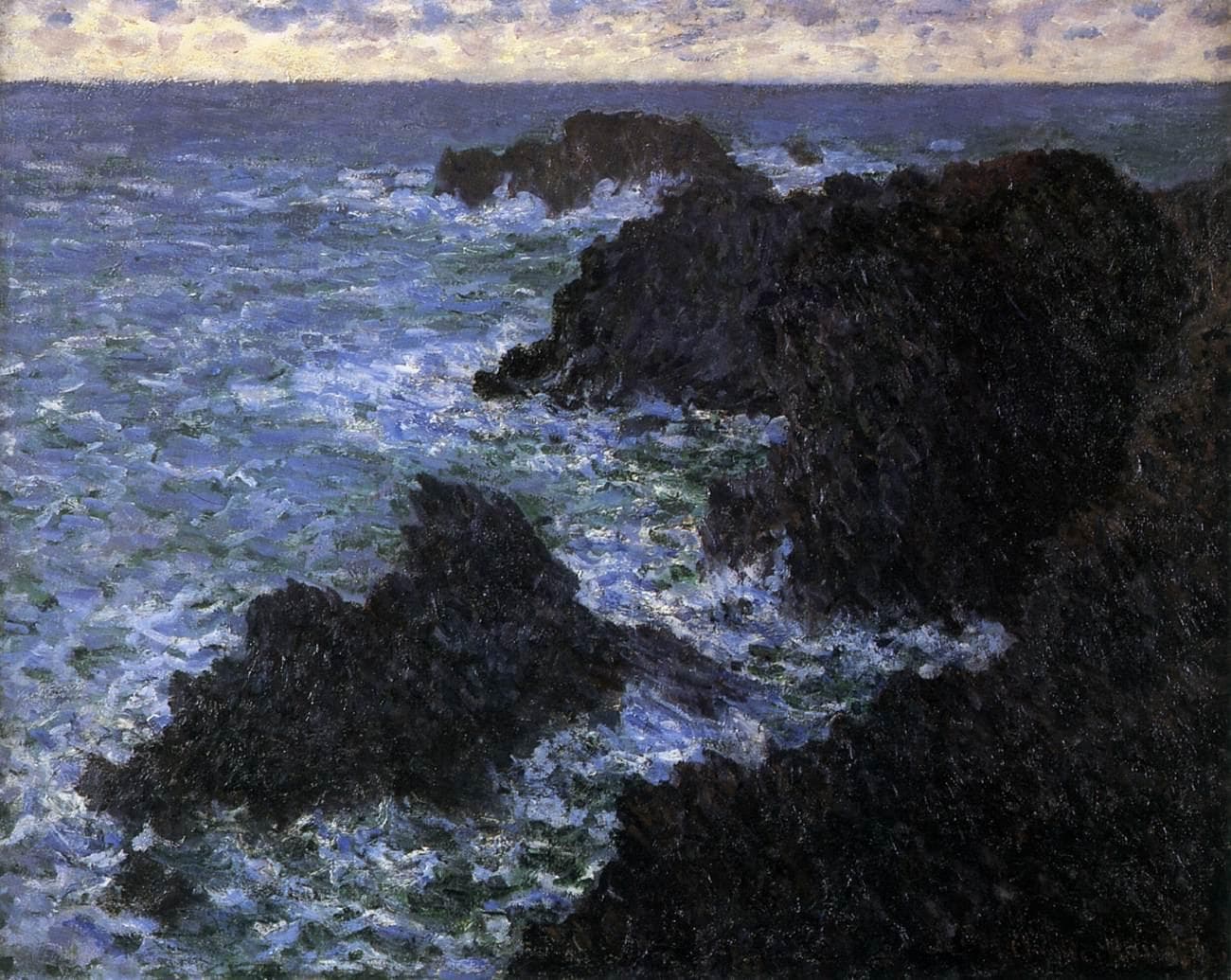
The Rocks of Belle-Île, the Wild Coast
Claude Monet · 1886
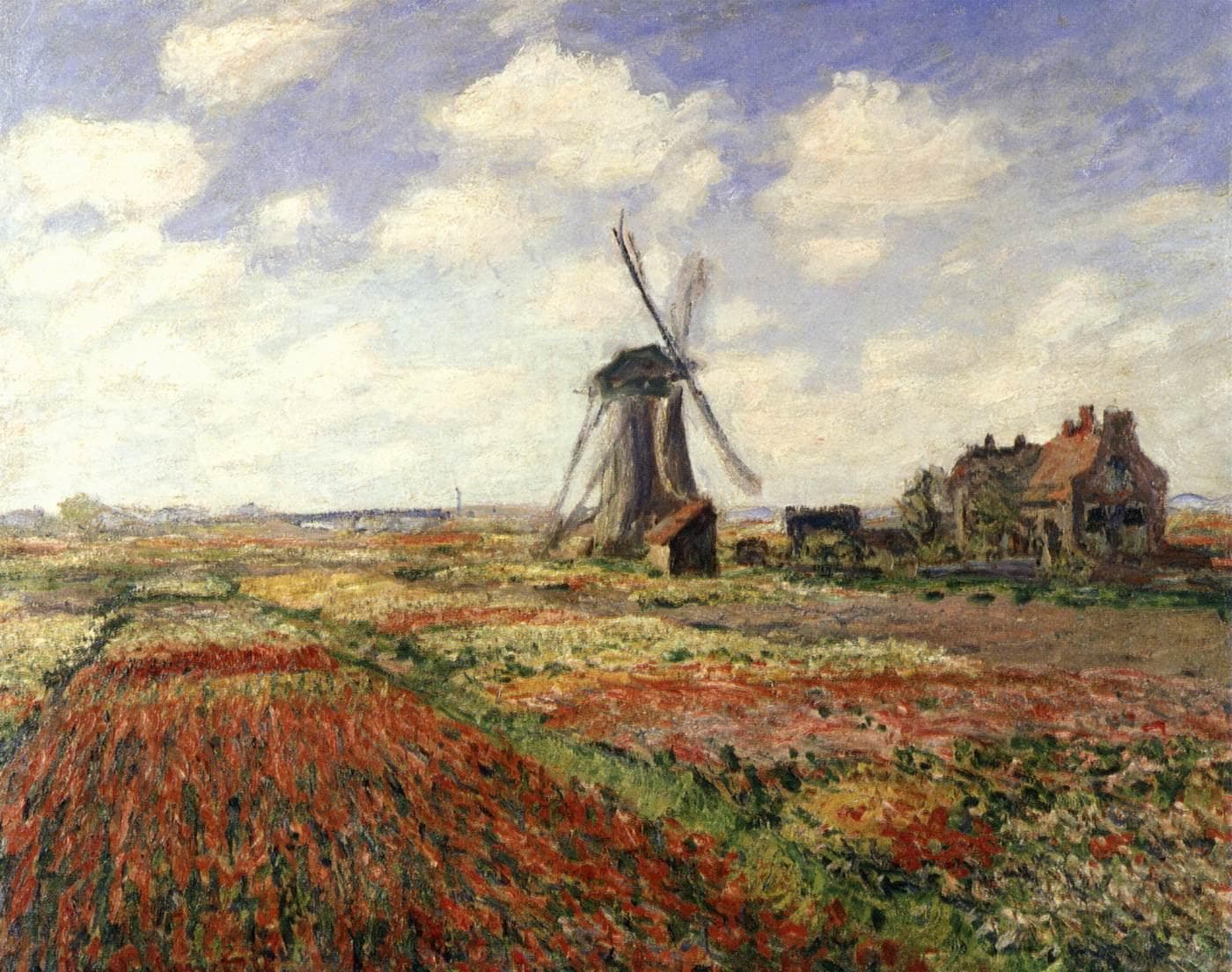
Tulip Fields in Holland
Claude Monet · 1886
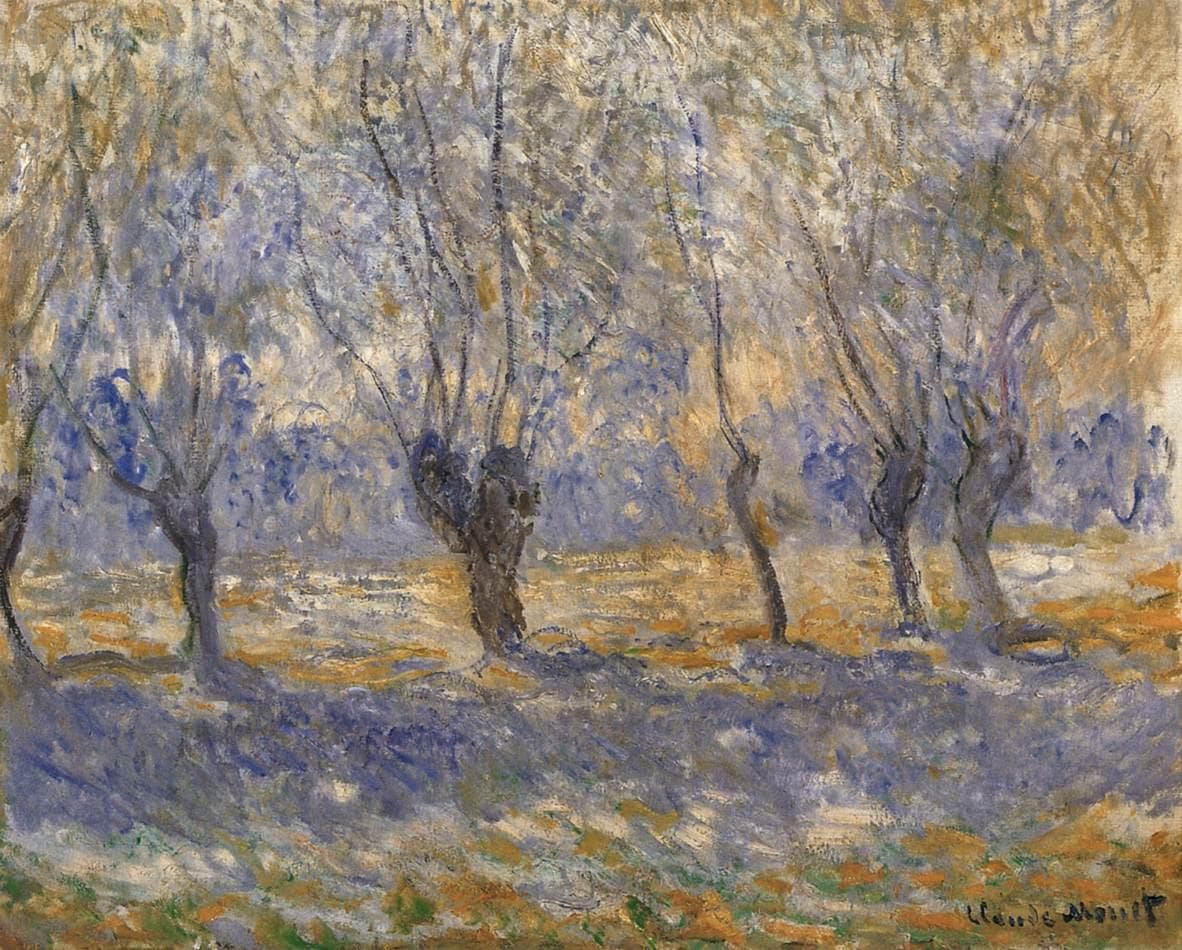
Willows at Giverny
Claude Monet · 1886
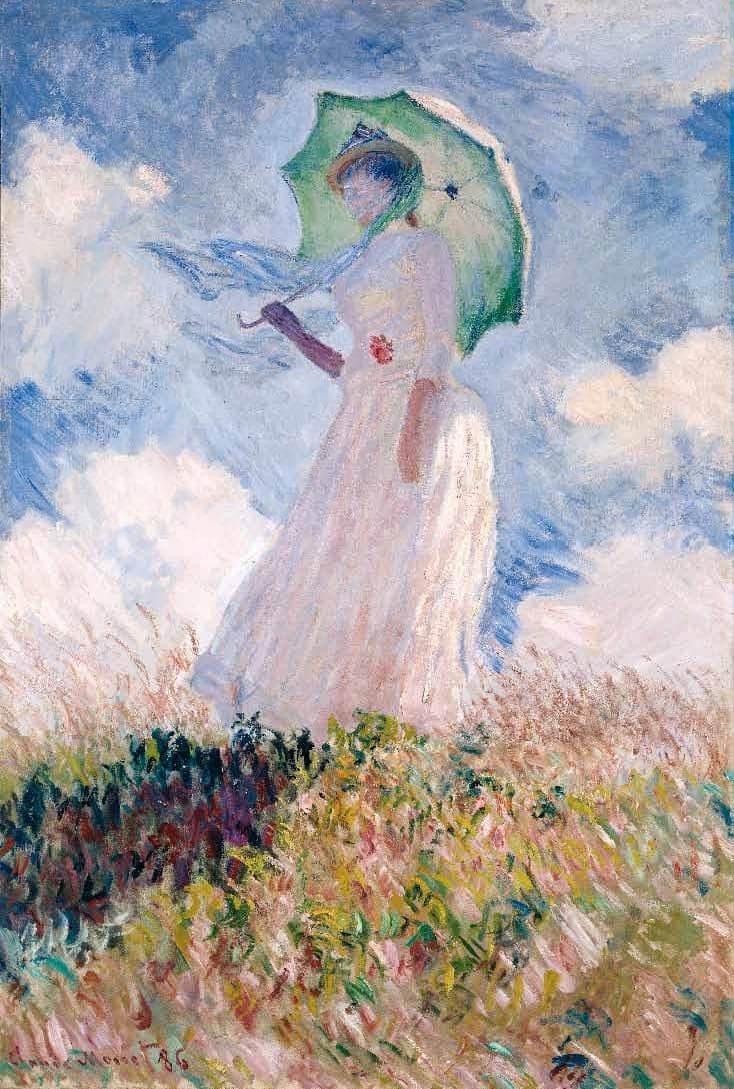
Woman with a Parasol, Facing Left
Claude Monet · 1886
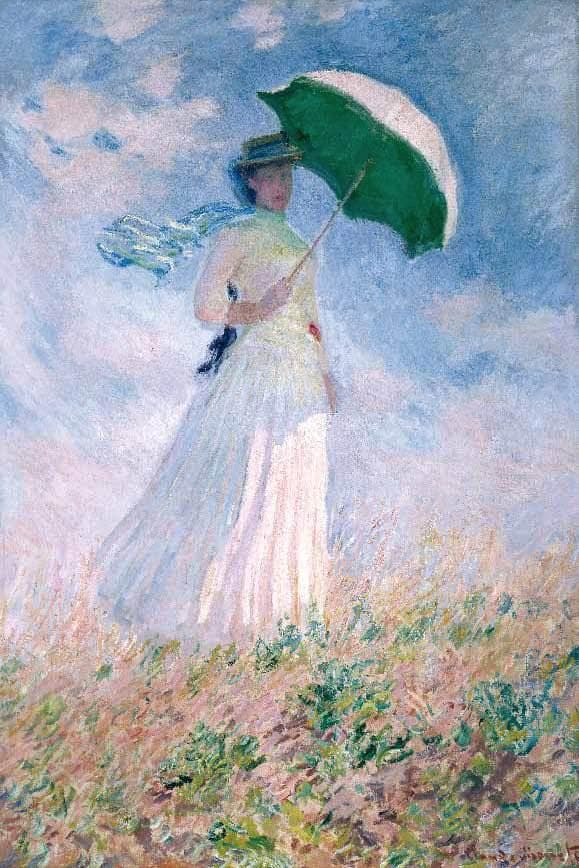
Woman with a Parasol, Facing Right
Claude Monet · 1886
Kindred works
You may also study
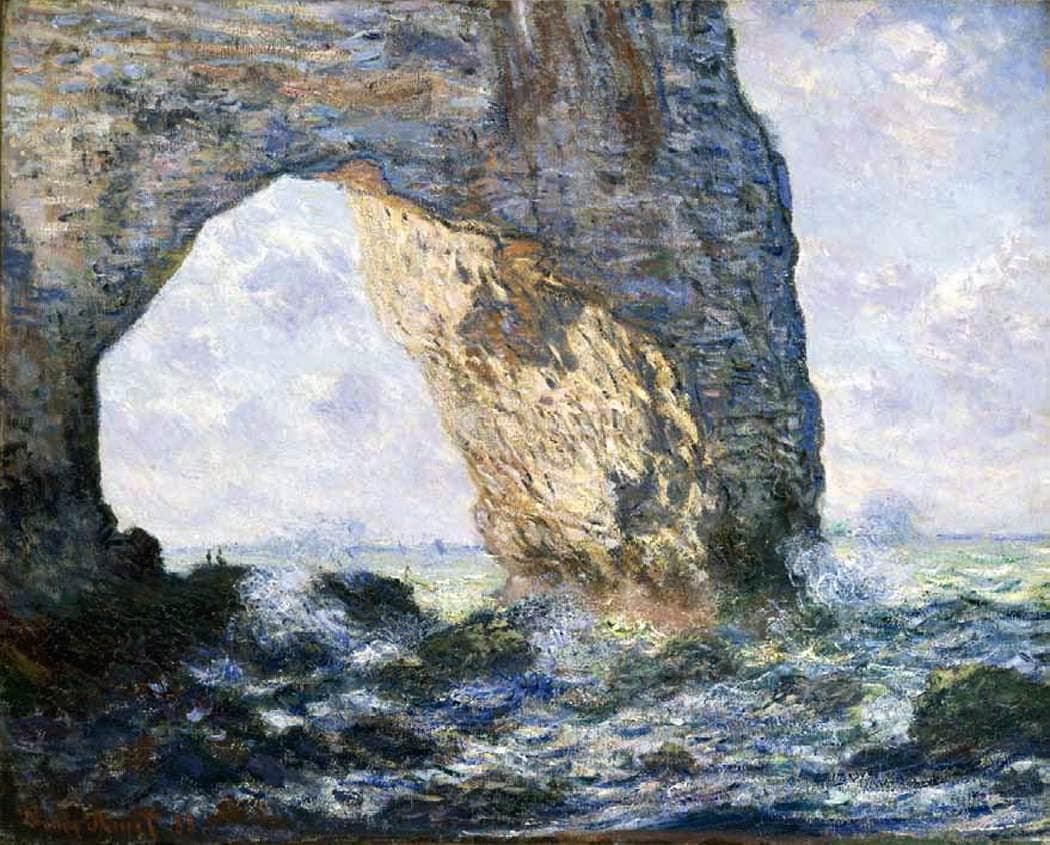
The Manneporte (Étretat)
Claude Monet · 1883
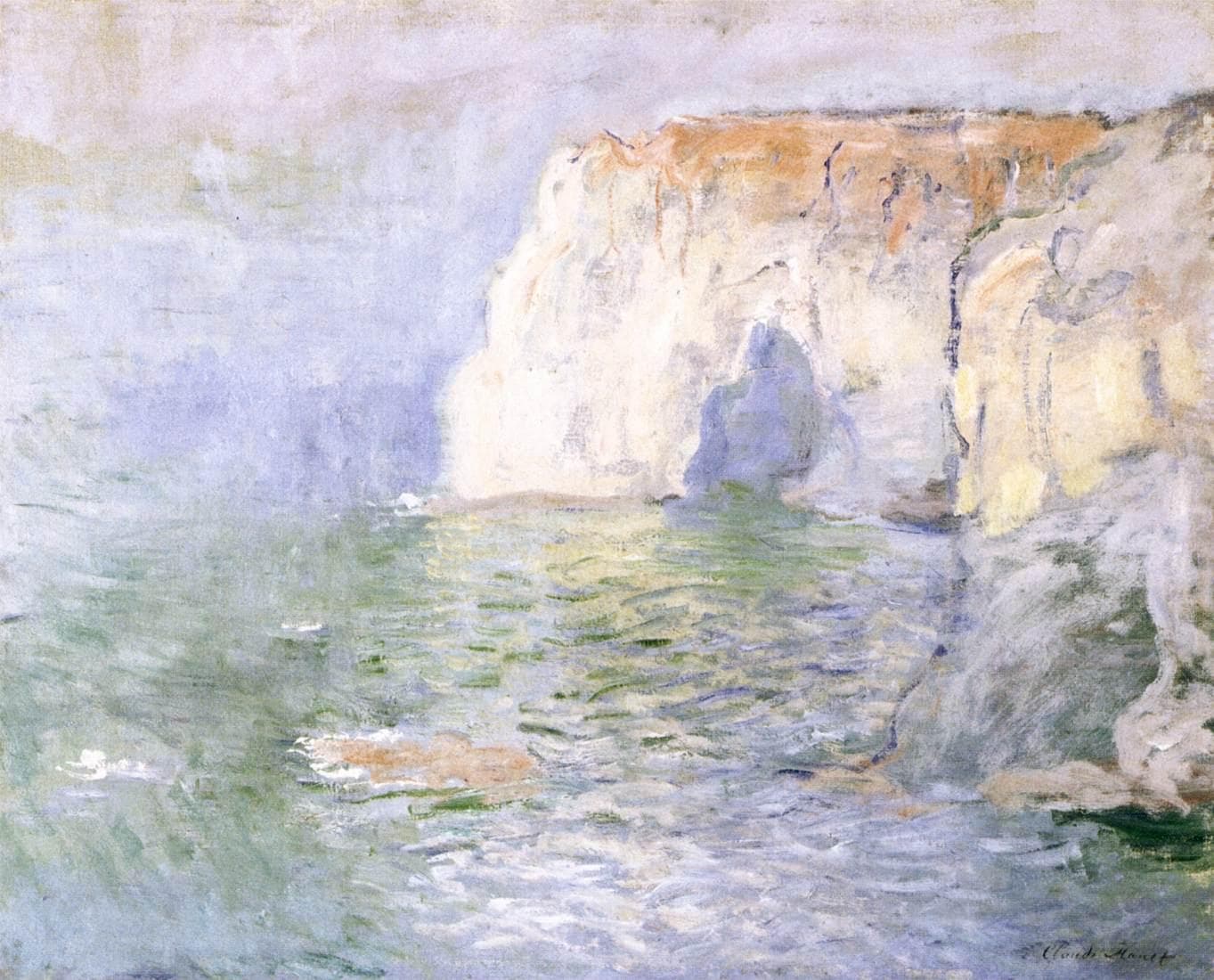
Étretat, the Manneporte, Reflections on the Water
Claude Monet · c. 1885
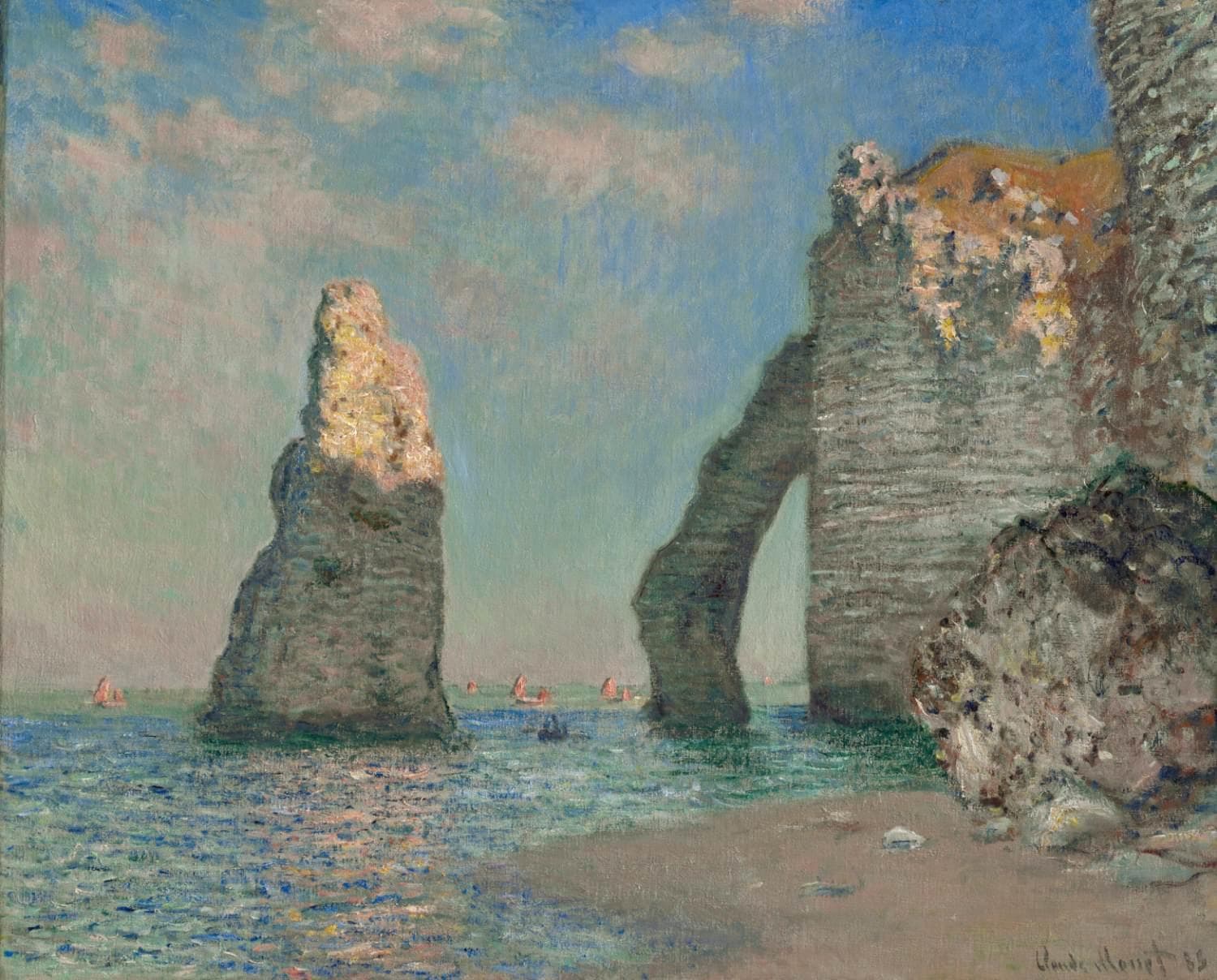
The Cliffs at Étretat
Claude Monet · 1885
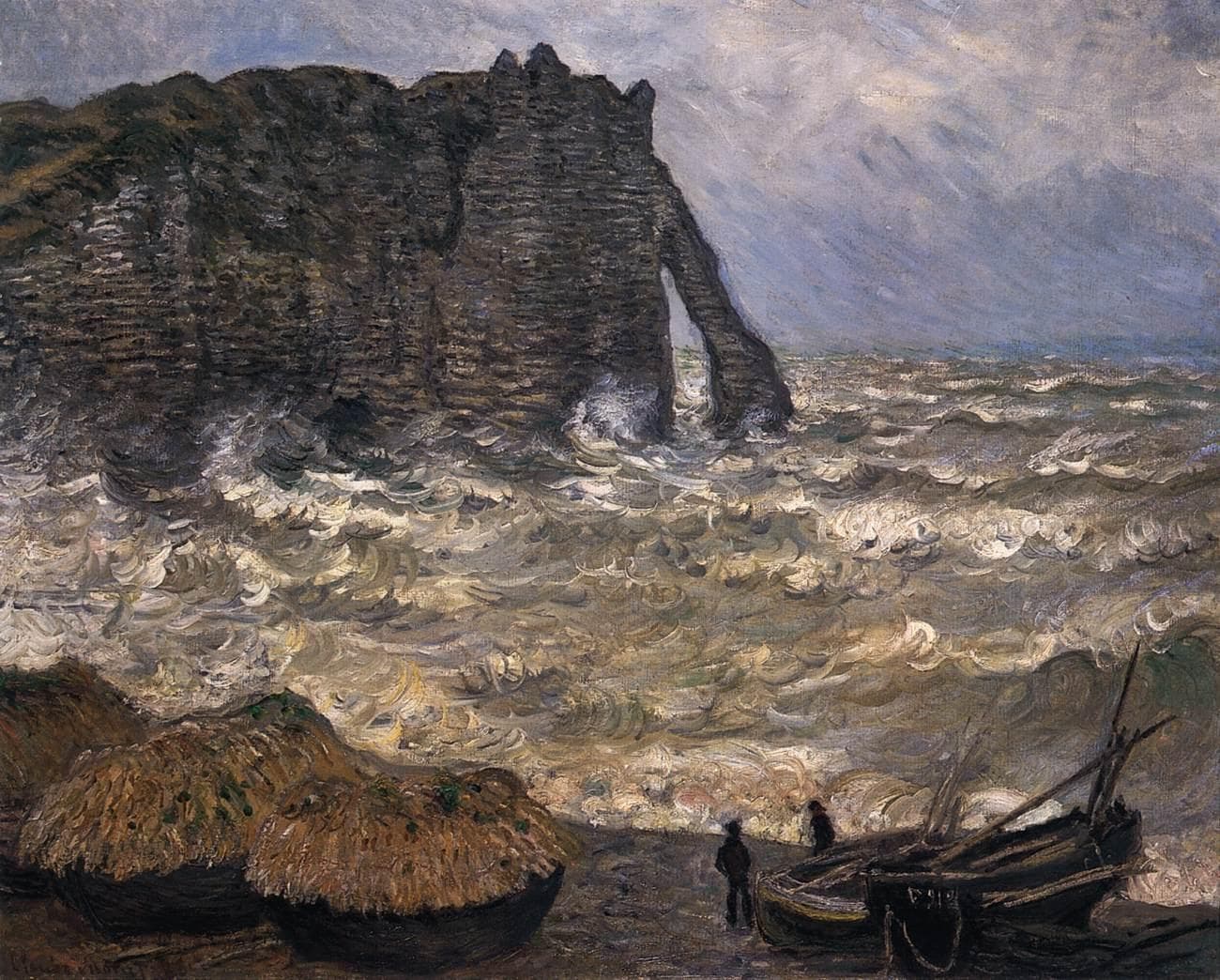
Rough Sea at Étretat
Claude Monet · 1883
The Beach at Étretat
Claude Monet · 1883

The Scream
Edvard Munch · 1893

Ophelia
John Everett Millais · 1851–52

The Great Wave off Kanagawa
Katsushika Hokusai · c. 1830–32