Place
Monet at Argenteuil: The Impressionist Years on the Seine, 1871–78
Sailboats, bridges, poppies and a garden full of dahlias: the river town where Monet lived as Impressionism was born.
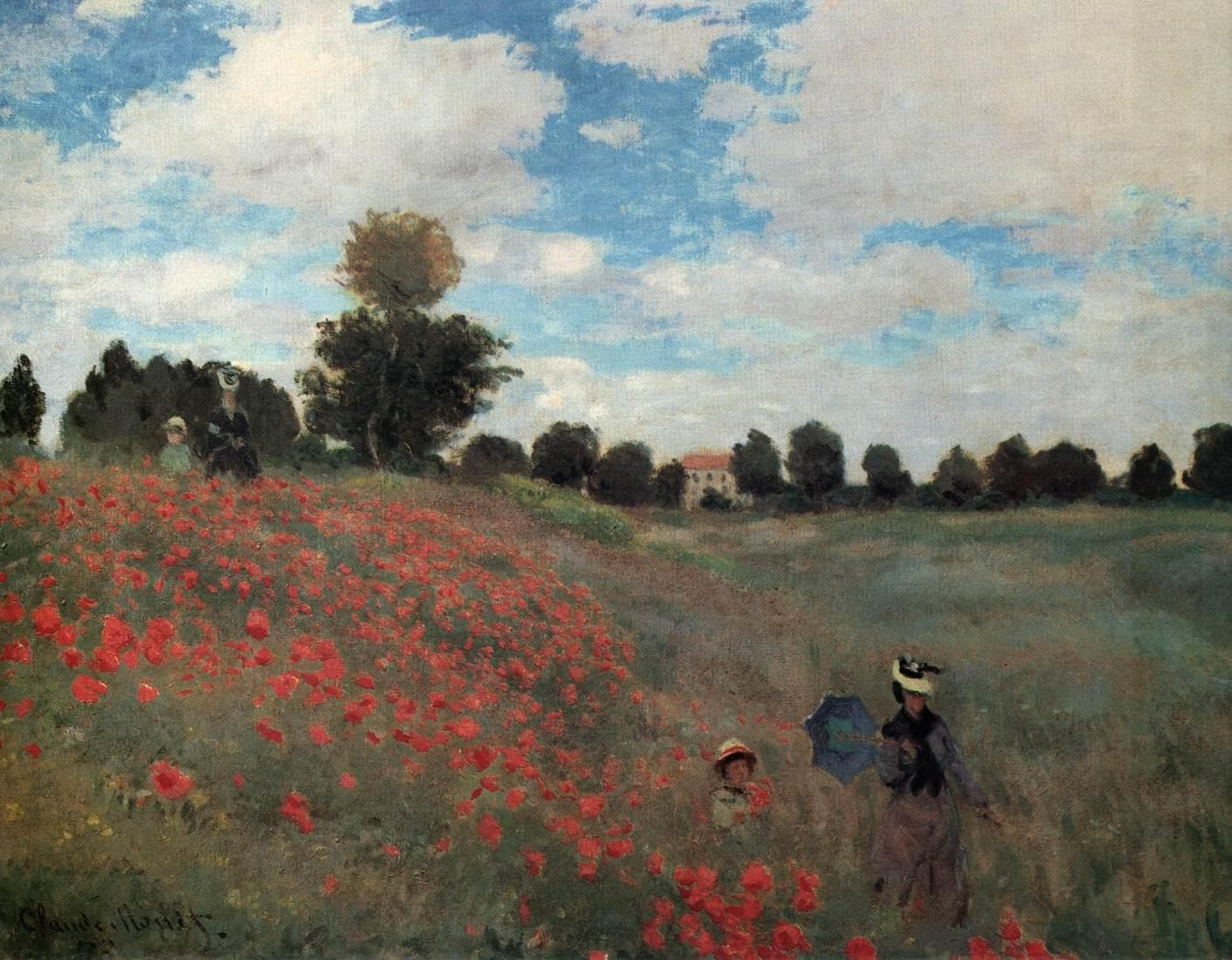
Monet at Argenteuil means the years 1871 to 1878, when Claude Monet lived in Argenteuil, a small industrial and boating town on the Seine about 11 kilometers northwest of Paris, and painted there some of the pictures that defined Impressionism. In about seven years he made around 170 canvases of the town, its river, its two bridges, the surrounding fields and his own garden, among them Poppy Field (1873) and Woman with a Parasol (1875).
The Argenteuil paintings are now in museums across the world, with major groups at the Musée d'Orsay in Paris, the National Gallery of Art in Washington, the Art Institute of Chicago, the Museum of Fine Arts, Boston, the Alte Nationalgalerie in Berlin and the National Gallery in London. This page lists those in our archive in date order and explains what Monet found at Argenteuil.
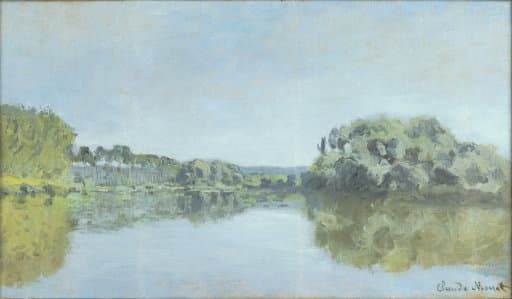
Bords de la Seine à Argenteuil
Claude Monet · 1870s (inscribed 1875 on the frame)
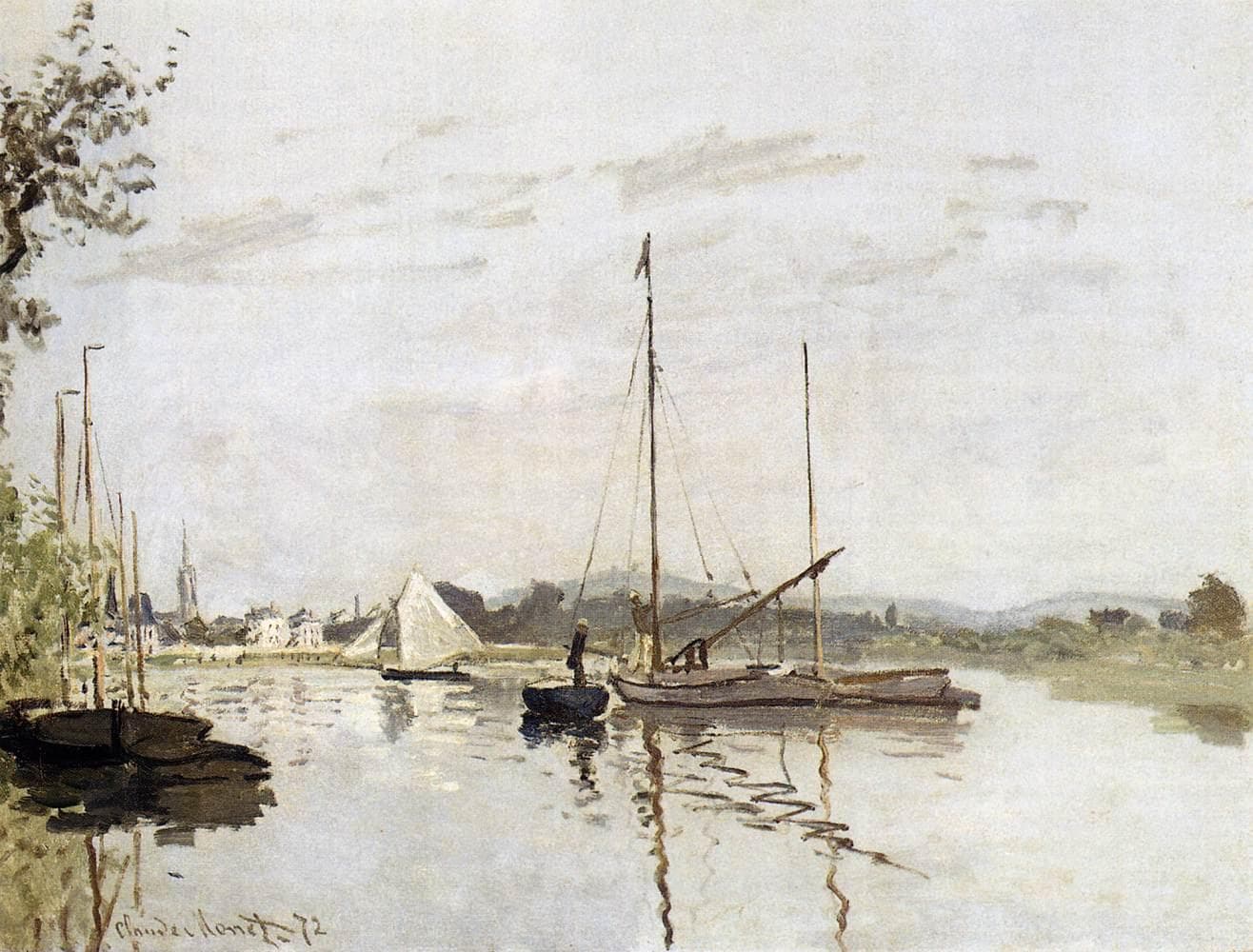
Argenteuil
Claude Monet · c. 1872
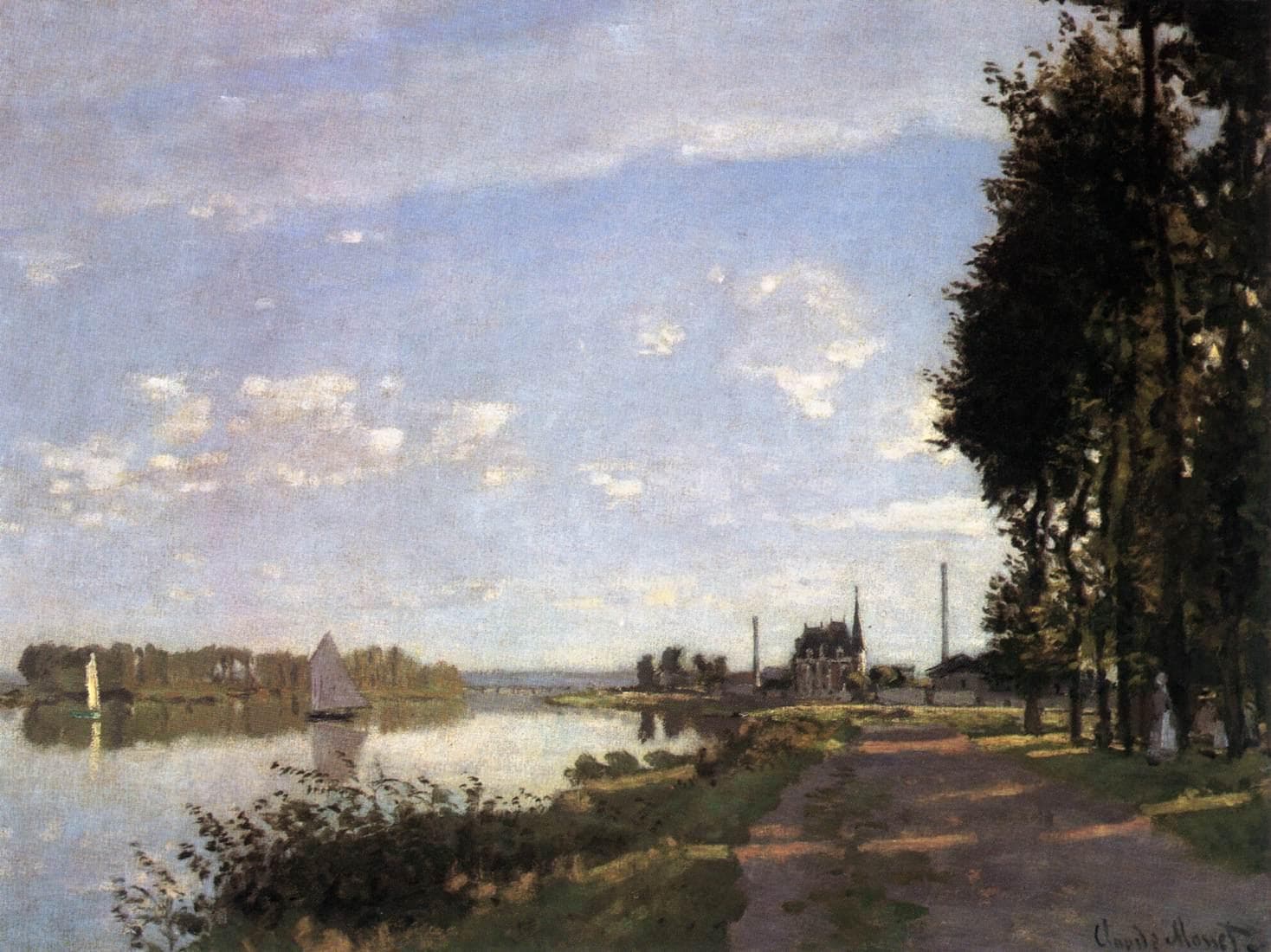
Riverside Path at Argenteuil
Claude Monet · c. 1872
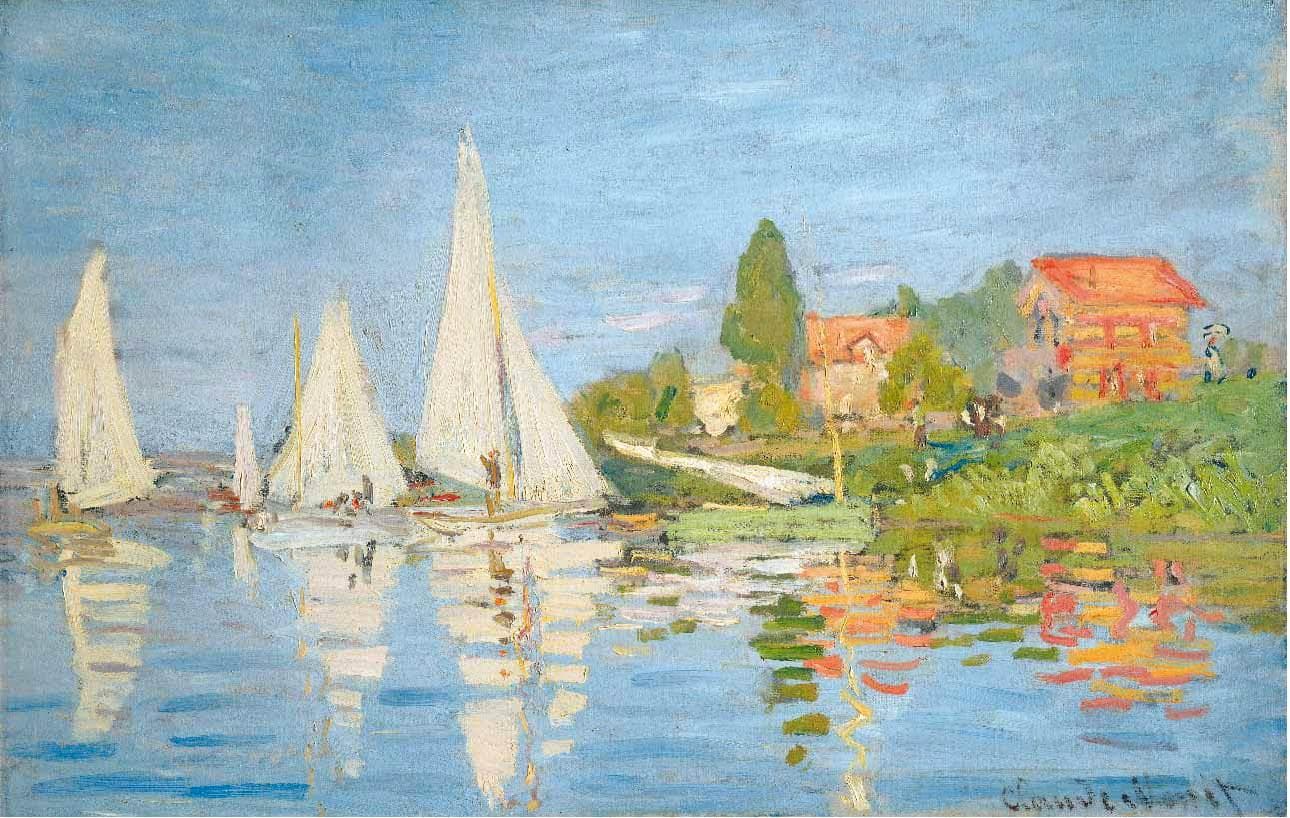
Regatta at Argenteuil
Claude Monet · c. 1872
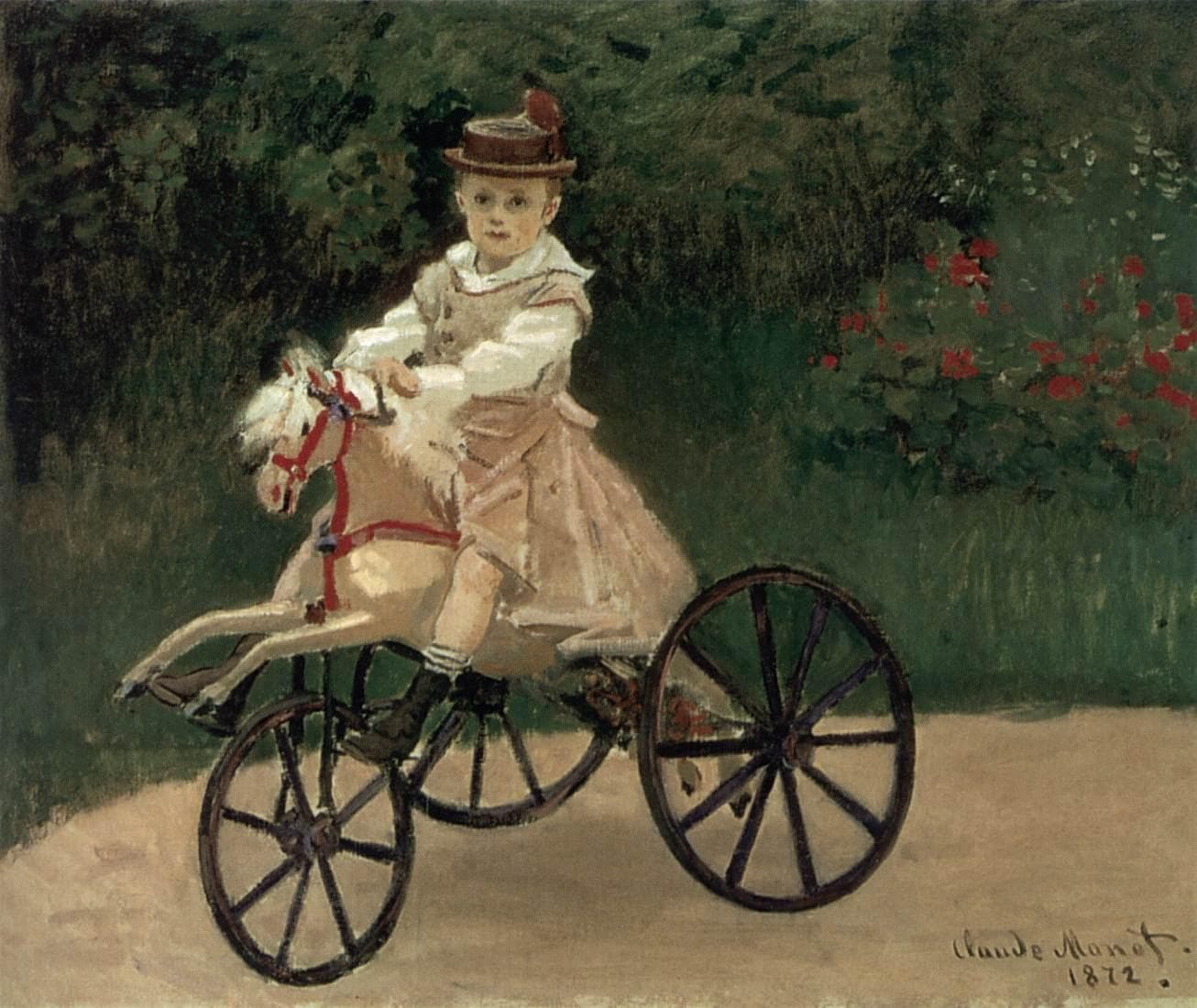
Jean Monet on His Hobby Horse
Claude Monet · 1872
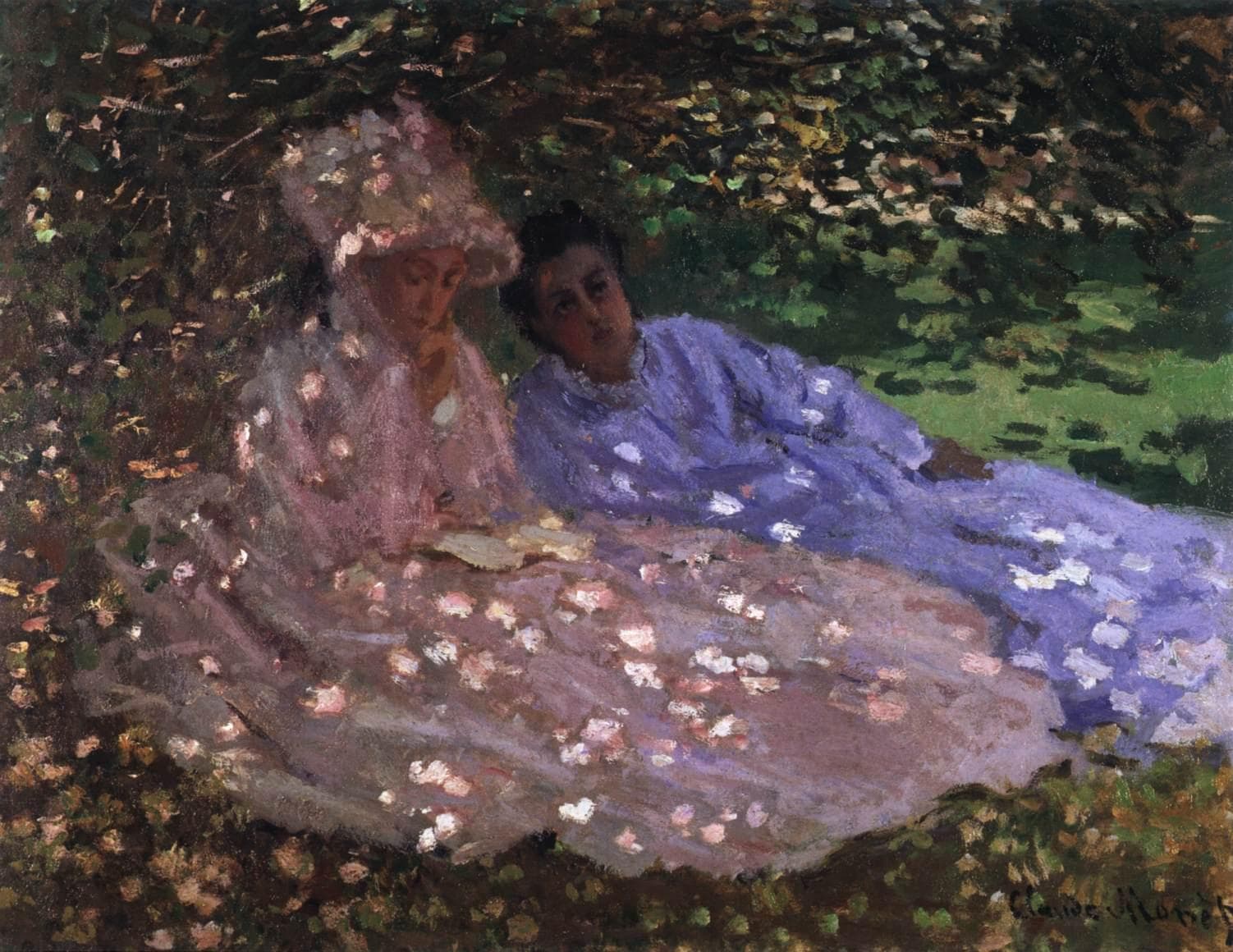
Madame Monet and a Friend in the Garden
Claude Monet · c. 1872
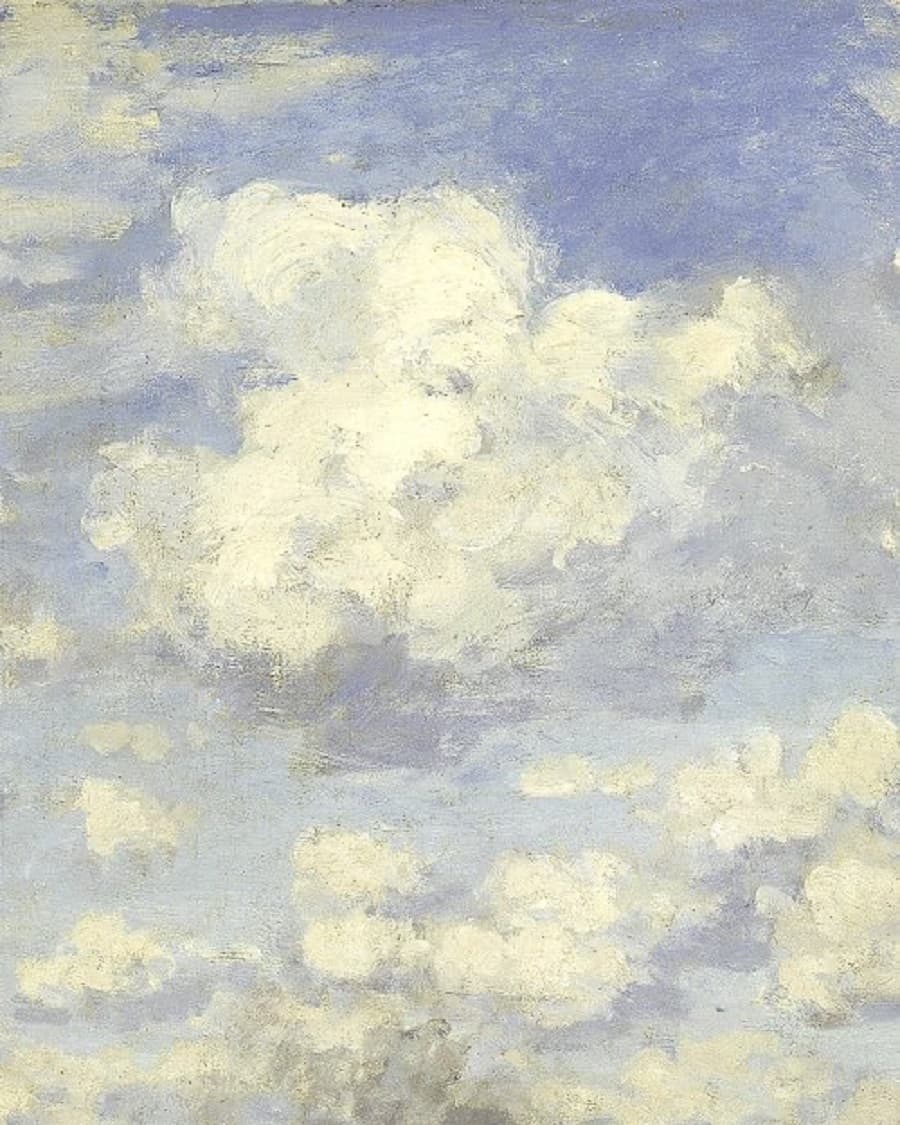
The Basin at Argenteuil
Claude Monet · 1872
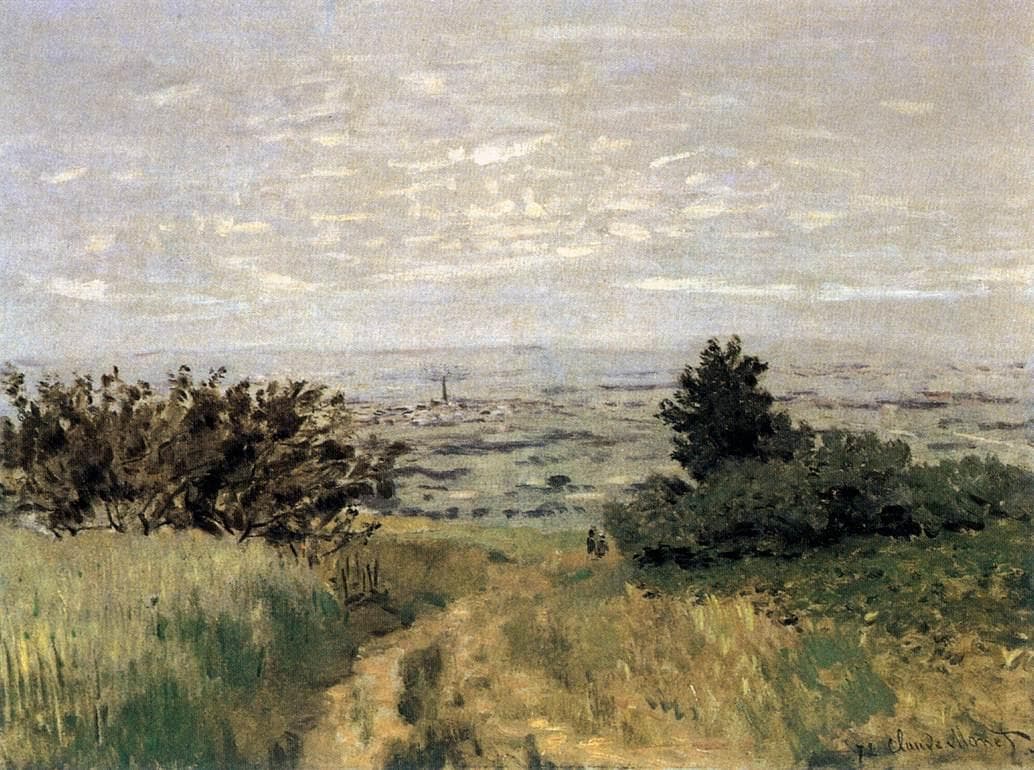
The Plain of Sannois at Argenteuil
Claude Monet · 1872
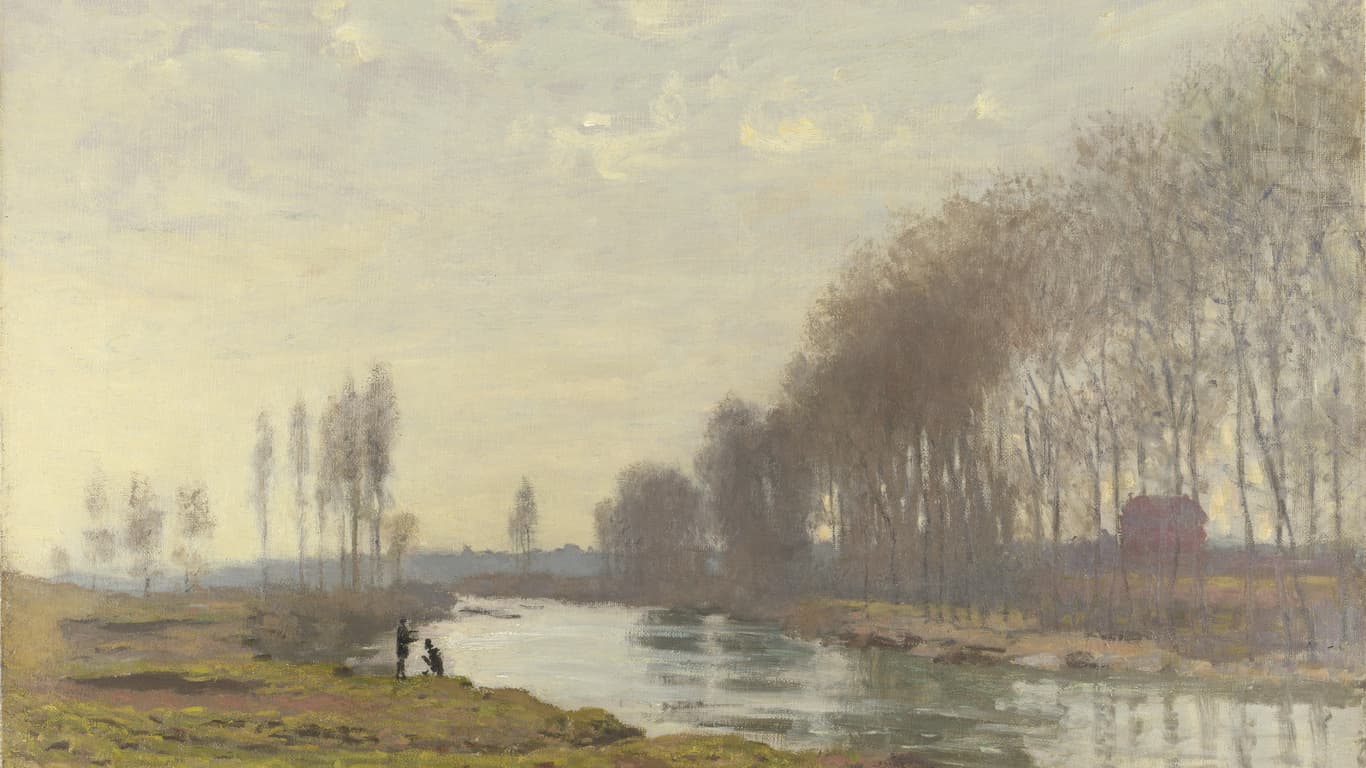
The Petit Bras of the Seine at Argenteuil
Claude Monet · 1872

Springtime
Claude Monet · 1872
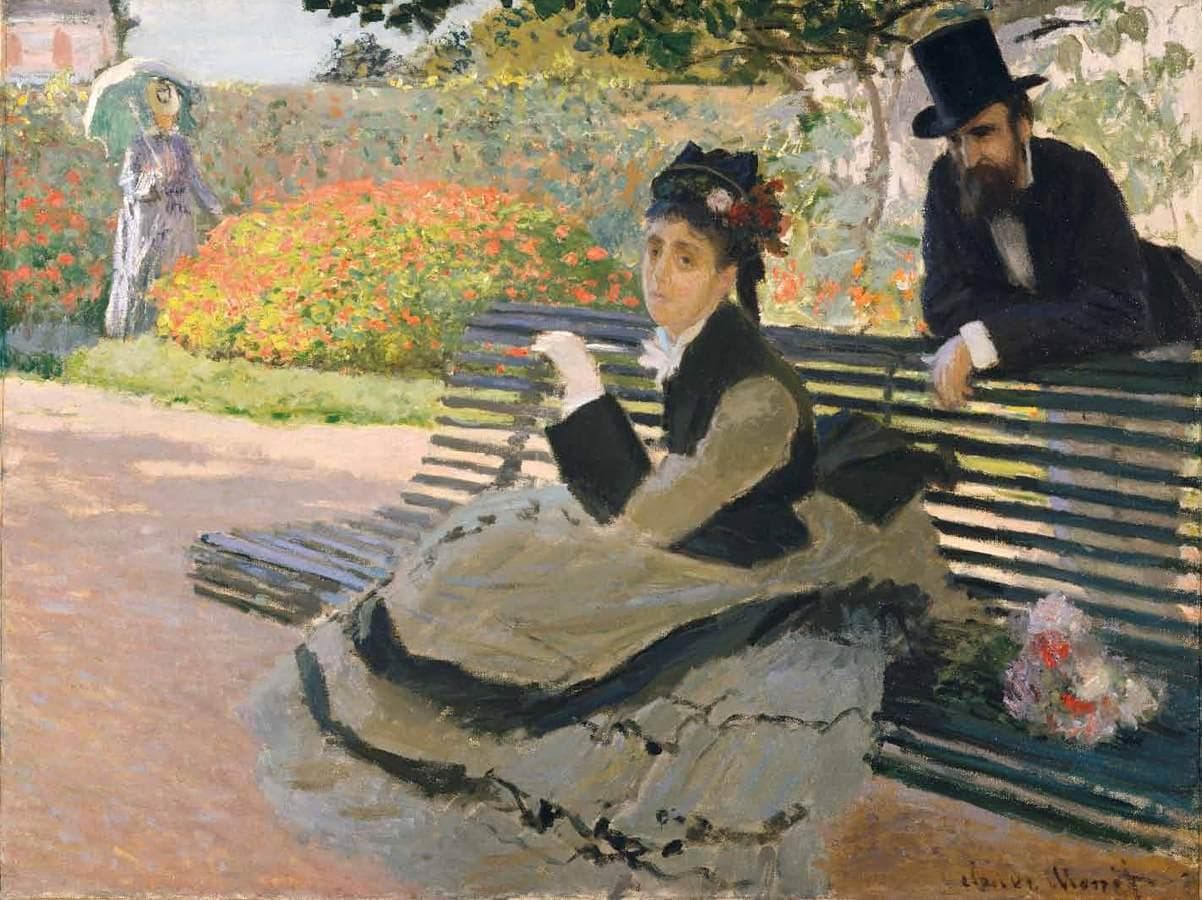
Camille Monet on a Garden Bench
Claude Monet · 1873
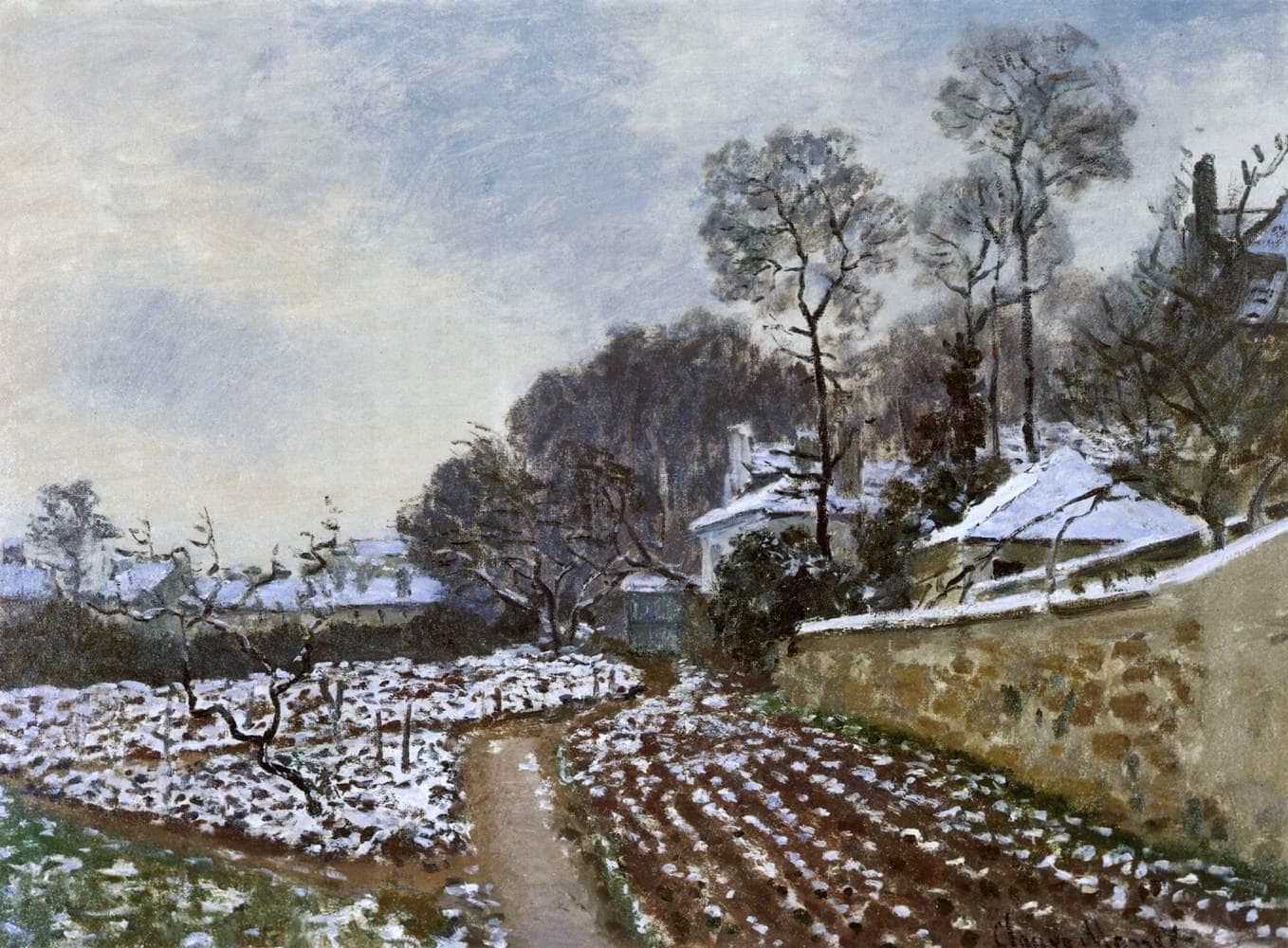
Thaw in Argenteuil
Claude Monet · 1873
Poppy Field (Poppies at Argenteuil)
Claude Monet · 1873
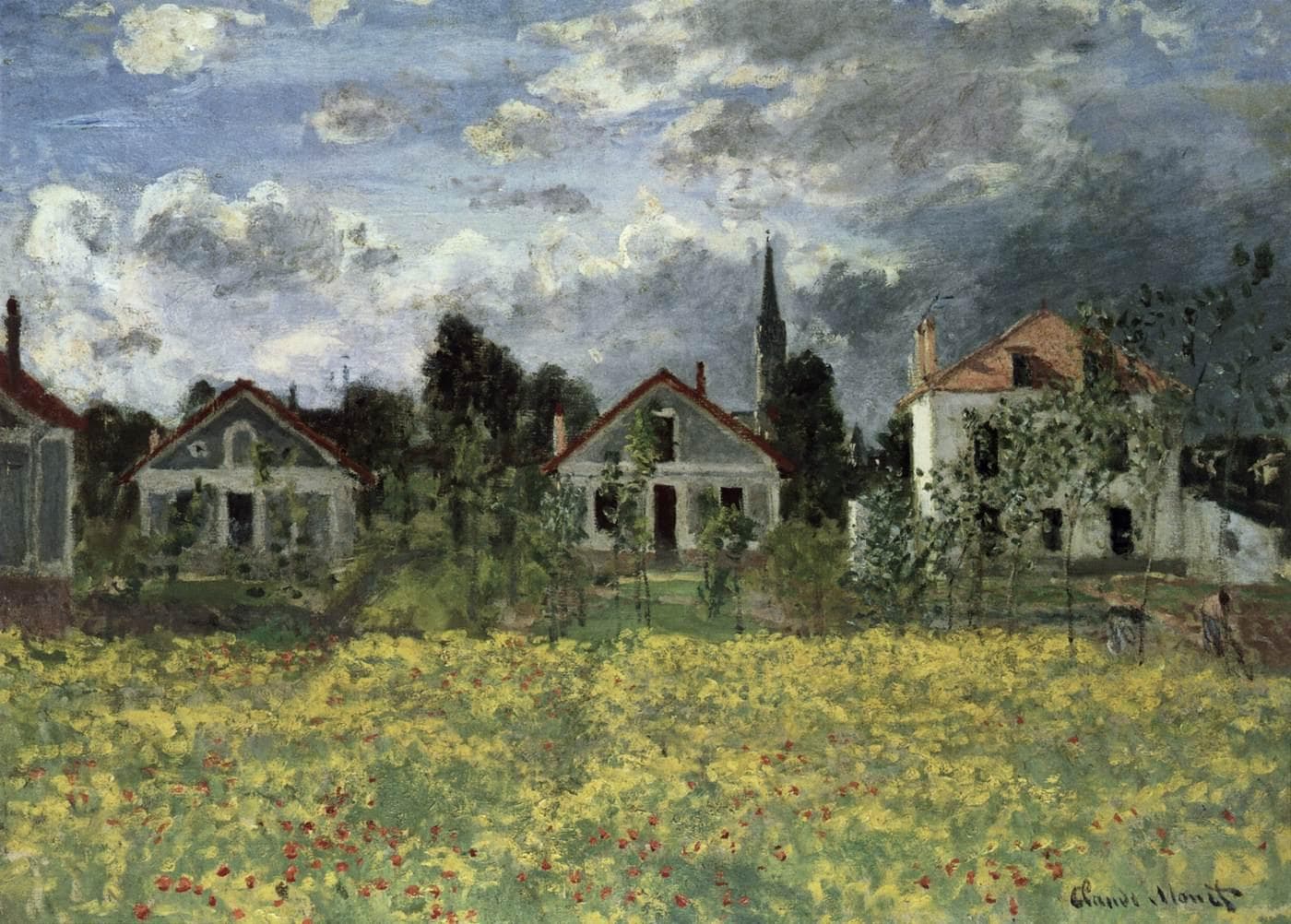
Houses at Argenteuil
Claude Monet · 1873
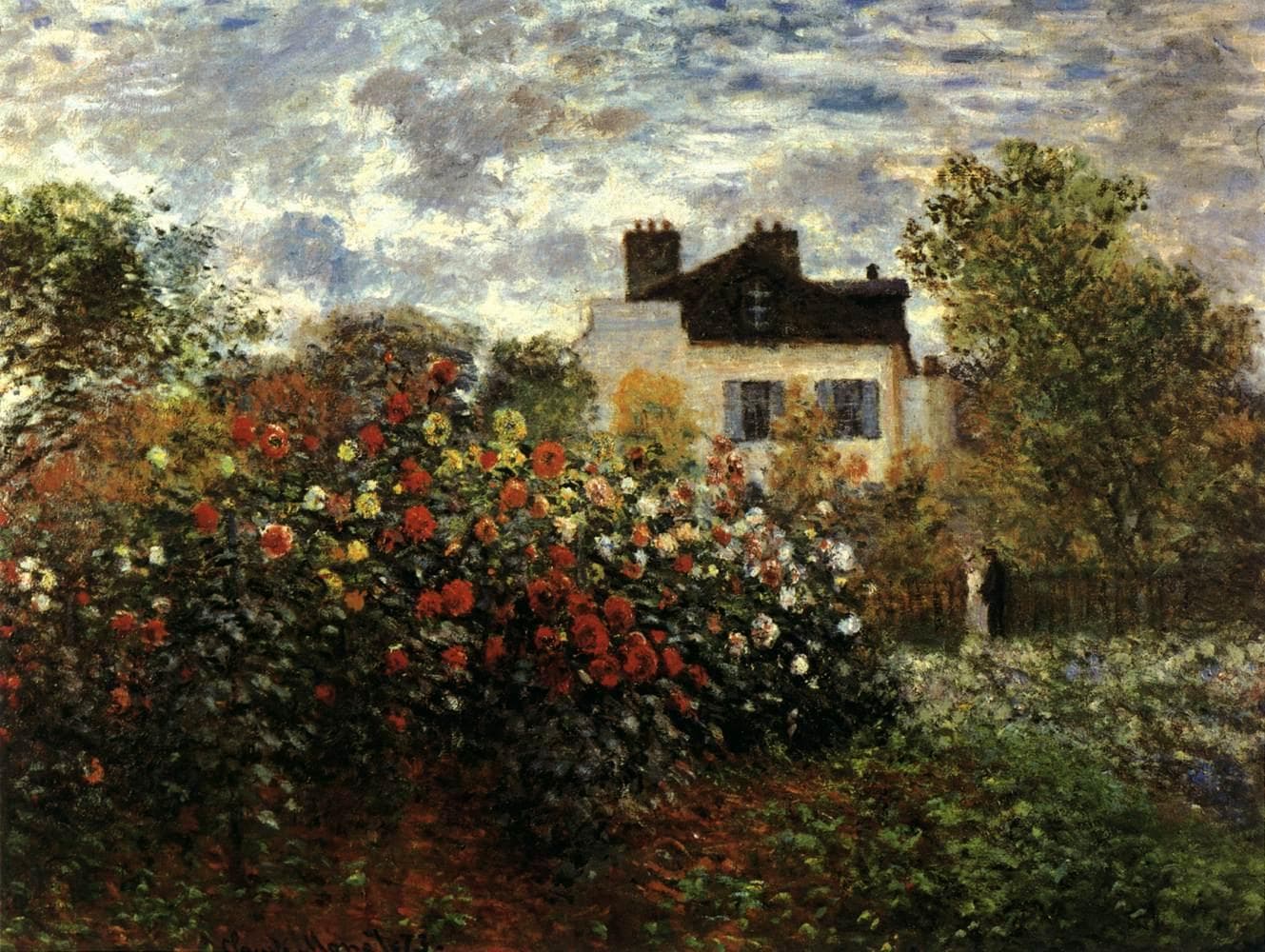
The Artist's Garden in Argenteuil (A Corner of the Garden with Dahlias)
Claude Monet · 1873
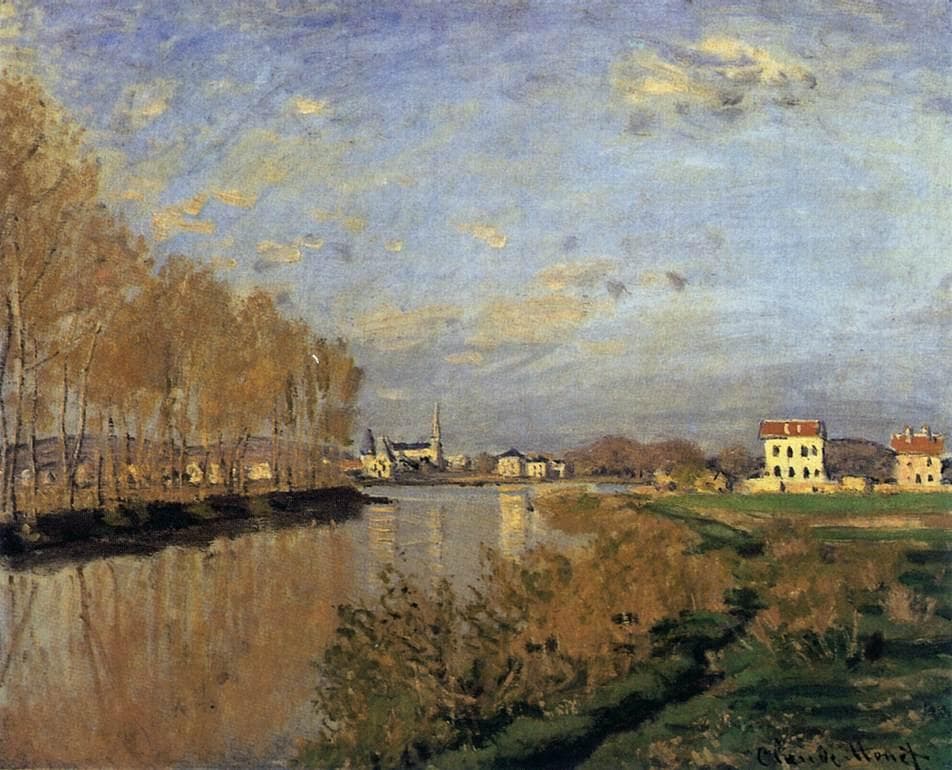
The Seine at Argenteuil
Claude Monet · 1873
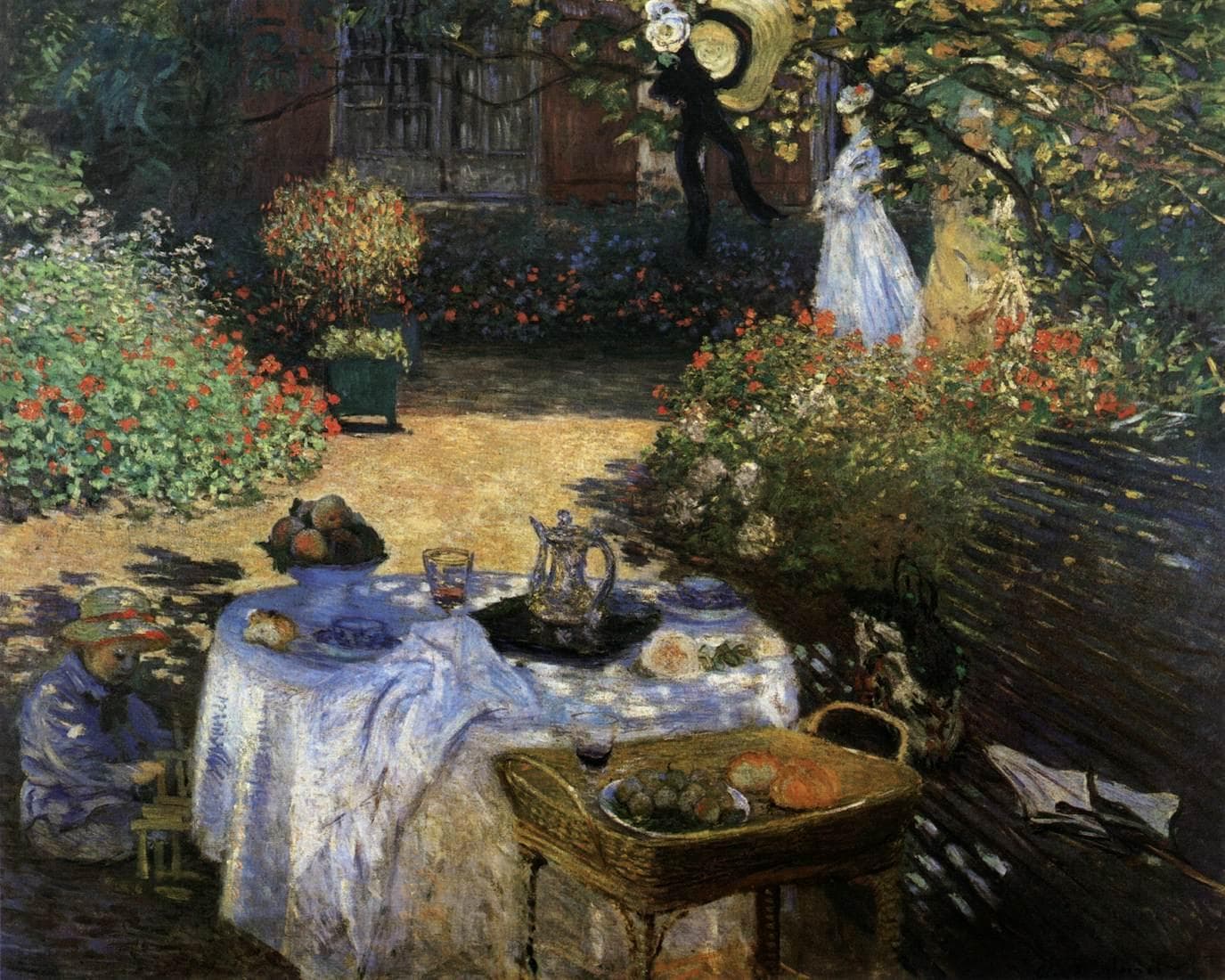
The Luncheon (Monet's Garden at Argenteuil)
Claude Monet · c. 1873
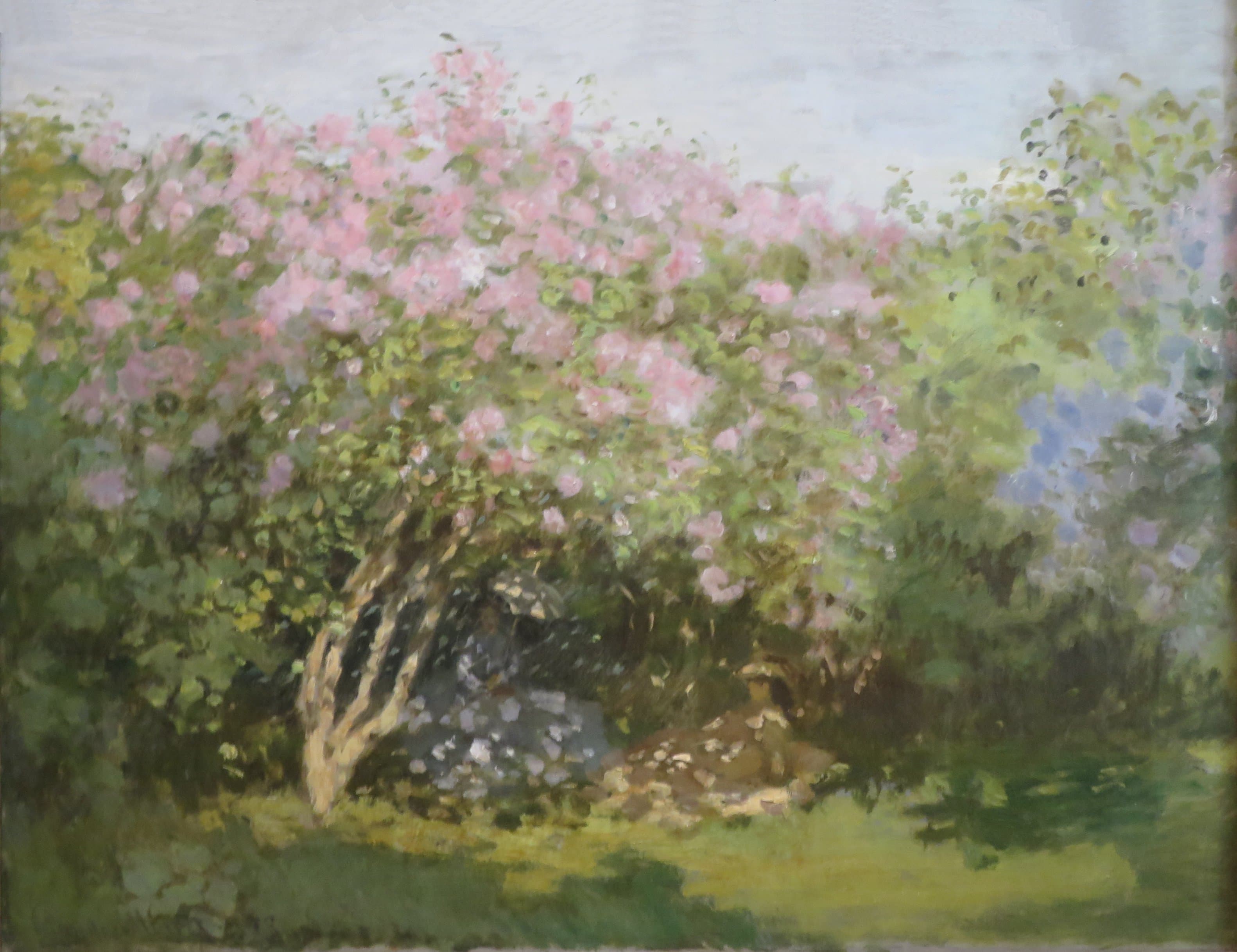
Lilac in the Sun
Claude Monet · 1873
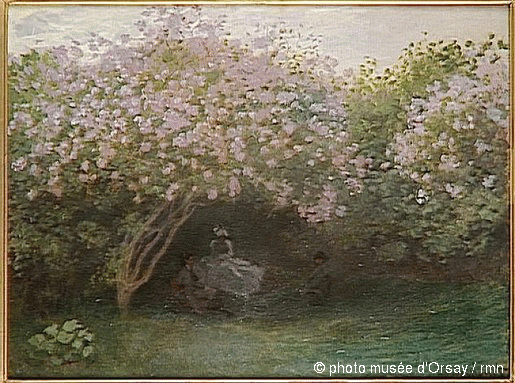
Lilacs, Gray Weather
Claude Monet · 1872–73
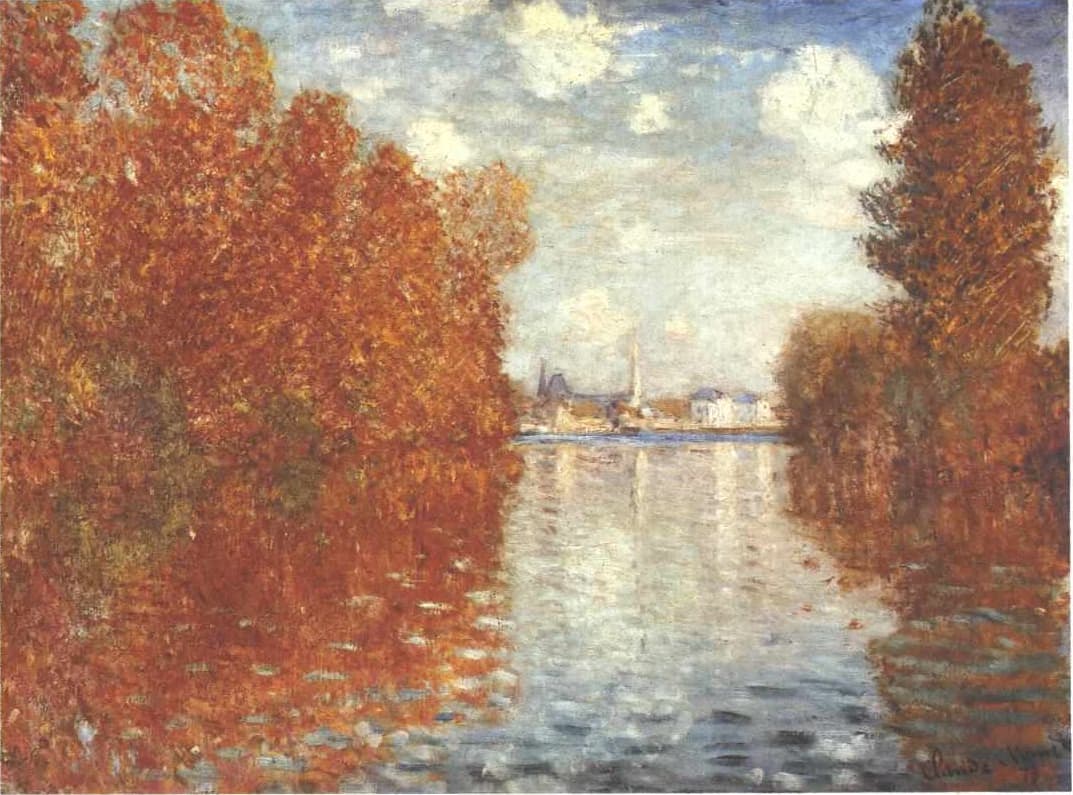
Autumn Effect at Argenteuil
Claude Monet · 1873
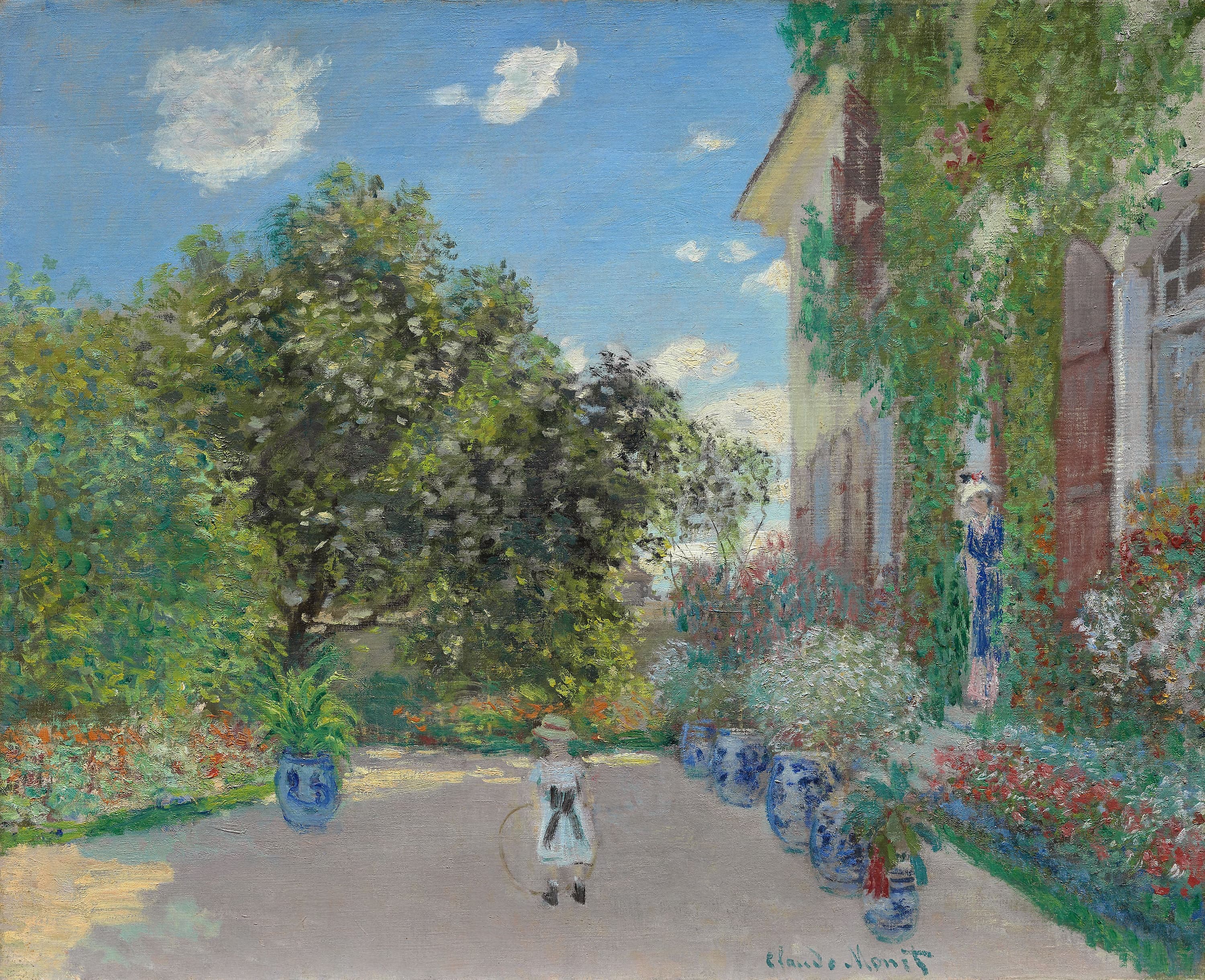
The Artist's House at Argenteuil
Claude Monet · 1873
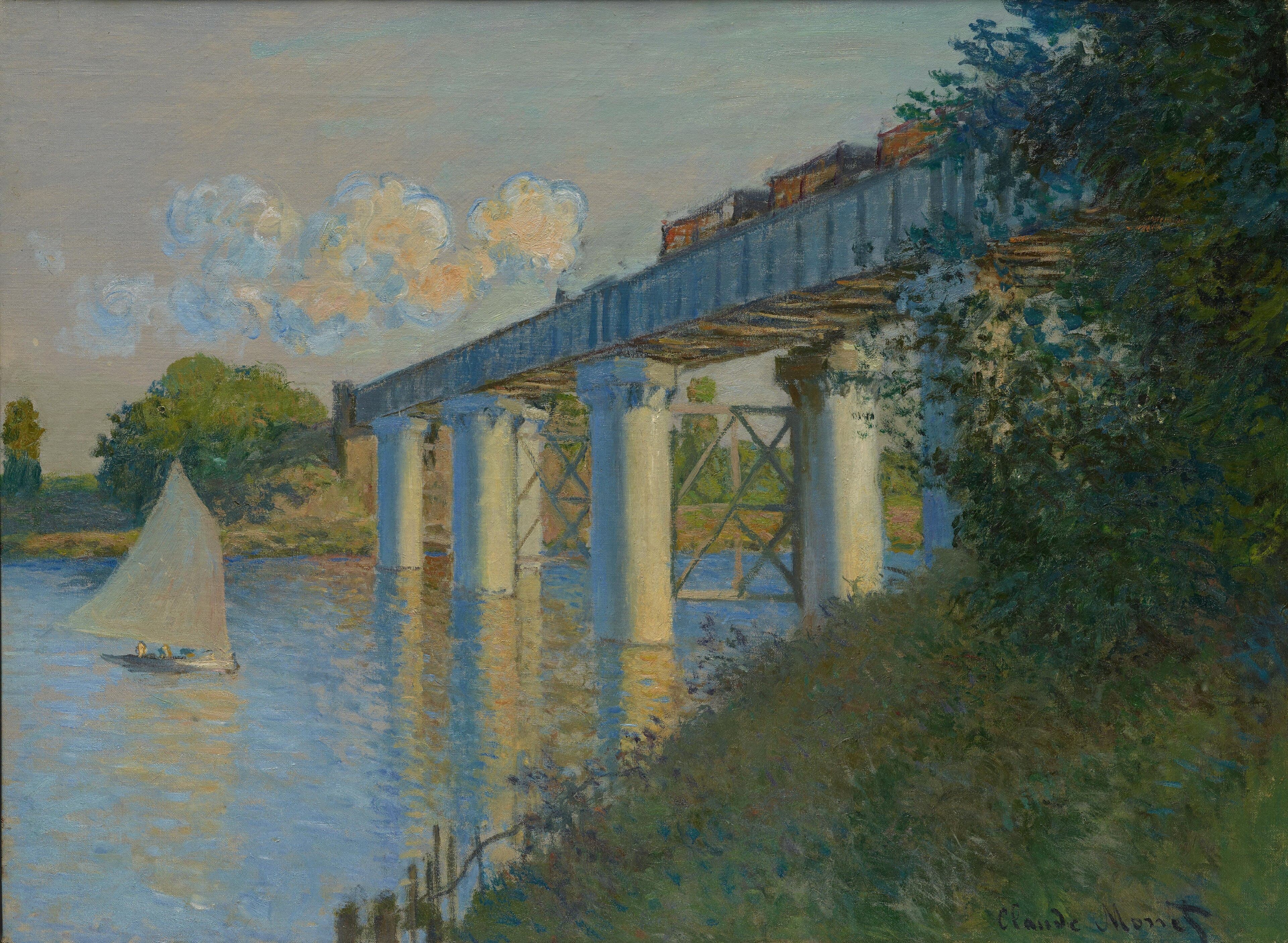
Railroad Bridge, Argenteuil
Claude Monet · 1873
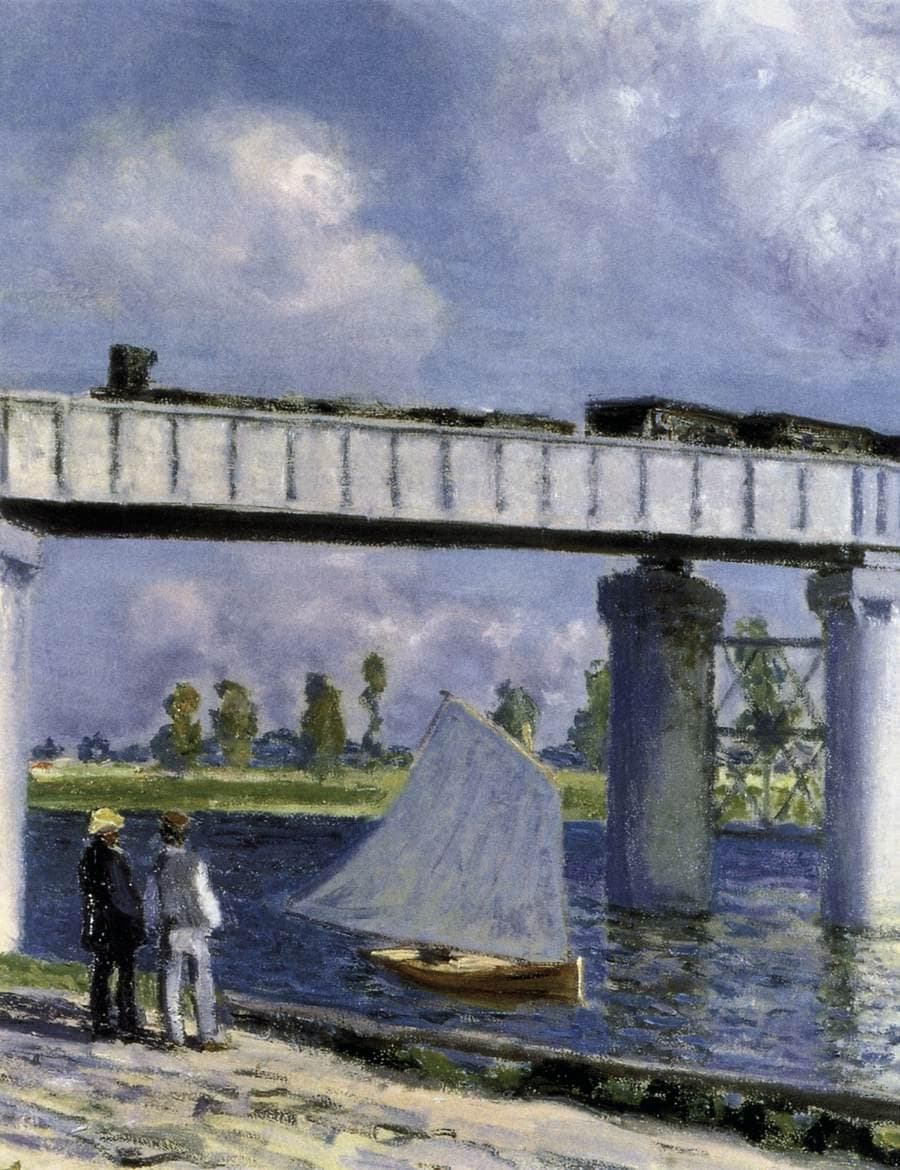
The Railway Bridge at Argenteuil (detail)
Claude Monet · 1873
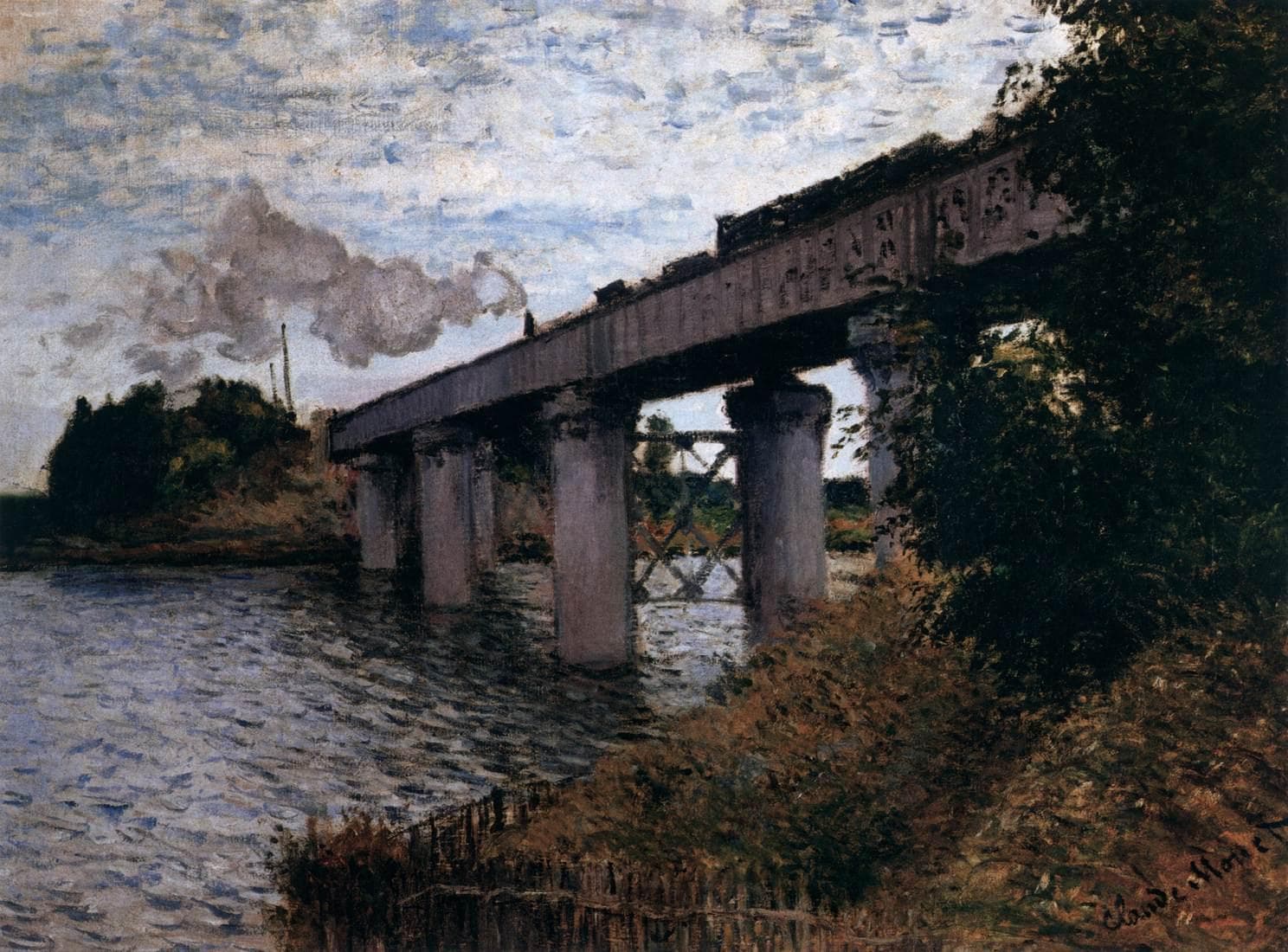
The Railway Bridge at Argenteuil
Claude Monet · c. 1873–74
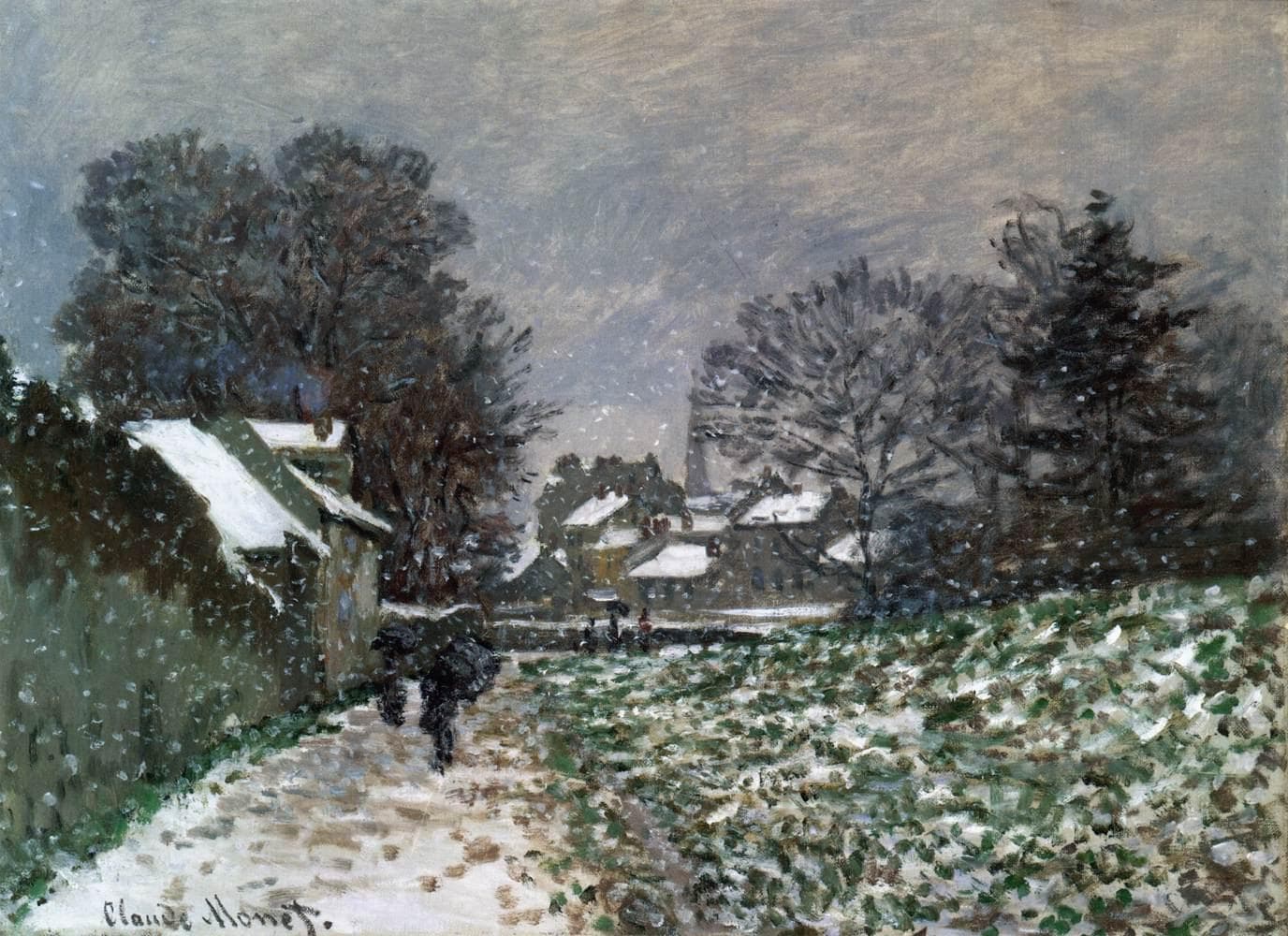
Snow at Argenteuil
Claude Monet · c. 1874
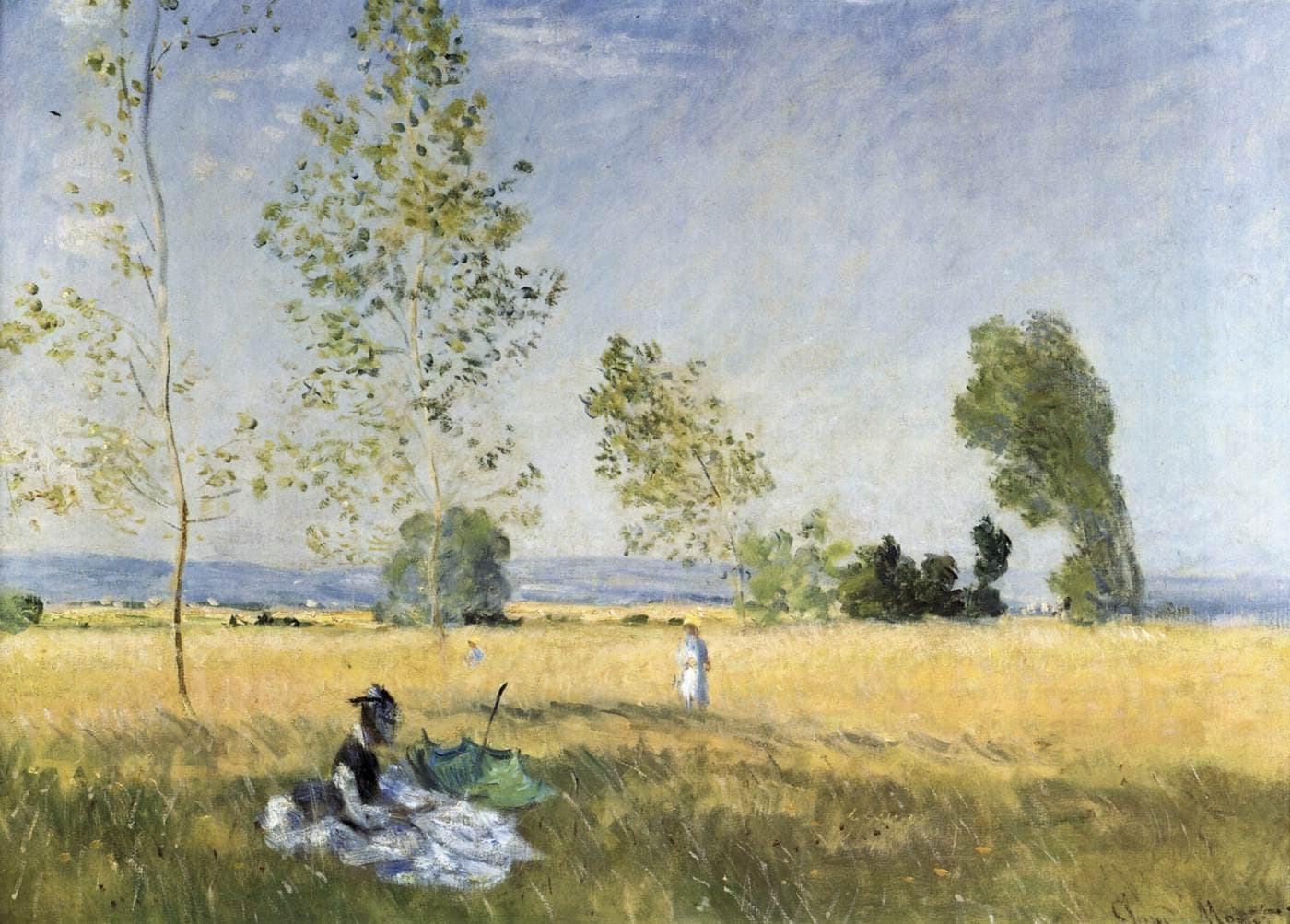
Summer (Meadow at Bezons)
Claude Monet · 1874
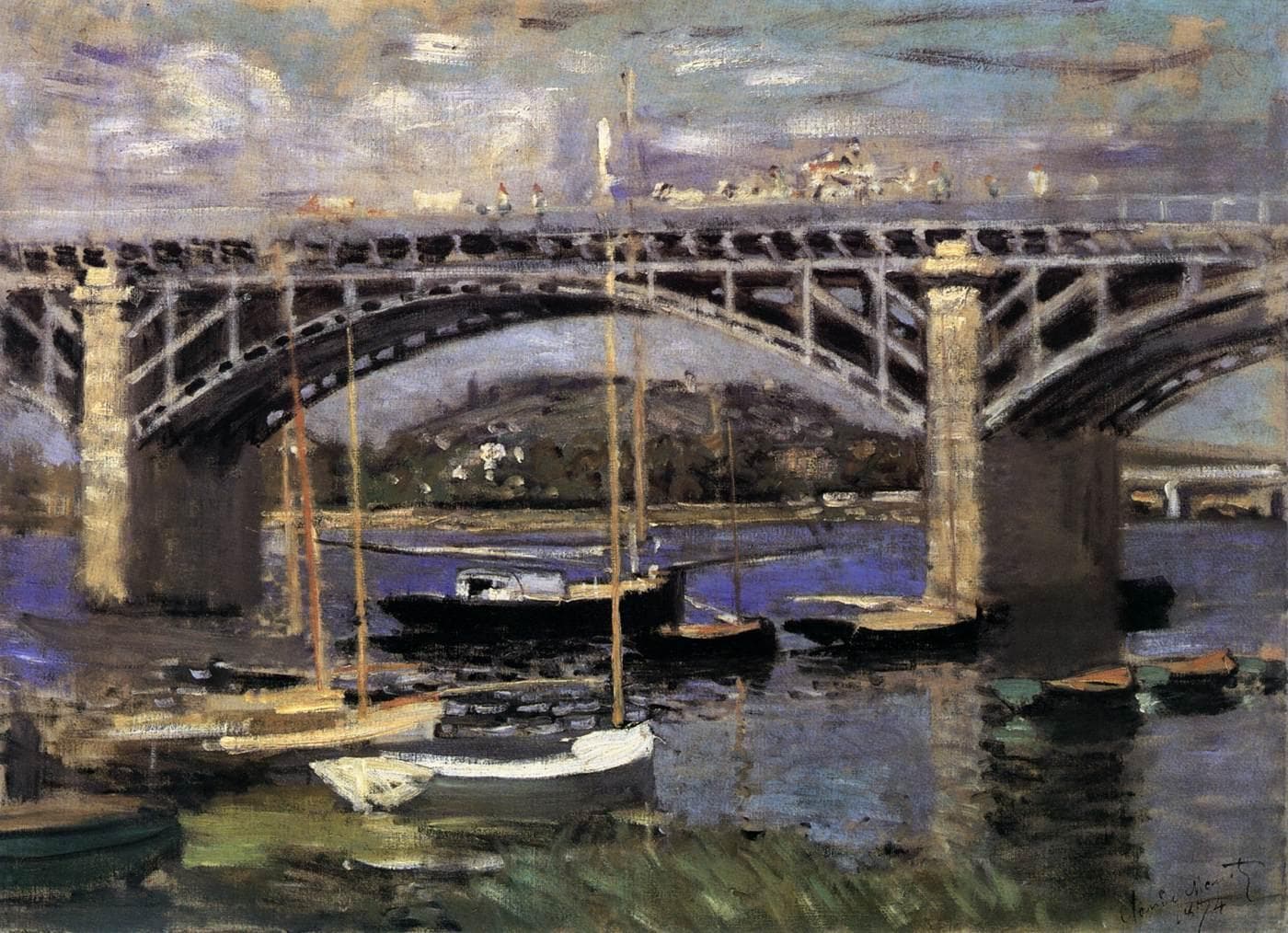
The Bridge at Argenteuil
Claude Monet · 1874
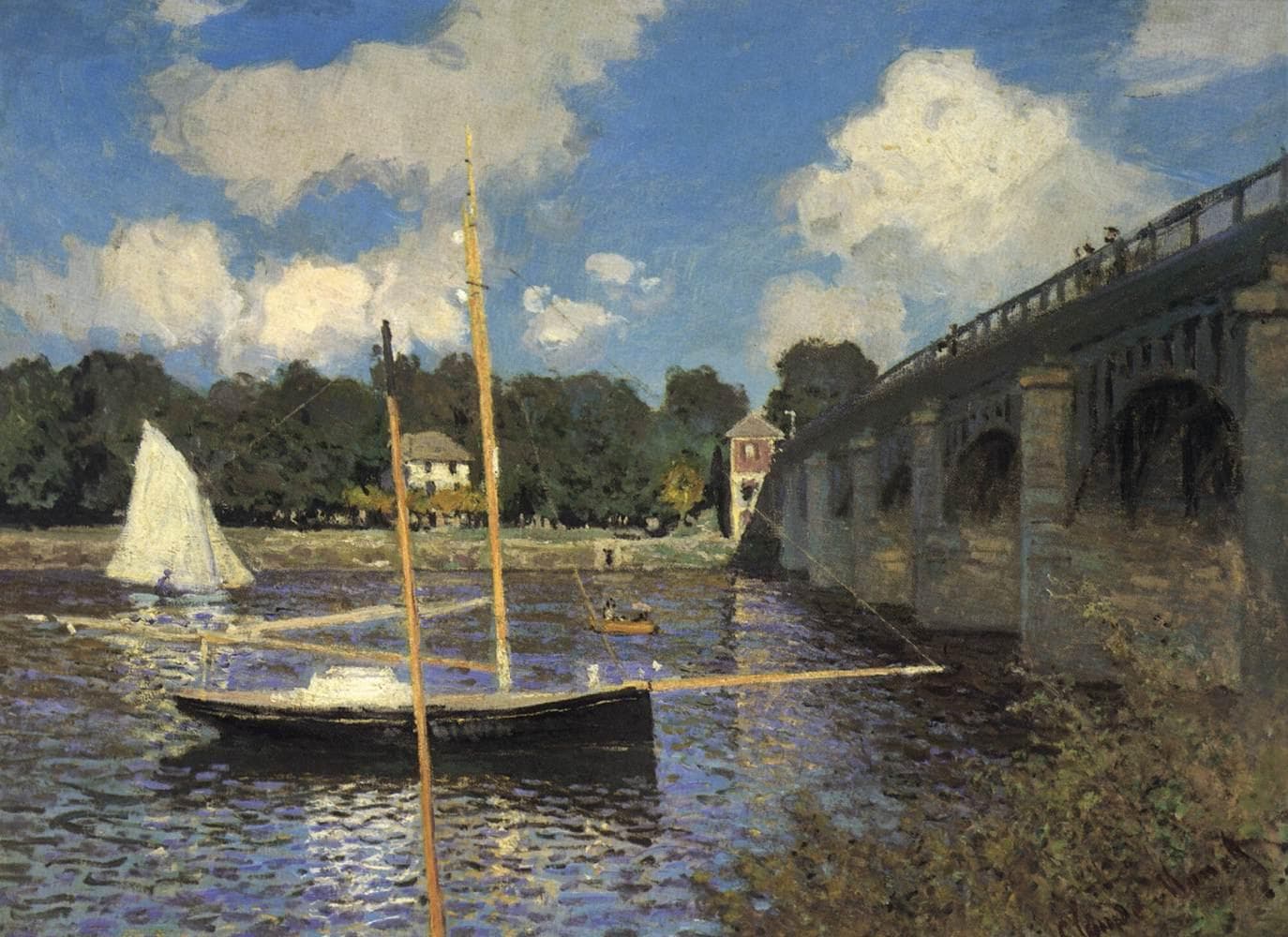
The Bridge at Argenteuil
Claude Monet · 1874
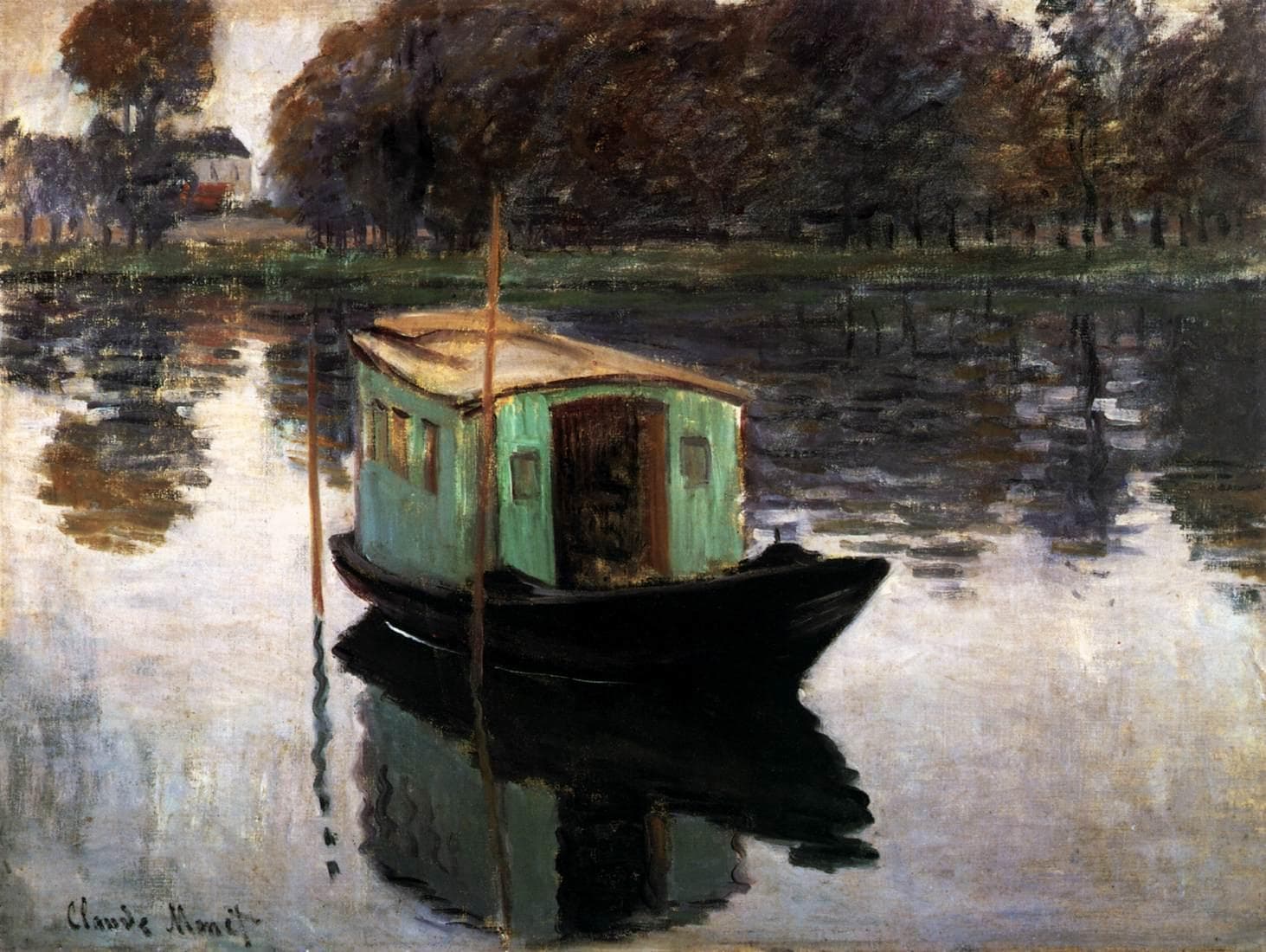
The Studio Boat
Claude Monet · 1874
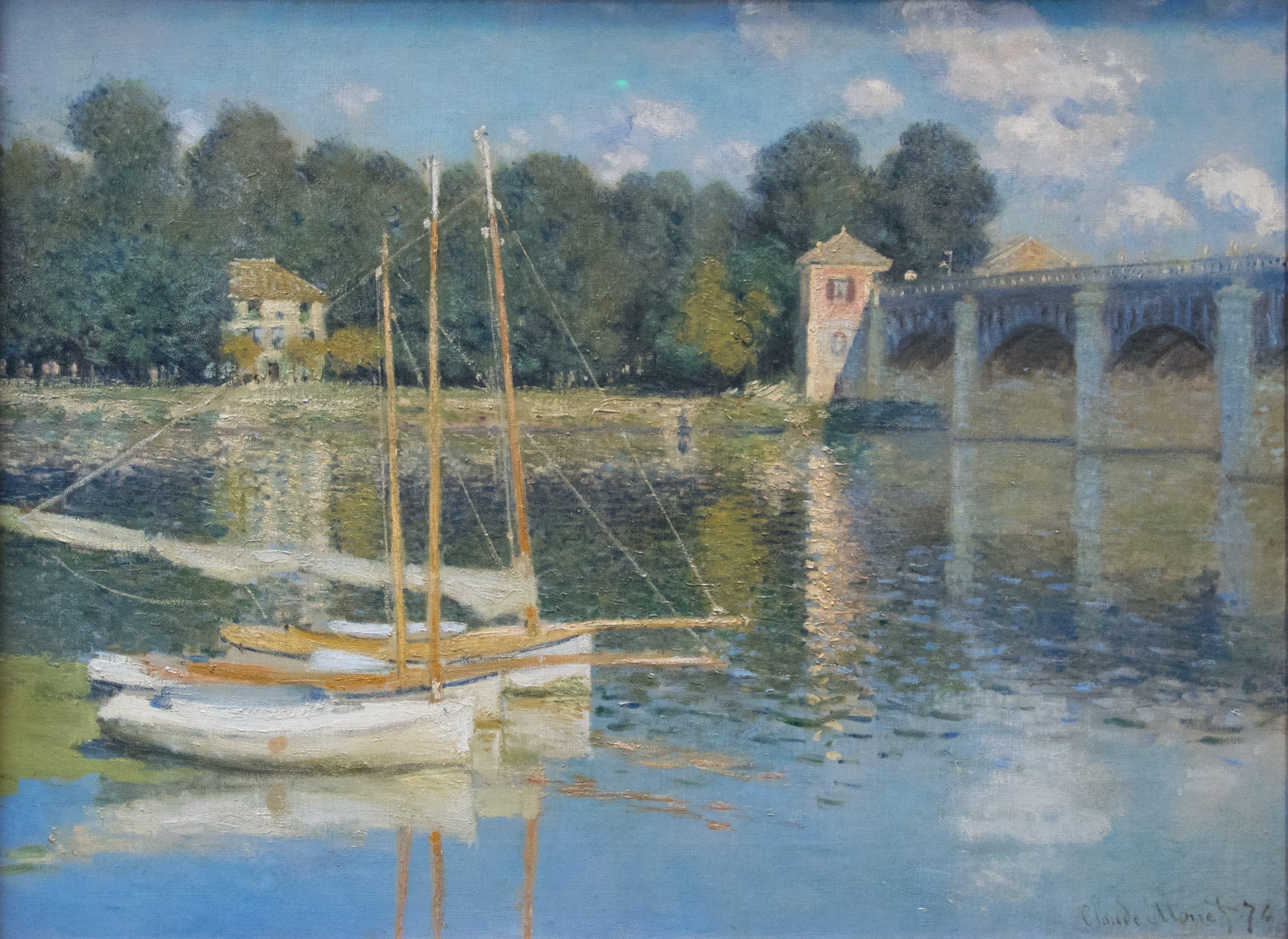
The Argenteuil Bridge
Claude Monet · 1874
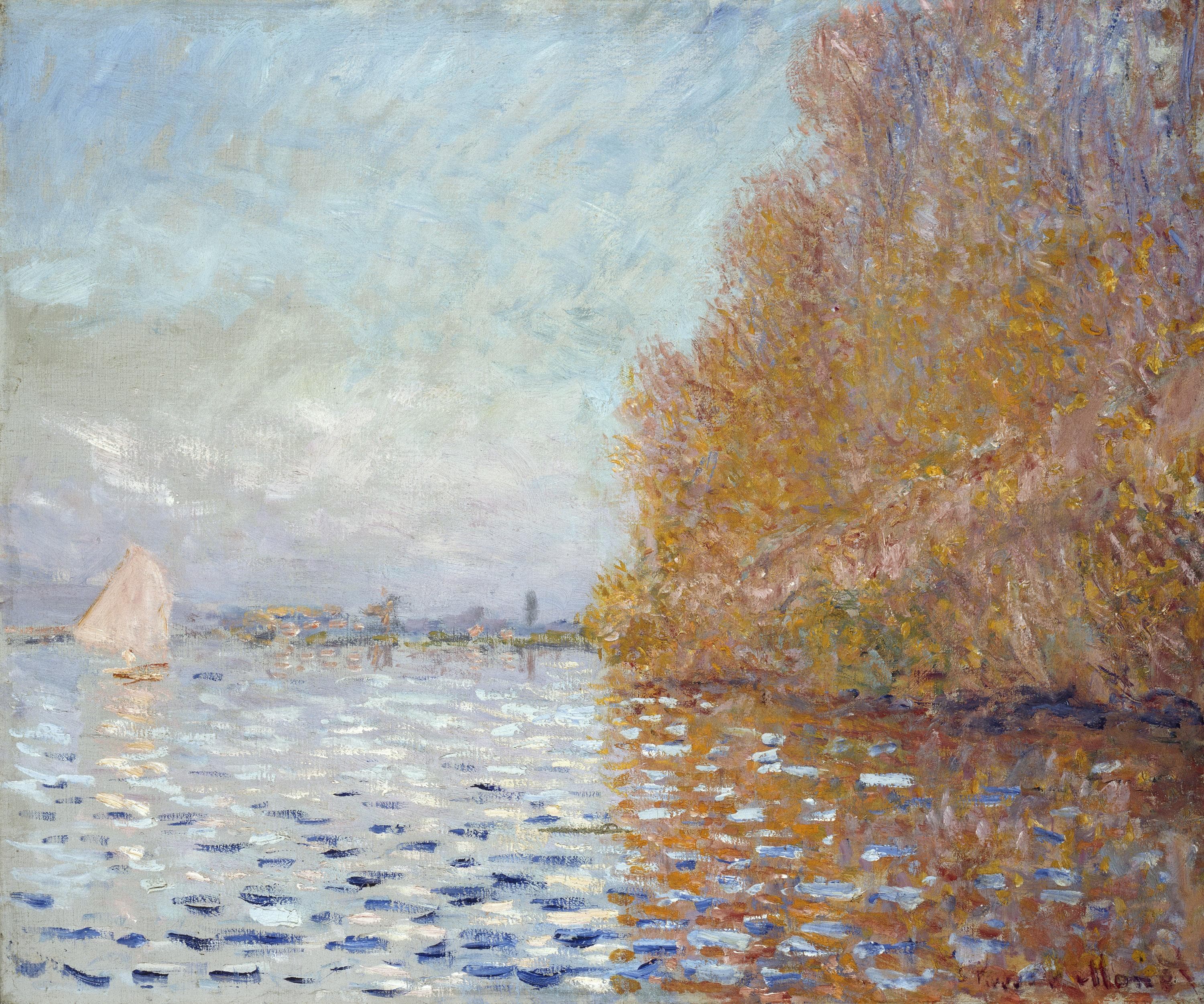
Argenteuil Basin with a Single Sailboat
Claude Monet · 1874
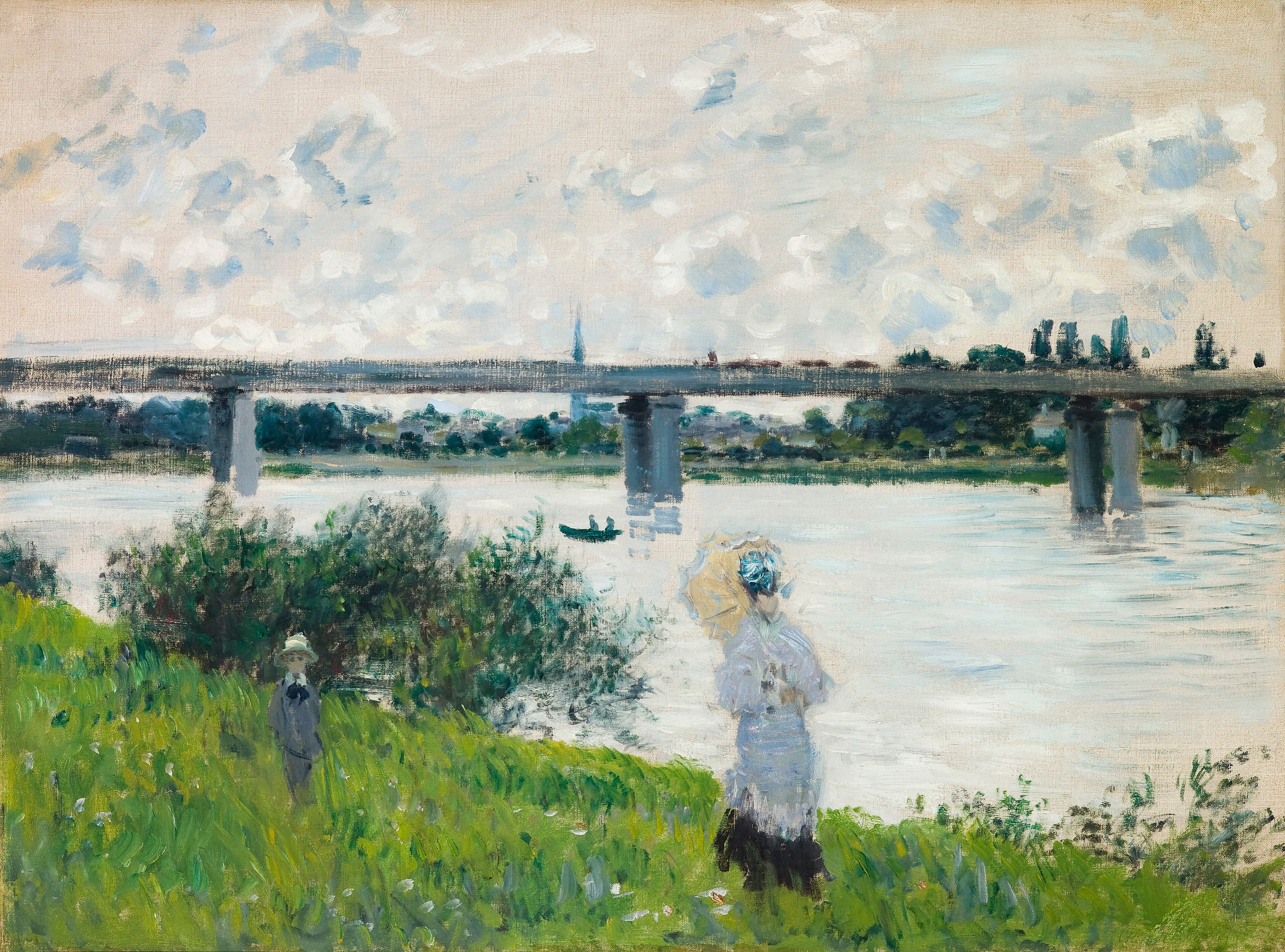
The Promenade with the Railroad Bridge, Argenteuil
Claude Monet · 1874
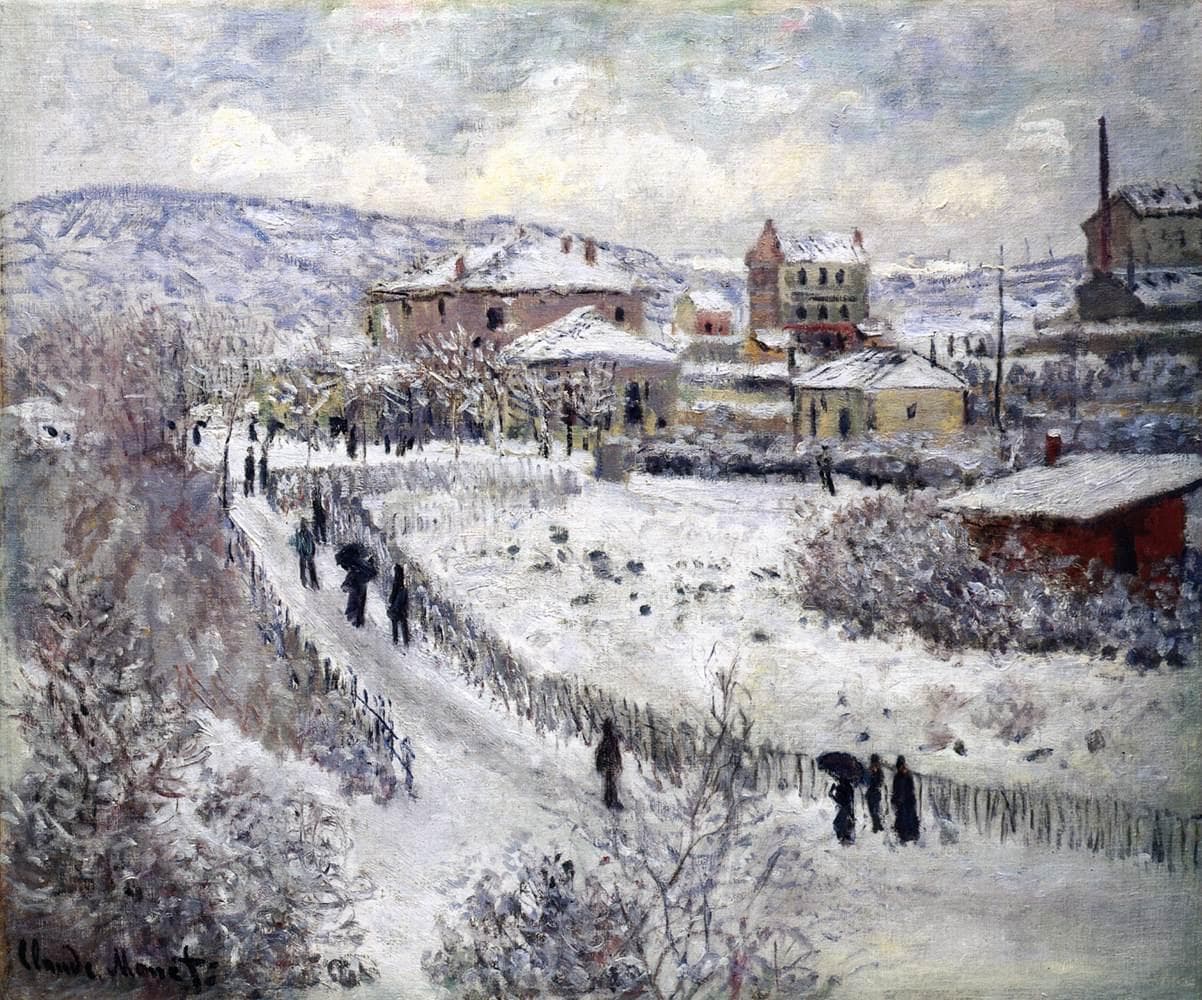
View of Argenteuil in the Snow
Claude Monet · 1874–75

Woman with a Parasol – Madame Monet and Her Son
Claude Monet · 1875
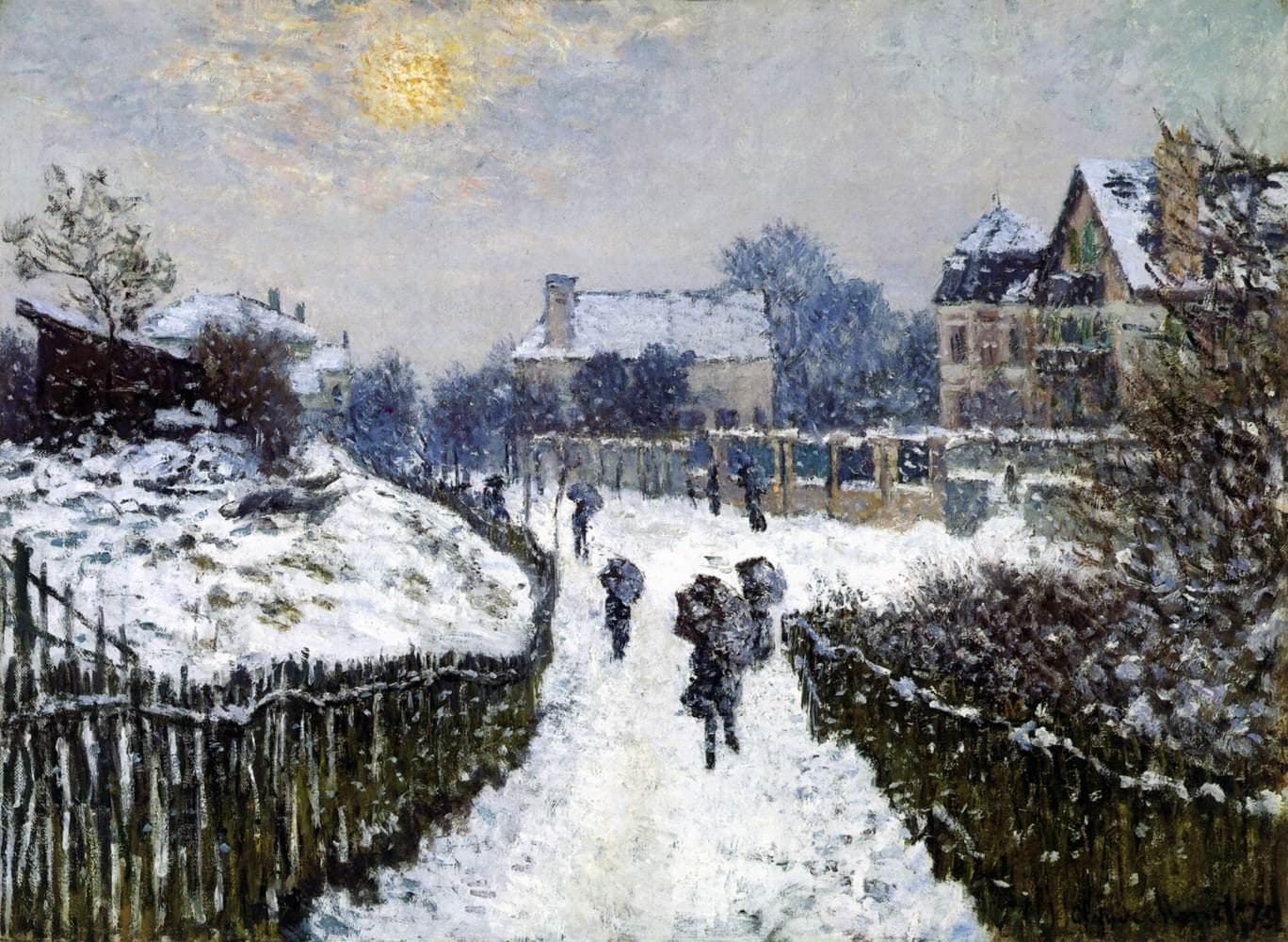
Boulevard Saint-Denis, Argenteuil, in Winter
Claude Monet · 1875
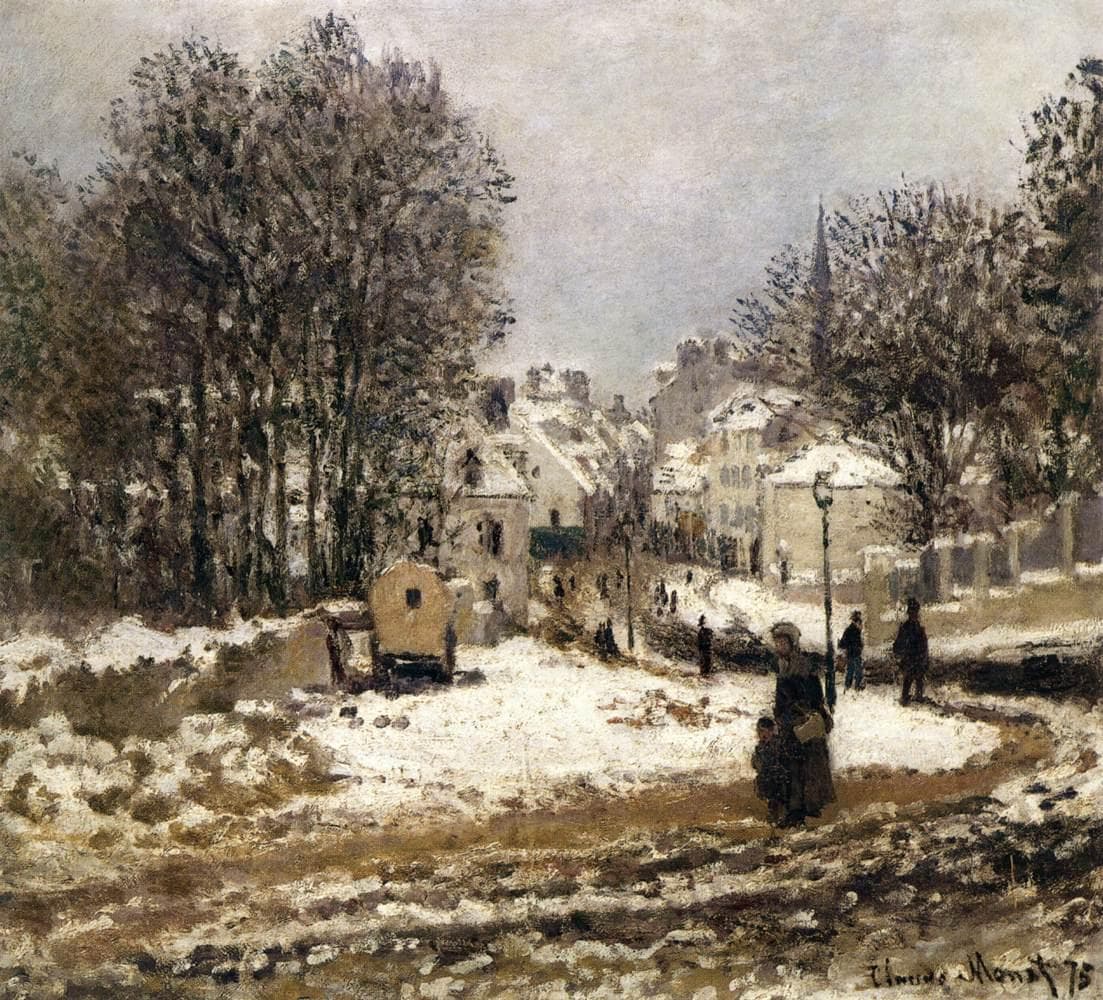
Entrance to the Grande Rue at Argenteuil, Winter
Claude Monet · 1875
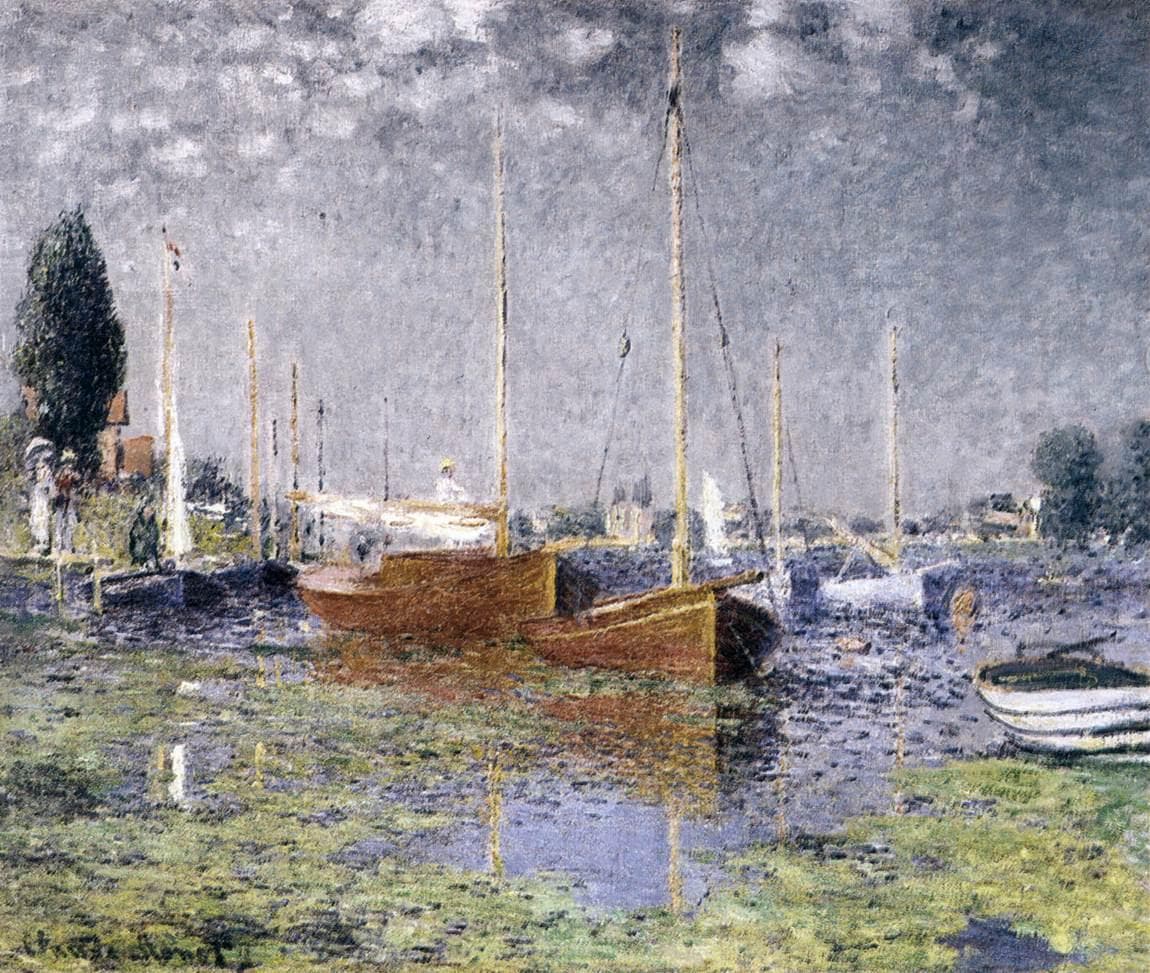
Red Boats at Argenteuil
Claude Monet · 1875
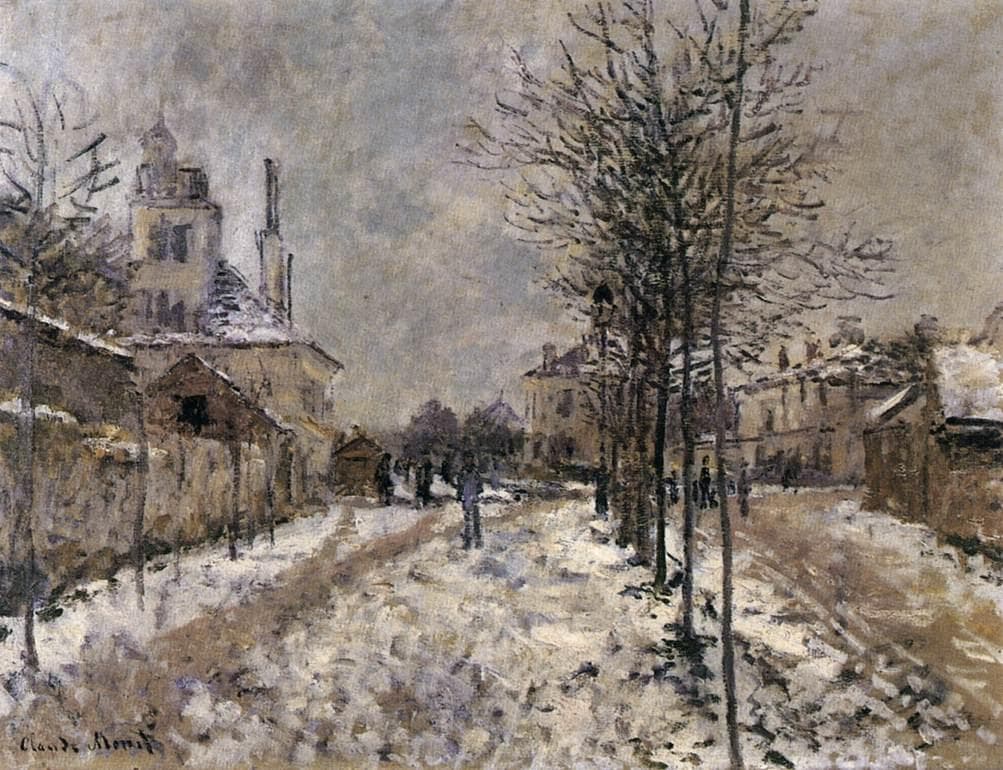
The Boulevard de Pontoise in Argenteuil under Snow
Claude Monet · 1875
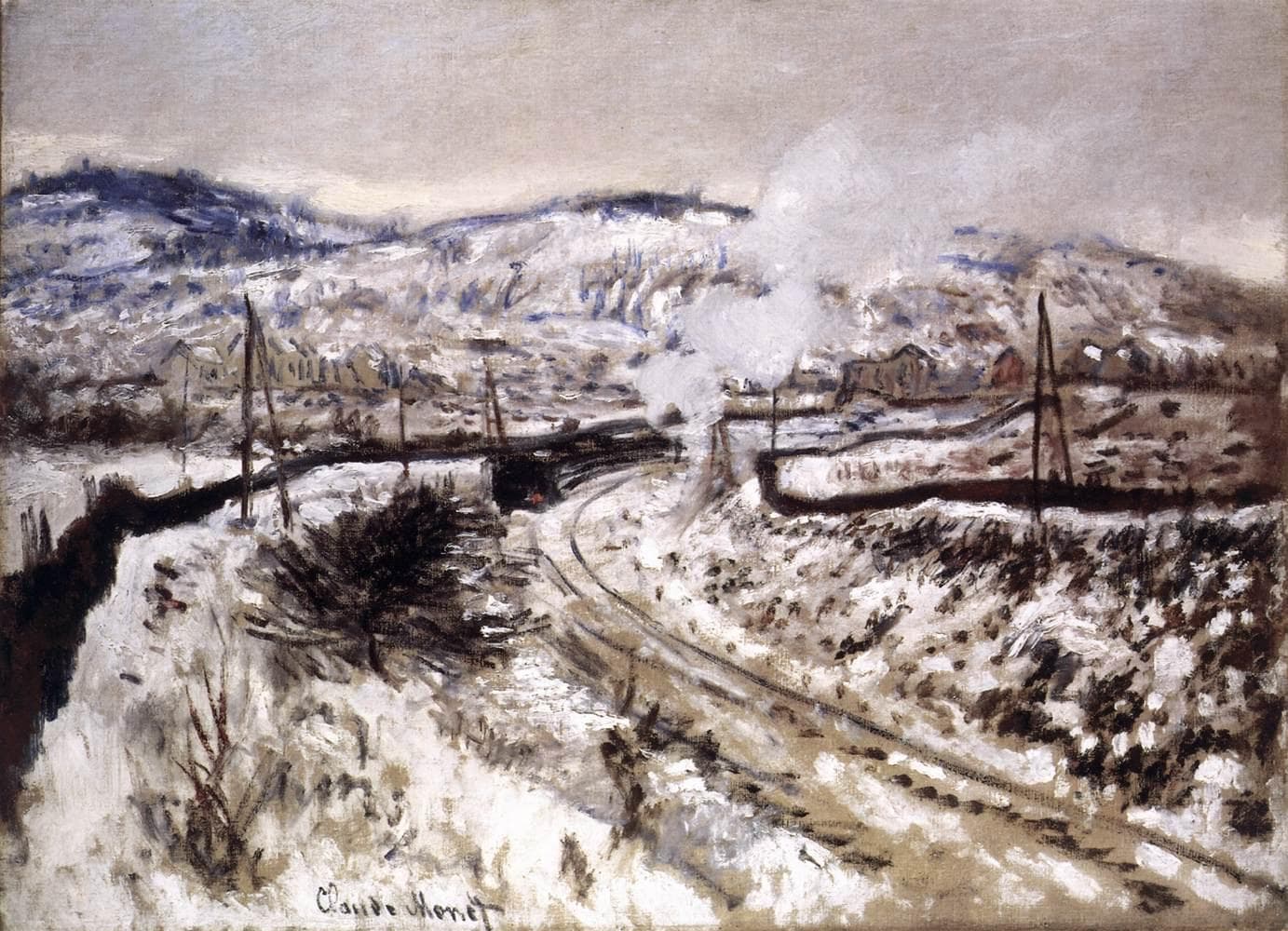
Train in the Snow at Argenteuil
Claude Monet · 1875
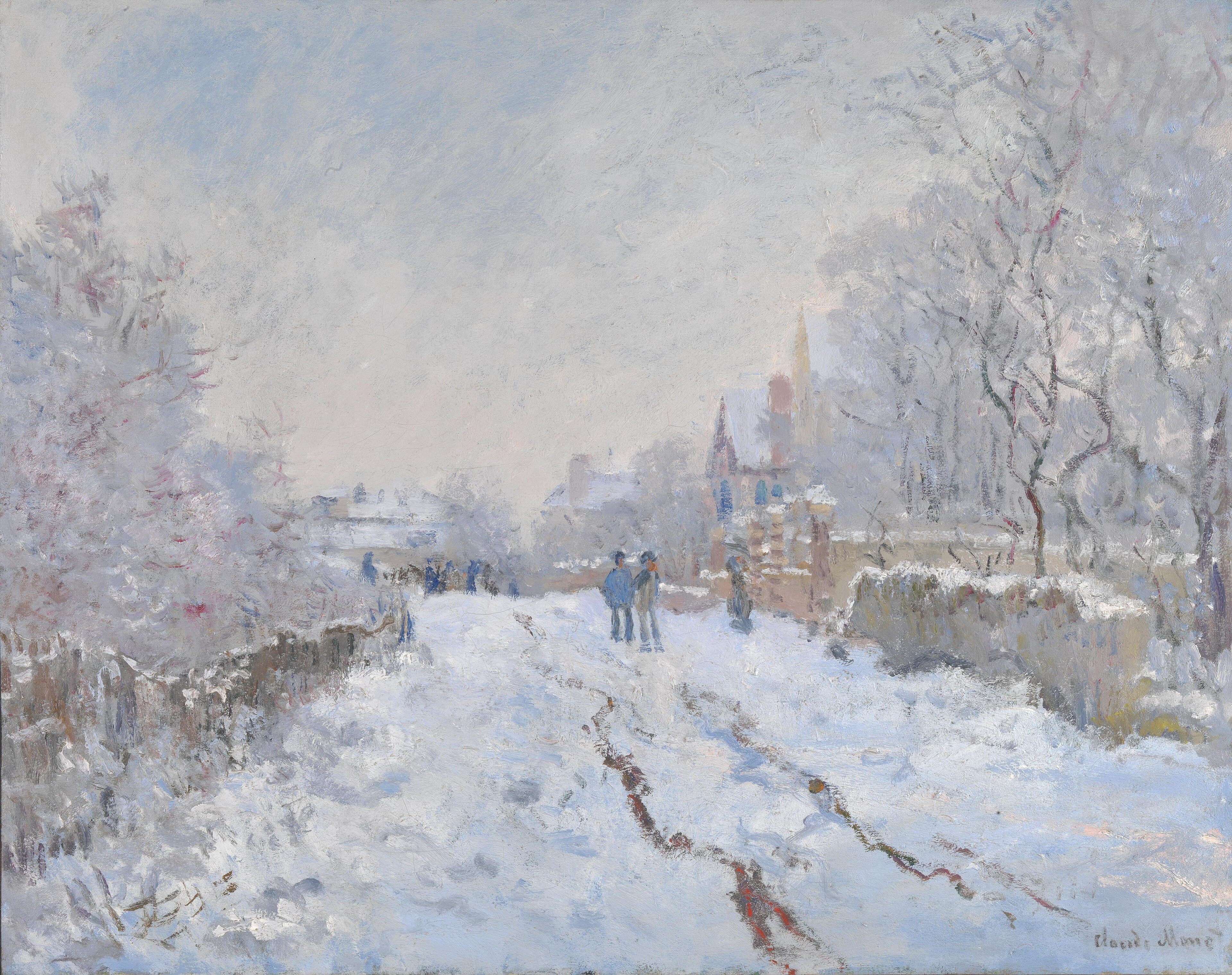
Snow Scene at Argenteuil
Claude Monet · 1875
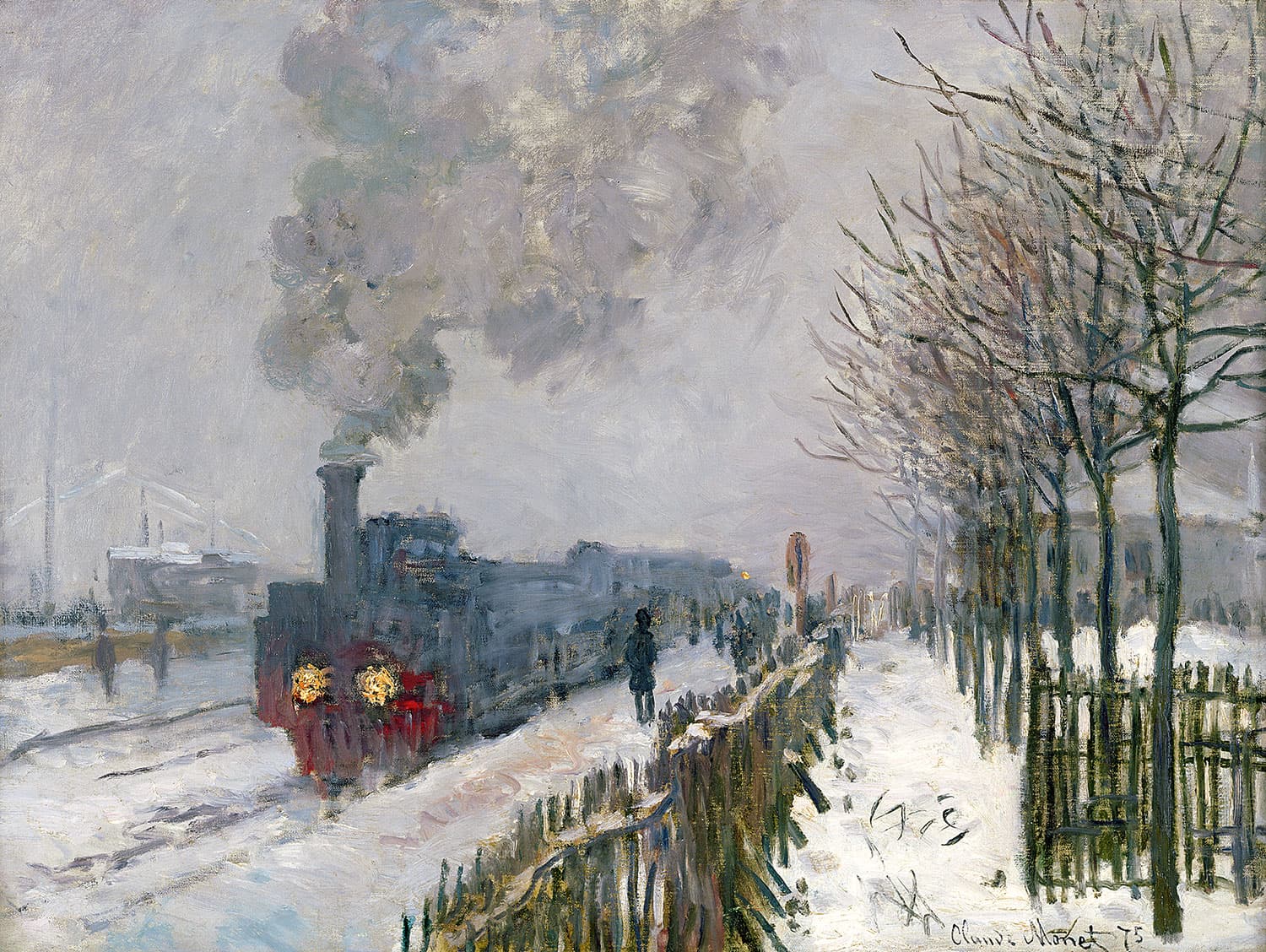
Train in the Snow (The Locomotive)
Claude Monet · 1875
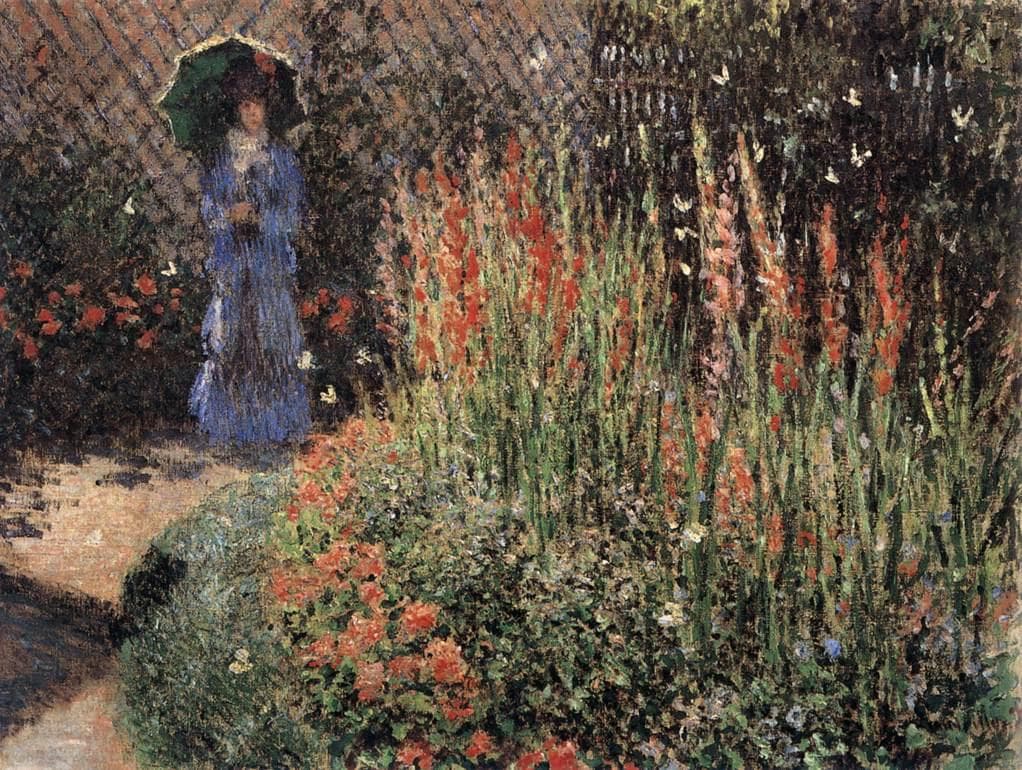
The Gladioli
Claude Monet · c. 1876
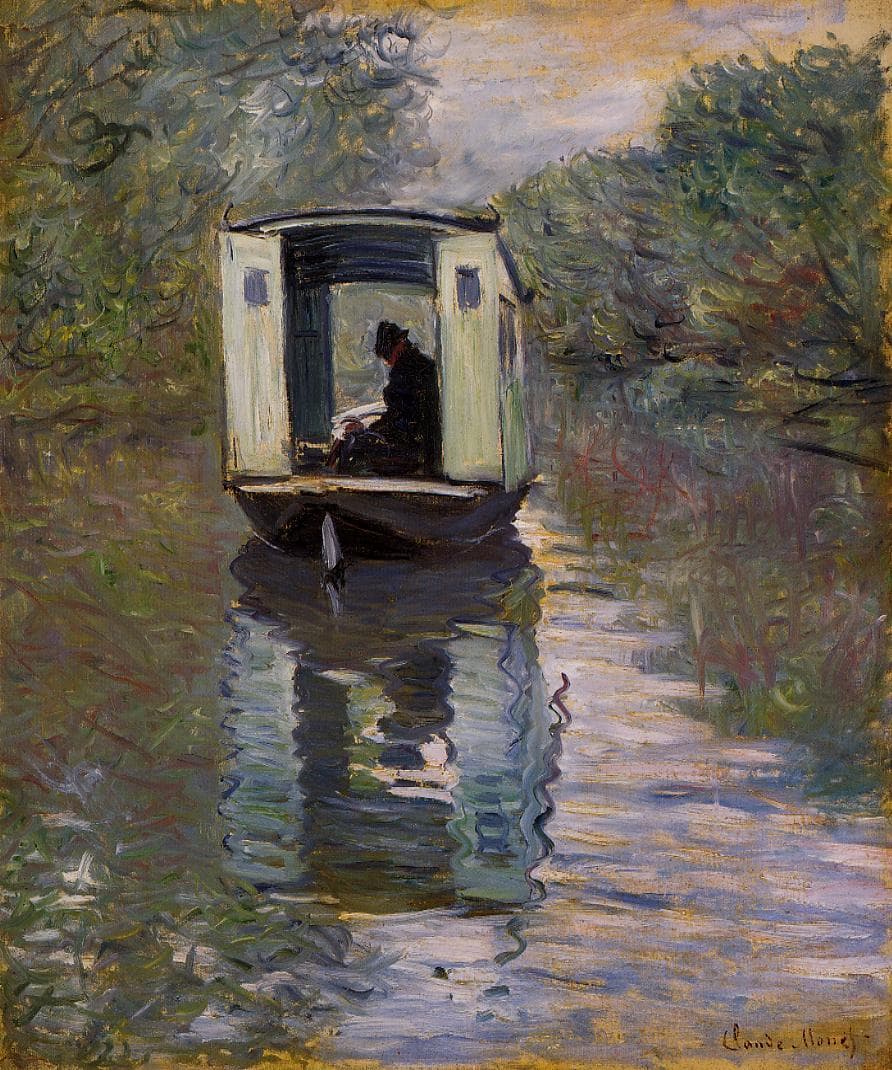
The Studio Boat (Le Bateau-atelier)
Claude Monet · 1876
Why Monet moved to Argenteuil
Monet came back to France late in 1871 after a year abroad, in London and the Netherlands, avoiding the Franco-Prussian War and the Commune. He was thirty-one, married to Camille Doncieux, with a four-year-old son, Jean. In December the family rented a house in Argenteuil, near the station, reportedly on the advice of Édouard Manet, whose family owned property across the river at Gennevilliers.
Argenteuil suited him for practical and artistic reasons. It was cheap compared with Paris, but only a short train ride from the Gare Saint-Lazare and his dealers. It had a wide basin of the Seine that was one of the main centers for recreational sailing near Paris, with regattas, rowing clubs and boat-hire. It was also a working town, with factories, a railway and a new bridge, so the old and the new sat side by side. And it had gardens: the houses Monet rented each had one, which he planted with flowers to paint.
In 1874 the family moved to a second house nearby, on the boulevard Saint-Denis, close to the railway, with a larger garden.
The river and the boats
The Seine was Monet's main subject. He painted the promenade along the basin under tall trees, as in The Basin at Argenteuil (1872), the yachts racing or moored, as in Regatta at Argenteuil and Red Boats at Argenteuil, and the quiet side channel called the Petit Bras, as in The Petit Bras of the Seine.
It was here that Monet's touch broke up into the separate, broken strokes of pure color that critics would call Impressionist. In the regatta pictures the reflections of white sails and red hulls are laid down as bold, unblended slabs of paint, which read from a distance as rippling water.
To get closer to the water he fitted out a studio boat, a rowing boat with a small cabin, and painted from it. He painted the boat itself in The Studio Boat (1874), and Manet portrayed Monet and Camille working in it that summer. The idea of a floating studio, borrowed from Charles-François Daubigny, stayed with him: he used another boat at Giverny for the Poplars and Mornings on the Seine.
The bridges
Argenteuil had two bridges, both destroyed in the war of 1870–71 and rebuilt: a road bridge and an iron railway bridge carrying the line from Paris. Monet painted both repeatedly, and they gave him a modern subject. In The Bridge at Argenteuil in Washington and its Munich counterpart, the road bridge, with its toll house and scaffolding, stands over moored sailboats. In The Railway Bridge at Argenteuil at the Orsay and The Promenade with the Railroad Bridge in Saint Louis, a train steams across the concrete piers. These pictures prepare the way for the Gare Saint-Lazare series of 1877.
The fields and the garden
Away from the river, Monet painted the fields around the town, as in The Plain of Sannois (1872) and Houses at Argenteuil (1873). The most famous of these is Poppy Field, shown at the first Impressionist exhibition in 1874, with Camille and Jean walking through red poppies twice, once at the top of the slope and once at the bottom.
The garden was a private world. Monet's Garden at Argenteuil is a wall of dahlias; The Luncheon shows the remains of a summer meal, Jean playing in the shade; Camille Monet on a Garden Bench, Lilac in the Sun and The Gladioli place Camille and visitors among flowers. Renoir and Manet both painted the Monet family in this garden in 1874. These are the direct ancestors of the garden at Giverny.
What the Argenteuil pictures leave out
The art historian Paul Hayes Tucker, in his study Monet at Argenteuil (1982), pointed out how carefully Monet framed the town. Argenteuil had factories, a gasworks and smoking chimneys, and they appear in a few of his pictures, half hidden behind trees or sails. Mostly, though, Monet showed the town as a place of leisure: weekend sailors, promenades, gardens, family meals. He was painting the modern suburb as Parisians wanted to imagine it, a countryside within reach of the city, and the tension between industry and idyll runs quietly through the whole group.
Snow at Argenteuil
The winters of 1874–75 and 1875–76 were cold and snowy, and Monet painted the town under snow nearly twenty times: streets, gardens, the railway. Boulevard Saint-Denis in Winter, The Boulevard de Pontoise under Snow, Snow at Argenteuil in London and Train in the Snow at the Marmottan are studies of white in every shade, from blue shadows to the pink glow of a low sun.
Camille and Jean
Monet's family is everywhere in the Argenteuil pictures: Jean on his hobby horse (1872), Camille reading in Springtime or resting in a meadow in Summer (Meadow at Bezons). The best known is Woman with a Parasol – Madame Monet and Her Son (1875), painted from below on a windy day, Camille's veil and skirt blown sideways and Jean standing behind her in the grass.
Impressionism and hard times
The Argenteuil years coincided with the founding of the Impressionist group. Monet helped organize the first exhibition, in Nadar's former studio in April 1874, where he showed Impression, Sunrise, the Le Havre picture that gave the movement its name. Friends came to paint with him at Argenteuil: Renoir often, Manet in 1874, and also Sisley and Caillebotte, a keen sailor who kept boats on this stretch of the Seine.
Money was a constant worry. Sales were uneven after the financial crisis of 1873, and by 1877 Monet was writing begging letters to friends and patrons. In January 1878 the family left Argenteuil for Paris, where Michel was born in March, and that summer they moved to Vétheuil, further down the Seine, sharing a house with the Hoschedé family.
Argenteuil today and where to see the paintings
Argenteuil has grown into a dense suburb, and little of the landscape Monet painted survives, though the river and bridges are still there and the town has marked the house on the boulevard Saint-Denis (now boulevard Karl-Marx). The paintings are best seen in museums: the Orsay in Paris has the largest single group, and Washington, Chicago, Boston, Berlin, London, Munich and the Marmottan all hold important examples. See Where to See Monet's Paintings for more, and Claude Monet for his life.
Questions & answers
When did Monet live in Argenteuil?
From December 1871 to January 1878. He rented a house near the station, moved in 1874 to a second house on the boulevard Saint-Denis, and left for Paris and then Vétheuil in 1878 after money troubles.
What did Monet paint at Argenteuil?
About 170 paintings of the Seine and its sailboats and regattas, the road and railway bridges, the fields around the town, his garden, his wife Camille and son Jean, and the town in snow. Poppy Field (1873) and Woman with a Parasol (1875) are the most famous.
Where is Argenteuil?
Argenteuil is a town on the Seine in the Val-d'Oise, about 11 kilometers northwest of central Paris and a short train ride from the Gare Saint-Lazare. Today it is a large suburb.
Why is Argenteuil important for Impressionism?
Monet painted his most typically Impressionist pictures there, with broken strokes of pure color on the river, and Renoir, Manet, Sisley and Caillebotte painted alongside him. His years at Argenteuil coincided with the first Impressionist exhibition of 1874.
Where can I see Monet's Argenteuil paintings?
The Musée d'Orsay in Paris has the largest group, including Poppy Field and The Luncheon. Others are in the National Gallery of Art in Washington (Woman with a Parasol), the Art Institute of Chicago, the MFA Boston, the Alte Nationalgalerie in Berlin, the National Gallery in London and the Neue Pinakothek in Munich.