Impressionism
The Bridge at Argenteuil
Claude Monet, 1874
The Bridge at Argenteuil (Le Pont sur la Seine à Argenteuil) is an 1874 painting by Claude Monet of the rebuilt road bridge over the Seine with sailboats moored beneath it. It belongs to the Bavarian State Painting Collections, Neue Pinakothek, Munich.
- Artist
- Claude Monet
- Date
- 1874
- Medium
- Oil on canvas
- Dimensions
- 59.8 × 81.4 cm
- Collection
- Neue Pinakothek, Munich, Germany
- Movement
- Impressionism
- Catalogue
- Wildenstein 313
Painted at Monet at Argenteuil
What you are looking at
The road bridge at Argenteuil crosses the whole width of the canvas: two heavy stone piers, pale cream in the sun, carry a run of dark iron arches with a latticed parapet. Along the top, tiny figures in white and red walk across the deck against the sky. Beneath the bridge, sailboats lie at anchor with their sails furled, their bare masts rising through the arches and above the parapet. A dark covered boat sits in the middle of the river, and in the foreground a white dinghy floats on water that breaks into strokes of blue, violet and grey.
Through the arches we see the far bank: a low green hill, a few houses, and at right the line of another bridge. Above everything is a lively sky of grey-white cloud, with patches of blue. A strip of green bank runs along the bottom edge, and the signature and date, "Claude Monet 1874," are at lower right.
Claude Monet painted this view in 1874, when he was living in Argenteuil. The canvas measures about 60 by 81 centimeters, is number 313 in Wildenstein's catalogue, and belongs to the Bavarian State Painting Collections, which show it at the Neue Pinakothek in Munich.
Where and when
Argenteuil lies on the Seine about 11 kilometers northwest of Paris. Monet lived there from December 1871 to early 1878, and the river, with its boats and two bridges, was his main subject. See Monet at Argenteuil.
The road bridge had been destroyed during the Franco-Prussian War of 1870–71 and was rebuilt soon after. When Monet arrived it was still under repair, and in 1872 he painted it with timber scaffolding around a pier. By 1874 it was whole again, and he painted it repeatedly that year, from different points along the bank and from the floating studio boat he had fitted out. The bridge became one of his signature motifs, an emblem of a town recovering from war and of the engineering that linked it to Paris. That spring Monet also helped organize the first Impressionist exhibition; 1874 was perhaps the most productive year of his time at Argenteuil.
How it was painted
This composition is frontal and nearly symmetrical, unlike the better-known versions in the Musée d'Orsay and in Washington, where the bridge slants in from the right. The result is a grid: the horizontal deck, the vertical piers and the vertical masts. Monet softens it with the water. Look at the reflections of the piers, long broken strokes of cream and ochre that wobble down into the river, and at the masts, whose reflections zigzag back toward us.
The light falls from the left, so the near face of each pier is in shade and its side catches the sun. Monet uses that contrast to give the stone weight, while the iron arches above are painted thinly, almost as drawing, in dark blue-grey. The grass at the bottom is scrubbed in with loose, upright strokes of green, the roughest handling in the picture, and the white dinghy is a few thick, creamy touches that pull the foreground forward.
The motif and its siblings
The road bridge appears in at least half a dozen of Monet's canvases. Compare The Road Bridge at Argenteuil in Washington, seen at a sharp angle with a sailboat in full sun, and Argenteuil Basin with a Single Sailboat in Dublin. The town's other bridge, carrying the railway from Paris, is the subject of The Railway Bridge at Argenteuil. The Munich picture is the most architectural of the group, closest to a straight portrait of the bridge.
Where to see it
The painting belongs to the Bavarian State Painting Collections and is shown at the Neue Pinakothek, Munich. The Neue Pinakothek building has been closed for renovation since 2019, and a selection of its paintings has been shown in the Alte Pinakothek and elsewhere in the meantime, so check the collection's website before a visit. For other museums, see where to see Monet's paintings, and for the artist, Claude Monet.
Questions & answers
Where is Monet's The Bridge at Argenteuil in Munich?
It belongs to the Bavarian State Painting Collections and is assigned to the Neue Pinakothek, Munich. While that building is closed for renovation, highlights are shown elsewhere, including the Alte Pinakothek. The canvas measures about 60 by 81 centimeters (Wildenstein 313).
When was The Bridge at Argenteuil painted?
In 1874, as the signature and date at lower right record. Monet was then living in Argenteuil, northwest of Paris, and painted the newly rebuilt road bridge several times that year.
What does The Bridge at Argenteuil show?
The rebuilt road bridge over the Seine, seen almost head-on, with stone piers and iron arches, pedestrians on the deck, sailboats moored beneath it and a white dinghy in the foreground under a cloudy sky.
Is the bridge in Monet's painting a railway bridge?
No. This is the road bridge, with stone piers and iron arches, rebuilt after the war of 1870–71. Argenteuil's railway bridge, with a straight iron deck on cylindrical piers, appears in other Monet paintings of 1873–74.
More by the artist
Claude Monet

Bridge over a Pond of Water Lilies
Claude Monet · 1899

Woman with a Parasol – Madame Monet and Her Son
Claude Monet · 1875

Sunset in Venice
Claude Monet · 1908–12

La Grenouillère
Claude Monet · 1869

Beach in Pourville
Claude Monet · 1882

Springtime
Claude Monet · 1872

Boating on the River Epte
Claude Monet · 1890

The Seine at Asnières (Hermitage)
Claude Monet · 1873
Also painted in 1874
The same year
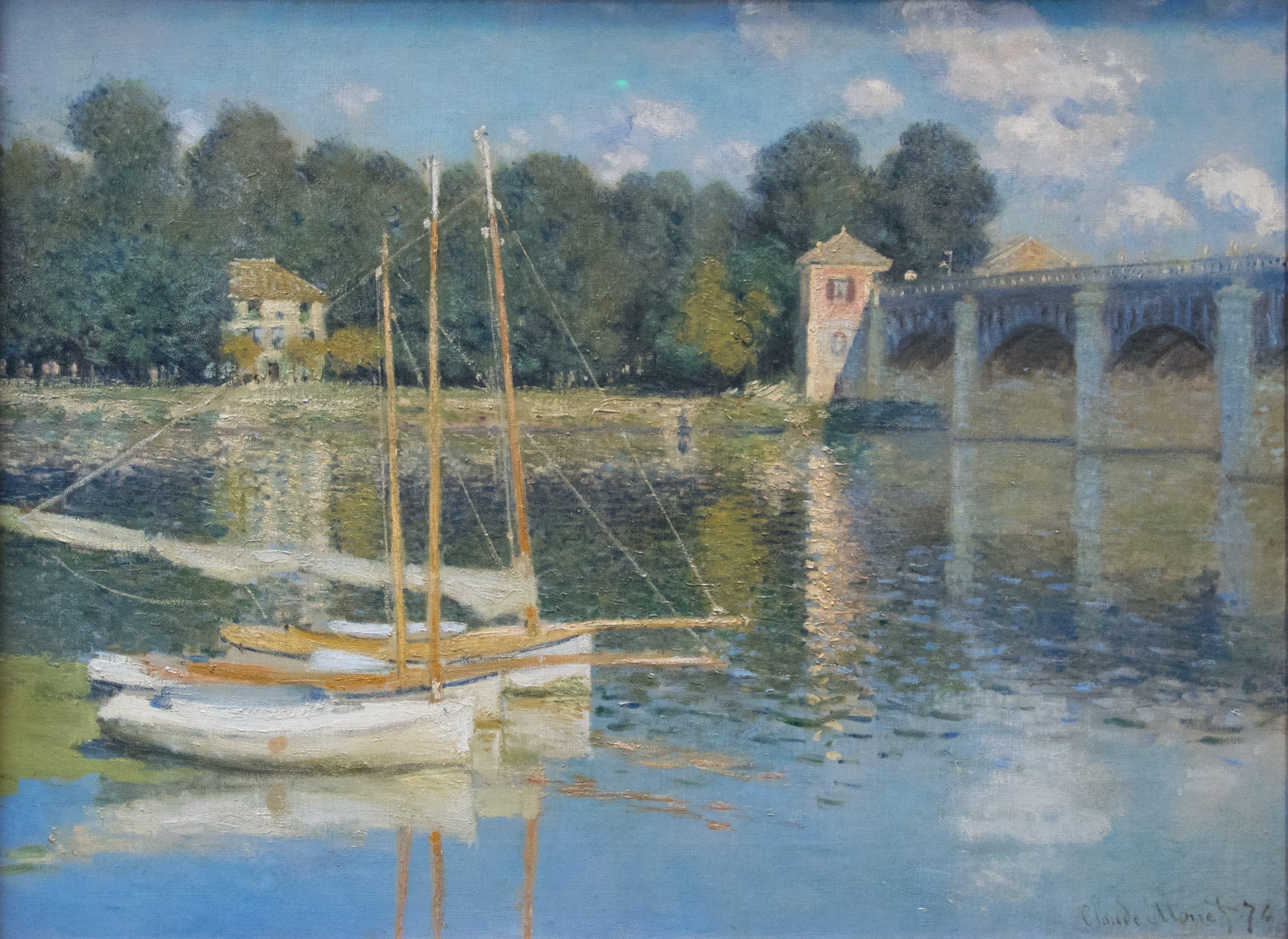
The Argenteuil Bridge
Claude Monet · 1874
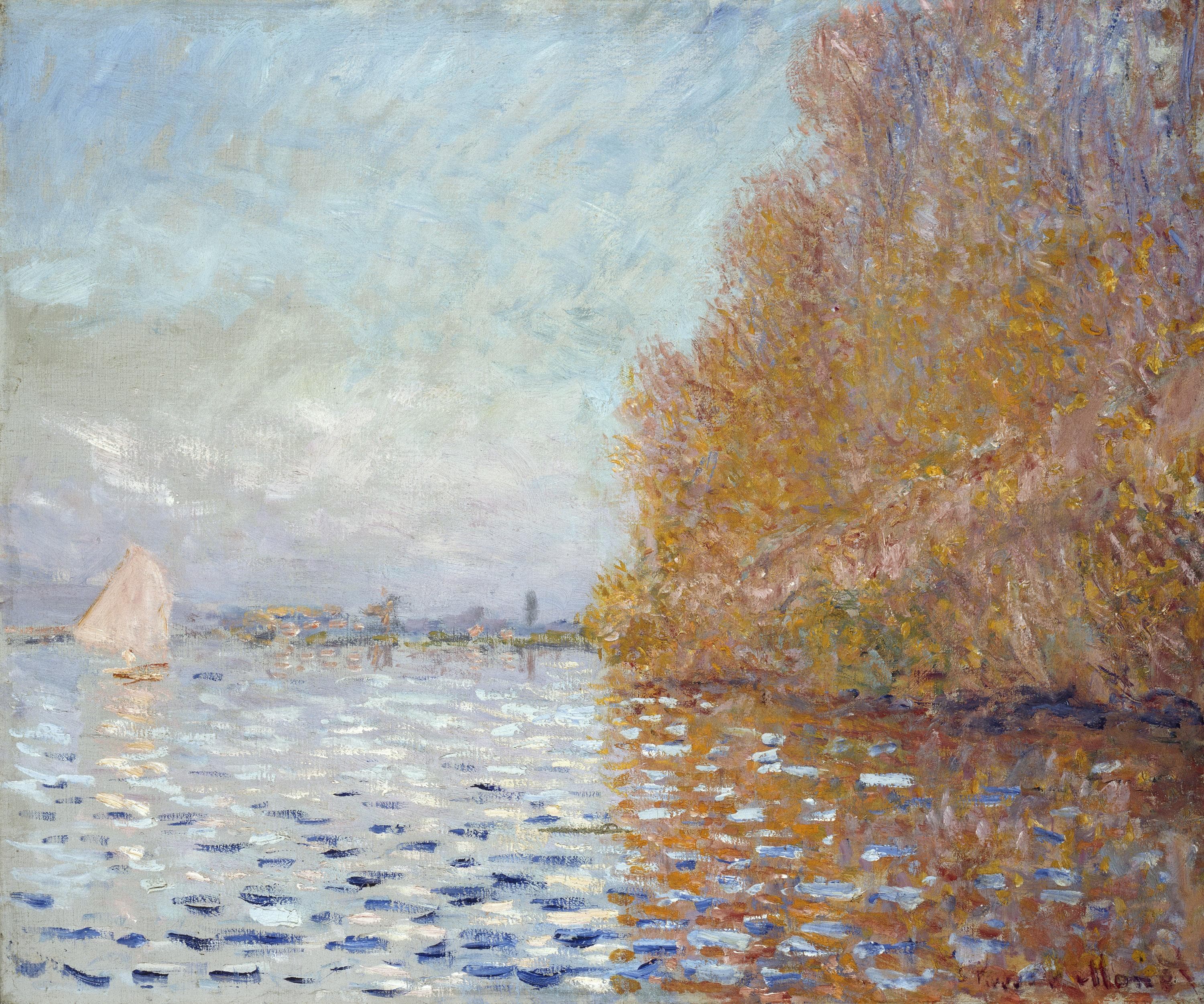
Argenteuil Basin with a Single Sailboat
Claude Monet · 1874
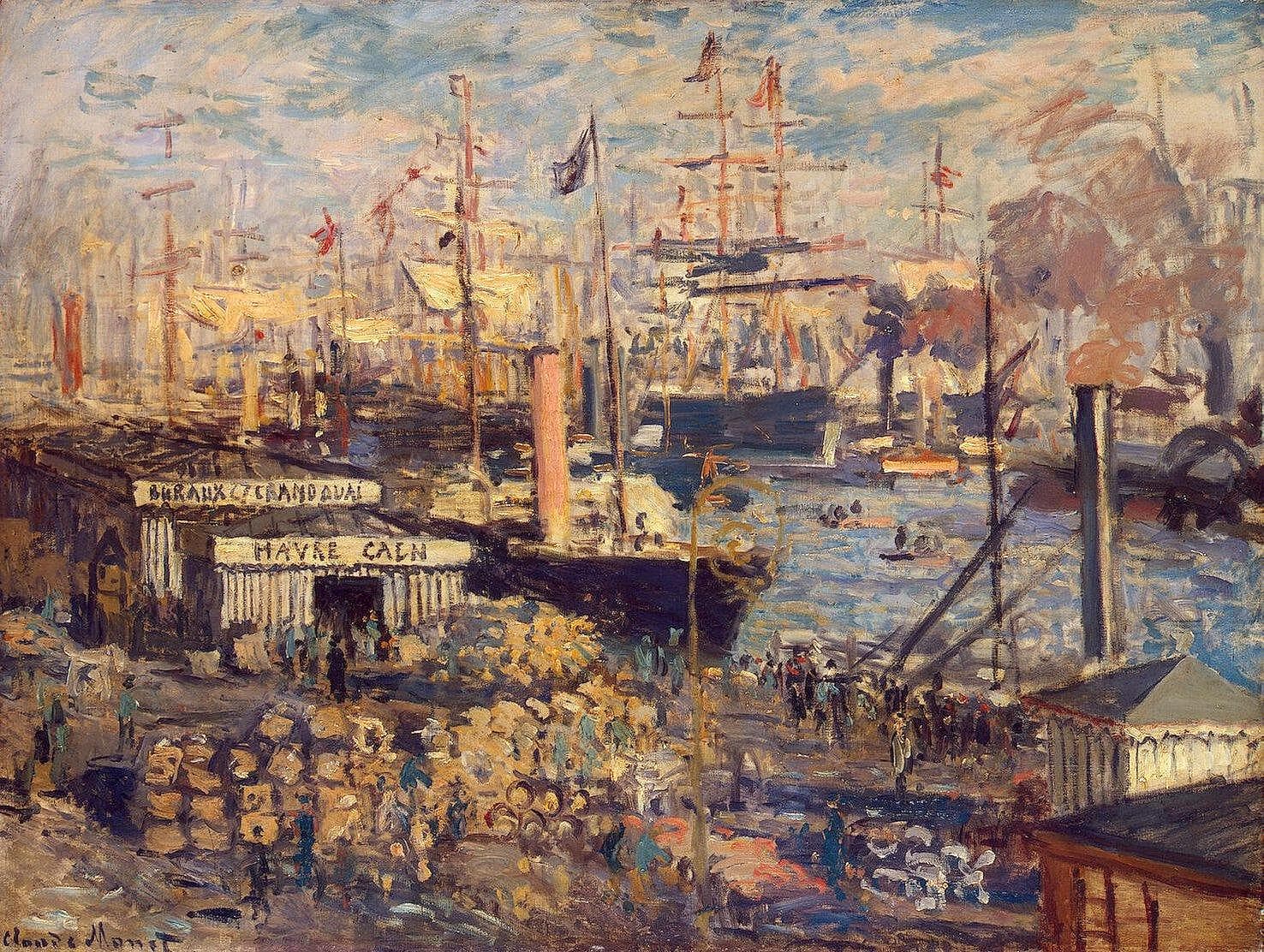
The Grand Quai at Le Havre
Claude Monet · 1874
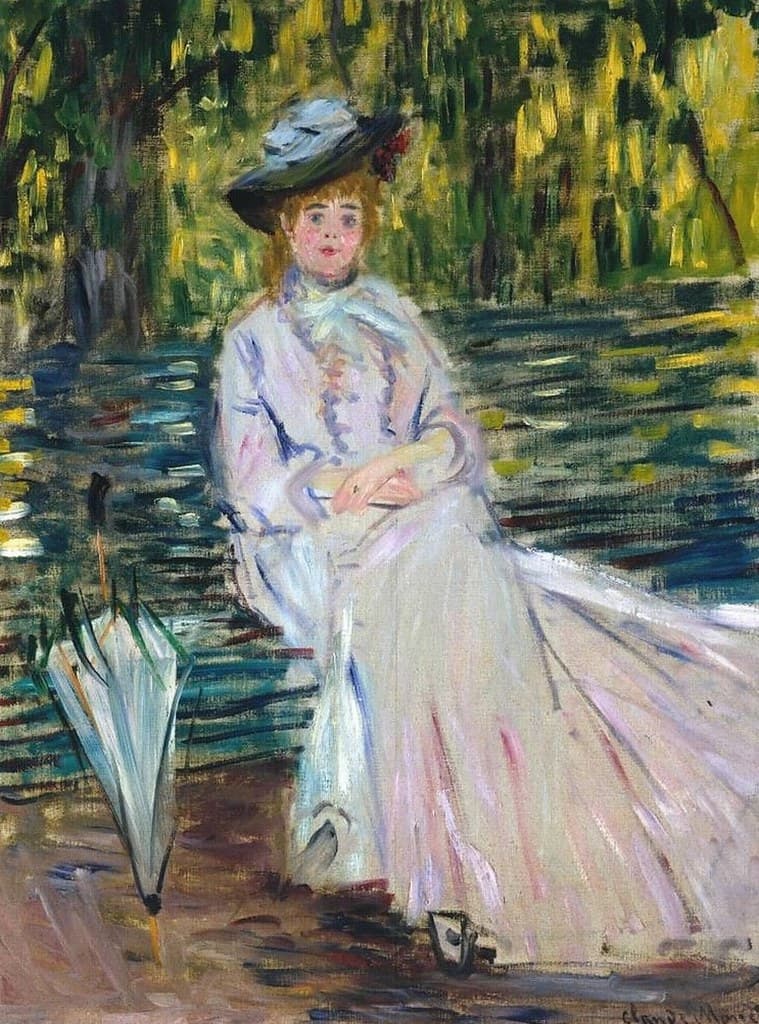
Woman Seated on a Bench
Claude Monet · c. 1874
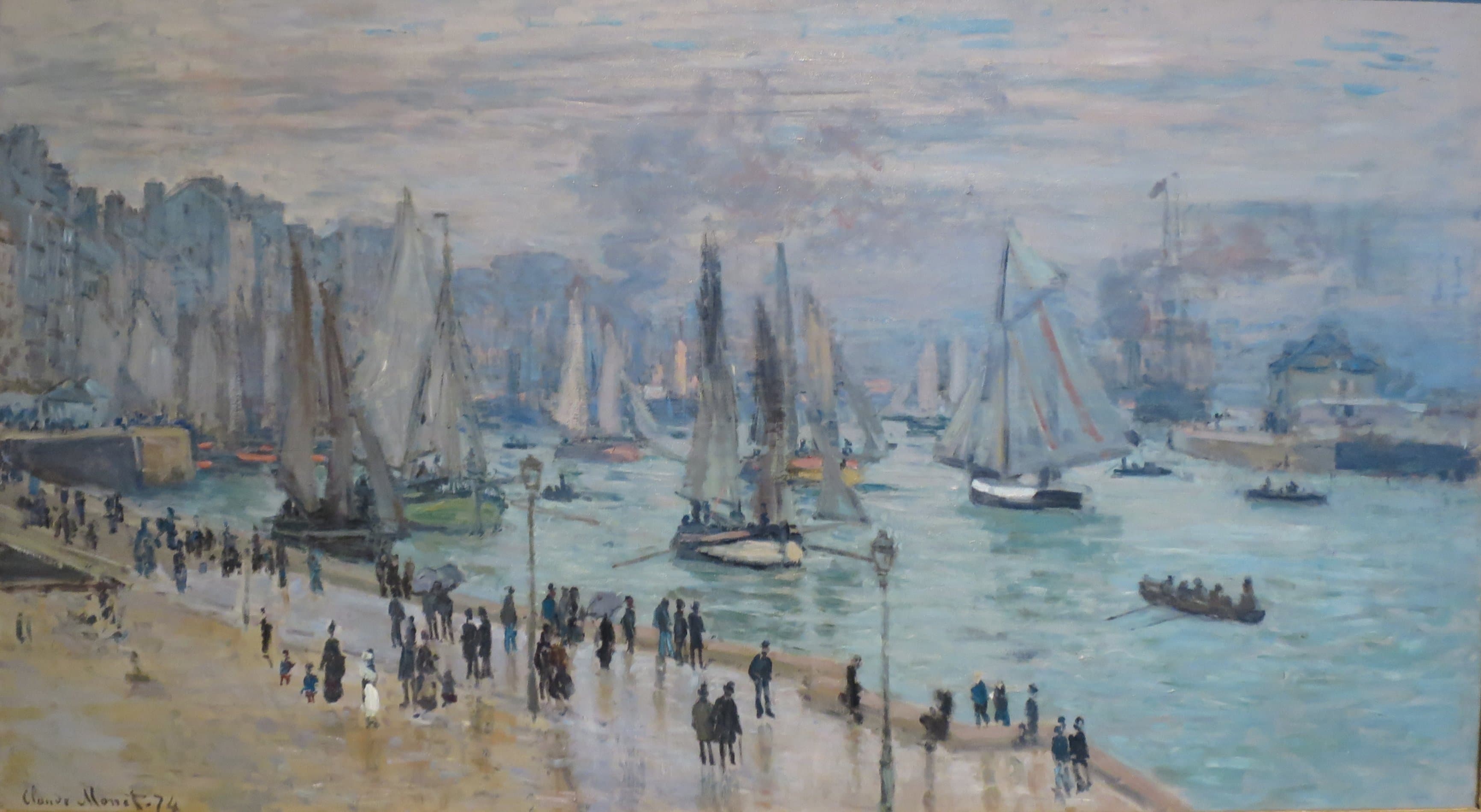
Fishing Boats Leaving the Harbor, Le Havre
Claude Monet · 1874
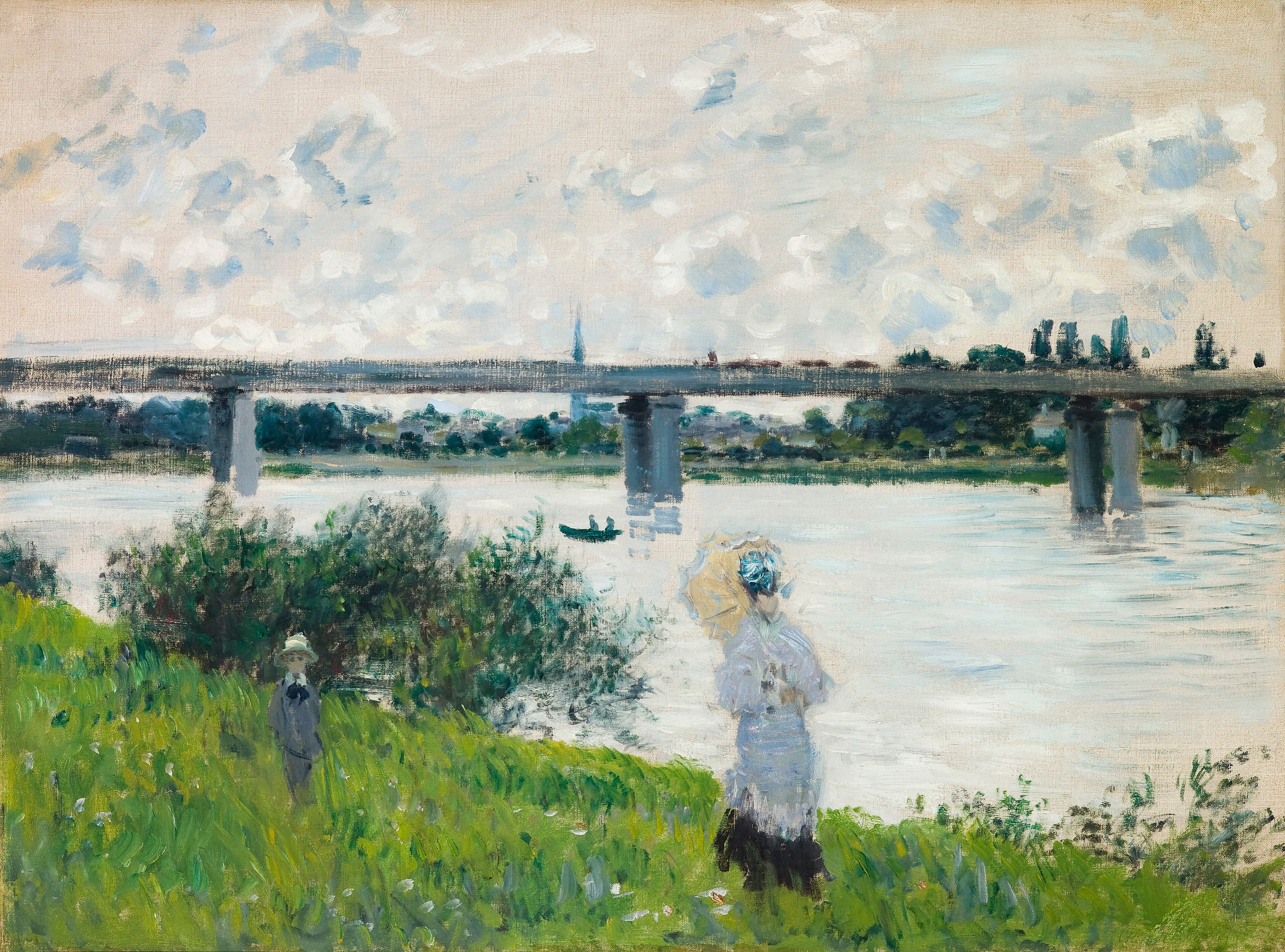
The Promenade with the Railroad Bridge, Argenteuil
Claude Monet · 1874
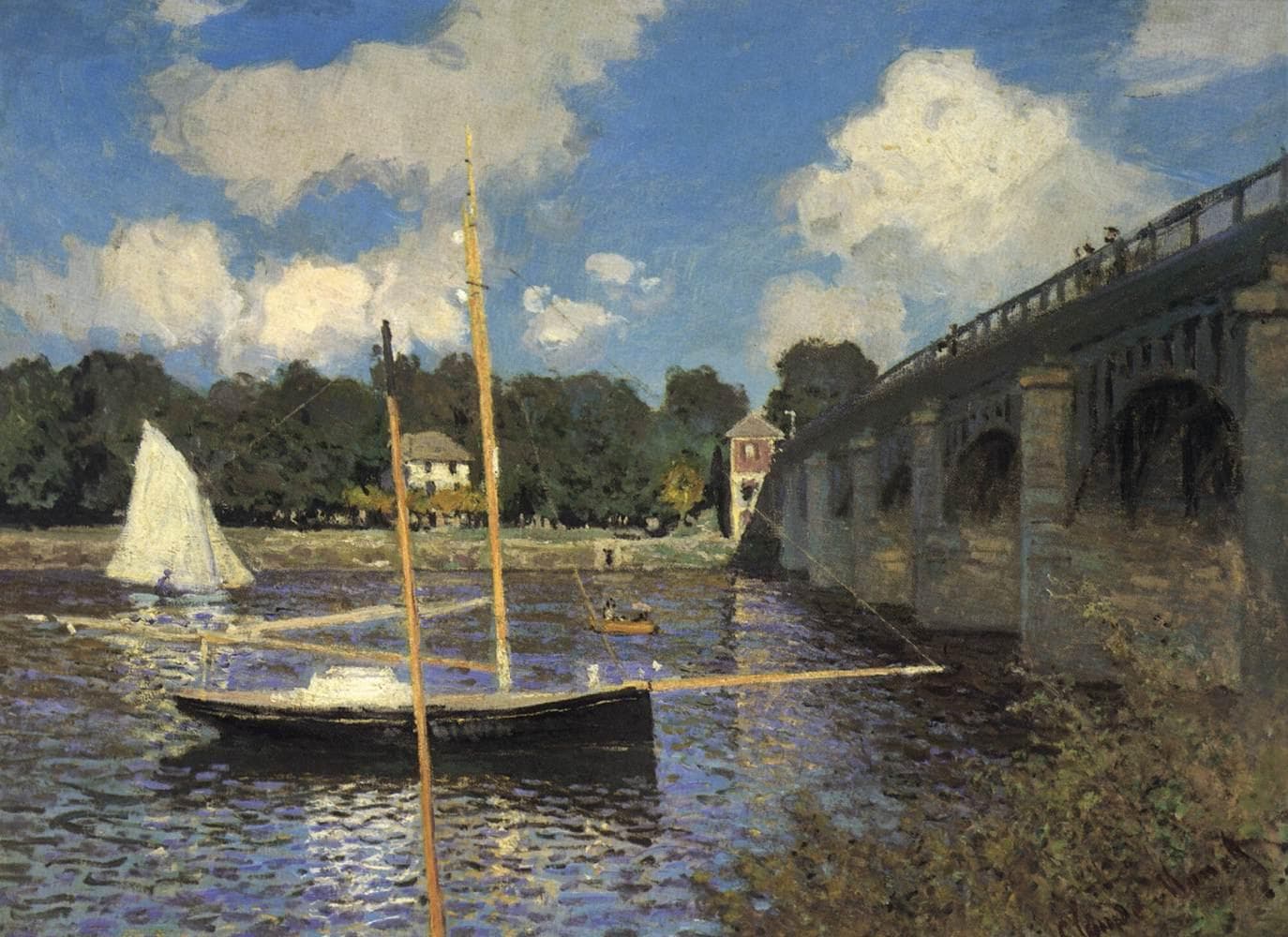
The Bridge at Argenteuil
Claude Monet · 1874
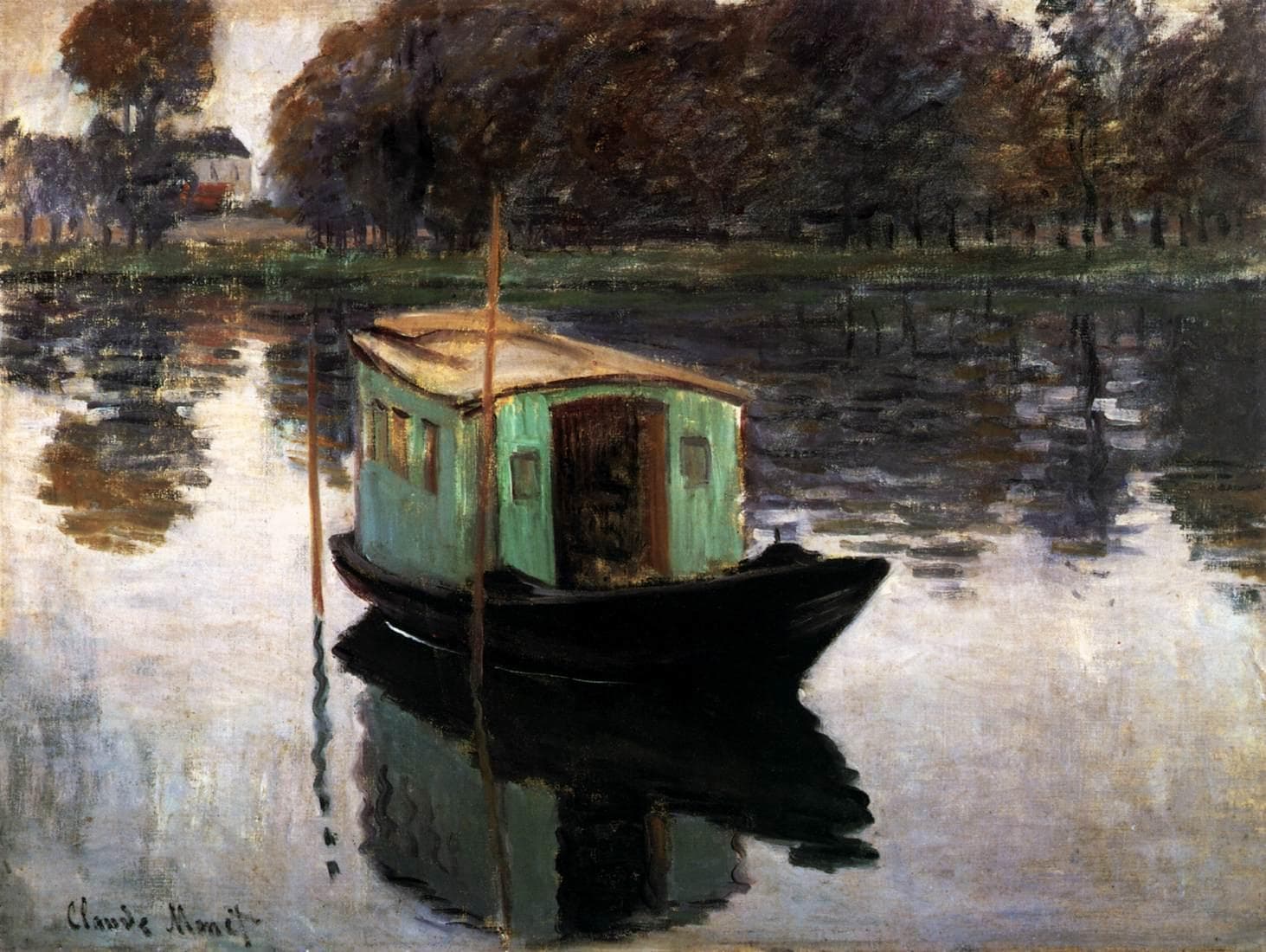
The Studio Boat
Claude Monet · 1874
Kindred works
You may also study
The Bridge at Argenteuil
Claude Monet · 1874
Argenteuil Basin with a Single Sailboat
Claude Monet · 1874
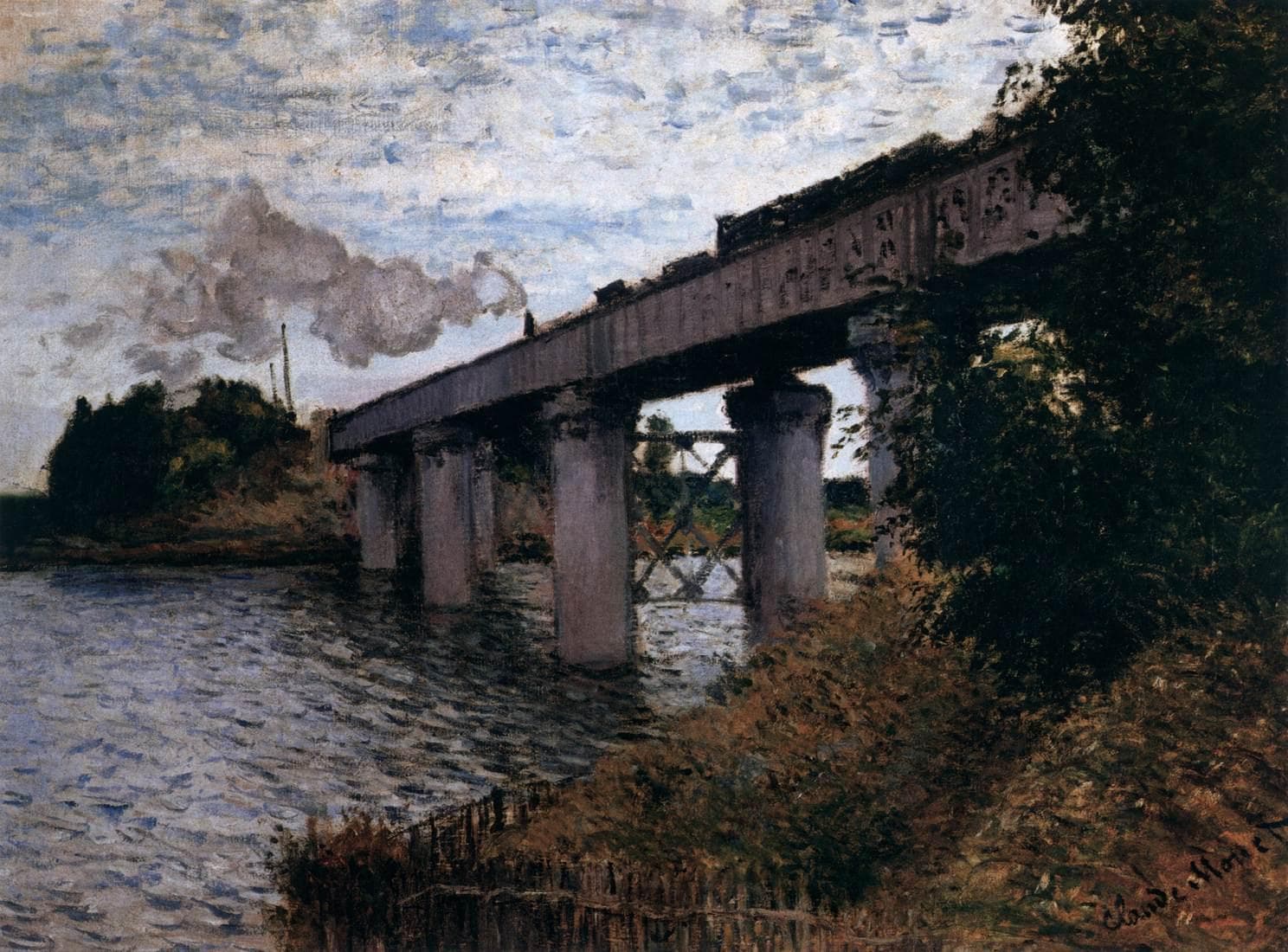
The Railway Bridge at Argenteuil
Claude Monet · c. 1873–74
The Studio Boat
Claude Monet · 1874
The Basin at Argenteuil
Claude Monet · 1872

Ophelia
John Everett Millais · 1851–52

The Great Wave off Kanagawa
Katsushika Hokusai · c. 1830–32
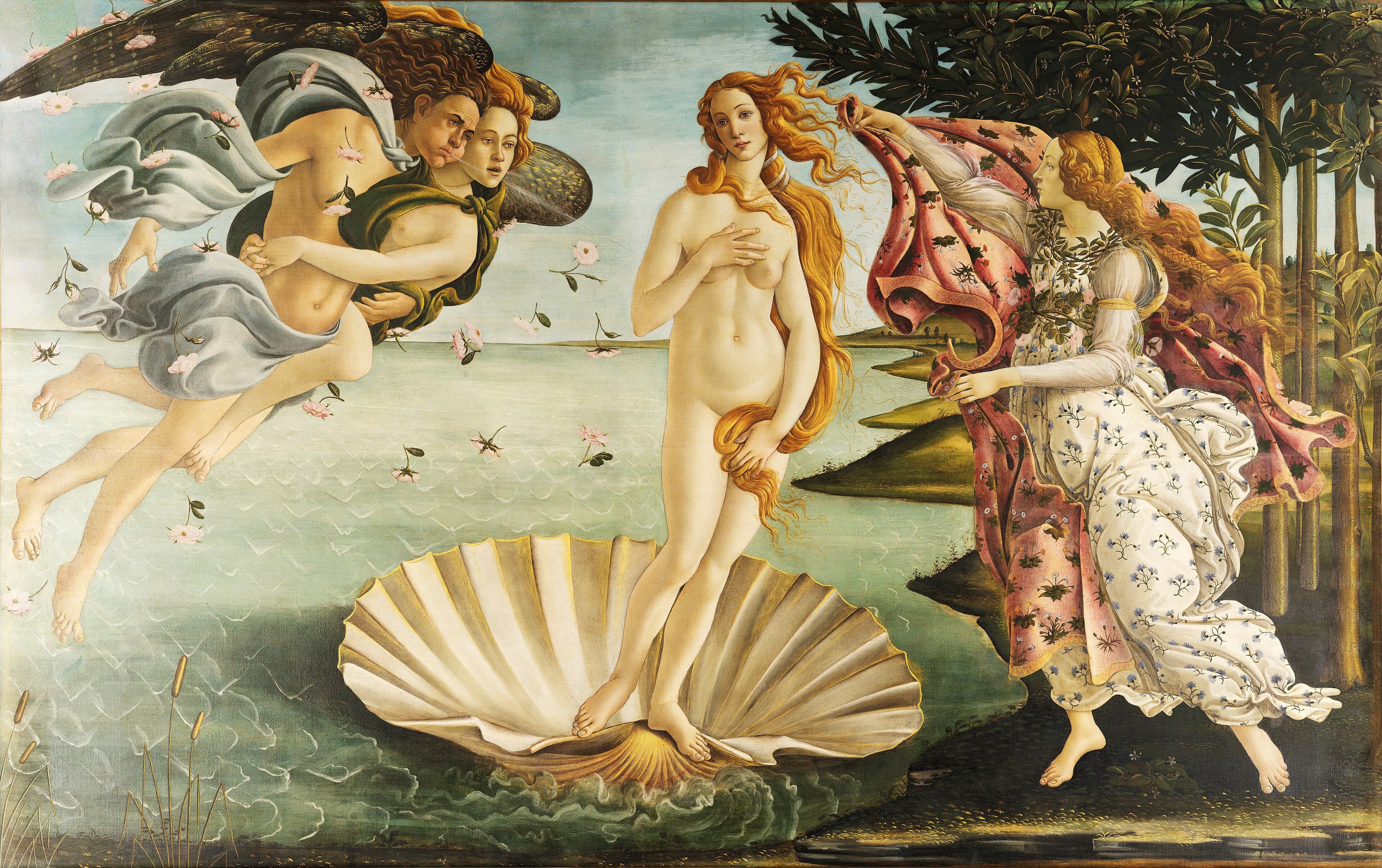
The Birth of Venus
Sandro Botticelli · c. 1484–1486