Impressionism
Train in the Snow at Argenteuil
Claude Monet, 1875
Train in the Snow at Argenteuil is an 1875 painting by Claude Monet of a steam train crossing a snow-covered landscape outside Argenteuil, its smoke rising into a gray sky. It is in a private collection.
- Artist
- Claude Monet
- Date
- 1875
- Medium
- Oil on canvas
- Dimensions
- 60 × 81.5 cm
- Collection
- Private collection
- Movement
- Impressionism
Painted at Monet at Argenteuil
What you are looking at
A railway line curves through a snowy valley. The track swings in from the lower right, bends past a low fence and runs toward a cutting in the middle distance, where a train is passing: we see almost nothing of it except a dark smudge and a column of white steam billowing up against the hills. Telegraph poles stand along the line, tilted and spindly. Behind, rounded hills streaked with snow and bare brush rise to a heavy, pale gray sky, and a row of small houses runs along their foot. In the foreground, the snow is broken by a dark, bristling shrub and dry stalks.
The whole picture is cold and almost colorless, a study in whites, grays and browns with touches of blue and violet in the shadows on the hills.
The snowy winter of 1874–75
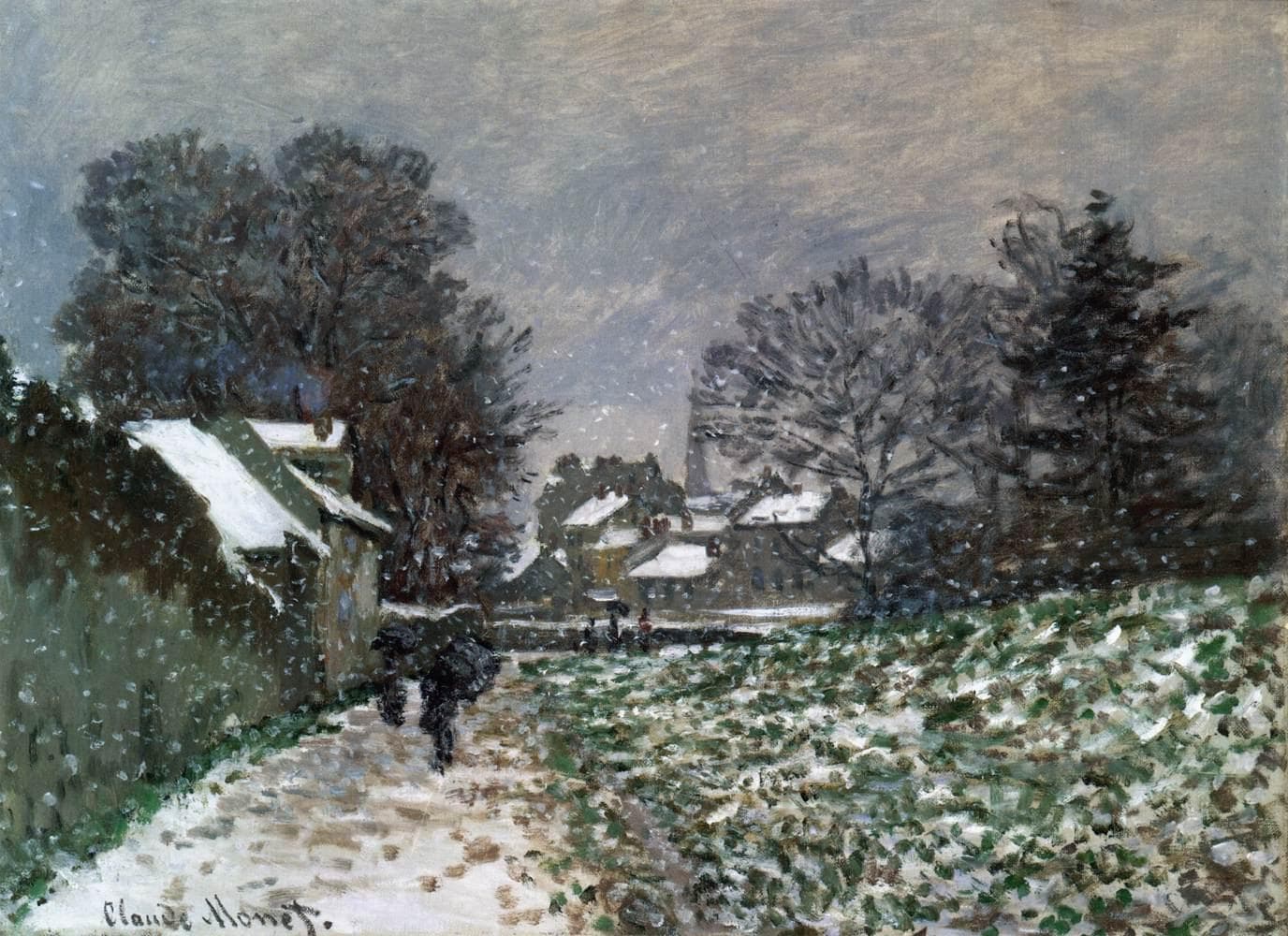
Claude Monet lived in Argenteuil, a small town on the Seine northwest of Paris, from 1871 to 1878. The winter of 1874–75 was hard and snowy, and he painted some eighteen snow scenes of the town and its surroundings that season, among them Snow at Argenteuil and Boulevard Saint-Denis, Argenteuil, in Winter. The Argenteuil years as a whole are mapped on Monet at Argenteuil.
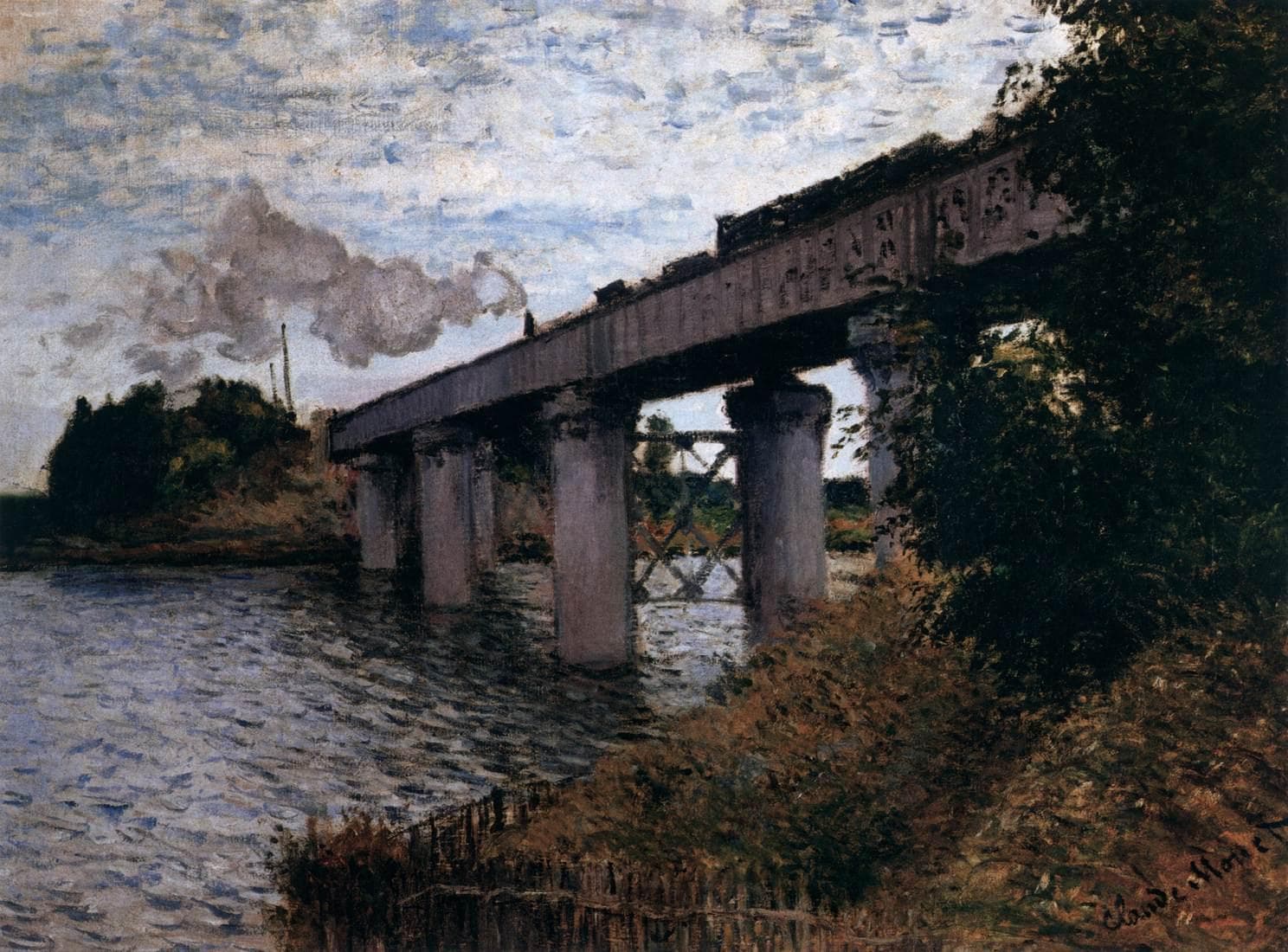
The railway mattered to Argenteuil. It linked the town to the Gare Saint-Lazare in Paris in about fifteen minutes and was why Parisians came out to sail there on Sundays. Monet painted trains and railway bridges throughout these years, and in 1877 he would make the Paris terminus itself the subject of a series, gathered on our Gare Saint-Lazare page.
How it was painted
The steam is the brightest thing in the picture. Monet paints it in thick, swirling strokes of pure white and pale gray, so it stands out from the duller white of the snow. Look at how he separates the two: the snow is laid in with flatter strokes and is slightly warmer, almost cream in places, while the steam is cooler and more loosely brushed, its edges feathering into the sky.
The curve of the track, drawn in two thin brown lines, carries the eye from the bottom edge into the distance. A dark fence or hedge snakes across the middle ground, and the telegraph poles, a few dark verticals with crossbars, give scale. The hills behind are not white but streaked with blue, violet and brown where scrub and hedgerows show through the snow.
The foreground shrub is the most energetic passage: a burst of short dark strokes radiating from a center, like a frozen firework. It anchors the left side and sets off the empty sweep of snow around the track. The signature at lower left is painted in the same dark brown as the shrub.
The canvas is a fairly standard size for Monet in these years, about 60 by 81 centimeters, the kind he could carry into the fields and finish in a few sessions. Snow pictures had to be painted fast: the light under an overcast sky changes slowly, but the snow itself can melt or be trampled in a day.
Two snowy trains
In the same winter Monet painted another snowy train picture, Train in the Snow (W.356), now in the Musée Marmottan Monet. There the locomotive is close, its headlamps glowing through the gloom beside a station fence. This canvas takes the opposite approach: the train is distant and nearly invisible, and the landscape dominates. Modern technology is present only as steam and wire, folded into a winter view.
Compare it with the high view over snowy gardens in View of Argenteuil in the Snow, or with the earlier Train in the Countryside of 1870, where a train crosses a summer landscape on an embankment.
Where is it now?
The painting is in a private collection, and its Wildenstein number was not confirmed for this entry. It is not on public display. For collections where Monet's Argenteuil snow scenes can be seen, see Where to See Monet's Paintings.
Questions & answers
Where is Train in the Snow at Argenteuil?
This 1875 canvas, about 60 by 81.5 centimeters, is in a private collection and is not on public display. Its better-known companion, Train in the Snow, a close-up of a locomotive by a snowy station fence, is in the Musée Marmottan Monet in Paris.
When and where was it painted?
In the snowy winter of 1874–75 on the outskirts of Argenteuil, the Seine town northwest of Paris where Monet lived from 1871 to 1878. It shows the railway that linked Argenteuil to the Gare Saint-Lazare running through a snow-covered valley below the hills.
Why did Monet paint trains?
Railways were the defining modern technology of his time and the reason towns like Argenteuil existed as weekend resorts for Parisians. Monet painted trains, stations and railway bridges throughout the 1870s, culminating in his Gare Saint-Lazare series of 1877.
How many snow scenes did Monet paint at Argenteuil?
About eighteen in the hard winter of 1874–75, mostly within walking distance of his house. They are among his most concentrated studies of winter light, showing snow full of blues, grays and creams rather than pure white.
More by the artist
Claude Monet

Bridge over a Pond of Water Lilies
Claude Monet · 1899

Woman with a Parasol – Madame Monet and Her Son
Claude Monet · 1875

Sunset in Venice
Claude Monet · 1908–12

La Grenouillère
Claude Monet · 1869

Beach in Pourville
Claude Monet · 1882

Springtime
Claude Monet · 1872

Boating on the River Epte
Claude Monet · 1890

The Seine at Asnières (Hermitage)
Claude Monet · 1873
Also painted in 1875
The same year
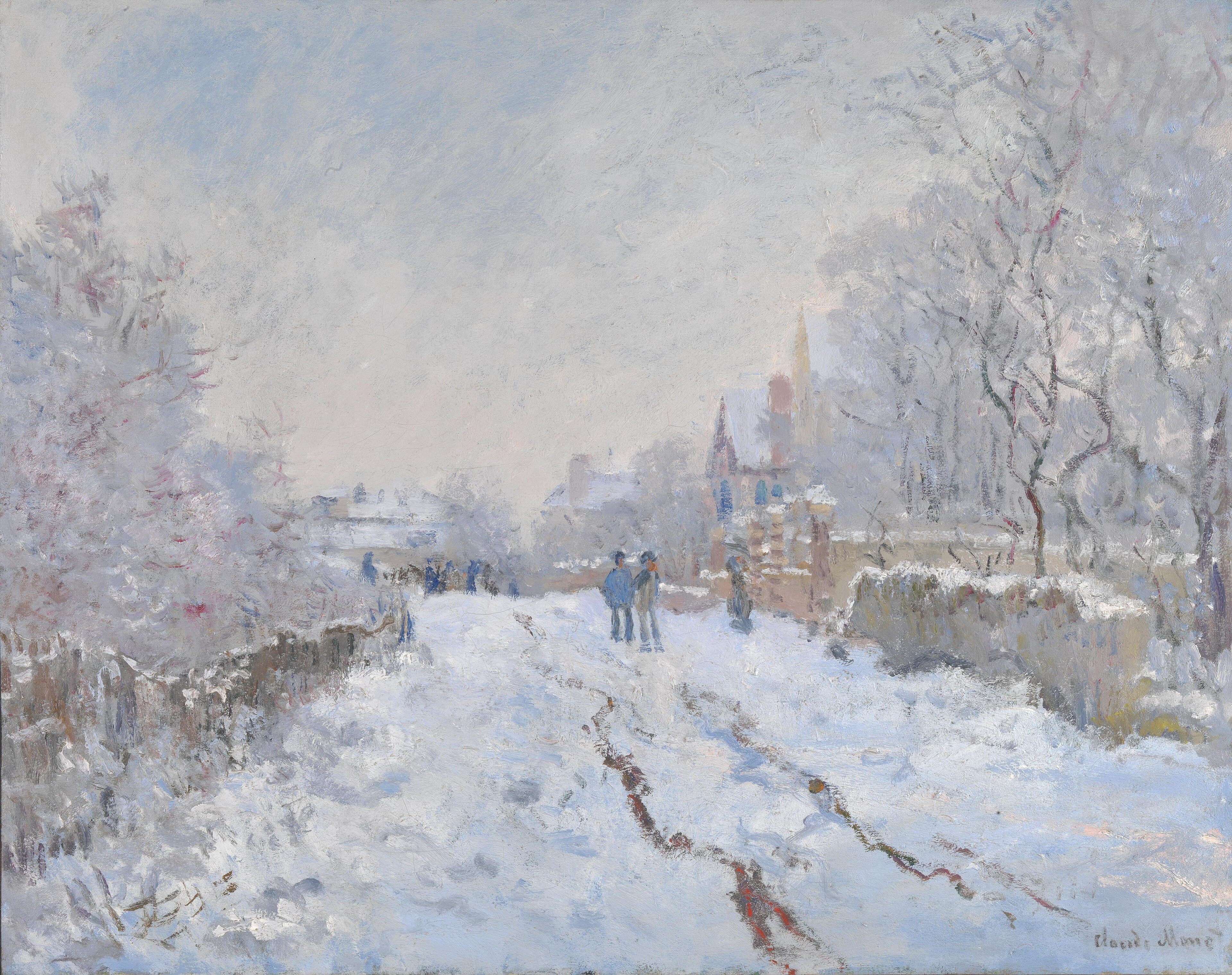
Snow Scene at Argenteuil
Claude Monet · 1875
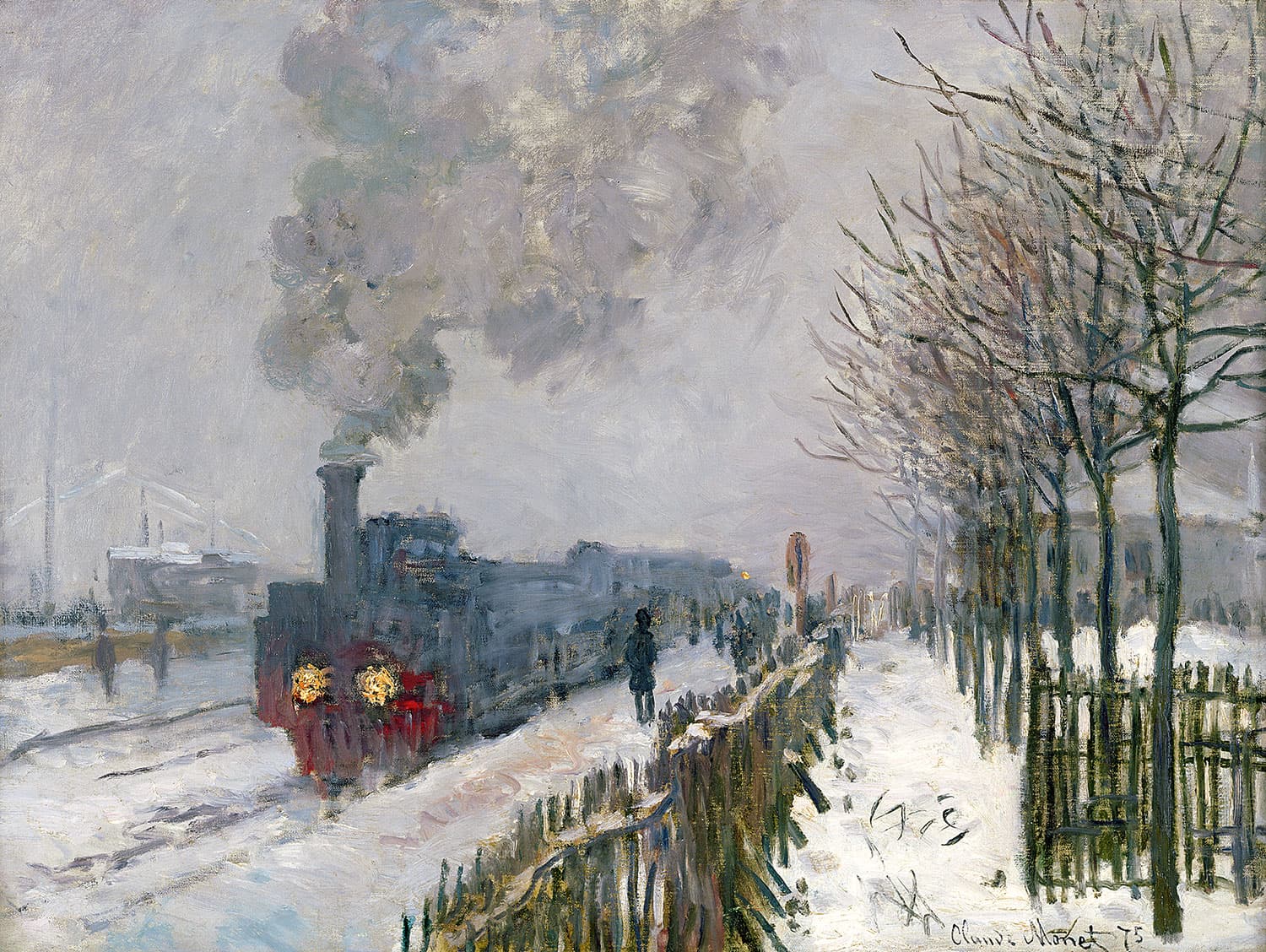
Train in the Snow (The Locomotive)
Claude Monet · 1875
Bords de la Seine à Argenteuil
Claude Monet · 1870s (inscribed 1875 on the frame)
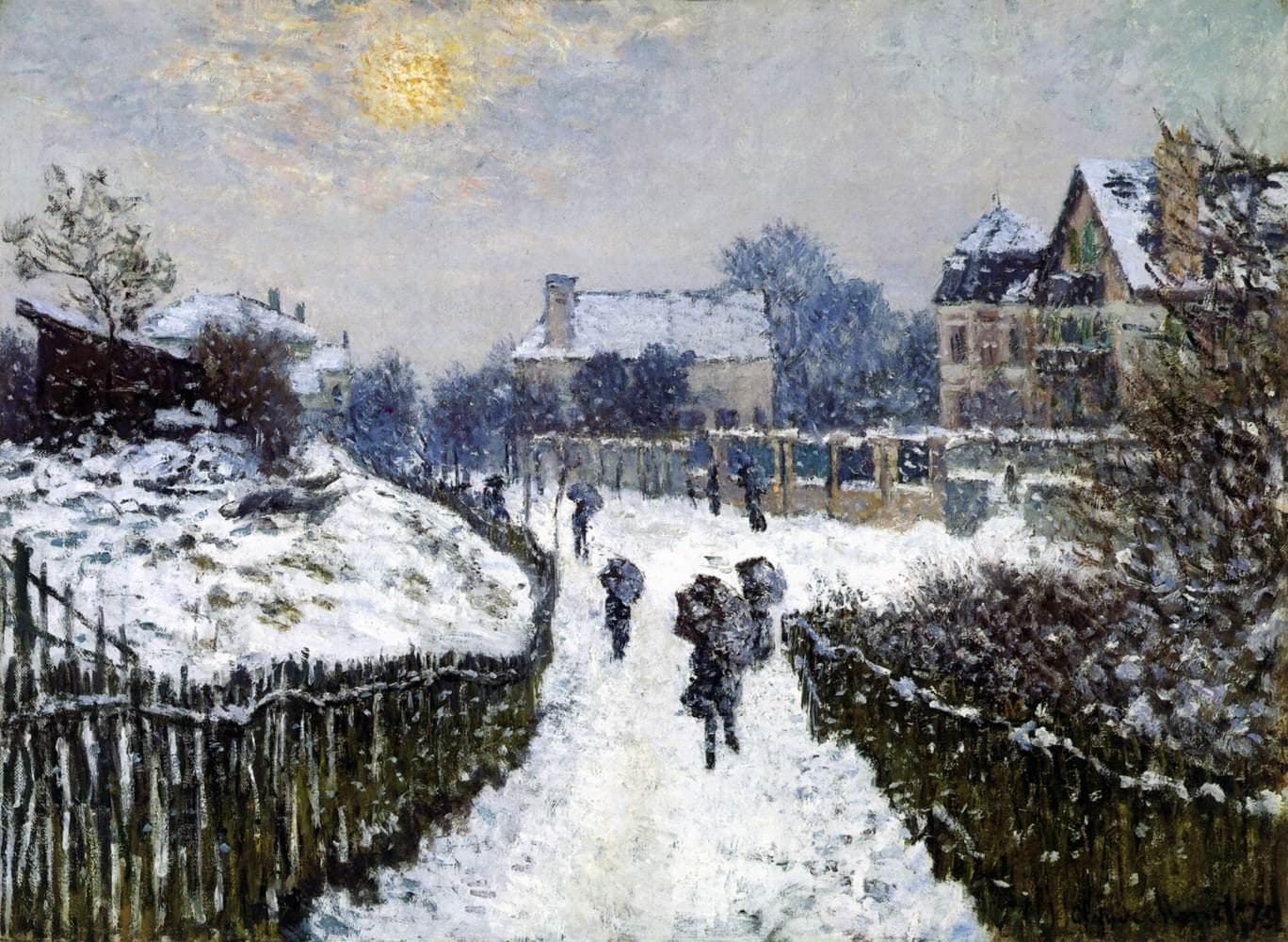
Boulevard Saint-Denis, Argenteuil, in Winter
Claude Monet · 1875
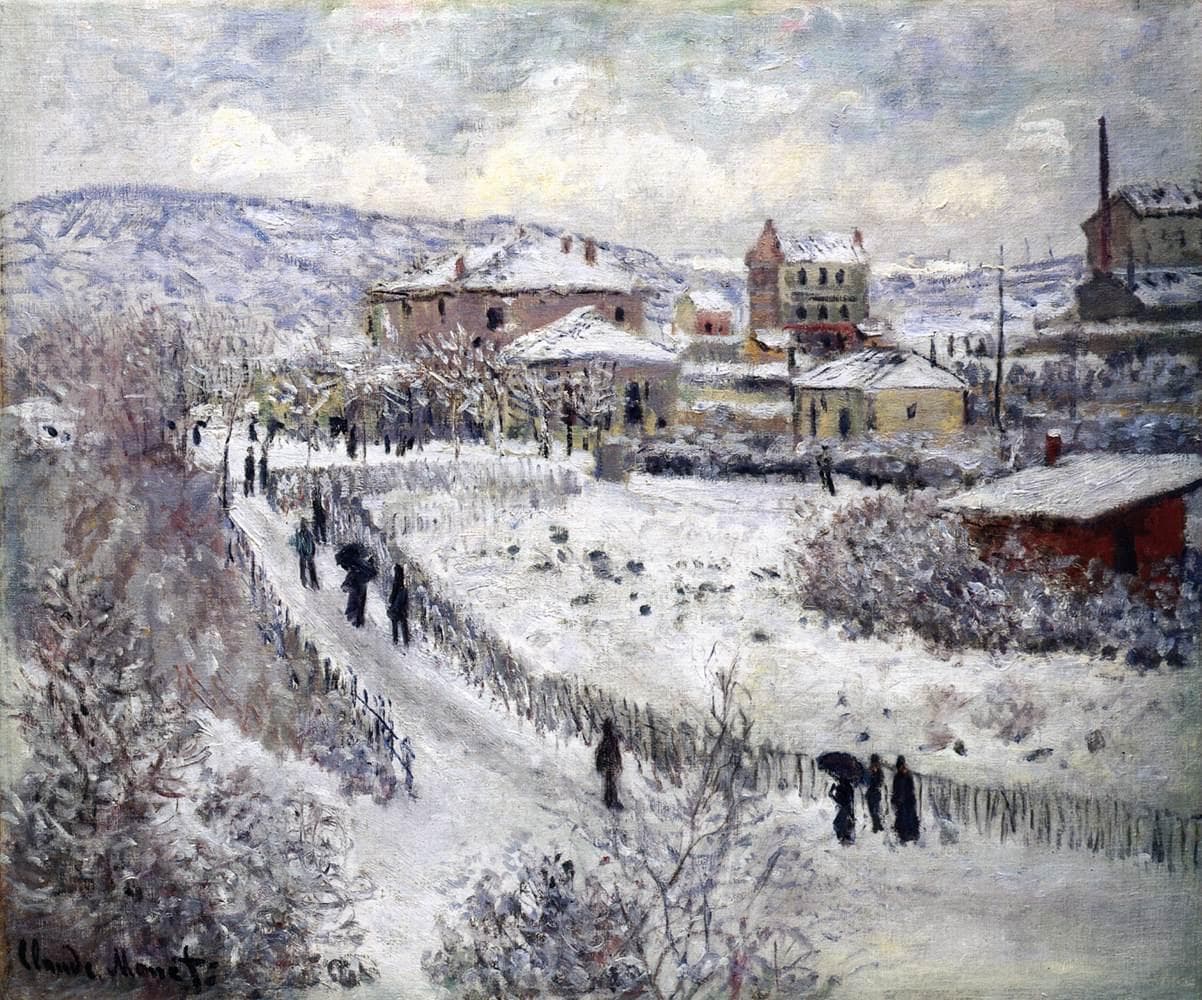
View of Argenteuil in the Snow
Claude Monet · 1874–75
Entrance to the Grande Rue at Argenteuil, Winter
Claude Monet · 1875
Red Boats at Argenteuil
Claude Monet · 1875
The Boulevard de Pontoise in Argenteuil under Snow
Claude Monet · 1875
Kindred works
You may also study
Train in the Snow (The Locomotive)
Claude Monet · 1875
Snow at Argenteuil
Claude Monet · c. 1874
Boulevard Saint-Denis, Argenteuil, in Winter
Claude Monet · 1875
View of Argenteuil in the Snow
Claude Monet · 1874–75
The Boulevard de Pontoise in Argenteuil under Snow
Claude Monet · 1875
The Railway Bridge at Argenteuil
Claude Monet · c. 1873–74

The Scream
Edvard Munch · 1893

Ophelia
John Everett Millais · 1851–52