Impressionism
Summer (Meadow at Bezons)
Claude Monet, 1874
Summer, also known as Meadow at Bezons or Fields of Bezons, is an 1874 painting by Claude Monet of a woman resting with a parasol in a sunlit meadow on the Seine near Argenteuil. It is in the Alte Nationalgalerie, Berlin.
- Artist
- Claude Monet
- Date
- 1874
- Medium
- Oil on canvas
- Dimensions
- 57 × 80 cm
- Collection
- Alte Nationalgalerie, Berlin, Germany
- Movement
- Impressionism
- Catalogue
- Wildenstein 341
Painted at Monet at Argenteuil
Claude Monet's Summer, catalogued as Meadow at Bezons and sometimes called Fields of Bezons, was painted in 1874 in the open countryside at Bezons, across the Seine from Argenteuil, where Monet was living. The canvas, 57 by 80 centimeters and number 341 in Wildenstein's catalogue, is in the Alte Nationalgalerie in Berlin (inventory A I 1013). Some sources date it 1873, but the catalogue raisonné gives 1874.
What you are looking at
Most of the picture is a wide, flat meadow of ripening grass, painted in warm bands of straw yellow, ochre and green that run back to a low, blue line of distant hills. In the lower left foreground a woman in a white dress with a dark bodice reclines on the grass, her head under a dark hat, her skirts spread around her. Beside her lies a closed green parasol. Further off, near the center, a second figure in white stands alone in the field, and a third, smaller still, is just visible between them.
Slender young trees rise at intervals across the meadow: a tall, thin sapling at the far left whose leaves are mere dabs, a taller tree beside it, a rounded clump in the middle distance and, at the right, a dark group of trees and a single tall poplar bending in the breeze. Above, a pale blue summer sky with a few wisps of cloud takes up half the canvas.
How it was painted
The picture is all air and space. Monet keeps the horizon low and the figures small, and paints the grass with loose horizontal strokes that seem to vibrate in the heat. The shadow of the trees falls across the foreground in a long band of cooler green, which places the reclining woman in the shade and the rest of the field in full sun.
The woman is built from a few patches of white, blue-gray and black; she is less a portrait than a note of color that tells us the scale of the field. The thin trees, with their sparse, flickering leaves painted as individual touches against the sky, are typical of Monet's Argenteuil years. The paint is thin and fluid in the sky and thicker in the sunlit grass, where yellow is laid over green.
Argenteuil and Bezons
1874 was the year of the first Impressionist exhibition, in April, and the summer when Édouard Manet and Pierre-Auguste Renoir came to paint with Monet at Argenteuil. The figure in the meadow is usually taken to be Camille Monet, who appears in many open-air pictures of this period, such as Poppies of 1873, where she wades through a field with Jean, and the Woman with a Parasol of 1875. Bezons itself, still an agricultural village, lay just downstream on the opposite bank; its open fields were a short walk across the bridge from Monet's house.
The same summer produced Monet's Garden at Argenteuil and his views of The Bridge at Argenteuil, with its sailing boats and rebuilt road bridge. Compared with those, this picture is unusually empty, a landscape about the openness of a summer day, with figures scattered in it like the trees. Nothing happens; a woman rests in the shade, someone walks across a field. The subject is the heat, the light and the sense of space, and Monet trusts that to be enough. The flat land and wide sky recall The Plain of Sannois at Argenteuil of two years earlier. Our hub on Monet at Argenteuil gathers the paintings of these years.
Where to see it
The painting is in the Alte Nationalgalerie on Berlin's Museum Island, part of the Berlin State Museums. The Nationalgalerie was one of the first public museums anywhere to buy French Impressionist paintings, under its director Hugo von Tschudi around 1900, against resistance from the imperial court. For other collections, see where to see Monet's paintings. More on Claude Monet.
Questions & answers
Where is Monet's Summer (Meadow at Bezons)?
The painting is in the Alte Nationalgalerie on Museum Island in Berlin, part of the Berlin State Museums. It is sometimes listed under the English titles Fields of Bezons or Meadow at Bezons, and in German as Sommer, all referring to this 1874 canvas.
When and where was it painted?
Monet painted it in the summer of 1874 in the fields at Bezons, a village on the Seine just across the river and slightly downstream from Argenteuil, where he lived from 1871 to 1878. Some sources date it 1873, but Wildenstein's catalogue gives 1874.
Who is the woman in Monet's Summer?
She is not named in the title, but she is usually identified as Camille Monet, the artist's wife, who posed for many of his Argenteuil landscapes with figures. Monet paints her with only a few strokes of white, gray and black, so she reads as part of the landscape rather than as a portrait.
What does Summer (Meadow at Bezons) show?
A wide, sunlit meadow of yellow grass under a pale blue sky, with slender trees scattered across it. A woman in white reclines in the shade in the foreground beside a green parasol, and a second figure in white stands far off in the field.
More by the artist
Claude Monet

Bridge over a Pond of Water Lilies
Claude Monet · 1899

Woman with a Parasol – Madame Monet and Her Son
Claude Monet · 1875

Sunset in Venice
Claude Monet · 1908–12

La Grenouillère
Claude Monet · 1869

Beach in Pourville
Claude Monet · 1882

Springtime
Claude Monet · 1872

Boating on the River Epte
Claude Monet · 1890

The Seine at Asnières (Hermitage)
Claude Monet · 1873
Also painted in 1874
The same year
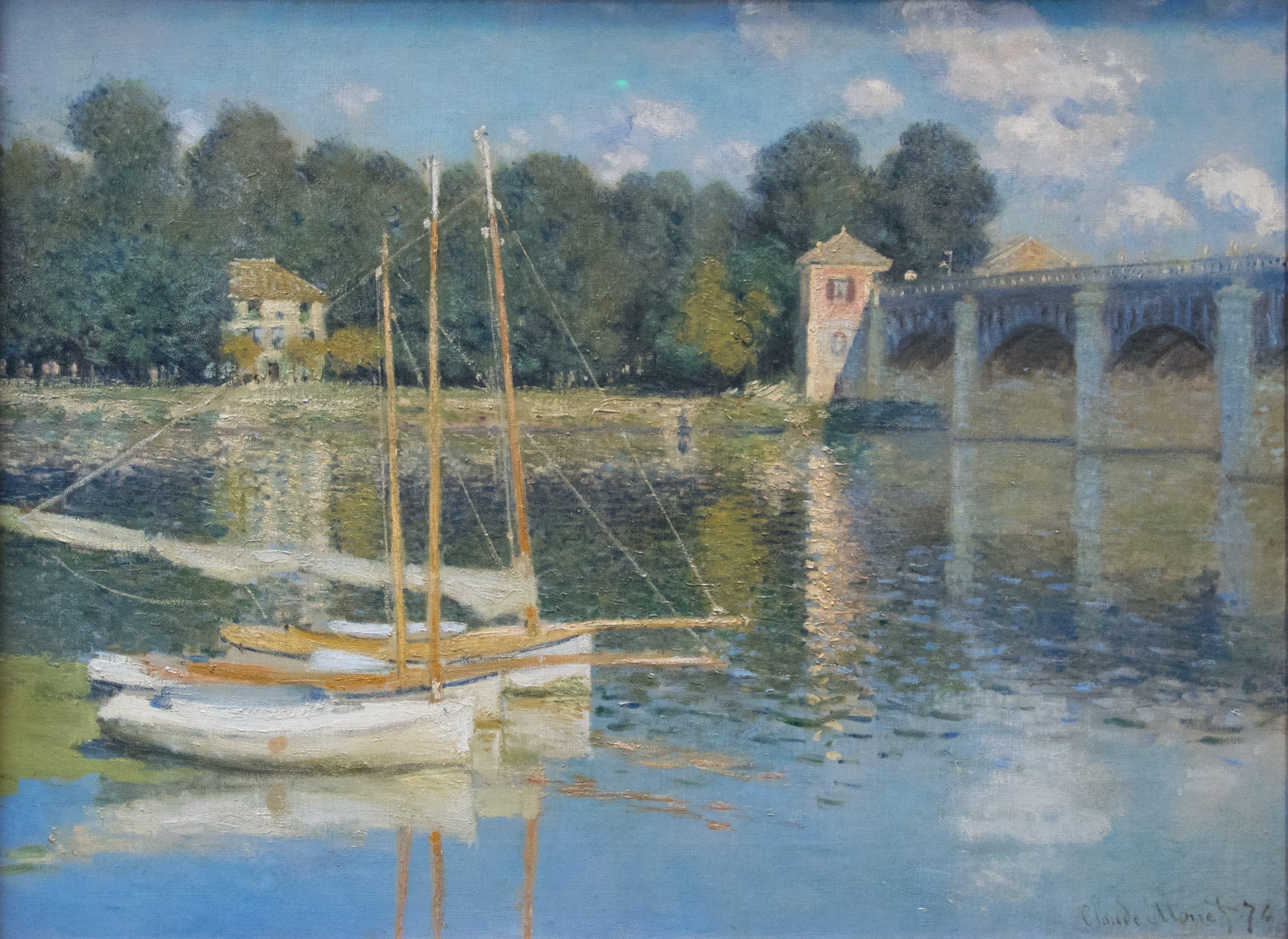
The Argenteuil Bridge
Claude Monet · 1874
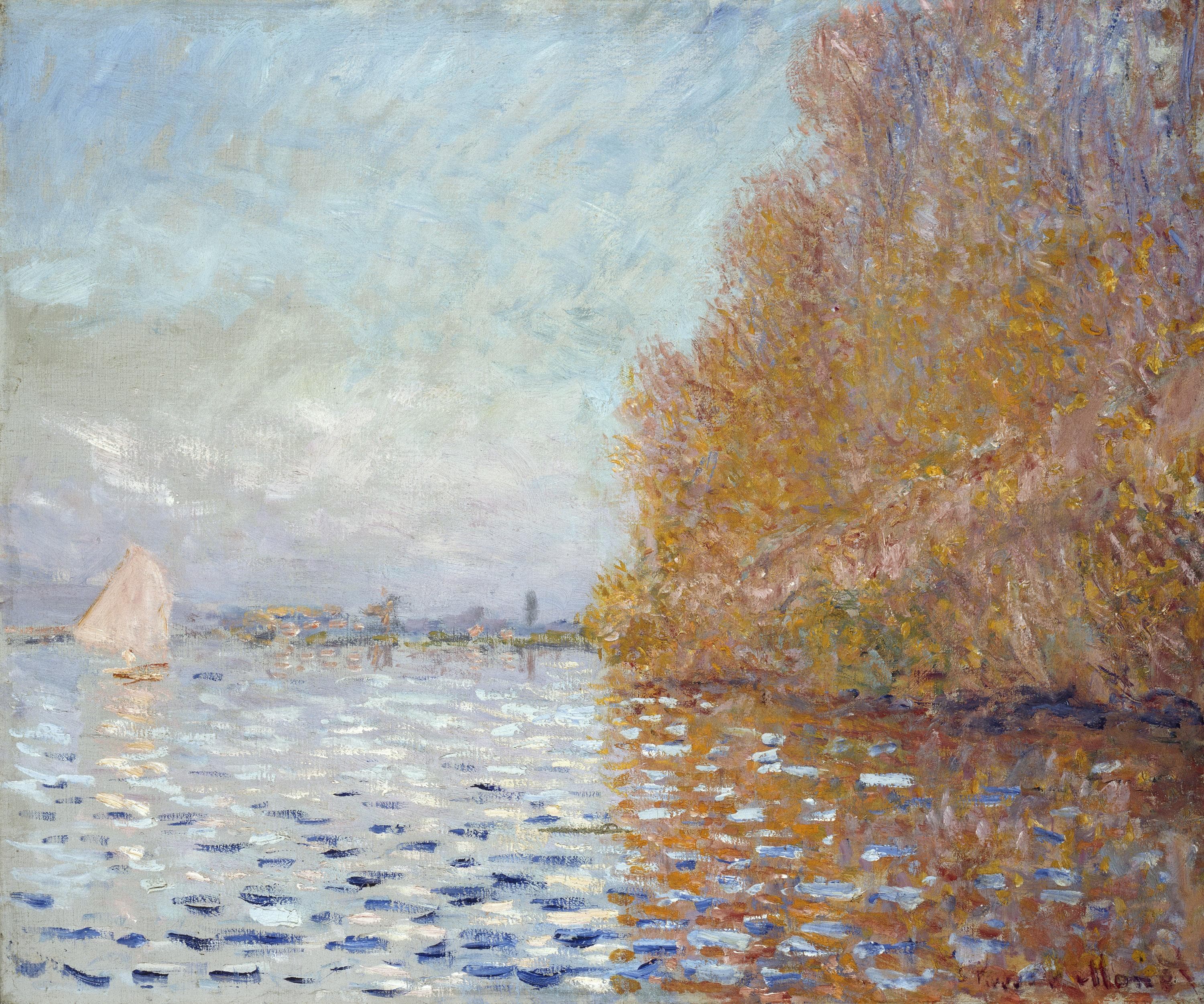
Argenteuil Basin with a Single Sailboat
Claude Monet · 1874
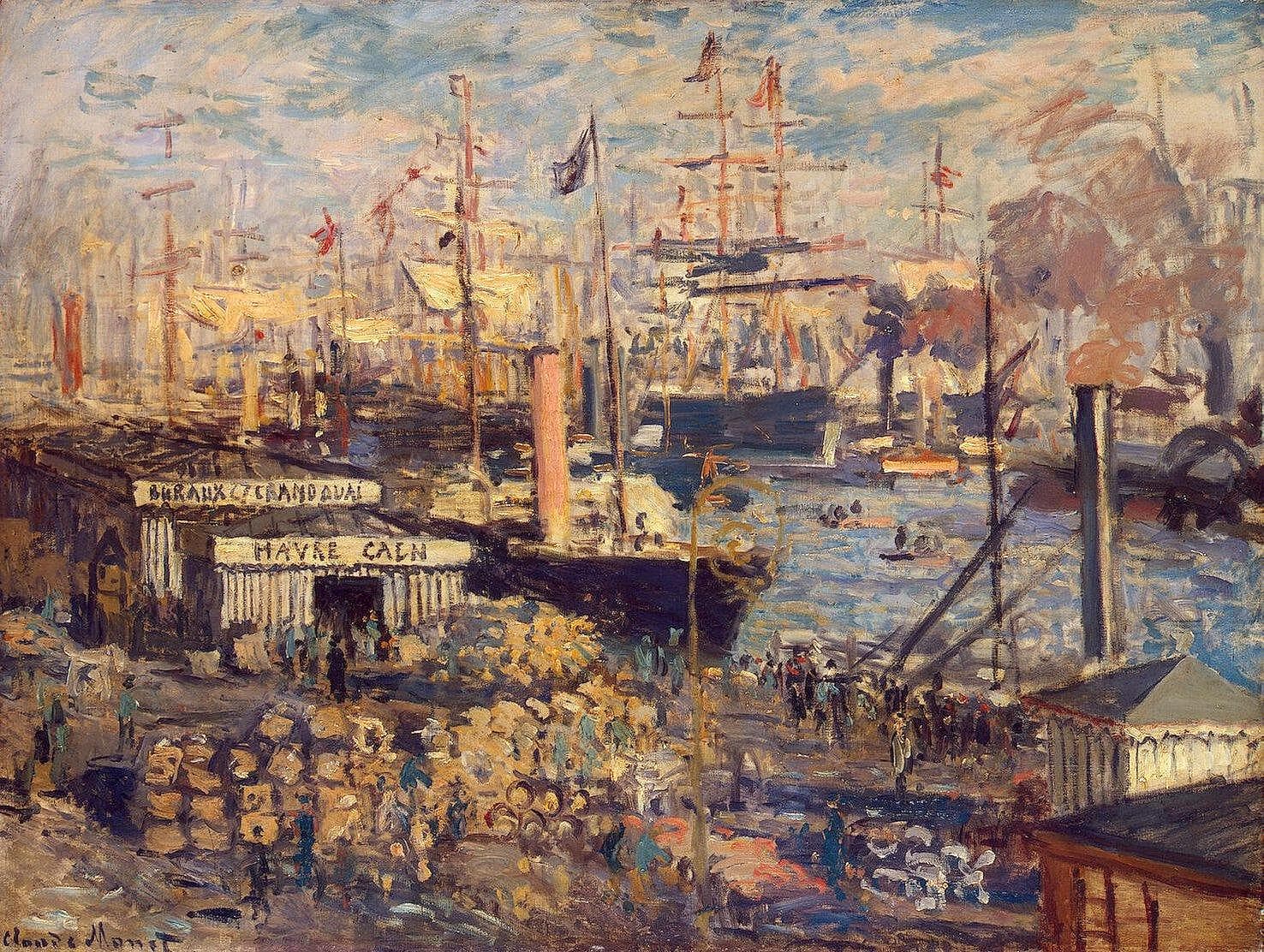
The Grand Quai at Le Havre
Claude Monet · 1874
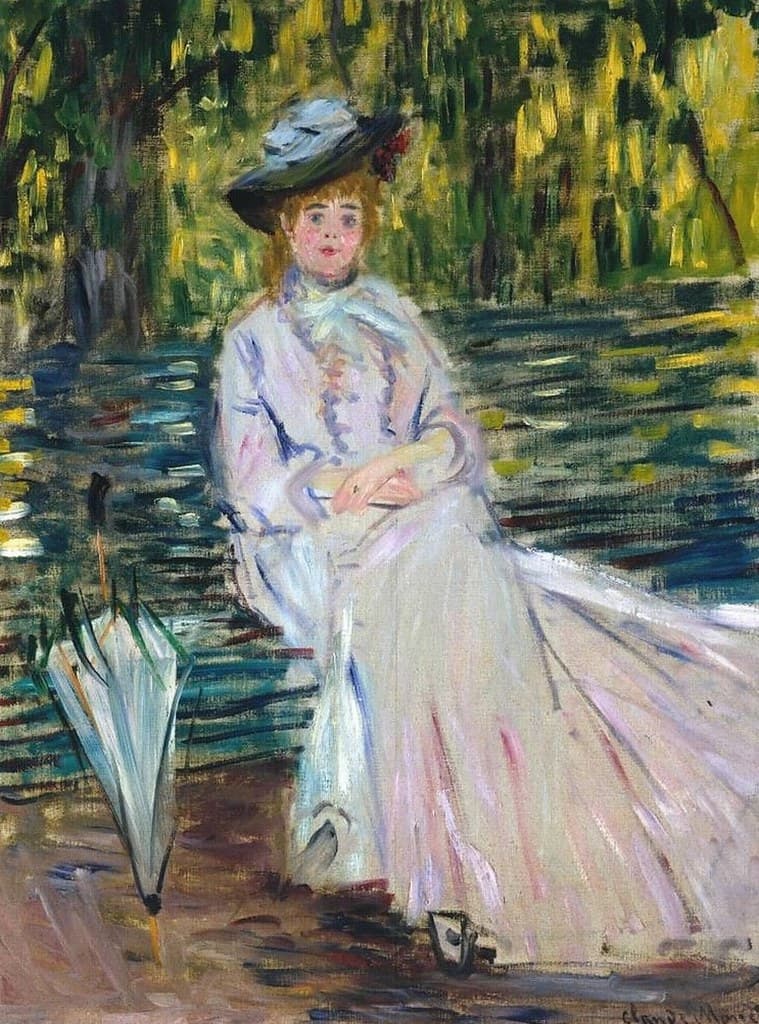
Woman Seated on a Bench
Claude Monet · c. 1874
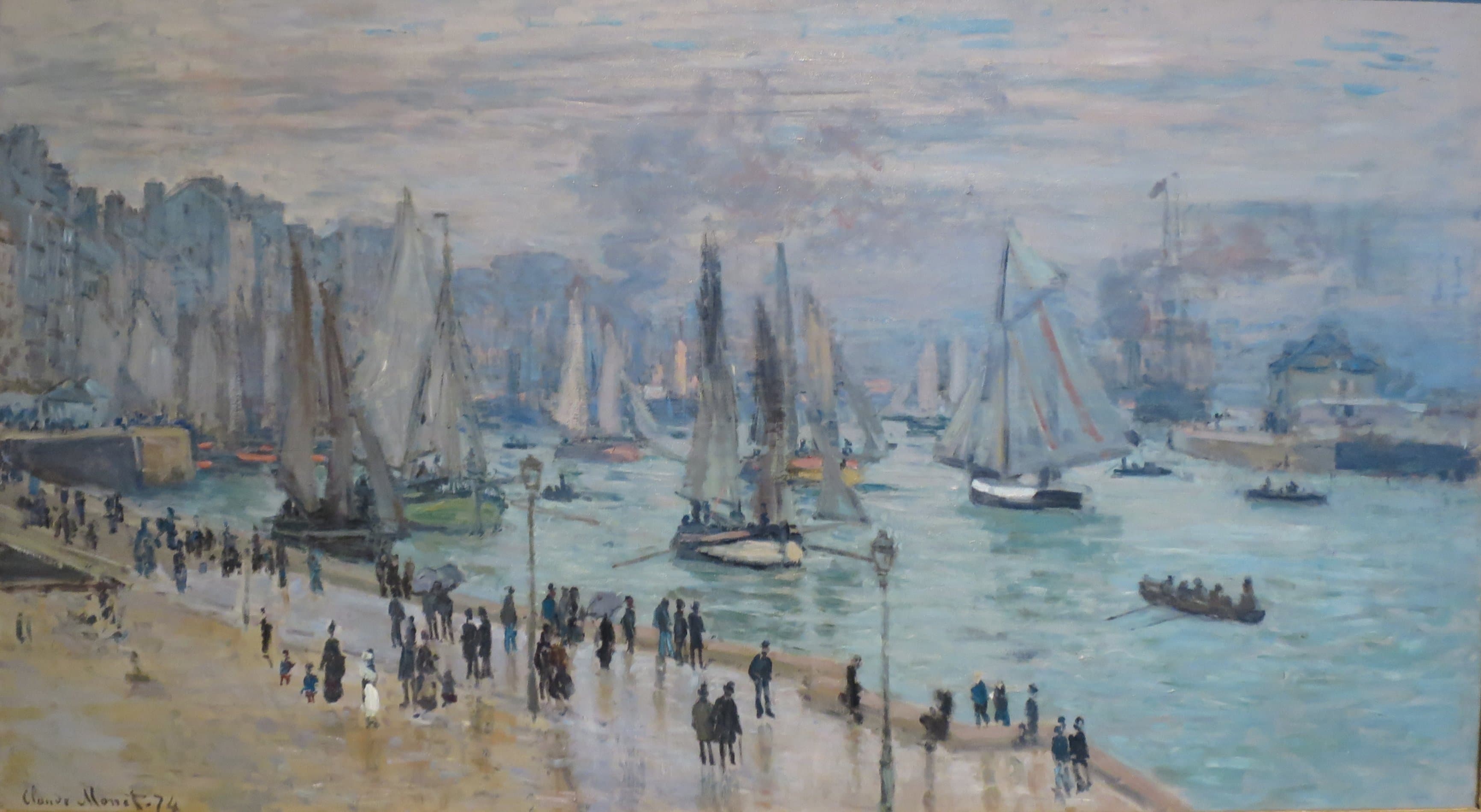
Fishing Boats Leaving the Harbor, Le Havre
Claude Monet · 1874
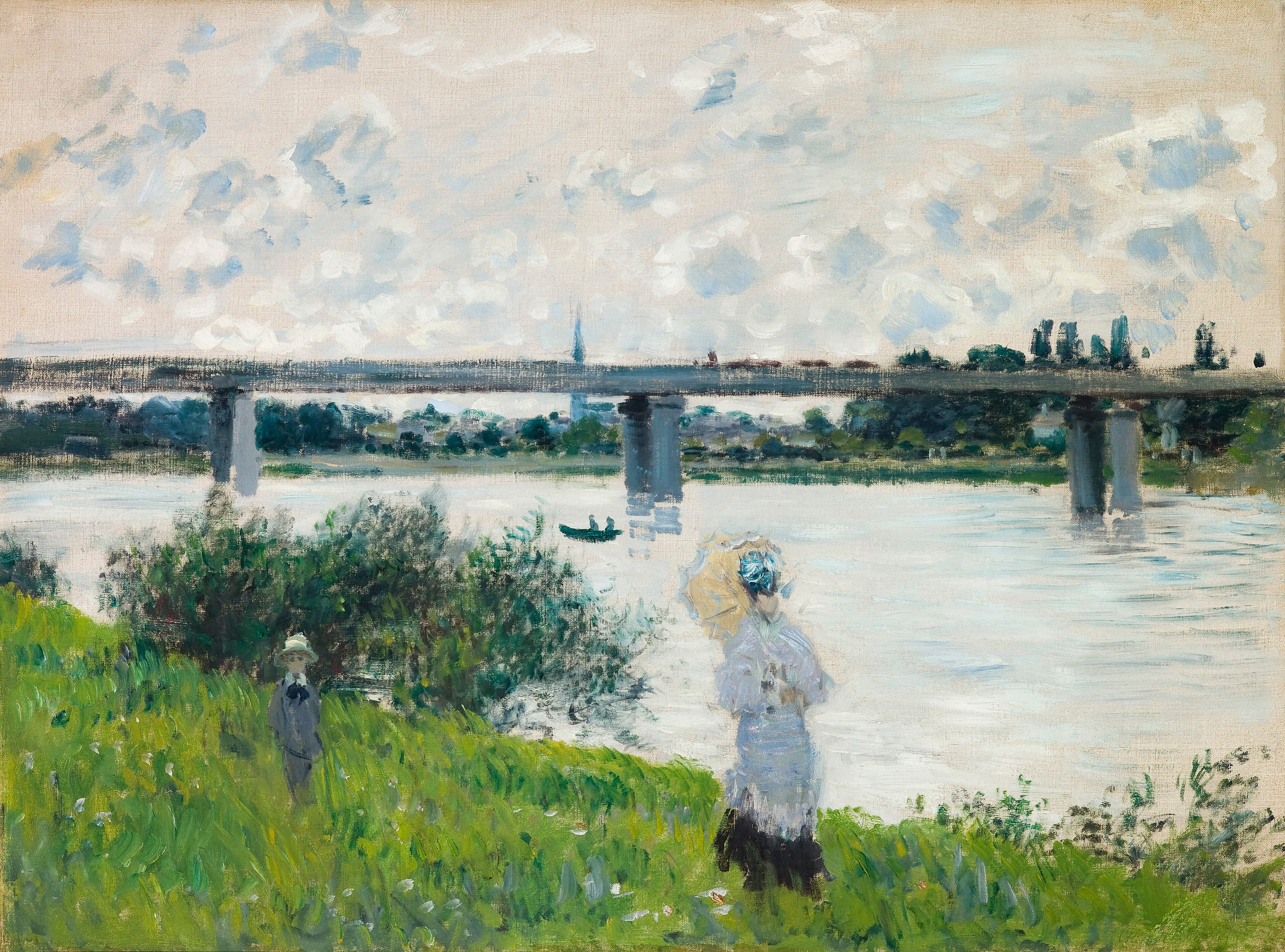
The Promenade with the Railroad Bridge, Argenteuil
Claude Monet · 1874
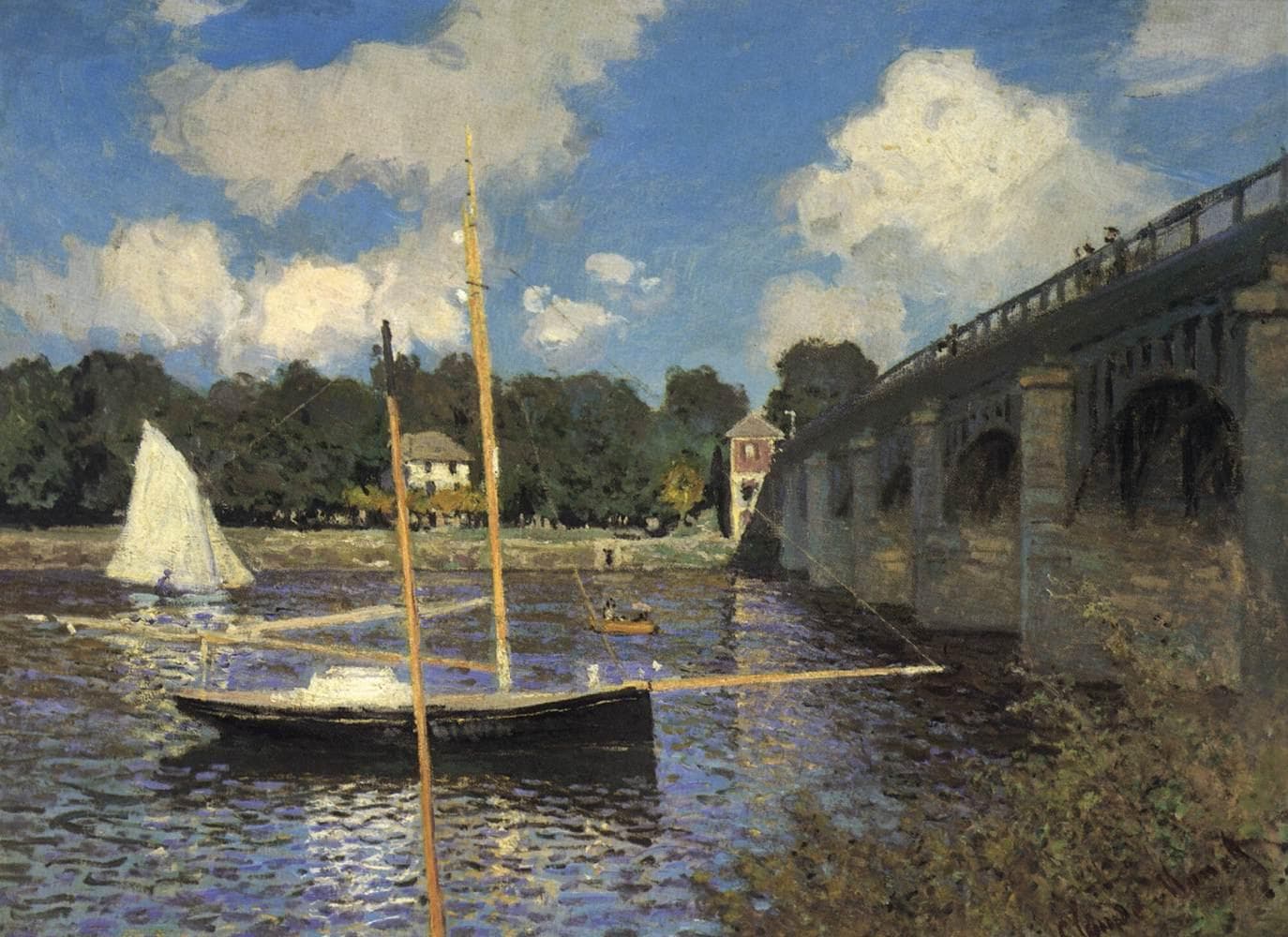
The Bridge at Argenteuil
Claude Monet · 1874
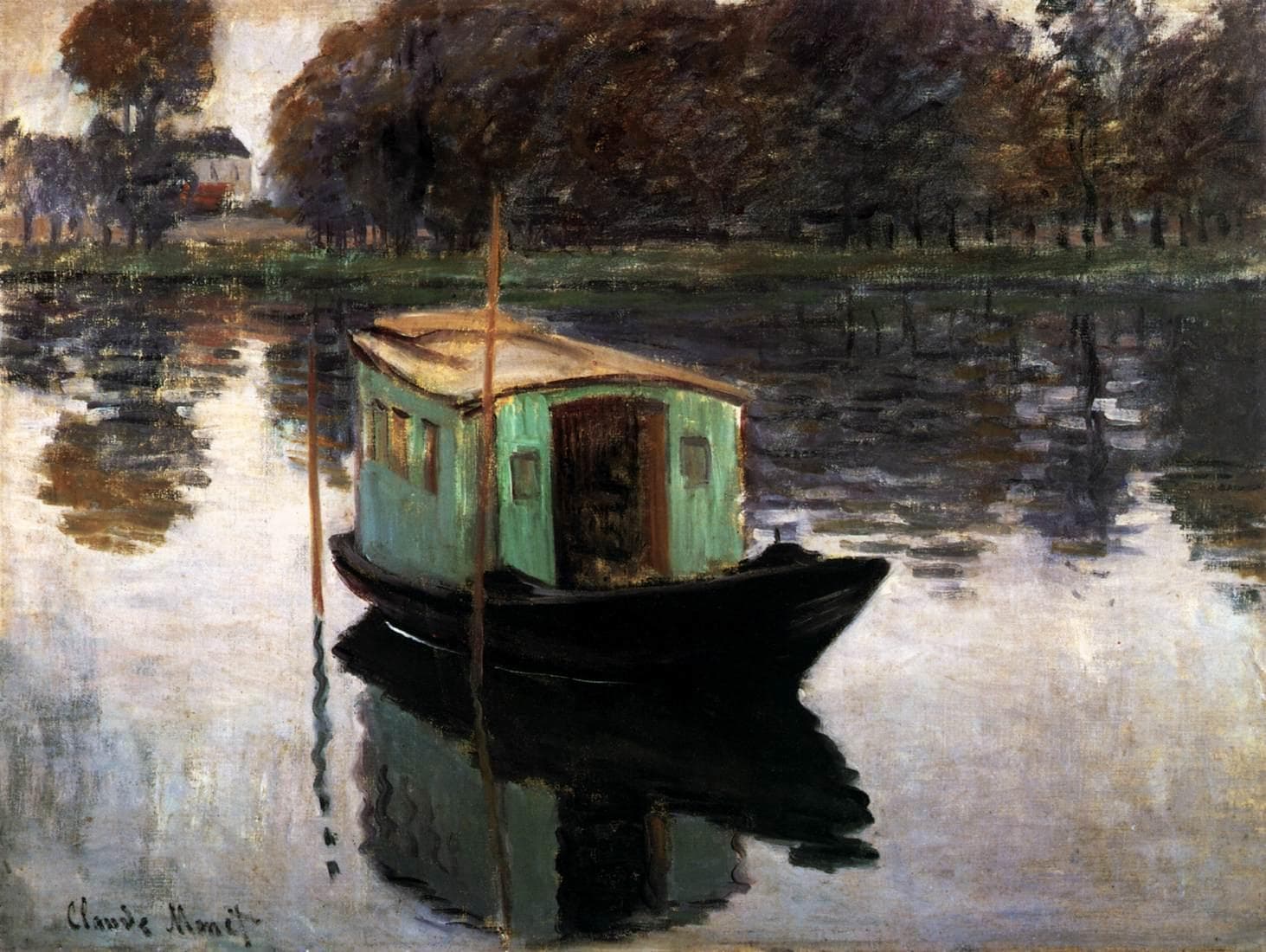
The Studio Boat
Claude Monet · 1874
Kindred works
You may also study
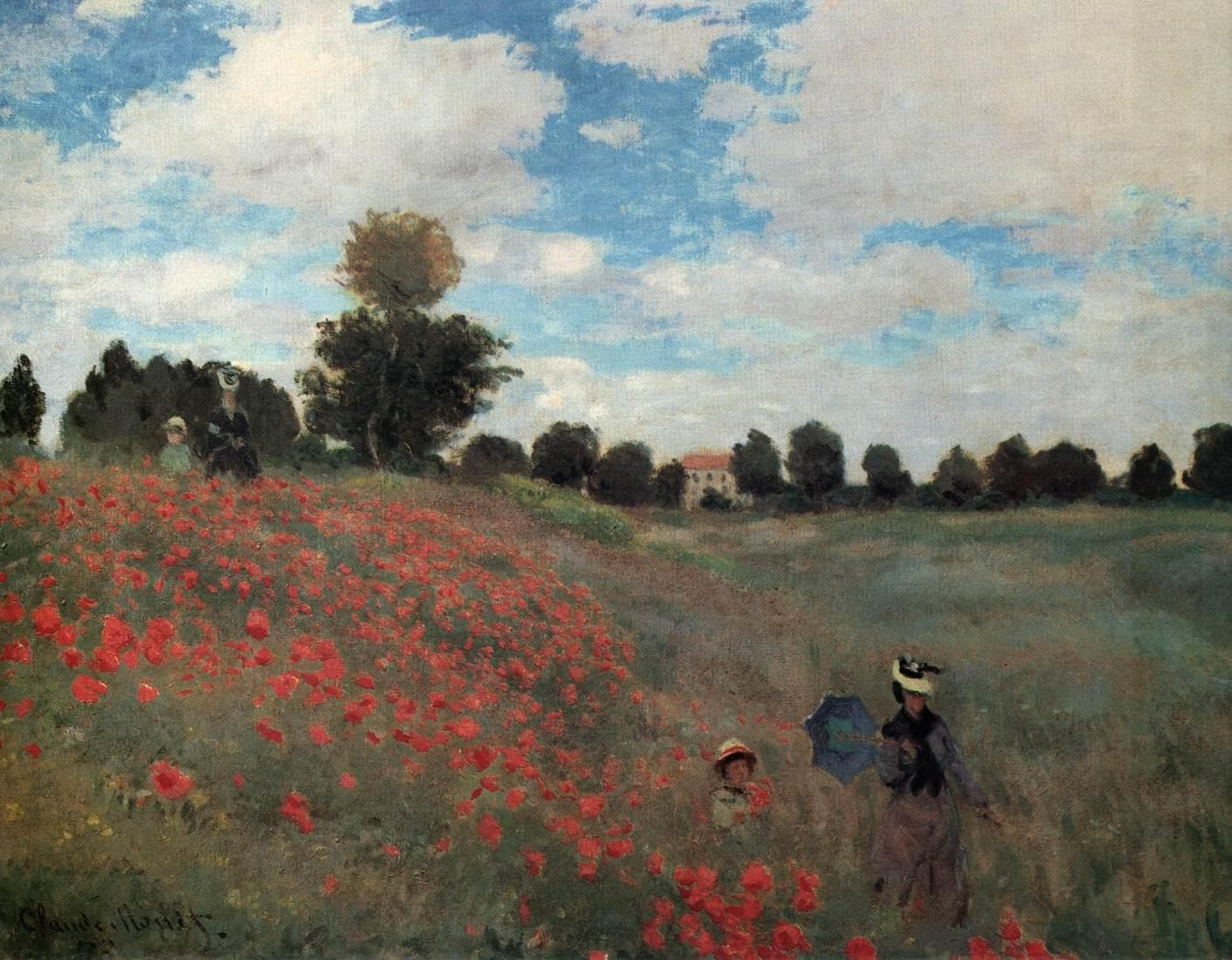
Poppy Field (Poppies at Argenteuil)
Claude Monet · 1873
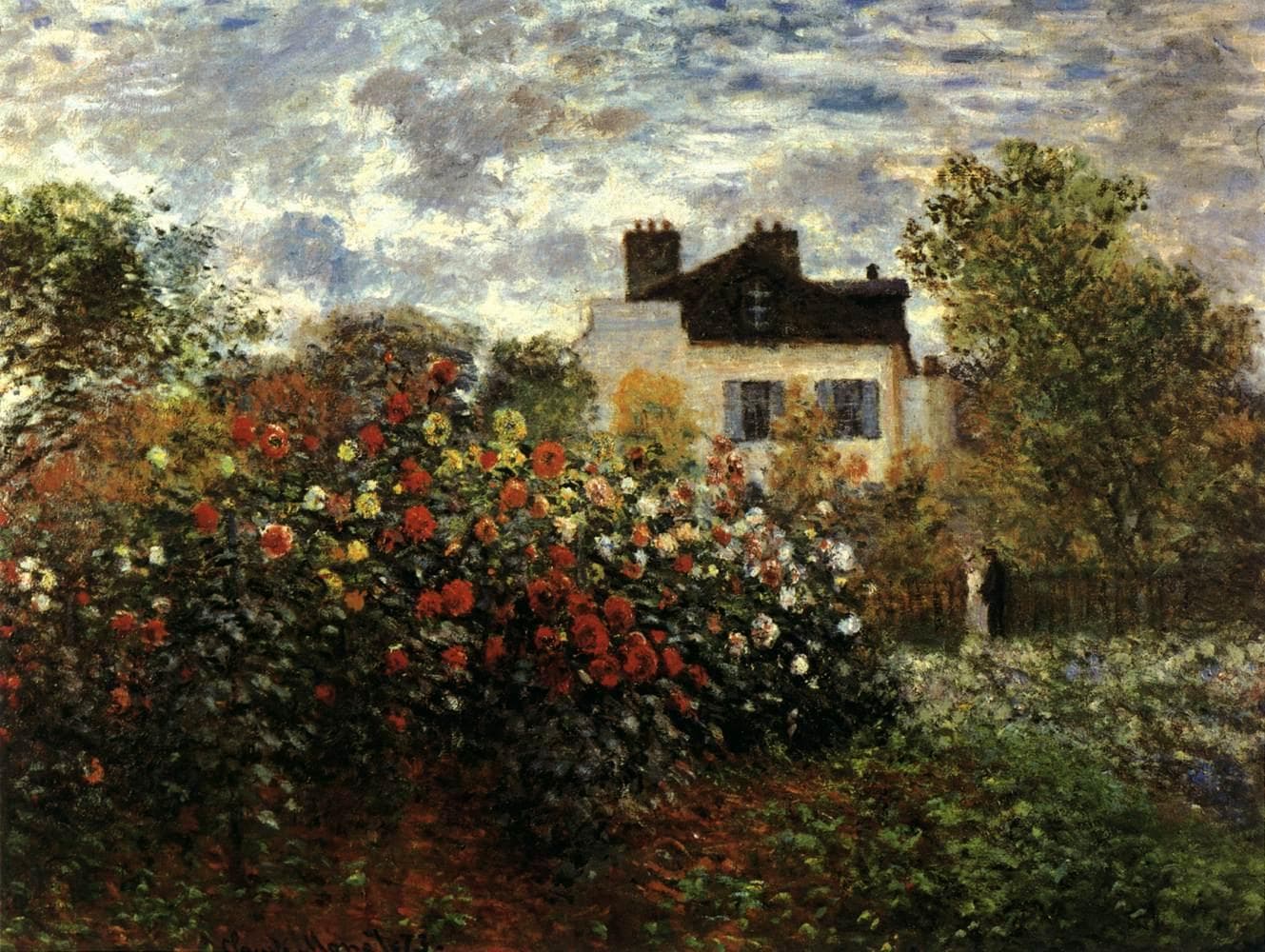
The Artist's Garden in Argenteuil (A Corner of the Garden with Dahlias)
Claude Monet · 1873
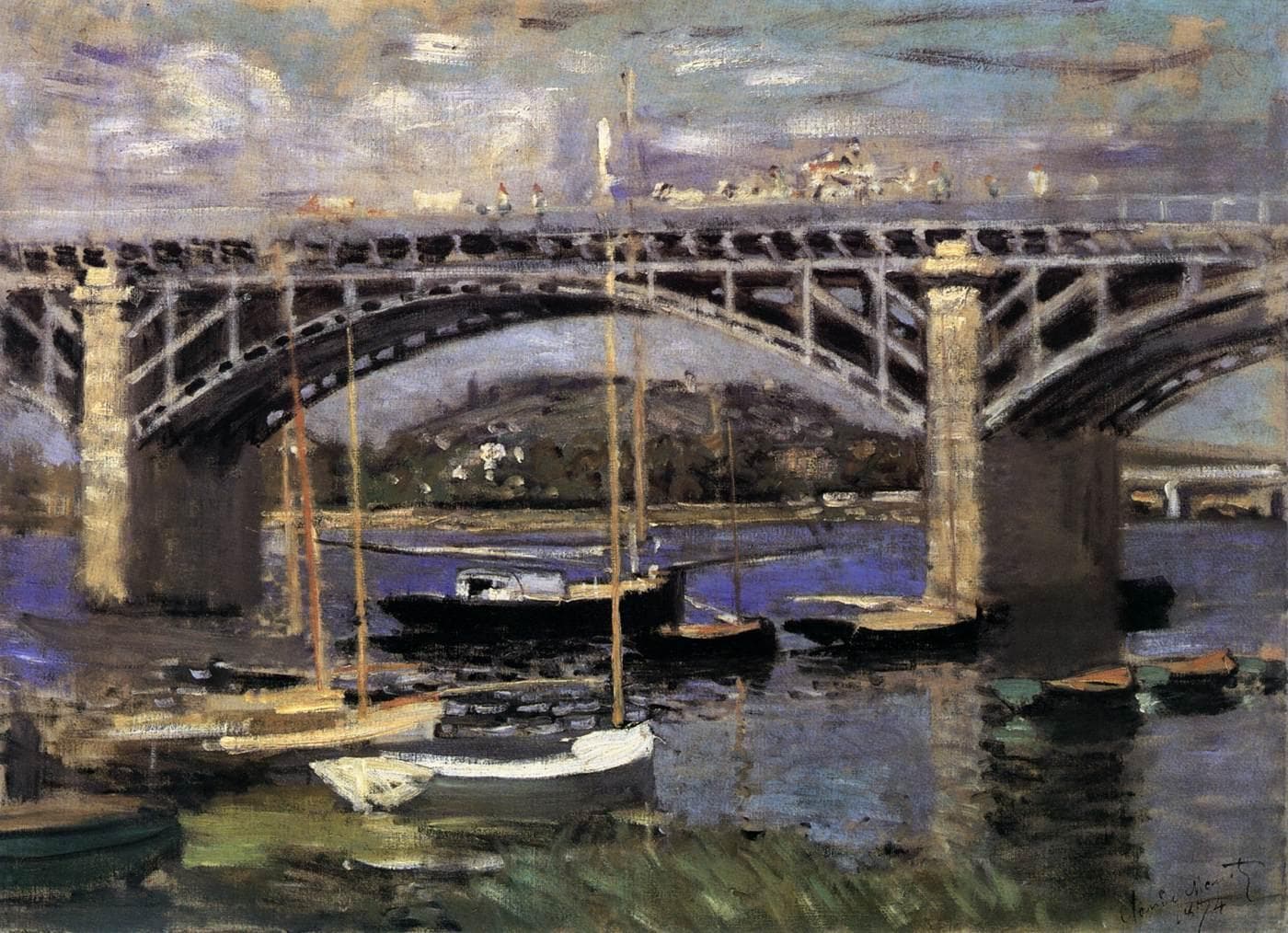
The Bridge at Argenteuil
Claude Monet · 1874
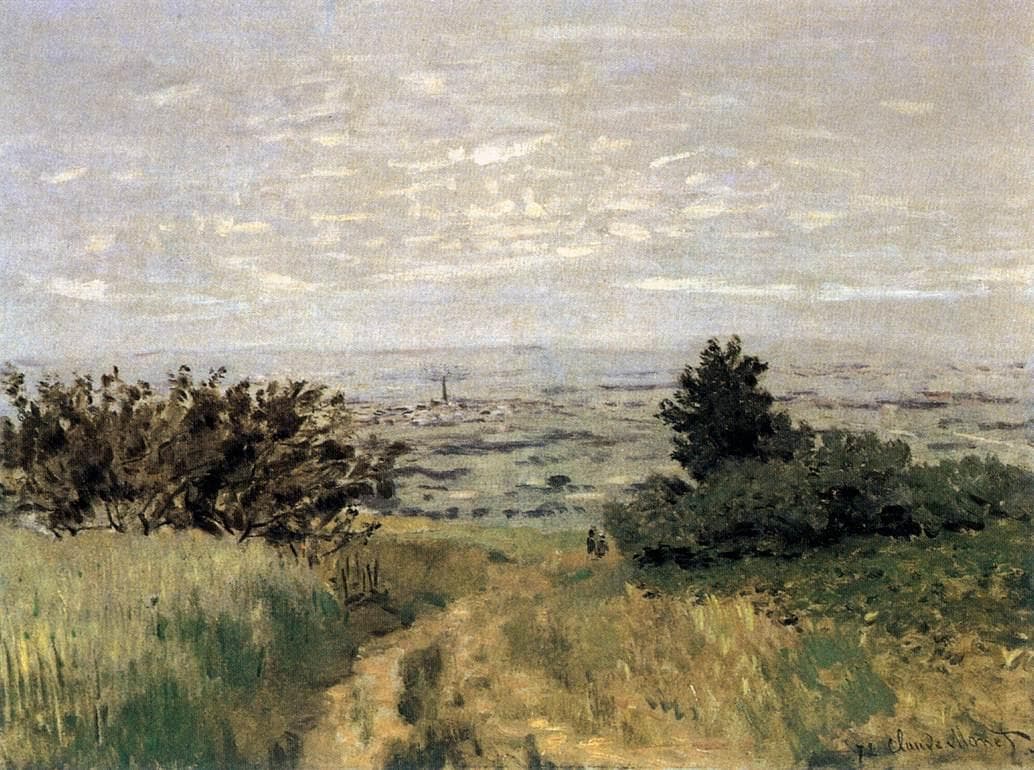
The Plain of Sannois at Argenteuil
Claude Monet · 1872

Venus de Milo
Alexandros of Antioch · c. 150–125 BC

The Scream
Edvard Munch · 1893

Ophelia
John Everett Millais · 1851–52

The Great Wave off Kanagawa
Katsushika Hokusai · c. 1830–32