Impressionism
The Luncheon (Monet's Garden at Argenteuil)
Claude Monet, c. 1873
The Luncheon (Le Déjeuner) is a large painting of about 1873 by Claude Monet showing the end of a summer lunch in his garden at Argenteuil, with his son Jean playing in the shade. It is in the Musée d'Orsay, Paris.
- Artist
- Claude Monet
- Date
- c. 1873
- Medium
- Oil on canvas
- Dimensions
- 160 × 201 cm
- Collection
- Musée d'Orsay, Paris, France
- Movement
- Impressionism
- Catalogue
- Wildenstein 285
Painted at Monet at ArgenteuilMore at Monet at the Musée d'Orsay
The Luncheon (Le Déjeuner), subtitled Decorative Panel, is one of Claude Monet's largest Impressionist canvases, painted around 1873 in the garden of the house he rented at Argenteuil, on the Seine west of Paris. At 160 × 201 cm it is close to a mural in scale. Monet showed it at the second Impressionist exhibition in 1876 under the label panneau décoratif, and two years later sold it to his friend and fellow painter Gustave Caillebotte. Through Caillebotte's bequest it entered the French national collections, and it now hangs in the Musée d'Orsay in Paris.
What you're looking at
Lunch is over, and the people have gone. A round table stands in the middle of the garden, its white cloth dappled with blue and lilac shadows from the trees. On it are the remains of the meal: a bowl of peaches, a crumpled napkin, a bread roll, a stemmed glass of red wine, cups, and a silver coffee pot on a dark tray, its curved surface flashing with reflected light. In front of the table, a wicker cart holds more fruit.
At the left, in the cool shade, sits Monet's son Jean, about six, in a straw hat and blue smock, absorbed in playing with something on the ground. In the background, beyond great banks of red geraniums, two women in summer dresses stroll near the house, one in white, the other half hidden by foliage. Above the table, a woman's straw hat trimmed with a long black ribbon hangs from the branch of a tree, swinging slightly. And on a bench at the lower right lie a parasol and a bag, as if their owner had just stepped away.
That is the painting's quiet trick: it is a picture of family life told almost entirely through objects. The hat, the parasol and the abandoned table tell us more about the people than their tiny, sketched figures do. Most viewers notice the table first and miss the hat in the tree, which is the single most charming detail in the picture.
Light and color
The whole canvas is an exercise in summer light filtered through leaves. The foreground is in shadow, painted in cool blues, violets and deep greens; the sunlit path and the house behind glow yellow and pink. Monet places the brightest whites, on the tablecloth and the coffee pot, exactly at the meeting point of light and shade. The geraniums are dabbed on in pure vermilion against green, a contrast of complementary colors that makes both vibrate.
A decorative panel
After 1870 Monet largely abandoned the very large formats of his early career, such as Women in the Garden. The Luncheon is an exception, and its title explains why: it was conceived as a decorative panel, a picture meant to hang in a room as part of its decoration, rather than as a Salon painting with a story. That idea of painting as a wall-sized environment would return, transformed, in his late Water Lilies.
Argenteuil years
Monet lived at Argenteuil from late 1871 to 1878 with his wife Camille and their son Jean. These were some of his most productive years, and the garden appears in many pictures, including Monet's Garden at Argenteuil, Camille Monet on a Garden Bench and Woman with a Parasol. Do not confuse this painting with Monet's earlier The Luncheon of 1868, an interior scene now in Frankfurt, or with his unfinished Le Déjeuner sur l'herbe of 1865–66, a picnic in the forest of Fontainebleau.
Caillebotte and the national collections
Caillebotte bought the painting from Monet on 10 March 1878. When he died in 1894, he left his collection of Impressionist works to the French state, and after long negotiations part of it, including this picture, entered the Musée du Luxembourg in 1896. It moved to the Louvre in 1929, to the Jeu de Paume in 1947 and to the Musée d'Orsay when it opened in 1986.
Is it one of Monet's most famous paintings?
It is among his best-known works of the 1870s, but Monet's most famous paintings are usually listed as Impression, Sunrise (1872), Woman with a Parasol (1875), the haystacks and Rouen Cathedral series of the 1890s, Bridge over a Pond of Water Lilies (1899) and the late Water Lilies. See the full list in Famous Monet Paintings.
Where to see it
Musée d'Orsay, Paris, in the Impressionist galleries on the fifth floor. The painting is in the public domain.
Questions & answers
Where is Monet's The Luncheon?
The Luncheon (Le Déjeuner, c. 1873) is in the Musée d'Orsay in Paris. Gustave Caillebotte bought it from Monet in 1878 and left it to the French state; it entered the Musée du Luxembourg in 1896, moved to the Louvre and the Jeu de Paume, and reached the Orsay in 1986.
What are Claude Monet's most famous paintings?
Monet's most famous works include Impression, Sunrise (1872), which gave Impressionism its name; Woman with a Parasol (1875); the Haystacks and Rouen Cathedral series of the 1890s; Bridge over a Pond of Water Lilies (1899); and the late Water Lilies panels in the Musée de l'Orangerie.
Who is in Monet's The Luncheon?
The child playing in the shade at the left is Monet's son Jean, born in 1867. The two women strolling in the background near the house are usually identified as Camille Monet and a visitor. The table, the hat hanging in the tree and the parasol on the bench suggest the family has just finished lunch.
Why is The Luncheon called a decorative panel?
Monet exhibited it at the 1876 Impressionist exhibition as a 'panneau décoratif,' a painting meant to decorate a room rather than tell a story. At 160 × 201 cm it is one of the few very large canvases he made after 1870, and it anticipates his later wall-sized Water Lilies.
More by the artist
Claude Monet

Bridge over a Pond of Water Lilies
Claude Monet · 1899

Woman with a Parasol – Madame Monet and Her Son
Claude Monet · 1875

Sunset in Venice
Claude Monet · 1908–12

La Grenouillère
Claude Monet · 1869

Beach in Pourville
Claude Monet · 1882

Springtime
Claude Monet · 1872

Boating on the River Epte
Claude Monet · 1890

The Seine at Asnières (Hermitage)
Claude Monet · 1873
Also painted in 1873
The same year
Lilac in the Sun
Claude Monet · 1873
Lilacs, Gray Weather
Claude Monet · 1872–73
The Museum at Le Havre
Claude Monet · 1873
The Seine at Asnières
Claude Monet · 1873
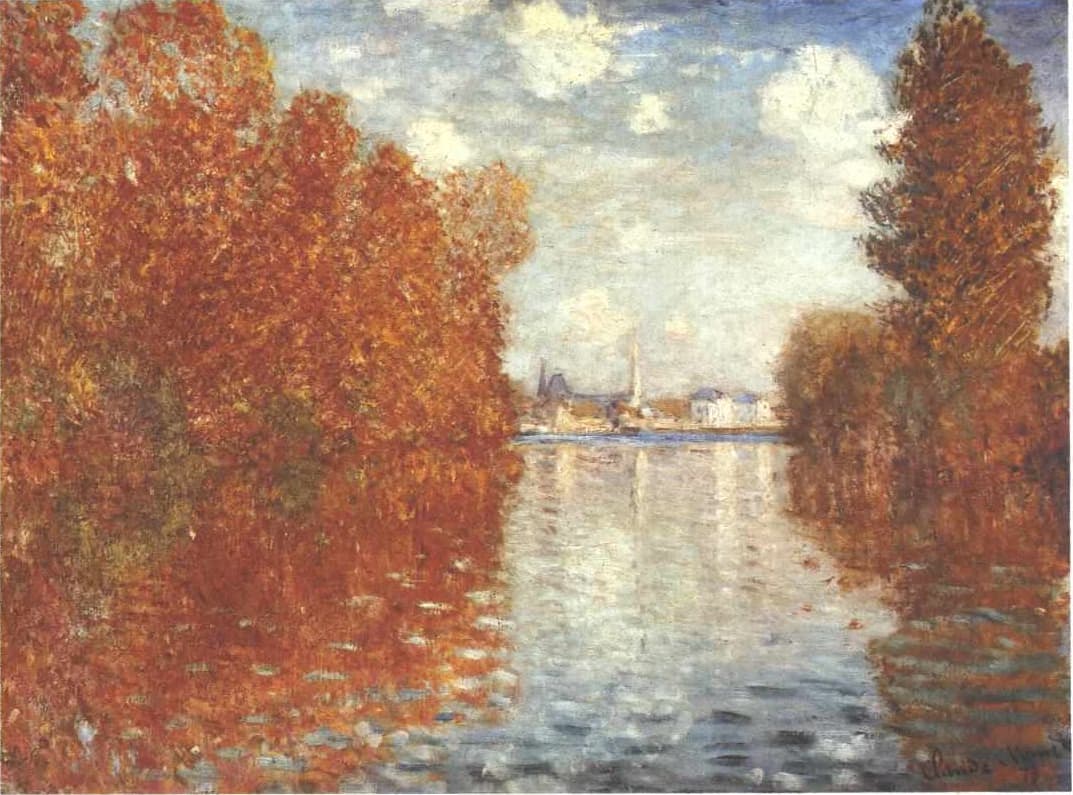
Autumn Effect at Argenteuil
Claude Monet · 1873
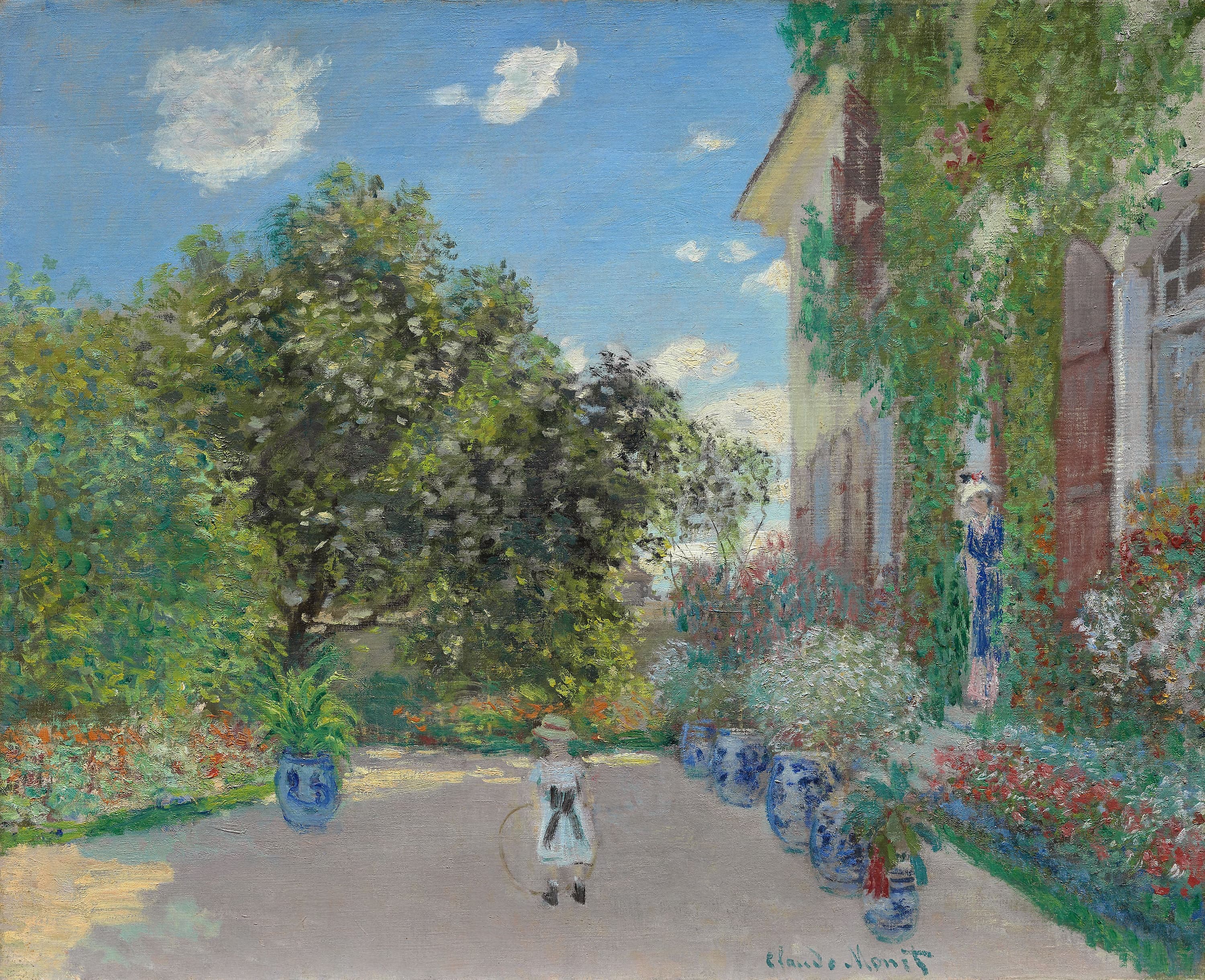
The Artist's House at Argenteuil
Claude Monet · 1873
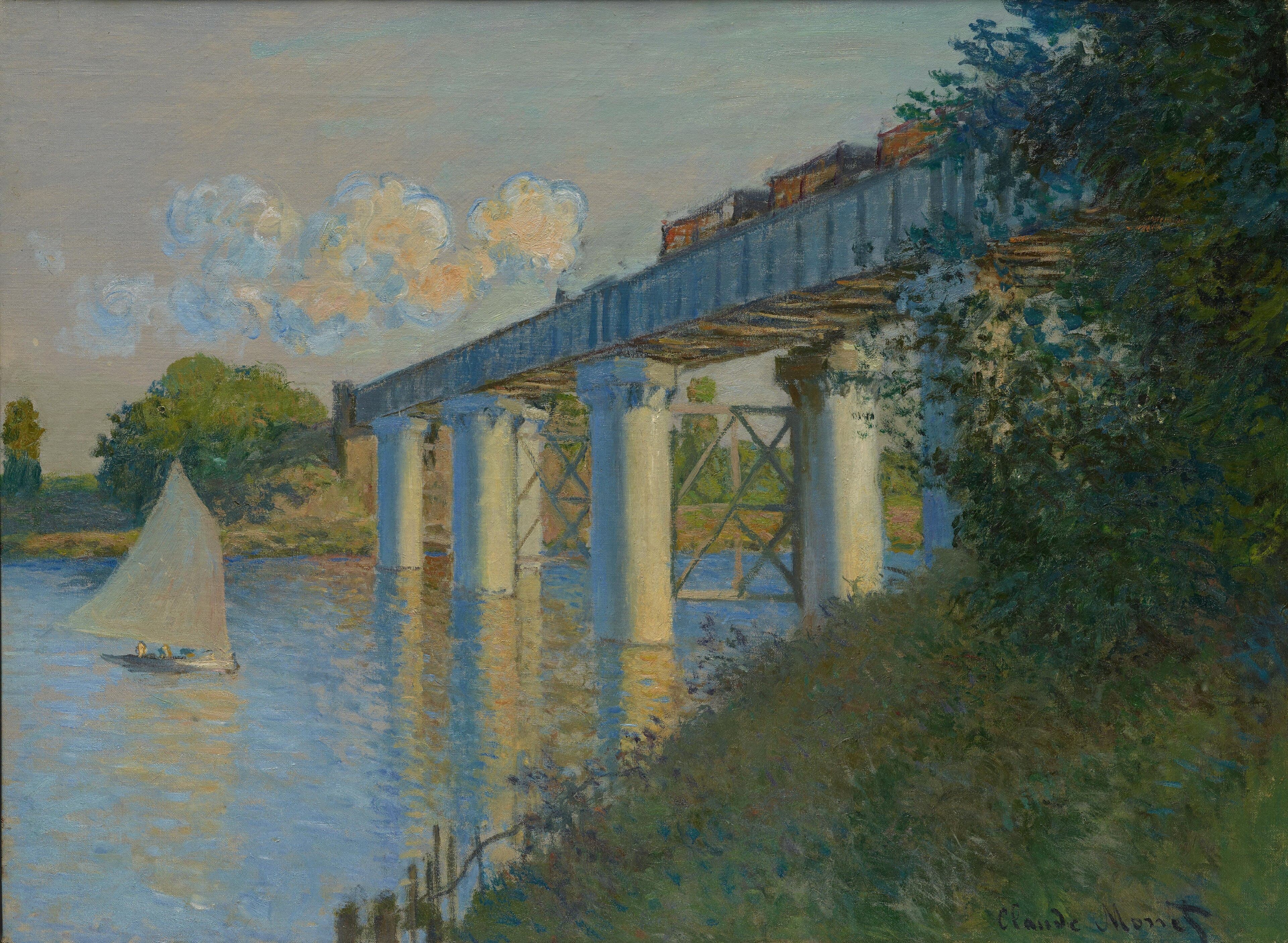
Railroad Bridge, Argenteuil
Claude Monet · 1873
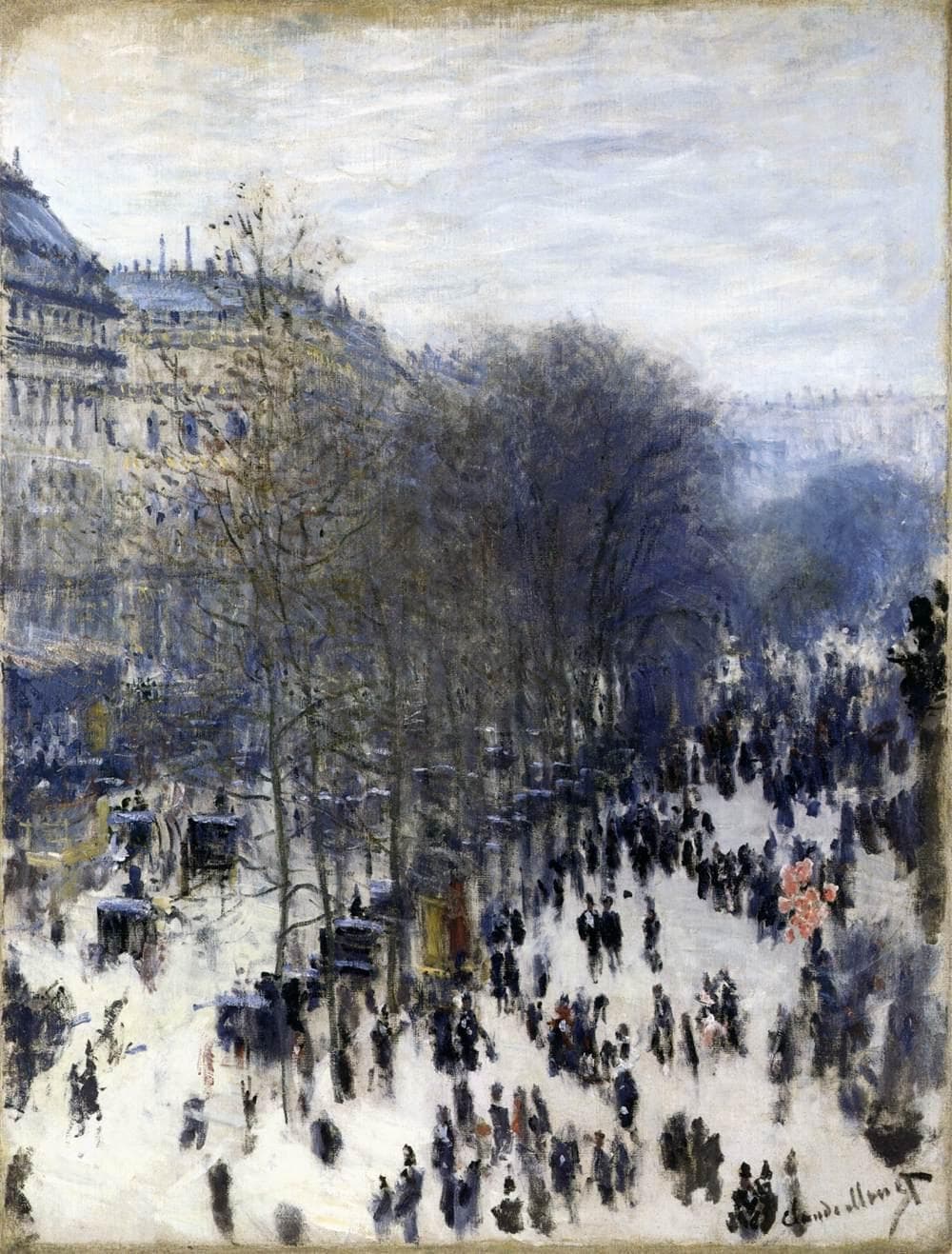
Boulevard des Capucines
Claude Monet · 1873–74
Kindred works
You may also study
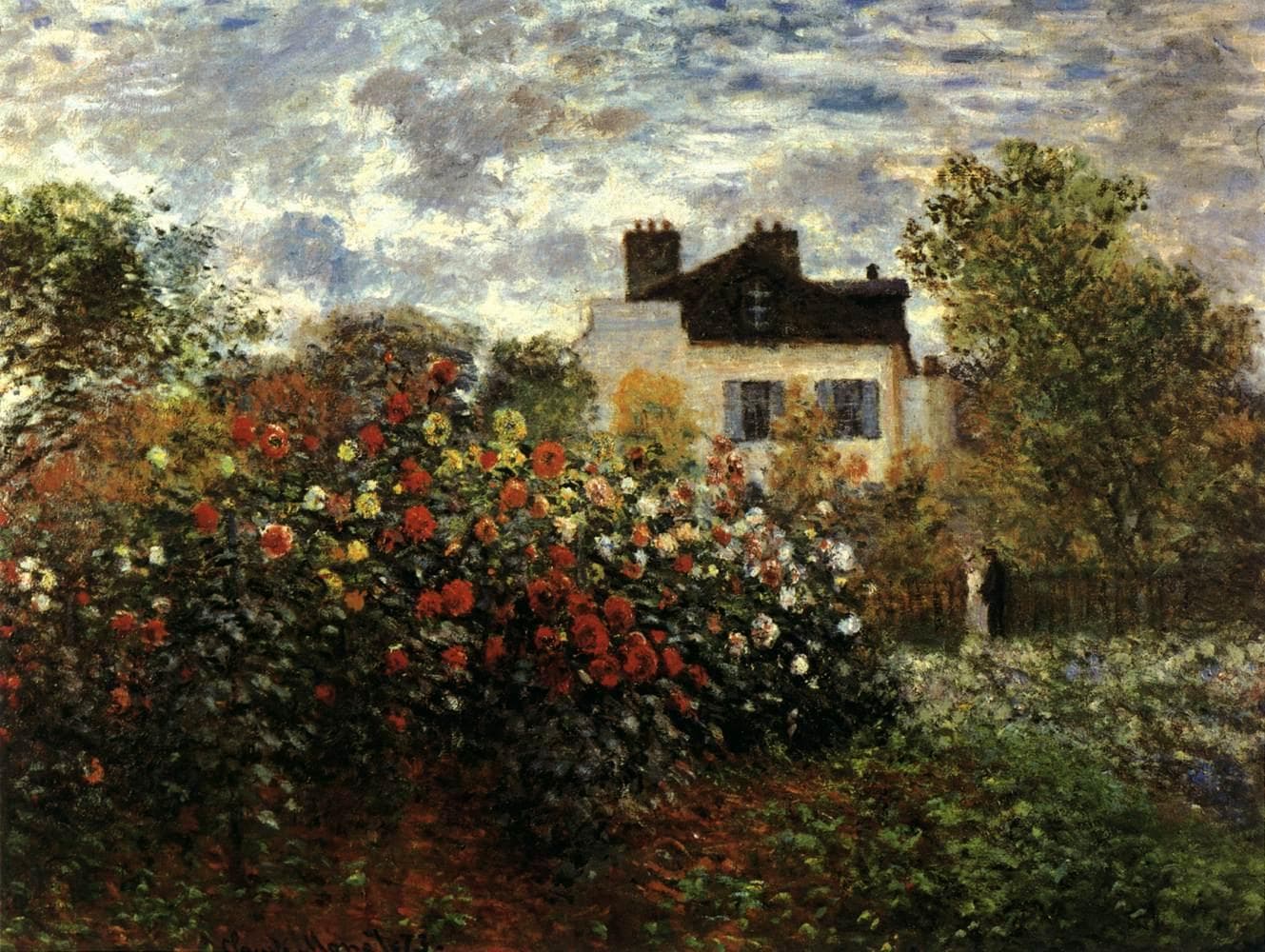
The Artist's Garden in Argenteuil (A Corner of the Garden with Dahlias)
Claude Monet · 1873
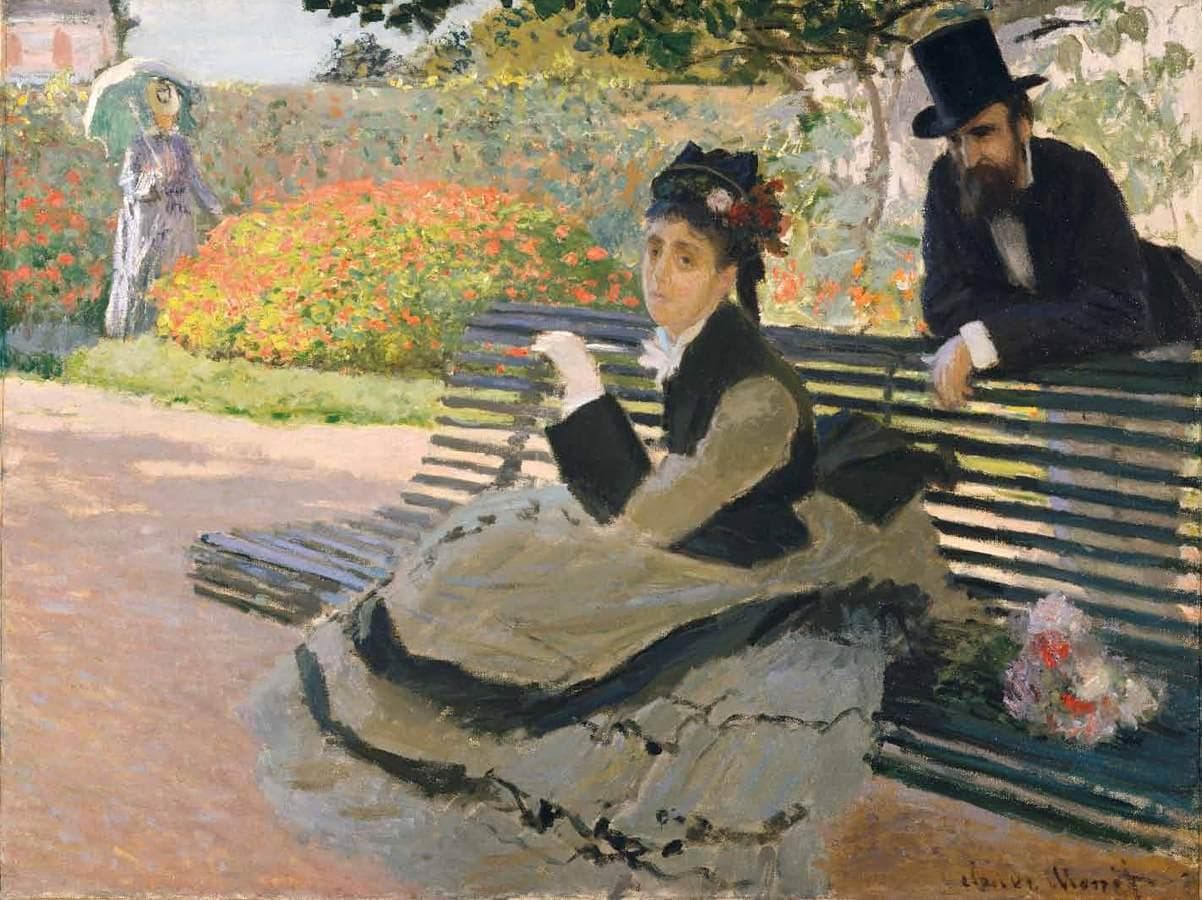
Camille Monet on a Garden Bench
Claude Monet · 1873
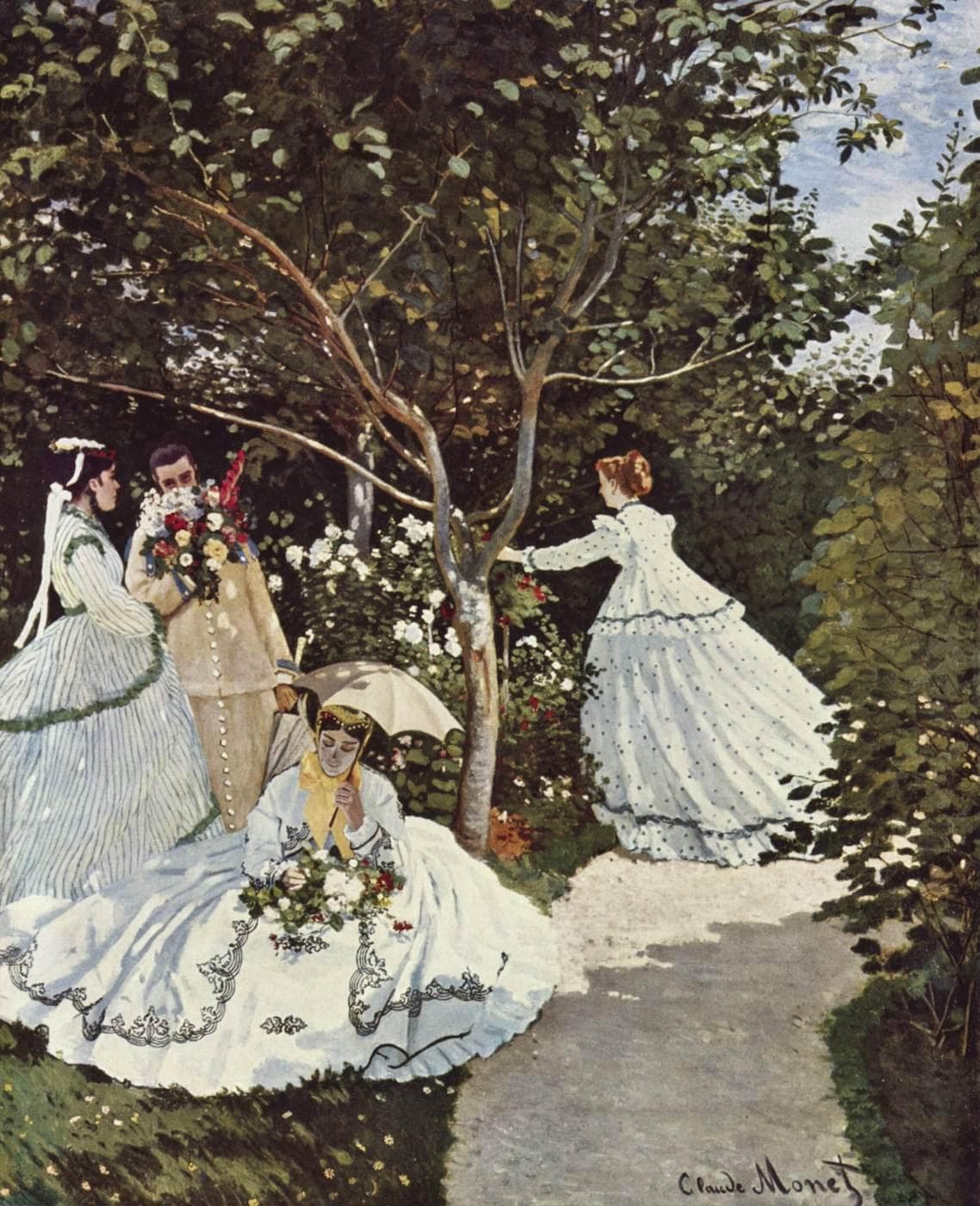
Women in the Garden
Claude Monet · 1866–67
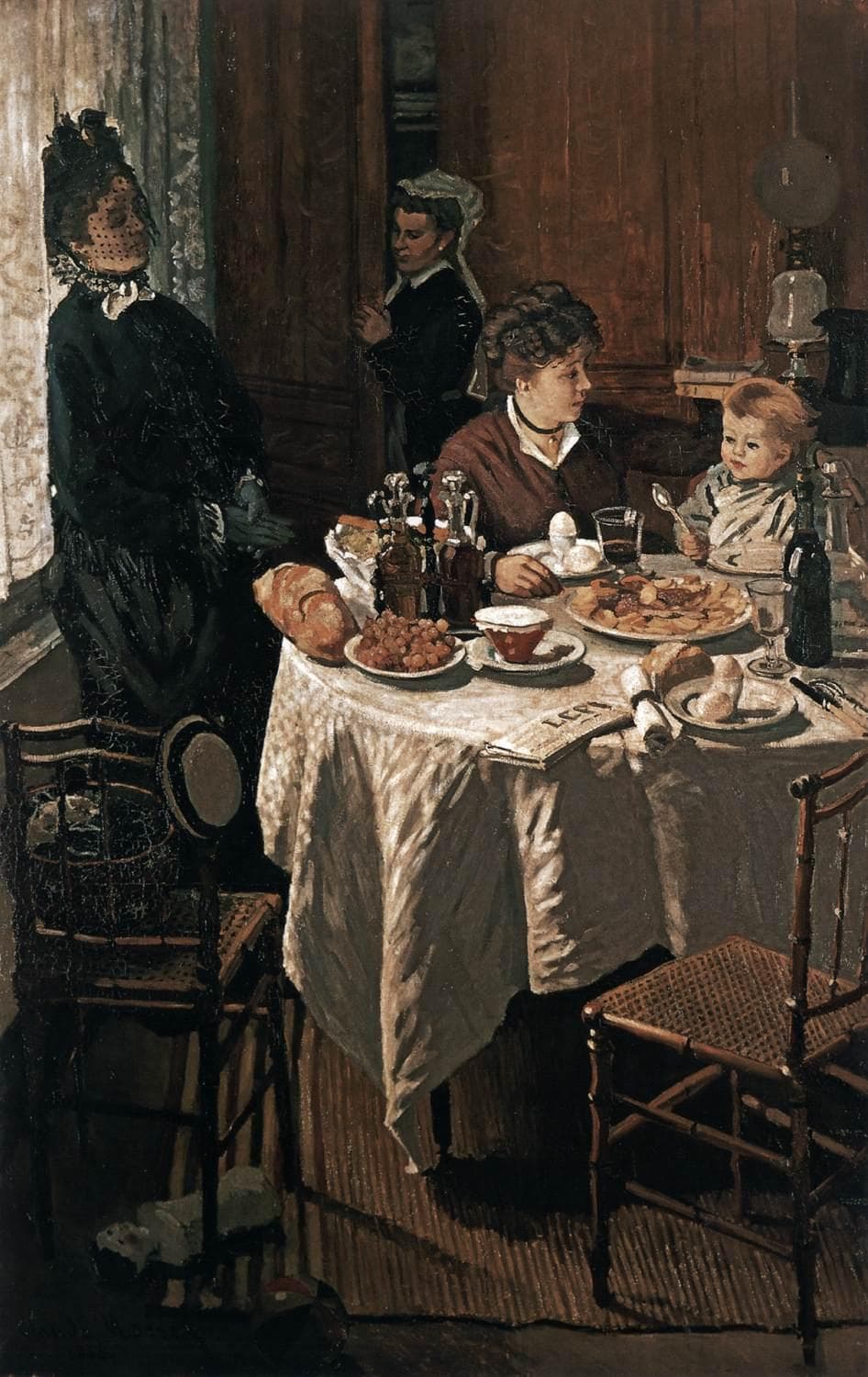
The Lunch
Claude Monet · 1868
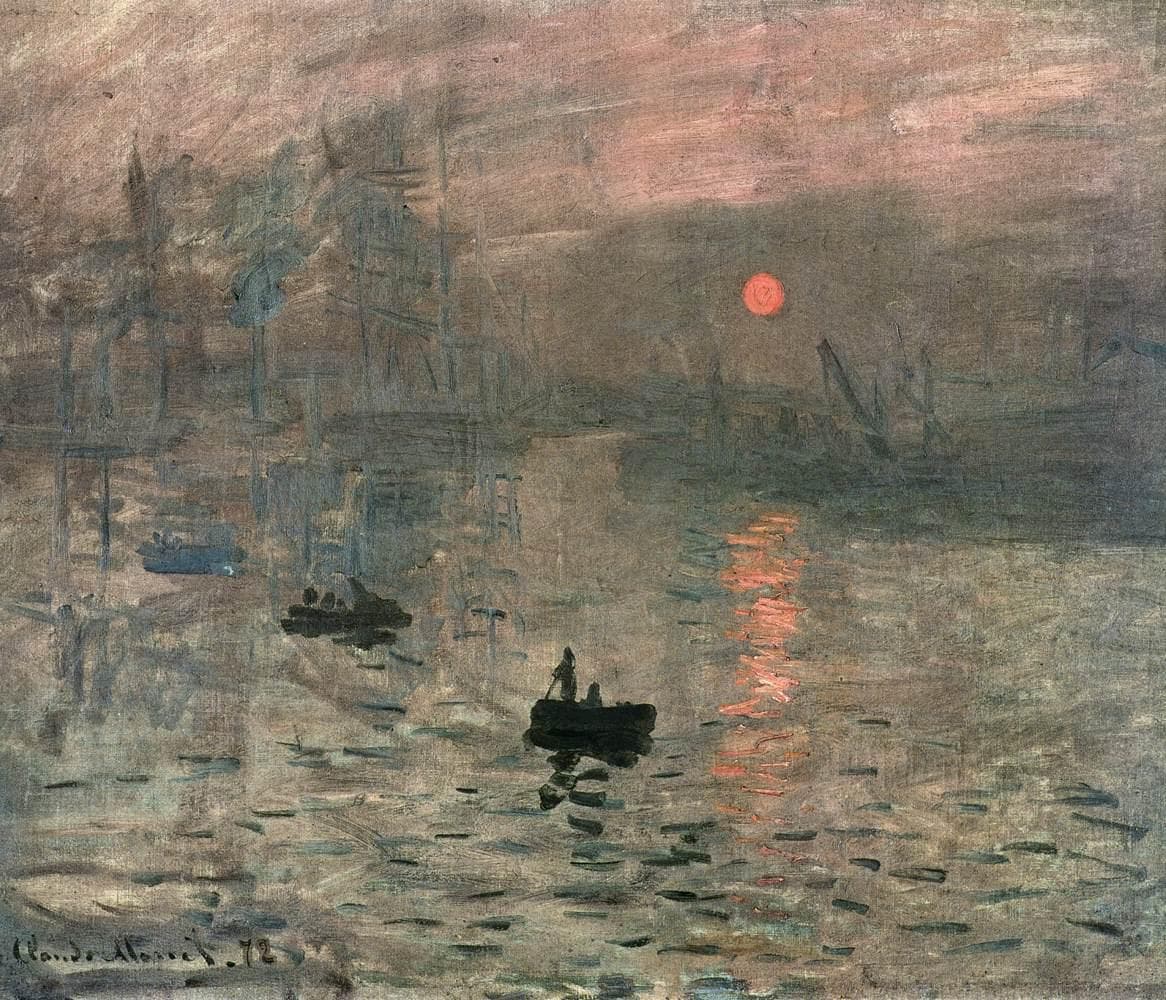
Impression, Sunrise
Claude Monet · 1872

Venus de Milo
Alexandros of Antioch · c. 150–125 BC

The Scream
Edvard Munch · 1893
The Thinker
Auguste Rodin · Modeled 1880–82; enlarged 1902–03; this cast 1904