Impressionism
Boulevard Saint-Denis, Argenteuil, in Winter
Claude Monet, 1875
Boulevard Saint-Denis, Argenteuil, in Winter is an 1875 oil painting by Claude Monet showing the snowy street where he lived, as the sun struggles through light snowfall. It is in the Museum of Fine Arts, Boston.
- Artist
- Claude Monet
- Date
- 1875
- Medium
- Oil on canvas
- Dimensions
- 60.9 × 81.6 cm
- Collection
- Museum of Fine Arts, Boston, Boston, United States
- Movement
- Impressionism
- Catalogue
- Wildenstein 357a
Painted at Monet at ArgenteuilMore at Monet at the MFA Boston
What you are looking at
A snowy lane runs straight toward us between two fences: a sagging wooden picket fence on the left, a low hedge on the right. Beyond, gabled villas with white roofs and a garden wall close the view, and bare, frosted trees stand against a pale, heavy sky. Several figures walk toward us along the lane, bent under dark umbrellas, one carrying what looks like a bundle. The light is the real subject. The sun has not quite broken through: it shows as a hazy yellow disc behind the cloud, upper left, and turns the snow from blue-gray to a faint cream, the moment, as the Museum of Fine Arts, Boston puts it, when the sun struggles to break through a light snowfall.
This is the Boulevard Saint-Denis in Argenteuil, the street where Monet himself lived. In 1874 he moved his family into a newly built house there, a short walk from the Seine, and the painting is effectively a view from his own doorstep.
The winter of 1874–75
Argenteuil, a small industrial and boating town northwest of Paris, was Monet's home from December 1871 to early 1878, the most productive years of early Impressionism. The winter of 1874–75 was unusually snowy, and Monet seized it. He painted about eighteen snow scenes of the town that season, almost all of motifs close to his house. A Christie's catalogue entry for one of the group suggests that this painting dates from late January or February 1875, after the deep snow had given way to a lighter fall and frost.
Monet made a preparatory sketch before painting this canvas, which is a useful corrective to the myth that every Impressionist picture was dashed off in a single sitting. The final work was painted out of doors, but planned.
Close looking
Snow is a test of a painter's color. Monet almost never paints it white. Look at the road: it is laid in with lilac, pale blue and gray where shadows fall, and warmed with yellowish cream in the patches the hidden sun reaches. The sky repeats those notes in reverse, so that ground and air seem made of the same damp light.
The figures are worth searching for. They are made of a handful of strokes each, a dark wedge for a coat and a curved stroke for an umbrella, yet you can tell which way they are walking. The MFA notes that the falling snow and the umbrella-carrying figures recall Japanese woodblock prints, which Monet collected; snow scenes with umbrellas are a staple of prints by Hiroshige and others. Monet takes the motif and dissolves it into atmosphere.
The fence on the left is the boldest passage in the picture: dozens of vertical strokes of brown and olive, each topped with a dab of white where snow has settled on the pickets. On the right, the hedge is a mass of dark green-brown scumbled over with white. These two dark wings funnel the eye down the white lane to the walkers and the houses, a classic perspective device handled with nothing but loose paint.
The trees in the distance are drawn with quick, broken lines, and their tops blur into the sky. Nothing is outlined. The whole picture is held together by close values: very little in it is truly dark or truly bright, which is exactly what a snowy, overcast day looks like.
Why it matters
Monet's snow paintings, from The Magpie of 1868–69 onward, were among his most radical works. Academic painters treated snow as a white surface with dark shadows. Monet showed that snow is a mirror for the sky, full of color, and that a dull winter day could be as rich a subject as a summer garden. The Argenteuil snowscapes of 1875 are the most concentrated group of these experiments.
The painting also records ordinary suburban life, the new kind of modern landscape the Impressionists claimed. This is not a picturesque village but a recently developed street on the edge of Paris, with walls, gates and pedestrians going about their errands.
A street, not a view
It is worth noticing how unpicturesque the motif is. There is no church, no river, no monument, only a lane, two fences and a row of new houses. Monet's choice of such an ordinary corner was itself a statement. The Impressionists argued that modern life, including the plain streets of the suburbs where they could afford to live, was a fit subject for serious painting, and that the drama could come entirely from weather and light. Here a few people hurrying home through falling snow, and a sun that refuses to come out, are enough.
Provenance
The MFA's provenance traces the painting from the Paris collector Henri Kapferer, through the dealer Durand-Ruel, to collectors in Boston. It was given to the museum by Richard Saltonstall in 1978 (accession 1978.633).
Related works
See more of the same winter in Snow at Argenteuil, The Boulevard de Pontoise in Argenteuil under Snow, Train in the Snow at Argenteuil and View at Argenteuil, Snow. The wider story is in Famous Monet Paintings.
Where to see it
The painting belongs to the Museum of Fine Arts, Boston, which has one of the largest Monet collections outside France. Display status changes, so check the museum's online collection before visiting.
Questions & answers
Where is Boulevard Saint-Denis, Argenteuil, in Winter?
The painting is in the Museum of Fine Arts, Boston, which received it in 1978 as a gift from Richard Saltonstall (accession 1978.633). The museum's display changes, so check its online collection to see whether the canvas is currently on view.
When did Monet paint Boulevard Saint-Denis in winter?
Monet painted it in 1875, during the snowy winter of 1874–75, when he made about eighteen snow scenes of Argenteuil. It was probably painted in late January or February 1875, after the deep snow had thinned to a lighter fall.
Did Monet live on the Boulevard Saint-Denis?
Yes. In 1874 Monet moved his family into a new house on the Boulevard Saint-Denis in Argenteuil, near the Seine. Most of his 1875 snow paintings show motifs within a short walk of that house, so this view is close to his own front door.
How big is the painting?
It is an oil on canvas measuring 60.9 × 81.6 cm, about 24 × 32 inches, a standard landscape size that Monet used often for paintings made outdoors.
More by the artist
Claude Monet

Bridge over a Pond of Water Lilies
Claude Monet · 1899

Woman with a Parasol – Madame Monet and Her Son
Claude Monet · 1875

Sunset in Venice
Claude Monet · 1908–12

La Grenouillère
Claude Monet · 1869

Beach in Pourville
Claude Monet · 1882

Springtime
Claude Monet · 1872

Boating on the River Epte
Claude Monet · 1890

The Seine at Asnières (Hermitage)
Claude Monet · 1873
Also painted in 1875
The same year
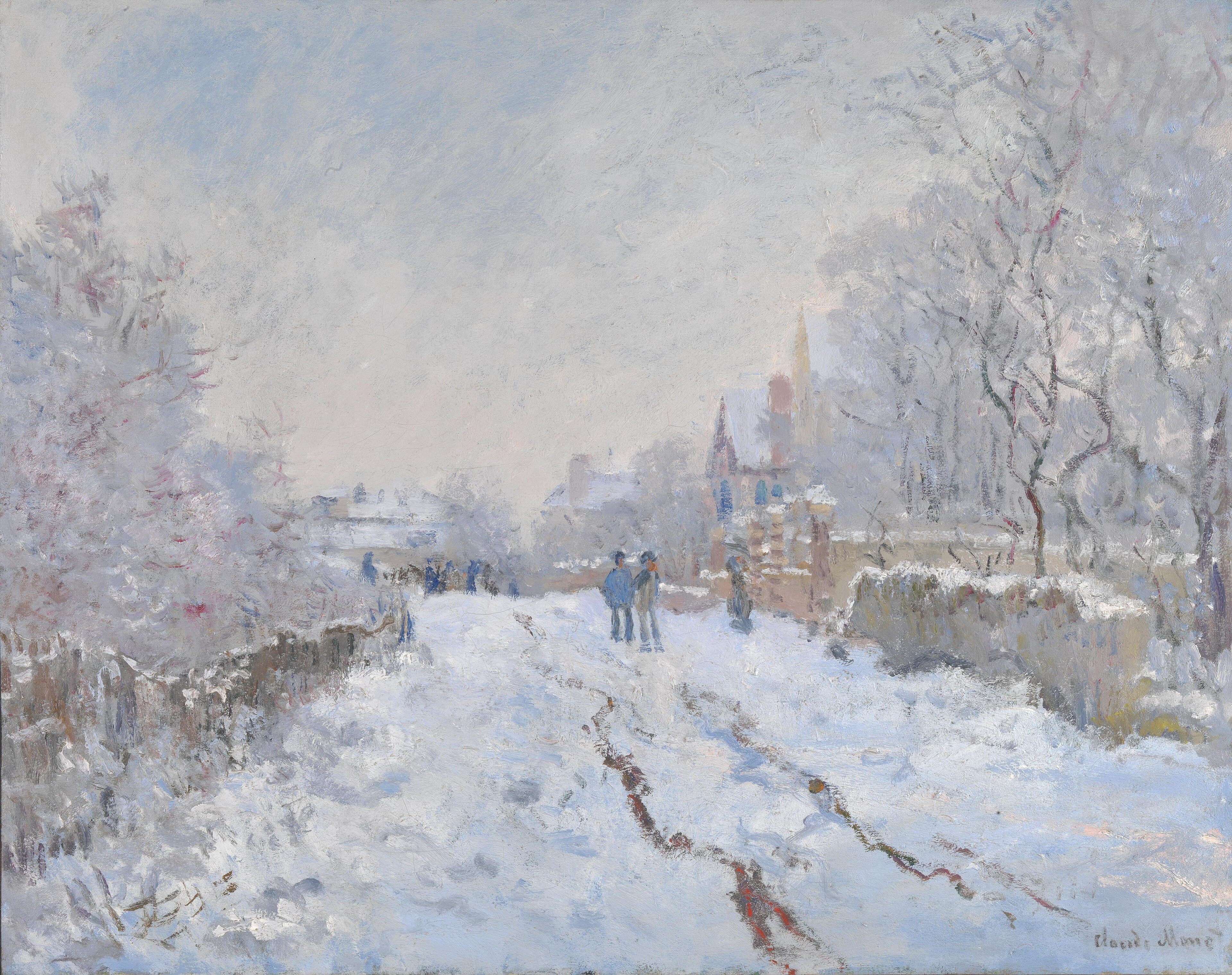
Snow Scene at Argenteuil
Claude Monet · 1875
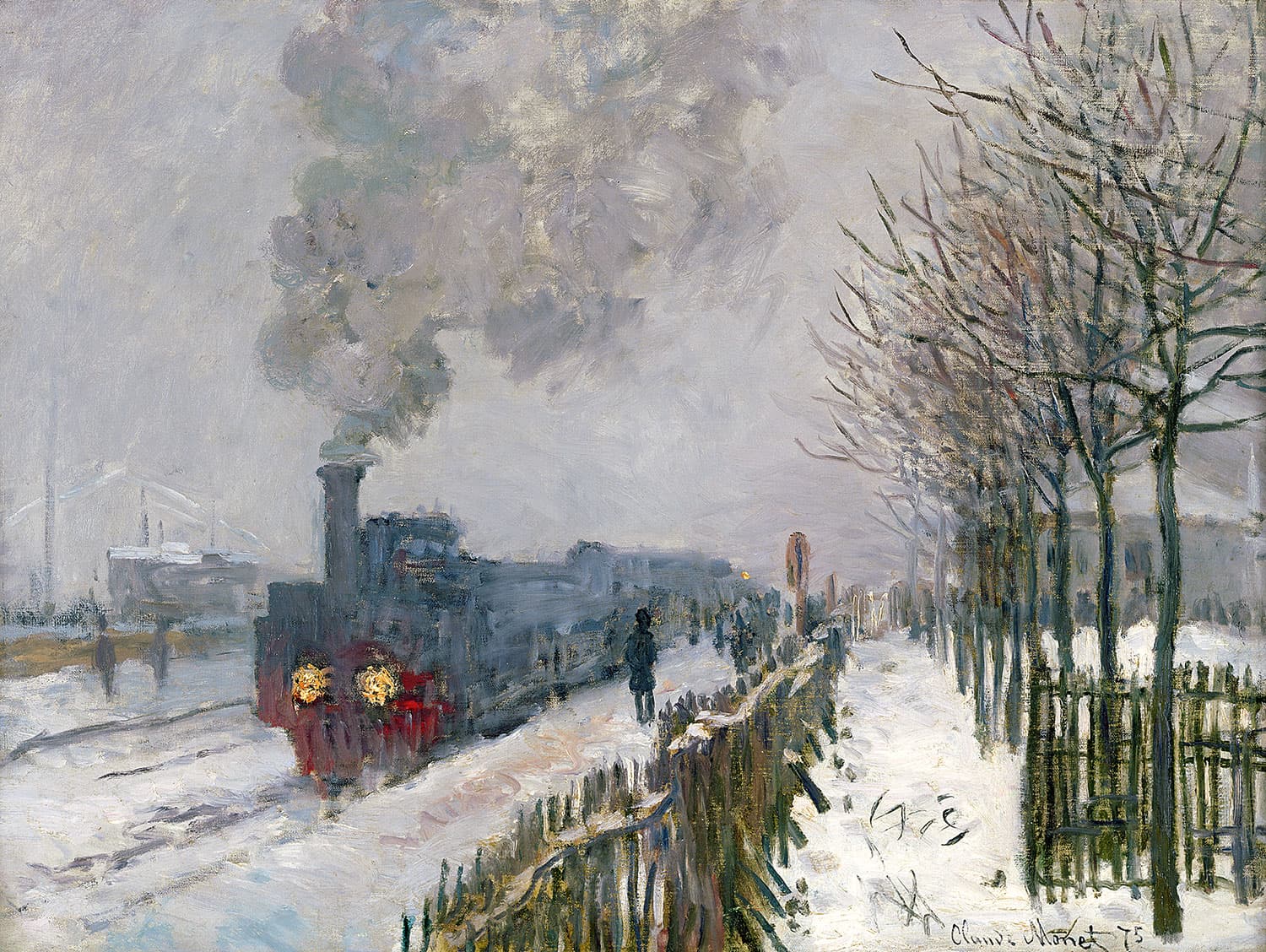
Train in the Snow (The Locomotive)
Claude Monet · 1875
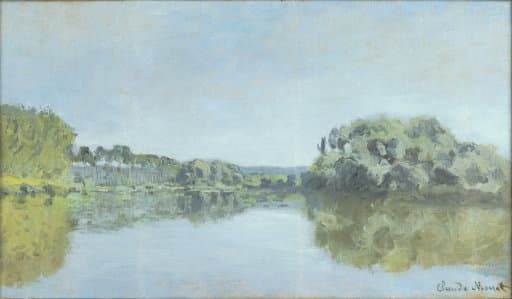
Bords de la Seine à Argenteuil
Claude Monet · 1870s (inscribed 1875 on the frame)
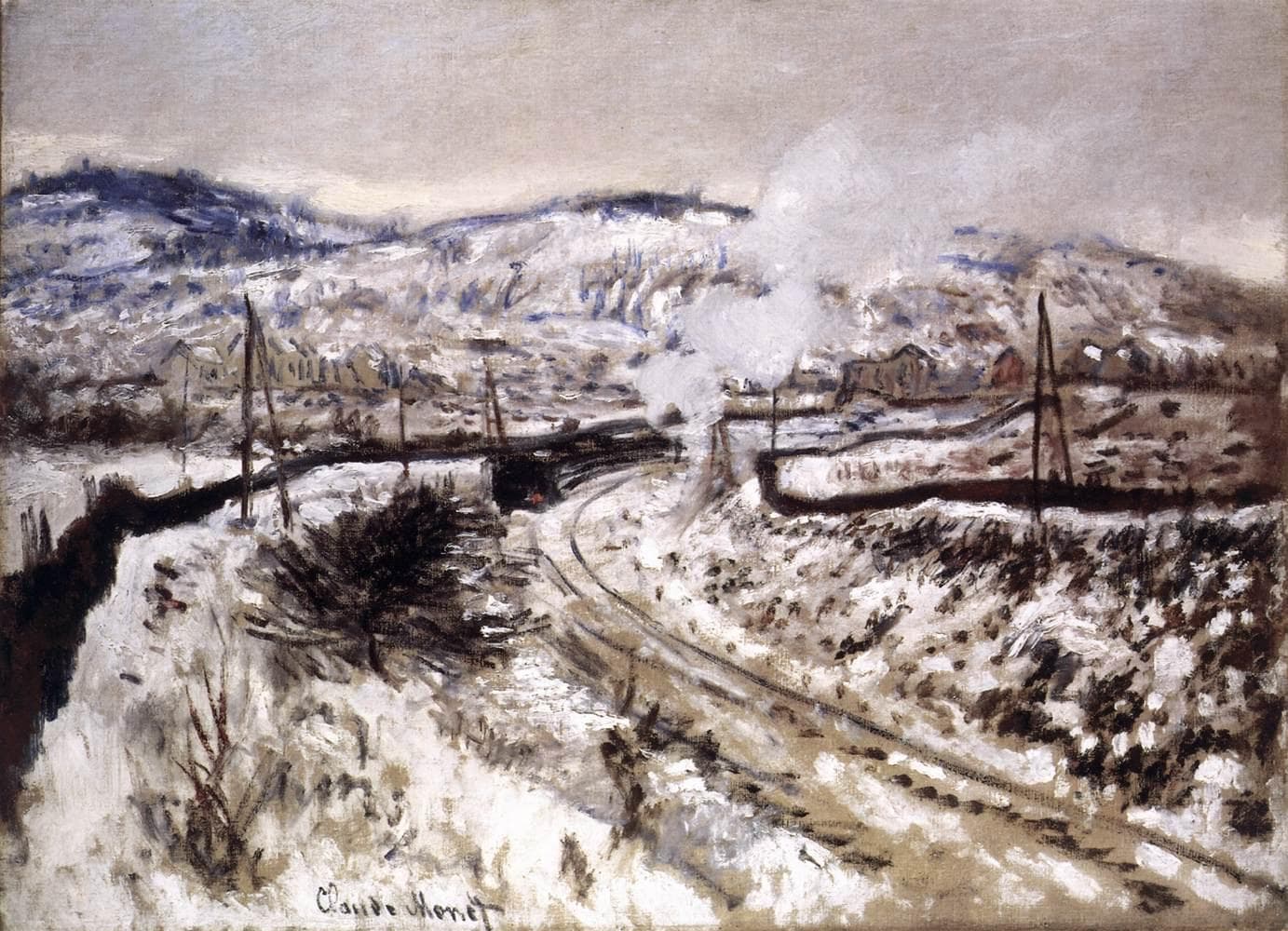
Train in the Snow at Argenteuil
Claude Monet · 1875
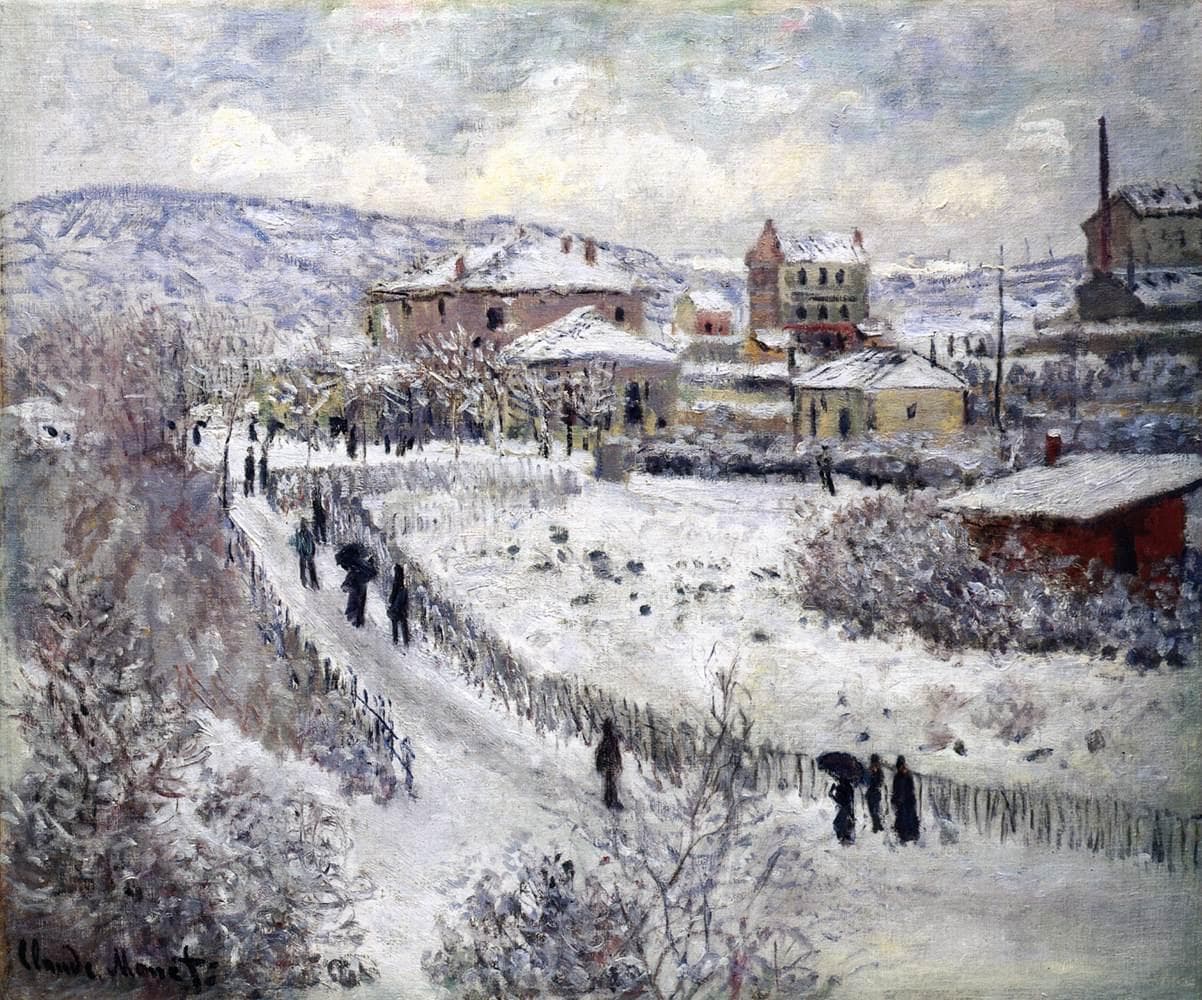
View of Argenteuil in the Snow
Claude Monet · 1874–75
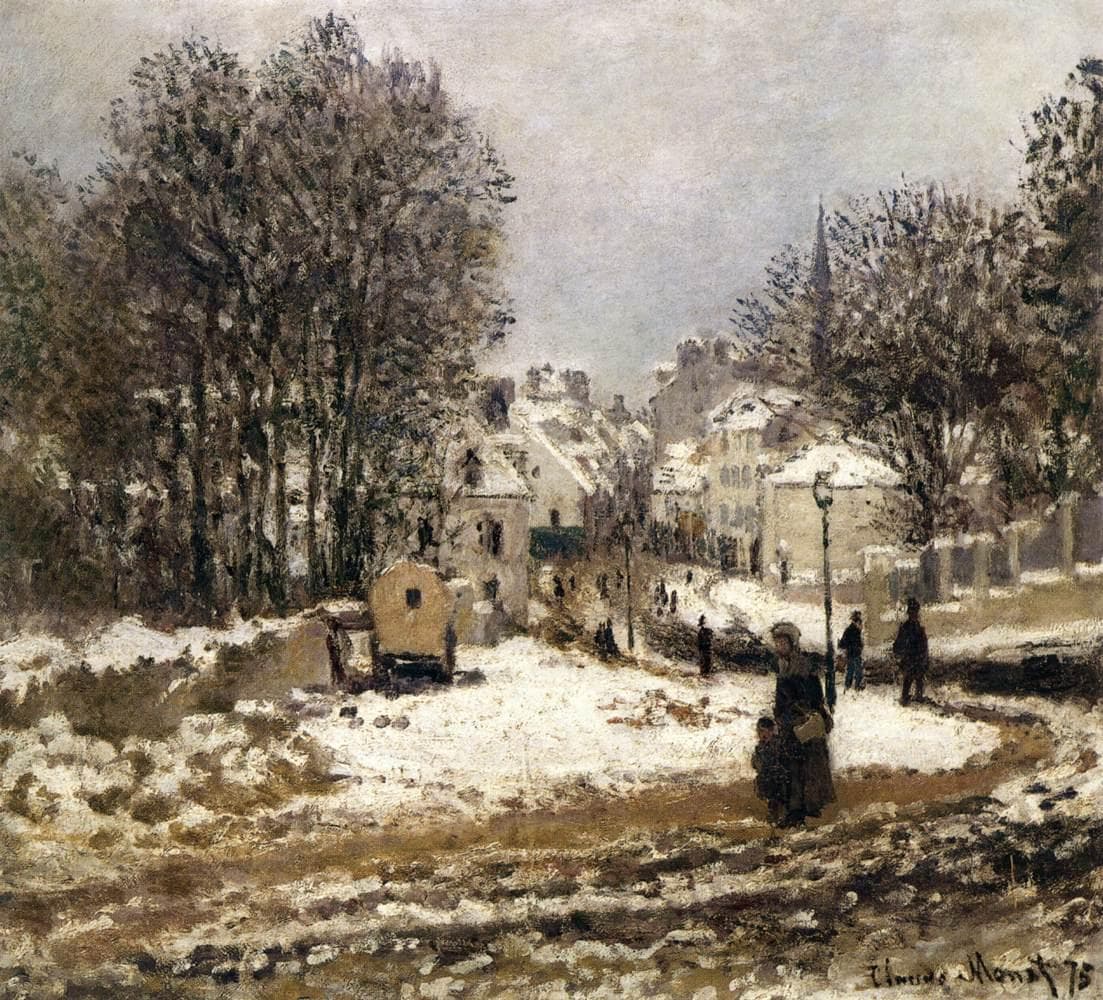
Entrance to the Grande Rue at Argenteuil, Winter
Claude Monet · 1875
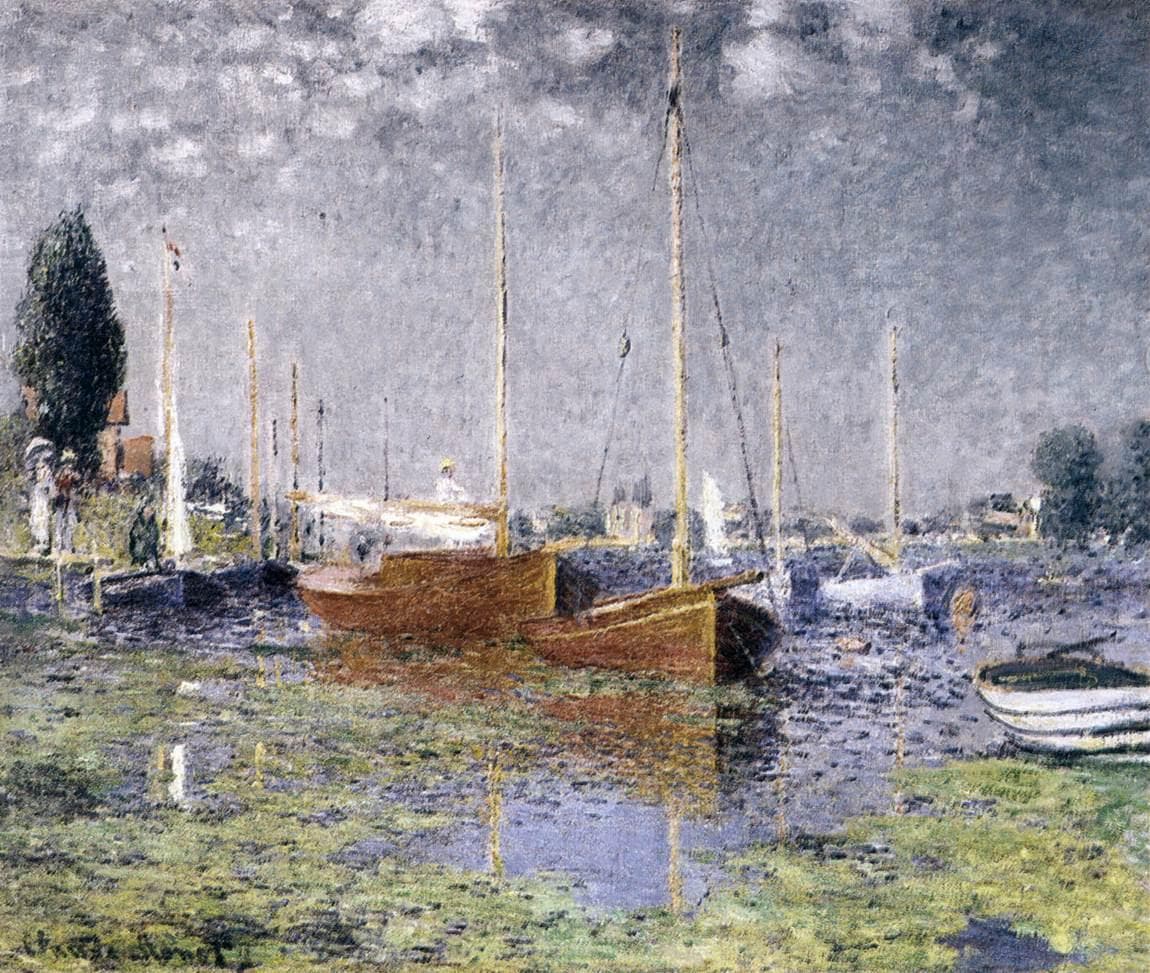
Red Boats at Argenteuil
Claude Monet · 1875
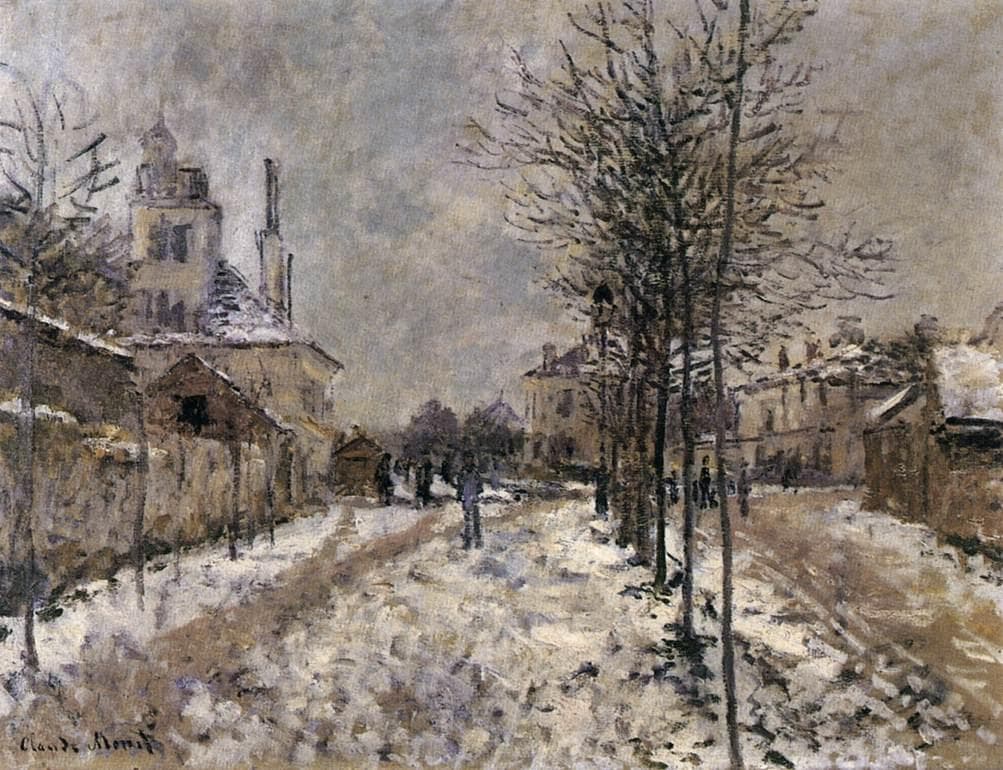
The Boulevard de Pontoise in Argenteuil under Snow
Claude Monet · 1875
Kindred works
You may also study
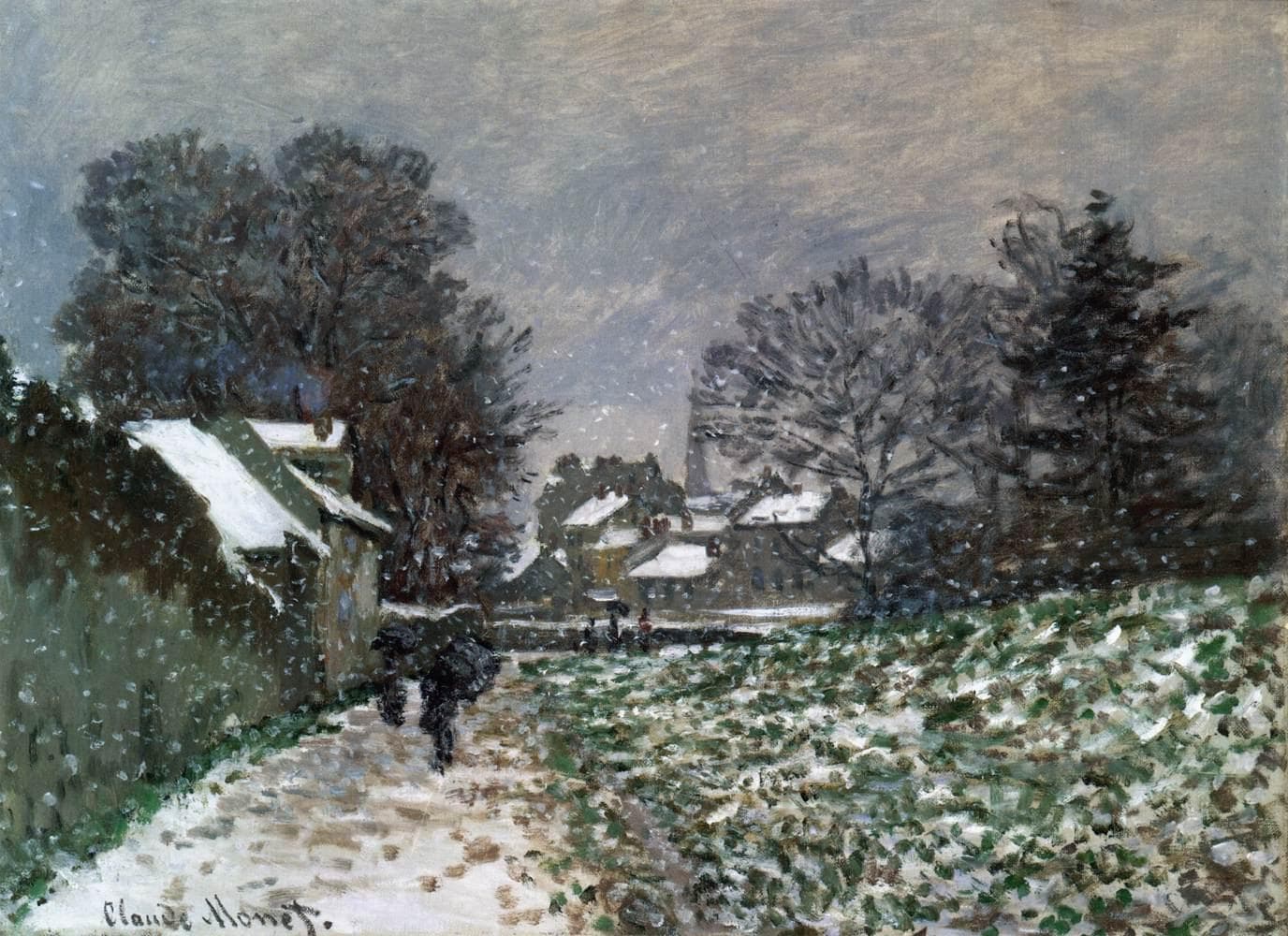
Snow at Argenteuil
Claude Monet · c. 1874
The Boulevard de Pontoise in Argenteuil under Snow
Claude Monet · 1875
Train in the Snow at Argenteuil
Claude Monet · 1875
View of Argenteuil in the Snow
Claude Monet · 1874–75
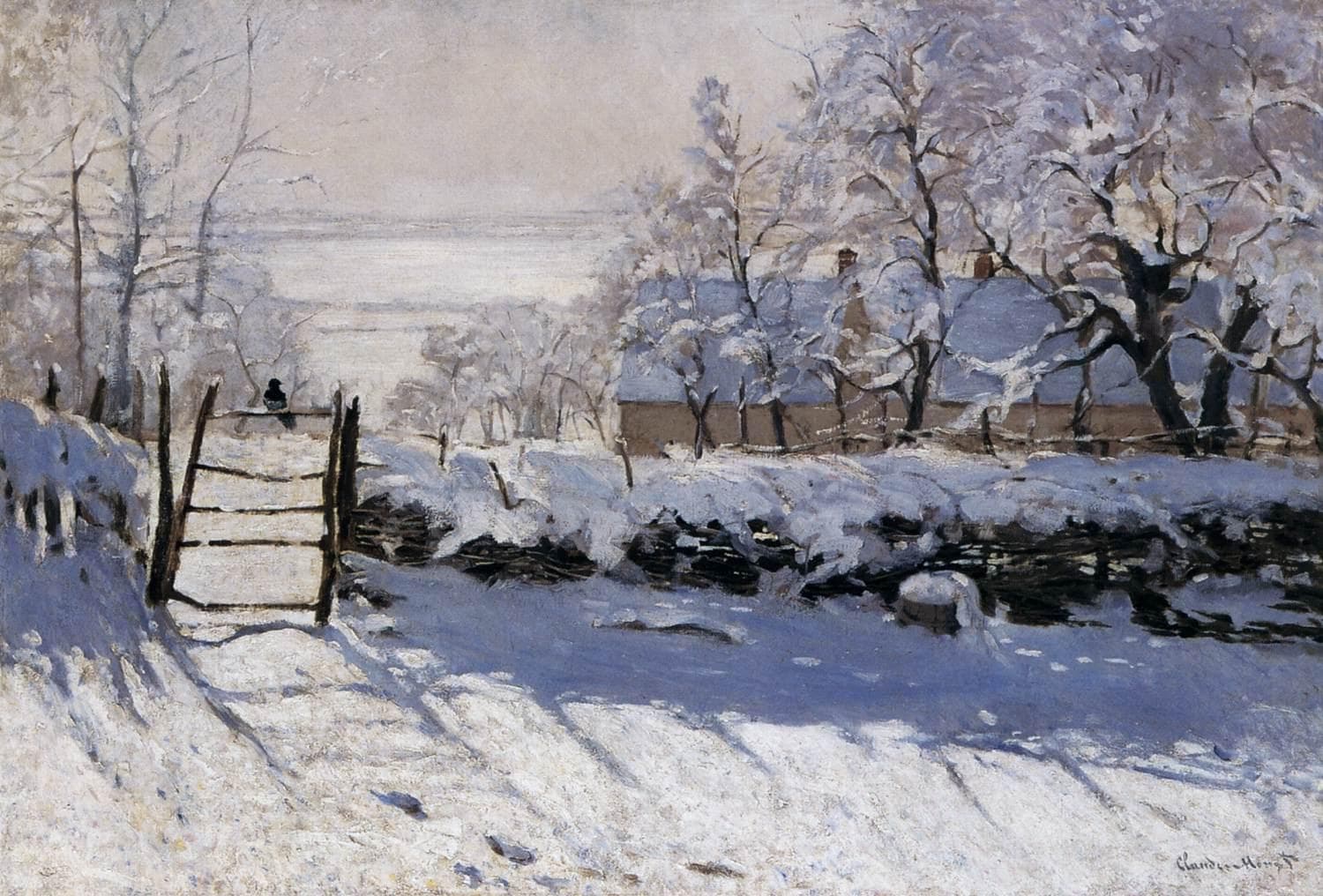
The Magpie
Claude Monet · 1868–69
Entrance to the Grande Rue at Argenteuil, Winter
Claude Monet · 1875

The Scream
Edvard Munch · 1893

Ophelia
John Everett Millais · 1851–52