Impressionism
The Plain of Sannois at Argenteuil
Claude Monet, 1872
The Plain of Sannois at Argenteuil (Vue de plaine à Argenteuil, coteaux de Sannois) is an 1872 painting by Claude Monet of the wide plain seen from the hills above Argenteuil. It is held by the Musée d'Orsay as MNR 855, a work recovered after the Second World War.
- Artist
- Claude Monet
- Date
- 1872
- Medium
- Oil on canvas
- Dimensions
- 53 × 72 cm
- Collection
- Musée d'Orsay, Paris, France
- Movement
- Impressionism
- Catalogue
- Wildenstein 220
Painted at Monet at Argenteuil
What you are looking at
We stand on a hillside. A rough path of pale, rutted earth runs down through long, dry grass in the foreground, between two clumps of dark bushes: a spreading, brownish shrub at left and a darker evergreen with a rounded crown at right. Beyond them the land drops away and the plain opens out, a wide, flat expanse of fields and villages in soft blue-greys and greens, dissolving into haze toward a low horizon.
Near the center a single thin church spire rises from a village on the plain. Two tiny figures walk on the path where it meets the bushes, the only people in the picture. The upper half of the canvas is sky, a pale grey-white cover of cloud broken into long horizontal streaks with small gaps of light. Monet signed and dated the canvas at lower right, "72 Claude Monet."
Claude Monet painted this view in 1872, his first full year at Argenteuil. Its French title, Vue de plaine à Argenteuil, coteaux de Sannois, places it on the slopes of the Sannois hills, north of the town, looking out over the plain. The canvas measures 53 by 72 centimeters and is number 220 in Wildenstein's catalogue.
Where and when
Argenteuil, on the Seine northwest of Paris, was Monet's home from December 1871 to 1878, and while the river and its boats became his best-known subjects, he also walked up into the surrounding countryside. North of the town the ground rises to the hills of Sannois and Orgemont, with windmills and vineyards, and from their slopes the plain of the Seine spreads toward Paris. See Monet at Argenteuil.
The painting has an unusual history. It is one of the works recorded as Musées Nationaux Récupération (MNR): paintings found in Germany after the Second World War, returned to France, and not yet restored to an owner. According to the French government's Rose-Valland database, the canvas passed through the Allied collecting point at Baden-Baden and was entrusted to the national museums in 1951; a stencil reading "MNR 855" is on the back. Earlier titles recorded for it include Pochade à Argenteuil and Les Côteaux de Sannois. MNR works are listed publicly so that the heirs of their original owners can claim them.
How it was painted
This is one of Monet's quietest pictures. There are no boats and no landmark except the distant spire; the subject is space and weather. Look at how he builds depth: warm yellow-ochre grass in the foreground, darker greens in the bushes, cool blue and grey in the distance, the colors cooling as they recede, as they do in real air. The path, laid in with a few strokes of pale earth and darker ruts, leads the eye down and out toward the plain.
The sky is painted in long, flat strokes laid side by side, with little modeling, and the small breaks of brightness are dabs of thicker white. It is an overcast day, and Monet records its even, diffused light without sun or strong shadow to dramatize it. The foreground grass is the most textured passage, a mass of upright flicks of yellow, green and brown. The two walkers are no more than a pair of dark upright strokes, yet they give the hillside its scale and make the plain beyond feel vast.
The motif and its siblings
Monet's early Argenteuil pictures include several views of the countryside around the town rather than the busy riverfront. They show his debt to the Barbizon painters and to Camille Corot and Charles-François Daubigny, who painted flat, open landscapes under big skies. Compare Carrières-Saint-Denis of 1872, the Fields of Bezons in Berlin and A Field of Poppies of 1873; on the river, The Basin at Argenteuil and Argenteuil belong to the same year.
Where to see it
The painting is held by the Musée d'Orsay, Paris, but is not always on display. See Monet at the Musée d'Orsay, and for the artist, Claude Monet.
Questions & answers
Where is Monet's The Plain of Sannois at Argenteuil?
It is held by the Musée d'Orsay in Paris as MNR 855, a work recovered in Germany after the Second World War and entrusted to the national museums in 1951. It measures 53 by 72 centimeters (Wildenstein 220) and is not always on display.
When and where was it painted?
In 1872, on the slopes of the Sannois hills north of Argenteuil, the town on the Seine where Monet lived from 1871 to 1878. It is signed and dated '72 at lower right.
What does The Plain of Sannois show?
A rutted path running down through dry grass between dark bushes, a wide hazy plain with a distant church spire, two tiny walkers, and a large overcast sky. It is a quiet study of space and grey weather.
What does MNR mean for a painting like this?
MNR stands for Musées Nationaux Récupération. It marks works recovered in Germany after 1945 and returned to France whose rightful owners have not been identified. French museums hold them in trust and list them publicly so that heirs can claim them.
More by the artist
Claude Monet

Bridge over a Pond of Water Lilies
Claude Monet · 1899

Woman with a Parasol – Madame Monet and Her Son
Claude Monet · 1875

Sunset in Venice
Claude Monet · 1908–12

La Grenouillère
Claude Monet · 1869

Beach in Pourville
Claude Monet · 1882

Springtime
Claude Monet · 1872

Boating on the River Epte
Claude Monet · 1890

The Seine at Asnières (Hermitage)
Claude Monet · 1873
Also painted in 1872
The same year
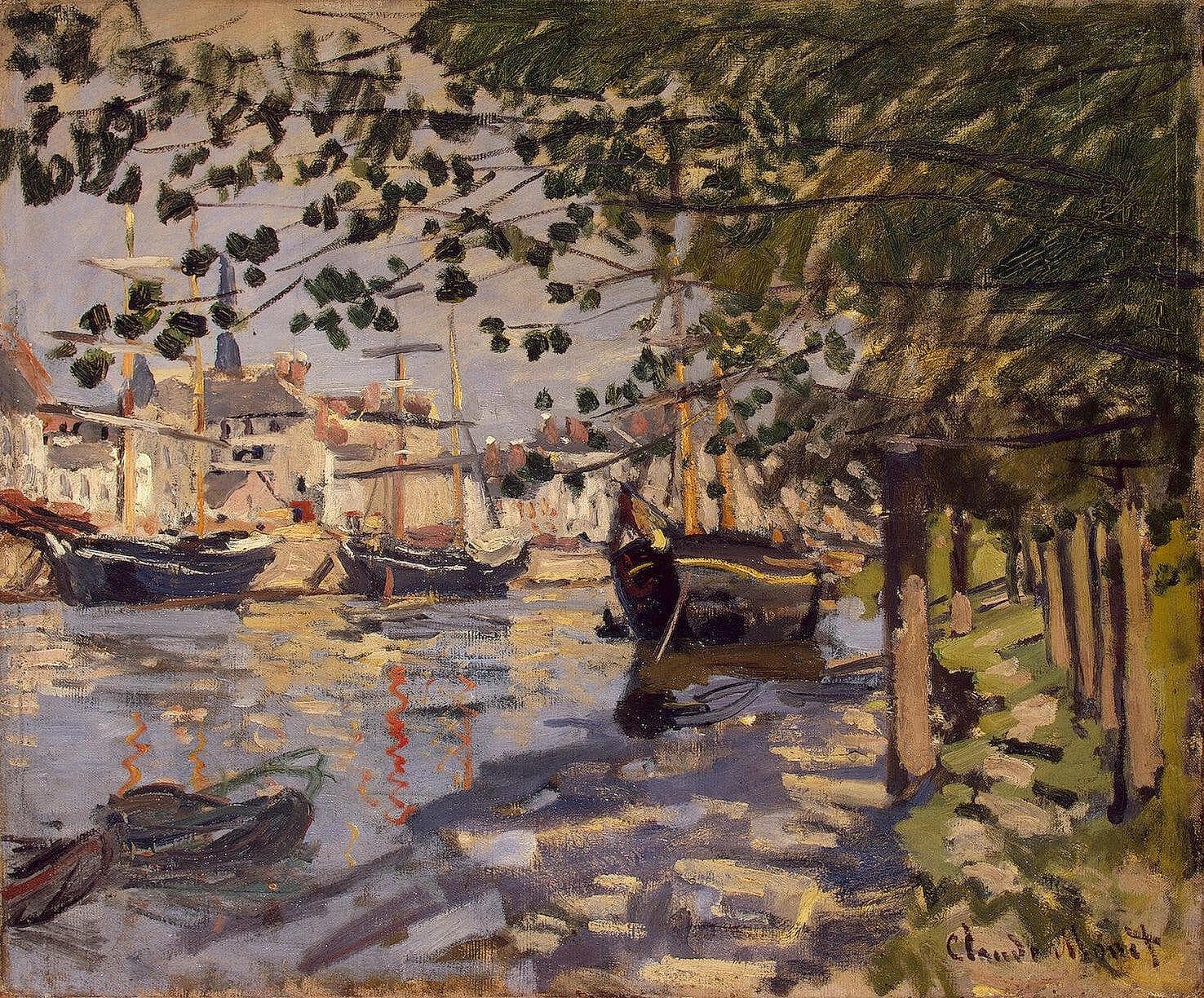
The Seine at Rouen
Claude Monet · 1872
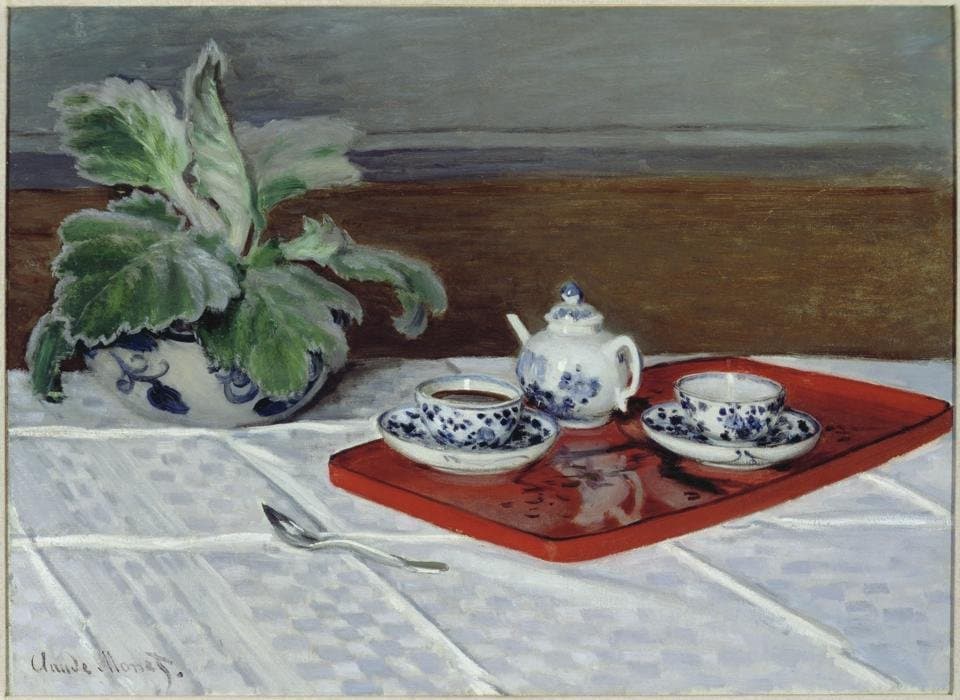
The Tea Service
Claude Monet · 1872
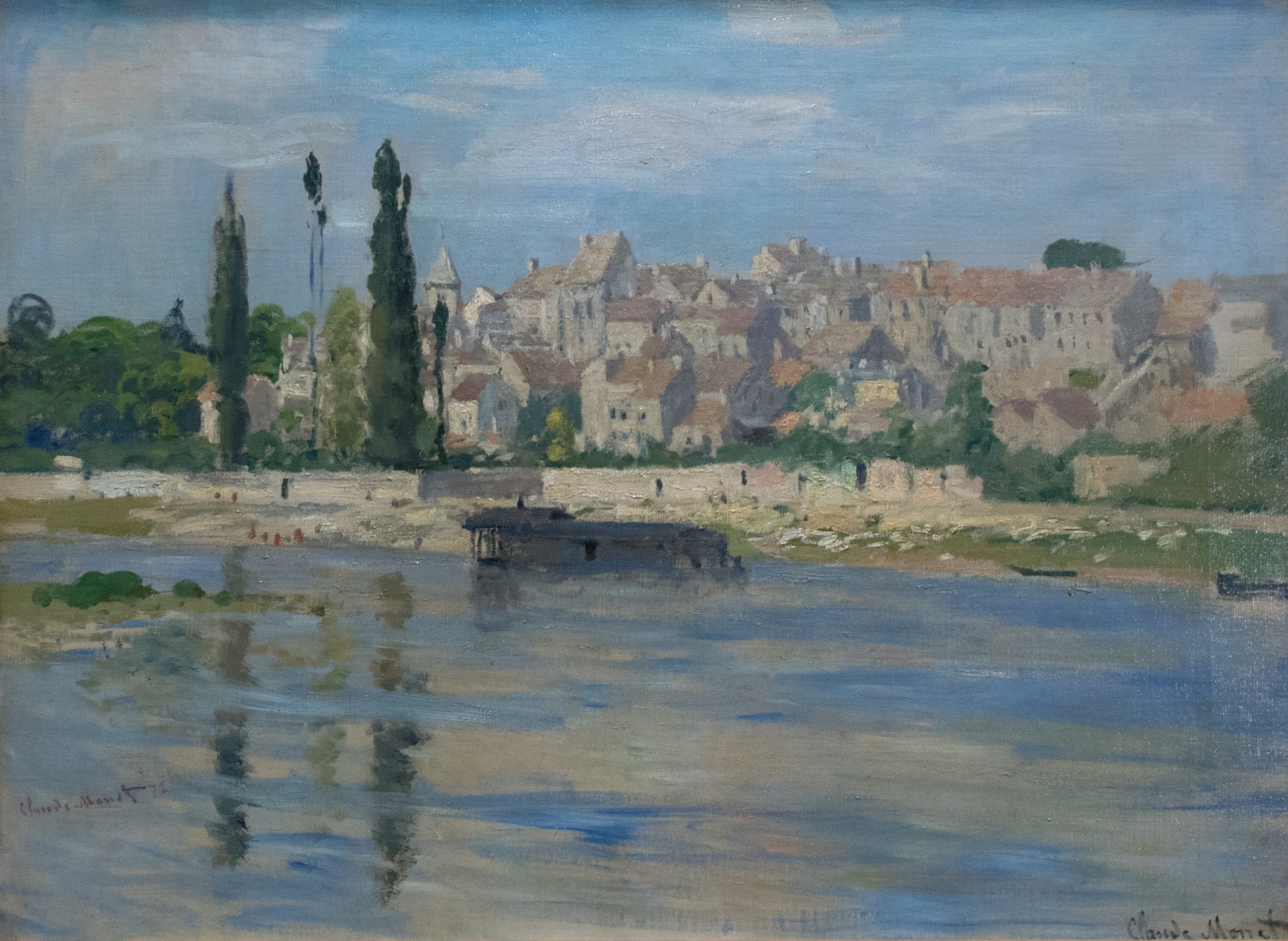
Carrières-Saint-Denis
Claude Monet · 1872
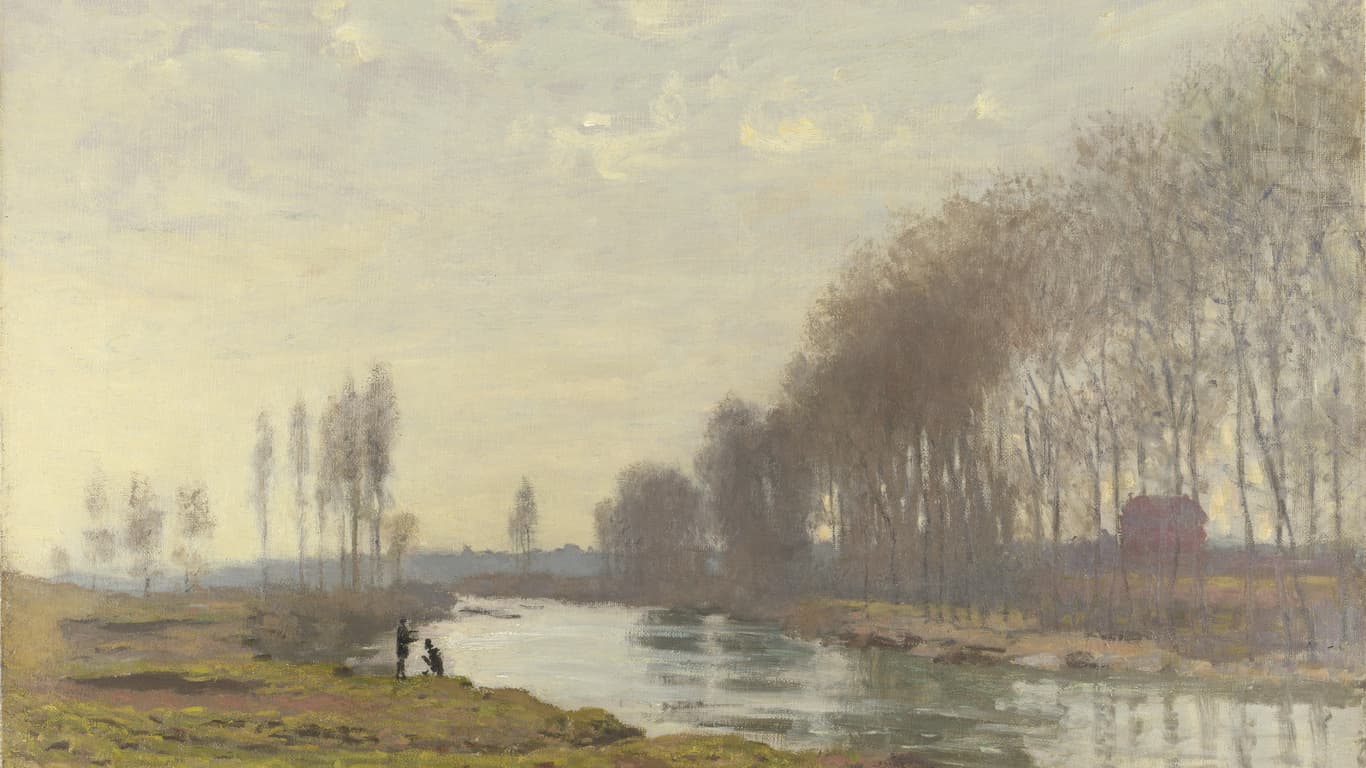
The Petit Bras of the Seine at Argenteuil
Claude Monet · 1872
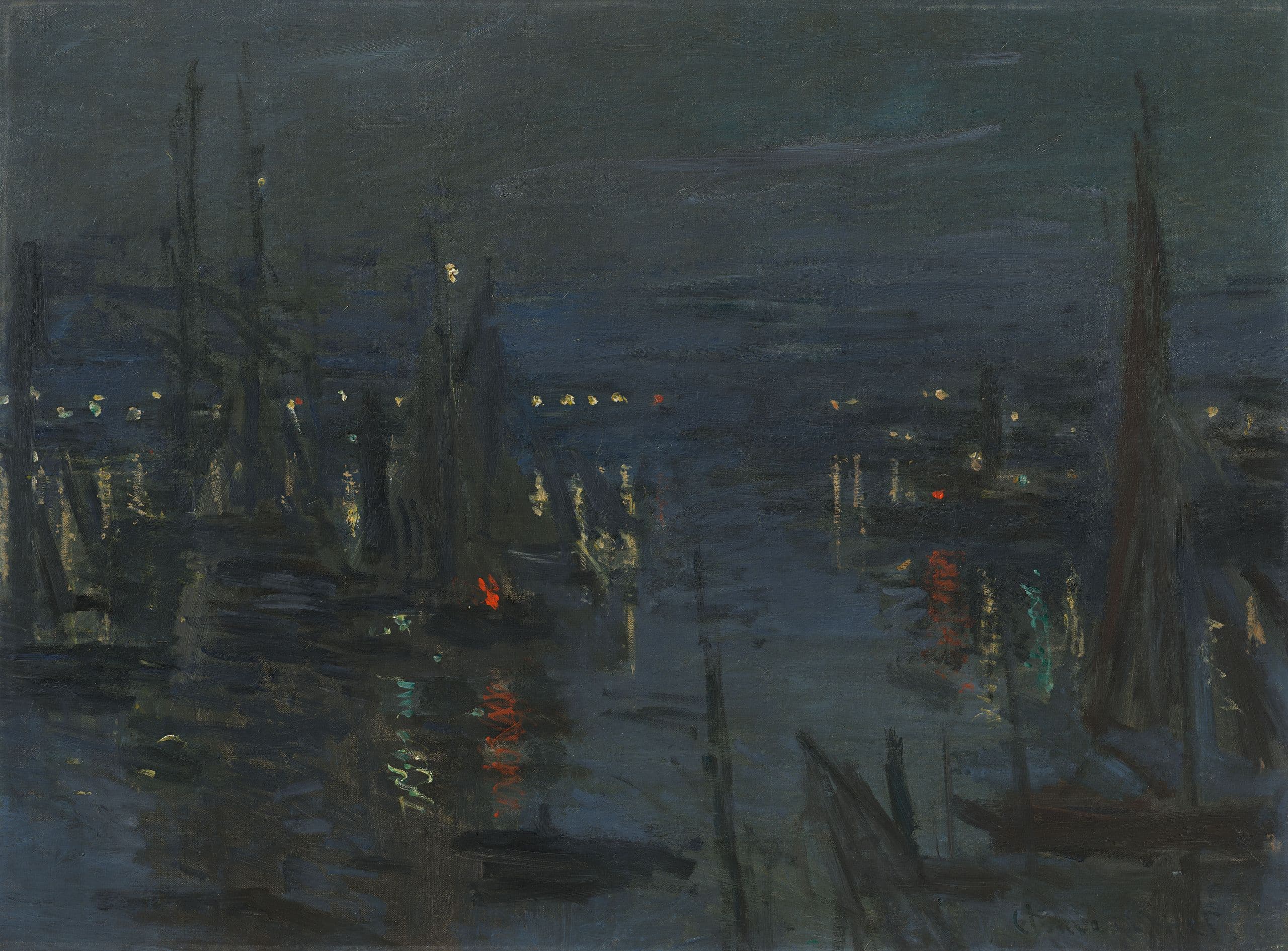
The Port of Le Havre, Night Effect
Claude Monet · 1872
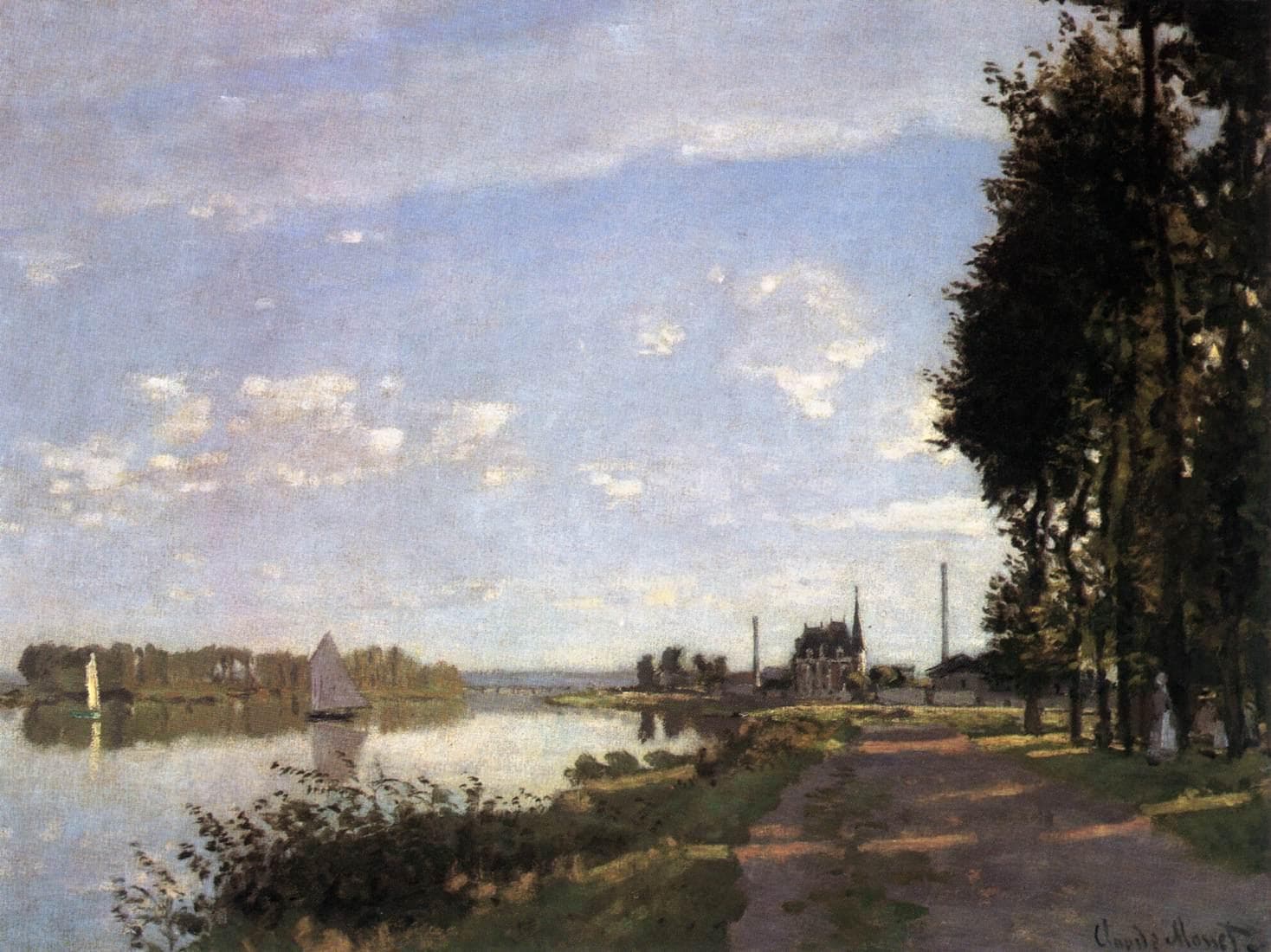
Riverside Path at Argenteuil
Claude Monet · c. 1872
The Basin at Argenteuil
Claude Monet · 1872
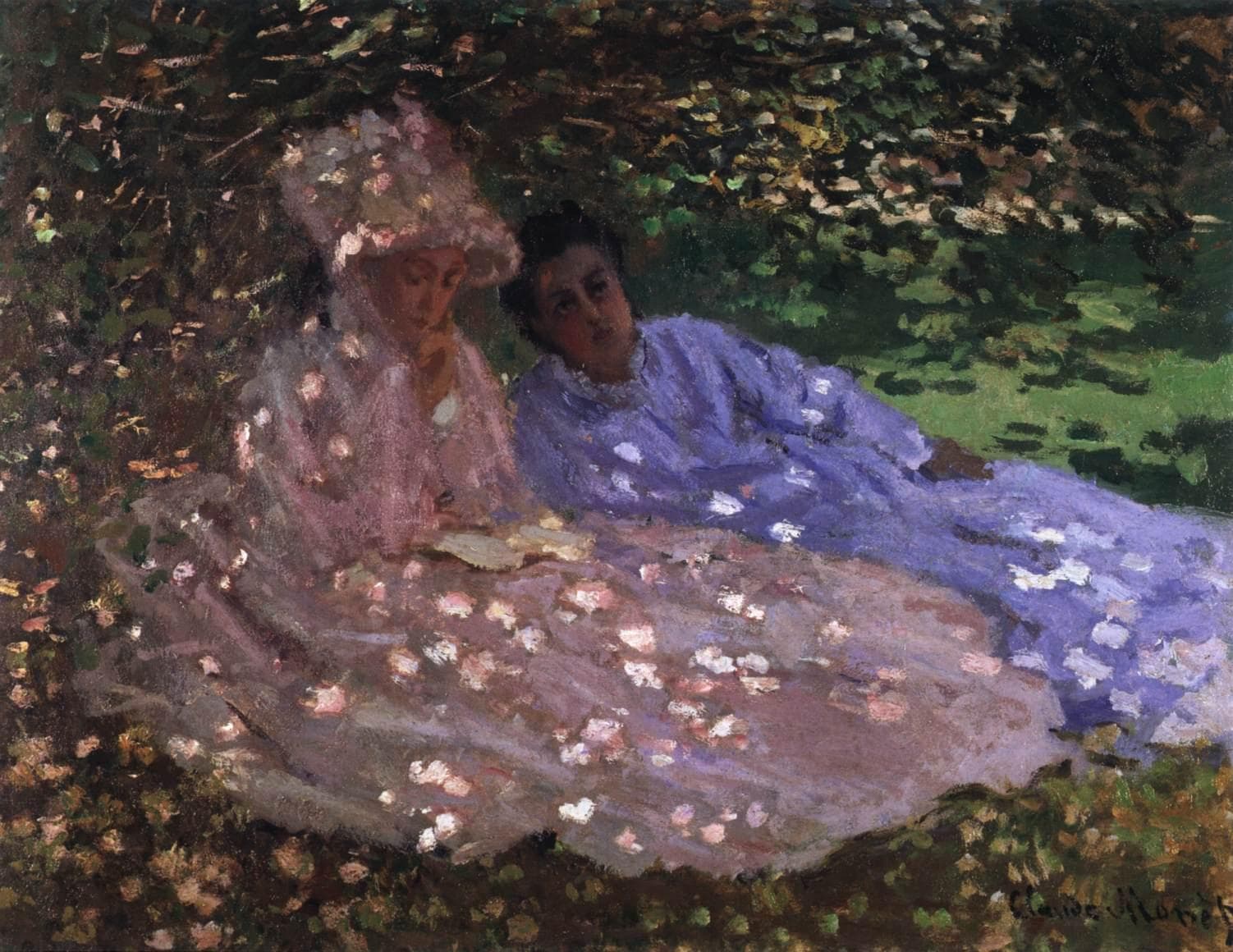
Madame Monet and a Friend in the Garden
Claude Monet · c. 1872
Kindred works
You may also study
The Basin at Argenteuil
Claude Monet · 1872
Argenteuil
Claude Monet · c. 1872
Summer (Meadow at Bezons)
Claude Monet · 1874
Carrières-Saint-Denis
Claude Monet · 1872
Poppy Field (Poppies at Argenteuil)
Claude Monet · 1873

The Scream
Edvard Munch · 1893

Ophelia
John Everett Millais · 1851–52

The Great Wave off Kanagawa
Katsushika Hokusai · c. 1830–32