Impressionism
The Railway Bridge at Argenteuil
Claude Monet, c. 1873–74
The Railway Bridge at Argenteuil (Le Pont du chemin de fer à Argenteuil) is a painting of 1873–74 by Claude Monet of a steam train crossing the Seine on the rebuilt iron bridge at Argenteuil. It is in the Musée d'Orsay, Paris.
- Artist
- Claude Monet
- Date
- c. 1873–74
- Medium
- Oil on canvas
- Dimensions
- 54 × 71 cm
- Collection
- Musée d'Orsay, Paris, France
- Movement
- Impressionism
- Catalogue
- Wildenstein 319
Painted at Monet at Argenteuil
What you are looking at
A long iron railway bridge strides across the Seine from the right foreground toward the far bank at the left, carried on a row of massive cylindrical piers, pale grey in the light. A train is crossing: its dark carriages make a row of blocks along the top of the deck, and from the engine near the left end a plume of white and grey steam billows up and drifts back into a sky of broken, blue-and-white cloud.
Below, the river is choppy and grey-blue, its surface a mesh of small curved strokes, and the piers' reflections fall into it in pale, broken columns. Between two piers a glimpse of lattice girders shows a second span beyond. On the right, a steep bank of dense trees and tangled brown and olive undergrowth closes the view, with a low, rickety wooden fence along the bottom edge. Across the river, at the left, a dark clump of trees sits on the far shore. The signature is at lower right.
Claude Monet painted the bridge while living in Argenteuil; the Musée d'Orsay dates the canvas between 1873 and 1874. It measures 54 by 71 centimeters and is number 319 in Wildenstein's catalogue.
Where and when
The railway reached Argenteuil from Paris in 1851, and the line crossed the Seine on a bridge a short way from the town's road bridge. Like the road bridge, it was destroyed in the Franco-Prussian War of 1870–71 and rebuilt: a straight iron girder deck on cylindrical piers, a piece of bare modern engineering. For Monet and his friends it was simply part of the landscape; the train was how they and their Parisian visitors arrived. See Monet at Argenteuil.
Monet painted the bridge several times in 1873 and 1874, from different points along the bank. This version had a distinguished early history: it belonged to the baritone and collector Jean-Baptiste Faure by 1876, and later to the painter and collector Étienne Moreau-Nélaton, who gave it to the French state in 1906 with the rest of his collection.
How it was painted
The composition is a strong diagonal. The bridge cuts across the canvas from the right edge, getting smaller as it recedes, and the piers march across the water like columns. The view is from low down on the bank, so the deck looms overhead and the train seems to pass above us.
Then compare textures. The bridge is painted with flat, hard planes of grey, white and lilac, the edges of the piers sharp. The steam is soft and rounded, built from curling strokes of white and grey, the same colors as the clouds it rises into, so the train's exhaust and the weather merge. The bank at the right is dark and dense, built from scrubbed strokes of green, rust and brown, a mass of nature set against the engineering, and the water at left is a field of quick, crescent-shaped touches of blue, grey and white. The sky is handled the same way, in short, broken strokes of blue and white laid close together, so that sky and river mirror each other above and below the hard line of the bridge.
Notice the empty foreground. In another version of 1873, now in a private collection, Monet placed two men watching from the bank; here there is no one, and we are the spectators.
The motif and its siblings
Compare that 1873 canvas, seen here in The Railway Bridge at Argenteuil (detail), with its sailboat and two onlookers; the Philadelphia Railroad Bridge, Argenteuil; and The Promenade with the Railroad Bridge in Saint Louis, where the bridge is seen beyond a riverside path. The town's other bridge appears in The Bridge at Argenteuil. Three years later Monet followed the trains into Paris for the Gare Saint-Lazare series.
Where to see it
The painting is in the Musée d'Orsay: see Monet at the Musée d'Orsay. For the artist, see Claude Monet.
Questions & answers
Where is Monet's The Railway Bridge at Argenteuil?
This version is in the Musée d'Orsay, Paris, given to the French state in 1906 by Étienne Moreau-Nélaton. It measures 54 by 71 centimeters and is catalogued by Wildenstein as number 319. Other versions are in Philadelphia, Saint Louis and a private collection.
When was The Railway Bridge at Argenteuil painted?
The Musée d'Orsay dates it between 1873 and 1874, when Monet was living in Argenteuil, the town on the Seine northwest of Paris. He painted the railway bridge several times in those two years.
What does The Railway Bridge at Argenteuil show?
A steam train crossing the Seine on a long iron bridge supported by cylindrical piers, a plume of white steam merging with the clouds, choppy grey-blue water, and a dark wooded bank with a fence in the right foreground.
Why did Monet paint trains and railway bridges?
Railways were part of the modern landscape of the Paris suburbs, and the train linked Argenteuil to the city. Monet treated them as he did boats and gardens, as subjects of light and atmosphere, and later devoted a series to the Gare Saint-Lazare.
More by the artist
Claude Monet

Bridge over a Pond of Water Lilies
Claude Monet · 1899

Woman with a Parasol – Madame Monet and Her Son
Claude Monet · 1875

Sunset in Venice
Claude Monet · 1908–12

La Grenouillère
Claude Monet · 1869

Beach in Pourville
Claude Monet · 1882

Springtime
Claude Monet · 1872

Boating on the River Epte
Claude Monet · 1890

The Seine at Asnières (Hermitage)
Claude Monet · 1873
Also painted in 1873
The same year
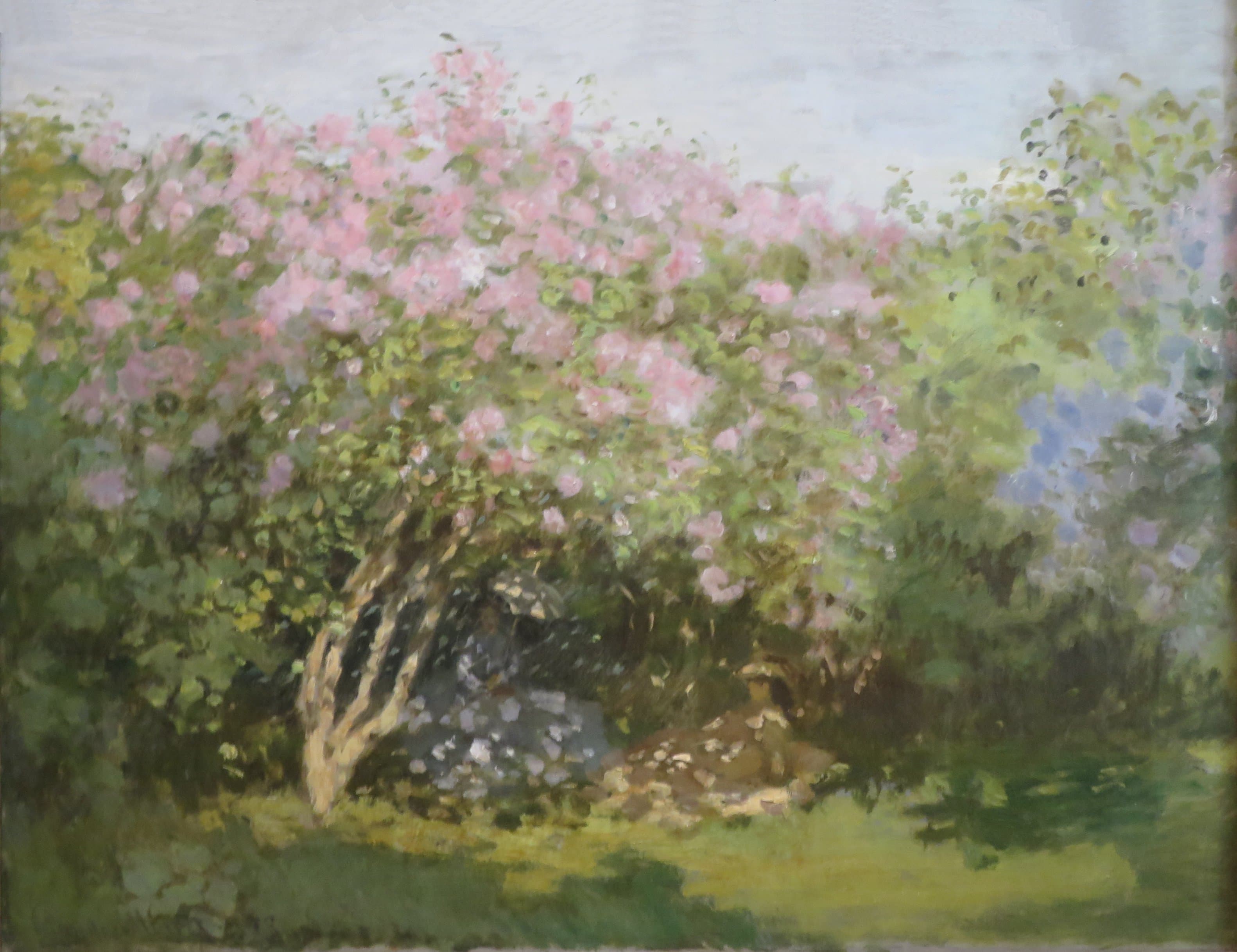
Lilac in the Sun
Claude Monet · 1873
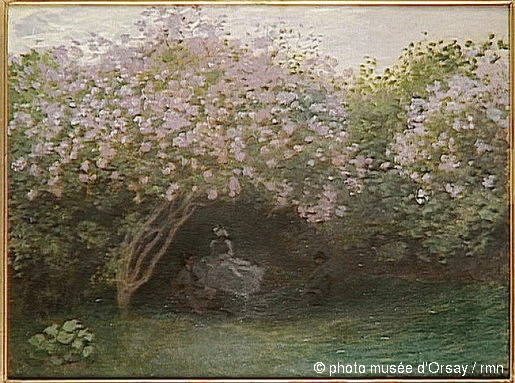
Lilacs, Gray Weather
Claude Monet · 1872–73
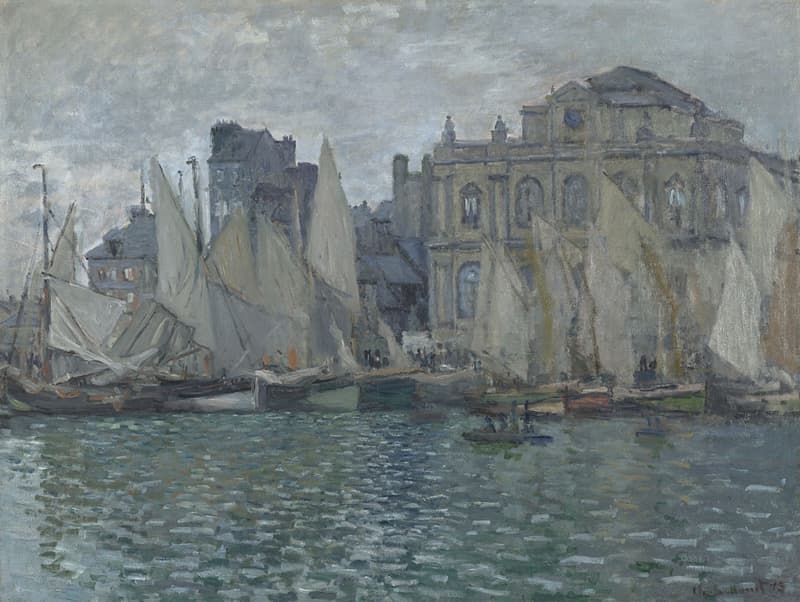
The Museum at Le Havre
Claude Monet · 1873
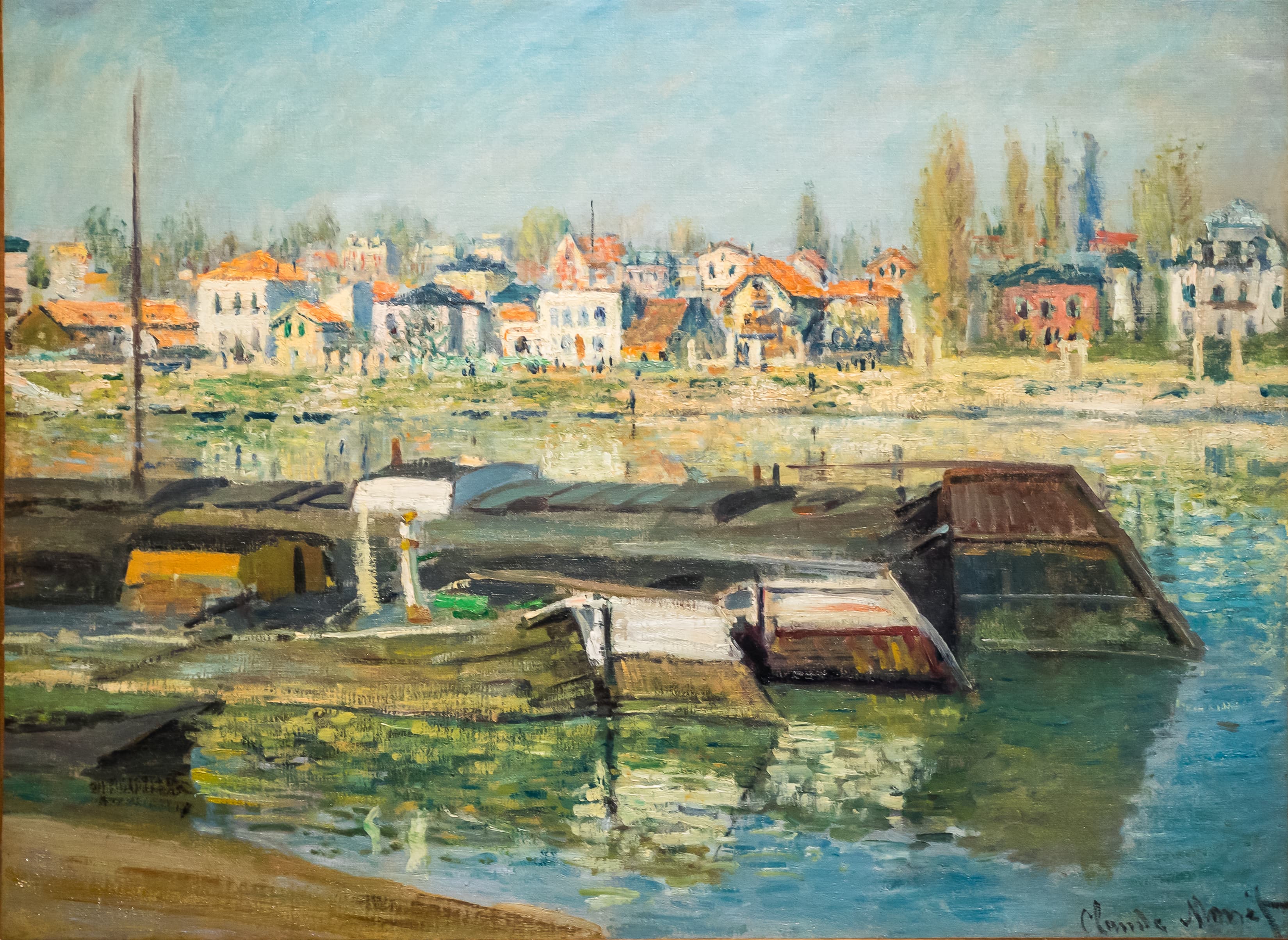
The Seine at Asnières
Claude Monet · 1873
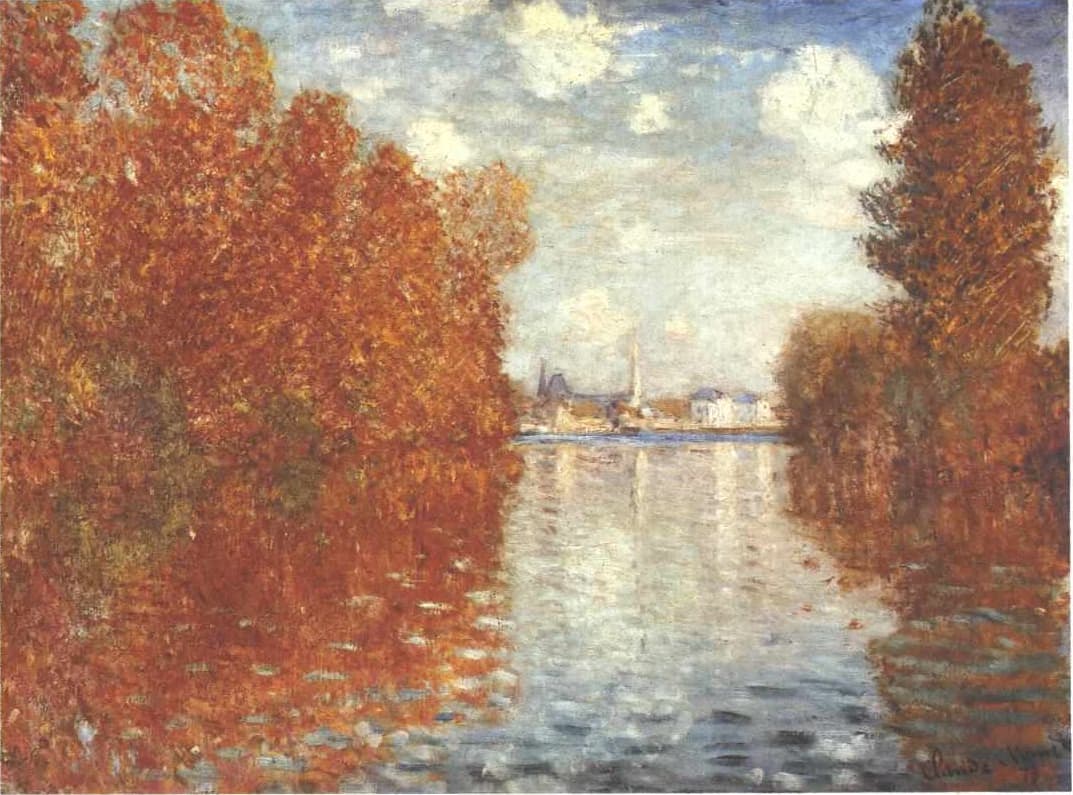
Autumn Effect at Argenteuil
Claude Monet · 1873
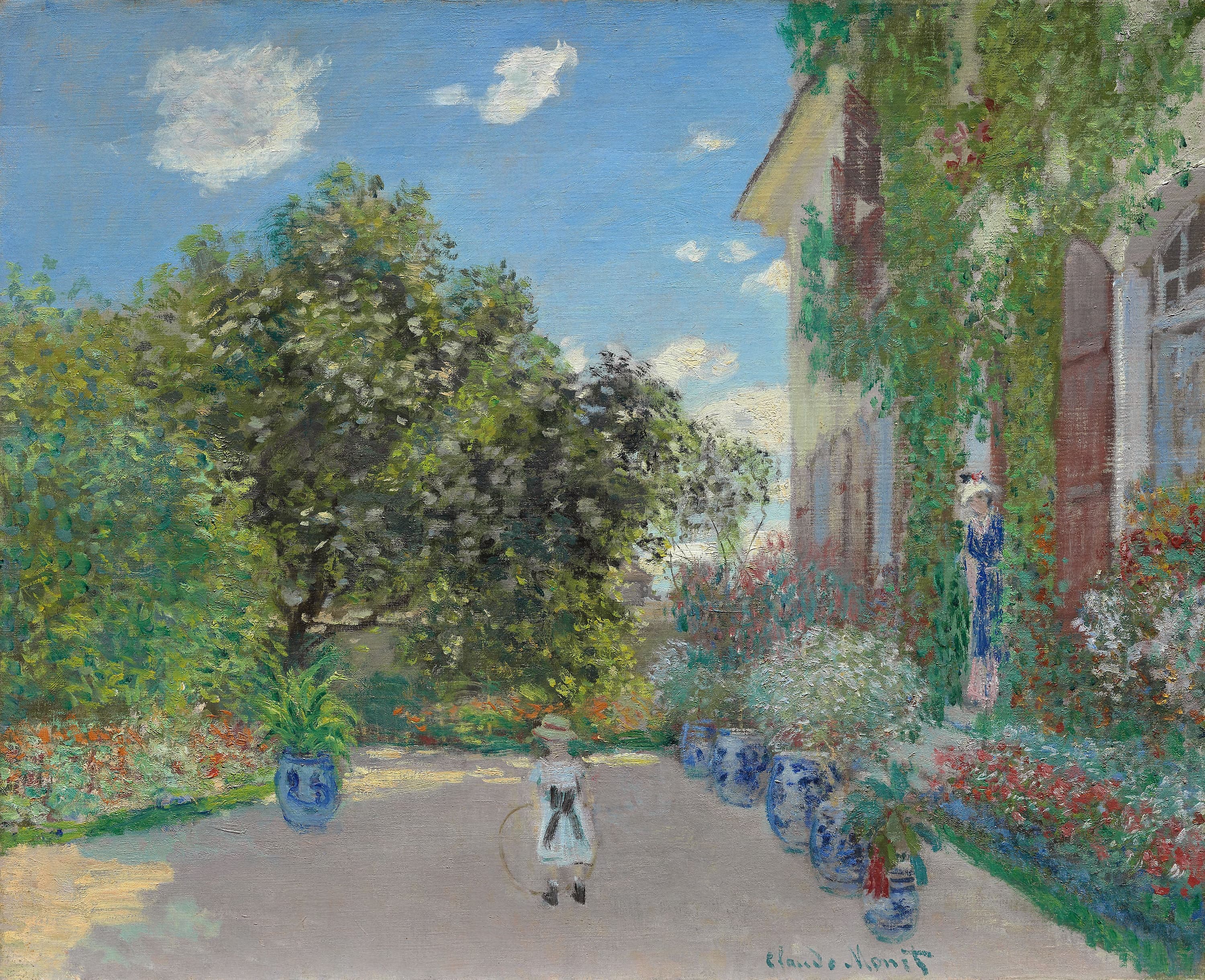
The Artist's House at Argenteuil
Claude Monet · 1873
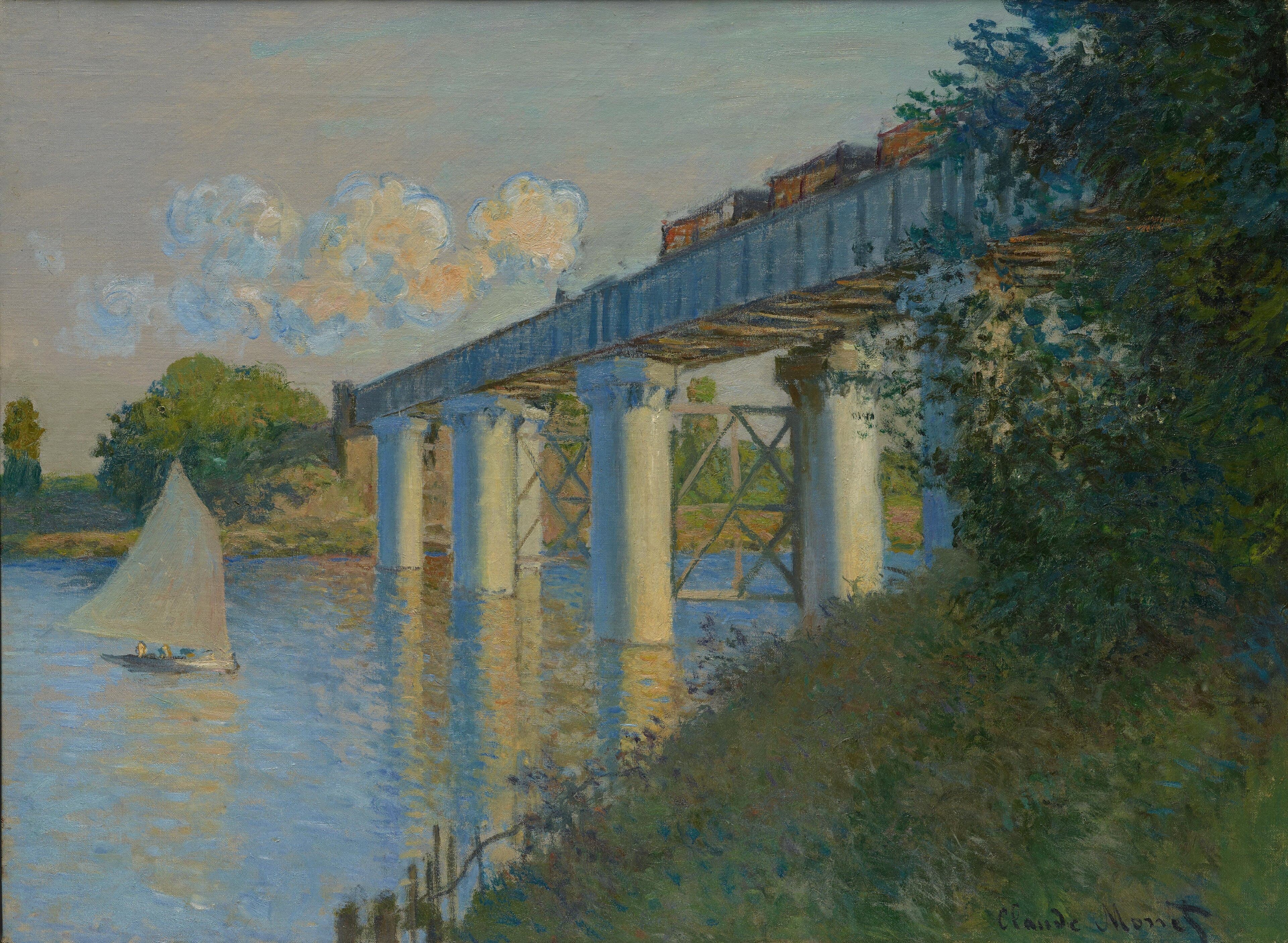
Railroad Bridge, Argenteuil
Claude Monet · 1873
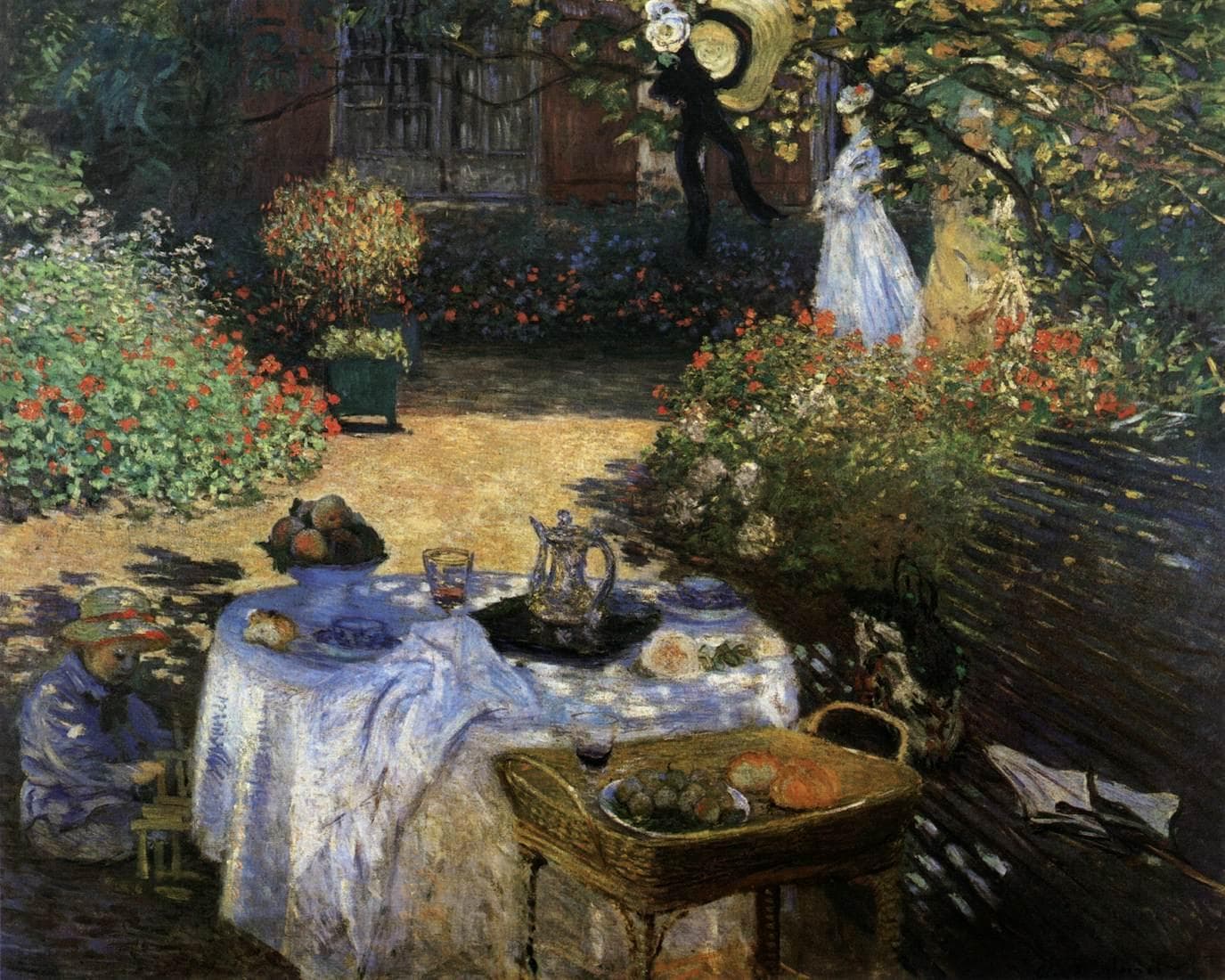
The Luncheon (Monet's Garden at Argenteuil)
Claude Monet · c. 1873
Kindred works
You may also study
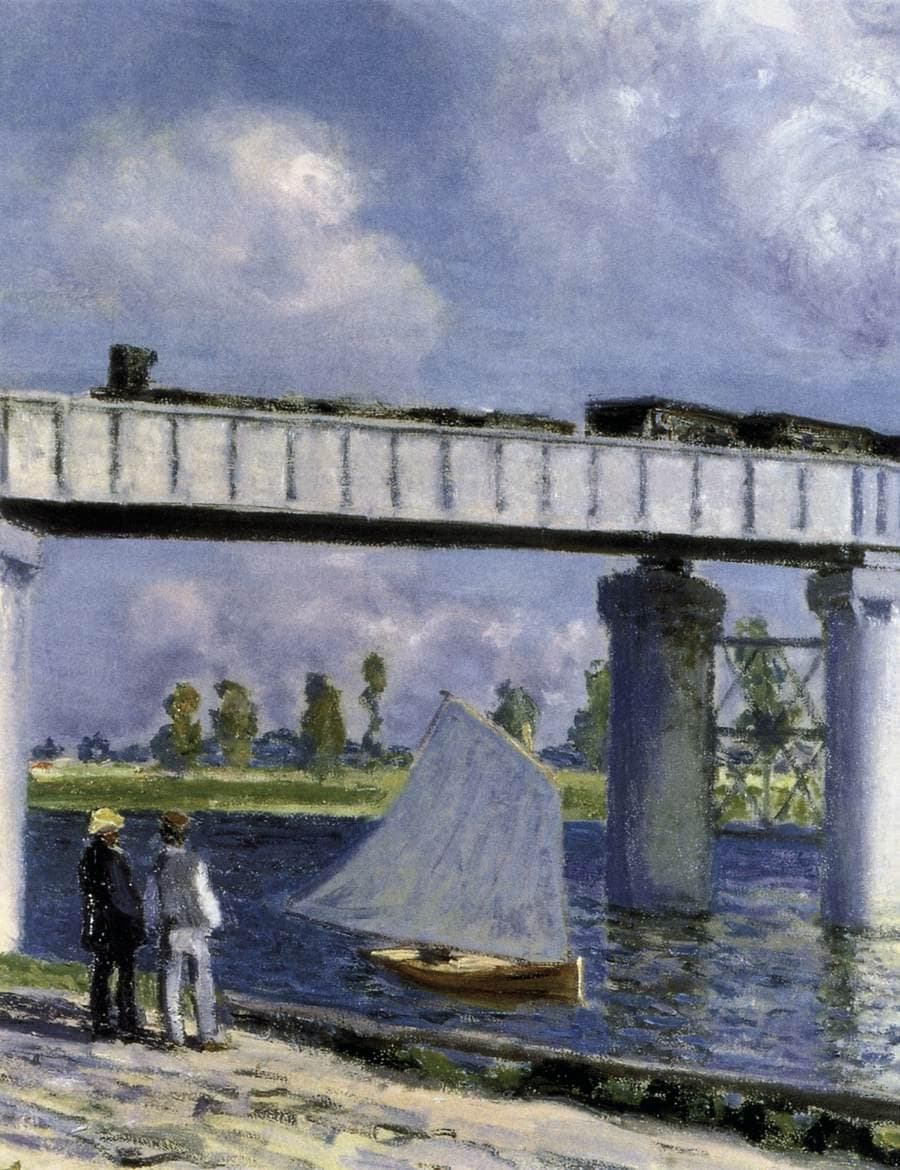
The Railway Bridge at Argenteuil (detail)
Claude Monet · 1873
Railroad Bridge, Argenteuil
Claude Monet · 1873
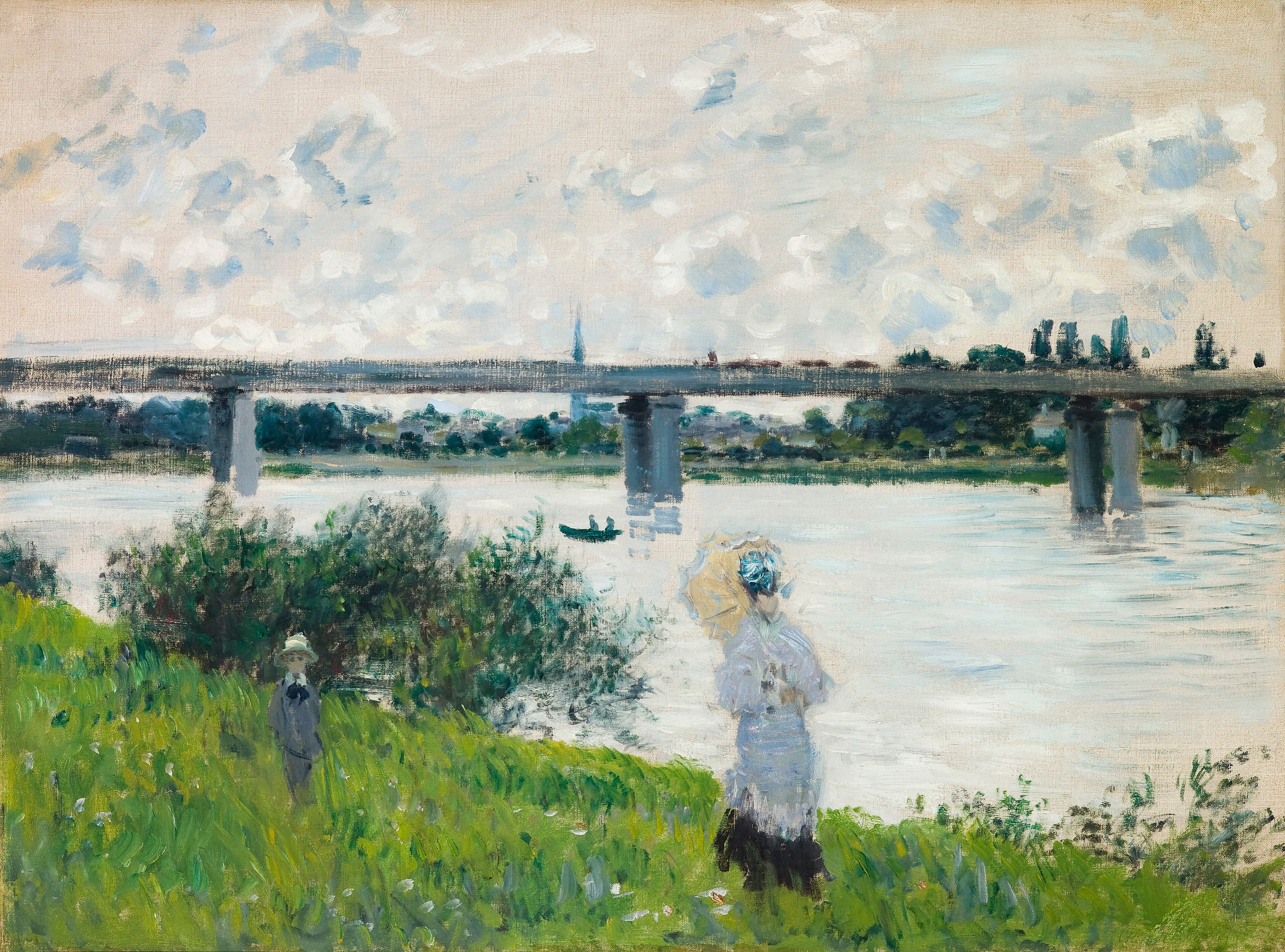
The Promenade with the Railroad Bridge, Argenteuil
Claude Monet · 1874
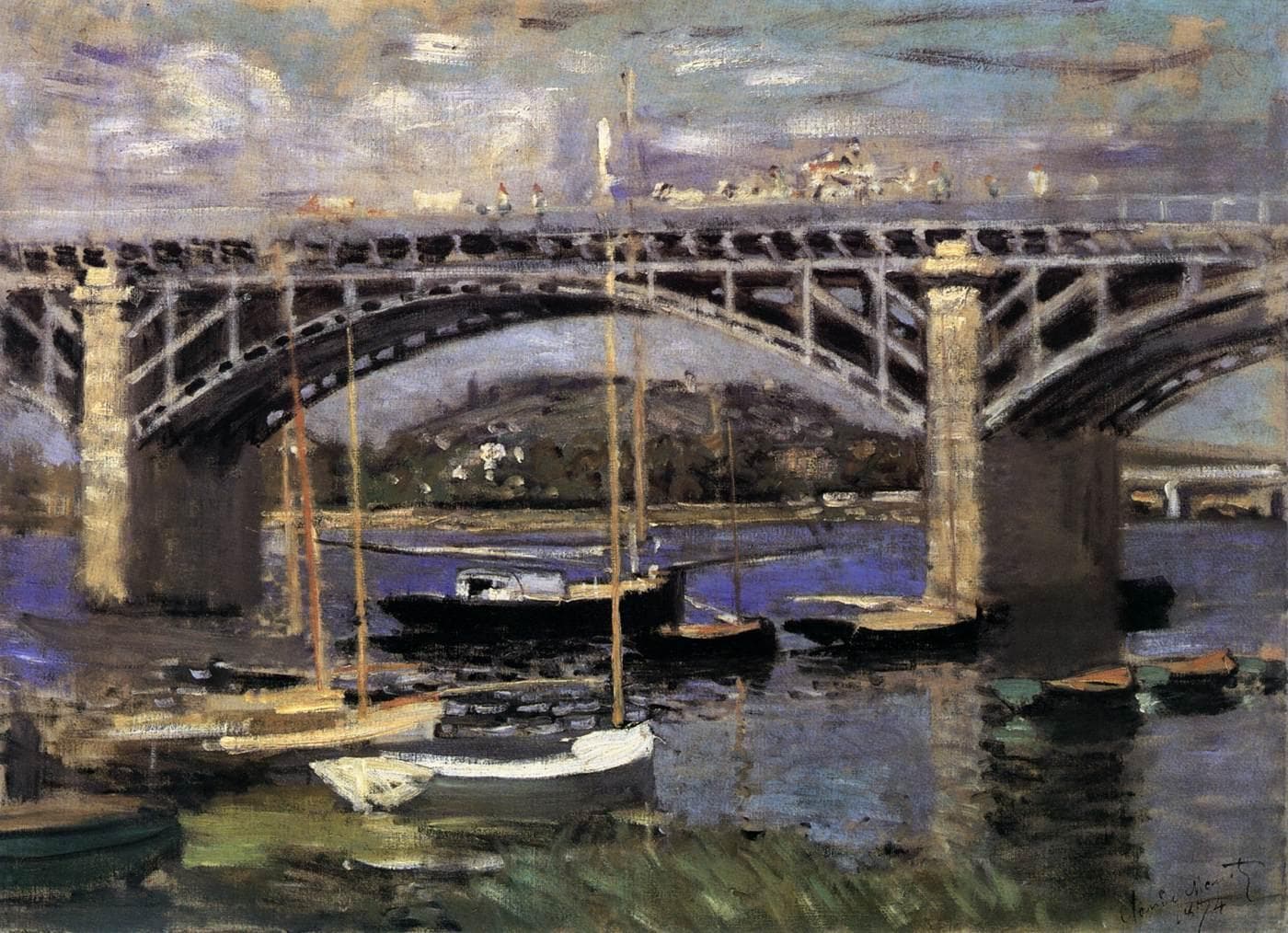
The Bridge at Argenteuil
Claude Monet · 1874
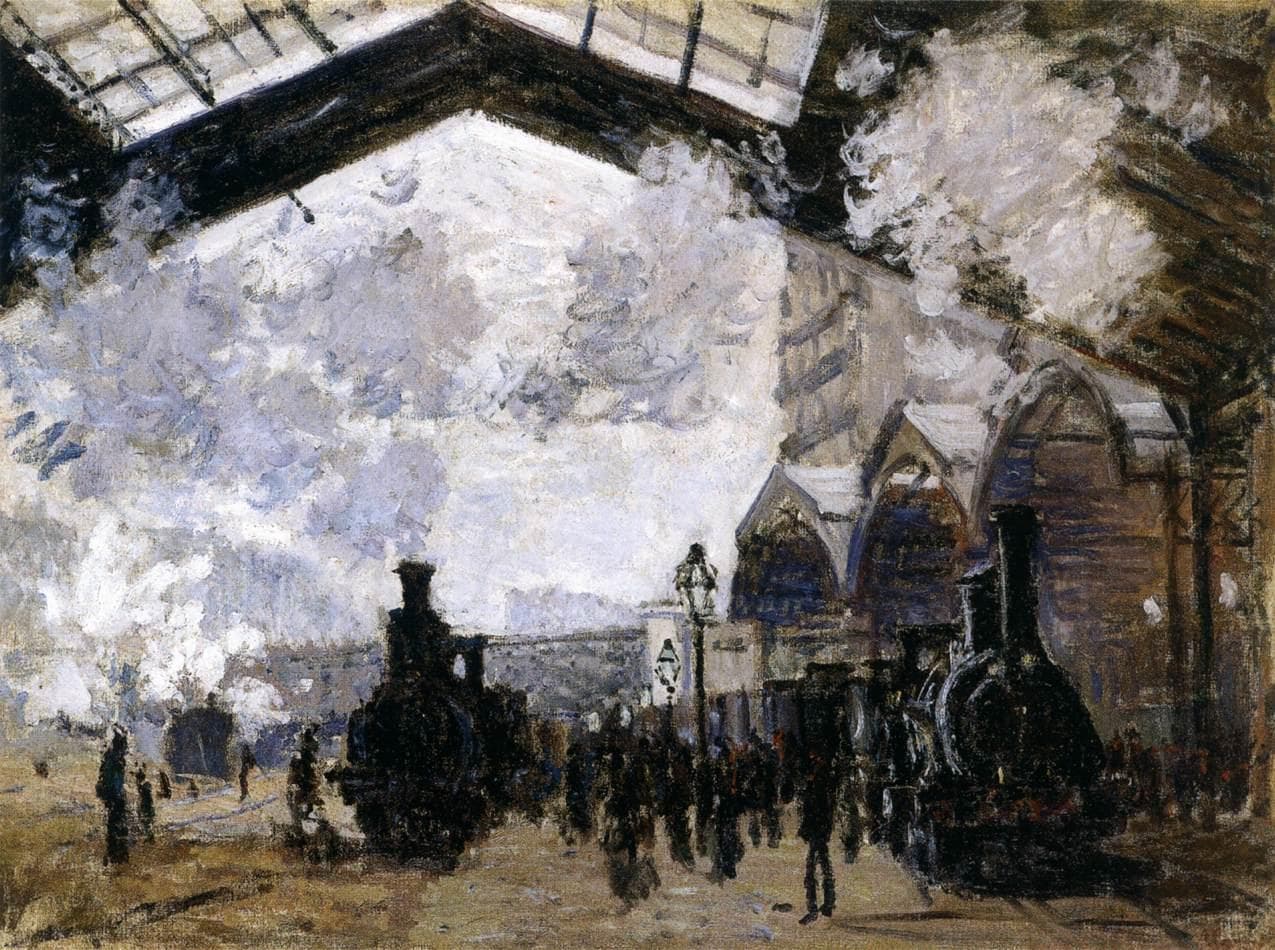
The Gare Saint-Lazare
Claude Monet · 1877

The Scream
Edvard Munch · 1893

Ophelia
John Everett Millais · 1851–52

The Great Wave off Kanagawa
Katsushika Hokusai · c. 1830–32