Image: Musée d'Orsay, Paris (photo RMN) · Public domain · via Wikimedia Commons
Impressionism
Lilacs, Gray Weather
Claude Monet, 1872–73
Lilacs, Gray Weather (Lilas, temps gris), also called Resting Under a Lilac Bush, is a painting by Claude Monet of about 1872–73 showing figures resting beneath a flowering lilac in his Argenteuil garden on an overcast day. It is in the Musée d'Orsay, Paris.
- Artist
- Claude Monet
- Date
- 1872–73
- Medium
- Oil on canvas
- Dimensions
- 50.2 × 65.2 cm
- Collection
- Musée d'Orsay, Paris, France
- Movement
- Impressionism
- Catalogue
- Wildenstein 203
Painted at Monet at ArgenteuilMore at Monet at the Musée d'Orsay
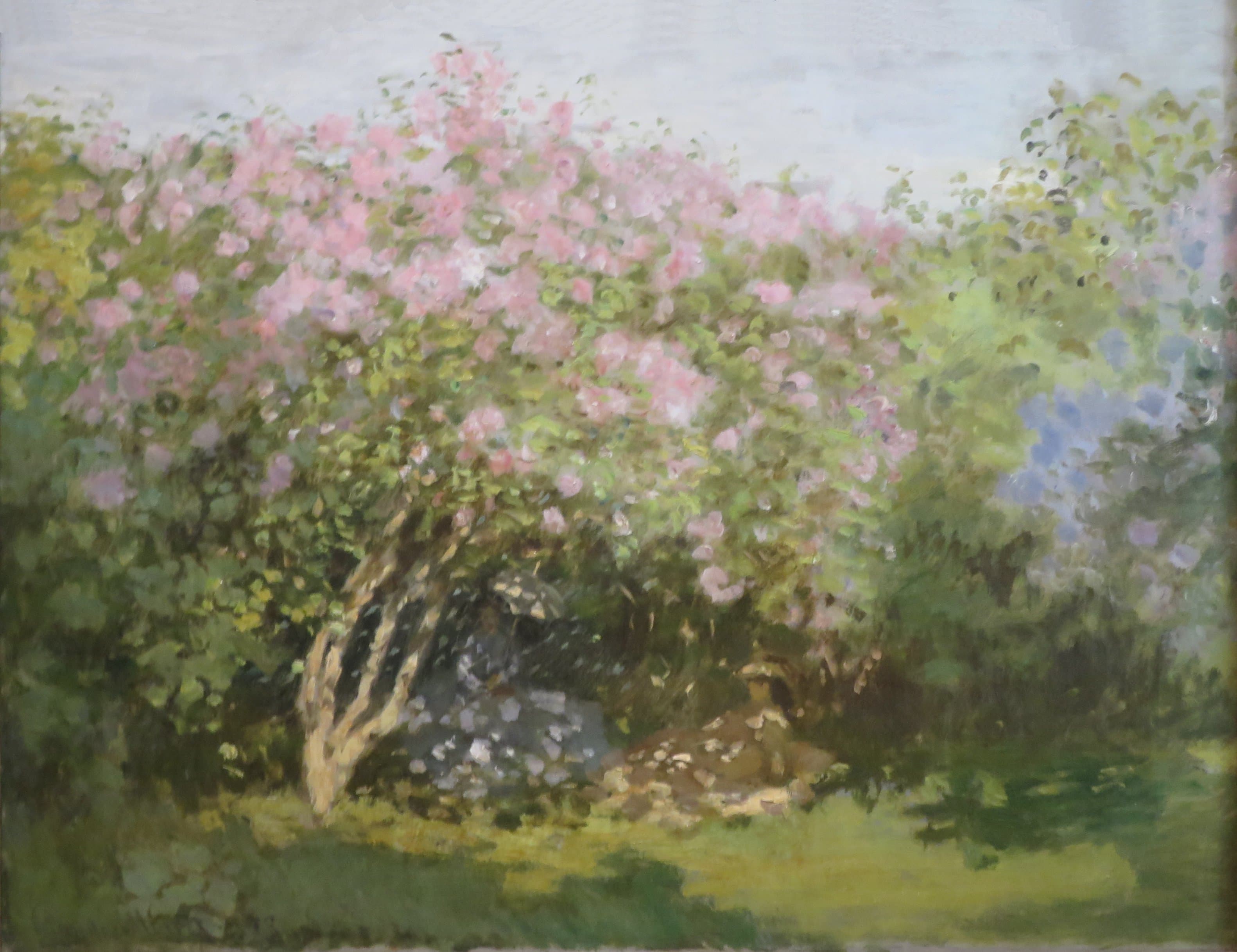
Lilacs, Gray Weather is the overcast twin of Claude Monet's Lilac in the Sun. Both canvases show the same flowering lilac bush in the garden of his rented house at Argenteuil, with figures resting in its shade, painted around 1872–73. In this one the sky is white and even and the light is soft and shadowless, so the lilac's mauve blossoms and the green lawn sit in quiet, closely matched tones. It is in the Musée d'Orsay in Paris.
What you're looking at
A great lilac bush in bloom arches across most of the canvas, from the left edge to the center, its blossom a pale pinkish lilac against dark green leaves. To the right, more shrubs, also in flower, continue the wall of foliage, and a strip of white sky shows above them. The bush's twisted, pale trunks lean out at the left.
Under the arch there is a hollow of shade. Inside it, three figures rest on the grass. At the center a woman in a light dress and a small hat sits upright, catching what little light there is. To her left another figure sits or reclines in darker clothes, and at the right a third, possibly a man, leans in the shadow. None has a face we can read. In front of them a broad stretch of lawn, a muted green, runs to the bottom edge, with a clump of broad-leaved plants at lower left. Without sun there are no sharp shadows and no flecks of light, and the whole picture has a hushed, slightly damp quality.
In the lower left corner, a clump of broad leaves is one of the few places where Monet draws a shape clearly. It gives the eye somewhere to rest before entering the softer shade under the bush.
A pair: sun and gray weather
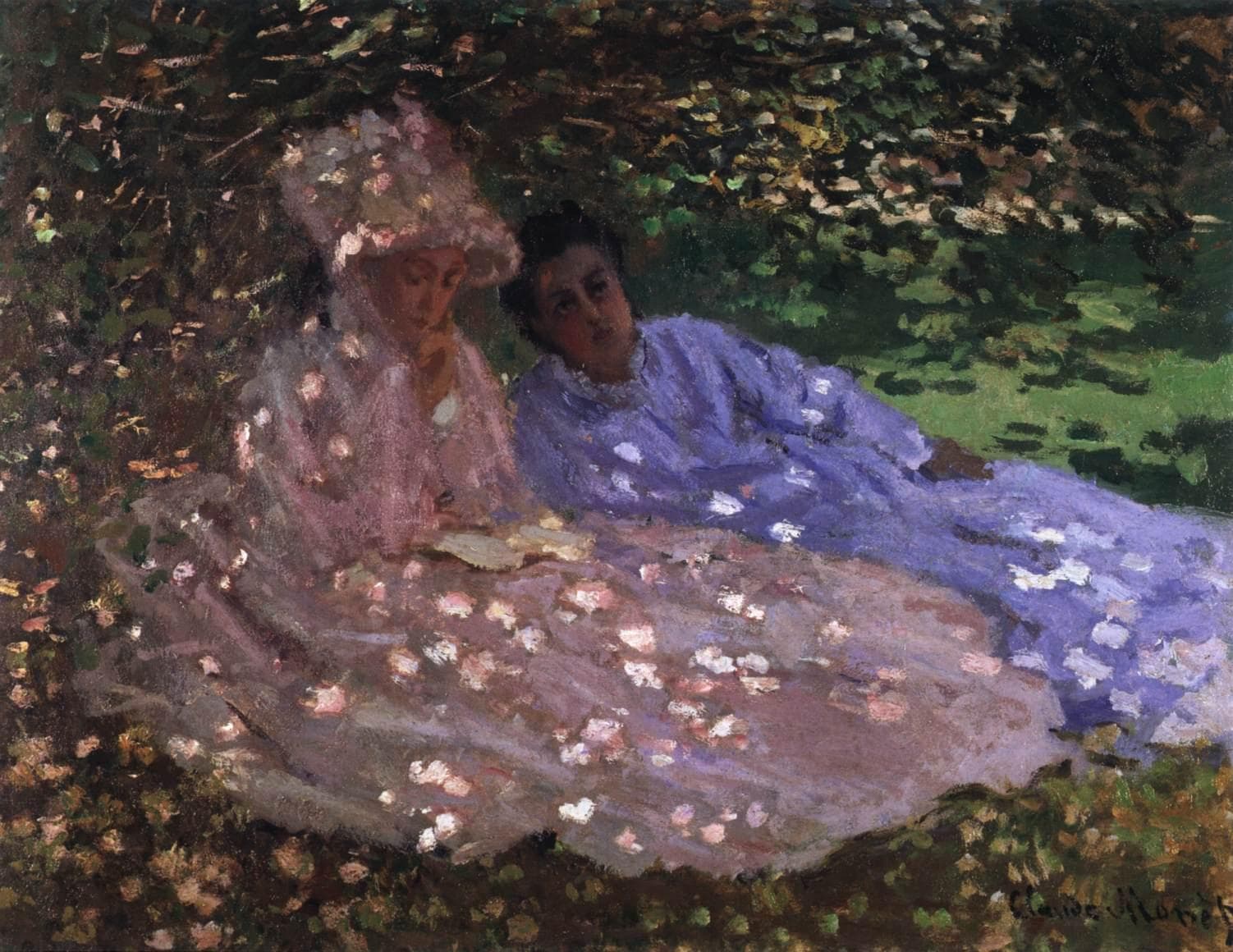
Monet moved to Argenteuil, on the Seine northwest of Paris, at the end of 1871. The garden of his first house there became a favorite motif in 1872 and 1873, and he often set Camille and friends in it; see Springtime and Madame Monet and a Friend in the Garden. The figures here are not identified, though Camille is often suggested for the woman at center.
The companion canvas, Lilac in the Sun in the Pushkin Museum, Moscow, shows the bush in strong spring sun, with spots of light dancing on the resting figures. Comparing them, one sees Monet painting not the lilac itself but the weather around it: the same subject in two kinds of light. Twenty years later this idea became the basis of his series, from the Haystacks onward. For the Argenteuil years, see Monet at Argenteuil.
How it was painted
The canvas is a standard 50 by 65 centimeters, painted outdoors. Under gray light Monet narrows his range of values. The blossoms are laid in small, soft dabs of lilac and pink-white, the leaves in dull greens, and the shadow under the bush in deep green and blue rather than black. The figures are painted with the same small touches as the foliage, so they merge into it. The lawn is brushed more broadly in horizontal strokes. The effect is less dazzling than the sunny version but more unified: everything sits in the same soft, cool atmosphere.
Ownership and where to see it
The painting belonged to Étienne Moreau-Nélaton, the painter, collector and historian, who gave his collection to the French state in 1906. Shown first at the Musée des Arts Décoratifs and later the Louvre, it is now in the Musée d'Orsay, which holds one of the largest groups of Monet paintings in the world; see Monet at the Musée d'Orsay. Nearby in the collection are other Argenteuil garden pictures such as The Luncheon.
Questions & answers
Where is Monet's Lilacs, Gray Weather?
It is in the Musée d'Orsay in Paris. It came to the French national collections in 1906 as part of the gift of Étienne Moreau-Nélaton.
What is the companion painting to Lilacs, Gray Weather?
Its pendant is Lilac in the Sun, in the Pushkin Museum, Moscow, which shows the same lilac bush and resting figures in bright sunshine. Together they show one motif in two kinds of light.
When and where was Lilacs, Gray Weather painted?
Monet painted it around 1872–73 in the garden of his rented house at Argenteuil, a town on the Seine northwest of Paris where he lived from 1871 to 1878.
What does Lilacs, Gray Weather show?
It shows a large lilac bush in bloom with three figures resting in the shade beneath it, and a stretch of lawn in front, all under an overcast white sky that softens colors and removes shadows.
More by the artist
Claude Monet

Bridge over a Pond of Water Lilies
Claude Monet · 1899

Woman with a Parasol – Madame Monet and Her Son
Claude Monet · 1875

Sunset in Venice
Claude Monet · 1908–12

La Grenouillère
Claude Monet · 1869

Beach in Pourville
Claude Monet · 1882

Springtime
Claude Monet · 1872

Boating on the River Epte
Claude Monet · 1890

The Seine at Asnières (Hermitage)
Claude Monet · 1873
Also painted in 1873
The same year
Lilac in the Sun
Claude Monet · 1873
The Museum at Le Havre
Claude Monet · 1873
The Seine at Asnières
Claude Monet · 1873
Autumn Effect at Argenteuil
Claude Monet · 1873
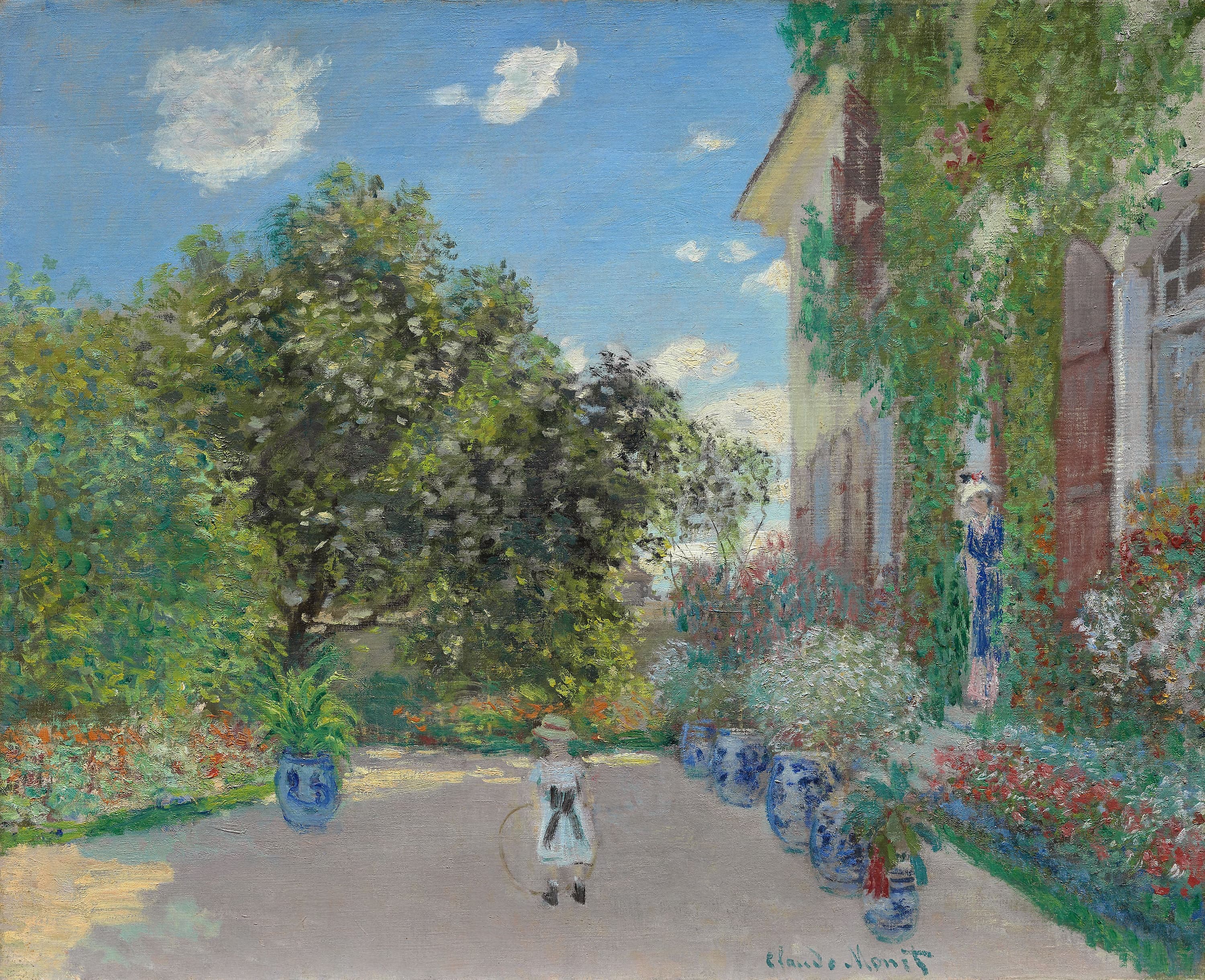
The Artist's House at Argenteuil
Claude Monet · 1873
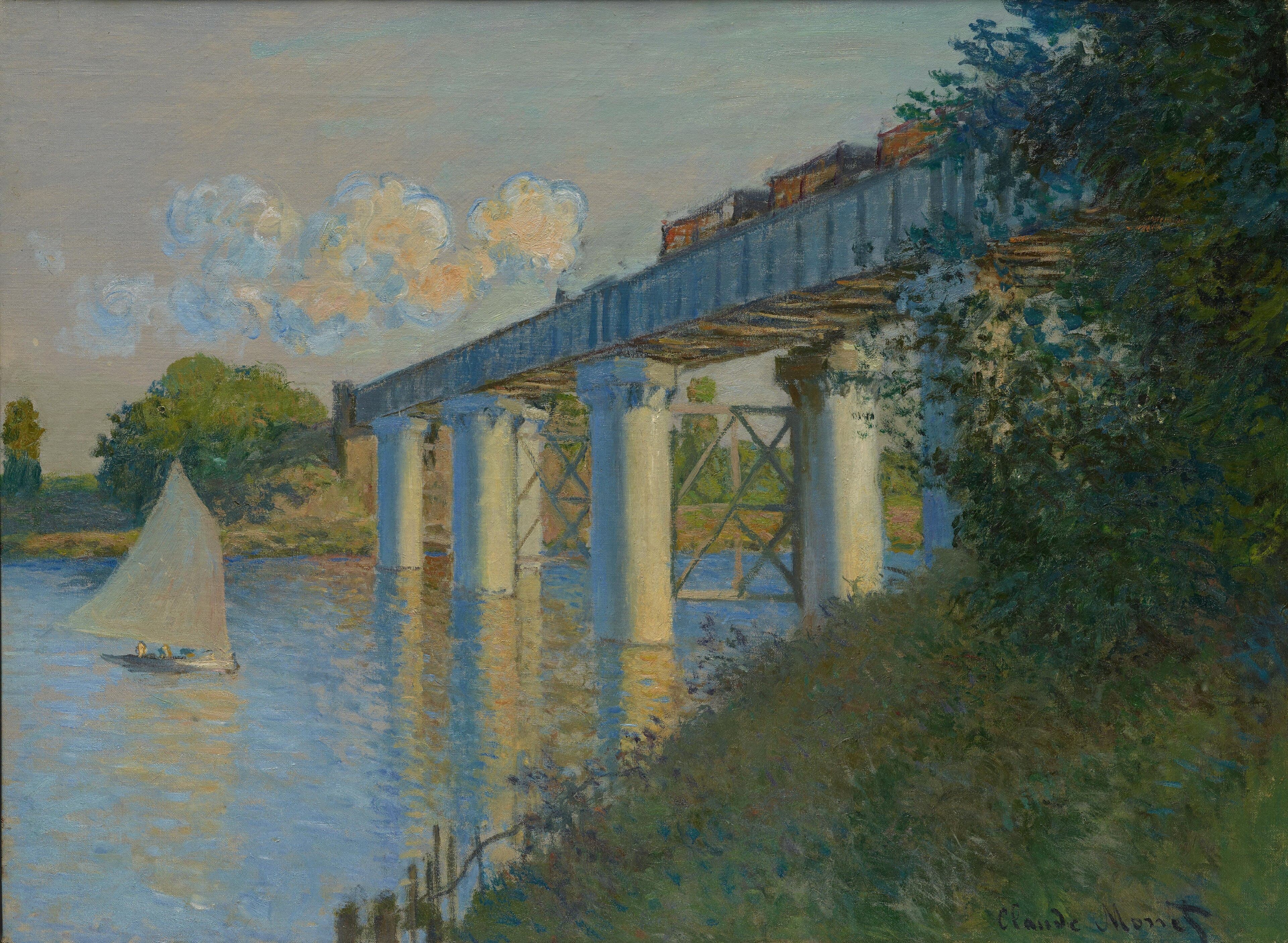
Railroad Bridge, Argenteuil
Claude Monet · 1873
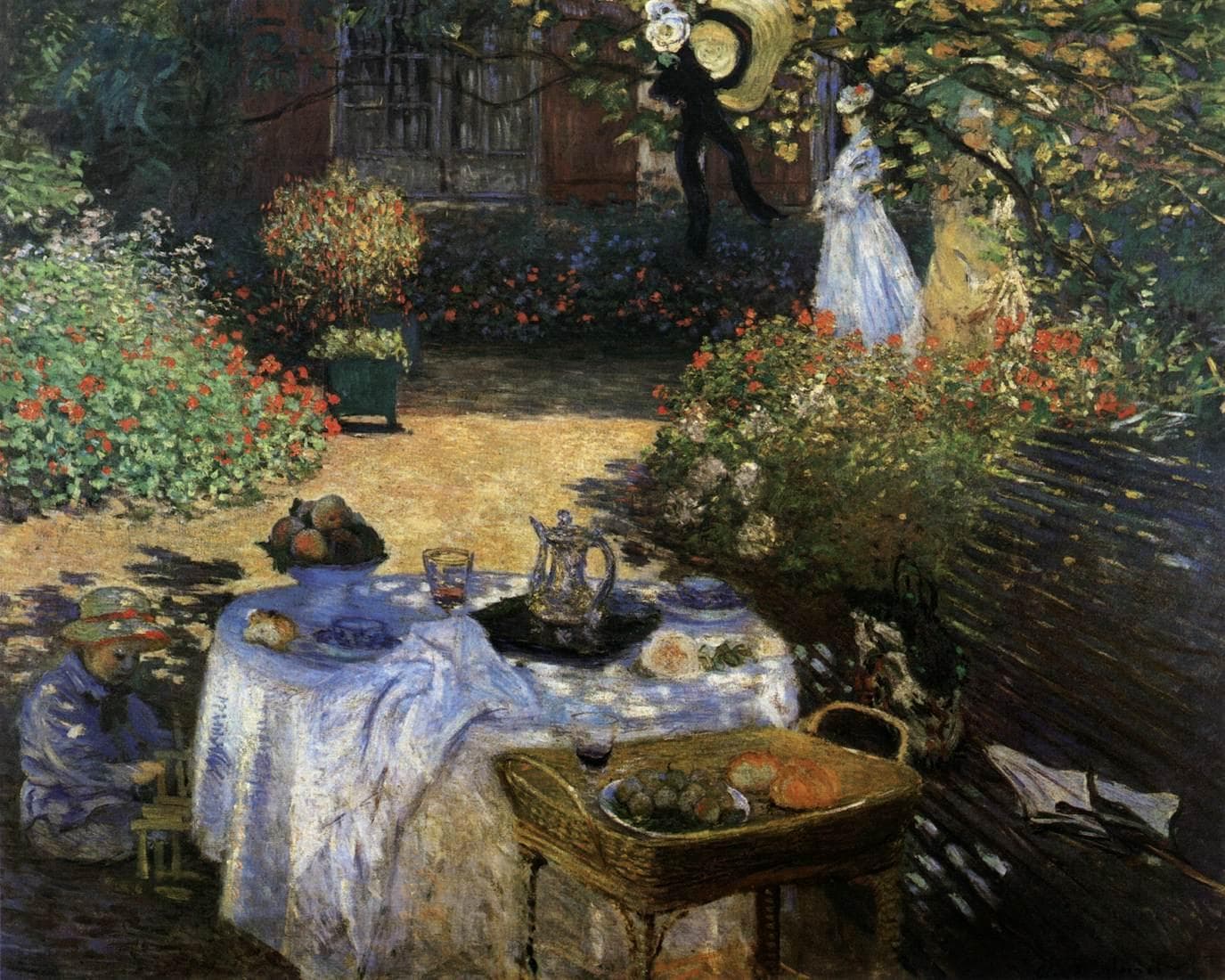
The Luncheon (Monet's Garden at Argenteuil)
Claude Monet · c. 1873
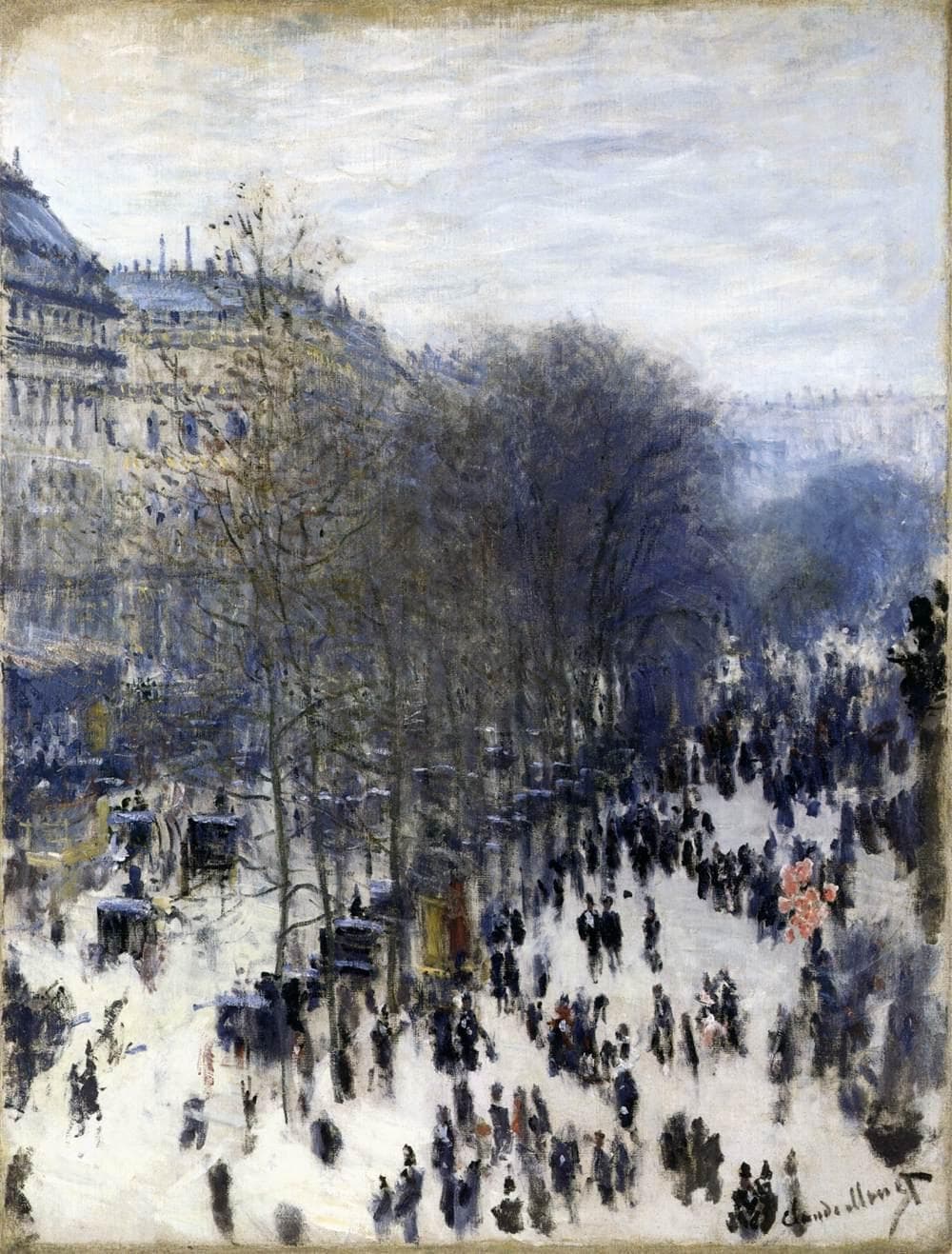
Boulevard des Capucines
Claude Monet · 1873–74
Kindred works
You may also study
Lilac in the Sun
Claude Monet · 1873
Madame Monet and a Friend in the Garden
Claude Monet · c. 1872
The Luncheon (Monet's Garden at Argenteuil)
Claude Monet · c. 1873
The Artist's Garden in Argenteuil (A Corner of the Garden with Dahlias)
Claude Monet · 1873

Venus de Milo
Alexandros of Antioch · c. 150–125 BC

The Scream
Edvard Munch · 1893

Ophelia
John Everett Millais · 1851–52

The Great Wave off Kanagawa
Katsushika Hokusai · c. 1830–32