Image: Art Institute of Chicago · Public domain · via Wikimedia Commons
Impressionism
The Artist's House at Argenteuil
Claude Monet, 1873
The Artist's House at Argenteuil is an 1873 painting by Claude Monet of his rented house and garden at Argenteuil, with his son Jean playing with a hoop and Camille in the doorway. It is in the Art Institute of Chicago.
- Artist
- Claude Monet
- Date
- 1873
- Medium
- Oil on canvas
- Dimensions
- 60.2 × 73.3 cm
- Collection
- Art Institute of Chicago, Chicago, United States
- Movement
- Impressionism
- Catalogue
- Wildenstein 284
Painted at Monet at ArgenteuilMore at Monet at the Art Institute of Chicago
The Artist's House at Argenteuil is a sunny garden scene Claude Monet painted in 1873 at the house he rented in Argenteuil, northwest of Paris. His six-year-old son Jean stands with a hoop on the garden path, and his wife Camille appears in the doorway. The painting is in the Art Institute of Chicago, part of the Mr. and Mrs. Martin A. Ryerson Collection.
What you are looking at
The right side of the picture is taken up by the house, seen at a sharp angle: a cream-colored wall almost covered in climbing vines, with tall windows and brown shutters. At its foot runs a border of flowers, red, pink and white, and a row of large blue-and-white ceramic pots planted with bushes and flowers. In the doorway, half in shade, Camille stands in a blue dress, looking out.
The left side is open garden. A broad, pale path of sand runs across the foreground, warm pink and cream in the sun. Behind it rises a big, round tree in dark and bright greens, and more flowering beds and shrubs. Another blue-and-white pot with a spiky plant stands at the left edge. In the center of the path, small and alone, stands Jean in a white smock and straw hat, with a hoop and stick, his back half turned to us. The sky above is a strong blue with a few heaped white clouds. The signature is at lower right.
Where and when it was painted
Monet moved to Argenteuil in December 1871 and rented a house near the railway station, with a large garden. Two good years followed: the dealer Paul Durand-Ruel was buying his work, and Monet could afford a gardener and the flowers he loved. He painted the house and garden again and again, sometimes with Camille and Jean, sometimes with visitors. The town and the many pictures he made there are on our Argenteuil hub. In 1874 the family moved to another house nearby, painted in later garden pictures such as The Gladioli.
How it was painted
The picture is a study of strong summer light and the shadows it throws. The path is painted in thick, warm strokes of cream and pink, and the shadows across it in cool lilac and blue. The flowers and leaves are dabs of pure color laid side by side. The house, by contrast, is handled more flatly, its wall a pale plane broken by the dark shutters and the scribble of the vines. The blue-and-white pots, probably Chinese or Japanese-style ceramics fashionable at the time, punctuate the composition and repeat the blue of the sky and of Camille's dress.
The figures are small and placed almost casually. Jean, alone on the wide path, is the center of the picture but barely more than a few strokes of white. Monet's interest is in the whole scene in sunlight, and the people are part of the garden rather than its subject, as much a part of it as the pots and the flowers.
The Argenteuil gardens
Monet painted his first Argenteuil garden in several canvases around 1873. The closest companions are The Artist's Garden in Argenteuil in Washington, The Luncheon at the Orsay, with its abandoned table in the shade, and Camille Monet on a Garden Bench at the Met. Light and family are the twin subjects of these canvases, and they record one of the happiest periods of his life. Jean appears as a baby in The Cradle of 1867; here he is six. These garden pictures look forward to the great garden Monet would make at Giverny.
Where to see it
The painting is in the Art Institute of Chicago (1933.1153), which has one of the largest Monet collections outside Paris. See our Monet at the Art Institute of Chicago page for the others, including the Gare Saint-Lazare and Haystacks canvases. For other collections, see where to see Monet's paintings.
Questions & answers
Where is Monet's The Artist's House at Argenteuil?
It is in the Art Institute of Chicago, part of the Mr. and Mrs. Martin A. Ryerson Collection (1933.1153). The museum has one of the largest groups of Monet paintings outside France.
When was The Artist's House at Argenteuil painted?
In 1873, in the garden of the house Monet rented at Argenteuil, northwest of Paris, from the end of 1871. These were prosperous years for him, supported by the dealer Paul Durand-Ruel.
Who are the people in The Artist's House at Argenteuil?
The child with the hoop on the path is Monet's elder son Jean, then about six years old. The woman in blue standing in the doorway of the house is Camille, Monet's wife.
What are the blue and white pots in the painting?
They are large ceramic planters in a blue-and-white style, probably Chinese or Japanese-inspired, which were fashionable in France at the time. Monet placed them along the path and they echo the blue of the sky and Camille's dress.
More by the artist
Claude Monet

Bridge over a Pond of Water Lilies
Claude Monet · 1899

Woman with a Parasol – Madame Monet and Her Son
Claude Monet · 1875

Sunset in Venice
Claude Monet · 1908–12

La Grenouillère
Claude Monet · 1869

Beach in Pourville
Claude Monet · 1882

Springtime
Claude Monet · 1872

Boating on the River Epte
Claude Monet · 1890

The Seine at Asnières (Hermitage)
Claude Monet · 1873
Also painted in 1873
The same year
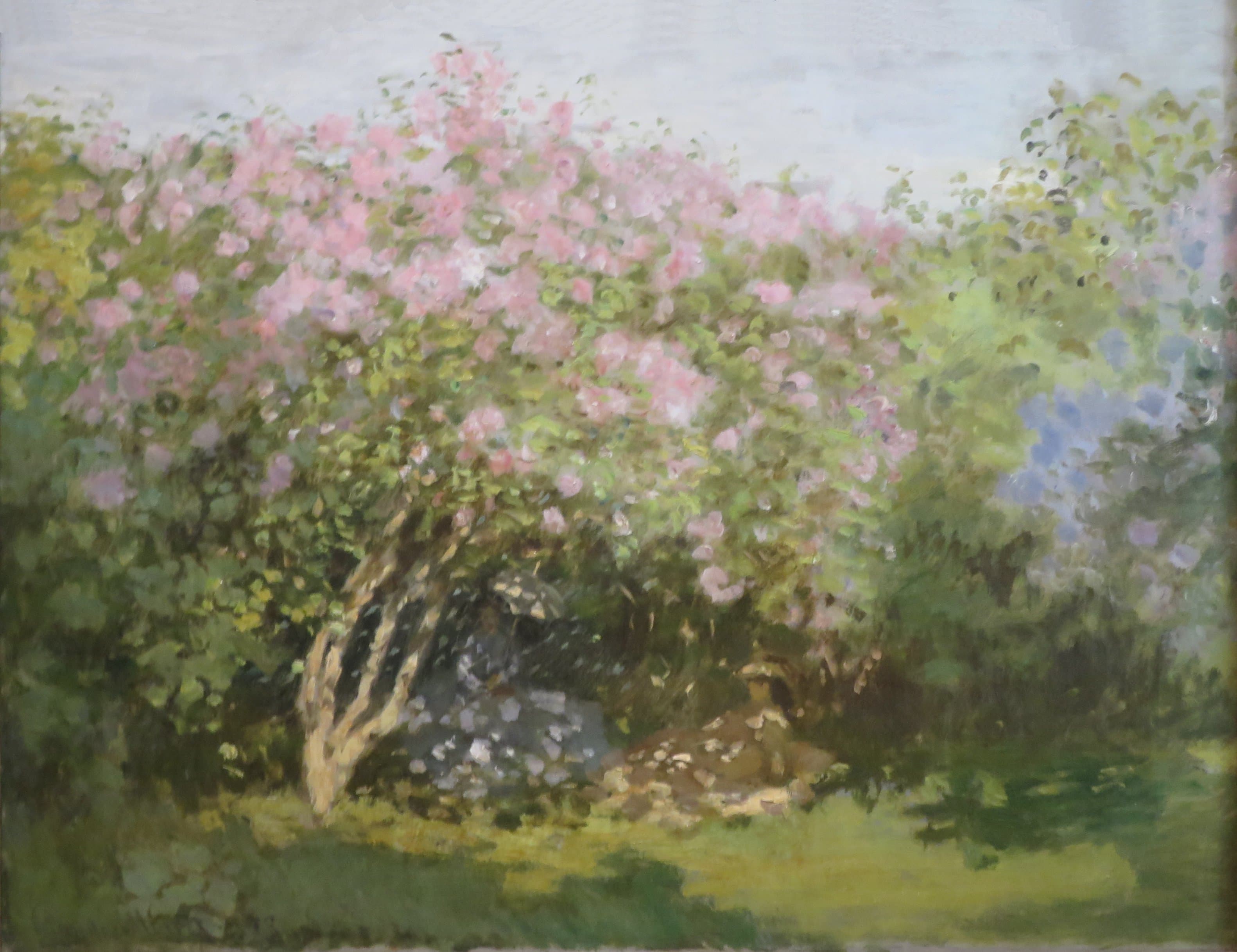
Lilac in the Sun
Claude Monet · 1873
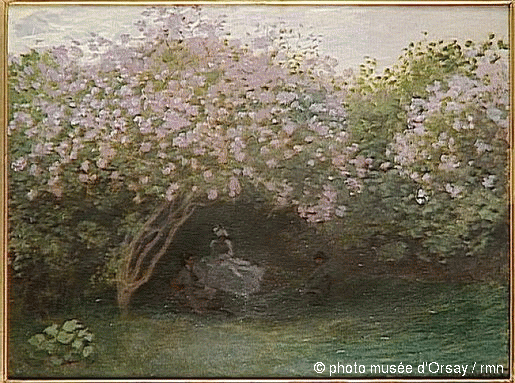
Lilacs, Gray Weather
Claude Monet · 1872–73
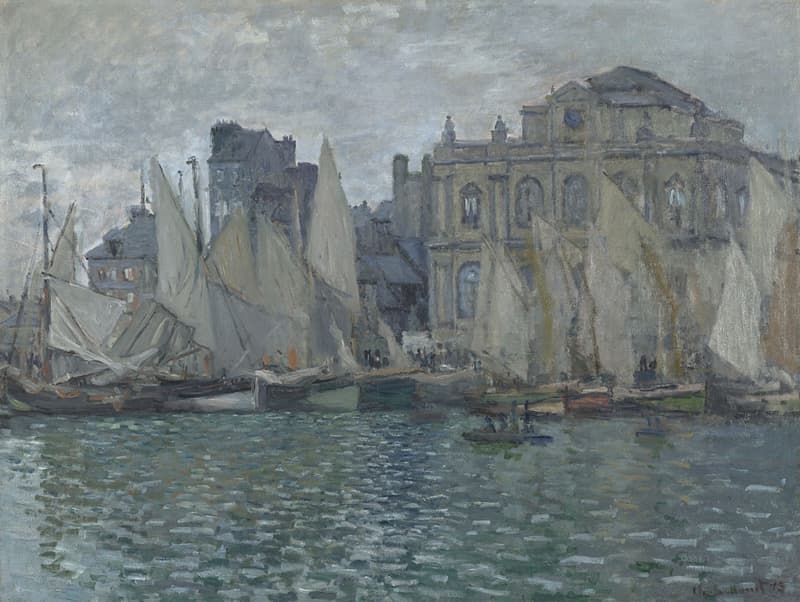
The Museum at Le Havre
Claude Monet · 1873
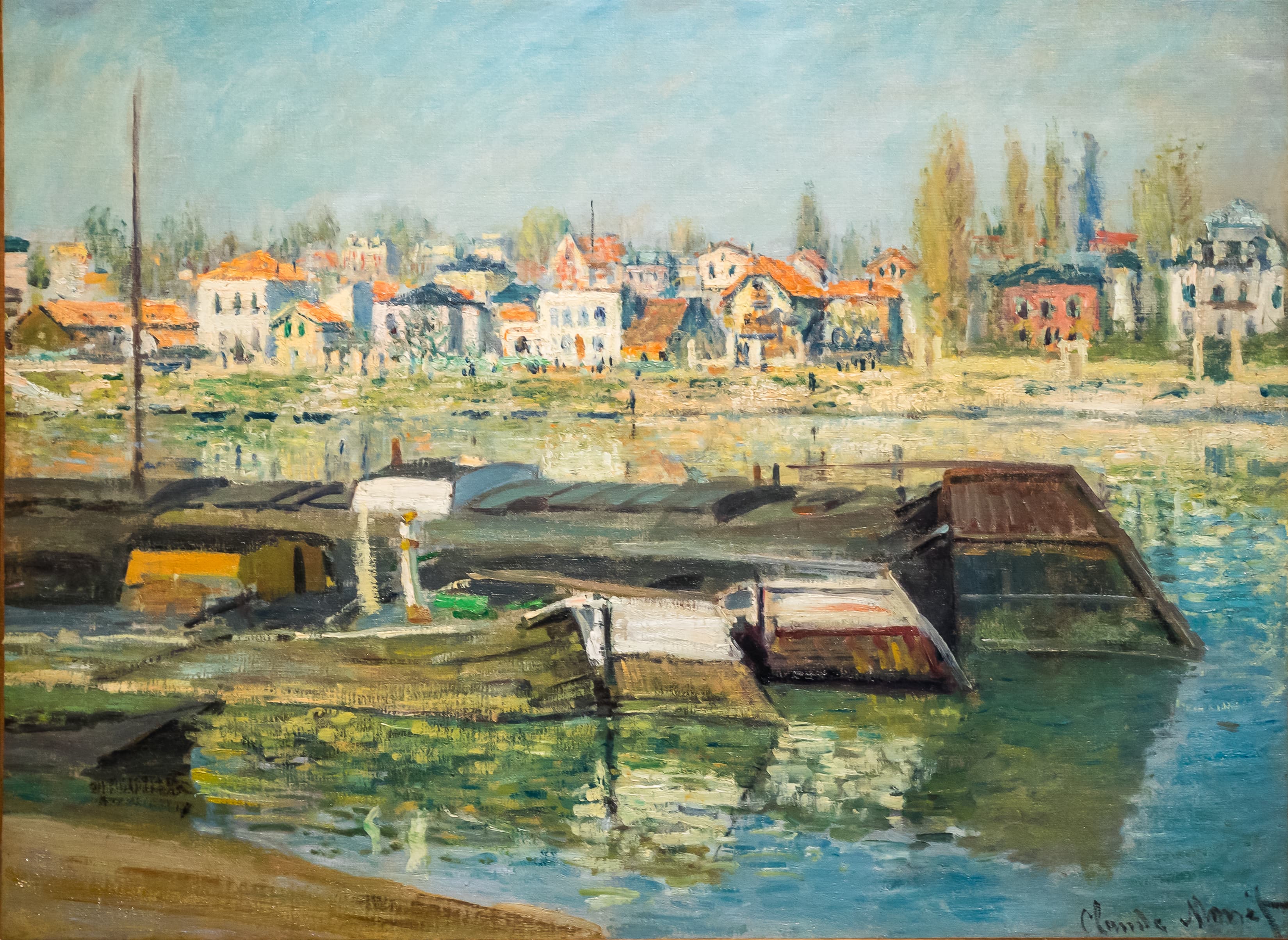
The Seine at Asnières
Claude Monet · 1873
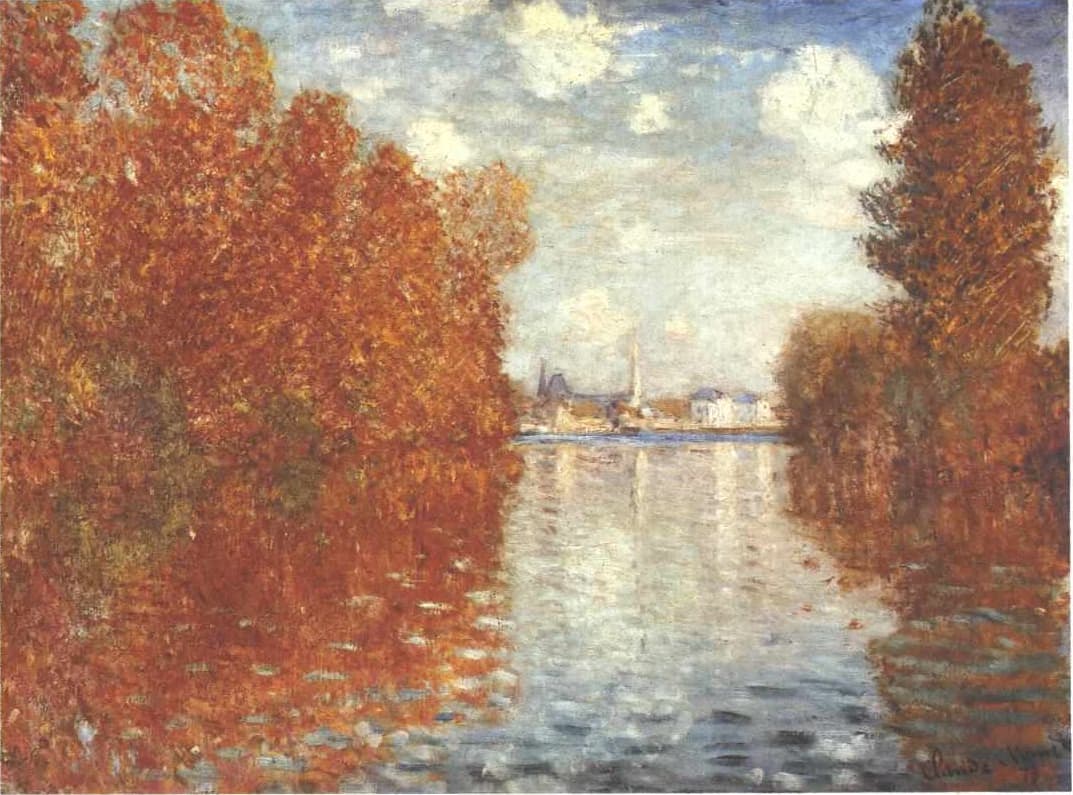
Autumn Effect at Argenteuil
Claude Monet · 1873
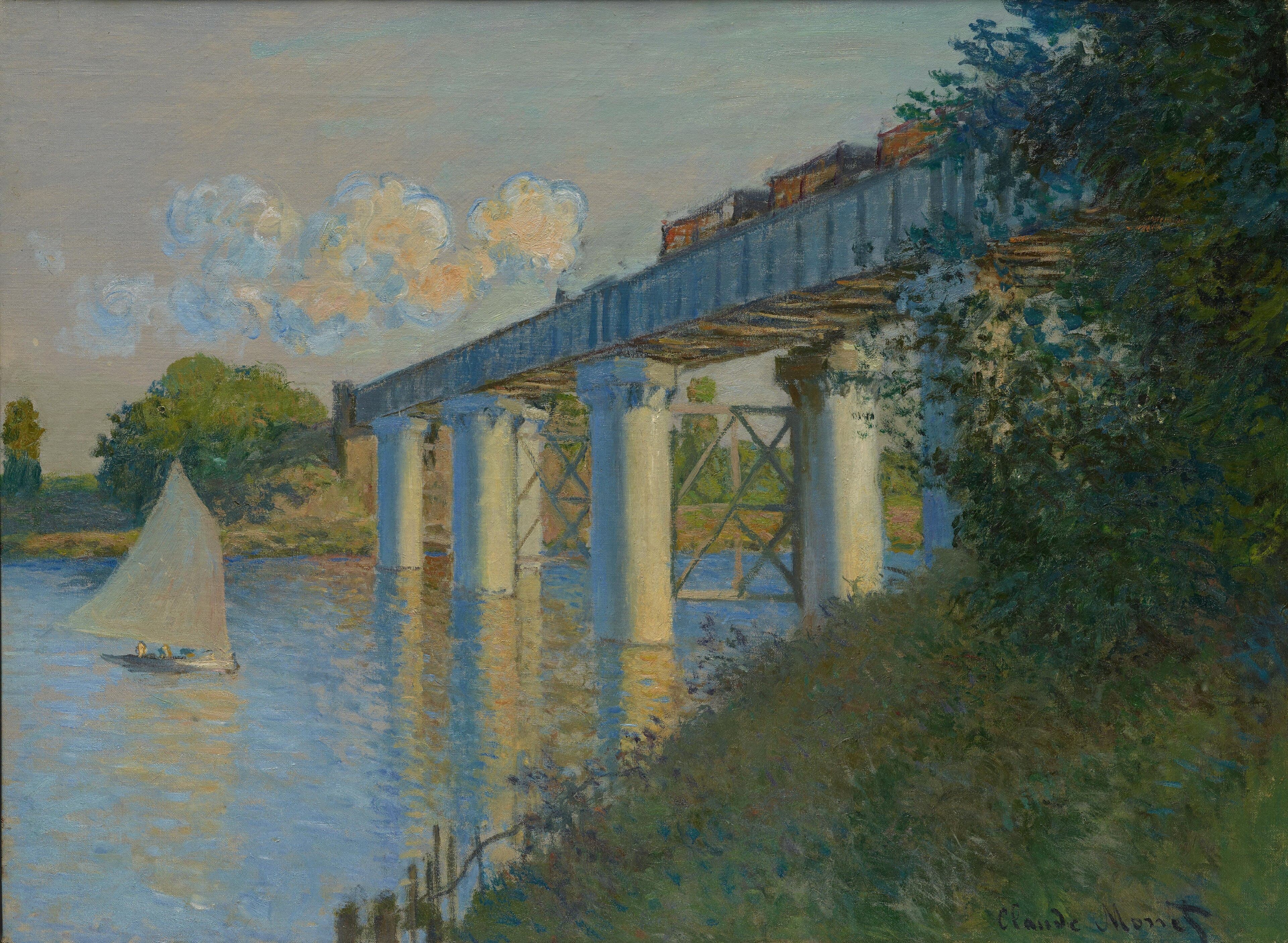
Railroad Bridge, Argenteuil
Claude Monet · 1873
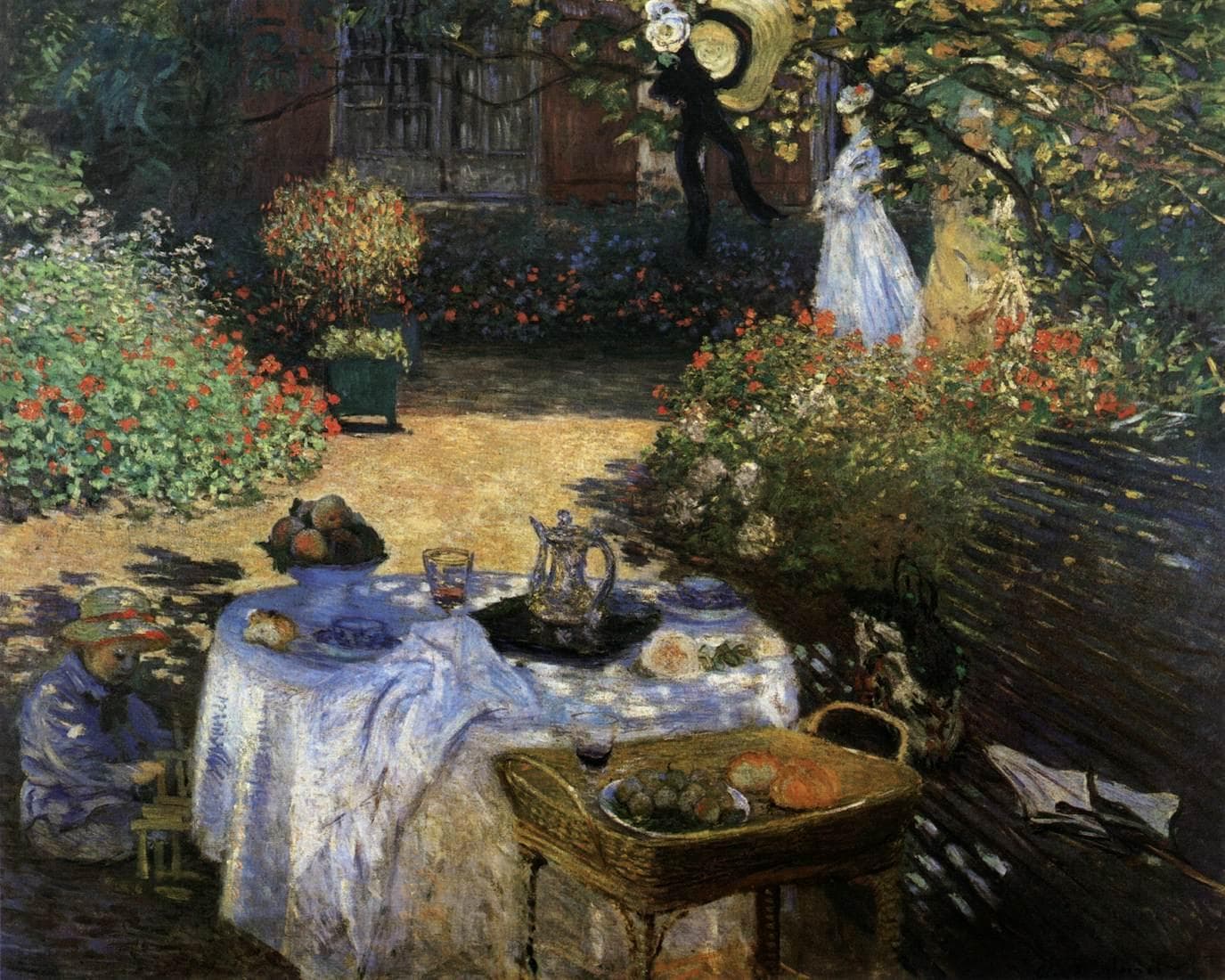
The Luncheon (Monet's Garden at Argenteuil)
Claude Monet · c. 1873
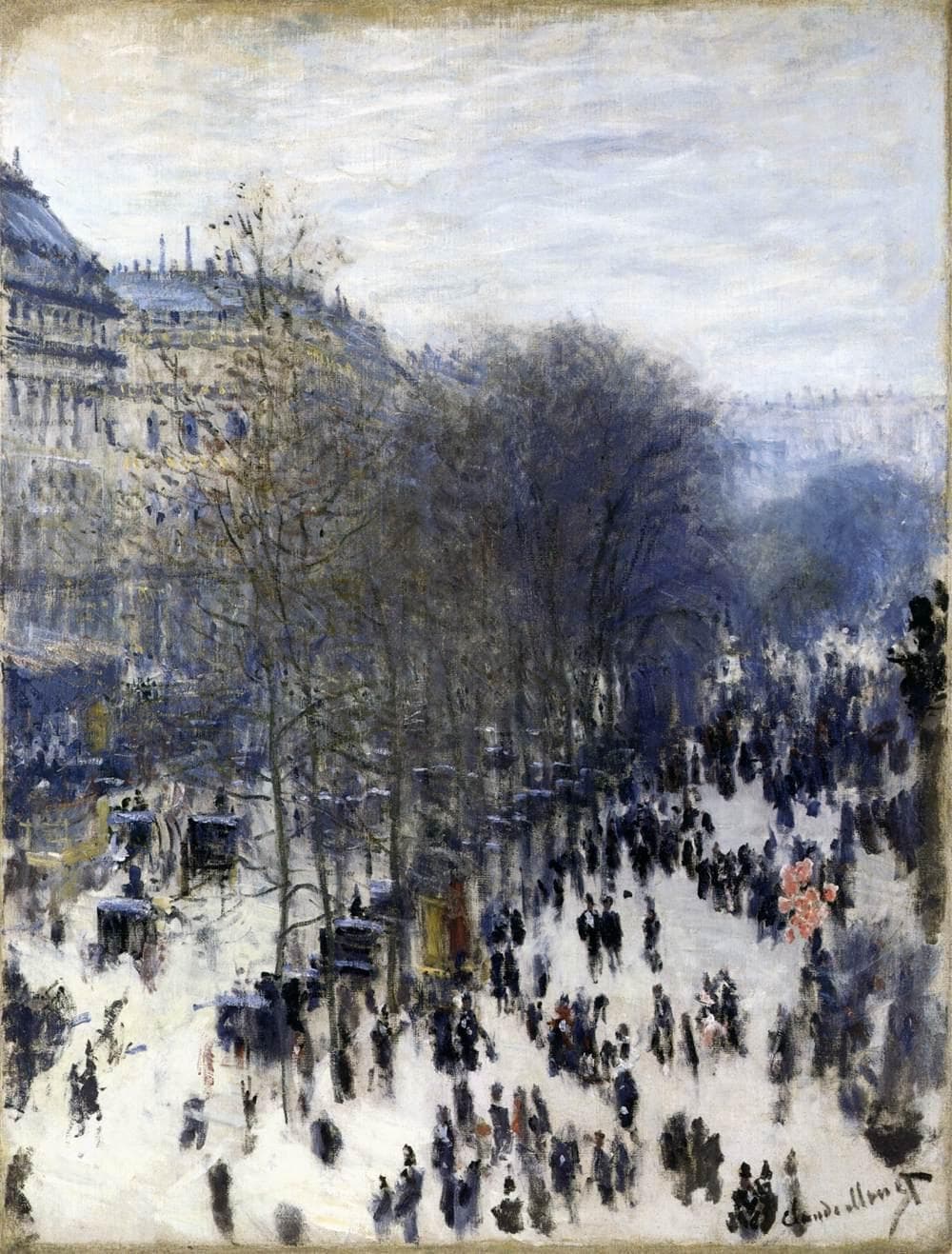
Boulevard des Capucines
Claude Monet · 1873–74
Kindred works
You may also study
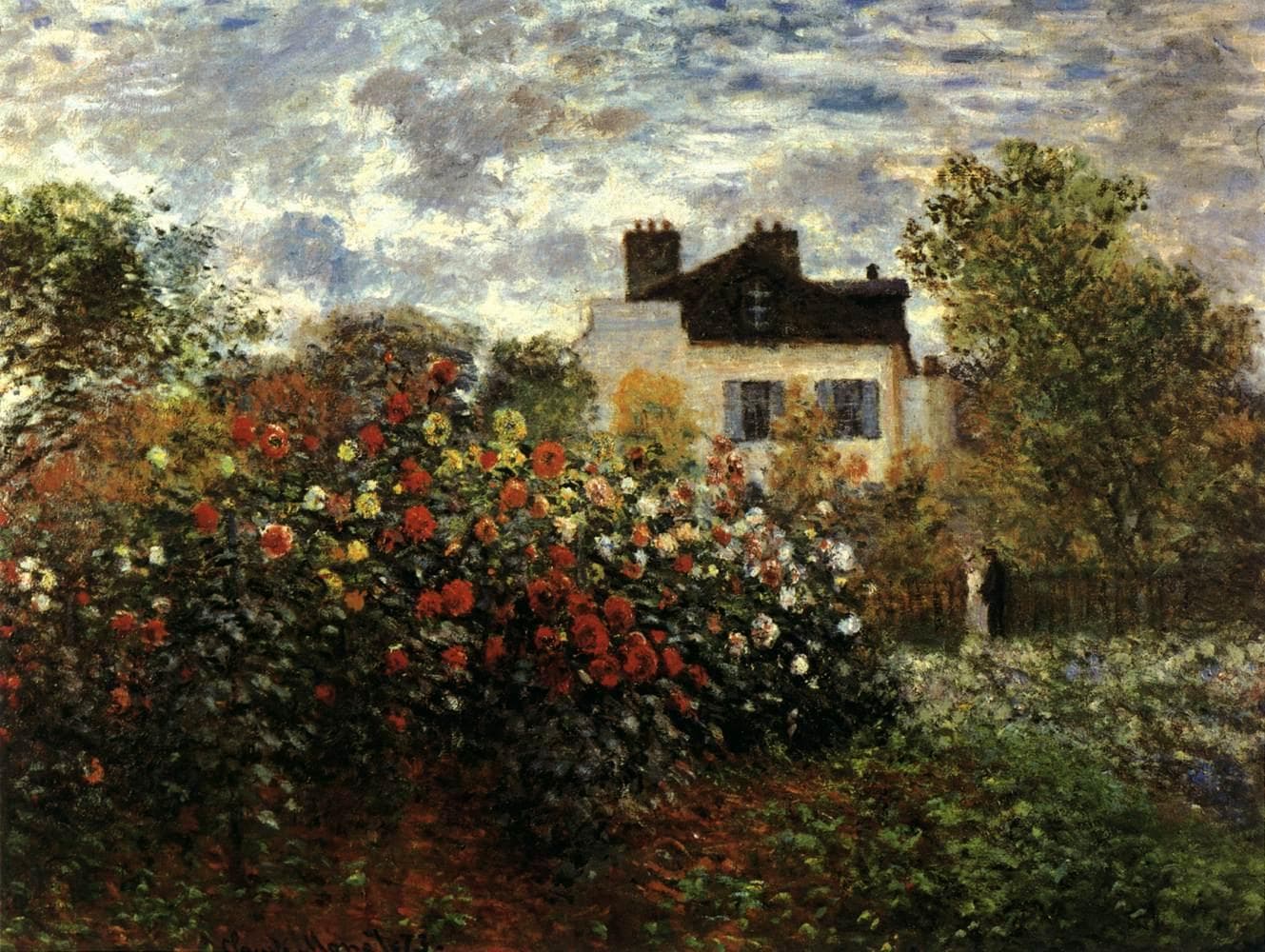
The Artist's Garden in Argenteuil (A Corner of the Garden with Dahlias)
Claude Monet · 1873
The Luncheon (Monet's Garden at Argenteuil)
Claude Monet · c. 1873
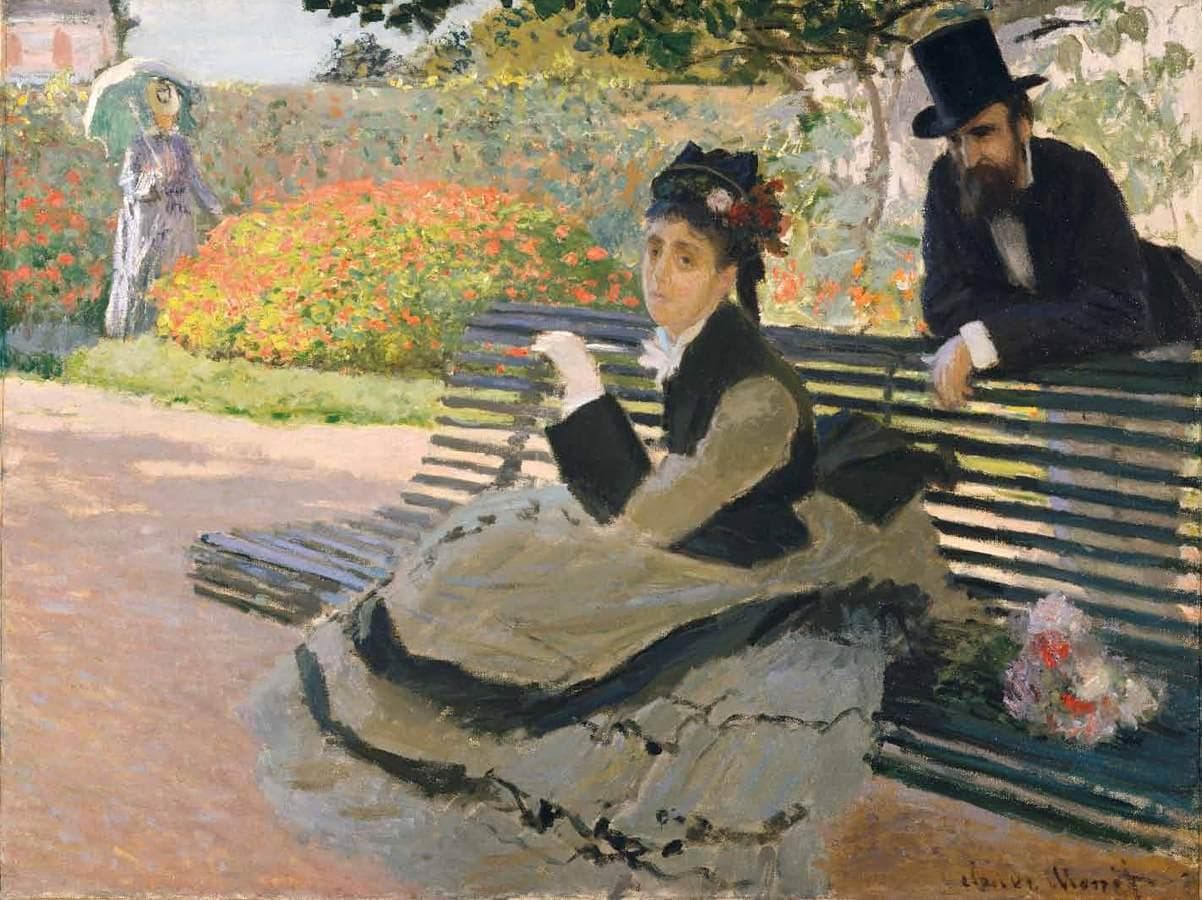
Camille Monet on a Garden Bench
Claude Monet · 1873
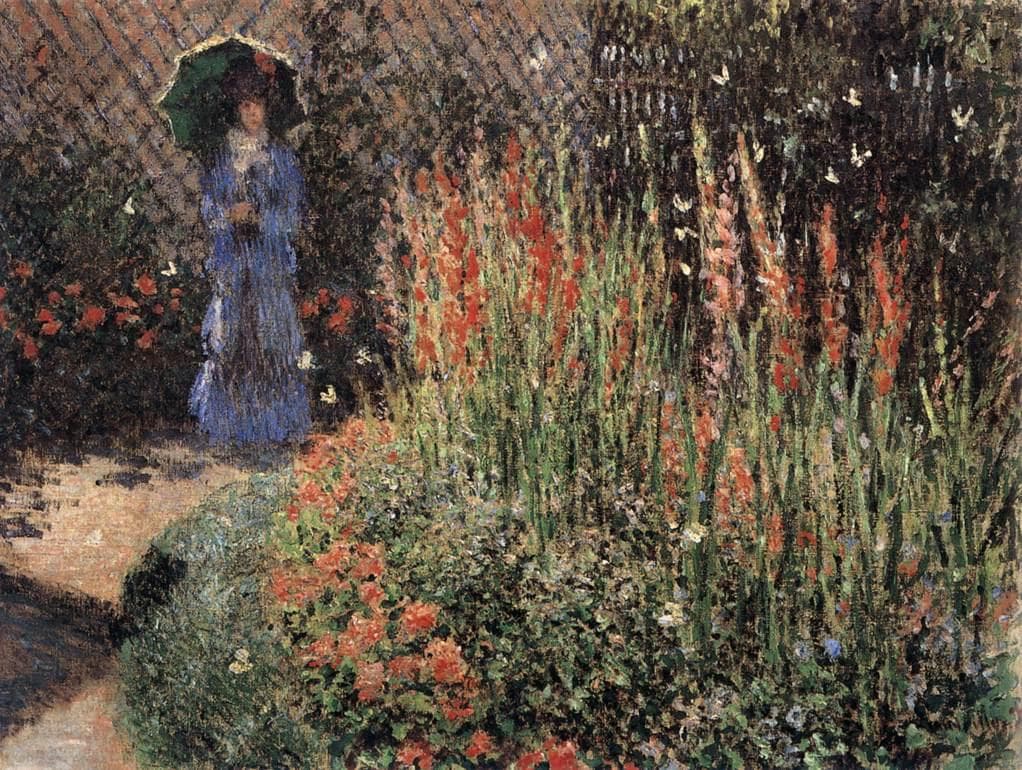
The Gladioli
Claude Monet · c. 1876
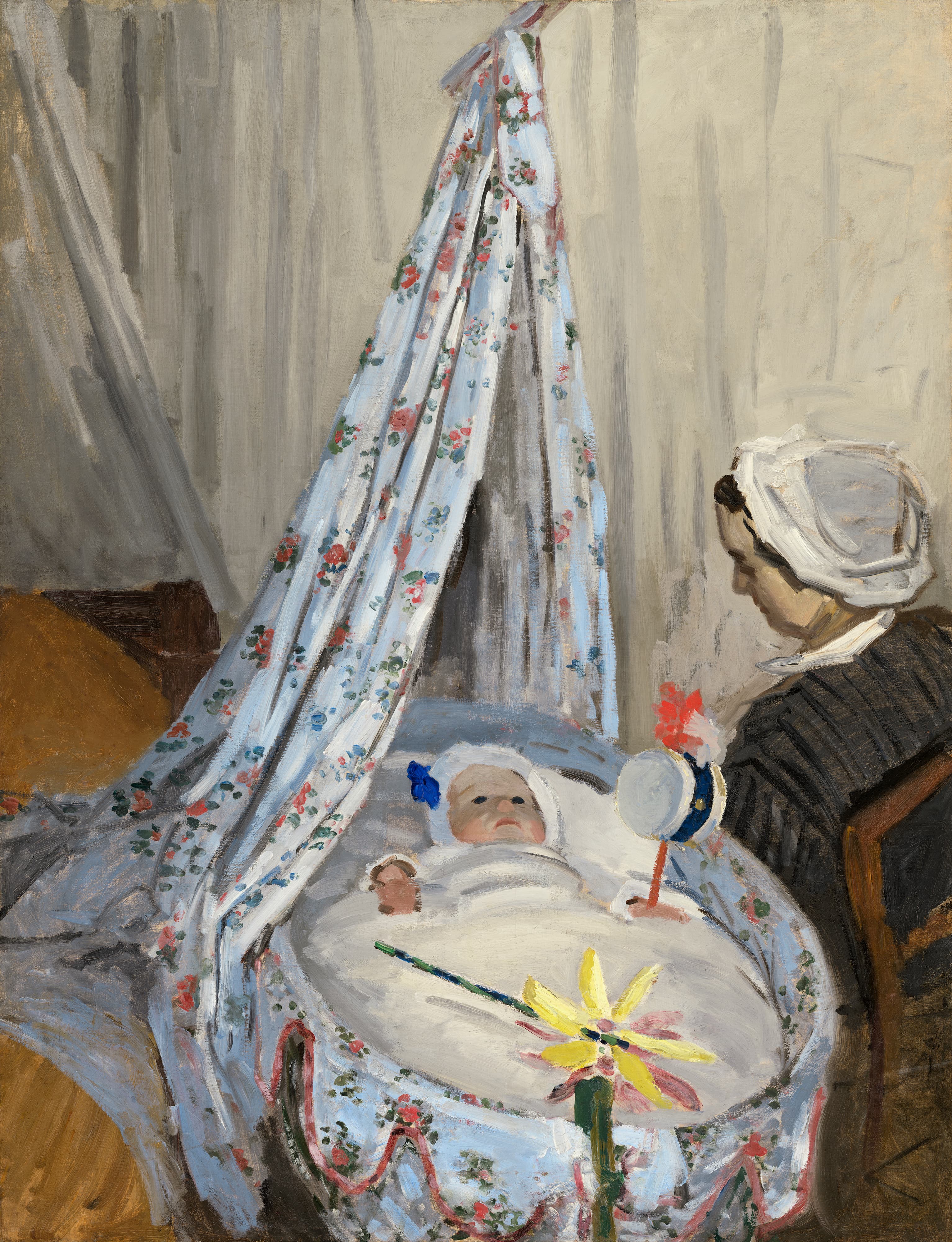
The Cradle – Camille with the Artist's Son Jean
Claude Monet · 1867

Venus de Milo
Alexandros of Antioch · c. 150–125 BC

The Scream
Edvard Munch · 1893

Ophelia
John Everett Millais · 1851–52