Image: Philadelphia Museum of Art, John G. Johnson Collection · Public domain · via Wikimedia Commons
Impressionism
Railroad Bridge, Argenteuil
Claude Monet, 1873
Railroad Bridge, Argenteuil is an 1873 painting by Claude Monet of the new iron railway bridge over the Seine at Argenteuil, seen from below with a train crossing and a sailboat gliding past its pillars. It is in the Philadelphia Museum of Art.
- Artist
- Claude Monet
- Date
- 1873
- Medium
- Oil on canvas
- Dimensions
- 54.3 × 73.3 cm
- Collection
- Philadelphia Museum of Art, Philadelphia, United States
- Movement
- Impressionism
- Catalogue
- Wildenstein 318
Painted at Monet at Argenteuil
Railroad Bridge, Argenteuil is one of a small group of pictures Claude Monet painted in 1873–74 of the railway bridge that carried the Paris line across the Seine at Argenteuil. Seen from the grassy bank almost underneath it, the bridge drives into the picture on massive pale pillars, with a train passing overhead and a sailboat on the river. The painting is in the Philadelphia Museum of Art, part of the John G. Johnson Collection.
What you are looking at
The bridge is the whole subject. It enters from the upper right corner and runs diagonally left into the distance, its flat iron deck painted in cool blue-gray and its row of thick, cylindrical piers in cream and pale pink where the low sun strikes them, with lilac shadows on their far sides. Between the piers the iron lattice of the deck's supports can be seen, drawn in thin dark lines. On top, a short train of brown and red goods wagons crosses toward the right.
Below, the river is calm and pale, reflecting the piers as long, wavering columns of cream and blue. On the left a single white sailboat glides past, its sail catching the light, and beyond it the far bank is a soft band of trees in green and gold. The right foreground is a steep bank of grass and shrubs in dark greens, almost in shadow, with a few stakes or posts at the water's edge. The sky is a warm, hazy blue-gray, and above the bridge a bank of puffy clouds glows pink and white, lit from the side. The signature is at lower right.
Where and when it was painted
Monet lived at Argenteuil from late 1871 to 1878. The town was a quarter of an hour by train from the Gare Saint-Lazare, and the railway that made it a commuter town and a Sunday destination crossed the Seine on this bridge. The original had been destroyed in the Franco-Prussian War and was rebuilt in iron and concrete shortly before Monet arrived. For him it was a sign of the modern landscape, and he painted it as carefully as any natural motif. The town and its pictures are on our Argenteuil hub.
How it was painted
The handling is controlled and the colors are delicate. Monet built the piers out of warm and cool strokes laid side by side, so that their roundness comes from color temperature rather than shading. The water is painted in short horizontal strokes that break the reflections into ripples. The bank at right is darker and coarser, which pushes the luminous bridge and water back into space. The low, raking light suggests late afternoon or early evening.
The low viewpoint, almost underneath the bridge, is daring. It makes the structure loom and gives the picture a strong diagonal, from the dark bank at lower right to the bright distance at left, that recalls the compositions of Japanese prints Monet collected.
The Argenteuil bridges
Monet painted the railway bridge several times. The best-known version, The Railway Bridge at Argenteuil in the Musée d'Orsay, shows a steam train with a plume of smoke seen from the bank; a broader view is known from a detail of the private-collection version. In The Promenade with the Railroad Bridge of 1874, now in Saint Louis, the bridge recedes into the distance behind strolling figures. Monet also painted the town's road bridge, as in The Bridge at Argenteuil. Trains appear in his work from Train in the Countryside to the Gare Saint-Lazare series.
Ownership and where to see it
The painting belonged to the Philadelphia lawyer John G. Johnson, one of the great American collectors of his time, who left his collection to the city of Philadelphia on his death in 1917. It is shown at the Philadelphia Museum of Art (Cat. 1050). For other collections, see where to see Monet's paintings.
Questions & answers
Where is Monet's Railroad Bridge, Argenteuil?
It is in the Philadelphia Museum of Art, part of the John G. Johnson Collection that the Philadelphia lawyer bequeathed to his city in 1917. The museum also holds other Monets, including two from the Poplars series.
When was Railroad Bridge, Argenteuil painted?
In 1873, at Argenteuil on the Seine northwest of Paris, where Monet lived from 1871 to 1878. The railway bridge had been rebuilt in iron after being destroyed in the Franco-Prussian War of 1870–71.
What does Railroad Bridge, Argenteuil show?
The new railway bridge seen from the riverbank almost underneath it: a train of wagons crossing the iron deck, a row of thick pale pillars reflected in the calm Seine, a white sailboat gliding past and pink clouds glowing above.
How many paintings of the railway bridge did Monet make?
Several, in 1873–74. Besides this Philadelphia canvas, versions are in the Musée d'Orsay and a private collection, and the bridge appears in the background of The Promenade with the Railroad Bridge in Saint Louis.
More by the artist
Claude Monet

Bridge over a Pond of Water Lilies
Claude Monet · 1899

Woman with a Parasol – Madame Monet and Her Son
Claude Monet · 1875

Sunset in Venice
Claude Monet · 1908–12

La Grenouillère
Claude Monet · 1869

Beach in Pourville
Claude Monet · 1882

Springtime
Claude Monet · 1872

Boating on the River Epte
Claude Monet · 1890

The Seine at Asnières (Hermitage)
Claude Monet · 1873
Also painted in 1873
The same year
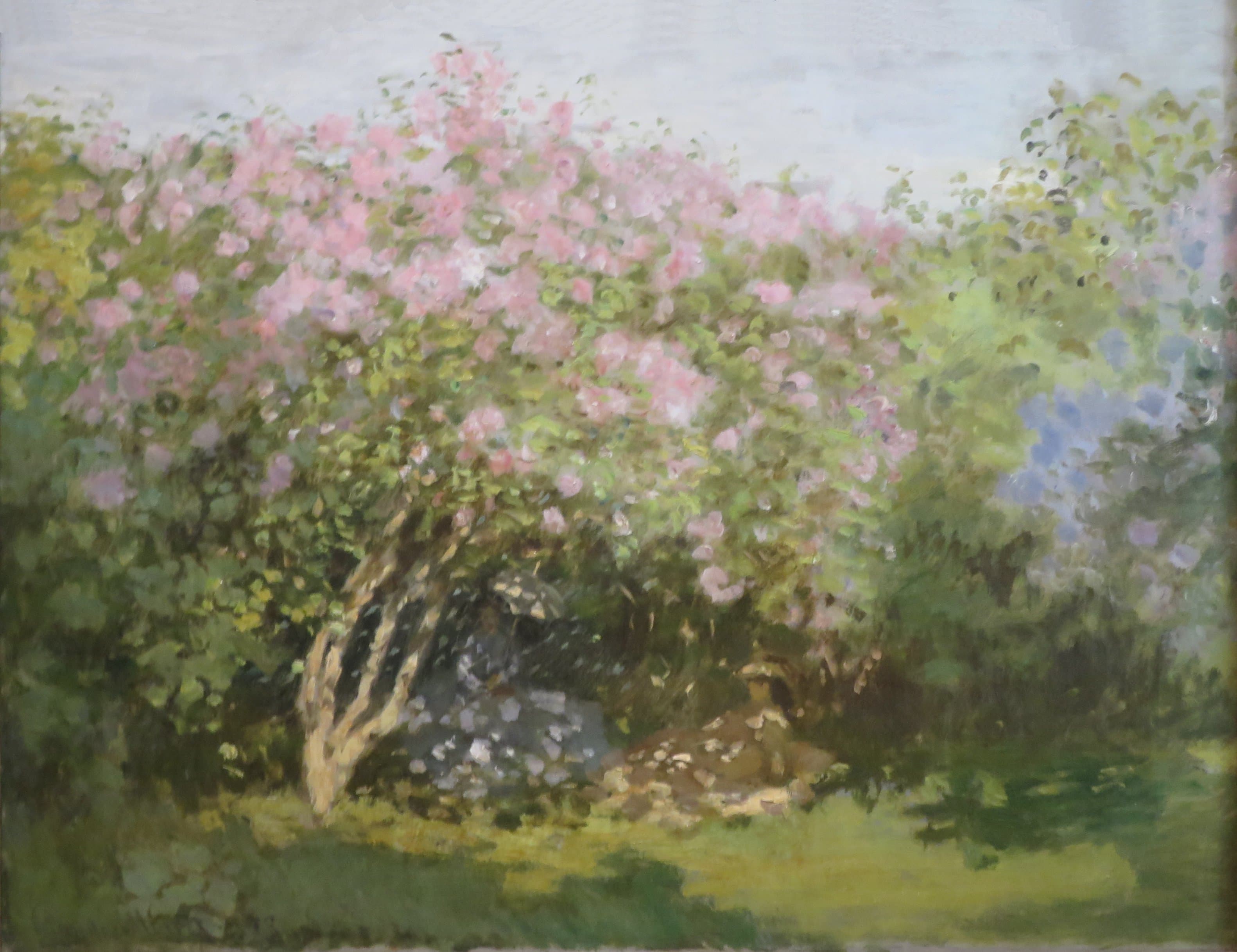
Lilac in the Sun
Claude Monet · 1873
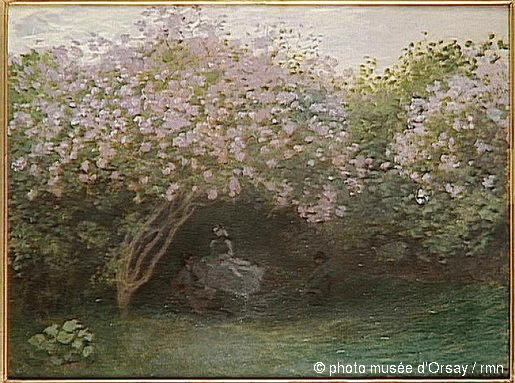
Lilacs, Gray Weather
Claude Monet · 1872–73
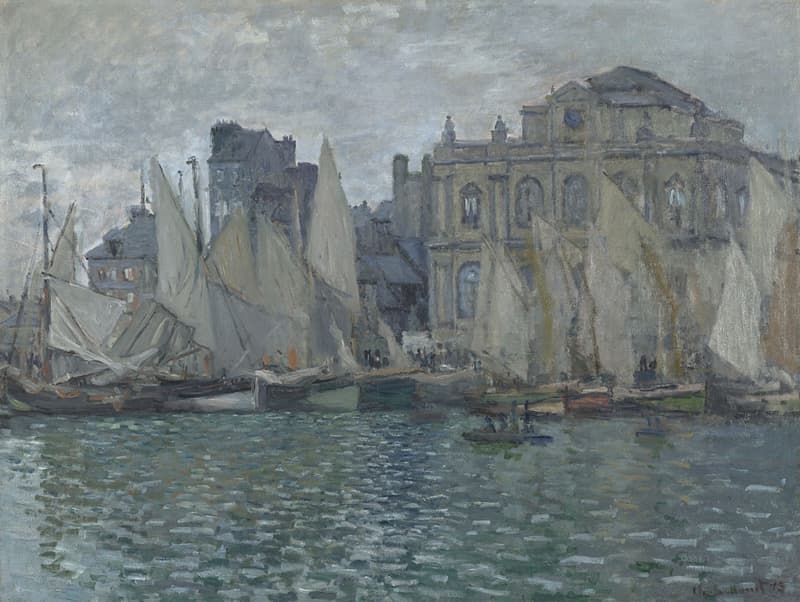
The Museum at Le Havre
Claude Monet · 1873
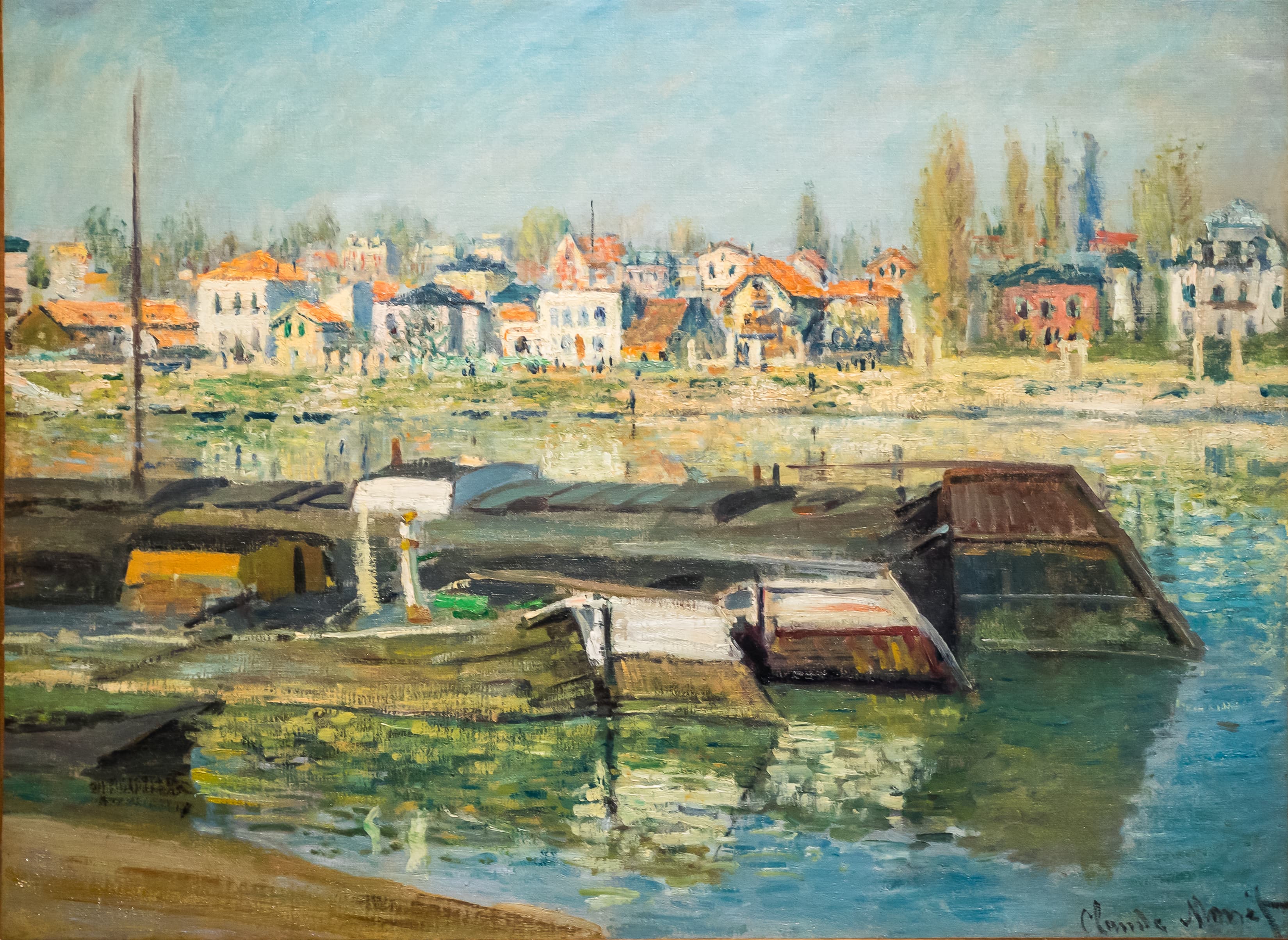
The Seine at Asnières
Claude Monet · 1873
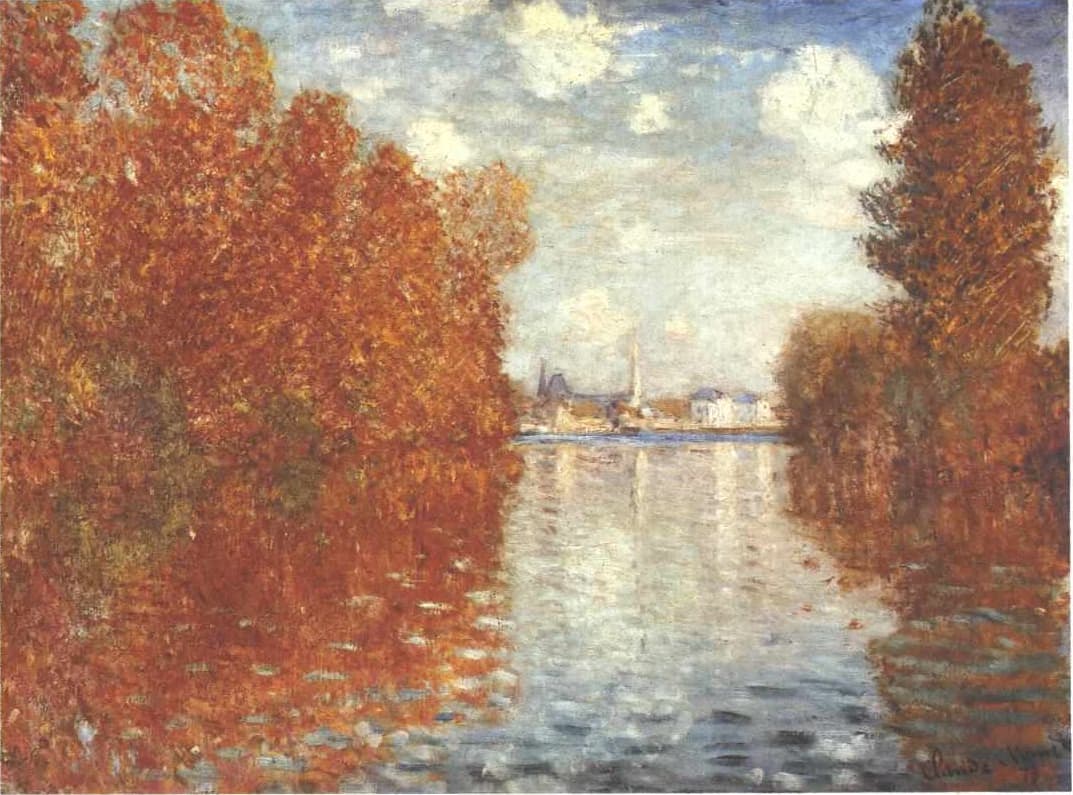
Autumn Effect at Argenteuil
Claude Monet · 1873
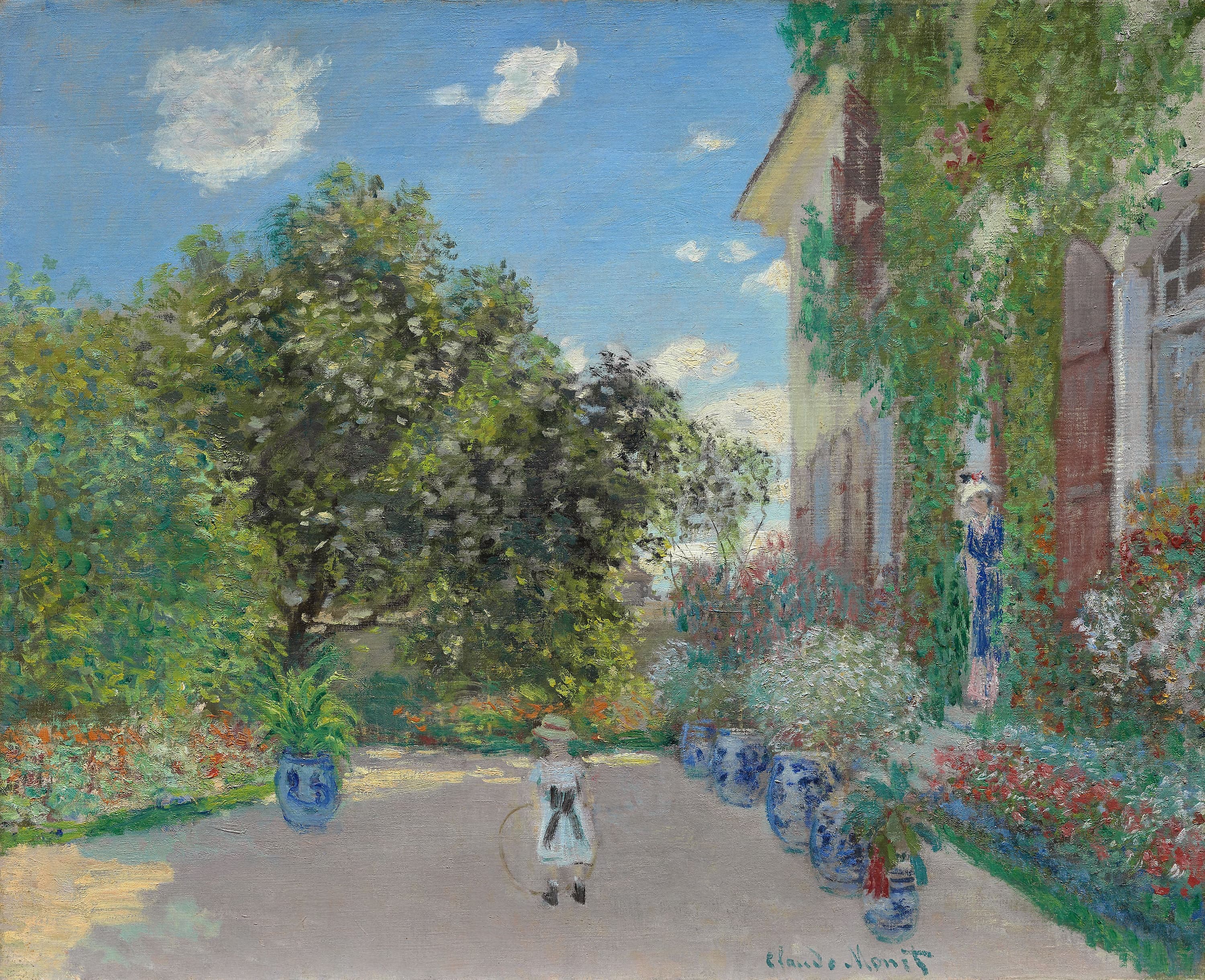
The Artist's House at Argenteuil
Claude Monet · 1873
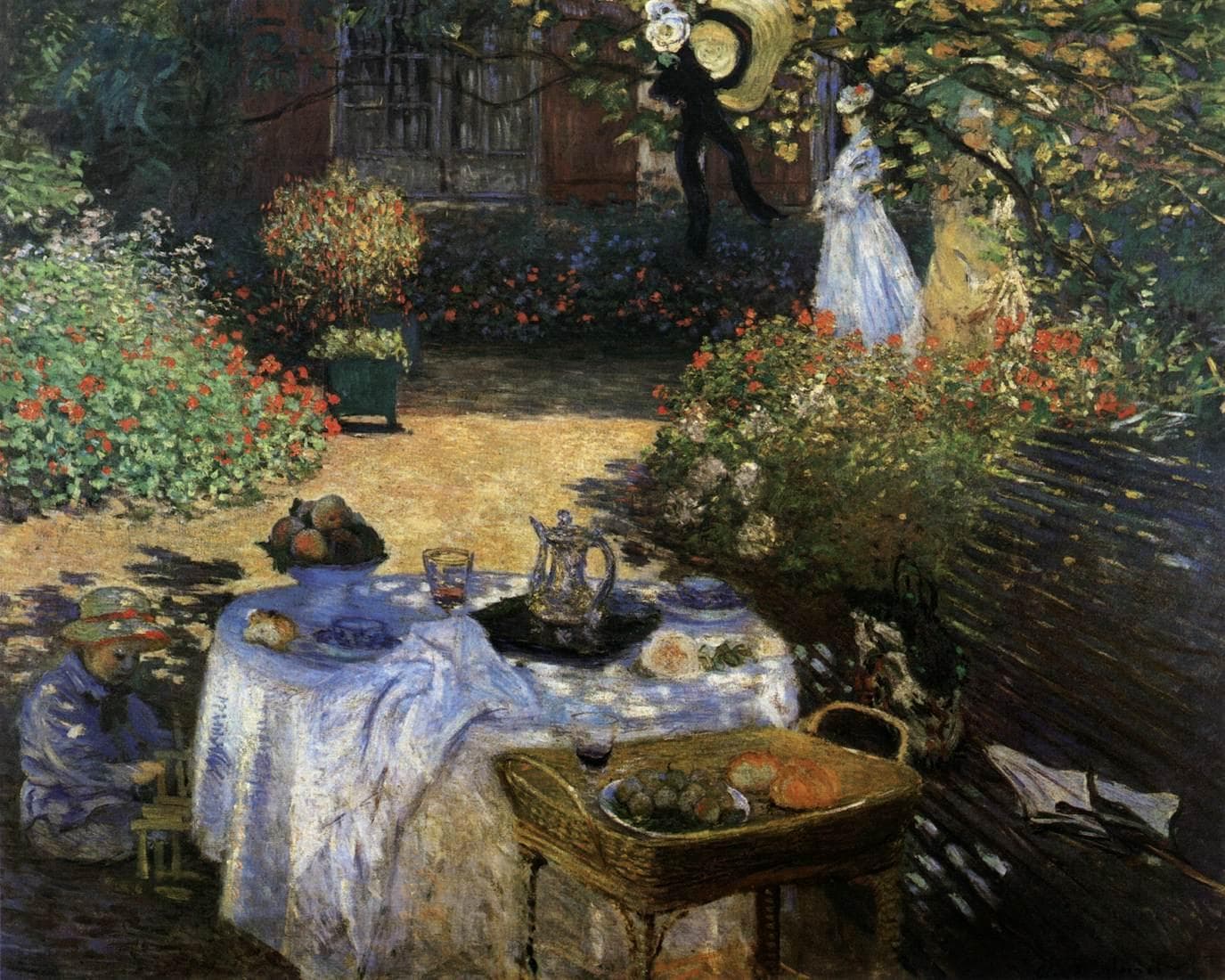
The Luncheon (Monet's Garden at Argenteuil)
Claude Monet · c. 1873
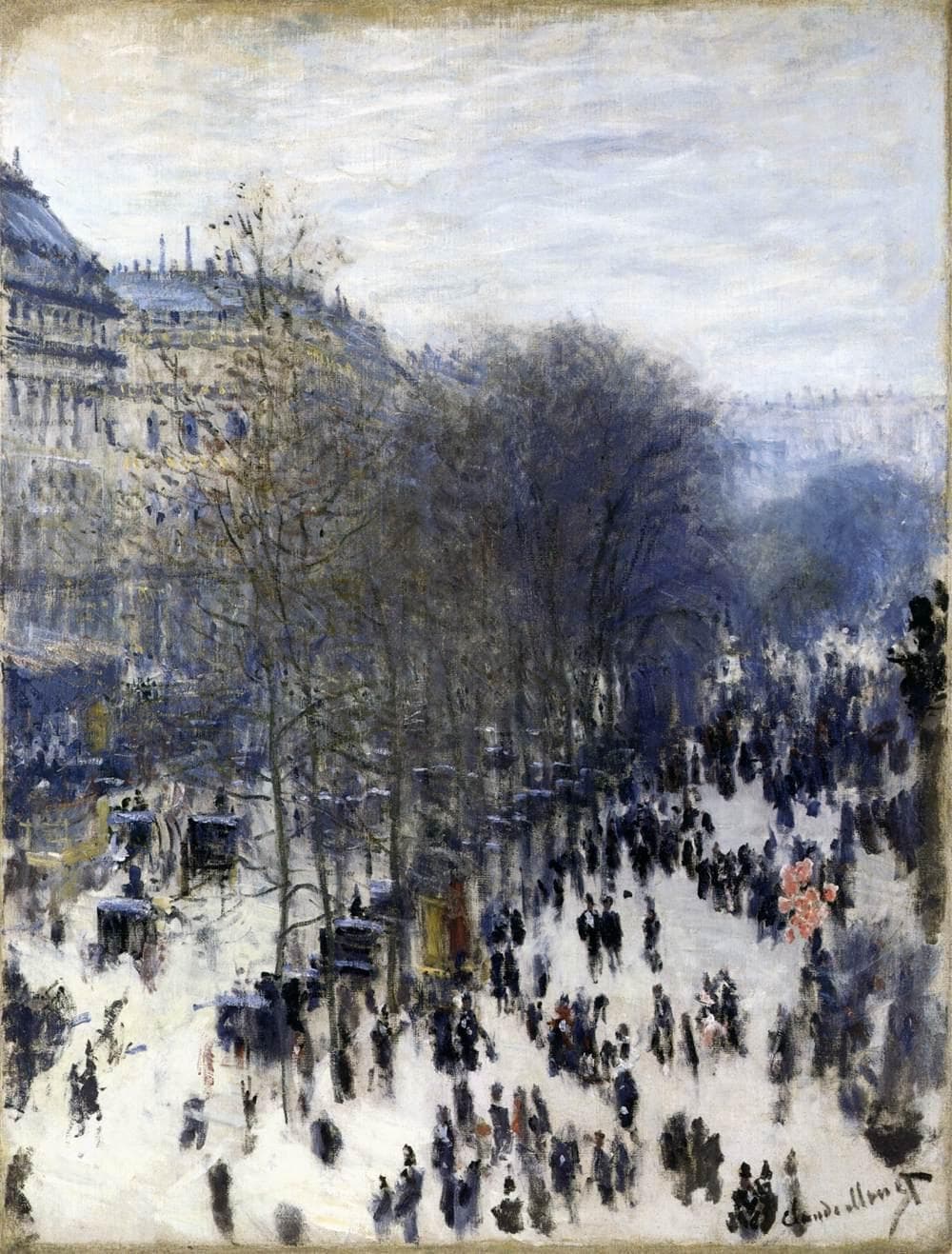
Boulevard des Capucines
Claude Monet · 1873–74
Kindred works
You may also study
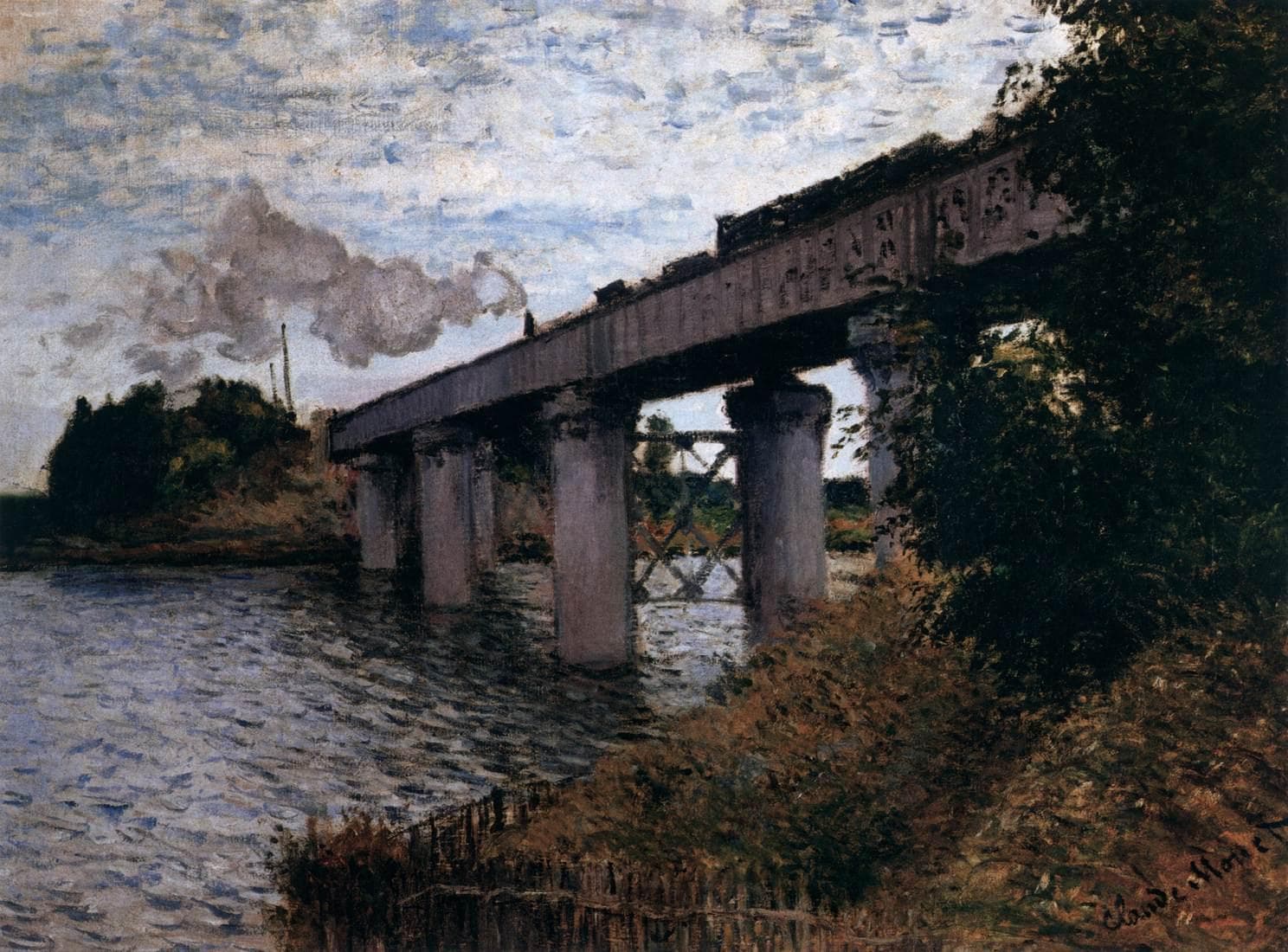
The Railway Bridge at Argenteuil
Claude Monet · c. 1873–74
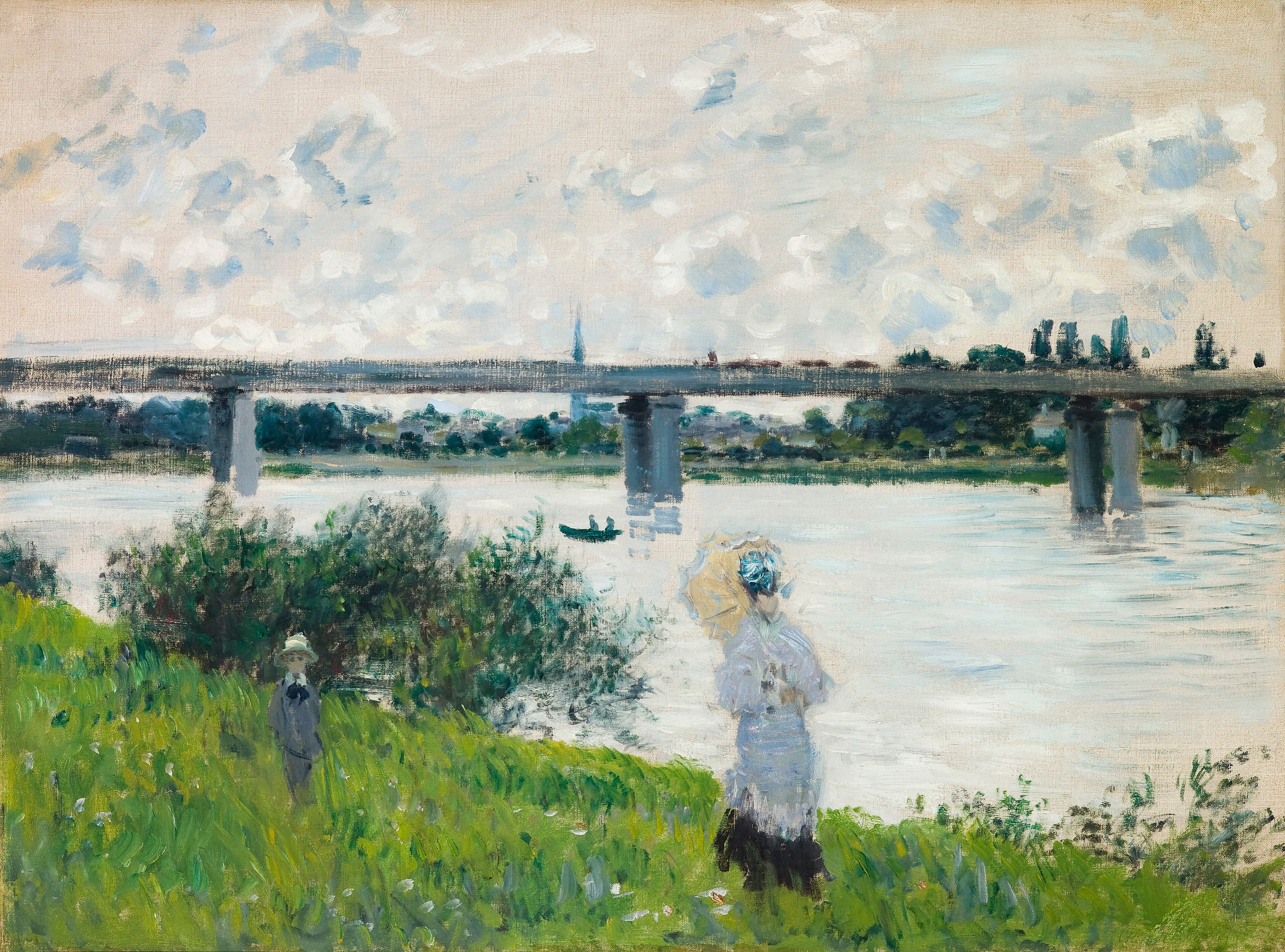
The Promenade with the Railroad Bridge, Argenteuil
Claude Monet · 1874
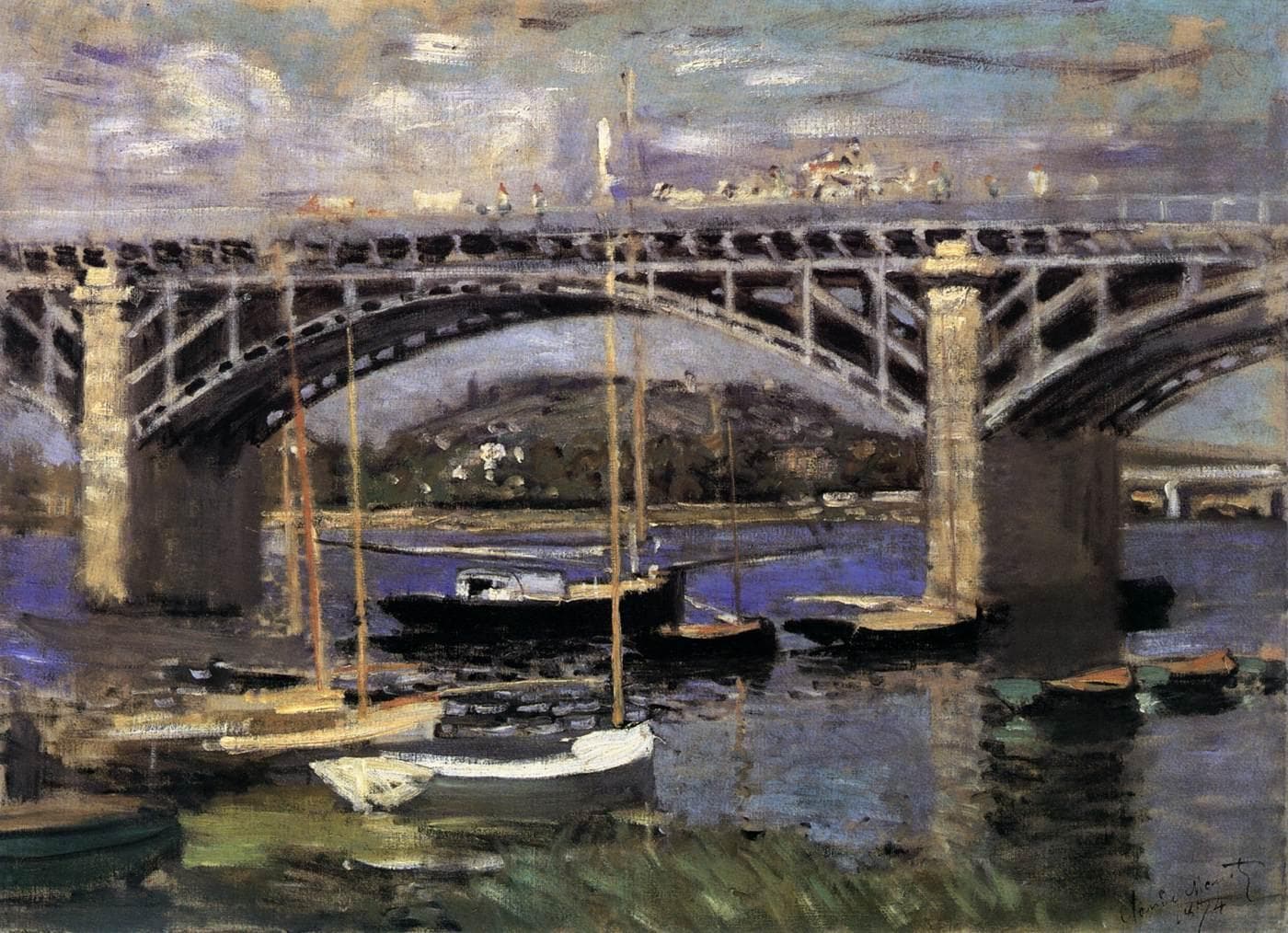
The Bridge at Argenteuil
Claude Monet · 1874
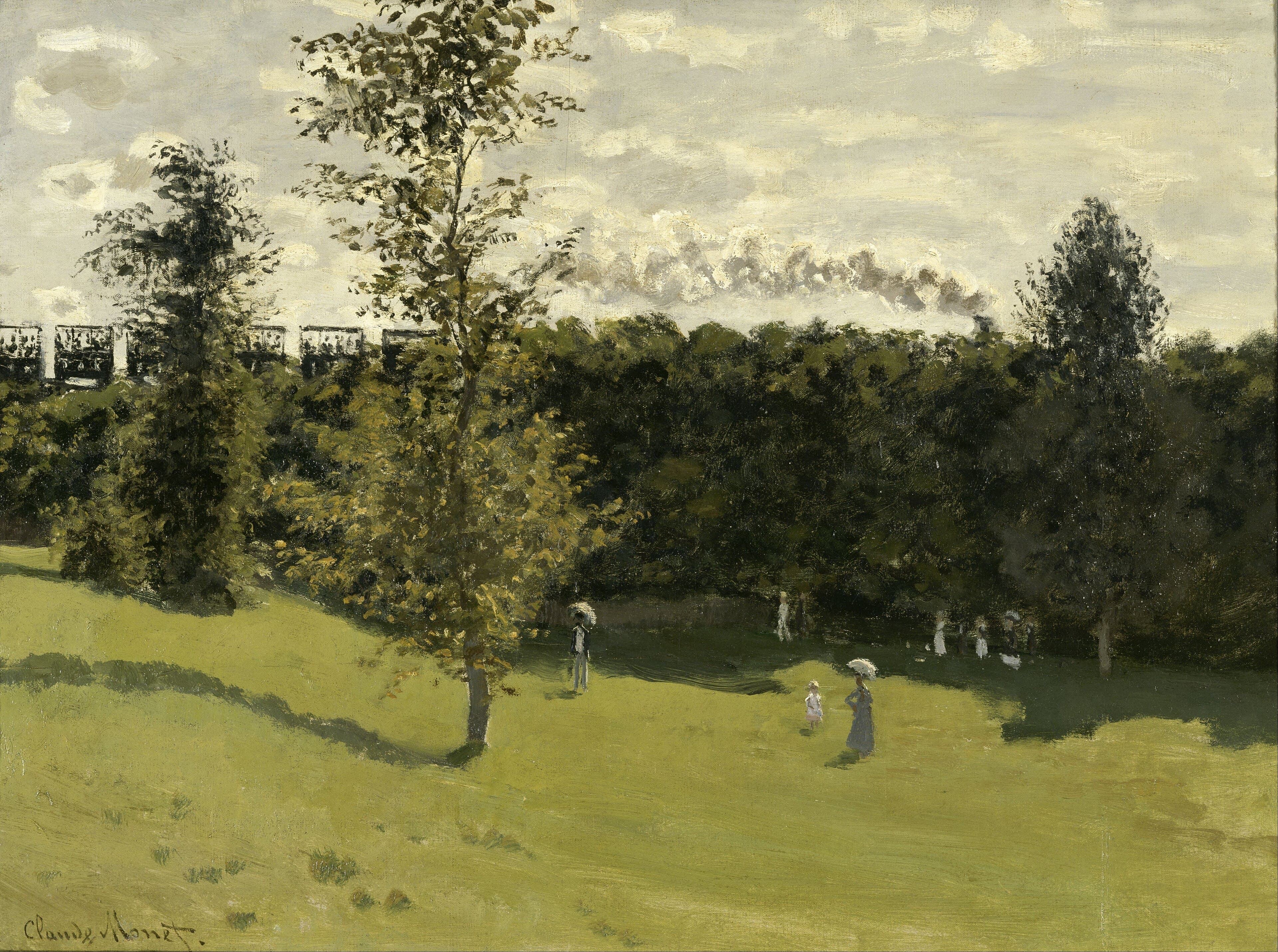
Train in the Countryside
Claude Monet · c. 1870
Autumn Effect at Argenteuil
Claude Monet · 1873

The Scream
Edvard Munch · 1893

Ophelia
John Everett Millais · 1851–52

The Great Wave off Kanagawa
Katsushika Hokusai · c. 1830–32