Impressionism
Red Boats at Argenteuil
Claude Monet, 1875
Red Boats at Argenteuil is an 1875 painting by Claude Monet of two red-hulled sailboats moored on the Seine at Argenteuil under a grey sky. This version, 56 × 67 cm (Wildenstein 370), is in the Musée de l'Orangerie, Paris; a larger one is at Harvard.
- Artist
- Claude Monet
- Date
- 1875
- Medium
- Oil on canvas
- Dimensions
- 56 × 67 cm
- Collection
- Musée de l'Orangerie, Paris, France
- Movement
- Impressionism
- Catalogue
- Wildenstein 370
Painted at Monet at ArgenteuilMore at The Water Lilies at the Musée de l'Orangerie
What you are looking at
Two sailing boats with rust-red hulls lie at their moorings near the center of the canvas, their tall bare masts rising almost to the top edge. Their sails are furled, and a figure in a pale hat seems to be working on the deck of the nearer one. Around them stand the masts of other craft, thin pale lines against the sky, and at right a white rowing boat is cut off by the frame. On the left bank a dark, cypress-like tree towers over a few small figures in light dresses and a red-roofed house. Across the water a low line of buildings and trees marks the far shore. The sky is overcast, a mottled grey worked in heavy, swirling strokes with patches of warmer cloud.
The water is the surprise. Instead of blue, Monet paints it in greens, ochers and grey-violets, broken into short horizontal strokes, with the red hulls reflected as long, wobbling verticals that run toward us. In the foreground the green becomes so dense it reads almost like weed or a mudbank at low water. The muted weather makes the red the only strong color in the picture, and everything else is tuned to set it off.
Look at the rigging: Monet draws the stays and halyards as a few fine, dark lines flicked from the mastheads, just enough to make the masts read as boats rather than poles.
Argenteuil, 1875
Monet lived at Argenteuil, on the Seine just northwest of Paris, from late 1871 to 1878. The town was the leading center for recreational sailing near the capital, and its basin and moorings gave him a subject he returned to again and again, often working from his own studio boat. By 1875 his finances were deteriorating, and the brilliant summer regattas of the early 1870s were giving way to quieter, greyer views.
He painted the red boats at least twice that year. The larger canvas, at the Harvard Art Museums in Cambridge, Massachusetts, shows them in clearer weather. This smaller version, with its overcast sky and heavy greens, is the more somber of the two.
How it was painted
The canvas is a modest 56 by 67 centimeters, and much of it was probably painted in one or two sessions on the spot. The sky is laid in thickly with a loaded brush, the strokes curving and overlapping, while the water is built from short, flat dashes set side by side. The boats were painted over the water while it was still wet, which softens the edges where hull meets reflection. It is a picture about weather and color as much as about boats.
Among the Argenteuil boats
Compare it with the sunlit Regatta at Argenteuil of about 1872 in the Musée d'Orsay, where the reflections are blocks of pure color, or with The Basin at Argenteuil, where the promenade and its trees frame the river. Argenteuil Basin with a Single Sailboat in Dublin isolates one craft on still water. Against those, the Orangerie picture shows the same moorings on a dull day, which is exactly what interested Monet.
Meaning
There is no narrative. The picture is about color under specific conditions: how a red hull glows on a grey day, and how a cloudy sky turns the river green. It also shows a world of leisure, the boats of middle-class Parisians who came out by train at weekends. Claude Monet records it without comment, and without the crowds.
Where to see it
This version belongs to the Musée de l'Orangerie in Paris, part of the Jean Walter and Paul Guillaume collection, displayed on the lower floor below the Water Lilies rooms; see our guide to the Musée de l'Orangerie.
That collection was formed by the dealer Paul Guillaume and, after his death in 1934, reshaped by his widow Domenica, later Madame Jean Walter. The French state acquired it in stages from 1959, and the museum inventory number of this canvas records its entry in 1963. It is one of only a handful of Monets in a collection better known for Renoir, Cézanne and Picasso, which makes it easy to miss on the way out of the Water Lilies.
Questions & answers
Where is Monet's Red Boats at Argenteuil?
There are two versions from 1875. This one, 56 by 67 centimeters (Wildenstein 370), is in the Musée de l'Orangerie in Paris, in the Jean Walter and Paul Guillaume collection. A larger version is in the Harvard Art Museums in Cambridge, Massachusetts.
When and where was Red Boats at Argenteuil painted?
In 1875, on the Seine at Argenteuil, the sailing town just northwest of Paris where Monet lived from 1871 to 1878. The boats are moored in the river basin he painted many times, often from his floating studio.
Why is the water green in Red Boats at Argenteuil?
Under an overcast sky the river reflects grey cloud, the green banks and the river bed rather than blue. Monet painted what he saw, in broken strokes of green, ocher and violet, which also makes the red hulls stand out by contrast.
How do the two versions of Red Boats differ?
The Harvard canvas is larger and painted in clearer, brighter weather. The Orangerie version is smaller and greyer, with a heavy, worked sky and dense greens in the water, so the red hulls are the only strong color in the scene.
More by the artist
Claude Monet

Bridge over a Pond of Water Lilies
Claude Monet · 1899

Woman with a Parasol – Madame Monet and Her Son
Claude Monet · 1875

Sunset in Venice
Claude Monet · 1908–12

La Grenouillère
Claude Monet · 1869

Beach in Pourville
Claude Monet · 1882

Springtime
Claude Monet · 1872

Boating on the River Epte
Claude Monet · 1890

The Seine at Asnières (Hermitage)
Claude Monet · 1873
Also painted in 1875
The same year
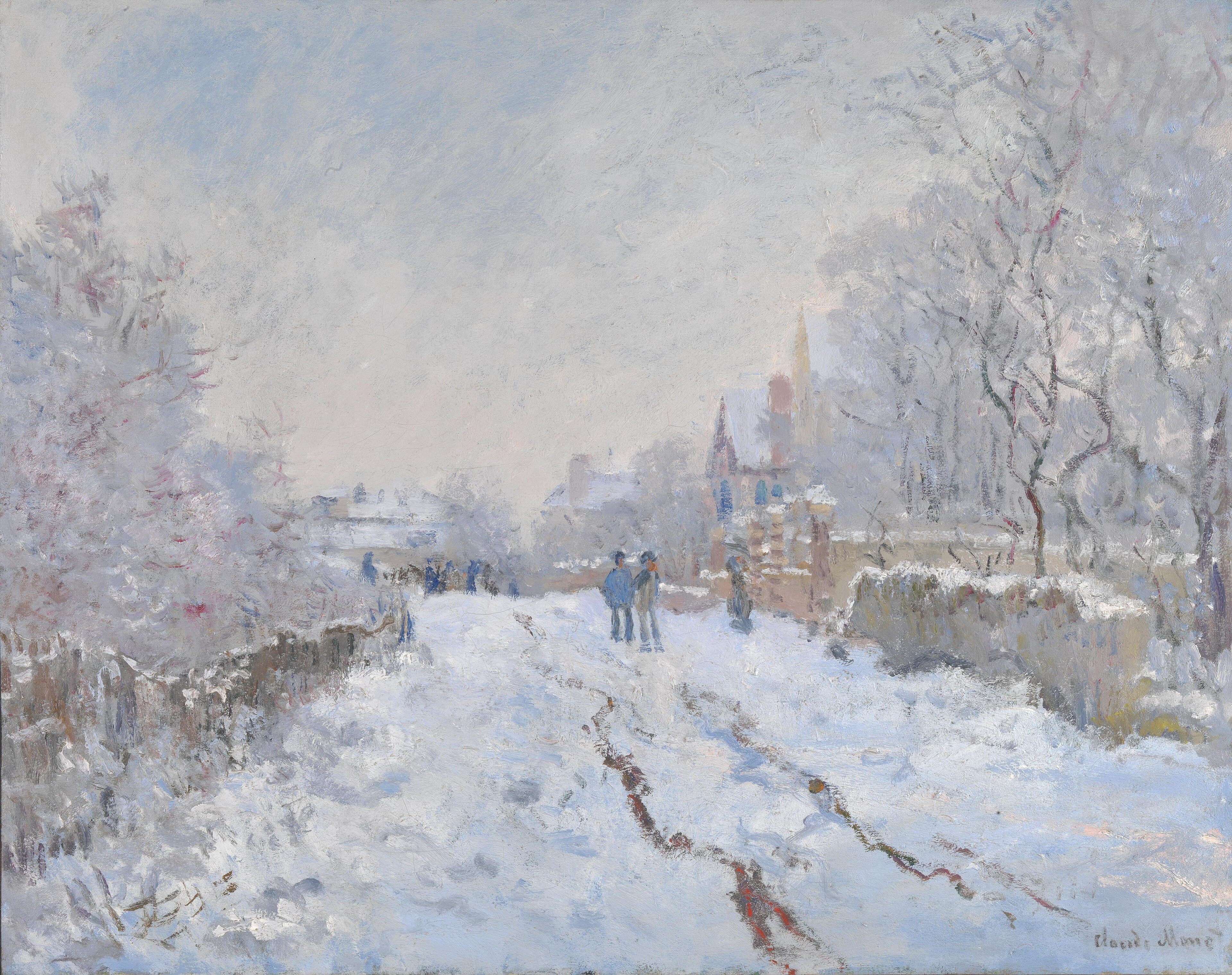
Snow Scene at Argenteuil
Claude Monet · 1875
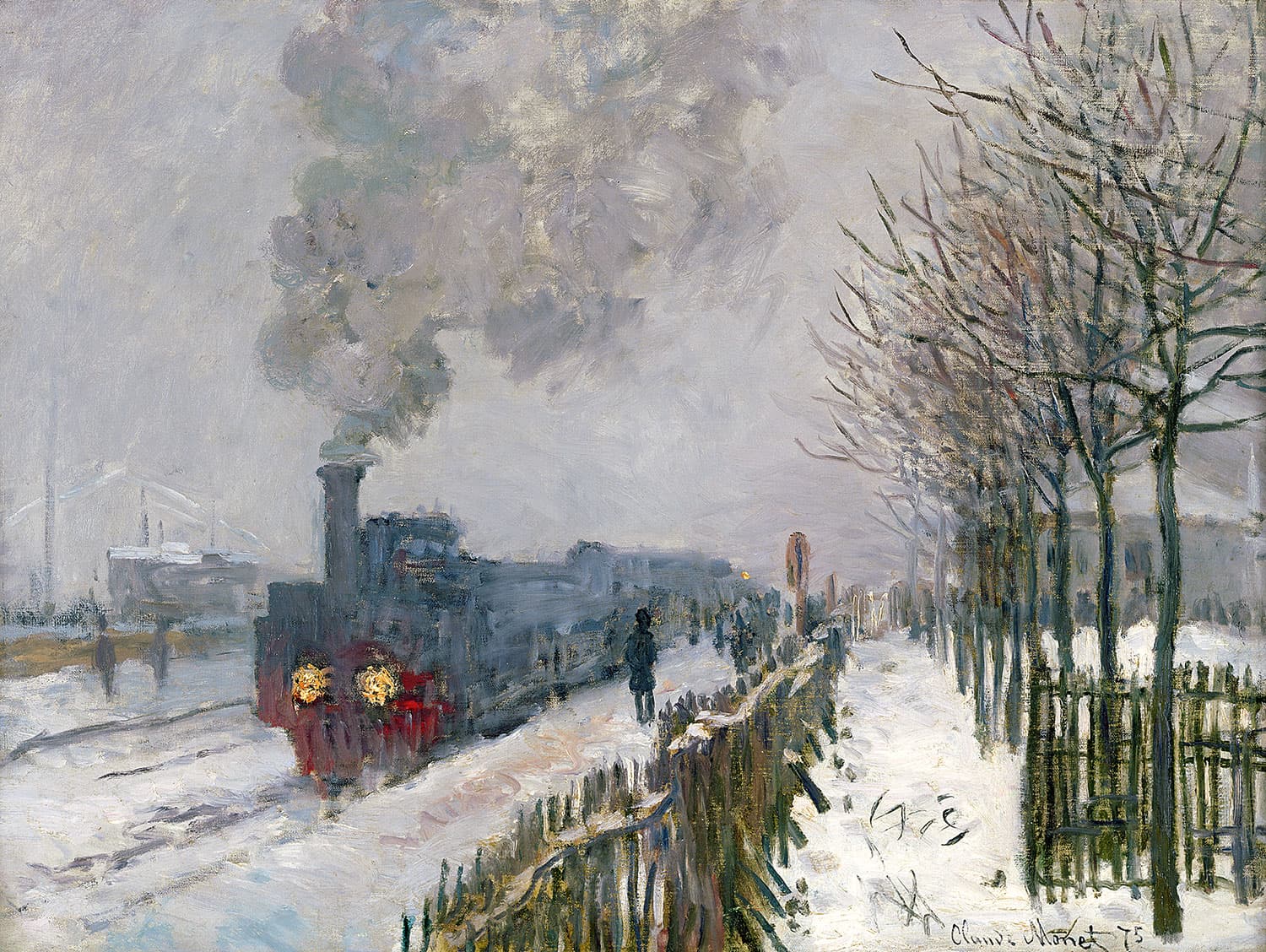
Train in the Snow (The Locomotive)
Claude Monet · 1875
Bords de la Seine à Argenteuil
Claude Monet · 1870s (inscribed 1875 on the frame)
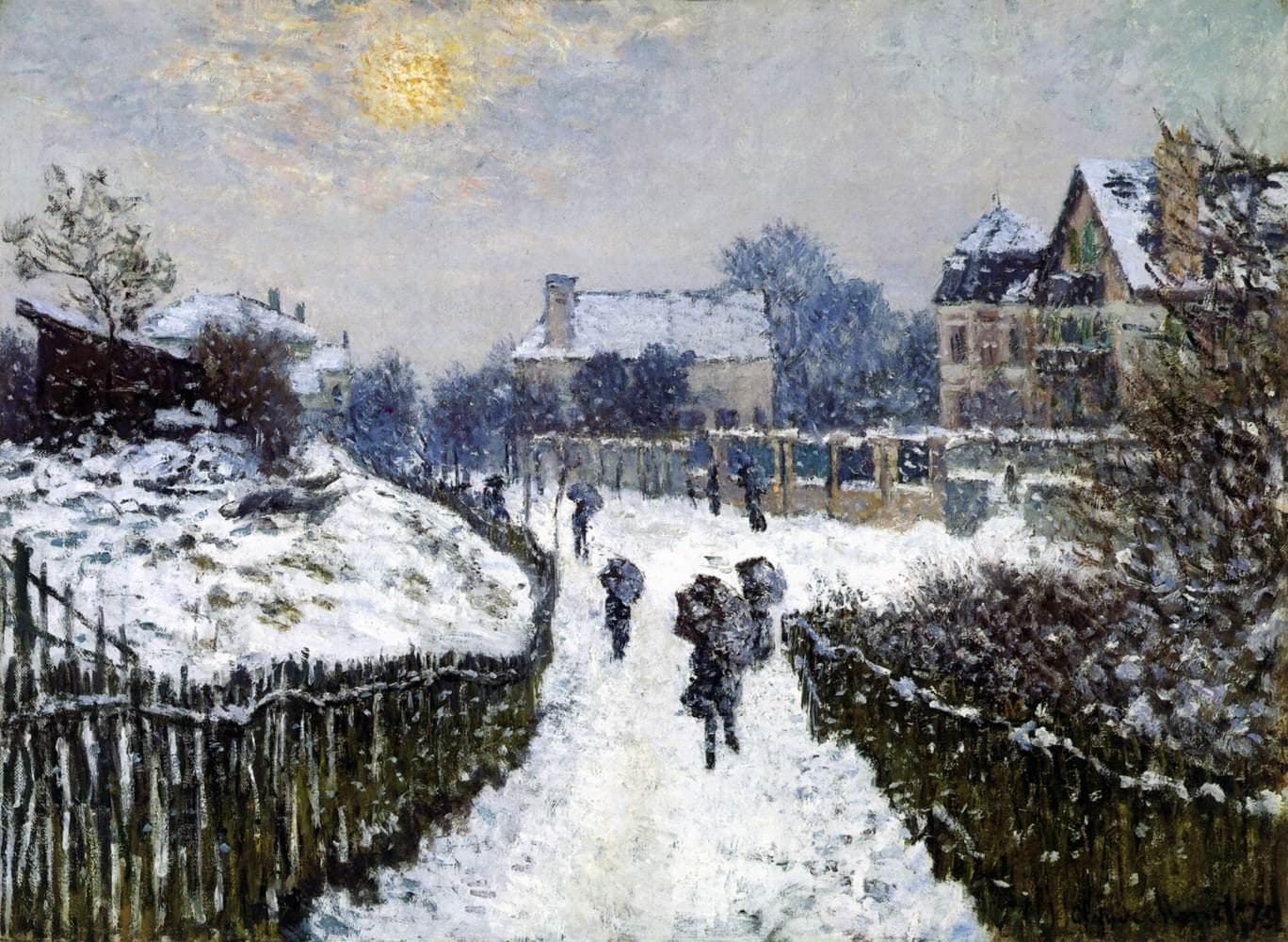
Boulevard Saint-Denis, Argenteuil, in Winter
Claude Monet · 1875
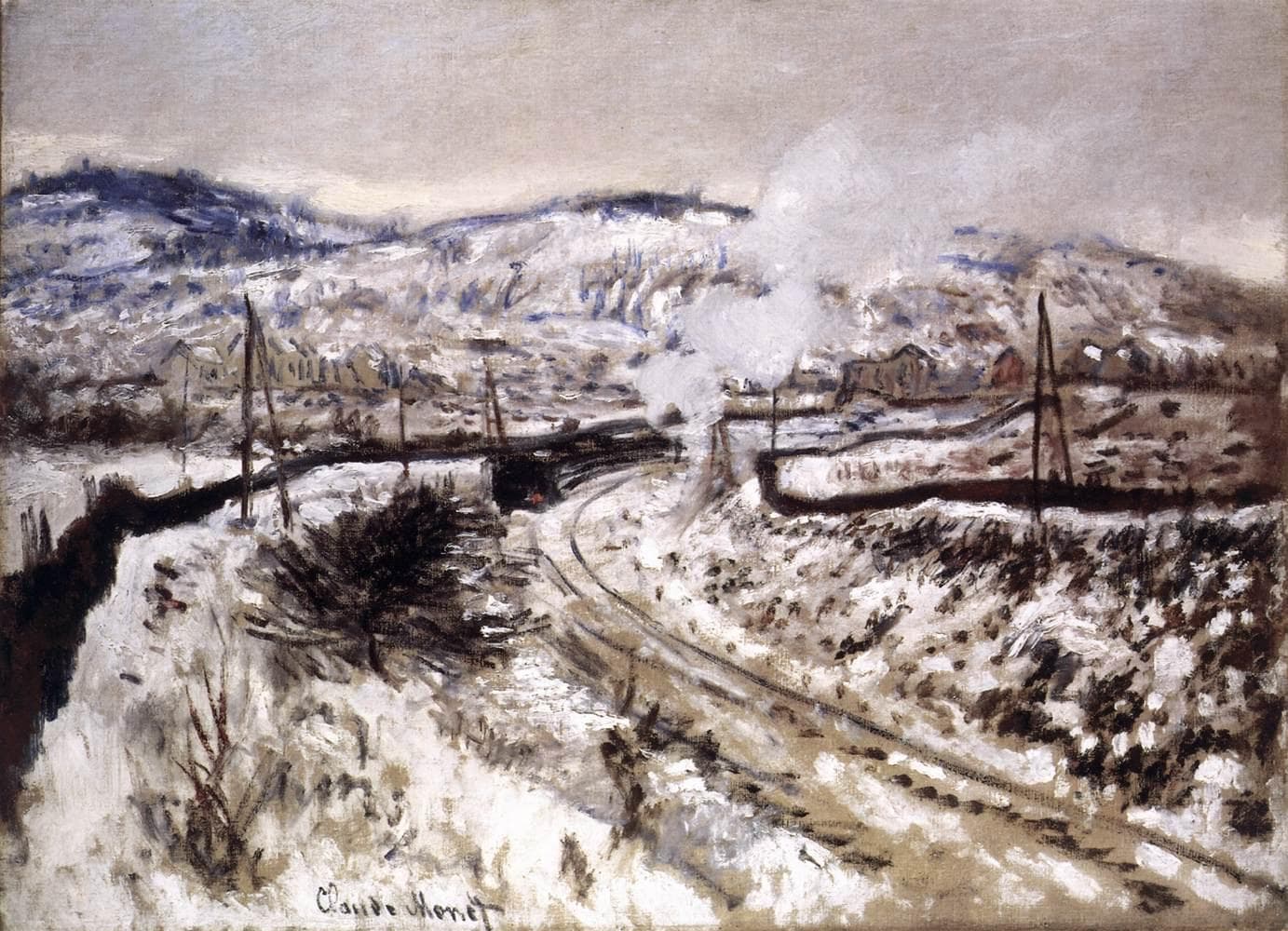
Train in the Snow at Argenteuil
Claude Monet · 1875
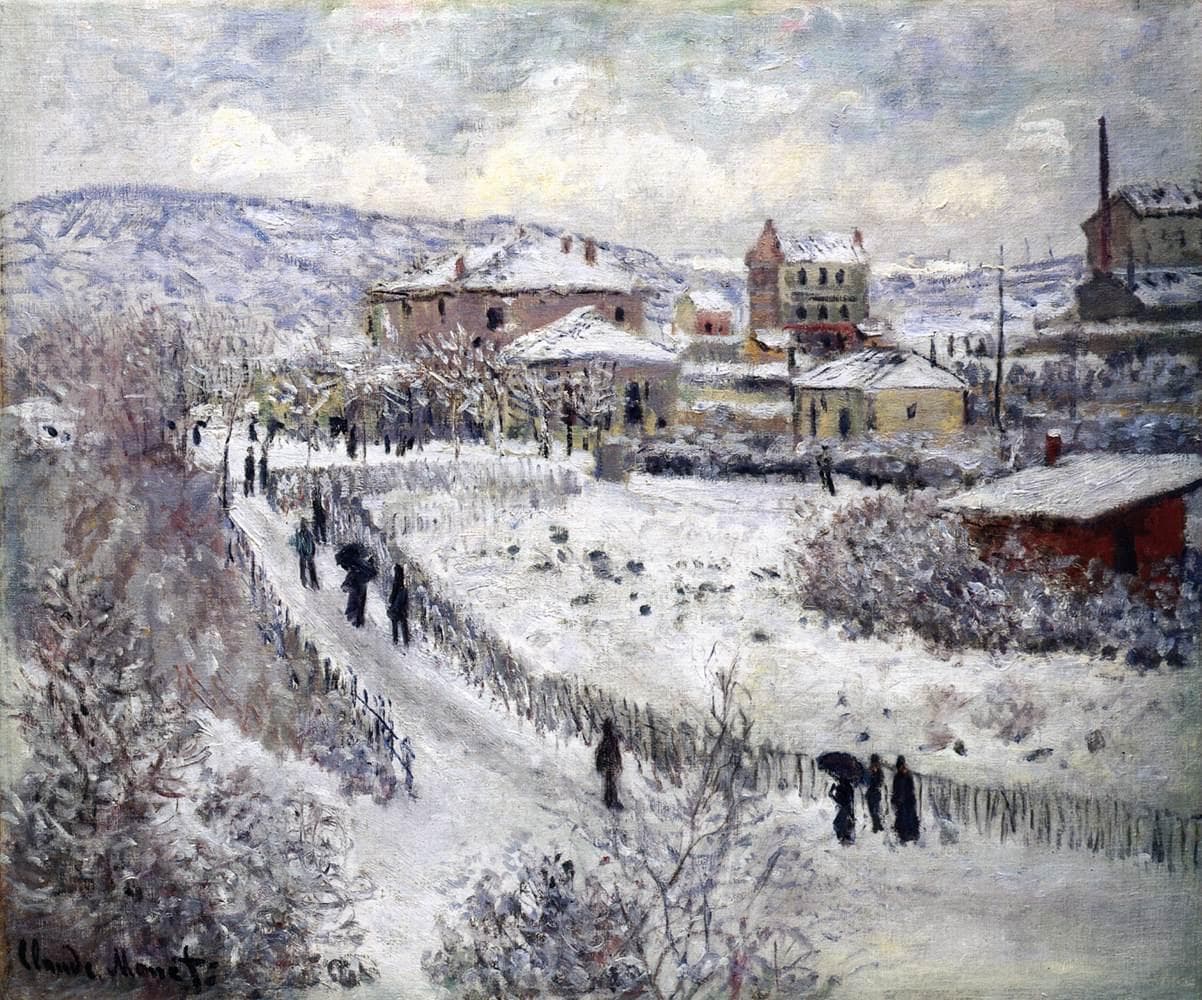
View of Argenteuil in the Snow
Claude Monet · 1874–75
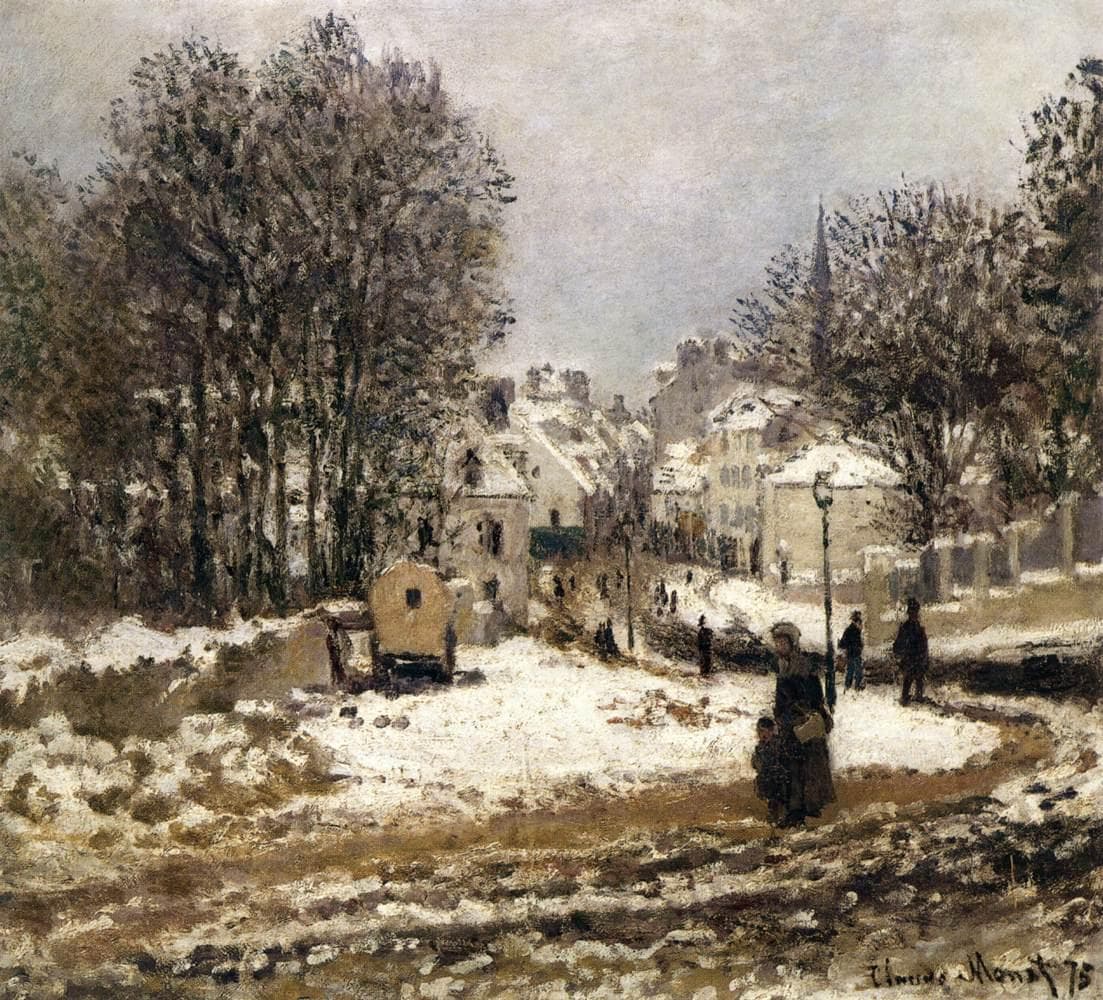
Entrance to the Grande Rue at Argenteuil, Winter
Claude Monet · 1875
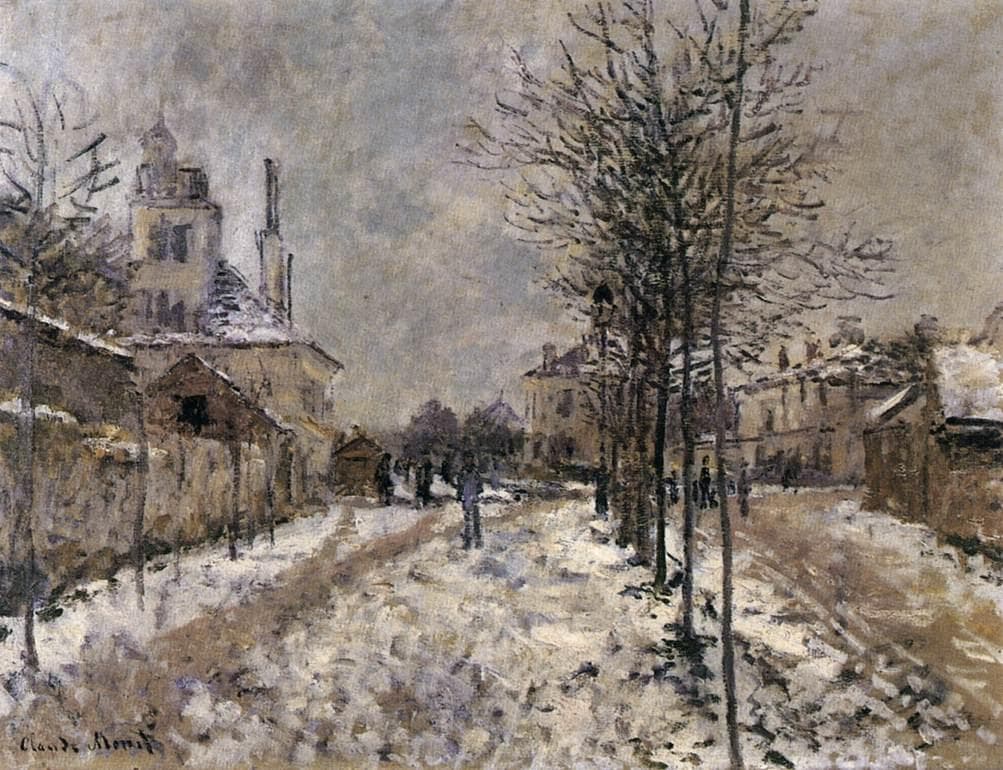
The Boulevard de Pontoise in Argenteuil under Snow
Claude Monet · 1875
Kindred works
You may also study
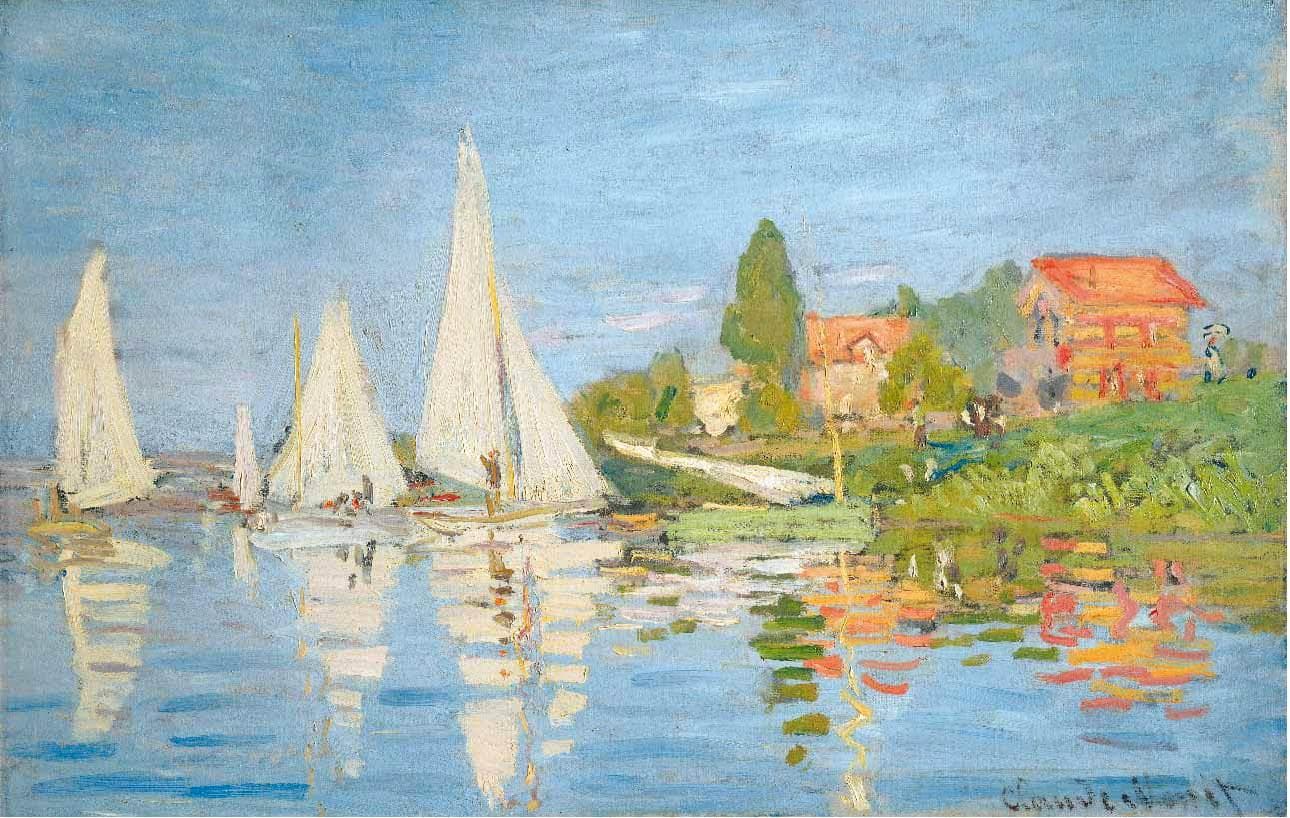
Regatta at Argenteuil
Claude Monet · c. 1872
The Basin at Argenteuil
Claude Monet · 1872
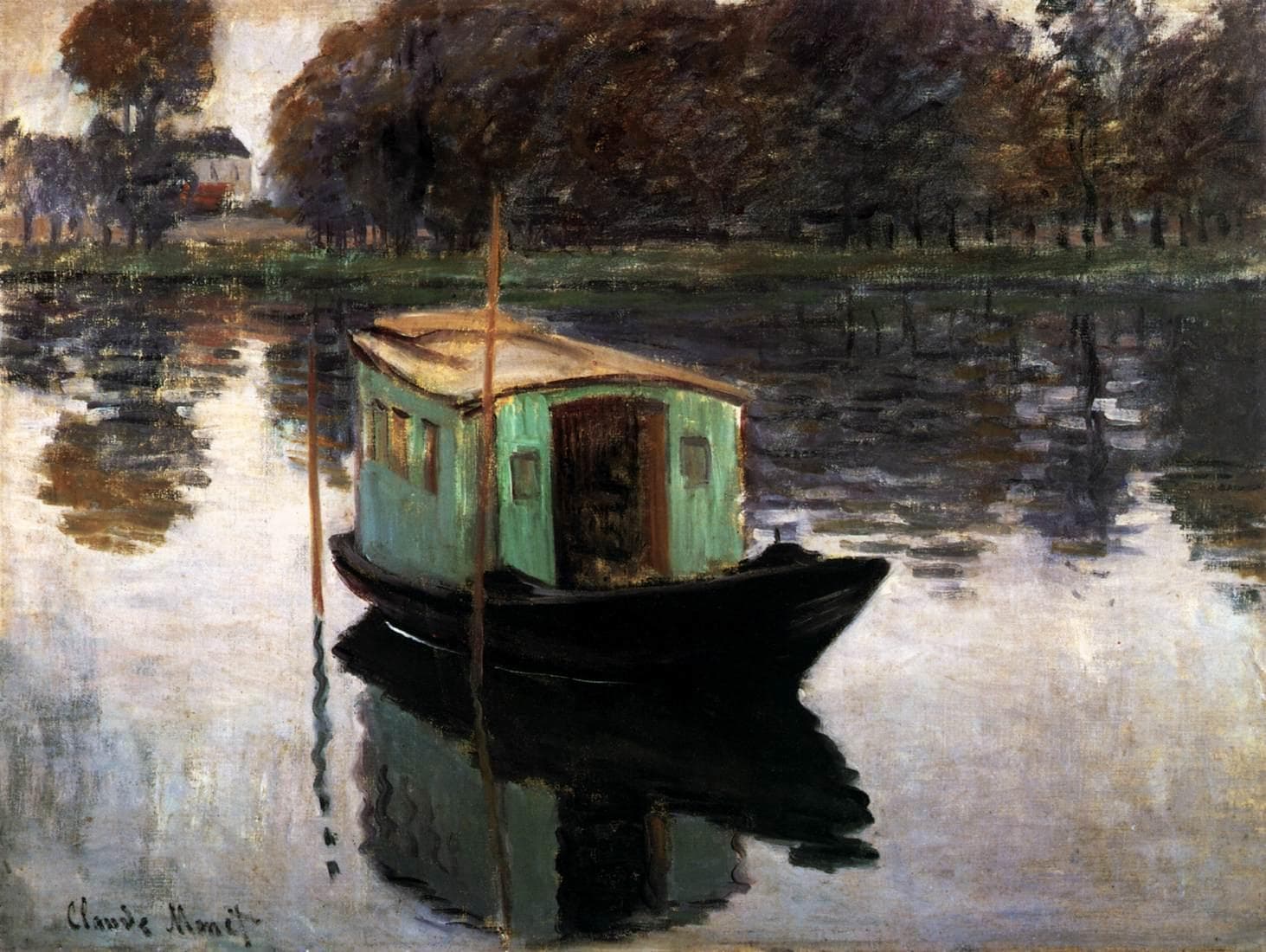
The Studio Boat
Claude Monet · 1874
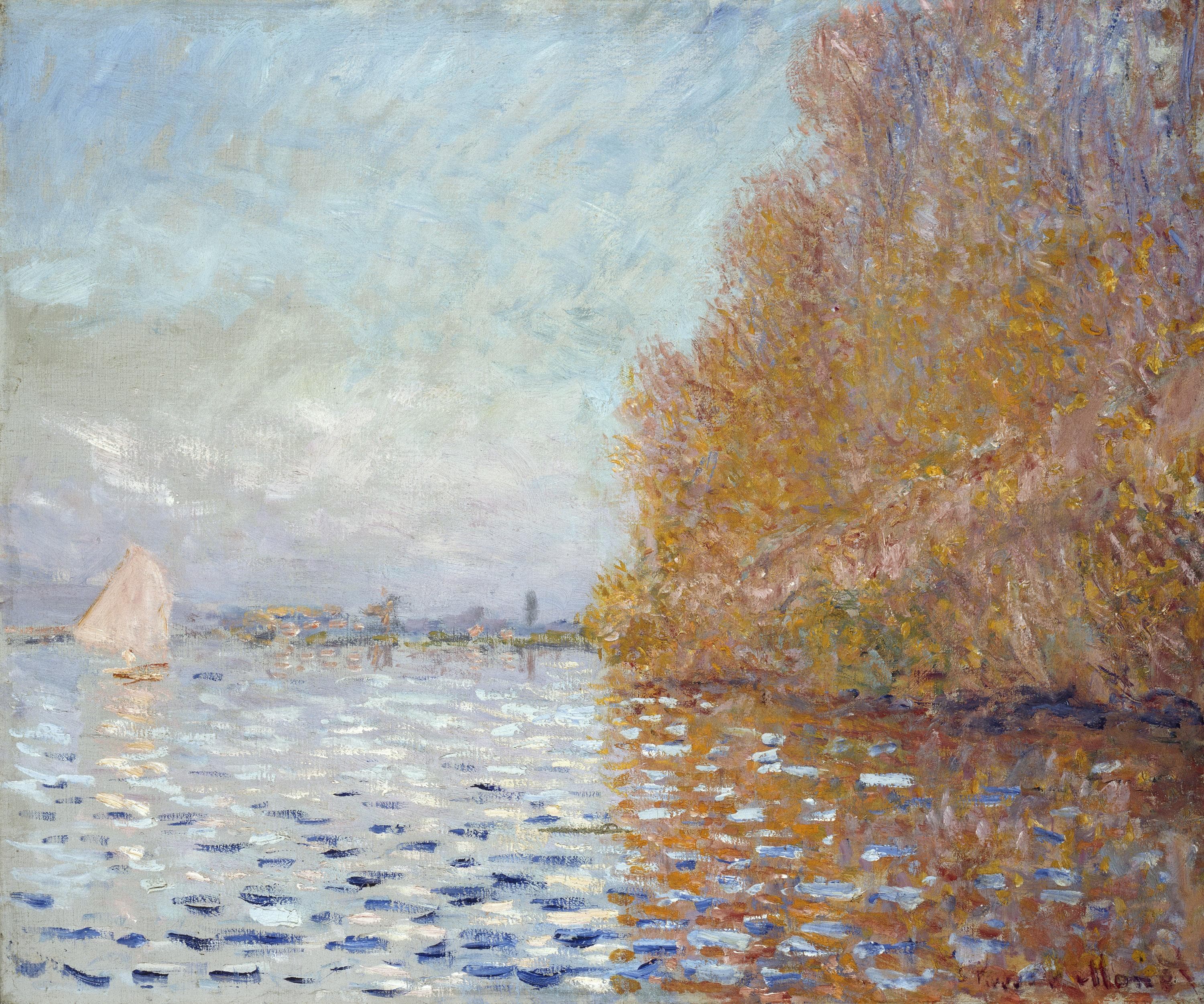
Argenteuil Basin with a Single Sailboat
Claude Monet · 1874
The Bridge at Argenteuil
Claude Monet · 1874

The Scream
Edvard Munch · 1893

Ophelia
John Everett Millais · 1851–52

The Great Wave off Kanagawa
Katsushika Hokusai · c. 1830–32