Image: Walters Art Museum, Baltimore · Public domain · via Wikimedia Commons
Impressionism
Springtime
Claude Monet, 1872
Springtime (also called The Reader) is Claude Monet's 1872 painting of a young woman, usually identified as Camille Monet, reading in the dappled shade of his garden at Argenteuil. It is in the Walters Art Museum, Baltimore.
- Artist
- Claude Monet
- Date
- 1872
- Medium
- Oil on canvas
- Dimensions
- 50 × 65.5 cm
- Collection
- Walters Art Museum, Baltimore, United States
- Movement
- Impressionism
- Catalogue
- Wildenstein 205
Painted at Monet at Argenteuil
Springtime is a small, quiet canvas Claude Monet painted in 1872, a few months after he moved his family to Argenteuil, on the Seine just outside Paris. A young woman in a pale pink and white dress sits in the grass reading, and sunlight comes through the leaves above her in loose coins of light. The sitter is usually identified as Camille Monet, the painter's wife, though the painting gives no name. It belongs to the Walters Art Museum in Baltimore.
What you're looking at
The figure sits slightly left of center, her back against a bank of shrubs, legs folded under a skirt that spreads across almost half the canvas. She wears a frilled bonnet trimmed with pink ribbon, tied under the chin. Her head is bowed, eyes down to a book or folded paper held in both hands in her lap. Her face is drawn with very little: a single warm shadow along the cheek, a dark stroke for the eyebrow, a touch of red at the mouth.
The light is what Monet painted. Patches of sun fall across her skirt as flat dabs of almost pure white with a hint of pink, laid on top of the cooler lilac-gray of the shadowed fabric. More spots of light sit on the grass at her feet and on the leaves behind her head. Beyond her, at right, the lawn opens into full sun, a brighter yellow-green band that makes the shade around her feel cooler. The foreground is a meadow of little white and yellow flowers done in quick dots and dashes. Monet's signature sits in dark paint at lower right.
Argenteuil, spring 1872
Monet came back to France late in 1871 after a year in London and the Netherlands, where he had sat out the Franco-Prussian War. Through Édouard Manet he found a house to rent in Argenteuil, then a small town with a boating basin, gardens and a fast train to Paris. The garden of that first house became one of his favorite outdoor studios. In 1872 and 1873 he painted Camille there again and again, among lilacs and dahlias, sometimes with their son Jean or with friends.
The Argenteuil years are covered on Monet at Argenteuil. The closest relatives of Springtime are the two pictures of figures resting under the lilac bushes in the same garden, Lilac in the Sun and Lilacs, Gray Weather, and the slightly later Camille Monet on a Garden Bench.
How it was painted
The canvas is small, about 50 by 65 centimeters, the kind of size Monet could carry outside and finish in a few sessions. He builds the dress in long, curving strokes of thin color and adds the sunspots last, thick and wet. The academic rule of the time put the face and hands first; Monet treats them as just another part of the light. That inversion struck Émile Zola, who in 1876 singled out a portrait of a woman in white sitting in the shade of foliage, her dress scattered with spots of light like large drops. The description fits this canvas closely.
Exhibition and ownership
Springtime was shown at the second Impressionist exhibition at Durand-Ruel's gallery in Paris in 1876, apparently under the plainer title Woman Reading. It is thought to have passed through the collection of Ernest Hoschedé, the department-store magnate whose family would later join Monet's household. It came to Baltimore with the collection of Henry Walters and now hangs in the Walters Art Museum. That makes it one of the less familiar Monets in the United States, outside the large holdings in New York, Boston and Chicago; where to see Monet's paintings lists them.
Why it matters
Alongside the large figure paintings of the 1860s, such as Women in the Garden, Springtime shows how far Monet had moved in five years. The figure is no longer posed and modeled; she is a surface for light. The quiet subject, a woman reading out of doors, also places the picture in a long tradition of garden reveries, which helps explain why it remains one of the most reproduced images of Camille.
Questions & answers
Where is Monet's Springtime today?
Springtime is in the Walters Art Museum in Baltimore, Maryland. It entered the museum with the collection of Henry Walters and is one of the best-known Impressionist paintings in Baltimore.
Who is the woman in Monet's Springtime?
She is usually identified as Camille Monet, the painter's first wife, who modeled for many of his pictures. No document names the sitter for certain, so some sources simply call the picture The Reader.
When and where was Springtime painted?
Monet painted it in spring 1872 in the garden of the house he had just rented at Argenteuil, northwest of Paris. He painted Camille in that garden many times in 1872 and 1873.
What is Monet's Springtime about?
On the surface it is a woman reading in the grass, but the real subject is sunlight filtered through leaves. Monet paints the spots of light falling on her dress as thick dabs of pink and white, more carefully than her face.
More by the artist
Claude Monet

Bridge over a Pond of Water Lilies
Claude Monet · 1899

Woman with a Parasol – Madame Monet and Her Son
Claude Monet · 1875

Sunset in Venice
Claude Monet · 1908–12

La Grenouillère
Claude Monet · 1869

Beach in Pourville
Claude Monet · 1882

Boating on the River Epte
Claude Monet · 1890

The Seine at Asnières (Hermitage)
Claude Monet · 1873
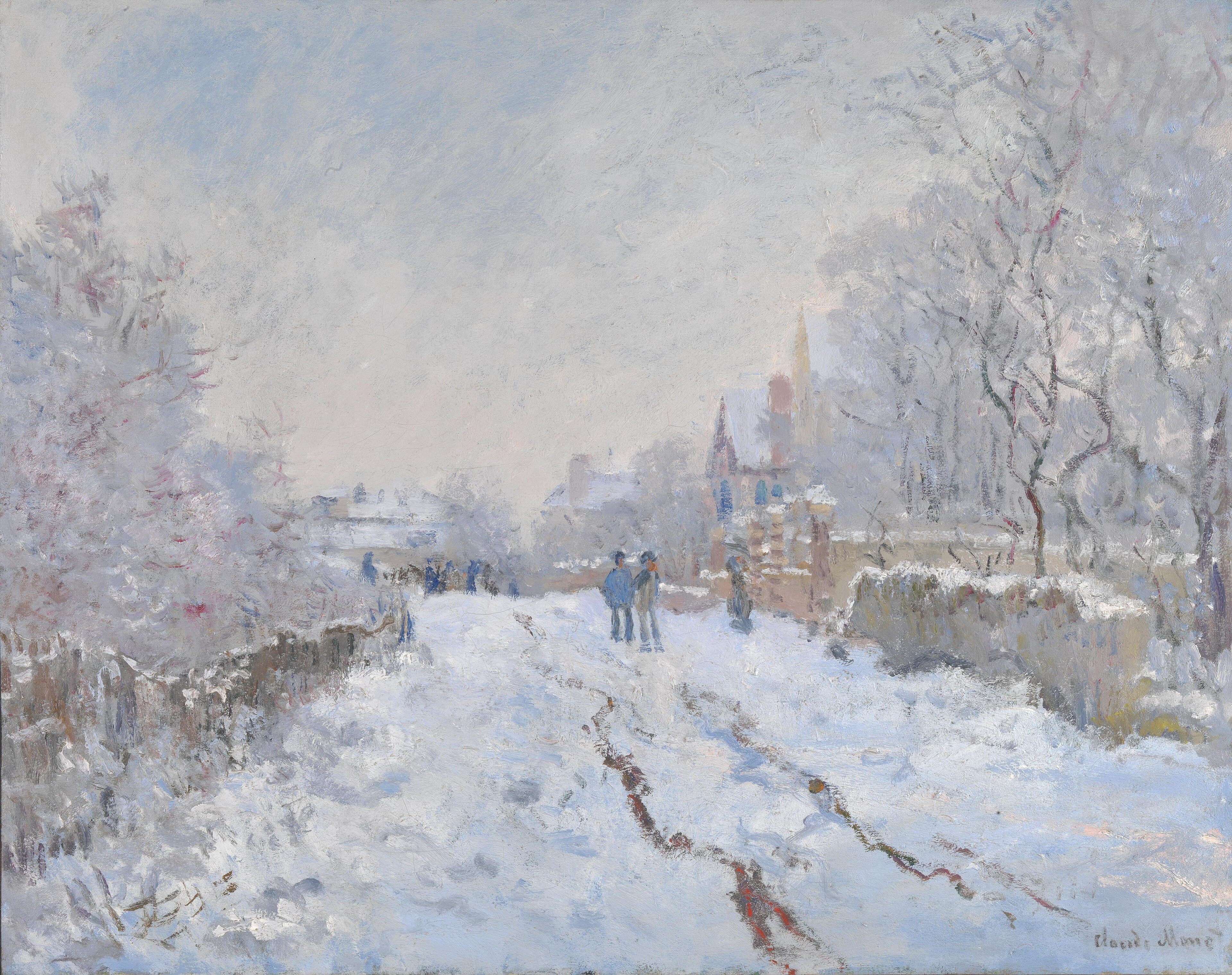
Snow Scene at Argenteuil
Claude Monet · 1875
Also painted in 1872
The same year
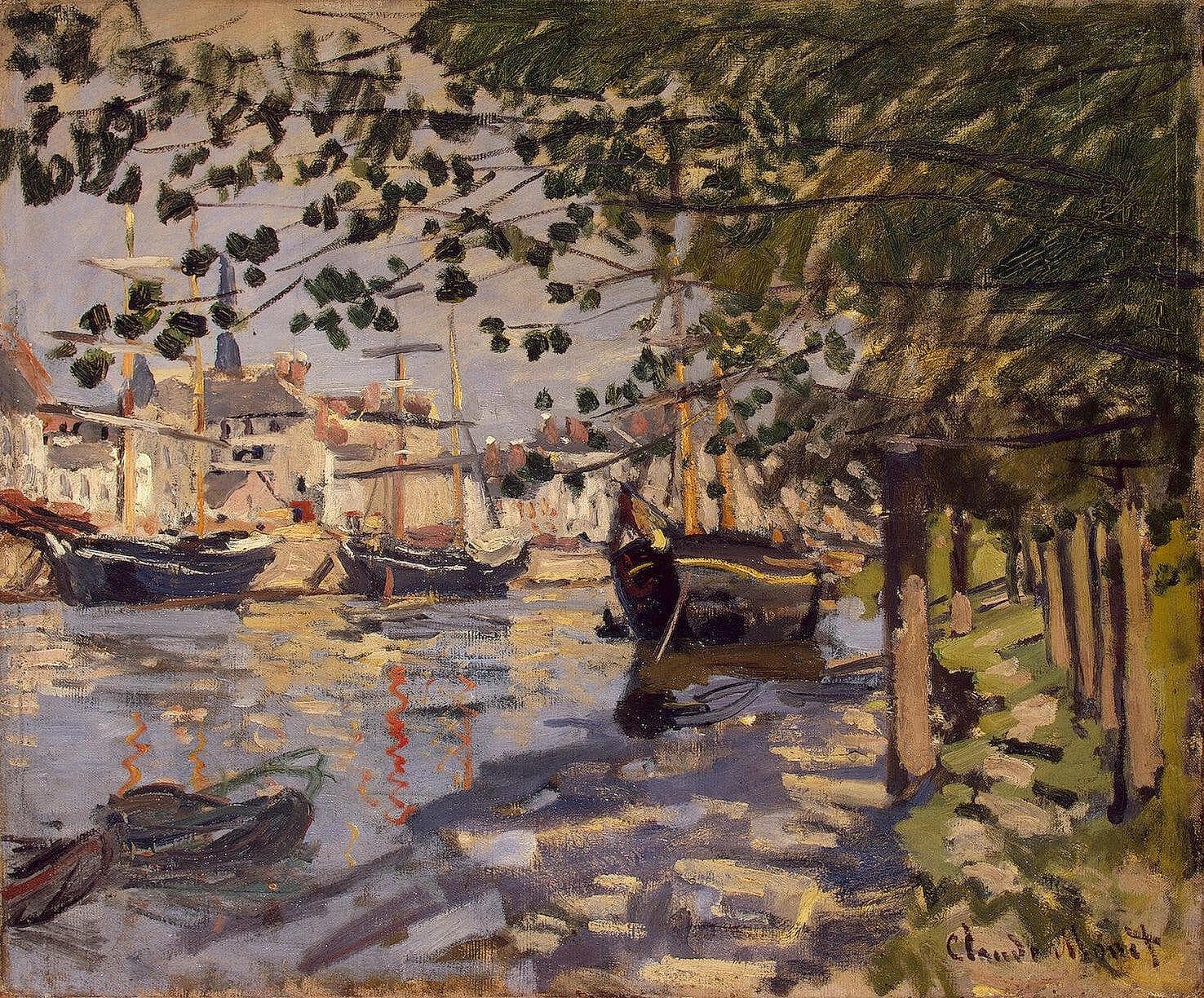
The Seine at Rouen
Claude Monet · 1872
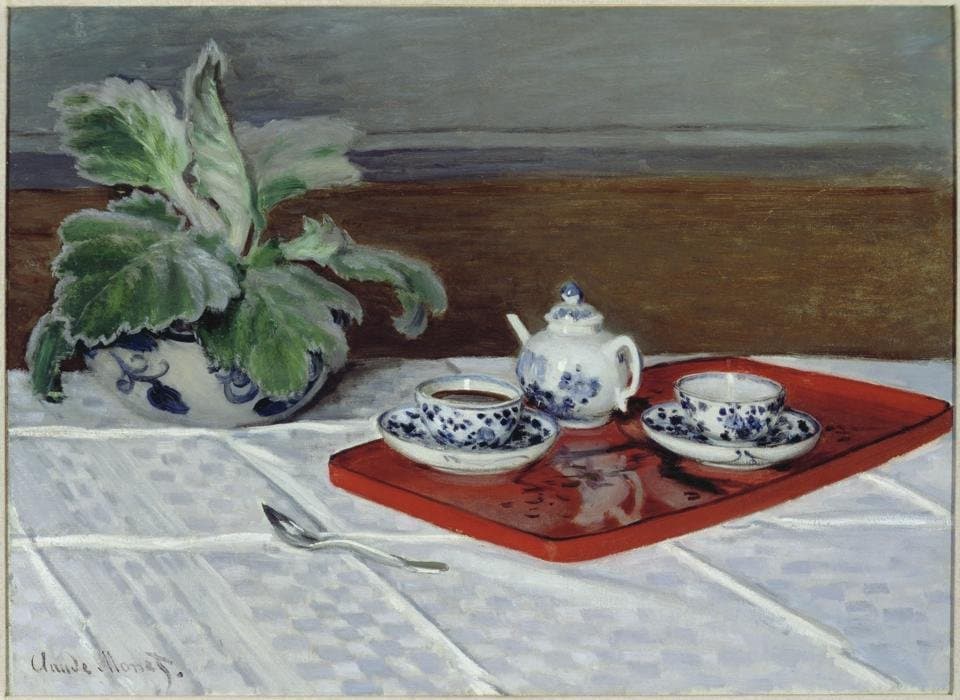
The Tea Service
Claude Monet · 1872
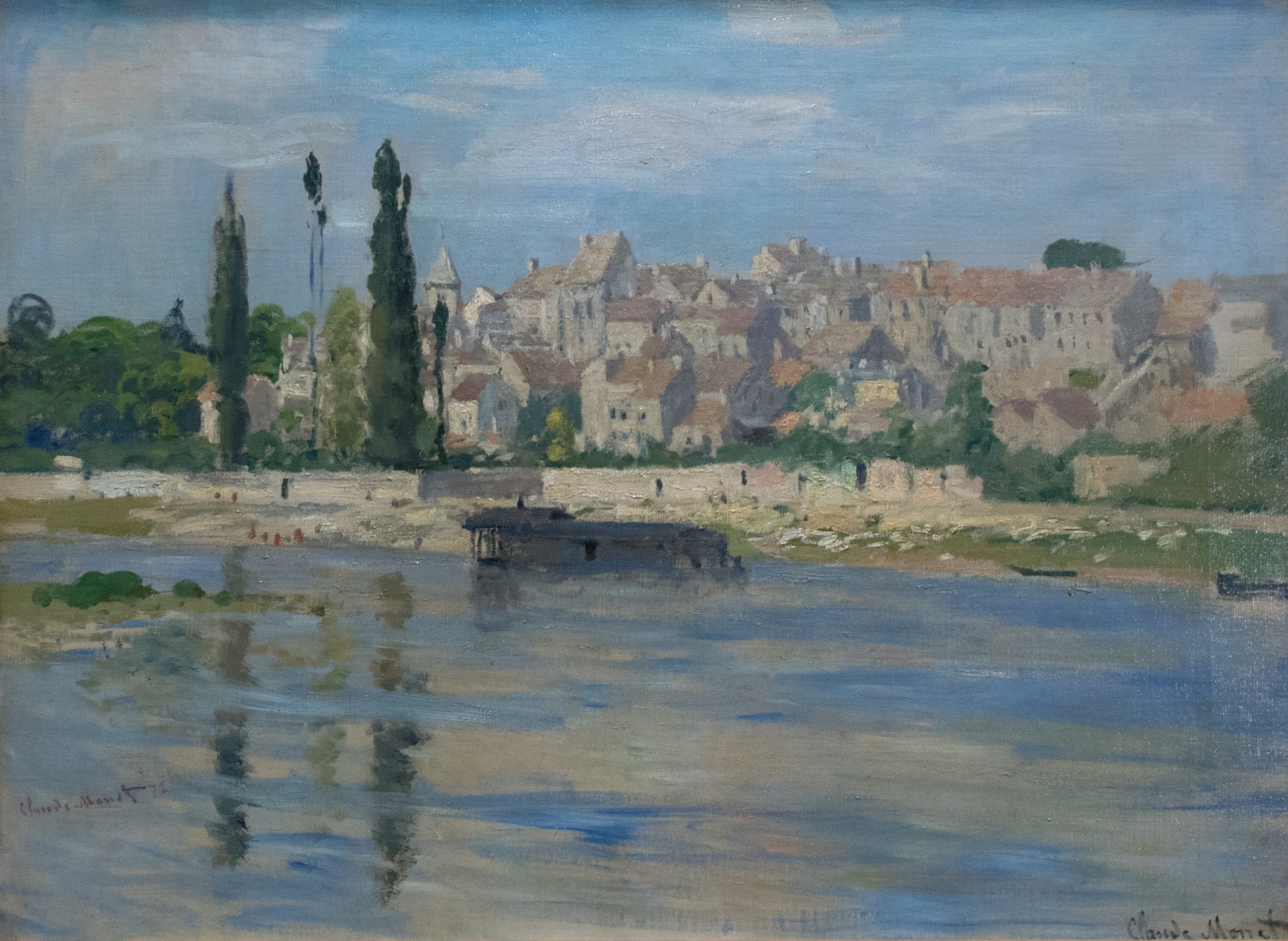
Carrières-Saint-Denis
Claude Monet · 1872
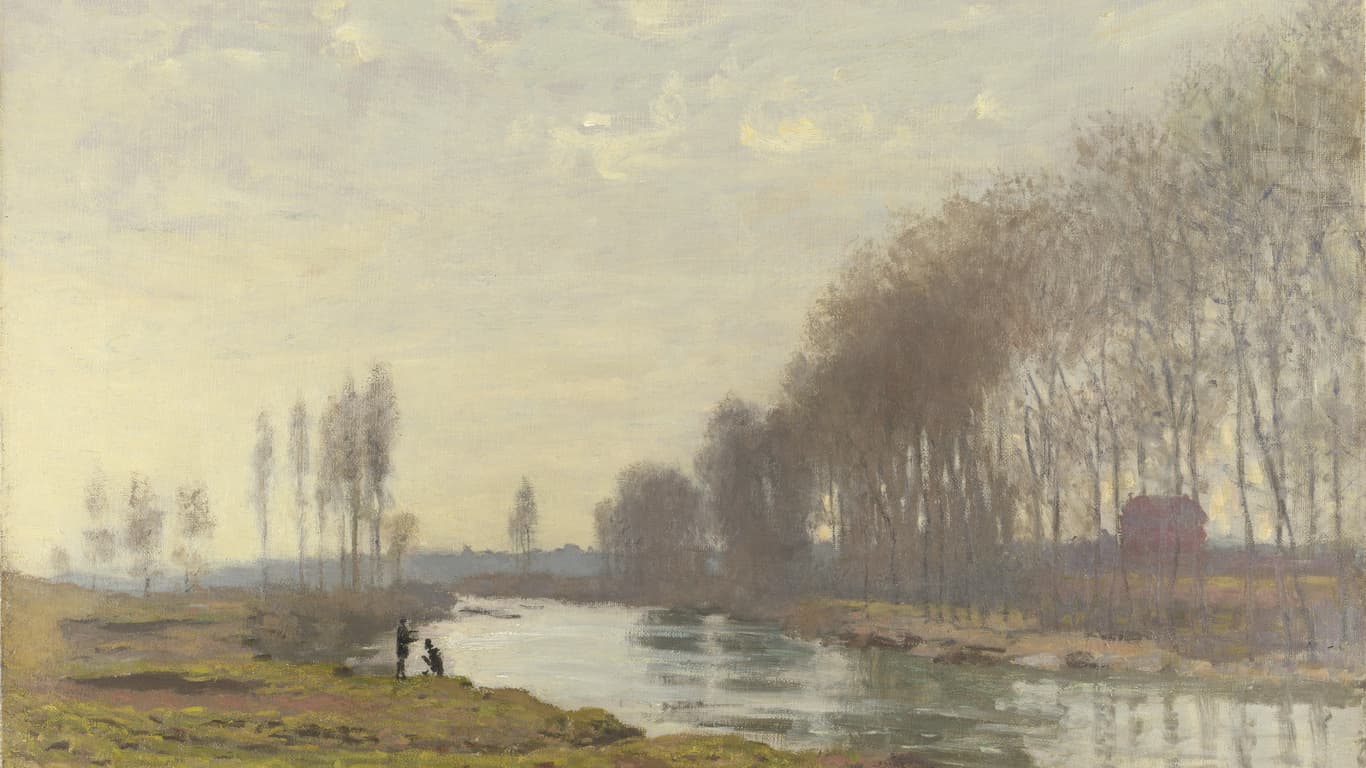
The Petit Bras of the Seine at Argenteuil
Claude Monet · 1872
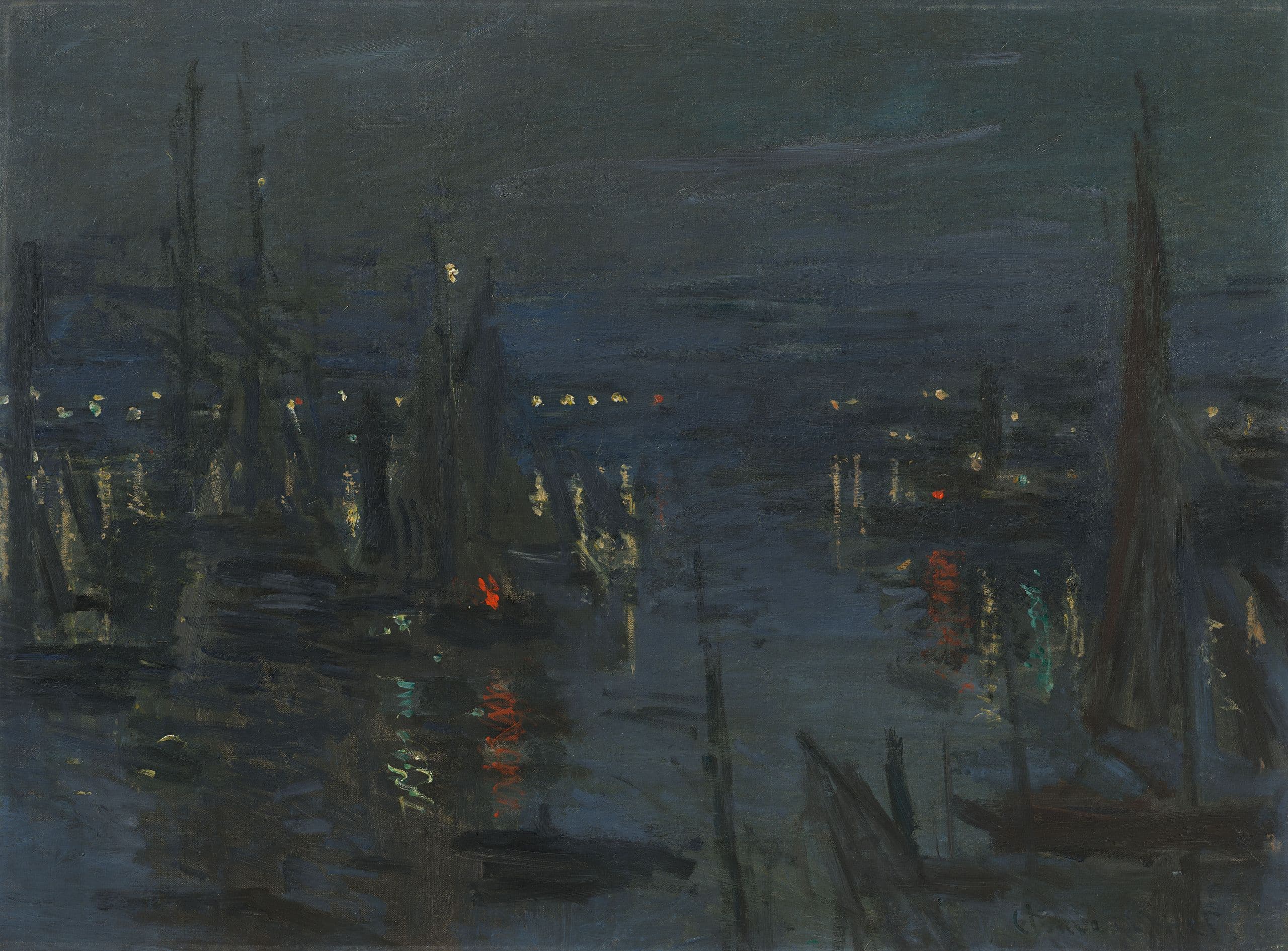
The Port of Le Havre, Night Effect
Claude Monet · 1872
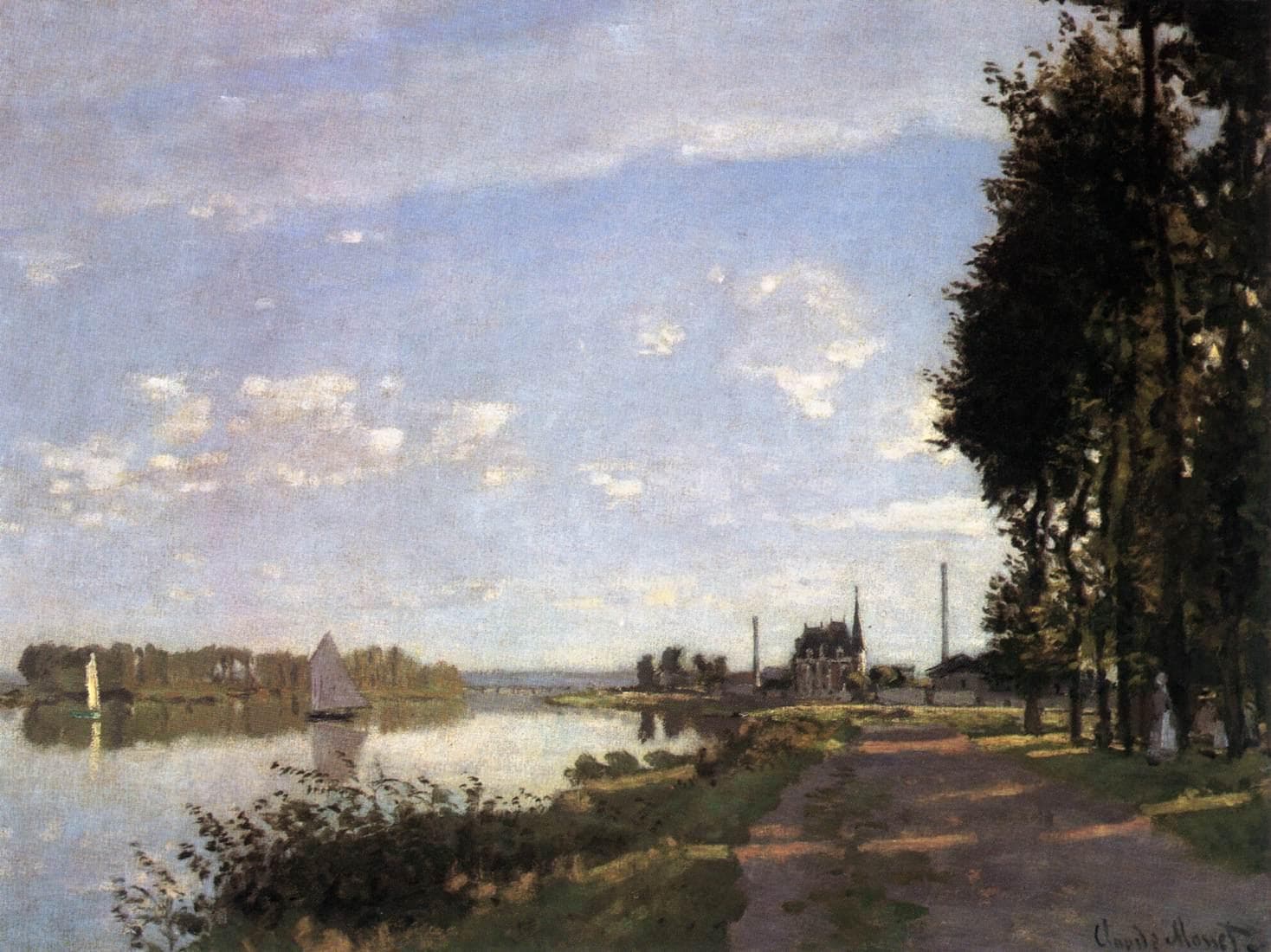
Riverside Path at Argenteuil
Claude Monet · c. 1872

The Basin at Argenteuil
Claude Monet · 1872
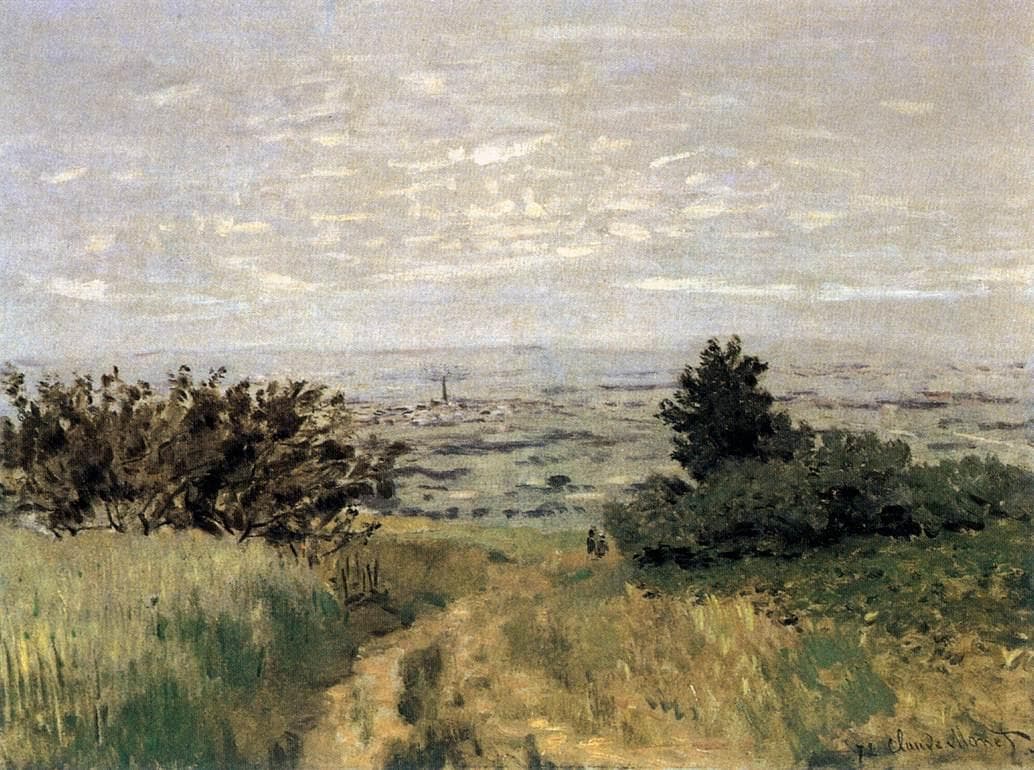
The Plain of Sannois at Argenteuil
Claude Monet · 1872
Kindred works
You may also study
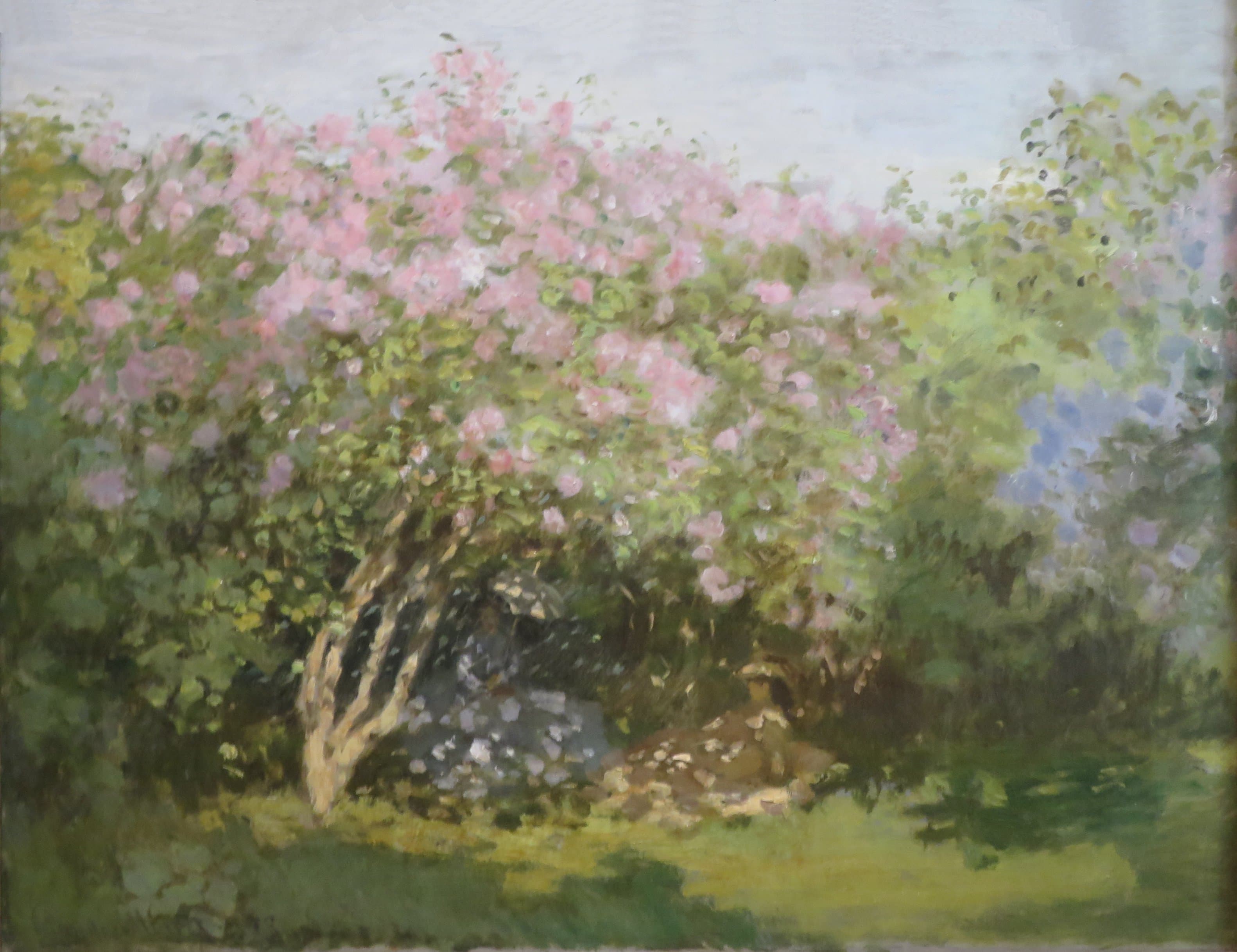
Lilac in the Sun
Claude Monet · 1873
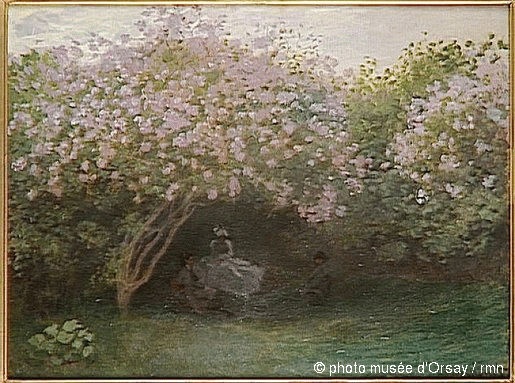
Lilacs, Gray Weather
Claude Monet · 1872–73
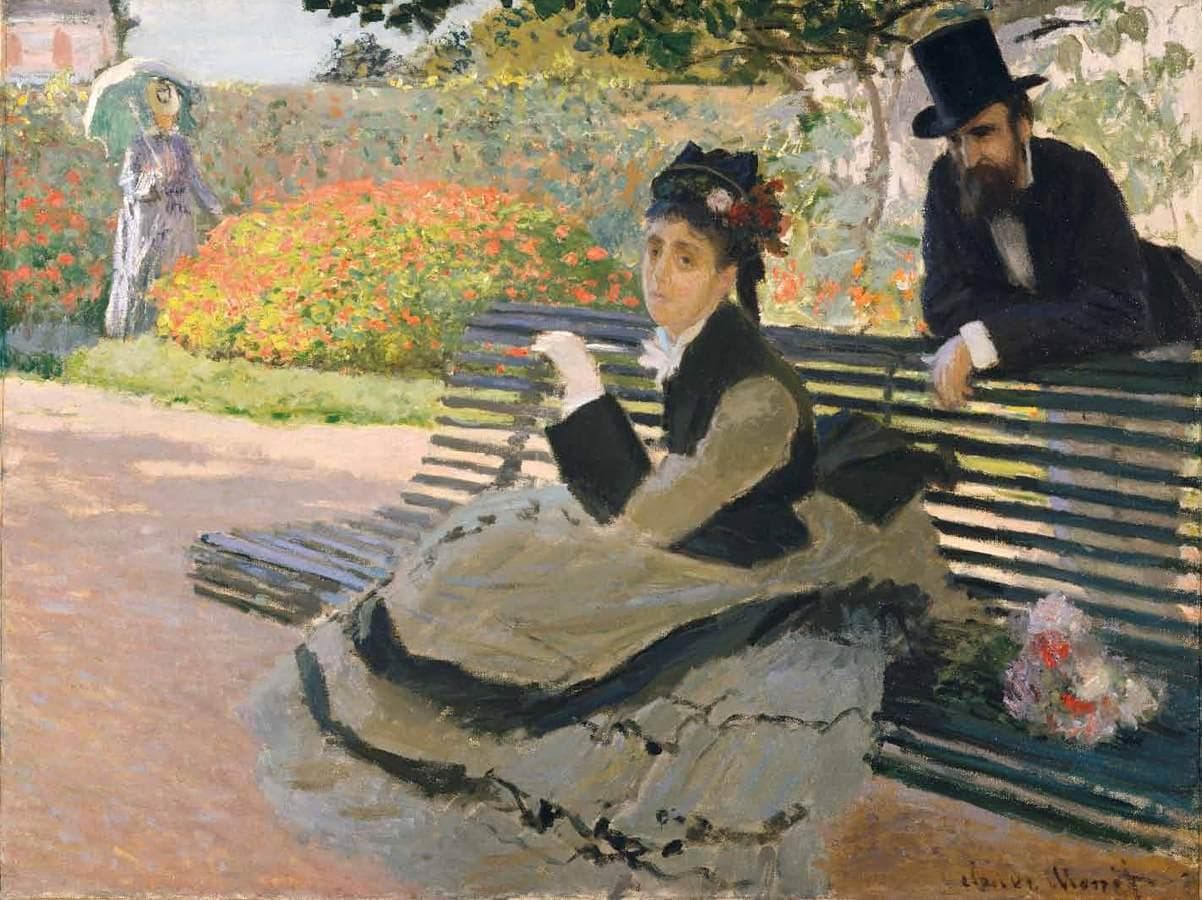
Camille Monet on a Garden Bench
Claude Monet · 1873
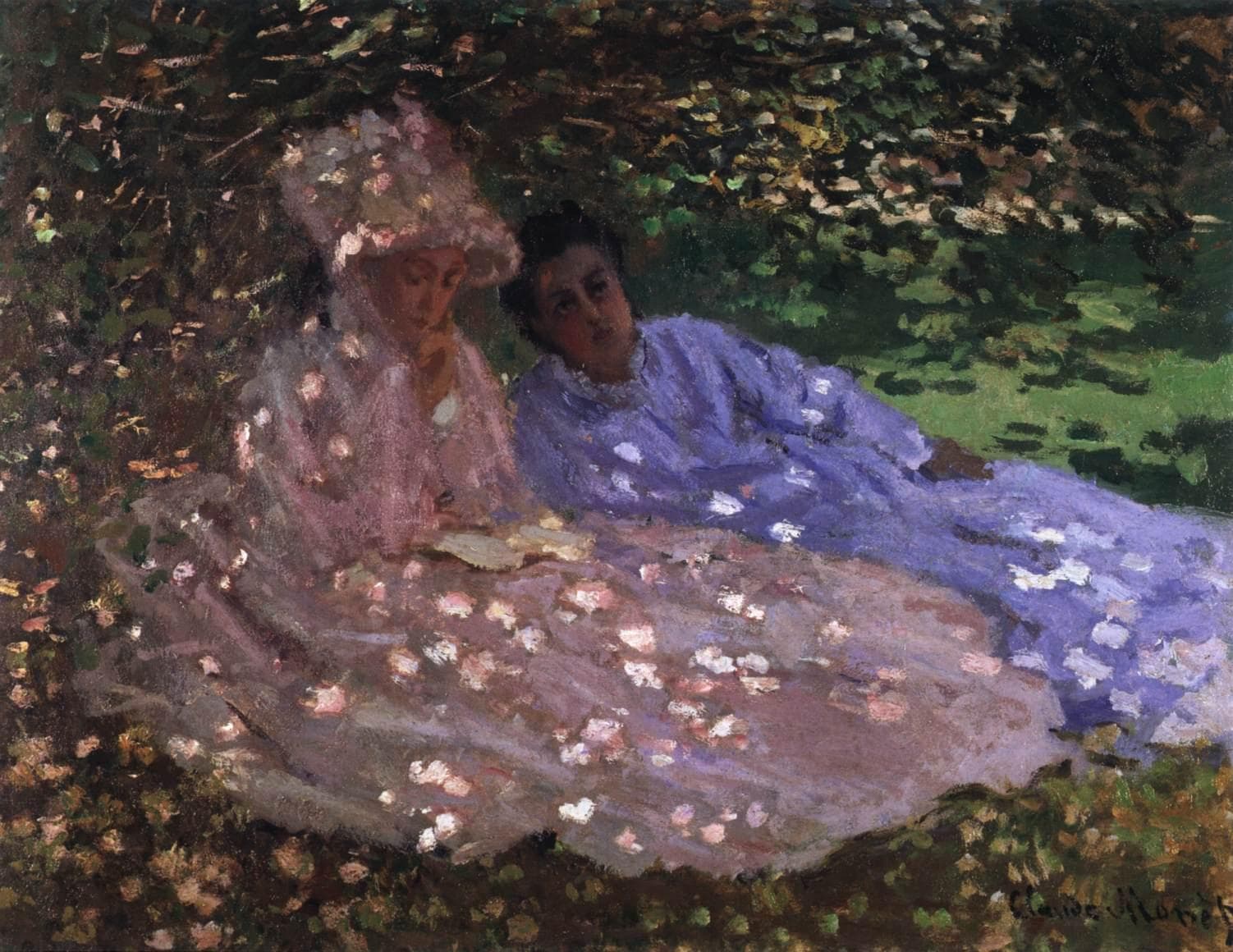
Madame Monet and a Friend in the Garden
Claude Monet · c. 1872
The Artist's Garden in Argenteuil (A Corner of the Garden with Dahlias)
Claude Monet · 1873

Venus de Milo
Alexandros of Antioch · c. 150–125 BC

The Scream
Edvard Munch · 1893

The Thinker
Auguste Rodin · Modeled 1880–82; enlarged 1902–03; this cast 1904