Impressionism
Riverside Path at Argenteuil
Claude Monet, c. 1872
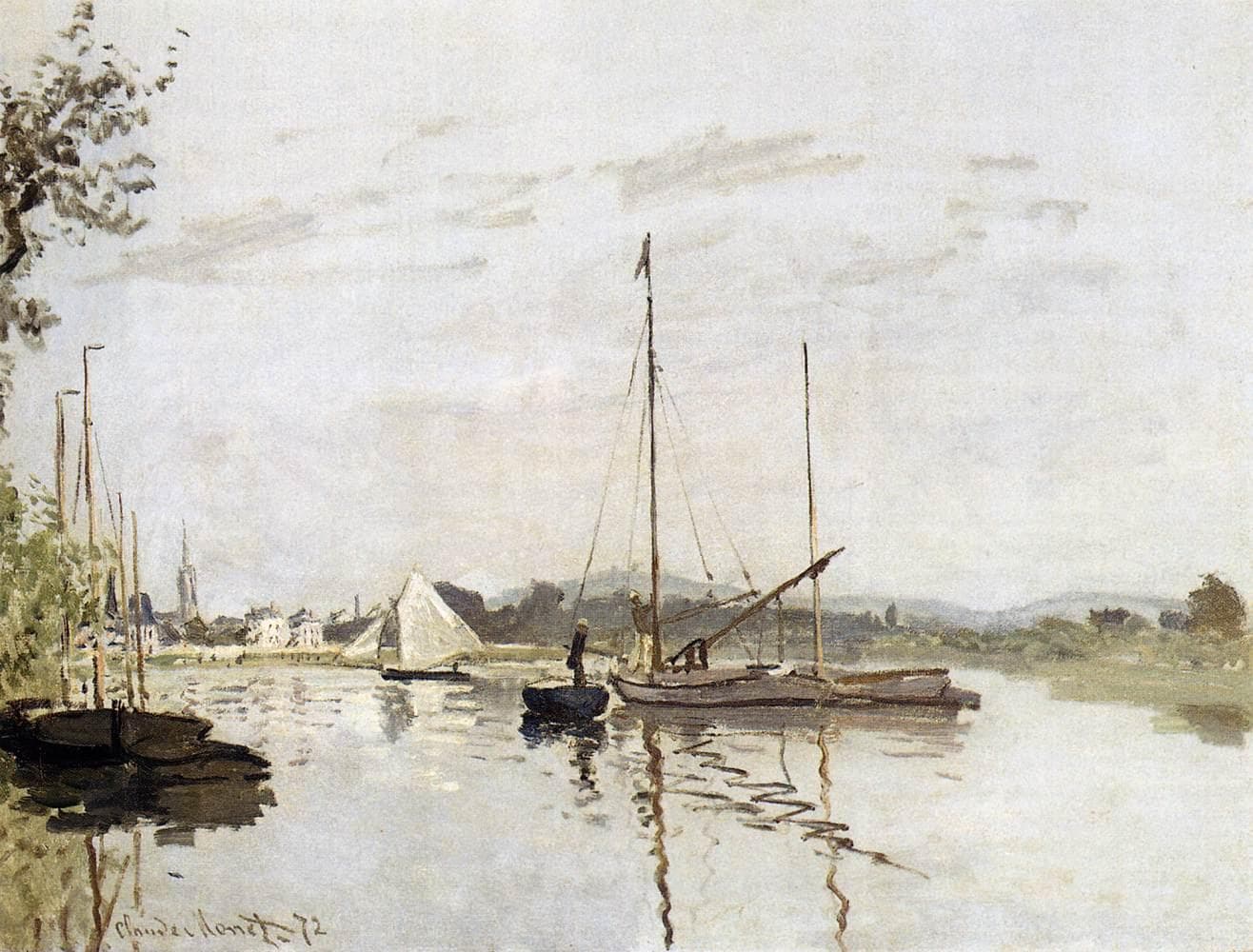
Riverside Path at Argenteuil is an oil painting by Claude Monet from about 1872, showing a sunlit dirt path along the Seine at Argenteuil. It is in the National Gallery of Art, Washington, which catalogues it simply as Argenteuil.
- Artist
- Claude Monet
- Date
- c. 1872
- Medium
- Oil on canvas
- Dimensions
- 50.4 × 65.2 cm
- Collection
- National Gallery of Art, Washington, D.C., United States
- Movement
- Impressionism
- Catalogue
- Wildenstein 223
Painted at Monet at Argenteuil
What you are looking at
A pale dirt path runs away from us along the bank of the Seine, under a high spring or summer sky. To one side the river lies flat and bright, carrying a couple of sailboats whose white sails catch the light; ahead, where the path meets the water, a turreted villa and two tall factory chimneys rise against the sky like punctuation marks. On the right a wall of tall trees throws broken shadows across the path, and a few strollers stand in their shade. There is no story here, only a walk on a fine day in a town that Monet had made his home a few months earlier.
The National Gallery of Art in Washington, which owns the picture, gives it the plain title Argenteuil and dates it to about 1872. The longer title Riverside Path at Argenteuil describes the subject more precisely and is the one many reproductions and online catalogues use. It is a modest canvas, 50.4 by 65.2 centimeters, signed "Claude Monet" at lower right.
Looking closely
The picture is built on a simple geometry: the diagonal of the path, the horizontal of the river and far bank, and the vertical accents of trees and masts. Monet lets the path do the work of perspective, pulling the eye into depth without any figure to guide it. Where figures do appear, they are a few touches of dark paint, scaled to the landscape rather than the other way round.
Look at how the light is made. The path is not one color but a scatter of warm creams, pinks and ochres, laid in short strokes that sit on the surface rather than blending. The shadows under the trees are not brown or black but cool blues and violets, the discovery that would become one of the signatures of Impressionism. In the water Monet reflects the sky with broken horizontal dashes, so the river shimmers instead of mirroring.
The smokestacks on the horizon are easy to miss and important. Argenteuil in the 1870s was not a rural idyll but a growing industrial suburb, with factories, a railway bridge and Sunday crowds from Paris. Monet includes the chimneys without comment. They are part of the view, and part of the modern world he wanted to paint.
Monet at Argenteuil
Monet moved to Argenteuil, about eleven kilometers northwest of Paris, at the end of 1871, after a period of exile in London and the Netherlands during the Franco-Prussian War. He rented a house near the station with his wife Camille and their son Jean, and the town became his main subject for the next six years. In 1872 alone he painted dozens of canvases there: the river basin, the bridges, the regattas, and the walks along the bank.
This painting belongs to a group of closely related views made in 1872 looking along the river, which show the same path and water under slightly different conditions. Painting the same motif more than once was not yet the systematic practice of the later series (the haystacks, the poplars, the cathedrals), but the habit begins here: return to a place, change the light, change the picture.
Argenteuil also drew Monet's friends. Renoir, Manet, Sisley and Caillebotte all painted there, sometimes side by side with him. For Monet, the town offered both the river he loved and easy access to Paris and its dealers, especially Paul Durand-Ruel, who may have bought this canvas from the artist in 1872.
What the picture means
It would be easy to read the painting as pure pleasure, and pleasure is part of it. But the Impressionists were also making an argument about what a painting should be. Academic art in Paris prized history, mythology and finish. Monet offers a dirt path, a few boats and the far-off chimneys of a suburb, painted in visible strokes at a modest size. The subject is the experience of looking on a particular day.
Art historians, notably Paul Hayes Tucker in his study of Monet at Argenteuil, have stressed that the industrial details in these pictures are not accidents. Monet was recording a landscape in transition, where leisure and industry shared the riverbank. Whether he celebrated that mix or simply accepted it is still debated; the paintings themselves keep it in calm balance.
Related works
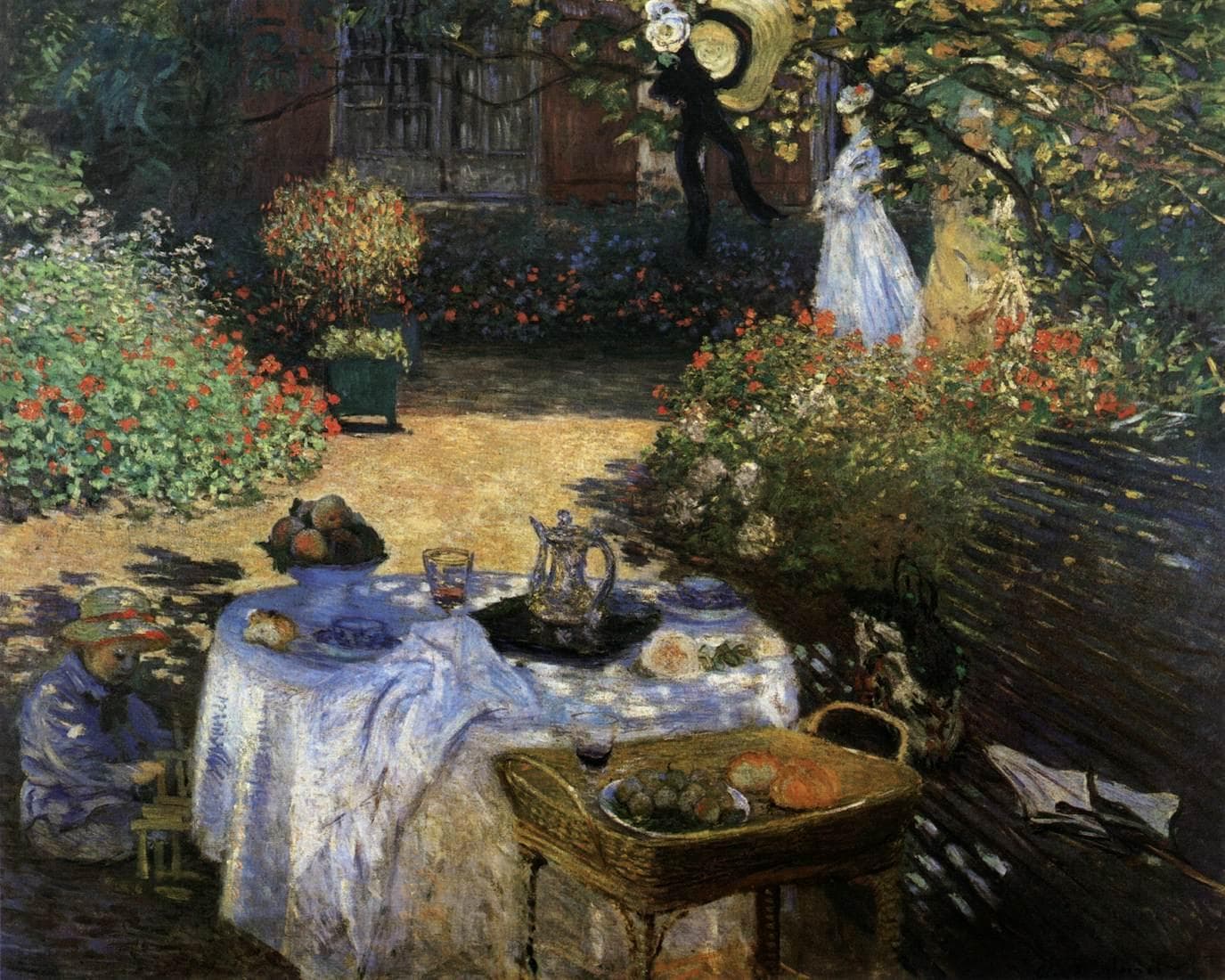
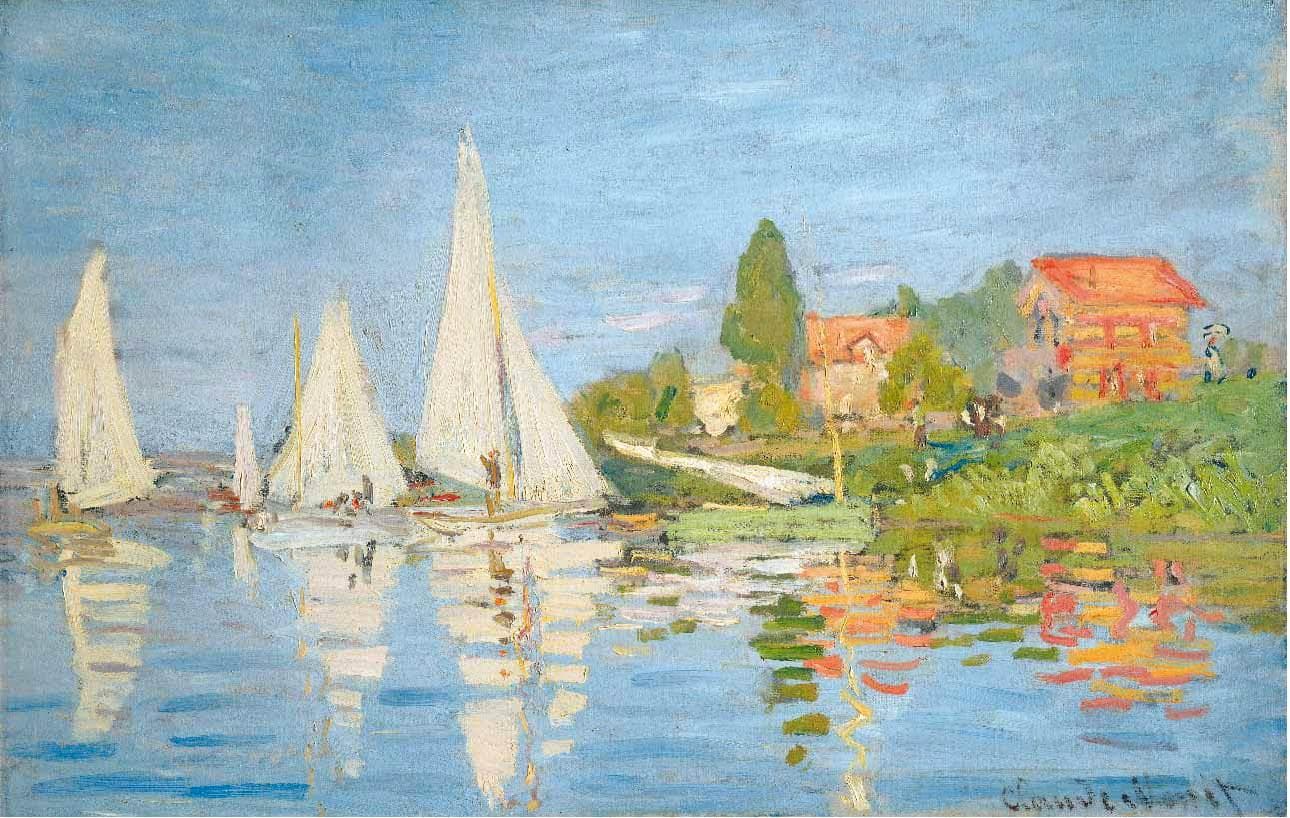
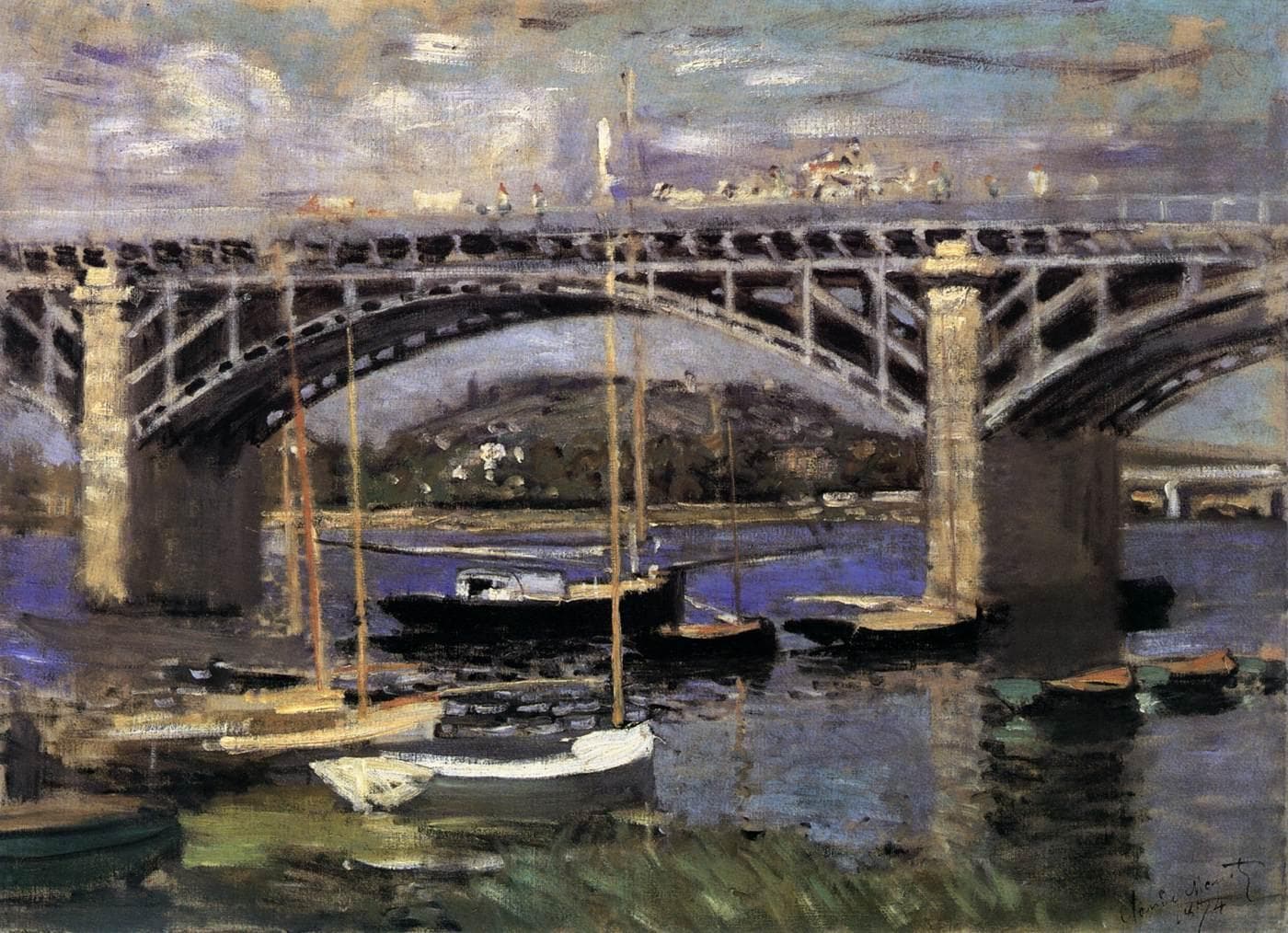
The path and river here belong to the same world as The Luncheon (Monet's Garden at Argenteuil), painted in his garden a short walk away, and the boating scenes such as Regatta at Argenteuil. For the town's bridges, see The Bridge at Argenteuil. Many of these canvases are gathered in our guide to famous Monet paintings.
Where to see it
The painting is in the National Gallery of Art in Washington, D.C., part of the Ailsa Mellon Bruce Collection given in 1970. The museum lists the image as public domain under its open access policy. It was included in the gallery's exhibition The Impressionists at Argenteuil (2000), which brought together more than fifty paintings made in and around the town. As with any museum collection, check the gallery's website for whether it is currently on view.
Questions & answers
Where is Monet's Riverside Path at Argenteuil?
It is in the National Gallery of Art in Washington, D.C., which catalogues it under the title Argenteuil and dates it to about 1872. It came to the museum in 1970 with the Ailsa Mellon Bruce Collection, and the gallery lists the image as public domain.
When did Monet paint Riverside Path at Argenteuil?
Monet painted it around 1872, during his first full year living at Argenteuil, a suburb on the Seine northwest of Paris. He produced dozens of canvases there that year, including several closely related views of the riverbank path.
Is this the same painting as The Luncheon (Monet's Garden at Argenteuil)?
No. The Luncheon shows a table set in Monet's garden, with his son Jean playing in the shade, and is in the Musée d'Orsay. Riverside Path is a landscape of the Seine bank. Both were painted during Monet's years at Argenteuil in the 1870s.
Why are there factory chimneys in a Monet landscape?
Argenteuil was an industrial town as well as a boating resort. Monet painted the chimneys on the far bank as part of the view, and historians read these details as his frank record of a riverside where leisure and industry met.
More by the artist
Claude Monet

Bridge over a Pond of Water Lilies
Claude Monet · 1899

Woman with a Parasol – Madame Monet and Her Son
Claude Monet · 1875

Sunset in Venice
Claude Monet · 1908–12

La Grenouillère
Claude Monet · 1869

Beach in Pourville
Claude Monet · 1882

Springtime
Claude Monet · 1872

Boating on the River Epte
Claude Monet · 1890

The Seine at Asnières (Hermitage)
Claude Monet · 1873
Also painted in 1872
The same year
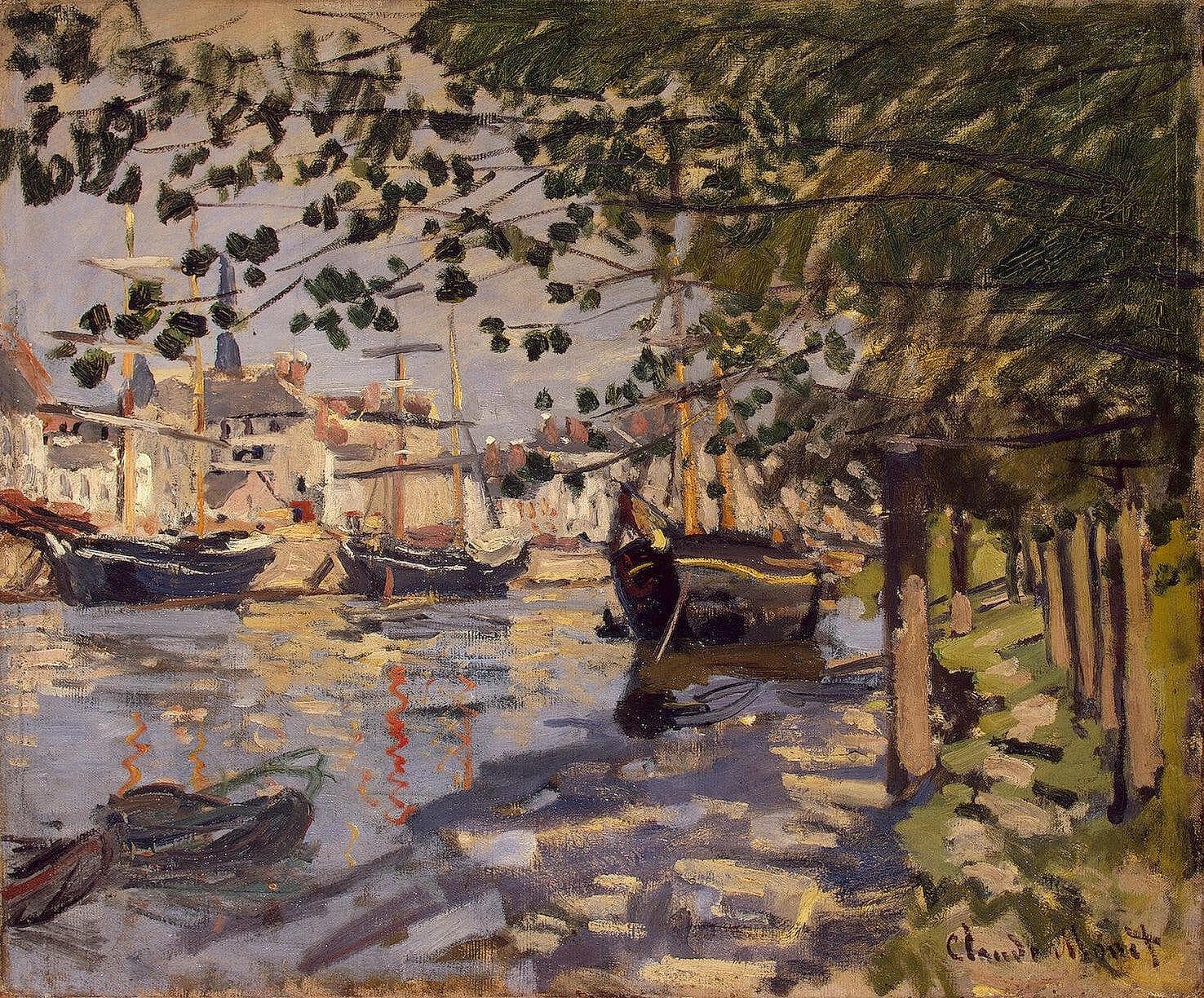
The Seine at Rouen
Claude Monet · 1872
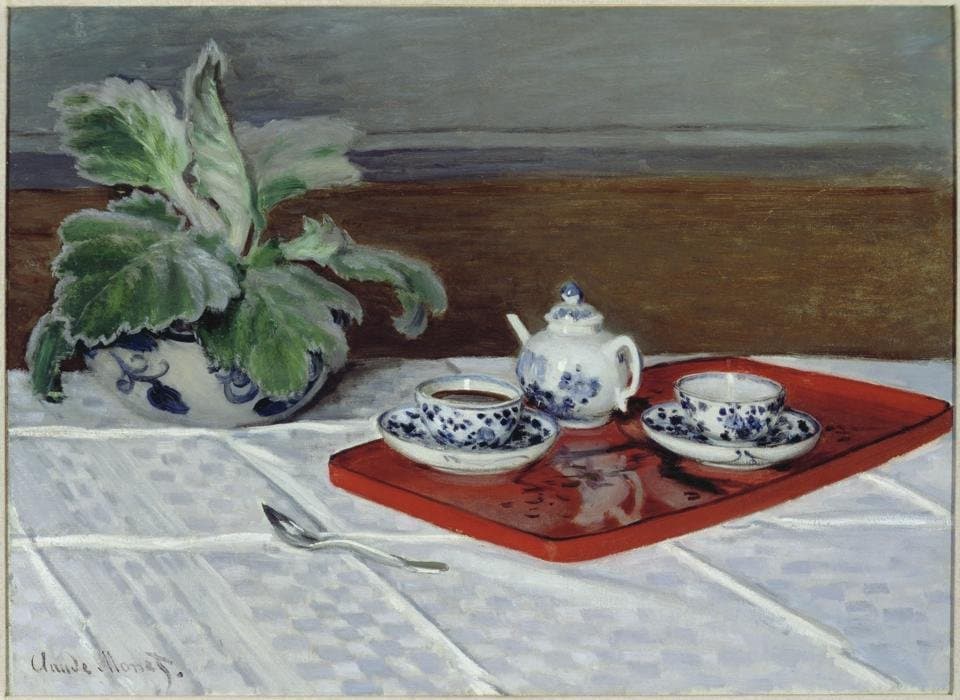
The Tea Service
Claude Monet · 1872
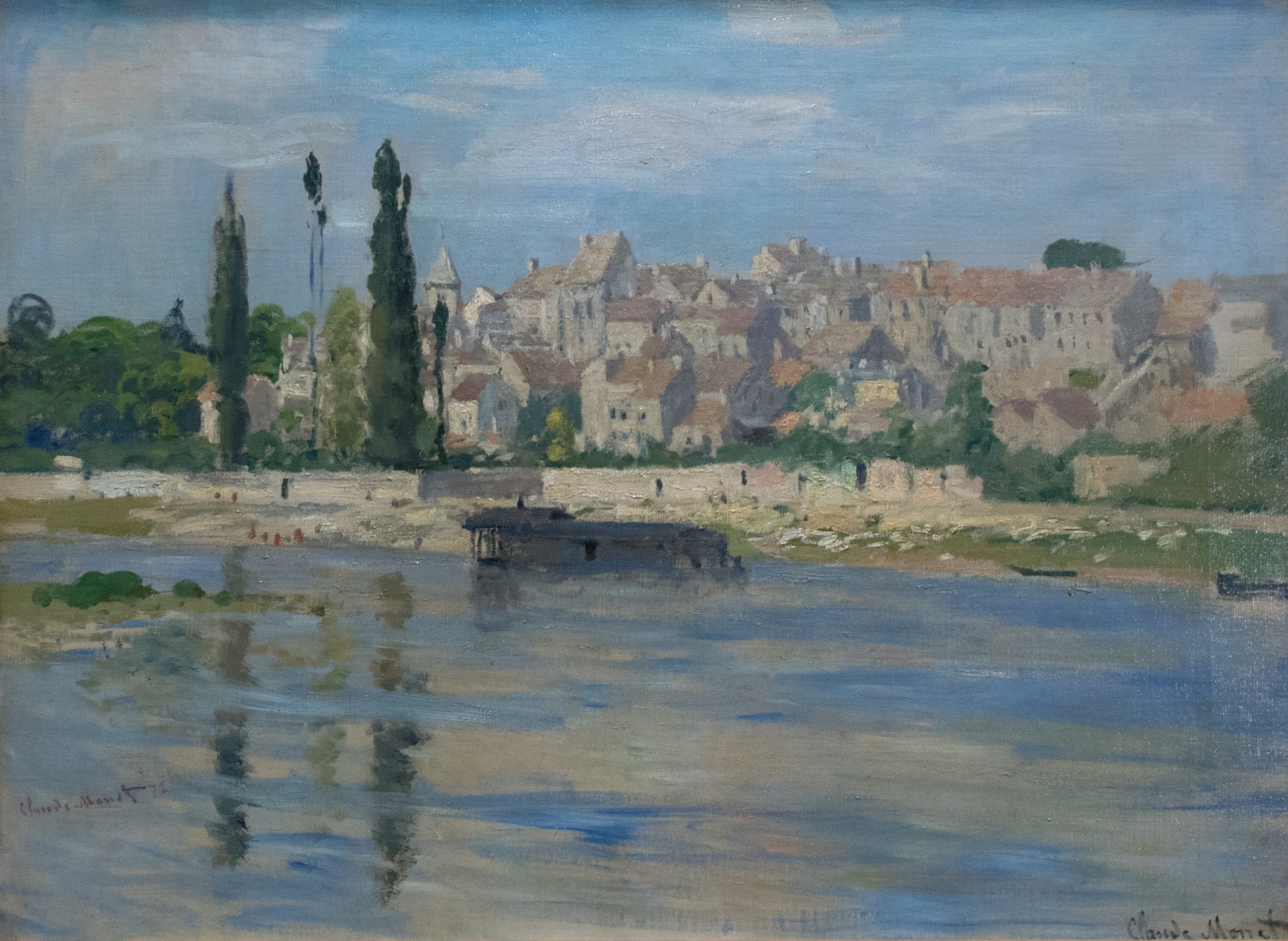
Carrières-Saint-Denis
Claude Monet · 1872
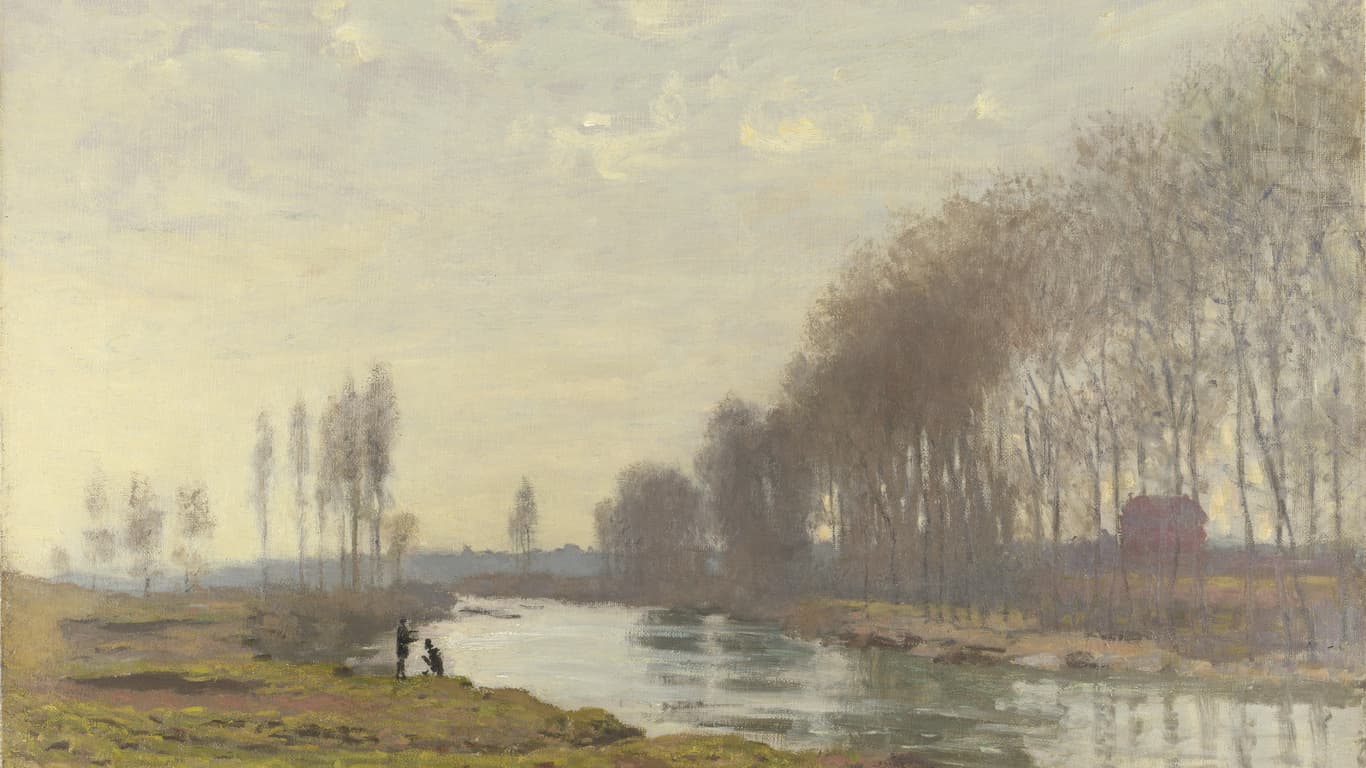
The Petit Bras of the Seine at Argenteuil
Claude Monet · 1872
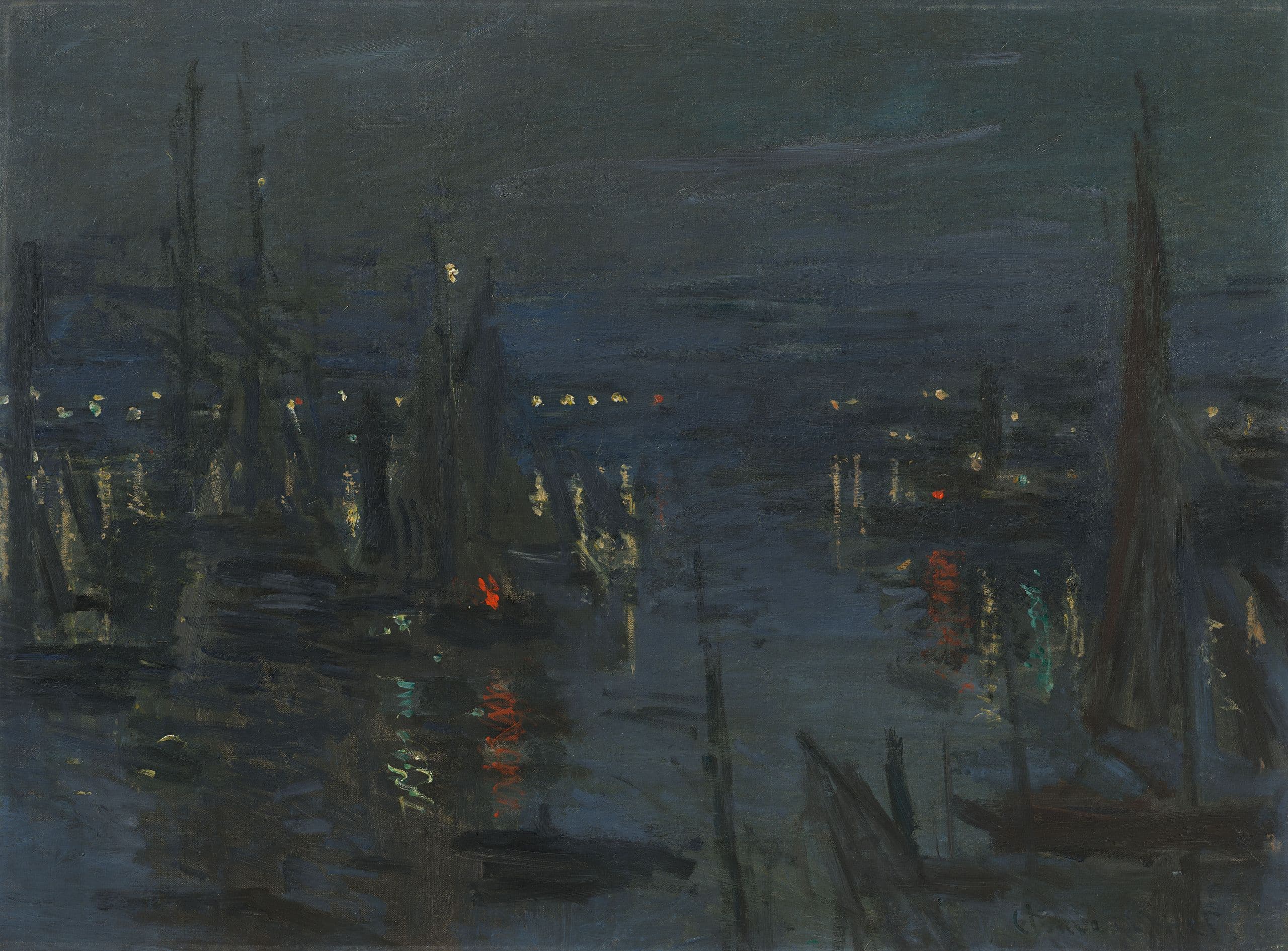
The Port of Le Havre, Night Effect
Claude Monet · 1872
The Basin at Argenteuil
Claude Monet · 1872
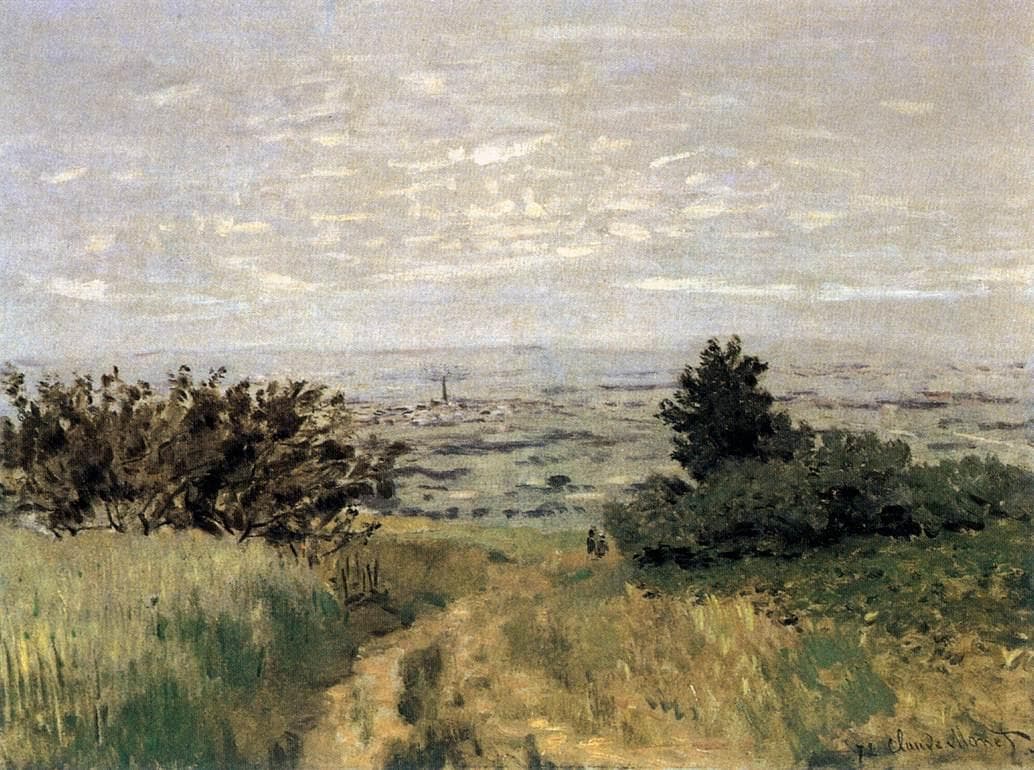
The Plain of Sannois at Argenteuil
Claude Monet · 1872
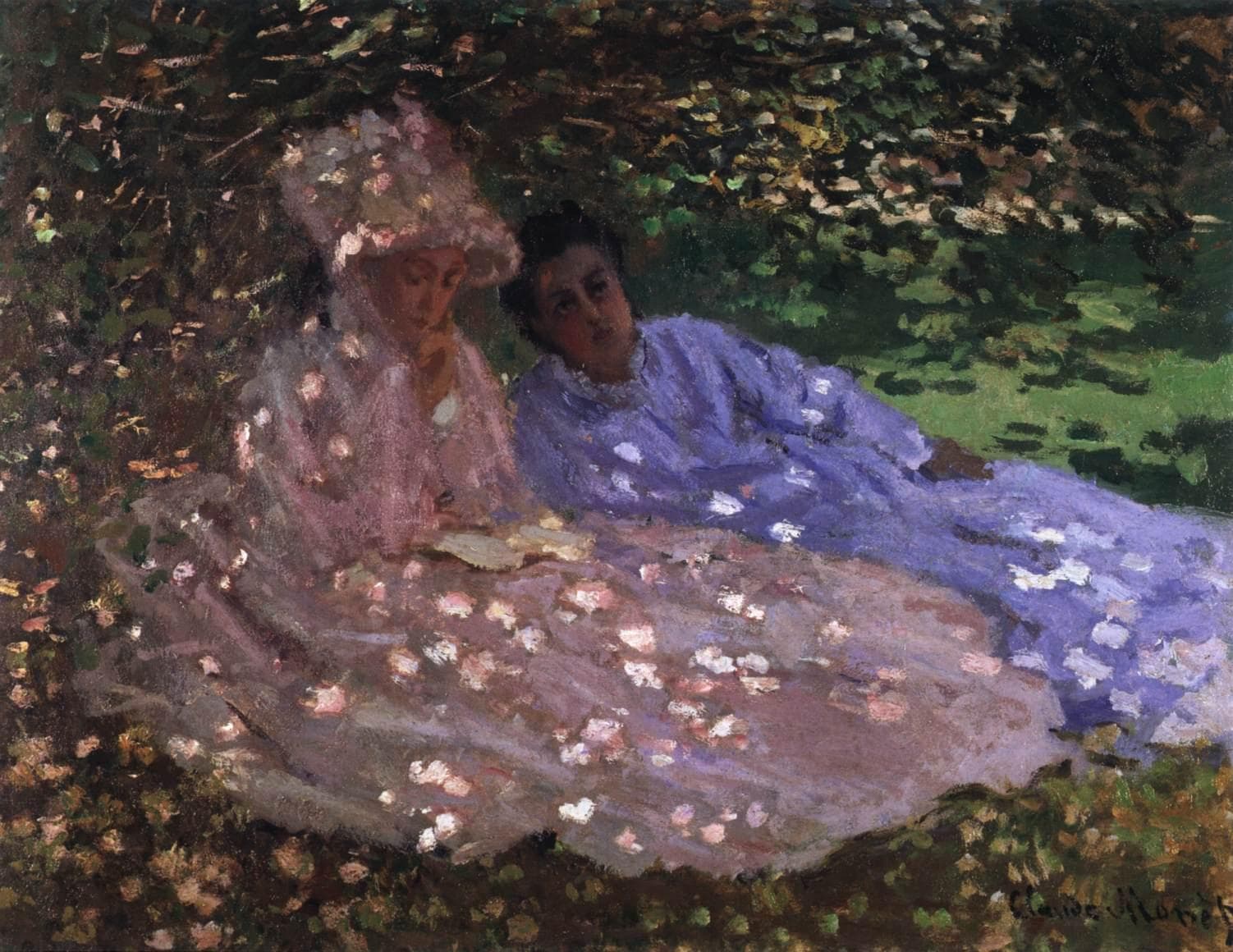
Madame Monet and a Friend in the Garden
Claude Monet · c. 1872
Kindred works
You may also study
The Luncheon (Monet's Garden at Argenteuil)
Claude Monet · c. 1873
Regatta at Argenteuil
Claude Monet · c. 1872
The Bridge at Argenteuil
Claude Monet · 1874
The Basin at Argenteuil
Claude Monet · 1872
Argenteuil
Claude Monet · c. 1872

Venus de Milo
Alexandros of Antioch · c. 150–125 BC

The Scream
Edvard Munch · 1893
The Thinker
Auguste Rodin · Modeled 1880–82; enlarged 1902–03; this cast 1904