Impressionism
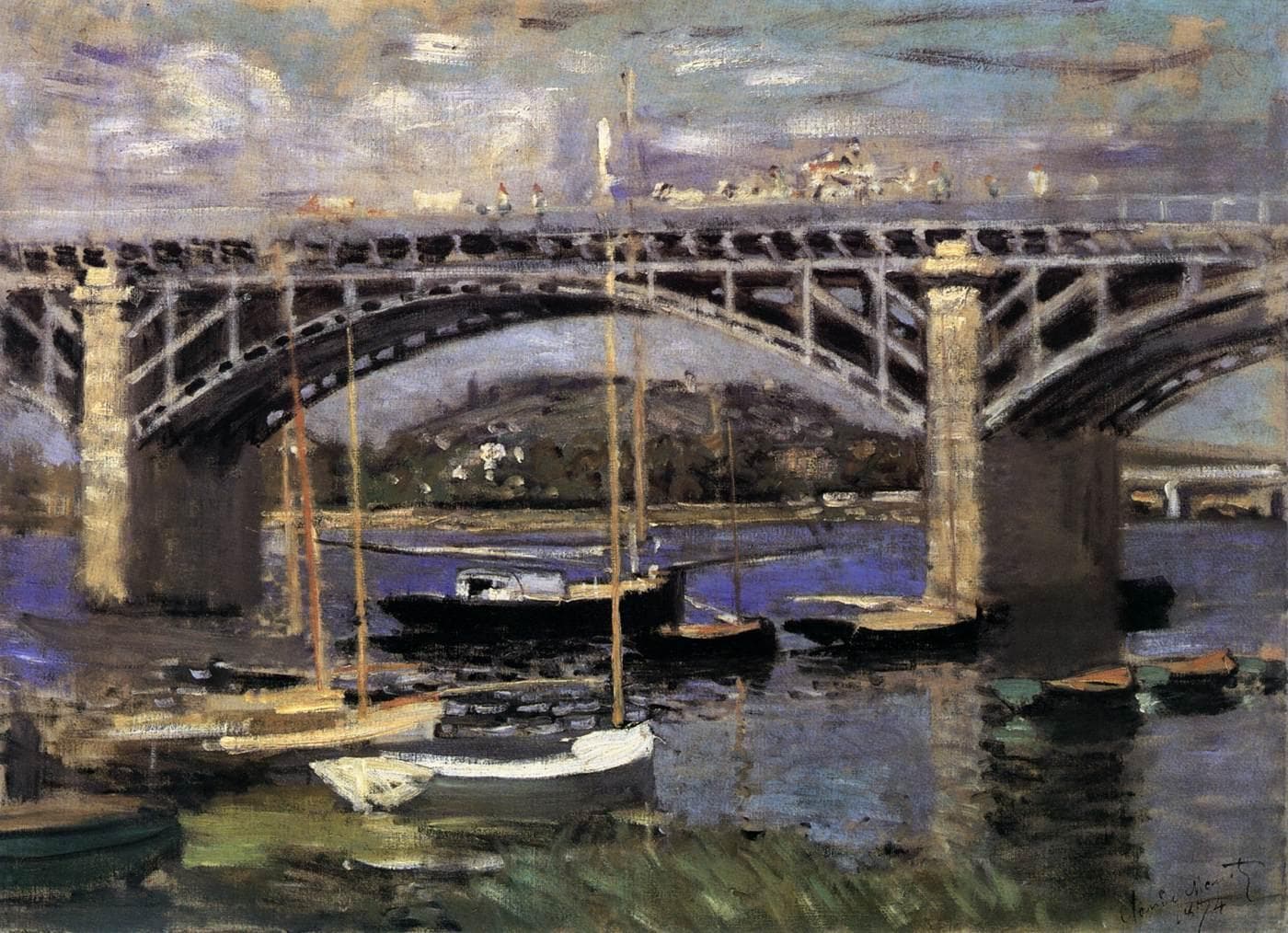
The Bridge at Argenteuil
Claude Monet, 1874
The Bridge at Argenteuil is an 1874 painting by Claude Monet of the rebuilt road bridge over the Seine at Argenteuil, with a moored sailboat in the foreground. It belongs to the National Gallery of Art in Washington, D.C.
- Artist
- Claude Monet
- Date
- 1874
- Medium
- Oil on canvas
- Dimensions
- 60 × 79.7 cm
- Collection
- National Gallery of Art, Washington, D.C., United States
- Movement
- Impressionism
- Catalogue
- Wildenstein 312
Painted at Monet at Argenteuil
What you are looking at
The road bridge at Argenteuil marches in from the right edge on heavy stone piers, its arches dark with shadow and its parapet dotted with tiny figures out for a walk. Beyond the bridge stand a white house with a red roof and a slim tollhouse with a pointed turret, half hidden in a band of dark summer trees. In the foreground, a yacht with its sail furled lies at anchor, its tall yellow mast slicing the picture almost in half. A second boat under white sail crosses the water at left, and a little rowboat with two figures sits in the middle distance.
Above, big summer clouds pile up in a clear blue sky. Below, the Seine breaks all of this into broken stripes of blue, white, ocher and black. The light comes from the left and high, a fine afternoon in high season.
Argenteuil in 1874
Claude Monet lived in Argenteuil, a small town on the Seine northwest of Paris, from late 1871 to early 1878. The road bridge had been wrecked during the Franco-Prussian War of 1870–71 and was rebuilt afterward; Monet painted it, with and without scaffolding, again and again. This canvas, catalogued as W.312 by Wildenstein, comes from the summer of 1874, when Renoir and Manet also came to paint at Argenteuil and the three men worked side by side on the riverbank. The whole period is mapped on our Monet at Argenteuil page.
The bridge was a deliberately modern subject. It carried road traffic between the town and Paris, and its heavy masonry sits beside the pleasure craft that made Argenteuil a sailing resort for weekend visitors from the capital. Monet sets the two worlds next to each other without comment: the engineered and the idle, the permanent and the passing.
How it was painted
The water is where Monet's attention went. Look at the reflections under the yacht: the dark hull becomes a jagged band of black and violet strokes, and the mast's reflection breaks into a zigzag of yellow that wobbles down toward the bottom edge. Between them the river is laid in with short horizontal touches of pure blue and white, each one a glint of sky. Seen up close, it is almost abstract; from a few steps back, it moves.
The composition is carefully built. The bridge pulls the eye to the right and into depth, while the vertical mast holds the foreground still. A thinner mast, closer to us, leans at a slightly different angle, so the two poles set up a small rhythm of their own. The boom and a pale mooring line slant across the water and tie the boat to the bridge.
On the right, the near bank is a dense smear of greens and rust, painted thickly so it reads as close. Look along the top of the bridge and you will find the strollers: four or five dark vertical marks against the sky, the only people in the picture besides the distant rowers. The clouds, by contrast, are modeled with a loaded brush in creamy white, gray and a touch of pink on their undersides.
The bridge pictures and how this one differs
Monet painted the road bridge repeatedly between 1872 and 1874. Some views show it in repair under wooden scaffolding; others, like The Bridge at Argenteuil in Munich, look along the bridge from the bank. The Musée d'Orsay owns a closely related version of this very motif, with a moored boat before the arches.
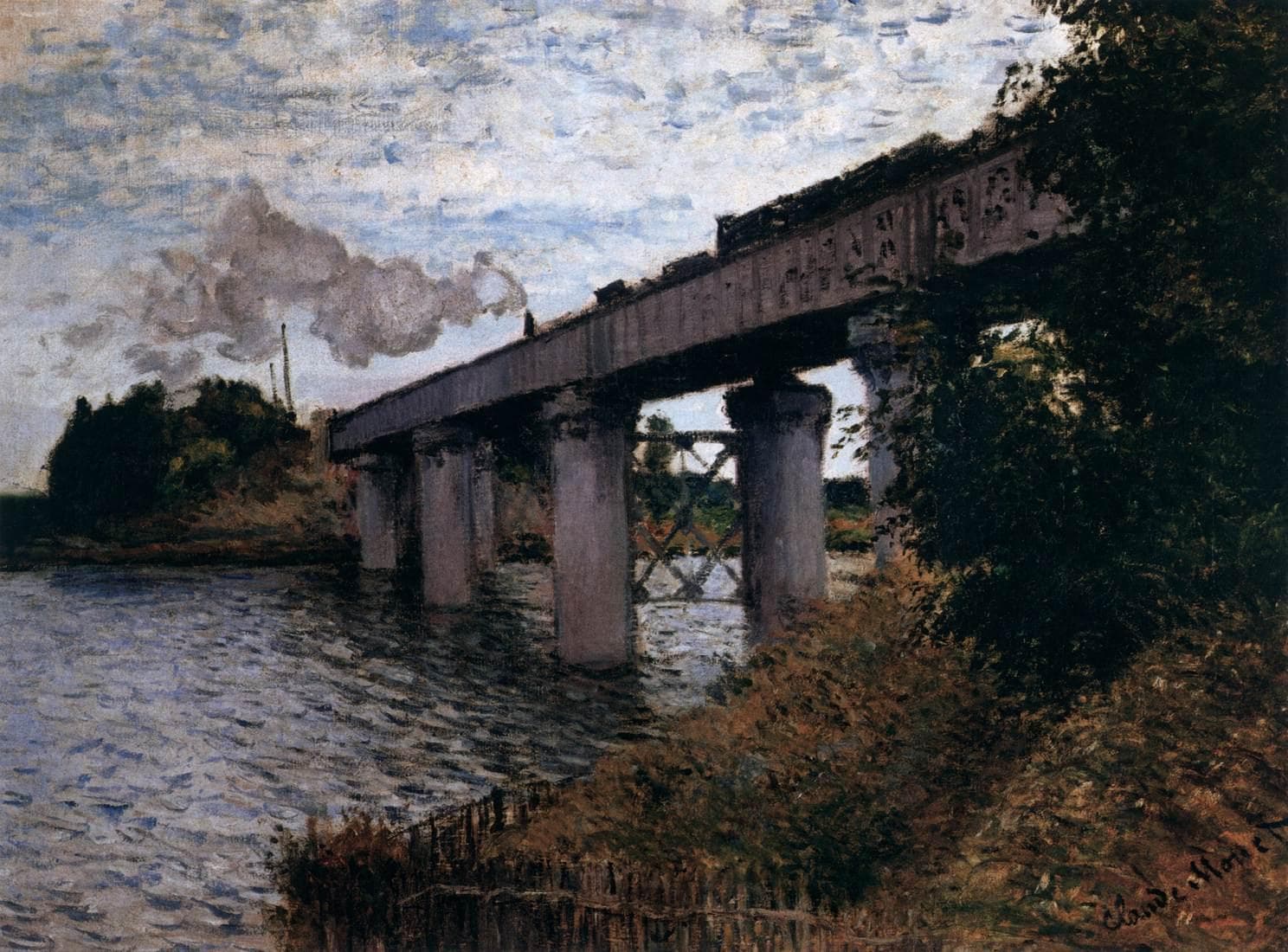
What sets the Washington picture apart is its balance of hard and soft. The stone piers are drawn with real firmness, more than in most Argenteuil scenes, while the river beneath them is all flicker. Compare it with the iron Railway Bridge at Argenteuil downstream, where the subject is speed and smoke, and with The Basin at Argenteuil, where the river is a promenade. Monet watched the same reach from his floating studio boat, which explains the low, water-level eye of so many of these canvases.
Provenance and where to see it
The painting belongs to the National Gallery of Art in Washington, D.C., in the Collection of Mr. and Mrs. Paul Mellon (1983.1.24); Wikidata also records an earlier owner, the Parisian jeweler and collector Henri Vever. It is usually on view in the museum's French galleries. For the other museums where Monet's river pictures hang, see Where to See Monet's Paintings.
Questions & answers
Where is Monet's Bridge at Argenteuil?
This 1874 version, with a furled yacht moored before the stone road bridge, is in the National Gallery of Art in Washington, D.C., in the Collection of Mr. and Mrs. Paul Mellon (1983.1.24). Monet painted the bridge many times, and other versions are in the Musée d'Orsay in Paris and the Neue Pinakothek in Munich.
When and where was The Bridge at Argenteuil painted?
In the summer of 1874 at Argenteuil, the boating town on the Seine northwest of Paris where Monet lived from 1871 to 1878. That summer Renoir and Manet joined him to paint on the river. The picture is catalogued by Wildenstein as W.312.
What does the painting show?
The rebuilt road bridge over the Seine, with its stone piers and a small turreted tollhouse, a yacht at anchor in the foreground, a passing sailboat and a rowboat. It sets modern engineering beside leisure boating, the two sides of Argenteuil in the 1870s, under a bright summer sky.
How many times did Monet paint the bridge at Argenteuil?
Many times between 1872 and 1874; counts vary with how closely related views are grouped. He painted it in different light and from different points on the bank, including views with the bridge still under scaffolding after war damage. He also painted the nearby iron railway bridge, a separate structure, several times.
More by the artist
Claude Monet

Bridge over a Pond of Water Lilies
Claude Monet · 1899

Woman with a Parasol – Madame Monet and Her Son
Claude Monet · 1875

Sunset in Venice
Claude Monet · 1908–12

La Grenouillère
Claude Monet · 1869

Beach in Pourville
Claude Monet · 1882

Springtime
Claude Monet · 1872

Boating on the River Epte
Claude Monet · 1890

The Seine at Asnières (Hermitage)
Claude Monet · 1873
Also painted in 1874
The same year
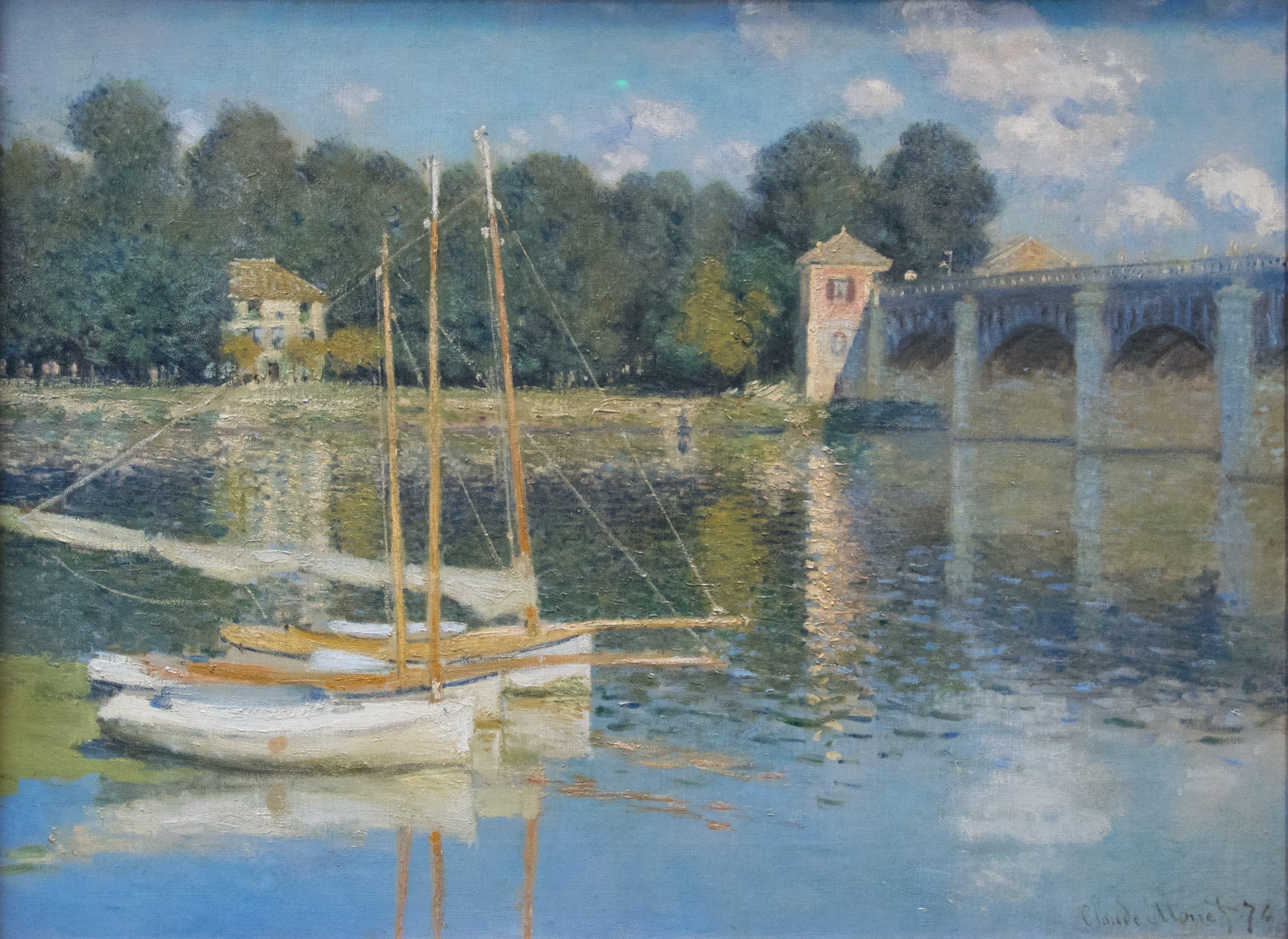
The Argenteuil Bridge
Claude Monet · 1874
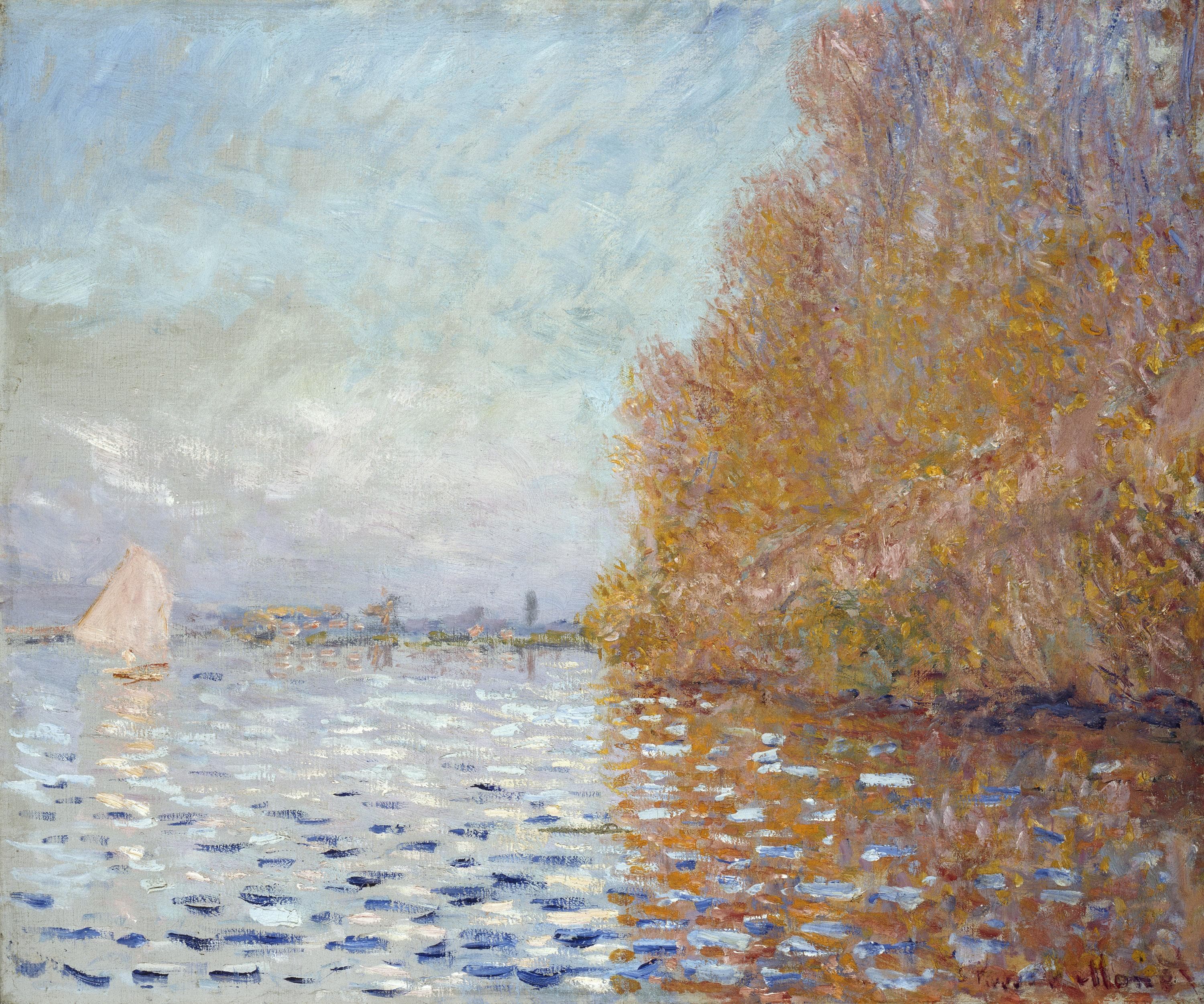
Argenteuil Basin with a Single Sailboat
Claude Monet · 1874
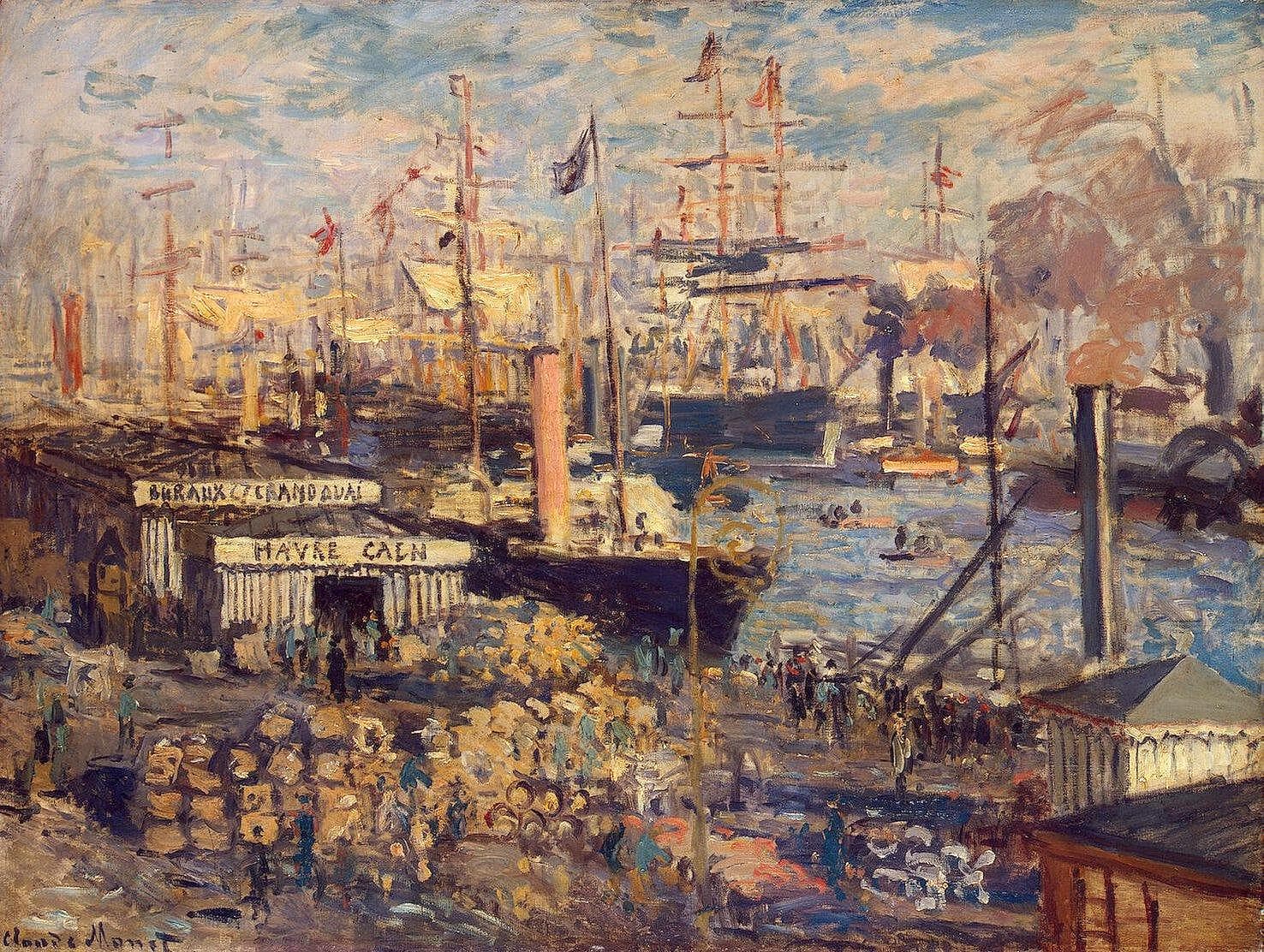
The Grand Quai at Le Havre
Claude Monet · 1874
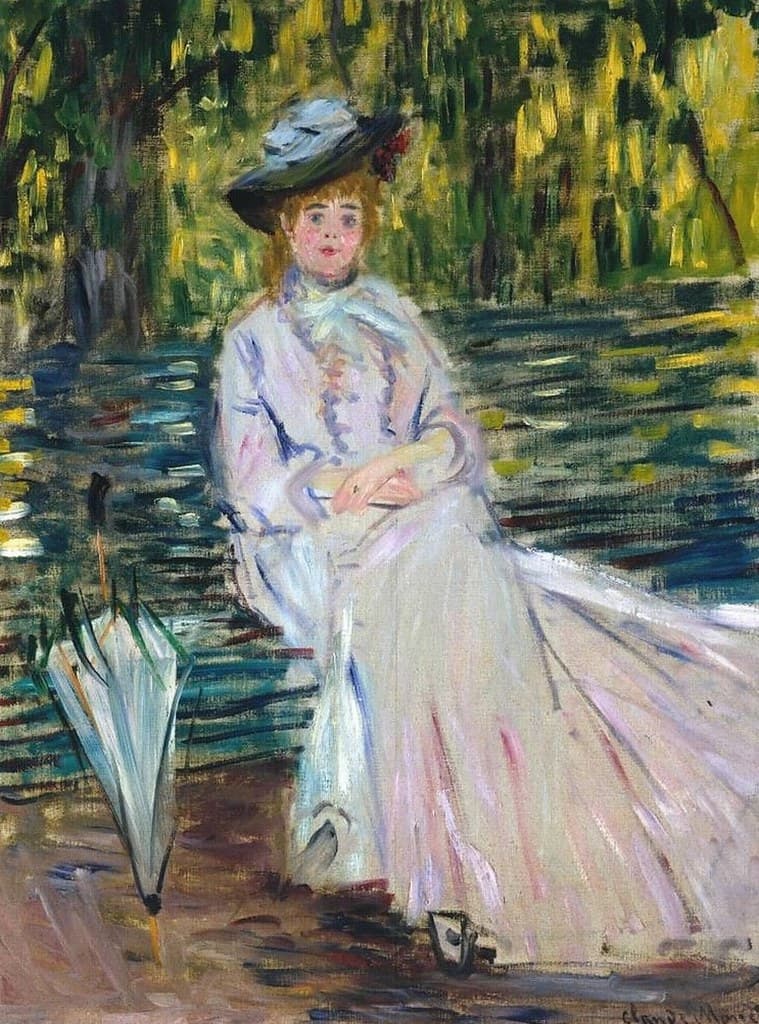
Woman Seated on a Bench
Claude Monet · c. 1874
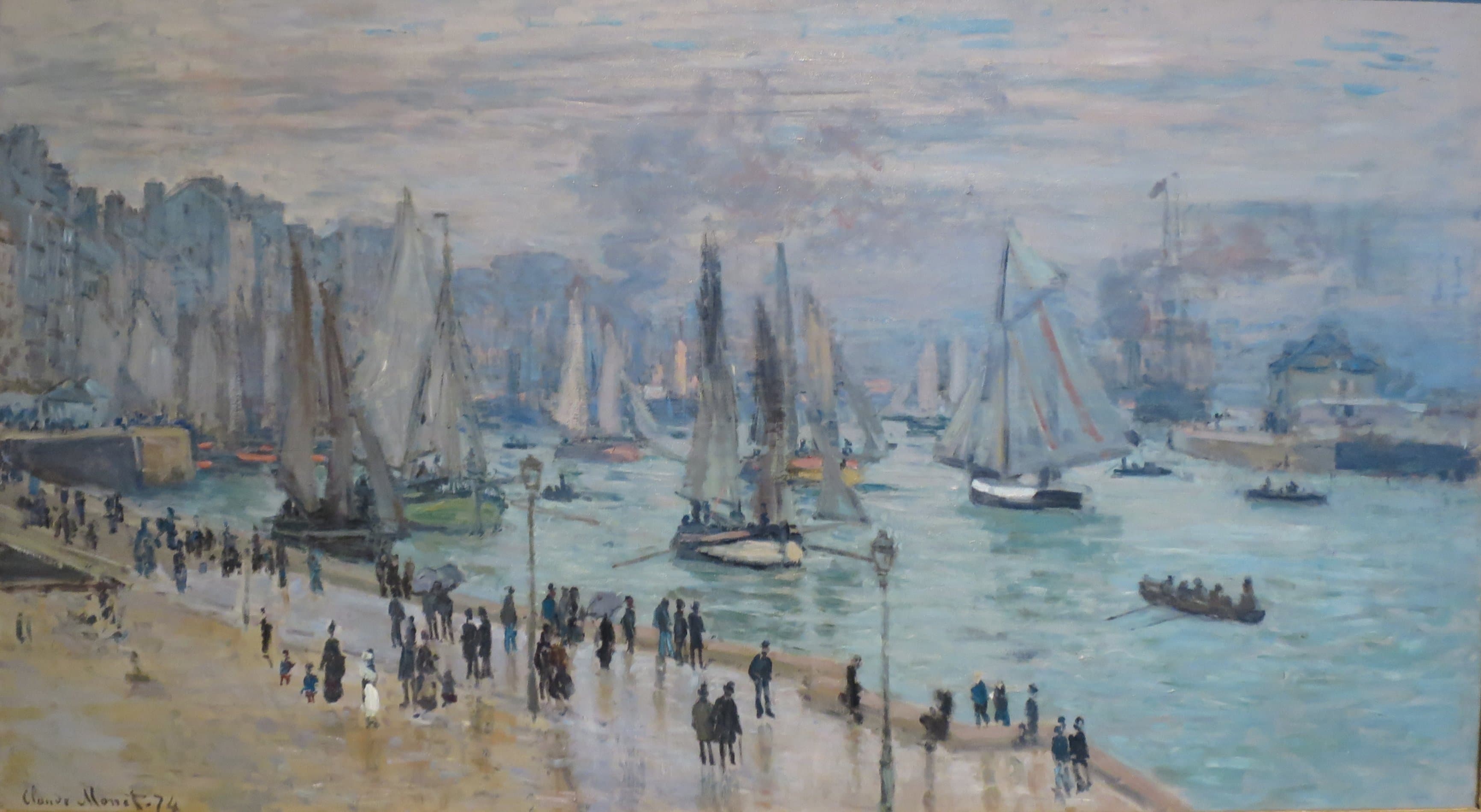
Fishing Boats Leaving the Harbor, Le Havre
Claude Monet · 1874
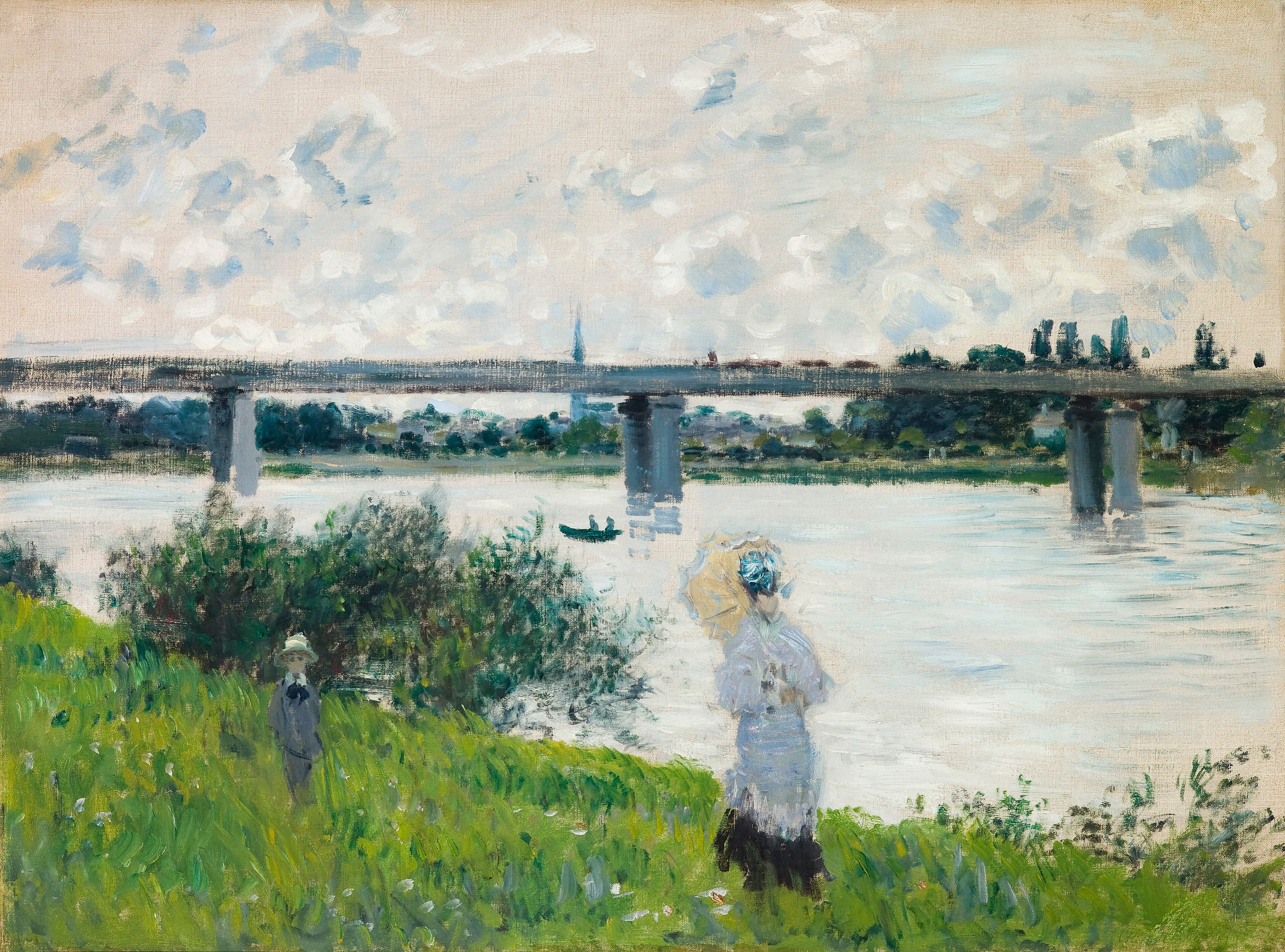
The Promenade with the Railroad Bridge, Argenteuil
Claude Monet · 1874
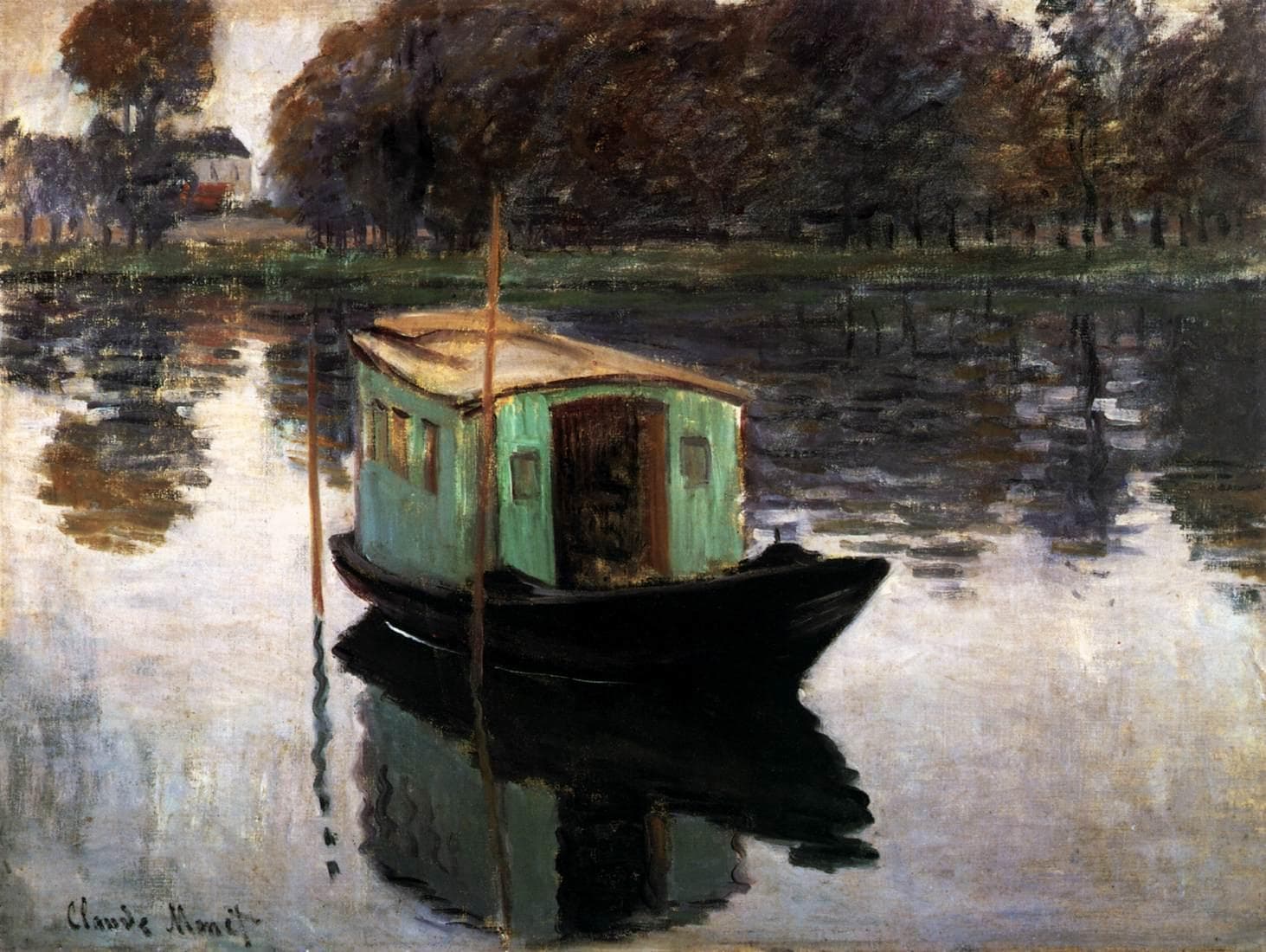
The Studio Boat
Claude Monet · 1874
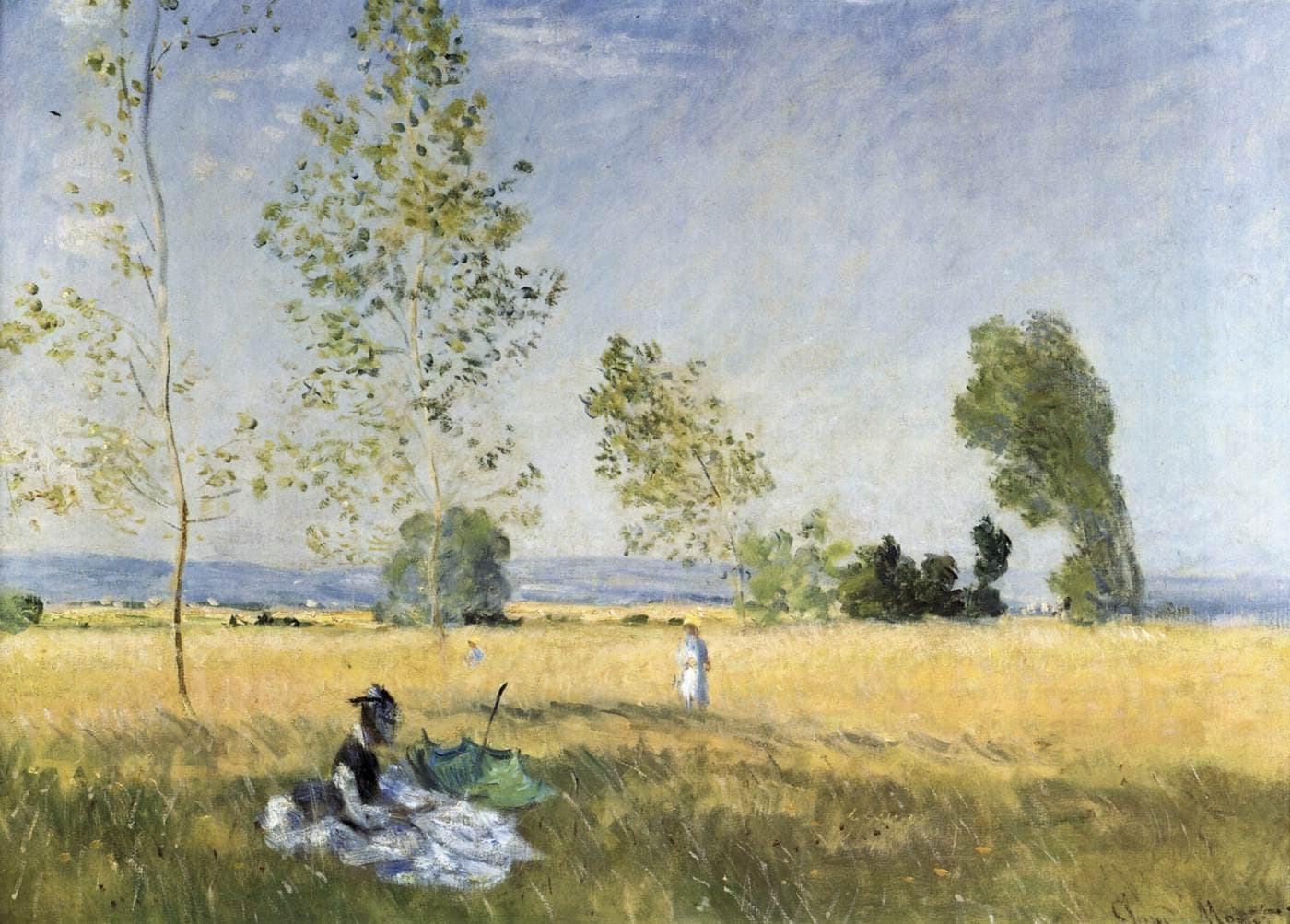
Summer (Meadow at Bezons)
Claude Monet · 1874
Kindred works
You may also study
The Bridge at Argenteuil
Claude Monet · 1874
The Railway Bridge at Argenteuil
Claude Monet · c. 1873–74
The Basin at Argenteuil
Claude Monet · 1872
The Studio Boat
Claude Monet · 1874
Red Boats at Argenteuil
Claude Monet · 1875
Regatta at Argenteuil
Claude Monet · c. 1872

The Scream
Edvard Munch · 1893

Ophelia
John Everett Millais · 1851–52