Image: Musée Marmottan Monet, Paris · Public domain · via Wikimedia Commons
Impressionism
Train in the Snow (The Locomotive)
Claude Monet, 1875
Train in the Snow (The Locomotive) is Claude Monet's 1875 painting of a steam train with glowing lamps pulling into Argenteuil station in falling snow, smoke billowing into a gray sky. It is in the Musée Marmottan Monet, Paris.
- Artist
- Claude Monet
- Date
- 1875
- Medium
- Oil on canvas
- Dimensions
- 59 × 78 cm
- Collection
- Musée Marmottan Monet, Paris, France
- Movement
- Impressionism
- Catalogue
- Wildenstein 356
Painted at Monet at ArgenteuilMore at Musée Marmottan Monet
Train in the Snow, also called The Locomotive, is one of the snow pictures Claude Monet painted at Argenteuil during the winter of 1874–75. A black steam engine with two glowing yellow lamps and a red buffer beam comes toward us along the track at the town's station, its smoke rising in a great gray-violet plume into a snowy sky. Signed and dated 75 at lower right, it is in the Musée Marmottan Monet in Paris.
What you're looking at
The track runs in from the left, and the train sits on it slightly left of center, seen almost head-on. The locomotive is a dark, blue-black block, the boiler and cab merging into the carriages behind. On its front two round lamps burn yellow and orange, and the red of the buffer beam glows beneath them, the only warm colors in the picture. Smoke pours from the tall chimney and fills the upper left quarter of the canvas in rolling clouds of gray, white and mauve.
To the right, a wooden fence slants away from the bottom edge toward the distance, separating the line from a snowy path. Beside it a row of young, bare trees, their thin branches drawn in gray and rust, leads the eye back along the platform. A man in a dark coat and hat stands near the engine, perhaps a railway worker, and a few more figures appear further along. Near the vanishing point, a signal post and a yellow light mark the far end of the station. At left, past the track, are the dim shapes of station buildings, half lost in the snowy air. Everything is coated in grayish snow, and the sky is low and heavy.
Argenteuil, winter 1874–75
Monet lived at Argenteuil from 1871 to 1878, and in 1874 he moved to a house on the boulevard Saint-Denis, close to the station. The railway gave Argenteuil its quick link to the Gare Saint-Lazare in Paris and was part of everyday life there. That winter brought heavy snow, and Monet painted at least eighteen snow scenes of the town, including Snow Scene at Argenteuil and Boulevard Saint-Denis, Argenteuil, in Winter. Another snowy railway view, Train in the Snow at Argenteuil, shows a train crossing open country outside the town.
Trains appear throughout Monet's Argenteuil work, as in The Railway Bridge at Argenteuil, and they lead to his famous series of twelve canvases of the Paris terminus in 1877; see the Gare Saint-Lazare series. For the town as a whole, see Monet at Argenteuil.
How it was painted
The picture is built on strong diagonals: the track, the fence and the row of trees all run toward the same point, giving a sense of depth and of the train's approach even though it may be standing still. Within that structure, Monet keeps the forms soft. The train dissolves into the snowy air, and the smoke and sky are painted in loose, swirling strokes of grays and violets. Late in the work he added vigorous touches on the snow and fence that sit on the surface, along with his dark signature.
The color is almost monochrome, which makes the small points of yellow and red very strong. Scholars have compared the image of the engine's lamps reddening the snow with a scene of a train in a snowstorm in Émile Zola's novel La Bête humaine, written much later. Zola knew and praised Monet's railway paintings.
De Bellio and the Marmottan
The painting was bought from Monet by Georges de Bellio, a Romanian-born doctor in Paris and one of the earliest collectors of Impressionism. He lent it to Monet's exhibition at Durand-Ruel's gallery in 1883. His daughter Victorine and her husband, Eugène Donop de Monchy, gave it to the Musée Marmottan in 1940, along with Impression, Sunrise. It hangs there today among the world's largest collection of Monet paintings; see Musée Marmottan Monet.
Questions & answers
Where is Monet's Train in the Snow?
It is in the Musée Marmottan Monet in Paris. It was given to the museum in 1940 by the daughter and son-in-law of Georges de Bellio, together with Impression, Sunrise.
When and where was Train in the Snow painted?
Monet painted it in the winter of 1874–75 at the railway station in Argenteuil, the town northwest of Paris where he lived. It is signed and dated '75.
What does Train in the Snow show?
It shows a dark steam locomotive with glowing yellow lamps and a red front standing at Argenteuil station, its smoke filling the sky, with a fence and a row of bare trees running beside the track in the snow.
Did Monet paint other trains?
Yes. He painted trains on the railway bridge and in the fields at Argenteuil in the 1870s, and in 1877 a series of twelve canvases of the Gare Saint-Lazare in Paris.
More by the artist
Claude Monet

Bridge over a Pond of Water Lilies
Claude Monet · 1899

Woman with a Parasol – Madame Monet and Her Son
Claude Monet · 1875

Sunset in Venice
Claude Monet · 1908–12

La Grenouillère
Claude Monet · 1869

Beach in Pourville
Claude Monet · 1882

Springtime
Claude Monet · 1872

Boating on the River Epte
Claude Monet · 1890

The Seine at Asnières (Hermitage)
Claude Monet · 1873
Also painted in 1875
The same year
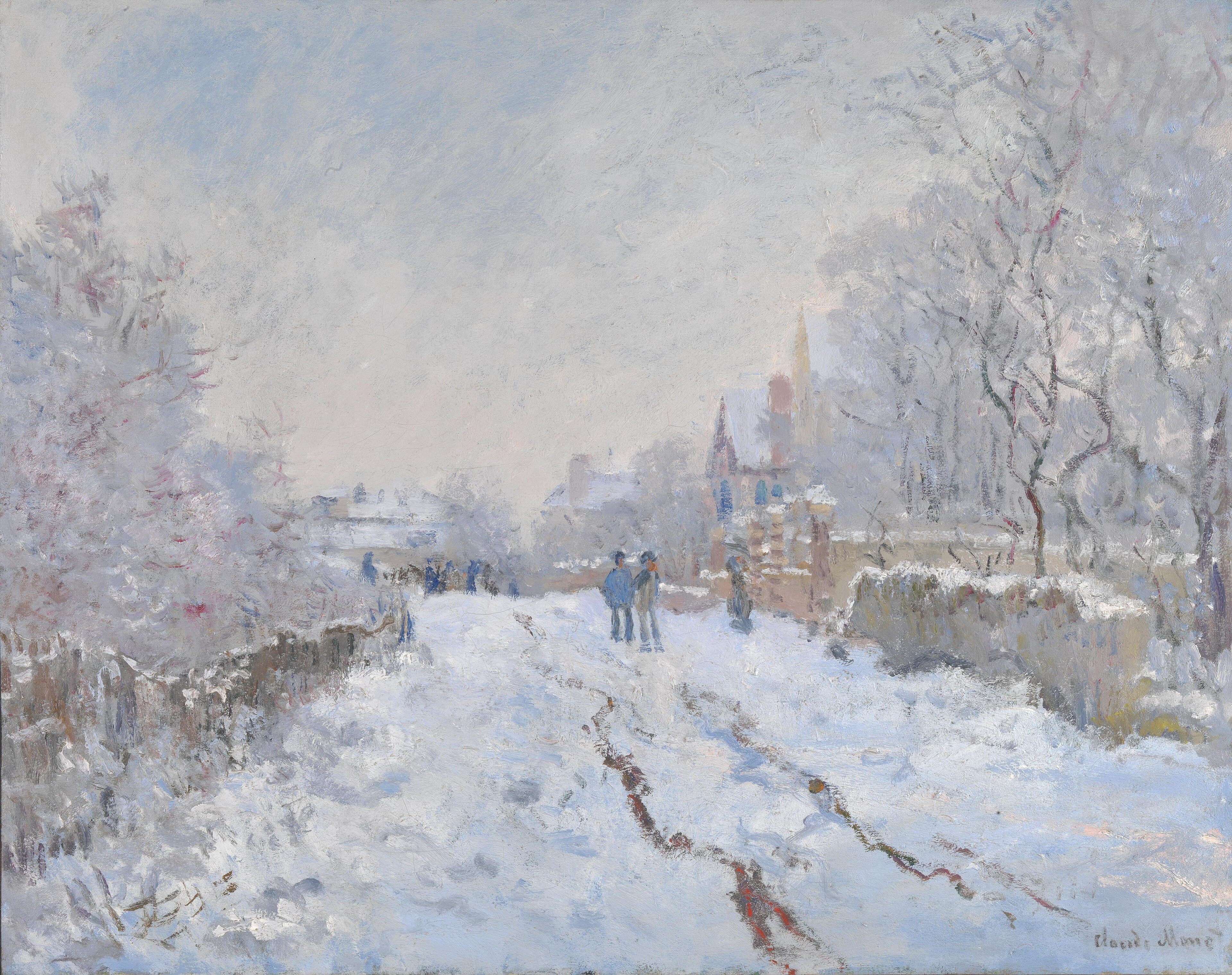
Snow Scene at Argenteuil
Claude Monet · 1875
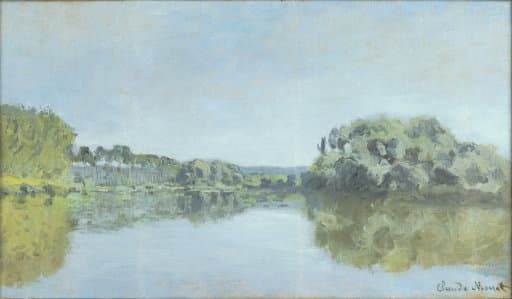
Bords de la Seine à Argenteuil
Claude Monet · 1870s (inscribed 1875 on the frame)
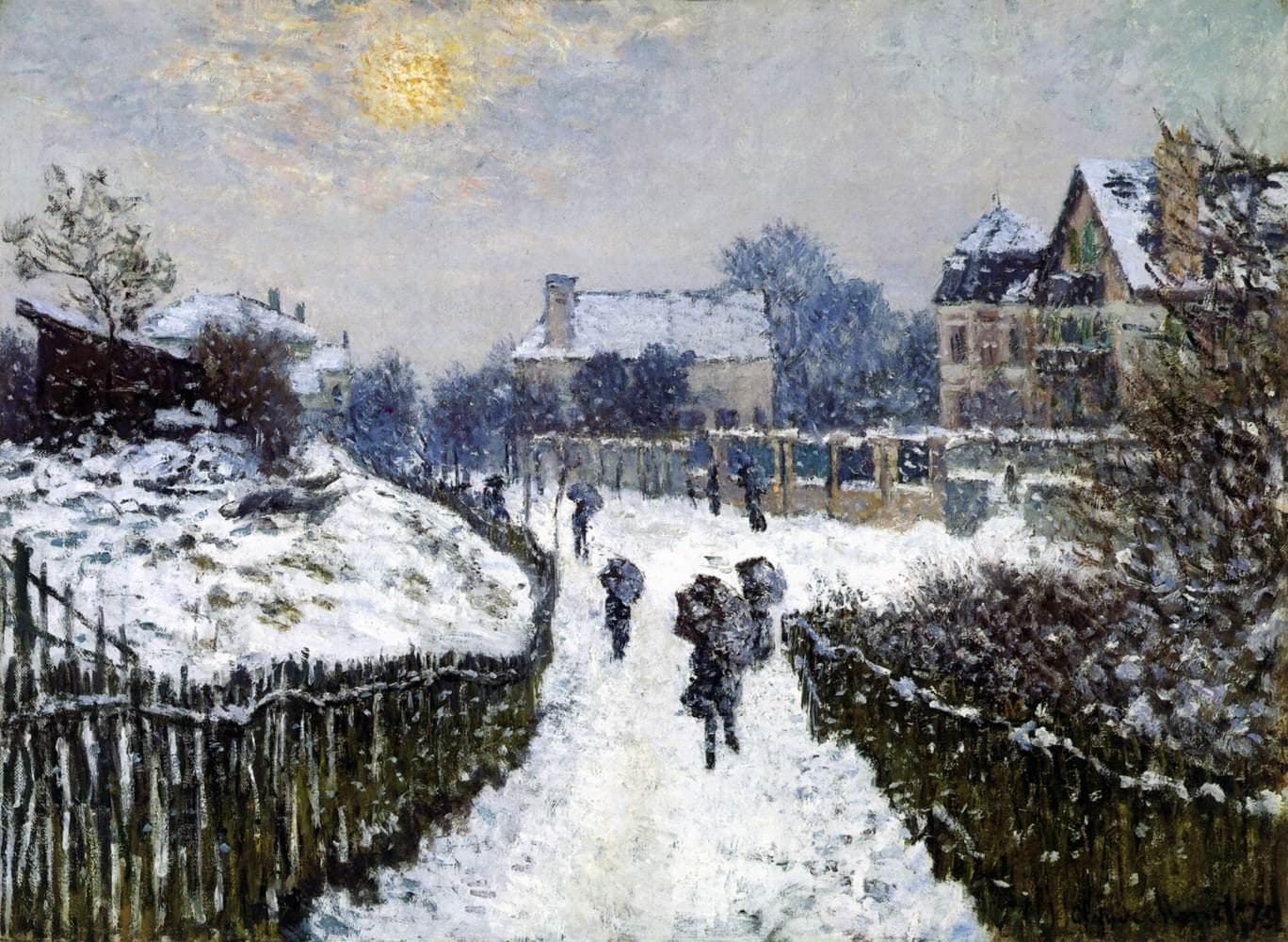
Boulevard Saint-Denis, Argenteuil, in Winter
Claude Monet · 1875
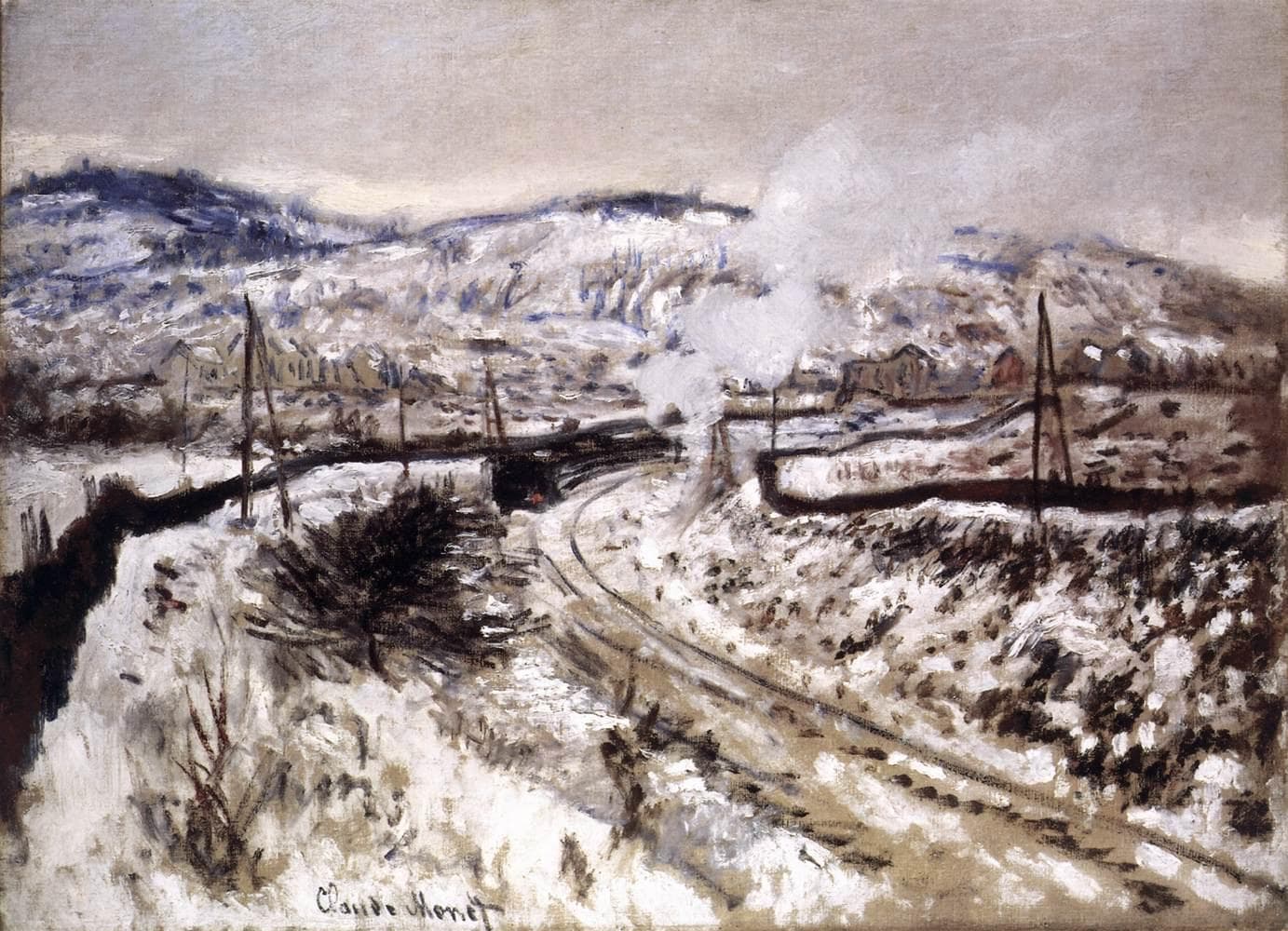
Train in the Snow at Argenteuil
Claude Monet · 1875
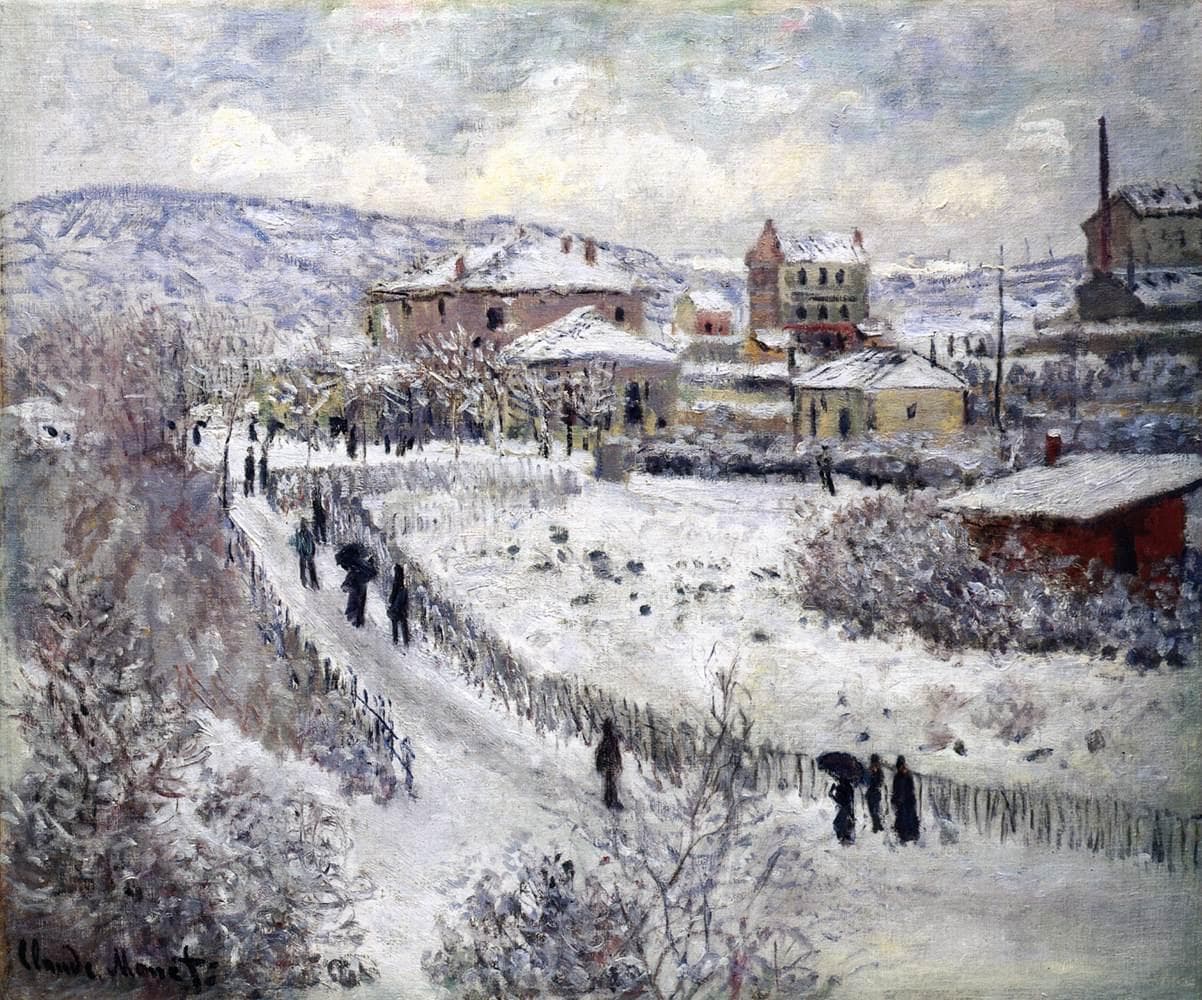
View of Argenteuil in the Snow
Claude Monet · 1874–75
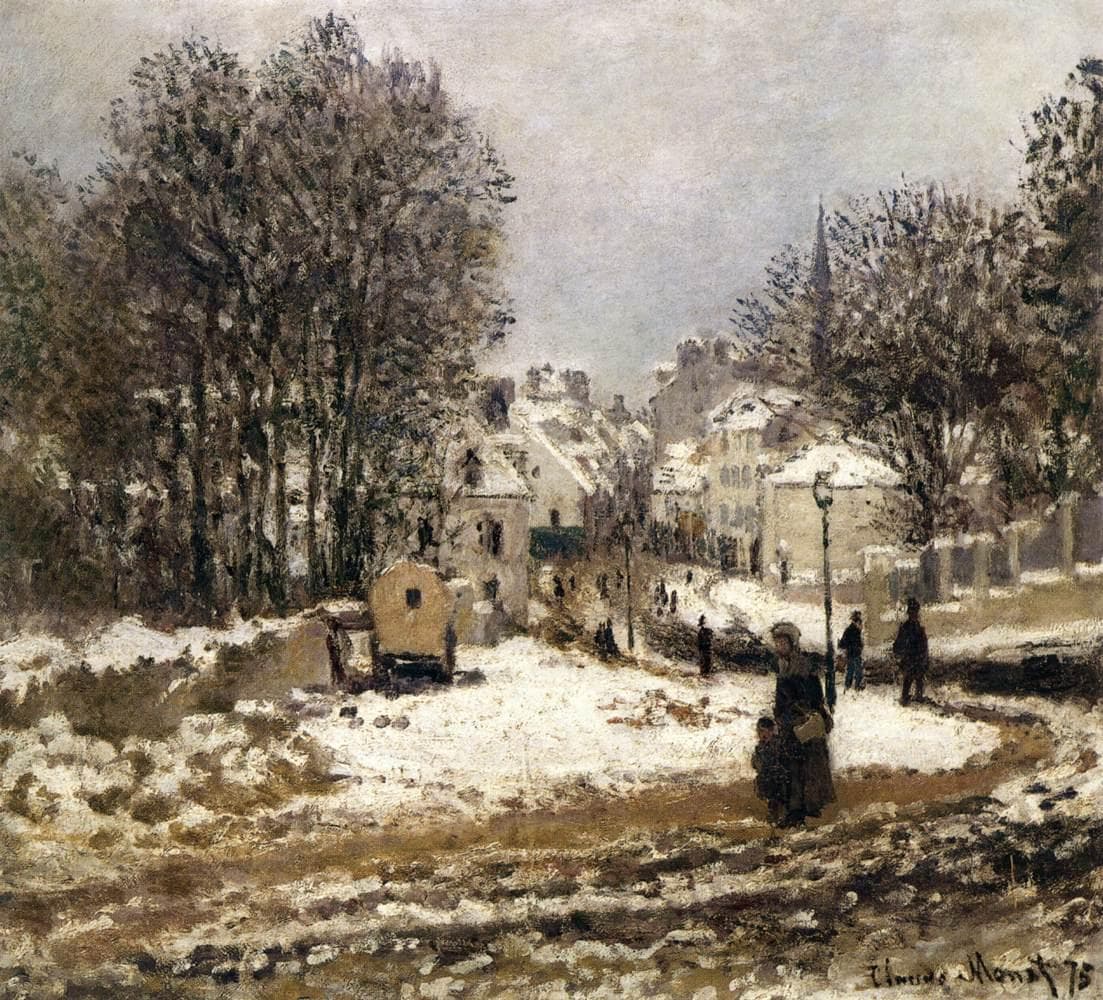
Entrance to the Grande Rue at Argenteuil, Winter
Claude Monet · 1875
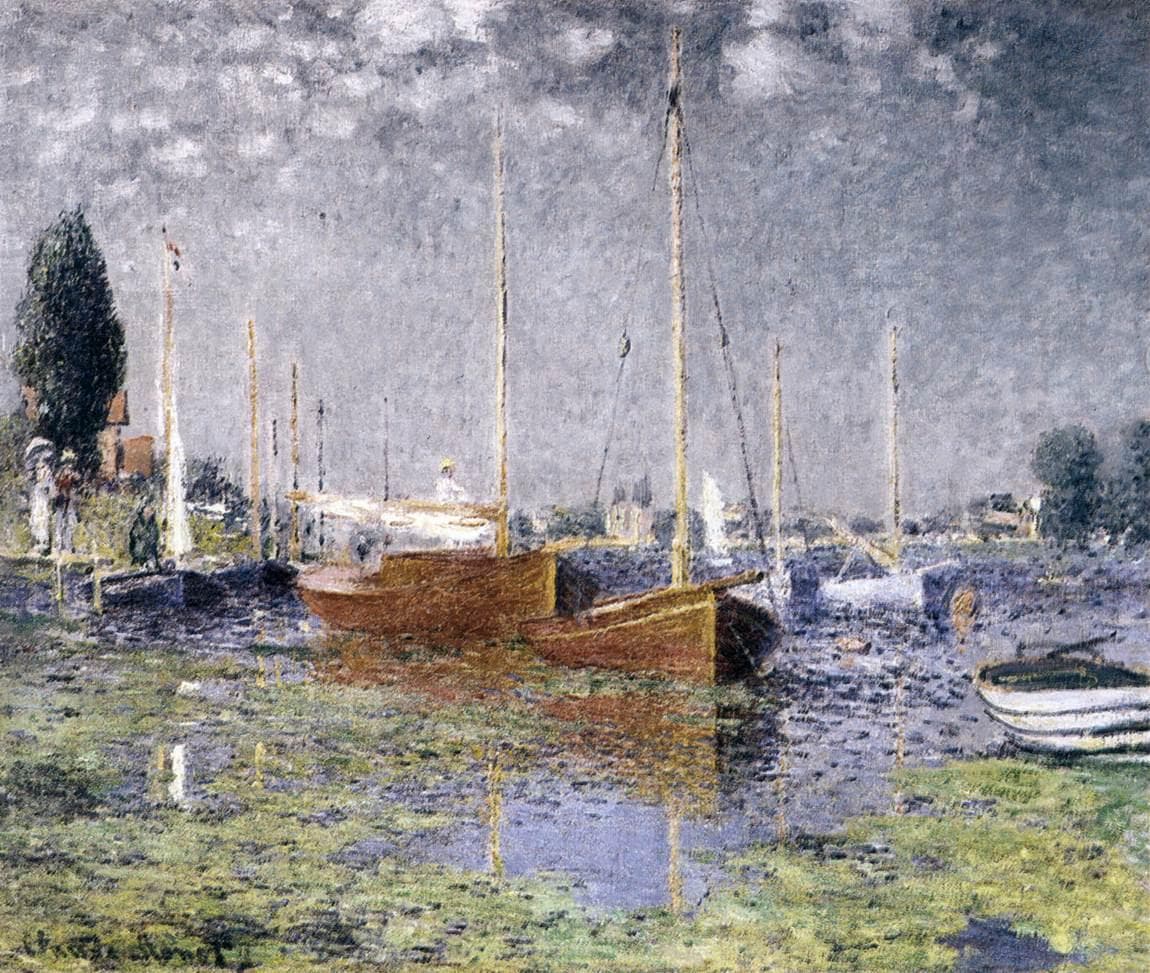
Red Boats at Argenteuil
Claude Monet · 1875
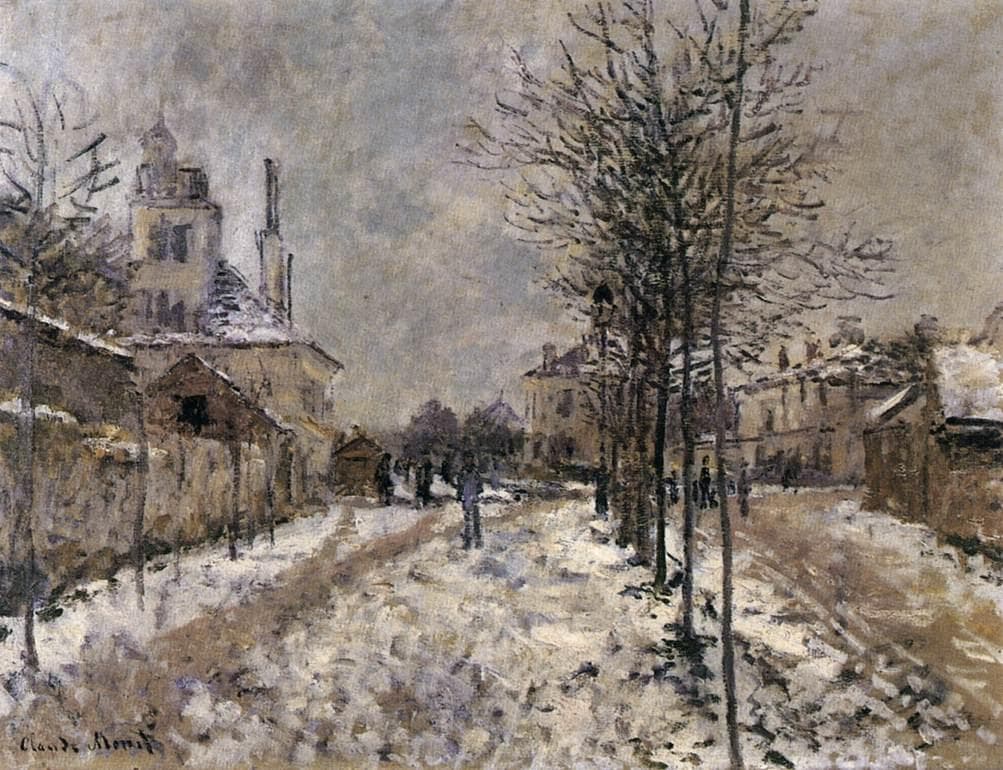
The Boulevard de Pontoise in Argenteuil under Snow
Claude Monet · 1875
Kindred works
You may also study
Train in the Snow at Argenteuil
Claude Monet · 1875
Snow Scene at Argenteuil
Claude Monet · 1875
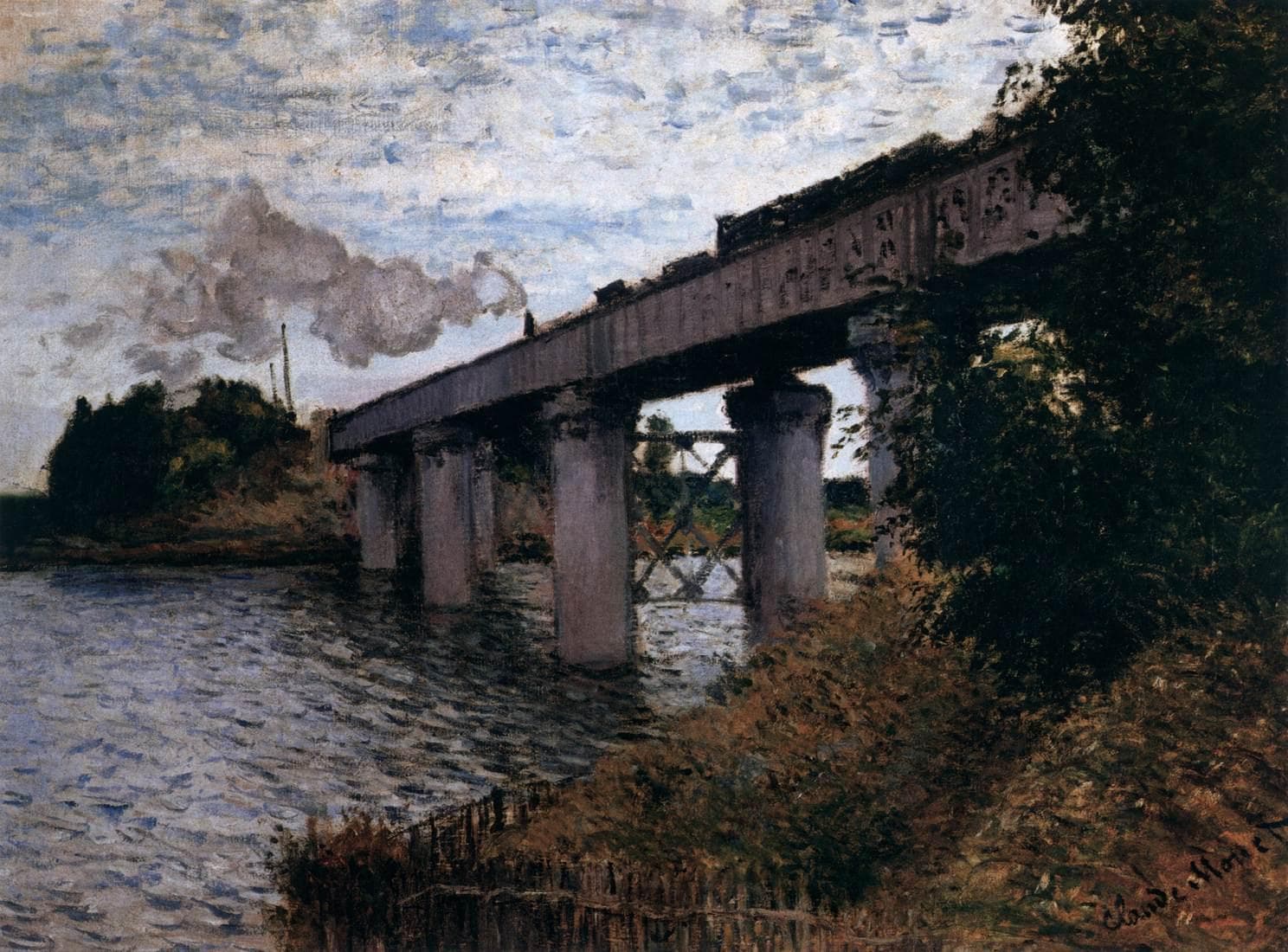
The Railway Bridge at Argenteuil
Claude Monet · c. 1873–74
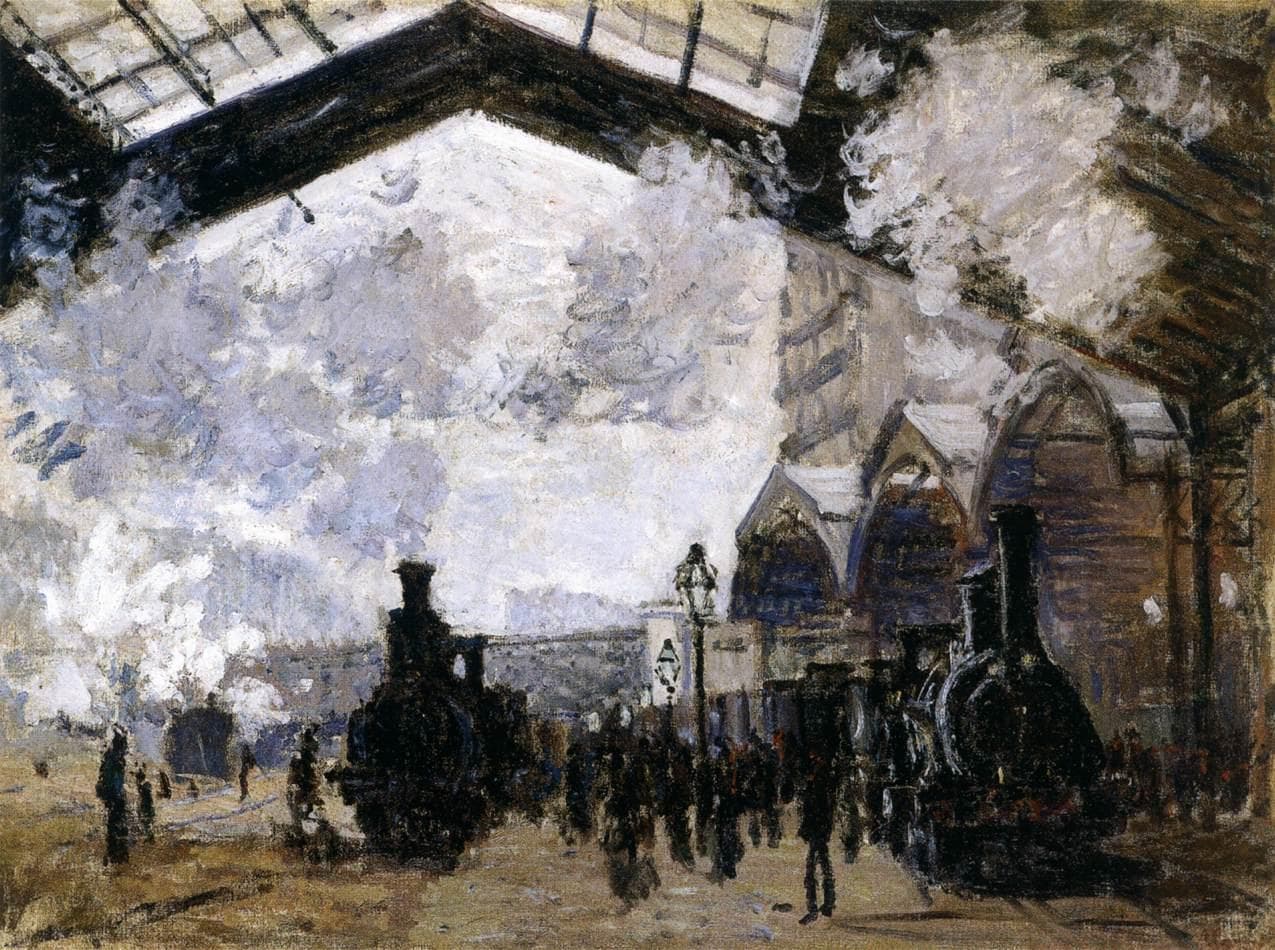
The Gare Saint-Lazare
Claude Monet · 1877
Boulevard Saint-Denis, Argenteuil, in Winter
Claude Monet · 1875

The Scream
Edvard Munch · 1893

Ophelia
John Everett Millais · 1851–52

The Great Wave off Kanagawa
Katsushika Hokusai · c. 1830–32